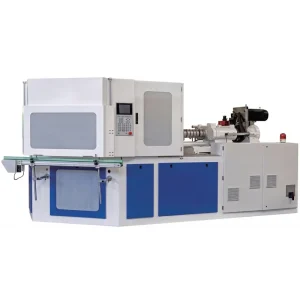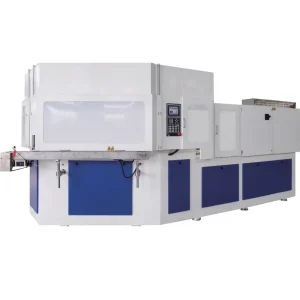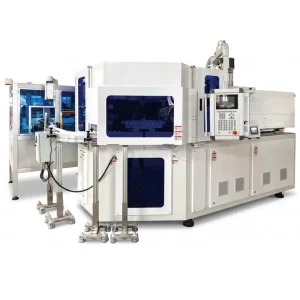
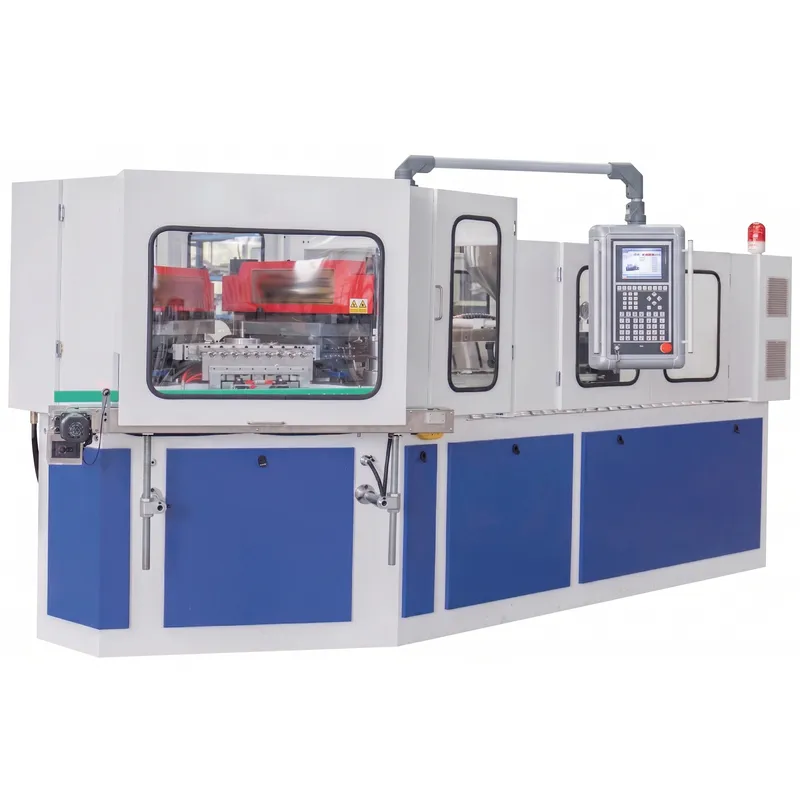
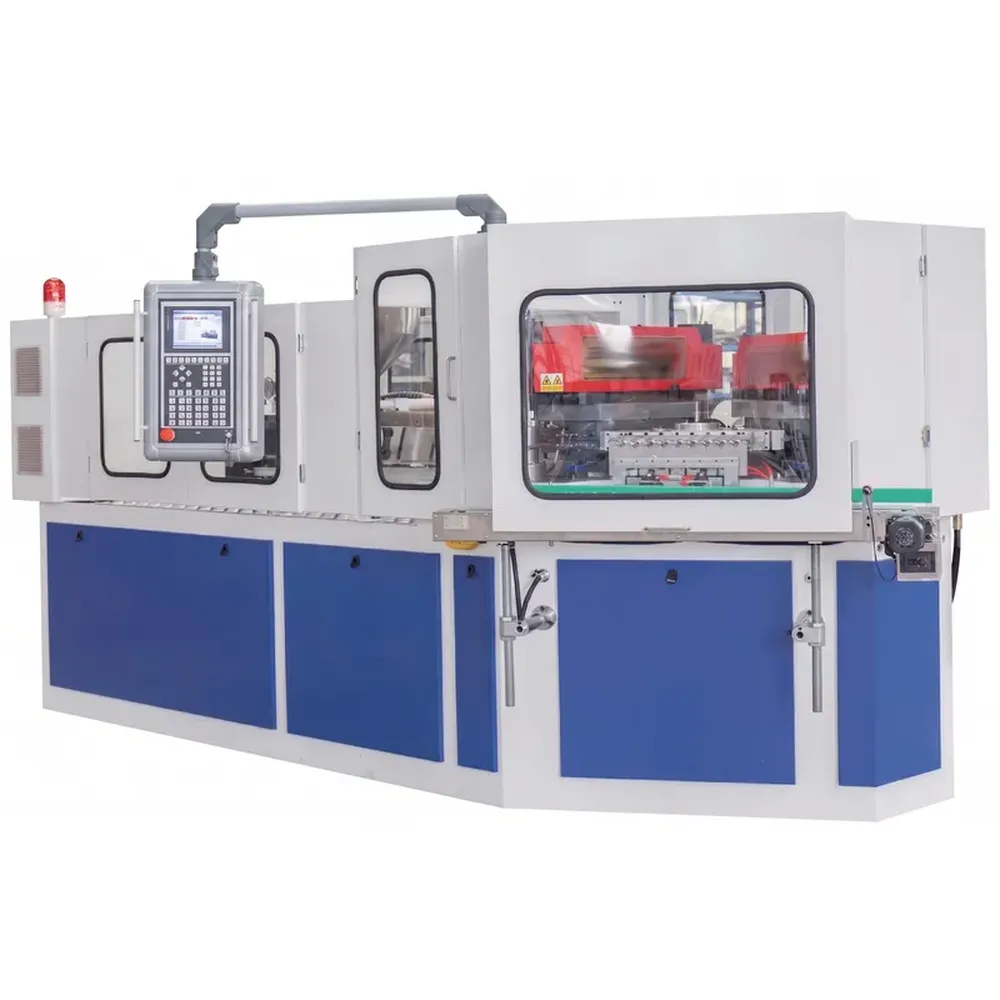
ZQ60 spuitblaasvormmachine, vervanging voor Jomar IBM65 model.
De ZQ60 spuitblaasvormmachine is een volledig servogestuurde, krachtige IBM-machine die is ontworpen als directe vervanging voor het Jomar IBM65-model. Alle machinebewegingen worden aangedreven door servomotoren, waardoor het gebruik van hydraulische olie en de daarmee samenhangende milieu- en verontreinigingsrisico's volledig worden geëlimineerd. Dit maakt de ZQ60 een van de meest capabele volledig elektrische spuitblaasvormmachines die beschikbaar zijn voor fabrikanten die streven naar superieure reinheid, herhaalbaarheid en lagere bedrijfskosten.
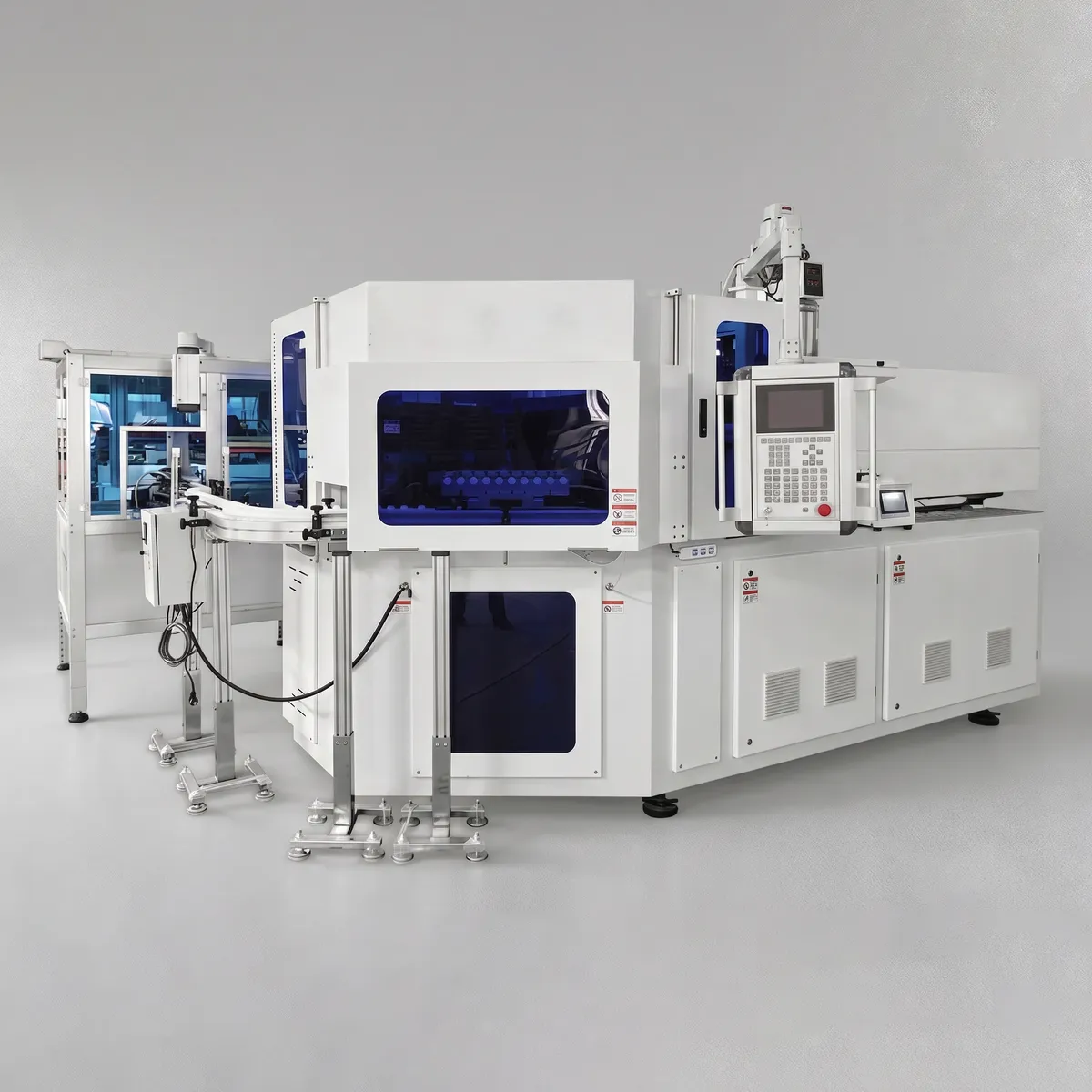
The ZQ60 Injection Blow Molding Machine is a fully servo-driven, high-performance IBM machine engineered as a direct replacement for the Jomar IBM65 Model. All machine movements are powered by servo motors, completely eliminating hydraulic oil usage and its associated environmental and contamination risks. This makes the ZQ60 one of the most capable all electric injection blow molding machines available to manufacturers seeking superior cleanliness, repeatability and reduced operating costs. For 30 ml bottles, each production cycle completes in just 8.2 seconds, yielding a daily output of 105,000 bottles with a peak capacity of 115,000 bottles per 24 hours - a throughput improvement of 20% over conventional hydraulic machines. Energy efficiency is lifted by 30%, consuming only 12 kWh per hour during 30 ml bottle production. An absolute-encoder servo system guarantees exceptional repeatability and processing precision, while a special clamping mechanism provides adjustable clamping force ranging from 40 to 80 tons to accommodate diverse product specifications and mold configurations.
Engineered with a bottom-up structural design, the ZQ60 injection blow moulding machine prevents lubricating oil from entering the mold area, meeting the strict hygienic standards demanded by pharmaceutical packaging and premium plastic bottle production. This makes the machine an ideal plastic injection blow molding machine for FDA-regulated and GMP-compliant manufacturing environments. The machine is fully customizable and adopts an electric cylinder injection unit for enhanced injection stability and significantly reduced maintenance costs. Its conveyor system is designed to integrate seamlessly with downstream automation: visual inspection systems (detecting foreign particles, insufficient bottle-mouth material and uneven bottle bottoms), side-leak testers, labeling machines and automatic packaging equipment can all be connected, enabling fully automated, unattended 24-hour operation. Whether you are producing pharmaceutical vials, cosmetic dispensers, food-grade containers or personal-care bottles, the ZQ60 delivers the precision, speed and cleanliness that modern injection blow molding machine manufacturers and brand owners demand. As a leading customized injection blow molding machine for sale, the ZQ60 is trusted by production facilities across Korea, India, Turkey, Russia, South Africa, Brazil, the USA and Mexico.
Vormholtevorming (ter referentie)
| Geschat volume | 10 ml | 30 ml | 60 ml | 100 ml | 250 ml | 500 ml | 1000 ml |
| Maximale cavitatie | 14 | 10 | 10 | 8 | 5 | 3 | 2 |
Technische specificaties
| Item | Eenheid | ZQ60 |
| Injectiesysteem | ||
| Schroefdiameter | mm | 45/50 |
| Schroef L/D | % | 22:1 |
| Injectiegewicht! | G | 260/383 |
| Verwarmingsvermogen | KW | 14 |
| Aantal vatzones | 3+N | |
| Injectieberoerte | mm | 160 |
| Klemsysteem | ||
| Klemkracht van de injectie | KN | 600 |
| Openingsslag voor injectie | mm | 140 |
| Klemkracht van het blazen | KN | 100 |
| Openingsslag voor het blazen | mm | 140 |
| Hefhoogte van de draaitafel | mm | 70 |
| Gietvorm | ||
| Maximale afmetingen van het plateau (LxB) | mm | 600x390 |
| Vormdikte | mm | 240 |
| Diameter van de fles | mm | 120 |
| Fleshoogte | mm | 220 |
| Geschikte fleshoogte | mm | 15-200 |
| Strippende slag | mm | 230 |
| Hydraulisch systeem | ||
| Hydraulische druk | Kaart | 14 |
| Motorvermogen | KW | 18.5/22 |
| Droogcyclus | S | 4 |
| Totaal vermogen | KW | 37 |
| Bedrijfsvermogen | % | 52-70 |
| Anderen | ||
| Minimale luchtdruk van perslucht | MPa | 0.7-1.2 |
| Persluchtcapaciteit | M³/min | 0.7 |
| Waterstroom | M³/h | 4 |
| Koelwaterdruk | MPa | 0.3-0.4 |
| Afmetingen (L x B x H) | M | 3.8x1.4x2.18 |
| Nettogewicht | Ton | 5 |
Vervangbaar merk en model
| Eeuwige Kracht | Klemkracht | Jomar | SUMA | Uniloy | Bloma |
| ZQ40 | 40T | IBM40 | 40iB | UIB70 | IBM45 |
| ZQ60 | 60T | IBM65 | 65iB | UIB90 | IBM50 |
| ZQ80 | 80T | IBM85S | 85iB | UIB120 | IBM85 |
| ZQ110 | 110T | IBM135 | 135iB | UIB150 | IBM135 |
| ZQ135 | 135T | IBM175 | 175iB | UIB180 |
IBM-machineschroefdiameter
| Eeuwige Kracht | Schroefdiameter | Jomar | SUMA | Bloma |
| ZQ40 | 40/45 | 35/40 | 40 | 45 |
| ZQ60 | 45/50 | 45 | 40/50 | 50 |
| ZQ80 | 55 | 55 | 50/60 | 50 |
| ZQ110 | 65 | 65 | 65/76 | 70 |
| ZQ135 | 70 | 70 | 65/76 |
IBM Machine Injectie Gewicht
| Eeuwige Kracht | Injectiegewicht | Jomar | SUMA | Bloma |
| ZQ40 | 190/260 | 180 | 169 | 180 |
| ZQ60 | 260/383 | 205 | 169/264 | 240 |
| ZQ80 | 466 | 300 | 333/480 | 310/280 |
| ZQ110 | 540 | 450/550 | 580/770 | 560 |
| ZQ135 | 650 | 450/550 | 580/770 |
IBM Machine Injection Klemkracht
| Eeuwige Kracht | Injectieklemkracht | Jomar | SUMA | Bloma |
| ZQ40 | 400 kN | 340 kN | 386 kN | 350 kN |
| ZQ60 | 600 kN | 460 kN | 580 kN | 500 kN |
| ZQ80 | 800 kN | 680 kN | 720 kN | 700 kN |
| ZQ110 | 1100 kN | 1210 kN | 1200 kN | 1250 kN |
| ZQ135 | 1350 kN | 1560 kN | 1600 kN |
IBM machine matrijsafmetingen
| Eeuwige Kracht | Vormgrootte | Jomar | SUMA | Bloma |
| ZQ40 | 480 × 340 | 394 × 508 | 470 × 350 | 450 × 390 |
| ZQ60 | 600 × 390 | 432 × 660 | 620 × 400 | 620 × 430 |
| ZQ80 | 800 × 400 | 464 × 749 | 700 × 400 | 620 × 430 |
| ZQ110 | 1100 × 460 | 559 × 1118 | 1000 × 500 | 900 × 480 |
| ZQ135 | 1300 × 500 | 635 × 1372 | 1200 × 600 |
IBM-machinegrootte
| Eeuwige Kracht | Vormmaat (M) | Jomar | SUMA | Bloma |
| ZQ40 | 3,8 × 1,3 × 1,7 | 2,72 × 1,9 × 2,75 | 3,8 × 1,5 × 2,3 | 4,05 × 1,52 × 2,55 |
| ZQ60 | 3,8 × 1,4 × 1,8 | 2,92 × 1,98 × 3,41 | 4 × 1,7 × 2,3 | 620 × 430 × 2,55 |
| ZQ80 | 4,5 × 1,6 × 2 | 3,33 × 1,94 × 3,41 | 4,5 × 2 × 2,6 | 620 × 430 × 2,55 |
| ZQ110 | 5 × 1,8 × 2,2 | 3,79 × 2,4 × 3,41 | 5 × 2,4 × 2,7 | 900 × 480 × 2,55 |
| ZQ135 | 5,5 × 2 × 2,4 | 4,22 × 2,67 × 3,58 | 6 × 2,6 × 2,7 |
Let op: Merken worden alleen genoemd om klanten te helpen bij het kiezen van producten, niet om producten van die merken te verkopen.
Key Features of ZQ60 Injection Blow Molding Machine
1. Volledige constructie in Europese stijl met superieure klemkracht
The ZQ60 is built on a full European-style frame that delivers a clamping force 20% to 30% larger than comparable models in the same class. This robust construction directly enhances mold sealing integrity, reduces part flash and extends mold service life. Manufacturers replacing aging hydraulic machines or sourcing a best injection blow molding machine for high-volume production will find the clamping advantage critical for maintaining consistent bottle quality across millions of cycles.
2. Standard High-Precision Angle Divider with Synchronized Motion
A standard high-precision angle divider enables perfect synchronization between the mold opening and closing action and the turret lifting movement. This coordinated motion eliminates mechanical conflicts that commonly cause machine downtime on lower-specification IBM machines. The result is a smoother, quieter production cycle with reduced mechanical wear, making it an ideal choice for facilities seeking a reliable full electric spuitblaasvormmachine with minimal maintenance intervention.
3. Unique Pressurized Clamping Structure for Low Energy Consumption
The ZQ60 features an innovative pressurized clamping structure in which the booster cylinder is completely excluded from the mold opening and closing cycle. The hydraulic dual-system is standard equipment on every unit. This engineered separation of functions reduces energy consumption by 20% to 30% compared to industry peers, substantially lowering the operating cost per thousand bottles. For buyers comparing injection blow molding machine price on a total-cost-of-ownership basis, this efficiency advantage compounds significantly over multi-year production runs.
4. All-Servo Drive System with Absolute Encoders
Every motion axis of the ZQ60 is servo-driven, with absolute encoders fitted throughout the servo system. Absolute encoders retain position data even after a power interruption, eliminating the need for homing cycles and guaranteeing that the machine resumes production at exactly the correct position. This architecture delivers exceptional repeatability and dimensional precision across all cavities, making the ZQ60 one of the most technically advanced plastic injection blow molding machines available from injection blow molding machine suppliers in this class.
5. Bottom-Up Hygienic Design for Pharmaceutical and Food-Grade Production
The ZQ60 adopts a bottom-up structural philosophy that physically separates all lubricating oil from the mold cavity zone. No oil can migrate upward into contact with preforms or finished containers, satisfying the strict cleanliness requirements of pharmaceutical packaging standards and food-grade manufacturing protocols. This positions the ZQ60 as an ideal PET injection blow molding machine and HDPE/PP bottle production platform for GMP-regulated facilities where contamination prevention is non-negotiable.
6. Fully Customizable with Integrated Downstream Automation Capability
The ZQ60 is available as a customized injection blow molding machine for sale, with the injection unit and mold configuration tailored to each customer's product range. The electric cylinder injection unit enhances shot consistency and reduces mechanical wear. The integrated conveyor system supports direct connection to visual inspection cameras (checking for foreign particles, short shots at the bottle mouth, and uneven bases), side-leak testers, labeling machines and case packers, enabling fully automated, lights-out 24-hour production without operator intervention.
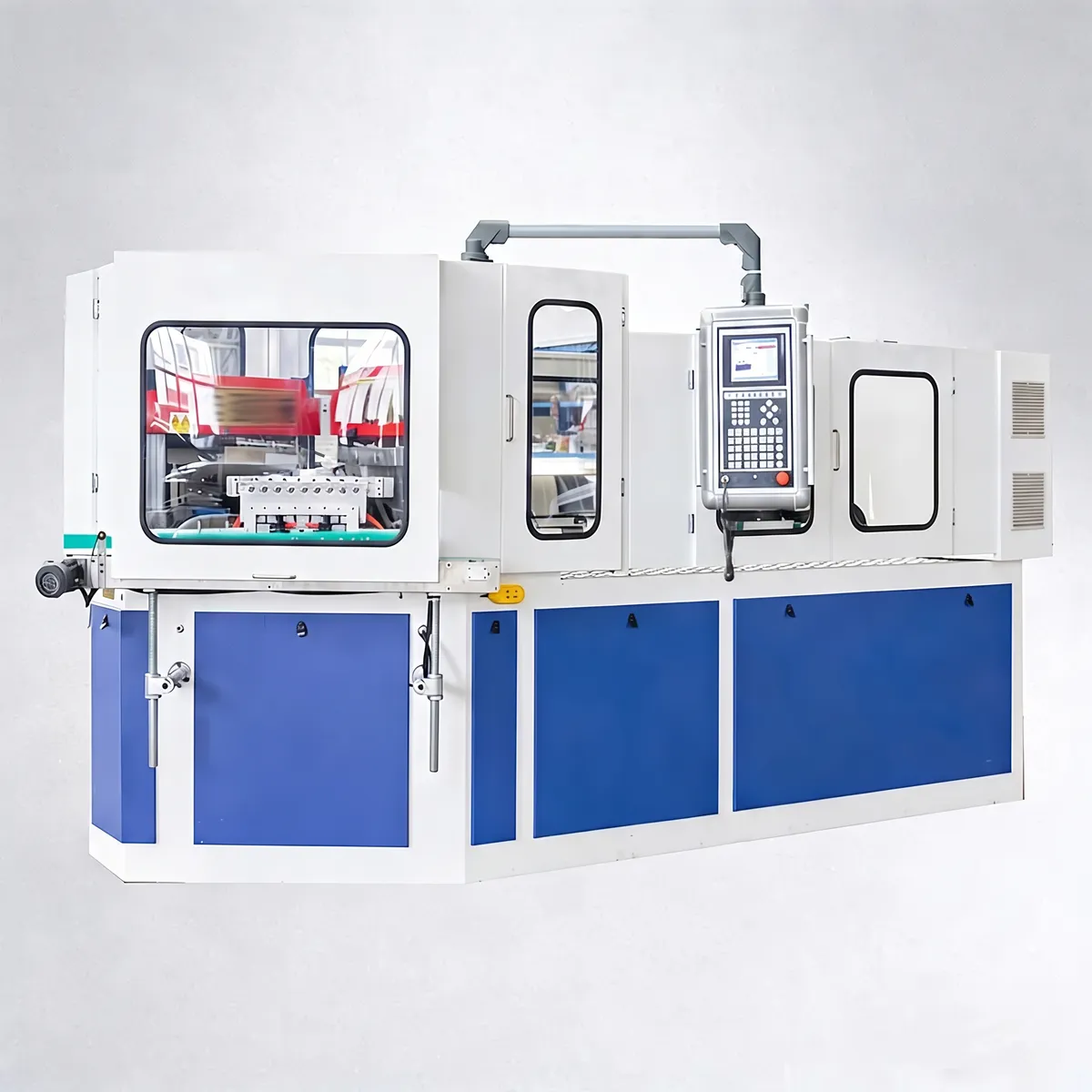
Werkingsprincipe
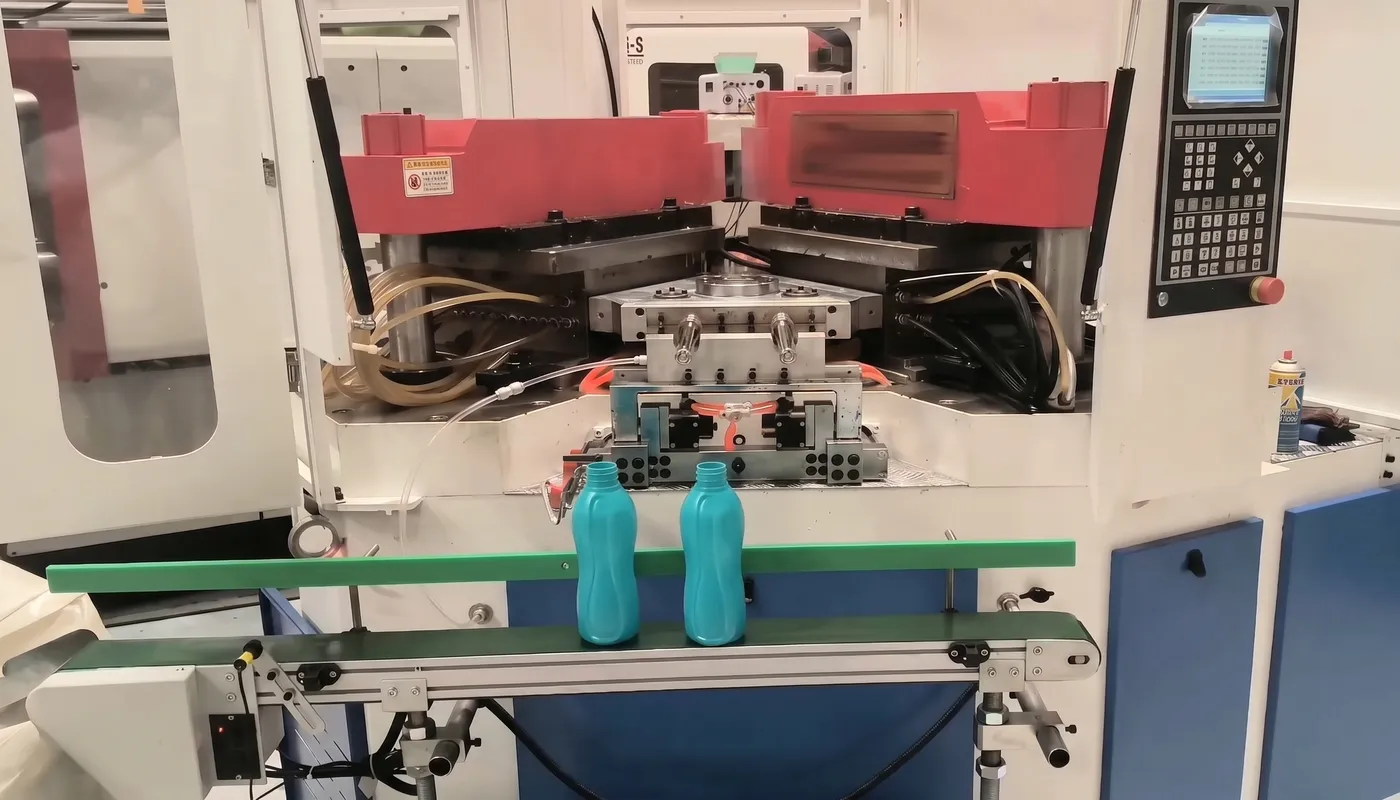
1. Voer de injectie uit
Plastic resin is plasticised in the heated barrel and then injected under controlled pressure into the preform cavity. The bottle neck geometry, including threads and sealing surfaces, is molded with high dimensional accuracy at this stage. Upon completion of the injection and cooling dwell, the mold opens and the mandrel carrying the preform transfers to the blow station. The all-servo injection drive ensures shot weight repeatability within tight tolerances, eliminating preform-to-preform weight variation that commonly plagues conventional hydraulic IBM injection blow molding machines. The absolute encoder system records every position, guaranteeing identical results across every cycle, every shift, every day.
2. Blaasvormen
At the blow station, compressed air is introduced through the mandrel at pressures between 0.7 and 1.2 MPa, expanding the preform outward until the plastic conforms precisely to the blow mold cavity walls. The mold holds the bottle in position during a controlled cooling phase, stabilising the final shape. The number of cavities is determined by bottle volume: up to 10 cavities for 30 ml containers and up to 3 cavities for 500 ml containers. This one step injection blow molding machine process eliminates the reheating step required by two-stage stretch blow machines, reducing thermal degradation and energy use. Once cooling is complete, the blow mold opens and the turret rotates to the stripping station.
3. Stripper and Ejection
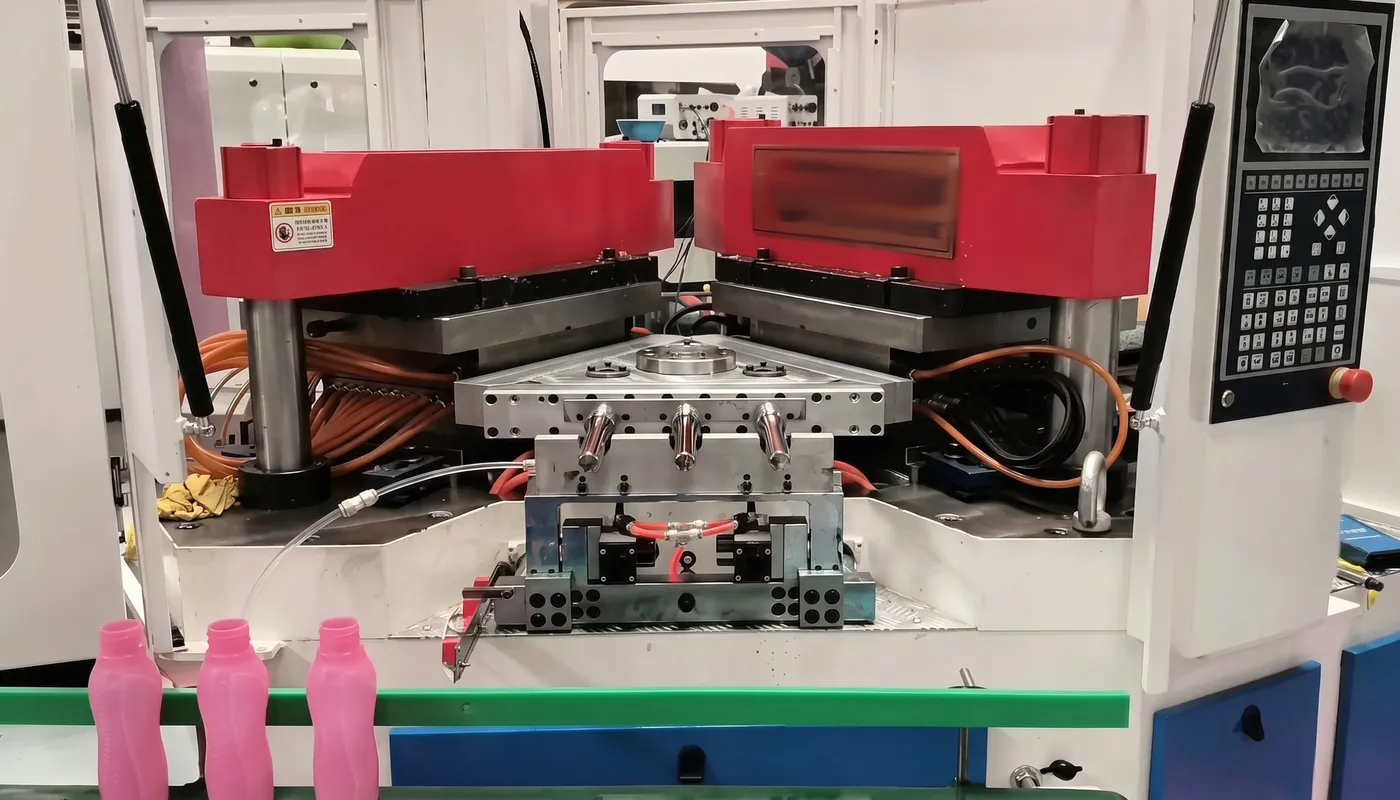
At the stripping station, finished bottles are automatically ejected from the core rods onto the discharge conveyor, ready for downstream processing. All three actions - preform injection, blow molding and ejection - occur simultaneously at their respective stations during every machine cycle. This concurrent operation is what allows the ZQ60 injection blow molding machine to achieve its industry-leading throughput of up to 115,000 bottles per 24 hours with zero scrap edge generation. There is no flash trimming, no waste regrind and no secondary handling. The scrap-free nature of the process makes the ZQ60 a true scrap edge injection blow molding machine solution, delivering a cleaner, lower-cost production environment compared to extrusion blow alternatives.
Toepassingsgebieden
Chemische flessen
The ZQ60 produces chemical storage bottles in HDPE and PP with consistent wall thickness and tight neck tolerances, essential for safely containing solvents, cleaning agents and laboratory reagents. The scrap-free process and multi-cavity tooling reduce per-unit cost significantly for high-volume chemical packaging runs.
Cosmetische flessen
Producing cosmetic packaging on the ZQ60 delivers flawless surface finish and precise thread dimensions critical for pump and spray-head fitment. Whether producing 30 ml perfume bottles or 250 ml lotion containers in transparent PS or ABS, the machine's servo precision ensures every unit meets the demanding aesthetic standards of premium beauty brands.
Drankflessen
For small-volume functional beverages, health drinks and lactic acid bacteria products, the ZQ60 produces PP and high-transparent PS bottles with no bottom seam and no flash. The bottom-up design keeps the production zone oil-free, meeting food-contact hygiene requirements without additional surface treatment of the finished bottle.
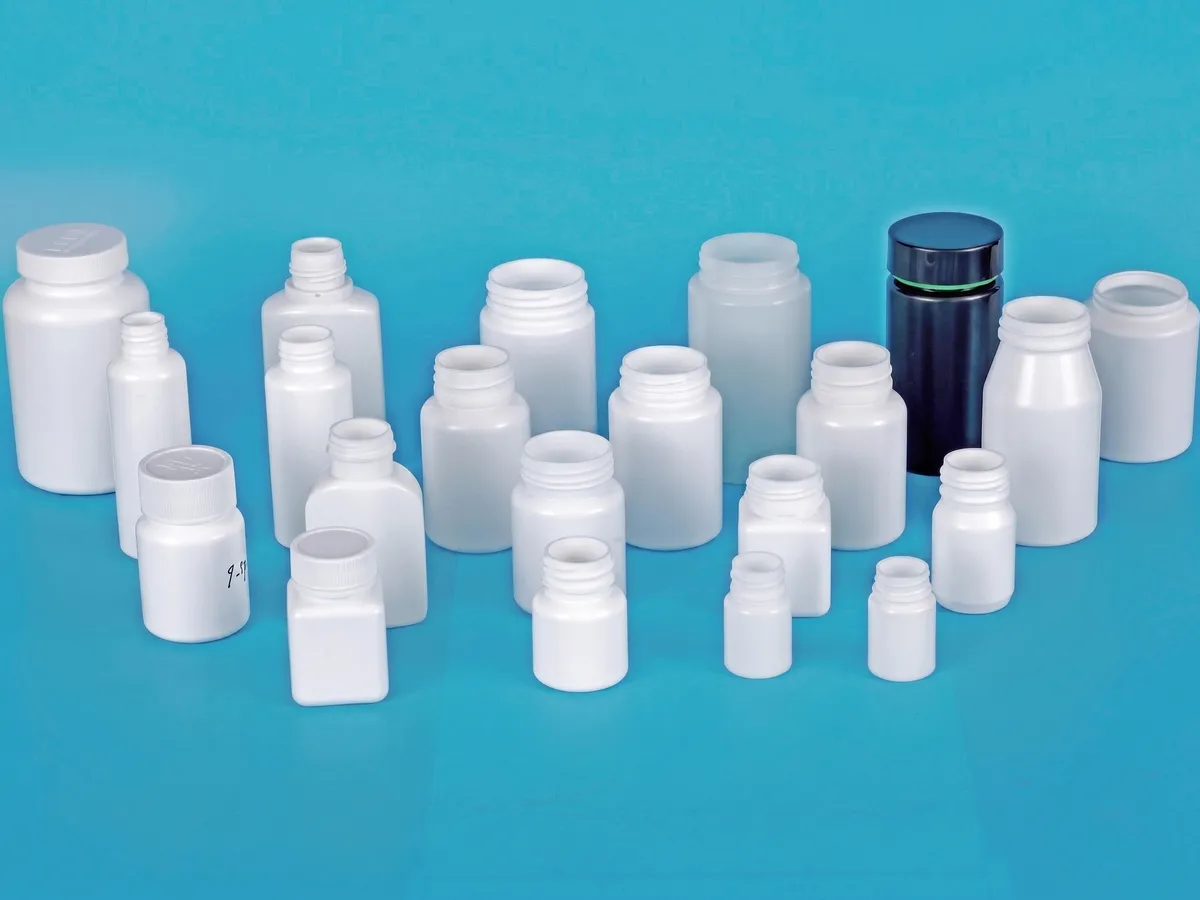
Farmaceutische flessen
The ZQ60 is a preferred PET injection blow molding machine and HDPE bottle production platform for pharmaceutical customers requiring GMP-compliant manufacturing. The oil-free mold zone, absolute encoder precision and integrated visual inspection compatibility make this machine suitable for tablet bottles, liquid medicine containers, eye drops and nasal spray bottles where batch-to-batch consistency is a regulatory requirement.
Lotion Bottles
Personal-care lotion bottles, hand cream containers and body wash packaging benefit from the ZQ60's ability to produce uniform wall thickness and high-gloss surfaces in transparent or pigmented PP and LDPE. The flexible cavity configuration allows producers to switch between 100 ml, 250 ml and 500 ml lotion bottles without major tooling changes, reducing changeover time and production flexibility.
Flesjes afwasmiddel
Household dish soap and detergent bottles require high cavity output to achieve competitive unit costs. The ZQ60's 10-cavity capability at 30 ml and 5-cavity output at 250 ml enable detergent brands to reach the throughput levels needed for mass-retail supply chains, while the servo drive keeps energy and noise levels low enough for single-shift and multi-shift factory environments.
Soap Bottles
Liquid hand soap dispensers and refill containers are efficiently produced on the ZQ60 in HDPE and PP, with neck thread accuracy that ensures leak-free sealing with pump and disc-top closures. The ability to connect downstream labeling and capping machines to the exit conveyor creates a fully integrated filling line that reduces labor and floor space requirements for soap bottle manufacturers.
Voedingsflessen
Condiment bottles, spice containers, honey jars and nutritional supplement packaging are produced on the ZQ60 with consistent gram weight and wall thickness. The absence of hydraulic oil in the mold zone and the zero-waste scrap-free process meet the contamination controls required by food-safety certifications, making this blow injection molding machine a practical choice for food-grade bottle manufacturers across global markets.
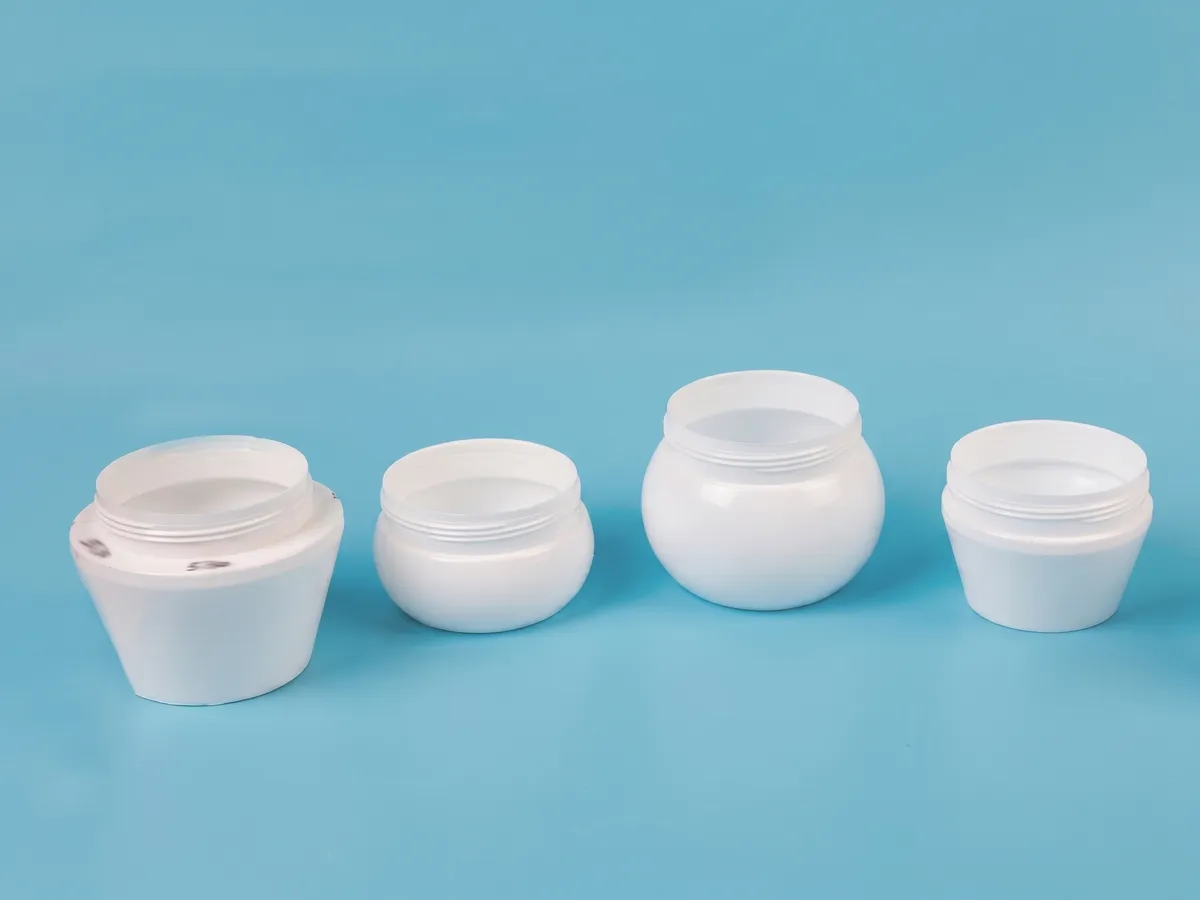 |
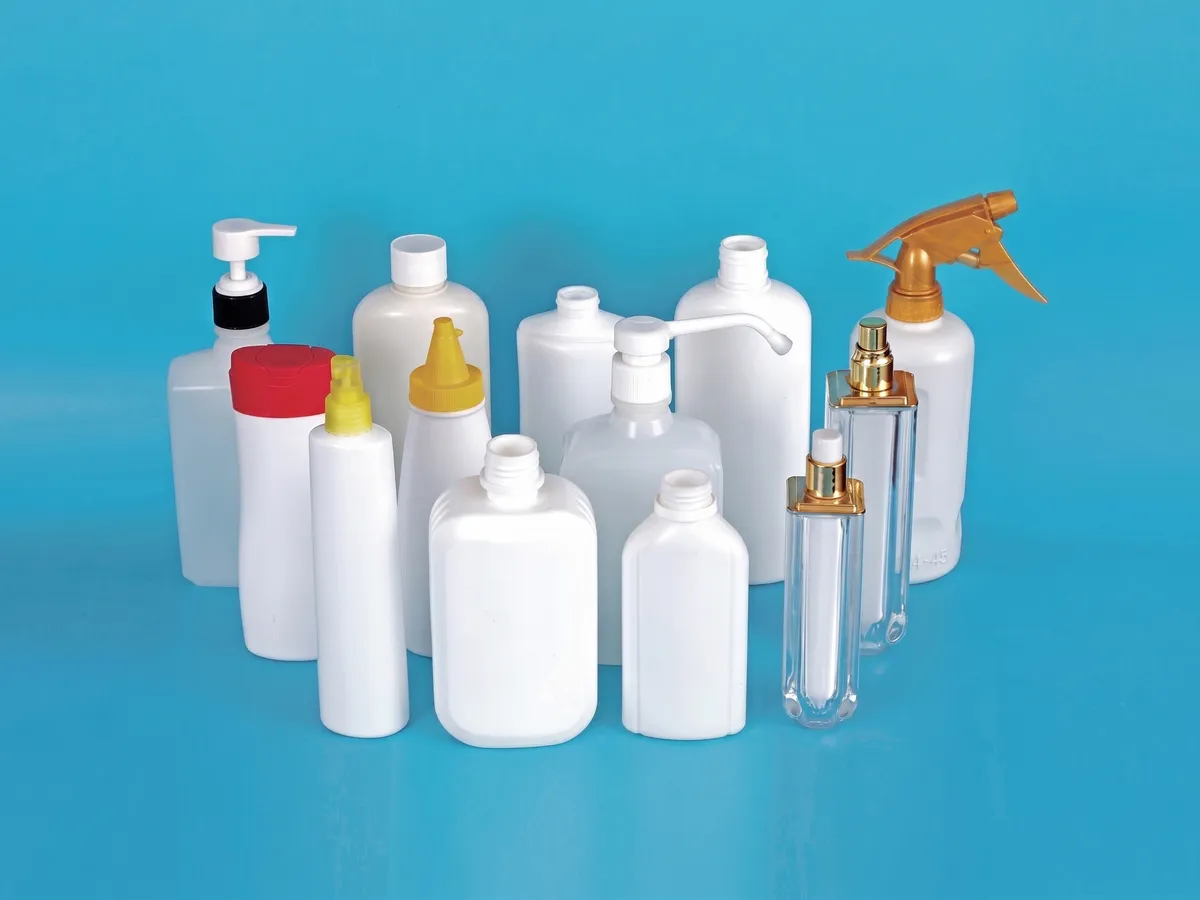 |
| Cosmetische flessen | Chemische flessen |
 |
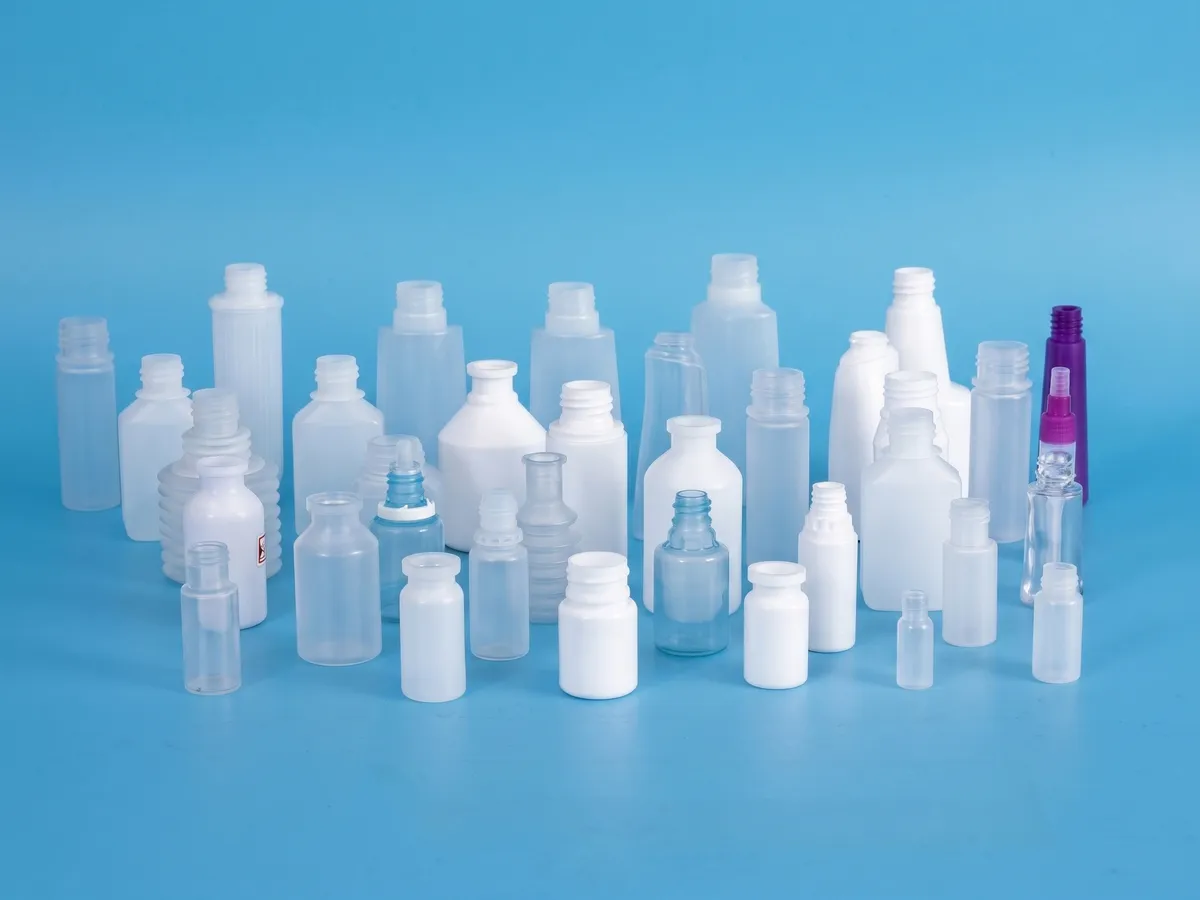 |
| Farmaceutische flessen | Druppelflesjes |
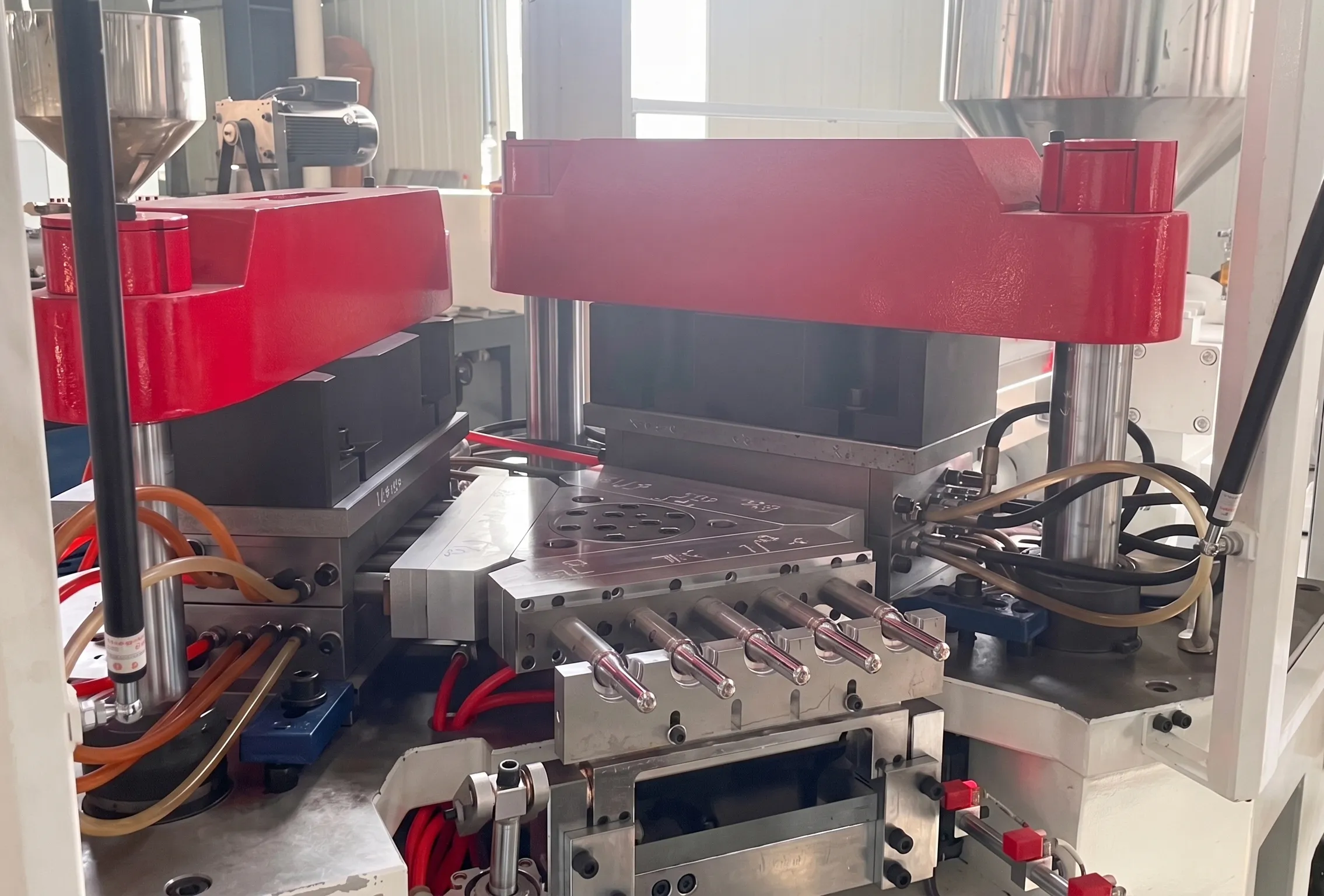
ZQ60 IBM-machineonderdelen
Spuitgietvorm
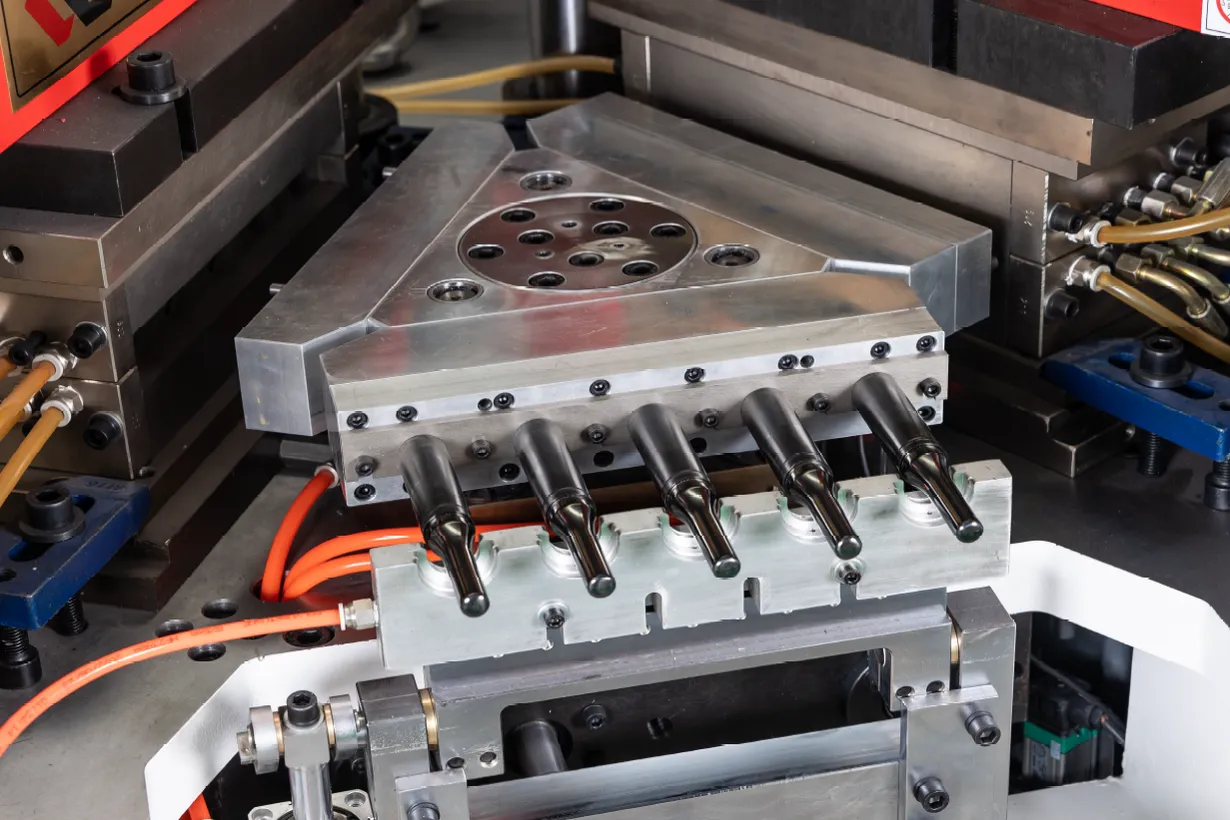
The injection mold is manufactured from imported S136 steel alloy or 4Cr13 stainless steel, both chosen for superior corrosion resistance and high hardness that extends mold service life. The cavity and neck inserts are designed with interchangeable components so that neck and body geometries can be modified without replacing the entire mold base. Max platen size on the ZQ60 is 600 x 390 mm, accommodating mold thicknesses up to 240 mm. All mold machining is performed to tolerances that guarantee the bottle mouth and thread dimensions are accurate and 100% sealed upon first use.
Injectiestation
The injection station is where resin is injected into the multi-cavity preform mold under 600 kN of clamping force, the highest in this class of injection blow molding machines. The 140 mm opening stroke provides generous mold clearance for smooth preform transfer onto the mandrel. The station operates simultaneously with the blow and stripping stations, meaning no productive time is ever wasted waiting for a single operation to complete before the next begins.
Blaasstation
At the blow station, 100 kN of blowing clamping force holds the blow mold closed while compressed air at 0.7 to 1.2 MPa expands the preform against the cavity walls. The 140 mm opening stroke at this station matches the injection station geometry for consistent mandrel transfer. The blow station clamp tonnage, like the injection clamp, is driven by the pressurized clamping structure, which excludes the booster cylinder from the opening and closing cycle, reducing wear and energy draw during this high-frequency operation.
Blaasvorm
The blow mold defines the final exterior shape of the container, including surface texture, label panel geometry and base design. It is engineered with efficient cooling channels to minimize the cooling dwell time while maintaining dimensional accuracy. The interchangeable cavity insert design allows manufacturers to run multiple bottle designs from the same mold base, significantly reducing the capital outlay for tooling when introducing new container formats to an existing production line running on the ZQ60 IBM machine.
Stripstation
The stripping station ejects finished bottles from the cold core rods onto the output conveyor with a 230 mm stripping stroke, sufficient to cleanly release containers up to 220 mm in height. Because ejection occurs simultaneously with injection and blowing at the other stations, the stripping station contributes zero additional time to the machine cycle. Bottles exit in an upright orientation and travel directly to downstream inspection, labeling or packing equipment, supporting fully automated unattended production as a single stage injection stretch blow molding machine line concept.
Voorraadvoorbereiding / Injectieapparaat
The injection device features a 45 mm or 50 mm screw with a 22:1 L/D ratio and three-plus heating zones, providing thorough and uniform plasticisation of HDPE, PP, LDPE and other engineering resins. The electric cylinder drive delivers consistent injection pressure and shot weight control, making this component the heart of the machine's quality output. Maximum injection weight reaches 383 g, supporting a wide range of container volumes from 1 ml up to 1,000 ml.
Hot Runner-systeem
The optimized hot runner system maintains precise melt temperature uniformity across all cavities, minimizing gram weight deviation and wall thickness variation from cavity to cavity. A well-calibrated hot runner is essential for high-cavitation tooling because any temperature imbalance would produce preforms with inconsistent material distribution. Ever-Power's hot runner design is engineered for low residence time, preventing material degradation even with heat-sensitive resins such as transparent PS or PCTG.
Kernstaaf (doorn)
The mandrel is a precision-machined component that simultaneously forms the internal bore of the preform during injection and then acts as the air supply conduit during the blow stage. A specially structured mandrel design on the ZQ60 maintains fast molding cycles while achieving excellent core cooling efficiency. Proper mandrel cooling directly reduces the thermal cycle time and ensures that the preform wall is at the correct temperature when blow air is introduced, critical for achieving uniform bottle wall thickness.
Flesvoorvorm
In the ZQ60 one-step process, the preform is produced and immediately blown in the same machine cycle while still thermally conditioned, eliminating the reheating stage needed in two-stage stretch blow production. This means the preform retains its molecular orientation from injection, producing bottles with better clarity and impact resistance than reheated preform alternatives. The preform neck geometry is finalized at the injection station and remains undisturbed throughout the blow and stripping stages.
ZQ60 vs. Jomar IBM65: Advantage Comparison
1. Hogere injectieklemkracht
The ZQ60 delivers 600 kN of injection clamping force, compared to 460 kN on the Jomar IBM65. This 30% advantage in clamping capability allows the ZQ60 to run more demanding molds and higher-cavitation tooling at full production speed without flash risk, something that operators of the IBM65 often encounter at the upper edge of its clamping capacity. For buyers evaluating injection blow molding machine price against actual output capability, the clamping advantage is a significant production-value differentiator.
2. Larger Mold Platen Capacity
The ZQ60 accommodates a maximum platen size of 600 x 390 mm versus the Jomar IBM65's 432 x 660 mm format. The ZQ60's platen geometry is specifically optimized for the wider, shorter multi-cavity mold layouts common in European-style tooling design, enabling up to 10 cavities at 30 ml. This translates directly to higher output per cycle and lower tooling cost per cavity compared to the IBM65 mold configuration.
3. Full Servo Drive vs. Hydraulic-Only
The Jomar IBM65 is a hydraulically driven platform, meaning it requires hydraulic oil, regular oil changes, oil cooling systems and associated fluid management. The ZQ60 eliminates all hydraulic oil from machine motion, delivering a cleaner, quieter and lower-maintenance operating environment. This is particularly valuable in pharmaceutical and food packaging plants where hydraulic oil contamination risk is a regulatory and quality concern that the IBM65 forces operators to mitigate with secondary containment systems.
4. 20% Faster Cycle with Higher Throughput
The ZQ60 achieves an 8.2-second cycle time for 30 ml bottles, producing up to 115,000 bottles in a 24-hour period. The Jomar IBM65, as a hydraulic machine, cannot match this servo-driven cycle speed without proportionally higher energy consumption. The ZQ60 achieves this speed with 30% lower energy draw, meaning not only do you produce more bottles per day, but the energy cost per thousand bottles is dramatically lower than on the IBM65.
5. Higher Injection Weight Capacity
With an injection weight of up to 383 g (50 mm screw), the ZQ60 surpasses the Jomar IBM65's 205 g maximum shot weight by a substantial margin. This means the ZQ60 can produce larger containers or run more cavities with heavier preforms without requiring screw changes or material compromises. For manufacturers running both small and large bottle formats on the same machine, the higher shot weight capacity of the ZQ60 offers far greater production scheduling flexibility.
6. Downstream Automation Integration
The ZQ60 is designed from the outset to connect to visual inspection cameras, side-leak testers, labeling machines and case packers at the exit conveyor. The Jomar IBM65 was designed in an era when such integration was not a standard factory requirement. Upgrading IBM65 lines to accommodate modern downstream automation typically requires costly custom conveyor modifications, while the ZQ60 exits the factory with these integration points already engineered in as standard features.
Compatibele grondstoffen
HDPE (polyethyleen met hoge dichtheid)
HDPE is the dominant resin for pharmaceutical, chemical and household product containers. On the ZQ60, HDPE processes smoothly in the 45-50 mm screw, producing bottles with high chemical resistance, good impact strength and FDA food-contact compliance. Typical applications include tablet bottles, liquid medicine containers, shampoo bottles and detergent packaging.
PP (Polypropyleen)
Polypropylene offers excellent chemical resistance and can be sterilized by autoclave or gamma radiation, making it the preferred resin for hospital-use containers, baby feeding bottles and food containers that need to tolerate hot-fill applications. The ZQ60's multi-zone barrel heating provides precise temperature profiling for PP, which has a narrow processing window and is sensitive to shear degradation.
LDPE (polyethyleen met lage dichtheid)
LDPE is chosen where flexibility and soft-squeeze dispensing are required, such as eye drop bottles, nasal spray containers and soft cosmetic tubes. Its low melt viscosity allows it to flow into fine preform wall sections at moderate injection pressures. The ZQ60's servo injection control ensures precise shot weight management for LDPE, whose low viscosity makes it susceptible to flash if pressure is not tightly controlled.
Transparent PS (Polystyrene)
High-transparency PS is used for clear beverage bottles, lactic acid bacteria drink containers and cosmetic display packaging where glass-like clarity is desired at a lower weight than glass. The ZQ60's hot runner system is optimized for PS's heat sensitivity, minimizing residence time to prevent yellowing or haze. Produced bottles have the optical clarity required by premium retail packaging specifications.
ABS (acrylonitril-butadieen-styreen)
ABS provides excellent rigidity and surface finish quality for premium cosmetic packaging, perfume bottles and personal-care containers where a high-gloss, dimensionally stable container is required. The ZQ60 processes ABS with the temperature stability needed to maintain consistent melt flow, and the servo injection system prevents the pressure spikes that can cause surface sink marks on ABS parts.
PCTG and EVA
PCTG is an emerging packaging resin that combines PET-like clarity with easier processability and improved chemical resistance, making it popular for premium cosmetic and personal-care containers. EVA (ethylene vinyl acetate) offers rubber-like flexibility for squeezable packaging. Both materials benefit from the ZQ60's precise barrel temperature zoning and low-shear screw geometry, ensuring consistent melt quality without resin degradation.

Kenmerken van de automatische matrijzen uit de ZQ-serie
1. Activity-Designed Cavity and Neck Inserts
The injection mold is engineered with independently removable cavity and neck inserts connected by a specially designed oil circuit. This configuration allows neck and body geometry changes to be carried out quickly and conveniently without disturbing the mold base assembly. Consistent temperature distribution across all cavities is maintained by the integrated oil channel layout, ensuring uniform preform wall thickness and billet dimensions across every cavity in the tool at all times.
2. Premium Steel Alloy for Long Service Life
ZQ series molds are manufactured from imported S136 steel alloy or 4Cr13 stainless steel, both recognized for their superior hardness, polishability and resistance to corrosion from plastics processing. The high-strength steel used for mold cavities and cores extends service life substantially beyond molds made from commonly used domestic steel, reducing the frequency and cost of mold refurbishment in multi-shift, high-cavitation production environments where mold wear is a significant operational cost factor.
3. Optimized Hot Runner with Minimal Weight Deviation
The hot runner system is precisely balanced to minimize gram weight deviation and wall thickness variation across all cavities. The specially structured mandrel design keeps molding cycle time fast while achieving excellent core cooling performance, two objectives that are typically in tension with each other. By resolving this conflict through engineering rather than process compromise, ZQ series tooling enables operators to run at the fastest possible cycle without sacrificing bottle wall uniformity or dimensional accuracy in the finished container.
4. Accurate Mouth and Thread Dimensions, 100% Sealed
The bottle neck and thread geometry is molded with dimensional accuracy that guarantees a 100% hermetic seal when matched with the specified closure. This precision is achieved through tight tolerancing of the neck insert machining and the controlled clamping force at the injection station. For pharmaceutical and food applications where a failed seal represents both a regulatory non-conformance and a product liability risk, the guaranteed thread accuracy of ZQ series tooling provides production managers with confidence and eliminates the need for secondary leak testing of every unit.
5. Zero Burrs and No Waste at Mouth or Bottom
The injection blow process by its nature produces no pinch-off weld line at the bottle bottom and no flash at the bottle mouth, unlike extrusion blow molding where both features are inherent to the process. ZQ series mold design eliminates residual burrs through precise parting line alignment and tight mold shut-off tolerances. Bottles exit the stripping station with clean mouths and smooth bases, requiring no trimming, deburring or regrinding step before they proceed to filling and packaging lines.
6. Consistent Size, Weight, Mold Line and Wall Thickness
Every bottle produced by ZQ series tooling on the ZQ60 machine exhibits consistent external dimensions, gram weight, parting line location and wall thickness distribution. This multi-attribute consistency is the combined result of servo injection precision, balanced hot runner temperature, high-strength steel cavity rigidity and accurate mandrel cooling. For customers running automated filling lines with weight-based rejection systems or optical closure inspection, this consistency eliminates false rejects and reduces filler downtime caused by out-of-spec container geometry.
Common Injection Blow Molding Problems and Solutions
Preform Defects
Causes: Incorrect injection parameters including temperature, pressure and speed; improper mold design with inadequate gate or runner balance; or resin inconsistencies between production batches leading to short shots, flash or sink marks on the preform surface. Solutions: Carry out a parameter optimization study on the ZQ60 HMI, adjusting temperature, pressure and speed within the resin supplier's recommended ranges. Inspect mold gates under magnification for erosion or partial blockage. Establish incoming material inspection procedures including melt flow index testing to detect batch-to-batch resin variation before it reaches the machine.
Variatie in wanddikte
Causes: Uneven heat distribution in the preform due to imbalanced hot runner zone temperatures or mandrel cooling circuit blockage; non-uniform material distribution caused by incorrect injection speed ramping during the fill phase. Solutions: Verify all hot runner zone temperatures are within 3 degrees of setpoint using calibrated thermocouples. Flush mandrel cooling circuits to remove any scale or mineral buildup reducing flow. Adjust injection speed profiling on the ZQ60 servo controller to achieve a consistent fill front velocity across all cavities, minimizing shear heating variation that contributes to non-uniform wall distribution.
Surface Imperfections
Causes: Surface scratches or blemishes on the bottle arise from mold cavity contamination, tooling wear or incorrect blow molding parameters including pressure and temperature. Bubbles in the bottle wall indicate moisture in the resin or volatiles generated by thermal degradation. Solutions: Establish a preventive mold cleaning schedule using approved mold-release and cavity cleaner products. Inspect cavity surfaces under raking light for scratches that require polishing. Pre-dry all hygroscopic resins. Reduce barrel temperature or screw speed if melt degradation is occurring, and check the HMI for any overtemperature alarms logged during the affected production period.
Neck Finish Issues
Causes: Uneven or rough thread edges result from improper preform positioning during the injection stage or from wear in the blow mold parting surfaces adjacent to the neck area. Parting line witness marks on the neck thread can cause closure leakage. Solutions: Verify preform centering on the mandrel after transfer from the injection to the blow station. Inspect blow mold parting faces and neck ring contact areas for wear and reseal as needed. Adjust blow pressure timing to ensure adequate pressure dwell during the cooling phase, which stabilizes thread geometry before mold opening. Measure finished bottles against closure fit gauges on a routine sampling basis.
Material Blowout
Causes: Blow pressure exceeding the structural capacity of the preform wall, typically resulting from preform wall thin spots caused by uneven injection fill or mandrel eccentricity; or from blow pressure ramping too aggressively during the initial phase before the preform has properly contacted the mold walls. Solutions: Reduce the initial blow pressure ramp rate on the ZQ60's blow parameter settings. Inspect preforms sampled before the blow stage for visible thin spots or off-center wall distribution. Ensure mandrel alignment is within specification to prevent eccentric preform formation that creates thin-walled weak zones susceptible to blowout under normal production pressures.
Cycle Time Variability
Causes: Variations in cycle time on the ZQ60 commonly arise from inconsistent cooling water temperature affecting preform and blow mold dwell times; compressed air supply pressure fluctuations extending or shortening the blow phase; or resin batch inconsistencies changing melt flow behavior and therefore injection fill time. Solutions: Install a chiller dedicated to the ZQ60's mold cooling circuit to maintain water temperature within one degree of setpoint. Fit a dedicated air pressure regulator and receiver tank to buffer compressed air supply fluctuations. Record and track cycle time trends by shift against resin batch numbers to identify material-related variation and address it at the resin supplier level.
Waarom kiezen voor de spuitblaasvormmachines van Ever-Power?
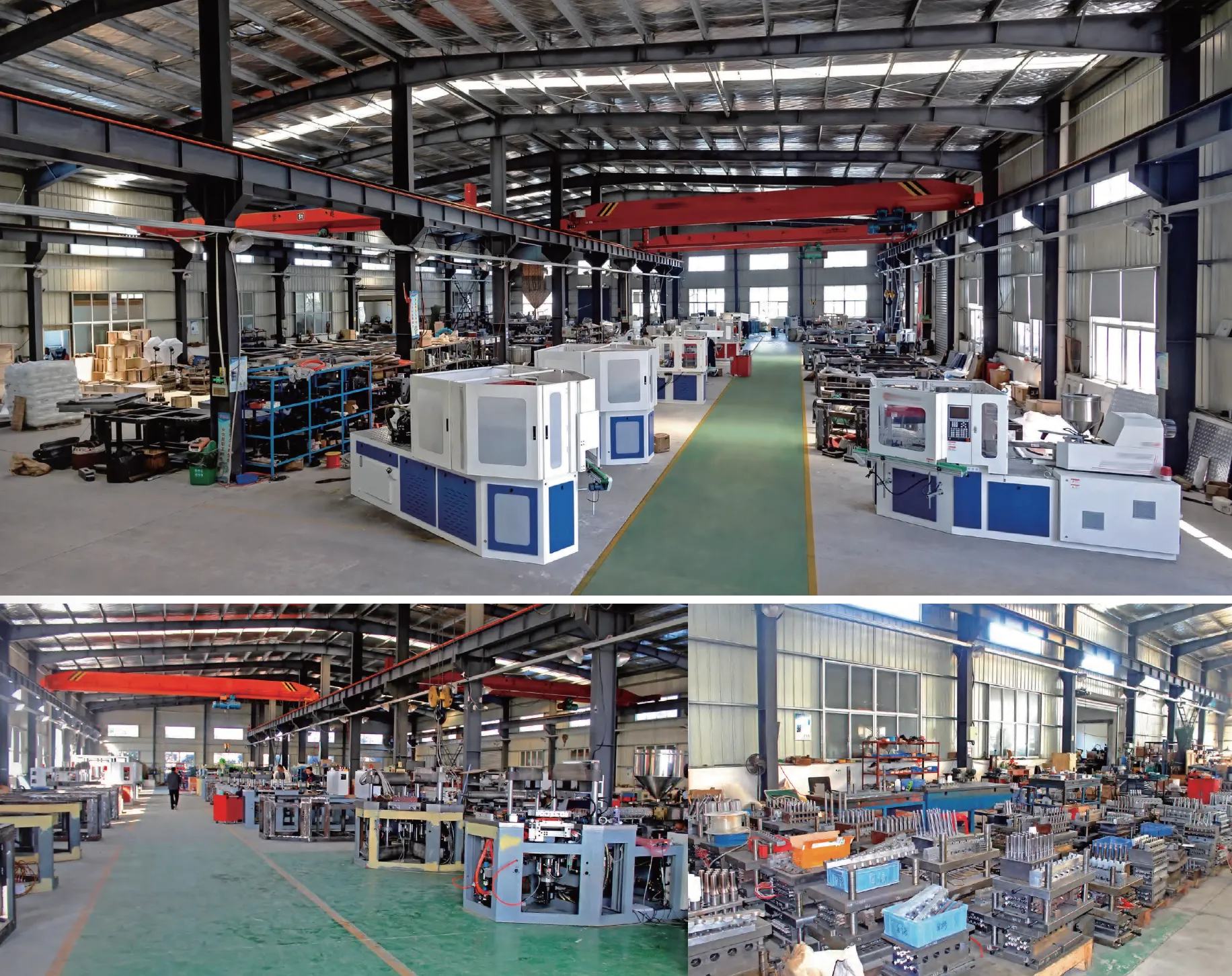
Mexico Ever-Power ISBM Machinery Co., Ltd. is a specialist manufacturer and global supplier of automatic one-step injection blow molding machines and supporting injection-blowing molds. As a focused injection blow molding machine manufacturer, our entire product development, engineering and manufacturing capability is dedicated to this technology, which means our customers receive the benefit of deep, application-specific expertise that general-purpose machinery companies cannot replicate.
Our product range covers injection blow molding machines, extrusion blow molding machines, injection stretch blow molding machines and a full suite of auxiliary equipment. This breadth of capability means that we can advise customers objectively on the most appropriate technology for their specific container design, resin type and production volume, rather than recommending the machine we happen to manufacture regardless of fit. Our engineering team includes specialists in injection-blowing machinery and mold design with extensive theoretical and practical experience across pharmaceutical, cosmetic, food, beverage and chemical packaging applications.
The ZQ60 and the full ZQ series are manufactured to European structural standards with servo drive systems, absolute encoder precision and a bottom-up hygienic design philosophy that matches the operational requirements of GMP-regulated production environments. Our product applications cover pharmaceutical packaging, food packaging, healthcare packaging, cosmetic packaging and general plastic packaging for containers from 1 ml to 1,000 ml in HDPE, LDPE, PP, PS, ABS, EVA, PCTG and corn-based environmental resins.
We deliver a one-stop turnkey project service that begins with container specification review and machine selection, continues through mold engineering, machine manufacture and factory acceptance testing, and extends through shipping, installation, operator training and long-term after-sales technical support. Our 24/7 service hotline, regional technical contacts across Korea, India, Turkey, Russia, South Africa, Brazil, the USA and Mexico, and structured preventive maintenance program ensure that customers receive the operational support they need to keep their injection blow molding machines running productively.
Veelgestelde vragen
Q: What is the difference between an injection blow molding machine and an injection stretch blow molding machine?
A: An injection blow molding machine (IBM) produces bottles in a one-step process where the preform is injected and then immediately expanded by blow air in the same machine cycle without axial stretching. An injection stretch blow molding machine (ISBM) adds a mechanical stretch rod that simultaneously extends the preform axially while blow air expands it radially, producing biaxially oriented containers with higher clarity and strength. The ZQ60 is an IBM machine, making it ideal for HDPE, PP, LDPE, PS and ABS containers where biaxial orientation is not required. For PET water bottles or carbonated drink containers requiring maximum clarity and impact resistance, an ISBM or single stage injection stretch blow molding machine would be the appropriate choice.
Q: Is the ZQ60 a true drop-in replacement for the Jomar IBM65 Model?
A: The ZQ60 is a functional replacement for the Jomar IBM65 in the 60-ton clamping force class, meaning it serves the same bottle size range and production applications. However, because the ZQ60 uses a different platen format (600 x 390 mm vs. the IBM65's 432 x 660 mm), existing IBM65 molds cannot be transferred directly to the ZQ60 without tooling modification or new mold manufacture. Ever-Power provides detailed mold conversion specifications and can recommend partner toolmakers for customers converting from IBM65 tooling. The ZQ60 also delivers superior clamping force (600 kN vs. 460 kN) and higher injection weight capacity (383 g vs. 205 g), so in most cases customers gain capability when they make this replacement.
Q: What bottle volumes and neck sizes can the ZQ60 produce?
A: The ZQ60 processes bottles from approximately 1 ml up to 1,000 ml with suitable tooling. The machine accommodates bottle heights between 15 mm and 200 mm (suitable bottle height range) and bottle diameters up to 120 mm. The maximum cavitation is 14 at 10 ml, 10 at both 30 ml and 60 ml, 8 at 100 ml, 5 at 250 ml, 3 at 500 ml and 2 at 1,000 ml. Neck and thread specifications are fully customizable through mold design and are typically defined to match a standard closure series. Ever-Power's technical team can review your container specification to confirm ZQ60 compatibility before you place an order.
Q: What is the injection blow molding machine price for the ZQ60 and what affects the final cost?
A: The injection blow molding machine price for the ZQ60 varies based on configuration options including screw size (45 mm or 50 mm), automation level, downstream integration requirements and auxiliary equipment. Tooling cost is quoted separately and depends on the number of cavities, bottle complexity and steel specification. To receive an accurate price for injection blow molding machine, please contact Ever-Power with your bottle specification, target material, desired output rate and production environment details. Our sales engineers will prepare a detailed technical and commercial proposal within 48 hours.
Q: Can the ZQ60 process PET resin for transparent bottle production?
A: The ZQ60 is optimized for HDPE, PP, LDPE, transparent PS, ABS, PCTG and EVA resins. PET processing in an injection blow molding context requires extremely precise temperature and pressure control because PET has a very narrow processing window and is sensitive to hydrolytic degradation if moisture is not reduced below 50 ppm before processing. While the ZQ60 can mechanically process PET, customers requiring large-volume clear PET bottles should consider the two-stage ISBM process or a specialized PET injection blow molding machine platform designed specifically for PET. Our technical team can advise on the most appropriate machine configuration for your specific PET application requirements.
Q: How does the all-electric drive system of the ZQ60 reduce maintenance costs?
A: Hydraulic machines require regular oil changes (typically every 2,000 to 4,000 hours), oil filter replacement, hydraulic seal maintenance and oil cooler servicing. The ZQ60's all-servo drive eliminates all of these maintenance tasks because there is no hydraulic oil circuit in the machine motion system. Servo motor and ball screw maintenance is typically limited to periodic lubrication and bearing inspection at much longer service intervals. The electric cylinder injection unit similarly reduces the maintenance tasks associated with conventional hydraulic injection cylinders. Over a five-year production period, the elimination of hydraulic consumables can represent a significant reduction in planned maintenance expenditure.
Q: What utilities and floor space does the ZQ60 require?
A: The ZQ60 requires compressed air at 0.7 to 1.2 MPa with a minimum capacity of 0.7 m3/min, cooling water at 0.3 to 0.4 MPa with a flow rate of 4 m3/h, and a three-phase electrical supply for a total connected power of 37 kW (operating demand typically 52-70% of connected power). The machine footprint is 3.8 m long x 1.4 m wide with a height of 2.18 m and a net weight of 5 tons. Additional space is needed for the exit conveyor and any downstream equipment connected to it. The compact footprint makes the ZQ60 suitable for plant layouts with constrained floor space.
Q: Does Ever-Power offer used PET injection blow molding machines or only new machines?
A: Ever-Power primarily sells new injection blow molding machines including the ZQ60 and other models in the ZQ series. We do not maintain a standard inventory of used PET injection blow molding machines. Occasionally, demonstration or returned machines may be available as certified reconditioned units, but availability is not guaranteed. Customers looking for an economical entry point are encouraged to contact our sales team to discuss current promotions, financing options and the total cost of ownership comparison between a new ZQ60 and the ongoing operational cost of maintaining an aging hydraulic IBM machine in production.
Q: What after-sales service and spare parts support does Ever-Power provide?
A: Every ZQ60 purchase includes factory installation and commissioning by experienced senior engineers, comprehensive operator and maintenance training, and a standard warranty period. The Ever-Power service hotline is staffed 24 hours a day, seven days a week. A dedicated spare parts inventory is maintained to support fast dispatch of critical wear components to minimize machine downtime. Preventive maintenance reminder services alert customers when scheduled service intervals are due. Regional service contacts are available in key markets including the Americas, South and Southeast Asia, the Middle East and Europe.
Q: Can the ZQ60 be configured as a led bulb cover injection blow molding machine?
A: Yes. The ZQ60 can be configured with specialized tooling for LED bulb cover production in transparent PS or PC-like materials. LED bulb covers require precise wall thickness control, very high optical clarity and tight dimensional tolerances on the neck mounting geometry. The ZQ60's servo injection precision and balanced hot runner make it technically suitable for this application. Customers should consult with our engineering team early in the project to ensure that the material and optical specifications are achievable within the ZQ60's process parameters, and to design tooling that optimizes light transmission uniformity in the finished cover.
Q: How does the ZQ60 compare to Aoki injection blow molding machines?
A: Aoki is a Japanese manufacturer known primarily for its injection stretch blow molding (ISBM) machines and one-stage PET machines, which occupy a different process category from the ZQ60's injection blow molding capability. The ZQ60 is positioned as a replacement of Aoki injection blow molding machine equivalent in the HDPE and PP container market where biaxial stretch is not required. The ZQ60 delivers competitive performance in terms of clamping force, cavitation and cycle speed, with the advantage of an all-servo platform that eliminates hydraulic oil. For customers operating Aoki IBM-series machines who are evaluating replacement options, Ever-Power can provide a detailed technical comparison on request.
Klantenrecensies
Ji-Won Park, Pharmaceutical Packaging, Korea
"We replaced our old Jomar IBM65 with the ZQ60 about eight months ago and the difference is night and day. The cycle time is genuinely faster and we are running 10 cavities at 30 ml with zero flash issues. Our power bill in this section of the plant has come down noticeably. Install team from Ever-Power was here within the delivery window and had us up and running in three days. Very happy with the machine and will look at their ZQ80 next year for our 500 ml line."
Priya Sharma, Cosmetic Packaging, India
"Our cosmetic brand needed 100 ml lotion bottles in transparent PS with a high-gloss finish. We evaluated three injection blow molding machine manufacturers and selected Ever-Power. The ZQ60 delivered the surface clarity we needed straight out of the mold without any post-process polishing. We have been running the machine for six months and produced over two million bottles with no quality rejects on the optical inspection line. The after-sales team responds to WhatsApp queries within two hours."
Mehmet Yilmaz, Chemical Packaging, Turkey
"We are running 100 ml HDPE chemical bottles on our ZQ60 and the thread accuracy is excellent. Our closure supplier ran a batch test on the first 50,000 bottles and all passed the torque and leak criteria without any adjustment to the closure specification. The machine footprint is smaller than we expected which was a bonus in our plant layout. Shipping from China to Turkey took about 35 days by sea and the machine arrived in perfect condition, well packed. The training videos helped our operators get comfortable with the HMI quickly."
Dmitri Volkov, Personal Care Packaging, Russia
"We use the ZQ60 to produce 350 ml PP bottles for a personal care brand. The servo drive really does make a difference to noise level in the plant, which our workers appreciate. Energy savings compared to our old hydraulic machine were visible from the first electricity bill. One minor issue was that the cooling water connection fitting did not match our local standard pipe size, but Ever-Power's tech support sent the correct adaptor within a week. Overall a solid machine and the price was competitive compared to European brands we looked at."
Thandiwe Dlamini, Food Packaging, South Africa
"Formosa Plastics SA ordered two ZQ60 units, one for 300 ml and one for 1 litre HDPE bottles. Both machines have been running without major stoppages for over a year now. The simultaneous three-station operation is the key advantage for us because it keeps our output rates high enough to supply our retail customer's volumes. We connected a leak tester to the exit conveyor and it runs automatically, rejecting about 0.02% of bottles on average. Very low defect rate. We will definitely buy from Ever-Power again."
Carlos Zandei, Cosmetic Industry, Brazil
"We are a Brazilian packaging company producing 120 ml LDPE squeeze bottles for the cosmetic sector. The ZQ60 was recommended by a contact in the industry who was already running one. The oil-free mold zone was important to us because we supply GMP-certified customers. The machine has been in operation for nine months and we have had zero contamination issues. Ever-Power's South American technical contact was very responsive during the commissioning period and helped us dial in the blow parameters for LDPE which can be tricky to optimize."
John Hartwell, Beverage Packaging, USA
"We run the ZQ60 for 100 ml PS bottles for a lactic acid beverage brand here in the US. Machine has been in production for about a year. The absolute encoder system is a real advantage because after a power outage the machine homes itself and restarts without any manual repositioning, which saves significant downtime. Output of 105,000 bottles per day matches what was specified on the datasheet. Parts availability from the US-based service contact has been good. This is a capable machine at a price point that makes the ROI calculation straightforward."
Roberto Medina, Pharmaceutical Industry, Mexico
"Our company in Mexico produces 400 ml PP bottles for household cleaning products. We installed the ZQ60 ten months ago and the machine operates stably in double shifts. The Ever-Power Mexico technical team provided us with three days of on-site training and our operators mastered the HMI system quickly. Energy consumption is significantly lower compared to our previous hydraulic machine. We recommend Ever-Power as a reliable injection blow molding machine manufacturer for the Latin American market."
Kim Seung-Ho, Food Packaging, Korea
"We source the ZQ60 as a direct IBM machine replacement for two Jomar IBM65 lines we were retiring. The swap-in was straightforward because Ever-Power provided detailed dimensional matching data for the tooling conversion. The new molds ran first-article-approved samples on day two after installation. Most impressive to our quality team was the consistency of gram weight across all ten cavities at 30 ml: standard deviation was under 0.4 g which is better than our previous machines achieved at half the cavitation. A genuinely competitive full electric injection blow molding machine."
Aanvullende informatie
| Bewerkt door | Yjx |
|---|