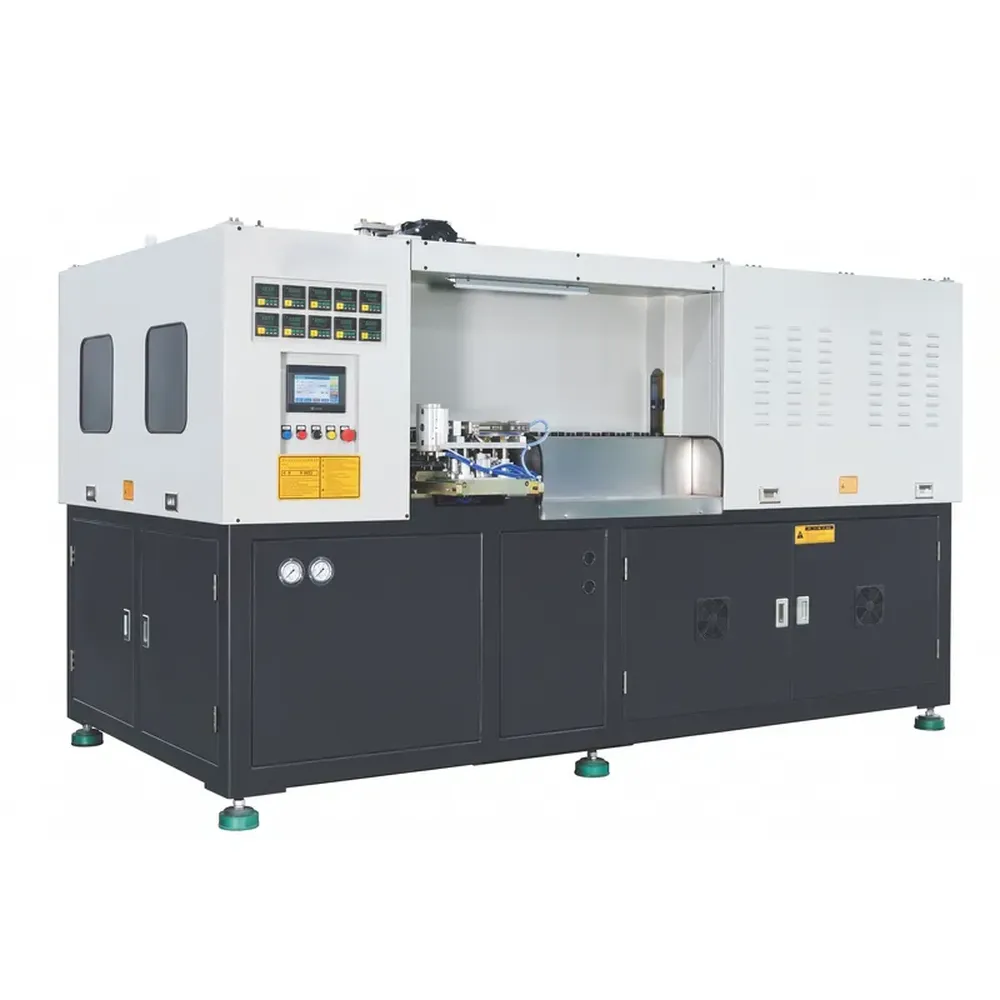
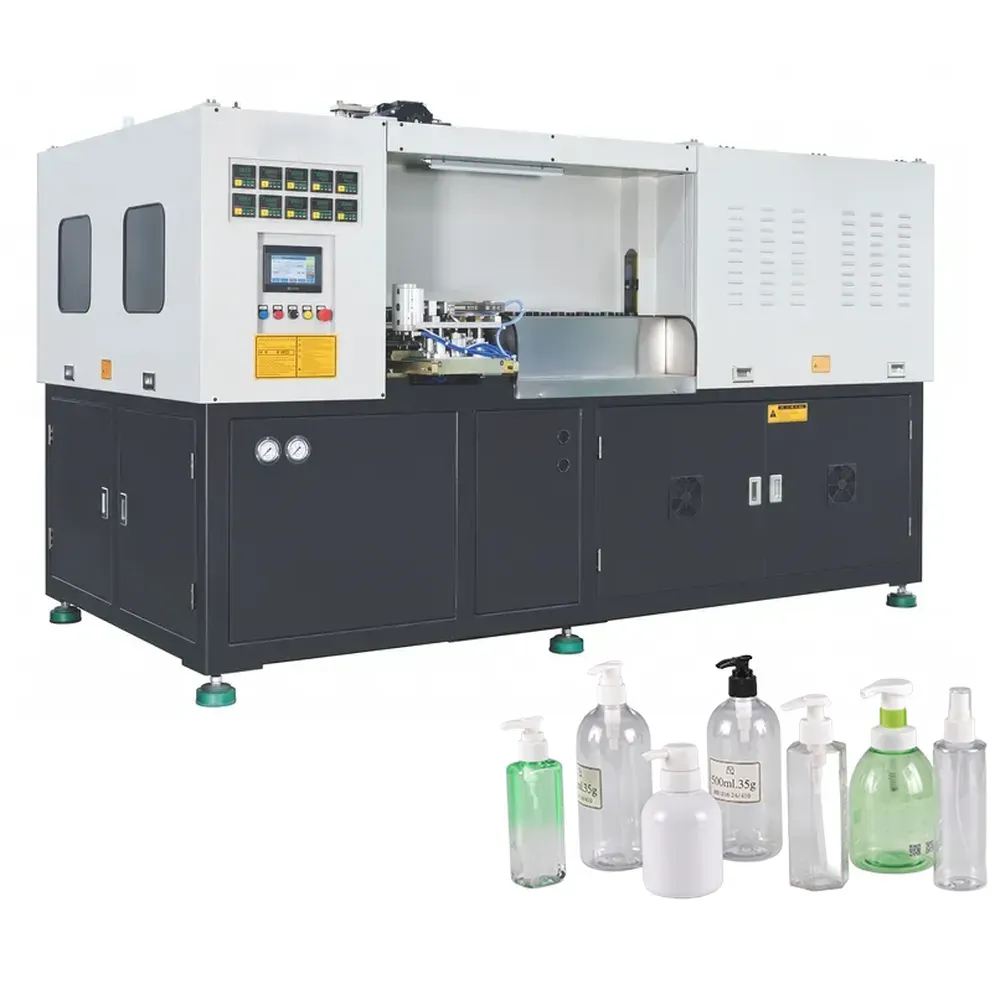
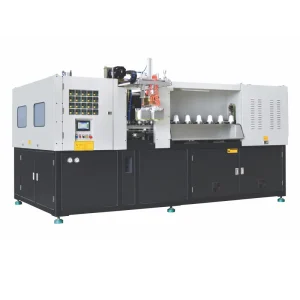
EPA.ES-2C200 Fully Automatic Blow Molding Machine for Daily Chemicals & Cosmetic Bottles
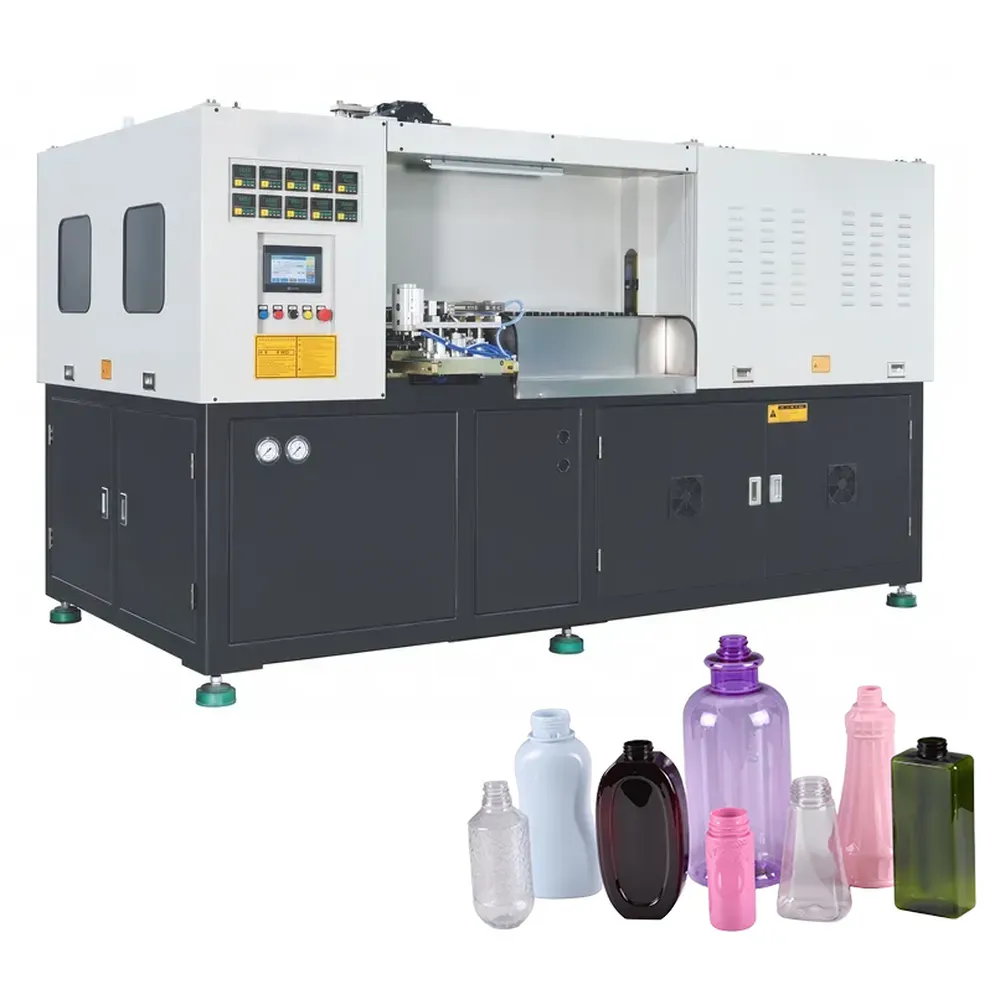
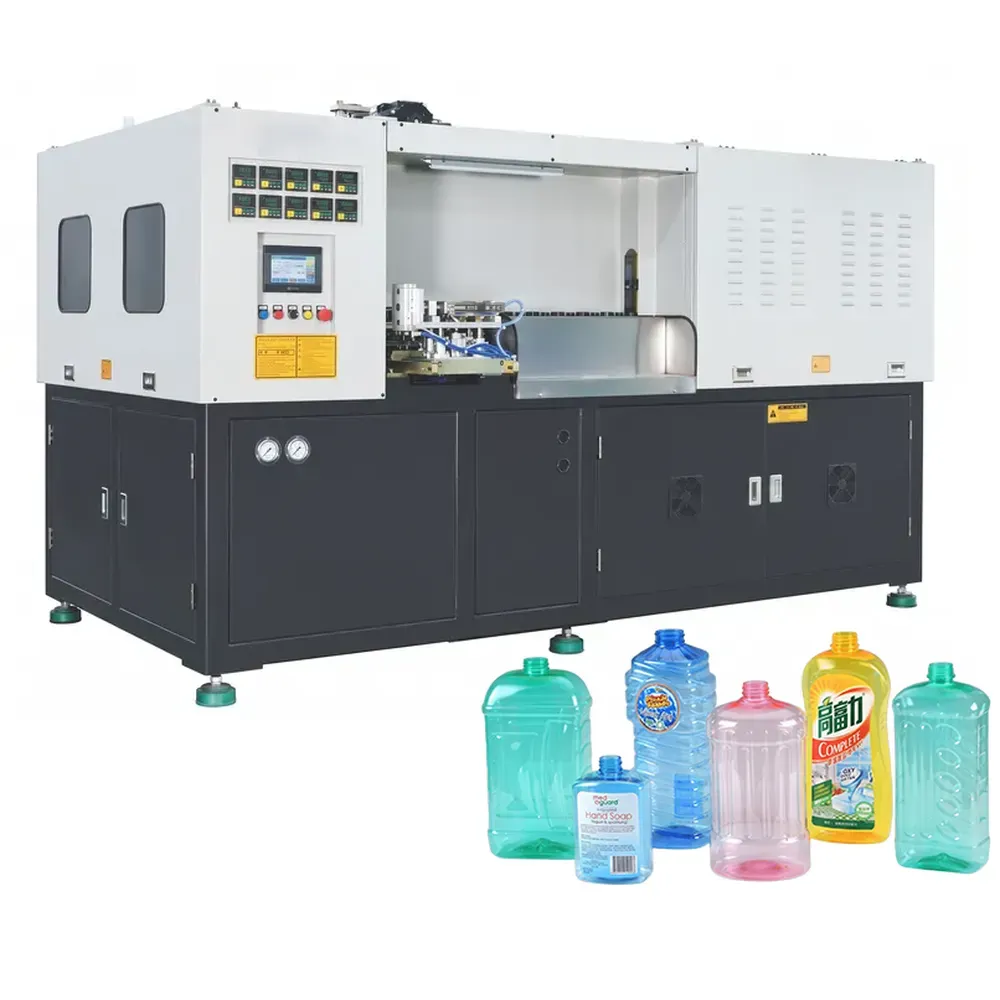
The EPA.ES-2C200 Fully Automatic Blow Molding Machine delivers up to 1,600 bottles per hour with 2-cavity precision engineering for PET and PETG daily chemical and cosmetic packaging. Purpose-built for containers from 30 ml to 5,000 ml, it handles complex irregular shapes with high dimensional accuracy. Driven by internationally acclaimed servo motors and a fully automated control system, this automatic PET blow molding machine reduces energy consumption while sustaining stable, high-speed output. Its compact 4,300 x 2,100 x 2,500 mm footprint fits standard production floors, making it the preferred plastic blow molding machine for shampoo, lotion, serum, and personal care bottle manufacturing worldwide.
The EPA.ES-2C200 Fully Automatic Blow Molding Machine for Daily Chemicals and Cosmetic Bottles adopts internationally renowned servo motors, reducers, and electrical control systems to ensure stable, reliable, and energy-efficient operation. Designed specifically for PET and PETG materials, this advanced blow molding machine can produce a wide variety of cosmetic bottle shapes and neck finishes, with particular expertise in manufacturing complex and irregularly shaped bottles. With high molding precision and broad applicability, it efficiently handles container sizes from 30 ml to 5,000 ml, delivering an output of up to 1,600 bottles per hour. This makes it an ideal fully automatic blow molding machine solution for high-volume daily chemical and cosmetic packaging production lines.
Compact and operator-friendly, the EPA.ES-2C200 is engineered for real-world factory environments where floor space and energy budgets are equally important. Its 2-cavity configuration with a 500 mm stretching stroke and 30 kg/cm² blowing pressure gives packaging manufacturers the process stability needed for premium cosmetic packaging, personal care containers, household cleaning product bottles, and a full spectrum of daily chemical packaging types. As a trusted plastic blow molding machine supplier, Ever-Power backs every machine with rigorous pre-shipment testing, professional on-site commissioning, and lifetime technical support to help your business enhance product quality and global market competitiveness.
Technical Parameter
| Model | Unit | EPA.ES-2C200 | |
|---|---|---|---|
| Molding | Clamping stroke | mm | 215 |
| Mold-open distance | mm | 499 | |
| Mold-close distance | mm | 284 | |
| Stretching stroke | mm | 500 | |
| Mold-open distance | mm | 50 | |
| Mold-close distance | mm | 200 | |
| Preform Holder | 50 | ||
| Cavities | 2 | ||
| Container | Max.Container Volume | ml | 5000 |
| Neck Diameter Range | mm | 138 | |
| Max.Container Diameter | mm | 180 | |
| Max.Container Height | mm | 350 | |
| Theoretical Output | bph | 1600 | |
| Electrical System | Max.Heating Power | kw | 85 |
| Heating Power | kw | 35 | |
| Air System | Operating Pressure | kg/cm² | 7 |
| Low Pressure Air Consumption | ltr/min | 600 | |
| Blowing Pressure | kg/cm² | 30 | |
| High-pressure air consumption | ltr/min | 6000 | |
| Cooling water | Operating Pressure | kg/cm² | 5-6 |
| Temperature | ℃ | 8-12 | |
| Flow rate | ltr/min | 91.4 | |
| Machine | Size (L*W*H) | mm | 4300*2100*2500 |
| Weight | kg | 4500 | |
Features of EPA.ES-2C200 Cosmetic Bottle Blow Molding Machine
1. High-Quality and Reliable Core Components
Key components are sourced from internationally renowned brands, including servo motors, reducers, electrical controls, and precision sensors. This ensures stable, durable operation from the ground up. The servo drive system responds rapidly and delivers high control accuracy, effectively lowering failure rates and extending overall equipment service life. Manufacturers benefit from dramatically reduced unplanned downtime and lower total cost of ownership throughout the machine lifecycle, making it one of the most dependable automatic blow molding machines available on the market today.
2. Strong Adaptability and Diverse Bottle Styles
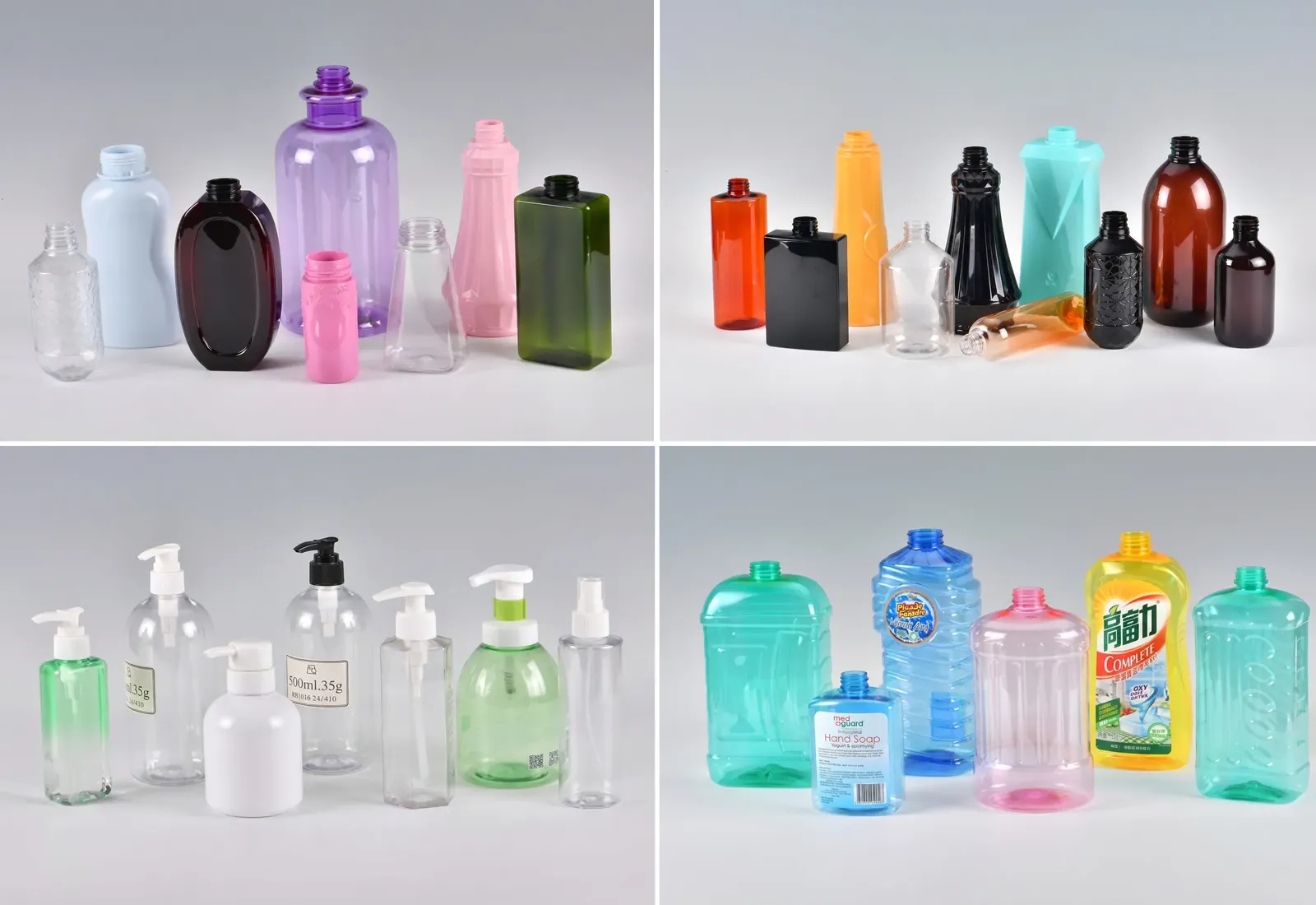
Capable of producing containers from 30 ml to 5,000 ml, the EPA.ES-2C200 offers flexible adjustment of bottle body diameter, height, and neck finish. As a professional-grade PET bottle blow molding machine, it excels with PET and PETG materials and handles standard cylindrical bottles and complex irregular shapes equally well. The series covers lotion bottles, toner bottles, serum dispensers, pump bottles, and a broad range of cosmetic and daily chemical containers. Its wide versatility makes it a true cosmetic bottle blow molding machine for diverse product lines.
3. High Efficiency and Energy Savings
The EPA.ES-2C200 runs a standard heating power of 35 kW combined with servo drive technology, substantially cutting energy consumption compared to traditional hydraulic machines. A blowing pressure of 30 kg/cm2 sustains outstanding extrusion volume and blow molding efficiency, achieving up to 1,600 bottles per hour. This combination of high-speed output and intelligent energy management showcases the hallmarks of a modern high speed blow molding machine, helping daily chemical and cosmetic manufacturers control operating costs while scaling production output to meet global market demand.
4. High Stability and Easy Maintenance
A scientifically optimized structural design keeps the cooling water temperature between 8 and 12 degrees Celsius, ensuring consistent bottle molding quality across every production shift. Air pressure and electrical parameters are factory-configured for optimal performance, resulting in a low operational failure rate. Daily maintenance procedures are straightforward, reducing scheduled downtime and labor costs. Spare parts are standardized and readily available, so your production team can resolve issues quickly and keep the blow molding machine process running smoothly.
5. Compact Structure and Small Footprint
With overall dimensions of 4,300 x 2,100 x 2,500 mm and a machine weight of 4,500 kg, the EPA.ES-2C200 is engineered to fit within standard factory floor layouts without requiring costly facility renovations. This space-efficient industrial blow molding machine design makes it equally suitable for new facilities and capacity upgrades in established cosmetic packaging plants. Despite its compact footprint, the machine delivers medium-to-large-scale production performance, offering manufacturers a practical, high-value solution for optimizing their production space and capital investment.
6. Fully Automatic Operation
The EPA.ES-2C200 is a fully automatic blow molding machine that integrates preform feeding, heating, stretching, blowing, and bottle ejection into one seamless, unattended cycle. Full automation dramatically reduces dependence on manual labor, minimizes human error, and sustains consistent output quality over extended production runs. The intelligent human-machine interface allows operators to set, monitor, and adjust parameters in real time, making it accessible even for newly trained staff. This fully automated approach reflects the gold standard in modern plastic bottle blow molding machine design for the daily chemical and cosmetic packaging industries.
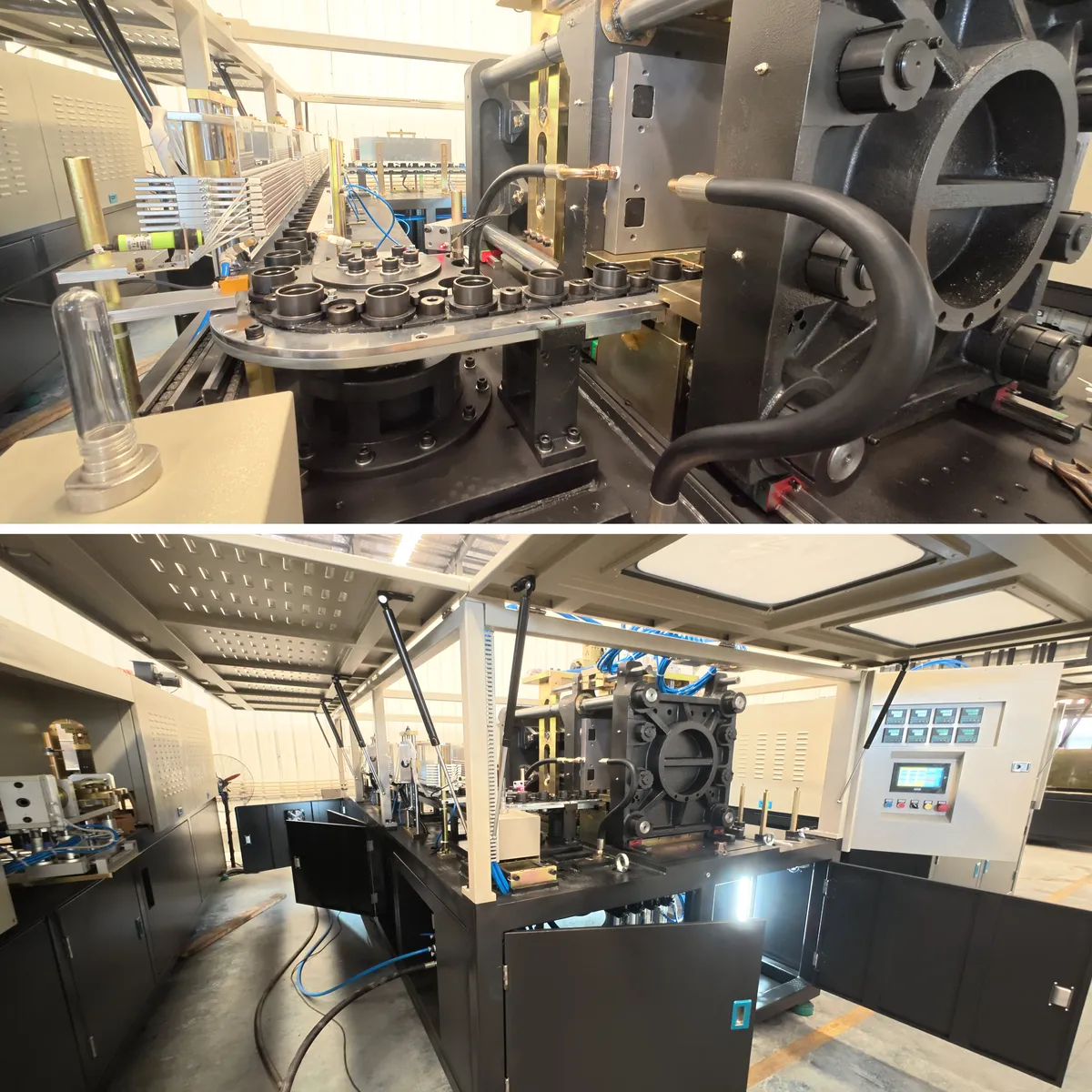
Working Principle of EPA.ES-2C200 Plastic Blow Molding Machine
1. Raw Material Preparation
PET and PETG pellets are screened, blended, and dried to the required moisture level before entering the production cycle. Strict raw material control at this stage is essential for maintaining consistent bottle clarity, wall uniformity, and mechanical strength. Improperly prepared resin is the leading cause of defects in any blow molding machine process, so Ever-Power's system integrates interlocked material handling to prevent contamination and process interruptions.
2. Injection Molding of Preforms
During the injection stretch blow molding phase, precisely selected and dried resin is injected into the preform mold. After thorough heating, melting, and plasticization, the resin is injected under controlled pressure to produce a test-tube-shaped preform with finished neck threads. Temperature, injection pressure, and screw speed are all governed by the intelligent PLC control system to ensure each preform meets dimensional specifications before advancing to the next stage.
3. Infrared Preheating
Preforms pass through a multi-zone infrared heating oven where each heating zone can be independently adjusted to deliver precise and uniform thermal energy across the preform body. This stage raises the preform temperature to the optimal blow molding window, enhancing the plasticity and flexibility of the PET material while avoiding overheating that could cause crystallization or surface defects. Proper preheating is critical to achieving consistent wall thickness and optical clarity in finished cosmetic and daily chemical containers.
4. Stretch Blow Molding
The heated preform is transferred into the blow mold, where a precision stretch rod mechanically elongates it axially while high-pressure air at 30 kg/cm2 simultaneously expands it radially against the chilled mold walls. This biaxial orientation process gives PET containers their renowned glass-like clarity, superior tensile strength, and excellent gas barrier properties. The EPA.ES-2C200's 500 mm stretching stroke accommodates tall cosmetic bottles and large daily chemical containers up to 5,000 ml with consistent dimensional accuracy across every cycle of the automatic blow molding machine.
Applications of EPA.ES-2C200 Fully Automatic Blow Molding Machine
Shampoo and Hair Care Bottles
The EPA.ES-2C200 is widely used for producing shampoo, conditioner, and hair treatment bottles in PET and PETG. Its precision blow molding process delivers consistent wall thickness, leak-proof neck seals, and crystal-clear transparency that showcases product color and branding. The machine handles various pump and flip-cap neck finishes, making it a go-to daily chemical bottle blow molding machine for leading hair care brands worldwide.
Shower Gel and Body Wash Containers
High-speed production of shower gel and body wash bottles demands both dimensional accuracy and aesthetic appeal. The EPA.ES-2C200 excels at producing smooth, high-gloss PET containers with uniform wall distribution, enabling premium printed labels and decorative finishes to adhere perfectly. As a specialized plastic bottle blow molding machine, it supports multiple container sizes from travel-size to family-size formats without major tooling changes.
Skincare Jars and Lotion Bottles
Luxury skincare packaging requires flawless optical clarity and dimensional precision. The machine's 2-cavity injection stretch blow molding process delivers lotion bottles, serum dispensers, toner bottles, and face cream jars with excellent surface finish and tight neck tolerances. Its ability to process PETG adds extra flexibility for colored or frosted cosmetic packaging aesthetics frequently demanded by premium skincare brands globally.
Perfume and Fragrance Bottles
Fragrance packaging places exceptionally high demands on bottle geometry and surface quality. The EPA.ES-2C200's expertise in manufacturing complex and irregularly shaped bottles makes it ideal for producing distinctive perfume and eau de toilette containers in PET and PETG. Tight dimensional control across the neck, shoulder, and body ensures perfect compatibility with precision crimping machinery used on fragrance filling lines worldwide.
Household Cleaning Product Bottles
Laundry detergents, fabric softeners, dishwashing liquids, and multi-surface cleaners all require robust PET containers with secure closures and excellent chemical resistance. The EPA.ES-2C200 produces containers from 100 ml up to 5,000 ml, covering everything from concentrated product refill pouches to large trigger-spray bottles. Its stable blow molding machine process ensures consistent wall strength even for large-volume containers requiring structural rigidity.
Oral Care and Hand Sanitizer Bottles
Mouthwash, toothpaste gel, hand sanitizer, and liquid soap containers demand high barrier performance and precise neck finishes compatible with pump, flip-top, and disc-cap dispensing systems. The EPA.ES-2C200's controlled blow molding machine process produces containers with uniform base thickness and neck roundness well within industry tolerances, meeting the hygiene and aesthetics standards required by global oral care and personal hygiene brands.
Specialty Cosmetic Packaging
From airless pump bottles and mist spray containers to irregular-shaped foundation bottles and wide-mouth jars, the EPA.ES-2C200 is a custom blow molding machine solution for specialty cosmetic packaging challenges. Its advanced mold compatibility allows frequent changeovers, making it suitable for cosmetic contract manufacturers and OEM suppliers who run multiple packaging designs across a shared production platform.
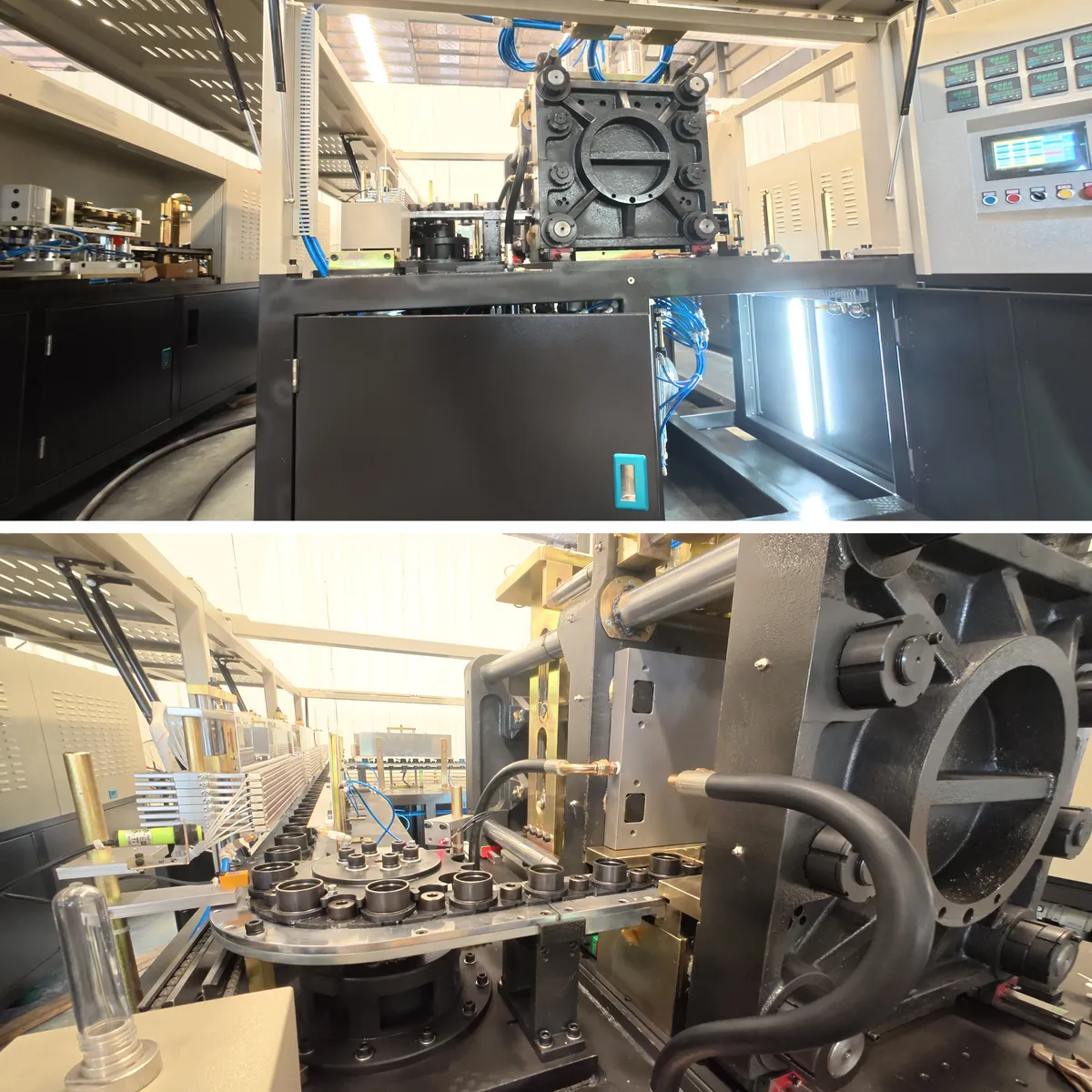
EPA.ES-2C200 Daily Chemical Blow Molding Machine Parts
Automatic Feeding System
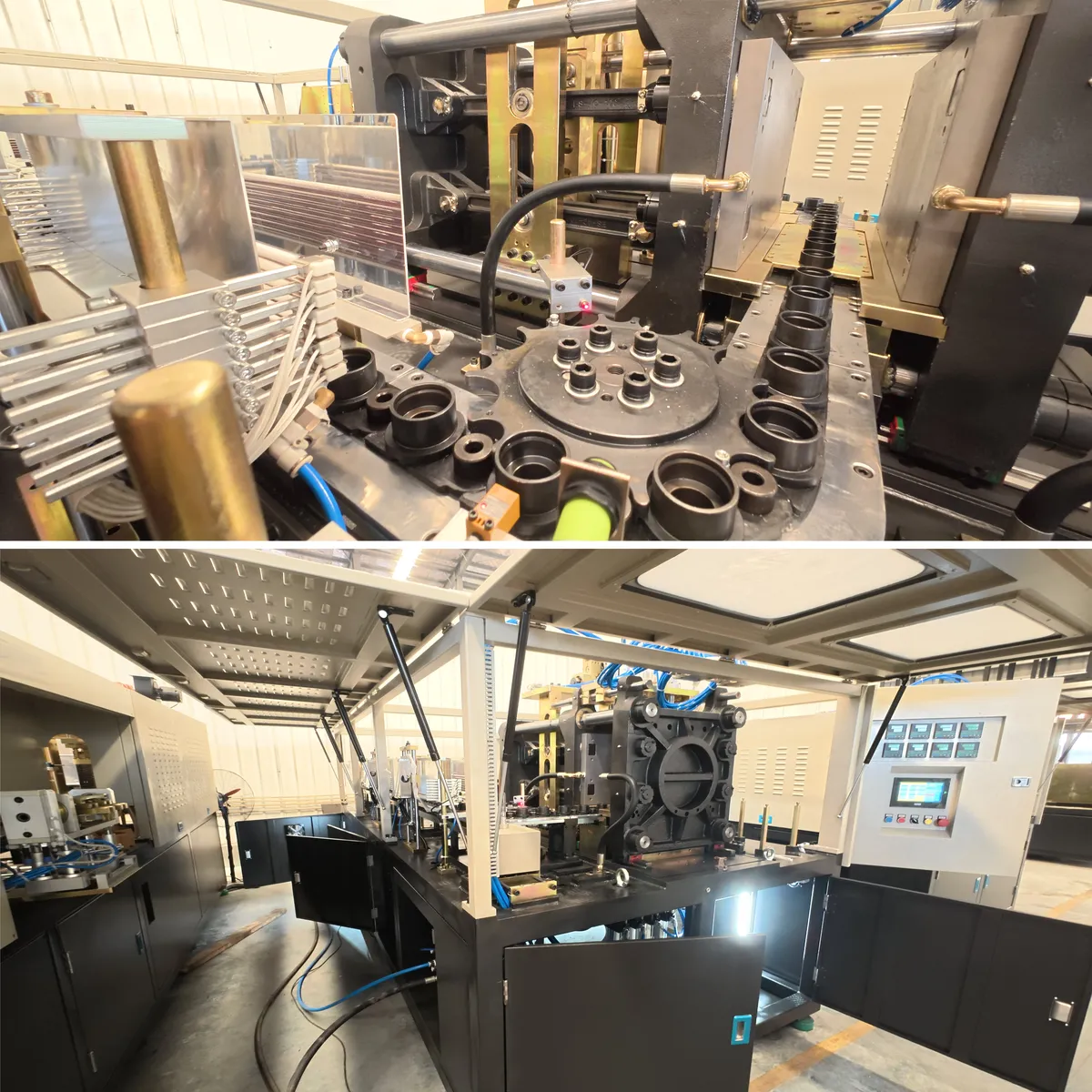
The automated feeding system consists of a hopper, preform conveyor, orientator, and gravity rails. It receives raw PET or PETG pellets and transfers them precisely to the preform loading station without manual intervention. Integrated sensors monitor feed rate continuously, preventing blockages or starvation that would otherwise disrupt the blow molding machine process. This system eliminates manual loading, reducing labor requirements and contamination risks on the daily chemical packaging production floor.
Preform Tilter and Orientator
The preform tilter automatically receives bulk preforms and orients them neck-up before transferring them to the infeed conveyor. Precise mechanical orientation ensures every preform enters the heating oven in the correct attitude, which is critical for uniform infrared energy absorption. Consistent preform orientation is a fundamental requirement for producing cosmetic bottles with repeatable wall thickness distribution and dimensional accuracy in a fully automatic blow molding machine.
Infrared Heating Oven
The multi-zone infrared heating oven raises preform temperature to the precise blow molding window required for PET and PETG. Each heating zone is independently programmable, allowing the operator to create tailored thermal profiles for different container sizes and wall thicknesses. Efficient reflector geometry minimizes energy waste while maximizing heat penetration, directly contributing to the energy-saving credentials of this automatic PET blow molding machine.
Servo Clamping and Stretch-Blow Station
At the blow station, servo-driven clamps close the mold with consistent force and speed. The precision stretch rod mechanically extends the preform axially while high-pressure air at 30 kg/cm2 inflates the bottle radially. This biaxial orientation is what gives PET containers their superior strength, clarity, and barrier properties. The servo clamping mechanism of this injection stretch blow molding machine eliminates hydraulic oil dependency, reducing maintenance requirements and improving cycle-to-cycle repeatability.
Compressor Station
The compressor station comprises low-pressure and high-pressure air circuits that supply the blowing system. Low-pressure air at 7 kg/cm2 handles preform transfer and ancillary functions, while high-pressure air at 30 kg/cm2 drives the stretch-blow process. The air tank, boosters, connectors, and control valves are integrated into a compact station optimized for reliable, continuous duty operation. Stable air supply is foundational to achieving consistent bottle quality in any high speed blow molding machine application.
Water Cooling System
The closed-loop water cooling system circulates chilled water through the blow mold at 8 to 12 degrees Celsius at a flow rate of 91.4 liters per minute. Rapid and uniform mold cooling is essential for setting the bottle geometry, maintaining dimensional stability, and shortening the overall cycle time. The system's operating pressure of 5 to 6 kg/cm2 ensures adequate coolant delivery across the full mold surface, directly contributing to the consistent output quality that defines a reliable plastic blow molding machine.
Intelligent PLC Control System
The touch-screen PLC control system provides centralized management of all machine functions, including heating zone temperatures, blow pressure, stretch rod timing, and conveyor speed. Operators can store and recall process recipes for different bottle types, enabling rapid changeovers between product SKUs. Real-time diagnostics and alarm systems alert operators to deviations before they become defects, maintaining the production efficiency expected of a fully automatic blow molding machine serving high-output cosmetic packaging lines.
Bottle Exit Conveyor
Finished bottles are gently transferred from the blow station to the exit conveyor, which moves them smoothly toward downstream filling, capping, or labeling equipment. The conveyor speed is synchronized with the blow molding machine cycle to prevent bottle accumulation or collisions. Custom conveyor configurations are available to integrate directly with existing packaging lines, ensuring the EPA.ES-2C200 fits seamlessly into complete turnkey daily chemical and cosmetic bottle manufacturing systems.
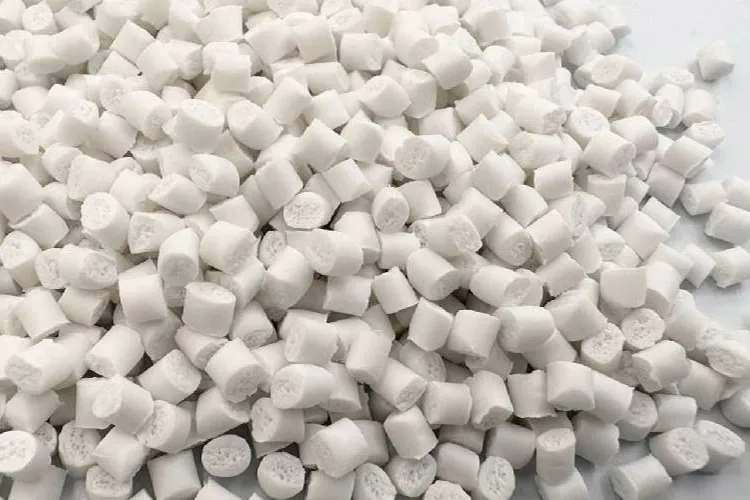
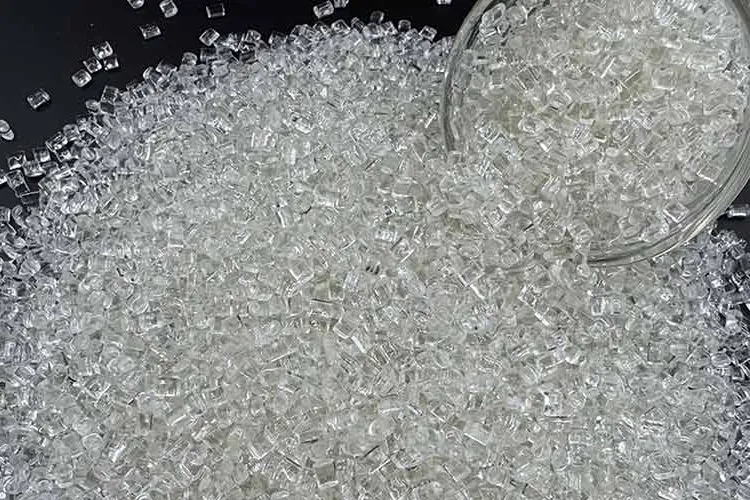
Compatible Raw Materials for PET Blow Molding Machine
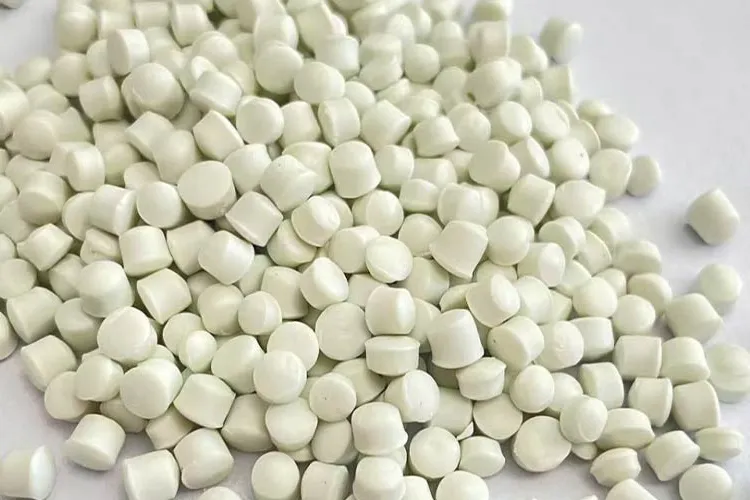
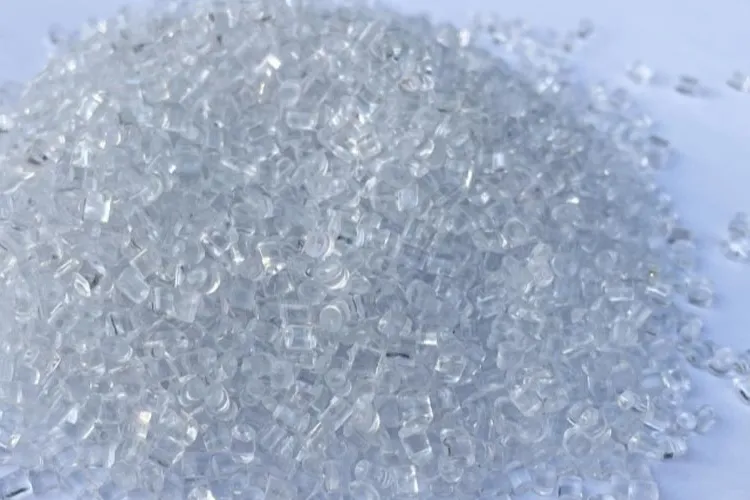
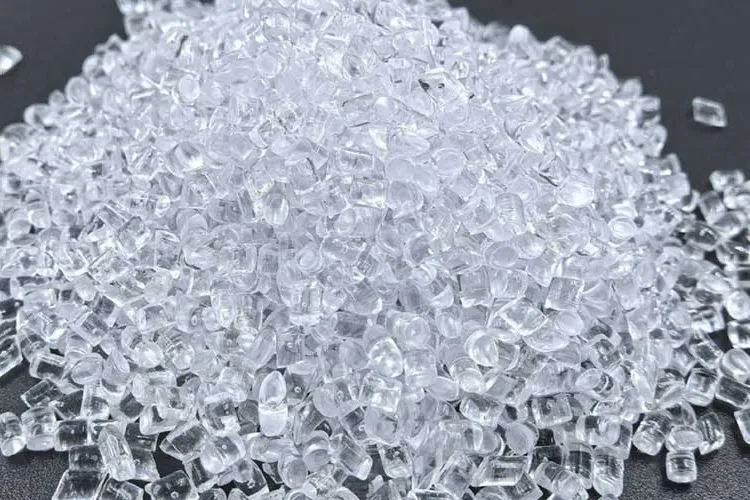
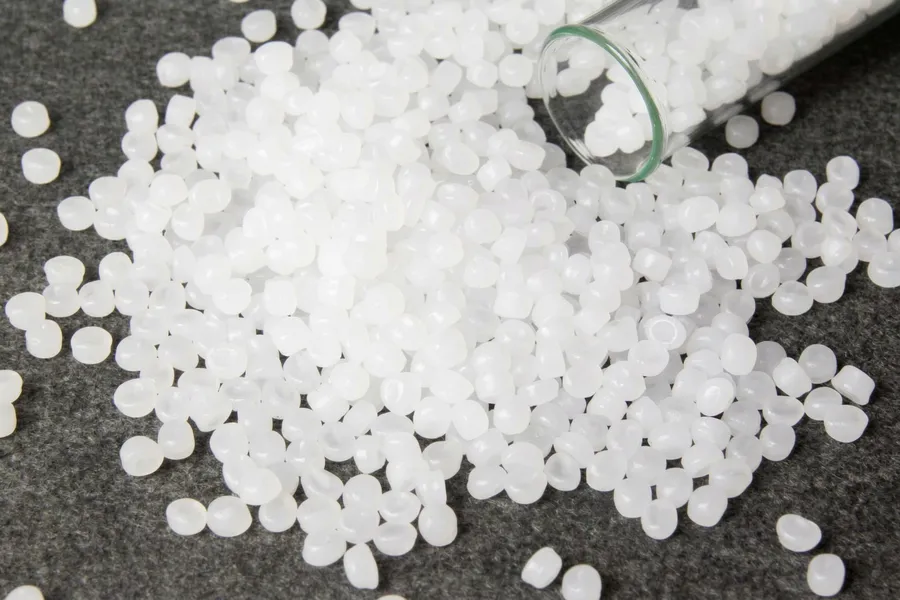
PET (Polyethylene Terephthalate)
PET is the primary material for this machine and the most widely used resin in the cosmetic and daily chemical packaging industries. Its exceptional optical clarity, lightweight nature, high tensile strength, and excellent gas barrier properties make it the default choice for shampoo, lotion, water, and personal care containers globally. PET is fully recyclable and meets international food-contact and pharmaceutical packaging standards.
PETG (Glycol-Modified PET)
PETG offers all the transparency benefits of standard PET with improved impact resistance, greater flexibility, and excellent compatibility with complex mold geometries. It is especially popular for premium cosmetic packaging where designers require unusual bottle shapes, frosted finishes, or colored translucent effects. PETG processes at slightly lower temperatures than standard PET, requiring the multi-zone heating system to be adjusted accordingly for optimal results.
HDPE (High-Density Polyethylene)
HDPE is a highly versatile thermoplastic used for opaque daily chemical containers such as laundry detergents, industrial cleaners, and household chemical products. Its outstanding impact resistance and chemical inertness make it suitable for aggressive cleaning formulations. While HDPE is more commonly processed by extrusion blow molding machines, certain machine configurations within the EPA series can accommodate HDPE resins for specific daily chemical packaging applications with appropriate tooling.
PP (Polypropylene)
Polypropylene offers excellent heat resistance, making it suitable for hot-fill applications and products requiring sterilization. PP is widely used in pharmaceutical packaging, food containers, and medical supplies. Its semi-crystalline structure requires careful temperature management during the blow molding process, and the EPA.ES-2C200's independent heating zone control ensures the thermal precision needed for consistent PP container production.
PC (Polycarbonate)
Polycarbonate is prized for its exceptional impact strength, optical clarity, and dimensional stability over a wide temperature range. It is used in high-value packaging applications such as reusable water bottles, baby feeding bottles, and laboratory containers. PC processing demands precise temperature control due to its high processing temperature and moisture sensitivity, requirements that the EPA.ES-2C200's advanced control architecture is well-suited to meet.
PE (Polyethylene) and PS (Polystyrene)
Standard polyethylene variants including LDPE are used for squeezable bottles, tubes, and flexible packaging requiring softness and pliability. Polystyrene is used in certain disposable container applications where rigidity and low cost are prioritized over barrier performance. Both materials can be processed using appropriate blow molding configurations, and Ever-Power's technical team can advise on optimal machine settings and preform designs for each specific resin.
Specialty and Sustainable Resins
Emerging bioplastics such as PLA and bio-PET are gaining traction in sustainable cosmetic packaging as brands respond to consumer demand for lower environmental impact. PVC, while less common today due to environmental regulations, remains relevant in certain industrial chemical packaging requiring specific solvent resistance. Ever-Power's engineering team can evaluate material compatibility and recommend process adjustments to accommodate sustainability-driven material transitions across the blow molding machine lineup.
 |
 |
 |
 |
 |
 |
How Temperature Control Influences Blow Molding Quality
Temperature control plays a critical role in plastic blow molding production. Even with an advanced blow molding machine, unstable temperature conditions can cause defects such as uneven wall thickness, poor surface quality, and inconsistent product strength. During the molding process, PET and PETG materials must reach the correct processing temperature to achieve proper flow and expansion. Too low and the material does not form evenly. Too high and plastic degradation occurs, extending cooling times and increasing cycle-to-cycle variation. Ever-Power's EPA.ES-2C200 integrates multi-layer thermal management across its oven, mold cooling, and electrical systems to eliminate these risks at production scale.
1. Better Wall Thickness Uniformity
Stable and precisely controlled heating temperatures maintain consistent material flow during the blowing process. This allows PET to distribute evenly inside the mold cavity, producing containers with uniform wall thickness that meet the tight specifications required for premium cosmetic and daily chemical bottles. Uniform walls directly translate into better drop resistance, label adhesion, and filling line compatibility across the full production run.
2. Improved Appearance and Mechanical Strength
Temperature fluctuations across the preform body cause stress marks, surface hazing, and localized weak points in finished bottles. The EPA.ES-2C200's independent heating zone control eliminates these fluctuations, ensuring each container emerges with a flawless optical finish and consistent mechanical strength. For cosmetic packaging where shelf appeal and premium presentation are paramount, this level of thermal precision is non-negotiable in a serious plastic blow molding machine.
3. Higher Production Efficiency
Proper heating and cooling balance shortens cycle times by ensuring preforms reach the blow temperature quickly and finished bottles cool and set rapidly. The EPA.ES-2C200's optimized oven design and closed-loop cooling water circuit work in tandem to maximize throughput while minimizing energy consumption, a defining characteristic of a modern energy-efficient automatic PET blow molding machine serving high-volume production environments around the world.
4. Multi-Zone Heating Architecture
The machine's oven is divided into independently programmable heating zones, each controlled by dedicated temperature sensors and PID regulators. This architecture allows operators to create precise thermal gradients along the preform body, compensating for differences in wall thickness between the base, body, and shoulder regions. Multi-zone heating is the foundation of accurate wall distribution in any injection stretch blow molding machine producing complex cosmetic container shapes.
5. Automatic Temperature Monitoring
Integrated temperature sensors throughout the heating oven and cooling circuit provide continuous real-time data to the PLC. Automatic compensation algorithms adjust heating power in response to ambient temperature changes, preform batch variations, or production speed adjustments. This closed-loop intelligence maintains process stability without operator intervention, reducing the skill threshold required to run the machine at peak performance during multi-shift daily chemical packaging production.
6. Optimized Mold Cooling System
Chilled water circulates through precision-engineered cooling channels within the blow mold at a controlled 8 to 12 degrees Celsius. The cooling channel geometry delivers uniform thermal extraction across the entire mold surface, preventing hot spots that cause bottle deformation or extended cycle times. This optimized cooling capability is what enables the EPA.ES-2C200 to sustain 1,600 bottles per hour output with consistent dimensional accuracy across extended production runs.
PET vs. HDPE Blow Molding Machine: Which Do You Need?
In plastic packaging manufacturing, selecting the right blow molding machine is a critical capital investment that directly impacts production efficiency, unit costs, and product quality. While both Polyethylene Terephthalate (PET) and High-Density Polyethylene (HDPE) are industry-standard polymers, their distinct physical and thermal properties demand fundamentally different machinery designs and processing techniques. Understanding these technical differences is essential when evaluating machine specifications, return on investment, and partner capabilities with an established plastic blow molding machine supplier like Ever-Power Machinery.
Core Process Architecture: Extrusion Blow Molding vs. Injection Stretch Blow Molding
The most fundamental distinction between PET and HDPE manufacturing lies in the underlying forming process. An HDPE blow molding machine continuously or intermittently extrudes molten resin downward through a die head to form a hollow tube called a parison. A two-piece mold closes around the parison, and high-pressure compressed air inflates the plastic against the chilled mold walls. This extrusion blow molding (EBM) process is highly flexible, allowing for complex geometries, integrated handles, and multi-layer co-extrusion for chemical resistance or recycled content integration.
PET resin must first be injection molded into a solid preform with finished neck threads. The preform is then reheated and transferred to a blow mold where a stretch rod mechanically elongates it vertically while high-pressure air stretches it radially. This injection stretch blow molding (ISBM) process delivers the biaxial molecular orientation responsible for PET containers' signature glass-like clarity, high tensile strength, and superior gas barrier properties. The EPA.ES-2C200 is a purpose-built automatic PET blow molding machine employing this two-stage ISBM architecture.
Key Performance and Application Comparison
| Technical Attribute | PET Stretch Blow Molding (ISBM) | HDPE Extrusion Blow Molding (EBM) |
|---|---|---|
| Primary Process | Injection Stretch Blow Molding | Extrusion Blow Molding |
| Material Clarity | Crystal clear / High transparency | Opaque to translucent |
| Structural Features | Uniform walls, precision neck finish | Complex shapes, integrated handles, wide necks |
| Impact and Chemical Resistance | Good tensile strength, moderate chemical resistance | Outstanding impact resistance, high chemical tolerance |
| Typical Target Products | Cosmetics, personal care, edible oils, daily chemicals | Milk jugs, detergent containers, industrial drums |
| Cycle Times | Rapid output for high-volume standard shapes | Moderate output, adaptable for large containers |
Wall Thickness Control and Material Behavior
Because HDPE parisons drop vertically under gravity before inflation, they are susceptible to sagging, which can lead to uneven wall thickness. Modern HDPE extrusion blow molding machines utilize parison programmers to dynamically adjust the die gap during extrusion, ensuring uniform material distribution across complex container contours. In contrast, PET wall thickness is controlled primarily during the preform injection stage and through precise infrared heating zone adjustments, giving PET blow molding machine operators highly repeatable dimensional outcomes across millions of production cycles.
Scrap Rates and Tooling Economics
EBM machines inherently generate flash that must be trimmed and reground for recirculation, adding process complexity and material cost. PET injection stretch blow molding generates virtually zero process flash, since the neck is already formed to final dimensions in the preform stage. On the tooling investment side, HDPE molds are typically less expensive to produce, making them attractive for lower volumes or frequent design changes. PET preform tooling requires a higher initial outlay but delivers superior repeatability and lower scrap rates at scale, which is why brands running millions of cosmetic containers annually favor purpose-built automatic PET blow molding machines like the EPA.ES-2C200.
Maintenance and Care of the EPA.ES-2C200 Blow Molding Machine
1. Routine Cleaning and Inspection
Keep the machine surface, working area, and electrical control cabinet free of dust and plastic residue. Accumulated contaminants impede heat dissipation and can compromise circuit safety. Remove residual plastic from the mold cavity and heating zone regularly, especially during material changeovers. A clean blow molding machine process environment is the first line of defense against avoidable mechanical and electrical failures during daily production shifts.
2. Lubrication Management
Regularly inspect and replenish or replace lubricating oil and grease in all transmission components including guide rails, connecting rods, and bearings. Proper lubrication reduces friction, prevents accelerated wear, and maintains the smooth mechanical motion essential for dimensional repeatability in a fully automatic blow molding machine. Follow the lubrication schedule in the maintenance manual and use only the grades specified by the machine manufacturer.
3. Fastener and Structural Inspection
Check all bolts and fasteners for loosening during every scheduled maintenance interval, with particular attention to mold locking components, heating element connections, and mechanical transmission assemblies. Vibration from continuous high-speed operation can cause gradual fastener migration that, if unaddressed, leads to misalignment, increased wear, or structural failures. Torque fasteners to specification and document findings in your maintenance log for traceability.
4. Hydraulic System Care
Regularly verify hydraulic oil level, color, and temperature. Oil that has changed color, emulsified, or developed an unusual odor must be replaced immediately to prevent pump and valve damage. Clean or replace the hydraulic filter element on schedule to maintain oil cleanliness and prevent particulate contamination from causing premature failure of precision hydraulic components within the blow molding machine parts system. Keep records of oil change dates and filter replacements.
5. Electrical System Maintenance
Inspect all wiring and cables periodically for insulation damage, aging, or loose connections. Clean the electrical control cabinet to prevent dust accumulation that can cause overheating or short circuits. Verify the operational status and contact wear of contactors, relays, temperature controllers, and other electrical components. Confirm that the machine's grounding system is fully intact to ensure personnel safety and comply with electrical installation standards for industrial blow molding machine equipment.
6. Mold and Air Blowing System
Thoroughly clean mold cavities after each production run and apply rust inhibitor to working surfaces when the machine will be idle for an extended period. Inspect cooling pipes for blockages, leaks, or corrosion. Verify that blowing air supply pressure is stable and that all air nozzles, check valves, and quick-release connections in the blowing system operate reliably and leak-free to sustain consistent blow molding machine process performance across daily production shifts.
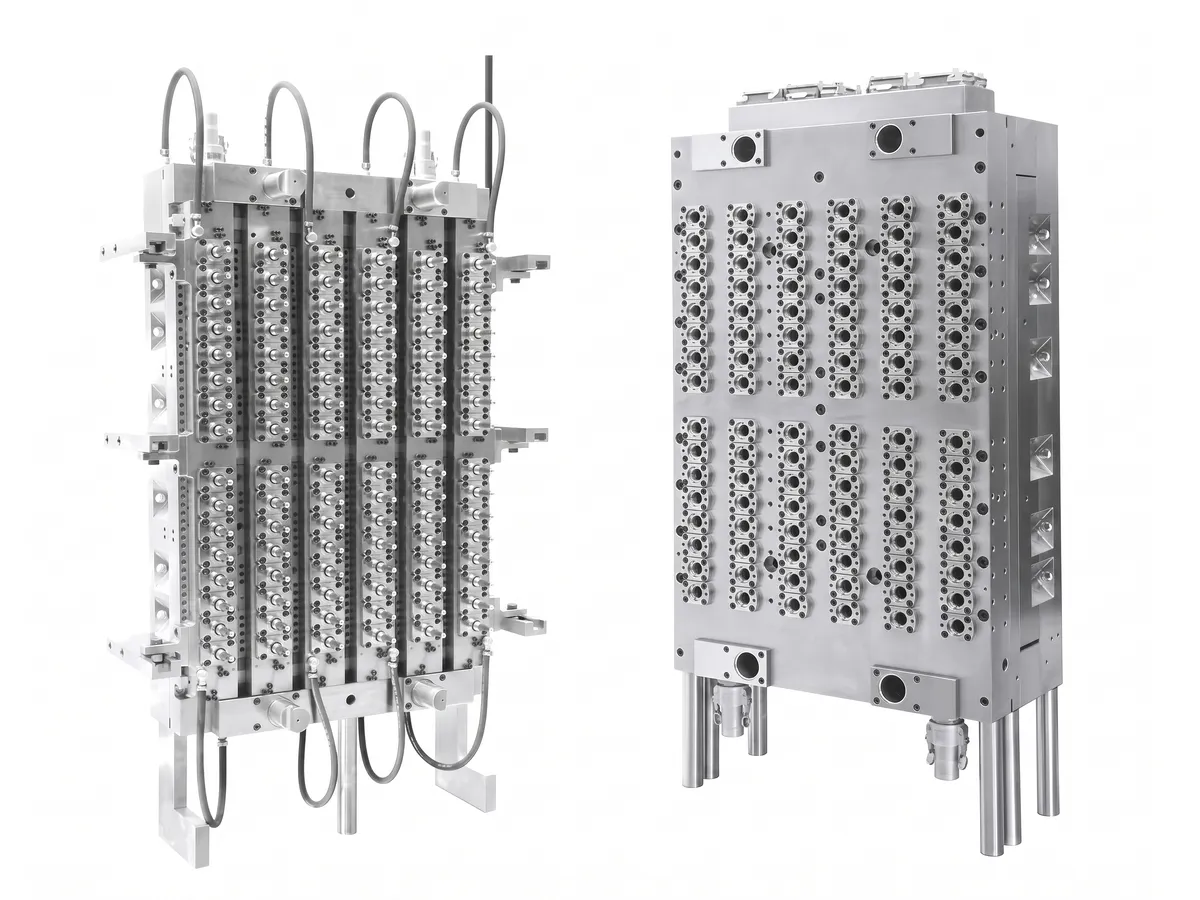
Cosmetic Bottle Blow Molding Machine Mould
Preform Injection Mold
- The die lip design consists of two precisely machined parts that guarantee coaxial alignment during preform formation, critical for producing neck threads that meet tight dimensional tolerances required by cosmetic filling and capping equipment.
- The rationally engineered cooling water channel layout maximizes thermal extraction efficiency, improving preform cooling uniformity and enabling faster cycle times without compromising dimensional stability or optical clarity of the finished preforms.
- Formation components use imported 2316 die steel that is inherently rust-resistant and undergoes full heat treatment, delivering exceptional hardness and wear resistance that extends mold service life even during continuous high-volume blow molding machine production.
- Core plates, cavity plates, and all structural components are manufactured from 420 stainless steel to ensure superior corrosion resistance during the high-humidity, high-temperature conditions inherent to intensive plastic bottle blow molding machine operations.
- Simple modular architecture makes routine maintenance and mold cleaning straightforward, reducing planned maintenance downtime and enabling production teams to service the mold without specialized tools or extended equipment shutdowns.
- Advanced single-mold architecture allows one mold to produce multiple preform types, providing flexibility for cosmetic packaging contract manufacturers who manage diverse bottle design portfolios on a shared blow molding machine platform.
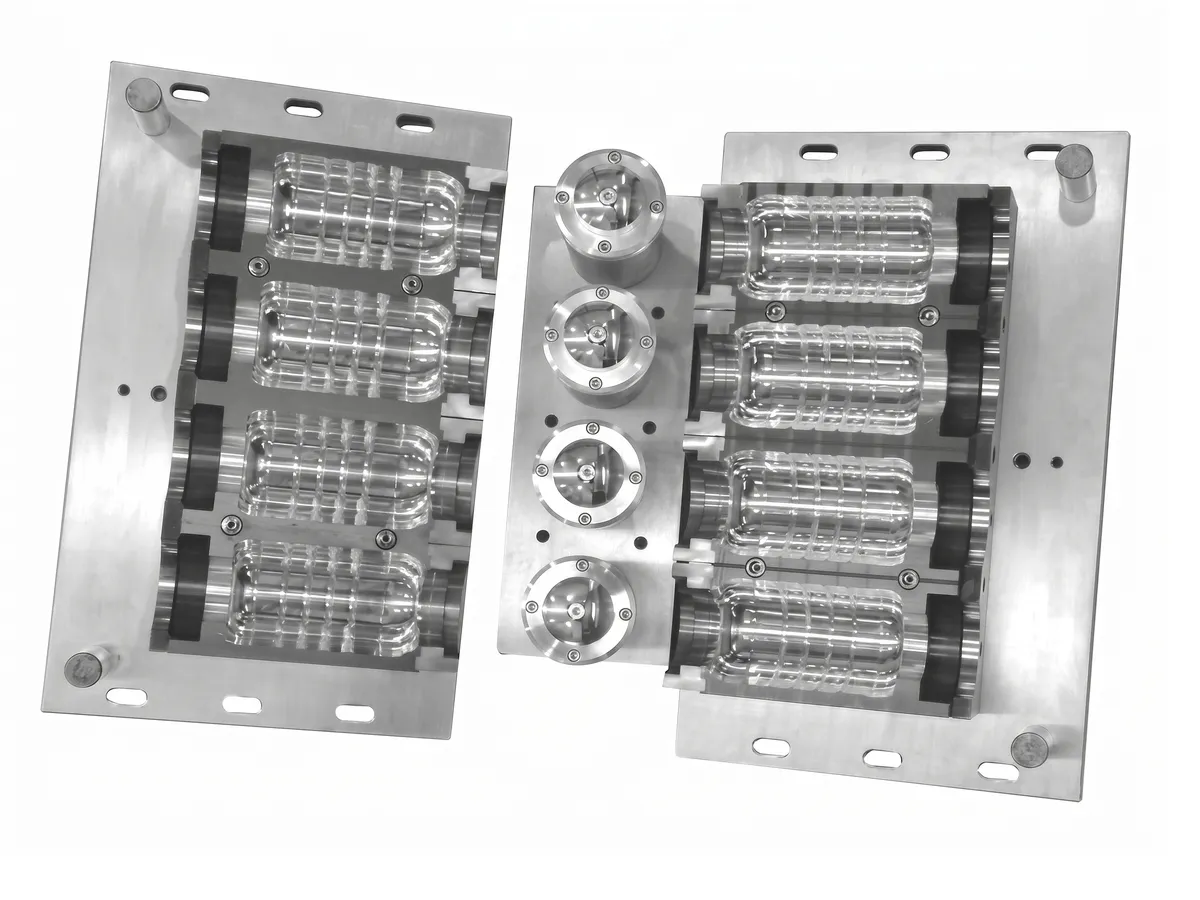
Blowing Mold
- Blowing molds are manufactured from high-quality alloy steel selected for its excellent strength-to-weight ratio, thermal conductivity, and machinability, influencing mold rigidity under the 30 kg/cm2 blowing pressure and long-term dimensional stability across millions of production cycles.
- Bottle geometry is developed using advanced 3D design software, allowing for precise virtual prototyping and mold flow simulation before physical tooling is committed. This reduces costly iterative mold modifications and accelerates time-to-production for new cosmetic packaging designs.
- Ever-Power offers a comprehensive selection of standard and custom bottle design options, giving cosmetic and daily chemical brands the flexibility to choose from an existing design library or commission fully bespoke molds tailored to their specific branding and functional requirements.
- Carefully engineered internal water cooling channels deliver uniform chilling across the complete mold cavity surface, eliminating localized hot spots that cause deformation, inconsistent bottle geometry, or extended cycle times in the blow molding machine process.
- All metal components of the blowing mold are precision-machined on CNC equipment to tolerances that ensure perfect mold parting line alignment, consistent cavity dimensions, and reliable sealing under high blowing pressure across the full service life of the tooling.
Why Choose Ever-Power's Plastic Blow Molding Machine?
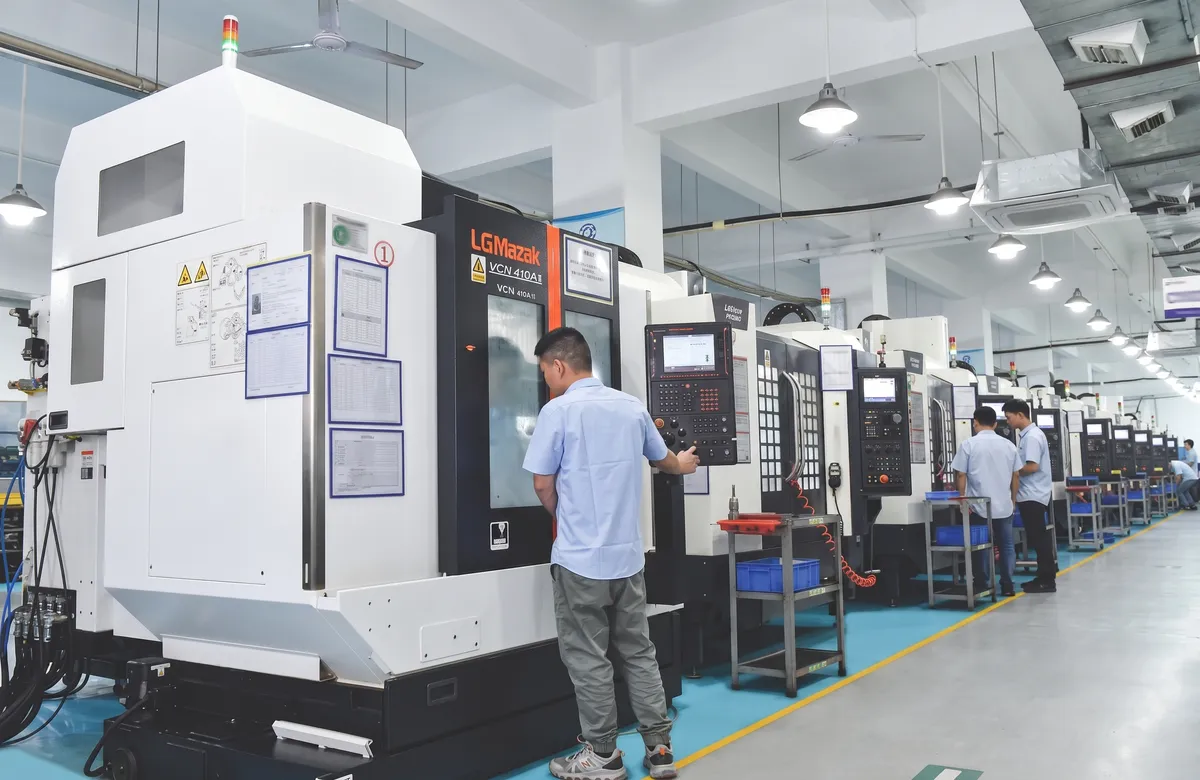
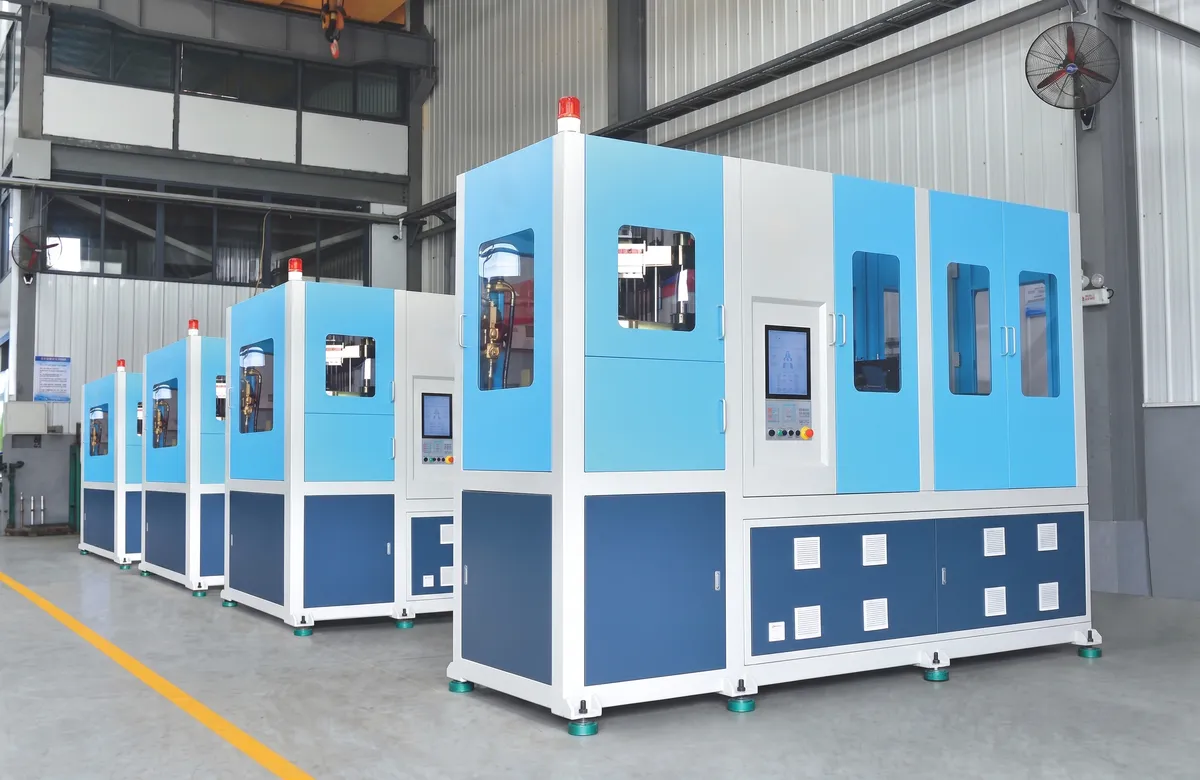
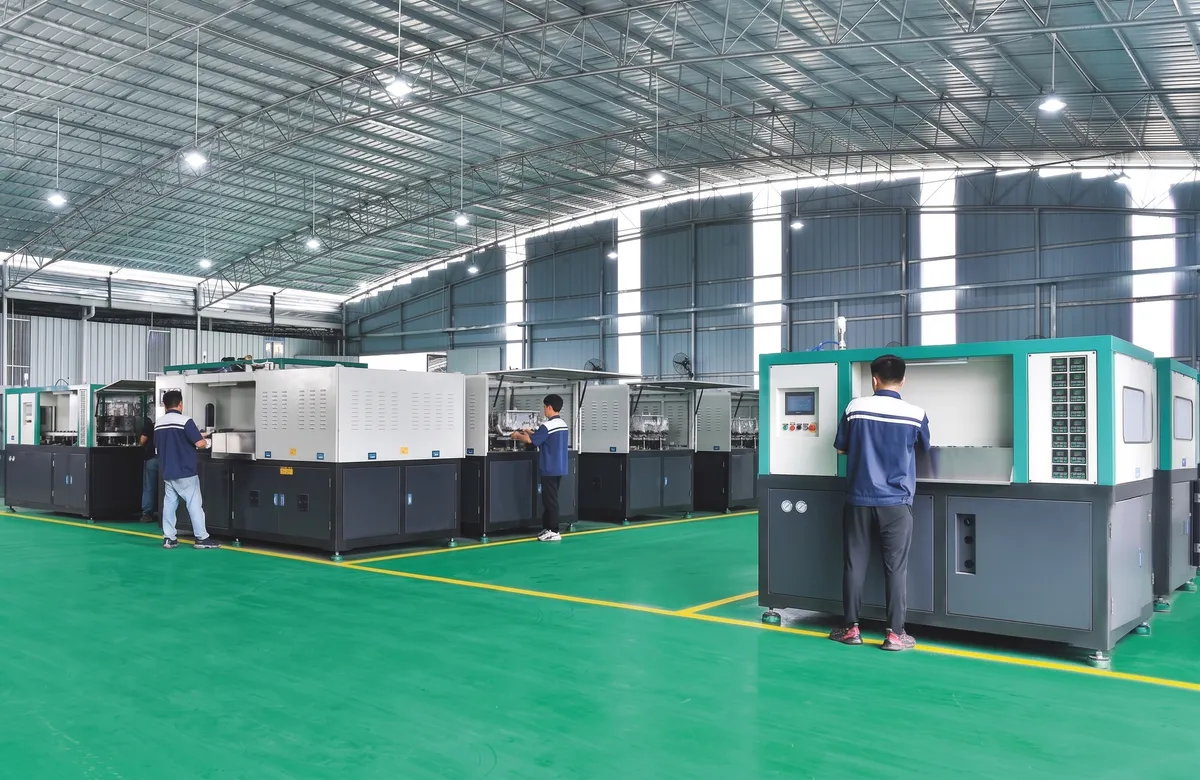
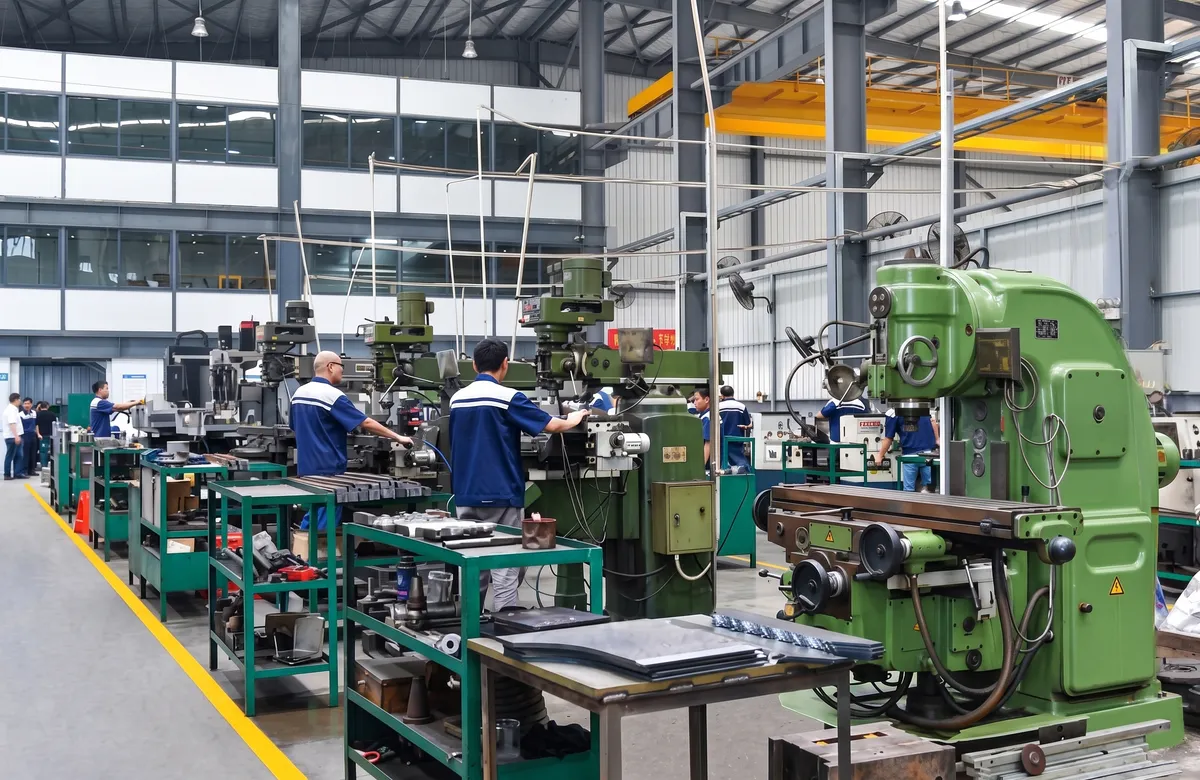
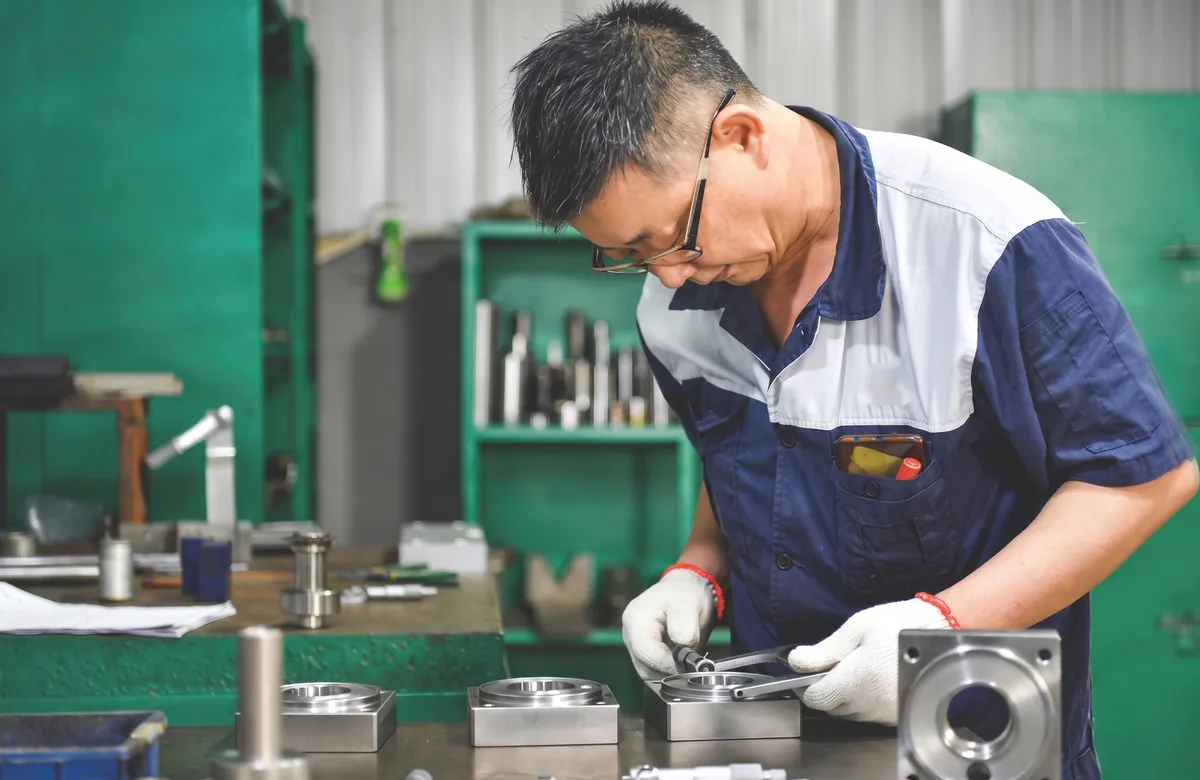
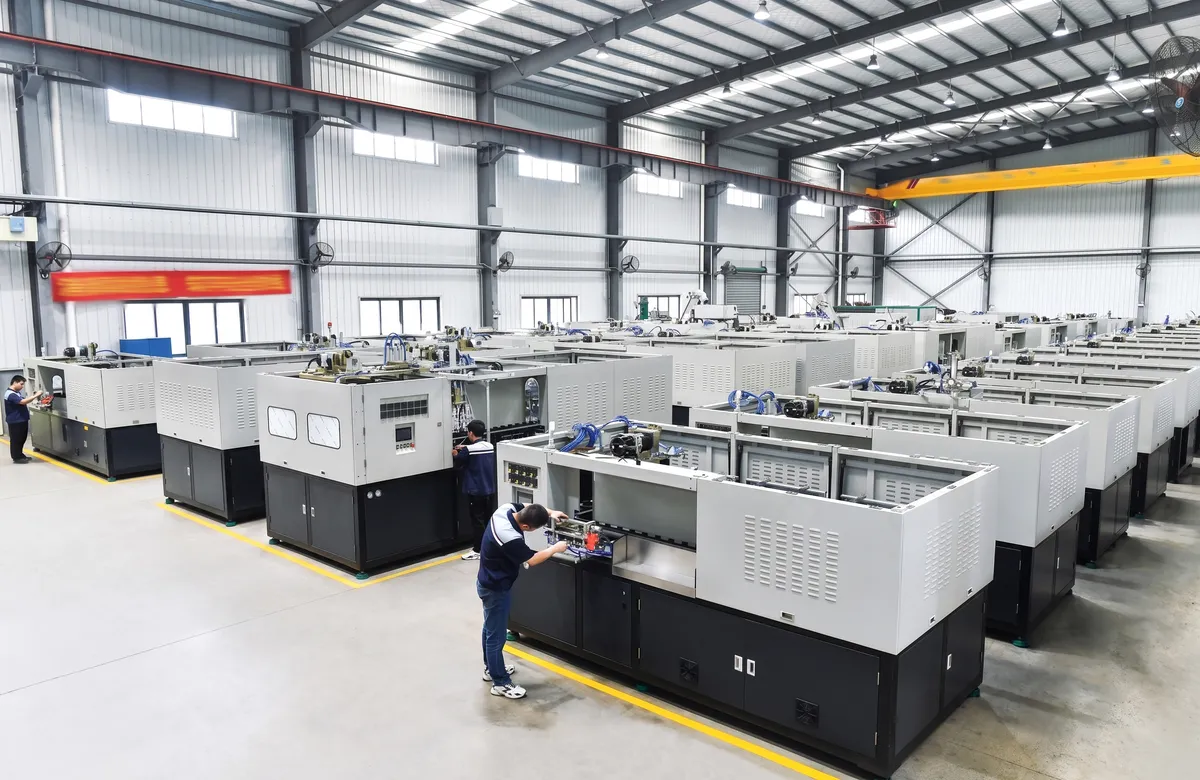
Mexico Ever-Power ISBM Machinery Co., Ltd is a specialized manufacturer focused on the research and development, production, sales, and international trade of automatic one-step Injection Blow Molding Machines and Injection Stretch Blow Molding Machines. Our product portfolio covers injection blow molding machines, extrusion blow molding machines, injection stretch blow molding machines, and a full range of auxiliary machinery, all backed by proprietary engineering expertise and a team of dedicated industry professionals. With a geographically advantageous location and convenient international logistics access, Ever-Power serves packaging manufacturers across every major market worldwide.
Ever-Power brings together engineers and technical personnel with deep specialization in injection-blowing machinery and injection-blowing mold design. With rich theoretical foundations and extensive hands-on production experience, our team delivers thoughtful and detailed pre-sale consultation, in-process technical guidance, and responsive post-sale service to customers on every continent. We do not just sell machines; we partner with manufacturers to optimize their entire plastic bottle blow molding machine process from resin selection through finished container quality control, commissioning, and long-term production support.
Our product applications span pharmaceutical packaging, food packaging, health care packaging, cosmetic packaging, and a broad spectrum of daily chemical packaging categories. We process over 15 resin types including HDPE, LDPE, PET, PETG, PP, PS, PPSU, PC, Tritan, ABS, PLA, bio-corn materials, EVA, and PCTG, producing containers from 1 ml to 1,000 ml and beyond. This material versatility positions Ever-Power as one of the most capable custom blow molding machine manufacturers available to the global packaging industry today.
Guided by the development philosophy of self-reliance, integrity, pragmatism, innovation, and responsibility, Ever-Power builds complete one-stop turnkey projects for customers who demand high-end injection-blowing production outcomes. From facility planning through operator training and long-term parts support, we are committed to delivering first-class quality at every stage of your investment in plastic blow molding machine technology. Join the global community of packaging manufacturers who trust Ever-Power as their preferred blow molding machine supplier and partner for sustained production excellence.
 |
 |
 |
 |
 |
 |
Frequently Asked Questions
Q: What container volumes can the EPA.ES-2C200 fully automatic blow molding machine produce?
A: The EPA.ES-2C200 handles containers from 30 ml up to 5,000 ml, making it suitable for travel-size cosmetic samples all the way to large daily chemical refill containers. The maximum container diameter is 180 mm and maximum height is 350 mm. The 50-position preform holder and 2-cavity configuration support efficient production across this entire volume range without requiring major mechanical adjustments between product sizes.
Q: Which plastic materials is this PET bottle blow molding machine compatible with?
A: The machine is designed primarily for PET and PETG resins, which are the dominant materials in cosmetic and daily chemical packaging. PET delivers excellent clarity, strength, and recyclability, while PETG offers enhanced flexibility and compatibility with complex or irregular bottle geometries. With appropriate process parameter adjustments, the machine can also process PP and certain other thermoplastics. Contact the Ever-Power engineering team to discuss your specific material requirements before ordering.
Q: What is the theoretical output of the EPA.ES-2C200 automatic PET blow molding machine?
A: The machine achieves a theoretical output of 1,600 bottles per hour with its 2-cavity configuration. Actual production throughput depends on the container size, preform design, material drying quality, and ambient production conditions. Smaller containers typically achieve rates closer to the theoretical maximum, while larger containers such as 2,000 ml to 5,000 ml formats may run at somewhat lower speeds to maintain dimensional precision throughout the blow molding machine process.
Q: What is the difference between a two-stage blow molding machine and a one-step injection blow molding machine?
A: A two-stage blow molding machine like the EPA.ES-2C200 separates the preform injection process from the blow molding process. Preforms are produced separately, stored, and then fed into the blow molding machine for reheating and expansion. This architecture allows high production flexibility and the ability to source preforms externally. A one-step injection blow molding machine integrates both injection and blowing in a single machine cycle, which can be advantageous for sterile or no-contact applications but typically involves higher tooling investment and less scheduling flexibility.
Q: How much floor space does the EPA.ES-2C200 cosmetic bottle blow molding machine require?
A: The machine has a footprint of 4,300 x 2,100 mm with a height of 2,500 mm and weighs 4,500 kg. In addition to the machine itself, allow clearance space around the unit for operator access, mold changes, maintenance activities, and downstream conveyor integration. A minimum working area of approximately 7 x 5 meters is recommended to accommodate comfortable operation and routine servicing of the complete blow molding machine system.
Q: Can the EPA.ES-2C200 produce irregularly shaped cosmetic bottles?
A: Yes. The EPA.ES-2C200 is specifically engineered with particular expertise in manufacturing complex and irregularly shaped bottles, which is a key differentiator for cosmetic and perfume packaging applications. The machine's 500 mm stretching stroke, precise servo clamp control, and flexible mold design capability enable production of oval, faceted, waisted, and asymmetric container geometries that are common in premium skincare and fragrance packaging. Custom mold development services are available for unique design requirements.
Q: What air pressure and utility requirements does this plastic blow molding machine need?
A: The machine requires a low-pressure air supply at 7 kg/cm2 consuming 600 liters per minute, and a high-pressure blowing air supply at 30 kg/cm2 consuming 6,000 liters per minute. Cooling water must be supplied at 5 to 6 kg/cm2 with a temperature of 8 to 12 degrees Celsius at a minimum flow rate of 91.4 liters per minute. Electrical requirements are based on maximum heating power of 85 kW, with typical running heating power of 35 kW. Confirm your facility utility capacity before installation.
Q: What after-sales support does Ever-Power provide for blow molding machine buyers?
A: Ever-Power provides comprehensive pre-sale consultation, on-site or remote commissioning support, operator training, and ongoing technical assistance after delivery. A recommended spare parts kit is offered with every machine order to minimize downtime caused by routine wear parts. Replacement blow molding machine parts and technical guidance are available through dedicated after-sales channels. Buyers in key markets can also access regional technical representatives for on-site support visits when needed.
Q: How does servo drive technology improve this fully automatic blow molding machine?
A: Servo drive technology replaces traditional hydraulic actuation with precision electric servo motors on key machine movements including clamping, stretching, and transport. This delivers significant energy savings of 20 to 40% compared to equivalent hydraulic machines, eliminates hydraulic oil management entirely, reduces noise levels on the production floor, and provides superior repeatability due to the closed-loop position and velocity control inherent to servo systems. The result is a cleaner, quieter, more energy-efficient all electric blow molding machine operation.
Q: Can the EPA.ES-2C200 be integrated into an existing cosmetic packaging production line?
A: Yes. The machine's exit conveyor speed and output timing are synchronized and adjustable to match the requirements of downstream filling, capping, labeling, and shrink-wrap equipment. Ever-Power's engineering team can advise on conveyor height, belt speed, and interface design to ensure seamless integration with your existing packaging line infrastructure. Custom conveyor configurations and line integration support are available as part of the complete turnkey project services offered by Ever-Power blow molding machine manufacturers.
Customer Reviews
Guilherme Mendes, Personal Care Packaging, Brazil
"Bought the EPA.ES-2C200 for producing 250 ml and 500 ml shampoo bottles. We have been running it for about seven months now. Honestly the output consistency surprised me. We are averaging just over 1,500 bph on the 500 ml mold and the reject rate has been under 1% since commissioning. The cooling water system works exactly as specified at 8 to 10 degrees Celsius, and the bottles come out really clean. The after-sales team responded within hours when I had a question about a temperature zone parameter during the first month. Very happy with this automatic blow molding machine overall."
Rahul Bhatia, Cosmetic Packaging, India
"India has a lot of blow molding machine suppliers but we chose Ever-Power after visiting their factory and seeing the production standards firsthand. We are using the EPA.ES-2C200 for PETG lotion bottles, some with irregular shapes for a premium skincare client. The machine handles the complex geometry well. I had some initial concerns about getting spare parts but the team has maintained a stock relationship with us and parts arrive within two weeks from Mexico. Productivity has been solid since day one and the energy consumption is noticeably lower than our previous hydraulic machine. Would recommend."
Wang Fang, Daily Chemical Industry, China
"We run three EPA.ES-2C200 machines in our Guangzhou facility for household cleaning product bottles. The machines have been in service for over a year with minimal downtime. Total maintenance cost in the first year was lower than expected. The servo motor system is quiet and the energy savings compared to our old equipment are around 30%, which adds up quickly in a 24-hour production operation. Customer service was professional both before and after sale. The blow molding machine process is stable and our quality audits have been passing with no issues across all three units."
Sofia Petrov, Personal Care Bottles, Russia
"We shipped one EPA.ES-2C200 to our Moscow plant for perfume and serum bottle production in PETG. Delivery took about six weeks which was within the quoted lead time. Installation was done with remote guidance from the Ever-Power technical team over video call, which worked surprisingly well. The multi-zone heating oven is very good for PETG since you can fine-tune each zone independently. First batch quality was already good. We did have one minor air valve issue after about two months but Ever-Power shipped the replacement part express at no charge. Overall very satisfied and looking at ordering a second machine."
Ahmad Al-Rashid, Cleaning Products Packaging, Saudi Arabia
"Good machine, runs well in our conditions. We produce 1 liter and 2 liter PET bottles for cleaning sprays and liquid detergents. I was a bit worried about technical support from this distance but Ever-Power has a dedicated after-sales channel that responds fast. The machine footprint is compact considering what it produces. Our biggest concern before buying was parts availability in Saudi Arabia but the team helped us stock a basic spare parts kit with the initial shipment. Production has been consistent and our quality manager is happy. 5 stars for the machine, 4 stars for logistics which was slightly delayed at the port."
Kim Jae-won, Cosmetic Packaging, South Korea
"We have been running the EPA.ES-2C200 for about ten months at our Incheon facility producing 200 ml and 300 ml PETG cosmetic bottles for a major Korean skincare brand. The bottle dimension consistency is excellent. Our quality control rejection rate on neck dimensions is under 0.5%, significantly better than our previous two-step system. The servo drive technology makes a noticeable difference in both precision and noise levels on the production floor. The Ever-Power engineers were thorough during commissioning and provided detailed written operating procedures in both English and Korean. Very professional experience from inquiry through installation and beyond."
Manuel Torres, Personal Care Packaging, Mexico
"We are an OEM packaging supplier in Guadalajara and bought this machine to expand our cosmetic bottle line. Setup was straightforward and the local Ever-Power representative helped us through customs clearance which was a big help on the first import. The machine handles PET and PETG without issues and the changeover between the two bottle sizes we run is fast once you learn the recipe settings. One thing I appreciate is how quiet it runs compared to older machines. The cooling system keeps the mold perfectly stable even in our warm production environment. Good value for the investment."
David Okafor, Daily Chemical Industry, Nigeria
"I will be honest, I had doubts about sourcing a plastic blow molding machine directly from Mexico for the first time. But the Ever-Power sales team was patient with all my questions and the video factory tour convinced me. We produce 500 ml shampoo and shower gel bottles. The machine arrived well-packaged and the installation guide was clear. We did online commissioning with the team in Mexico and were running production within four days of the machine arriving on site. Quality is consistent. For the price, I cannot find this level of performance from local suppliers. Definitely recommending to other manufacturers."
Fatima Zahra El-Idrissi, Cosmetic Bottle Production, Morocco
"We supply PET cosmetic bottles to beauty brands in Morocco and France. The EPA.ES-2C200 was chosen over two other offers because of the technical support commitment and the quality of the sample bottles we received before purchase. We produce irregularly shaped 100 ml and 200 ml perfume bottles which require precise wall distribution. The machine handles these shapes without problems. Shipping from Mexico to Casablanca took five weeks by sea, which is normal. Our production yield since commissioning has been above 98%, which our quality team is very pleased with. Excellent cosmetic bottle blow molding machine."
Additional information
| Edited by | Yjx |
|---|
Related products
-
EPA.ES-4C100 Fully Automatic Blow Molding Machine for Daily Chemicals & Cosmetic Bottles
-
EPA.ES-2C114.3 Fully Automatic Blow Molding Machine for Daily Chemicals & Cosmetic Bottles
-
EPA.ES-3C76 Fully Automatic Blow Molding Machine for Daily Chemicals & Cosmetic Bottles
-
EPA.ES-2C200 Fully Automatic Blow Molding Machine for Crafts and Special-Shaped Bottles