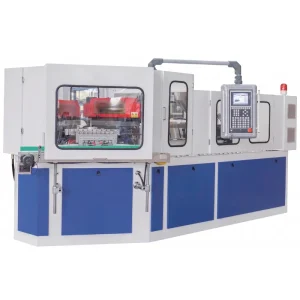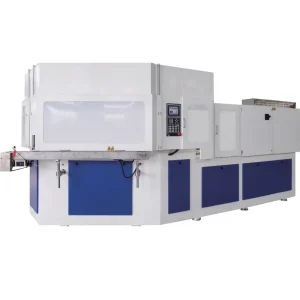
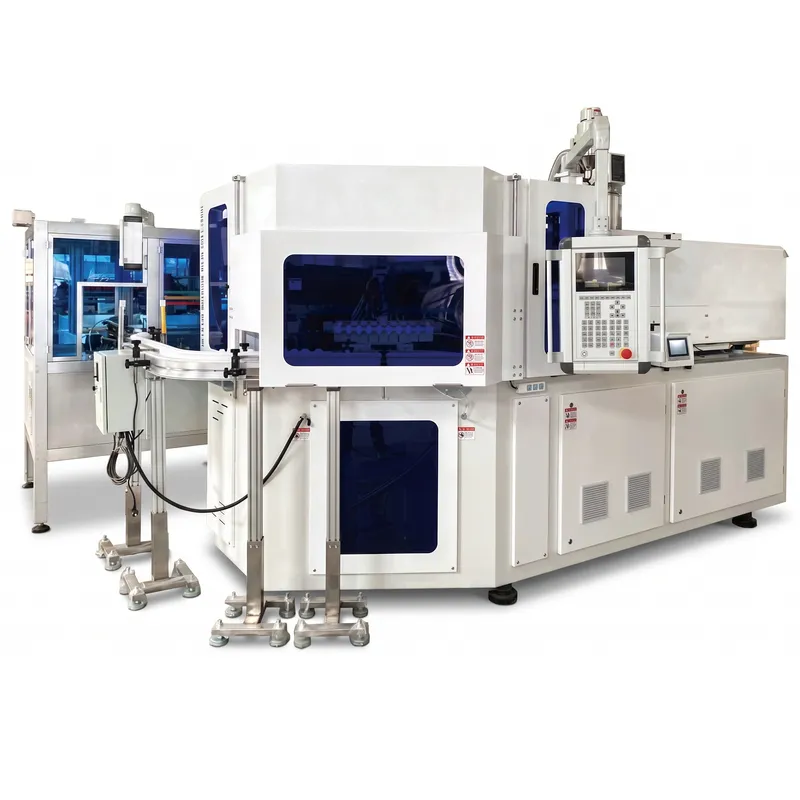
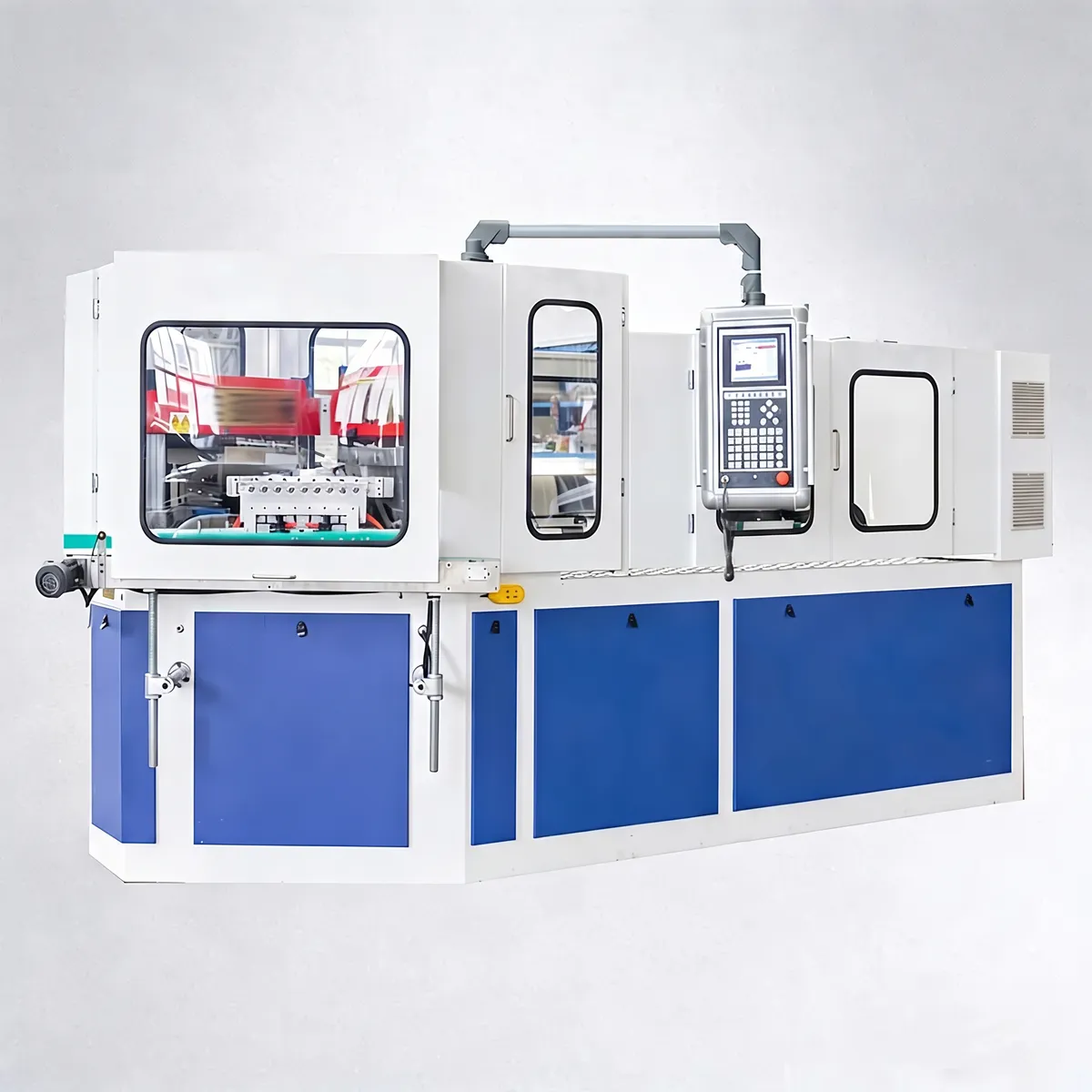
ZQ60HE High-Speed Fully Electric Injection Blow Molding Machine (European)
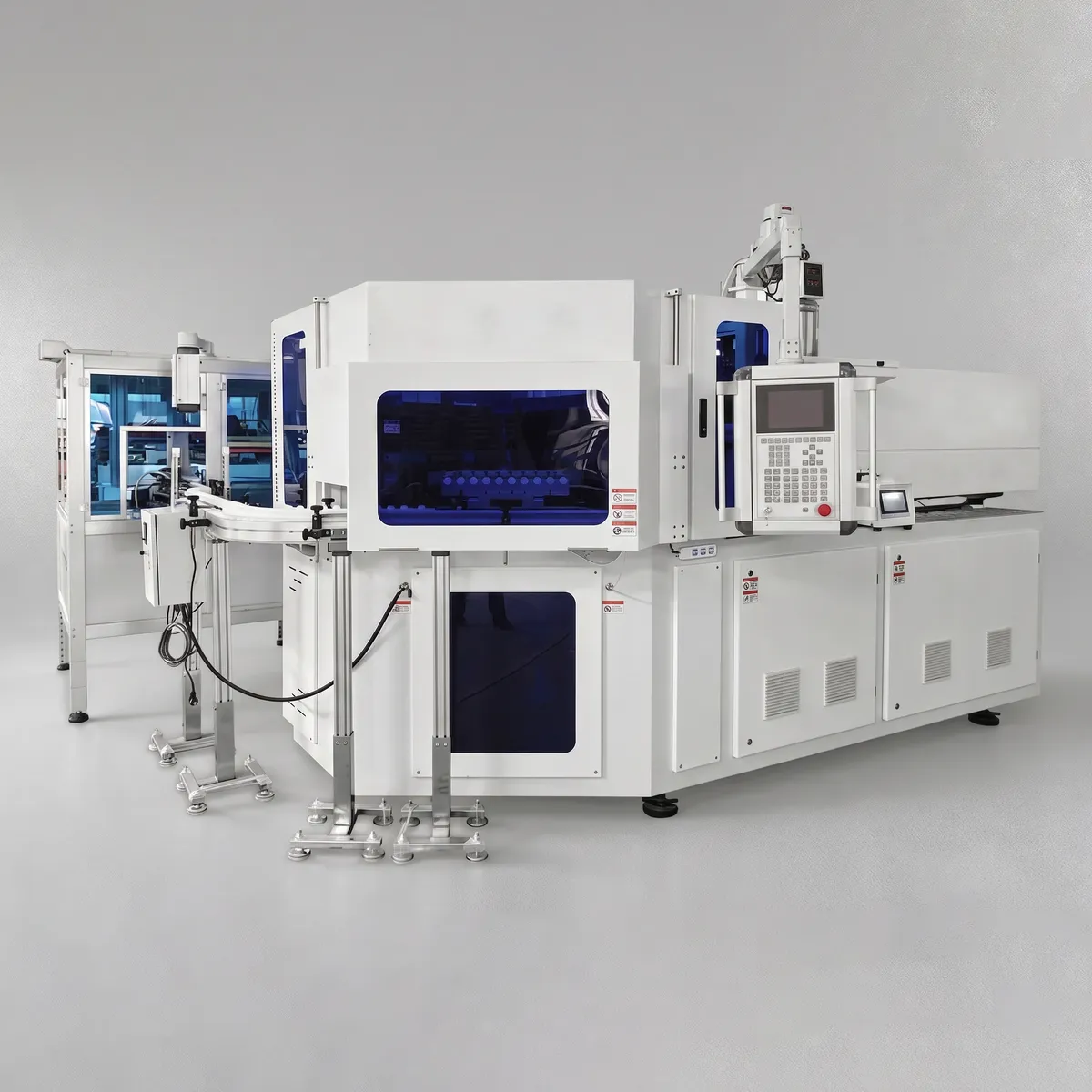
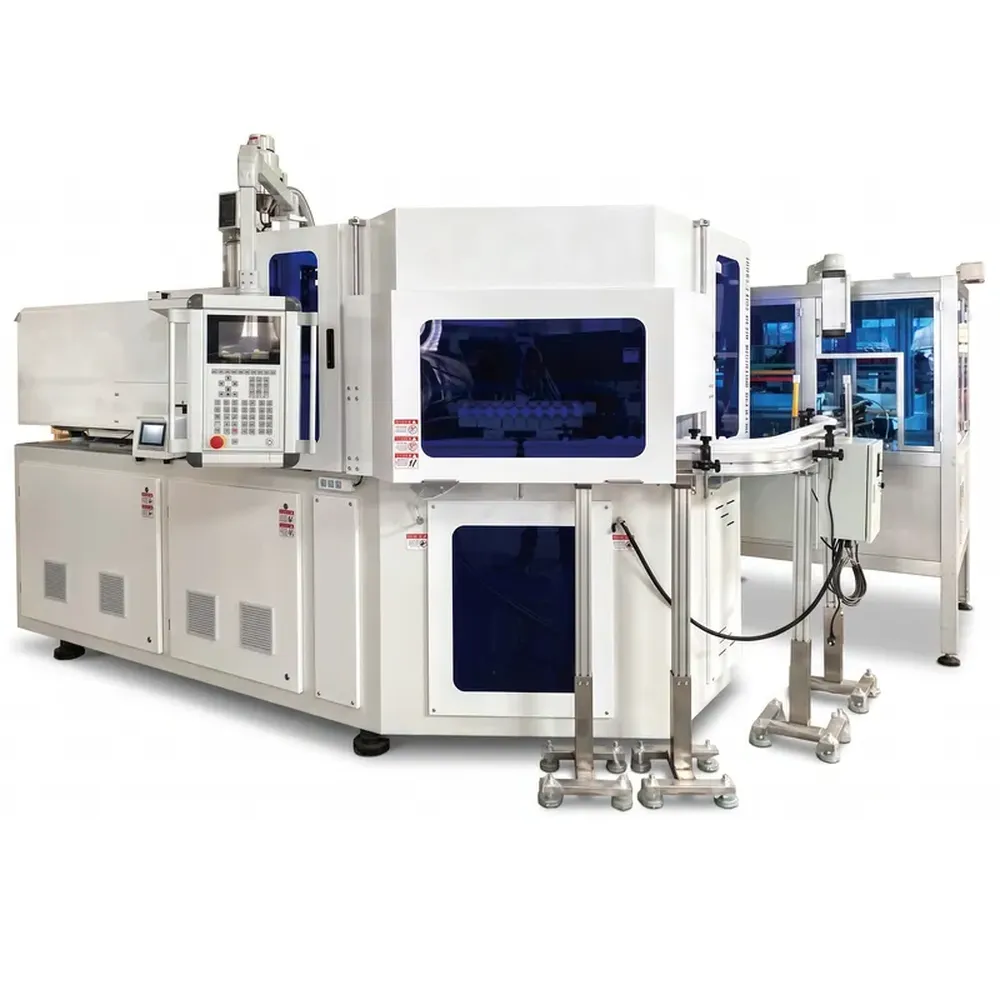
The ZQ60HE High-Speed Fully Electric Injection Blow Molding Machine (European standard) represents the pinnacle of modern injection blow molding machine engineering. Every movement of this advanced IBM machine is driven entirely by high-performance servo motors, completely eliminating hydraulic oil usage and its associated contamination risks. Compared to conventional hydraulic machines, the ZQ60HE delivers approximately 20% faster cycle times for 30 ml bottles, each cycle completes in just 8.2 seconds, achieving a standard daily output of 105,000 bottles per 24 hours and a peak capacity of 115,000 bottles per day.
The ZQ60HE High-Speed Fully Electric Injection Blow Molding Machine (European standard) represents the pinnacle of modern injection blow molding machine engineering. Every movement of this advanced IBM machine is driven entirely by high-performance servo motors, completely eliminating hydraulic oil usage and its associated contamination risks. Compared to conventional hydraulic machines, the ZQ60HE delivers approximately 20% faster cycle times for 30 ml bottles, each cycle completes in just 8.2 seconds, achieving a standard daily output of 105,000 bottles per 24 hours and a peak capacity of 115,000 bottles per day. Energy consumption is slashed by roughly 30%, consuming only 12 kWh per hour during 30 ml bottle production. With dramatically reduced noise levels and absolute encoders integrated throughout the servo system, this full electric injection blow molding machine guarantees exceptional repeatability and processing precision making it the ideal choice for high-volume, precision-demanding production environments including pharmaceutical, cosmetic, and food-grade plastic packaging.
Designed with a patented bottom-up structural layout, the ZQ60HE ensures that no lubricating oil can enter the mold area a critical requirement for pharmaceutical packaging, food-grade plastic bottles, and other hygienic applications. Its special clamping mechanism provides continuously adjustable clamping force ranging from 40 to 80 tons, adapting seamlessly to a wide range of product specifications and mold configurations. As a fully customized injection blow molding machine for sale, the ZQ60HE adopts an electric cylinder injection unit that enhances injection stability while dramatically reducing long-term maintenance costs. The integrated conveyor system is compatible with downstream visual inspection equipment (detecting foreign particles, insufficient bottle-mouth material, and uneven bottle bottoms), side-leak testers, labeling machines, and automatic packaging lines enabling truly fully automated, unattended 24-hour production. Whether you are looking for a replacement of an Aoki injection blow molding machine, a single stage injection stretch blow molding machine, or a scalable PET injection blow molding machine, the ZQ60HE delivers an unmatched combination of speed, energy efficiency, hygiene compliance, and automation readiness.
Technical Specifications
| Name | Unit | ZQ60HE |
| Injection System | ||
| Screw Diameter | mm | 45/50 |
| Screw L/D | % | 22:1 |
| Injection weight | g | 280/360 |
| Heating power | KW | 10.3+4 |
| Number of barrel zone | — | 3+N |
| Injection stroke | mm | 200 |
| Clamping System | ||
| Clamping force of injection | KN | 400 800 |
| Opening stroke for injection | mm | 140 |
| Clamping force of blowing | KN | 200 |
| Opening stroke for blowing | mm | 140 |
| Lifing height of rotary table | mm | |
| Mould | ||
| Max.Platen size(LxW) | mm | 600×420 |
| Mold thickness | mm | 240 |
| Dia.of bottle | mm | 120 |
| Botle height | mm | 220 |
| Suitable bottle height | mm | 1-2000 |
| Stripping stroke | mm | 220 |
| Hydraulic systemHydraulic | ||
| Pressure | Map | - |
| Motor power | KW | - |
| Dry cycle | S | 2.5 |
| Total Power | KW | 90 |
| Operating power | % | 15-25 |
| Others | ||
| Min.Air pressure ofcompressed air | MPa | 0.8-1.2 |
| Compressed air capacity | M³/min | |
| Water flowage | M³/h | |
| Cooling water pressure | MPa | - |
| Dimension(LxWxH) | M | 3×1.3×1.7 |
| Net weight | Ton | 6 |
| Injection Servo Motor | KW | 22 |
| Material Feeding Servo Motor | KW | 18 |
| Clamping Servo Motor | KW | 15KW+15KW |
| Carriage Movement Servo Motor | KW | 1 |
| Ejector Servo Motor | KW | 0.4 |
| Rotary Servo Motor | KW | 2.9 |
Replaceable Brand and Model
| Ever-Power | Clamping Force | Jomar | SUMA | Uniloy | Bloma |
| ZQ40 | 40T | IBM40 | 40iB | UIB70 | IBM45 |
| ZQ60 | 60T | IBM65 | 65iB | UIB90 | IBM50 |
| ZQ80 | 80T | IBM85S | 85iB | UIB120 | IBM85 |
| ZQ110 | 110T | IBM135 | 135iB | UIB150 | IBM135 |
| ZQ135 | 135T | IBM175 | 175iB | UIB180 |
IBM Machine Screw Diameter
| Ever-Power | Screw Diameter | Jomar | SUMA | Bloma |
| ZQ40 | 40/45 | 35/40 | 40 | 45 |
| ZQ60 | 45/50 | 45 | 40/50 | 50 |
| ZQ80 | 55 | 55 | 50/60 | 50 |
| ZQ110 | 65 | 65 | 65/76 | 70 |
| ZQ135 | 70 | 70 | 65/76 |
IBM Machine Injection Weight
| Ever-Power | Injection Weight | Jomar | SUMA | Bloma |
| ZQ40 | 190/260 | 180 | 169 | 180 |
| ZQ60 | 260/383 | 205 | 169/264 | 240 |
| ZQ80 | 466 | 300 | 333/480 | 310/280 |
| ZQ110 | 540 | 450/550 | 580/770 | 560 |
| ZQ135 | 650 | 450/550 | 580/770 |
IBM Machine Injection Clamping Force
| Ever-Power | Injection Clamping Force | Jomar | SUMA | Bloma |
| ZQ40 | 400KN | 340KN | 386KN | 350KN |
| ZQ60 | 600KN | 460KN | 580KN | 500KN |
| ZQ80 | 800KN | 680KN | 720KN | 700KN |
| ZQ110 | 1100KN | 1210KN | 1200KN | 1250KN |
| ZQ135 | 1350KN | 1560KN | 1600KN |
IBM Machine Mold Size
| Ever-Power | Mold Size | Jomar | SUMA | Bloma |
| ZQ40 | 480 × 340 | 394 × 508 | 470 × 350 | 450 × 390 |
| ZQ60 | 600 × 390 | 432 × 660 | 620 × 400 | 620 × 430 |
| ZQ80 | 800 × 400 | 464 × 749 | 700 × 400 | 620 × 430 |
| ZQ110 | 1100 × 460 | 559 × 1118 | 1000 × 500 | 900 × 480 |
| ZQ135 | 1300 × 500 | 635 × 1372 | 1200 × 600 |
IBM Machine Size
| Ever-Power | Mold Size (M) | Jomar | SUMA | Bloma |
| ZQ40 | 3.8 × 1.3 × 1.7 | 2.72 × 1.9 × 2.75 | 3.8 × 1.5 × 2.3 | 4.05 × 1.52 × 2.55 |
| ZQ60 | 3.8 × 1.4 × 1.8 | 2.92 × 1.98 × 3.41 | 4 × 1.7 × 2.3 | 620 × 430 × 2.55 |
| ZQ80 | 4.5 × 1.6 × 2 | 3.33 × 1.94 × 3.41 | 4.5 × 2 × 2.6 | 620 × 430 × 2.55 |
| ZQ110 | 5 × 1.8 × 2.2 | 3.79 × 2.4 × 3.41 | 5 × 2.4 × 2.7 | 900 × 480 × 2.55 |
| ZQ135 | 5.5 × 2 × 2.4 | 4.22 × 2.67 × 3.58 | 6 × 2.6 × 2.7 |
Note: Brands are mentioned only to help customers choose products, not to sell those brands' products.
ZQ60HE Injection Blow Molding Machine Features
1. 100% Servo-Driven - Zero Hydraulic Oil
Every movement of this all electric injection blow molding machine is powered exclusively by high-precision servo motors. There is no hydraulic oil in the system whatsoever, completely eliminating oil leaks, hydraulic fluid contamination risks, and the recurring costs associated with hydraulic maintenance and oil disposal, a major advantage for clean-room and hygienic production environments.
2. 20% Faster Cycle Time
Cycle time on the ZQ60HE is approximately 20% faster than traditional hydraulic blow molding machines. For 30 ml bottles, each production cycle is completed in just 8.2 seconds, producing a standard daily output of 105,000 bottles per 24 hours and a peak capacity of up to 115,000 bottles per day. This dramatic throughput increase significantly reduces your cost-per-bottle and accelerates ROI.
3. 30% Energy Savings
The ZQ60HE consumes approximately 30% less energy than equivalent hydraulic injection blow molding machines. For 30 ml bottle production, power consumption runs at just 12 kWh per hour. The operating power usage is only 15–25% of total installed capacity, making this machine one of the most energy-efficient injection blow molding machines for sale on the market today, delivering substantial savings across high-volume, long-run production operations.
4. Significantly Lower Noise Level
Thanks to the fully servo-electric drive system, the ZQ60HE operates at a significantly lower noise level compared to conventional hydraulic blow molding machines. This creates a more comfortable and safer working environment on the factory floor, reduces noise pollution in industrial zones, and helps facilities meet increasingly stringent workplace noise standards, especially relevant for pharmaceutical and food-grade production facilities.
5. Absolute Encoders for Exceptional Precision
The servo system of the ZQ60HE integrates absolute encoders across all motor axes, ensuring outstanding motion repeatability and processing precision batch after batch. Unlike incremental encoders that lose position data on power-off, absolute encoders retain exact position data at all times, enabling immediate, accurate resumption of production after any stoppage and guaranteeing consistent product quality across long production runs.
6. Adjustable Clamping Force: 40–80 Tons
The ZQ60HE is equipped with a specially engineered clamping structure that provides continuously adjustable injection clamping force ranging from 400 kN to 800 kN (40–80 tons). This wide range allows operators to fine-tune clamping parameters for a broad spectrum of bottle sizes, wall thicknesses, and material types without mechanical modifications, maximizing production flexibility and reducing mold change downtime.
7. Bottom-Up Design - GMP Hygienic Compliance
The machine's patented bottom-up structural design ensures that absolutely no lubricating oil is present above the mold area at any time. This critical safety feature prevents any risk of oil contamination of mold cavities, bottle preforms, and finished products, a non-negotiable requirement for pharmaceutical packaging, medical-grade containers, and high-quality food-grade or cosmetic plastic bottles. The design meets and exceeds GMP hygienic production standards.
8. Fully Customizable to Your Requirements
As a customized injection blow molding machine, the ZQ60HE can be configured and adapted to meet the specific production requirements of different customers across a wide range of industries and bottle types. From mold cavity layouts and screw diameter selection to conveyor configurations and downstream automation integration, our engineering team works with you to deliver the optimal machine setup for your unique application and volume targets.
9. Electric Cylinder Injection Unit
The injection unit is actuated by a high-performance electric cylinder rather than a conventional hydraulic cylinder. This design delivers measurably enhanced injection pressure stability and repeatability, tighter control over injection speed profiles, and significantly reduced long-term maintenance costs. There are no seals to replace, no hydraulic fluid to change, and no pump noise, making this one of the lowest-maintenance injection blow molding machine designs available.
10. Integrated Visual Inspection for Unmanned Operation
The downstream conveyor can be directly connected to an automated visual inspection system capable of detecting foreign particles inside bottle bodies, insufficient material at bottle mouths, and uneven bottle bottoms. This integration allows the ZQ60HE to operate as a fully autonomous, unattended production line, eliminating manual inspection labor and significantly reducing reject rates. It's the key to lights-out factory operation for IBM injection blow molding machine applications.
11. Full Downstream Automation Connectivity
Beyond visual inspection, the ZQ60HE's conveyor output can be directly interfaced with side-leak testers, labeling machines, and automatic packaging equipment. This complete production line integration capability transforms the machine from a standalone blow molding unit into the core of a fully automated, end-to-end plastic bottle manufacturing system, maximizing throughput, minimizing manual labor, and enabling competitive cost structures for high-volume orders.
IBM Machine Components
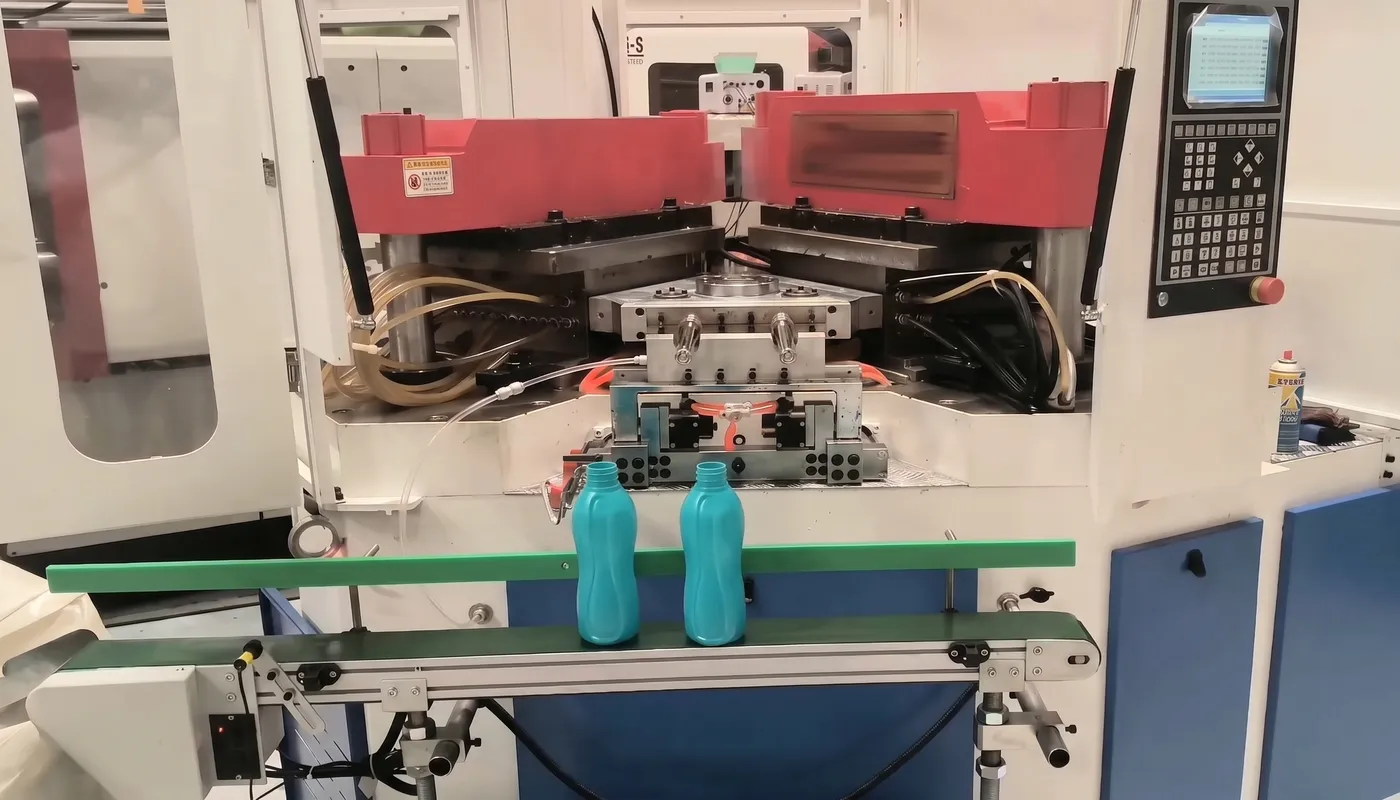
1. Stock Preparation / Injection Device
The stock preparation and injection device comprises the hopper, the plasticizing screw (45 mm or 50 mm diameter, 22:1 L/D ratio), the barrel with three independently controlled heating zones, and the electric cylinder-driven injection actuator. This assembly melts, homogenizes, and meters the plastic material before injecting it at precisely controlled speed and pressure. Injection weight capacity ranges from 280 g to 360 g depending on screw selection.
2. Hot Runner System
The optimized hot runner system distributes molten plastic from the injection unit to each individual cavity gate with balanced flow and precisely controlled melt temperature. The hot runner design minimizes gate vestige, reduces material waste, and ensures uniform preform wall thickness across all cavities directly contributing to consistent finished bottle weight deviation well within 1% across all cavities in the mold.
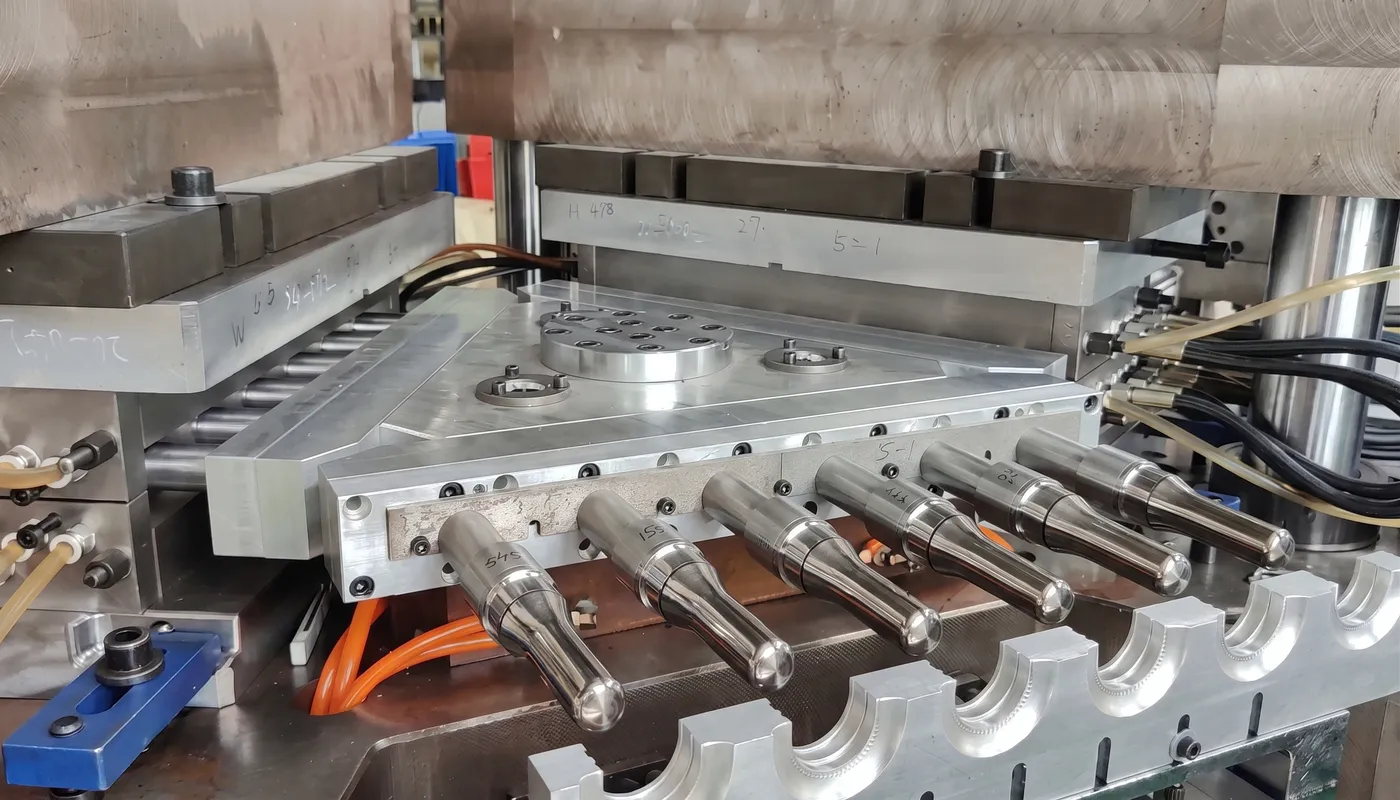
3. Core Rod (Mandrel)
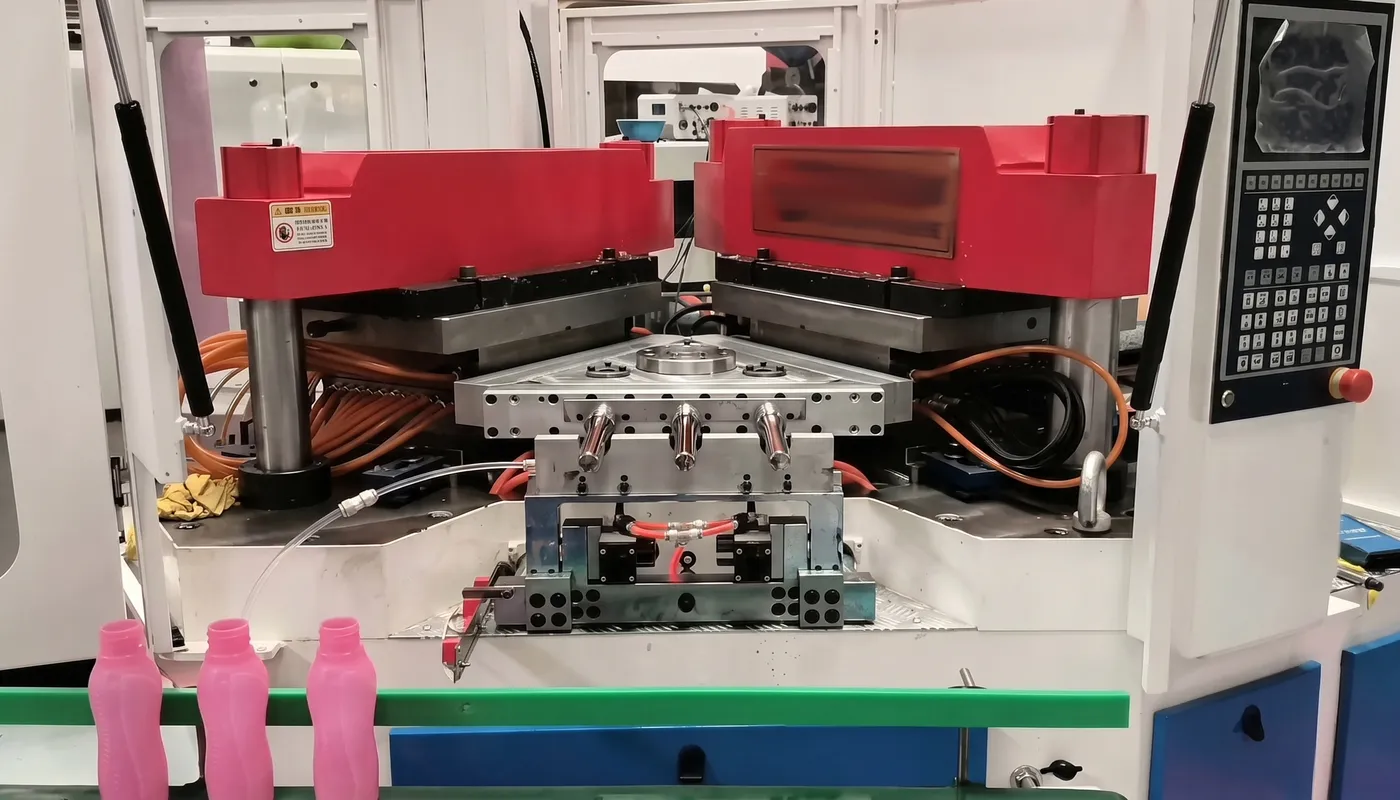
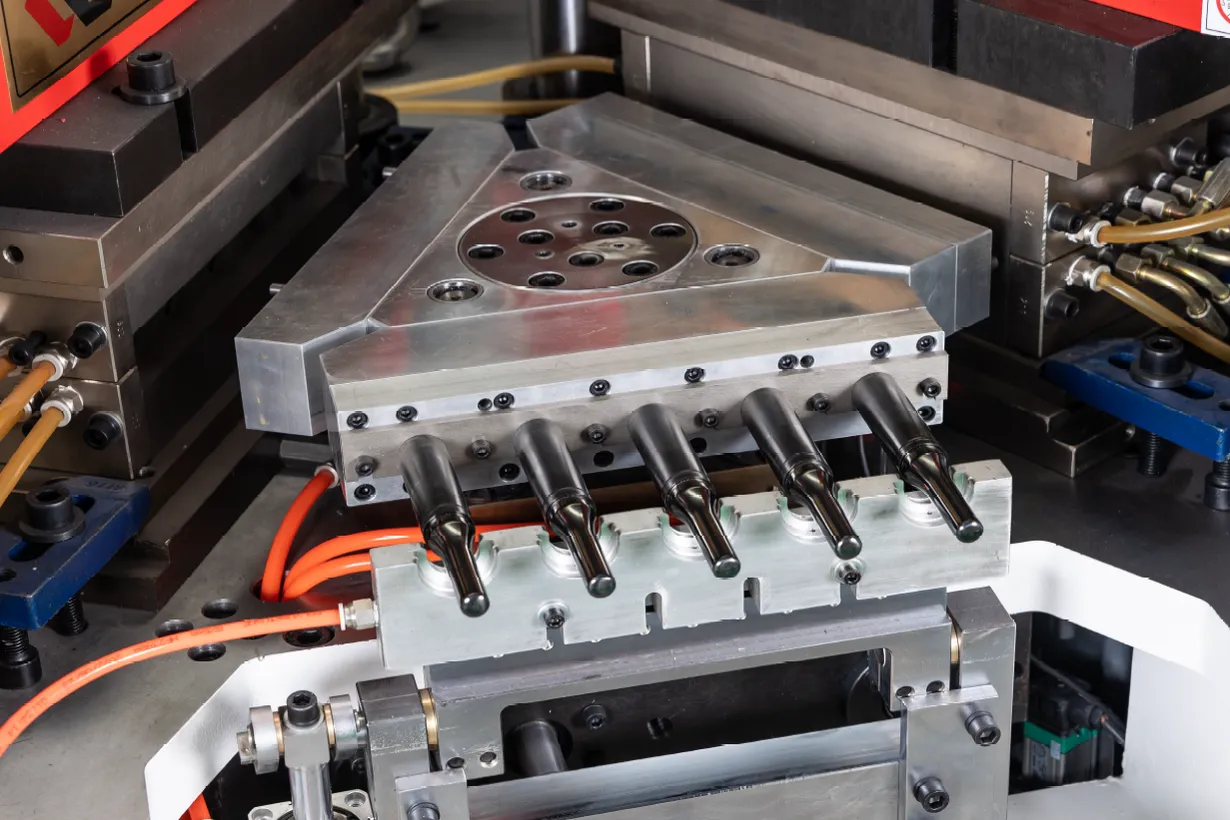
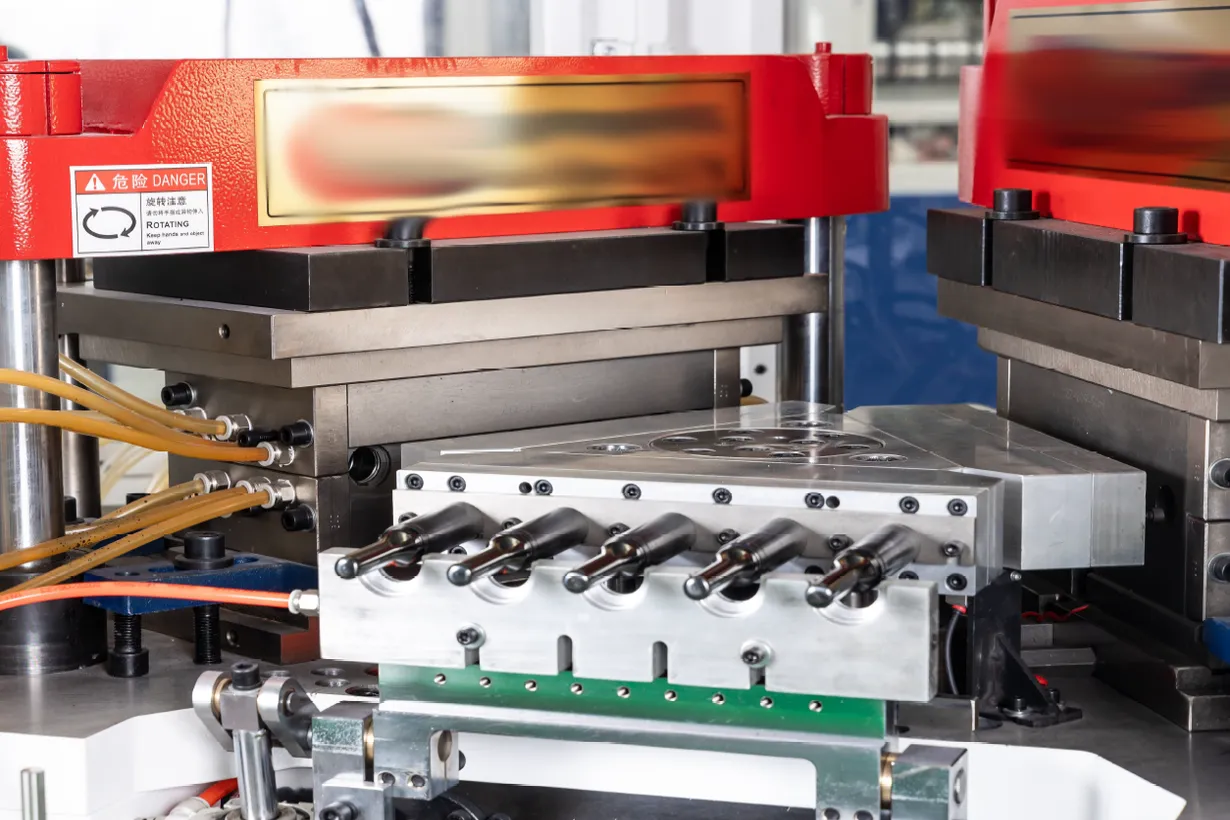
The core rod, or mandrel, is the central functional element of the injection blow molding process. It serves as the inner forming surface during preform injection, the air delivery conduit during blow molding, and the structural carrier that transfers the preform between stations on the rotary table. The special mandrel structure on the ZQ60HE supports fast molding cycles with excellent internal cooling efficiency, ensuring rapid and uniform preform temperature conditioning.
4. Bottle Preform
The bottle preform is the intermediate semi-finished product formed around the core rod during the injection stage. Unlike the separate preforms used in two-stage ISBM processes, the preform in the ZQ60HE remains on the mandrel throughout, maintaining its temperature profile between injection and blow stations for optimal stretch and material distribution during blowing. The preform geometry precisely determines the final bottle's wall thickness distribution and base formation.
5. Injection Mold
The injection mold defines the geometry of the bottle's neck, thread, and preform body. ZQ Series injection molds are manufactured from imported S136 steel alloy or 4Cr13 stainless steel, with optimized cooling channels, interchangeable cavity and neck inserts, and specially designed oil pathways for reliable temperature stability. Max platen size is 600 x 420 mm, with mold thickness up to 240 mm. The high-strength steel construction delivers exceptional mold service life and dimensional repeatability.
6. Injection Station
The injection station is where Station 1 operations take place: the injection mold closes around the mandrel array, the plasticized material is injected to form the preforms, and after controlled cooling the mold opens. Clamping force at the injection station is adjustable from 400 kN to 800 kN (40–80 tons) via the servo clamping mechanism, with a 140 mm opening stroke for mold access and mandrel rotation clearance. The 22 kW injection servo motor and 15 kW clamping servo motors ensure precise, repeatable clamping and injection actuation.
7. Blow Station
At the blow station (Station 2), the blow mold closes around the preform-bearing mandrels, and high-pressure compressed air at 0.8–1.2 MPa is delivered through the mandrel to inflate the preform against the mold walls. The blow station clamping force is 200 kN, with a 140 mm opening stroke. Precise control over blow air pressure, timing, and duration all managed by the machine's servo control system ensures consistent bottle geometry, wall thickness uniformity, and base formation quality across every cycle.
8. Blow Mold
The blow mold determines the external shape, dimensions, and surface finish of the completed bottle body. Manufactured with precision-machined cavities and internal water cooling channels for rapid, uniform cooling, the blow mold works in concert with the injection mold to produce bottles with excellent convex bottle bases, consistent sidewall profiles, and smooth external surfaces. Bottle diameter capacity is up to 120 mm, with maximum height of 220 mm and stripping stroke of 220 mm.
9. Stripping Station
The stripping station (Station 3) is where fully formed, cooled bottles are mechanically ejected from the cold core rods by the 0.4 kW ejector servo motor, with a stripping stroke of 220 mm. Ejected bottles transfer to the output conveyor for downstream processing. The 2.9 kW rotary servo motor drives the turntable that simultaneously indexes all mandrels between the three stations and because all three stations operate in parallel, the stripping step adds zero additional cycle time to the overall production rate.
| 1 | Stock Preparation/Injection Device | 2 | Hot Runner |
| 3 | Core Rod | 4 | Bottle Preform |
| 5 | Injection Mold | 6 | Injection Station |
| 7 | Blow Station | 8 | Blow Mold |
| 9 | Stripping Station |
Working Principle
1. Preform Injection (Station 1)
At Station 1, molten plastic material is injected under precisely controlled pressure into the injection mold cavity, where it flows around the core rod (mandrel) to form the bottle preform. The bottleneck, including its threads, dimensions, and sealing surfaces, is formed with exceptional accuracy at this stage, because the neck geometry is determined entirely by the injection mold, not the blow mold. This means neck dimensions are consistent to within fractions of a millimeter across millions of cycles, making this one step injection blow molding machine ideal for pharmaceutical and precision packaging applications. After the preform reaches the correct temperature and the material has partially cooled, the mold opens, and the mandrel carrying the preform rotates to the blow molding station.
2. Blow Molding (Station 2)
At Station 2, the preform-carrying mandrel is enclosed within the blow mold. High-pressure air supplied at 0.8–1.2 MPa is introduced through the hollow core of the mandrel and inflates the preform outward until it conforms precisely to the inner surface of the blow mold cavity. The shape and external dimensions of the bottle body, shoulder, and base are determined by this blow mold. The number of cavities per mold directly determines per-cycle output. Once the plastic contacts the cooled mold walls, it rapidly solidifies in the desired bottle shape. Cooling is optimized by the mandrel's internal cooling channels and the mold's water-cooled walls, minimizing cycle time without compromising dimensional accuracy. The mold then opens, and the mandrel and finished bottle rotate to the stripping station.
3. Stripping / Ejection (Station 3)
At Station 3, the fully formed and cooled bottles are automatically ejected from the cold core rods by the stripping mechanism, dropping onto the output conveyor for downstream handling, whether that be packing, inspection, labeling, or filling. The critical operational advantage of this three-station rotary design is that all three actions, injection at Station 1, blow molding at Station 2, and ejection at Station 3 take place simultaneously in parallel, rather than sequentially. This overlap is what makes the IBM injection blow molding machine format so exceptionally efficient: the machine is always producing at full capacity, with no idle time between stages. The result is maximum output, minimum material waste, and outstanding production economics.
Application Areas
The ZQ60HE plastic injection blow molding machine serves a wide range of precision plastic bottle manufacturing industries
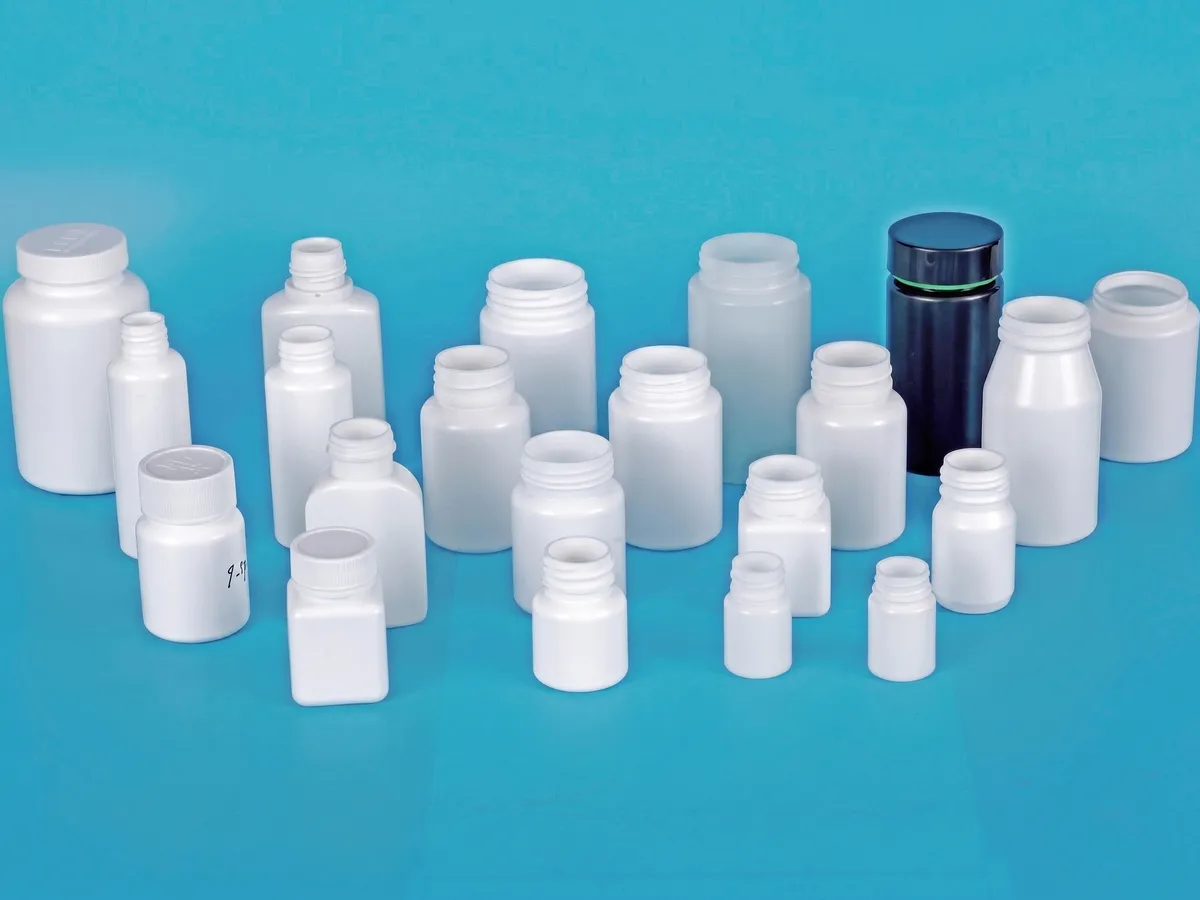
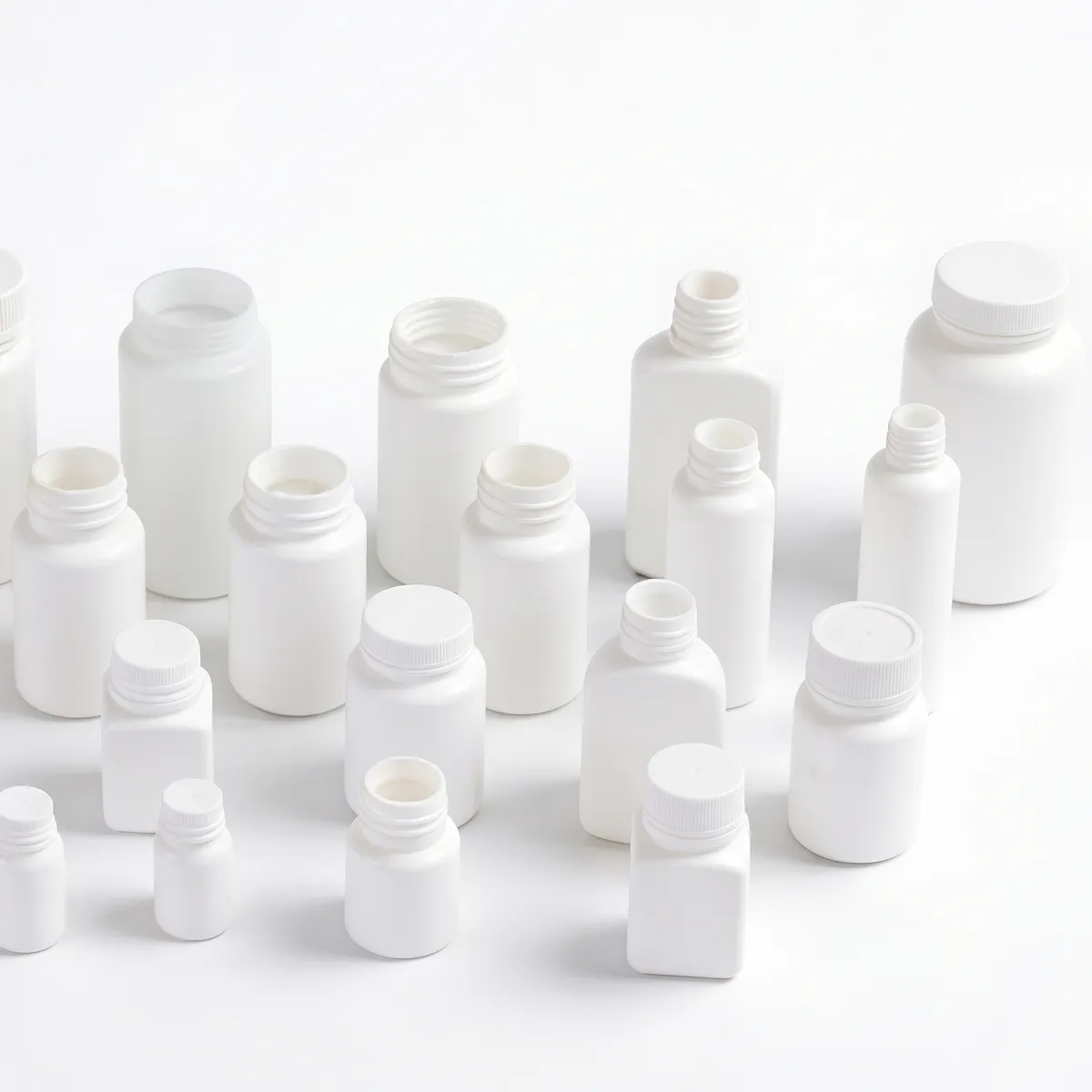
Pharmaceutical Bottles
The ZQ60HE is purpose-designed for pharmaceutical bottle manufacturing, where GMP compliance, contamination prevention, and dimensional consistency are non-negotiable. Its oil-free mold zone and absolute-encoder precision make it the preferred choice for tablet bottles, liquid medicine bottles, eye drop containers, and oral solution packaging across HDPE, PP, and LDPE materials.
Beverage Bottles
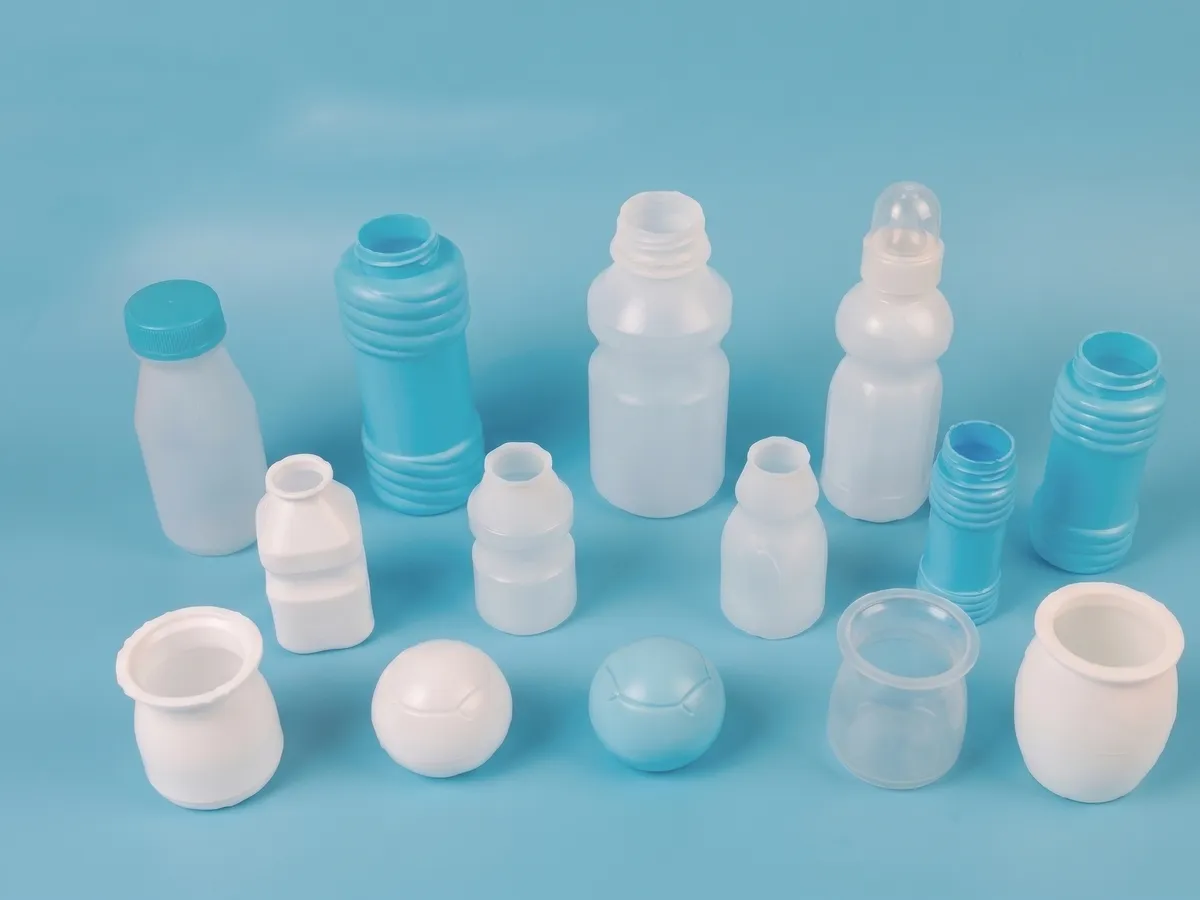
For food-grade beverage bottles, including mineral water, juice, lactic acid bacteria drinks, and health beverages, the ZQ60HE's high-output capability (up to 115,000 bottles/day), zero-contamination design, and consistent wall thickness make it ideal for both small-volume specialty beverages and large-scale commodity bottle production using PP or PS materials.
Cosmetic Bottles
Cosmetic packaging demands high gloss, surface clarity, and complex neck geometries. The ZQ60HE's high-precision injection station produces cosmetic bottles with perfectly dimensioned threaded necks, smooth body surfaces, and consistent wall thickness in materials including PP, HDPE, high-transparent PS, PCTG, and ABS. Ideal for perfume bottles, lotion dispensers, serum bottles, and toner containers.
Chemical Bottles
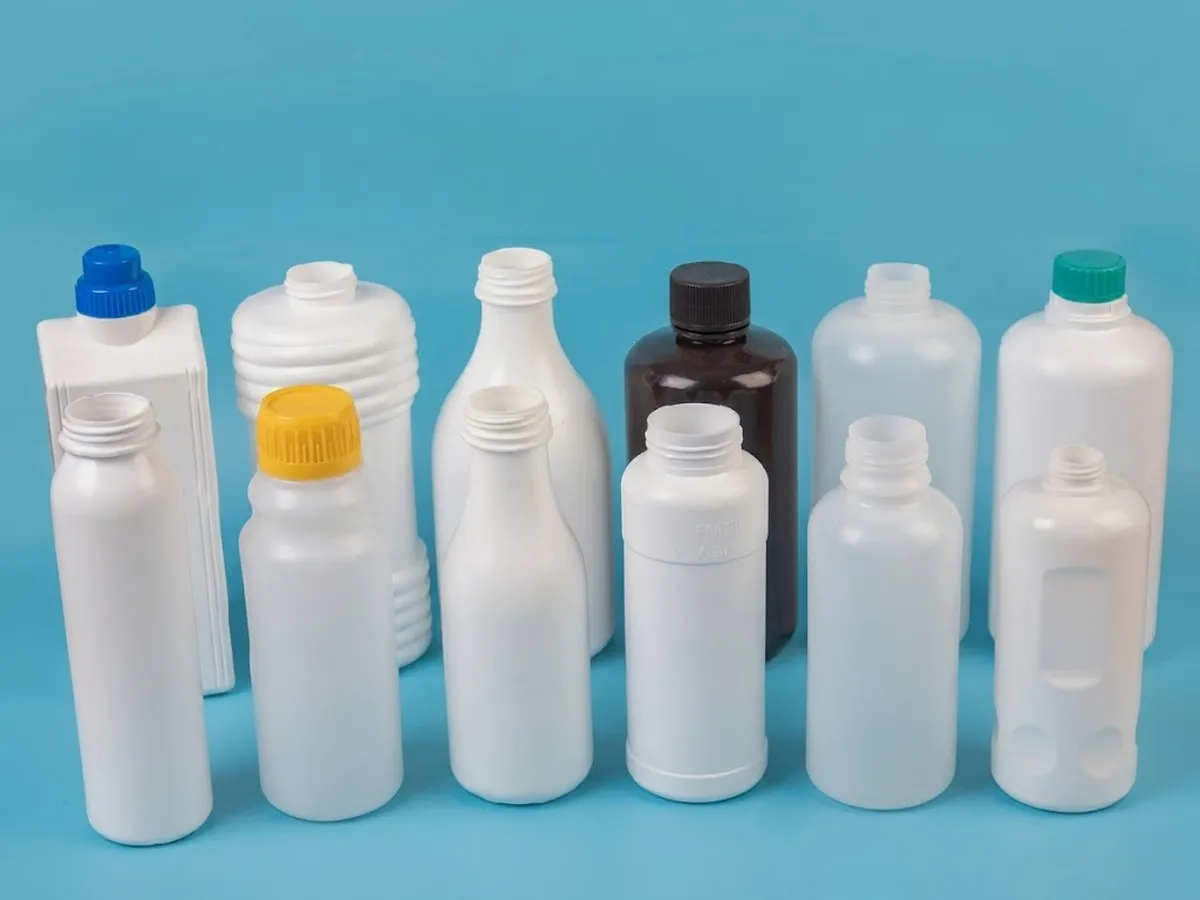
Industrial and household chemical packaging requires robust structural integrity, chemical resistance, and leak-free sealing. The ZQ60HE produces chemical bottles in HDPE and LDPE with uniform wall thickness and strong bottle bases. The injection-blow process eliminates the weld lines and pinch seams present in extrusion-blown bottles, producing chemically resistant containers with superior structural performance and 100% sealed mouths.
Feeding Bottles
Baby feeding bottles carry some of the most stringent safety and hygiene requirements of any plastic packaging application. The ZQ60HE's oil-free mold zone, GMP-compatible design, and ability to process PP and food-safe ABS resins make it the optimal injection blow molding machine for manufacturing feeding bottles with precise neck dimensions, consistent material distribution, and scratch-free internal surfaces that meet international safety standards for infant products.
Eyedropper Bottles
Ophthalmic and pharmaceutical eyedrop bottles require exceptionally precise neck openings, consistent dosing volumes, and sterile-compatible production environments. The ZQ60HE's injection-stage neck formation capability produces eyedropper bottle necks and orifices to micron-level tolerances ensuring accurate drop dosing, secure cap sealing, and full compatibility with downstream sterile filling operations. LDPE is the primary material for this application.
Body Wash Bottles
Personal care body wash, shampoo, and conditioner bottles demand attractive surface appearance, consistent volume, and robust pump-neck compatibility. The ZQ60HE produces these bottles with uniform wall thickness, excellent surface gloss, and precisely dimensioned pump necks in HDPE and PP. Its high daily output capability and ability to connect downstream to labeling and packaging equipment make it an ideal core machine for personal care product manufacturing lines.
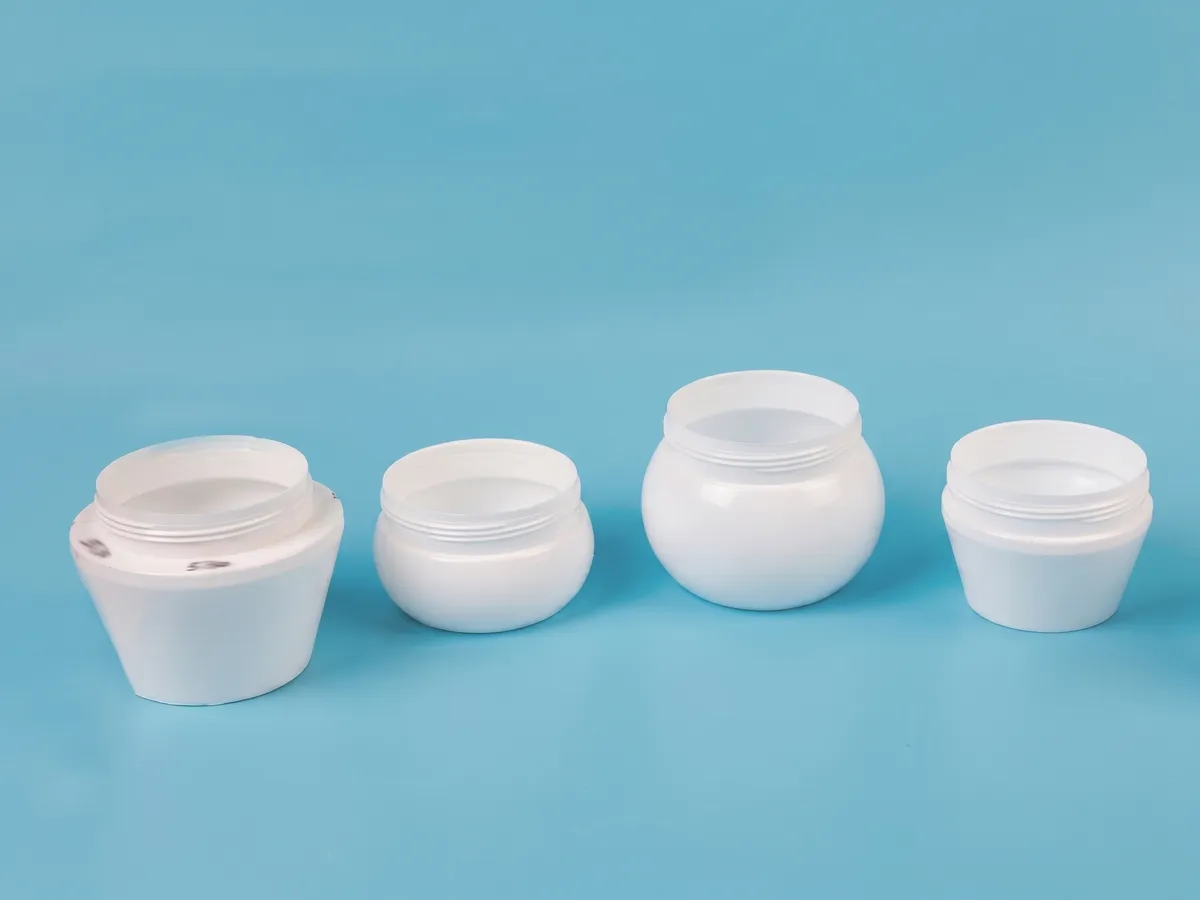
Wide Mouth Jars
Wide mouth jars for food products, healthcare supplements, cosmetic creams, and industrial materials benefit from the injection-blow process's ability to produce large, precisely dimensioned openings with fully formed, burr-free rims and secure thread profiles. The ZQ60HE accommodates wide mouth jar configurations with its 600 x 420 mm max platen size and adjustable stripping stroke, supporting containers up to 120 mm in diameter and 220 mm in height.
 |
 |
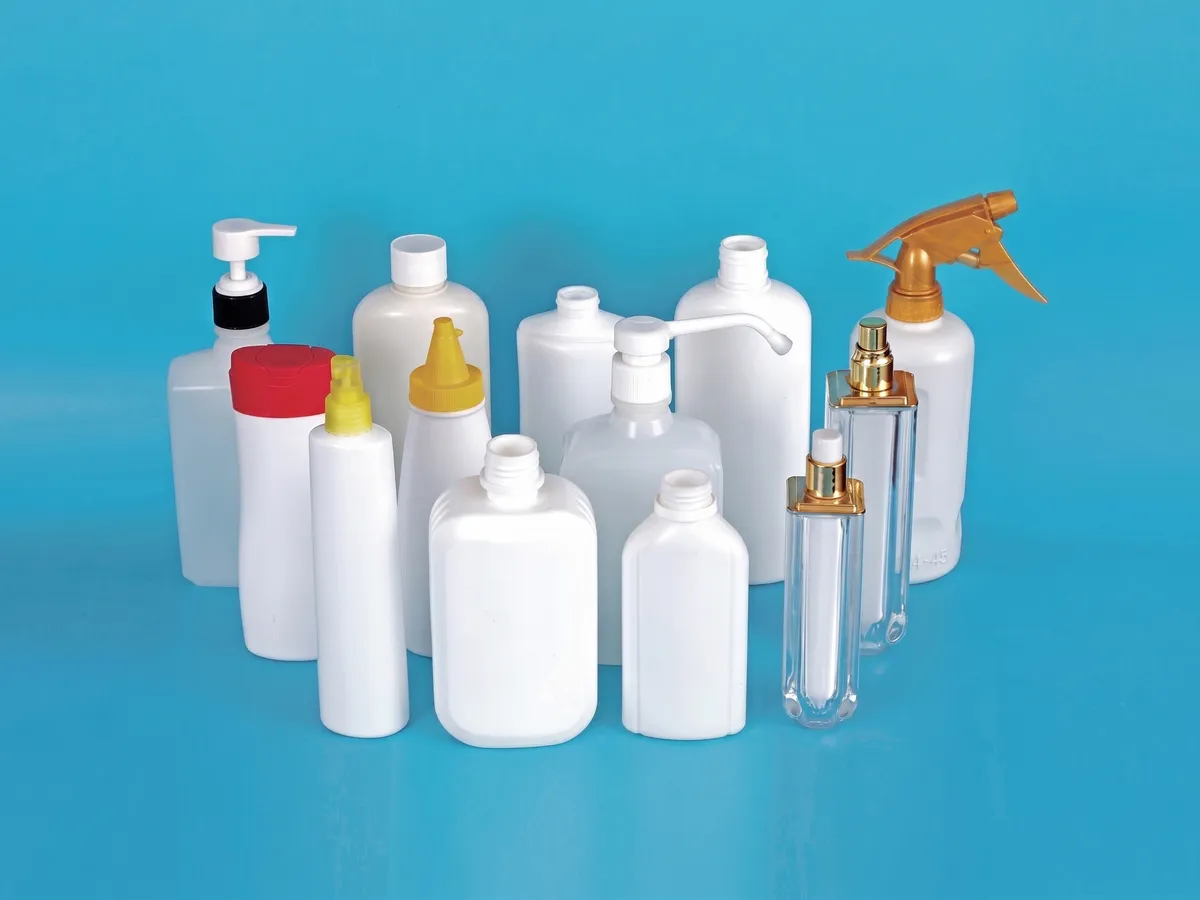 |
| Pharmaceutical Bottles | Cosmetic Bottles | Daily Chemical Bottles |
 |
 |
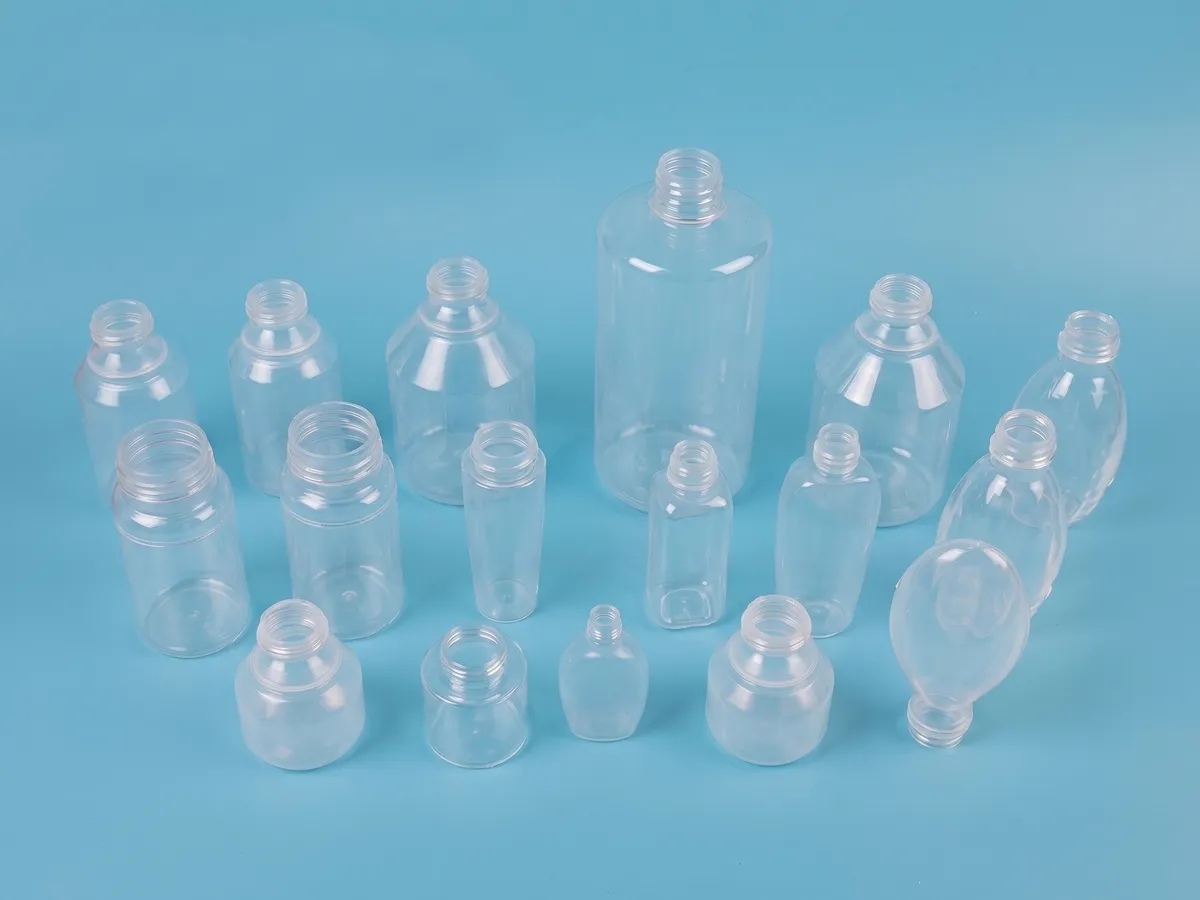 |
| Feeding Bottles | Food Bottles | PP Bottles |
Injection Blow Molding vs. Extrusion Blow Molding
What Is Extrusion Blow Molding (EBM)?
In extrusion blow molding, the plastic is melted and extruded through a die to form a hollow tube called a parison. The parison is then captured in a split mold, and air is blown in to expand it against the mold walls. Once cooled, the mold opens, and the part is removed along with flash at the pinch points, which must be trimmed.
EBM advantages include lower initial tooling costs, easier processing of large or complex containers, and the ability to produce handles and non-round cross-sections. However, EBM produces 20–40% scrap material, results in wall thickness variations of 10–20%, and leaves cut-off marks on bottle bases that reduce structural strength.
What Is Injection Blow Molding (IBM)?
In injection blow molding, the technology used in the ZQ60HE, the plastic is first injection-molded around a core rod to form a precise preform with a fully formed neck, then blown into the final bottle shape in a second mold, and finally stripped from the mandrel. All three operations occur simultaneously at separate stations.
IBM produces zero scrap material, generates uniform wall thickness within 1% variation, produces strong convex bottle bases without pinch seams, and creates precisely dimensioned necks and threads, making it the superior choice for pharmaceutical, food-grade, and high-quality cosmetic packaging applications.
| No. | Injection Blow Molding (IBM) | Extrusion Blow Molding (EBM) |
|---|---|---|
| 1 | Bottle weight variation is approximately 1% | Bottle weight variation is approximately 3% |
| 2 | Uniform wall thickness throughout | Wall thickness varies by 10–20% |
| 3 | No parting line or pinch seam on the bottle base | Cut-off mark at the base reduces the bottom strength |
| 4 | Strong, well-formed convex bottle base | Weaker base convexity due to the pinch seam |
| 5 | Zero production waste no scrap edge | 20–40% scrap from parison flash and trimming |
| 6 | Minimum wall thickness constrained by preform design | Wall thickness is adjustable via the controller during production |
| 7 | Stable, environment-insensitive production process | More adjustment is required when ambient conditions change |
| 8 | High cavity count, high yield, flat, precise bottle mouth | Fewer cavities, lower output, uneven bottle neck |
| 9 | Long mold service life suited for long-term production runs | Shorter mold life, lower initial cost but higher replacement frequency |
| 10 | Compact system, small factory footprint | Requires more auxiliary equipment and floor space |
| 11 | More difficult to produce oval or highly non-round cross-sections | Easier to form oval, irregular, and handled containers |
Compatible Raw Materials of Injection Blow Molding
The ZQ60HE injection blow molding machine processes a broad range of thermoplastic resins for diverse industry applications
1. HDPE (High-Density Polyethylene)
HDPE is the most widely used raw material on the ZQ60HE and throughout the injection blow molding machines industry. It offers excellent chemical resistance, rigidity, food-grade safety certification availability, and good moisture barrier properties. HDPE is ideal for pharmaceutical bottles, household chemical containers, personal care packaging, and food-contact applications. It processes easily on the ZQ60HE's 45/50 mm screw at moderate melt temperatures.
2. LDPE (Low-Density Polyethylene)
LDPE produces soft, squeezable bottles with excellent chemical resistance and low-temperature flexibility. It is the primary material for eyedrop bottles, squeeze bottles, and flexible packaging applications where the bottle body must deform under finger pressure to dispense product. LDPE's lower melt viscosity makes it very processable on the ZQ60HE at relatively low injection pressures and temperatures.
3. PP (Polypropylene)
Polypropylene is favored for hot-fill applications, sterilizable pharmaceutical containers, and products requiring high heat resistance. PP offers excellent hinge characteristics, good chemical resistance, and food-contact certifications. It is widely used for syrup bottles, baby feeding bottles, and personal care packaging on the ZQ60HE. PP can be processed across a wide temperature range, and its relatively high melt point makes it suitable for autoclave-sterilizable container applications.
4. PS (Polystyrene)
Standard and food-grade PS including high-transparency PS grades specifically formulated for lactic acid bacteria beverage bottles are processed routinely on the ZQ60HE. PS offers excellent clarity, rigidity, and printability. High-transparent PS is particularly valued for yogurt drink bottles, dairy product packaging, and supplement containers where clear, sparkling bottle appearance is a key purchase driver for consumers.
5. ABS (Acrylonitrile Butadiene Styrene)
ABS is processed on the ZQ60HE for applications requiring superior surface finish, impact resistance, and structural rigidity particularly in premium cosmetic packaging and baby product containers. ABS delivers excellent electroplating and surface treatment compatibility, making it ideal for high-end personal care bottles and decorative packaging where the bottle surface will be metallized, painted, or hot-stamped after molding.
6. PCTG (Polycyclohexylene Dimethylene Terephthalate Glycol)
PCTG is a premium engineering resin delivering exceptional clarity (near-glass transparency), outstanding impact resistance, and excellent chemical resistance in a single material. On the ZQ60HE, PCTG is used for high-end cosmetic serum bottles, premium personal care packaging, and medical sample containers. Its combination of crystal clarity and toughness makes PCTG the preferred material for applications where both visual appeal and structural performance are critical requirements.
 |
 |
ZQ Series Automaticl Mould Characteristics
1. Interchangeable Cavity and Neck Inserts
The ZQ Series injection mold features independently designed, interchangeable cavity and neck inserts with specially engineered cooling oil pathways. This modular design allows operators to change individual cavities or neck geometries quickly to switch between different bottle specifications without replacing the entire mold base reducing changeover time, tooling investment, and inventory requirements. Temperature stability across all cavities is maintained precisely through optimized channel routing.
2. Premium Steel Construction for Extended Service Life
ZQ Series injection molds are manufactured from either imported S136 steel alloy a premium stainless tool steel with exceptional corrosion resistance and polishability or 4Cr13 stainless steel, both known for superior hardness and wear resistance. The high-strength steel construction extends mold service life significantly compared to standard tool steel molds, reducing the total cost of ownership for injection blow molding machine operations over multi-year production campaigns.
3. Optimized Hot Runner and Mandrel Design
The optimized hot runner system ensures balanced melt flow distribution to all cavities, minimizing gram weight deviation and wall thickness deviation between cavities and between production batches. The specially designed mandrel structure maintains fast molding cycles while delivering excellent core rod cooling efficiency ensuring preforms arrive at the blow station at the optimal, consistent temperature for precise blow expansion and dimensional accuracy in the finished bottle.
4. Precision Neck and Thread Dimensions
Bottle mouths and thread profiles produced by ZQ Series molds are dimensionally accurate to within tight tolerances and deliver 100% sealing performance against standard closures. Because the neck is formed entirely by the injection mold not the blow mold the dimensional accuracy and repeatability of bottle necks on the IBM machine format is substantially superior to extrusion blow molded bottle necks, which are only partially formed and subject to parison sag and orientation variation.
5. Zero Flash - No Burrs on Mouth or Base
A fundamental advantage of the injection blow molding process is the complete elimination of flash, burrs, and trim waste. Because the preform is injection-molded around the mandrel rather than extruded as a parison and pinched there is no parting line material at the bottle base, no flash at the neck, and no trimming operations required after demolding. Every bottle exits Station 3 as a finished product ready for immediate downstream processing or filling.
6. Consistent Dimensions, Weight, and Wall Thickness
The ZQ Series mold system achieves exceptional consistency across all key bottle quality parameters: external dimensions, net weight, parting line position, and wall thickness distribution. This consistency batch-to-batch and cavity-to-cavity is what makes the ZQ60HE the preferred injection blow molding machine for pharmaceutical packaging where dimensional consistency is a GMP requirement and weight deviation directly impacts dosing accuracy and for cosmetic packaging where aesthetic uniformity is non-negotiable.
 |
 |
IBM Machine Maintenance Tips
Daily Pre-Shift Inspection
Before each production shift, operators should perform a systematic visual inspection of all servo motor connections, drive belt tensions, and safety guard interlocks. Confirm that cooling water supply pressure and temperature are within specification (inlet temperature below 25°C is recommended). Verify compressed air supply pressure is within 0.8–1.2 MPa. Check the HMI controller for any stored fault codes or alarm histories from the previous shift and address any outstanding issues before startup.
Weekly Servo System and Encoder Check
On a weekly basis, inspect all servo motor mounting bolts for tightness and check encoder cable connections for any signs of wear, abrasion, or loose connector seating. The ZQ60HE's absolute encoders are self-calibrating, but connector integrity should be confirmed regularly. Clean servo motor ventilation slots to prevent dust accumulation that could cause motor overheating during extended high-speed production runs. Verify that all servo drive parameters match the stored baseline configuration.
Monthly Lubrication and Mechanical Checks
Monthly lubrication of all linear guides, rotary table bearings, toggle linkages, and ball screw assemblies is essential for maintaining smooth, precise motion and preventing premature wear. Use only the lubricant grades specified in the ZQ60HE maintenance manual. Verify rotary table indexing accuracy, check tie rod pre-tension on the injection and blow clamping units, and confirm that stripping stroke repeatability is within the specified tolerance band.
Barrel and Screw Maintenance
The plasticizing barrel and screw assembly should be purged thoroughly when changing materials, especially when transitioning between incompatible resins or color batches. Periodic inspection of screw flights for wear and barrel bore for scoring is recommended at 3–6 month intervals depending on material abrasiveness. HDPE and PP are relatively gentle on screw and barrel surfaces; glass-fiber-filled or abrasive materials require more frequent checks and potentially hardened screw/barrel options.
Mold Care and Changeover Protocol
After each production run, mold cavities, runner systems, and mandrel surfaces should be cleaned using appropriate mold cleaner sprays and soft brushes, never metal scrapers that could scratch polished cavity surfaces. Mold cavity surfaces should be lightly coated with mold release or preservation oil when stored. During mold installation and changeover, always follow the specified clamping torque sequences and confirm water channel sealing integrity before starting temperature conditioning to avoid leakage-related downtime.
Annual Overhaul and Calibration
An annual comprehensive overhaul should include full replacement of all servo drive cooling fans, inspection and replacement of worn electrical cable looms and terminal connectors, recalibration of all servo axis home positions against absolute encoder reference values, and hydraulic-free component verification. Cooling system descaling is recommended annually in hard-water regions. Ever-Power's after-sales team can provide on-site annual maintenance services and remote diagnostic support via the machine's network interface for injection blow molding machine manufacturers worldwide.
How to Select the Right Injection Blow Molding Machine
1. Define Your Bottle Specifications First
Before evaluating any injection blow molding machine, document your complete bottle specification: volume range (ml), neck diameter and thread standard, maximum body diameter and height, material type, and required cavity count. The ZQ60HE handles volumes from 1 ml to 2,000 ml, bodies up to 120 mm diameter and 220 mm height confirm your target bottle fits within these ranges and that the machine's injection weight capacity (280–360 g) covers your largest preform shot weight requirement.
2. Evaluate Required Daily Output
Your required daily or annual production volume is a primary machine selection driver. The ZQ60HE produces up to 105,000–115,000 bottles per 24-hour day for 30 ml bottles but output per day scales with bottle volume and cavity count. If your volume requirements are below the ZQ60HE's capacity, consider the ZQ40 or ZQ60 standard models. If you need higher output, multiple machines or larger platform models may be appropriate. Always work backwards from annual volume requirements to determine the number of machines needed.
3. Consider Hygiene and Cleanroom Requirements
If your application involves pharmaceutical, food-grade, or medical device packaging, the absence of hydraulic oil above the mold area is not just a preference it is a regulatory requirement in many markets. The ZQ60HE's bottom-up, oil-free mold zone design is specifically engineered to meet GMP and food-contact hygienic production standards. For non-critical industrial or chemical packaging applications, a standard ZQ-series hydraulic machine may offer a lower initial investment with acceptable hygiene performance.
4. Calculate Total Cost of Ownership, Not Just Machine Price
When evaluating injection blow molding machine price, look beyond the initial purchase price to the full total cost of ownership. The ZQ60HE's 30% energy savings translates to significant monthly electricity cost reductions versus hydraulic machines. Elimination of hydraulic oil procurement, disposal, and leak cleanup costs provides additional savings. The electric cylinder injection unit's reduced maintenance requirements and the servo system's long service life further reduce lifetime operating costs compared to equivalent hydraulic models.
5. Assess Automation and Integration Needs
If you are planning or operating a highly automated production facility, the ZQ60HE's downstream integration capabilities are a key selection advantage. Its conveyor output interfaces with visual inspection systems, side-leak testers, labeling machines, and automatic packaging equipment enabling fully automated, lights-out production. If you only need a standalone blowing station with manual downstream handling, a simpler configuration may suffice; but for growth-oriented operations, the ZQ60HE's automation readiness future-proofs your production investment.
6. Choose a Supplier with Global After-Sales Support
The quality of after-sales support is a critical differentiator when selecting among injection blow molding machine suppliers. Look for a supplier with proven international service capability, local agent networks in your region, and rapid spare parts availability. Ever-Power has established agent and service networks across Korea, India, Turkey, Russia, South Africa, Brazil, the Americas, and Mexico. Our engineering team provides remote diagnostic support, on-site commissioning, operator training, and preventive maintenance services globally.
Why Choose Ever-Power's Injection Blow Molding Machines?
Mexico Ever-Power ISBM Machinery Co., Ltd. is a dedicated manufacturer and global supplier of automatic one-step injection blow molding machines and supporting injection blow molds. Our product portfolio spans injection blow molding machines, extrusion blow molding machines, injection stretch blow molding machines, and a comprehensive range of auxiliary equipment providing customers with complete, integrated plastic bottle production solutions from a single source.
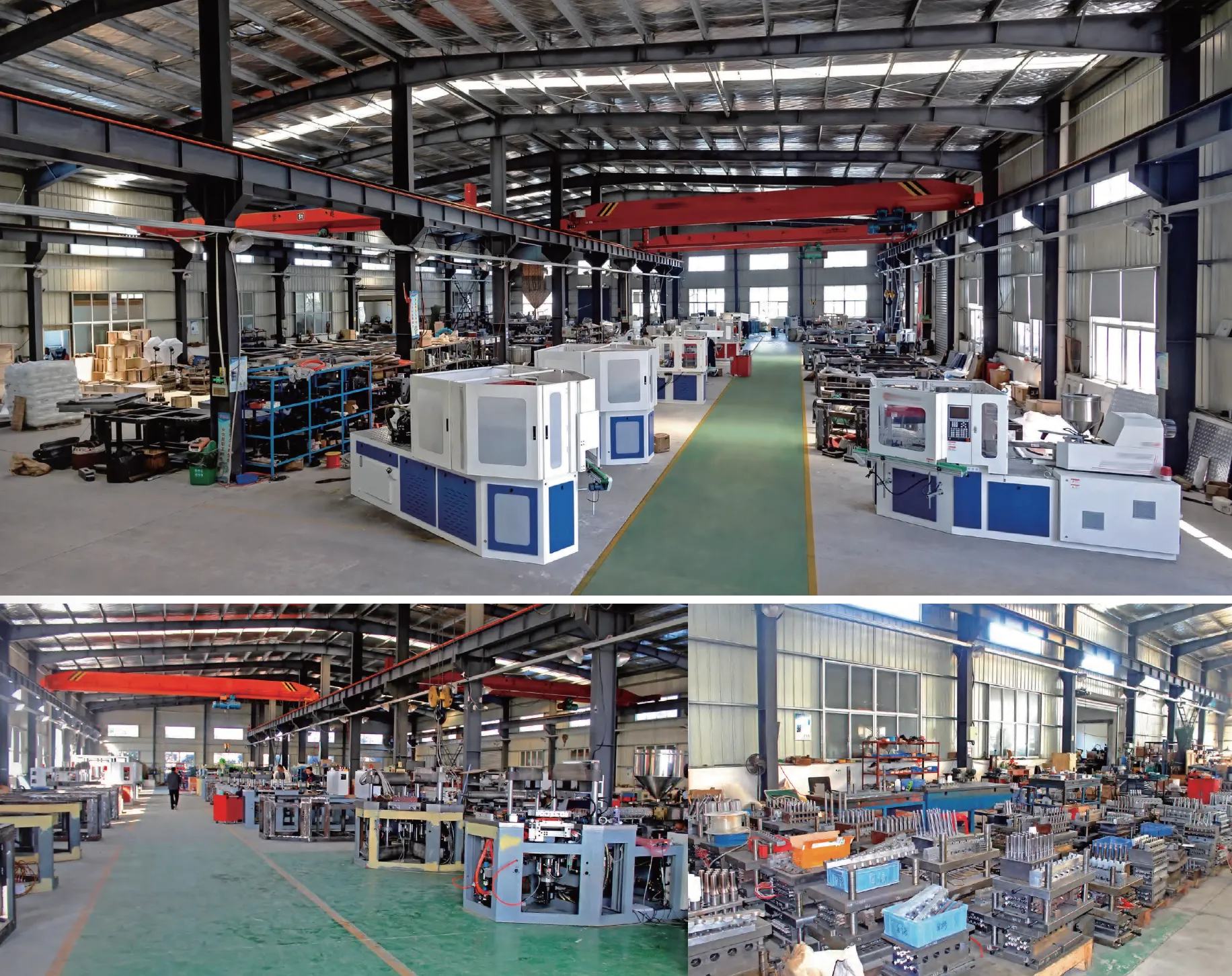
Our manufacturing facility is staffed by a dedicated R&D and engineering team that includes veteran specialists in injection blow molding machine design, hot runner engineering, and precision mold manufacturing. With decades of accumulated theoretical knowledge and practical production experience, our team delivers machines that perform reliably in real-world, high-volume industrial production environments not just in controlled factory testing conditions. We apply the same engineering discipline to every machine, whether it is a standard model or a fully customized configuration for a unique bottle application.
The applications served by our injection blow molding machines span pharmaceutical packaging, food and beverage packaging, healthcare and nutraceutical packaging, cosmetic packaging, and specialty industrial plastic containers covering the full range from 1 ml eye drop bottles to 1,000 ml wide mouth jars. Our machines process all major pharmaceutical and food-contact thermoplastic resins: HDPE, LDPE, PP, PS, ABS, PCTG, EVA, and bio-based PLA materials.
Ever-Power operates under the enterprise development philosophy of "self-reliance, integrity, pragmatism, innovation, and responsibility" building one-stop turnkey production solutions that deliver first-class performance and long-term value for our customers. We support the full customer journey: detailed pre-sale technical consultation and project feasibility assessment; complete machine delivery, installation, and commissioning; and responsive ongoing after-sales service through our global partner network. Our established overseas agent relationships in Korea, India, Turkey, Russia, South Africa, Brazil, the Americas, and Mexico ensure that customers worldwide receive timely, professional support in their local language and time zone.
Frequently Asked Questions
Q: What is the difference between an injection blow molding machine and an injection stretch blow molding machine (ISBM)?
A: An injection blow molding machine (IBM) forms a preform by injection molding on a mandrel, then inflates it with air at the blow station without axial stretching of the preform. An injection stretch blow molding machine (ISBM) adds a stretch rod that physically elongates the preform axially before and during air inflation, producing biaxial molecular orientation that significantly increases bottle strength and clarity. IBM is ideal for pharmaceutical and cosmetic bottles in HDPE, PP, and PS, while ISBM is primarily used for PET bottles. The ZQ60HE is an IBM platform optimized for the former group of applications.
Q: What is the injection blow molding machine price for the ZQ60HE?
A: The injection blow molding machine price for the ZQ60HE depends on the specific configuration screw diameter selection, mold cavity count, downstream automation integration level, and optional inspection equipment. Please contact Ever-Power directly via the inquiry form on this page or at our sales team email for a customized quotation. Our team will assess your exact bottle specifications, required daily output, and material requirements to provide a complete technical and commercial proposal with transparent pricing and ROI analysis.
Q: Can the ZQ60HE process PET material for PET injection blow molding?
A: The ZQ60HE is optimized for processing HDPE, LDPE, PP, PS, ABS, PCTG, EVA, and bio-based corn resins. PET requires biaxial orientation through stretching to achieve its characteristic clarity and strength, which is performed in ISBM (injection stretch blow molding) machines rather than IBM machines. For PET injection blow molding machine requirements, we recommend evaluating our ISBM product range instead. The ZQ60HE is the better choice for your application if your bottles are in the materials listed above.
Q: How does the ZQ60HE compare as a replacement for an Aoki injection blow molding machine?
A: The ZQ60HE is a popular choice as a replacement of Aoki injection blow molding machine systems due to its competitive pricing, comparable or superior technical specifications, and the availability of custom mold designs compatible with existing bottle specifications. Key advantages of the ZQ60HE over older Aoki hydraulic models include: 100% servo-electric drive (no hydraulic oil), 30% energy savings, higher cycle speed, and modern absolute-encoder servo systems. Our engineering team can assess your existing Aoki machine specifications and mold designs to confirm compatibility and propose a transition plan.
Q: How long does mold changeover take on the ZQ60HE injection blow molding machine?
A: Mold changeover time on the ZQ60HE typically ranges from 2 to 4 hours depending on the extent of the change (full mold swap vs. cavity insert change only), operator experience level, and whether the new mold requires significant temperature retuning. The ZQ Series mold's modular interchangeable cavity and neck insert design significantly reduces changeover time compared to full-mold systems. With an experienced crew following standardized changeover procedures, full mold changes can be completed in under 3 hours. We provide detailed changeover procedure documentation and training during machine commissioning.
Q: What is the minimum and maximum bottle size the ZQ60HE can produce?
A: The ZQ60HE accommodates bottles ranging from 1 ml to 2,000 ml in volume, with maximum body diameter of 120 mm and maximum body height of 220 mm. The stripping stroke is 220 mm. For pharmaceutical applications, the machine is particularly well-suited to the 5 ml–500 ml range that dominates liquid medicine, eye drop, supplement, and syrup bottle production. For very small bottles (1–5 ml), multi-cavity mold layouts maximize output. For larger bottles approaching the upper size limit, single or dual cavity configurations are used.
Q: Does the ZQ60HE all electric injection blow molding machine require any hydraulic oil at all?
A: No. The ZQ60HE is a full electric injection blow molding machine. There is absolutely no hydraulic system on this machine and no hydraulic oil is required anywhere in the machine. All machine movements, including injection, clamping at both injection and blow stations, rotary table indexing, ejection, and carriage movement, are powered exclusively by servo motors through mechanical transmission. This design eliminates all hydraulic oil procurement, storage, leak management, and disposal requirements with a direct positive impact on operating costs, contamination risk, and environmental compliance.
Q: What utilities does the ZQ60HE injection blow molding machine require?
A: The ZQ60HE requires three utility connections: electrical power supply (total installed power 90 kW, operating at 15–25% of total capacity during normal production), compressed air supply (0.8–1.2 MPa, with sufficient capacity for continuous blow molding cycles at the specified production rate), and cooling water supply (flow rate and pressure as specified by our engineering team based on mold configuration and ambient temperature). The machine does not require any hydraulic supply lines, oil storage, or oil disposal infrastructure.
Q: Can the ZQ60HE produce led bulb cover injection blow molded parts?
A: Yes. A led bulb cover injection blow molding machine application is feasible on the ZQ60HE platform for covers within the machine's dimensional envelope (max diameter 120 mm, max height 220 mm). Suitable materials include high-transparency PS, PCTG, ABS, and other optically clear thermoplastics. The injection blow molding process produces LED covers with excellent wall thickness uniformity and consistent optical light diffusion properties superior to extrusion blown LED covers. Contact our application engineering team to discuss specific LED cover geometry and material requirements.
Q: What warranty and after-sales support does Ever-Power provide for the ZQ60HE?
A: Ever-Power provides a standard machine warranty covering manufacturing defects on mechanical and electrical components, with detailed terms provided in the purchase contract. Our after-sales support includes on-site installation and commissioning by certified engineers, operator and maintenance training during commissioning, remote diagnostic support via network connection, and an international spare parts supply network. We have established service partners and local agent networks across Korea, India, Turkey, Russia, South Africa, Brazil, the Americas, and Mexico to provide localized support for our global injection blow molding machine customers.
Customer Reviews
Kim Jae-won, Pharmaceutical Packaging, South Korea
"We replaced our old Aoki machine with the ZQ60HE about eight months ago for our pharmaceutical syrup bottle line 60ml PP bottles and honestly, the improvement has been night and day. Energy bill is down noticeably, and we had zero oil contamination issues since day one. The bottle neck dimensions are perfectly consistent, which matters a lot for our cap-sealing line. Installation and training went smoothly. Very satisfied overall."
Priya Mehta, Cosmetic Packaging Manufacturer, India
"We're a mid-sized cosmetic bottle manufacturer in Mumbai and we've been running the ZQ60HE for about six months on our PCTG serum bottle range. The clarity of the bottles is excellent customers keep commenting on how premium they look. We're producing around 95,000 pieces per day on 30ml bottles and the waste rate is near zero. The service team was very responsive when we had a question about the hot runner settings during the first week. Good machine, good support."
Ahmet Kaya, Pharmaceutical Packaging, Turkey
"We needed a machine for 100ml HDPE pharmaceutical dropper bottles and the ZQ60HE was recommended by our local distributor. What sold us was the oil-free mold zone. Our facility has strict GMP requirements and the previous machine we looked at couldn't guarantee that. The delivery was on schedule, the commissioning engineer stayed on-site for a full week until everything was running perfectly, and the machine has been reliable since. The cycle time is noticeably faster than our old hydraulic machine too."
Sergei Volkov, Plastic Packaging Plant, Russia
"We operate a large plastic bottle plant in Yekaterinburg and purchased the ZQ60HE for 350ml PP beverage bottles. We've had the machine running for almost a year now with very little downtime. The servo system is very reliable, we haven't had any encoder issues at all. The only thing I'd note is that getting spare parts to Russia sometimes takes a bit of time, but the machine rarely needs them. The energy consumption compared to our older hydraulic blow molders is very noticeably lower. Worth the investment."
Thandi Nkosi, Plastic Packaging Supplier, South Africa
"Our company in Johannesburg supplies plastic bottles to the personal care and household chemical sectors. We've been running the ZQ60HE for 300ml and 1L HDPE bottles for about ten months. The machine handles both sizes well with the cavity changeover kit, which was a big selling point for us. Noise on the factory floor is much lower compared to our old machines, and our operators are much happier. The visual inspection integration took a bit of setup but it's working well now and has eliminated our manual checking station."
Carlos Mendonça, Cosmetic Packaging Producer, Brazil
"We manufacture cosmetic and personal care packaging in São Paulo and evaluated several injection blow molding machine manufacturers before choosing the ZQ60HE. What won us over was the customization flexibility our 120ml cosmetic bottle has an unusual neck geometry and the Ever-Power team designed a mold that handles it perfectly. We've been in production for seven months, running ABS resin, and bottle quality is consistently high. The after-sales team responds within hours on WhatsApp, which really matters when you're operating 24 hours a day."
Michael, Nutraceutical Packaging, United States
"We're a nutraceutical supplement company in Ohio and we evaluated the ZQ60HE as a potential replacement for our aging hydraulic IBM machines. The energy savings were the initial hook. Our power costs are high, but after seeing the machine run during a factory visit, the build quality and the elimination of hydraulic oil risk for our GMP facility really sealed the decision. We've been running HDPE bottles at 60ml for nine months and the machine consistently produces within spec. Solid choice for pharmaceutical-adjacent packaging applications."
Roberto Garza, Envases Farmacéuticos, Mexico
"We bought the ZQ60HE for our pharmaceutical packaging plant in Monterrey almost a year ago. We produce 30ml and 50ml PP bottles for local pharmaceutical laboratories, and the level of precision at the bottle mouth is exactly what we needed zero sealing problems in over two million pieces produced. The installation team arrived on time and the technician was very professional. The price-quality ratio of this machine is excellent compared to other brands we evaluated."
Yuna Choi, Dairy Beverage Packaging, South Korea
"We produce lactic acid bacteria beverage bottles in high-clarity PS and had been looking for an injection blow molding machine that could handle the tight clarity and consistency requirements of premium dairy drink packaging. The ZQ60HE ticked every box. We're producing 15 months in now, and the bottles come off the line looking great, no color variation, no wall thickness issues. The machine footprint is also compact which matters in our facility. Very happy with the purchase and would recommend to others in the food and beverage packaging sector."
Additional information
| Edited by | Yjx |
|---|