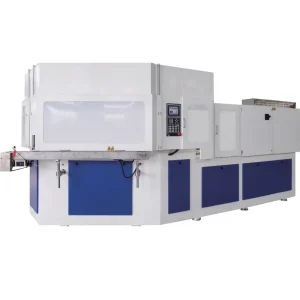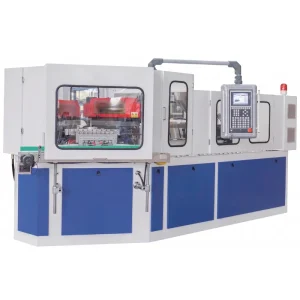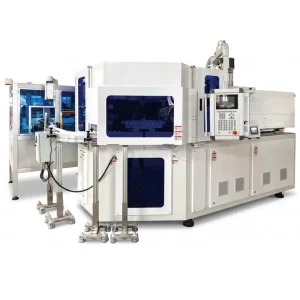
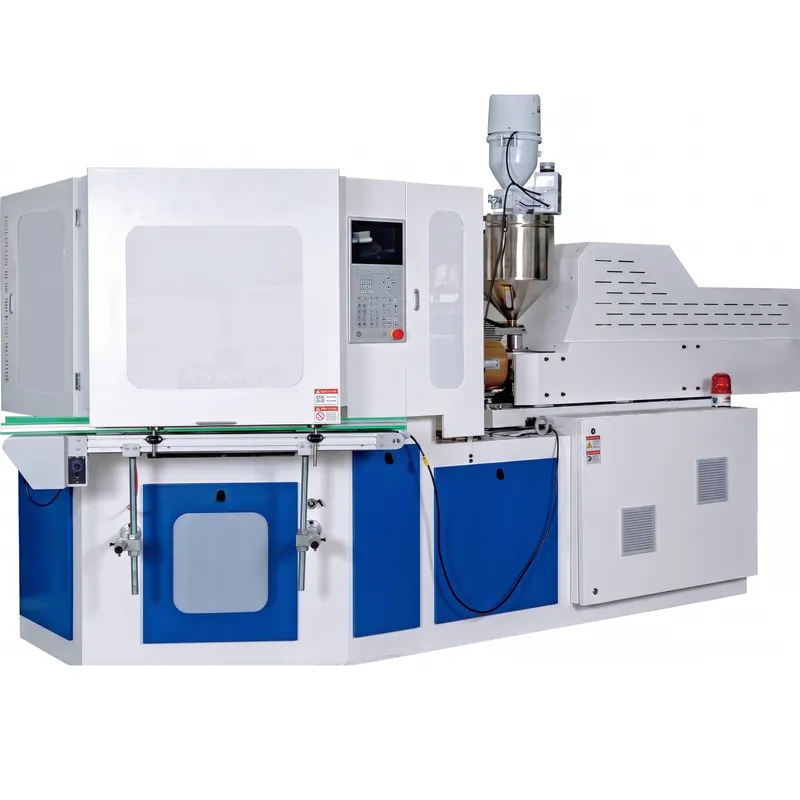
ZQ40 Injection Blow Molding Machine Replacement for Bloma IBM45 Model
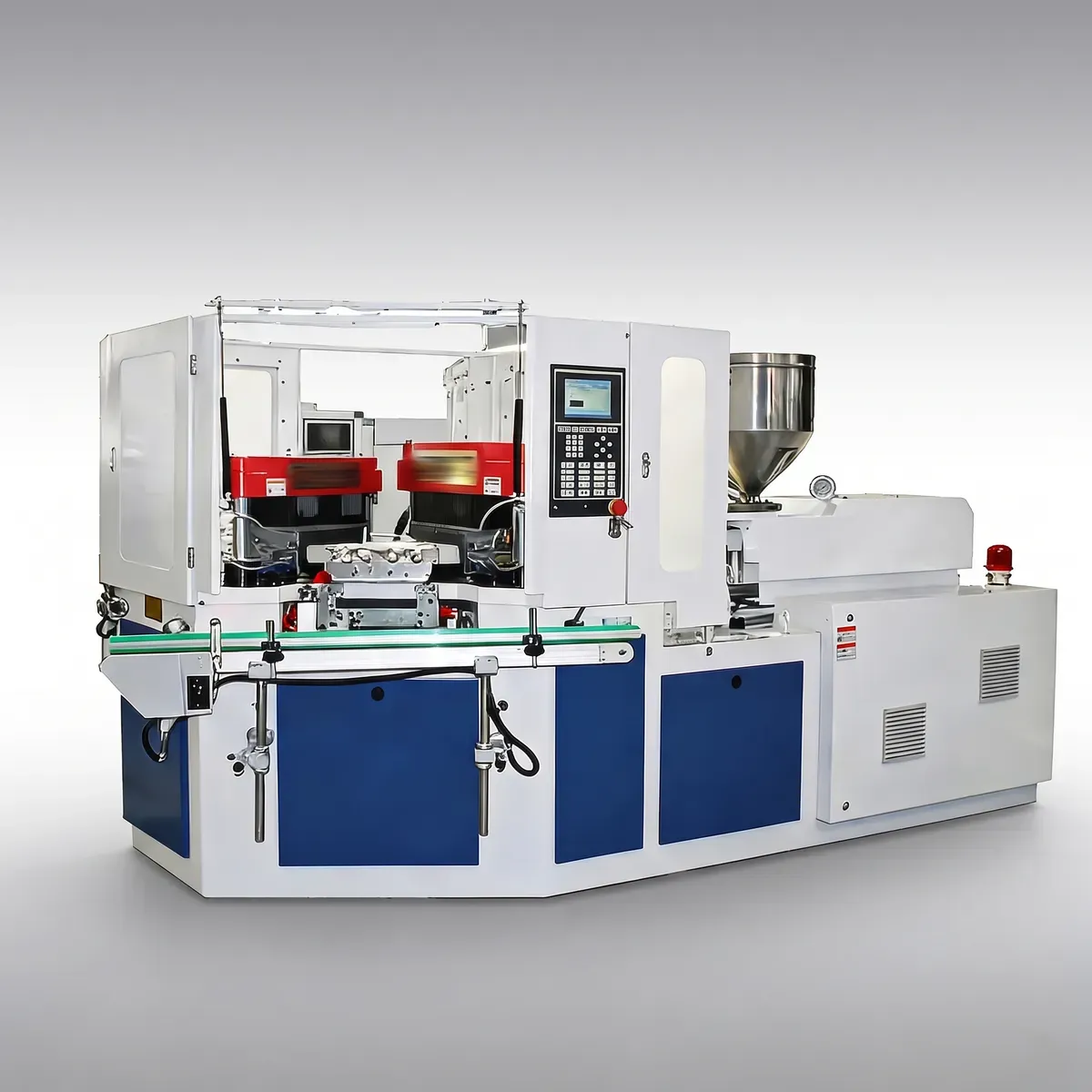
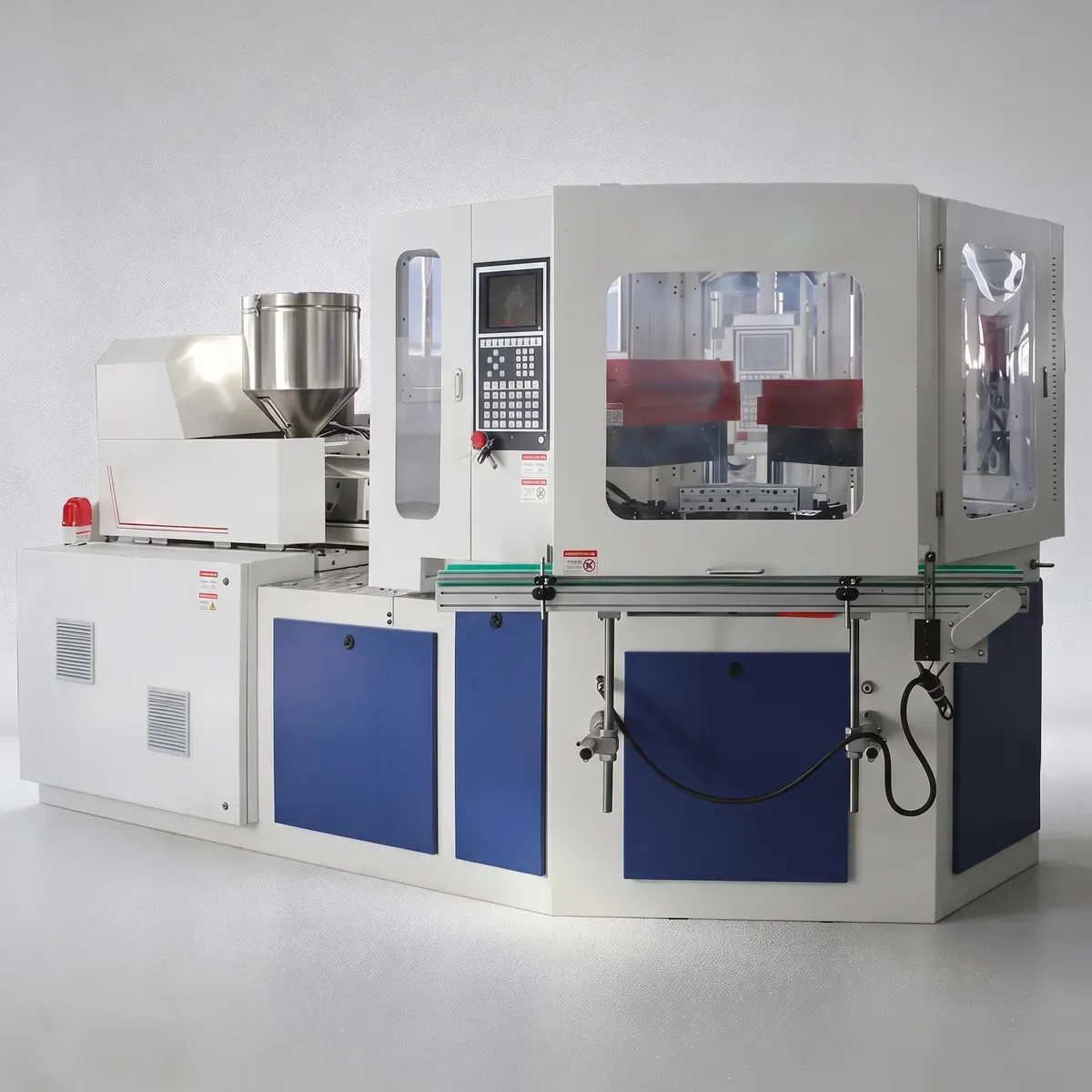
The ZQ40 injection blow molding machine replacement for the Bloma IBM45 model is a next-generation all electric injection blow molding machine engineered for maximum efficiency and reliability. Powered by a full servo motor drive system that completely eliminates hydraulic oil across all movements, this IBM machine delivers a 20% shorter cycle time compared to traditional models, achieving a cycle of just 8.2 seconds for 30ml bottles. That translates to a daily output of 105,000 bottles and a peak of 115,000 bottles per day. Energy consumption is reduced by approximately 30%, consuming only 12 kWh per hour during 30ml bottle production.
The ZQ40 injection blow molding machine replacement for the Bloma IBM45 model is a next-generation all electric injection blow molding machine engineered for maximum efficiency and reliability. Powered by a full servo motor drive system that completely eliminates hydraulic oil across all movements, this IBM machine delivers a 20% shorter cycle time compared to traditional models, achieving a cycle of just 8.2 seconds for 30ml bottles. That translates to a daily output of 105,000 bottles and a peak of 115,000 bottles per day. Energy consumption is reduced by approximately 30%, consuming only 12 kWh per hour during 30ml bottle production. Featuring absolute encoders in the servo system, the ZQ40 ensures high repeatability and precision with lower noise levels. Its special clamping structure provides a 40 to 80 ton adjustable clamping force, making it one of the most versatile injection blow molding machines available for diverse production needs.
Designed with a bottom-up structure, the mold area remains completely free of lubricating oil, meeting stringent hygiene standards for pharmaceutical packaging, food-grade containers, and high-quality cosmetic bottles. This one step injection blow molding machine uses an electric cylinder-driven injection unit for stable, consistent injection performance and significantly lower maintenance costs over its service life. The conveyor rear is fully compatible with downstream automation equipment, including visual inspection systems, leak testers, labeling machines, and automatic packaging lines, enabling unattended full-line automation. Suitable for producing HDPE, LDPE, PP, PS, ABS, and other thermoplastic bottles ranging from 10ml to 1000ml, the ZQ40 is ideal for pharmaceutical vials, personal care bottles, food containers, chemical packaging, and precision-neck beverage vessels. As a proven plastic injection blow molding machine, it is the preferred direct replacement for the Bloma IBM45, Jomar IBM40, SUMA 40iB, and Uniloy UIB70 models.
Mold Cavitation(For Reference)
| Approx Volume | 10ml | 30ml | 60ml | 100ml | 250ml | 500ml | 1000ml |
|---|---|---|---|---|---|---|---|
| Max.cavitation | 9 | 8 | 6 | 4 | 3 | 2 | 1 |
Main Technical Parameters
| Item | Unit | ZQ40 |
|---|---|---|
| Injection System | ||
| Screw Diameter | mm | 40/45 |
| Screw L/D | % | 22:1 |
| Injection weight! | g | 190/260 |
| Heating power | KW | 7.5 |
| Number of barrel zones | 3+N | |
| Injection stroke | mm | 120 |
| Clamping System | ||
| Clamping force of injection | KN | 400 |
| Opening stroke for injection | mm | 165 |
| Clamping force of blowing | KN | 60 |
| Opening stroke for blowing | mm | 140 |
| Lifing height of rotary table | mm | 70 |
| Mould | ||
| Max.Platen size(LxW) | mm | 480x340 |
| Mold thickness | mm | 180 |
| Dia. of bottle | mm | 120 |
| Botle height | mm | 220 |
| Suitable bottle height | mm | 1-1500 |
| Stripping stroke | mm | 220 |
| Hydraulic system | ||
| Hydraulic Pressure | Map | 14 |
| Motor power | KW | 11 |
| Dry cycle | S | 3.5 |
| Total Power | KW | 20 |
| Operating power | % | 52-70 |
| Others | ||
| Min. Air pressure of compressed air | MPa | 0.7- 1.2 |
| Compressed air capacity | M³/min | 0.7 |
| Water flowage | M³/h | 3.5 |
| Cooling water pressure | MPa | 0.3-0.4 |
| Dimensions (Lx W x H ) | M | 3.5x1.3x1.7 |
| Net weight | Ton | 3.8 |
Replaceable Brand and Model
| Ever-Power | Clamping Force | Jomar | SUMA | Uniloy | Bloma |
| ZQ40 | 40T | IBM40 | 40iB | UIB70 | IBM45 |
| ZQ60 | 60T | IBM65 | 65iB | UIB90 | IBM50 |
| ZQ80 | 80T | IBM85S | 85iB | UIB120 | IBM85 |
| ZQ110 | 110T | IBM135 | 135iB | UIB150 | IBM135 |
| ZQ135 | 135T | IBM175 | 175iB | UIB180 |
IBM Machine Screw Diameter
| Ever-Power | Screw Diameter | Jomar | SUMA | Bloma |
| ZQ40 | 40/45 | 35/40 | 40 | 45 |
| ZQ60 | 45/50 | 45 | 40/50 | 50 |
| ZQ80 | 55 | 55 | 50/60 | 50 |
| ZQ110 | 65 | 65 | 65/76 | 70 |
| ZQ135 | 70 | 70 | 65/76 |
IBM Machine Injection Weight
| Ever-Power | Injection Weight | Jomar | SUMA | Bloma |
| ZQ40 | 190/260 | 180 | 169 | 180 |
| ZQ60 | 260/383 | 205 | 169/264 | 240 |
| ZQ80 | 466 | 300 | 333/480 | 310/280 |
| ZQ110 | 540 | 450/550 | 580/770 | 560 |
| ZQ135 | 650 | 450/550 | 580/770 |
IBM Machine Injection Clamping Force
| Ever-Power | Injection Clamping Force | Jomar | SUMA | Bloma |
| ZQ40 | 400KN | 340KN | 386KN | 350KN |
| ZQ60 | 600KN | 460KN | 580KN | 500KN |
| ZQ80 | 800KN | 680KN | 720KN | 700KN |
| ZQ110 | 1100KN | 1210KN | 1200KN | 1250KN |
| ZQ135 | 1350KN | 1560KN | 1600KN |
IBM Machine Mold Size
| Ever-Power | Mold Size | Jomar | SUMA | Bloma |
| ZQ40 | 480 × 340 | 394 × 508 | 470 × 350 | 450 × 390 |
| ZQ60 | 600 × 390 | 432 × 660 | 620 × 400 | 620 × 430 |
| ZQ80 | 800 × 400 | 464 × 749 | 700 × 400 | 620 × 430 |
| ZQ110 | 1100 × 460 | 559 × 1118 | 1000 × 500 | 900 × 480 |
| ZQ135 | 1300 × 500 | 635 × 1372 | 1200 × 600 |
IBM Machine Size
| Ever-Power | Mold Size (M) | Jomar | SUMA | Bloma |
| ZQ40 | 3.8 × 1.3 × 1.7 | 2.72 × 1.9 × 2.75 | 3.8 × 1.5 × 2.3 | 4.05 × 1.52 × 2.55 |
| ZQ60 | 3.8 × 1.4 × 1.8 | 2.92 × 1.98 × 3.41 | 4 × 1.7 × 2.3 | 620 × 430 × 2.55 |
| ZQ80 | 4.5 × 1.6 × 2 | 3.33 × 1.94 × 3.41 | 4.5 × 2 × 2.6 | 620 × 430 × 2.55 |
| ZQ110 | 5 × 1.8 × 2.2 | 3.79 × 2.4 × 3.41 | 5 × 2.4 × 2.7 | 900 × 480 × 2.55 |
| ZQ135 | 5.5 × 2 × 2.4 | 4.22 × 2.67 × 3.58 | 6 × 2.6 × 2.7 |
Note: Brands are mentioned only to help customers choose products, not to sell those brands' products.
Key Features of the ZQ40 Injection Blow Molding Machine
1. High Production Capacity
The ZQ40 injection blow molding machine achieves up to 115,000 bottles per day for 30ml containers with an 8.2-second cycle. Running fully automatically without frequent manual intervention, it meets high-volume customer orders for pharmaceutical vials, cosmetic bottles, and food containers. Its servo-driven mechanism keeps throughput consistent across long production runs, giving manufacturers a decisive competitive edge in fast-turnaround markets.
2. Customizable Molding Options
As a fully customized injection blow molding machine for sale, the ZQ40 accommodates bottle volumes from 10ml to 1000ml across a wide range of shapes, neck finishes, and wall thicknesses. The adjustable 40 to 80 ton clamping force allows rapid changeover between product lines. Whether producing slender cosmetic tubes, wide-mouth food jars, or precision pharmaceutical vials, operators can fine-tune cavitation, mold geometry, and process parameters to match exact product specifications.
3. Energy Efficiency
The full electric injection blow molding machine design reduces energy consumption by approximately 30% versus hydraulic models, using just 12 kWh per hour during 30ml bottle production. By eliminating the hydraulic pump's continuous energy draw and optimising servo motor output to demand, the ZQ40 lowers utility costs and reduces carbon footprint. This makes it a leading choice among energy-conscious manufacturers seeking the best injection blow molding machine for sustainable production.
4. Easy Operation and Maintenance
The ZQ40's intuitive touchscreen interface lets operators configure injection pressure, temperature profiles, and cycle timing within minutes. The all-servo architecture eliminates hydraulic oil changes, filter replacements, and related downtime, sharply reducing scheduled maintenance intervals. The electric cylinder-driven injection unit offers stable, repeatable performance with minimal wear on seals and valves. Routine upkeep is straightforward, and Ever-Power provides comprehensive technical support to keep the IBM injection blow molding machine running at peak efficiency.
5. Quality Control and Consistency
Absolute encoders in the servo drive system deliver high positional repeatability for every cycle, ensuring each bottle exits with consistent wall thickness, neck dimensions, and overall geometry. The ZQ40 monitors and auto-adjusts temperature, clamping force, and injection pressure in real time. Tight tolerances are maintained even during extended production runs, making this plastic injection blow molding machine the preferred choice for pharmaceutical GMP environments and precision cosmetic packaging where zero-defect quality is non-negotiable.
6. Compatible with Bloma IBM45 Model IBM Machine
The ZQ40 is engineered as a direct replacement for the Bloma IBM45 model injection blow molding machine, sharing equivalent clamping tonnage (40T), screw diameter range (40/45mm), injection weight capacity, and mold platen dimensions. Facilities upgrading from Bloma IBM45, Jomar IBM40, SUMA 40iB, or Uniloy UIB70 equipment can transition with minimal retooling. Existing mold tooling in many cases remains usable, dramatically reducing capital investment and changeover time while gaining the full benefit of all-electric servo technology.
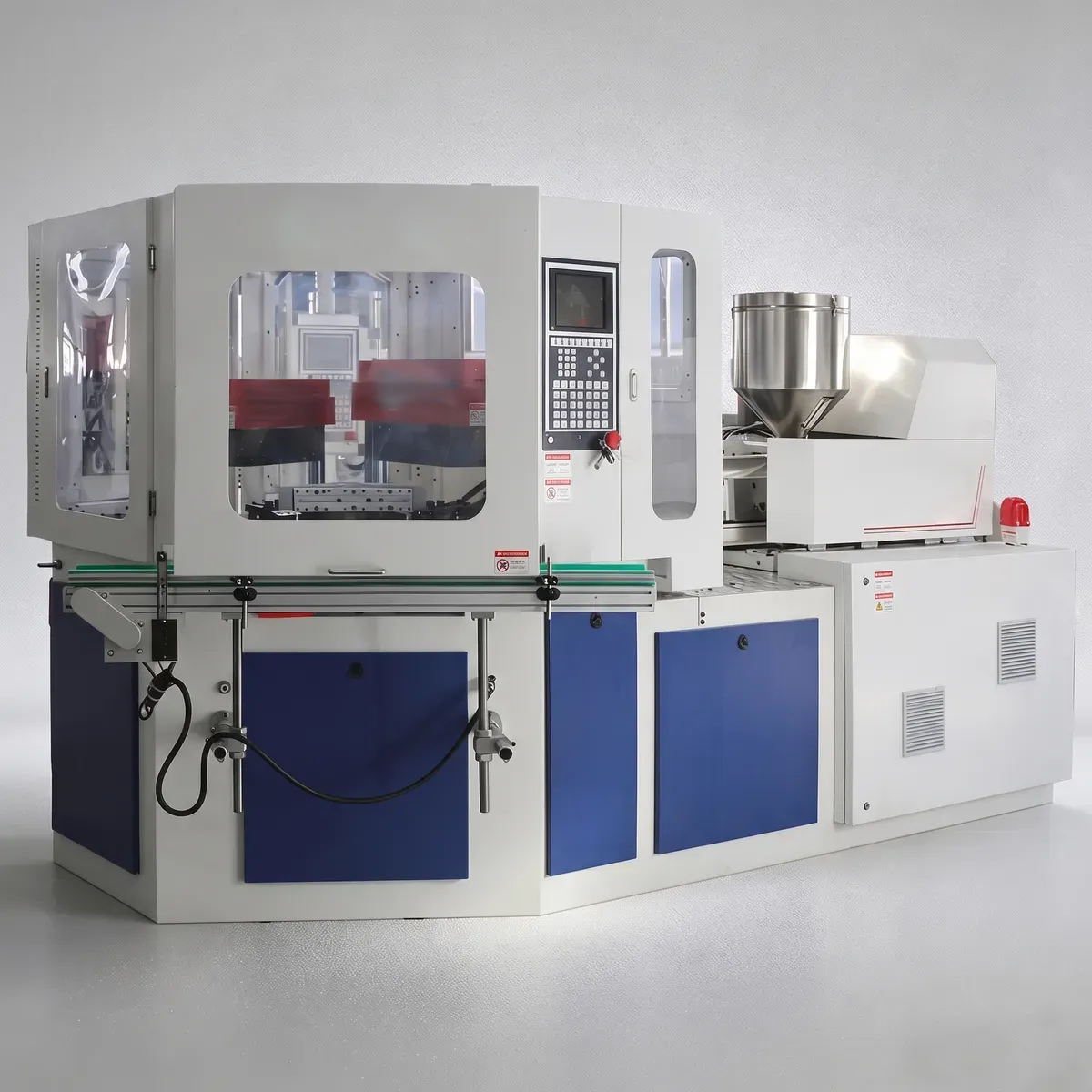
Operating Principle
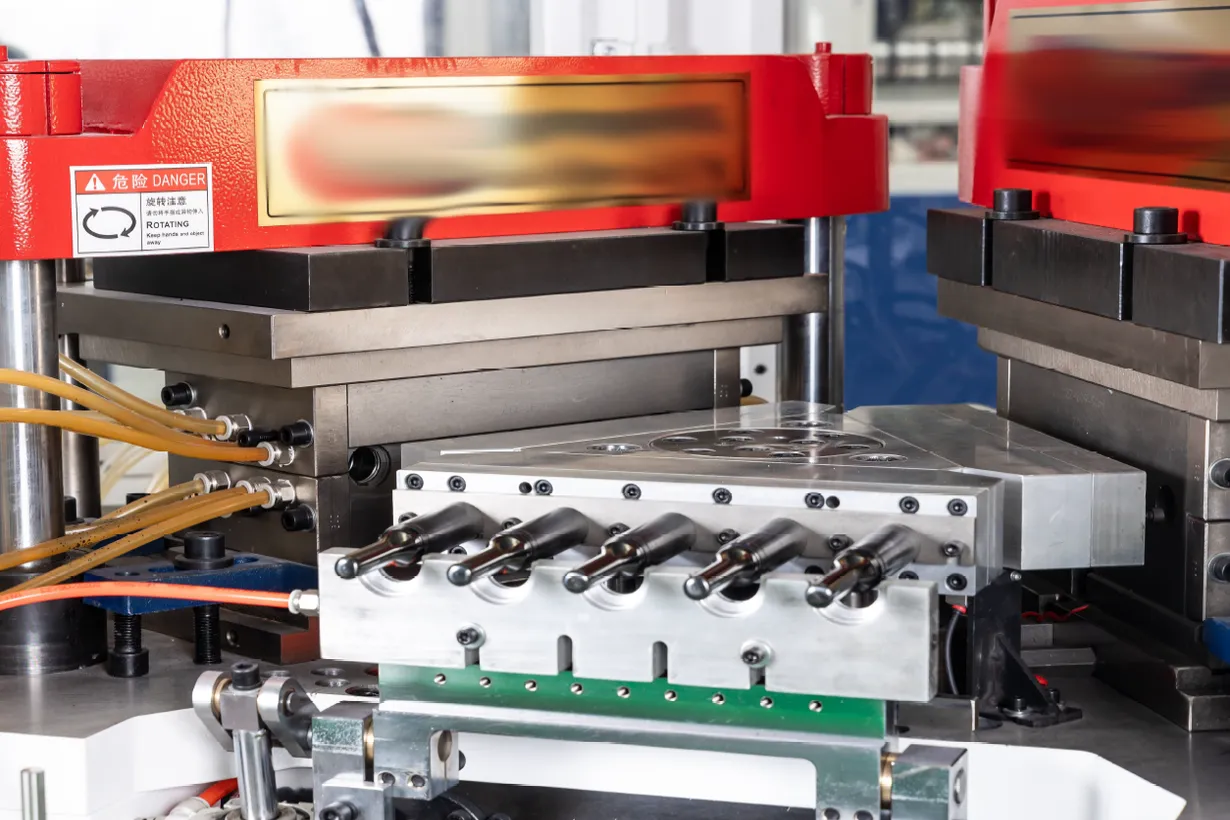
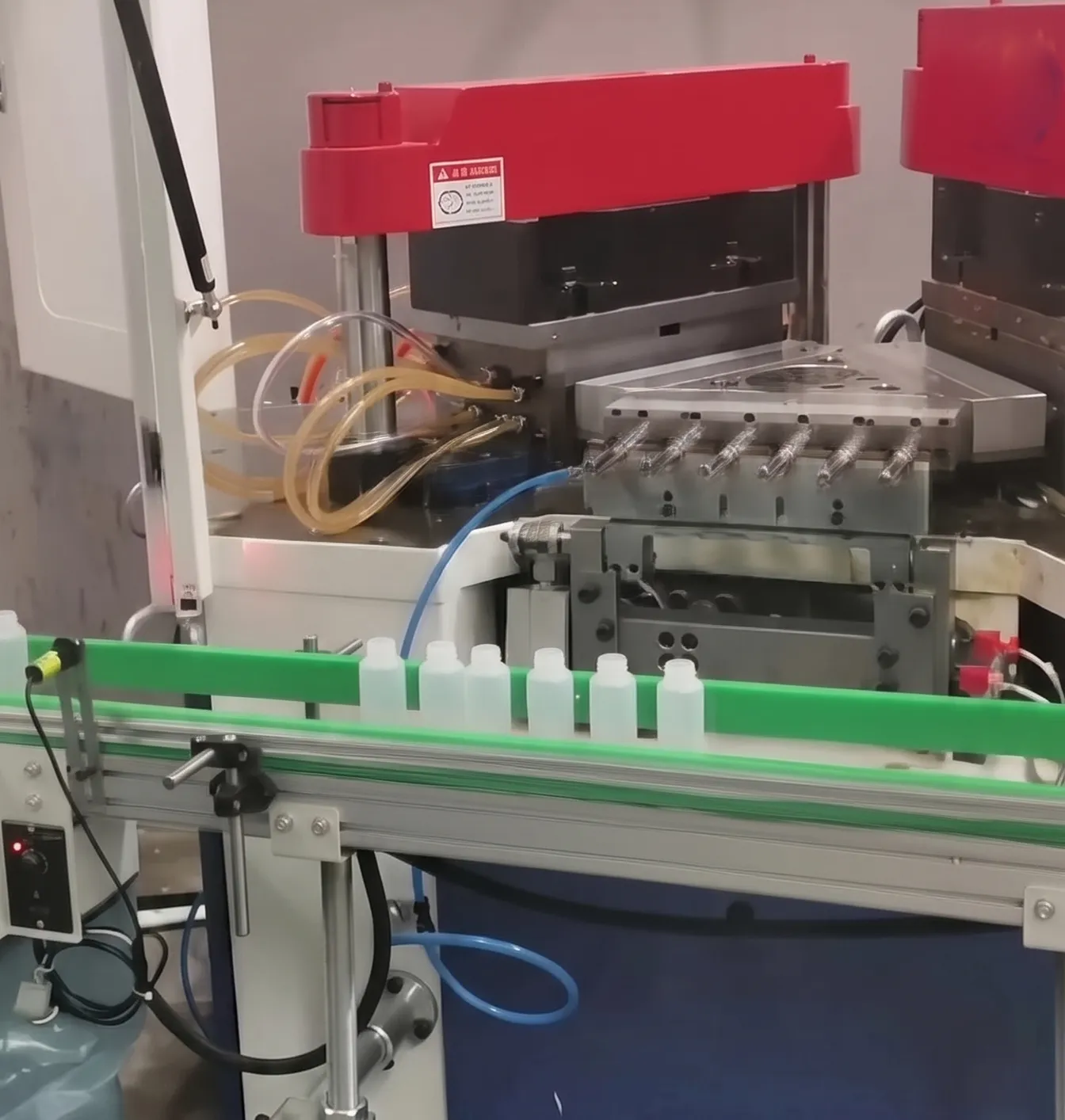
The ZQ40 operates as a true one step injection blow molding machine, completing preform injection, blow molding, and product ejection in a single continuous automated sequence with zero intermediate handling.
Step 1: Preform Injection
Molten thermoplastic resin is injected under controlled pressure into the injection mold cavity, forming an accurately dimensioned preform with precise neck and thread geometry. The servo-driven injection unit ensures stable fill pressure and consistent shot weight. Once injection is complete and the neck is fully shaped, the mold opens and the mandrel carrying the preform rotates to the blow molding station, ready for the next stage without any manual transfer.
Step 2: Blow Molding
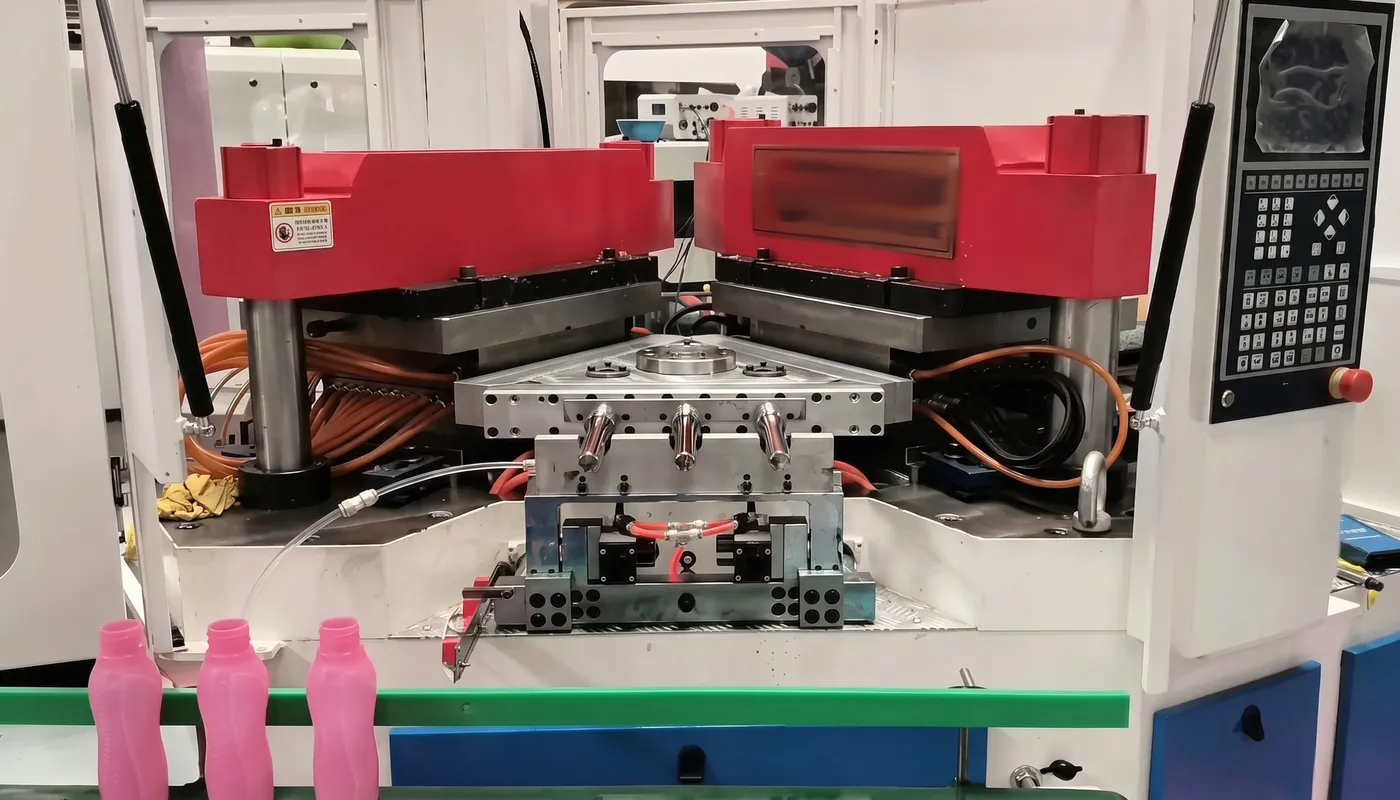
At the blow station, high-pressure compressed air is introduced through the mandrel, expanding the preform outward against the walls of the blow mold cavity. The number of cavities is determined by the target bottle shape and volume. The air pressure forces the hot plastic to conform precisely to the mold contour. After sufficient cooling to stabilize the bottle shape, the blow mold opens and the mandrel together with the formed bottle rotates to the ejection station, completing this stage in seconds.
Step 3: Ejection
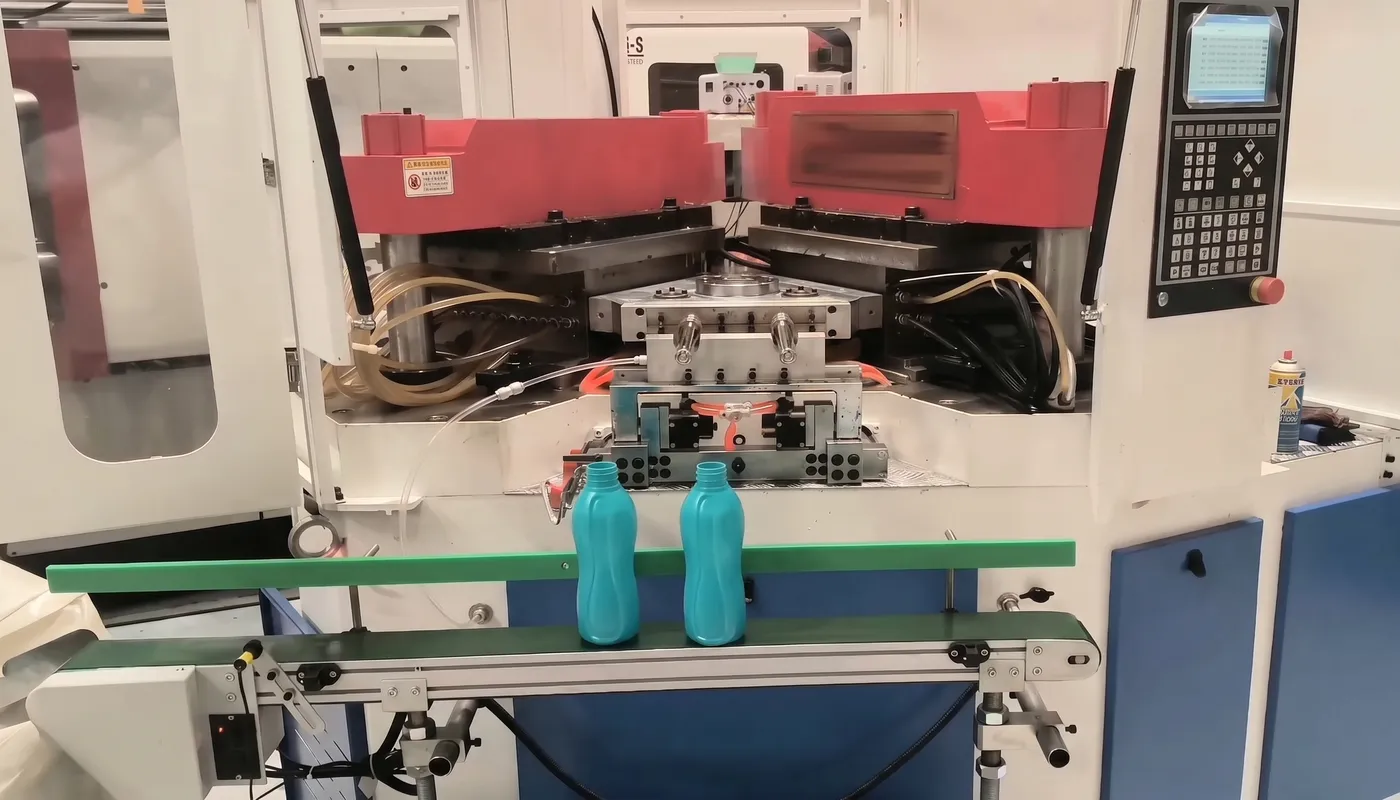
Finished bottles are automatically stripped from the cold mandrel rods at the ejection station and transferred to the downstream conveyor for packaging or inspection. Because injection, blow molding, and ejection all occur simultaneously at their respective stations on the rotating table, the machine achieves exceptional production efficiency with virtually no material waste. There are no sprues or flash at the bottle neck or base, eliminating secondary trimming operations and further reducing scrap edge output from the scrap edge injection blow molding machine cycle.
Applications of the ZQ40 IBM Machines
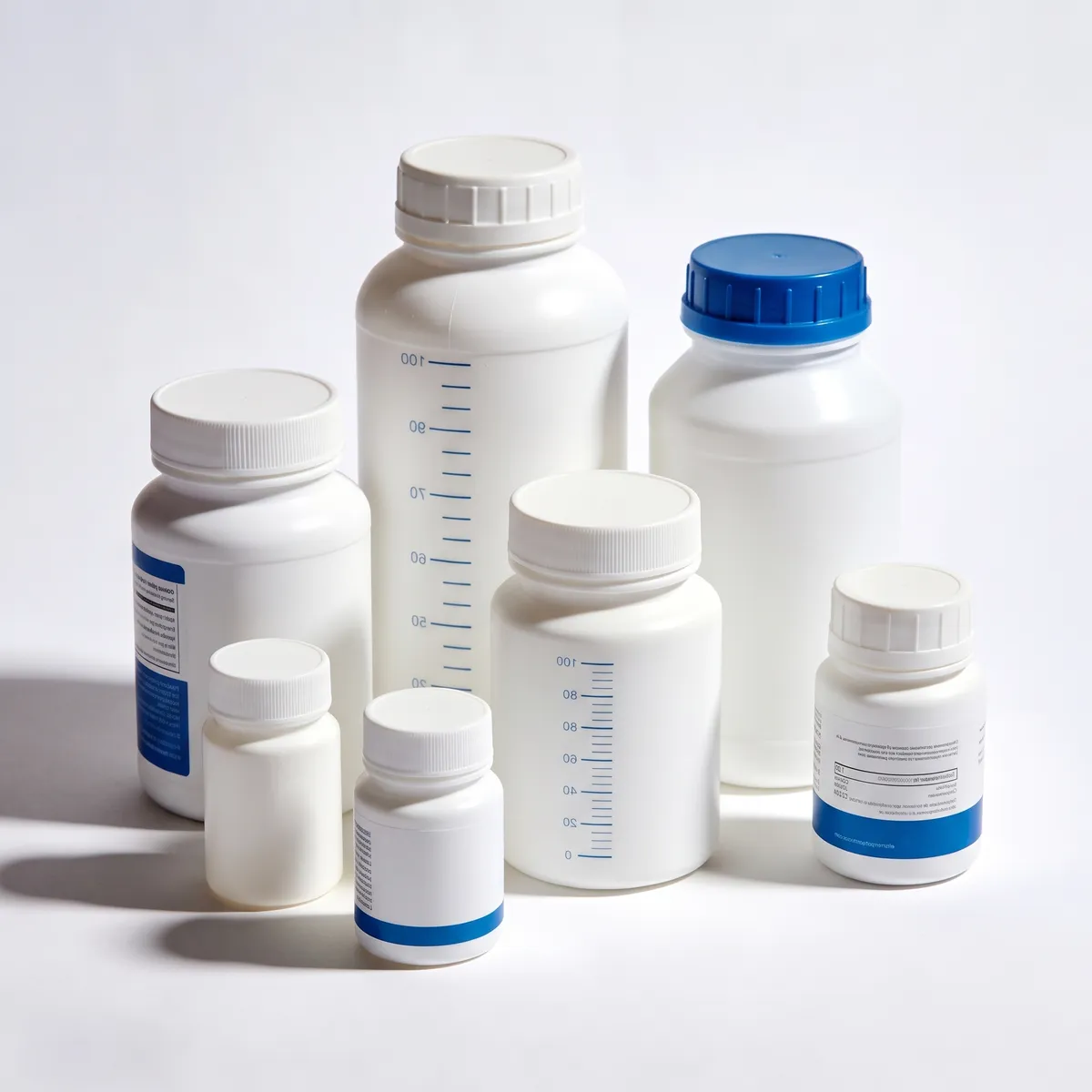
1. Beverage Bottles
For single-serve and specialty beverage packaging, the ZQ40 delivers bottles with uniform wall thickness and excellent clarity. The machine's high cavitation capacity for smaller volumes such as 30ml and 60ml makes it ideal for energy drink shots, flavor concentrate portions, and premium water bottles requiring consistent appearance and barrier integrity.
2. Pharmaceutical Bottles
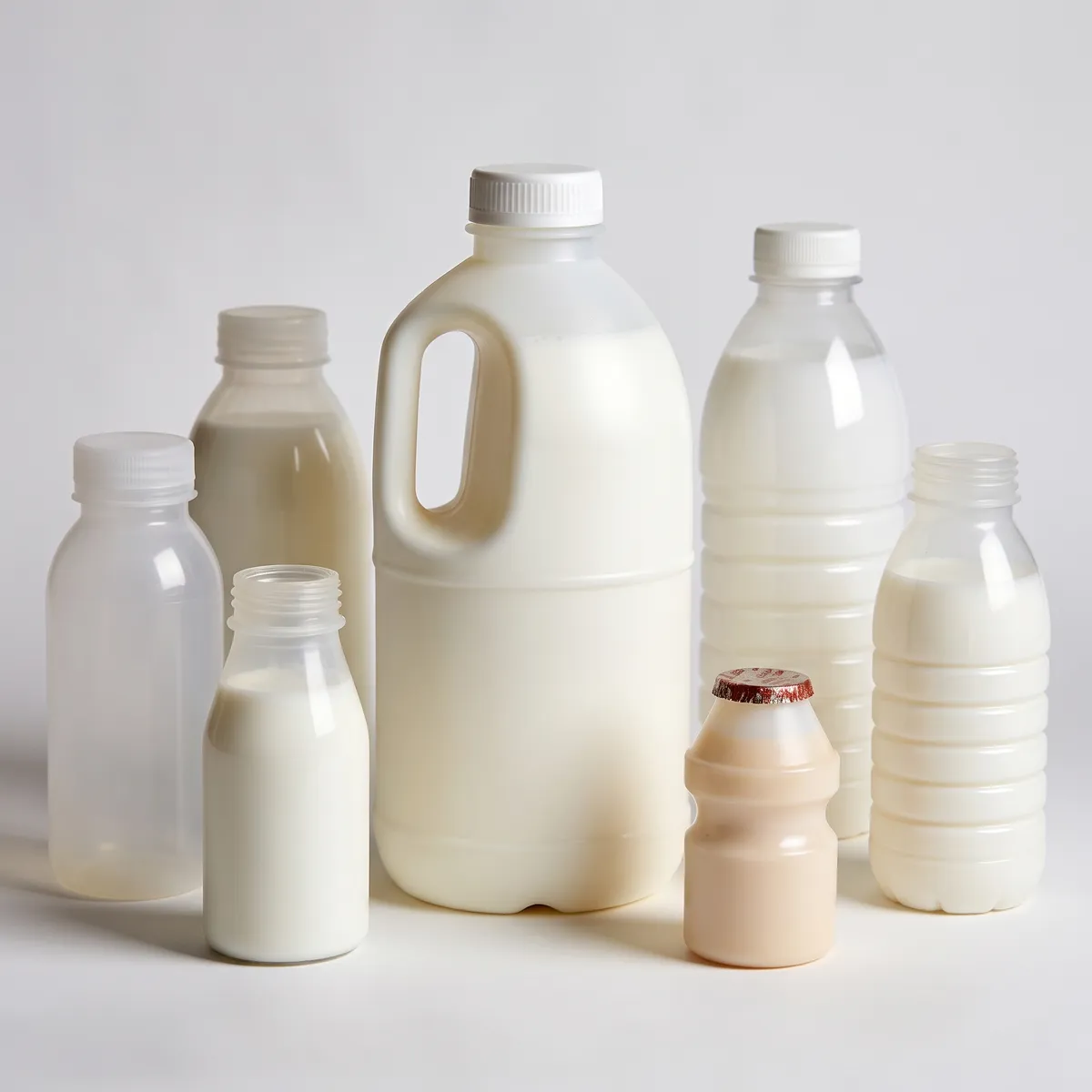
The oil-free mold zone and GMP-compatible design make the ZQ40 a leading injection blow molding machine for pharmaceutical packaging. It produces HDPE tablet jars, PP syrup bottles, and LDPE dropper containers that meet international drug packaging standards. Neck thread accuracy and 100% sealed mouths ensure child-resistant and tamper-evident closures perform reliably.
3. Chemical Bottles
The ZQ40 produces chemical bottles from HDPE and PP, offering excellent resistance to acids, alkalis, and solvents. Precise neck and thread molding ensures leak-proof sealing, making it reliable for packaging lubricants, cleaning agents, industrial fluids, and agricultural chemicals in demanding distribution environments.
4. Cosmetic Bottles
With oil-free mold areas and high surface finish quality, the ZQ40 is an ideal injection blow moulding machine for luxury cosmetic packaging. It produces shampoo bottles, lotion containers, serum vials, and perfume caps in ABS, PCTG, and high-clarity PS with consistent gloss, dimensional accuracy, and compatibility with downstream labeling and cap assembly lines.
5. Eyedropper Bottles
Precision dropper bottles for ophthalmic, nasal, and ear care products demand exact internal volume and tip orifice geometry. The ZQ40's servo-controlled injection unit and high-precision mandrel ensure dropper bodies from 5ml to 30ml are produced with sub-millimetre tolerances, clean sealing surfaces, and smooth interior walls that prevent particle contamination in sensitive medical applications.
6. Food Bottles
Food-grade PP and HDPE bottles for sauces, condiments, honey, vinegar, and edible oils are efficiently produced on the ZQ40. The oil-free mold environment eliminates contamination risk, while consistent wall thickness ensures bottles withstand both hot-fill and cold-fill conditions. Compatibility with downstream leak testers and vision inspection systems maintains food safety compliance throughout the packaging line.
7. Medicinal Spray Bottles
The ZQ40 produces spray bottle bodies for nasal decongestants, throat sprays, and topical medication applicators with tight neck diameter tolerances required by pump and actuator assemblies. LDPE and PP materials maintain chemical compatibility with active pharmaceutical ingredients, while the one-step process avoids secondary neck finishing that could introduce particulate contamination.
8. Body Wash Bottles
For personal care brands requiring high-volume production of body wash, shower gel, and liquid soap packaging, the ZQ40 delivers 100ml to 500ml bottles in LDPE and ABS with excellent surface clarity and printability. Consistent bottle weight and volume help downstream filling lines maintain accurate dose control, and compatibility with labeling machines enables fully automated, single-operator production.
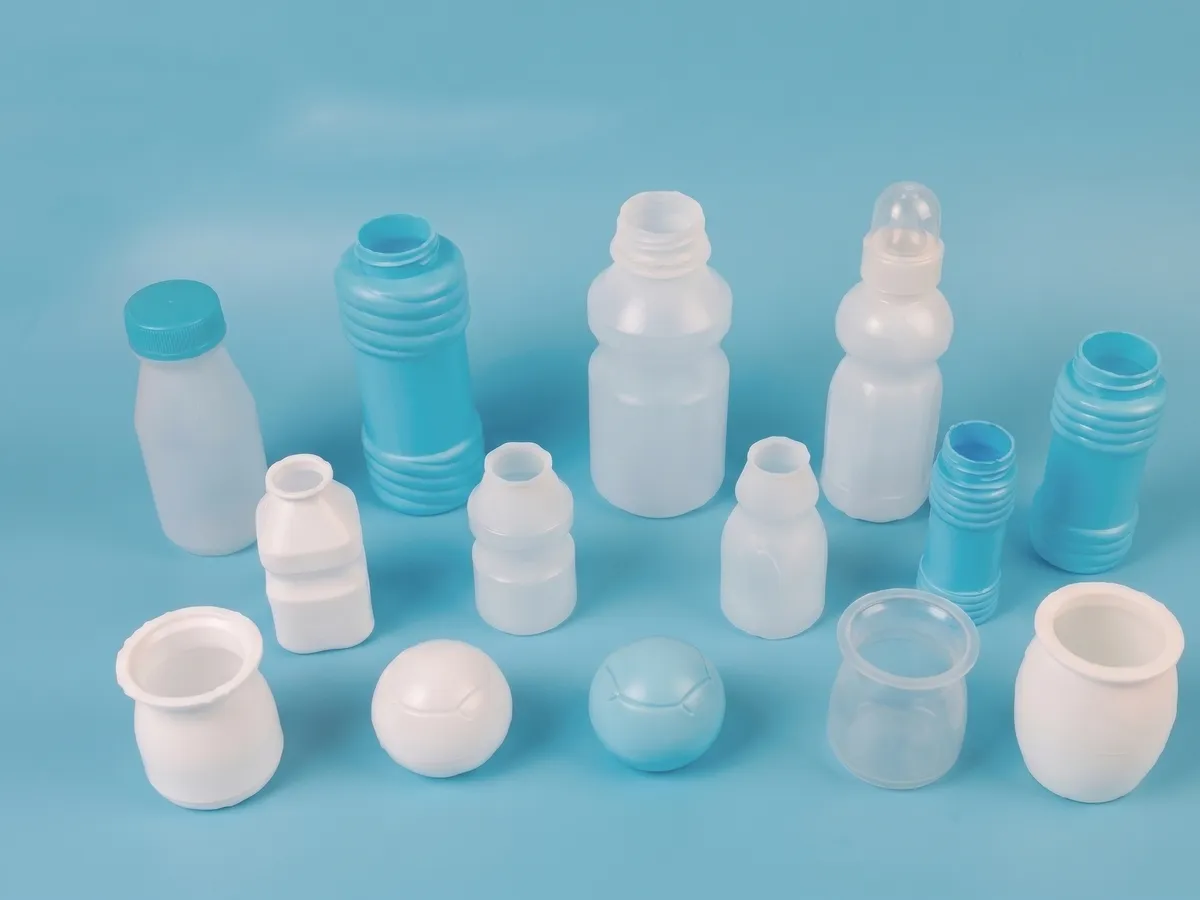 |
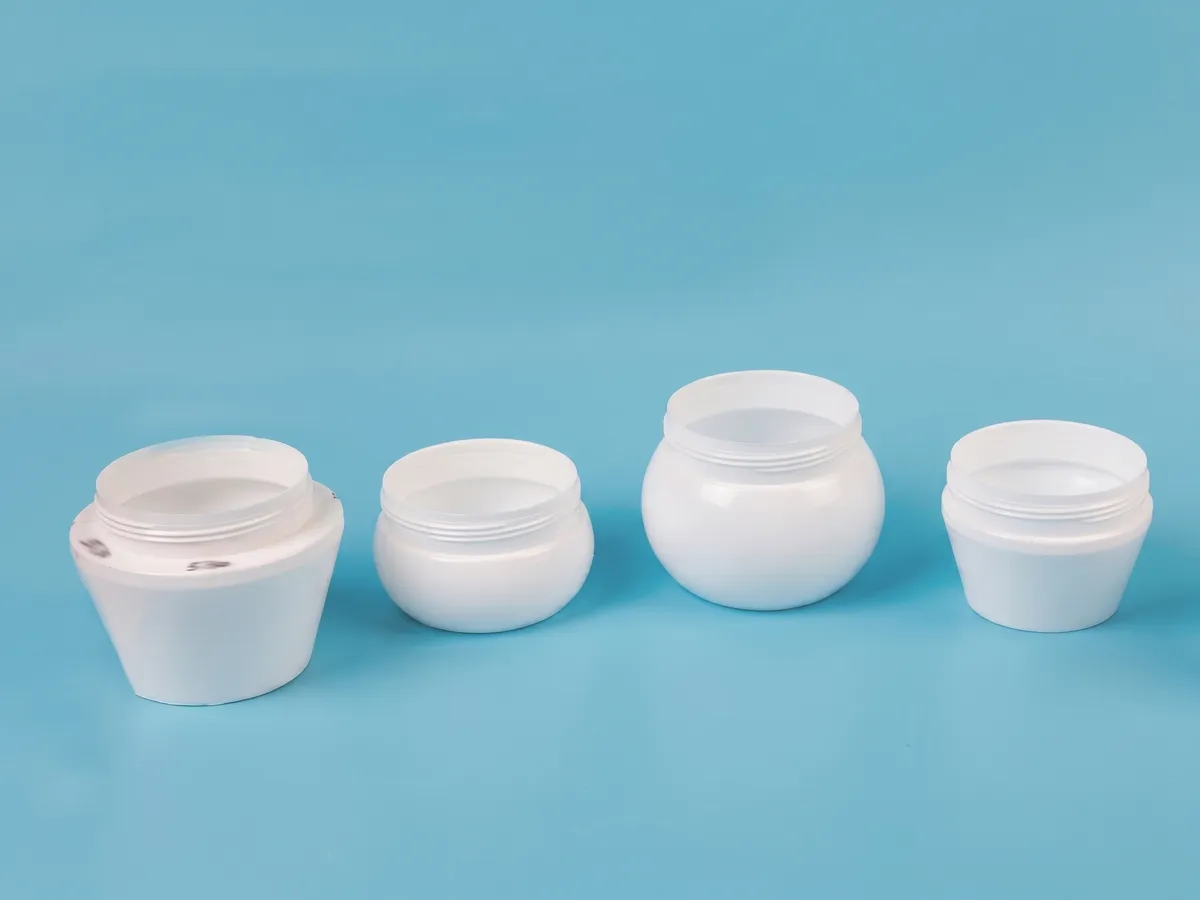 |
| Feeding Bottles | Cosmetic Bottles |
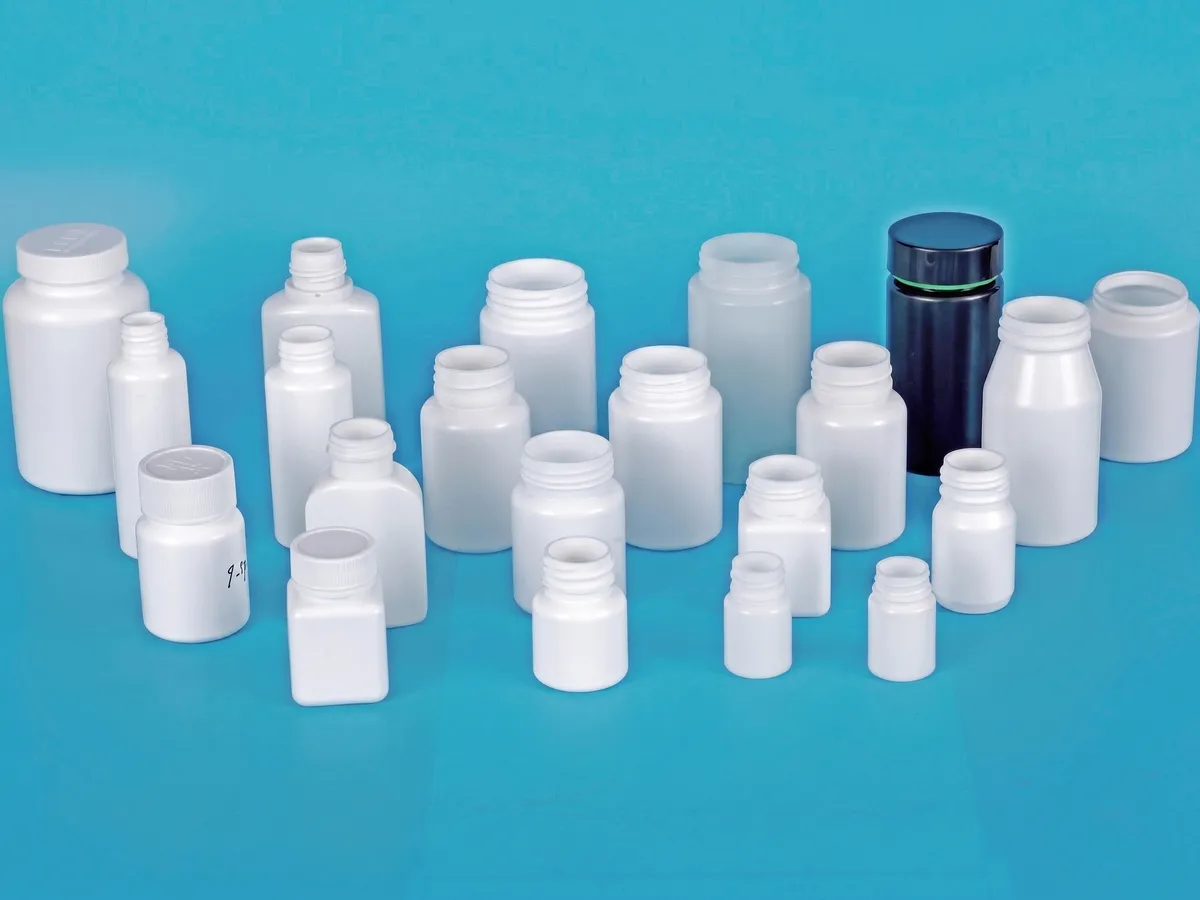 |
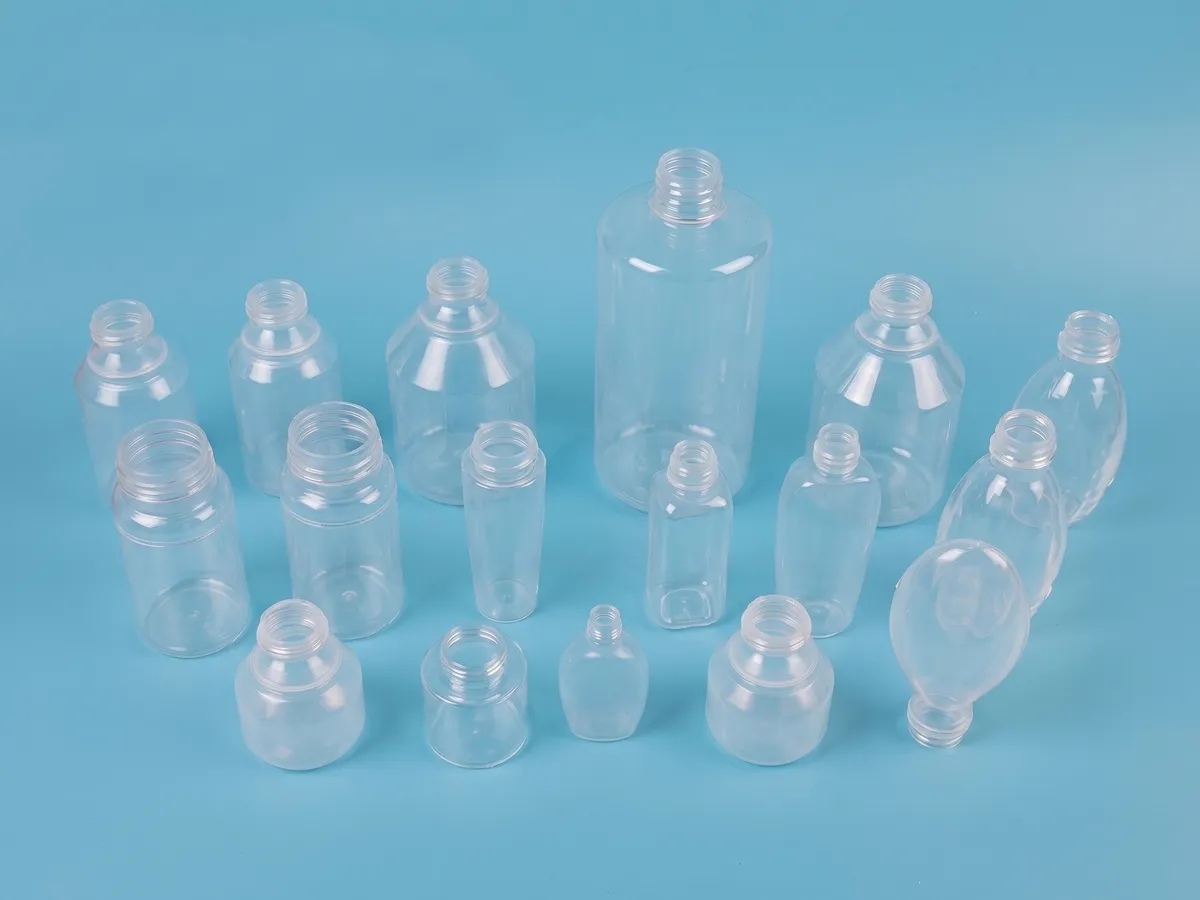 |
| Pharmaceutical Bottles | PP Bottles |
ZQ40 Injection Blow Molding Machine Components
A one step injection blow molding machine, often called an IBM machine, contains several essential parts. Each component plays a specific role in the injection blow molding process. Below are the main components and their functions in the ZQ40.
Clamping Unit
The ZQ40's clamping unit delivers 400KN injection clamping force and 60KN blowing clamping force through a uniquely designed pressurized structure. The booster cylinder does not participate in the mold opening and closing motion, reducing energy consumption by 10% to 20% compared to conventional designs. A 165mm injection opening stroke and 140mm blowing opening stroke accommodate a wide range of bottle geometries and mold sizes up to 480mm x 340mm platen.
Injection Unit
Driven by an electric cylinder rather than a hydraulic ram, the injection unit melts plastic resin, blends colorants, and injects molten material into the preform mold with precise shot weight control between 190g and 260g. The 40mm or 45mm screw with a 22:1 L/D ratio ensures thorough plasticization and homogeneous melt temperature, resulting in preforms with consistent gram weight deviation and minimal wall thickness variation across all cavities.
Electronic Control Unit
Acting as the intelligent brain of the IBM machine, the electronic control unit manages all servo axes, temperature zones, timing sequences, and process parameters via a colour touchscreen HMI. Multi-zone barrel temperature control across 3+N zones enables fine temperature profiling for different resin types. Absolute encoder feedback from the servo motors provides real-time position data, enabling the control system to auto-correct deviations and maintain consistent cycle-to-cycle repeatability.
Servo Drive System
The full servo motor drive system replaces all conventional hydraulic actuators, powering every motion including mold open/close, rotary table index, injection, and ejection electrically. This architecture eliminates hydraulic oil entirely from the drive system, resulting in lower operating noise, no oil contamination risk, and energy consumption that scales directly with production demand rather than running at constant pump pressure. Total installed power is just 20KW with an operating load of 52% to 70%.
Rotary Table and Mandrel System
The servo-indexed rotary table transfers mandrels between injection, blow, and ejection stations with a lifting height of 70mm and a dry cycle time of 3.5 seconds. Standard servo rotation offers simple mechanical structure and smooth, repeatable indexing that eliminates the timing errors found in older cam-driven systems. The mandrel design prioritizes fast core cooling, maintaining short cycle times while ensuring preforms reach the blow station at the correct temperature profile for optimal expansion.
Hydraulic Auxiliary System
While the primary drives are fully electric, a compact auxiliary hydraulic system operating at 14MPa handles supplementary clamping functions where hydraulic force is specifically advantageous. The 11KW motor powering this system is significantly smaller than the full hydraulic units used in traditional IBM machines, contributing to the overall 30% energy saving. The system is sealed and self-contained, maintaining the oil-free mold environment that meets pharmaceutical hygiene requirements.
Compressed Air and Cooling System
The blow molding stage requires compressed air at 0.7 to 1.2MPa with a capacity of 0.7 M3/min, delivered through precision mandrel channels to inflate preforms uniformly against the mold cavity. The water cooling circuit handles 3.5 M3/h at 0.3 to 0.4MPa, removing heat efficiently from both mold halves to stabilize bottle geometry before ejection. Optimised cooling channel layout ensures even temperature distribution, preventing warpage and reducing cycle time.
Safety and Protection System
The ZQ40 incorporates a comprehensive protection system covering mechanical guards, safety doors with interlocks, emergency stop circuits on all operator access points, and real-time fault monitoring via the control unit. Overload protection on each servo axis prevents mechanical damage during unexpected jam conditions. Safety gate sensors immediately halt all motion if the mold area is accessed during operation, protecting both the operator and the mold tooling from damage.
Downstream Integration Interface
The conveyor rear of the ZQ40 is pre-engineered to interface with visual inspection cameras, leak detection testers, orientation and labeling machines, and robotic pick-and-place or automatic packaging systems. Signal handshaking via discrete I/O and optional field bus communication allows the IBM machine to synchronise seamlessly with line-level production management software, enabling fully unattended, lights-out manufacturing with centralised quality data logging.
ZQ40 vs Bloma IBM45: Why Our IBM Machine Wins
1. Superior Clamping Force
The ZQ40 provides 400KN injection clamping force compared to the Bloma IBM45's 350KN. This 14% increase in clamping capacity enables production of thicker-walled bottles and higher-cavitation molds without flash defects. The pressurized booster clamping structure is also 20% to 30% stronger than comparable industry offerings, providing a fundamental production quality advantage.
2. 30% Lower Energy Costs
The Bloma IBM45 relies on a full hydraulic drive that consumes power continuously at rated pump speed. The ZQ40's all-servo architecture delivers power only during actual motion, reducing operating energy consumption by approximately 30%. For a facility running three shifts, this translates to significant annual electricity savings that directly improve production economics and competitiveness on injection blow molding machine price.
3. 20% Faster Cycle Times
Servo-driven axes accelerate and decelerate faster than hydraulic cylinders, allowing the ZQ40 to achieve an 8.2-second cycle for 30ml bottles versus the typical 10-plus second cycle of the IBM45. Over a 24-hour production day, this 20% cycle advantage yields up to 10,000 additional bottles, directly increasing revenue output without adding floor space or personnel.
4. Oil-Free Mold Area
The Bloma IBM45's hydraulic drive system creates a risk of oil contamination in the mold zone, disqualifying it from many pharmaceutical and food-grade applications without costly containment modifications. The ZQ40's bottom-up electric design keeps the mold area completely free of lubricating oil, enabling immediate GMP compliance for pharmaceutical bottle production without any additional investment or qualification work.
5. Lower Maintenance Costs
The IBM45 requires regular hydraulic oil changes, filter replacements, seal inspections, and pump maintenance. The ZQ40 eliminates the entire hydraulic maintenance schedule. Electric cylinder actuators and servo drives have significantly longer service intervals and lower consumable costs. Over a typical five-year ownership period, maintenance cost savings on the ZQ40 frequently offset a substantial portion of the machine's purchase price.
6. Higher Repeatability via Absolute Encoders
Hydraulic cylinders in the IBM45 are subject to pressure fluctuation and oil viscosity changes that affect positional repeatability. The ZQ40's servo drives with absolute encoders maintain position accuracy regardless of temperature, load, or oil condition variables, because there is no oil. This results in tighter bottle-to-bottle consistency in wall thickness, neck dimensions, and overall volume, reducing quality rejections and improving line efficiency.
ZQ Series Automatic Mould Characteristics
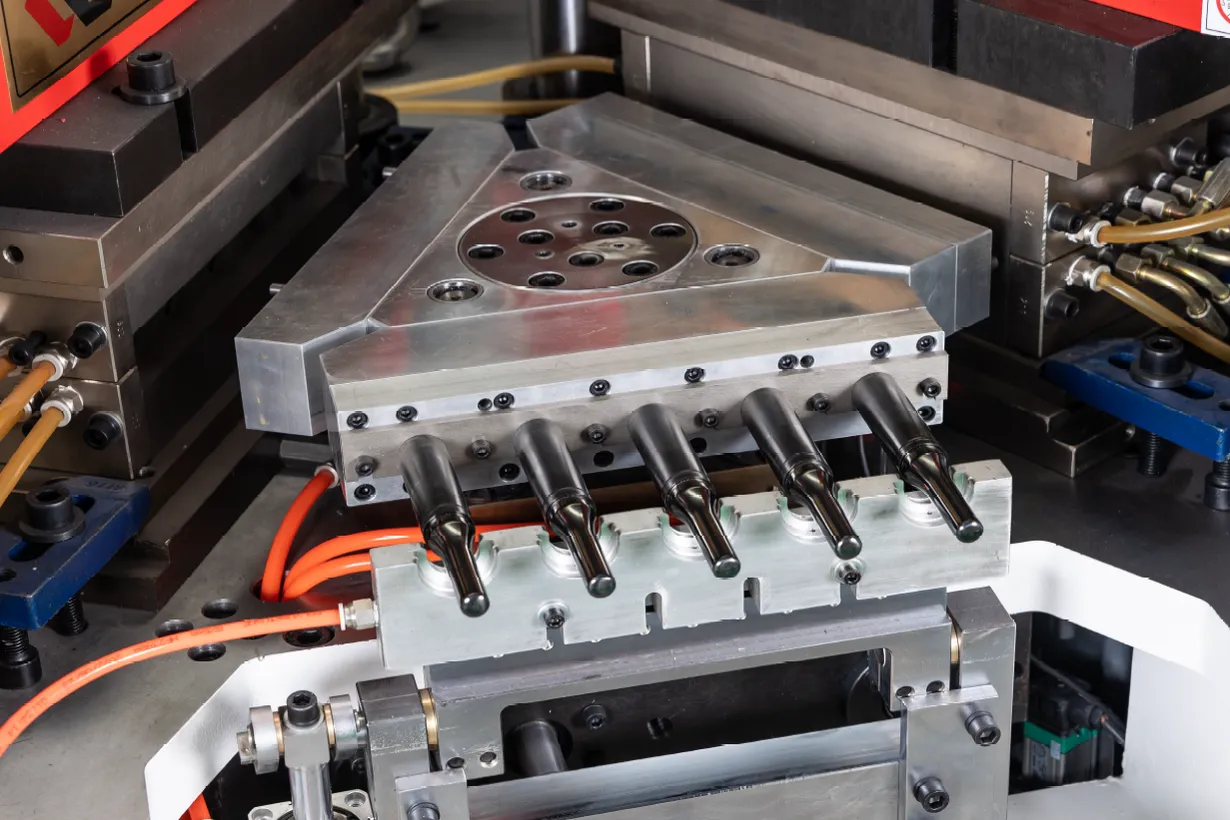
The injection blow molds supplied with the ZQ40 are engineered to maximise tool life, product quality, and production speed in a plastic injection blow molding machine environment.
1. Interchangeable Cavity and Neck System
The injection mold uses an activity-designed cavity and neck insert system combined with specially engineered oil channels that allow quick changeover of individual cavity components. This design ensures consistent tube blank dimensions and stable temperature distribution across all cavities, reducing qualification time when switching bottle specifications while maintaining dimensional accuracy.
2. Premium Steel Alloy Construction
Injection mold components are manufactured from imported S136 steel alloy or 4Cr13 stainless steel, both renowned for their hardness, polishability, and corrosion resistance. The high-strength steel significantly extends mold service life compared to standard tool steels, reducing replacement frequency and total tooling cost over the machine's operational lifespan in continuous production environments.
3. Optimized Hot Runner and Mandrel Design
The hot runner system is optimized to minimize gram weight deviation between individual cavities and keep wall thickness variation within the tightest achievable tolerances. The specially designed mandrel structure supports fast molding cycle times while maintaining superior core cooling efficiency, ensuring preform temperatures are consistent when they arrive at the blow station regardless of production speed.
4. 100% Accurate Thread and Neck Sealing
The mold design ensures bottle mouth threads are accurate in size and provide 100% sealing performance when combined with standard closures. Precise neck dimensions are critical for pharmaceutical and food applications where thread engagement must meet regulatory standards for child-resistant and tamper-evident packaging. The ZQ40 mold system meets these requirements consistently across multi-million cycle production runs.
5. Zero Burrs and No Flash at Neck or Base
Unlike extrusion blow molding where pinch-off flash at the bottle base requires secondary trimming, the IBM process in the ZQ40 produces bottles with clean, burr-free necks and bases. There is no parting line flash on functional sealing surfaces, eliminating the cost and contamination risk of post-mold deflashing operations and reducing the total cost per bottle, especially in high-volume pharmaceutical packaging.
6. Consistent Product Geometry Across All Cavities
All cavities in the ZQ40 mold system are machined and qualified to ensure product size, weight, mold parting line position, and wall thickness are consistent bottle to bottle and cavity to cavity. This uniformity is essential for downstream automated filling, capping, and labeling equipment that relies on precise bottle dimensions for correct operation, and for meeting the batch uniformity requirements of pharmaceutical packaging regulations.
Preparation Steps Before Operating the ZQ40 IBM Machine
Correct preparation ensures safe, efficient startup of the IBM injection blow molding machine.
Safety Checks
Before starting the IBM machine, operators must inspect the workspace for debris, oil, and slip hazards. All safety equipment, including fire extinguishers, first aid kits, PPE such as safety glasses and gloves, must be confirmed present and functional. Mechanical guards, safety door interlocks, and emergency stop buttons must be tested. All operators must have completed lockout/tagout and machine-specific safety training before the production run begins.
Machine Setup
Operators must thoroughly clean the ZQ40, removing residual plastic material from the barrel and lubricating all moving parts per the maintenance schedule. The correct mold must be installed and aligned, nozzle seating verified, and all raw material, additives, and colorants prepared and correctly stored. After powering on the machine, temperature profiles and pressure settings are configured based on the resin type. A trial run confirms settings before full-scale production.
Loading Plastic Resin
Selecting the correct resin is the foundation of bottle quality. The ZQ40 processes HDPE, LDPE, PP, PS, ABS, PCTG, EVA, and PLA, each offering distinct performance characteristics. Operators must dry moisture-sensitive resins before loading, typically at 130 to 150 degrees Celsius for three to five hours. The hopper must be clean, and resin pellets loaded without contamination. Hopper levels are monitored continuously to prevent feed interruptions during production.
Setting Temperature and Pressure
Barrel temperature must be set above the resin's melting point but below its decomposition temperature. Injection pressure for the ZQ40 typically ranges from 20MPa to 90MPa depending on resin and mold design. Operators begin at lower pressure and increase gradually to avoid jetting or blistering defects. Holding pressure after cavity fill maintains shape and density. Screw speed is adjusted for homogeneous melt without excessive shear heating.
Mold Calibration
Mold alignment and clamping force must be verified before each production run. Operators inspect mold faces for wear or contamination, confirm correct gap and alignment, and perform test shots to measure sample bottles against design specifications. If dimensions deviate from tolerance, mold position and clamping settings are adjusted iteratively. Calibration data is recorded for each mold and product combination, enabling rapid setup during future changeovers.
Step-by-Step Usage Guide
Operating a one step injection blow molding machine involves a precise sequence. This guide covers each stage from resin feeding to finished bottle ejection.
Step 1: Feeding and Melting
Plastic resin is fed from the hopper through the feed throat into the barrel. The ZQ40 controls feed throat temperature to prevent premature melting and bridging. Most resins require moisture content below 0.1% before processing. The 40mm or 45mm screw plasticizes resin at the set barrel temperature profile, ensuring a homogeneous melt arrives at the injection nozzle ready for the next shot. Consistent feeding and stable temperatures are essential for uninterrupted production.
Step 2: Injection and Preform Creation
Once the resin is melted, the injection mold closes and clamps at 400KN. The electric-cylinder injection unit pushes melt into the mold cavity to form the preform. Injection pressure, screw speed, holding time, and multi-zone mold temperature all influence preform quality. Packing pressure after cavity fill minimises shrinkage. Operators monitor sample preforms and adjust parameters to maintain dimensional accuracy across all cavities.
Step 3: Rotary Transfer
After injection, the servo-driven rotary table indexes, lifting the mandrel and preform 70mm and rotating them to the blow molding station. This transfer takes place within the 3.5-second dry cycle, contributing to the overall 8.2-second cycle for 30ml bottles. The mandrel design ensures the preform retains the correct temperature profile during transfer for optimal blow expansion at the next station.
Step 4: Blow Molding Process
At the blow station, the blow mold closes at 60KN. Compressed air at 0.7 to 1.2MPa is introduced through the mandrel, inflating the preform against the mold walls to form the final bottle shape. Operators must monitor wall thickness uniformity, air pressure stability, and clamping force to prevent blow-outs or uneven expansion. After the bottle shape is set and cooled, the mold opens and the table indexes to the ejection station.
Step 5: Cooling and Ejection
Cooling water at 0.3 to 0.4MPa flows through mold channels to remove heat from the finished bottle. Full cooling before ejection ensures the bottle holds its shape. Ejector mechanisms strip the bottle from the mandrel and transfer it to the outfeed conveyor. Thin-walled products require full cooling before ejection, while thicker parts may be ejected slightly early to improve cycle speed. Each bottle is then available for downstream inspection and packaging.
Step 6: Quality Inspection and Packaging
Finished bottles leave the ejection station and travel along the rear conveyor to downstream inspection and packaging equipment. The ZQ40's conveyor interface is compatible with optical vision inspection systems for dimensional and cosmetic defect detection, leak test equipment for pharmaceutical and food-grade applications, labeling machines, and robotic packaging cells. This full-line integration supports unattended automated production with real-time quality data collection.
 |
 |
ISBM Machine vs IBM Machine: Which Is Right for You
What Is IBM (Injection Blow Molding)?
Injection Blow Molding (IBM) is a two-stage process in which plastic resin is first injected into a preform mold, then blown into its final bottle shape in a single machine cycle. The ZQ40 is a classic IBM machine that performs all three operations, preform injection, blow molding, and ejection, simultaneously at three rotary stations. This one-step approach eliminates reheating steps, reduces handling contamination risk, and makes the process exceptionally efficient for small to medium-sized containers requiring precise neck threads and uniform wall thickness. IBM is the preferred process for pharmaceutical vials, cosmetic dropper bottles, food condiment containers, and chemical bottles across volumes from 1ml to 1000ml.
What Is ISBM (Injection Stretch Blow Molding)?
Injection Stretch Blow Molding (ISBM) is an advanced variant that adds a longitudinal stretching step between preform conditioning and blow molding. After injection molding the preform, it is reheated and mechanically stretched along its axis while simultaneously being inflated with air. This biaxial orientation dramatically increases material strength and optical clarity. ISBM, also referred to as injection stretch blow molding machine technology, is the dominant process for PET carbonated beverage bottles, mineral water containers, and large-format food packaging where light weight and high clarity are paramount. Injection stretch blow molding machine manufacturers typically offer this technology for container volumes from 100ml to several litres.
Key Advantages of ISBM
- Higher strength and superior optical clarity in the final product through biaxial orientation
- Greater production flexibility for a wider range of large bottle sizes and complex shapes
- Enhanced material distribution enabling thin yet strong container walls ideal for lightweight packaging
- Lower material usage per container due to orientation-induced strengthening of PET
Comparison Table
| Feature | ISBM Machine | IBM Machine (ZQ40) |
|---|---|---|
| Working Process | Injection, stretching, blow molding | Injection, blow molding |
| Molding Principle | Enhances material properties through biaxial stretching | Direct blow molding without stretching phase |
| Product Performance | High strength and excellent optical clarity | Uniform wall thickness and precise neck thread |
| Product Shape | Complex and large bottle shapes | Simple and small bottle shapes (1ml - 1000ml) |
| Molding Material | Primarily PET | PE, PP, PVC, PS, ABS, PCTG |
| Application Scenarios | Carbonated beverages, mineral water, large food packaging | Pharmaceuticals, cosmetics, food, small packaging |
| Cycle Speed | Longer due to stretching and reheating stages | 8.2 seconds for 30ml, extremely fast |
| Neck Thread Precision | Moderate | Excellent, 100% thread seal accuracy |
Choosing Between IBM and ISBM
When choosing between an IBM and ISBM process for your manufacturing line, consider the following criteria. If you require precise neck thread geometry, high production speed, and a one-step process for pharmaceutical, cosmetic, or small-format food packaging, the ZQ40 IBM machine is the clear choice. Its 8.2-second cycle, oil-free mold zone, and servo-driven repeatability are unmatched for these applications.
If your primary product is large PET beverage bottles requiring exceptional clarity and burst strength, an ISBM machine from the single stage injection stretch blow molding machine category will better serve your needs. For everything else, from pharmaceutical vials and dropper bottles to body wash containers and food condiment jars, the ZQ40 as a full electric injection blow molding machine delivers superior economics, hygiene compliance, and production efficiency.
Why Choose Ever-Power's Injection Blow Molding Machines?
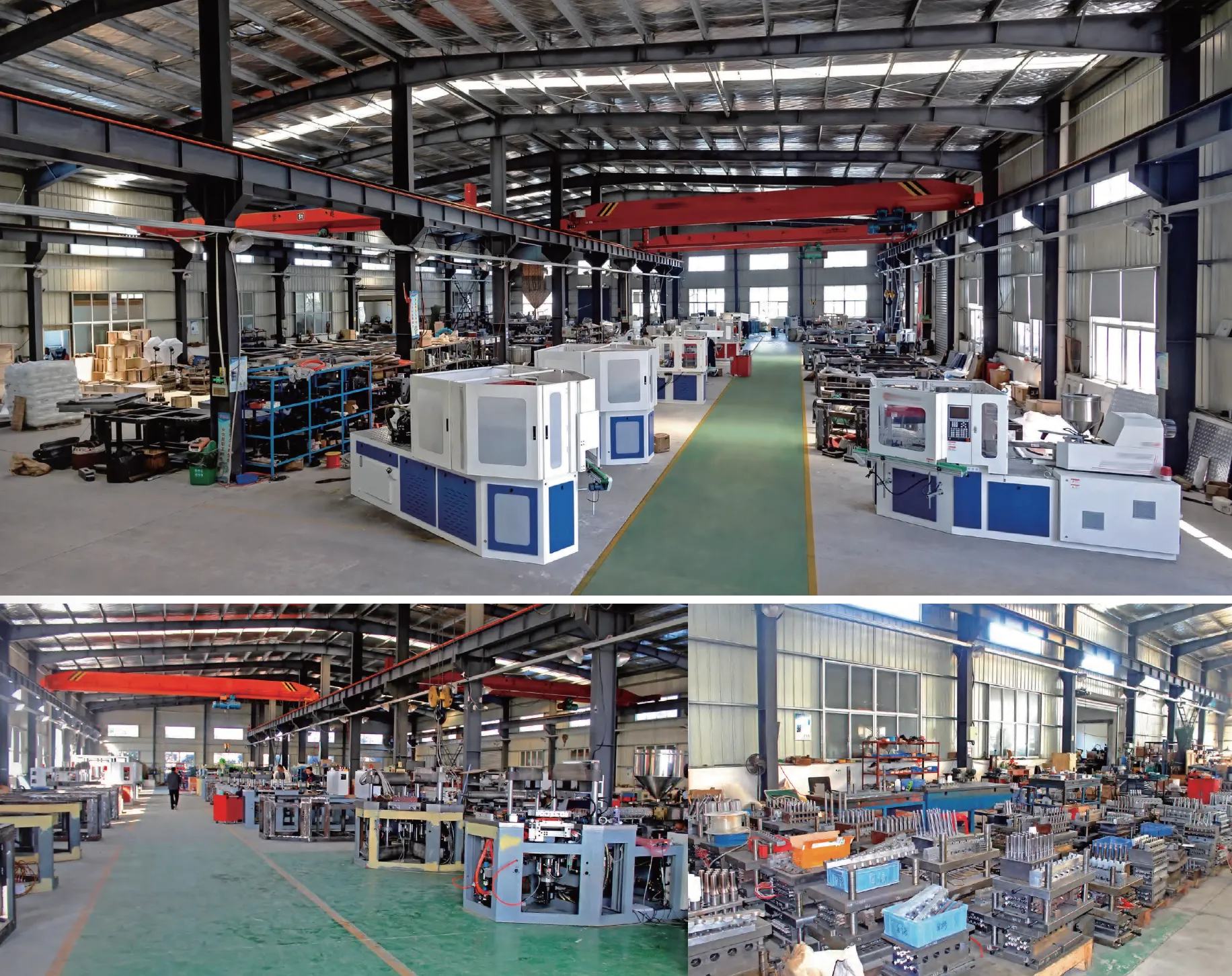
Ever-Power ISBM Machinery Co., Ltd. is a specialist manufacturer primarily engaged in the research and development, production, sales, and global trade of automatic one-step injection blow molding machines and supporting injection blow molds. Our product range covers injection blow molding machines, extrusion blow molding machines, injection stretch blow molding machines, and auxiliary equipment, making us one of the few injection blow molding machine manufacturers capable of supplying a complete packaging machinery solution from a single source.
Our company benefits from an advantageous manufacturing location with modern production facilities and convenient international logistics access. Ever-Power maintains an excellent R&D team that brings together engineers and technical specialists with deep theoretical and practical experience in both IBM and ISBM machinery and tooling design. This internal expertise enables us to provide detailed, responsive pre-sale consultation, in-sale project management, and after-sale technical support that many injection blow molding machine suppliers cannot match.
Our machines serve customers in pharmaceutical packaging, food packaging, healthcare packaging, cosmetic packaging, and a broad range of industrial plastic packaging applications. We produce equipment capable of processing 1ml to 1000ml containers in HDPE, LDPE, PP, PS, high-transparency PS, ABS, environmental corn material, EVA, and PCTG. This versatility positions Ever-Power as the preferred partner for both new packaging lines and facility upgrades replacing legacy equipment from Bloma, Jomar, SUMA, and Uniloy.
Ever-Power adheres to the enterprise development philosophy of self-reliance, integrity, pragmatism, innovation, and responsibility. We build complete turnkey packaging solutions, supporting customers from initial bottle design and mold development through machine commissioning and operator training to ongoing production support. As an established injection blow molding machine manufacturer committed to delivering first-class quality and value, Ever-Power invites you to consult with our team about how the ZQ40 and the full ZQ Series can transform your plastic packaging production.
FAQs
Q: Is the ZQ40 a true direct replacement for the Bloma IBM45 Model injection blow molding machine?
A: Yes. The ZQ40 is specifically engineered as a direct replacement for the Bloma IBM45, matching its 40-ton clamping class, screw diameter range (40/45mm), injection weight (190/260g), and platen envelope (480 x 340mm). In most installations, existing Bloma IBM45 mold tooling can be used with the ZQ40 after dimensional verification, significantly reducing upgrade investment. The ZQ40 also replaces the Jomar IBM40, SUMA 40iB, and Uniloy UIB70 within the same tonnage class.
Q: What is the injection blow molding machine price for the ZQ40?
A: The ZQ40 injection blow molding machine price varies based on configuration, screw size selection, optional downstream integration packages, and destination. Because we offer customized injection blow molding machines for sale tailored to specific production requirements, we recommend contacting our sales team for a precise quotation that reflects your bottle specifications, production volume, and any custom mold requirements. Ever-Power provides transparent pricing with full specification disclosure before any purchase commitment.
Q: What is the daily output of the ZQ40 all electric injection blow molding machine for 30ml bottles?
A: Running 8-cavity tooling with an 8.2-second cycle, the ZQ40 achieves a typical daily output of 105,000 bottles and a peak of up to 115,000 bottles per day for 30ml containers. For other bottle sizes, output varies with cycle time and cavitation. For example, at 10ml the machine can run up to 9 cavities; at 60ml, 6 cavities; and at 1000ml, 1 cavity. Contact Ever-Power for output projections specific to your target bottle geometry and material.
Q: What materials can this plastic injection blow molding machine process?
A: The ZQ40 processes HDPE, LDPE, PP, PS (including high-transparency PS and lactic acid bacteria grades), ABS, PCTG, EVA, and PLA environmental corn materials. It handles thermoplastic bottles from 1ml to 1000ml. It is not designed for PET stretch blow molding, which requires the additional orientation step of an ISBM machine. If PET containers are your primary product, please ask about our ISBM machine range from the single stage injection stretch blow molding machine product line.
Q: Does the ZQ40 meet pharmaceutical GMP hygiene requirements for the mold area?
A: Yes. The ZQ40's bottom-up design keeps the mold area completely free of lubricating oil, a fundamental requirement for pharmaceutical packaging under GMP regulations. There is no hydraulic oil in the primary drive system, eliminating the contamination risk present in conventional IBM machines. The machine has been successfully qualified by pharmaceutical customers producing HDPE tablet bottles and LDPE dropper containers under GMP conditions in multiple countries.
Q: How does energy consumption compare between the ZQ40 and a traditional hydraulic IBM machine?
A: The ZQ40 consumes approximately 12 kWh per hour during 30ml bottle production, representing around a 30% reduction versus equivalent hydraulic IBM machines. The hydraulic pump in traditional machines consumes energy continuously at rated speed whether or not the machine is in motion, whereas the ZQ40's servo drives draw power only during actual axis movement. Total installed power is 20KW with a typical operating load of 52% to 70%, making the ZQ40 one of the most energy-efficient IBM injection blow molding machines in its class.
Q: What downstream automation equipment is the ZQ40 compatible with?
A: The ZQ40's rear conveyor interface supports visual inspection cameras, optical leak detection systems, orientation and labeling machines, robotic pick-and-place units, and automatic case packing and palletizing equipment. The machine provides discrete I/O for line-level synchronisation and can be integrated into production management systems for real-time monitoring and data logging. This makes fully unattended, lights-out production achievable without custom machine modifications.
Q: What is the difference between an IBM machine and an ISBM machine?
A: An IBM machine (Injection Blow Molding) performs preform injection and blow molding in one unit without a stretching step. An ISBM machine (Injection Stretch Blow Molding) adds longitudinal mechanical stretching between preform conditioning and blowing, creating biaxially oriented bottles with higher strength and clarity, primarily used for PET beverage bottles. For small pharmaceutical, cosmetic, and food bottles from PE, PP, and PS resins, the IBM process on the ZQ40 is more cost-effective and faster. For large PET bottles requiring optical clarity and burst strength, an ISBM process is more appropriate.
Q: What mold steel is used and what is the expected mold service life?
A: ZQ40 injection molds are manufactured from imported S136 steel alloy or 4Cr13 stainless steel, both offering excellent hardness, corrosion resistance, and polishability. With proper maintenance and correct operating parameters, molds achieve multi-million cycle service life in standard production environments. The interchangeable cavity and neck insert system allows damaged inserts to be replaced individually without retiring the entire mold base, significantly reducing long-term tooling costs.
Q: Does Ever-Power provide after-sales service and spare parts for the ZQ40?
A: Yes. Ever-Power provides comprehensive pre-sale, in-sale, and after-sale support for all ZQ Series machines. This includes remote technical support via video call, complete electronic and mechanical spare parts supply, on-site commissioning assistance, and operator training programmes. Spare parts for the ZQ40 are maintained in stock for rapid dispatch. For customers requiring on-site service, Ever-Power's engineering team is available for factory visits subject to scheduling. Our service response target is within 24 hours for critical production issues.
Q: Can the ZQ40 be configured as a customized injection blow molding machine for specific bottle shapes?
A: Absolutely. Ever-Power offers fully customized injection blow molding machines for sale with molds designed around customer-supplied bottle drawings or samples. Our engineering team can develop tooling for bottles up to 120mm diameter and 220mm height within the ZQ40's mold envelope, across a wide range of neck finishes, wall thicknesses, and base geometries. Custom cavitation layouts, special colorant mixing requirements, and specific neck thread standards are all accommodated during the mold design phase.
Customer Reviews
Park Joon-ho, Pharmaceutical Packaging, South Korea
"We replaced our old Bloma IBM45 with the ZQ40 back in March and the difference is night and day. Cycle time dropped from about 10.5 seconds to 8.2 seconds on our 30ml bottles. Running three shifts, that's an extra 8,000 to 10,000 bottles a day. The servo system is noticeably quieter too, which our team appreciates. Install went smoothly and the commissioning engineer was thorough."
Priya Nair, Cosmetics Manufacturing, India
"We've been in the cosmetic bottle business for 14 years and this is honestly one of the better machines we've purchased. The oil-free mold zone is something our quality team had been asking for years. We run PCTG for a premium lotion line, 100ml, 8-cavity, and after six months of production we've had zero contamination rejections in the mold area. The Ever-Power service team responds fast."
Mehmet Yilmaz, Chemical Bottles Producer, Turkey
"We also ordered the ZQ40 about 5 months ago and the delivery arrived 3 days earlier than estimated, which was quite impressive. The installation team was professional and had our machine up and running in two days. We are running 60ml PE vials and are producing over 70,000 units daily. The decrease in energy consumption is truly noticeable."
David Okonkwo, Pharmaceutical Packaging, South Africa
"I was a bit worried about buying a machine from China for the first time but honestly the ZQ40 exceeded expectations. We do HDPE pharmaceutical bottles, strict GMP requirements, and this machine passed our internal qualification in the first attempt. The technical documentation was complete and the video support during commissioning was genuinely helpful. Would recommend to other pharma packagers."
Carlos Mendoza, Food Packaging, Mexico
"We bought the ZQ40 eight months ago for our line of plastic food jars. The machine arrived well-packaged and undamaged. Our technician installed it with remote support from Ever-Power and we started production in four days. We are consistently producing 95,000 30ml jars per day. The sales team was very clear with prices and delivery times."
Carlos Mendoza, Food Packaging, Mexico
"Great machine for the price. We manufacture body wash and shampoo bottles, 250ml PP, and the ZQ40 handles it without issue. What sold us was the automation compatibility, we connected our existing vision inspection system and leak tester within a day using the machine's I/O interface. The energy savings over our old hydraulic IBM are tangible on the monthly electricity bill."
Alexei Volkov, Medical Packaging, Russia
"Our company has been using the ZQ40 for over a year to produce 10ml vials for nasal sprays. The machine operates stably, and the deviation in vial weight does not exceed 0.3 grams from batch to batch. This is critical for our pharmaceutical products. The service from Ever-Power is professional, and questions are answered within a few hours."
Fernanda Alves, Food and Beverage Packaging, Brazil
"We purchased the ZQ40 for the production of 100ml plastic bottles for the food sector. The delivery took a little longer than expected, but the team maintained constant communication and the product arrived in perfect condition. The quality of the bottles is excellent, without burrs and with precise threading. We are already evaluating the purchase of a second machine to expand capacity."
Amir Hassan, Cosmetic Packaging, India
"We run a mid-size cosmetic packaging factory and the ZQ40 has been in daily production for about ten months now. What I particularly appreciate is how low-maintenance it is compared to our older hydraulic machines. No oil filters to change, no hydraulic seals to replace every few months. The servo system just runs. The touchscreen interface is also intuitive enough that training new operators takes half a day."
Additional information
| Edited by | Yjx |
|---|