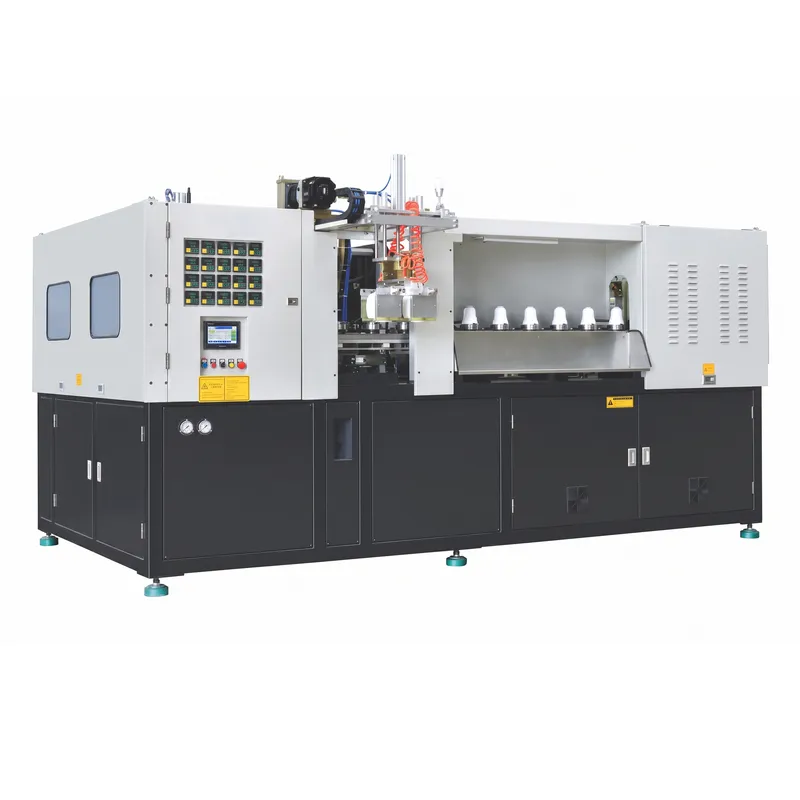
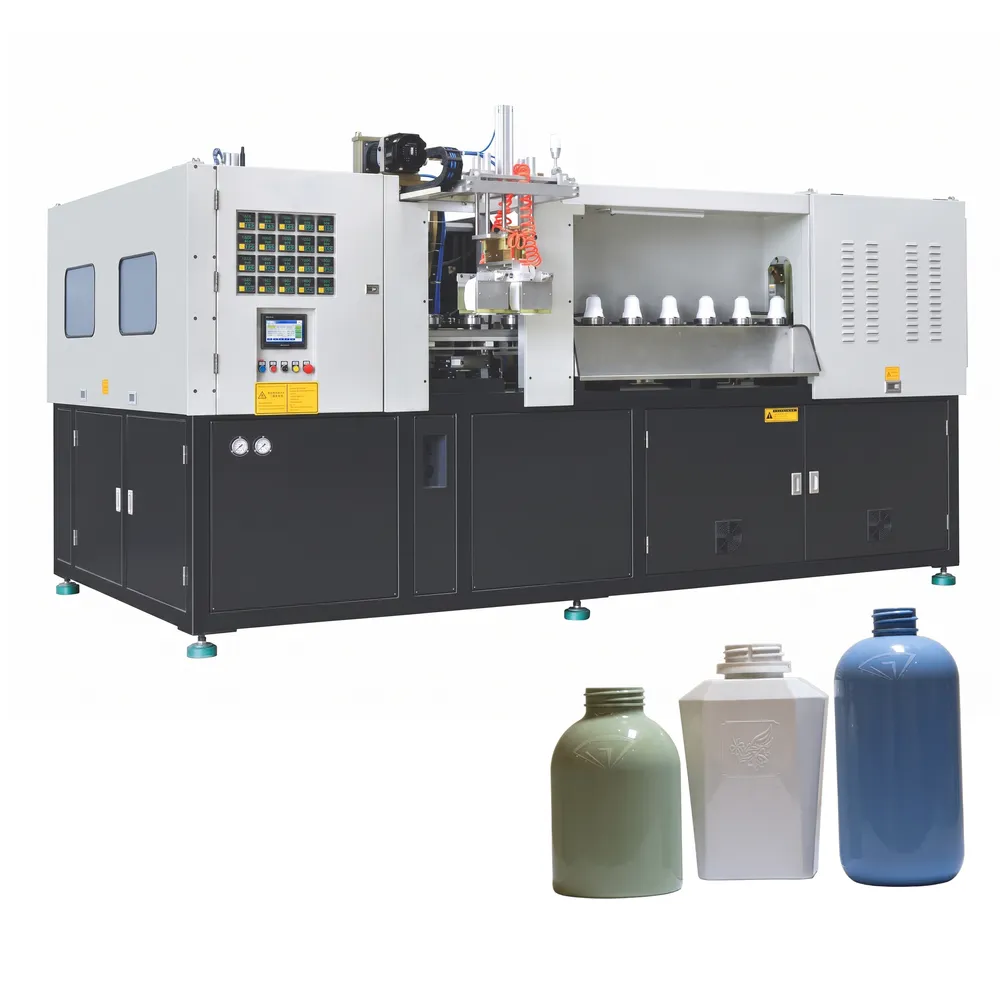
EPA.ES-2C200 Fully Automatic Blow Molding Machine for Crafts and Special-Shaped Bottles
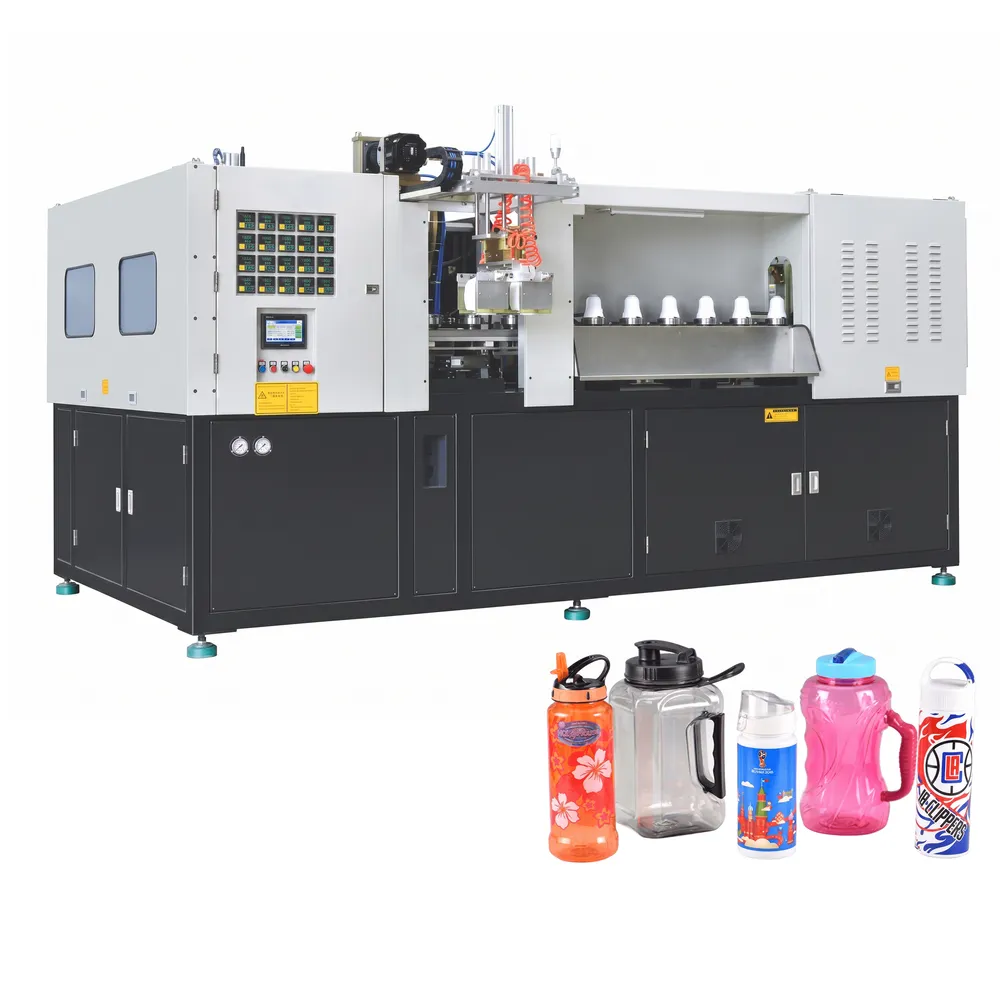
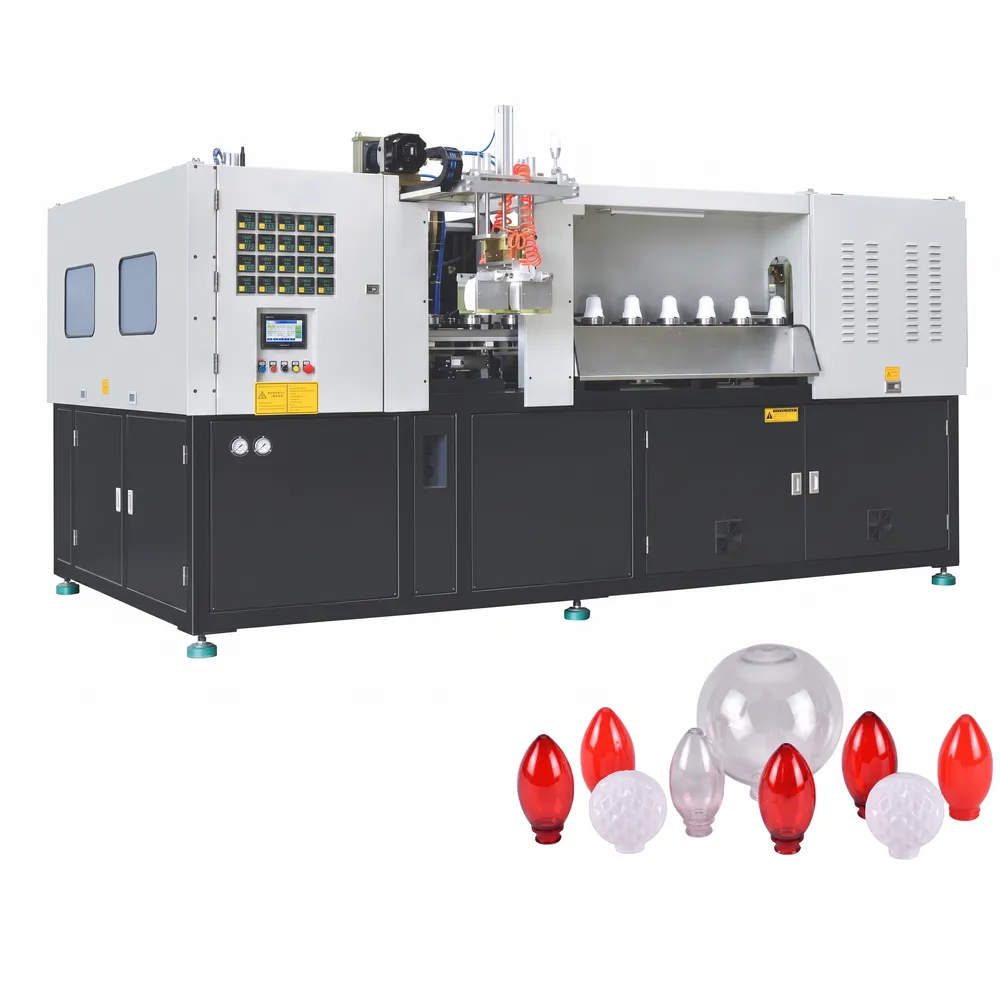
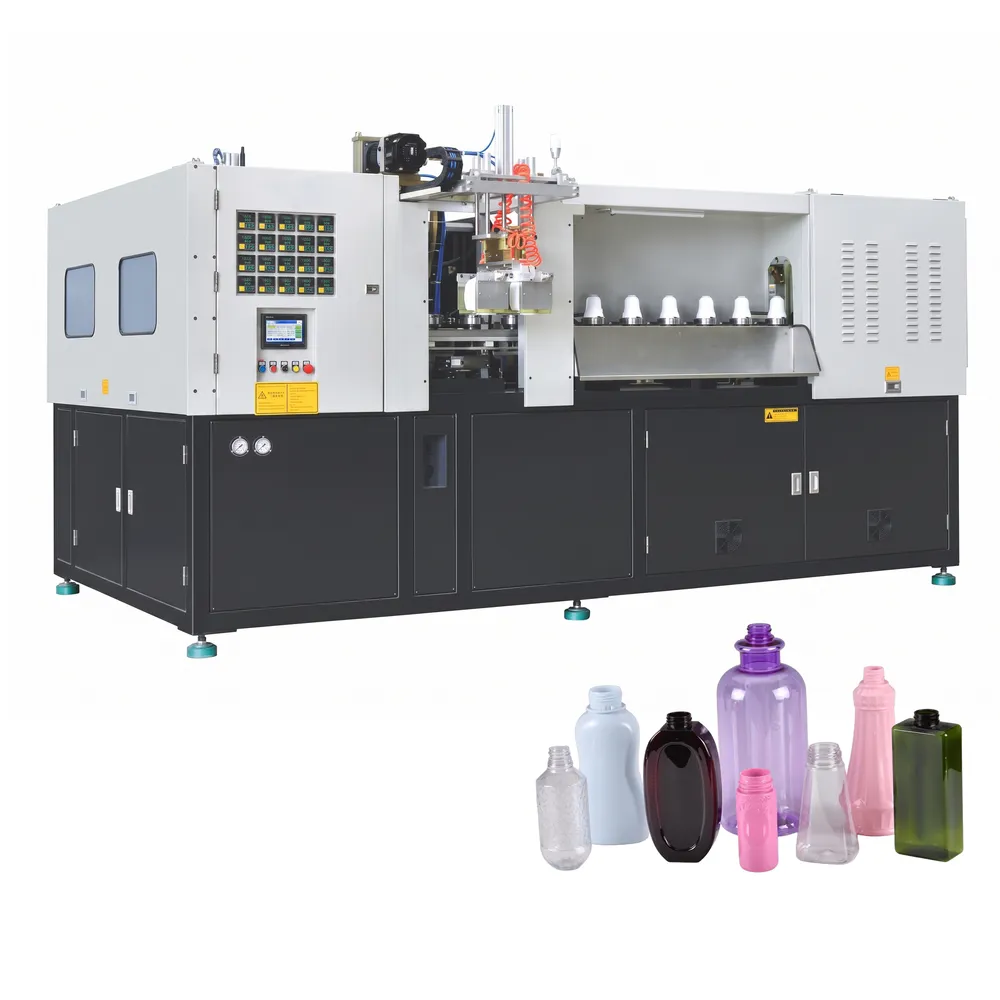
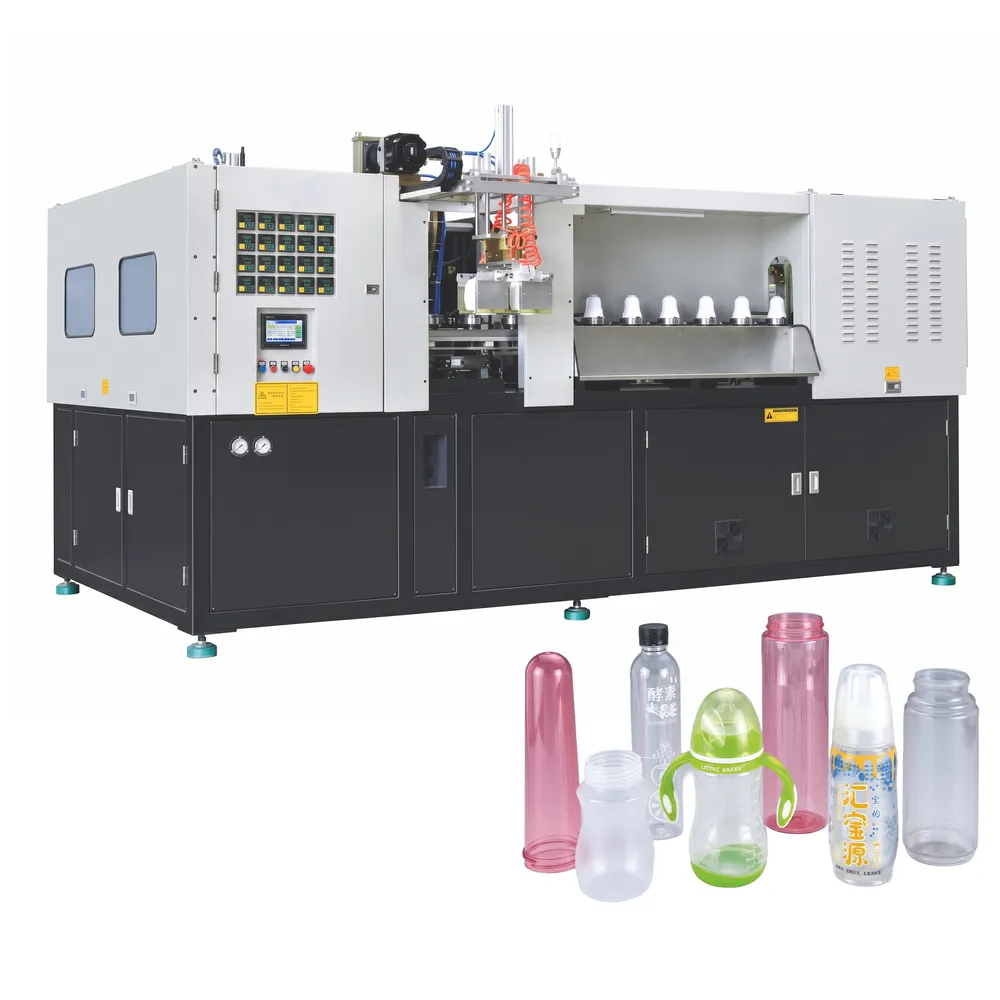
The EPA.ES-2C200 Fully Automatic Blow Molding Machine is a precision-engineered PET bottle blow moulding machine purpose-built for producing multi-shape and multi-material containers. As an advanced automatic blow molding machine, it efficiently handles feeding bottles, PP bottle blow molding machine applications, and intricate special-shaped craft vessels across a wide range of specifications. Its dual-cavity design and servo-driven mechanics position it firmly among the most capable plastic blow molding machine solutions available for specialty packaging today.
The EPA.ES-2C200 Fully Automatic Blow Molding Machine is a precision-engineered PET bottle blow moulding machine purpose-built for producing multi-shape and multi-material containers. As an advanced automatic blow molding machine, it efficiently handles feeding bottles, PP bottle blow molding machine applications, and intricate special-shaped craft vessels across a wide range of specifications. Its dual-cavity design and servo-driven mechanics position it firmly among the most capable plastic blow molding machine solutions available for specialty packaging today.
This series of PET blow molding machine equipment spans models from EPA.FS-1CG130 and EPA.FS-1CG220 through multi-station configurations, accommodating container volumes from 1,000 ml to 15,000 ml. The flagship multi-cavity model EPA.JS-4C114 reaches a theoretical output of 2,800 bph, while the EPA.ES-2C200 delivers a steady 1,600 bph with 2 cavities. Blowing pressure is stabilised at 30 kg/cm2, and the closed-loop cooling circuit maintains 8-12 degrees C, guaranteeing uniform wall thickness and a mirror-smooth surface finish. Used widely in infant care products, premium daily-use packaging, and high-end decorative bottles, this fully automatic blow molding machine is a natural fit for cosmetics houses, craft gift manufacturers, and baby-product brands requiring consistent quality at industrial output.
Technical Parameter
| Crafts and Special-Shaped Bottle Blow Molding Machine | |||
|---|---|---|---|
| Model | Unit | EPA.ES-2C200 | |
| Molding | Clamping stroke | mm | 215 |
| Mold-open distance | mm | 499 | |
| Mold-close distance | mm | 284 | |
| Stretching stroke | mm | 500 | |
| Mold-open distance | mm | 50 | |
| Mold-close distance | mm | 200 | |
| Preform Holder | 50 | ||
| Cavities | 2 | ||
| Container | Max.Container Volume | ml | 5000 |
| Neck Diameter Range | mm | 138 | |
| Max.Container Diameter | mm | 180 | |
| Max.Container Height | mm | 350 | |
| Theoretical Output | bph | 1600 | |
| Electrical System | Max.Heating Power | kw | 85 |
| Heating Power | kw | 35 | |
| Air System | Operating Pressure | kg/cm² | 7 |
| Low Pressure Air Consumption | ltr/min | 600 | |
| Blowing Pressure | kg/cm² | 30 | |
| High Pressure Air Consumption | ltr/min | 6000 | |
| Cooling water | Operating Pressure | kg/cm² | 5-6 |
| Temperature | °C | 8-12 | |
| Flow rate | ltr/min | 91.4 | |
| Machine | Size (L*W*H) | mm | 4300*2100*2500 |
| Weight | kg | 4500 | |
Features of the EPA.ES-2C200 Plastic Blow Molding Machine
1. Extensive Adaptability for Multi-Type Preform Production
As a versatile plastic bottle blow molding machine, the EPA.ES-2C200 series accommodates baby bottles, PP bottles, craft bottles, and complex special-shaped containers with capacities from 1,000 ml up to 15,000 ml (see model EPA.ES-2C260). Maximum body diameters reach 180 mm on the ES-2C200 and up to 300 mm on wider models, while container heights extend to 350 mm. The machine excels in the high-consistency manufacturing of feeding bottles and intricate craft vessels, with flexible neck finish capability up to 138 mm, making this custom blow molding machine ideal for brands requiring precise geometry across diverse product lines.
2. High Efficiency and Energy Savings
The EPA.ES-2C200 operates with a rated max heating power of 85 kW and a typical running load of just 35 kW, delivering outstanding energy efficiency for an industrial blow molding machine. Blowing pressure is locked at a stable 30 kg/cm2, while low-pressure air consumption stands at 600 ltr/min. The closed-loop cooling water circuit holds the mold temperature at 8-12 degrees C with a flow rate of 91.4 ltr/min. This precise thermal management reduces deformation rates, improves yield, and lowers per-unit production cost, cementing its position as a genuinely energy-efficient automatic PET blow molding machine.
3. Stable Operation and Flexible Production Adaptability
Built with internationally sourced servo motors, precision reducers, and brand-name electrical components, this high speed blow molding machine maintains low failure rates and straightforward maintenance routines. The maximum mold opening distance of 499 mm provides generous clearance for tool changes, while balanced clamping force ensures mold longevity across extended production runs. At 4,500 kg the machine is substantial but manageable, with a footprint of 4,300 x 2,100 x 2,500 mm that fits most industrial workshop layouts. Quick-change mold compatibility allows operators to shift between bottle types with minimal downtime.
4. Excellent Output Quality
Capable of processing PP, PET, PC, and Tritan with equal precision, this PET bottle blow molding machine consistently produces containers with geometrically accurate neck threads, uniform wall thickness, and exceptional optical clarity. The controlled blowing and stretching mechanics ensure neck dimensions stay within tight tolerances, meeting the stringent safety standards mandated for infant and pharmaceutical products. Whether producing baby feeding bottles, high-end decorative craft flasks, or special-shaped gift packaging, finished articles display smooth exterior surfaces and perfectly replicated contours.
5. Fully Automatic Operation Reduces Labor
As a fully automatic blow molding machine, the EPA.ES-2C200 automates the complete production cycle: preform loading, heating, stretching, blowing, cooling, and bottle ejection all proceed without manual intervention. The integrated PLC control system with touchscreen HMI allows operators to store and recall recipe parameters for every bottle format, enabling rapid changeovers. Automated fault detection and alarm systems reduce scrap rates and protect mold integrity, dramatically lowering per-shift labor costs and making the machine accessible to facilities with limited skilled-operator headcount.
6. Wide Application Range Across Multiple Industries
The EPA.ES-2C200 serves a wide cross-section of end markets, functioning as a baby bottle blow molding machine, a craft packaging line, and a cosmetics container solution within a single footprint. Its compatibility with food-grade PP and medical-grade PET makes it suitable for regulated industries including infant nutrition, pharmaceuticals, and personal care. Gift and homeware brands benefit from its ability to replicate intricate decorative shapes with a surface quality that requires no post-processing, positioning it among the most commercially versatile bottle blow molding machines available.
Two-Stage Blow Molding Machine Process
1. Raw Material Preparation
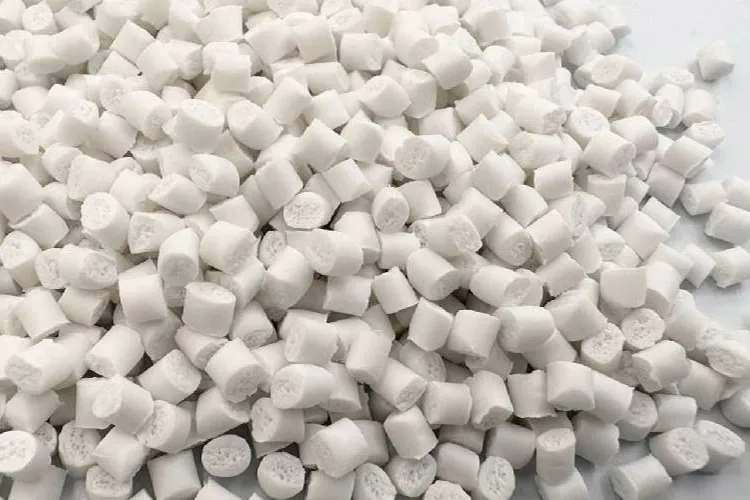
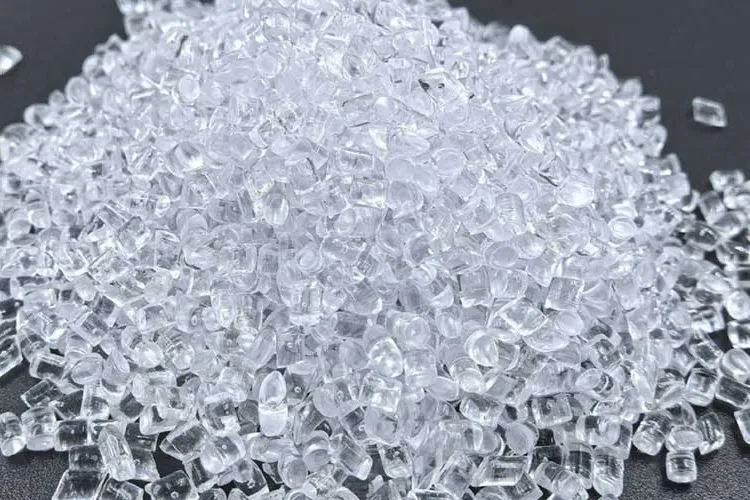
The two-stage blow molding machine begins with careful raw material handling. PP, PE, PET, and similar resins are screened, blended, and fed into the hopper after thorough drying to remove trace moisture that could cause hydrolytic degradation. Strict quality testing at this stage establishes the foundation for defect-free finished containers and prevents downstream production interruptions related to poor resin quality or uncontrolled moisture content.
2. Injection Molding
Carefully selected and blended raw materials are fed into the injection molding unit, where they are heated, melted, and plasticised before being injected under precise pressure into the preform mold cavities. Temperature, injection pressure, and injection speed are all tightly controlled by the PLC system to ensure every preform exits the mold with consistent wall thickness, neck geometry, and internal stress distribution suited to the downstream blow phase.
3. Preheating
Following injection, the preforms pass through a calibrated infrared heating tunnel. The oven uniformly raises the entire preform to the optimal orientation temperature, with particular attention paid to the thicker wall sections. This preheating stage is critical: correct thermal conditioning enhances the polymer's plasticity and flexibility, setting the conditions for the stretch-blow phase to produce bottles with uniform wall distribution and superior optical clarity across all production cycles.
4. Blow Molding
At this core stage the preheated preforms are transferred into the blow mold station. A precision stretch rod descends to mechanically orient the polymer vertically while high-pressure air at 30 kg/cm2 simultaneously inflates the preform against the mold cavity walls. Every machine parameter including rod descent speed, air pressure timing, and hold duration is precisely programmed, giving this injection stretch blow molding machine the control necessary to reproduce complex special-shaped bottle geometries reliably cycle after cycle.
Application Scenarios
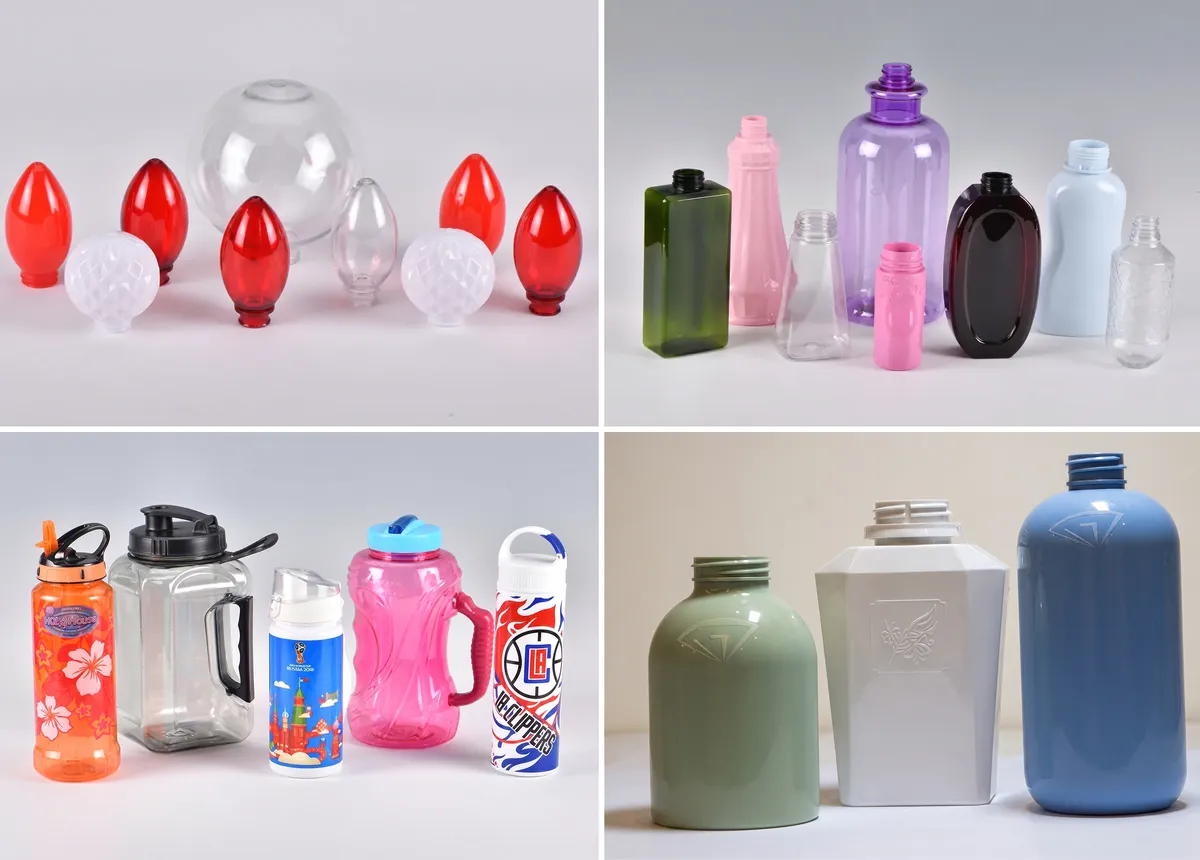
Craft and Decorative Gift Bottles
Special-shaped craft vessels require a machine capable of faithfully reproducing intricate geometries. The EPA.ES-2C200 handles asymmetric, multi-faceted, and sculptural bottle designs that conventional linear-cavity machines cannot manage reliably. Resulting containers display sharp mold parting lines, crisp surface detail, and excellent transparency, ideal for premium gift, home fragrance, and artisanal spirits packaging sectors.
Baby Bottle and Infant Care Packaging
As a leading baby bottle blow molding machine, the EPA.ES-2C200 produces feeding bottles and infant-care containers in food-grade PP and PPSU. Smooth interior surfaces, burr-free neck threads, and wall uniformity meet international infant product safety regulations, making it trusted by manufacturers supplying global baby brands who demand zero-defect production at consistent volume.
Cosmetics and Personal Care Containers
Beauty brands require containers that function as part of the product aesthetic. This plastic blow molding machine produces PET and PETG cosmetic bottles with the optical clarity and dimensional accuracy luxury brands demand. Lotion bottles, serum flasks, and specialty skincare containers are produced with surface finishes comparable to glass alternatives, supporting premium shelf positioning without the weight and fragility penalty.
PP Bottle Manufacturing
The PP bottle blow molding machine configuration handles opaque and translucent PP containers for household products, condiments, and health supplements. PP's chemical resistance and FDA compliance make it preferred for food contact and OTC pharmaceutical packaging. The machine's stable blowing pressure and controlled heating ensure consistent wall distribution in PP, which is more demanding to blow than PET.
Pharmaceutical Packaging
Pharmaceutical manufacturers operating GMP-compliant facilities benefit from the EPA.ES-2C200's automated production cycle that eliminates manual contact contamination, combined with PLC-logged process parameters for batch traceability. Syrup bottles, oral liquid containers, and supplement packaging are produced with the neck accuracy and wall integrity demanded by pharmacopeial standards in regulated markets.
Daily-Use and Household Product Packaging
From dishwashing liquid containers to shampoo bottles and fabric conditioner jugs, the EPA.ES-2C200 produces daily-chemical packaging at competitive cycle times. Its compatibility with both clear PET and opaque PP gives procurement teams material flexibility without changing equipment. High output at 1,600 bph makes this a strong performer for mid-scale household brand contract packagers looking to reduce per-unit blowing costs.
Specialty Industrial and Custom Containers
The versatile mold-change capability makes the EPA.ES-2C200 attractive for contract blow molding machine manufacturers who serve niche industrial clients needing small-batch, custom-shaped containers. Agricultural chemical bottles, automotive fluid containers, and specialty equipment housings are produced with the structural rigidity and dimensional precision that industrial applications demand. The 5,000 ml maximum volume provides room for larger specialty containers beyond typical consumer packaging.
EPA.ES-2C200 Craft Bottle Blow Molding Machine Parts
Feeding System
The feeding system is the entry point of the entire blow molding machine process. It consists of the hopper, preform conveyor, orientator, and gravity rails, all working in concert to deliver a smooth, uninterrupted supply of preforms to the production line. Both steering and electric components regulate flow rate, ensuring the upstream supply never becomes a bottleneck to the blowing station's 1,600 bph capacity.
Preform Tilter
When configured for PET bottle production, the Preform Tilter automatically orients and supplies cold preforms from bulk storage into the hopper in the correct neck-up position. This automated unscrambling eliminates manual loading labor, reduces the risk of contamination or surface damage to preforms, and maintains a consistent feed rate that synchronises with the machine's cycle time, a critical factor for achieving maximum theoretical output of 1,600 bph.
Infrared Preform Heating Oven
The infrared heating tunnel is one of the most technically demanding blow molding machine parts. It consists of multiple independently controlled lamp zones and reflector arrays that heat the preform body to the precise orientation temperature while protecting the neck finish from deformation. Zone-by-zone power adjustment allows the operator to dial in the ideal temperature profile for each bottle shape and wall thickness, directly influencing wall distribution quality in the finished container.
Stretch-Blow Station
At the heart of the injection stretch blow molding machine is the stretch-blow station, where a servo-driven stretch rod and high-pressure pneumatic blow valve work in precise synchronisation. The stretch rod descends at a programmed speed to axially orient the polymer chain, while the blow valve delivers 30 kg/cm2 of high-pressure air to radially inflate the preform against the mold cavity. Dual-cavity operation produces two bottles simultaneously per cycle, doubling throughput without doubling footprint.
Compressor Station
The compressor station provides the dual-pressure air supply essential to the blow molding cycle. It comprises screw compressors, boosters, pressure regulators, oil-water separators, and storage tanks. Low-pressure air at 7 kg/cm2 handles clamping and transfer functions, while high-pressure air at 30 kg/cm2 powers the blow phase. Total high-pressure air consumption of 6,000 ltr/min is optimised through automatic pressure recovery circuits that recapture and recycle post-blow air, reducing compressor energy load significantly.
Water Cooling System
The closed-loop water cooling system dissipates heat from the mold at a controlled 8-12 degrees C using a chiller circuit with a flow rate of 91.4 ltr/min and operating pressure of 5-6 kg/cm2. Rapid, uniform cooling is essential for locking in the bottle's final shape before ejection. The system's closed-loop design also prevents scale buildup in mold cooling channels, protecting expensive tooling and maintaining consistent cycle-to-cycle repeatability over years of production.
PLC Control System and HMI
The programmable logic controller serves as the brain of this fully automatic blow molding machine, coordinating every subsystem through a centralised touchscreen HMI. Operators store process recipes for each product format, enabling rapid changeovers. Real-time monitoring alerts operators to deviations in pressure, temperature, or cycle timing, preventing defective output before it accumulates into significant scrap and protecting both product quality and mold integrity.
Bottle Exit Conveyor
After ejection from the blow mold, finished bottles travel via the exit conveyor to a downstream filler, leak-tester, or unscrambling system. The conveyor design is matched to the specific bottle geometry and production rate, ensuring smooth transfer without contact marks or surface abrasion. For special-shaped and craft bottles where surface aesthetics are paramount, gentle conveying minimises any risk of post-mold cosmetic damage before containers reach quality inspection or packing stations.
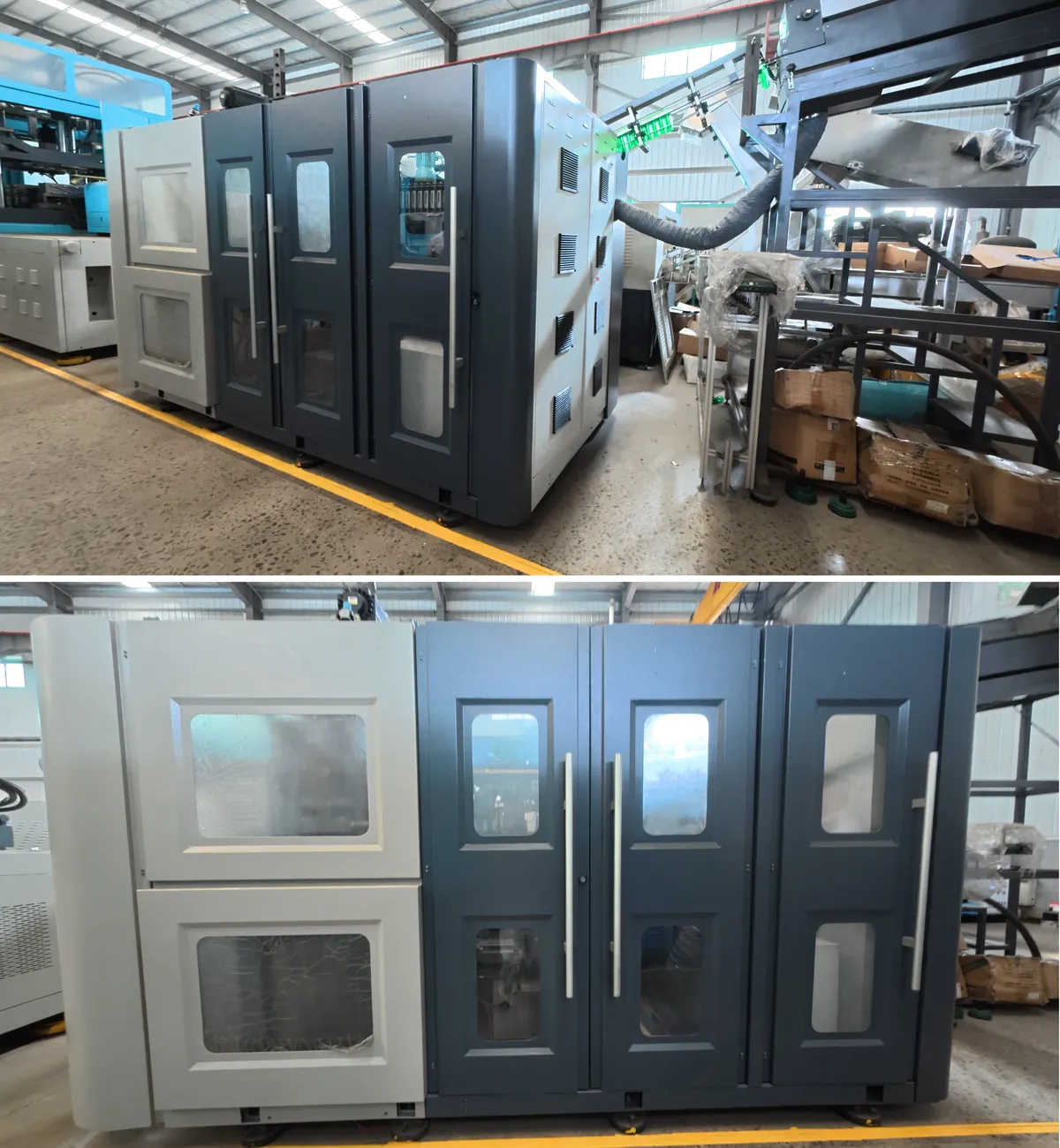
Two-Stage vs. Single-Stage Blow Molding Machine
Understanding the difference between these two types of blow molding machine is essential for making the right capital equipment decision for your production line.
Single-Stage Blow Molding Machine
A single-stage configuration integrates preform injection molding, mechanical stretching, and pneumatic blowing into one unified machine frame. The plastic raw material never leaves the machine during processing. These systems are typically built as 3-station or 4-station rotating index configurations.
3-Station Systems feature injection molding, stretch blowing, and product ejection as integrated zones. By utilising residual heat from injection, they eliminate reheating costs, reducing tooling heat requirements by roughly 25%.
4-Station Systems add a dedicated thermal conditioning station between injection and blowing, allowing more precise wall thickness distribution across complex or asymmetrical bottle geometries.
- Blemish-free surface aesthetics as hot preforms are never conveyed externally
- Precise mechanical alignment of neck threads and cap geometry
- Compact footprint combining all systems into one machine frame
- Highly optimised for complex rectangular, oval, or non-circular shapes
- Overall cycle time bound by the slowest station, typically injection
- Operators must master both injection and pneumatic blow molding simultaneously
Two-Stage Blow Molding Machine
A two-stage blow molding machine separates the operation into two distinct machines. In Stage 1, a high-speed injection molding machine produces large volumes of preforms that are cooled to ambient temperature. In Stage 2, these cold preforms are fed into a dedicated reheat stretch blow molding machine for final forming.
The preform and the blow molding process are fully decoupled, meaning the injection machine can build preform inventory even when the blow station is offline for maintenance or tooling changes. This production flexibility makes the two-stage approach suitable for large-scale centralised operations, where preforms may even be sourced from third-party suppliers.
- Extreme output scaling, capable of 1,000-72,000 bottles per hour on a single line
- Decoupled operations allow independent preform inventory building
- Optimised wall distribution via independent infrared lamp zone control
- Flexibility to source preforms from third-party suppliers
- Preforms susceptible to surface damage during bulk storage and conveying
- Higher initial capital and significantly larger plant footprint required
Comparison Table
| Criteria | Single-Stage | Two-Stage |
|---|---|---|
| Machine Count | 1 machine | 2 separate machines |
| Best For | Complex shapes, small-to-mid batch | High-volume round containers |
| Energy Use | Lower (no reheating) | Higher (cold preform reheating) |
| Surface Quality | Superior (no conveying damage) | Good (minor abrasion risk) |
| Footprint | Compact | Large |
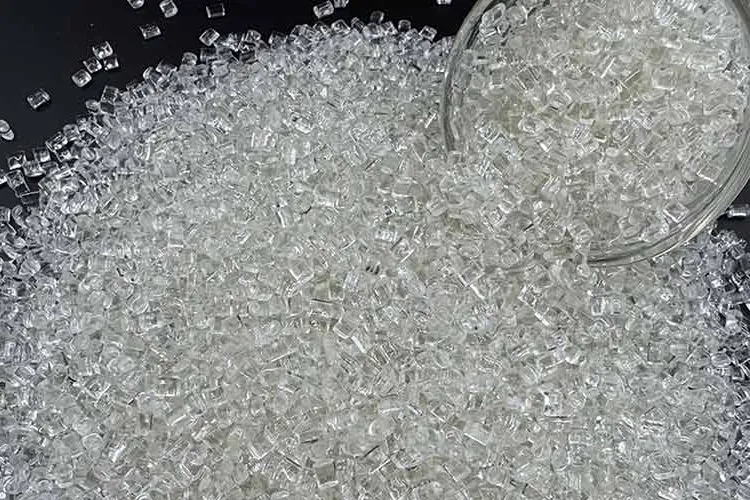
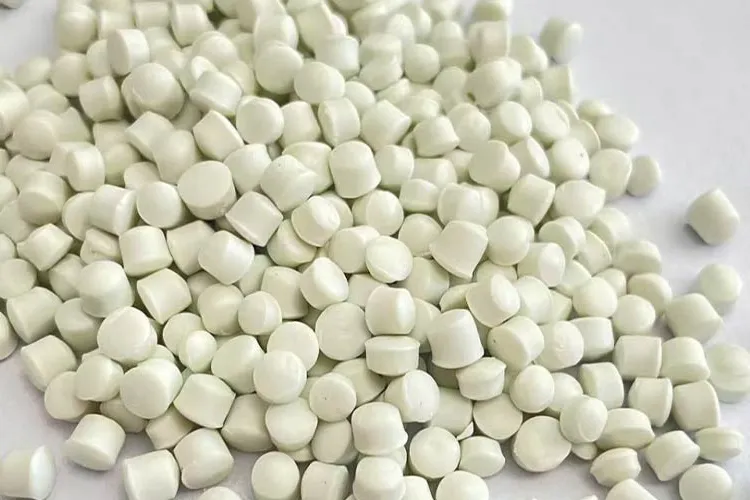
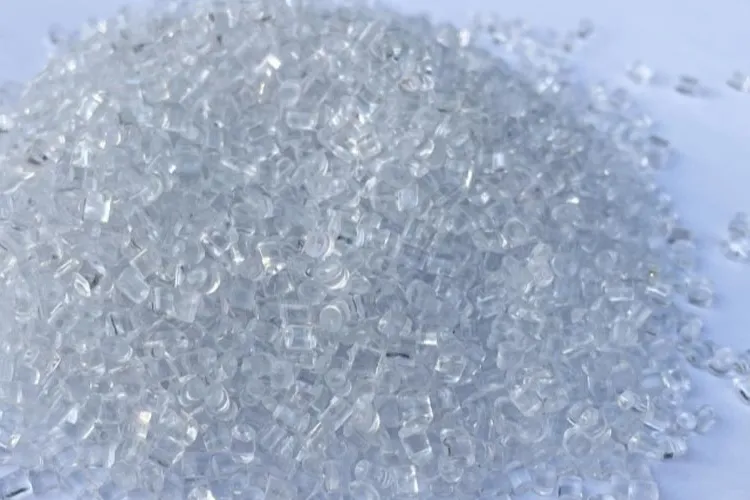
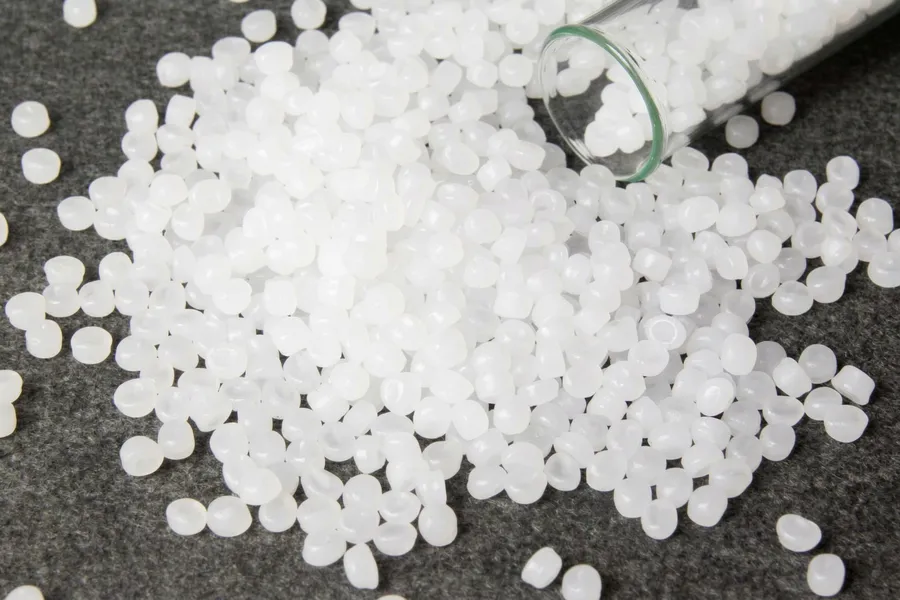
Compatible Materials
PET (Polyethylene Terephthalate)
The most widely used material for transparent bottle production, PET offers outstanding clarity, excellent barrier properties against gas and moisture, and strong tensile strength. FDA-approved for food and beverage contact, it is the dominant choice for craft bottles, cosmetic flasks, and premium packaging where visual appeal is critical to brand positioning and retail performance.
PP (Polypropylene)
PP is the preferred material for baby bottles and medical containers due to its food-grade safety credentials, chemical resistance, and ability to withstand steam sterilisation. The PP bottle blow molding machine configuration handles PP's higher processing temperature requirements, delivering opaque and semi-transparent containers with consistent wall uniformity and leak-free neck threads across all production volumes.
PC (Polycarbonate)
Polycarbonate delivers near-glass optical clarity combined with exceptional impact resistance, making it a preferred choice for high-end reusable baby bottles, laboratory containers, and premium water bottles. The EPA.ES-2C200 handles PC with the precise temperature and pressure control this material demands. BPA-free grades of PC and Tritan are increasingly preferred for infant-contact applications in regulated markets.
PE (Polyethylene)
Polyethylene's outstanding chemical resistance and flexibility make it ideal for containers holding aggressive cleaning agents, agricultural chemicals, and industrial fluids. The EPA.ES-2C200 accommodates PE in suitable grades, producing containers that maintain structural integrity across a wide temperature range. PE's low cost and broad global availability also make it attractive for cost-sensitive commodity packaging applications.
Tritan Copolyester
Tritan is a BPA-free copolyester that combines PET-like clarity with PC-like toughness. It is increasingly specified for reusable water bottles, baby feeding bottles, and premium kitchen products. The EPA.ES-2C200 is compatible with Tritan processing, enabling manufacturers to offer health-conscious consumers containers with crystal transparency, dishwasher durability, and confirmed BPA-free safety credentials.
HDPE and LDPE
High-density polyethylene is the workhorse of the packaging industry, used in millions of household, food service, and personal care containers globally due to its rigidity, chemical resistance, and excellent recyclability. LDPE provides a softer, more flexible container profile preferred in squeeze-bottle applications. Both grades are processable on the EPA.ES-2C200, giving manufacturers access to the world's highest-volume thermoplastic markets.
PETG and PCTG
PETG and PCTG offer superior impact resistance and processing ease compared to standard PET, with excellent clarity and no need for drying at extreme temperatures. These glycol-modified copolymers are increasingly chosen for cosmetics, health supplements, and specialty food containers where shatter resistance during transit and retail display is critical. The EPA.ES-2C200 accommodates both materials, broadening the commercial range for specialty packaging converters.
 |
 |
 |
 |
 |
 |
Common Troubleshooting of EPA.ES-2C200 PET Blow Molding Machine
1. Uneven Wall Thickness
Cause: Uneven oven heating, incorrect stretch rod speed, or misaligned preform transport. Solution: Audit each oven zone's lamp output using a contactless thermometer. Recalibrate stretch rod descent speed through the HMI recipe editor. Inspect the preform chain for wear or misalignment. Consistent preform temperature entering the blow station is the single most critical variable for wall uniformity, so prioritise thermal profiling before adjusting mechanical settings.
2. Bottle Surface Whitening or Stress Marks
Cause: Preform temperature too low entering the blow station, causing over-orientation of the polymer chain. Solution: Increase oven zone temperatures in the affected wall area by 2-5 degree C increments and allow the system to stabilise before assessing results. Check preform drying logs to ensure moisture content was below specification, as excess moisture lowers effective orientation temperature and causes crystallisation at lower actual temperatures than expected.
3. Bottle Neck Deformation
Cause: Excess radiant heat reaching the neck finish zone, or incorrect neck shield positioning. Solution: Inspect the neck shields for damage or misalignment and replace as needed. Review oven chain speed versus lamp output balance. Neck deformation is the leading cause of cap-sealing failures, so this issue must be resolved before product leaves the line. Verify cooling water flow and temperature at the neck cooling insert inside the blow mold as a secondary check.
4. Incomplete Bottle Blowing or Short Shots
Cause: Insufficient blowing pressure at the valve, blocked high-pressure air circuit, or worn blow valve seals. Solution: Confirm actual pressure at the blow nozzle using an inline gauge, not just the compressor station display. Inspect the blow valve, solenoid, and high-pressure lines for blockages, leaks, or worn seals. Verify compressor output meets the 6,000 ltr/min high-pressure consumption requirement. An undersized compressor will cause intermittent short shots that worsen as ambient temperature rises.
5. Mold Flashing or Parting Line Overflow
Cause: Worn mold parting surfaces, inadequate clamping force, or preform temperature too high causing excess material flow at the mold parting line. Solution: Inspect mold parting surfaces under magnification for wear or contamination and clean or lap as required. Verify clamping force settings in the PLC against the mold manufacturer's specification. If preform temperature is suspected, reduce oven output by 3-5 degree C and retest. Persistent flashing on a well-maintained mold indicates a clamping force calibration issue.
6. Erratic Output or Cycle Time Instability
Cause: Inconsistent preform supply from the feeding system, PLC sensor drift, or cooling water temperature fluctuation. Solution: Monitor the preform feed conveyor for jams or orientator failures. Check all proximity sensors and photoelectric cells in the feeding and transfer path for contamination or misalignment. Verify chiller setpoint and actual water temperature at the mold inlet, as cooling variation of even 2-3 degrees C can shift cycle times by 0.5-1 second, creating compounding output loss over a full shift.
Craft Bottle Blow Molding Machine Mould Features
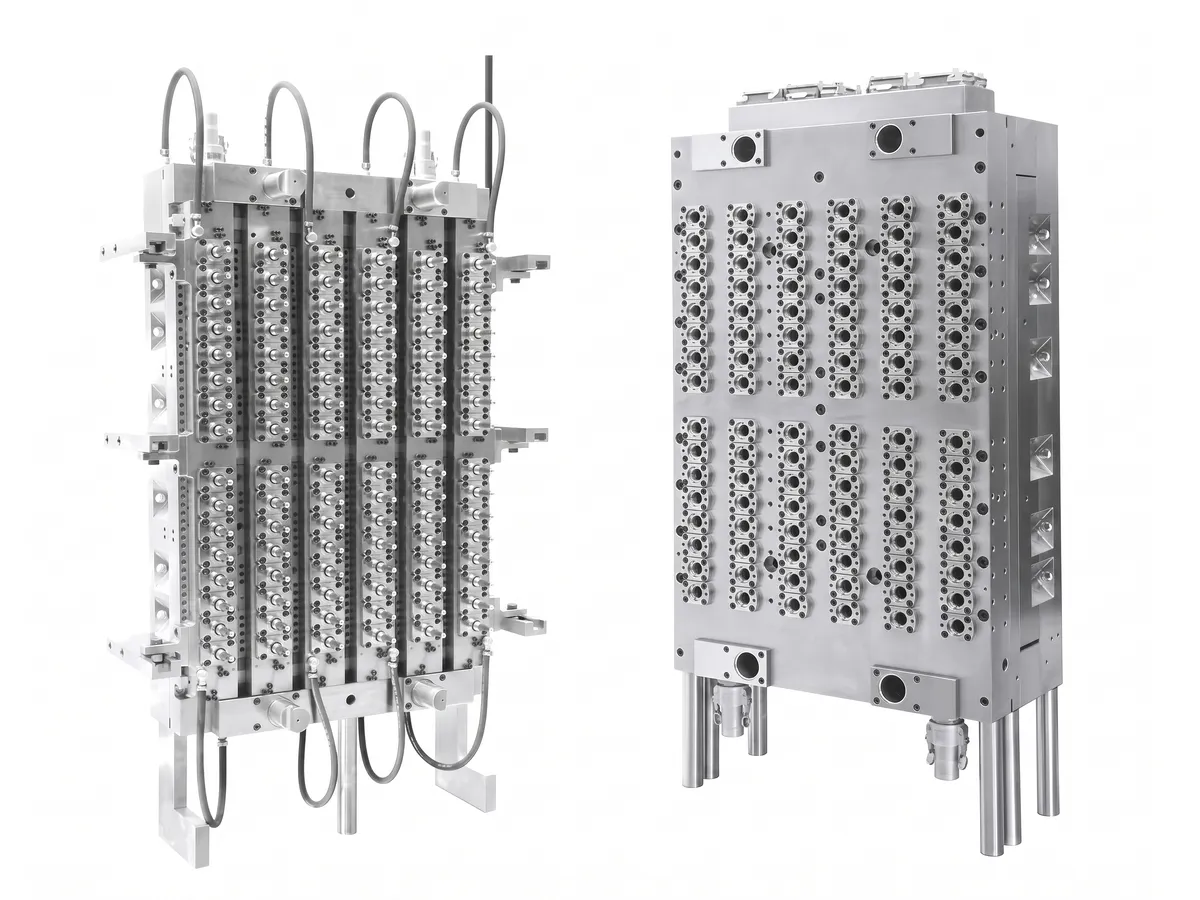
Preform Injection Mold
- The die lip design consists of two parts that guarantee coaxial alignment between the preform neck and body throughout the injection cycle, ensuring perfectly centred preforms every cycle without post-correction.
- An optimised cooling water channel layout improves heat extraction from the preform body, shortening cycle times and guaranteeing a fast, consistent production rhythm suited to high-volume specialty runs.
- All preform-forming components are machined from imported die steel 2316, a chromium-nickel alloy that is rust-resistant and undergoes full heat treatment for hardness and dimensional stability under sustained injection pressures over extended service life.
- Core plates, cavity plates, and all structural components are manufactured from 420 stainless steel for superior corrosion resistance against cleaning agents, moisture, and process condensate over extended mold life in industrial environments.
- The mold architecture is engineered for easy maintenance access, allowing routine cleaning and wear component replacement without full mold disassembly, minimising unplanned downtime during active production shifts.
- Standard interchangeable die fittings reduce tooling cost and lead time when upgrading to a new preform design, maintaining full compatibility across the EPA machine platform for multi-format producers.
- Advanced mold design allows a single injection mold to produce more than one type of preform by swapping insert sets, providing significant cost savings for manufacturers operating multiple bottle formats on shared equipment.
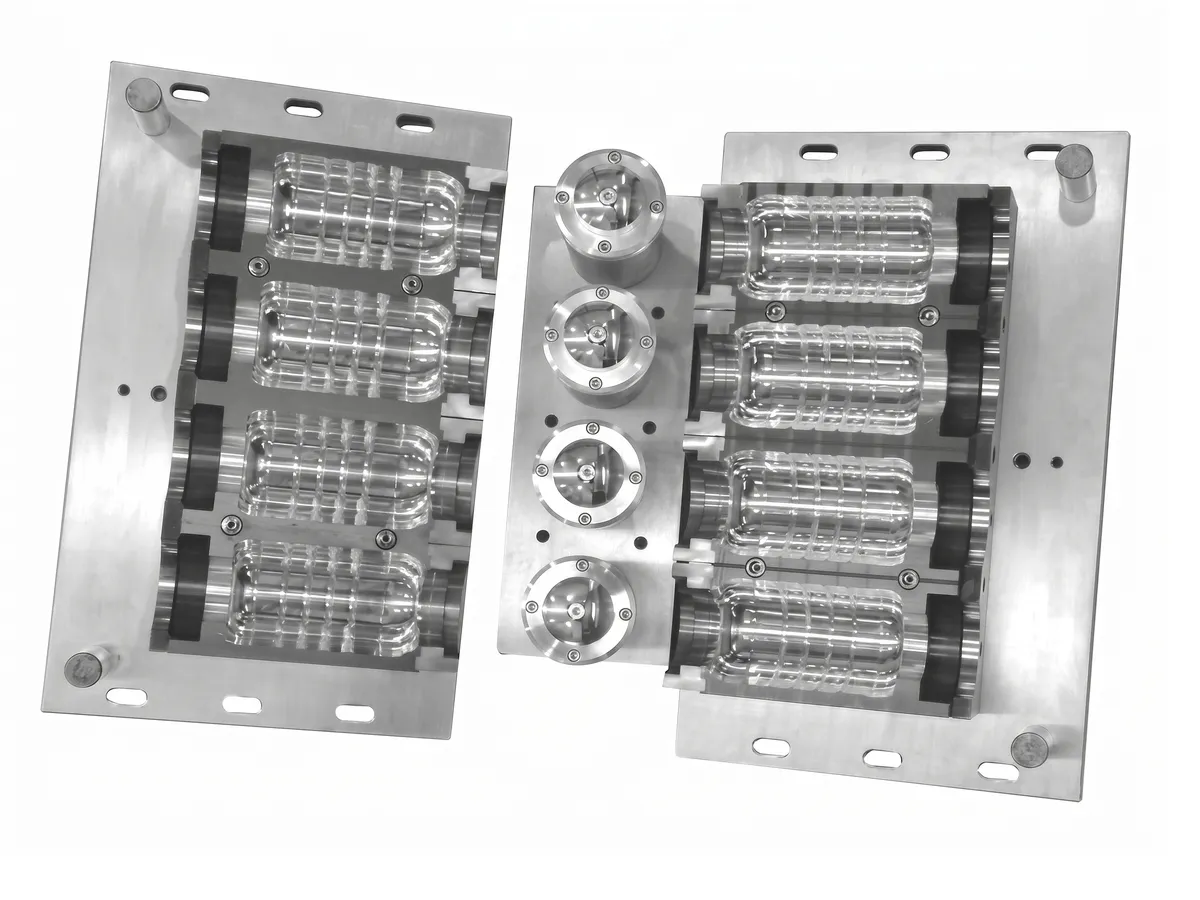
Blowing Mold
- All blow mold raw materials are sourced from certified high-quality steel suppliers, ensuring cavity surfaces maintain dimensional accuracy and resist wear under repeated high-pressure blowing cycles that accumulate over years of industrial production.
- Every bottle cavity shape is designed using advanced 3D modelling software before any steel is cut, allowing simulation of blow dynamics, wall distribution prediction, and parting line optimisation. This digital-first approach reduces the number of physical tooling trials needed before first-off production approval.
- A versatile library of bottle designs is available for customer selection, spanning round, oval, rectangular, and fully custom special-shaped geometries. This catalogue accelerates new product launch timelines for brands introducing seasonal or limited-edition craft packaging.
- Water cooling channels within the blow mold cavity are designed with CFD-guided layouts to deliver uniform thermal extraction across the entire bottle surface, eliminating hot spots that cause warpage or surface blemishes in demanding special-shaped geometries.
- All metal mold components are finish-machined on CNC equipment to tight dimensional tolerances, ensuring consistent cavity volume, precise parting line fit, and the surface finish quality required for premium cosmetic and craft bottle production where every container represents the brand's visual identity.
 |
 |
How to Choose the Right Full Electric Blow Molding Machine
1. Production Volume
Assess your daily and annual output requirements before selecting between single-stage and two-stage configurations. The EPA.ES-2C200 at 1,600 bph suits mid-scale specialty production, while larger models like the EPA.JS-4C114 at 2,800 bph serve higher-volume lines. Factor in future growth projections when sizing: a machine running above 85% capacity continuously leaves no buffer for maintenance downtime or demand spikes.
2. Bottle Design Complexity
Evaluate the geometric complexity and shape variety of the containers you need to produce. Standard round bottles favour high-speed two-stage systems, while special-shaped, asymmetric, or decorative craft bottles favour the single-stage injection stretch approach of the EPA.ES-2C200. If your product roadmap includes both standard and complex shapes, selecting a versatile custom blow molding machine with flexible mold-change tooling is the more cost-effective long-term strategy.
3. Automation Level
Decide on the degree of automation required for preform loading, bottle ejection, and inline quality inspection before making a purchase commitment. A fully automatic blow molding machine like the EPA.ES-2C200 minimises labor cost per unit and reduces operator-error variability. Semi-automatic configurations cost less upfront but require more skilled operators and produce higher per-bottle labor cost. For facilities in markets with rising labor costs, full automation typically delivers a payback period under two years.
4. Energy Efficiency
Look for machines equipped with advanced infrared heating systems, air recovery circuits, and servo-driven clamping to minimise operational costs. The EPA.ES-2C200's typical running heating load of 35 kW versus its 85 kW maximum rating demonstrates the energy efficiency headroom designed into the system. Request energy consumption data per 1,000 bottles produced from your blow molding machine manufacturers short-list and compare on a consistent basis.
5. After-Sales Support and Parts Availability
A production line generates revenue only when it is running. Before committing to any blow molding machine suppliers, verify their local service engineer network, spare parts inventory, and remote diagnostic capability. Ever-Power maintains a dedicated after-sales team providing pre-sale consultation, on-site commissioning, operator training, and ongoing technical support, with critical wear parts stocked for same-week dispatch to minimise unplanned downtime exposure.
6. Material and Application Compliance
Ensure your chosen machine is compatible with the specific resin grades your product specifications require and that it meets the regulatory standards of your target markets. Food-contact, pharmaceutical, and infant-product packaging is subject to FDA, EU 10/2011, and market-specific regulations. Confirm that the machine supplier can provide compliance documentation and that mold materials meet hygiene standards for your application category before finalising the purchase.
7. Footprint and Utility Requirements
Map the machine's physical dimensions against your available floor space, including clearance for maintenance access, mold change operations, and material feed. The EPA.ES-2C200 at 4,300 x 2,100 x 2,500 mm is manageable for most industrial facilities. Also confirm utility supply requirements: compressed air capacity, cooling water circuit size, and three-phase electrical supply rating must all be matched to the machine's specifications before installation to avoid costly site modification work.
Why Choose Ever-Power's PET Blow Molding Machine?
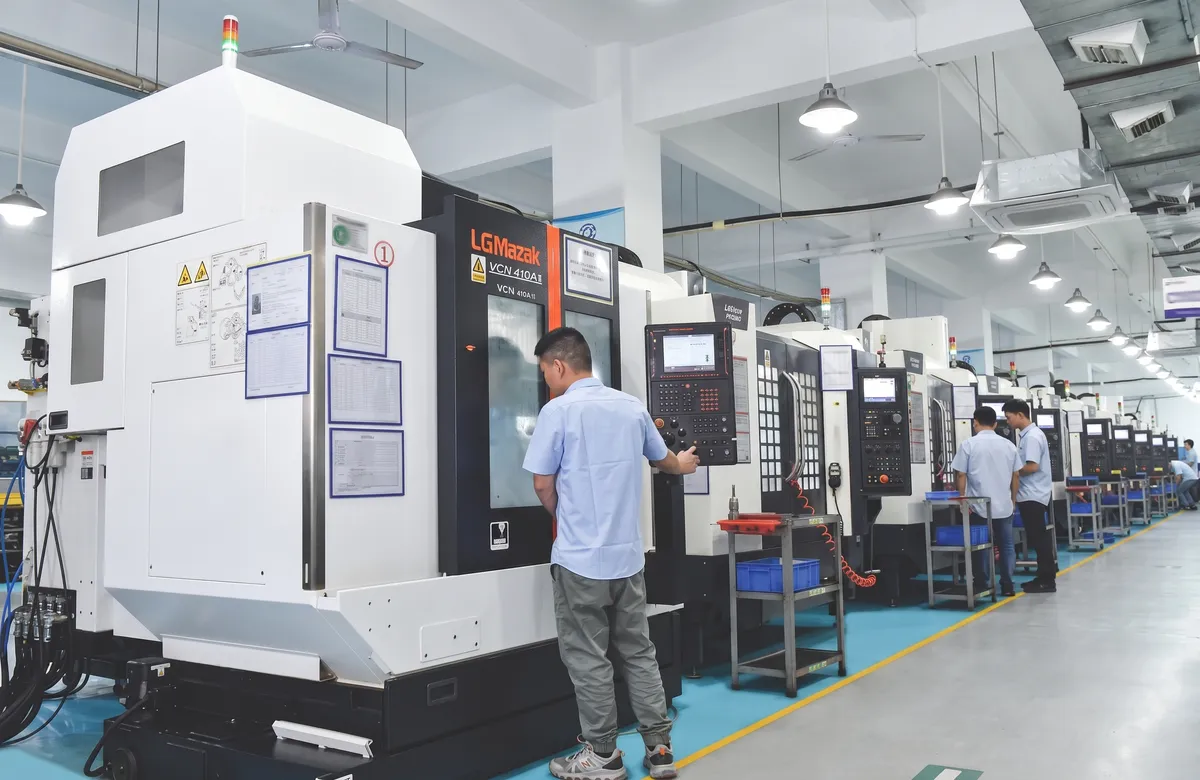
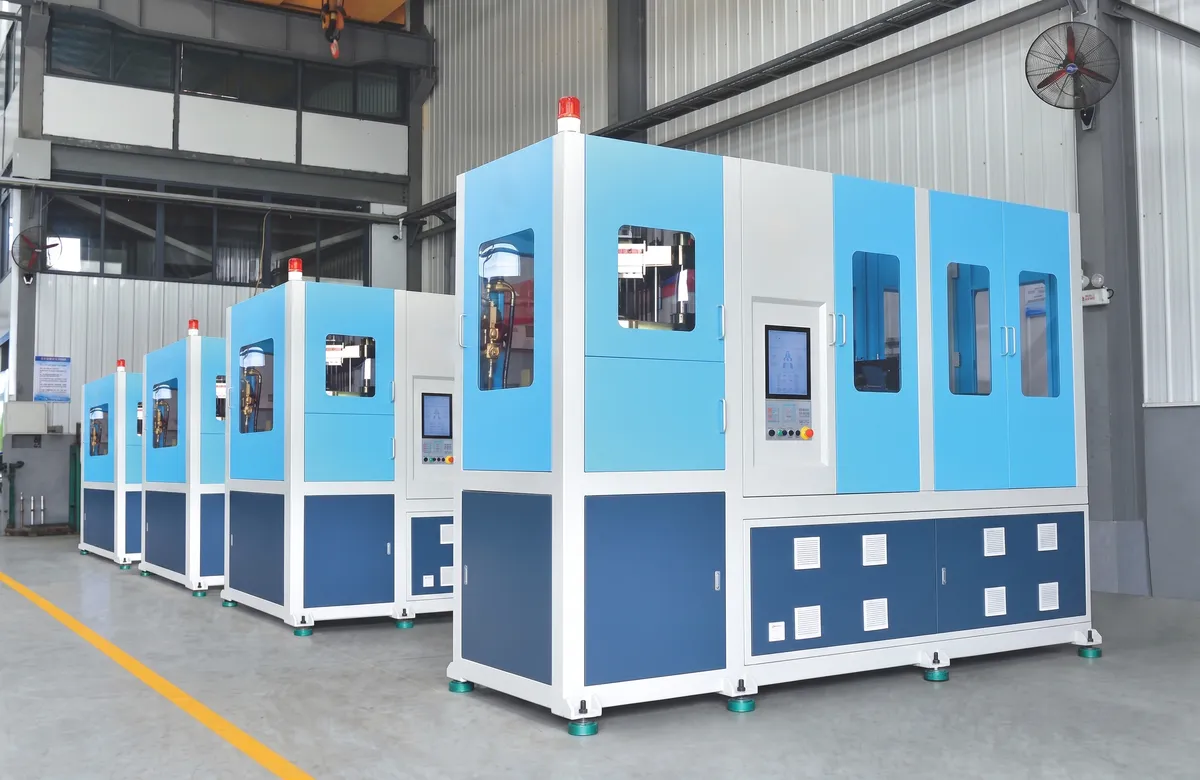
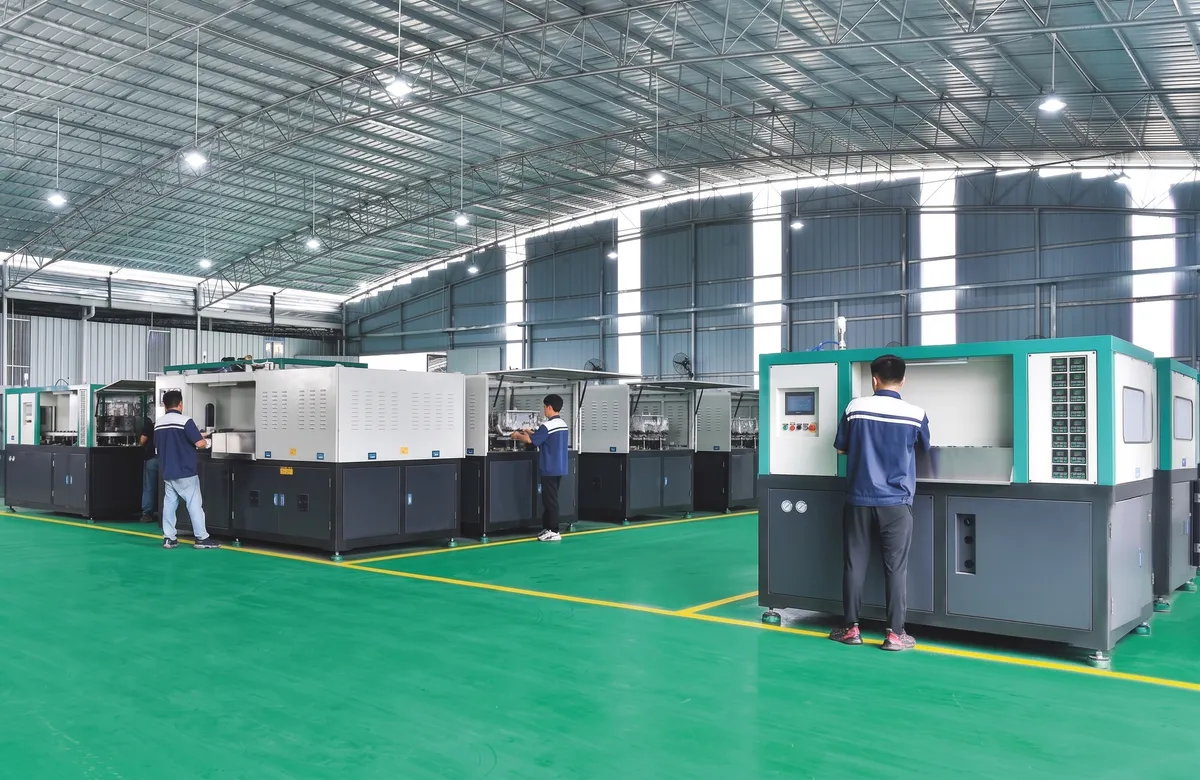
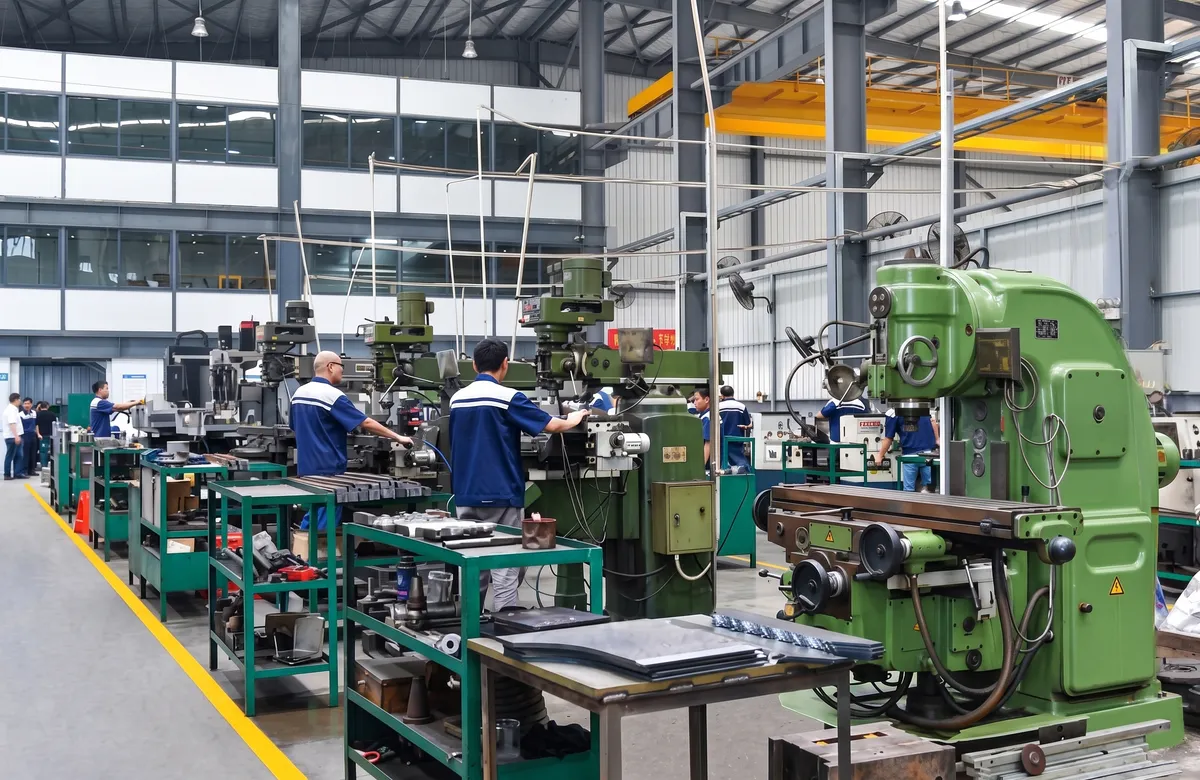
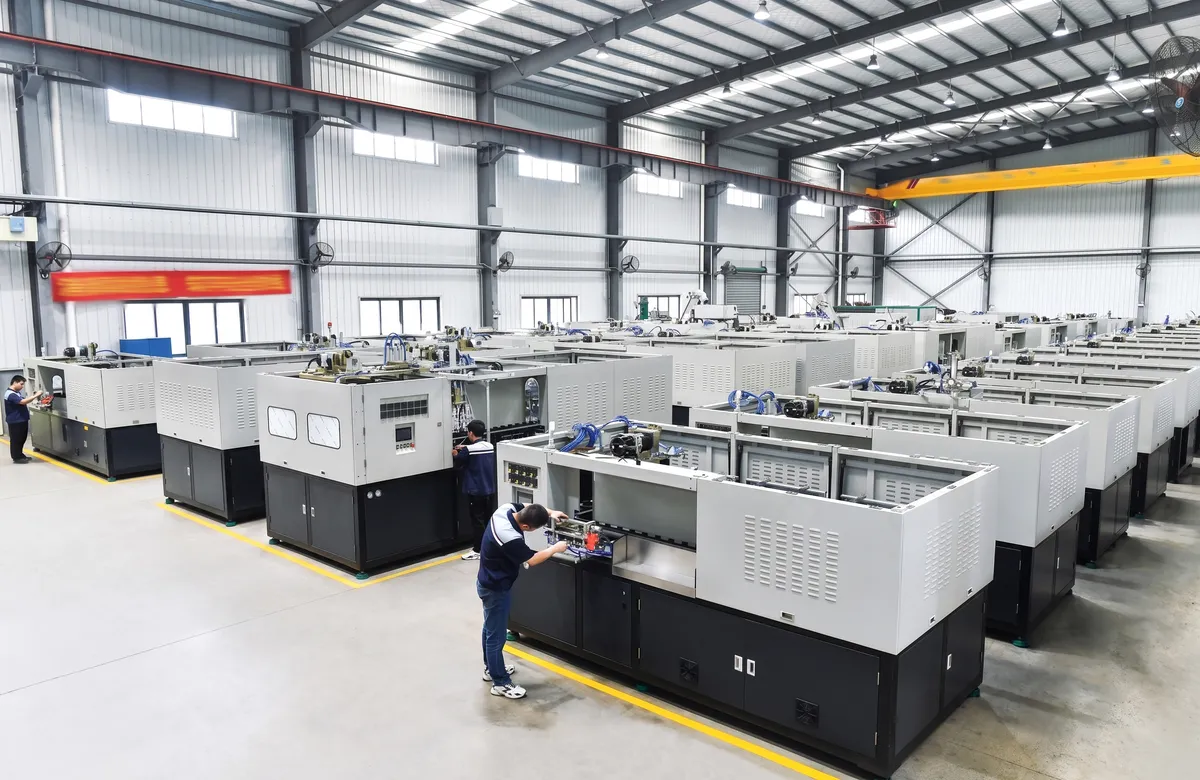
Mexico Ever-Power ISBM Machinery Co., Ltd is primarily engaged in the research and development, production, sales, and international trade of automatic one-step Injection Blow Molding Machines and Injection Stretch Blow Molding Machines. Our product portfolio encompasses injection blow molding machines, extrusion blow molding machines, injection stretch blow molding machines, and a full range of auxiliary equipment, supported by an advantageous geographic location and efficient global logistics connections.
Ever-Power maintains a highly experienced R&D team composed of engineers and technical specialists deeply focused on injection-blow machinery and injection-blow mold technology. With extensive theoretical knowledge and practical field experience accumulated across more than two decades, our team delivers detailed and attentive pre-sale consultation, in-process technical guidance, and post-sale support that keeps your production line running at peak efficiency.
Our machine applications span pharmaceutical packaging, food packaging, healthcare and nutraceutical packaging, cosmetics packaging, and broad-spectrum industrial plastic packaging. We process materials including HDPE, LDPE, PET, PETG, PP, PS, PPSU, PC, Tritan, ABS, PLA, EVA, PCTG, and environmental corn-based materials, producing containers from 1 ml to 1,000 ml. Ever-Power adheres to its core development principles of self-reliance, integrity, pragmatism, innovation and responsibility, building one-stop turnkey project capability to deliver high-end injection-blow products that meet the world's most demanding quality and regulatory requirements. Talk to our technical specialists about the EPA.ES-2C200 and the complete series of fully automatic blow molding machines. We will recommend the right model for your bottle design, volume, and material requirements.
Our Core Advantages
- Proprietary R&D and Manufacturing
All core machine components are designed and manufactured in-house, enabling tight quality control and rapid customisation for unique container geometries and special material requirements across global markets. - International Brand Components
Servo motors, reducers, PLC systems, and electrical components are sourced from internationally recognised manufacturers, ensuring reliability, easy global parts sourcing, and long machine service life. - Complete Turnkey Project Capability
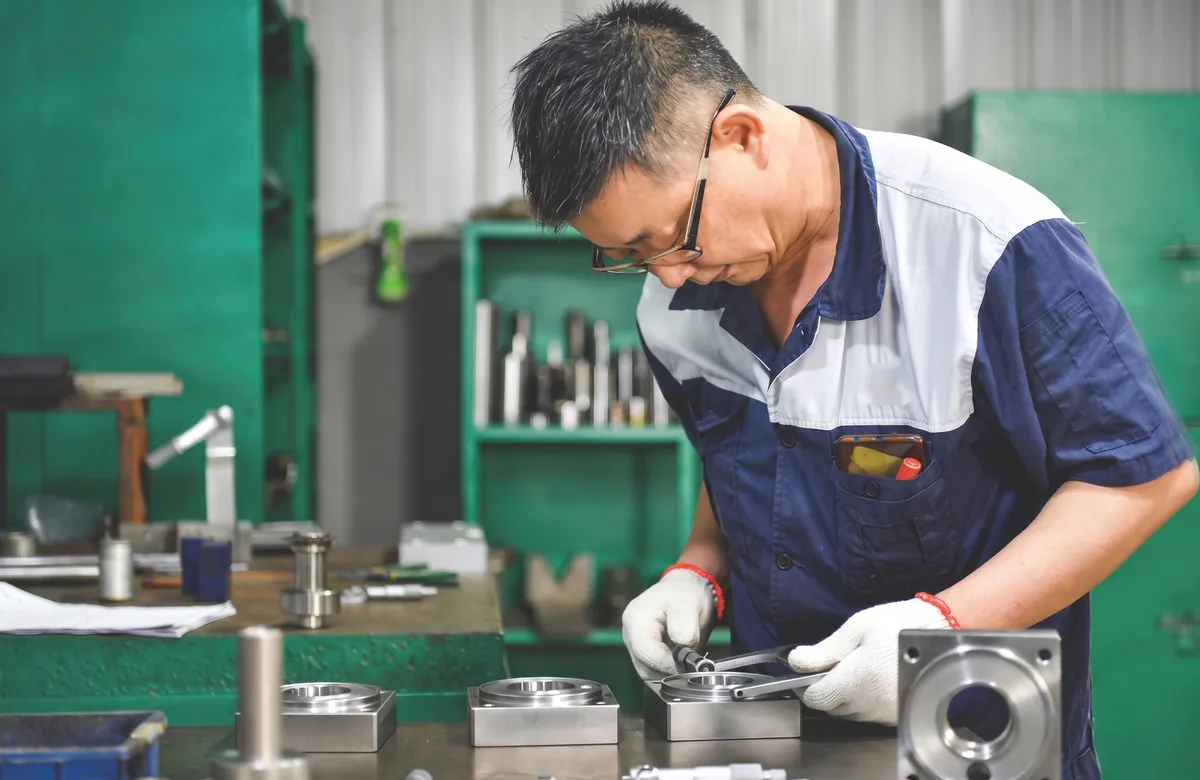
From initial production consultation and mold design through machine installation, commissioning, operator training, and long-term technical support, Ever-Power manages the complete project lifecycle for every client. - Broad Material Compatibility
The EPA.ES-2C200 and its sister models process the full spectrum of thermoplastic materials used in global packaging, from commodity HDPE and PP to premium Tritan and PPSU, giving buyers maximum commercial flexibility. - Global Logistics and Export Experience
With machines installed across Latin America, Asia, Europe, and the Middle East, Ever-Power's export team manages all aspects of international shipment documentation, customs support, and on-time delivery coordination.
 |
 |
 |
 |
 |
 |
Frequently Asked Questions
Q: What is the maximum bottle size the EPA.ES-2C200 can produce?
A: The EPA.ES-2C200 can produce containers with a maximum volume of 5,000 ml, a maximum body diameter of 180 mm, and a maximum container height of 350 mm. For larger container requirements, models like the EPA.ES-2C260 extend capacity to 15,000 ml and 240 mm diameter. Contact our team to discuss the most appropriate model for your specific container dimensions and production volume targets.
Q: Is this machine compatible with PP as well as PET?
A: Yes. The EPA.ES-2C200 is a multi-material plastic blow molding machine compatible with PP, PET, PETG, PC, Tritan, HDPE, LDPE, and PCTG. The oven system and process parameters are fully adjustable to accommodate each material's specific orientation temperature and blow pressure requirements. This makes it one of the most versatile machines for manufacturers producing across infant care, cosmetics, pharmaceutical, and craft packaging applications on a single piece of equipment.
Q: How long does mold changeover take on this machine?
A: With a trained and experienced operator team, mold changeover on the EPA.ES-2C200 typically takes between 90 minutes and 2 hours depending on the complexity of the bottle format change. The machine's quick-release mold mounting system and standardised connection points for cooling water and blow air circuits minimise changeover time. All recipe parameters including oven profiles, blow pressure, and timing are stored in the PLC, allowing immediate production startup after physical mold installation is complete.
Q: What is the difference between an extrusion blow molding machine and an injection stretch blow molding machine?
A: An extrusion blow molding machine extrudes a continuous hollow tube of molten plastic that is clamped in a mold and inflated. It is widely used for HDPE containers and handles with complex shapes. An injection stretch blow molding machine like the EPA.ES-2C200 first injection-molds a precise preform, then stretches and blows it into the final container. The injection stretch approach delivers superior neck finish accuracy, better optical clarity, and more uniform wall distribution, making it preferred for PET and PP specialty containers in cosmetics, infant, and pharmaceutical markets.
Q: What compressed air supply does the EPA.ES-2C200 require?
A: The machine requires a dual-pressure compressed air supply. Low-pressure air at 7 kg/cm2 with a consumption of 600 ltr/min handles pneumatic transfer and clamping functions. High-pressure air at 30 kg/cm2 with a consumption of 6,000 ltr/min powers the blow phase. Customers must ensure their compressor station, including boosters, is sized to meet these specifications at the installed machine location. Ever-Power's auxiliary machinery package includes compatible screw compressors and boosters if required as part of a complete turnkey installation.
Q: Can this machine produce bottles for pharmaceutical applications?
A: Yes. The EPA.ES-2C200 is used by pharmaceutical packaging manufacturers producing syrup bottles, oral liquid containers, and supplement bottles. The fully automatic cycle minimises human contact with the container during production, supporting GMP-adjacent cleanliness standards. Process parameters are logged by the PLC for batch traceability. However, compliance with specific regional infant product standards such as EN 14350 in Europe or FDA regulations in the USA depends on the resin grade used and your facility's quality management system.
Q: What after-sales support does Ever-Power provide?
A: Ever-Power provides comprehensive pre-sale technical consultation, on-site installation and commissioning support, operator training sessions, and long-term after-sales technical assistance. Remote diagnostics via video call resolve the majority of operational questions without site visits. Critical spare parts including blow valves, seals, infrared lamps, and solenoids are maintained in stock for rapid dispatch. Our team of experienced field engineers is available for on-site visits when remote support is insufficient to resolve a technical issue.
Q: What is the typical production output of the EPA.ES-2C200 over a full shift?
A: At its rated theoretical output of 1,600 bottles per hour with 2 cavities, the EPA.ES-2C200 can produce approximately 12,800 bottles over an 8-hour shift under ideal conditions. In real production, net output typically runs at 85-92% of theoretical maximum after accounting for mold changeovers, maintenance pauses, and material loading. Actual per-shift output also depends on bottle complexity and cycle time, which varies by container geometry and material grade. Our team can provide cycle time estimates for your specific bottle format on request.
Q: Can I produce baby bottles that meet international safety standards with this machine?
A: Yes. As a baby bottle blow molding machine, the EPA.ES-2C200 is specifically designed for PP, PC, Tritan, and PPSU baby bottle production. The fully automated cycle prevents manual contact contamination, and the precision oven and blow system ensures consistent wall thickness critical for sterilisation integrity. Compliance with specific regional infant product standards such as EN 14350 in Europe or FDA regulations in the USA depends on the resin grade you use and your facility's quality management system.
Q: What is the lead time for delivery of the EPA.ES-2C200?
A: Standard lead time for the EPA.ES-2C200 is typically 45-60 working days from order confirmation and deposit receipt, subject to current production schedule. Ocean freight to major international ports adds 25-40 days depending on destination. If you require a customised configuration or specific mold tooling fabricated alongside the machine, lead time may be extended. Contact our sales team early in your procurement timeline to ensure machine availability aligns with your project schedule and launch requirements.
Customer Reviews
Carlos Henrique, Cosmetics Packaging, Brazil
"We have been running the EPA.ES-2C200 in our cosmetics packaging facility in Sao Paulo for just over eight months now and it has genuinely transformed our output consistency. We are producing 300 ml special-shaped PET bottles for a major skincare brand and the surface finish quality is exceptional, no gate marks, no parting line overflow. The neck dimensions are spot on every cycle which means our capping line rejection rate dropped by nearly 40% compared to our old machine. The Ever-Power installation team spent four full days here getting everything dialled in before they left, which I really appreciated. Very solid machine."
Lin Wei, Infant Products, China
"We source this machine for our baby bottle production line in Guangdong and it handles PP beautifully. We are running 120 ml and 240 ml feeding bottles on a two-cavity setup and getting very uniform wall thickness throughout. Temperature control is precise and the cooling system keeps everything consistent even during long summer shifts when ambient temperature in the workshop gets high. The only issue we had in the first three months was a solenoid valve that started sticking and the technical team sent us a replacement part within a few days. Good after-sales."
Rajesh Patel, PET Bottle Packaging, India
"I run a medium-sized PET bottle contract manufacturing operation in Mumbai and we added the EPA.ES-2C200 about six months ago specifically for a craft gin brand needing a very unusual bottle shape with a flat face and embossed logo area. Standard machines we looked at could not handle this geometry reliably. This machine absolutely nailed it after a couple of trial runs to dial in the blow timing. Shipping from Mexico took about 35 days by sea which was within the expected window. Documentation was complete and customs clearance went smoothly. Would recommend for specialty shapes."
Klaus Hofmann, Pharmaceutical Packaging, Germany
"As a procurement manager for a pharmaceutical packaging company in Frankfurt, my main concern was compliance documentation and traceability. Ever-Power provided full CE-compatible documentation and the machine parameters log everything to the HMI which gives us a proper process record for each production batch. We are running 50 ml and 100 ml HDPE pharmaceutical bottles and the neck thread accuracy is really impressive, our leak test pass rate is above 99.6%. The machine has been in production for nearly a year now with only scheduled preventive maintenance stops. Very professional supplier."
Budi Santoso, Daily Chemicals Packaging, Indonesia
"We are a daily chemicals manufacturer in Jakarta and were looking for a machine that could handle both standard and special-shaped containers without needing two separate pieces of equipment. The EPA.ES-2C200 does exactly that. We run shampoo bottles in the morning shift and switch to our decorative gift bottle mold for the afternoon run. Changeover takes maybe 90 minutes once the team is trained. The HMI stores all recipe parameters so you just recall the saved settings and you are back running within a few cycles. Energy consumption is lower than our previous machine which was a nice surprise."
Tanaka Hiroshi, Consumer Packaging, Japan
"Our packaging factory in Osaka has strict quality standards and I was initially sceptical about sourcing an automatic blow molding machine from Mexico. But after visiting the Ever-Power facility and seeing the production floor and quality certificates, I felt confident. The EPA.ES-2C200 we purchased for Tritan water bottle production has exceeded our dimensional tolerance requirements consistently across all three months of operation. The optical clarity of the output is genuinely impressive. I want to highlight the responsiveness of the technical support team by video call when we had questions about oven profile optimisation during the first month. They resolved everything remotely without needing a site visit."
Miguel Angel Torres, Plastics Manufacturing, Mexico
"I manage a plastics factory in Mexico City and we have been in the bottle blowing business for twelve years. We replaced an older Italian machine with the EPA.ES-2C200 about ten months ago. The output quality is comparable and the price difference was significant. We produce 500 ml and 1,000 ml PET bottles for a local mineral water brand and a craft hot sauce company with a distinctive angular bottle shape. Both run on the same machine with different molds. Mold change takes our team about two hours now. The blowing pressure stability is excellent and we have had zero rejects from wall blowouts since installation."
Kim Ji-young, Cosmetics Packaging, South Korea
"We are a plastic bottle supplier in Seoul serving both domestic cosmetics brands and export orders. The EPA.ES-2C200 was our first Ever-Power machine and we were pleasantly surprised by the build quality. The servo motor system is responsive and the clamping mechanism is solid. We run PETG for a premium skincare client and the optical clarity of the output is genuinely impressive, customers often ask if our bottles are glass. The responsiveness of the technical support team by video call when we had questions about oven profile optimisation during the first month was excellent. They resolved everything remotely without a site visit."
James Morrison, Gift and Fragrance Packaging, USA
"We run a packaging facility near Houston producing specialty containers for gift and fragrance brands. The EPA.ES-2C200 was recommended by another manufacturer in our network and I am glad we followed the advice. The machine handles 2,000 ml decorative PET bottles with an unusual faceted surface design very reliably. Key for us was the precision of the blow timing, because with a faceted bottle any pressure inconsistency shows up as a flat spot on the surface immediately. We have not had a single surface defect batch in five months of production. Logistics was well organised and the machine arrived earlier than the quoted lead time. Great product."
Additional information
| Edited by | Yjx |
|---|
Related products
-
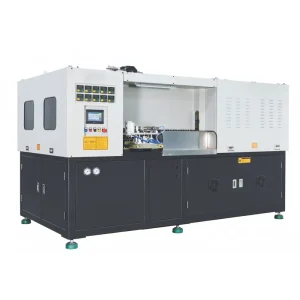
EPA.ES-2C130 Fully Automatic Blow Molding Machine for Daily Chemicals & Cosmetic Bottles
-
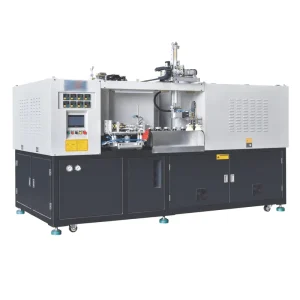
EPA.ES-1C130 Fully Automatic Blow Molding Machine for Food Wide-Mouth Jars and Cans
-
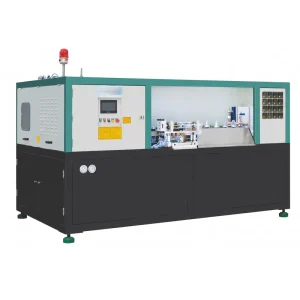
EPA.FS-1CG130 Fully Automatic Blow Molding Machine for Baby Bottles and PP Bottles
-
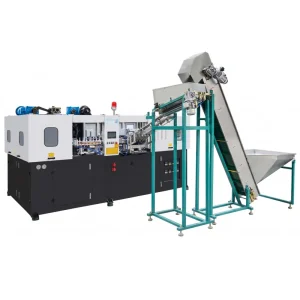
EPA.ES-2C100 Fully Automatic Blow Molding Machine for Water and Beverage Bottles