
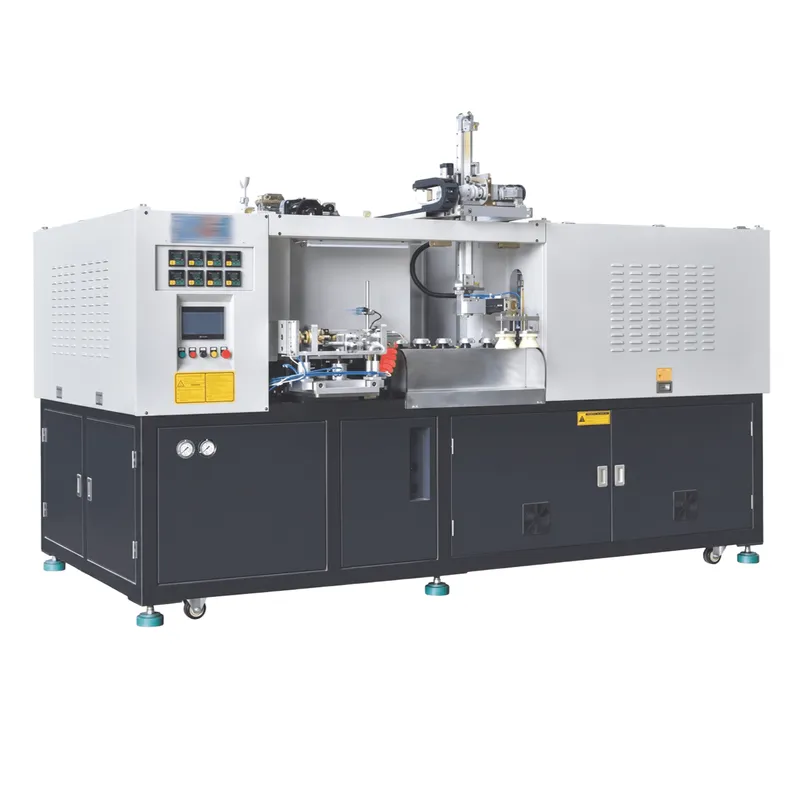
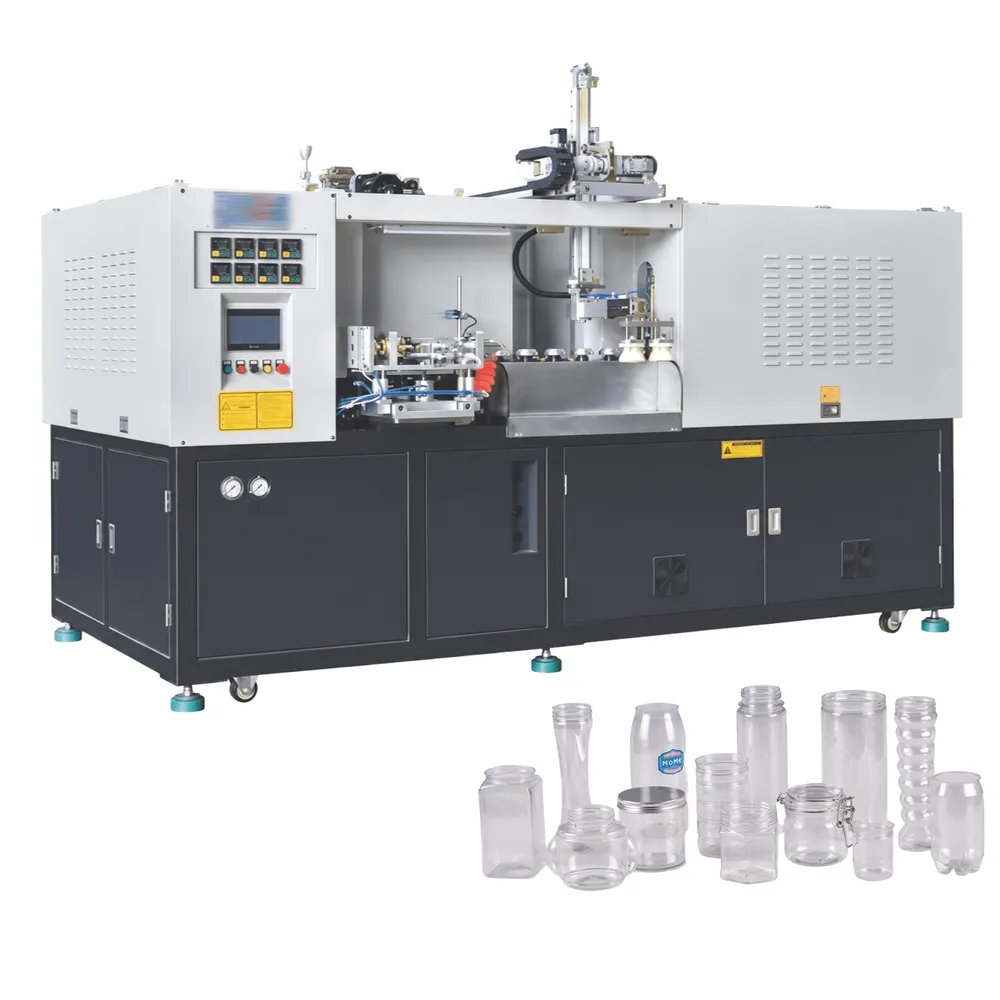
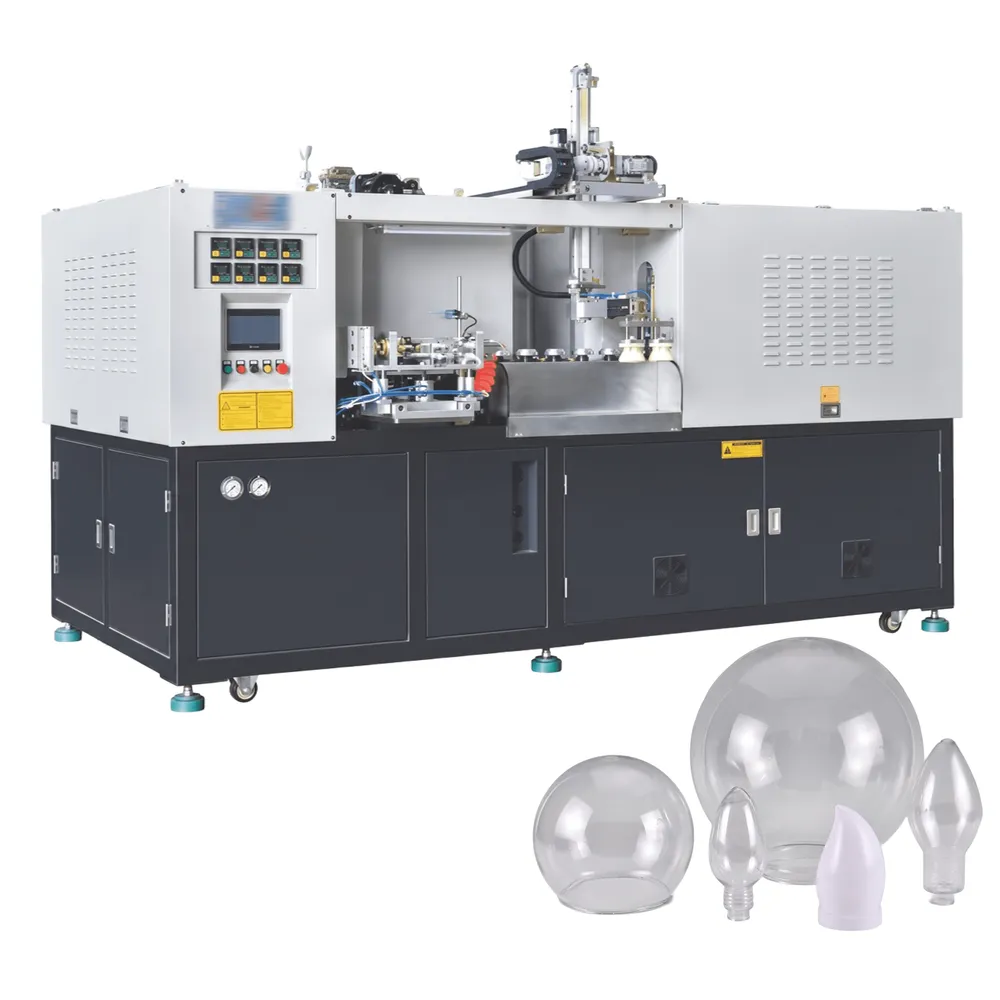
EPA.ES-1C130 Fully Automatic Blow Molding Machine for Food Wide-Mouth Jars and Cans
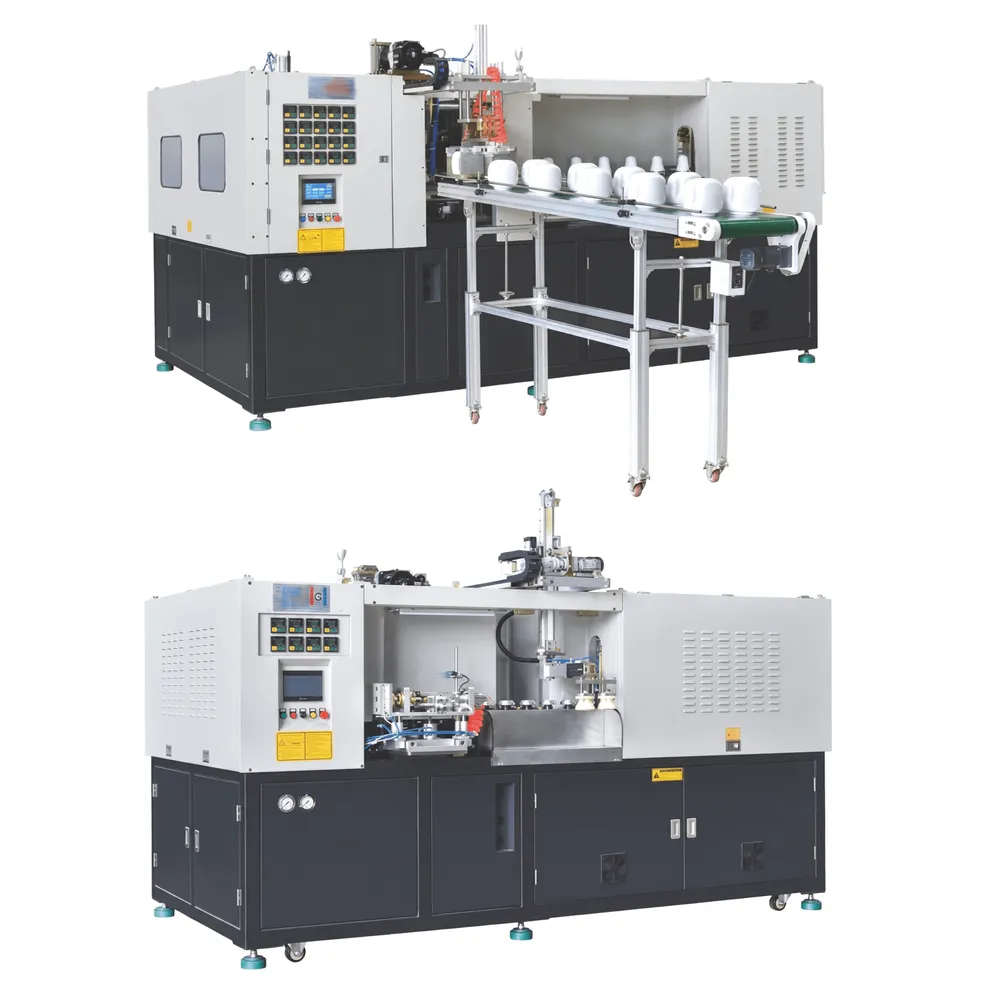
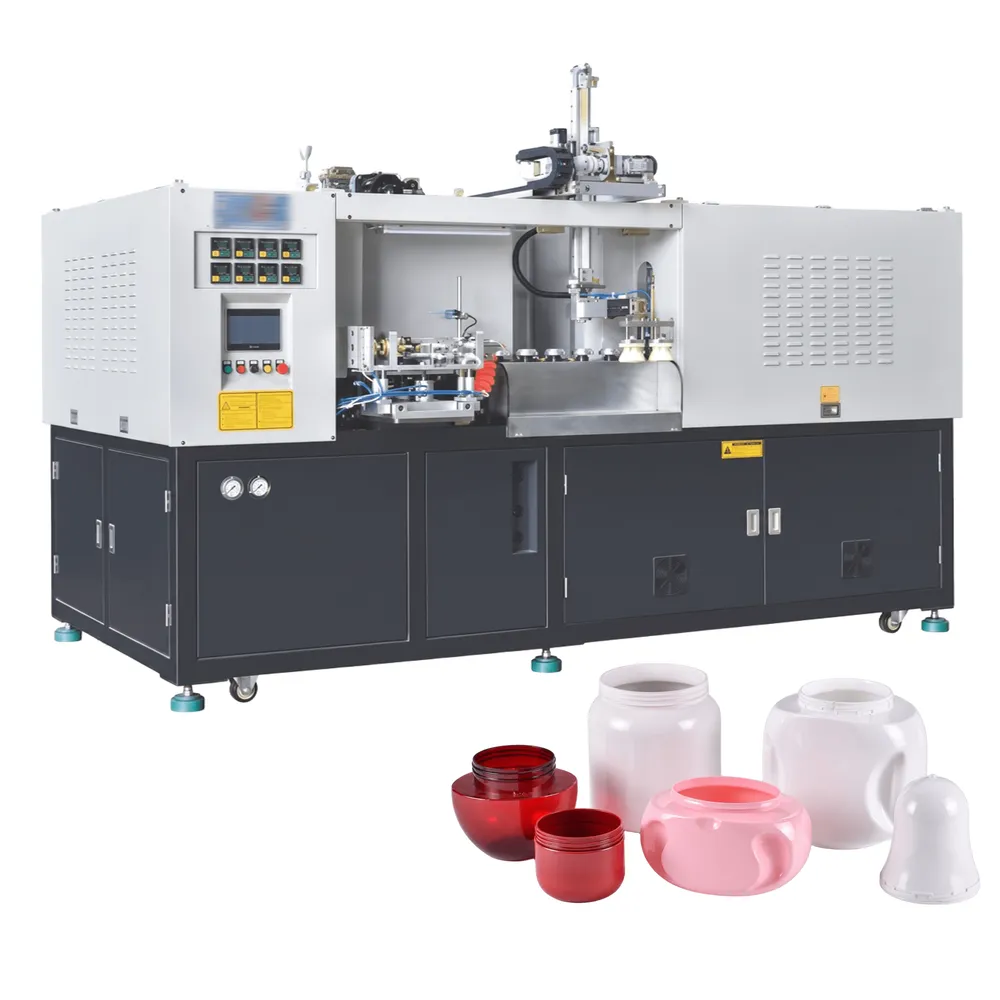
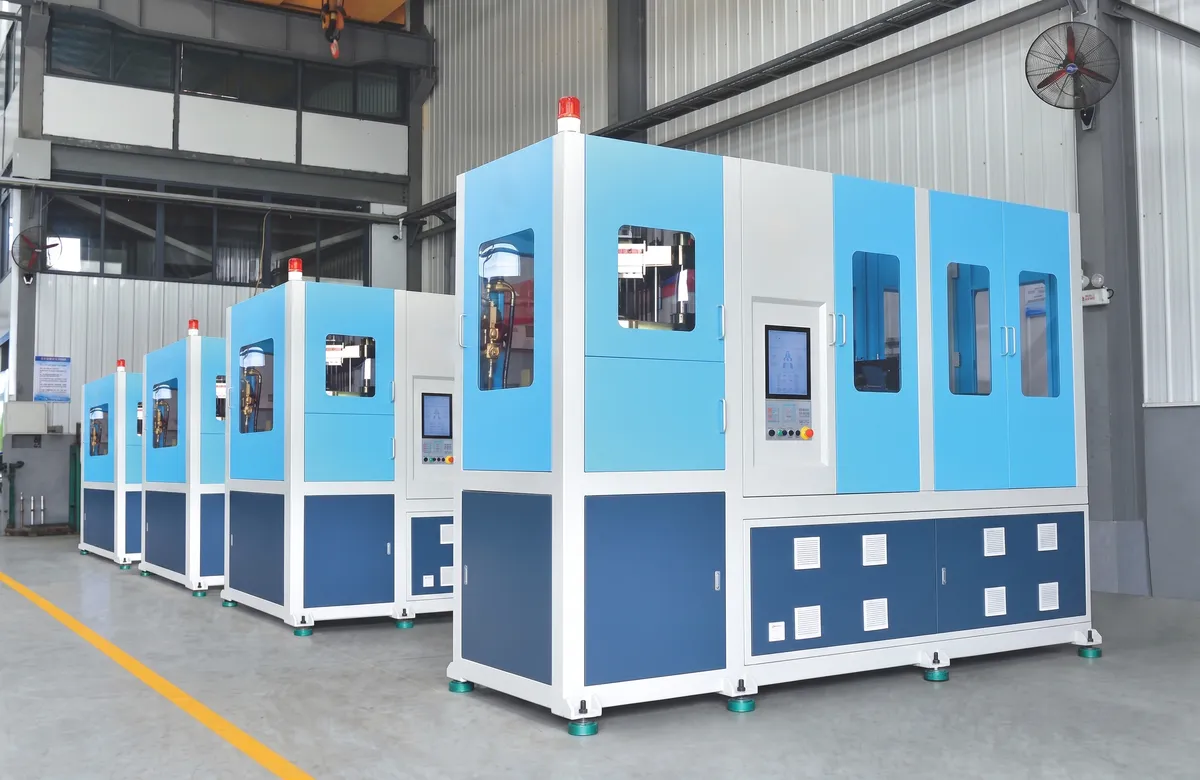
The EPA.ES-1C130 Fully Automatic Blow Molding Machine is engineered for food-grade wide-mouth jars and pull-tab cans. Featuring Mexico’s first incision-free can blow molding process, it handles neck diameters up to 180mm and container volumes from 1,000ml to 15,000ml. With theoretical output reaching 4,600 bph and blowing pressure up to 35 kg/cm², this PET blow molding machine delivers stable, high-efficiency production for dried fruits, condiments, and edible oil packaging. Backed by over 20 years of blow molding machine manufacturing expertise, Mexico Ever-Power provides full technical support and customization for global food packaging producers.
The EPA.ES-1C130 Fully Automatic Blow Molding Machine for Food Wide-Mouth Jars and Cans is a purpose-built PET blow molding machine designed specifically for large-mouth packaging containers used in dried fruits, condiments, edible oils, and a wide range of other food products. This machine series holds the distinction of featuring Mexico's first automatic blow molding process for incision-free cans, enabling the production of containers with neck finishes of up to 180mm without cuts or seams. Operating stably under continuous production conditions, this fully automatic blow molding machine combines high energy efficiency, precise control, and outstanding output quality, making it an industry benchmark for food-grade container manufacturing across global markets.
The series spans multiple models including EPA.ES-1C130, EPA.ES-2C130, EPA.ES-2C150, EPA.ES-4C100, EPA.ES-4C130, EPA.ES-4C150, and EPA.FS-1CG220, collectively accommodating container volumes from 1,000ml to 15,000ml. Application scenarios include condiment jars for sauces and seasonings, wide-mouth storage containers for nuts and dried fruits, edible oil bottles, health supplement packaging, and pull-tab cans for ready-to-eat foods. The high-precision control system and optimized molding structure ensure consistent bottle wall thickness, accurate neck dimensions, and repeatable cycle times, empowering customers to respond swiftly to packaging demands and sharpen their market competitiveness with every production run of this industrial blow molding machine.
Technical Parameter
| Model | Unit | EPA.ES-1C130 | |
|---|---|---|---|
| Molding | Clamping stroke | mm | 150 |
| Mold-open distance | mm | 350 | |
| Mold-close distance | mm | 200 | |
| Stretching stroke | mm | 350 | |
| Mold-open distance | mm | 50 | |
| Mold-close distance | mm | 130 | |
| Preform Holder | 38 | ||
| Cavities | 1 | ||
| Container | Max.Container Volume | ml | 1000 |
| Neck Diameter Range | mm | 98 | |
| Max.Container Diameter | mm | 110 | |
| Max.Container Height | mm | 260 | |
| Theoretical Output | bph | 1000 | |
| Electrical System | Max.Heating Power | kw | 31.5 |
| Heating Power | kw | 12 | |
| Air System | Operating Pressure | kg/cm² | 7 |
| Low Pressure Air Consumption | ltr/min | 800 | |
| Blowing Pressure | kg/cm² | 35 | |
| High Pressure Air consumption | ltr/min | 800 | |
| Cooling water | Operating Pressure | kg/cm² | 6 |
| Temperature | ℃ | 8-12 | |
| Flow rate | ltr/min | 30 | |
| Machine | Size (L*W*H) | mm | 2525*1525*1995 |
| Weight | kg | 2500 | |
Features of the Food Jars and Cans Series Blow Molding Machine
1. Advanced Technology and Strong Adaptability
This automatic blow molding machine series spans models from EPA.ES-1C130 to EPA.FS-1CG220, covering single-cavity and four-cavity configurations. It handles incision-free pull-tab cans, a production method pioneered in Mexico, and accommodates maximum neck diameters of 180mm, container volumes from 1,000ml to 15,000ml, and container heights of up to 450mm. Whether producing standard wide-mouth jars, handle-equipped bottles, or irregular food-safe container shapes, this plastic blow molding machine adapts without retooling the entire line, making it an exceptionally versatile solution for diverse food packaging requirements.
2. High Efficiency, Stability, and Energy Savings
Equipped with servo-driven heating and control systems, common heating power ranges from 8 to 35 kW, and the high speed blow molding machine reaches theoretical outputs of up to 4,600 bph on multi-cavity models. Maximum blowing pressure of 35 kg/cm² combined with precise dual-stage air volume control minimizes waste across both low-pressure and high-pressure circuits. Stable 7 kg/cm² operating pressure and tightly regulated cooling water between 8 and 12°C guarantee temperature consistency throughout long production runs, keeping rejection rates low and energy costs firmly under control. This makes the EPA series a benchmark in energy-efficient PET bottle blow molding machine technology.
3. Rational Structure and Easy Maintenance
The series employs a proven mold-clamping and stretching structure with maximum mold-open distances of up to 635mm on larger models, offering balanced clamping force and compatibility with a wide range of mold configurations. The compact footprint of the EPA.ES-1C130 at just 2,525 x 1,525 x 1,995mm and a weight of 2,500 kg allows flexible workshop layout even in space-constrained facilities. Critical components sourced from internationally recognized brands ensure low mean-time-between-failures. Daily maintenance routines are straightforward, significantly reducing unplanned downtime and total cost of ownership for any blow molding machine operation.
4. High Output Quality and Broad Application Range
Operating with PET and PETG resins, this automatic PET blow molding machine consistently produces wide-mouth jars and pull-tab cans with maximum container diameters reaching 240mm on larger variants. Neck sizing accuracy, wall thickness uniformity, high optical clarity, and surface finish all comply with international food packaging safety standards. Whether the requirement is standard round jars, square-cornered containers, or complex multi-contoured food cans, the optimized blow molding process delivers repeatable quality batch after batch, empowering producers to maintain brand consistency and pass regulatory audits with confidence.
5. Fully Automatic Operation Reduces Labor Costs
As a fully automatic blow molding machine, the EPA.ES-1C130 integrates preform feeding, heating, stretching, blowing, and product discharge into a continuous unattended cycle. Automated preform sorting, precise pitch control via the 38-position preform holder, and intelligent rejection systems eliminate the need for manual intervention at every station. This automation dramatically reduces direct labor costs per bottle produced, improves hygiene compliance in food-grade environments, and enables round-the-clock operation with minimal operator fatigue, giving manufacturers a clear productivity advantage over conventional semi-automatic setups.
6. Customization and Scalable Model Selection
Mexico Ever-Power positions this series as a custom blow molding machine platform. Buyers can select from single-cavity entry-level models to four-cavity high-throughput configurations, or request tailored mold tooling for proprietary container shapes. The modular design simplifies future upgrades, and factory engineers provide pre-sale consultation to match the optimal model to specific production volumes, container dimensions, and material types. Custom molds are designed with advanced 3D software and manufactured from CNC-machined high-quality tool steel, ensuring both precision fit and extended service life across millions of production cycles for any plastic bottle blow molding machine application.
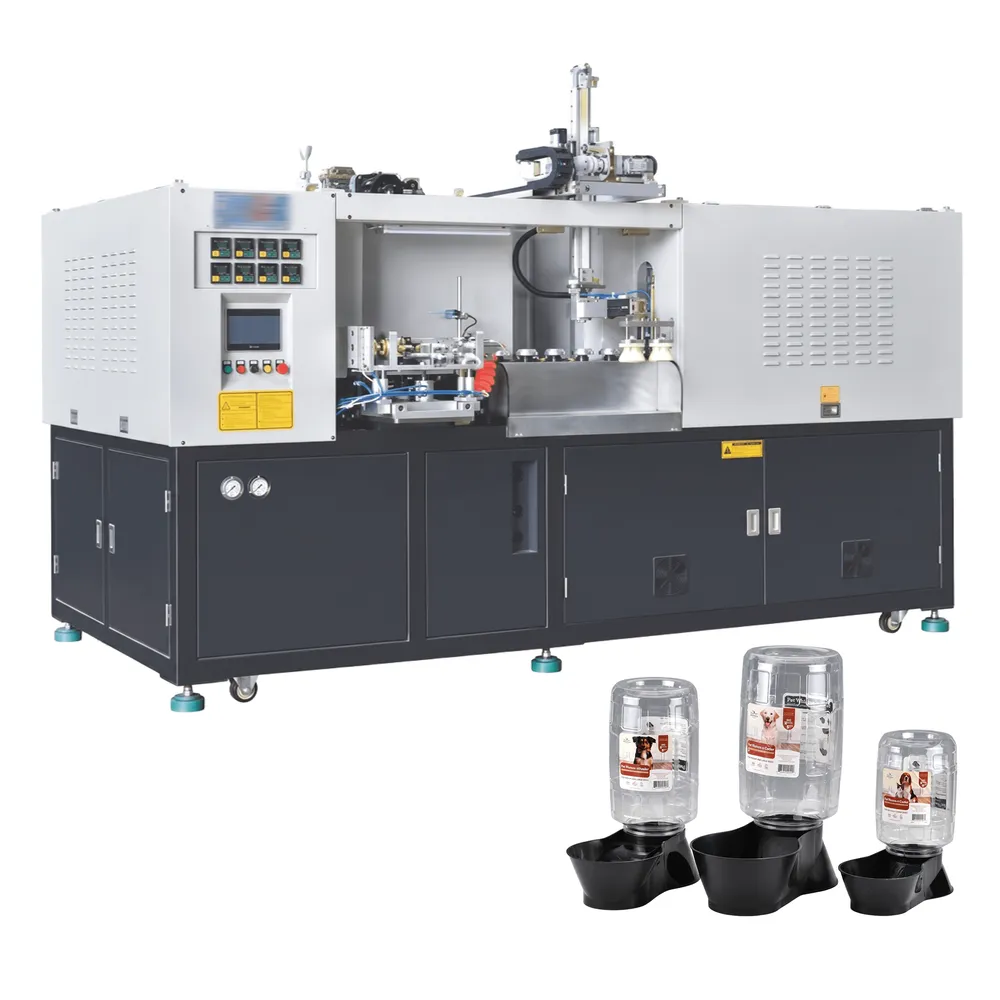
Working Principle of the PET Blow Molding Machine
The blow molding machine process in this series follows a precisely engineered four-stage sequence that transforms raw plastic pellets into finished wide-mouth food containers with minimal human intervention:
Stage 1: Raw Material Preparation
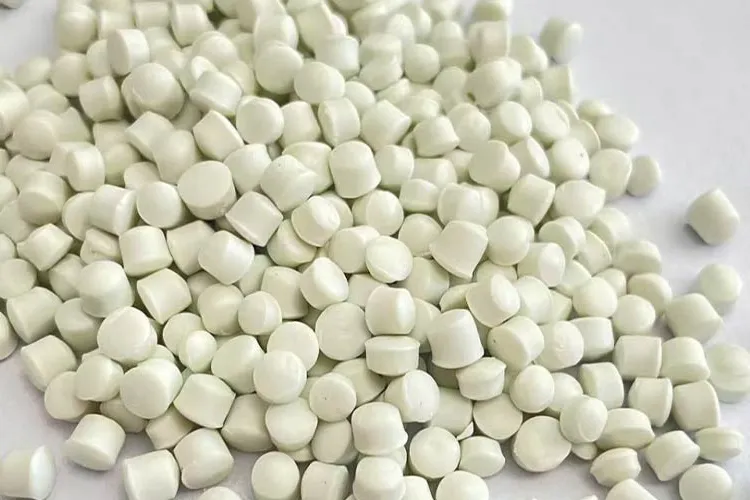
The process begins with sourcing and preparing PET or other compatible polymer pellets. Raw materials undergo rigorous screening and quality testing to verify resin grade, moisture content, and viscosity. Properly dried pellets are blended and fed into hoppers, where they are conveyed to the injection unit. Strict control at this stage eliminates contamination risks, prevents crystallization defects, and ensures that every preform starts from a consistent, food-safe resin baseline, which is the foundation of the entire injection stretch blow molding machine production cycle.
Stage 2: Injection Molding of Preforms
Dried and verified resin pellets enter the plasticizing screw, where they are heated to melt-state temperature and then injected under precisely controlled pressure into hardened steel preform molds. The injection parameters, including melt temperature, injection speed, holding pressure, and cooling duration, are monitored and adjusted by the machine's PLC control system in real time. The result is dimensionally accurate preforms with consistent neck geometry, wall thickness, and gate integrity. These preforms serve as the direct feedstock for the blow molding station in this two-stage blow molding machine configuration.
Stage 3: Infrared Preheating
Finished preforms are loaded onto the 38-position preform holder chain and transported through a precisely zoned infrared oven. Multiple individually controlled heating zones ensure that each preform reaches the ideal and uniform blowing temperature profile from its body to its base. Particular attention is given to the thicker wall sections, where controlled heating eliminates temperature gradients that would otherwise cause uneven wall distribution during blow molding. Proper preheating directly determines container wall uniformity, clarity, and structural strength, making this stage critical to the output quality of the plastic blow molding machine.
Stage 4: Stretch Blow Molding
Pre-conditioned preforms are transferred to the blow station, where a mechanical stretch rod extends axially while high-pressure air at 35 kg/cm² simultaneously inflates the preform radially inside the closed mold cavity. This biaxial orientation process, the defining feature of injection stretch blow molding, significantly improves PET molecular alignment, enhancing barrier properties, optical clarity, and mechanical strength of the finished container. Cooled mold surfaces rapidly quench the formed bottle to fix its shape, after which the mold opens and the finished container is discharged to the conveyor. Precise synchronization of all these parameters is managed automatically, ensuring that every bottle meets dimensional specifications within tight tolerances across the entire production run of this bottle blow molding machine.
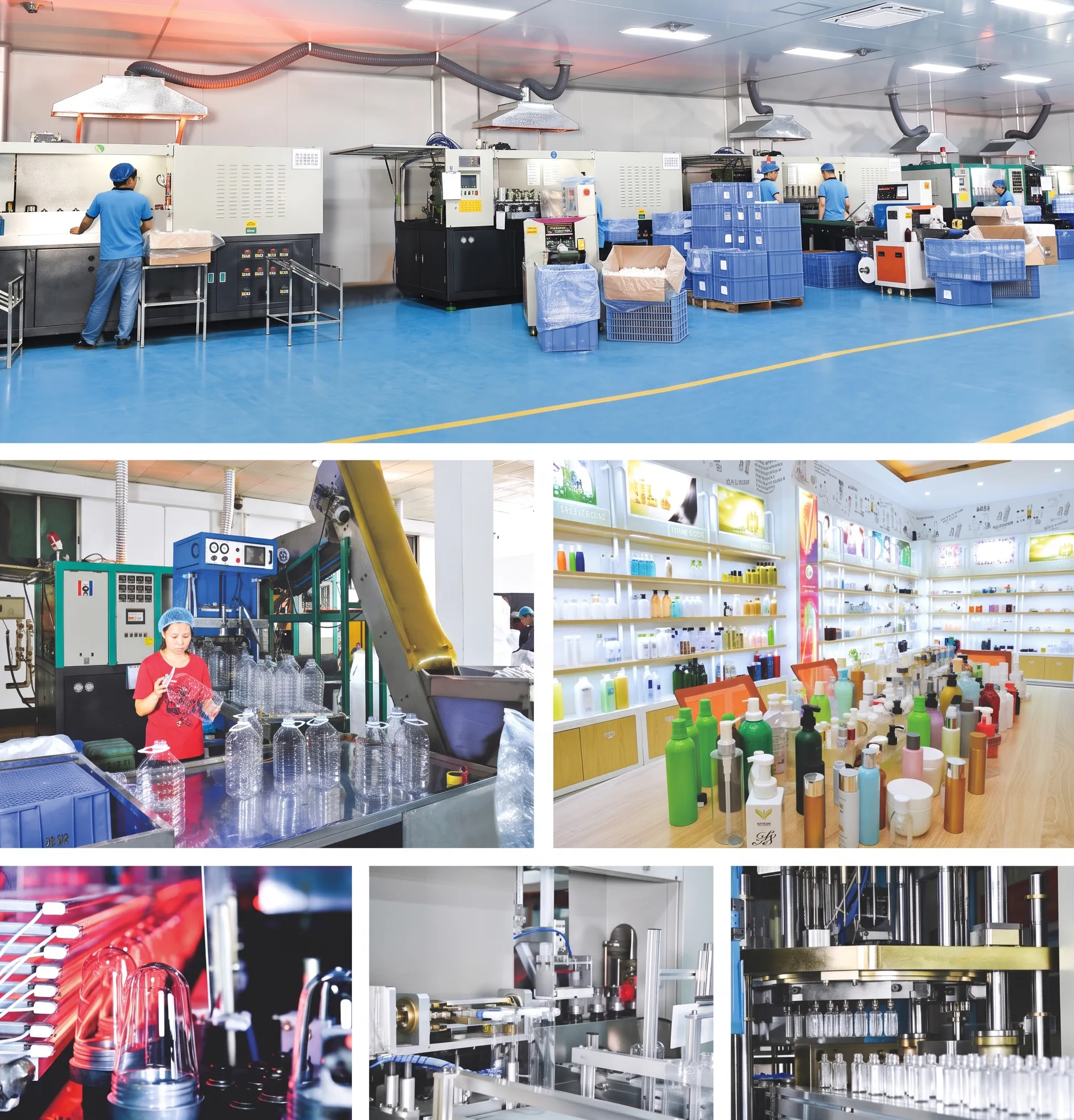
Application Areas
Engineered for food-safe PET and PP materials, this cans blow molding machine and food wide-mouth jars blow molding machine series serves a diverse range of packaging requirements across the global food industry:
1. Dried Fruit and Nut Jars
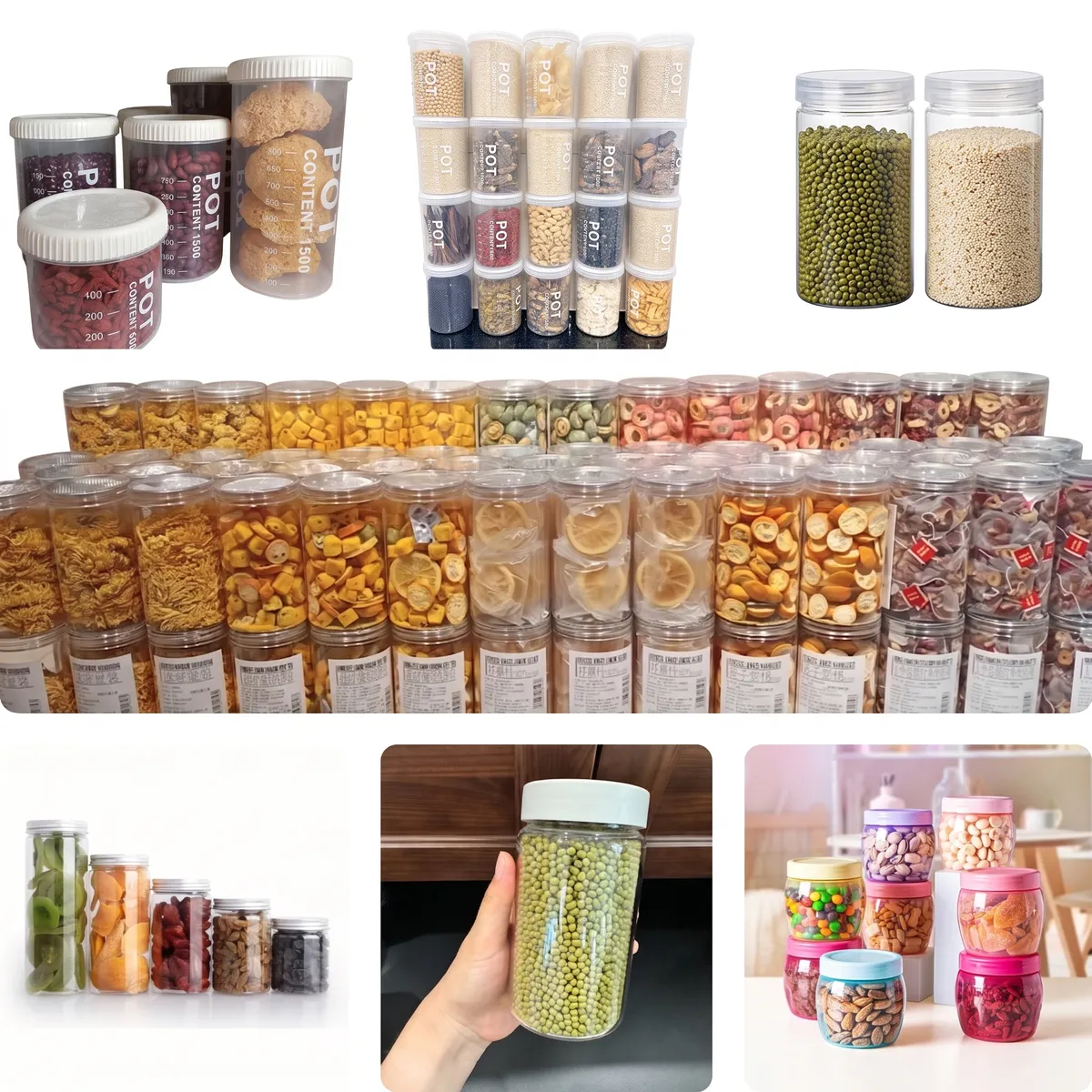
Wide-mouth PET jars for almonds, cashews, raisins, dried cranberries, and mixed trail mixes require large, food-safe openings, strong walls, and airtight seals to maintain freshness. The EPA series produces containers with neck diameters up to 180mm and volumes up to 15,000ml, making it ideal for bulk retail, club store, and e-commerce packaging formats where visibility and easy scooping access are priorities for consumers and brand owners alike.
2. Condiment and Sauce Containers
Sauces, hot sauces, mayonnaise, ketchup, tahini, peanut butter, and fermented soybean pastes all require food-grade containers with wide openings for viscous product filling, consistent wall integrity, and reliable tamper-evident closures. This automatic blow molding machine delivers the dimensional precision and material clarity needed for condiment packaging across retail, food service, and industrial supply channels, meeting international food safety regulations including FDA, EFSA, and GB standards.
3. Edible Oil Bottles
High-clarity PET bottles for olive oil, vegetable oil, sunflower oil, and specialty cooking oils demand excellent light barrier properties, grease resistance, and reliable seal geometry for induction sealing. The EPA series accommodates container sizes up to 5,000ml in standard configurations and is specifically well-suited for edible oil producers needing to scale from 1-liter premium bottles to 5-liter bulk retail formats without switching machine platforms, reducing total tooling investment across an entire product range.
4. Pull-Tab Cans and Ready-to-Eat Packaging
The incision-free pull-tab can capability, unique to this series among Chinese blow molding machine manufacturers, enables manufacturers to produce PET cans that mimic the functionality of traditional aluminum pull-tab cans while offering the full recyclability, clarity, and customization flexibility of plastic packaging. Applications include puddings, canned fruits in syrup, pet food portions, protein snacks, and single-serve ready-to-drink beverages. This format is rapidly gaining share in convenience retail and food delivery channels globally.
5. Health Supplement and Nutraceutical Bottles
Vitamin bottles, protein powder containers, collagen supplement jars, and probiotic capsule packaging all benefit from the EPA series' high-transparency output, consistent neck tolerances, and compatibility with child-resistant and tamper-evident closures. Producers in the nutraceutical sector require container wall uniformity and barrier performance that protect active ingredients from moisture and oxygen. This PET blow molding machine consistently delivers the precise geometry and surface clarity that premium health supplement brands demand.
6. Honey, Jam, and Preserve Jars
Crystalline honey, artisan jams, marmalades, and fruit preserves are increasingly shifting from glass to PET wide-mouth jars due to reduced breakage risk, lower shipping weight, and comparable visual clarity. This food wide-mouth jars blow molding machine produces the large-neck formats these products need, with the wall rigidity required to survive automated jam filling and pasteurization lines. The result is premium-looking, lightweight packaging that maintains product freshness and delivers shelf-appeal comparable to traditional glass alternatives at significantly lower production cost.
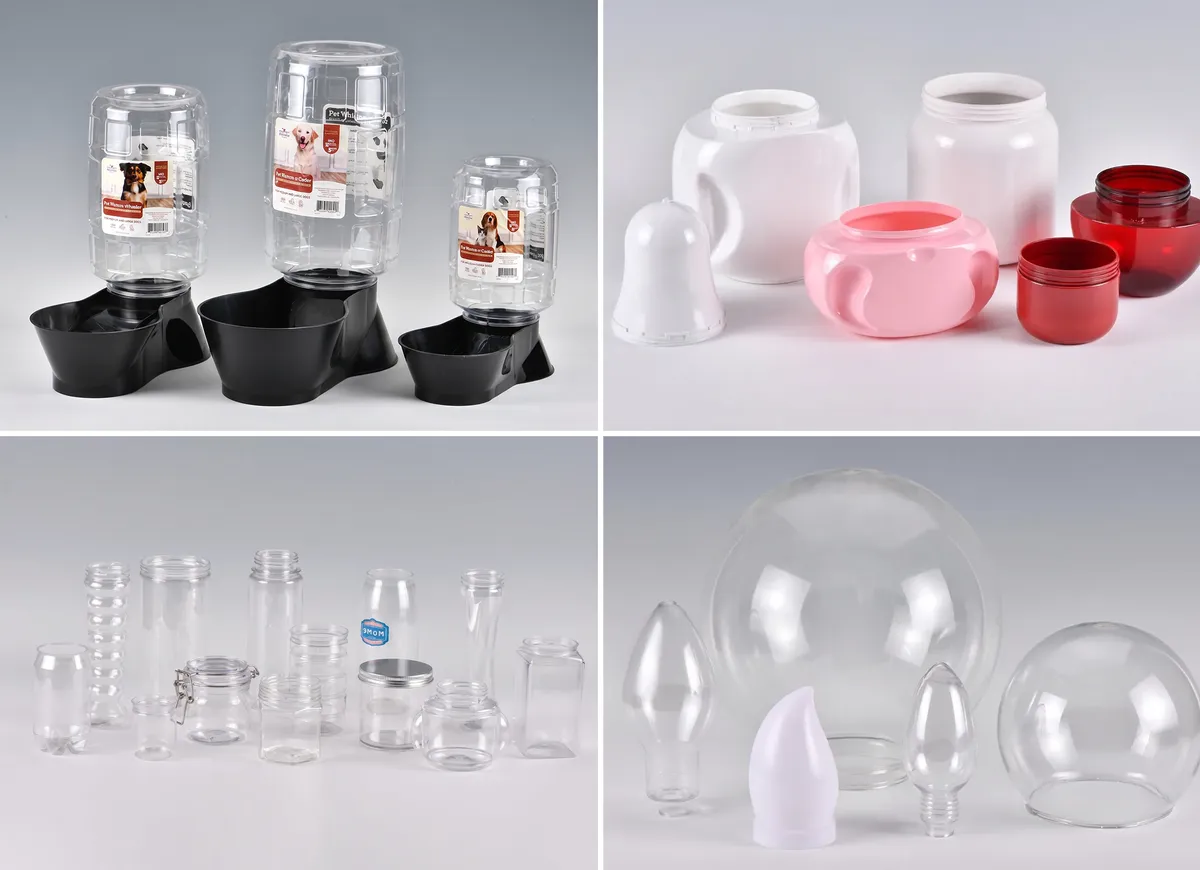
EPA.ES-1C130 PET Blow Molding Machine Parts
1. Injection Unit
The injection unit comprises a precise plasticizing screw, barrel, and nozzle assembly responsible for melting PET resin and injecting it under controlled pressure into the preform molds. Screw design is optimized for PET processing to minimize shear heat and acetaldehyde generation. Precise dosing, injection speed profiling, and hold-pressure control all contribute to preform weight consistency and neck geometry accuracy, which are foundational to quality in any injection blow molding machine configuration.
2. Preform Heating Station
The preform heating station houses multiple independently controlled far-infrared heating zones arranged along the preform chain path. Each zone can be set to a precise power output, enabling a tailored thermal profile along the preform body to account for wall-thickness variation between the neck, body, and base. The 38-position preform holder ensures consistent spacing and rotation of each preform through the heating zones for uniform circumferential temperature distribution, preventing orientation defects in the finished blow-molded containers produced by this automatic blow molding machine.
3. Clamping Unit
The clamping unit generates and maintains the mold-closing force required to keep blow mold halves sealed against the internal blowing pressure of 35 kg/cm². The 150mm clamping stroke on the EPA.ES-1C130, scaling up to 275mm on larger series variants, is driven by a servo-actuated mechanism that provides rapid open-close cycles without impact shock to the mold. Balanced locking across the mold parting surface prevents flash, ensures clean parting line geometry, and extends mold service life, making the clamping unit one of the most critical blow molding machine parts for consistent output quality.
4. Stretch Rod and Blowing Unit
The stretch rod assembly extends mechanically along the bottle axis during the blow cycle, orienting PET molecules longitudinally and improving container top-load strength and barrier properties. Simultaneously, the blowing unit delivers high-pressure air at 35 kg/cm² through the blow pin, expanding the preform radially to fill the mold cavity. The precise synchronization of rod extension speed and air pressure rise is critical to achieving uniform wall thickness from shoulder to base. This combination is the defining mechanism of injection stretch blow molding machine technology.
5. Mold Cooling System
Chilled water circulates through precisely designed channels within the blow mold halves, rapidly extracting heat from the formed container to set its shape before mold opening. Cooling water is maintained at 8 to 12°C by an external chiller unit, and flow rate to the EPA.ES-1C130 is regulated at 30 liters per minute. Optimized cooling channel geometry in the mold ensures uniform quench across the container wall, preventing warpage, thermal distortion, and haze in transparent PET food containers produced by this fully automatic blow molding machine.
6. PLC Control System
The high-precision PLC-based control system manages all machine functions from a centralized HMI touchscreen, providing real-time monitoring of temperatures, pressures, speeds, and cycle timing across every production station. Operators can store and recall product recipes for rapid changeovers between container sizes or resin types. Alarm and diagnostic functions identify fault sources quickly, minimizing troubleshooting time. Advanced control algorithms maintain parameter stability even during ambient temperature fluctuations, ensuring consistent quality throughout extended production runs on this industrial blow molding machine.
7. Air Supply and Pressure Management System
The air system comprises separate low-pressure and high-pressure circuits. Low-pressure air at 7 kg/cm² is used for pre-blowing and pneumatic actuation of machine components, consuming 800 liters per minute on the 1C130 model. High-pressure air at 35 kg/cm² drives the final blow-forming step, also consuming 800 liters per minute. Pressure regulators, solenoid valves, and flow control components ensure consistent pressure delivery to the blow pin throughout every cycle, preventing under-inflation or over-expansion defects in finished food-grade containers made on this plastic blow molding machine.
8. Product Discharge and Conveying System
After blow molding, finished bottles are automatically ejected from the mold, transferred to the discharge station, and conveyed out of the machine for downstream processes such as inspection, labeling, filling, or palletizing. The discharge system is synchronized with the overall cycle to prevent bottle damage and jamming. Rejected bottles identified by the control system are automatically diverted from the main stream without stopping production, maintaining continuous output efficiency as expected from any properly designed fully automatic blow molding machine for food packaging applications.
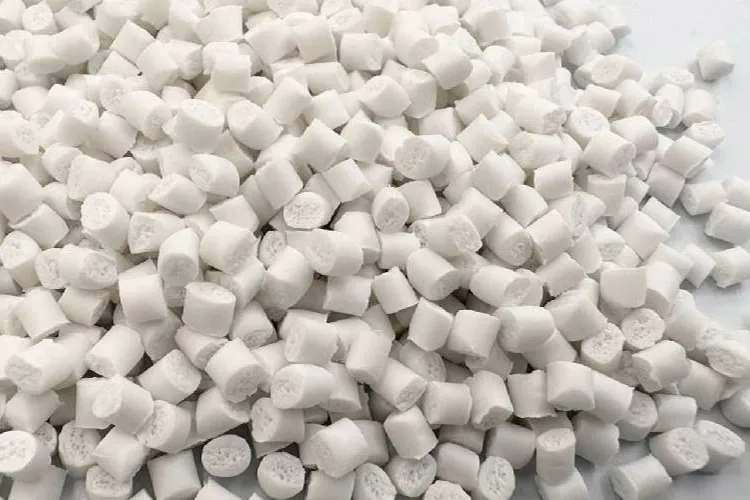
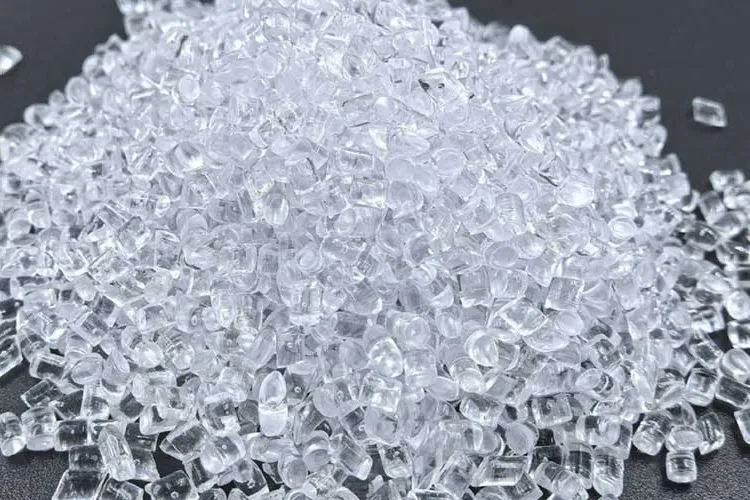
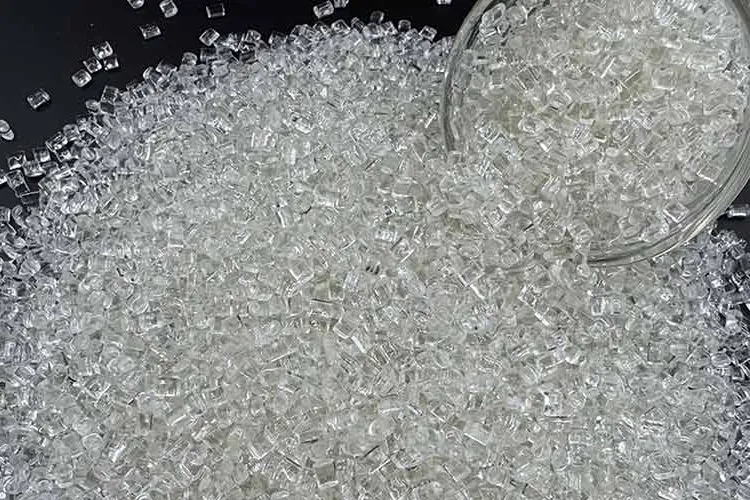
Raw Materials Compatible with Plastic Blow Molding Machine
PET (Polyethylene Terephthalate)
The primary material for this PET blow molding machine, PET offers high optical clarity, excellent gas barrier properties against oxygen and carbon dioxide, food-safe certification, and strong mechanical performance. It is ideal for mineral water bottles, carbonated beverage containers, edible oil bottles, wide-mouth food jars, and pull-tab cans. PET's biaxial orientation compatibility makes it the benchmark material for injection stretch blow molding, producing containers that combine light weight with outstanding strength-to-weight ratio.
PETG (Glycol-Modified PET)
PETG delivers the clarity and processability of PET with improved impact resistance and reduced brittleness, making it suitable for containers that require greater durability during filling, shipping, and retail display. It processes well on this automatic PET blow molding machine series and is widely used for premium food packaging, cosmetic containers, and specialty beverage bottles where visual appeal and shelf impact are paramount. PETG also offers better compatibility with certain chemical contents than standard PET.
PP (Polypropylene)
PP offers outstanding heat resistance and is the preferred material for hot-fill food packaging applications such as juice bottles, sauces, and condiments that are filled at elevated temperatures. It provides good chemical resistance against acids, bases, and oils, making it suitable for a wide range of food and pharmaceutical bottle types. On the EPA series blow molding machine, PP containers offer a lighter weight alternative to glass, with strong top-load performance for stacking on retail shelves.
PC (Polycarbonate)
Polycarbonate offers exceptional impact resistance, high-temperature tolerance, and glass-like optical clarity, making it a premium choice for reusable water bottles, baby bottles, and safety-critical food storage containers. On this plastic blow molding machine series, PC can be processed to produce bottles that withstand sterilization cycles, boiling water filling, and repeated wash cycles without cracking or crazing. Its dimensional stability also makes it suitable for containers with precise closure engagement requirements.
PE (Polyethylene)
Polyethylene in both HDPE and LDPE grades offers excellent flexibility, chemical resistance, and low moisture vapor transmission, making it well-suited for chemical bottles, agricultural product containers, and certain food packaging applications. HDPE is widely used for milk jugs, detergent bottles, and industrial containers, while LDPE suits squeeze packaging. On compatible configurations of this bottle blow molding machine series, PE provides a cost-effective and recyclable packaging solution for bulk and consumer markets.
ABS (Acrylonitrile Butadiene Styrene)
ABS combines rigidity, impact resistance, and excellent surface finish quality, making it a useful material for specialty containers, packaging with high aesthetic requirements, and non-food industrial bottles. While less common in food contact applications than PET or PP, ABS finds application in cosmetic packaging, household chemical containers, and craft packaging where gloss finish and structural integrity are key selection criteria on an extrusion blow molding machine or compatible injection blow platform.
 |
 |
 |
 |
Common Troubleshooting
1. Uneven Wall Thickness in Blow-Molded Containers
Cause: Non-uniform preform temperature distribution across heating zones or misalignment of the stretch rod relative to the blow mold axis. Solution: Inspect and balance each infrared heating zone power output using a pyrometer to verify circumferential preform temperature uniformity. Confirm stretch rod centering and re-calibrate if eccentric positioning is detected. Review preform quality from the injection unit for gate-area thickness consistency. Adjusting the heating chain speed may also improve temperature distribution on this plastic blow molding machine.
2. Container Haze or Cloudiness
Cause: Moisture in PET resin due to insufficient pre-drying, or PET melt temperature falling below optimal range during injection, causing crystallization. Solution: Verify resin moisture content using a moisture analyzer before processing; ensure PET is dried to below 50 ppm moisture. Check injection barrel temperatures against the material supplier's processing window. Review preheating zone temperatures to ensure the preform body reaches the amorphous stretch window without exceeding the crystallization threshold on this PET blow molding machine.
3. Flash on the Container Parting Line
Cause: Insufficient mold clamping force, worn mold parting surfaces, or blow pressure exceeding the rated clamping capacity. Solution: Inspect mold parting surfaces for wear or debris accumulation and clean or re-lap as required. Verify that clamping stroke and locking mechanism are operating at specified force. If blowing pressure has been elevated beyond design parameters, reduce to the recommended 35 kg/cm² maximum and monitor results. Schedule periodic mold maintenance to prevent progressive parting line degradation on all blow molding machine parts.
4. Bottles Sticking in the Mold After Blow
Cause: Insufficient mold cooling time, elevated cooling water temperature, or inadequate mold venting preventing complete heat extraction before mold opening. Solution: Verify cooling water temperature is within the 8 to 12°C specification and flow rate is maintained at 30 liters per minute. Extend the cooling dwell time in the machine program if cycle time budget allows. Check mold vent slots for blockage by resin residue and clean with appropriate solvent. Ensure the chiller unit feeding this fully automatic blow molding machine is sized correctly for the production ambient temperature conditions.
5. Inconsistent Neck Dimensions or Ovality
Cause: Preform neck deformation during heating from mechanical contact with the neck support, or variation in injection molding preform neck geometry upstream. Solution: Inspect preform holders and neck support components for wear, and replace if contact surfaces show deformation. Review injection molding process parameters, particularly hold pressure and cooling time, to ensure consistent preform neck geometry from the injection unit. Verify that the heating chain routing does not expose the preform neck to radiant heat from the infrared elements, as neck re-heating causes dimensional drift in this automatic PET blow molding machine process.
6. Low Production Output or Frequent Stops
Cause: Preform jamming in the feeding system, PLC alarm conditions triggered by out-of-range sensor readings, or air system pressure instability causing cycle interruptions. Solution: Inspect the preform unscrambler and infeed track for foreign objects or dimensional non-conforming preforms. Review the HMI alarm log to identify the triggering fault code and address the root cause. Verify that the air compressor supplying the machine maintains stable 7 kg/cm² low-pressure and 35 kg/cm² high-pressure supply without significant pressure fluctuation during peak demand cycles on this high speed blow molding machine.
Blow Molding vs. Injection Molding
What is Blow Molding?
Blow molding is a plastic forming process with conceptual similarities to traditional glassblowing. The process begins by heating raw plastic material to its processing temperature, after which an extrusion machine or injection unit forms a hollow tube or preform known as a parison. The parison is placed within a prepared mold, and compressed air at approximately 80 psi or higher is introduced to expand the parison outward against the mold walls. On cooling, the plastic solidifies into the hollow container shape defined by the mold. The final step is deflashing and removal from the mold. This blow molding machine process is the foundation for producing billions of food and beverage containers annually worldwide.
Types of Blow Molding
Injection Blow Molding
In injection blow molding, a core rod is used to inject the molten plastic into a mold cavity, creating a precisely formed parison with consistent neck geometry. This test-tube-shaped preform is then transferred to a blow station where pressurized air shapes it to the final container form. Injection blow molding offers extremely accurate neck finishes, making it preferred for pharmaceutical and personal care packaging where dimensional tolerances are strict and batch-to-batch consistency is essential for capping and sealing reliability.
Extrusion Blow Molding
Extrusion blow molding machines continuously or intermittently extrude a hollow plastic tube downward into an open mold. The mold closes around the parison and air is blown in to expand it against the mold cavity walls. The continuous variant suits high-volume commodity container production, while the intermittent variant offers cost advantages for smaller runs and complex part geometries. This process is widely used for HDPE milk jugs, automotive fluid tanks, and personal care bottles in global packaging markets.
Injection Stretch Blow Molding
Injection stretch blow molding machines begin with injection-molded preforms, which are reheated and then simultaneously stretched axially by a rod while being expanded radially by high-pressure air. This biaxial orientation process significantly improves the PET molecular alignment, resulting in containers with superior clarity, barrier properties, and mechanical strength compared to single-axis blown containers. This is the dominant technology for beverage, food, and pharmaceutical bottles and is the core process of the EPA.ES-1C130 series.
Advantages of Blow Molding
- Lower per-unit production cost compared to injection molding for hollow containers
- Lower initial tooling investment relative to complex multi-cavity injection molds
- Eliminates the structural complexity of two-part injection mold assemblies
- Excellent design flexibility for container shapes, handle configurations, and neck finishes
- Highly scalable from single-cavity prototyping to four-cavity high-volume production on the same automatic blow molding machine platform
What is Injection Molding?
Injection molding is a process where molten plastic is forced under high pressure into a precision-machined, closed mold cavity. After the mold fills, cooling occurs to solidify the part, after which the mold opens and the finished component is ejected. Injection molding excels at producing solid, dimensionally accurate parts with complex internal geometries, fine surface details, and tight tolerances. It is the preferred process for solid components such as bottle caps, electronic housings, medical device components, and automotive interior parts.
Advantages of Injection Molding
- Produces highly detailed molds with tight dimensional tolerances and multi-cavity efficiency
- Superior precision for small, intricate solid parts
- Highly cost-effective at very high production volumes of identical solid components
- Broad material and color flexibility across a wide range of thermoplastics and thermosets
Key Differences: Blow Molding vs Injection Molding
| Comparison Factor | Blow Molding | Injection Molding |
|---|---|---|
| Part Type | Hollow, thin-walled containers | Solid, detailed components |
| Air Usage | Essential forming mechanism (80 to 505 psi) | Not used (air pockets are defects) |
| Mold Design | Greater flexibility, lower precision requirements | High precision CNC-machined steel molds |
| Typical Materials | PET, PETG, HDPE, PP, PC, ABS | Polycarbonate, ABS, Nylon, PVC, hard resins |
| Tooling Cost | Lower initial investment | Higher precision tooling cost |
| Typical Applications | Bottles, jars, cans, food containers | Caps, housings, medical parts, automotive trim |
Food Jars and Cans Blow Molding Machine Mould Features
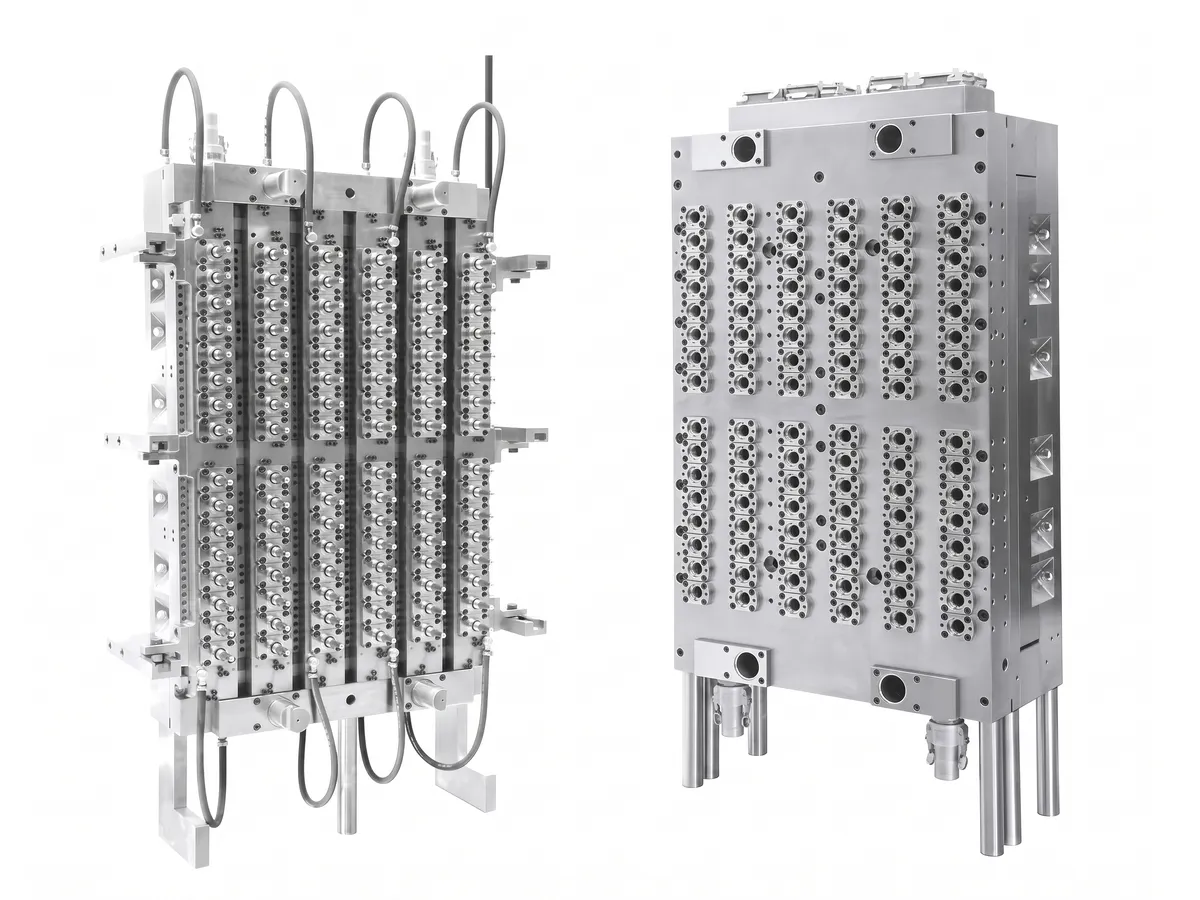
Preform Injection Mold
- Two-part die lip design guarantees co-axiality between preform neck and body during formation, ensuring consistent stretch rod alignment on every cycle of this injection blow molding machine
- Optimized cooling water channel geometry maximizes heat extraction from the preform, reducing cycle time and improving production throughput without compromising dimensional accuracy
- Forming components manufactured from imported die steel grade 2316, offering superior corrosion resistance after heat treatment and extended service life in high-humidity injection environments
- Core plates, cavity plates, and structural components machined from 420 stainless steel for maximum corrosion resistance in continuous high-temperature plasticizing conditions
- User-accessible maintenance points and simple mechanical design reduce tooling changeover time and enable in-house maintenance without specialized equipment
- Standard interchangeable die fittings allow compatible preforms from different suppliers to run on the same mold base, maximizing tooling investment return
- Advanced mold design allows a single injection mold to produce more than one preform configuration per setup, expanding production flexibility for this blow molding machine
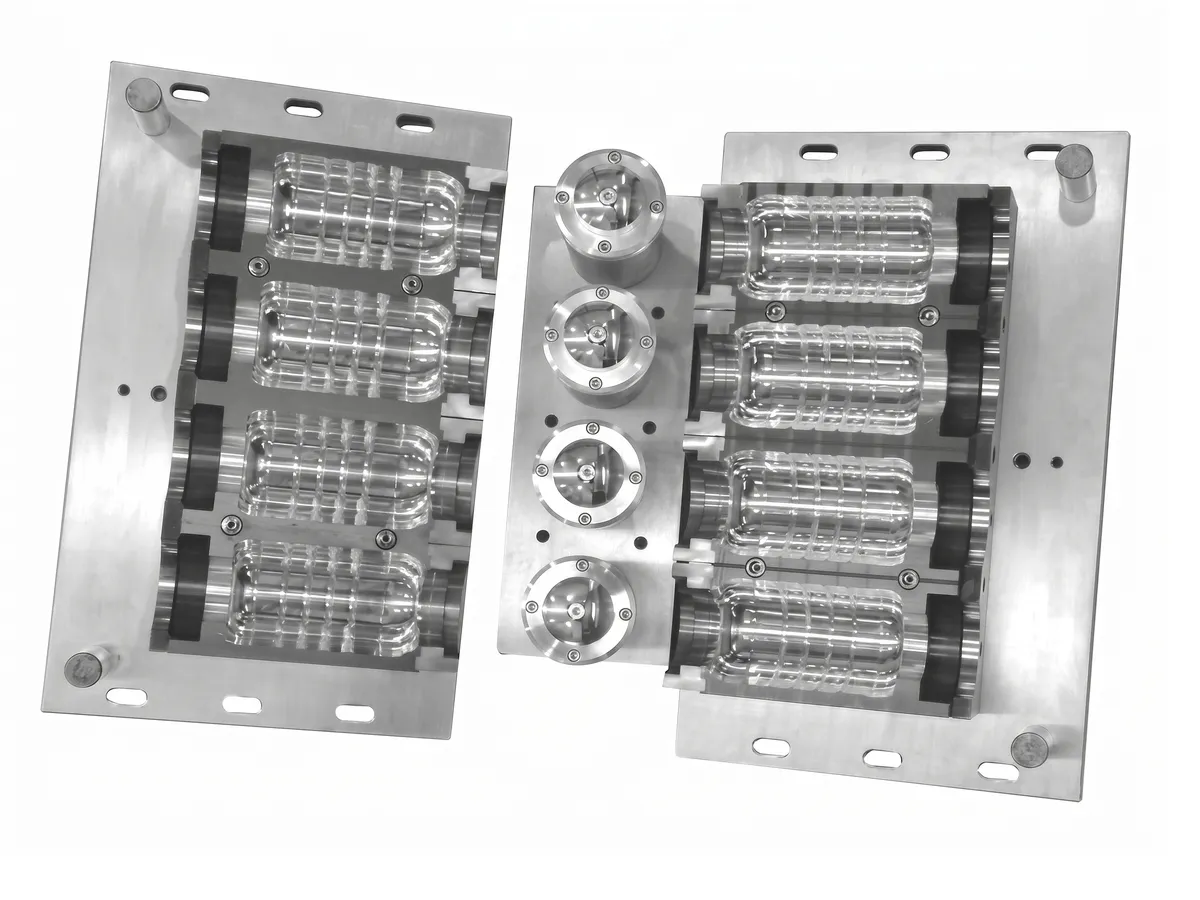
Blowing Mold
- All blow mold components are manufactured from high-quality tool steel, selected for hardness, wear resistance, and dimensional stability across extended production runs at operating pressures of 35 kg/cm²
- Container exterior profiles are designed using advanced 3D CAD software, enabling complex jar geometries, textured surfaces, and brand-specific label panel configurations to be incorporated without compromising structural integrity
- Versatile bottle and jar design options are available for customer selection, with custom mold design capability for proprietary container shapes on this custom blow molding machine platform
- Cooling channel placement within mold halves is engineered for maximum contact area with the container surface, achieving rapid and uniform quench from shoulder to base without thermal gradients
- All mold structural components are finish-machined on CNC machining centers to achieve tight dimensional tolerances, ensuring precise mold half alignment and repeatable parting line closure on every production cycle
 |
 |
How to Choose the Right Plastic Blow Molding Machine
1. Types of Blow Molding Machine
Selecting among extrusion blow molding machines, injection blow molding machines, and injection stretch blow molding machines is the first and most critical decision. Extrusion types suit HDPE and LDPE hollow containers for chemical and agricultural applications. Injection types offer superior neck precision for pharmaceutical and cosmetic bottles. Injection stretch blow machines, like the EPA.ES-1C130, deliver the biaxial orientation and transparency performance essential for PET food jars, beverage bottles, and wide-mouth food cans. Identify your material and container requirements clearly before selecting the machine type from blow molding machine suppliers.
2. Production Capacity
Many manufacturers report theoretical production capacity figures that cannot be sustained in continuous real-world operation. A reliable planning rule is to select a machine whose rated capacity exceeds your target demand by at least 25 percent, to account for scheduled maintenance, changeovers, minor stoppages, and production rate variability. For the EPA series, the 1C130 model offers 1,000 bph for single-cavity operation, while four-cavity models reach 4,600 bph. Matching capacity to your actual demand prevents both underutilization and production bottlenecks on your high speed blow molding machine.
3. Container Specifications
Define your container requirements precisely before contacting blow molding machine manufacturers: volume range, maximum neck diameter, container height and diameter, wall thickness targets, and applicable food safety or pharmaceutical regulatory standards. For wide-mouth food jars and pull-tab cans, neck diameter and maximum container volume are the primary machine selection criteria. The EPA series accommodates neck diameters from standard ranges up to 180mm and volumes from 1,000ml to 15,000ml, covering the vast majority of food packaging formats encountered in global retail and food service markets.
4. Energy Efficiency
Energy costs represent a major component of total operating cost for any industrial blow molding machine. Compare machines based on actual heating power consumption per thousand bottles rather than installed kW ratings. Servo drive systems consume significantly less energy than hydraulic drive alternatives because they only draw power on demand during active movement cycles. The EPA series uses servo-optimized heating and motion control, delivering common heating power of just 12 kW on the 1C130 model against a 31.5 kW installed maximum, reflecting the energy savings available through intelligent power management during normal production cycles.
5. Manufacturer Credibility and Real Production Cases
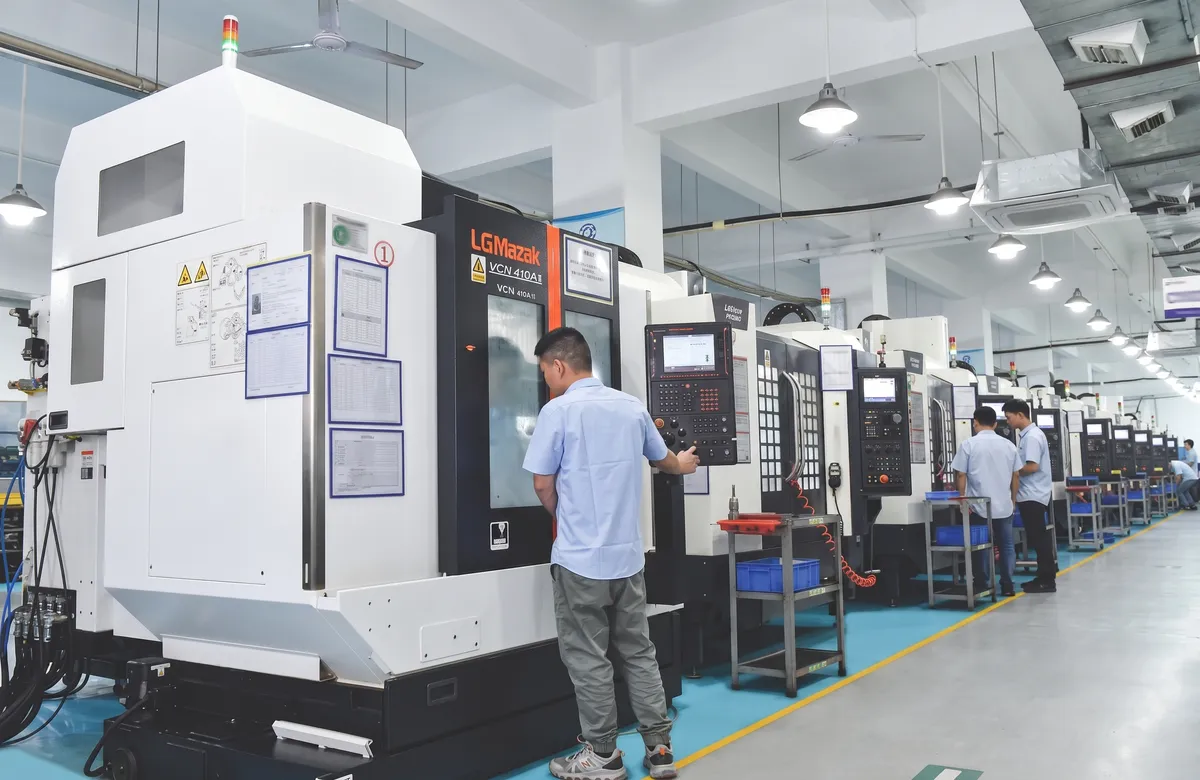
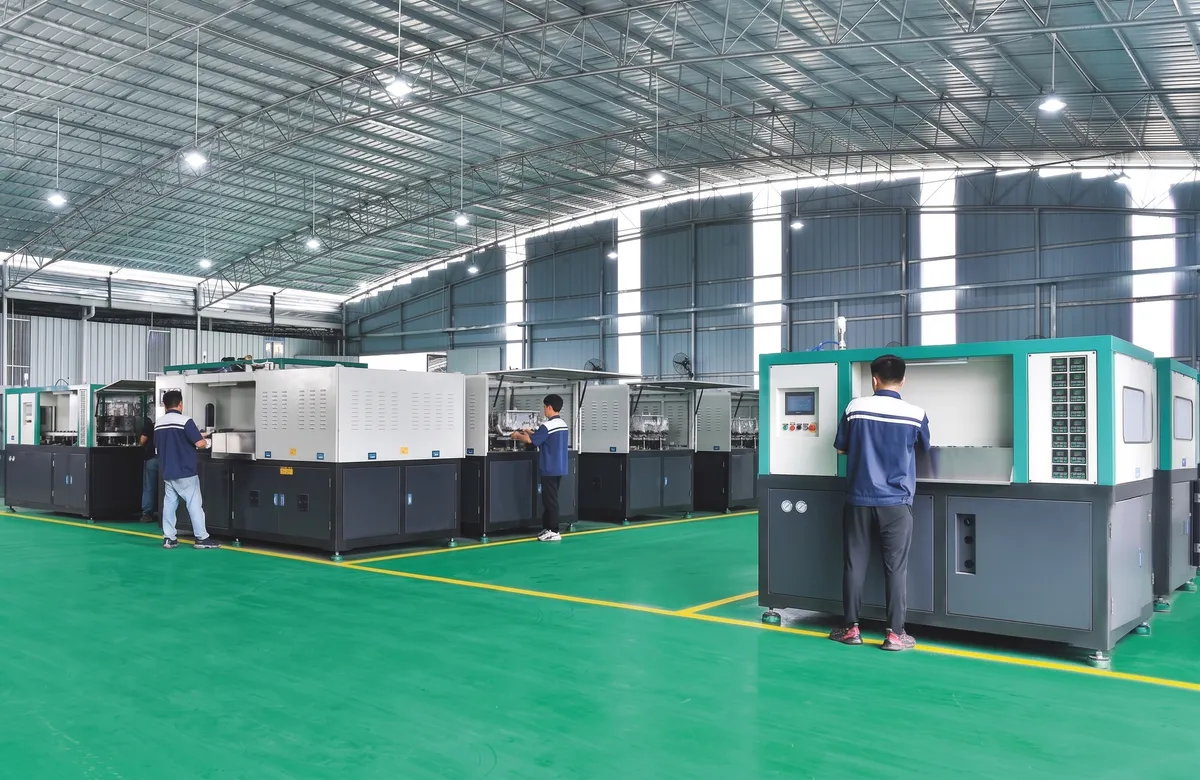
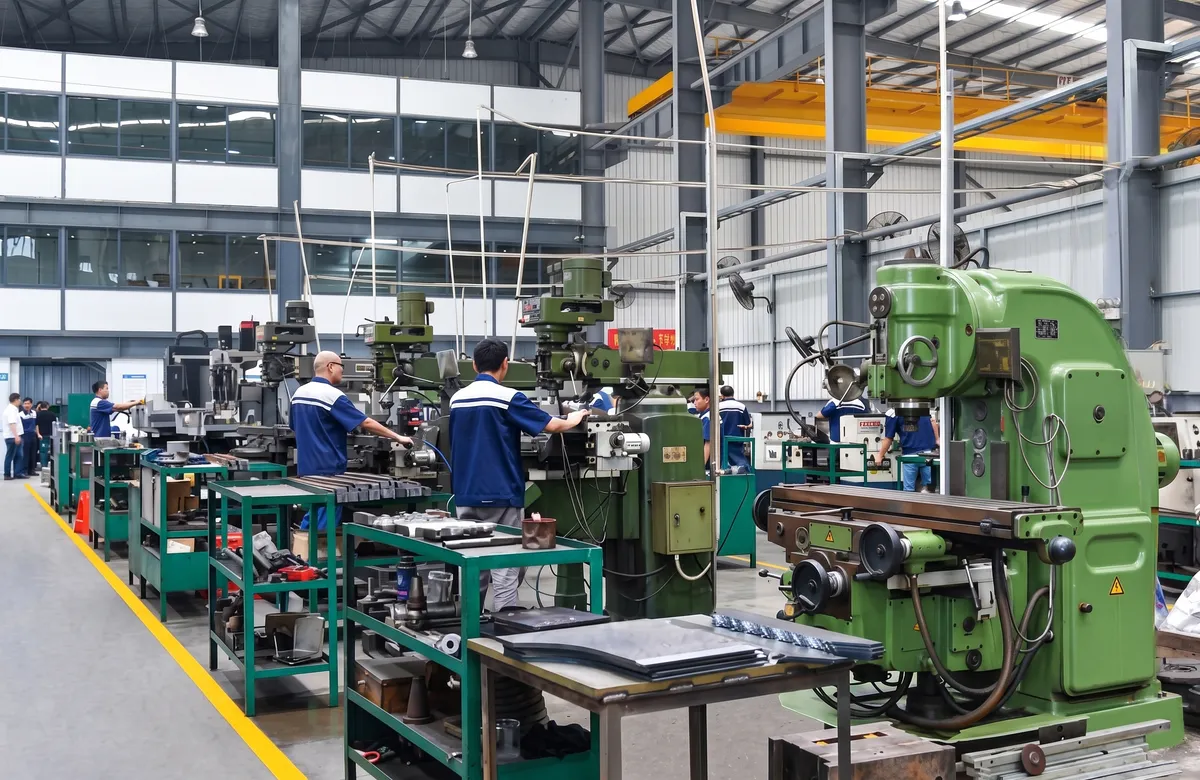
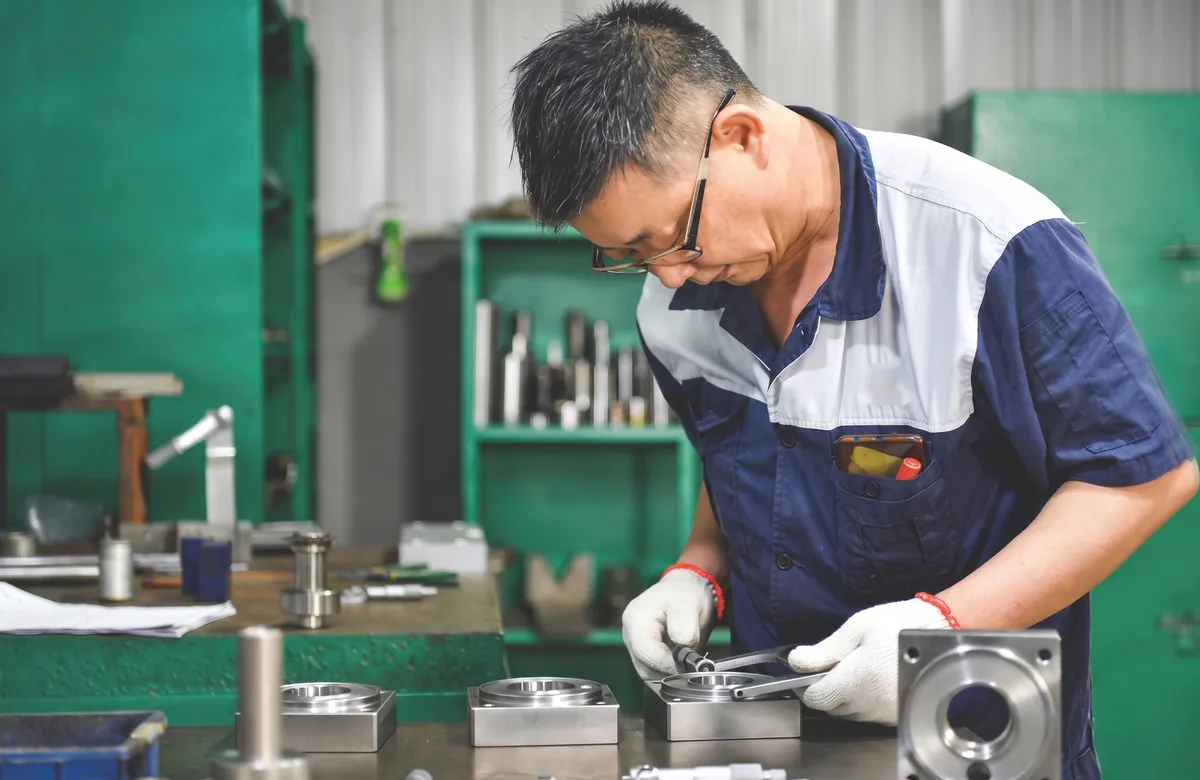
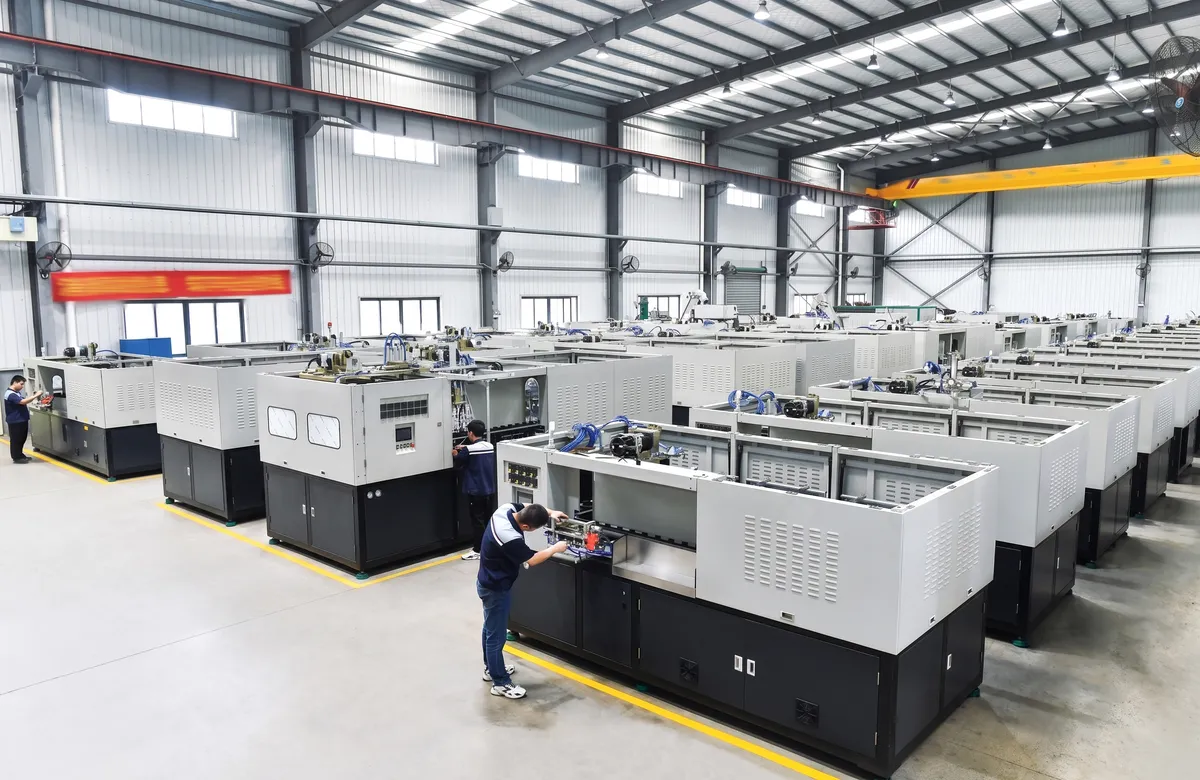
Before committing to a blow molding machine purchase, verify that the manufacturer operates a genuine production facility with in-house machining, assembly, and testing capabilities. Manufacturers without their own workshops rely on third-party fabricators, which increases cost, reduces quality control, and weakens after-sales support continuity. Request verifiable customer case references and arrange factory visits where possible. Mexico Ever-Power ISBM Machinery Co., Ltd has delivered machines to customers across Southeast Asia, the Middle East, South America, and Africa with documented operational case studies available on request from the Ever-Power technical team.
6. Auxiliary Equipment Requirements
A fully automatic blow molding machine cannot operate in isolation. Buyers often underestimate the importance of properly specified auxiliary equipment including high-pressure air compressors, chiller units for cooling water, air receivers, resin dryers, and material conveying systems. These peripheral systems must be sized to match the machine's air consumption, cooling water flow rate, and resin throughput requirements. Ever-Power provides complete auxiliary equipment specifications alongside each machine sale, and can supply matching air compressors and chiller units to ensure the entire production cell is correctly integrated and optimized for your facility.
7. Price Transparency and Total Cost of Ownership
Machine purchase price is only one element of total cost of ownership. Buyers must clarify whether quoted prices cover bare machines or complete production-ready packages including tooling, auxiliary equipment, installation, and commissioning. Lower initial price often correlates with reduced component quality, thinner technical support coverage, or delayed spare parts availability. Investing in a well-built automatic blow molding machine from a credible manufacturer with full technical support returns measurably higher uptime and lower per-unit production costs over a five to ten-year machine life than a cheaper alternative requiring frequent repairs and extended support response times.
8. Customization Support
For manufacturers producing proprietary container shapes, unique neck finishes, or specialty packaging formats, the ability of blow molding machine suppliers to customize machine configurations and mold tooling is a critical differentiator. Ever-Power offers complete custom blow molding machine engineering, from preliminary container design consultation through mold design, machine parameter optimization, and production validation. This turnkey customization capability, supported by an in-house R&D team with over twenty years of injection blow molding machinery development experience, enables customers to bring unique food packaging innovations to market faster and with lower development risk.
Why Choose Ever-Power's PET Blow Molding Machine?
Mexico Ever-Power ISBM Machinery Co., Ltd is primarily engaged in the research, development, production, sales, and export of automatic injection blow molding machines and injection stretch blow molding machines. Unlike general machinery distributors, our entire organization is focused on this specific technology domain, enabling deeper engineering expertise, faster problem resolution, and more precise product recommendations for customers at every production scale. Our product portfolio spans injection blow molding machines, extrusion blow molding machines, injection stretch blow molding machines, preform injection molds, blow molds, and a full range of auxiliary machinery including air compressors and chiller units. This breadth allows us to supply and support complete turnkey production cells rather than isolated machine purchases, reducing the complexity and risk of integrating equipment from multiple vendors across different geographies.
Ever-Power machines process a broad range of materials including HDPE, LDPE, PET, PETG, PP, PS, PPSU, PC, Tritan, ABS, PLA, EVA, PCTG, and environmentally friendly corn-based materials. Container volume capability spans from 1ml pharmaceutical vials to 1,000ml food and beverage bottles, covering pharmaceutical packaging, food packaging, health care packaging, cosmetic packaging, and industrial chemical packaging across a single, scalable machine platform. The Ever-Power R&D team brings together experienced engineers and technical specialists with deep theoretical and practical knowledge of injection-blowing machinery and injection-blowing mold design. This team has developed patented blow molding innovations including Mexico's first incision-free pull-tab can blow molding process, demonstrating a commitment to pushing the boundaries of what blow molding machine technology can deliver for food packaging manufacturers in global competitive markets.
Ever-Power provides detailed and responsive pre-sale consultation, on-site or remote commissioning support during sale, and sustained after-sales technical assistance through the full machine lifecycle. Our service philosophy recognizes that a machine sale is the beginning of a long-term production relationship, not a transaction endpoint. Customers working with us benefit from the experience of our team having installed and commissioned machines across Southeast Asia, the Middle East, Africa, and Latin America through our established global blow molding machine suppliers network. Mexico Ever-Power's EPA series blow molding machine, has supplied blow molding equipment to packaging facilities producing for globally recognized brands including Walmart, Walch, Blue Moon, Liby, C'ESTBON, HAITIAN, Proya, and Estee Lauder. This client roster demonstrates the reliability, output quality, and production consistency that our machines deliver at industrial scale, supporting customers from startup food packagers to contract manufacturers supplying major international consumer brands across all continents.
 |
 |
 |
 |
 |
 |
Frequently Asked Questions
Q: What is the maximum neck diameter the EPA.ES-1C130 blow molding machine can produce?
A: The EPA.ES-1C130 model handles a neck diameter range of up to 98mm. Across the full Food Jars and Cans series, the larger models including the EPA.ES-2C200 and EPA.ES-2C260 extend neck diameter capacity up to 168mm, and the series-wide maximum neck diameter for incision-free pull-tab can production reaches 180mm. If your product requires a neck diameter approaching or exceeding 98mm, our technical team will recommend the appropriate model from the broader EPA series to match your container specifications precisely.
Q: What is the difference between a two-stage blow molding machine and a one-step injection blow molding machine?
A: A two-stage blow molding machine separates the preform injection step from the blow molding step into two distinct operations. Preforms are injection-molded in one machine, cooled, and then reheated and blow-molded in a separate stretch blow machine. This separation allows high-volume preform production and flexible scheduling between stages. A one-step injection blow molding machine performs injection, conditioning, stretch-blow, and ejection in a continuous integrated cycle without the preform ever fully cooling to ambient temperature, saving reheating energy but with higher complexity and lower output flexibility. The EPA.ES-1C130 series is optimized for the two-stage process, offering compatibility with industry-standard preforms from multiple suppliers.
Q: What type of compressor is required for the high-pressure blow molding air supply?
A: The EPA.ES-1C130 requires a high-pressure air supply at 35 kg/cm² (approximately 500 psi) at a consumption rate of 800 liters per minute. Standard workshop rotary screw compressors typically supply up to 12 to 16 bar (175 to 230 psi) and are not suitable for direct connection to the blow station. A dedicated high-pressure reciprocating booster compressor must be used to achieve the 35 kg/cm² requirement. Our technical team specifies the correct booster compressor model for each machine sale and can supply matched auxiliary equipment packages to simplify site commissioning for your PET blow molding machine installation.
Q: Can this food jars blow molding machine produce pull-tab cans without incisions?
A: Yes. The Food Jars and Cans Series is specifically designed and uniquely positioned in the Chinese market as the first series capable of producing incision-free pull-tab cans automatically. Traditional pull-tab can production required mechanical cutting or scoring of the can top, adding process steps and potential contamination risks. The EPA series achieves the pull-tab can form directly through the blow molding process without any post-mold incision operation, producing a seamless, food-safe container with excellent seal integrity that is suitable for puddings, canned fruits, pet food portions, and ready-to-eat beverage products. Please contact our team with your specific can dimensions and volume requirements to confirm compatibility.
Q: Is this PET blow molding machine suitable for hot-fill food packaging applications?
A: Standard PET containers produced by the EPA.ES-1C130 using conventional preforms are suitable for ambient-temperature filling and cold-fill applications. For hot-fill applications where product is filled above 70 to 85°C, heat-set mold technology and specially formulated heat-resistant PET preforms are required. The EPA series platform supports heat-set blow molding configurations with the appropriate mold design and process parameters. If your application involves hot-fill condiments, juices, or sauces, please specify this requirement when requesting a quotation so our engineering team can recommend the correct configuration of blow molding machine parts and mold technology for your production needs.
Q: How long does installation and commissioning of a new blow molding machine typically take?
A: For a single-cavity model such as the EPA.ES-1C130, site installation and initial commissioning typically require three to five working days with a qualified mechanical and electrical team on-site. This includes mechanical leveling and anchoring, utility connections for power, compressed air, and cooling water, initial machine startup, heating zone calibration, and production of first bottle samples for dimensional verification. Training for two to three operators and one maintenance technician is conducted during commissioning. Larger multi-cavity models or complete production line installations including auxiliary equipment may require seven to fourteen days. Our technical team can provide remote support via video call throughout the commissioning process for customers operating this fully automatic blow molding machine.
Q: What preform specifications are compatible with the EPA.ES-1C130?
A: The EPA.ES-1C130 accommodates preforms with neck finish diameters compatible with containers up to 98mm neck diameter and container volumes up to 1,000ml. The 38-position preform holder is configured for specific preform neck thread profiles and pitch dimensions. Standard industry preform neck finishes such as PCO, SPP, and wide-mouth flat-flange designs are supported with appropriate preform holder inserts. For proprietary or non-standard preform designs, our engineering team can assess compatibility and advise on any required preform holder modifications. Using preforms from multiple suppliers on a standardized mold base is fully supported by the interchangeable die fitting system incorporated into the mold design for this automatic blow molding machine.
Q: How do I get a price quote for the EPA.ES-1C130 blow molding machine?
A: To receive an accurate price quotation for any model in the EPA Food Jars and Cans blow molding machine series, please provide our sales team with your target container volume, neck diameter, container height, required production capacity in bottles per hour, intended material (PET, PETG, PP, or other), and whether you need auxiliary equipment included. Our team will confirm the optimal model selection, prepare a detailed technical specification sheet, and issue a complete quotation covering machine price, tooling, and optional auxiliary equipment. Quotes are typically issued within two to three working days of receiving complete container specifications. Contact the Mexico Ever-Power sales team via the website inquiry form or by direct email for fastest response.
Q: What after-sales support is available for this industrial blow molding machine?
A: Mexico Ever-Power provides comprehensive after-sales support including remote technical assistance via video call and email, spare parts supply from maintained inventory, machine operation and maintenance training during installation, and access to technical documentation in English. Critical wear components and spare parts are stocked and can typically be dispatched within one to three working days of a confirmed order. For customers with complex technical issues that cannot be resolved remotely, on-site service visits can be arranged at agreed cost. Our goal is to minimize production downtime for every customer operating an Ever-Power industrial blow molding machine anywhere in the world, and our support response commitment reflects that priority.
Q: What certifications and quality standards does this blow molding machine comply with?
A: Mexico Ever-Power, the manufacturer of the EPA series, holds multiple national utility model patents for blow molding machine technology and has obtained international Verification of Compliance certification (ECM) for relevant machine models. The electrical systems on the EPA series machines comply with CE standards where required for export to European markets. Mold components are manufactured to domestic and international food contact material safety standards. For specific market certification requirements such as CE marking, FDA-compliant materials, or local industrial equipment standards, please inform our team at the quotation stage so we can confirm the applicable compliance status of the plastic blow molding machine you are considering.
Customer Reviews
Ricardo Morales Zavala | Food Packaging Industry | Mexico
"We have been running the EPA.ES-4C130 for about eight months now at our condiment packaging plant in Guadalajara, and the machine has been rock solid. We're producing wide-mouth jars for salsa and hot sauce at around 3,200 bottles per hour, which is exactly what the spec sheet promised. The neck dimension consistency is really impressive, our capping line rejection rate dropped significantly after we switched from our old setup. The Ever-Power team spent two full days on-site during commissioning making sure our operators understood every function of the machine. Communication was excellent throughout the whole process. Highly recommended for anyone looking for a reliable PET blow molding machine for food packaging."
Agus Setiawan | Edible Oil Packaging | Indonesia
"We purchased the EPA.ES-2C150 for our edible oil bottle production line in Jakarta about a year ago and the results have been excellent. Running 2,500ml bottles at close to 1,800 bph and the wall thickness uniformity is noticeably better than our previous machine. Energy consumption came out lower than we expected compared to the rated power, which helps with our monthly operating costs quite a bit. The machine arrived with complete documentation and spare parts kit. One heating element needed replacement after about six months of continuous operation and the replacement part arrived within ten days. Overall I am very satisfied with this automatic blow molding machine and would buy from Ever-Power again."
Carmen Luisa Quispe Ramos | Snack Food Packaging | Peru
"Our company in Lima has been using the EPA.ES-4C100 for snack nut and dried fruit jar production since early last year. The four-cavity setup gives us the throughput we need for supermarket orders and the jar clarity is exactly what our retail buyers expect for premium shelf display. We had a minor PLC alarm issue in the third month of operation and the technical team diagnosed it remotely and walked our maintenance engineer through the fix in under two hours. That kind of after-sales responsiveness is rare at this price point. The machine footprint also fits our workshop much better than some European alternatives we looked at. Very happy with the purchase."
Nguyen Thi Minh Chau | Food Processing Industry | Vietnam
"We evaluated three blow molding machine manufacturers before choosing the EPA.ES-2C200 for our jam and honey jar line in Ho Chi Minh City. The deciding factor was the maximum neck diameter capability of 138mm on this model, which was wider than two of the competitors could offer. After 14 months of operation the machine runs clean shifts without much intervention from our operators. The preform heating zones are very stable and our bottle weight variance is consistently within spec. Logistics from Mexico to Vietnam was handled smoothly and the crating was professional. Technical documents were provided in English which helped our maintenance team. I would rate the overall experience as excellent."
Youssef El Idrissi | Nutraceutical Packaging | Morocco
"We operate a health supplement contract packaging facility in Casablanca and chose the EPA.ES-4C130 for our PET jar production line producing 1,500ml vitamin and protein powder containers. The machine has now been running for nearly eleven months without a major stoppage. What impressed us most was the custom mold service, our product containers have a unique ergonomic shape and the engineering team accommodated our design without issue. The mold arrived accurately made and the first bottle samples were approved on our first trial run, which almost never happens in our experience with new tooling. Delivery took about nine weeks from order which was acceptable. Support by email and video call has been responsive and helpful."
Emeka Chukwuemeka Obi | Beverage Packaging | Nigeria
"I manage procurement for a beverage co-packer in Lagos and we installed the EPA.ES-2C260 last year for large-format container production up to 15 liters. The machine handles our wide-mouth juice container format well and the 900 bph output on 15-liter containers meets our production schedule. I want to be honest, the machine had one issue in the first month with a solenoid valve on the high-pressure air circuit, but the part was shipped express and arrived in about a week and our engineer installed it with remote guidance from the Ever-Power team. After that the machine has been reliable. Build quality seems solid and the HMI touchscreen is clear and easy for operators to use. Reasonable choice for the price."
Zubair Ahmed Khan | Food Startup Packaging | Pakistan
"We have been using the EPA.ES-1C130 at our small food packaging startup in Karachi since about ten months ago and I am genuinely impressed. For a single-cavity machine producing 1,000ml food jars it has been very consistent and easy for a small team to operate and maintain. The preheating and blowing parameters are well-documented in the manual and our technician was able to optimize the process himself after the initial setup training provided by the manufacturer. Energy use is reasonable and we have had zero major breakdowns so far. The machine is compact enough for our modest facility. For a new entrant into food jar production this is a good starting point and the support team answers our questions quickly even across time zones."
Lim Wei Xian | Condiment Manufacturing | Malaysia
"Our condiment manufacturing company in Kuala Lumpur purchased the EPA.ES-4C150 for 2,500ml sauce jar production and we have been very pleased. Running the machine at 4,000 bph in four-cavity mode and the output quality has been consistently good, with very few rejects due to neck dimension issues. Shipping documentation was thorough and customs clearance went smoothly. Installation was completed by our own team using the supplied manuals and video calls with the technical staff. One thing I especially appreciated was the detailed pre-sale consultation to confirm this was the right model for our container dimensions before we placed the order. That professionalism made us confident in the purchase decision."
Maria Concepcion Reyes | Food Ingredient Packaging | Philippines
"I work in production management at a food ingredient packaging company in Manila and we operate three EPA.ES-2C130 units for our dried spice and seasoning jar line. All three machines have been running for over a year with no significant mechanical issues. What I can say is that the output consistency across all three units is remarkably similar, which tells me quality control at the factory is solid. The technical team in Mexico responds to our service emails within 24 hours which is better than some European equipment suppliers we have dealt with. The machines pay for themselves faster than I expected due to the energy savings from the servo heating control compared to our older equipment. We will almost certainly order again when we expand."
Additional information
| Edited by | Yjx |
|---|
Related products
-
EPA.ES-3C114 Fully Automatic Blow Molding Machine for Daily Chemicals & Cosmetic Bottles
-
EPA.ES-2C130 Fully Automatic Blow Molding Machine for Daily Chemicals & Cosmetic Bottles
-
EPA.ES-2C130 Fully Automatic Blow Molding Machine for Food Wide-Mouth Jars and Cans
-
EPA.AS-2C114.3 Fully Automatic Blow Molding Machine for Daily Chemicals & Cosmetic Bottles