
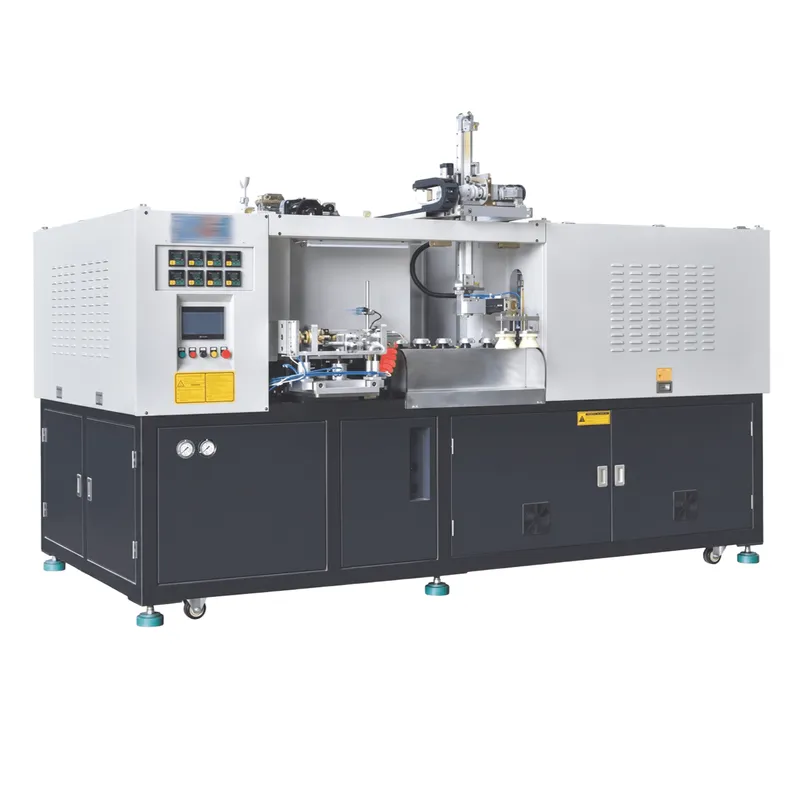
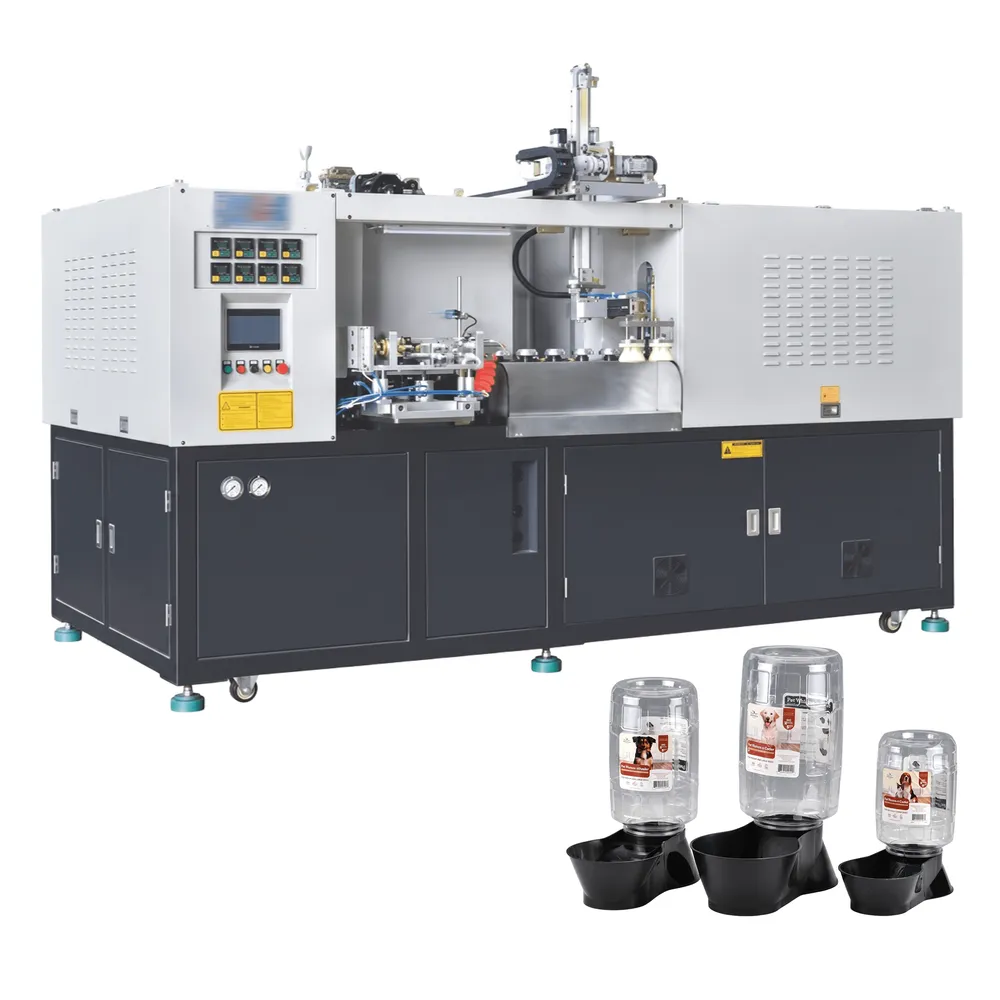
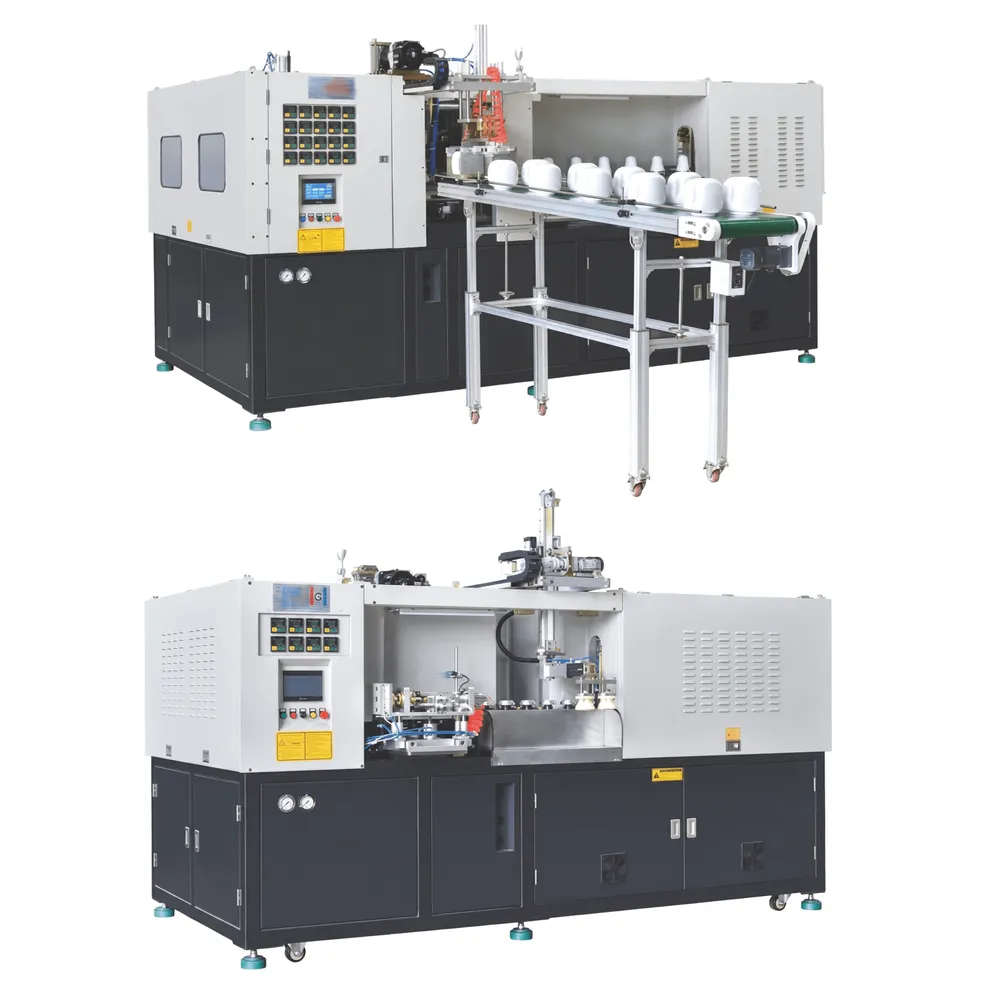
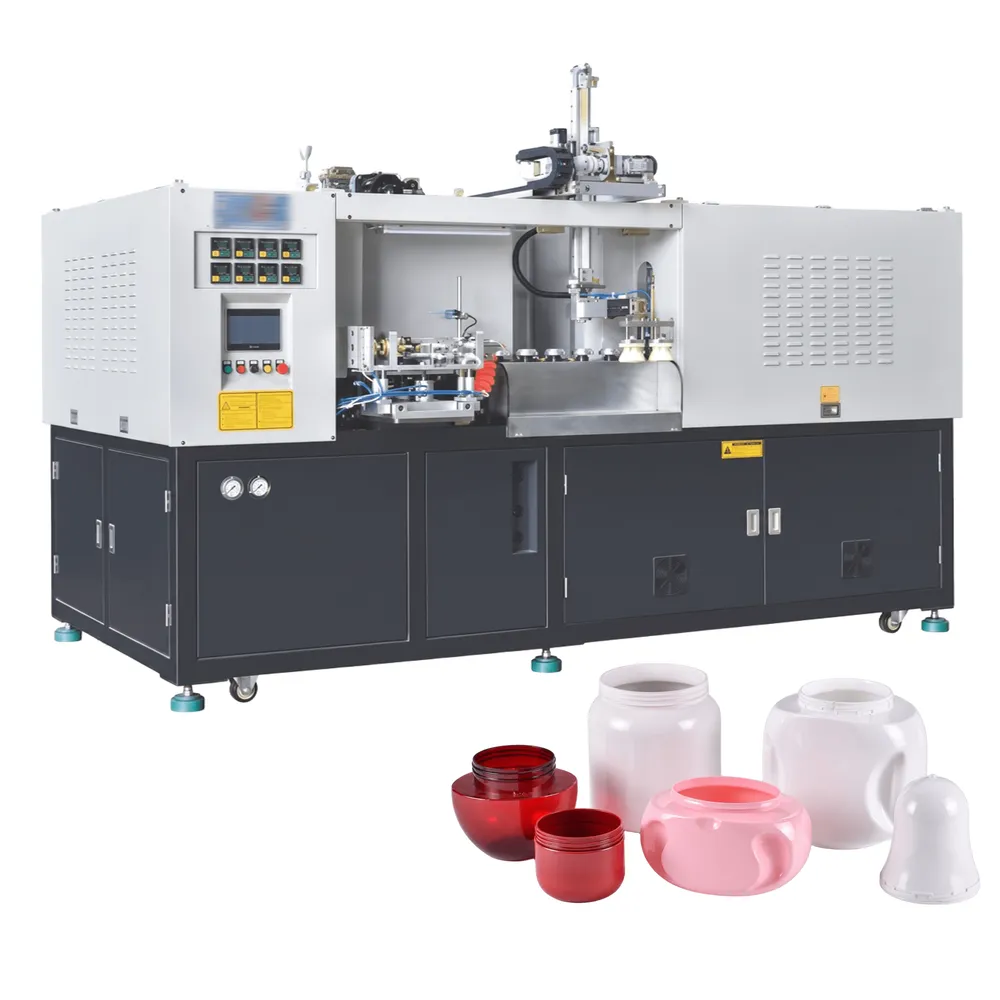
EPA.ES-2C130 Fully Automatic Blow Molding Machine for Food Wide-Mouth Jars and Cans
The EPA.ES-2C130 Fully Automatic Blow Molding Machine for Food Wide-Mouth Jars and Cans is a high-performance PET blow molding machine purpose-built for producing wide-mouth packaging containers used in the food industry. Specifically engineered for dried fruits, condiments, edible oils, nut butters, honey, sauces, and similar products, this automatic blow molding machine sets itself apart with Mexico’s first incision-free pull-tab can blowing technology, enabling the production of containers with neck finishes up to 180mm across the full series.
The EPA.ES-2C130 Fully Automatic Blow Molding Machine for Food Wide-Mouth Jars and Cans is a high-performance PET blow molding machine purpose-built for producing wide-mouth packaging containers used in the food industry. Specifically engineered for dried fruits, condiments, edible oils, nut butters, honey, sauces, and similar products, this automatic blow molding machine sets itself apart with Mexico's first incision-free pull-tab can blowing technology, enabling the production of containers with neck finishes up to 180mm across the full series. The 2-cavity design of the EPA.ES-2C130 model delivers a theoretical output of up to 1,800 bottles per hour, making it a highly efficient industrial blow molding machine for medium-to-high volume production lines. With a maximum container volume of 1,500ml and a neck diameter range of up to 98mm, it covers the most commonly demanded food jar and wide-mouth can specifications on the market.
As part of the broader Food Jars and Cans Series from Ever-Power, this fully automatic blow molding machine spans multiple models including EPA.ES-1C130, EPA.ES-2C150, EPA.ES-2C200, EPA.ES-2C260, EPA.ES-4C100, EPA.ES-4C130, EPA.ES-4C150, and EPA.FS-1CG220, covering container sizes from 1,000ml up to 15,000ml. The series is powered by an optimized heating and stretching mechanism that ensures uniform wall distribution and consistent bottle clarity across high-speed continuous runs. Its high-precision PLC control system, servo-driven mechanisms, and stable mold-clamping structure give operators dependable repeatability batch after batch. Whether you are scaling production for retail food packaging or industrial-volume condiment containers, the EPA.ES-2C130 plastic blow molding machine offers the precision, throughput, and adaptability to help your business capture market demand quickly and reliably.
Technical Parameter
| Model | Unit | EPA.ES-2C130 | |
|---|---|---|---|
| Molding | Clamping stroke | mm | 160 |
| Mold-open distance | mm | 360 | |
| Mold-close distance | mm | 200 | |
| Stretching stroke | mm | 350 | |
| Mold-open distance | mm | 50 | |
| Mold-close distance | mm | 130 | |
| Preform Holder | 60 | ||
| Cavities | 2 | ||
| Container | Max.Container Volume | ml | 1500 |
| Neck Diameter Range | mm | 98 | |
| Max.Container Diameter | mm | 110 | |
| Max.Container Height | mm | 250 | |
| Theoretical Output | bph | 1800 | |
| Electrical System | Max.Heating Power | kw | 42.5 |
| Heating Power | kw | 8-13 | |
| Air System | Operating Pressure | kg/cm² | 7 |
| Low Pressure Air Consumption | ltr/min | 600 | |
| Blowing Pressure | kg/cm² | 26-35 | |
| High Pressure Air Consumption | ltr/min | 1000-1500 | |
| Cooling water | Operating Pressure | kg/cm² | 5-6 |
| Temperature | ℃ | 8-12 | |
| Flow rate | ltr/min | 30 | |
| Machine | Size (L*W*H) | mm | 3600*1800*1980 |
| Weight | kg | 3000 | |
Features of the EPA.ES-2C130 PET Blow Molding Machine
1. Advanced Technology and Strong Adaptability
The Food Jars and Cans Series spans multiple models including EPA.ES-1C130, EPA.ES-4C130, and EPA.FS-1CG220, covering a broad range of wide-mouth containers from dried fruit jars to condiment bottles and edible oil containers. Pioneering Mexico's first incision-free pull-tab can blowing technology, this plastic blow molding machine handles neck diameters up to 180mm across the series, container volumes from 1,000ml to 15,000ml, and container heights reaching 450mm, demonstrating exceptional adaptability to diverse bottle shapes and demanding food packaging specifications.
2. High Efficiency, Stability, and Energy Savings
Designed as a high speed blow molding machine, the series features servo control and efficient infrared heating systems, with working heating power typically ranging from 8 to 35 kW depending on the model. The EPA.ES-2C130 achieves 1,800 bph with working power as low as 8-13 kW, representing outstanding energy efficiency. Blowing pressure is precisely regulated between 26-35 kg/cm², and operating pressure is maintained at a consistent 7 kg/cm², minimizing compressed air waste. Cooling water temperature is held between 8-12°C, ensuring stable continuous production with consistently high output quality across long production runs.
3. Rational Structure and Easy Maintenance
The series employs a proven mold-clamping and stretching structure with a maximum mold-open distance of 635mm (as seen on the EPA.ES-2C260 model), enabling balanced clamping force for a wide variety of mold configurations. The EPA.ES-2C130 has a compact footprint of 3,600 x 1,800 x 1,980mm at 3,000 kg, providing flexible workshop layout options. All critical blow molding machine parts are sourced from internationally recognized brands, ensuring low failure rates, straightforward daily maintenance procedures, and significantly reduced unplanned downtime.
4. High Output Quality and Broad Application Range
Producing containers from PET and PETG materials, the machine delivers containers with accurate neck dimensions, superior transparency, and uniform wall thickness that comply fully with food packaging safety standards. Container diameters across the series reach up to 240mm, accommodating both standard round jar formats and irregularly shaped containers. Whether the application demands conventional wide-mouth jars or specialty food-grade pull-tab cans, this bottle blow molding machine delivers consistent molding quality and excellent surface finish at production scale.
5. Fully Automatic Operation Reduces Labor Dependency
As a fully automatic blow molding machine, the EPA.ES-2C130 handles the complete blow molding cycle, from preform loading and heating to stretching, blowing, cooling, and ejection, without manual intervention. This automation dramatically reduces labor requirements on the production floor, lowers the risk of human error affecting bottle quality, and allows operators to monitor multiple production parameters simultaneously via the integrated PLC control panel. The result is higher operational efficiency, reduced per-unit labor cost, and consistent output quality throughout extended production shifts.
6. Precision Control System for Consistent Repeatability
The EPA.ES-2C130 is equipped with a high-precision PLC control system that allows operators to set, monitor, and fine-tune all critical blow molding machine process parameters, including heating zone temperatures, blowing pressure, stretching speed, and cycle timing. This level of programmable control ensures exceptional batch-to-batch consistency, making it suitable for customers who require tight dimensional tolerances on neck finish, wall thickness, and container height. The system also supports rapid recipe changeover for different bottle formats, minimizing downtime when switching between product lines.
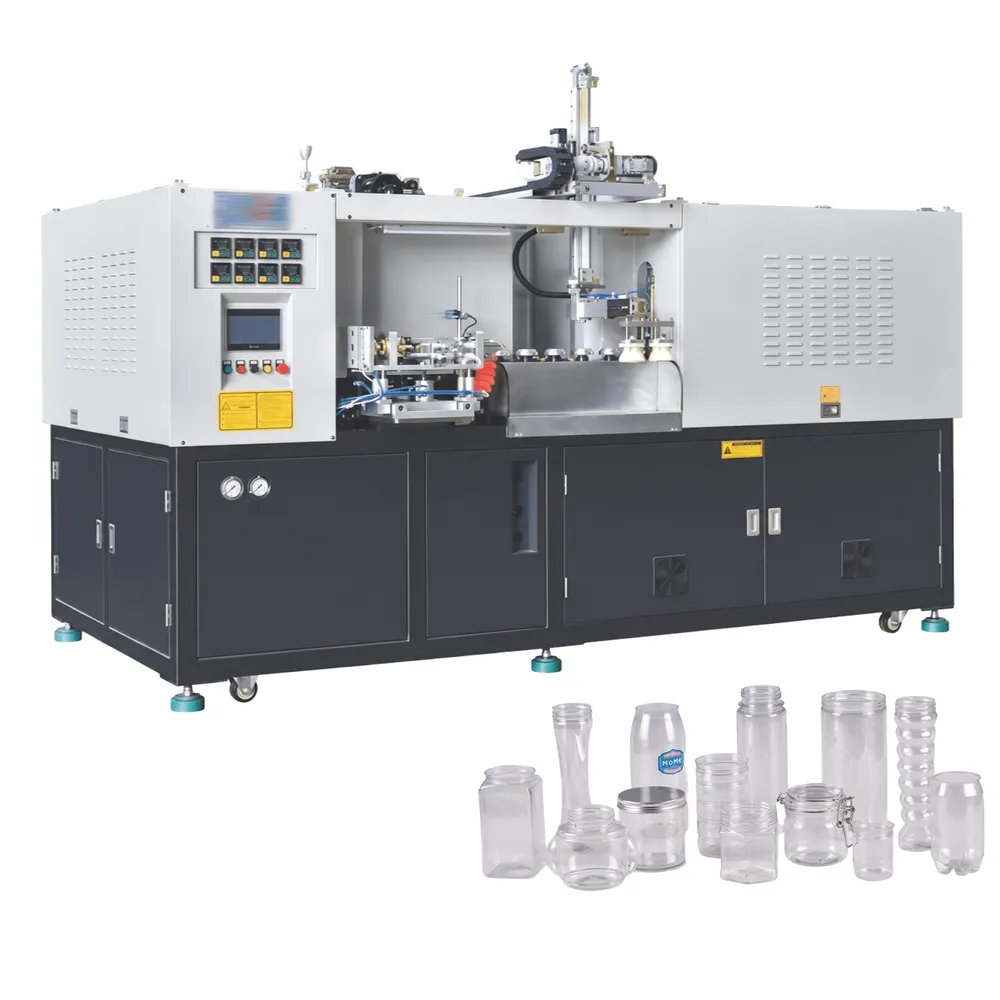
Plastic Blow Molding Machine Process
1. Raw Material Preparation
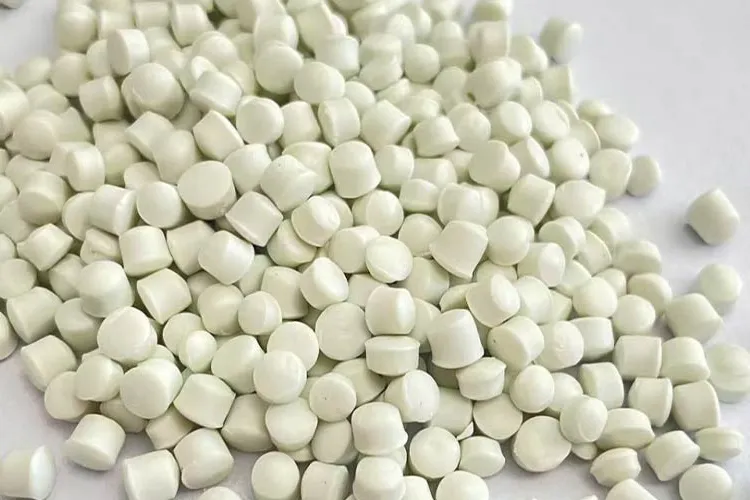
The process begins with preparation of PET or PETG resin pellets. Raw materials are screened for moisture, crystallinity, and contamination, then dried in a dehumidifying dryer (typically to moisture content below 0.005%) to prevent hydrolytic degradation during melting. Properly prepared material ensures consistent melt viscosity and optical clarity in the finished container.
2. Preform Injection Molding
In the two-stage injection blow molding machine process, dried resin is fed into the injection unit barrel, heated and plasticized under precisely controlled temperature profiles, then injected into a preform mold at high pressure. The resulting preform is a thick-walled tube with an already-formed neck finish. Accurate control of barrel temperature, injection pressure, and hold time is critical to achieving defect-free preforms with the correct weight and crystallinity.
3. Preform Preheating
Injection-molded preforms are loaded into the EPA.ES-2C130's infrared heating oven, where multiple independently controlled heating zones bring the preform body to a precise and uniform temperature profile optimized for stretching. The neck area, already formed in the injection mold, remains below its glass transition temperature and is shielded from heat. Uniform radial and axial temperature distribution at this stage directly determines wall thickness consistency in the finished container.
4. Stretch Blow Molding
The correctly conditioned preform is transferred into the blow mold and clamped. A stretch rod first extends axially to the base of the mold at controlled speed, achieving biaxial orientation of the PET molecular chains. Simultaneously, low-pressure air pre-blows the preform, followed by high-pressure blowing air (26-35 kg/cm²) that forces the material against the mold wall to form the final container geometry. Biaxial orientation significantly improves the mechanical strength, barrier properties, and drop resistance of the finished jar or can.
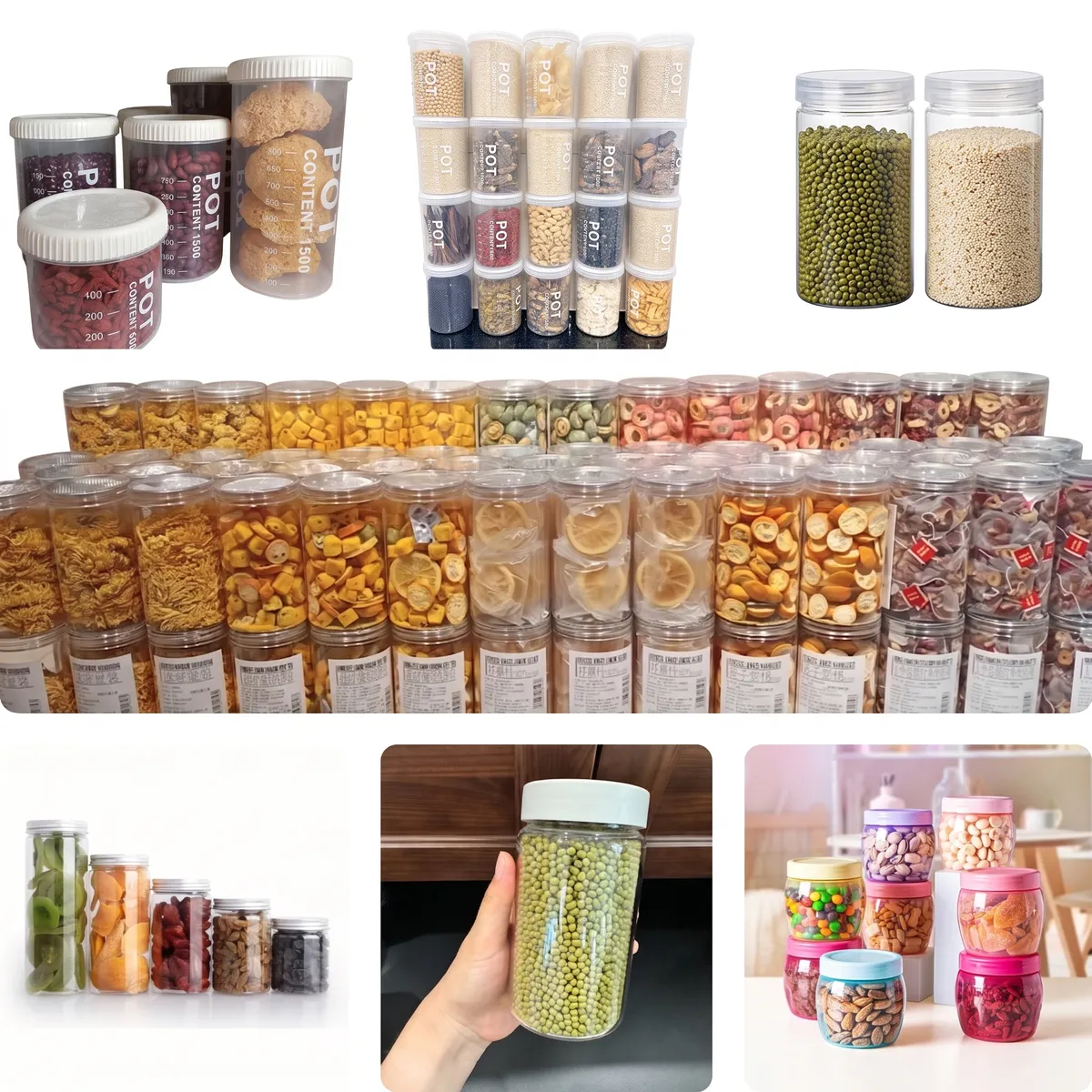
Applications of the Food Jars and Cans Blow Molding Machine
Wide-Mouth Jars for Condiments and Sauces
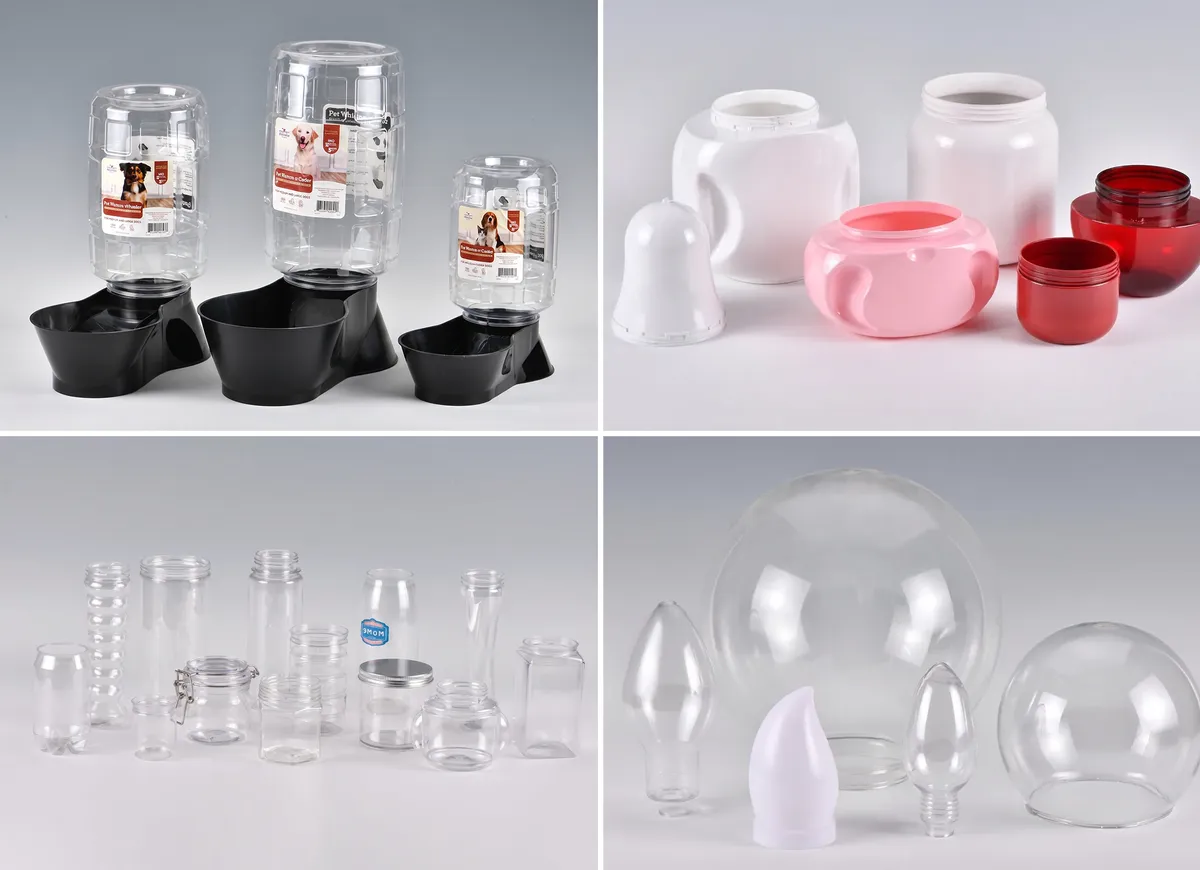
The machine excels at producing food-safe PET wide-mouth jars for jams, peanut butter, honey, hot sauces, chili pastes, and pickled products. With neck diameters up to 98mm (EPA.ES-2C130 model) and the ability to produce containers up to 1,500ml, it provides the volume and opening size required for easy-fill and easy-scoop food formats. Containers exhibit excellent clarity, making products visually appealing on retail shelves.
Incision-Free Pull-Tab Cans
A standout application enabled by Mexico's first incision-free can blowing technology in this series is the production of seamless pull-tab cans for puddings, canned fruits, ready-to-eat snacks, and beverage applications. Eliminating the traditional incision process reduces potential weak points and contamination risks while delivering a premium aesthetic finish. This cans blow molding machine capability is a major differentiator for brands targeting premium food retail markets.
Dried Fruit and Nut Packaging Containers
For the growing dried fruits, nuts, and healthy snack sector, the EPA.ES-2C130 produces wide-mouth PET jars that offer superior moisture barrier properties, outstanding transparency for product visibility, and easy resealability. Uniform wall thickness across the container body ensures robust structural integrity during stacking, shipping, and retail display. These containers fully comply with international food contact material standards.
Edible Oil Containers
The series supports production of PET bottles and jars for edible oils, including olive oil, cooking oil, and specialty gourmet oils. PET's excellent chemical resistance to food-grade oils, combined with the machine's ability to produce larger container formats through higher-capacity models (up to 15,000ml), makes it the preferred choice among edible oil bottle blow molding machine manufacturers serving the food processing and retail sectors globally.
Health Foods and Nutritional Supplements
Wide-mouth PET jars produced by this machine are widely used for protein powders, vitamin supplements, herbal products, and functional food packaging. The machine's precision neck-finish formation ensures reliable sealing compatibility with child-resistant closures and tamper-evident caps, meeting the regulatory requirements of health and nutrition product packaging in international markets including the US, Europe, Australia, and Latin America.
Food Service and Industrial Food Packaging
Higher-capacity models in the series, such as the EPA.ES-4C150 reaching up to 4,000 bph, and models covering up to 15,000ml volume, serve industrial-scale food ingredient packaging for commercial kitchens, catering operations, and institutional food service. The machine's stable high-speed output, combined with consistent container dimensions, enables seamless integration into automated filling and capping production lines.
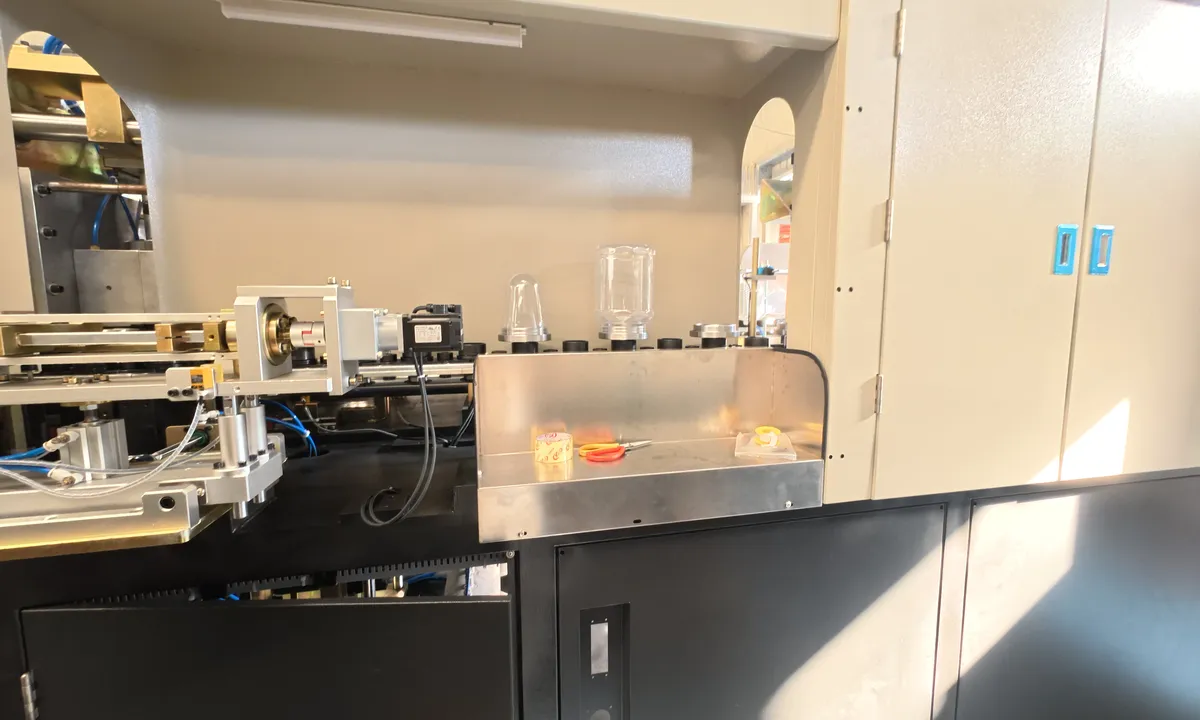
EPA.ES-2C130 Plastic Blow Molding Machine Parts
1. Preform Heating Unit
The heating unit comprises multiple independently controlled infrared heating zones arranged around a rotating preform carrier with a 60-position preform holder. Each zone can be individually tuned to achieve an optimized axial and radial temperature profile on the preform body before it enters the blow mold. Precise temperature management in this unit is the single most important factor determining wall thickness uniformity and container clarity in the finished wide-mouth jar or can.
2. Clamping Unit
The clamping unit provides precise, high-force mold closing and locking during the blow molding cycle. The EPA.ES-2C130 features a 160mm clamping stroke and 200mm mold-close distance. The robust toggle or servo-driven clamping mechanism ensures the mold halves are held firmly closed against the internal blowing pressure (up to 35 kg/cm²), preventing flash formation and ensuring parting line quality on the finished food container. Balanced clamping force also extends mold service life considerably.
3. Stretch Rod Assembly (Blowing Unit)
The blowing unit incorporates a servo-actuated stretch rod assembly with a 350mm stretching stroke. The stretch rod descends axially into the heated preform while low-pressure air initiates radial expansion, followed by high-pressure blowing air at 26-35 kg/cm². This biaxial orientation process enhances the mechanical properties of the finished PET container, increasing drop impact resistance, top-load strength, and gas barrier performance, all critical for food-grade wide-mouth jar and can applications.
4. Blow Mold
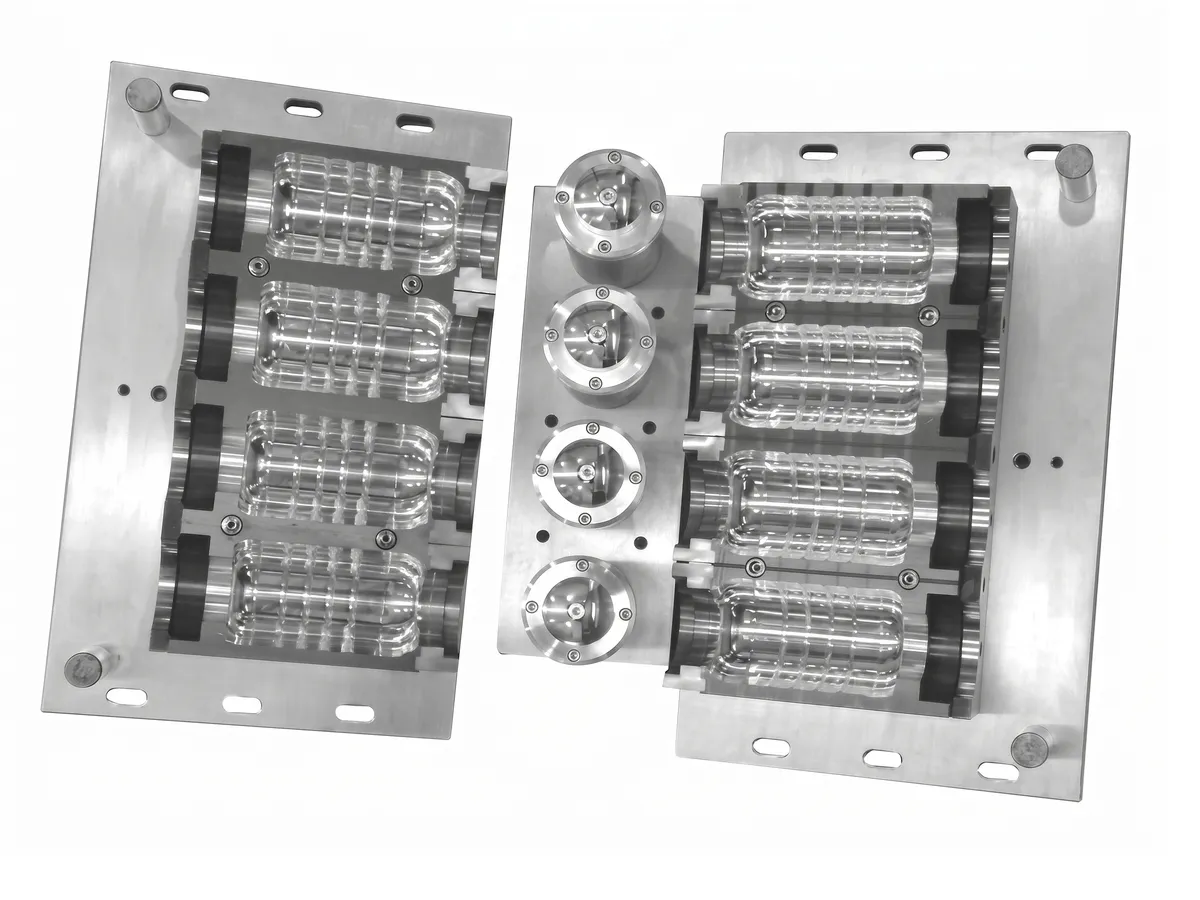
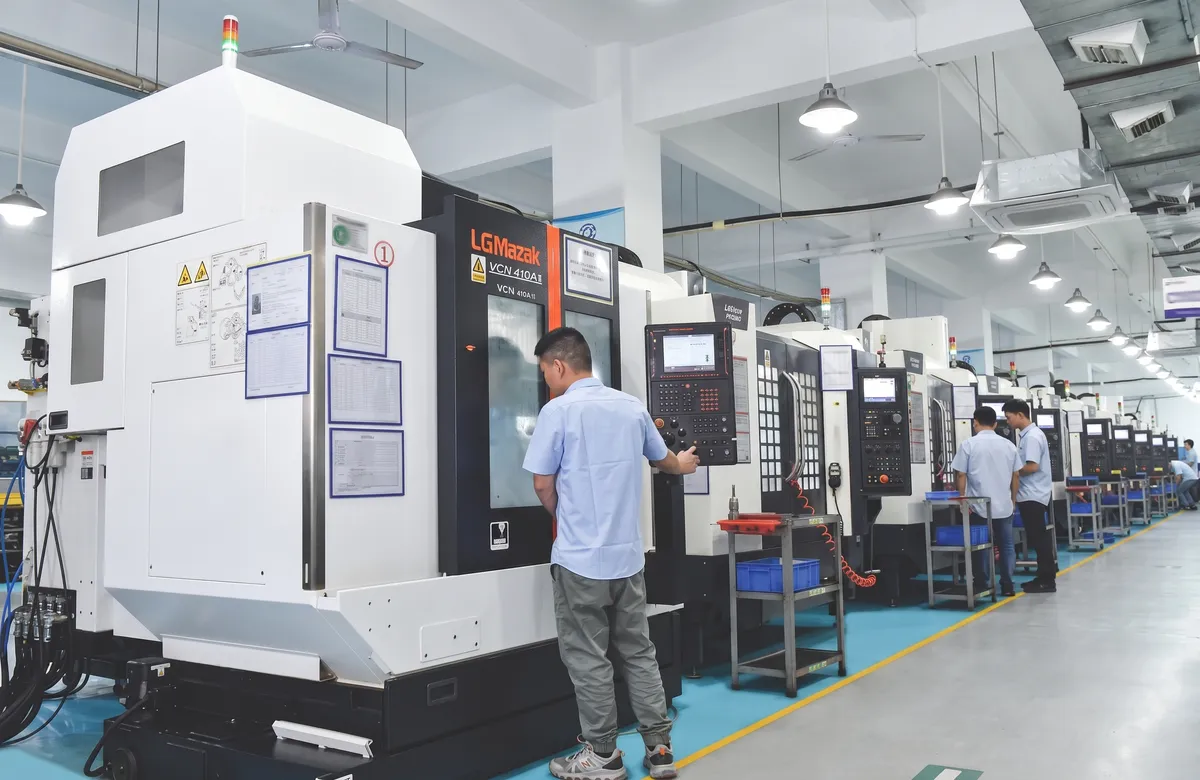
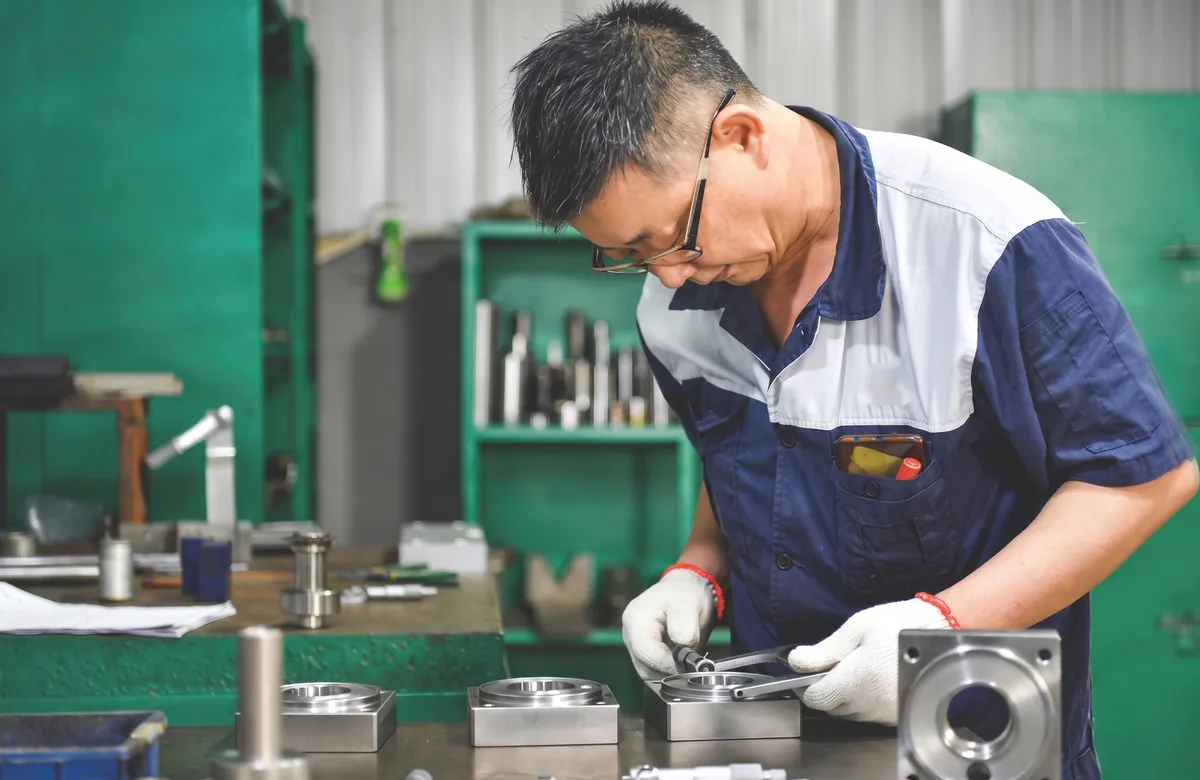
The blow mold is manufactured from high-quality steel, precision machined using CNC equipment, and designed with advanced 3D software to achieve the exact bottle geometry required. Integrated water cooling channels within the mold body rapidly extract heat from the blown container, shortening cycle time and improving throughput. The mold design accommodates versatile bottle shape options and can be customized to specific wide-mouth jar, food can, or specialty container profiles based on customer requirements.
5. Cooling System
The cooling system maintains mold water temperature between 8-12°C at 30 ltr/min flow rate and 5-6 kg/cm² operating pressure. Stable mold temperature is critical to achieving rapid and uniform solidification of the blown PET container, preventing warpage, haze, and dimensional variation. An external chiller unit (available as auxiliary equipment) maintains cooling water at the specified temperature, even during extended high-speed production runs where heat load from both the preforms and the blowing process is substantial.
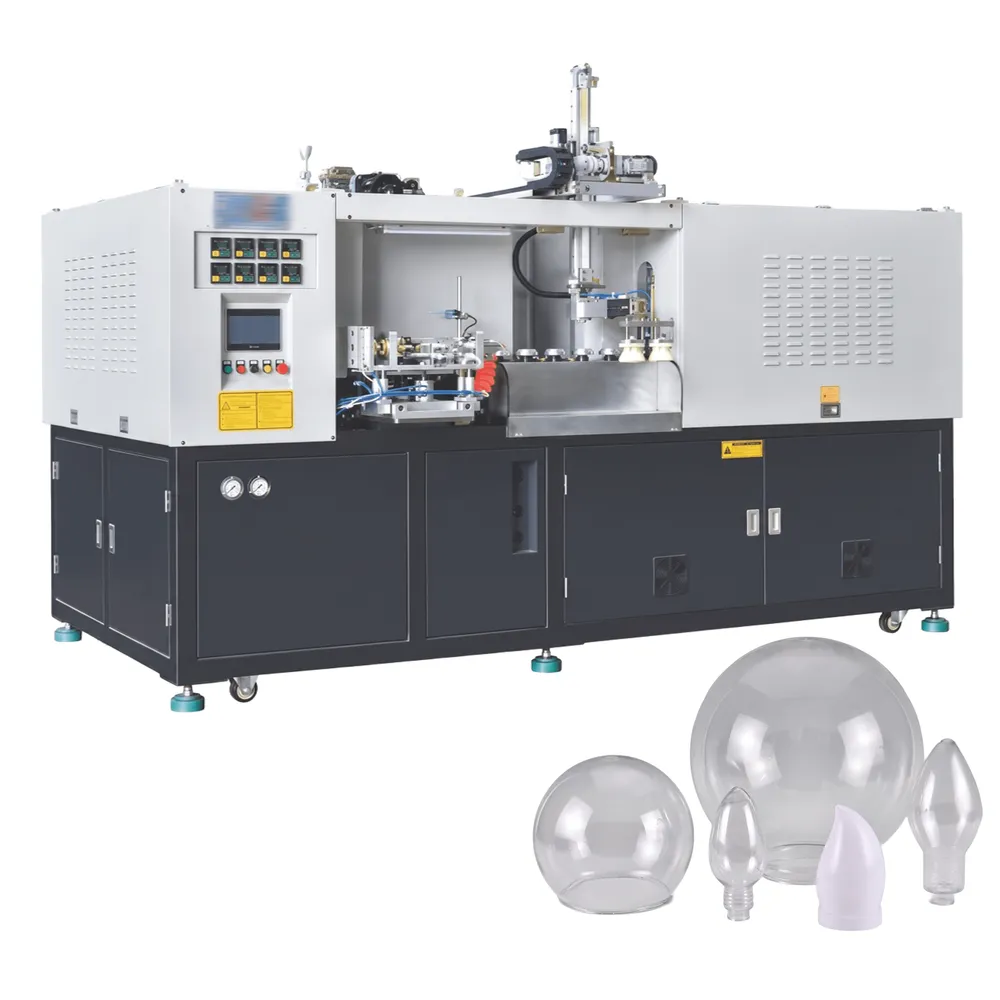
6. PLC Control System
The machine is controlled by a high-precision PLC control panel with a full-color touchscreen HMI. Operators can set and monitor all blow molding machine process parameters, including each heating zone temperature, stretch rod speed and timing, blowing pressure curves, mold clamping force, and cycle synchronization. The system supports multi-recipe storage for rapid changeover between different bottle formats, making it practical for production facilities running multiple product SKUs on a single machine.
7. Preform Transport and Transfer System
The automated preform loading and transfer system handles movement of preforms from the input hopper through the heating oven and into the blow mold without manual handling, ensuring fully automatic operation. The 60-position preform holder on the EPA.ES-2C130 enables continuous preform heating during the blow cycle of the previous preform set, maximizing machine uptime and minimizing thermal variation between consecutive preforms to ensure consistent output quality at 1,800 bph.
8. Ejection and Discharge System
After the blow and cooling cycle is complete, the ejection system opens the mold and removes finished containers through a controlled mechanical ejection mechanism. Containers are transferred to an output conveyor for downstream handling, inspection, and packaging operations. The fully automated ejection system eliminates the need for manual bottle removal, contributes to uninterrupted production flow, and prevents surface damage to finished food jars and cans that could occur with manual handling.
Compatible Raw Materials
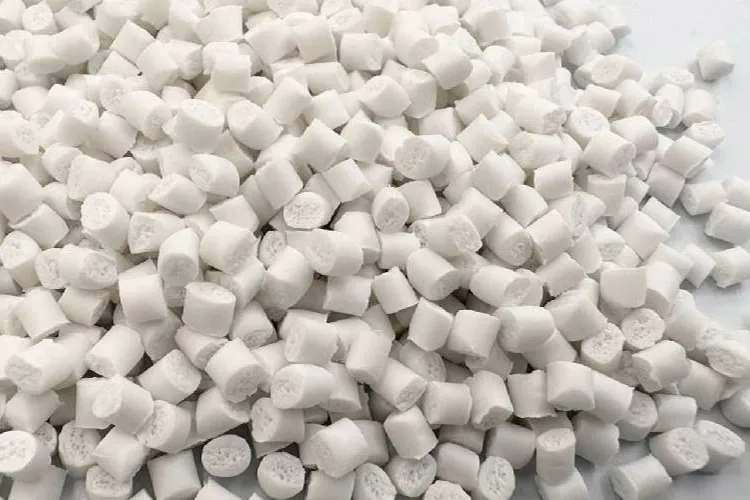
PET (Polyethylene Terephthalate)
The primary material for this machine series. PET offers outstanding clarity, high strength-to-weight ratio, excellent oxygen and moisture barrier properties, and full compliance with food contact regulations. It is the standard material for food jars, condiment containers, and wide-mouth food cans produced on this automatic PET blow molding machine. PET is also fully recyclable, supporting circular economy packaging goals.
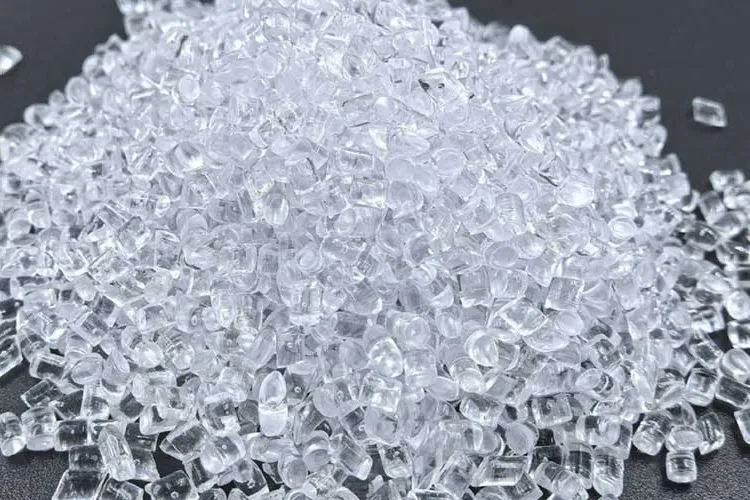
PETG (Polyethylene Terephthalate Glycol)
PETG offers excellent optical clarity comparable to PET, combined with superior impact resistance and easier processing at lower temperatures. It maintains good chemical resistance across a wide temperature range and is particularly well suited for specialty food containers, cosmetic packaging, and health supplement jars where high gloss and premium visual presentation are priorities. PETG bottles and jars process cleanly on this plastic bottle blow molding machine with minimal adjustments.
HDPE (High-Density Polyethylene)
HDPE is a highly versatile polymer widely used for opaque food containers, including those requiring resistance to oils, detergents, and chemicals. With excellent rigidity, low moisture absorption, and strong temperature resistance, HDPE is suitable for food products that require opaque packaging. It is one of the most commonly processed materials on industrial blow molding machines serving the food and household product sectors.
LDPE (Low-Density Polyethylene)
LDPE is a flexible, translucent material used on blow molding machines where squeezability and compliance are required in the finished container. Common applications include dispensing bottles for sauces, dressings, and condiments. LDPE offers excellent moisture and chemical resistance, is food-contact approved, and can be processed at relatively low temperatures, reducing energy consumption during production runs.
PP (Polypropylene)
PP is a tough, chemically resistant material that provides excellent performance at both elevated and low temperatures. It is widely used in food packaging for products that require hot-fill capability, microwave resistance, or sterilization compatibility. PP is also the preferred material for pharmaceutical and nutraceutical packaging on plastic blow molding machines due to its compliance with GMP standards and stringent regulatory requirements in healthcare markets.
PC (Polycarbonate)
Polycarbonate is an exceptionally strong, transparent thermoplastic with outstanding impact resistance and good thermal stability. On blow molding machines, it is used to produce reusable water bottles, sports drinkware, and premium food storage containers. PC containers are lightweight despite their strength, making them favored for applications where durability and longevity are priorities. PC requires careful temperature control during processing to avoid thermal degradation.
PEN (Polyethylene Naphthalate)
PEN is a high-performance barrier material suitable for carbonated beverage bottles and specialty food containers where enhanced CO2 and O2 barrier properties are required beyond what standard PET delivers. PEN offers higher heat resistance than PET, making it suitable for hot-fill beverage applications and products requiring elevated processing temperatures. It is used in premium food and beverage packaging where extended shelf life and carbon retention are commercial priorities.
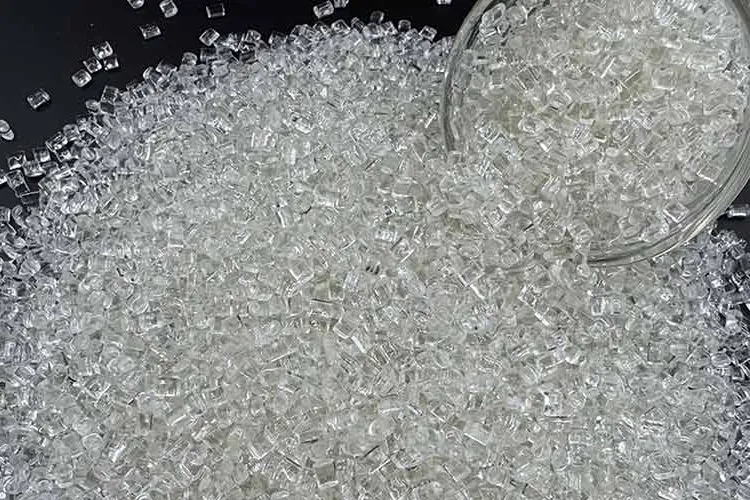
PLA (Polylactic Acid)
PLA is a biodegradable, bio-based thermoplastic derived from renewable resources including cornstarch and sugarcane. It is increasingly adopted for eco-conscious food packaging where sustainability credentials are important to brand positioning. PLA on blow molding machines produces containers with clarity and rigidity similar to PET, but with a significantly lower environmental footprint. It is food-contact approved and compostable under industrial composting conditions, meeting the packaging sustainability demands of international retail markets.
 |
 |
 |
 |
PET Automatic Blow Molding Machine Maintenance Tips
1. Daily Heating Zone Inspection
Inspect all infrared heating lamps and reflector shields daily before starting production. Replace any failed lamps promptly, as a single dead zone creates uneven preform temperature profiles that lead to wall thickness defects, haze, or container failures. Clean reflector surfaces with a dry cloth to maintain heating efficiency. Log lamp replacement dates to identify patterns and schedule preventive replacements before failures occur during production.
2. Cooling Water System Maintenance
Maintain cooling water temperature between 8-12°C as specified for the EPA.ES-2C130. Inspect water supply lines, fittings, and mold water channels monthly for scale buildup, corrosion, or blockage that could reduce flow rate below the required 30 ltr/min. Use treated or deionized water in the cooling circuit to minimize mineral scaling. Flush the cooling circuit seasonally and replace water filters according to the maintenance schedule provided in the machine manual.
3. Mold Inspection and Cleaning
Inspect blow molds and preform injection molds at every scheduled production changeover. Clean mold cavity surfaces with appropriate mold cleaner and soft non-abrasive cloths to remove PET residue, condensation deposits, and dust. Check venting slots for blockage that could trap air during the blow cycle. Lubricate mold guide pins and wear plates according to the manufacturer's schedule. Mold surface scratches or pitting directly affect container surface finish quality and should be polished or repaired promptly.
4. Air System Pressure and Filter Maintenance
Verify that low-pressure air supply is maintained at 7 kg/cm² operating pressure and that the high-pressure blowing circuit is delivering the specified 26-35 kg/cm² at the mold inlet. Inspect and replace compressed air filters and desiccant dryers regularly to ensure oil-free, moisture-free air reaches the blowing unit. Contaminated blowing air is a leading cause of bottle surface defects and premature valve failure in high-pressure air circuits. Drain condensate traps daily during humid weather operation.
5. Mechanical Components Lubrication
All moving mechanical components on the blow molding machine, including clamping toggle linkages, stretch rod guides, preform carrier chains, and transfer mechanisms, require periodic lubrication with the specified grades of grease or oil. Follow the lubrication schedule in the EPA.ES-2C130 operation manual. Under-lubrication accelerates wear on precision-machined surfaces and increases power consumption, while over-lubrication can contaminate preforms or finished containers in food-grade production environments.
6. PLC System and Electrical Cabinet Inspection
Inspect the PLC control cabinet monthly for dust accumulation on circuit boards, cooling fans, and filter mats. Clean cooling fans and replace filter mats to prevent thermal shutdown of control electronics during extended summer production runs. Verify all terminal connections are secure and free of corrosion. Back up machine recipe parameters and PLC programs to external storage quarterly. Keep a record of all parameter changes to facilitate rapid troubleshooting if production quality deviates from baseline specifications.
Food Jars and Cans Blow Molding Machine Mould Features
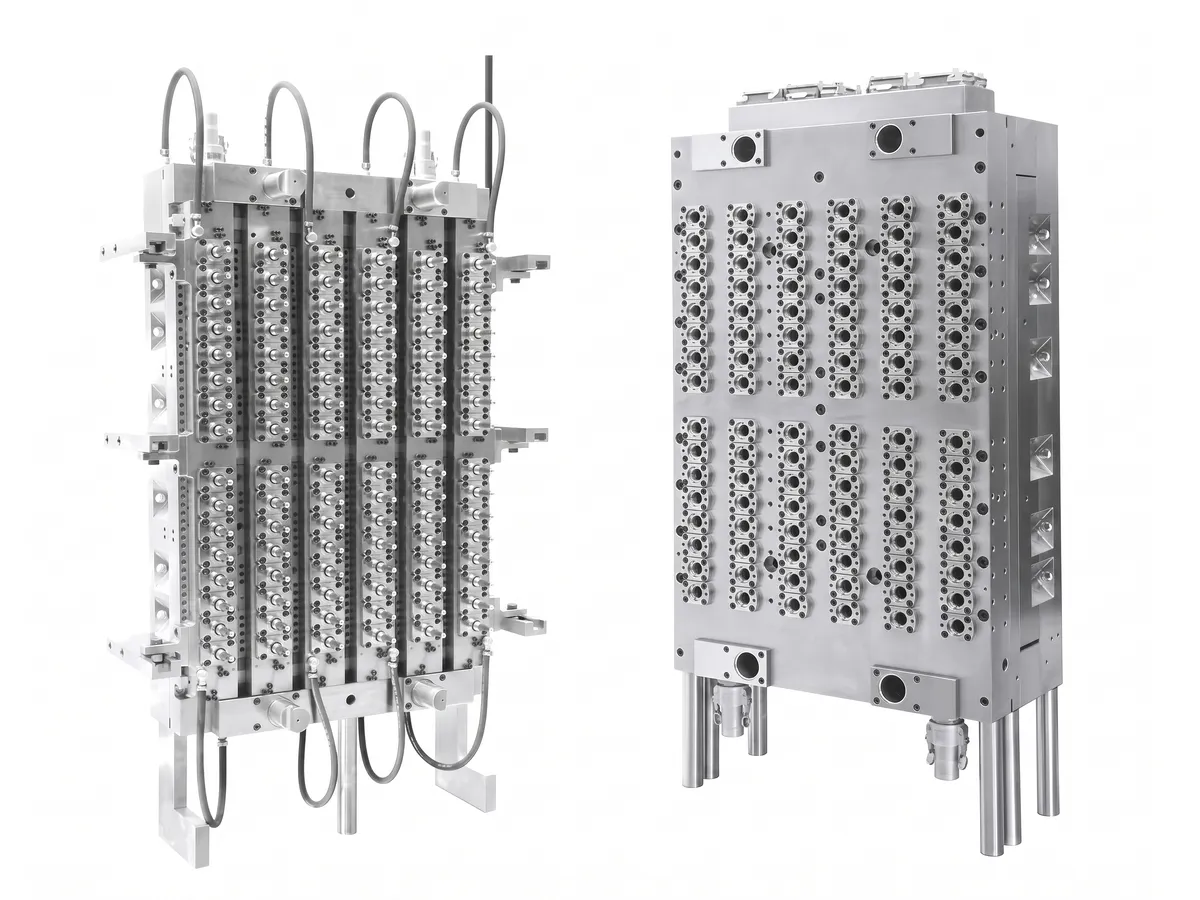
Preform Injection Mold
- The gate (die lip) design is composed of two precision-fitted parts, guaranteeing co-axial alignment of the preform body and gate area during injection, which prevents eccentric wall distribution in the blown container.
- Optimized cooling water channel geometry within the mold body maximizes the heat transfer rate from the injected preform, ensuring rapid cycle times and dimensional stability of the ejected preform.
- Formation components including cavity inserts are manufactured from imported die steel grade 2316, which is rust-resistant and has undergone through-hardening heat treatment to resist the high injection pressures and temperatures involved in PET preform production.
- Core plate, cavity plate, and all structural components are fabricated from 420 stainless steel, providing excellent corrosion resistance in production environments where cooling water condensation is present.
- The modular mold design facilitates easy access for routine maintenance and component replacement, minimizing machine downtime during mold servicing operations.
- Standard interchangeable die fittings enable compatibility across multiple preform specifications, and the advanced mold architecture allows a single mold to produce more than one preform configuration with appropriate inserts.
Blow Mold
- Blow mold bodies are manufactured from high-quality steel selected for appropriate hardness, thermal conductivity, and machinability to support both rapid cooling and extended production life under high-cycle blow molding conditions.
- Every container profile is designed using advanced 3D CAD software, allowing precise simulation of container wall thickness distribution and structural performance before machining, minimizing costly mold revisions.
- A broad range of versatile bottle shape designs is available for customer selection, including standard wide-mouth jar profiles, pull-tab can formats, and custom container geometries tailored to specific food brand packaging specifications.
- Cooling water channel routing within the blow mold is designed to achieve uniform mold surface temperature across the entire cavity, ensuring consistent container geometry and eliminating localized warpage or sink marks.
- All metal mold components are processed on CNC machining centers to achieve the tight dimensional tolerances required for precise parting line alignment, cavity depth consistency, and neck finish accuracy in the finished food container.
 |
 |
Injection Blow Molding Machine vs Extrusion Blow Molding Machine
What Is Extrusion Blow Molding (EBM)?
Extrusion blow molding is a manufacturing process whereby plastic resin is melted and extruded through a die to form a hollow tube called a parison. The parison is captured and sealed within a split metal mold. Compressed air is then injected into the parison, inflating it against the mold walls to form the container shape. Once the plastic has cooled and solidified, the mold opens and the finished part is discharged. EBM is used extensively for producing HDPE bottles, polypropylene containers, PET bottles for larger-volume applications, and complex-handled containers such as jugs and jerricans.
What Is Injection Blow Molding (IBM)?
Injection blow molding shares many fundamental characteristics with conventional injection molding. The IBM process uses an injection molding machine to produce a precision preform, rather than an extruded parison as in EBM. Because the neck finish is formed by injection molding rather than blow molding, IBM achieves significantly higher dimensional accuracy in neck and thread geometry, which is critical for reliable sealing with closures. IBM is primarily used for small-volume, high-precision packaging and articles requiring low weight and high dimensional accuracy, such as pharmaceutical vials, cosmetic bottles, and food supplement containers.
A major advantage of IBM over EBM is that the preform geometry can be engineered to deliver a more controlled and uniform wall thickness distribution in the blown container. IBM is a scrap-free process: because the neck finish is injection-molded, there is no flash trimming required. Energy optimization techniques from injection molding, including improved machine settings, barrel insulation, servo drive motors, and all-electric machine designs, translate directly to IBM, making it a strong candidate for energy-conscious manufacturing operations.
Key Differences: IBM vs EBM
| Dimension | Injection Blow Molding (IBM) | Extrusion Blow Molding (EBM) |
|---|---|---|
| Typical Materials | PET, PETG, PP, PC, Acrylic, POM, PE | HDPE, PP, PET, LDPE, PVC |
| Neck Finish Accuracy | Very high (injection formed, not blown) | Lower (blown, requires trimming) |
| Scrap / Flash | None (scrap-free process) | Yes (flash must be trimmed and reclaimed) |
| Wall Thickness Control | Extremely precise and uniform | Less consistent; operator skill critical |
| Container Shape Flexibility | Limited to blow-up ratio 3:1 or less; no handles | High; complex shapes, handles, flat forms |
| Tooling Cost | High (two mold types required) | Lower initial tooling cost |
| Best for Volume | High-volume small containers (under 5 oz / 150ml) | Wide range from under 1 oz to 55 gallons |
| Container Size Range | Typically 1ml to 1,000ml (IBM standard) | Under 1 oz to 55 gallons |
IBM Advantages
- Scrap-free process: containers require no trimming or post-mold deflashing operation
- Neck finishes are injection molded at a high level of dimensional accuracy
- Weight control is extremely precise and material distribution is uniform across all cavities
- Very low unit cost for small-capacity containers (5 oz or less) at high production volumes
- Suitable for food, pharmaceutical, and cosmetic packaging requiring tight tolerances
IBM Disadvantages
- Higher tooling cost (both preform injection mold and blow mold required)
- Mold flexibility is lower than EBM
- Generally not economical for containers over 16 oz without specialized configurations
- Container shapes are limited to a blow-up ratio of 3:1 or less
- Not well suited for handled containers
EBM Advantages
- Low initial mold tooling costs
- High design flexibility; molds can accommodate interchangeable neck finishes
- Container sizes range from less than 1 oz to 55 gallons
- Container shape is not restricted; handles, flat forms, and complex profiles are achievable
- Wide selection of machinery and tooling to match specific volume requirements
EBM Disadvantages
- Containers have flash that must be trimmed, increasing labor cost and generating material waste
- Unit cost is significantly higher than injection blown bottles for small-capacity containers (under 5 oz)
- Operator skill is more critical to maintaining container weight and quality consistency
Choosing between IBM and EBM: If your application requires tight tolerances on neck finish and wall thickness, is using PET or PETG materials, and involves containers without handles in volumes suitable for IBM ratios, the injection stretch blow molding machine approach delivers superior quality and lower scrap rates. For complex handle-ware, very large containers, or HDPE-based products, EBM remains the standard. The EPA.ES-2C130 wide-mouth jar and cans series is purpose-built for the injection stretch blow molding machine process applied to food-grade PET containers, combining the precision of injection molding with the throughput of fully automated blow molding.
How to Choose a Plastic Bottle Blow Molding Machine
1. Type of Blow Molding Machine
There are three main types of blow molding machines: extrusion blow molding, injection blow molding, and injection stretch blow molding machines. Extrusion machines use an extruder to create a parison from melted resin, suitable for HDPE jugs and handled containers. Injection blow molding machines combine injection and blowing in one cycle for high-precision small containers. Injection stretch blow molding machines like the EPA.ES-2C130 produce biaxially oriented PET containers with superior strength and barrier properties, making them the correct choice for food-grade wide-mouth jars, cans, and PET bottle applications.
2. Production Capacity Requirements
Many blow molding machine suppliers report theoretical output figures that differ from actual sustained production rates. As a practical guideline, select a machine whose theoretical capacity exceeds your target production requirement by at least 25%, to account for maintenance downtime, changeovers, and efficiency losses. The EPA.ES-2C130 delivers 1,800 bph theoretical output, while higher-capacity models in the same series reach up to 4,600 bph. For high-volume food packaging operations requiring maximum throughput, a high speed blow molding machine with multiple cavities is strongly recommended.
3. Energy Consumption and Operating Cost
Energy consumption is one of the most significant ongoing costs in blow molding operations. The EPA.ES-2C130 has a maximum heating power of 42.5 kW but operates at just 8-13 kW of actual working heating power, reflecting its energy-efficient infrared heating design. When evaluating blow molding machine manufacturers, compare actual working power consumption rather than installed maximum power ratings. Servo-driven systems, efficient heating lamp designs, and precise temperature control all contribute to meaningfully lower electricity costs over the machine's operating life.
4. Fully Automatic vs Semi-Automatic
Semi-automatic blow molding machines involve lower initial investment and simpler maintenance, but require greater manual intervention, limiting output consistency and increasing labor dependency. A fully automatic blow molding machine offers higher output, lower labor cost per unit, superior consistency, and greater enterprise efficiency, making it the preferred choice wherever labor costs are significant or production volumes are substantial. For food packaging operations requiring certified GMP or food safety standards compliance, fully automatic operation eliminates human contact with containers during production, which is often a regulatory requirement.
5. Clamping Force Adequacy
Clamping force is the pressure the machine applies to hold mold halves closed during the blowing cycle against internal blowing pressure. Insufficient clamping force allows the mold to partially open under blowing pressure, creating flash at the parting line, material waste, and potential safety risks. Ensure the machine you select provides sufficient clamping force for your largest planned container format and the blowing pressure required by your material and container geometry. The EPA.ES-2C130's clamping mechanism is rated to maintain secure mold closure at operating blowing pressures of 26-35 kg/cm².
6. Mold Considerations
For any blow molding program, tooling represents the most capital-intensive and time-consuming investment. It is strongly recommended to purchase molds and machines from the same blow molding machine manufacturer wherever possible, as integrated design and testing ensures compatibility between preform geometry, mold cooling, and machine parameters. Molds can be fabricated from aluminum (lower cost, shorter life), pre-hardened steel (balanced cost and durability), or fully hardened tool steel (highest cost, longest life for high-volume production). Discuss your annual production volumes and product change frequency with your supplier before finalizing tooling material selection.
7. Auxiliary Machinery Requirements
A complete blow molding production line requires more than the core blow molding machine itself. Essential auxiliary equipment includes air compressors (for both low-pressure and high-pressure blowing air), a chiller unit (to maintain cooling water at the required 8-12°C), an air storage tank, a dehumidifying dryer (for PET and PETG resin preparation), and a central conveyor system. When comparing total investment costs between blow molding machine suppliers, confirm whether quotations include auxiliary equipment or reflect bare machine pricing only, as this significantly affects total project budget accuracy.
Why Choose Ever-Power's PET Blow Molding Machine?
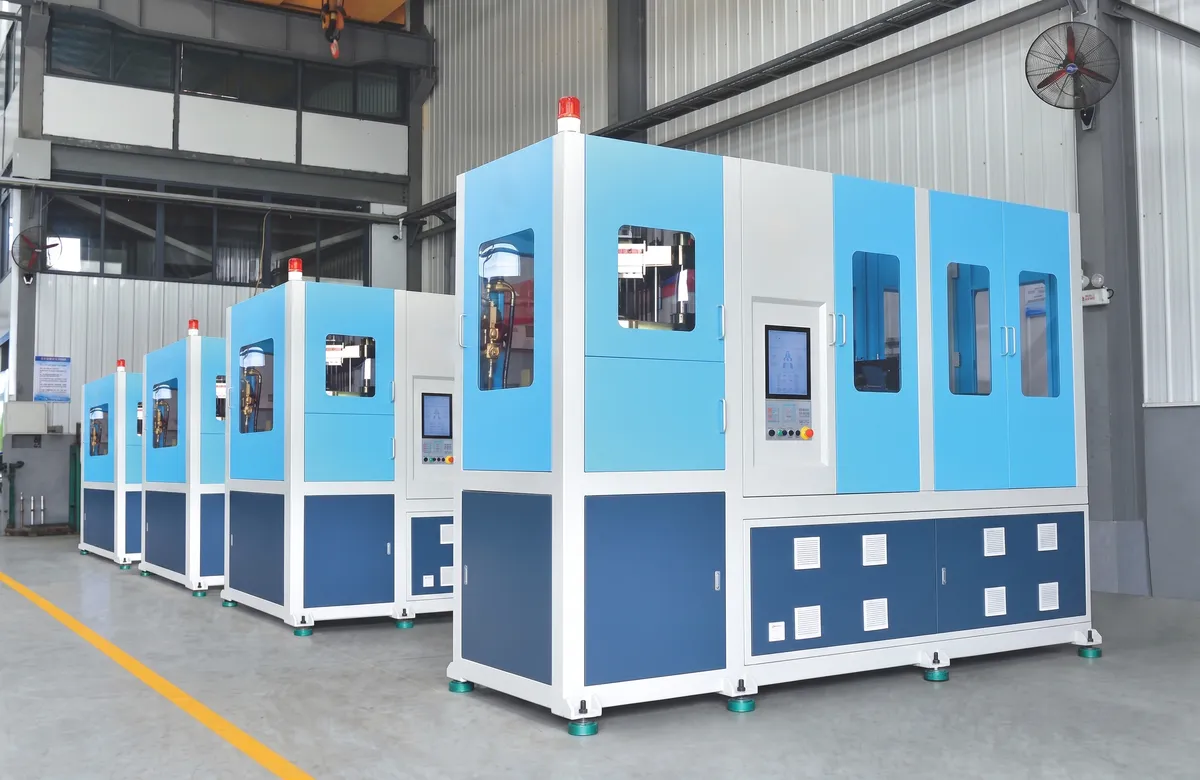
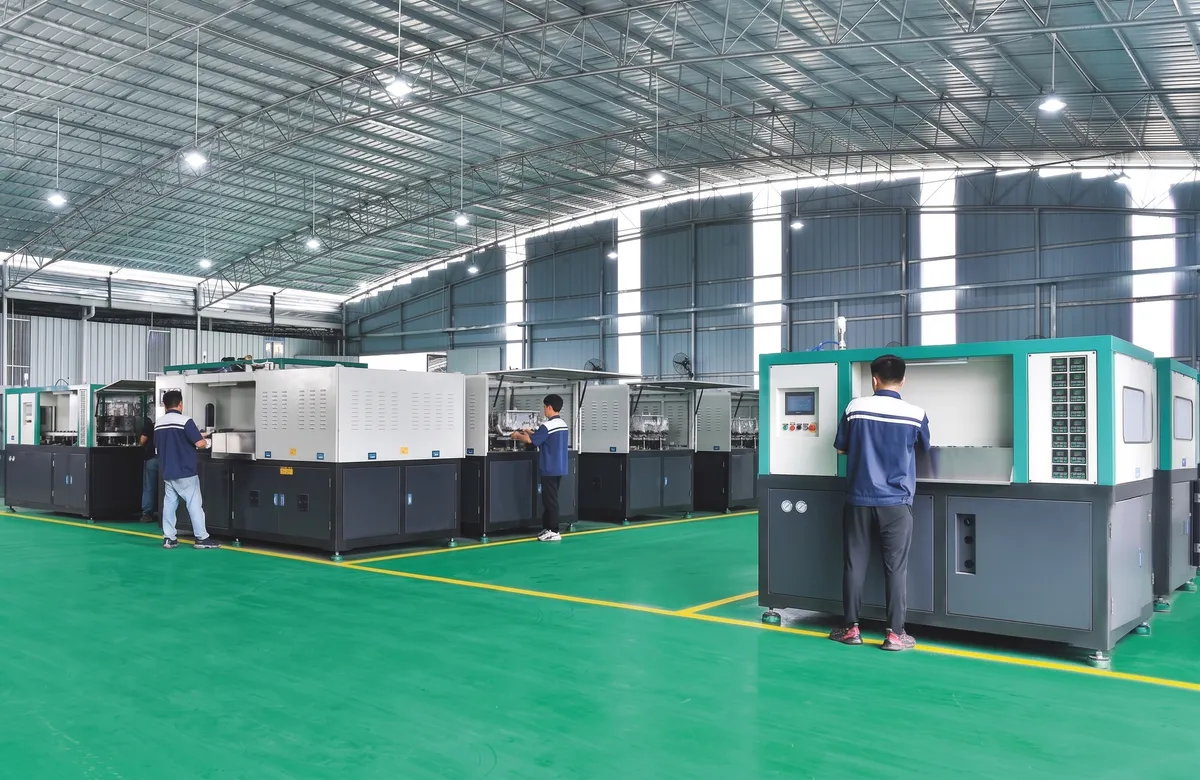
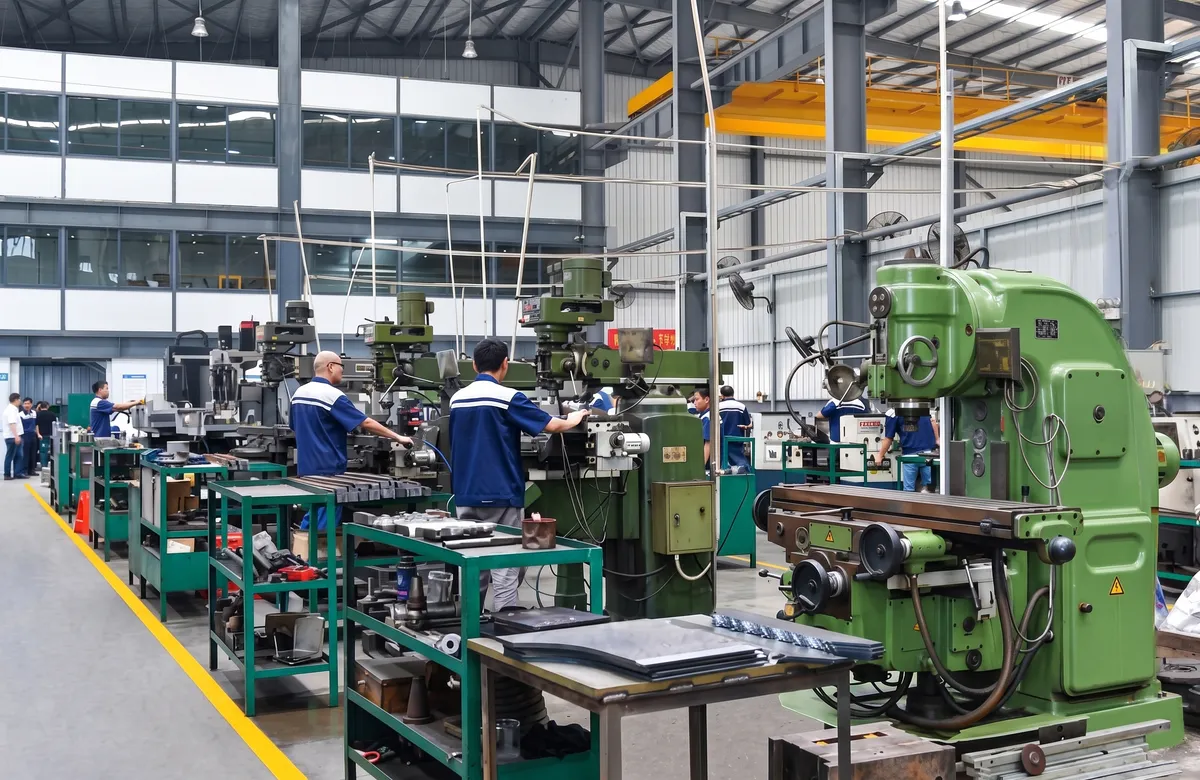
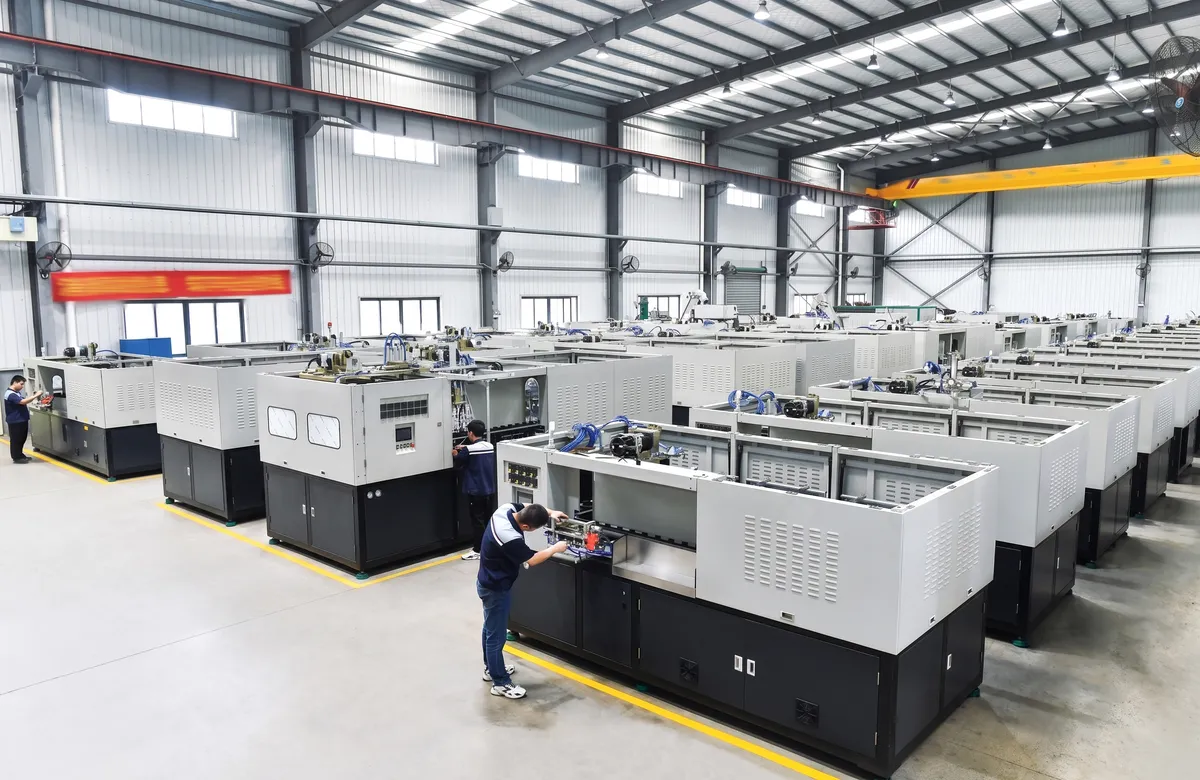
Mexico Ever-Power ISBM Machinery Co., Ltd is a dedicated manufacturer specializing in the research and development, production, sales, and international trade of automatic blow molding machines. Our product range covers injection blow molding machines, extrusion blow molding machines, injection stretch blow molding machines, and complete auxiliary machinery systems. With a strategically advantageous geographic location and efficient global logistics connectivity, we serve customers across food packaging, pharmaceutical packaging, cosmetic packaging, healthcare packaging, and industrial container sectors worldwide.
Ever-Power's engineering team brings together senior technical professionals with deep expertise in both injection blow molding machine design and blow molding tooling development. Our engineers combine extensive theoretical knowledge with decades of hands-on production experience, enabling us to provide customers with precise, practical recommendations for machine model selection, mold design, material compatibility, and production process optimization. This expertise base is the foundation of our ability to deliver complete "turnkey" blow molding production solutions tailored to each customer's specific container specifications and production targets.
We engineer and produce machines capable of processing a comprehensive range of engineering-grade thermoplastics, including HDPE, LDPE, PET, PETG, PP, PS, PPSU, PC, Tritan, ABS, PLA, EVA, PCTG, and environmentally sustainable materials such as bio-based corn-derived polymers. Our container size capability spans from 1ml to 1,000ml and beyond, serving customers from small-batch specialty packaging operations to large-scale continuous food and beverage container production lines.
Ever-Power's service commitment covers the full customer journey: comprehensive pre-sales technical consultation to identify the right blow molding machine configuration; transparent in-sales communication with accurate specification documentation and clear contract terms; and robust after-sales support including on-site commissioning, operator training, remote fault diagnosis, and efficient spare parts supply. This three-stage service model has earned Ever-Power a reputation among international blow molding machine suppliers for reliability and responsiveness.
Ever-Power adheres to the enterprise development principles of self-reliance, integrity, pragmatism, innovation, and responsibility. Our production facilities hold multiple national patents across blow molding machine mechanical systems and tooling design, and our machines have been certified under ECM Verification of Compliance and other international quality standards. Whether you are investing in your first automatic PET blow molding machine or expanding an established production line, Ever-Power offers the technical depth, manufacturing quality, and service reliability to make that investment a long-term competitive advantage for your business.
 |
 |
 |
 |
 |
 |
Frequently Asked Questions
Q: What is the actual production output of the EPA.ES-2C130 fully automatic blow molding machine?
A: The EPA.ES-2C130 has a theoretical output of 1,800 bottles per hour with 2 cavities. In actual sustained production, real output typically ranges from 1,500 to 1,750 bph depending on container size, material type, cycle tuning, and operating conditions such as ambient temperature and compressed air supply stability. When planning production capacity, we recommend treating 85-90% of theoretical output as a realistic sustained production target and sizing your line accordingly.
Q: What is the maximum neck diameter this food wide-mouth jars blow molding machine can produce?
A: The EPA.ES-2C130 model can produce containers with a neck diameter of up to 98mm. Across the full Food Jars and Cans Series, certain models are capable of producing containers with neck finishes up to 180mm, which is enabled by Mexico's first incision-free automatic blow molding process for pull-tab cans. If your application requires a neck diameter above 98mm, please contact our sales team to identify the appropriate model within the series.
Q: What materials can this PET blow molding machine process?
A: This machine is primarily optimized for PET (Polyethylene Terephthalate) and PETG (Polyethylene Terephthalate Glycol), which are the standard materials for food-grade wide-mouth jar and can production. Depending on the specific model and configuration within the series, it can also process PP (Polypropylene) and other engineering-grade thermoplastics. Please specify your intended material when requesting a quotation so our team can confirm compatibility and advise on any heating or processing parameter adjustments required.
Q: Does this automatic blow molding machine include auxiliary equipment such as an air compressor and chiller?
A: The EPA.ES-2C130 blow molding machine is quoted as a core unit. Auxiliary equipment including high-pressure air compressors, air storage tanks, chiller units, dehumidifying dryers, and conveyors are available from Ever-Power as additional items and can be incorporated into a complete turnkey line quotation. We strongly recommend purchasing matched auxiliary equipment to ensure the low-pressure and high-pressure air supply and cooling water specifications are met, as inadequate auxiliary equipment is a common cause of below-specification production performance.
Q: What container sizes can the Food Jars and Cans Series cover in total?
A: The full Food Jars and Cans Blow Molding Machine Series spans container volumes from 1,000ml (EPA.ES-1C130 model) up to 15,000ml (EPA.ES-2C260 model), with intermediate options at 1,500ml, 2,500ml, 5,000ml, and 8,000ml. The EPA.ES-2C130 specifically covers containers up to 1,500ml. If your production requires larger containers, models such as the EPA.ES-4C150, EPA.ES-2C200, or EPA.ES-2C260 should be evaluated. Contact our team for model selection guidance based on your specific container volume and production output requirements.
Q: What is the difference between a two-stage blow molding machine and a one-step injection blow molding machine?
A: A two-stage (two-step) blow molding machine separates preform injection molding and blow molding into two distinct machines and processes. Preforms are injection molded in one machine, stored or transported, then reheated and blown into final containers on a separate stretch blow molding machine. This allows high preform production efficiency and scheduling flexibility. A one-step injection blow molding machine performs injection and blowing in a single integrated machine without an intermediate preform storage step. The two-stage approach, as used in the EPA.ES-2C130, provides better output flexibility, easier mold changes, and is preferred for high-volume production of food containers.
Q: Can the molds be customized to produce our specific jar shape and dimensions?
A: Yes. Ever-Power provides fully custom blow mold and preform injection mold design and manufacturing services. Customers can supply their container drawings or 3D CAD files, and our engineering team will design and manufacture molds to match the specified geometry, neck finish standard, container volume, and aesthetic requirements. We use advanced 3D CAD software for container design simulation before machining, and all mold metal components are CNC machined to precision tolerances. Custom mold development lead times typically range from 25-45 days depending on complexity.
Q: What technical support is available after purchasing this plastic blow molding machine?
A: Ever-Power provides comprehensive pre-sale, during-sale, and after-sale technical support. After delivery, our engineering team offers remote commissioning guidance via video call, on-site installation and commissioning at customer facilities (upon request, subject to travel arrangement), operator training, and ongoing remote technical support for fault diagnosis and parameter optimization. We maintain spare parts inventory for all standard blow molding machine parts and can supply critical components for air express delivery to minimize production downtime. Our international sales and technical team is available in multiple time zones to support global customers.
Q: How energy efficient is the EPA.ES-2C130 compared to older blow molding machine models?
A: The EPA.ES-2C130 is designed with modern energy efficiency as a core objective. Despite a maximum installed heating power of 42.5 kW, the actual working heating power during normal production is just 8-13 kW, reflecting the efficiency of the infrared lamp heating system and the PLC-managed heating control that activates zones only when preforms are present. Servo drive systems replace hydraulic drives in key motion axes, further reducing energy consumption. Customers transitioning from older hydraulic or resistive-heating blow molding machines typically report electricity savings of 15-25% per unit of output.
Q: Is this machine suitable for producing PET containers that meet international food safety standards?
A: Yes. The EPA.ES-2C130 is designed for food-grade container production. The machine's automated operation minimizes human contact with containers during the blow molding process, which is a key requirement in food packaging environments. The PET and PETG materials used are compliant with food contact regulations in major markets including EU Regulation 10/2011, US FDA standards, and international food packaging standards. Container wall thickness uniformity, clarity, and chemical resistance all meet the requirements for direct food contact applications. Customers in regulated markets should additionally verify that their specific preform material and colorant suppliers meet applicable compliance certifications.
Customer Reviews
Carlos Mendoza, Food Packaging Industry, Mexico
We have been running the EPA.ES-2C130 for about eight months now at our condiment packaging facility in Monterrey, and this machine has honestly surpassed what we expected when we ordered it. We produce 1,000ml wide-mouth jars for our chili sauce line and the output consistency is exceptional. Our quality control rejection rate on neck diameter is under 0.4%, which is a major improvement over our old equipment. The Ever-Power team spent two full days commissioning the machine on-site and made sure our operators understood every adjustment point before they left. Very happy with the purchase.
Abdullah Al-Rashidi, Food Packaging, Saudi Arabia
I was a bit skeptical at first about buying a machine directly from a Chinese blow molding machine manufacturer, but after comparing three suppliers and visiting Ever-Power's facility in Guangdong, I decided to go with them. We received the EPA.ES-4C130 model for our dried nut packaging line and it has been running at about 3,000 bottles per hour in actual production, very close to the rated 3,200 bph. The mold quality is genuinely impressive. Delivery was about five weeks and everything arrived in perfect condition. Would recommend without hesitation.
James Thornton, Food Packaging, Australia
Our company specializes in honey and jam packaging for the Australian market and we needed a wide-mouth jar blow molding machine that could handle 500ml to 1,500ml containers on the same line. The EPA.ES-2C130 does exactly that. The bottle transparency is outstanding and our retail customers comment on the premium look of the containers. What really stood out was the after-sales support. When we had a heating lamp failure on month three, the spare parts arrived from Guangzhou within six days. That kind of service matters when you are running a food production line.
Emeka Okafor, Edible Oil Packaging, Nigeria
We purchased the EPA.ES-2C200 model for producing 5,000ml edible oil containers and this machine has been running in our Lagos facility for over a year now without any major issues. The energy consumption is notably lower than our previous equipment, which was using older heating technology. Our electricity bill for this line dropped by around 18% compared to before. The PLC system is intuitive and our operators learned it quickly. I will be ordering a second machine from Ever-Power for our new production site next quarter. Solid product from a reliable blow molding machine manufacturer.
Rodrigo Ferreira, Nutritional Supplement Packaging, Brazil
We tried two other blow molding machine suppliers before settling on Ever-Power for our protein powder jar production line in Sao Paulo. The difference in build quality is noticeable right away. The EPA.ES-4C130 has been running three shifts a day, six days a week since we commissioned it ten months ago. In that time we have only stopped the line once for a minor sensor calibration issue that was resolved remotely by the Ever-Power technical team via video call within an hour. Our production manager specifically praised the preform holder mechanism, which is much smoother than what we had before. Great machine overall.
Tan Wei Liang, Food Container Manufacturing, Malaysia
I manage procurement for a food container manufacturer in Kuala Lumpur and we have now bought three machines from Ever-Power over the past four years. Each purchase has been a good experience. The EPA.ES-2C130 we ordered last year is producing 1,500ml condiment jars and the output is consistent. What I particularly appreciate as a procurement manager is the transparency in the technical documentation. Specification data in the catalogs is accurate and the machines perform as described. That is not always the case with suppliers in this category. Logistics from Mexico to Malaysia was also handled without issues.
Fatima Benali, Food Packaging, Morocco
Our bakery supply company in Casablanca needed a machine for wide-mouth PETG jars used in premium biscuit and cookie packaging. Ever-Power's sales team helped us identify the right model and configure the mold to our jar dimensions. The machine was delivered and installed faster than expected. The PETG processing on the EPA.ES-2C130 required some heating zone tuning on day one, which the Ever-Power technician handled remotely. Since then it has run very reliably. Container clarity is excellent and our retail clients are very satisfied with the packaging look. I would give the product and service five stars.
Ivan Petrenko, Food Canning Industry, Ukraine
We compared Ever-Power against two European blow molding machine manufacturers and one other Chinese brand before making our decision. The key factors for us were neck finish dimensional accuracy, after-sales support availability, and price. Ever-Power scored well on all three. We are producing 800ml wide-mouth jars for canned fruits and the neck finish tolerance has been consistently within specification. I was particularly impressed by how quickly the technical documents and spare parts list were provided before we signed the contract. That level of pre-sales professionalism is not common and it gave us confidence in the supplier relationship.
Usman Malik, Snack Food Packaging, Pakistan
Running the EPA.ES-4C150 at our snack food packaging plant in Lahore for the past fourteen months. This machine is producing 4,000 bph of 2,500ml dried fruit containers and in that time the only scheduled downtime has been routine mold cleaning and lamp replacement. The cooling system is very stable and we rarely see temperature fluctuation affecting container quality. Spare parts ordering through Ever-Power's international sales team has been straightforward. Shipping times from Guangdong to Lahore via sea freight were about three weeks for parts orders. Highly satisfied with the investment and would recommend to other food packaging operators in the region.
Additional information
| Edited by | Yjx |
|---|
Related products
-
EPA.ES-2C130 Fully Automatic Blow Molding Machine for Edible Oil and Handle Bottles
-
EPA.AS-4C76.2 Fully Automatic Blow Molding Machine for Daily Chemicals & Cosmetic Bottles
-
EPA.ES-4C76 Fully Automatic Blow Molding Machine for Pesticide and Chemical Bottles
-
EPA.ES-2C100 Fully Automatic Blow Molding Machine for Daily Chemicals & Cosmetic Bottles