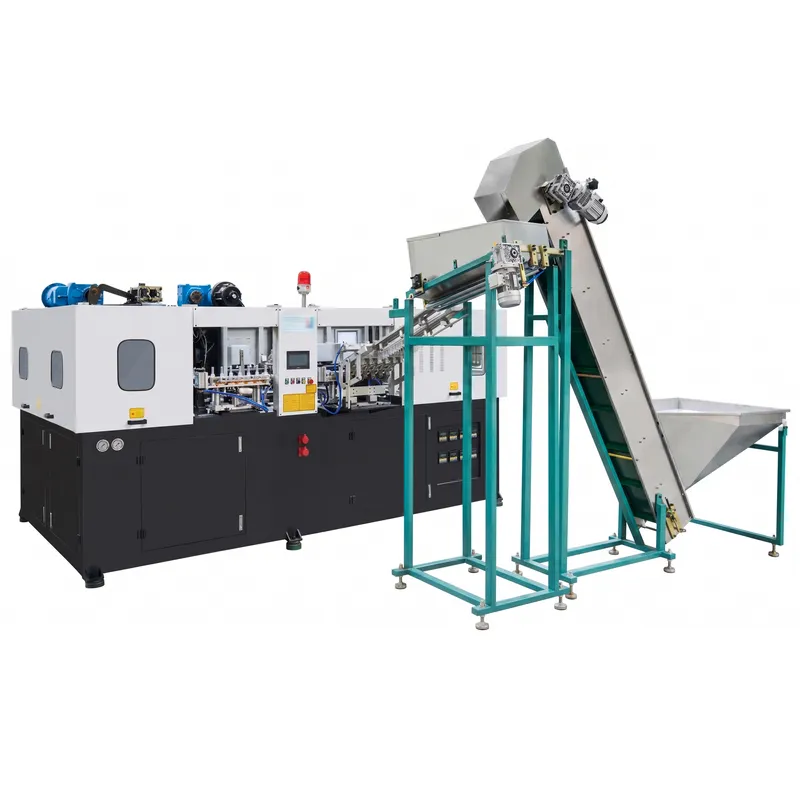
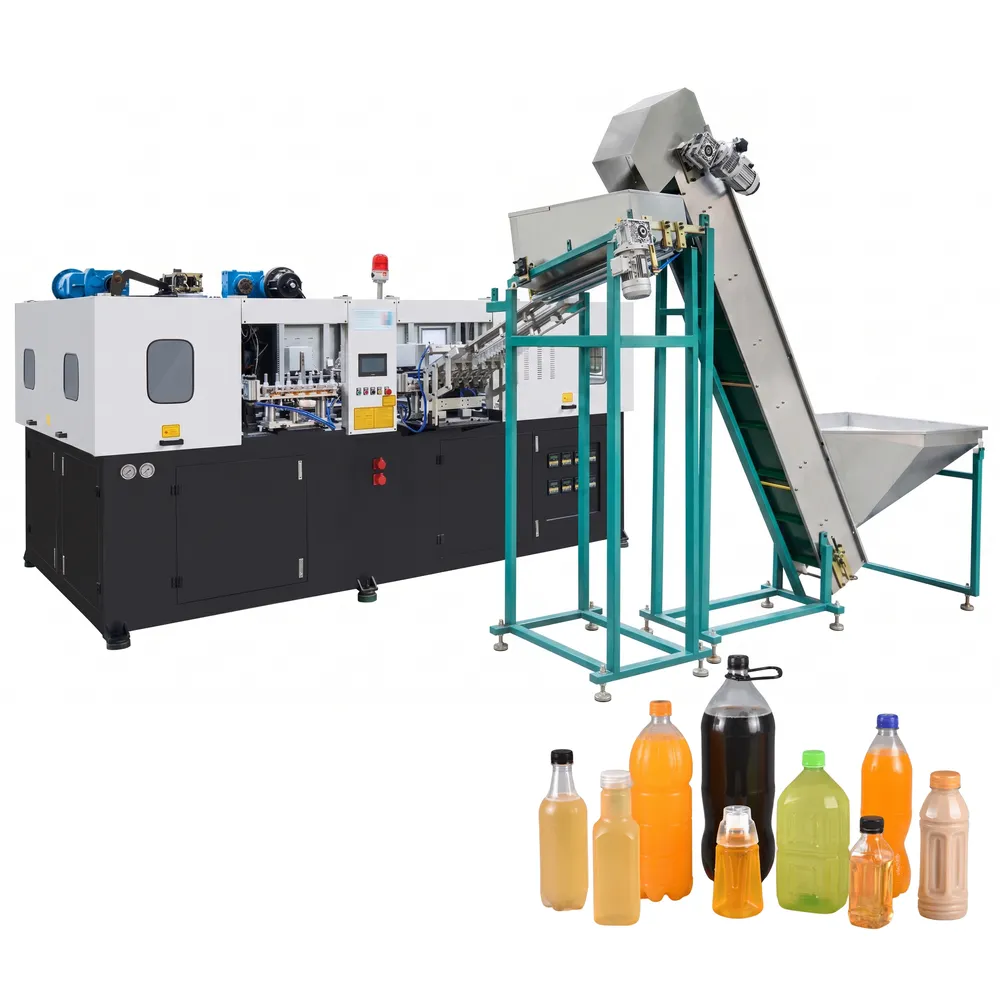
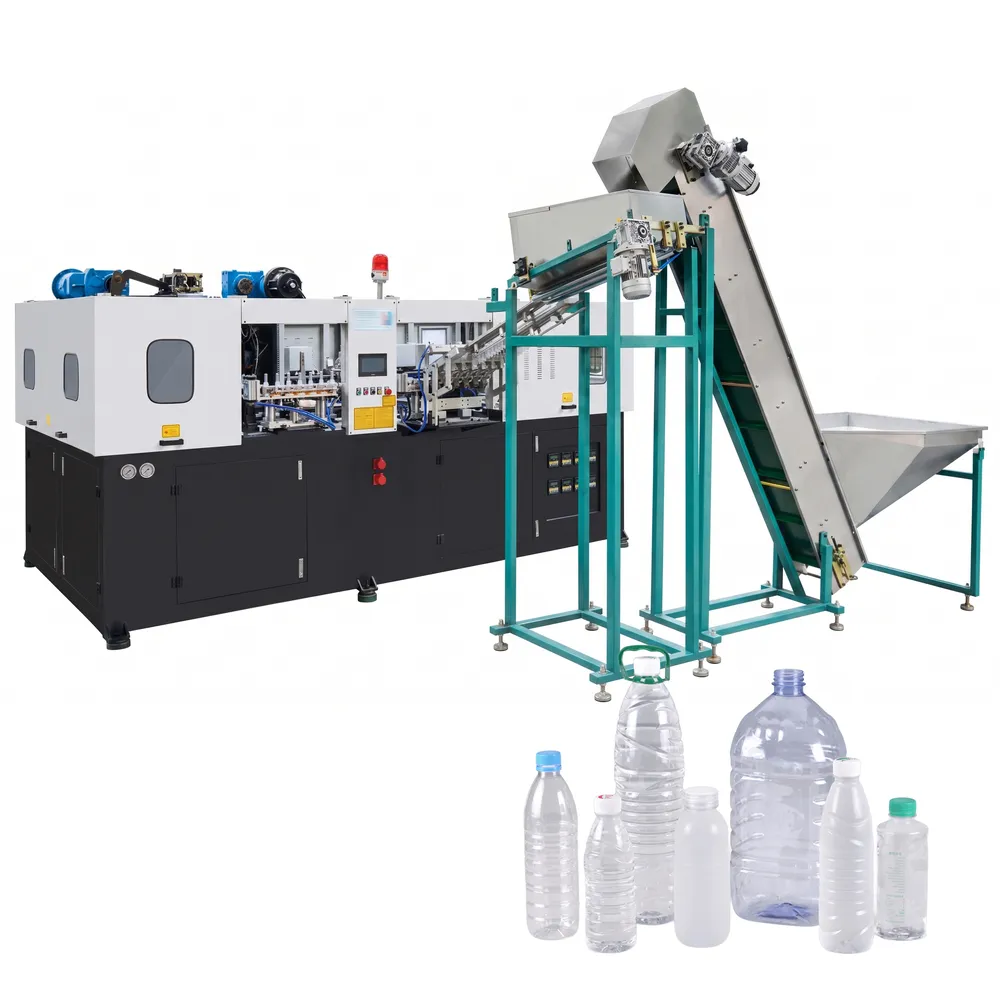
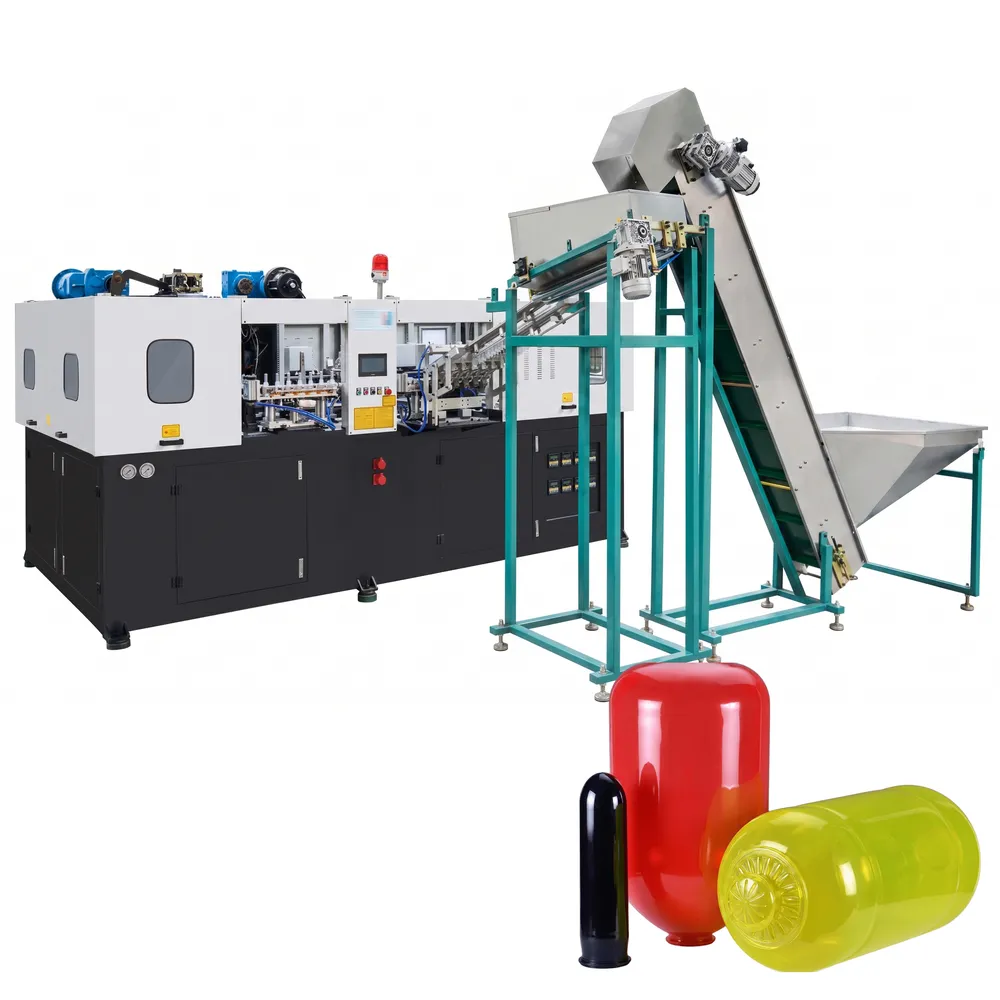
EPA.ES-2C100 Fully Automatic Blow Molding Machine for Water and Beverage Bottles
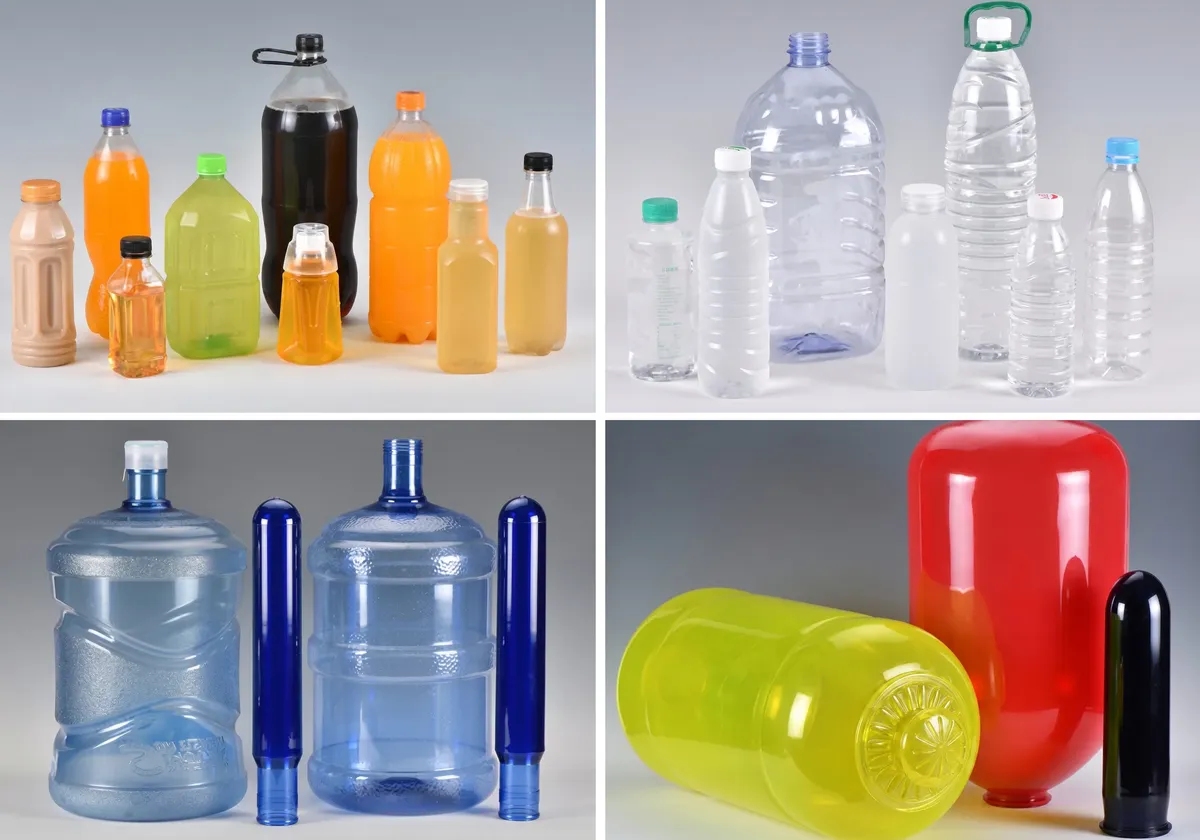
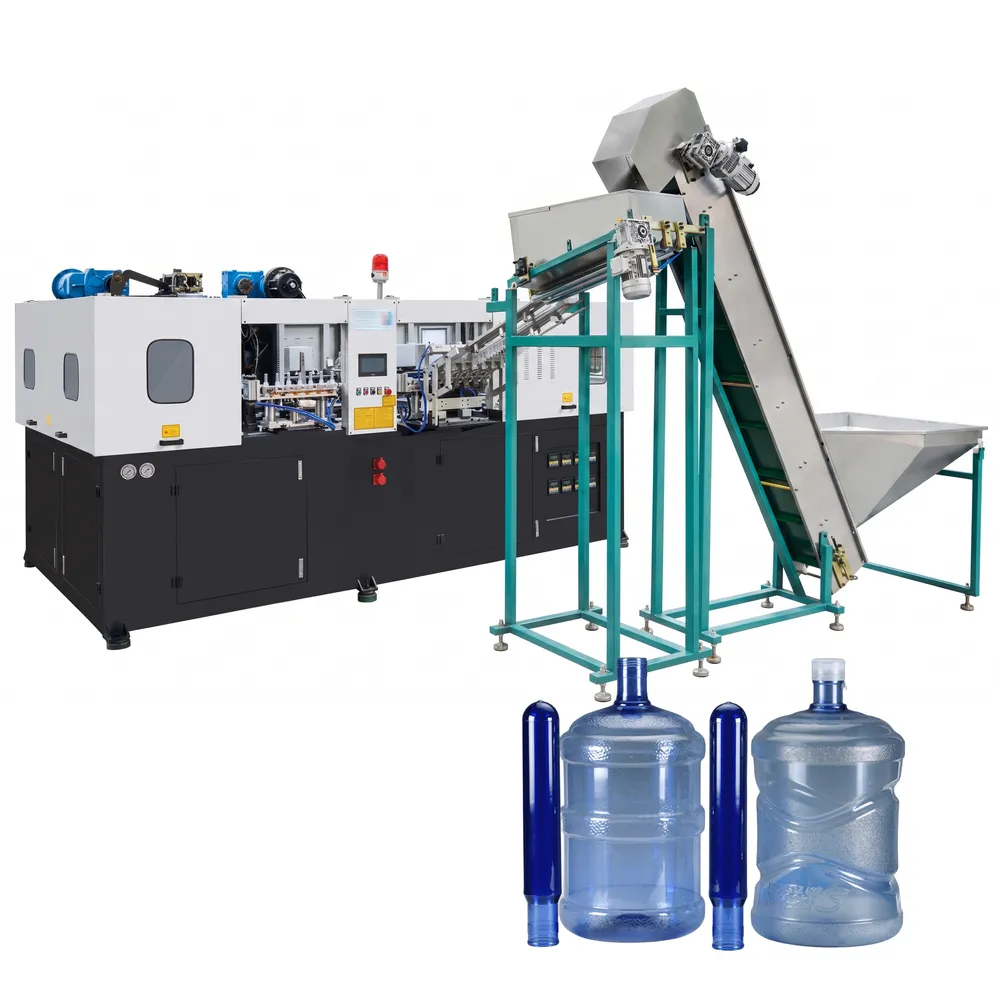
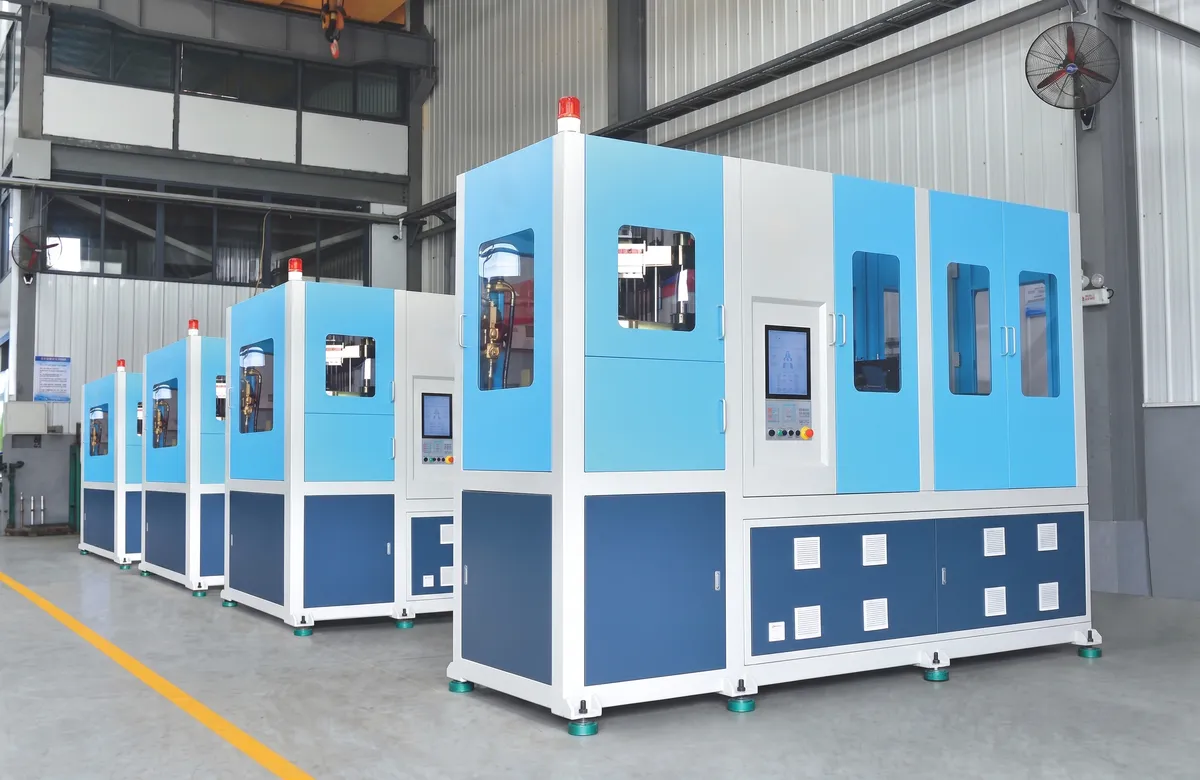
The EPA.ES-2C100 is a high-performance, fully automatic blow molding machine engineered for multi-cavity, multi-pitch production of PET and PETG bottles across a broad capacity range. Covering models from EPA.ES-2C100 through EPA.ES-6C76 and EPA.JS-2C366, this automatic PET blow molding machine series handles container volumes of 500 ml up to 22,000 ml with a maximum body diameter of 300 mm and a theoretical peak output of up to 9,200 bottles per hour. Designed as a fully automatic blow molding machine for the packaging industry, this series is ideally suited for producing mineral water bottles, carbonated beverage containers, juice bottles, pesticide bottles, and industrial chemical packaging.
The EPA.ES-2C100 is a high-performance, fully automatic blow molding machine engineered for multi-cavity, multi-pitch production of PET and PETG bottles across a broad capacity range. Covering models from EPA.ES-2C100 through EPA.ES-6C76 and EPA.JS-2C366, this automatic PET blow molding machine series handles container volumes of 500 ml up to 22,000 ml with a maximum body diameter of 300 mm and a theoretical peak output of up to 9,200 bottles per hour. A high-precision infrared heating zone combined with a stable blowing pressure of up to 35 kg/cm² and a cooling water circuit held at 8 to 12 degrees C guarantees uniform wall thickness and consistent product quality through extended continuous runs.
Designed as a fully automatic blow molding machine for the packaging industry, this series is ideally suited for producing mineral water bottles, carbonated beverage containers, juice bottles, pesticide bottles, and industrial chemical packaging. Its modular mold architecture allows rapid changeovers between cavities and bottle sizes, giving packaging manufacturers the agility to respond to market demands without sacrificing throughput. As one of the most versatile plastic blow molding machines available from a leading blow molding machine manufacturer, the EPA.ES series positions your production line for scalable, low-waste output aligned with modern food and chemical packaging safety standards.
Technical Parameter
| Water, Beverage Bottle Blow Molding Machine | |||
|---|---|---|---|
| Model | Unit | EPA.ES-2C100 | |
| Molding | Clamping stroke | mm | 110 |
| Mold-open distance | mm | 280 | |
| Mold-close distance | mm | 170 | |
| Stretching stroke | mm | 350 | |
| Mold-open distance | mm | 50 | |
| Mold-close distance | mm | 100 | |
| Preform Holder | 60 | ||
| Cavities | 2 | ||
| Container | Max.Container Volume | ml | 500 |
| Neck Diameter Range | mm | 68 | |
| Max.Container Diameter | mm | 80 | |
| Max.Container Height | mm | 200 | |
| Theoretical Output | bph | 2400 | |
| Electrical System | Max.Heating Power | kw | 34 |
| Heating Power | kw | 8-12 | |
| Air System | Operating Pressure | kg/cm² | 7 |
| Low Pressure Air Consumption | ltr/min | 600 | |
| Blowing Pressure | kg/cm² | 26-35 | |
| High Pressure Air Consumption | ltr/min | 1000-1400 | |
| Cooling Water | Operating Pressure | kg/cm² | 5-6 |
| Temperature | °C | 8-10 | |
| Flow rate | ltr/min | 30 | |
| Machine | Size (L*W*H) | mm | 2900*1525*1930 |
| Weight | kg | 2000 | |
Features of the EPA.ES-2C100 Bottle Blow Molding Machine
1. High-Efficiency Multi-Cavity Production
The series spans 2 to 8 mold cavities, enabling extraordinary throughput flexibility for any scale of bottle blow molding machine operation. The EPA.ES-8C76 configuration delivers a theoretical peak of 9,200 bottles per hour, while the EPA.ES-6C76 achieves 7,200 bph, making this automatic PET blow molding machine one of the most productive in its class. The multi-pitch mold design accommodates containers ranging from 500 ml to a massive 22,000 ml with a maximum body diameter of 300 mm, supporting mineral water bottles, beverage containers, pesticide bottles, and large-volume chemical drums in a single platform.
2. Energy Efficiency, Stability, and Precision Control
This fully automatic blow molding machine is built around a high-efficiency infrared heating system with working power ranging from 8 to 35 kW across the model range, keeping energy consumption proportional to actual output. Blowing pressure is precisely regulated at up to 35 kg/cm², and low-to-high-pressure air consumption is independently tunable to cut waste. A closed-loop cooling water circuit maintains temperature at 8 to 12 degrees C at a flow rate of 30 to 120 ltr/min depending on model, ensuring preforms cool uniformly throughout continuous production runs and minimizing wall-thickness variance on every PET bottle molding machine cycle.
3. Wide Adaptability and High Reliability
The series encompasses three distinct model families: EPA.ES (standard electric servo), EPA.AS (high-speed servo), and EPA.JS (large-volume jumbo), including the EPA.ES-2C100, EPA.ES-4C130, and EPA.JS-2C200. Maximum mold-open distance reaches 772 mm in the EPA.JS-2C366, with balanced clamping force that accommodates rapid mold changeovers between bottle configurations. Critical components are sourced from internationally recognized suppliers, delivering low failure rates and straightforward daily maintenance. This plastic blow molding machine is built for uninterrupted large-scale production with minimal downtime, exactly what modern blow molding machine suppliers require from their line equipment.
4. Excellent Output Quality and Broad Application Range
Engineered to process PET, PETG, and related resin grades, the EPA.ES series consistently delivers bottles with precisely injection-formed neck finishes, high optical transparency, and uniform wall distribution throughout the container body. Every container complies with food-grade and chemical packaging safety requirements. The machine is particularly strong in producing chemically resistant pesticide and agrochemical containers, while also excelling in high-speed runs of still and carbonated mineral water bottles and carbonated beverage packaging, making this industrial blow molding machine a true multi-sector asset.
5. Fully Automatic Operation Reduces Labor Costs
As a fully automatic blow molding machine, the EPA.ES-2C100 eliminates manual intervention at every stage of the blow molding machine process: preform loading, heating, stretching, high-pressure blowing, cooling, and bottle discharge are all handled by the automated control system. This dramatically reduces labor requirements per shift, lowers per-unit production costs, and removes human-error variables that typically inflate rejection rates. For beverage bottlers and chemical packagers running 24/7 operations, this level of automation translates directly into measurable ROI and faster payback periods compared to semi-automatic alternatives.
6. Custom Configuration for Diverse Bottle Types
Ever-Power engineers work with customers to configure the optimal model within the EPA.ES series for their specific container requirements. Whether you need a custom blow molding machine for a narrow-neck 500 ml water bottle or a 20-liter large-format drum, the platform accommodates bespoke mold designs, neck diameter adjustments, and cavity count optimization. As an established blow molding machine manufacturer with export experience across Latin America, Southeast Asia, and beyond, Ever-Power can supply molds and machines together, ensuring seamless compatibility testing and faster production startup for new product lines.
Working Principle of the Two-Stage Blow Molding Machine
1. Raw Material Preparation
The plastic blow molding machine process begins with selecting and preparing raw materials: PET, PP, or PE resin is carefully screened, blended, and fed into the drying system. Thorough moisture removal is critical, especially for PET, where residual moisture causes hydrolytic degradation during heating. Strict quality control at this stage sets the foundation for consistent bottle transparency and structural integrity throughout the entire blow molding machine process.
2. Injection Molding (Preform Production)
In the two-stage blow molding machine process, dried resin is fed to a separate injection molding machine where it is heated, melted, and injected at high pressure into a multi-cavity preform mold. Temperature, pressure, and injection speed are precisely controlled to produce dimensionally consistent preforms with uniform neck finishes. The neck geometry is formed in this injection stage and remains fixed, which is a fundamental advantage of the injection stretch blow molding process over extrusion blow molding.
3. Preform Heating and Conditioning
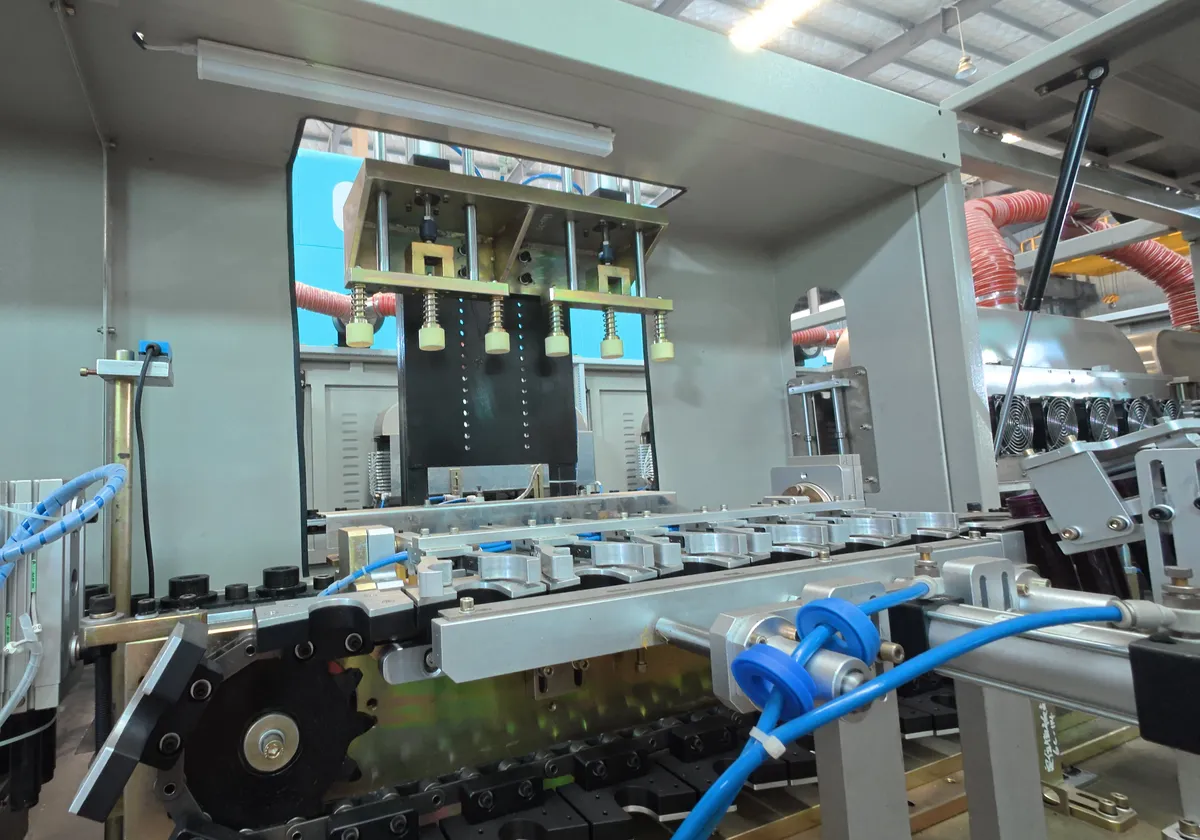
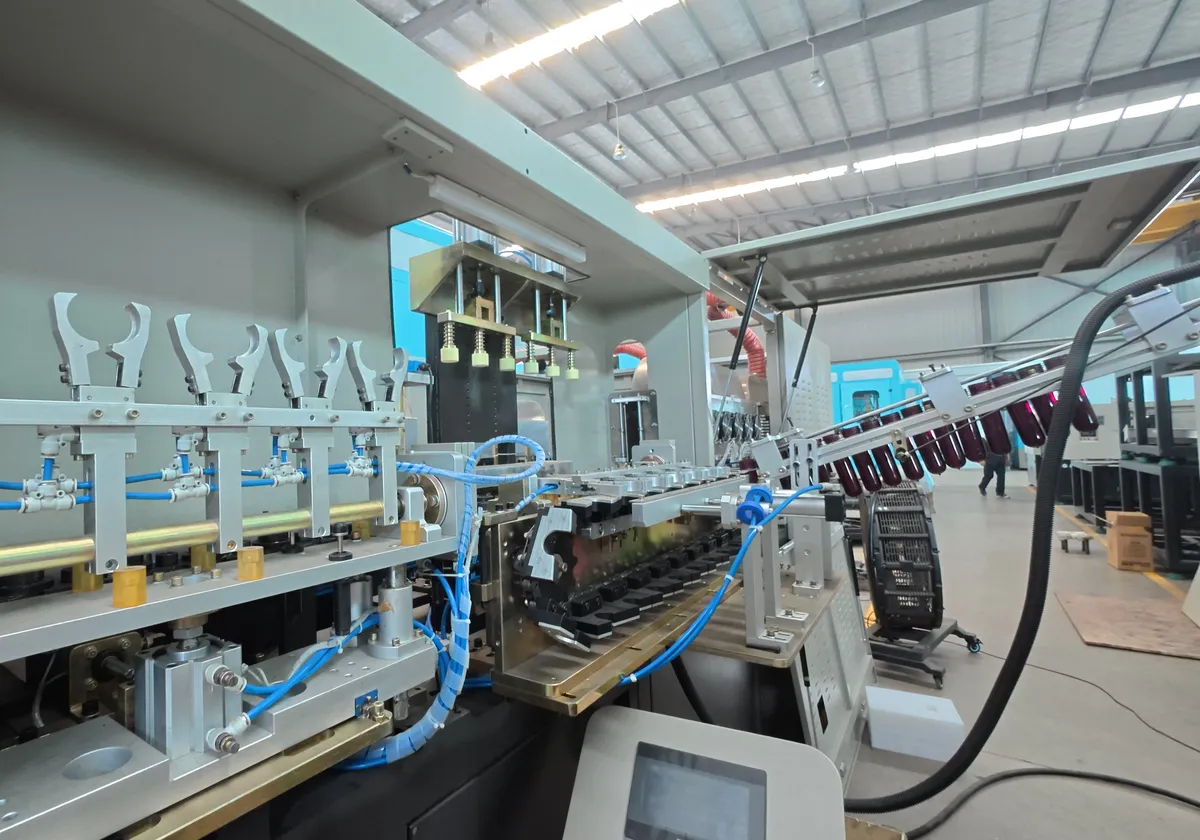
Preforms are loaded onto mandrels and passed through multiple infrared lamp zones inside the heating oven. The EPA.ES-2C100 carefully manages zone-by-zone temperature profiles to bring the preform body to the optimum stretch-blow temperature while keeping the neck finish cool and dimensionally stable. This selective heating is essential: a well-conditioned preform yields bottles with consistent wall thickness, high clarity, and excellent mechanical strength, minimizing material waste across high-speed PET bottle molding machine runs.
4. Stretch-Blow Molding
Conditioned preforms are transferred to the blowing station, where a stretch rod extends axially to the base of the mold while high-pressure air (26 to 35 kg/cm²) inflates the preform radially against the mold wall. This biaxial orientation dramatically improves the molecular structure of PET, increasing tensile strength, gas barrier properties, and drop-impact resistance in the finished bottle. Precise pressure timing and stretch-rod control are managed by the machine PLC to ensure every cycle of this high speed blow molding machine produces identical containers.
Application Areas
Water and Beverage Bottles
The primary application of this automatic PET blow molding machine is high-speed production of still and sparkling mineral water bottles, carbonated soft drink containers, juice bottles, and sports drink packaging. Using PET resin, the machine delivers exceptional clarity, consistent neck tolerances, and strong gas-barrier properties that maintain beverage freshness and carbonation levels. Output rates of up to 9,200 bph make this bottle blow molding machine ideal for large-volume bottling lines.
Pesticide and Agricultural Chemical Containers
The EPA.ES series is purpose-built to produce chemically resistant pesticide and herbicide bottles using PET and HDPE materials. These containers require tight neck tolerances, robust wall strength, and full compliance with agrochemical labeling regulations. The injection-formed neck finish ensures precision thread geometry for safe, leak-proof cap sealing, while the stable blowing pressure produces uniform walls that withstand the mechanical stresses of agrochemical packaging logistics.
Industrial Chemical and Lubricant Packaging
Larger models in the series, including the EPA.JS-2C200 and EPA.JS-2C366 (20L), produce industrial-grade drums and canisters for motor oils, lubricants, solvents, and cleaning chemicals. These containers demand high structural integrity, superior chemical resistance, and reliable stackability. The multi-pitch mold design of this industrial blow molding machine allows wide-body containers up to 300 mm in diameter and 480 mm in height to be produced reliably in high volumes.
Food Condiment and Edible Oil Bottles
Handle bottle variants within the EPA.ES family are configured as custom blow molding machines for the production of edible oil containers, soy sauce bottles, vinegar containers, and condiment packaging. These containers typically require handle integration, wide-mouth openings, and food-safe material compliance. The centralized heating and distance-blowing design used in large-capacity oil bottle models effectively reduces production cost per unit while maintaining output consistency for food packaging manufacturers.
Daily Chemical and Personal Care Bottles
The EPA.ES cosmetic bottle variant is engineered to blow PET and PETG containers for shampoo, conditioner, body wash, liquid soap, and household cleaning products. PETG material produces bottles with outstanding gloss and optical clarity that showcase product color and brand identity at retail. The machine achieves high-precision neck dimensions for pump and trigger-spray fitments, meeting the appearance and functional standards required by premium personal care brands and private-label daily chemical producers.
Pharmaceutical and Health Product Packaging
The EPA.ES series supports GMP-aligned production of pharmaceutical-grade PET bottles for vitamin supplements, liquid medicines, and health product packaging where cleanliness, dimensional accuracy, and material purity are mandatory. The automated, no-hand-contact process inherent in this fully automatic blow molding machine reduces contamination risk, while the stable wall thickness ensures child-resistant closure compatibility and dosing accuracy. Neck dimensions are injection-formed to the highest tolerances, meeting USP and EU pharmaceutical packaging specifications.
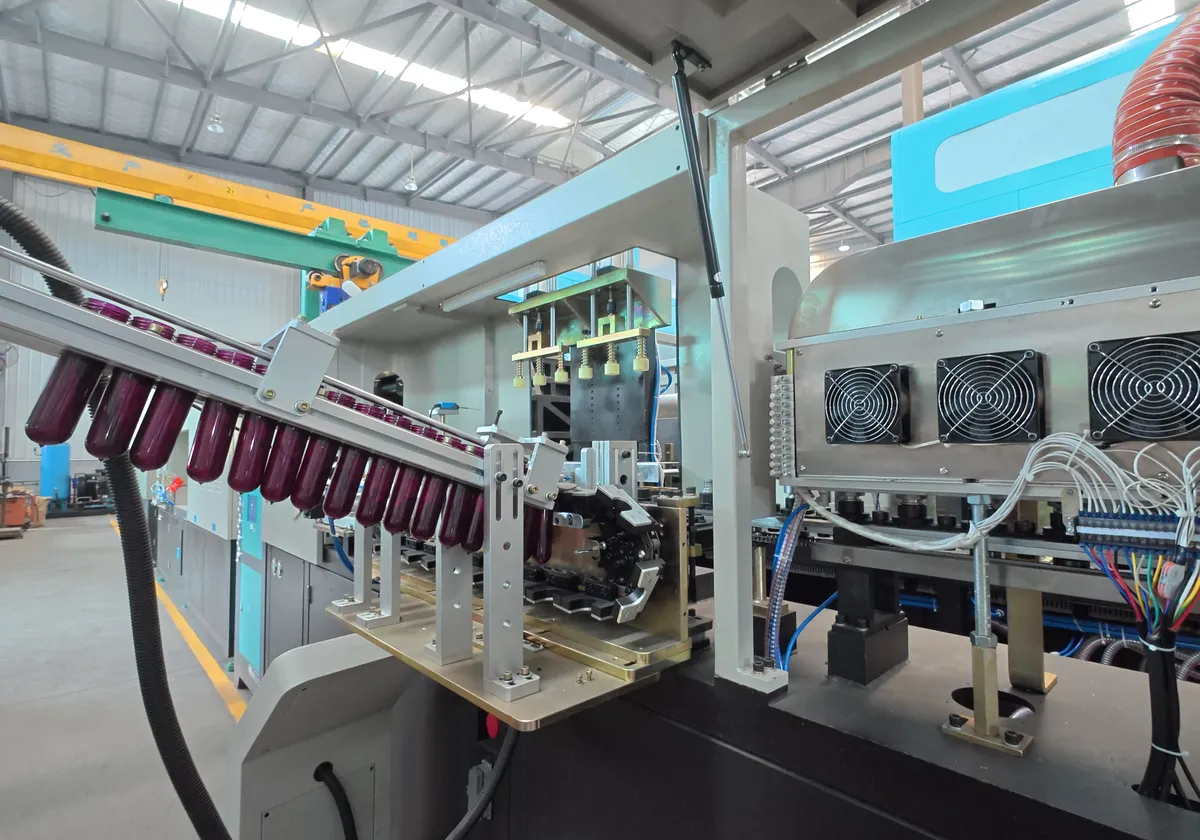
EPA.ES-2C100 PET Blow Molding Machine Parts
Preform Loading and Transfer System
The automated preform loader feeds injection-molded preforms from a hopper through an orientation rail and delivery chute onto the mandrel chain without human assistance. Sensors verify preform seating before the chain advances, preventing jams and neck-damage defects. This blow molding machine part is engineered for high uptime, with quick-release guide rails that simplify cleaning and maintenance during scheduled stops.
Infrared Heating Oven
Multiple independently adjustable infrared lamp zones provide gradient heating across the preform body length. Reflector panels and neck-cooling shields ensure only the body reaches stretch temperature while the neck finish stays rigid. The heating oven on this plastic bottle blow molding machine is designed for rapid warm-up and zone-by-zone fine-tuning, allowing operators to adapt heating profiles when switching between bottle sizes or resin grades without interrupting the blowing cycle.
Mold Clamping Unit
The clamping unit provides the mechanical force required to hold the two mold halves securely closed against blowing pressures of up to 35 kg/cm². The EPA.ES-2C100 uses a servo-driven toggle mechanism that delivers consistent clamping force with low energy consumption compared to hydraulic alternatives. Clamping stroke of 110 mm and mold-close distance of 170 mm are optimized for rapid open-close cycles, directly contributing to the high bph output of this automatic blow molding machine.
Stretch Rod and Blowing Station
At the heart of the blow molding machine process, the stretch rod extends pneumatically into the heated preform, orienting the PET molecules axially before high-pressure air (26 to 35 kg/cm²) radially inflates the container against the mold wall. Precise timing of rod insertion and pressure application is managed by the PLC, ensuring biaxial molecular orientation that maximizes tensile strength and gas-barrier performance in every bottle produced by this PET bottle blow molding machine.
High-Pressure Air System
The dedicated high-pressure air circuit supplies clean, dry compressed air at 26 to 35 kg/cm² to the blowing station, with a secondary low-pressure circuit at 7 kg/cm² managing preform pre-blow, mold opening actuation, and bottle discharge. Consumption rates of 1,000 to 1,400 ltr/min at high pressure are precisely matched to cycle time and cavity count. This blow molding machine part includes pressure-relief valves and inline filters to protect molds and maintain process safety.
Cooling Water Circuit
Integrated mold cooling channels circulate chilled water at 8 to 12 degrees C and a flow rate of 30 ltr/min to rapidly solidify the bottle shape after blow-forming. Rapid, even cooling is essential to maintain container geometry, prevent warping, and support high-speed cycle rates. The operating pressure of 5 to 6 kg/cm² within the cooling circuit is maintained by an external chiller, which Ever-Power supplies as part of the auxiliary machinery package alongside the fully automatic blow molding machine.
PLC Control System and HMI
The EPA.ES-2C100 is governed by a programmable logic controller paired with a color touchscreen HMI that centralizes all operating parameters: heating zone temperatures, blowing pressure curves, cycle timing, clamping force, and production counters. Recipe storage allows operators to recall proven settings for different bottle profiles instantly, minimizing changeover time. Real-time fault diagnostics with on-screen guidance reduce downtime significantly, supporting the fully automatic operation that defines this high-performance industrial blow molding machine.
Bottle Discharge and Conveyor Interface
After blowing, finished bottles are released from the open mold and guided by a bottle discharge chute onto an integrated or interfaced conveyor system. The discharge mechanism is synchronized with the blowing cycle timing to prevent bottle accumulation or toppling. This blow molding machine part can be interfaced with downstream filling lines, labeling machines, and inspection systems, allowing the EPA.ES-2C100 to serve as the production core of a fully integrated beverage or chemical packaging line.
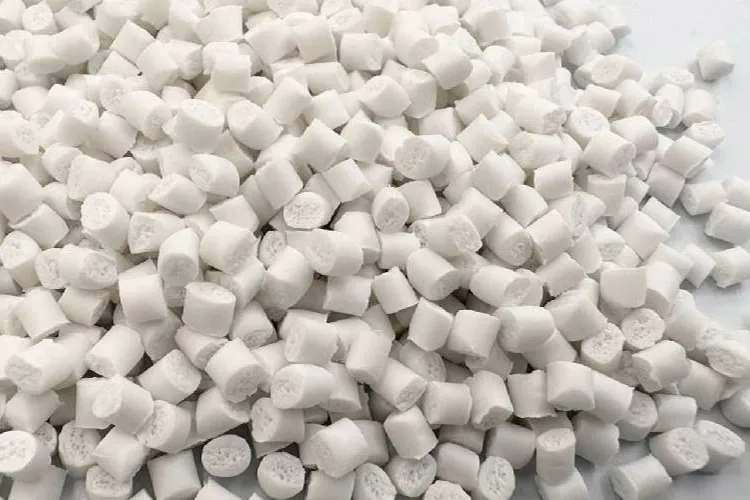
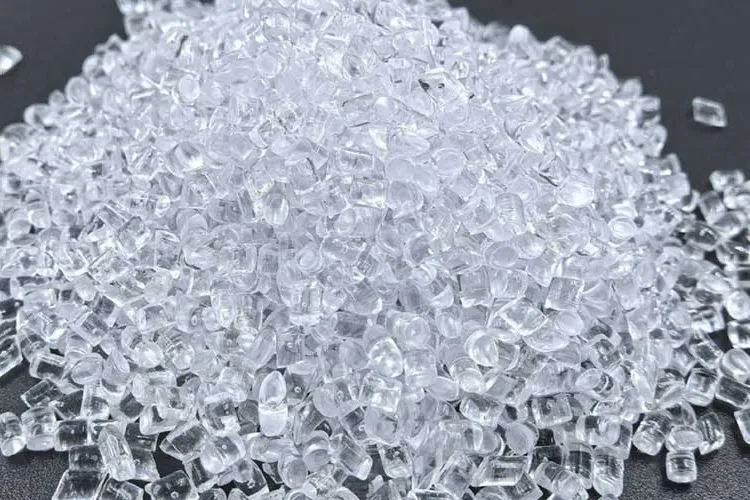
Raw Materials for Beverage Bottle Blow Molding Machine
The EPA.ES-2C100 automatic PET blow molding machine processes a broad range of thermoplastic resins, allowing manufacturers to match material properties precisely to their container application.
Polyethylene Terephthalate (PET)
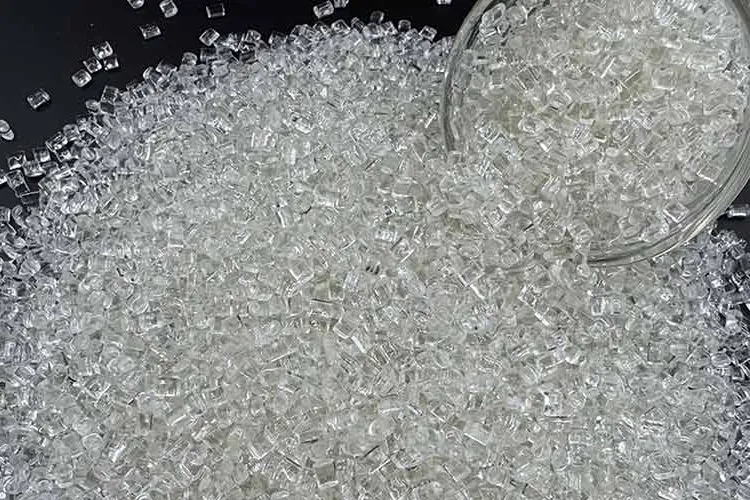
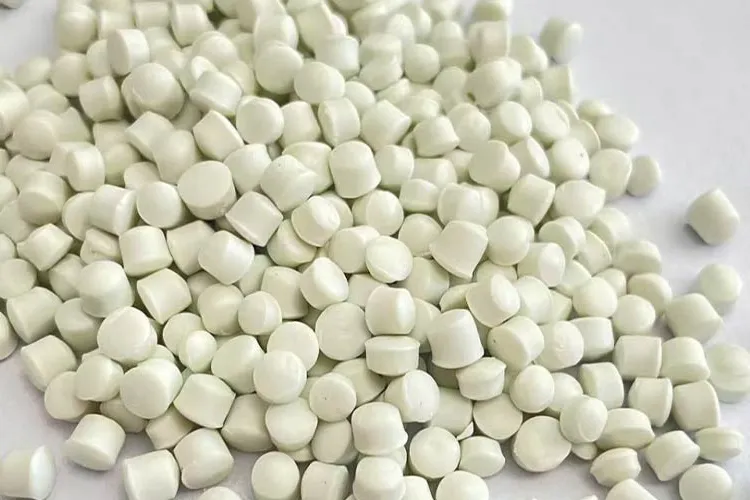
PET is the dominant material for this plastic blow molding machine series. Its combination of high clarity, excellent tensile strength, and outstanding gas-barrier performance makes it the industry standard for mineral water and carbonated beverage bottles. PET is lightweight, which reduces packaging shipping costs, and is widely accepted in bottle-to-bottle recycling systems, aligning with circular-economy packaging objectives.
High-Density Polyethylene (HDPE)
HDPE is favored for producing opaque packaging for laundry detergents, motor oils, agricultural chemicals, and household cleaners. Its excellent chemical resistance and good stiffness-to-weight ratio make HDPE containers durable and safe for aggressive liquid contents. HDPE also tolerates a wide temperature range, enabling compatibility with both cold storage and ambient distribution conditions for food and chemical packaging.
Low-Density Polyethylene (LDPE)
LDPE produces flexible, squeeze-able bottles ideally suited to shampoos, lotions, conditioners, and other personal care products where the end user requires controlled dispensing through pressure. Its translucent appearance and good moisture barrier make LDPE appropriate for both retail consumer packaging and bulk personal care formats, processed efficiently through this bottle blow molding machine platform.
Polypropylene (PP)
PP is the material of choice for hot-fill pharmaceutical packaging, food containers requiring microwave compatibility, and products demanding high levels of chemical purity. Its thermal stability and excellent chemical resistance against acids and bases make PP containers suitable for pharmaceutical dispensing and health supplement packaging, where this plastic blow molding machine series supports GMP-compliant production processes.
Polycarbonate (PC)
PC is selected for reusable bottle applications requiring exceptional impact resistance and optical clarity, including sports drink bottles, water dispensers, and travel containers. Its high thermal resistance allows PC bottles to be steam-sterilized repeatedly without deformation. As a premium material processed by this automatic blow molding machine, PC is commonly specified by brands in the sports, outdoor, and food-service equipment sectors.
Polyethylene Naphthalate (PEN)
PEN offers a significantly higher gas and moisture barrier than standard PET, making it the preferred material for carbonated beverage containers with extended shelf-life requirements. Its superior UV resistance also protects sensitive beverages from light-induced degradation. PEN is particularly valued for refillable bottle applications in the carbonated soft drink and beer segments, processed reliably on this PET bottle blow molding machine with adjusted heating profiles.
Polyethylene Terephthalate Glycol (PETG)
PETG combines the clarity of PET with improved toughness and easier processing, making it the first choice for cosmetic and premium personal care packaging where visual impact at retail is a priority. Its excellent surface gloss and compatibility with high-resolution labeling and decoration processes make PETG bottles produced on this automatic PET blow molding machine highly attractive to brand owners in the beauty and wellness sectors.
Polylactic Acid (PLA)
PLA, derived from renewable feedstocks such as corn starch and sugarcane, is a biodegradable thermoplastic increasingly specified for sustainable food and beverage packaging. With performance characteristics similar to PET in terms of clarity and stiffness, PLA containers produced on this plastic blow molding machine platform align with brand sustainability commitments and emerging extended producer responsibility regulations in multiple global markets.
 |
 |
 |
 |
Plastic Blow Molding Machine Maintenance
1. Daily Inspection of Air and Water Lines
Before every production shift, inspect all compressed air fittings, blow valves, and cooling water connections for leaks or signs of wear. The high-pressure air lines in this industrial blow molding machine operate at up to 35 kg/cm², and even a small leak will reduce blowing consistency, increase cycle energy cost, and potentially damage mold sealing surfaces. Drain the water separator on the low-pressure air circuit daily to prevent moisture ingress into the blowing valves.
2. Infrared Lamp Inspection and Replacement
The infrared heating lamps in the oven are consumable blow molding machine parts with a finite service life. Check lamp output intensity monthly using the control system diagnostics and replace lamps that show reduced output before they fail entirely during production. Mismatched lamp outputs across heating zones cause uneven preform temperature profiles, leading to wall-thickness defects, bottle distortion, and increased rejection rates in downstream quality inspection.
3. Mold Cleaning and Lubrication
Clean blowing mold cavities and venting channels weekly to remove PET residue, dust, and condensate deposits that can cause surface defects on finished bottles. Apply food-safe mold lubricant to guide rails, toggle joints, and locking cams at the intervals specified in the blow molding machine manual. Proper lubrication minimizes mechanical wear on the clamping unit and extends mold service life significantly, reducing the frequency of costly blow molding machine parts replacements.
4. Cooling Water System Maintenance
Flush and clean the cooling water circuit every three months, or immediately if flow-rate reductions or temperature instability are observed. Hard-water scale deposits inside mold cooling channels restrict flow and raise mold surface temperature, which directly degrades bottle quality and cycle rate on this PET bottle blow molding machine. Use a descaling agent compatible with aluminum or stainless mold materials and check the chiller filter and strainer basket monthly.
5. Servo Drive and Electrical System Checks
Inspect servo drive cooling fans, electrical cabinet air filters, and terminal connections quarterly. Overheating in the electrical cabinet is a leading cause of servo drive failures in automatic blow molding machine installations. Confirm that all cable routing is intact and free of abrasion points where moving components pass. Back up the PLC parameter files to USB storage monthly so that machine settings can be restored quickly after any control system component replacement, minimizing production downtime.
6. Scheduled Preventive Maintenance Log
Maintain a structured preventive maintenance log recording every inspection, part replacement, parameter change, and fault event for the blow molding machine. A well-kept maintenance record enables the technical team to identify recurring patterns, schedule component replacements before failures occur, and satisfy warranty documentation requirements. Ever-Power provides a recommended maintenance schedule with each machine, and our after-sales engineering team is available for remote diagnostics to support your maintenance planning globally.
Injection Blow Molding vs Extrusion Blow Molding
Injection Blow Molding (IBM)
IBM begins by injection-molding a precise preform using an injection unit. The preform is transferred to a blowing station where it is inflated to final bottle shape. Because the neck finish is injection-molded rather than blown, IBM achieves the highest possible dimensional accuracy on thread geometry and neck tolerances. This is why pharmaceutical, personal care, and precision beverage packaging applications favor IBM. IBM generates no flash or trim scrap, making it a cleaner, more material-efficient process. Weight control is extremely precise, and wall thickness distribution is uniform. Unit cost is exceptionally low for containers of 5 oz or less, and the process scales efficiently with annual volume. However, tooling costs are higher, container shapes are constrained to a blow-up ratio of 3:1 or less, and handles cannot be produced by this injection blow molding machine type.
Best for: narrow-neck bottles, high-precision packaging, pharmaceutical and personal care, small-volume containers.
Extrusion Blow Molding (EBM)
EBM melts plastic resin and extrudes it through a die to form a hollow parison, which is captured and sealed in the mold before high-pressure air inflates it to the mold shape. The process offers remarkable design flexibility: containers can be long and flat, include integrated handles, and can range in size from under 30 ml to 55 gallons. EBM molds are lower in initial tooling cost and can accommodate interchangeable neck inserts for different closure types. EBM is commonly used with HDPE, PP, and PET for manufacturing bottles, drums, canisters, and large industrial containers. However, EBM produces flash that must be trimmed and reclaimed, and operator skill significantly influences container weight consistency. Unit cost per bottle is higher than IBM for small containers below 5 oz, and neck finish accuracy is lower than IBM on this extrusion blow molding machine type.
Best for: large containers, handled bottles, complex shapes, HDPE drums and canisters, flexible design requirements.
Key Differences
| Criterion | Injection Blow Molding | Extrusion Blow Molding |
|---|---|---|
| Neck Finish Accuracy | Injection-formed, highest precision | Blown, moderate accuracy |
| Scrap / Flash | None (scrap-free) | Flash must be trimmed |
| Wall Thickness Control | Extremely uniform | Operator-dependent |
| Container Size Range | Optimal below 16 oz | 1 oz to 55 gallons |
| Handle Integration | Not well suited | Excellent |
| Initial Tooling Cost | Higher (two mold types) | Lower |
| Unit Cost at High Volume | Very low | Moderate |
| Typical Materials | PET, PC, PP, PE, PETG | HDPE, PP, PET, PVC |
Fully Automatic Blow Molding Machine Mold Features
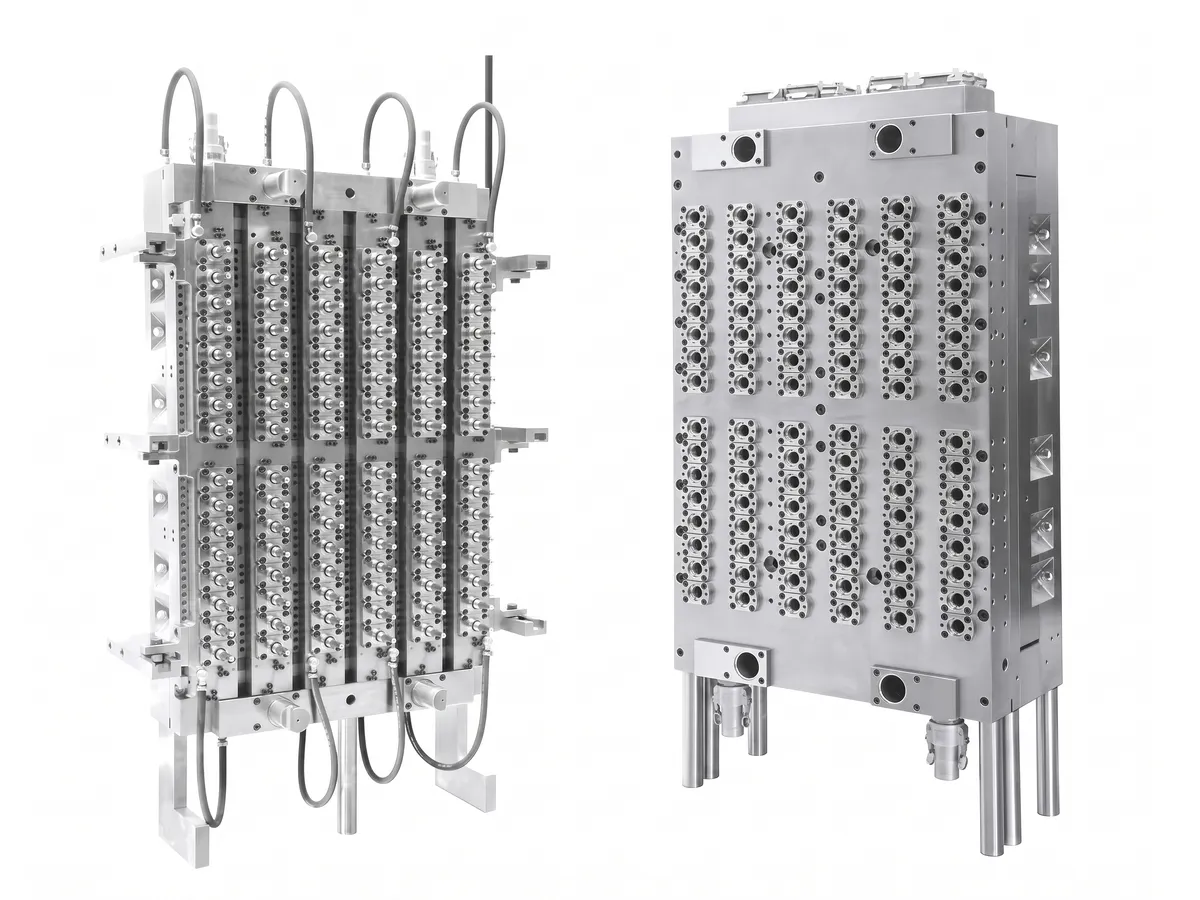
Preform Injection Mold
- The die lip is composed of two parts guaranteeing coaxial alignment between the preform body and neck during formation, which is critical for precise injection stretch blow molding machine neck tolerances.
- Optimized cooling water channel geometry improves preform cooling efficiency and supports faster production cycles without sacrificing dimensional consistency.
- Core formation components are manufactured from imported die steel 2316, which is rust-resistant and heat-treated for extended service life under continuous production conditions.
- Core plate, cavity plate, and all structural parts use 420 stainless steel for maximum corrosion resistance, essential in high-humidity blow molding machine environments.
- Standard interchangeable die fittings reduce spare-parts inventory and simplify field servicing by Ever-Power after-sales network.
- Advanced single-mold design that can accommodate multiple preform types, enabling cost-effective tooling investment for product line diversification.
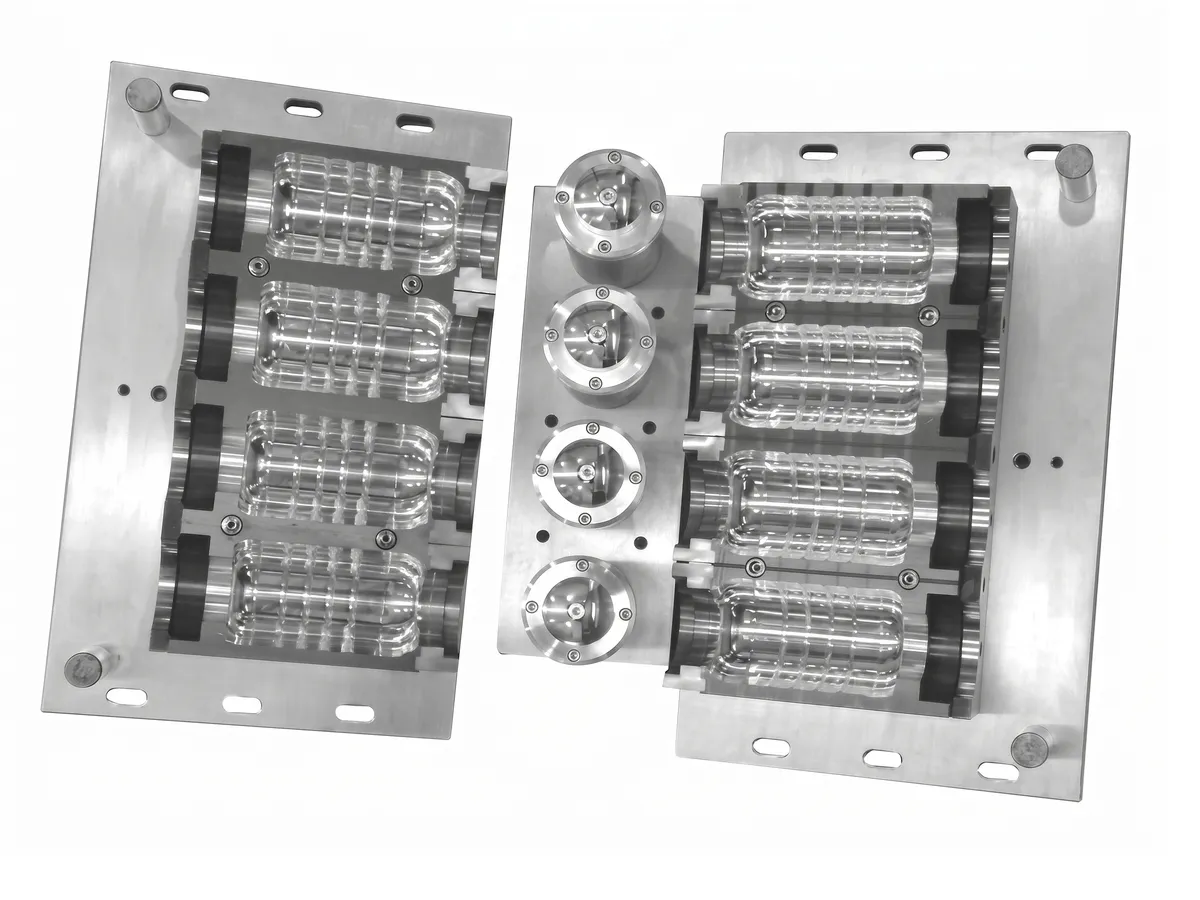
Blowing Mold
- Blowing mold raw material is premium-grade tool steel, providing high hardness and wear resistance for sustained high-speed blow molding machine cycles over millions of shots.
- Bottle cavity geometry is designed with advanced 3D CAD and flow-simulation software to optimize wall thickness distribution, vent positioning, and surface finish quality for every container type.
- Ever-Power offers versatile bottle design options from standard catalog forms to fully custom mold projects, supporting unique bottle shapes for product branding requirements.
- Rational cooling channel design within each mold half ensures consistent surface temperature and rapid bottle solidification, directly supporting cycle time targets on this high speed blow molding machine.
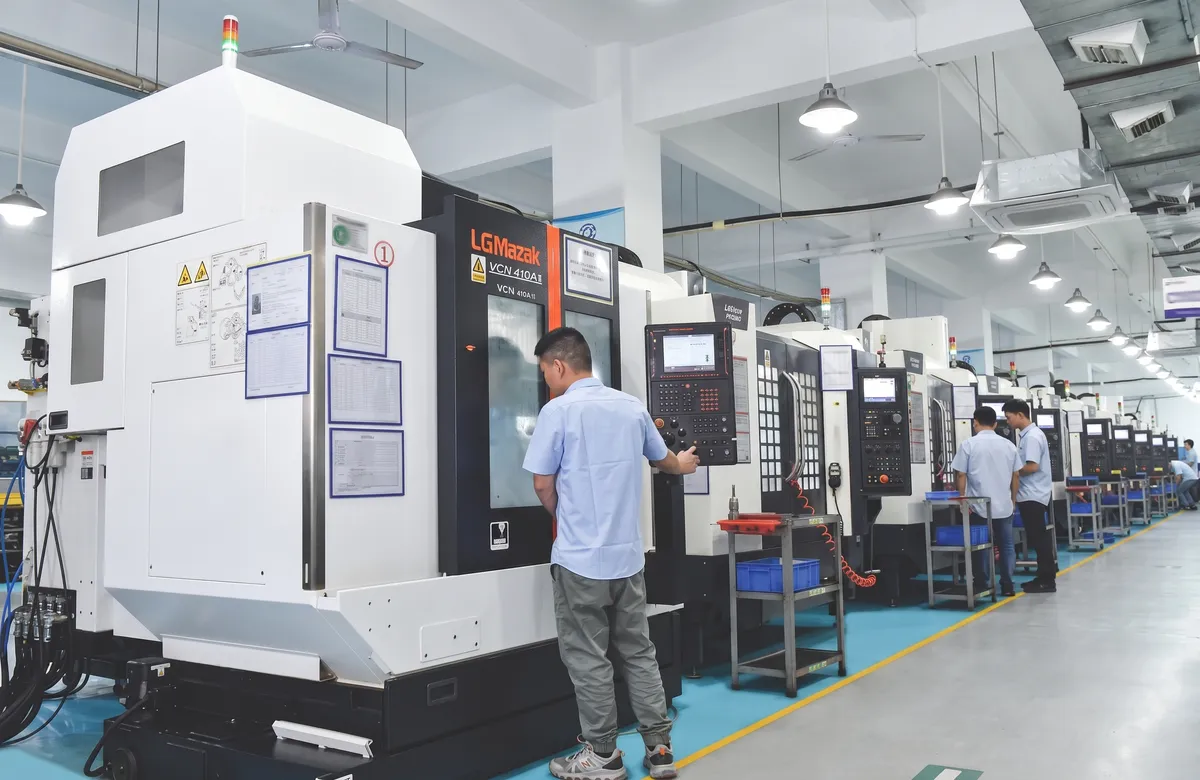
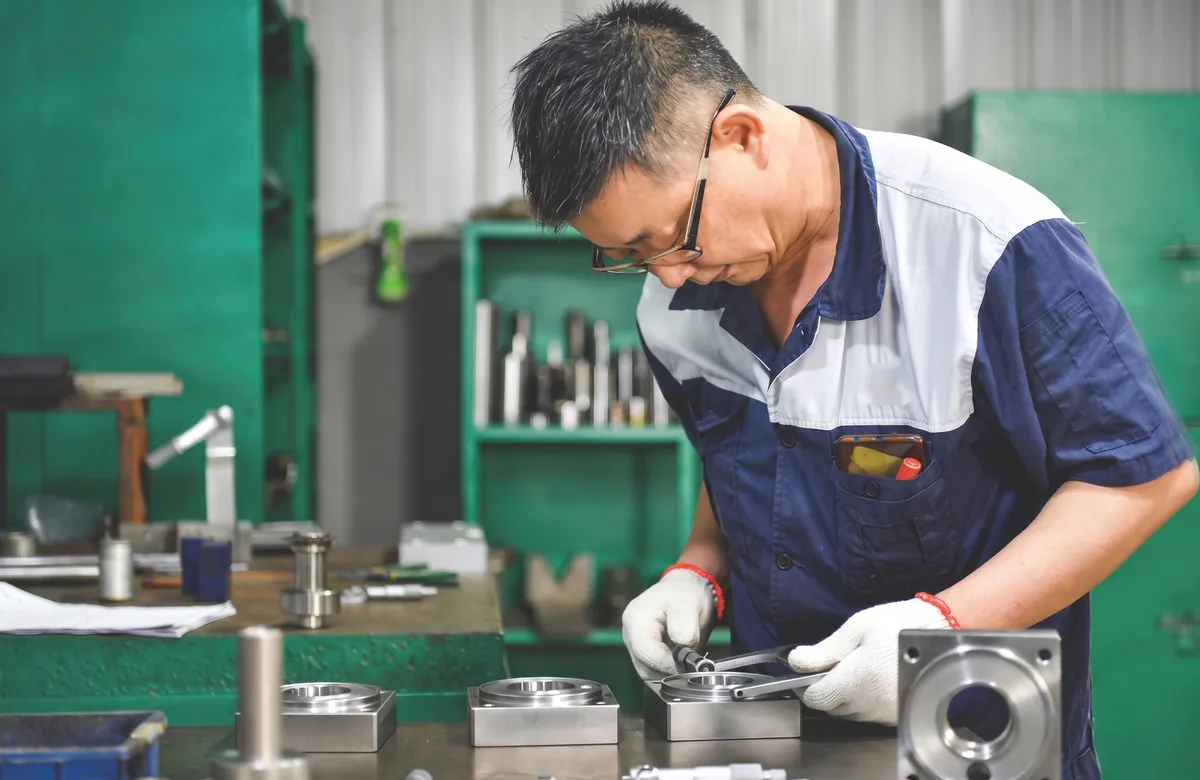
- All metal components are finish-machined on CNC machining centers to ensure dimensional precision and surface quality that meets both functional and cosmetic requirements of premium packaging brands.
 |
 |
How to Select the Right Plastic Blow Molding Machine
1. Type of Blow Molding Machine
Begin by matching the machine type to your product. Extrusion blow molding machines use an extruder to create a continuous parison and suit large, handled containers. Injection blow molding machines combine injection and blowing in one or two stages and are optimal for narrow-neck, high-precision bottles. Injection stretch blow molding machines like the EPA.ES-2C100 add axial stretching to improve biaxial orientation, delivering the strength and gas-barrier performance required for carbonated beverage packaging at high output rates.
2. Required Production Capacity
A practical rule of thumb: the rated capacity of the machine you purchase should exceed your current demand by at least 25% to accommodate ramp-up, quality inspection losses, and scheduled maintenance windows. The EPA.ES-2C100 delivers 2,400 bph in 2-cavity configuration, scaling up to 9,200 bph in the 8-cavity EPA.ES-8C76 variant. For mass-market beverage production, a fully automatic, high-speed blow molding machine with multi-cavity output offers the lowest cost per unit over the machine lifetime.
3. Energy Consumption
Energy is one of the largest operating costs in any blow molding machine facility. Evaluate the ratio of rated heating power to theoretical output across machine models: the EPA.ES-2C100 runs 8 to 12 kW actual working heating power against a 2,400 bph output, delivering strong energy efficiency per bottle. For 24/7 operations, even a 10% reduction in energy-per-unit produced can represent substantial annual savings. Request energy audit data from blow molding machine suppliers before committing to purchase.
4. Fully Automatic vs Semi-Automatic
Semi-automatic blow molding machines require operator involvement in loading or unloading, making them appropriate for small production volumes or markets with very low labor costs. Fully automatic blow molding machines require minimal operator intervention, consistently achieving higher throughput, better quality consistency, and stronger long-term ROI in medium-to-large production environments. If labor costs in your market are moderate-to-high, or if you operate multiple shifts, an automatic blow molding machine like the EPA.ES-2C100 will deliver faster payback.
5. Adequate Clamping Force
Clamping force must be sufficient to hold the mold firmly closed against the blowing pressure generated during the cycle. Insufficient clamping force causes flash and material leakage at the mold parting line, producing defective bottles and potentially damaging mold surfaces. Specify clamping force requirements based on your maximum container diameter and the intended blowing pressure. Ever-Power engineering team can confirm the appropriate model from the EPA.ES series for your specific mold configuration and container dimensions.
6. Auxiliary Machinery
A blow molding machine line requires a complete set of auxiliary equipment to operate at peak efficiency: a high-pressure air compressor to supply the blowing circuit, a chiller to maintain cooling water at 8 to 12 degrees C, an air dryer to remove moisture from the compressed air supply, and a conveyance system to deliver bottles downstream. Ever-Power supplies matching auxiliary machinery alongside the plastic blow molding machine to ensure compatibility, and the company provides system integration guidance so your production line starts up reliably.
7. Price and Total Cost of Ownership
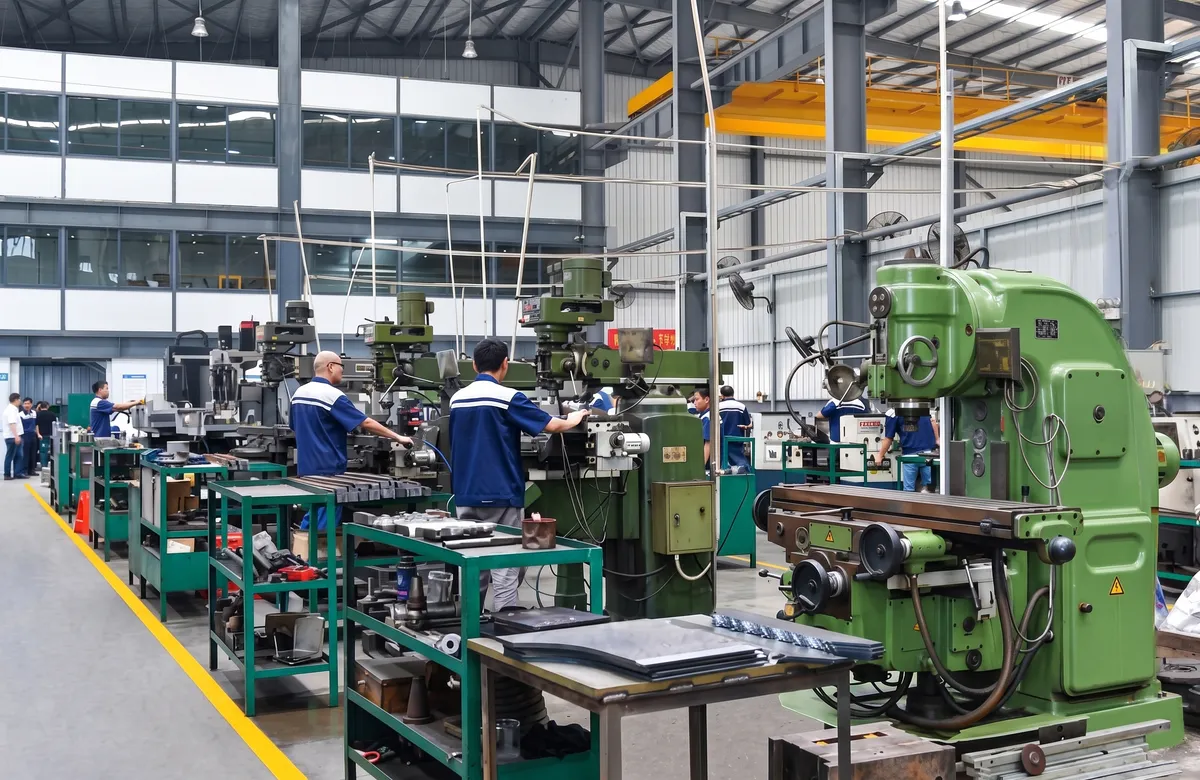
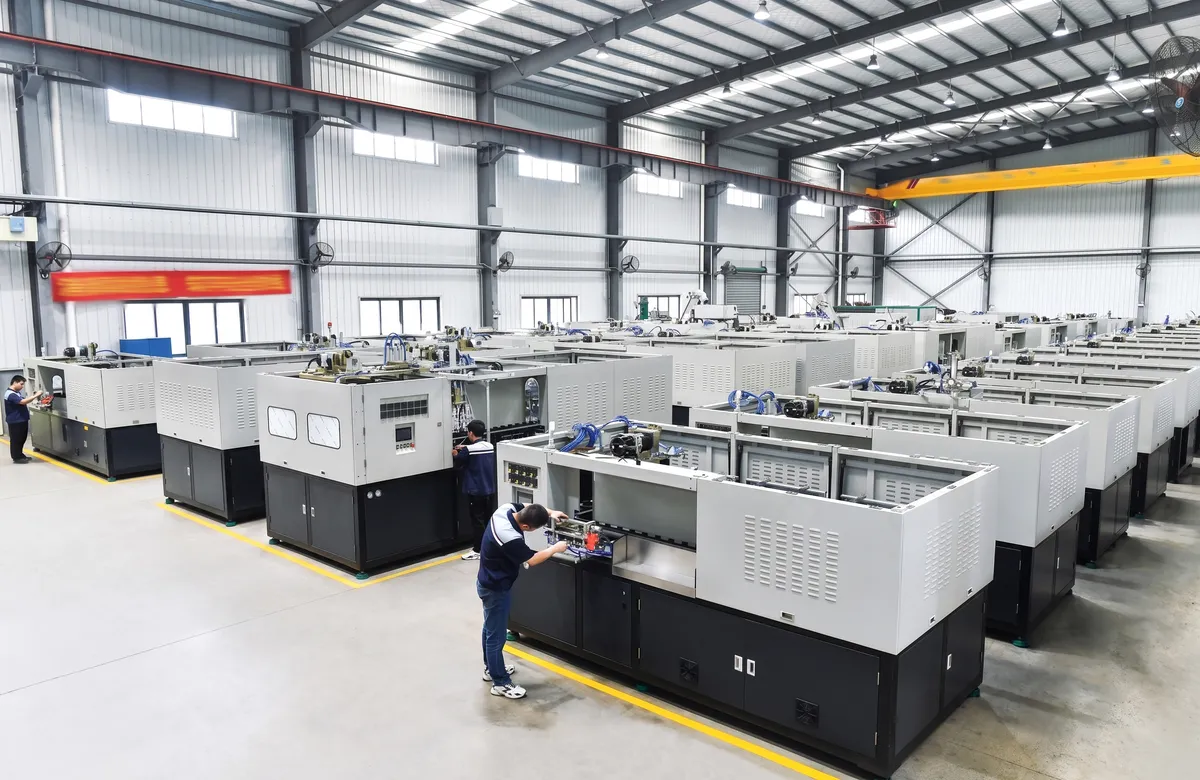
When evaluating quotes from blow molding machine manufacturers, distinguish carefully between bare machine price and the price of a complete turnkey system including molds, tooling, auxiliary machinery, installation, and commissioning. Machines at significantly below-market pricing often reflect compromises in component quality, engineering support, or after-sales service capability that create higher ownership costs over time. Request references and factory visits before committing to a large capital purchase, and verify that the supplier maintains a production workshop.
Why Choose Ever-Power's PET Blow Molding Machine?
Mexico Ever-Power ISBM Machinery Co., Ltd is an engineering-driven manufacturer and exporter specializing in automatic injection blow molding machines, injection stretch blow molding machines, extrusion blow molding machines, and complete auxiliary machinery systems. Our product range covers the full spectrum of plastic blow molding machine types, from compact 2-cavity units for niche packaging applications through to high-speed 8-cavity systems for large-volume beverage production.
Our R&D team brings together engineers with deep specialist knowledge of injection-blowing machinery and injection-blowing mold technology. This dual expertise means that every machine we design and every mold we tool is engineered as a matched system, not a collection of off-the-shelf components. Customers benefit from this integration with faster ramp-up, fewer process adjustments, and more consistent bottle quality from the first production run.
Our product applications span pharmaceutical packaging, food packaging, health care packaging, cosmetic packaging, beverage packaging, agrochemical packaging, and industrial chemical containment. The resins we support cover HDPE, LDPE, PET, PETG, PP, PS, PPSU, PC, Tritan, ABS, PLA, EVA, PCTG, and environmental corn material, giving our customers the material flexibility to serve diverse end markets from a single blow molding machine platform.
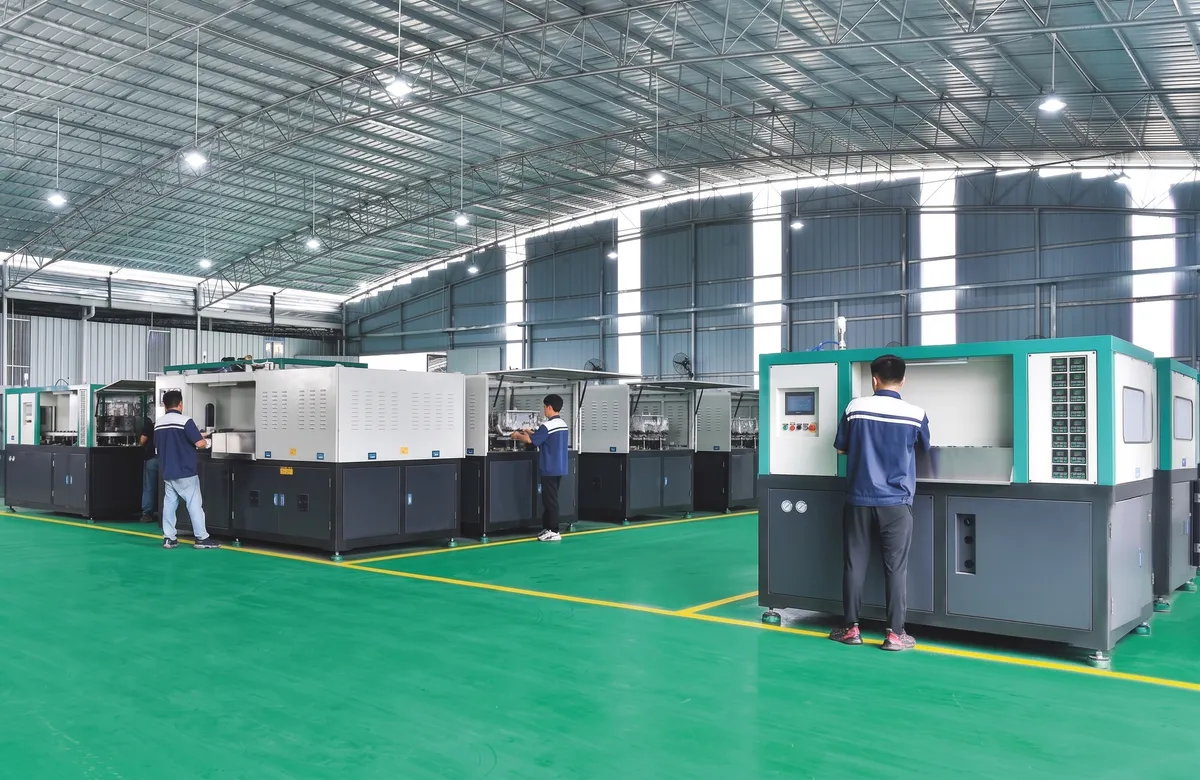
We adhere to the enterprise development principles of self-reliance, integrity, pragmatism, innovation, and responsibility, and we build every project as a one-stop turnkey engagement: machine engineering, mold design and fabrication, auxiliary machinery supply, installation support, operator training, and long-term after-sales service. This end-to-end commitment is what distinguishes Ever-Power from simple blow molding machine suppliers and makes us a true manufacturing partner for your packaging production goals.
 |
 |
 |
 |
 |
 |
Frequently Asked Questions
Q: What is the difference between a two-stage and a one-step blow molding machine?
A: The EPA.ES-2C100 is a two-stage (two-step) blow molding machine, meaning preform injection molding and stretch-blow molding are performed on separate machines. The injection molding machine produces preforms that are cooled, stored, and then reheated and blown on the EPA.ES unit. This allows each stage to be optimized independently and allows preforms to be produced in large quantities matched to multiple blow molding machines. A one-step machine combines injection, conditioning, and blowing in a single platform, which eliminates reheating energy and is preferred for products requiring very high clarity or where material degradation from reheating is a concern.
Q: What container volumes can the EPA.ES-2C100 series produce?
A: The EPA.ES series spans a very wide container volume range. The base EPA.ES-2C100 model produces containers up to 500 ml in volume. Larger models in the series, including the EPA.ES-4C130 (1,500 ml), EPA.ES-6C114 (1,500 ml), EPA.JS-2C200 (5,000 ml), and the EPA.JS-2C366 (22,000 ml), extend coverage through to 20-liter large-format drums. The full series therefore addresses mineral water and beverage bottle production at the small end through to large industrial chemical and edible oil drum production at the large end.
Q: What plastics can this PET blow molding machine process?
A: The EPA.ES-2C100 is optimized for PET and PETG and is also compatible with PP with appropriate heating profile adjustments. The broader EPA.ES series across different model configurations supports PET, PETG, PP, PE, and PC depending on the specific application. PET is the most common material for beverage and water bottle production. PP is used for pharmaceutical and hot-fill food containers. For materials outside the standard range or unusual processing requirements, we recommend consulting with Ever-Power application engineers before purchase.
Q: How long does installation and commissioning take?
A: For a standard EPA.ES-2C100 installation, once the machine is positioned, utilities connected, and auxiliary equipment installed, mechanical commissioning and parameter setting typically requires 2 to 4 days with an Ever-Power engineer on site. Operator training is conducted during this period. The timeline may extend for custom configurations or if site utility preparation requires additional work. Ever-Power provides pre-shipment factory acceptance testing documentation and detailed installation guides to support the process, and remote video-call support is available throughout.
Q: What auxiliary equipment is required to operate the EPA.ES-2C100?
A: To operate the EPA.ES-2C100 fully automatic blow molding machine, you will need: a high-pressure air compressor capable of supplying 26 to 35 kg/cm² at 1,000 to 1,400 ltr/min; a refrigerated water chiller to maintain cooling water at 8 to 12 degrees C; a compressed-air dryer and filtration system to protect blowing valves; and an air storage tank to buffer compressor output. A preform dryer or dehumidifying dryer may also be needed for PET processing. Ever-Power can supply a complete auxiliary machinery package matched to the blow molding machine model and production requirements.
Q: Can I use preforms from a third-party supplier with this machine?
A: Yes. The EPA.ES-2C100 is designed to accept preforms produced by any injection molding machine, provided the preform dimensions, resin grade, and neck finish specifications are matched to the blowing mold and machine settings. Neck diameter compatibility (up to 68 mm on the EPA.ES-2C100 base model), preform body length relative to stretching stroke (350 mm), and wall thickness uniformity are the key variables to verify when sourcing preforms from a third-party supplier. Ever-Power technical team can review preform specifications and confirm compatibility before you commit to a preform supplier.
Q: What is the typical energy cost of running this blow molding machine?
A: The EPA.ES-2C100 operates at a working heating power of 8 to 12 kW under normal production conditions, against a maximum rated power of 34 kW. Actual energy consumption per production hour includes heating, servo drive operation, compressed air generation, and chiller operation. Total system energy consumption varies by local utility rates, ambient temperature, preform wall thickness, and cycle rate. Ever-Power can provide reference energy consumption data from comparable installations to support your return-on-investment calculations for this industrial blow molding machine.
Q: How do I change molds when switching bottle sizes?
A: The EPA.ES-2C100 is designed for relatively straightforward mold changeovers. Blowing molds are secured with quick-release fittings to the clamping platens, and cooling water connections use standardized coupling fittings. A trained technician can complete a mold change in 30 to 90 minutes depending on size difference and the degree of heating zone adjustment required. Recall of pre-stored PLC heating profiles for the new bottle type significantly accelerates changeover. Ever-Power recommends documenting approved parameter sets for each bottle profile in the machine recipe memory to minimize changeover time in production.
Q: Does Ever-Power supply custom molds together with the machine?
A: Yes. Ever-Power supplies both preform injection molds and blowing molds matched to the EPA.ES-2C100 and other models in the series. Purchasing molds and the machine from the same blow molding machine manufacturer ensures dimensional compatibility and simplifies factory acceptance testing. Custom bottle designs are supported: provide your 3D bottle drawing or a reference sample, and Ever-Power tooling team will develop a mold design proposal with cavity count recommendations and expected output rates for your specific container geometry.
Customer Reviews
Carlos, Beverage Packaging, Mexico
"We bought the EPA.ES-2C100 with 2 cavities back in March and have been running it for mineral water production in our plant here in Monterrey. First thing I noticed was how stable the blowing pressure is. We had an older machine from a different supplier where pressure would drift and we would get rejects. With this machine we are holding steady at 28 kg/cm² and our reject rate has dropped below 0.8%. The setup team from Ever-Power spent two full days with us getting the heating zones tuned for our 500 ml preforms. I would recommend them to any beverage producer in Mexico looking for a reliable automatic PET blow molding machine."
Renata, Pesticide Packaging, Brazil
"Our company supplies PET bottles to pesticide brands across Brazil and we switched to the EPA.ES-4C114 model from Ever-Power about seven months ago. The neck finish precision on this machine is genuinely impressive. We produce 68 mm neck containers and every batch passes our thread gauge check first time. Output is around 4,600 bph which matches our contract requirements. The sales team was very responsive during our technical evaluation and the documentation provided for customs clearance was complete and accurate. The machine arrived on time and installation was straightforward with the video support provided."
Priya, Pharmaceutical Packaging, India
"I was skeptical at first because I had a bad experience with a cheap blow molding machine from another manufacturer a few years back. A colleague in the pharmaceutical packaging industry in our region recommended Ever-Power and we decided to trial an EPA.ES-2C100 for our 500 ml vitamin supplement bottles in PP. What won us over was the temperature control system. We can dial in zone temperatures within 1 degree C and the consistency between bottles across a 12-hour shift is very tight. Wall thickness variation is well within our quality specification. Their after-sales WhatsApp response is fast too, which matters a lot when you are running 24 hours."
Hendra, Personal Care Packaging, Indonesia
"We operate a personal care packaging facility in Jakarta and needed a machine that could handle PET and PETG for different product lines. The EPA.ES-4C100 has been running in our plant for about five months. Switching between the two materials requires heating zone adjustment but the control system makes this manageable. Output for our 300 ml cosmetic bottles is around 4,600 bph and the surface gloss on PETG containers is exactly what our brand clients expect. One area where there was room to improve was the English-language manual, some sections needed clarification, but the technical support team answered our queries quickly by video call."
Raymond, Edible Oil Packaging, Philippines
"I purchased the EPA.ES-6C76 model for our edible oil bottle production line in the Philippines. We run three shifts and needed a machine that could keep up with our filling line capacity of about 6,500 bottles per hour. This machine hits 7,200 bph theoretical and in real production we are achieving 6,700 consistently with almost no rejects. The fully automatic operation means we only need one operator per shift to monitor it rather than the three people we had on our old semi-automatic. Labor saving alone has already paid back a significant portion of the investment in under a year."
Kevin, Food Packaging, Malaysia
"We are a blow molding machine supplier in Malaysia and have been reselling Ever-Power machines to our customers in the food and chemical packaging sectors for the past two years. The EPA.ES series has been reliable for our clients and the after-sales parts supply from Ever-Power is good. Lead times on replacement components are reasonable and they provide technical drawings when needed. The most popular model we sell is the EPA.ES-4C100 for chemical bottle production. We have had zero serious mechanical failures in the 11 units we have placed so far. This is a manufacturer we are confident recommending."
Emeka, Juice Bottle Packaging, Nigeria
"We needed a PET bottle blow molding machine specifically for producing juice bottles in 1-liter and 1.5-liter sizes for the Nigerian market. We ordered the EPA.ES-4C130 which runs up to 3,300 bph. Shipping to Lagos was handled professionally and the crating was solid. Machine arrived in perfect condition. The commissioning engineer spent three days on site with us and we were in production by day five. Given the power supply fluctuations we experience here, I was concerned about stability, but the machine handled voltage variation within normal tolerance without any issues. Overall very satisfied with the purchase and with Ever-Power communication throughout the process."
Alejandro, Chemical Bottle Packaging, Peru
"I run a small PET packaging company in Peru focused on agrochemical bottle production. We are using the EPA.ES-2C100 and it has been in service for about eight months now. We produce herbicide bottles in 500 ml and the neck finish comes out perfectly consistent for our cap-sealing requirements. The energy consumption at our facility is lower than our previous machine and we have not had any unplanned downtime since installation. I reached out to the sales team a couple of times after delivery with questions about adjusting the heating profiles for a different preform wall thickness and they sent a video tutorial within 24 hours. Service was genuinely good."
Ahmed, Food and Beverage Packaging, Egypt
"We import packaging machinery for food and beverage clients in Egypt and have worked with a number of Chinese blow molding machine manufacturers over the years. Ever-Power stands out because their technical team actually understands the difference between different bottle applications and can advise properly. We placed an order for three EPA.ES-4C76 units for a mineral water client. Delivery was on schedule and the machines performed as specified in the contract from day one. The one area I would suggest improvement is the spare parts list in the documentation, it could be more detailed. But overall these are solid machines for the price point and the company is professional to deal with."
Additional information
| Edited by | Yjx |
|---|
Related products
-
EPA.ES-1C130 Fully Automatic Blow Molding Machine for Food Wide-Mouth Jars and Cans
-
EPA.ES-2C150 Fully Automatic Blow Molding Machine for Edible Oil and Handle Bottles
-
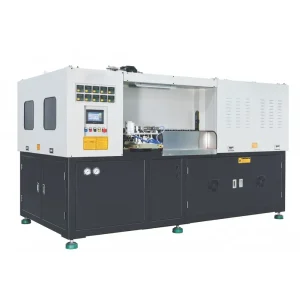
EPA.ES-2C260 Fully Automatic Blow Molding Machine for Daily Chemicals & Cosmetic Bottles
-
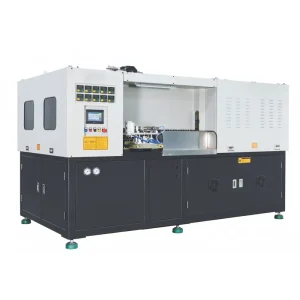
EPA.AS-4C76.2 Fully Automatic Blow Molding Machine for Daily Chemicals & Cosmetic Bottles