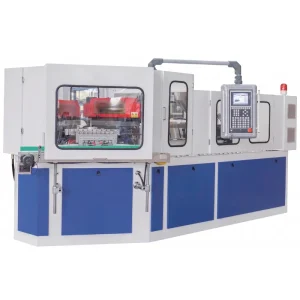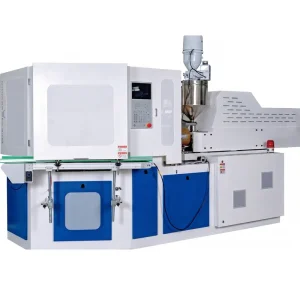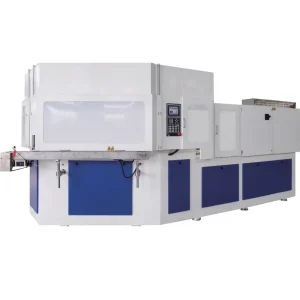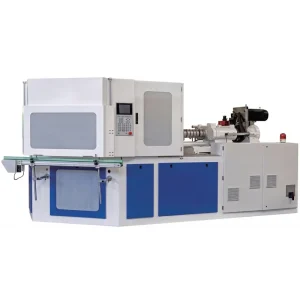
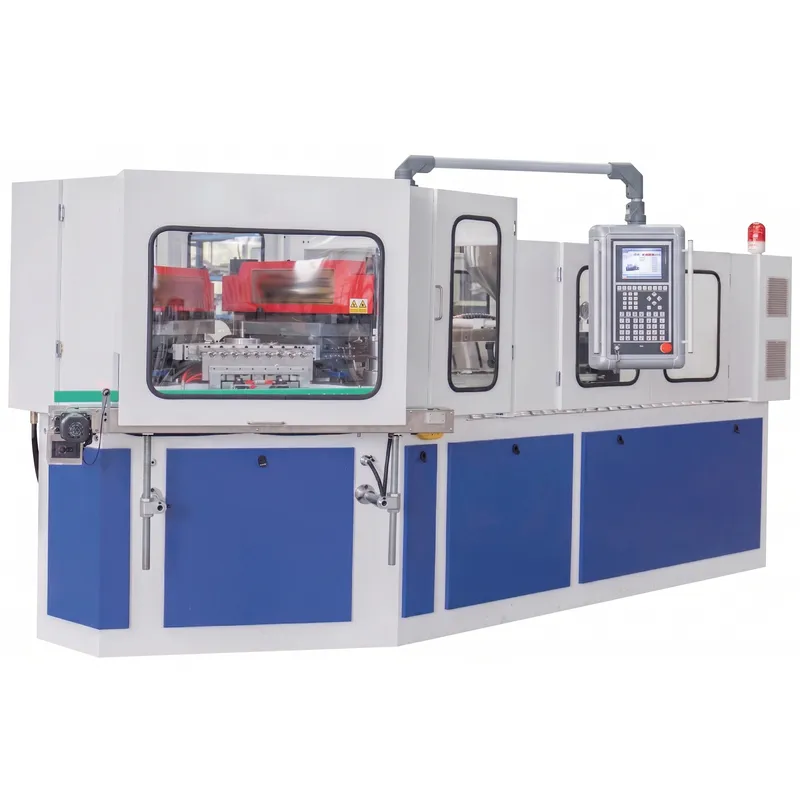
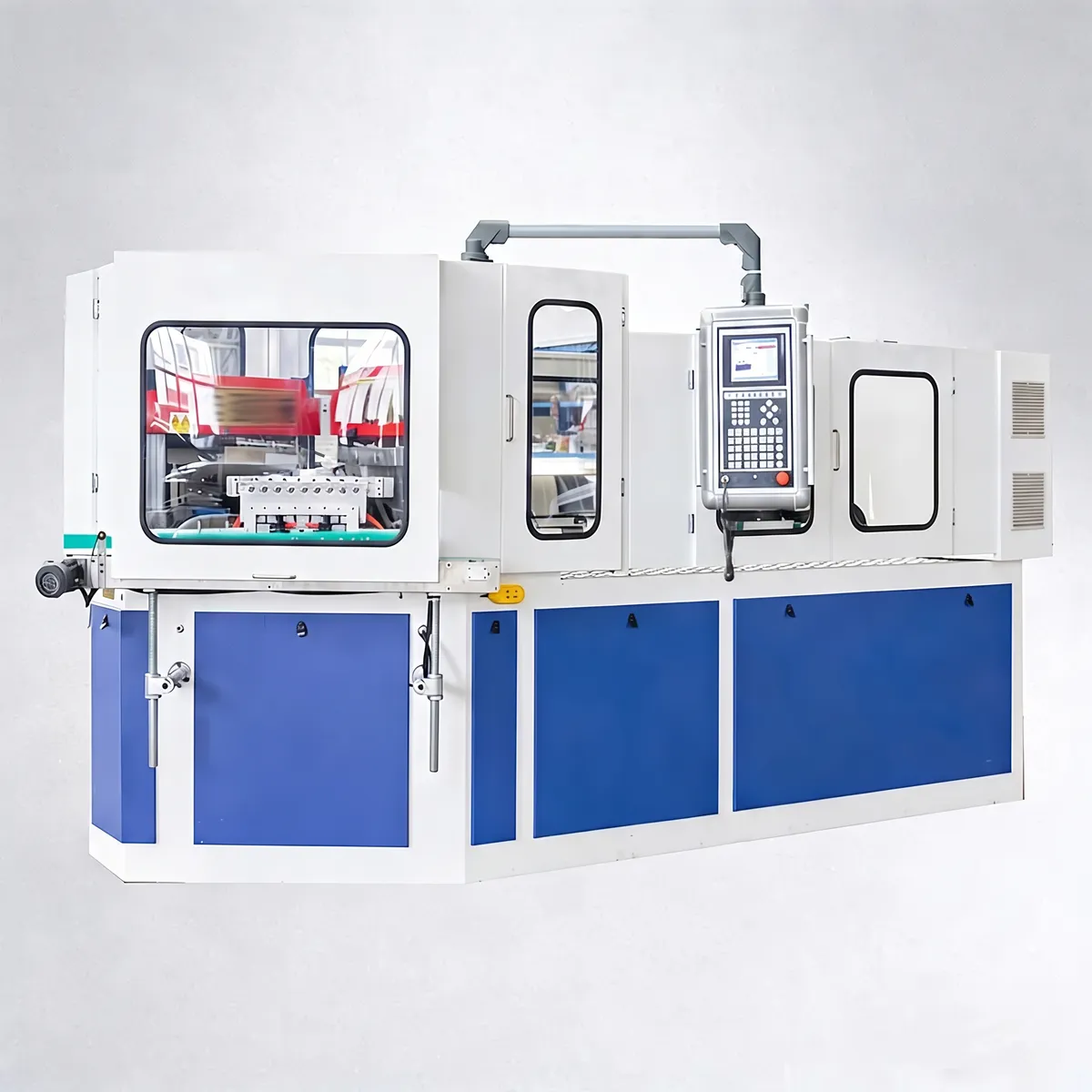
เครื่องฉีดขึ้นรูปพลาสติกแบบเป่าขึ้นรูป ZQ60 (รุ่นยุโรป)
เครื่องฉีดขึ้นรูปและเป่าขึ้นรูป ZQ60 (แบบยุโรป) เป็นเครื่องฉีดขึ้นรูปและเป่าขึ้นรูปประสิทธิภาพสูงแบบขั้นตอนเดียว ที่ผสานรวมการออกแบบโครงสร้างแบบยุโรปอย่างสมบูรณ์ สร้างรากฐานที่มั่นคงสำหรับการผลิตที่มีปริมาณมากในระยะยาว เครื่องจักรนี้ให้แรงหน่วง 20%-30% ที่สูงกว่าเครื่องจักรอื่นๆ ในอุตสาหกรรม ส่งผลให้ได้ความหนาของผนังที่สม่ำเสมอ ผิวเรียบเนียน และอัตราการปฏิเสธผลิตภัณฑ์แทบเป็นศูนย์สำหรับขวดทุกประเภท ตั้งแต่ขวดขนาด 10 มล. จนถึงภาชนะขนาด 1000 มล.
The ZQ60 Injection Blow Molding Machine (European) is a high-performance, one step injection blow molding machine that integrates a complete European-style structural design, creating a rock-solid foundation for long-term, high-throughput production. The machine delivers a damping force 20%-30% higher than industry peers, resulting in consistently uniform wall thickness, flawless surface finish, and virtually zero product reject rates across all bottle types from 10ml vials to 1000ml containers. The standard servo rotation system ensures precise indexing on every cycle, reducing operator learning time and lowering long-term maintenance costs. With an injection clamping force of 600KN and a max mold platen size of 600x390mm, this blow injection molding machine is built for the demands of modern, high-volume packaging production lines.
This ZQ60 IBM injection blow molding machine is engineered for manufacturers who need a reliable, customized IBM machine for sale that can handle multiple resins including HDPE, LDPE, PP, PS, ABS, EVA, and PCTG across a broad spectrum of applications. Its unique pressurized clamping structure keeps the booster cylinder out of the mold opening and closing action, reducing mechanical wear and cutting energy consumption by 10%-20% compared to industry standards. Whether you are replacing an aging Aoki injection blow molding machine or investing in your first IBM machine for pharma or cosmetics production, the ZQ60 offers an optimized balance of precision engineering, cost-efficiency, and production uptime that competing plastic injection blow molding machine manufacturers rarely achieve at this price tier.
Mold Cavitation (For Reference)
| ปริมาตรโดยประมาณ | 10 มล. | 30 มล. | 60 มล. | 100 มล. | 250 มล. | 500 มล. | 1000 มล. |
| การเกิดโพรงอากาศสูงสุด | 14 | 10 | 10 | 8 | 5 | 3 | 2 |
ข้อกำหนดทางเทคนิค
| รายการ | หน่วย | ZQ60 |
| ระบบฉีด | ||
| เส้นผ่านศูนย์กลางของสกรู | มม. | 45/50 |
| สกรู L/D | % | 22:1 |
| น้ำหนักการฉีด! | จี | 260/383 |
| กำลังความร้อน | เควี | 14 |
| หมายเลขโซนบาร์เรล | 3+เอ็น | |
| จังหวะการฉีด | มม. | 160 |
| ระบบจับยึด | ||
| แรงยึดของการฉีด | เคเอ็น | 600 |
| จังหวะเปิดสำหรับการฉีด | มม. | 140 |
| แรงเป่าของโคมไฟ C | เคเอ็น | 100 |
| จังหวะเปิดสำหรับการเป่าลม | มม. | 140 |
| ความสูงในการยกของโต๊ะหมุน | มม. | 70 |
| เชื้อรา | ||
| ขนาดแผ่นรองสูงสุด (ยาว x กว้าง) | มม. | 600x390 |
| ความหนาของแม่พิมพ์ | มม. | 240 |
| เส้นผ่านศูนย์กลางของขวด | มม. | 120 |
| ความสูงของขวด | มม. | 220 |
| ความสูงของขวดที่เหมาะสม | มม. | 15-200 |
| จังหวะการลอก | มม. | 230 |
| ระบบไฮดรอลิก | ||
| แรงดันไฮดรอลิก | แผนที่ | 14 |
| กำลังมอเตอร์ | เควี | 18.5/22 |
| รอบการอบแห้ง | เอส | 4 |
| พลังงานทั้งหมด | เควี | 37 |
| กำลังใช้งาน | % | 52-70 |
| คนอื่น | ||
| แรงดันอากาศต่ำสุดของอากาศอัด | เมกะปาสคาล | 0.7-1.2 |
| ความจุอากาศอัด | ม³/นาที | 0.7 |
| การไหลของน้ำ | ม³/ชม. | 4 |
| แรงดันน้ำหล่อเย็น | เมกะปาสคาล | 0.3-0.4 |
| Dimension(L x W x H ) | เอ็ม | 3.8x1.4x2.18 |
| น้ำหนักสุทธิ | ตัน | 5 |
ยี่ห้อและรุ่นที่สามารถเปลี่ยนได้
| เอเวอร์-พาวเวอร์ | แรงยึด | โจมาร์ | ซูมา | ยูนิลอย | บลอม่า |
| ZQ40 | 40T | ไอบีเอ็ม40 | 40iB | UIB70 | ไอบีเอ็ม45 |
| ZQ60 | 60T | ไอบีเอ็ม65 | 65iB | ยูไอบี90 | ไอบีเอ็ม50 |
| ZQ80 | 80T | ไอบีเอ็ม85เอส | 85iB | UIB120 | ไอบีเอ็ม85 |
| ZQ110 | 110ตัน | ไอบีเอ็ม135 | 135iB | UIB150 | ไอบีเอ็ม135 |
| ZQ135 | 135T | ไอบีเอ็ม175 | 175iB | UIB180 |
เส้นผ่านศูนย์กลางสกรูเครื่องจักร IBM
| เอเวอร์-พาวเวอร์ | เส้นผ่านศูนย์กลางของสกรู | โจมาร์ | ซูมา | บลอม่า |
| ZQ40 | 40/45 | 35/40 | 40 | 45 |
| ZQ60 | 45/50 | 45 | 40/50 | 50 |
| ZQ80 | 55 | 55 | 50/60 | 50 |
| ZQ110 | 65 | 65 | 65/76 | 70 |
| ZQ135 | 70 | 70 | 65/76 |
น้ำหนักการฉีดเครื่องจักร IBM
| เอเวอร์-พาวเวอร์ | น้ำหนักการฉีด | โจมาร์ | ซูมา | บลอม่า |
| ZQ40 | 190/260 | 180 | 169 | 180 |
| ZQ60 | 260/383 | 205 | 169/264 | 240 |
| ZQ80 | 466 | 300 | 333/480 | 310/280 |
| ZQ110 | 540 | 450/550 | 580/770 | 560 |
| ZQ135 | 650 | 450/550 | 580/770 |
แรงหนีบฉีดขึ้นรูปเครื่อง IBM
| เอเวอร์-พาวเวอร์ | แรงยึดฉีด | โจมาร์ | ซูมา | บลอม่า |
| ZQ40 | 400KN | 340KN | 386KN | 350KN |
| ZQ60 | 600KN | 460KN | 580KN | 500KN |
| ZQ80 | 800KN | 680KN | 720KN | 700KN |
| ZQ110 | 1100KN | 1210KN | 1200KN | 1250KN |
| ZQ135 | 1350KN | 1560KN | 1600KN |
ขนาดแม่พิมพ์เครื่องจักร IBM
| เอเวอร์-พาวเวอร์ | ขนาดแม่พิมพ์ | โจมาร์ | ซูมา | บลอม่า |
| ZQ40 | 480 × 340 | 394 × 508 | 470 × 350 | 450 × 390 |
| ZQ60 | 600 × 390 | 432 × 660 | 620 × 400 | 620 × 430 |
| ZQ80 | 800 × 400 | 464 × 749 | 700 × 400 | 620 × 430 |
| ZQ110 | 1100 × 460 | 559 × 1118 | 1000 × 500 | 900 × 480 |
| ZQ135 | 1300 × 500 | 635 × 1372 | 1200 × 600 |
ขนาดเครื่อง IBM
| เอเวอร์-พาวเวอร์ | ขนาดแม่พิมพ์ (เมตร) | โจมาร์ | ซูมา | บลอม่า |
| ZQ40 | 3.8 × 1.3 × 1.7 | 2.72 × 1.9 × 2.75 | 3.8 × 1.5 × 2.3 | 4.05 × 1.52 × 2.55 |
| ZQ60 | 3.8 × 1.4 × 1.8 | 2.92 × 1.98 × 3.41 | 4 × 1.7 × 2.3 | 620 × 430 × 2.55 |
| ZQ80 | 4.5 × 1.6 × 2 | 3.33 × 1.94 × 3.41 | 4.5 × 2 × 2.6 | 620 × 430 × 2.55 |
| ZQ110 | 5 × 1.8 × 2.2 | 3.79 × 2.4 × 3.41 | 5 × 2.4 × 2.7 | 900 × 480 × 2.55 |
| ZQ135 | 5.5 × 2 × 2.4 | 4.22 × 2.67 × 3.58 | 6 × 2.6 × 2.7 |
หมายเหตุ: การกล่าวถึงแบรนด์ต่างๆ มีจุดประสงค์เพื่อช่วยให้ลูกค้าเลือกซื้อสินค้าเท่านั้น ไม่ได้มีเจตนาที่จะขายสินค้าของแบรนด์เหล่านั้น
ZQ60 Injection Blow Molding Machine Features
1. Full European-Style Structure
The ZQ60 adopts a comprehensive European-style mechanical architecture throughout its entire frame and clamping assembly. This design philosophy delivers a damping force 20%-30% larger than products from competing injection blow molding machine manufacturers. The result is superior vibration control during high-speed cycling, which directly translates into consistent wall thickness uniformity and a visually flawless product surface finish, making every bottle production run reliable at industrial scale.
2. ระบบหมุนเซอร์โวมาตรฐาน
Unlike hydraulic-rotation alternatives common on lower-cost machines, the ZQ60 features a servo-driven rotary table as standard equipment. The servo motor delivers highly precise indexing angles on every station transfer, eliminating positional drift over time. The simplified mechanical structure reduces the number of hydraulic components involved in rotation, which means shorter maintenance intervals, faster cycle changeovers, and a noticeably lower learning curve for new production operators unfamiliar with this IBM platform.
3. โครงสร้างการหนีบแบบแรงดันที่เป็นเอกลักษณ์
The ZQ60 features a patented pressurized clamping system where the booster cylinder is completely isolated from the mold opening and closing motion. In conventional blow injection molding machines, the booster cylinder participates in every open-close cycle, causing rapid seal wear and high idle energy consumption. By decoupling the booster from this motion, the ZQ60 reduces total energy consumption by 10%-20% compared to industry norms, extends booster cylinder service life significantly, and improves overall clamping stability throughout long production shifts.
4. Zero-Waste, No-Flash Production
The one-step IBM process used in the ZQ60 entirely eliminates flash trimming, gate scrap, and blank-cut waste that are inherent to extrusion blow molding. Because the preform is injected at precisely controlled parameters and then immediately blow-molded in the same machine cycle, there is no excess material to trim from the bottle neck, bottom, or parting line. This zero-waste production model directly reduces raw material consumption, lowers operational cost, and eliminates secondary trimming labor, making the ZQ60 one of the most cost-efficient IBM machines available for high-volume production.
5. High-Cavity Mold Compatibility
The ZQ60 supports mold platen sizes up to 600x390mm and accommodates molds with up to 14 cavities for 10ml bottles, 10 cavities for 60ml bottles, and 2 cavities for 1000ml bottles. This broad cavity range allows the same IBM machine to serve multiple product lines within a single facility, reducing equipment investment. High-cavity tooling combined with the 4-second dry cycle results in exceptionally high output per hour, making this one of the best injection blow molding machines for manufacturers seeking to maximize throughput on pharmaceutical, cosmetic, or food packaging production floors.
6. Multi-Resin Compatibility and Compact Footprint
The ZQ60 injection blowing molding machine processes a wide range of thermoplastic materials including HDPE, LDPE, PP, PS (standard and high-transparency), ABS, EVA, PCTG, and environmental corn-based biodegradable resins. This versatility allows manufacturers to produce products ranging from 1ml to 1000ml across multiple resin families on a single machine without major mechanical changes. With overall dimensions of just 3.8x1.4x2.18M and a net weight of only 5 tons, the ZQ60 is a highly space-efficient solution compared to extrusion blow molding alternatives that require more auxiliary equipment and larger factory footprints.
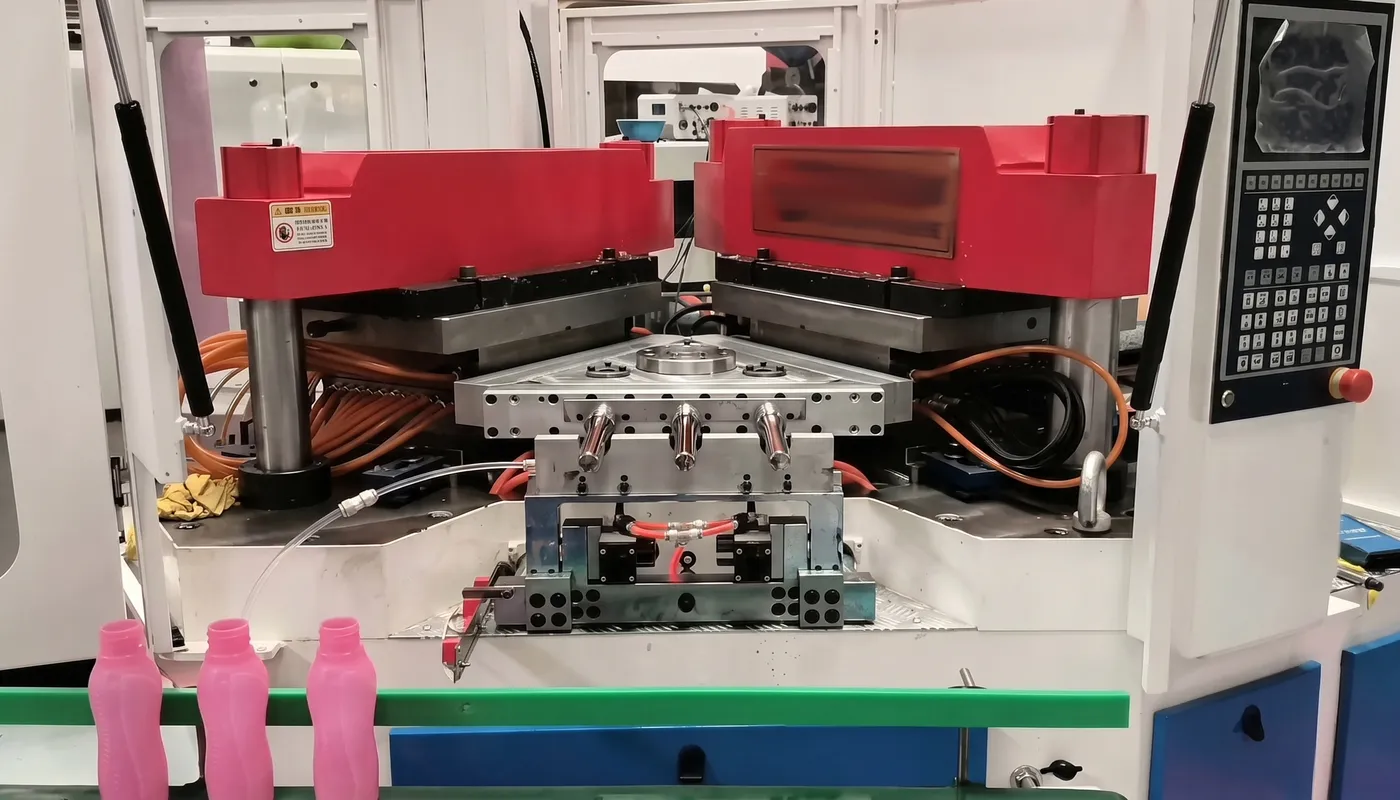
หลักการทำงาน
Station 1 - Preform Injection
At the first station, plastic granules fed through the stock preparation device are melted and plasticized by the heated screw barrel system (3+N barrel zones, 14KW heating power). The molten resin is then injected under the 600KN injection clamping force into a precision injection mold cavity, which accurately shapes the bottle neck thread, shoulder geometry, and preform body wall. The injection stroke of 160mm and screw diameter options of 45mm or 50mm allow the operator to optimize shot weight between 260g and 383g to match different preform sizes and resin types. After the injection dwelling phase is complete, the mold opens and the core rod mandrel, still carrying the formed preform while it is still at optimal thermal state, rotates to the second station. Precise temperature control during this transfer phase is critical because the preform must arrive at the blow station within the ideal thermal window to achieve correct molecular orientation and wall uniformity during expansion.
Station 2 - Blow Molding
At the second station, the blow mold closes around the preform still mounted on the core rod mandrel. Compressed air, supplied at 0.7 to 1.2 MPa, is introduced through the mandrel itself. The air pressure inflates the hot preform outward, forcing it to conform precisely to the interior surface of the blow mold cavity, which determines the final bottle shape, exterior surface texture, and dimensional tolerances. The 100KN blowing clamping force holds the mold securely closed during this expansion phase, preventing any mold separation or flash formation at the parting line. The number of cavities in the blow mold directly determines overall production output, and with the ZQ60 supporting up to 10 cavities for 60ml bottles, production rates are significantly higher than single-stage extrusion blowing alternatives. After blow molding is complete and the bottle has cooled sufficiently within the mold, the blow mold opens and the core rods, with the fully formed bottles still on them, rotate to the third station.
Station 3 - Stripping and Ejection
At the third and final station, the finished bottles are automatically stripped from the cold core rods using the stripping mechanism with a 230mm stripping stroke. The bottles separate cleanly from the mandrels without any manual intervention, dropping or transferring directly to the downstream conveyor belt or collection system for packaging, filling, or labeling. Because the bottles are fully formed and cooled when they arrive at the stripping station, they require no post-ejection trimming, no gate removal, and no secondary quality inspection for flash or overflow material, which are all labor and cost burdens that extrusion blow molded products carry. The three-station concurrent operation of this single stage injection stretch blow molding machine means that at every single machine cycle, Station 1 is injecting new preforms, Station 2 is blow molding those from the previous cycle, and Station 3 is stripping the bottles completed before that.
สถานการณ์การใช้งาน
1. ขวดเครื่องดื่ม
The ZQ60 produces small-to-medium beverage bottles in PP and HDPE with exceptional clarity and uniform wall thickness. Typical products include dairy portion bottles, flavored water containers, and functional drink packaging from 30ml to 500ml. The zero-flash production process ensures clean, precision bottle necks that seal perfectly with standard screw caps in high-speed filling lines, making this IBM machine ideal for bottling plants handling both still and lightly carbonated drinks.
2. ขวดบรรจุสารเคมี
Chemical packaging demands containers with precise wall thickness, excellent chemical resistance, and leak-proof closures. The ZQ60 plastic เครื่องฉีดขึ้นรูปและเป่าขึ้นรูป produces HDPE and PP chemical bottles from 60ml to 1000ml with consistent wall distribution that meets UN-rated packaging compliance requirements. Applications include agricultural chemical containers, industrial lubricant bottles, cleaning agent containers, and adhesive packaging where structural integrity under pressure and chemical exposure is non-negotiable.
3. ขวดเครื่องสำอาง
Cosmetic packaging requires premium surface finish, tight dimensional tolerances, and an attractive appearance that supports brand positioning on retail shelves. The ZQ60 processes high-transparency PS, PCTG, and PP to create lotion bottles, serum containers, toner flacons, and perfume packaging from 10ml to 250ml. The absence of parting-line flash and the precise neck thread accuracy achieved by this IBM machine guarantees leak-free performance with pump dispensers, disc-top caps, and threaded closures.
4. ขวดบรรจุยา
Pharmaceutical packaging is the most demanding application for any IBM machine, requiring GMP-compliant production, precise dimensional repeatability, and material cleanliness. The ZQ60 produces HDPE and PP pharma bottles, tablet containers, syrup bottles, and eye-drop vials from 10ml to 250ml with consistent wall thickness deviation below 1% by weight. Its waste-free process eliminates particulate contamination from flash trimming, while the servo rotation precision ensures every bottle neck is dimensionally identical for child-resistant and tamper-evident closure fitting.
5. ขวดนม
Infant feeding bottles require BPA-free materials, exceptional clarity so caregivers can monitor milk volume, and precision neck dimensions that work with standardized silicone nipples. The ZQ60 processes PP, high-transparency PS, and environmental corn-based materials to produce infant bottles and accessories. The injection blow molding process naturally produces no weld lines or cold-flow marks inside the bottle interior, which is critical for food-contact hygienic compliance and for maintaining the sterilization-grade surface quality required for baby feeding products.
6. Hand Wash and Body Wash Bottles
Personal care bottle production demands large cavity configurations, high throughput, and attractive bottle shapes with smooth parting lines for retail presentation. The ZQ60 produces hand wash bottles, liquid soap containers, and body wash bottles typically in the 100ml to 500ml range in HDPE and PP. Its high-cavity mold support (up to 8 cavities at 100ml) delivers the output rates needed for household personal care product manufacturers running continuous production shifts, making it a strong candidate for facilities seeking the best injection blow molding machine at a competitive price for injection blow molding machine.
7. LED Bulb Cover
Beyond liquid containers, the ZQ60 is used by LED lighting manufacturers to produce PC and high-transparency PS lamp globes and light diffuser covers. The LED bulb cover injection blow molding machine application leverages the precise wall thickness control and optical-grade surface finish achievable on this platform. Consistent wall thickness is critical for uniform light diffusion, and the injection blow molding process eliminates the birefringence patterns and surface haze that injection-stretch blow processes can introduce, making the ZQ60 ideal for decorative LED globe production.
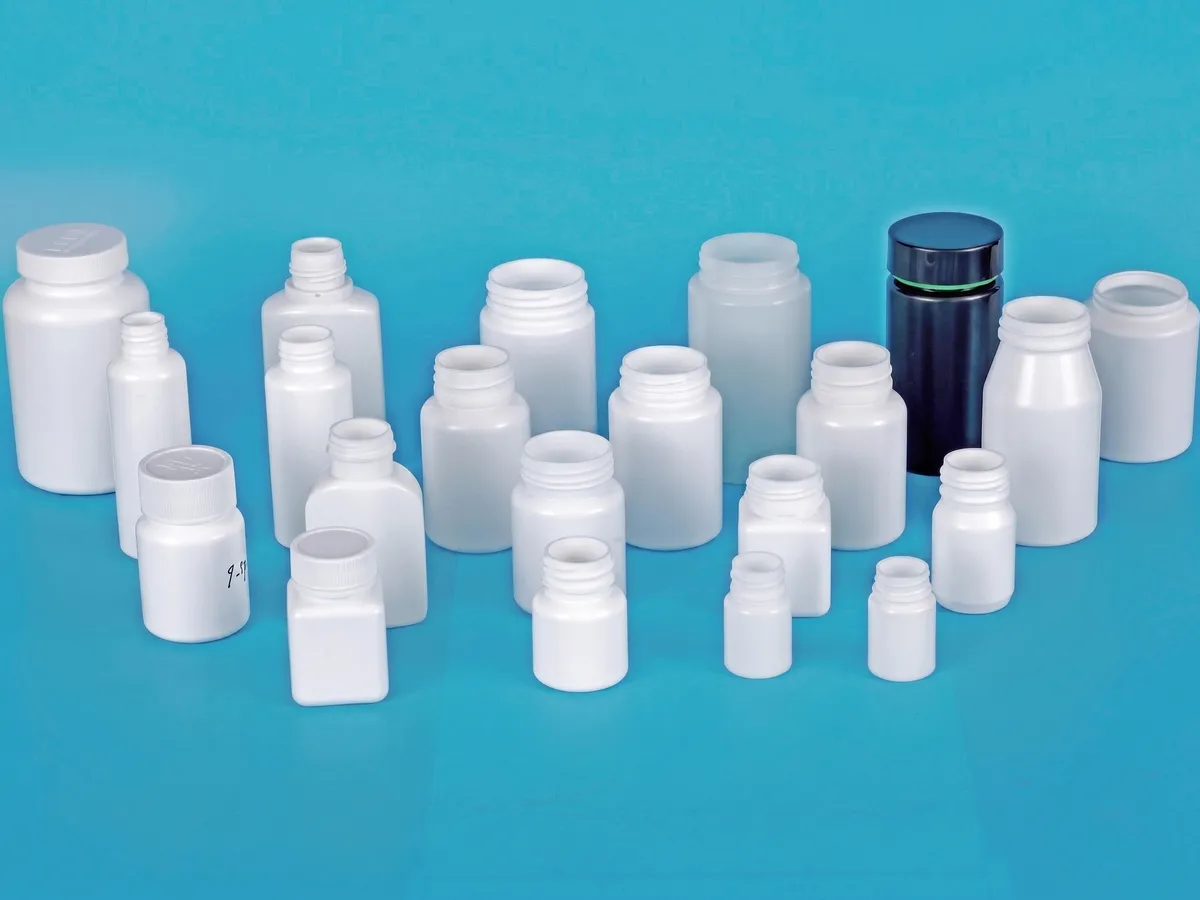 |
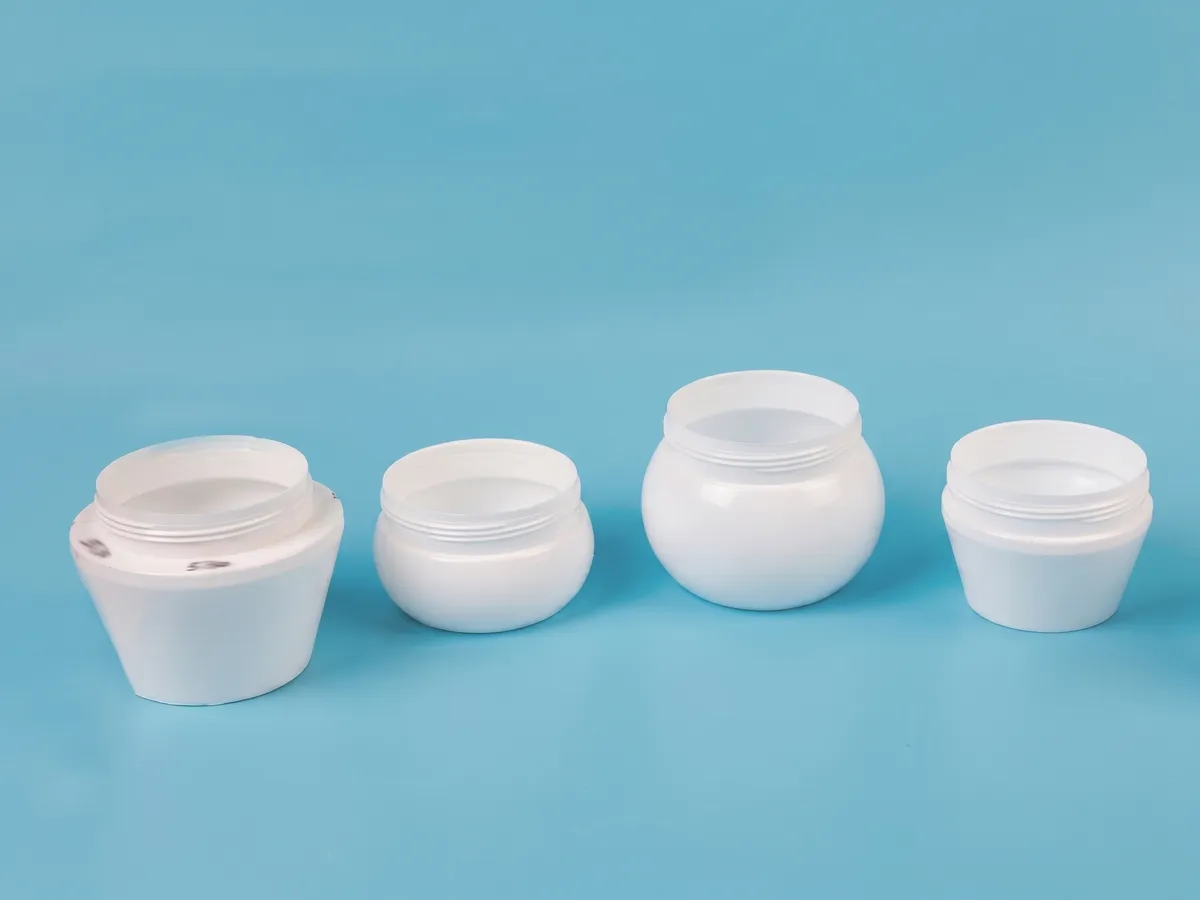 |
| ขวดบรรจุยา | ขวดเครื่องสำอาง |
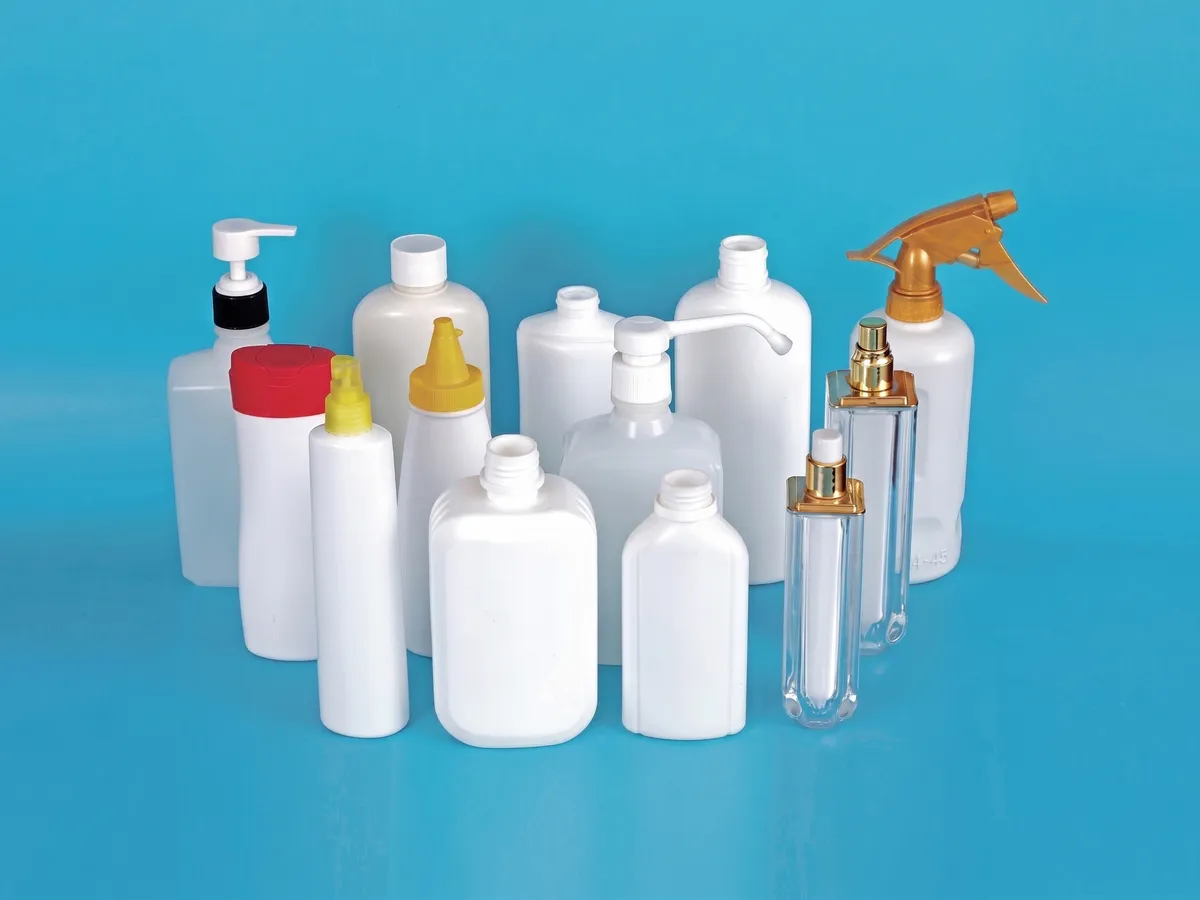 |
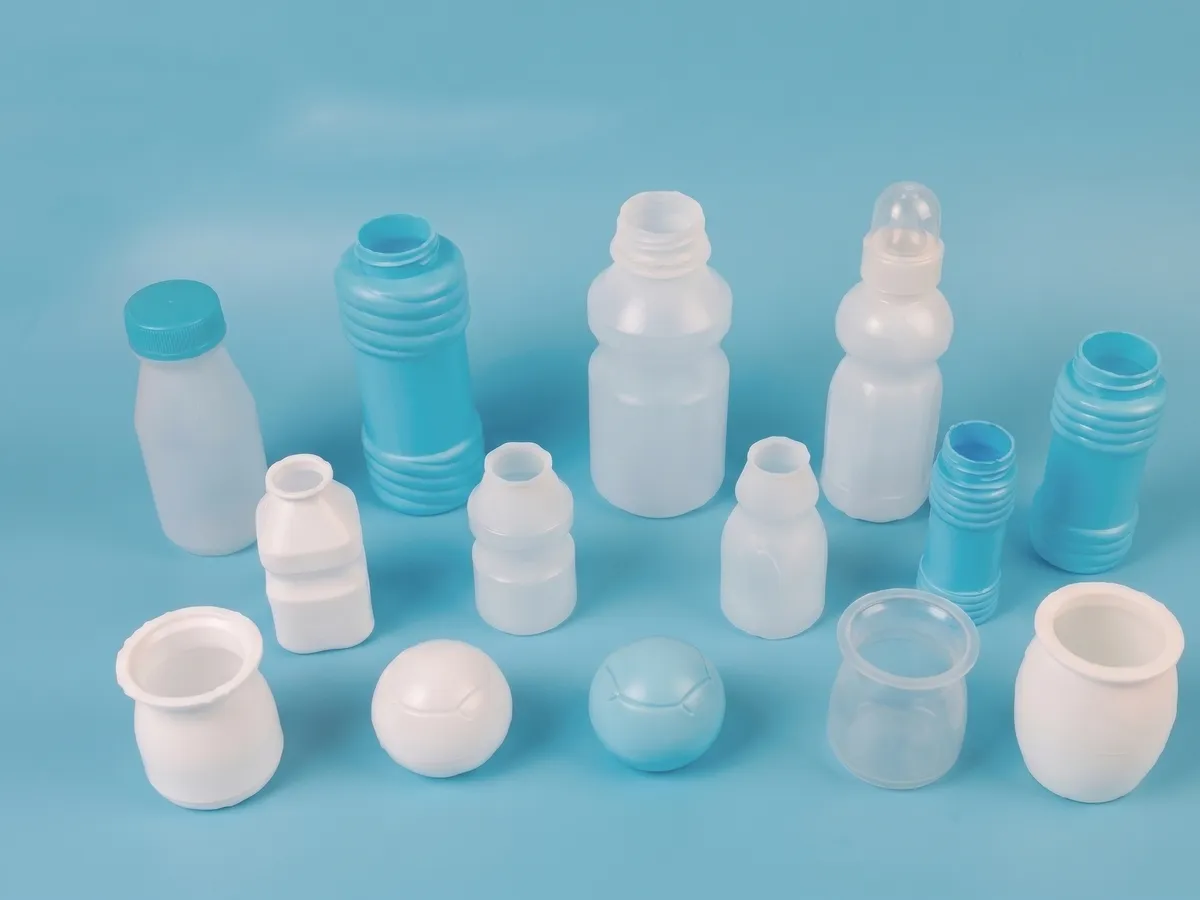 |
| ขวดสารเคมีประจำวัน | Feeding Bottles |
Injection Blow Molding Machine Components
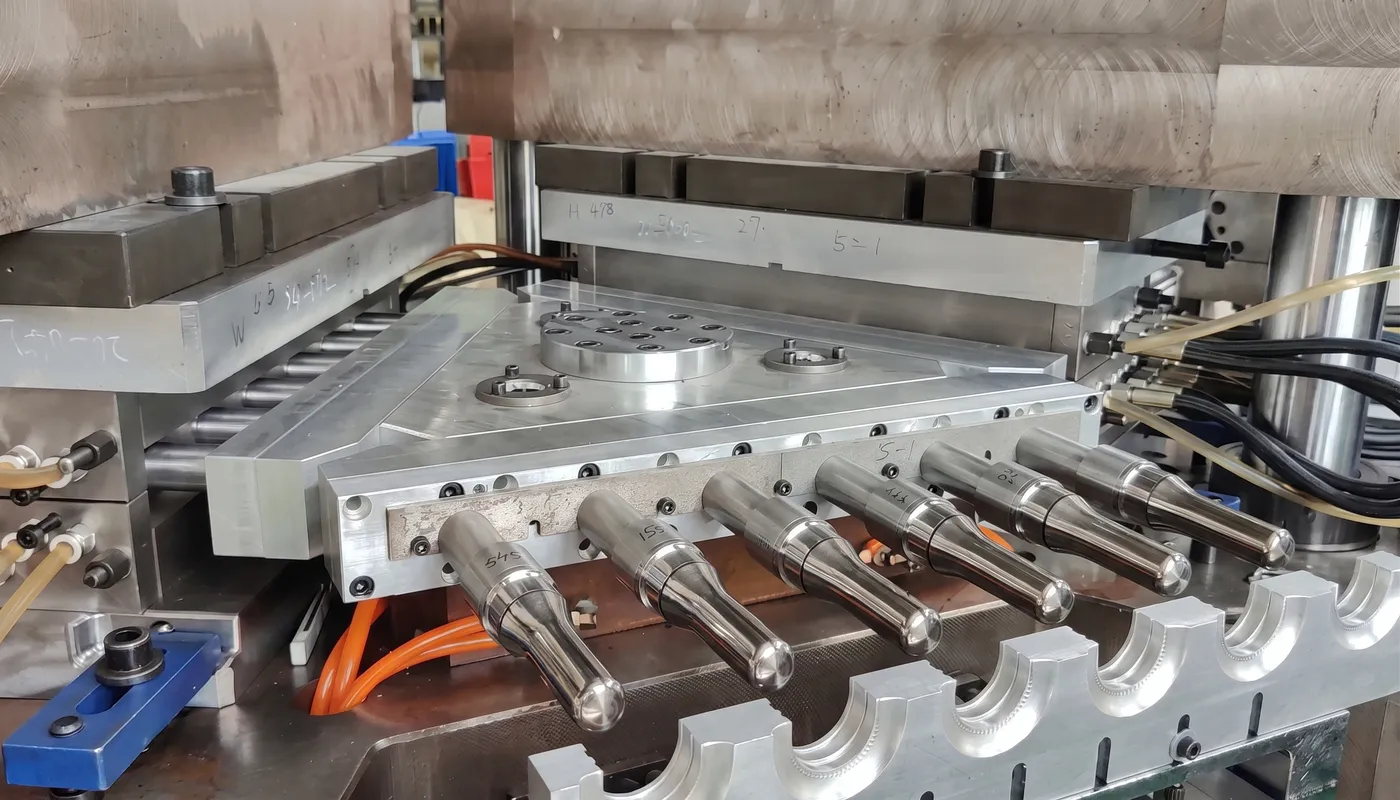
| 1 | อุปกรณ์เตรียม/ฉีดสารละลายสต็อก | 2 | นักวิ่งสุดฮอต |
| 3 | แกนแท่ง | 4 | พรีฟอร์มขวด |
| 5 | แม่พิมพ์ฉีดพลาสติก | 6 | สถานีฉีดวัคซีน |
| 7 | สถานีเป่าลม | 8 | เป่าขึ้นรูป |
| 9 | สถานีลอก |
1. การเตรียมสารละลาย/อุปกรณ์ฉีด
The stock preparation and injection device is the starting point of the entire IBM machine process. Plastic granules are loaded into the hopper, conveyed into the heated barrel, and plasticized by the screw rotation. The 45mm or 50mm screw with a 22:1 L/D ratio and 14KW heating power ensures thorough, uniform melt homogeneity before each injection shot. This unit directly controls melt temperature, back pressure, and injection speed, all of which affect preform quality and final bottle dimensional accuracy.
2. ระบบฮอตรันเนอร์
The hot runner system connects the injection barrel to the injection mold cavities, maintaining the molten plastic at a precisely controlled temperature throughout the runner channels. This eliminates cold-sprue waste entirely, ensures each cavity receives a metered, thermally balanced melt shot on every cycle, and enables gate freeze-off control that is critical for maintaining consistent preform weight. The optimized hot runner design in the ZQ60 minimizes gram-weight deviation across all cavities, which directly controls wall thickness variation in the final blown bottle.
3. Core Rod (Mandrel)
The core rod, also called the mandrel, is the central mechanical element that transfers the preform from the injection station to the blow station and then to the stripping station. It defines the interior dimension of the bottle neck and thread profile, which must maintain 100% dimensional accuracy for correct closure fitting. The ZQ60 uses specially structured core rods with an optimized internal cooling channel design for rapid thermal extraction, enabling short cycle times without compromising dimensional stability or surface quality of the blown product.
4. Bottle Preform
The bottle preform is the intermediate product formed at the injection station. It is a thick-walled, tube-like structure with the bottle neck already fully formed to final dimensions, while the body remains as a thick parison ready for blow expansion. The preform geometry, including its wall thickness distribution and internal temperature profile, determines the wall thickness distribution of the final bottle after blow molding. The ZQ60 injection mold and hot runner design work together to produce preforms with gram-weight deviation and wall eccentricity minimized to industry-best levels.
5. แม่พิมพ์ฉีดพลาสติก
The injection mold for the ZQ60 is manufactured from 4Cr13 stainless steel or imported high-strength S136 alloy steel, which provides long service life and excellent corrosion resistance under repeated thermal cycling. The mold cavity and neck block feature active design with specially engineered oil and water circuit routing to maintain stable preform size and enable convenient cavity replacement when switching to a different product. The max platen size of 600x390mm accommodates molds from 2 to 14 cavities, supporting the full range of production volumes required by injection blow molding machine suppliers globally.
6. สถานีฉีดวัคซีน
The injection station is the structural assembly that houses the injection mold, clamps it at 600KN force, and provides the precise alignment between the injection barrel nozzle and the hot runner gate system. The pressurized clamping structure at this station keeps the booster cylinder fully decoupled from the mold open-close motion, which is one of the defining engineering features of the ZQ60 European-style injection blow molding machines in the ZQ series. This station operates simultaneously with the blow and strip stations, ensuring continuous production without any idle waiting period between cycles.
7. สถานีเป่าลม
The blow station clamps the blow mold at 100KN clamping force and introduces compressed air at 0.7 to 1.2 MPa through the mandrel to expand the preform into the final bottle geometry. The 140mm opening stroke provides adequate daylight for mold access during changeovers. Because the blow mold is separate from the injection mold in this IBM machine platform, each mold type can be independently optimized for its thermal and mechanical function, unlike some lower-cost integrated designs where both functions share a single mold body, often compromising one function to accommodate the other.
8. การเป่าขึ้นรูป
The blow mold defines the exact exterior shape, surface finish texture, embossed logos, and dimensional tolerances of the final bottle. ZQ series blow molds are manufactured in 4Cr13 stainless steel or magnesium-aluminum alloy for faster cooling performance. The mold cavity surfaces are polished to produce bottles with excellent optical clarity and a high-gloss cosmetic finish where required. With max platen dimensions of 600x390mm and 240mm mold thickness capacity, the ZQ60 accommodates blow molds for a wide range of bottle diameters up to 120mm and heights up to 220mm.
9. สถานีลอกสี
The stripping station removes the completed, cooled bottles from the core rod mandrels automatically using the 230mm stripping stroke mechanism. The bottles are ejected cleanly and consistently, dropping or transferring directly to the output conveyor without operator assistance. Because the stripping action occurs simultaneously with injection at Station 1 and blowing at Station 2, this station adds zero idle time to the machine cycle. The clean, no-flash bottle ejected at this station requires no trimming, no inspection for parting-line burrs, and no secondary processing of any kind before it is ready for filling, labeling, or packaging.
เครื่อง ISBM เทียบกับเครื่อง IBM
ขั้นตอนการทำงาน
ISBM Machine: Follows three mechanical steps: injection of the preform, axial stretching with a stretch rod, then radial blow molding with compressed air. The stretching step biaxially orients the polymer chains, dramatically improving the mechanical and optical properties of the final container. This process is predominantly used with PET resin and requires precise temperature management of the stretch phase to achieve consistent orientation.
IBM Machine: Follows two steps: injection of the preform directly followed by blow molding without any stretch rod involvement. No axial stretching occurs, so the wall thickness is governed purely by the preform design and blow ratio. This simpler two-step process is faster to set up, handles more resin types, and is the technology platform of the ZQ60 injection blow molding machine.
Molding Principle and Product Performance
ISBM Machine: The biaxial stretching step reorganizes polymer chains in both the axial and hoop directions, increasing tensile strength and impact resistance while dramatically improving optical clarity and light transmission. These properties make ISBM the dominant technology for PET water bottles, carbonated drink containers, and edible oil bottles where high clarity and structural rigidity under internal pressure are essential product requirements.
IBM Machine: Without stretching, IBM containers have uniform wall thickness controlled by the preform design, excellent chemical resistance across PE, PP, PS, and PVC resin families, and superior accuracy of neck dimensions. IBM technology is ideal for pharmaceutical vials, cosmetic bottles, and small packaging formats where precise dimensions, clean neck geometry, and material purity are more important than high optical clarity or biaxial orientation strength.
Product Shape, Material and Applications
ISBM Machine: Best suited for large, complex bottle shapes including tall cylindrical carbonated drink bottles, wide-body edible oil containers, and hot-fill food jars. Primarily processes PET resin. Standard applications include carbonated beverages, still mineral water, edible oils, and large-format personal care containers in high-speed production lines.
IBM Machine: Optimized for small-to-medium, simple to moderately complex bottle shapes including pharmaceutical bottles, cosmetic vials, and household chemical containers. Processes PE, PP, PVC, PS, ABS, PCTG, and biodegradable resins with equal capability. Standard applications include pharmaceuticals, cosmetics, small packaging factories, personal care, and specialty chemical bottle production, all of which align precisely with the ZQ60 injection blow molding machine target market.
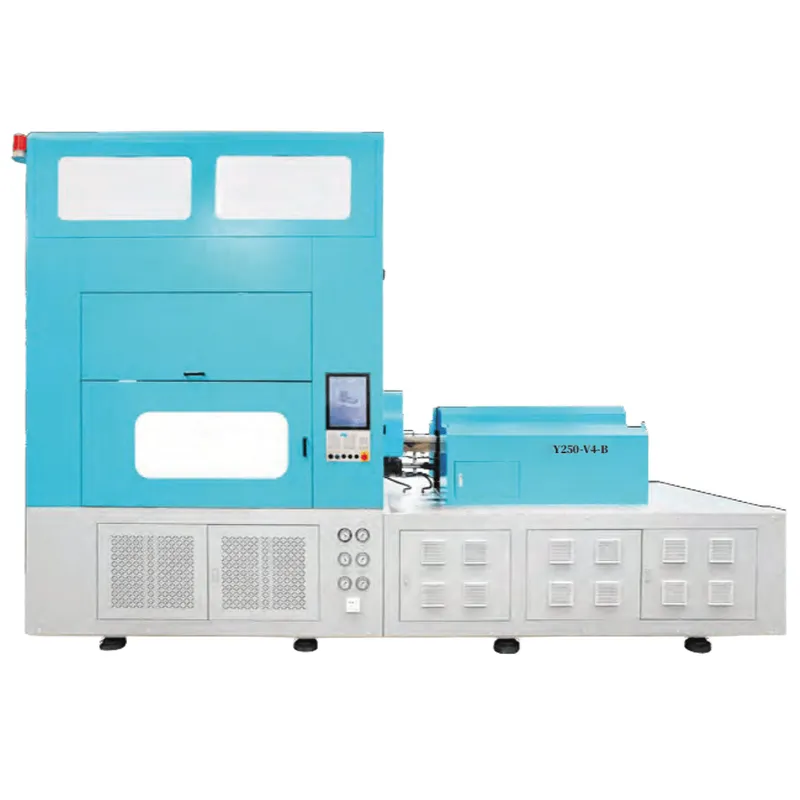 |
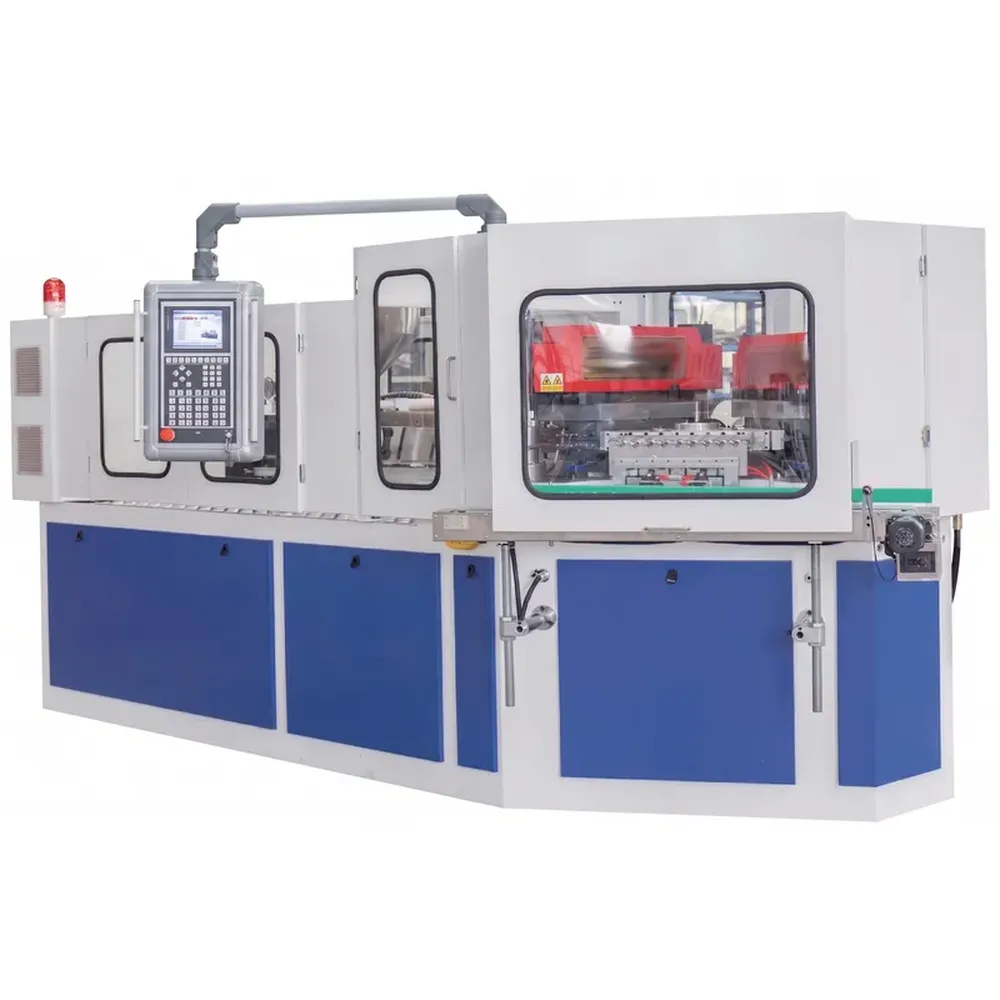 |
| เครื่อง ISBM | เครื่องจักร IBM |
| คุณสมบัติ | เครื่อง ISBM | เครื่องจักร IBM |
|---|---|---|
| ขั้นตอนการทำงาน | การฉีดขึ้นรูป การยืดขึ้นรูป การเป่าขึ้นรูป | การฉีดขึ้นรูป การเป่าขึ้นรูป |
| หลักการขึ้นรูป | เพิ่มคุณสมบัติของวัสดุด้วยการยืด | ขึ้นรูปด้วยการเป่าโดยตรงโดยไม่ต้องยืด |
| ประสิทธิภาพของผลิตภัณฑ์ | ความแข็งแรงสูงและความใสที่ยอดเยี่ยม | ความหนาของผนังสม่ำเสมอ |
| รูปทรงผลิตภัณฑ์ | รูปทรงขวดซับซ้อนและขนาดใหญ่ | รูปทรงขวดเรียบง่ายและขนาดเล็ก |
| วัสดุขึ้นรูป | ส่วนใหญ่เป็นสัตว์เลี้ยง | PE, PP, PVC, PS and more |
| สถานการณ์การใช้งาน | สายการผลิตเครื่องดื่มอัดลมและน้ำแร่ | อุตสาหกรรมยา เครื่องสำอาง และโรงงานบรรจุภัณฑ์ขนาดเล็ก |
Product Advantages
1. Superior Engineering Precision
The ZQ60 achieves bottle weight deviation of approximately 1%, compared to 3% commonly seen with extrusion blow alternatives. Wall thickness uniformity is tightly controlled through the injection preform process, eliminating the 10%-20% thickness variation common in extrusion-based competitors. Neck thread dimensions are precise and 100% sealed with standard closures without any secondary threading or trimming operation. These engineering precision advantages directly reduce downstream filling line rejects, cap fitting defects, and leakage complaints from end customers.
2. Zero Scrap Production Economics
Extrusion blow molding lines generate 20%-40% scrap material from flash, pinch-off trim, and parison overflow that requires grinding and reprocessing. The ZQ60 produces zero flash, zero trim waste, and zero parting-line overflow on every cycle. For a facility running 500kg of HDPE per shift, eliminating 20% regrind reduces raw material consumption, removes the energy cost of re-melting, and eliminates regrind quality risk in the final product. This zero-waste economics makes the ZQ60 the preferred IBM machine for cost-conscious production managers.
3. Energy Efficiency Leadership
The pressurized clamping structure and servo rotation system together reduce energy consumption by 10%-20% compared to conventional IBM machines with hydraulic rotation and conventional clamping. At an operating power rate of 52%-70% of rated 37KW total power, the ZQ60 draws significantly less electricity per 1,000 bottles produced than older hydraulic-dominant systems. For high-volume production facilities running three shifts, this energy advantage translates into meaningful utility cost savings annually, strengthening the business case for the ZQ60 over competing IBM machine suppliers.
4. Long Mold Life and Low Tooling Cost
IBM machine molds for the ZQ60 are manufactured from premium 4Cr13 stainless steel and S136 alloy steel, engineered for multi-million-cycle service life. This is in sharp contrast to extrusion blow molding tooling, which frequently requires replacement or refurbishment after 500,000 to 1 million cycles due to the mechanical stresses of parison flash trimming. The long tooling life of ZQ60 molds reduces the annualized tooling cost per 1,000 bottles significantly, making this customized IBM machine the preferred choice for production runs exceeding 12 months.
5. Compact Footprint and Simple Line Integration
At 3.8x1.4x2.18M overall and 5 tons net weight, the ZQ60 injection blow molding machine occupies a fraction of the factory floor space required for an extrusion blow line with equivalent output, which typically requires additional auxiliaries including a granulator, flash conveyor, regrind system, and parison thickness controller. The ZQ60 integrates cleanly with standard downstream packaging equipment: filling machines, capping machines, labeling equipment, and automated conveyors connect directly without the auxiliary equipment complexity that drives up total line cost on extrusion blow molding installations.
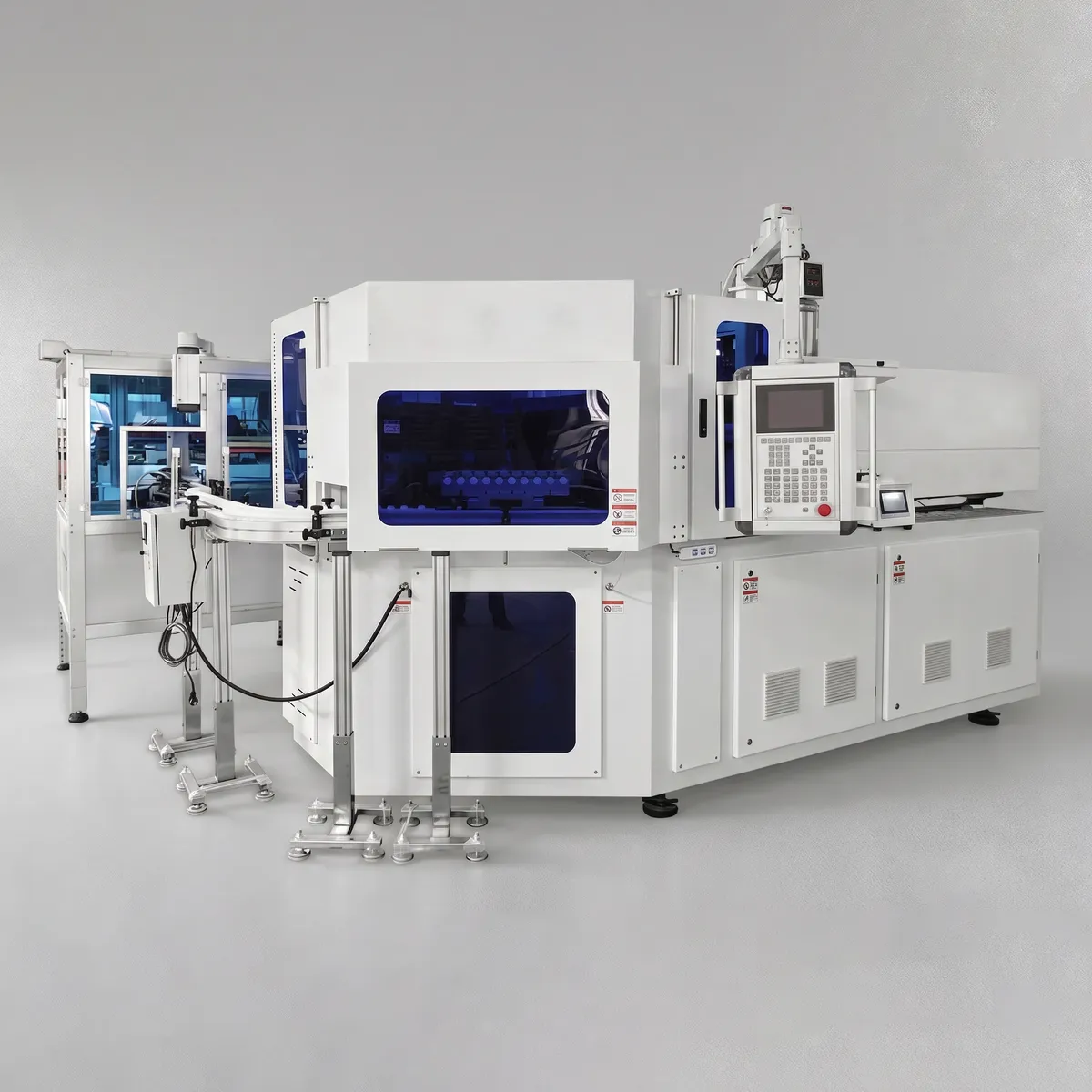
Common Troubleshooting for Injection Blow Molding Machine
Issue: Uneven Wall Thickness Across Cavities
Wall thickness variation between cavities in a multi-cavity IBM injection blow molding machine tool is almost always caused by thermal imbalance in the hot runner system. Check each hot runner zone temperature controller for deviations and recalibrate to target. Verify that the mandrel temperature at each cavity position is uniform by measuring with an infrared thermometer during production. Unbalanced runner gate diameters can also cause unequal filling, requiring hot runner tip replacement. Confirm that the injection station clamping force is reaching full 600KN on both sides of the platen to eliminate partial-fill caused by mold flex.
Issue: Bottle Weight Variation Between Cycles
Cycle-to-cycle weight variation on the ZQ60 typically indicates screw decompression instability, back-pressure inconsistency, or hopper moisture contamination. Verify that resin moisture content is within the manufacturer specification for the specific material being used, as moisture causes splay marks and short shots in hygroscopic resins like PS, ABS, and PCTG. Check the injection screw check-ring for wear or leakage that allows melt to backflow during the injection phase. Confirm back-pressure setting stability on the hydraulic system at 14MPa rated operating pressure.
Issue: Bottle Surface Haze or Poor Clarity
Surface haze on bottles from a plastic IBM machine has three common sources. First, undried resin: hygroscopic materials like PS, PCTG, and ABS must be pre-dried to moisture below 0.05% before processing. Second, excessive shear heating from too-high injection speed causing molecular degradation at the gate; reduce injection speed and check melt temperature setpoints. Third, blow mold surface contamination from release agent buildup or condensation; clean the blow mold cavity surfaces with appropriate solvent and verify cooling water temperature is above the dew point of ambient air to prevent condensation.
Issue: Bottle Neck Thread Deformation
Neck thread deformation causes cap-fitting failures and leakage complaints downstream. On the ZQ60 one step injection blow molding machine, this is caused by insufficient cooling in the injection mold neck block region, premature mold opening before the neck has solidified, or worn neck block inserts that have lost dimensional accuracy. Increase injection mold cooling time by 0.5 to 1 second and reduce cooling water temperature if possible. Inspect neck block insert dimensions against the mold drawing and replace worn inserts. Check that servo rotary table indexing is smooth and does not impart lateral force on the mandrel during transfer to the blow station.
Issue: Bottle Not Releasing from Mandrel at Stripping Station
Bottles sticking to the core rod at the stripping station of the IBM machine indicate insufficient cooling of the core rod, a worn or incorrect stripping mechanism, or incorrect mandrel draft angle. Verify cooling water flow rate through the core rod channels is maintaining the rod below the recommended mandrel temperature for the resin in use. Check stripping stroke setting and confirm it is reaching the full 230mm. Inspect core rod surfaces for wear, scoring, or buildup of degraded material that creates friction. Applying a light coating of food-grade release agent to the core rods during startup can help during the warm-up phase.
Issue: Abnormal Hydraulic Pressure Fluctuation
Hydraulic pressure fluctuation on the injection blow molding machine affects both injection consistency and clamping force stability, causing quality variation across the production run. Check hydraulic oil level and top up if below the minimum mark on the reservoir sight glass. Inspect hydraulic oil temperature, which should be maintained between 40 and 55 degrees Celsius; overheating indicates a blocked oil cooler or insufficient cooling water flow rate at the specified 4 M3/h and 0.3 to 0.4 MPa. Test the hydraulic pump output pressure with a calibrated gauge at the 14MPa system setpoint. Replace worn hydraulic seals on any cylinders showing external oil weep.
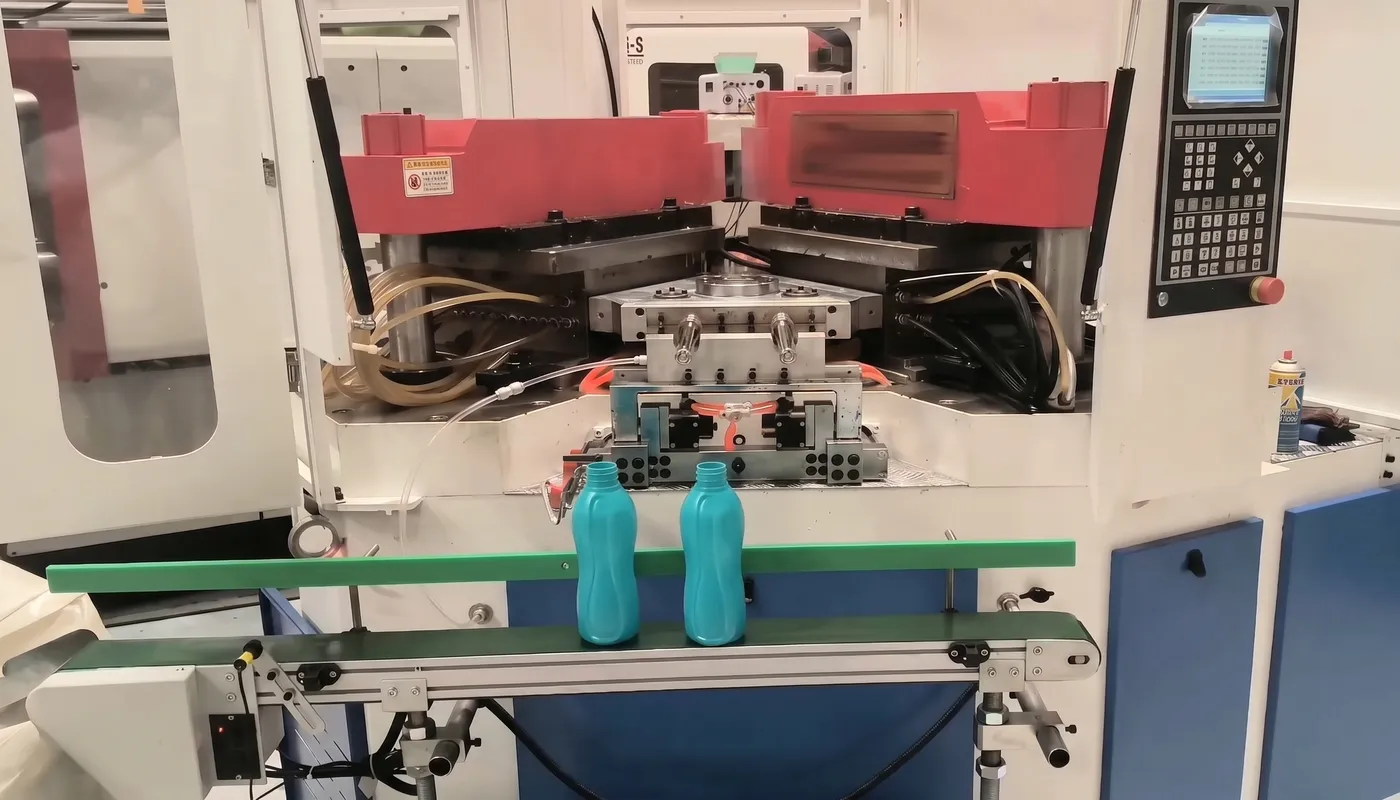
How to Choose the Right Injection Blow Molding Machine
1. Define Your Bottle Specifications First
Before contacting any injection blow molding machine manufacturer, document your complete bottle specifications: volume range in milliliters, maximum height, maximum diameter, neck finish standard (PCO, GPI, or custom), required wall thickness, and targeted weight per unit. These parameters determine whether the ZQ60 with its 15mm to 200mm bottle height range and 120mm maximum diameter is the right platform, or whether a larger IBM machine in the ZQ series would better serve your production plan.
2. Match Clamping Force to Your Mold Requirements
Injection clamping force determines the maximum projected area of the injection mold cavity that the IBM machine can hold closed without flashing. The ZQ60 provides 600KN injection clamping, suitable for molds up to 600x390mm platen size. If your production plan includes large-format multi-cavity molds beyond this platen size, consider the ZQ80 or ZQ110 models from the injection blow molding machines series. Request a mold force analysis from your injection blow molding machine manufacturer before finalizing the machine selection to avoid under-specifying the clamping system.
3. Identify Your Target Resin Materials
Different resins require different screw designs, barrel temperature profiles, and injection speed parameters. Confirm that the machine you are evaluating has been factory-tested with your specific resin grade. If you plan to run multiple resins, verify that resin changeover procedures are documented and practical for your production team. The ZQ60 supports HDPE, LDPE, PP, PS, ABS, EVA, PCTG, and biodegradable corn resins, giving it one of the broadest material compatibility ranges available among single stage injection stretch blow molding machine platforms in its size class.
4. Calculate Required Annual Output and Cavitation
Your annual production target divided by available machine hours determines the minimum required output per hour. Match this to the machine cycle time and cavity count. With a 4-second dry cycle and up to 10 cavities for 60ml bottles, the ZQ60 can produce approximately 9,000 bottles per hour at that specification. If your annual target requires higher output than a single ZQ60 can achieve, evaluate whether adding a second ZQ60 unit or upgrading to a higher-cavity IBM injection blow molding machine better optimizes your capital and operating expenditure.
5. Evaluate After-Sales Service and Parts Availability
The price for injection blow molding machine investment is only one part of the total cost of ownership calculation. Evaluate the injection blow molding machine suppliers you are considering based on availability of spare parts inventory in your region, documented response time for emergency technical support, availability of on-site installation engineers for commissioning, and access to machine operator and maintenance training programs. Ever-Power offers pre-sale consultation, on-site commissioning by senior engineers, preventive maintenance programs, 24x7 service hotline support, and an adequate spare parts inventory to minimize your production downtime risk.
6. IBM Machine vs. ISBM Machine Technology Selection
If your primary products are pharmaceutical bottles, cosmetic containers, small food packaging, or chemical bottles below 1000ml in PE, PP, or PS resin, an IBM injection blow molding machine like the ZQ60 is the correct and most cost-efficient technology choice. If your primary products are large PET carbonated drink bottles, mineral water bottles, or edible oil containers requiring biaxial orientation, an ISBM machine (injection stretch blow molding machine) is the appropriate technology. Matching technology to product is more important than any individual machine specification in determining long-term production quality and operating profitability.

เหตุใดจึงควรเลือกเครื่องฉีดขึ้นรูปพลาสติกแบบเป่าของ Ever-Power?
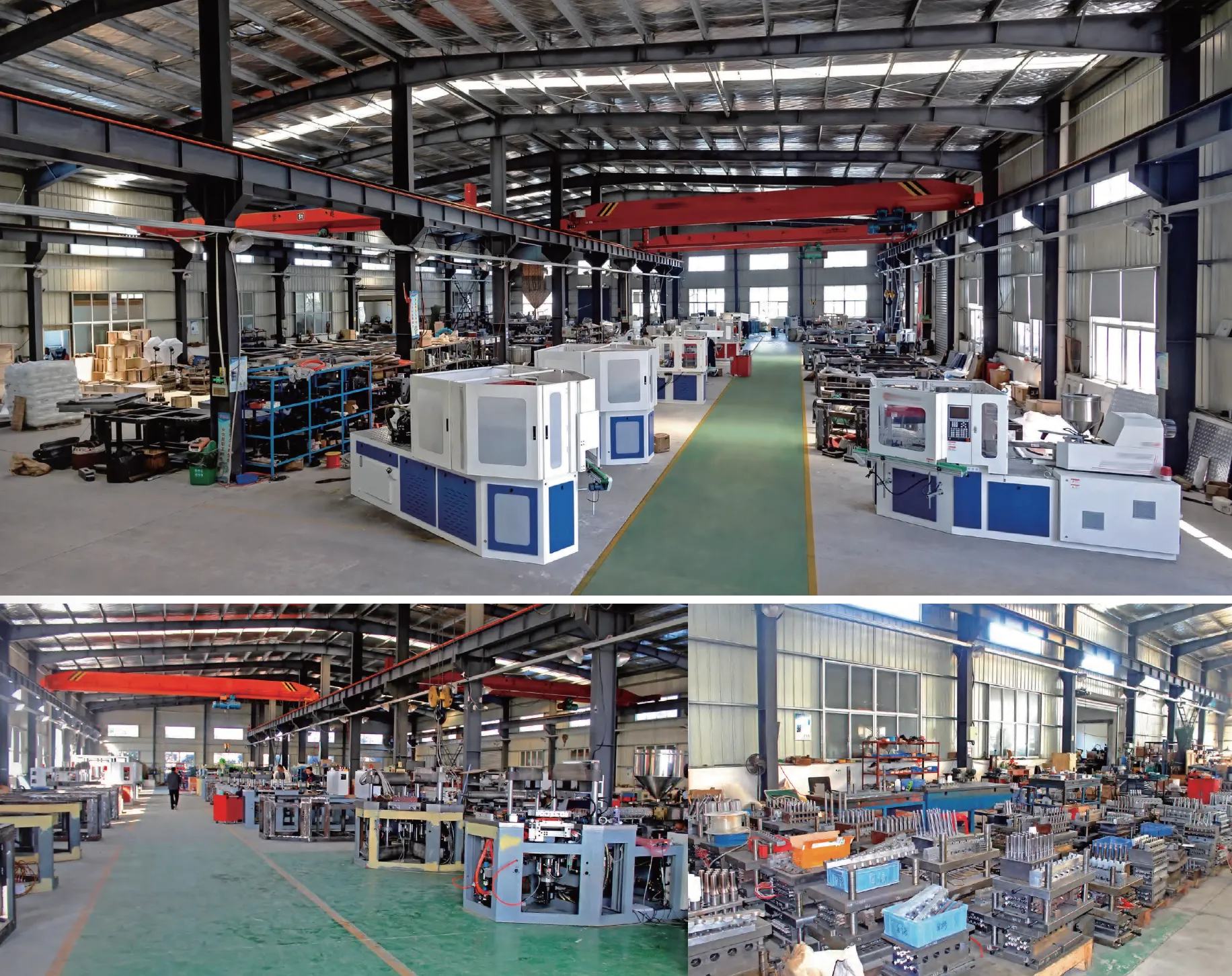
Mexico Ever-Power ISBM Machinery Co., Ltd. is a specialist injection blow molding machine manufacturer primarily engaged in the research, development, production, sales, and global trade of automatic one-step injection-blowing blow molding machines and precision injection-blowing molds. Our product portfolio covers injection blow molding machines, extrusion blow molding machines, injection stretch blow molding machines, and a comprehensive range of auxiliary machines including auto loaders, mold temperature controllers, chillers, screw air compressors, packing machines, and bottle visual inspection systems. The company is located in a nationally recognized manufacturing hub with excellent logistics and transportation infrastructure that supports reliable global delivery timelines for customers worldwide.
Ever-Power maintains an excellent R&D team comprising many senior engineers and technical specialists with deep expertise specifically in injection-blowing machinery and injection-blowing mold technology. With decades of combined theoretical knowledge and hands-on production engineering experience, our team provides detailed and comprehensive pre-sale consultation, in-sale technical support, and post-sale service to every customer who invests in our injection blow molding machines. Our application coverage spans pharmaceutical packaging, food packaging, healthcare product packaging, cosmetic packaging, and all major categories of plastic packaging from 1ml to 1000ml across HDPE, LDPE, PP, PS (including high-transparency lactic acid bacteria grades), ABS, EVA, PCTG, and environmental corn-based biodegradable materials.
Ever-Power adheres firmly to the enterprise development philosophy of self-reliance, integrity, pragmatism, innovation, and responsibility in every aspect of our business. We build complete one-stop turnkey project solutions for injection-blowing production lines, providing everything from initial needs analysis and machine selection guidance through mold design, machine manufacturing, international logistics, on-site installation and commissioning by our experienced senior engineers, operator training, and 24x7 after-sales technical support. Our commitment is to produce IBM machines that deliver user satisfaction through first-class quality, measurable production efficiency advantages, and reliable long-term operational performance for every injection blow molding machine manufacturer customer we serve globally.
คำถามที่พบบ่อย
Q: What is the difference between an injection blow molding machine and an extrusion blow molding machine?
A: An injection blow molding machine produces preforms by injection molding first, then blow molding those preforms into finished bottles in the same machine. This results in zero flash, precise neck geometry, uniform wall thickness variation of approximately 1% by weight, and zero scrap. An extrusion blow molding machine extrudes a molten tube parison and blow molds it directly, which generates 20%-40% flash scrap, less precise neck dimensions, and 10%-20% wall thickness variation. For pharmaceutical, cosmetic, and small packaging applications, IBM machines offer superior quality at lower total production cost. The ZQ60 injection blow molding machine is the IBM technology choice for these applications.
Q: What bottle sizes can the ZQ60 injection blow molding machine produce?
A: The ZQ60 IBM machine produces bottles with heights ranging from 15mm to 200mm, maximum diameter of 120mm, and suitable volume range from approximately 10ml to 1000ml depending on the mold configuration. Mold cavitation ranges from 14 cavities at 10ml down to 2 cavities at 1000ml for reference. The max platen size is 600x390mm, accommodating a wide range of bottle form factors within these dimensional boundaries. For bottles taller than 200mm or with diameter exceeding 120mm, the ZQ80 or larger IBM machines in the ZQ series would be recommended by injection blow molding machine manufacturers.
Q: What materials can the ZQ60 plastic injection blow molding machine process?
A: The ZQ60 injection blow molding machine processes HDPE, LDPE, PP, standard PS, high-transparency PS, ABS, EVA, PCTG, and environmental corn-based biodegradable resin materials. This covers virtually the full range of resins used in pharmaceutical, cosmetic, food, household chemical, and personal care packaging from 1ml to 1000ml. PET is not standard for IBM machines, as PET typically requires the biaxial stretching step provided by ISBM machines. For PET packaging requirements, the single stage injection stretch blow molding machine range would be appropriate.
Q: How does the ZQ60 compare to the Aoki injection blow molding machine as a replacement option?
A: The ZQ60 is a strong replacement of Aoki injection blow molding machine option for facilities seeking a full European-style structure IBM machine. The ZQ60 offers comparable or superior clamping force specification at 600KN injection clamping, servo rotation as standard (which Aoki IBM machines also feature), and the unique pressurized clamping structure that reduces energy consumption by 10%-20% compared to standard IBM designs including older Aoki platforms. The ZQ60 also provides significantly improved after-sales service accessibility for customers in Asia, Southeast Asia, South America, and Africa through the Ever-Power distribution network, which has historically been a pain point for customers maintaining older Aoki injection blow molding machine equipment.
Q: What utilities does the ZQ60 IBM machine require for installation?
A: The ZQ60 injection blow molding machine requires compressed air at 0.7 to 1.2 MPa with a minimum flow capacity of 0.7 M3/min. Cooling water flow of 4 M3/h at 0.3 to 0.4 MPa is required for mold cooling and hydraulic oil cooling. Total electrical power connection should support 37KW total installed capacity, with operating power consumption at 52%-70% of that during steady-state production. Machine floor space required is approximately 3.8m x 1.4m footprint, with 2.18m installation height. Allow additional access space on all sides for maintenance and mold change access when planning factory floor layout.
Q: Is the ZQ60 available as a customized injection blow molding machine for sale for specific bottle applications?
A: Yes. Ever-Power offers customized injection blow molding machine for sale configurations based on the ZQ60 platform. Customizations include screw and barrel design optimization for specific resin grades, custom hot runner configurations for non-standard cavity layouts, special mandrel designs for non-round or oval neck finishes, and integration with specific downstream automation equipment. Our engineering team provides complete turnkey project support including mold design consultation, line layout planning, and commissioning assistance. Contact our sales team with your bottle specifications to receive a customized machine proposal and injection blow molding machine price quotation.
Q: How long does it take to change molds on the ZQ60 injection blow molding machine?
A: Mold changeover time on the ZQ60 IBM injection blow molding machine depends on the number of cavities and the skill level of the production team. For an experienced two-person crew performing a complete injection mold and blow mold set change, typical changeover time is 2 to 4 hours including purge of the previous resin, mold installation, temperature stabilization, and first article inspection. For contract manufacturers running multiple SKUs on the same IBM machine, a structured mold changeover procedure with pre-staged mold carts reduces this time significantly. Ever-Power provides detailed mold change procedures and can train your team during commissioning to minimize changeover time from day one.
Q: What is the difference between a full electric injection blow molding machine and a hydraulic IBM machine?
A: A full electric injection blow molding machine or all electric injection blow molding machine uses electric servo motors for all machine motions including injection, clamping, rotation, and ejection, eliminating the hydraulic oil system entirely. Full electric IBM machines offer lower energy consumption, reduced noise levels, cleanroom-compatible operation without hydraulic oil contamination risk, and more precise control of all machine parameters. The ZQ60 uses a hybrid approach: servo rotation for the rotary table and hydraulic actuation for clamping and injection, which provides an optimal balance of precision, reliability, and acquisition cost versus a full electric injection blow molding machine platform, which typically carries a higher price for injection blow molding machine at equivalent clamping force specification.
Q: Can the ZQ60 produce LED bulb covers or non-bottle products?
A: Yes. The ZQ60 as an LED bulb cover IBM machine is used by lighting manufacturers to produce PC and high-transparency PS lamp globes, diffuser covers, and decorative light shades. The precise wall thickness control and optical-grade surface finish achievable on the ZQ60 platform make it suitable for products requiring uniform light diffusion. Any closed-bottom, round or slightly oval hollow part that can be formed from a mandrel-supported preform within the machine dimensional envelope (max diameter 120mm, max height 200mm) can be evaluated for production on this IBM machine. Contact Ever-Power with your product drawing for feasibility assessment.
Q: What ongoing maintenance does the ZQ60 injection blow molding machine require?
A: Daily maintenance on the ZQ60 IBM machine includes checking hydraulic oil level and temperature, confirming cooling water pressure and flow rates, cleaning hopper and barrel feed zone, and inspecting the rotary table servo system for smooth operation. Weekly maintenance includes checking hydraulic oil quality and filter condition, inspecting the injection screw check-ring for wear, lubricating the rotary table bearing surfaces per the maintenance schedule, and verifying thermocouple readings against calibrated reference devices. Annual maintenance includes hydraulic oil change, complete seal inspection across all hydraulic cylinders, screw and barrel wear measurement, and a full electrical system inspection. Ever-Power provides a complete maintenance schedule and spare parts list with every injection blow molding machine supplied.
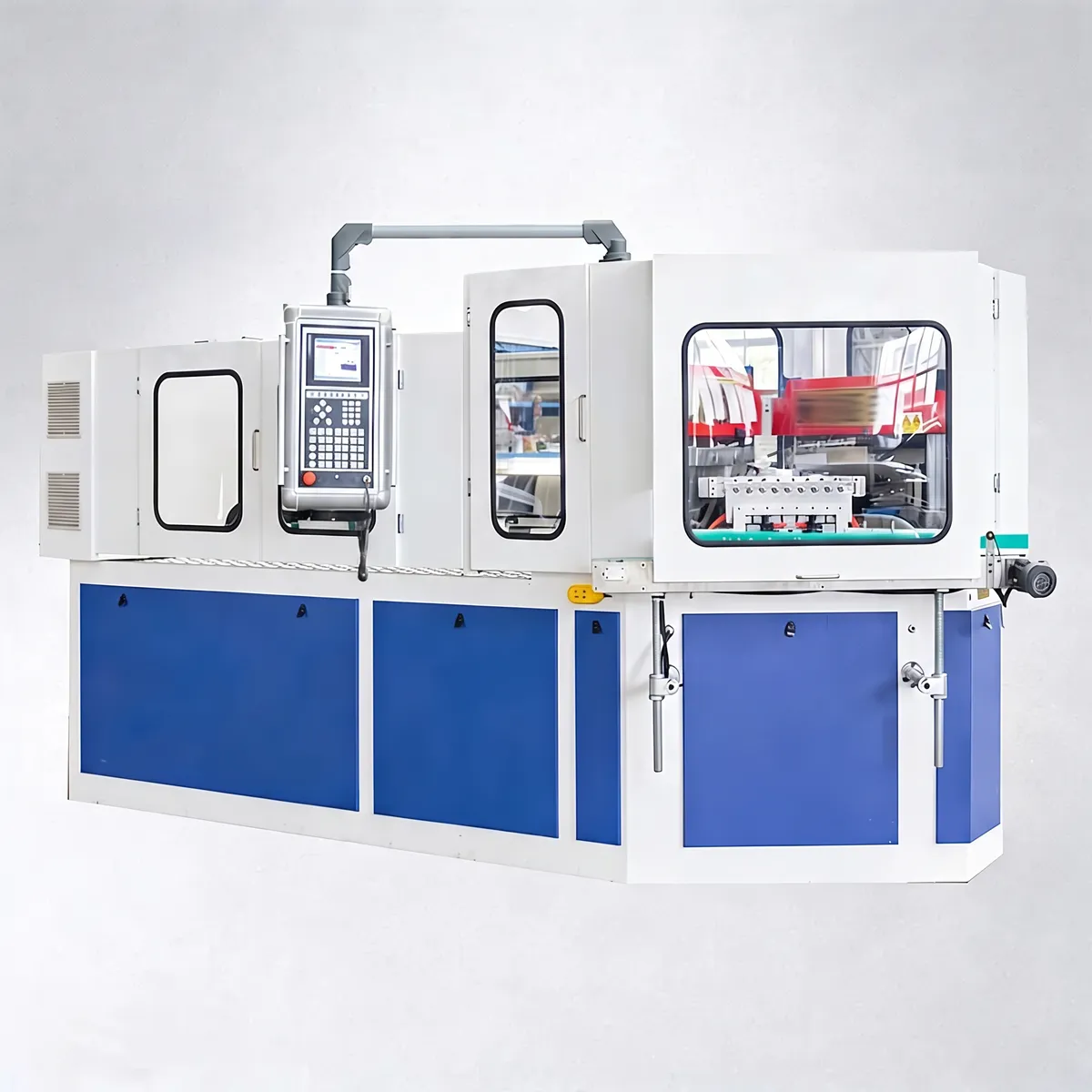
รีวิวจากลูกค้า
Min-jun Lee, Production Manager, South Korea
"We switched to the ZQ60 injection blow molding machine from an older Aoki injection blow molding machine that was giving us constant wall thickness defects on our 60ml PP cosmetic bottles. Since commissioning the ZQ60 about eight months ago, the quality has been night and day. The bottles come out with almost perfect uniformity every single cycle, no rejects at the filling line, and our operators picked up the controls within a week. The installation team from Ever-Power stayed on-site for five days until we were running stable. Very professional service."
Rajesh Sharma, Plant Director, India
"I was honestly nervous about importing a plastic injection blow molding machine from outside India, but the price for injection blow molding machine was significantly better than domestic options with similar specs, and the ZQ60 technical data sheet matched exactly what we needed for our 100ml HDPE pharma bottles. The machine arrived well-packed, documentation was complete, and it passed our factory acceptance test on the first run. We are now at 8 cavities and producing about 7,000 bottles per hour on a single shift. Very satisfied."
Ahmet Yilmaz, Operations Director, Turkey
"The ZQ60 IBM machine has been running in our facility in Istanbul for over a year now producing 250ml PP hand wash bottles in an 5-cavity configuration. Our previous extrusion blow machine was generating about 25% flash scrap, which was a huge materials cost problem. With this injection blowing molding machine, we have literally zero flash, zero trim, zero regrind. The energy saving is also noticeable on our monthly electricity bills. The service team responded within 24 hours when we had a hydraulic question six months in. Very reliable."
Alexei Petrov, Technical Procurement Manager, Russia
"We evaluated four different injection blow molding machine manufacturers before choosing Ever-Power. The ZQ60 had the best combination of technical specs, supported bottle range, and delivery timeline. Delivery to Moscow was about nine weeks from order confirmation, which was faster than we expected given customs. Machine was installed and producing on schedule. We are now running 30ml PS vials for dietary supplements at 10 cavities, and the optical clarity of the high-transparency PS bottles is excellent. Our retail customers have commented positively on the packaging quality."
Thabo Nkosi, Factory Manager, South Africa
"บริษัทของเราใช้เครื่องฉีดขึ้นรูปพลาสติก PET มือสองรุ่นเก่าที่เริ่มใช้งานไม่ได้แล้ว เราจึงสั่งซื้อเครื่อง ZQ60 จาก Ever-Power มาใช้แทน และมันได้เปลี่ยนแปลงสายการผลิตในโจฮันเนสเบิร์กของเราไปอย่างสิ้นเชิง การหมุนด้วยระบบเซอร์โวนั้นราบรื่นและเงียบกว่าระบบไฮดรอลิกแบบเก่าของเรามาก พนักงานก็ชอบเพราะปุ่มควบคุมชัดเจนและเข้าใจง่าย และการบำรุงรักษาก็ทำได้ง่ายมากในช่วงสิบเดือนแรก ตัวแทนฝ่ายขายให้ความช่วยเหลือตลอดกระบวนการซื้อและอดทนกับคำถามทางเทคนิคทั้งหมดของเรา ขอแนะนำอย่างยิ่งสำหรับผู้ผลิตบรรจุภัณฑ์รายอื่นในแอฟริกาใต้"
คาร์ลอส เมนเดส หัวหน้างานฝ่ายผลิต ประเทศบราซิล
"เราผลิตขวด HDPE ขนาด 500 มล. และ 1000 มล. สำหรับสารเคมีทางการเกษตรที่นี่ในเซาเปาโล เครื่องฉีดขึ้นรูปเป่า ZQ60 ได้เข้ามาแทนที่เครื่องเป่าขึ้นรูปสองเครื่อง และตอนนี้เราสามารถผลิตสินค้าได้ในปริมาณเท่าเดิมโดยใช้ผู้ปฏิบัติงานเพียงคนเดียวแทนที่จะเป็นสามคน การผลิตแบบไม่มีเศษวัสดุเหลือทิ้งหมายความว่าเรายังประหยัดต้นทุนวัตถุดิบได้มากในแต่ละเดือน ซึ่งมีความสำคัญมากเมื่อพิจารณาจากราคา HDPE ในบราซิลในปัจจุบัน ปัญหาเดียวที่เราพบคือการรั่วของซีลไฮดรอลิกเมื่อใช้งานไปได้หกเดือน และทีมงานด้านเทคนิคของ Ever-Power ได้วินิจฉัยปัญหาจากระยะไกลผ่านการสนทนาทางวิดีโอและส่งชิ้นส่วนมาให้เราในสัปดาห์ถัดไป การบริการหลังการขายที่น่าประทับใจมาก"
เจนนิเฟอร์ วอลช์ เจ้าของและผู้อำนวยการฝ่ายผลิต สหรัฐอเมริกา
"ฉันทำธุรกิจรับจ้างผลิตบรรจุภัณฑ์เครื่องสำอางขนาดเล็กในลอสแอนเจลิส ฉันกำลังมองหาเครื่องฉีดขึ้นรูปพลาสติกแบบเป่าที่ดีที่สุด ที่สามารถรองรับขนาดขวดหลายขนาดสำหรับลูกค้าแบรนด์ต่างๆ โดยไม่ต้องเปลี่ยนแม่พิมพ์ราคาแพง เครื่อง ZQ60 ให้ความยืดหยุ่นที่ฉันต้องการได้อย่างลงตัว เราผลิตขวดโลชั่น PP ในสัปดาห์หนึ่ง และขวดสบู่เหลว HDPE ในอีกสัปดาห์ถัดไป การเปลี่ยนระหว่างผลิตภัณฑ์ใช้เวลาประมาณสองชั่วโมงด้วยระบบเปลี่ยนแม่พิมพ์แบบรวดเร็ว เครื่องนี้คืนทุนได้ภายในเวลาไม่ถึง 18 เดือน จากมูลค่าสัญญาที่เราได้รับ หากคุณกำลังพิจารณาเปรียบเทียบราคาและเครื่องฉีดขึ้นรูปพลาสติกแบบเป่า เครื่องนี้เป็นตัวเลือกที่ยอดเยี่ยมมาก"
มาร์โก รามิเรซ ผู้อำนวยการฝ่ายคุณภาพและวิศวกรรม ประเทศเม็กซิโก
"เราเป็นผู้ผลิตขวดแก้วสำหรับเภสัชภัณฑ์ในเมืองกัวดาลาฮารา และกำลังมองหาการเพิ่มกำลังการผลิตบรรจุภัณฑ์พลาสติกสำหรับเภสัชภัณฑ์ เราเลือกเครื่อง ZQ60 เพราะสามารถรองรับความต้องการเรซิน HDPE และ PP สำหรับขวดเภสัชภัณฑ์ขนาด 10 มล. ถึง 100 มล. และแรงหนีบ 600 KN ทำให้เรามีพื้นที่ในการขยายขนาดแม่พิมพ์ ความแม่นยำของเกลียวคอขวดบน ZQ60 นั้นน่าประทับใจมาก เราได้ทดลองผลิตตัวอย่าง 100,000 ชิ้นบนขวด HDPE ขนาด 30 มล. แบบ 8 ช่อง และอัตราการผ่านการทดสอบแรงบิดฝาปิดสูงกว่า 99.81 TP3T ที่สายการบรรจุ ความแม่นยำของคอขวดระดับนี้เป็นสิ่งที่คุณต้องการในการผลิตขวดเภสัชภัณฑ์"
จี-ยอง พาร์ค ผู้จัดการฝ่ายประกันคุณภาพ ประเทศเกาหลีใต้
"เราส่งออกขวดนมเด็กจากโรงงานของเราในกรุงโซลไปยังตลาดต่างประเทศ และความสม่ำเสมอของคุณภาพเป็นสิ่งสำคัญอย่างยิ่งสำหรับเรา เครื่องจักร ZQ60 ZQ60 IBM ผลิตขวดนม PP ขนาด 240 มล. ของเราด้วยความสม่ำเสมอของน้ำหนักเป็นกรัมภายในบวกหรือลบ 0.8 กรัมในทุกช่องทั้ง 6 ช่องตลอดการทำงาน 8 ชั่วโมง ขนาดคอขวดสำหรับอะแดปเตอร์จุกนมซิลิโคน 100% อยู่ในเกณฑ์ที่ยอมรับได้ตั้งแต่วันแรกของการผลิต ทีมตรวจสอบคุณภาพของเราประทับใจมากในระหว่างการตรวจสอบสายการผลิตครั้งแรก ขณะนี้เรากำลังพิจารณาที่จะเพิ่มเครื่อง ZQ60 เครื่องที่สองสำหรับแผนการขยายการผลิตของเราสำหรับปีงบประมาณถัดไป"
ข้อมูลเพิ่มเติม
| เรียบเรียงโดย | วายเจเอ็กซ์ |
|---|