
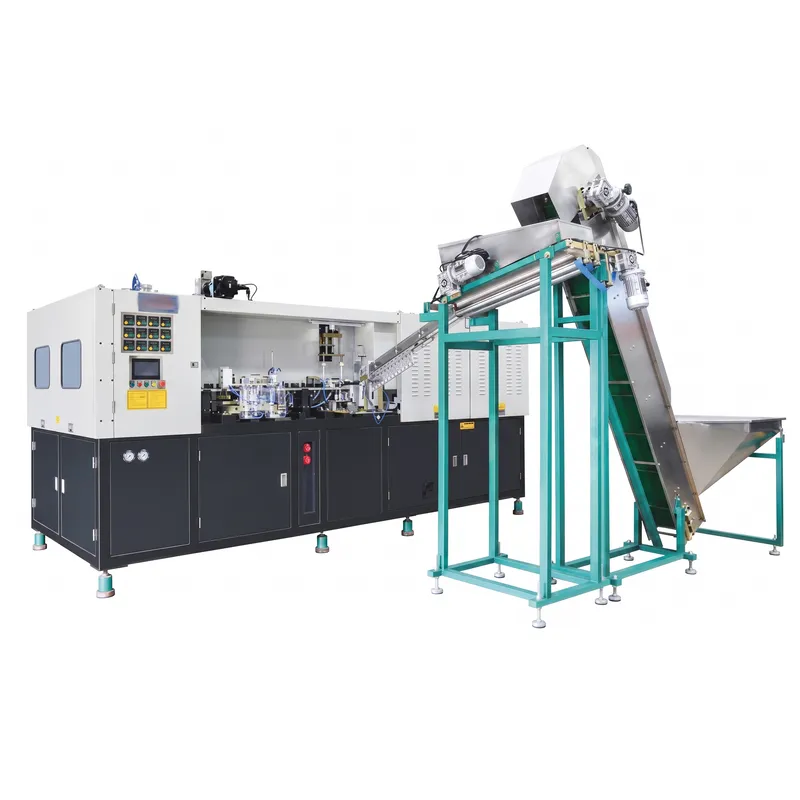
EPA.ES-2C150 Fully Automatic Blow Molding Machine for Edible Oil and Handle Bottles
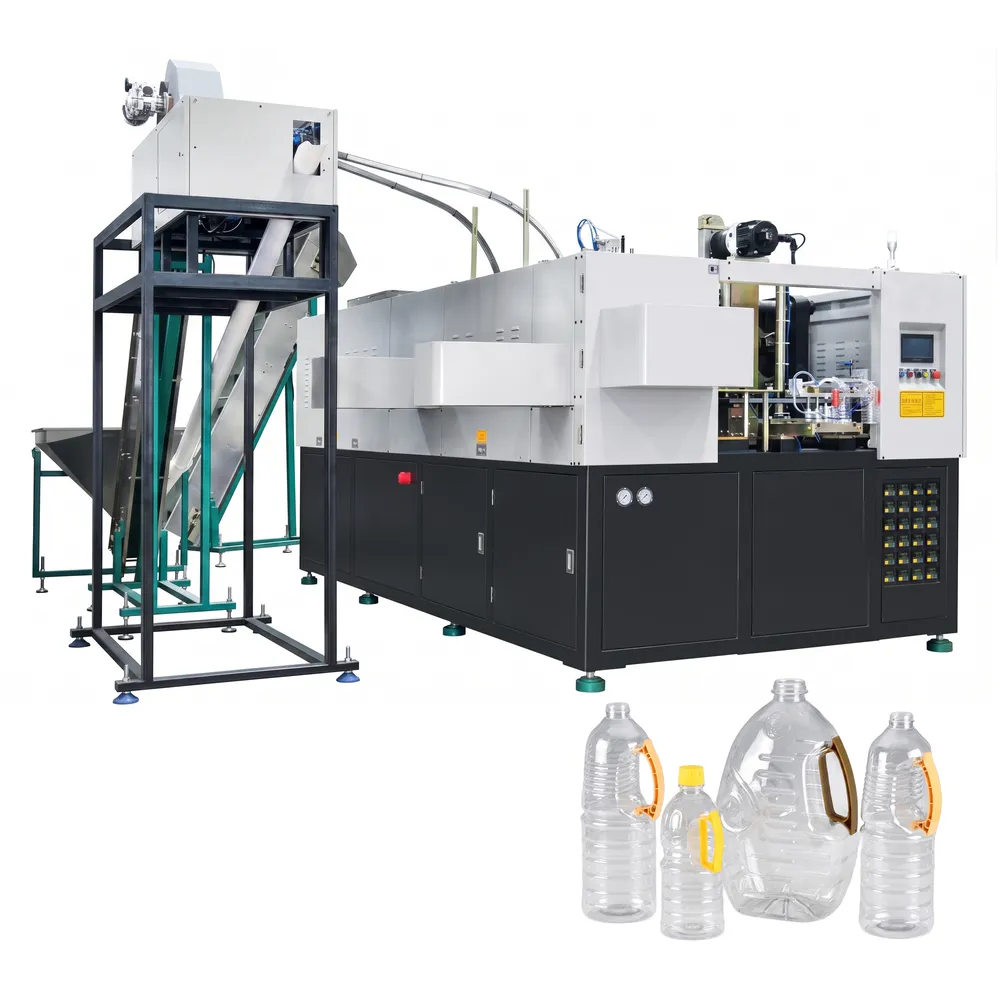
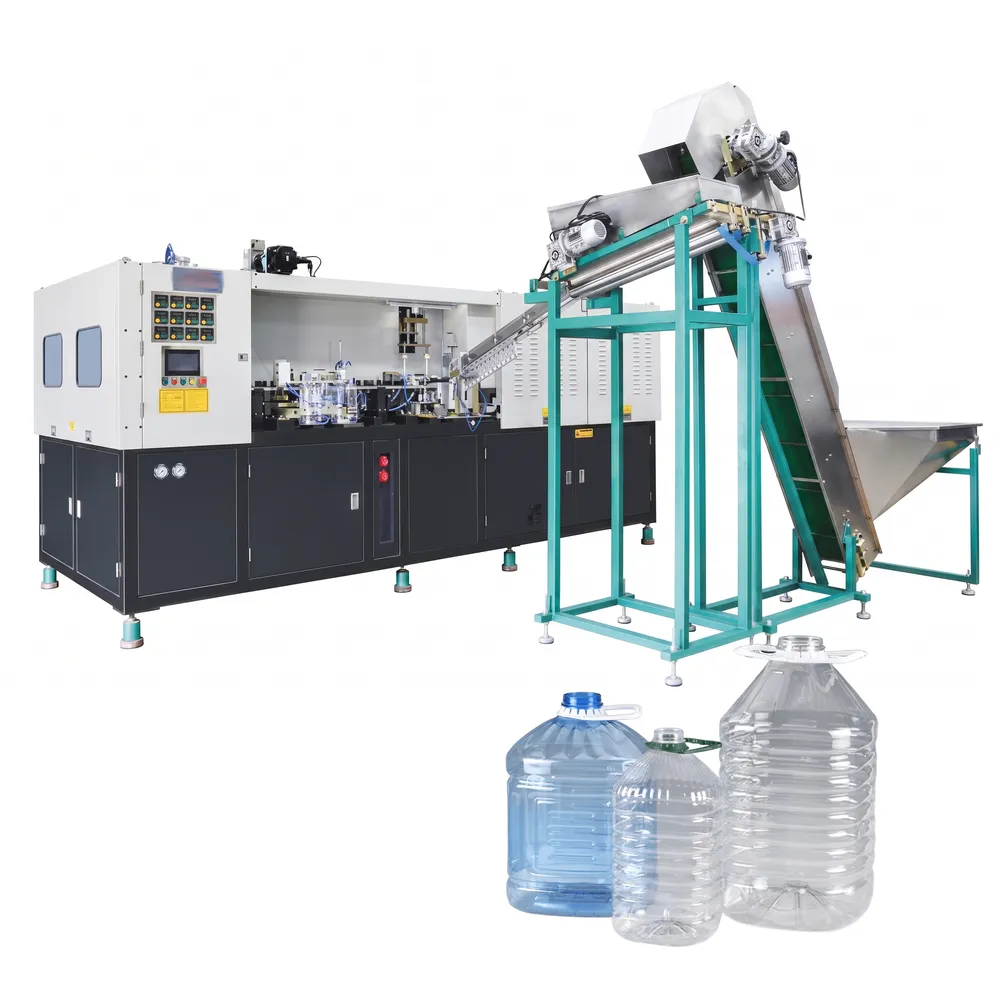
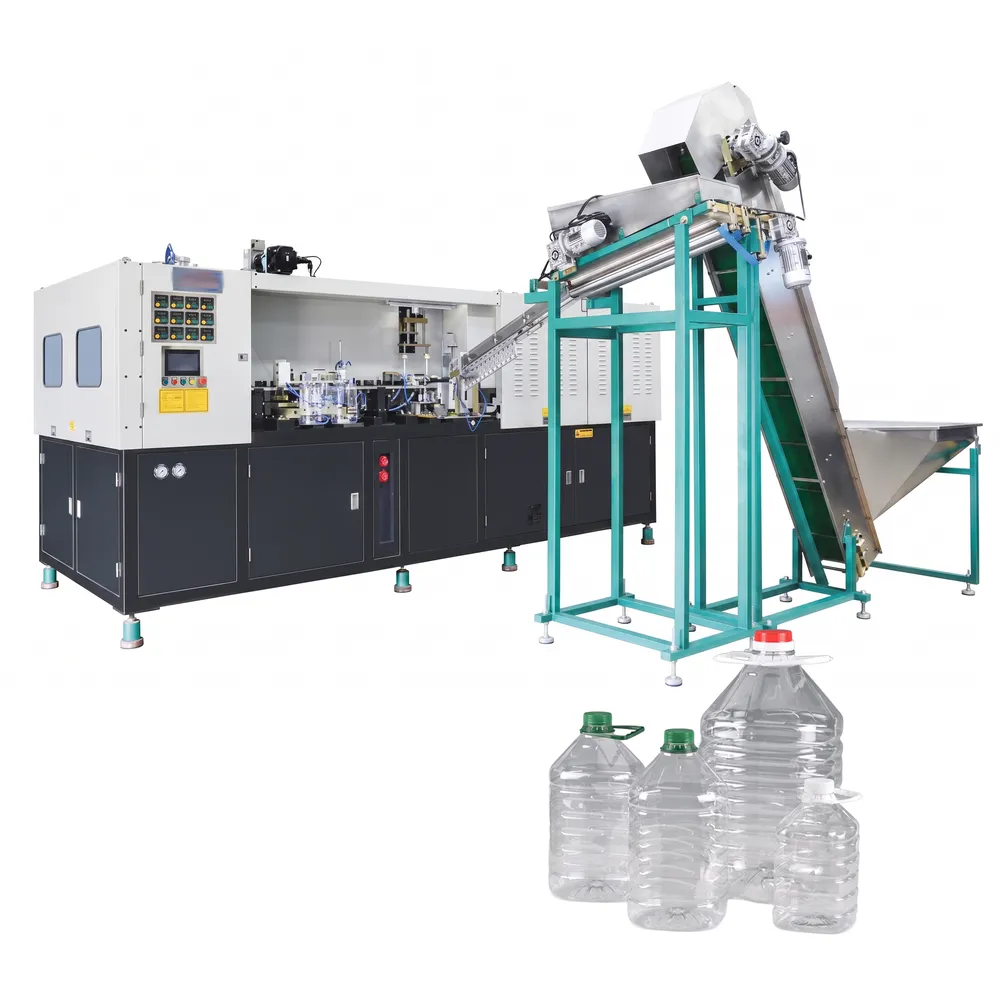
The EPA.ES-2C150 Fully Automatic Blow Molding Machine for Edible Oil and Handle Bottles is a purpose-built plastic blow molding machine engineered specifically for the edible oil and condiment packaging market. Developed by Mexico Ever-Power ISBM Machinery Co., Ltd, this automatic blow molding machine specializes in producing front-handle, rear-handle, and large-capacity oil bottles ranging from 5L to 20L, making it an ideal solution for high-demand food-grade liquid packaging lines.
The EPA.ES-2C150 Fully Automatic Blow Molding Machine for Edible Oil and Handle Bottles is a purpose-built plastic blow molding machine engineered specifically for the edible oil and condiment packaging market. Developed by Mexico Ever-Power ISBM Machinery Co., Ltd, this automatic blow molding machine specializes in producing front-handle, rear-handle, and large-capacity oil bottles ranging from 5L to 20L, making it an ideal solution for high-demand food-grade liquid packaging lines. With a 2-cavity mold design, a theoretical output of 1,800 bottles per hour, and a maximum container volume of 2,500 ml per cavity, the EPA.ES-2C150 delivers outstanding productivity within a compact footprint of 4,290 x 1,800 x 2,220 mm. The machine operates at a blowing pressure of 26–35 kg/cm² and maintains cooling water at a precisely controlled 8–10°C, guaranteeing uniform wall thickness and dimensional stability across every production batch.
As a high-performance PET blow molding machine and bottle blow molding machine, the EPA.ES-2C150 adopts a centralized heating and distributed blowing architecture that significantly reduces energy waste and operational costs. Its servo-driven stretching system and intelligent PLC control panel make it equally well-suited for transparent edible oil bottles, soy sauce containers, vinegar packaging, and large-format handle bottles for condiments. Manufacturers in the food packaging sector seeking a reliable industrial blow molding machine will find the EPA.ES-2C150 to be a robust, scalable, and cost-effective investment. Compatible with PET and similar materials, this fully automatic blow molding machine supports continuous 24-hour operation with minimal manual intervention, reducing labor costs while maintaining exceptional product quality and compliance with food safety standards.
Technical Parameter
| Edible Oil, Handle Bottle Blow Molding Machine | |||
|---|---|---|---|
| Model | Unit | EPA.ES-2C150 | |
| Molding | Clamping stroke | mm | 190 |
| Mold-open distance | mm | 440 | |
| Mold-close distance | mm | 250 | |
| Stretching stroke | mm | 450 | |
| Mold-open distance | mm | 50 | |
| Mold-close distance | mm | 150 | |
| Preform Holder | 60 | ||
| Cavities | 2 | ||
| Container | Max.Container Volume | ml | 2500 |
| Neck Diameter Range | mm | 110 | |
| Max.Container Diameter | mm | 130 | |
| Max.Container Height | mm | 250 | |
| Theoretical Output | bph | 1800 | |
| Electrical System | Max.Heating Power | kw | 42.5 |
| Heating Power | kw | 18 | |
| Air System | Operating Pressure | kg/cm² | 7 |
| Low Pressure Air Consumption | ltr/min | 600 | |
| Blowing Pressure | kg/cm² | 26-35 | |
| High Pressure Air Consumption | ltr/min | 1000-1500 | |
| Cooling water | Operating Pressure | kg/cm² | 5-6 |
| Temperature | °C | 8-10 | |
| Flow rate | ltr/min | 30 | |
| Machine | Size (L*W*H) | mm | 4290*1800*2220 |
| Weight | kg | 3500 | |
Features of the EPA.ES-2C150 Fully Automatic Blow Molding Machine
1. Professional Customization for Large-Capacity Production
Specifically developed for the edible oil and condiment industry, this edible oil bottle blow molding machine can produce front-handle, rear-handle, and large-capacity containers from 5L to 20L. The series accommodates a maximum container volume of 22,000 ml (model EPA.J-2C366(20L)) and a maximum body diameter of 300 mm. The centralized heating and distributed blowing design effectively optimizes energy consumption and production efficiency, making it especially suitable for the large-scale manufacturing of big-volume oil bottles that meet precise labeling and filling requirements.
2. High Efficiency and Precise System Control
Models across the series offer working heating power ranging from 12 kW to 35 kW, while blowing pressure reaches up to 35 kg/cm². High and low-pressure air consumption can be accurately adjusted to match actual production needs, resulting in excellent energy consumption control. The cooling water system maintains a stable temperature of 8–12°C at flow rates from 30 to 120 L/min, ensuring uniform preform molding and reducing deformation and defect rates, which fully demonstrates the precision control capabilities of this high speed blow molding machine platform.
3. Rational Structure for Stable and Reliable Operation
Models such as the EPA.FS-2C200(5L) and EPA.JS-2CB152 feature a maximum mold-opening distance of up to 772 mm with balanced clamping force, enabling quick mold changes and multi-type bottle production. International-brand key components ensure low failure rates and easy daily maintenance, supporting continuous large-scale operation. The theoretical output across the series ranges from 700 to 1,800 bph, meeting diverse production rhythm requirements, making this automatic PET blow molding machine series a dependable backbone for packaging lines.
4. High Output Quality and Broad Application Range
The machine steadily processes PET and related materials, producing bottles with uniform wall thickness, high transparency, and precise neck dimensions that comply with food packaging safety standards. It is particularly suitable for packaging liquid condiments such as edible oil, soy sauce, and vinegar, and is compatible with various handle structures and large containers. This plastic bottle blow molding machine helps customers enhance product appearance consistency and market competitiveness, supporting export-grade container production across demanding international markets.
5. Fully Automatic Operation Minimizes Labor Dependency
As a fully automatic blow molding machine, the EPA.ES-2C150 integrates preform loading, infrared heating, stretch-blow molding, cooling, and bottle ejection into one continuous automated sequence. This dramatically reduces the need for manual labor on the production floor, cuts operator error rates, and enables 24-hour continuous production runs without interruption. The automated cycle ensures consistent output quality from the first bottle to the last, making it a preferred choice among blow molding machine manufacturers seeking turnkey automation.
6. Custom Configuration Options for Diverse Production Needs
As a flexible custom blow molding machine platform, the ES-2C series offers multiple model configurations including the EPA.ES-2C130, EPA.ES-2C150, EPA.ES-2C200, and EPA.J-2C366(20L), each optimized for different bottle volumes, handle structures, and throughput targets. Custom molds, neck sizes, and preform holder arrangements are available on request, making this handle bottle blow molding machine series adaptable to virtually any edible oil or condiment bottle specification required by global packaging lines.
How Does the EPA.ES-2C150 Two-Stage Blow Molding Machine Work
Step 1: Raw Material Preparation
The blow molding machine process begins with rigorous raw material preparation. PET, PP, or PE pellets are thoroughly screened, blended, dried, and fed into the injection unit. Moisture content is carefully controlled, typically to below 50 ppm for PET, to prevent hydrolytic degradation. Only after strict verification of material properties are the pellets advanced to the melting and plasticizing stages, ensuring a consistent melt that will produce preforms of uniform density and transparency throughout the production run.
Step 2: Injection Molding of Preforms
During the injection molding phase, the prepared and melted plastic is injected under precisely controlled pressure and temperature into a multi-cavity preform mold. Parameters such as melt temperature, injection speed, holding pressure, and cooling time are tightly managed by the PLC system. The result is a batch of geometrically accurate preforms with well-formed neck threads and consistent wall thickness. This stage is foundational to the quality of every bottle produced by this two-stage blow molding machine.
Step 3: Preform Preheating
Before blow molding, all preforms pass through a multi-zone infrared heating oven where their body temperature is elevated uniformly to the glass-transition range, typically 90–110°C for PET. The oven design of this EPA.ES-2C150 features zone-by-zone temperature control, with cooling air directed at the neck thread area to preserve dimensional accuracy. Uniform preform temperature distribution at this stage is critical: it determines whether the bottle will stretch evenly and prevents localized thinning or opacity that would reduce the finished product's quality and shelf appeal.
Step 4: Stretch Blow Molding
The preheated preform is transferred into the blow mold station, where a stretch rod extends it axially to the full container height while high-pressure air at 26–35 kg/cm² simultaneously expands it radially to fill the mold cavity. This biaxial stretching process, characteristic of injection stretch blow molding machines, imparts superior strength, clarity, and gas-barrier properties to the finished bottle. Servo-motor-driven stretching provides precise, repeatable stroke control for every cycle, ensuring identical bottle geometry across the entire production batch.
Applications of the Edible Oil Bottle Blow Molding Machine
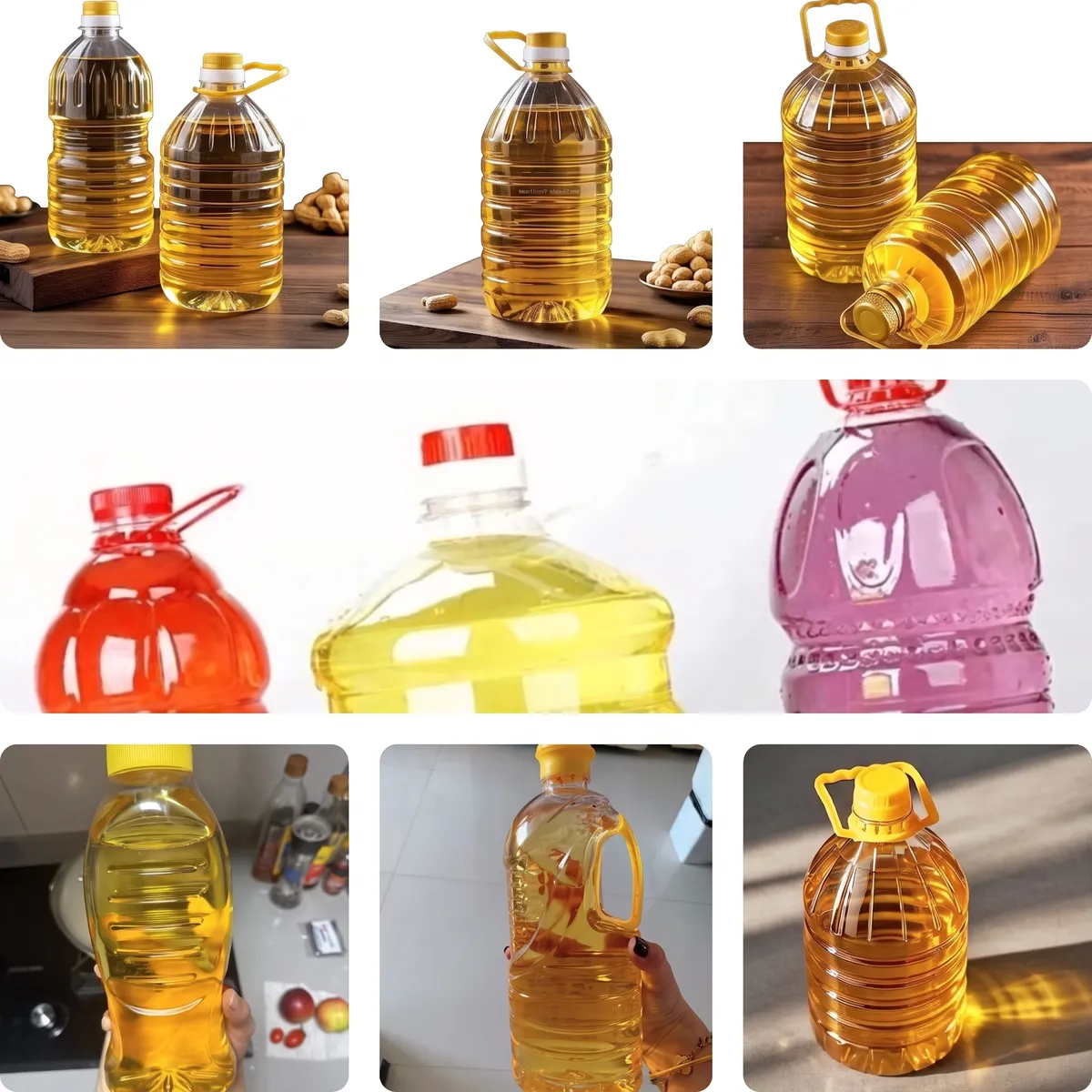
Our specialized blow molding machines are engineered for producing high-quality PET/PE containers for edible oils, condiments, and large-volume industrial liquids. The EPA.ES-2C150 efficiently manufactures a wide range of containers for the following industries and product categories:
1. Edible Oil Packaging
The machine is optimized to produce transparent PET oil bottles in volumes ranging from 1L to 20L, with front-handle and rear-handle configurations. Its precise wall-thickness control and food-grade material compatibility make it the go-to choice for sunflower oil, soybean oil, olive oil, and palm oil brands that demand consistent clarity, leak-proof sealing, and high stacking strength for retail shelf presentation and distribution logistics.
2. Condiment and Sauce Containers
As a proven bottle blow molding machine for condiment applications, the EPA.ES-2C150 efficiently produces bottles for soy sauce, vinegar, oyster sauce, chili oil, and other liquid condiments. The biaxial stretch process delivers excellent chemical resistance against acidic and saline liquids, while the precise neck finish ensures compatibility with standard tamper-evident and screw-cap closure systems used in food-grade bottling lines worldwide.
3. Large-Format Handle Bottles for Industrial Liquids
The series is particularly capable at producing 5L, 10L, and 20L handle bottles for motor oil, agricultural chemicals, and heavy-duty cleaning concentrates. The reinforced handle structure and thick-wall blow process provide excellent grip ergonomics and container durability. This positions the machine as an effective industrial blow molding machine solution for chemical distributors and automotive aftermarket packaging operations needing high-volume output of durable, stackable containers.
4. Agrochemical and Pesticide Packaging
For the agricultural sector, the EPA.ES-2C150 can produce PET and HDPE bottles for herbicides, fertilizer concentrates, and pesticide formulations. The chemical resistance of stretch-blown PET combined with tight neck-thread tolerances supports the integrity of child-resistant and UN-certified closure systems. Reliable wall uniformity prevents stress cracking and leakage during storage and field use, meeting international agrochemical packaging regulations across Latin American and Asian markets.
5. Household and Institutional Cleaning Products
Laundry detergents, floor cleaners, dishwashing liquids, and disinfectant concentrates packaged in 2L to 5L handle bottles benefit significantly from the EPA.ES-2C150's precision blow molding capabilities. The machine's consistent output quality supports high-contrast label adhesion, squeeze-resistance, and colorant compatibility - critical factors for retail cleaning product brands that compete on shelf presence and consumer convenience in supermarkets and institutional supply channels.
6. Food-Grade Beverage and Water Containers
Beyond oil and condiments, the EPA.ES-2C150 is equally capable of producing large-format PET water jugs, sports drink containers, and juice bottles. Food-safe material processing, combined with the machine's biaxial orientation, delivers superior oxygen and CO2 barrier performance, extending the shelf life of sensitive beverages. This versatility allows packaging manufacturers to serve multiple consumer goods sectors with a single PET bottle blow molding machine platform.
7. Custom OEM Bottle Production for Brand Owners
As a custom blow molding machine solution, the EPA.ES-2C150 supports OEM production for brand owners who require proprietary bottle shapes, embossed logos, or non-standard handle geometries. Ever-Power's 3D mold design team works directly with brand packaging engineers to develop custom blowing molds that meet specific visual identity requirements, while the machine's servo-controlled process guarantees that custom designs are reproduced with tight dimensional tolerances across millions of production cycles.
EPA.ES-2C150 Handle Bottle Blow Molding Machine Parts
Injection Unit
The injection unit consists of a precision-machined screw and barrel assembly responsible for plasticizing PET or PP resin at controlled temperatures (typically 265–280°C for PET). Servo-driven screw rotation ensures consistent melt volume and pressure during each injection cycle, directly determining preform weight accuracy and wall uniformity. Barrel heating zones are independently PID-controlled to prevent thermal degradation of resin and maintain melt flow index within specification for every bottle produced.
Molding Station
The molding station houses the 2-cavity preform mold or blowing mold depending on the process stage. Each cavity is machined from high-grade tool steel with a mirror-polished finish to minimize surface defects on finished bottles. The station's modular construction allows rapid mold changeovers, which is critical for manufacturers running multiple SKUs on the same line. Mold temperature is controlled via integrated cooling channels connected to the chiller, keeping each cavity at 8–10°C for optimal cycle times and bottle clarity.
Clamping Unit
The clamping unit provides the mechanical force required to hold mold halves securely closed against the internal blow pressure of 26–35 kg/cm². The EPA.ES-2C150 uses a servo-driven toggle clamping mechanism that delivers fast, repeatable open-close cycles while minimizing energy consumption compared to purely hydraulic systems. A clamping stroke of 190 mm and a maximum mold-open distance of 440 mm accommodate the full range of edible oil and handle bottle molds in the ES-2C series without requiring machine modification.
Blowing Unit
The blowing unit comprises a high-pressure compressor circuit, solenoid control valves, and a stretch rod actuator working in concert to execute the biaxial orientation step. Low-pressure air at 7 kg/cm² is first introduced to pre-expand the preform, followed by high-pressure air at 26–35 kg/cm² for final shaping. The stretch rod is servo-controlled with a stroke of 450 mm, providing precise biaxial orientation that is the defining quality feature of this injection stretch blow molding machine platform and is central to the bottle's wall-strength and barrier performance.
Control System
The EPA.ES-2C150 uses an industrial-grade PLC control system with a color touchscreen HMI that provides operators with real-time monitoring of all process parameters: temperature zone setpoints, blow pressure, stretching speed, cycle count, and alarm status. Recipe storage allows saving of up to 50 production programs, enabling rapid changeover between bottle models. The system also includes fault-diagnosis routines that identify and display malfunction codes, reducing troubleshooting time significantly and supporting the machine's reputation as a reliable blow molding machine for high-uptime production environments.
Preform Heating Oven
The multi-zone infrared heating oven is a core component of this automatic blow molding machine, responsible for conditioning preforms to the precise temperature profile required for effective biaxial stretching. Independent zone controllers manage each bank of infrared lamps, while forced-air cooling prevents overheating of the neck thread area. The oven capacity of 60 preform positions in the EPA.ES-2C150 ensures a continuous supply of thermally conditioned preforms to the blow station, sustaining the rated output of 1,800 bottles per hour without thermal delays or inconsistencies.
Preform Transport and Transfer System
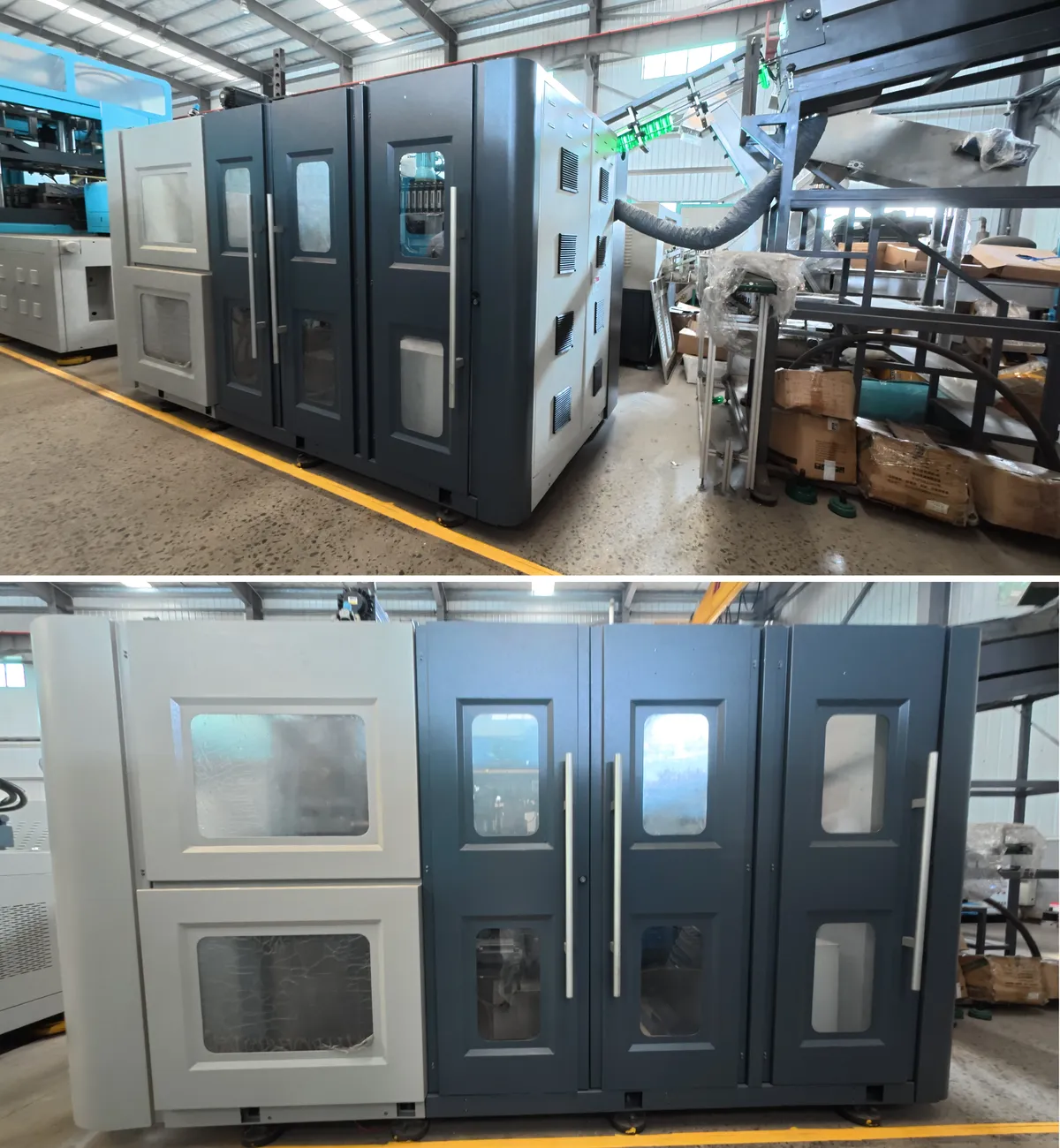
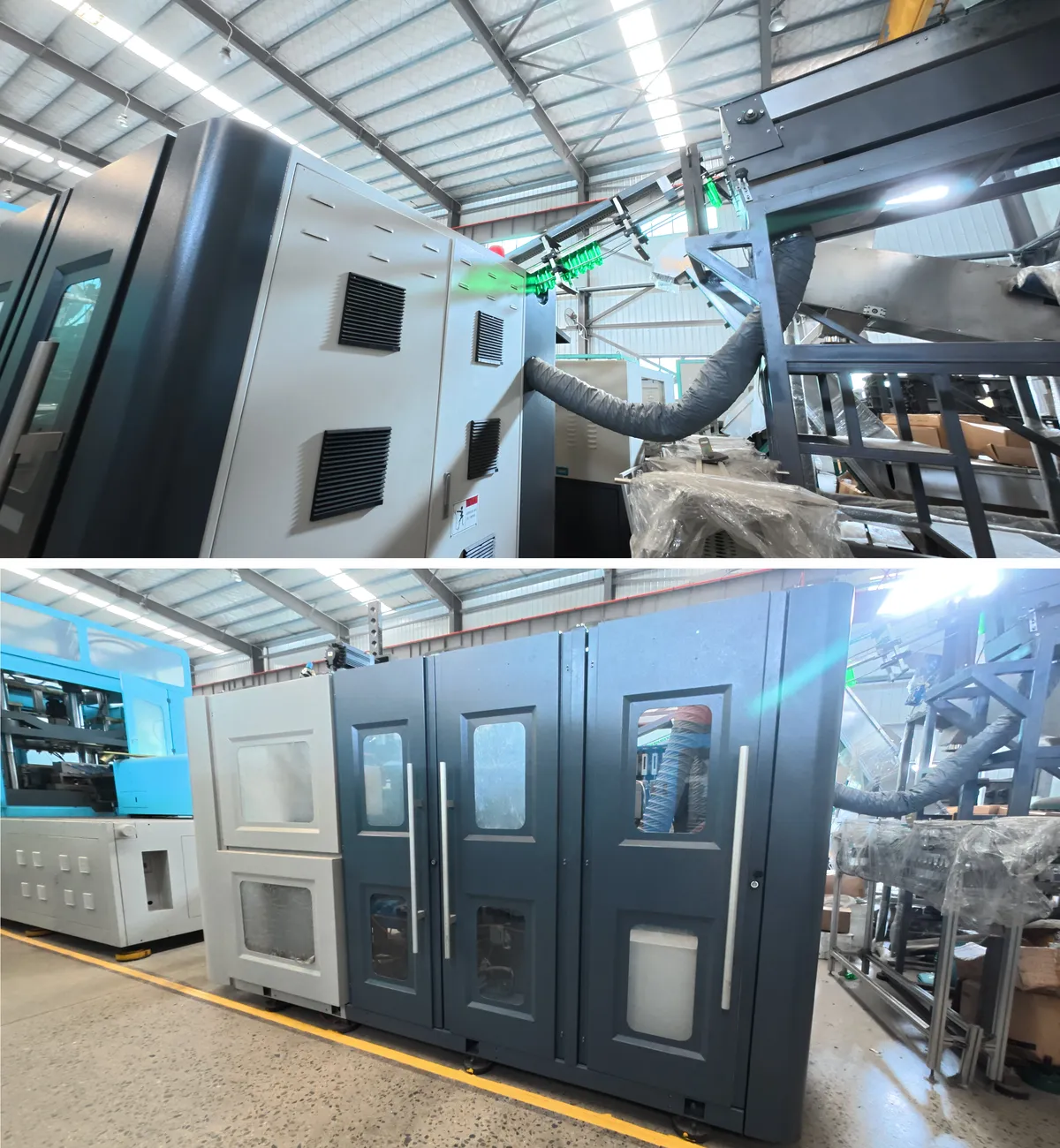
An automated preform transport system, including a hopper loader, conveyor, and mandrel-based transfer mechanism, feeds preforms from bulk storage into the heating oven and subsequently into the blow mold station without manual handling. This fully automated preform flow eliminates contamination risks critical in food-grade packaging, and is a key reason that the EPA.ES-2C150 qualifies as a fully automatic blow molding machine. The transfer system is designed for zero-jam reliability with quick-release joints for fast maintenance access.
Bottle Ejection and Conveyor System
Upon completion of each blow-mold cycle, finished bottles are automatically ejected from the open mold cavity and transferred to an outfeed conveyor for downstream processing such as leak testing, labeling, filling, or capping. The ejection system uses pneumatic pushers synchronized with the mold-open sequence to prevent bottle deformation or scratching. The outfeed conveyor speed is adjustable to match downstream line speed, making the EPA.ES-2C150 straightforward to integrate into fully automated filling and packaging lines serving the edible oil and condiment industry.
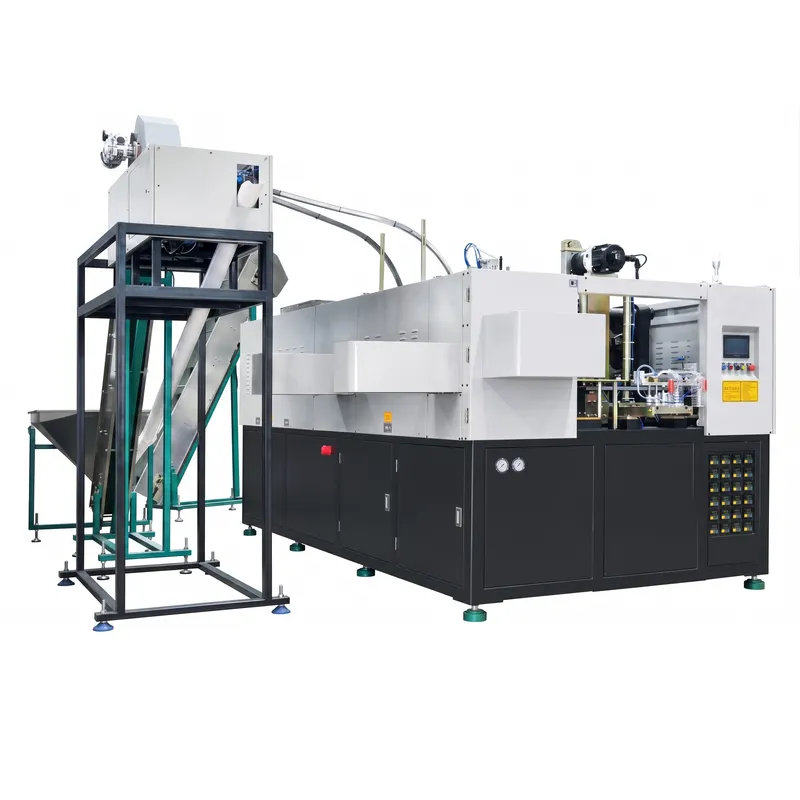
Two-Stage Blow Molding Machine vs. Single-Stage Blow Molding Machine
Single-Stage Blow Molding Machines
Working Principle: Single-stage machines integrate preform heating and bottle blowing within a single system. PET preforms are injection-molded and immediately transferred to the blowing station while still warm, eliminating the need to cool and reheat preforms. This tight integration suits compact production operations where floor space and capital budget are constraints. These machines are a simplified version of the injection stretch blow molding machine concept, handling the full process in one pass.
Advantages:
- Compact Setup: Preform heating and blowing occur in the same unit, requiring less floor space.
- Lower Initial Investment: Fewer machines and simplified infrastructure reduce upfront costs.
- Simpler Operation: The integrated process requires fewer handling steps and less coordination.
- Flexible Production: Quick changeover between bottle sizes suits small-scale or multi-product lines.
Limitations:
- Lower Production Capacity: Generally slower - suitable for small to medium-volume runs only.
- Higher Energy Consumption Per Bottle: Heating each preform individually is less efficient than bulk reheating.
- Limited Preform Quality Control: Preform production may be less optimized, affecting bottle uniformity.
- Manual Intervention: Some models require manual preform loading, increasing labor requirements.
Two-Stage Blow Molding Machines
Working Principle: The two-stage blow molding machine separates preform production from the blow molding process into two distinct stages. Preforms are first produced by injection molding, stored, and then loaded into a dedicated reheating oven before being blown into finished bottles. This separation enables higher automation, greater throughput, and superior preform quality control. The EPA.ES-2C150 is a premier example of this architecture, delivering 1,800 bph with consistent bottle quality.
Advantages:
- High Production Capacity: Two-stage machines produce thousands of bottles per hour - ideal for industrial-scale operations.
- Energy Efficiency: Bulk reheating of preforms in optimized ovens reduces energy consumption per bottle significantly.
- Improved Bottle Uniformity: Controlled preform conditioning ensures even temperature distribution and consistent wall thickness.
- Automation Friendly: Fully automated preform feeding, heating, and blowing minimize labor and production downtime.
- Scalability: Easily integrated into high-volume filling and capping lines for a fully automated packaging operation.
Limitations:
- Higher Initial Investment: Requires more extensive infrastructure and conditioning equipment.
- Larger Footprint: Ovens, conveyors, and storage areas require additional floor space.
- Less Flexibility for Small Runs: Changing bottle designs may take longer, reducing suitability for frequent product changes.
Key Differences: Single-Stage vs. Two-Stage
| Feature | Single-Stage Machine | Two-Stage Machine |
|---|---|---|
| Process Integration | Heating and blowing in one machine | Separate preform conditioning and blowing stages |
| Production Capacity | Moderate (small to medium runs) | High (industrial-scale production) |
| Initial Investment | Lower | Higher |
| Energy Efficiency | Less efficient per bottle | More efficient via bulk preform heating |
| Automation Level | Semi-automatic or manual | Fully automatic |
| Flexibility | High; easy size changeover | Lower; suited for long production runs |
| Bottle Uniformity | Moderate | High; controlled conditioning |
| Footprint | Compact | Larger; requires ovens and conveyors |
| Labor Requirements | Higher due to manual operations | Lower; highly automated |
Factors to Consider When Choosing a Machine
- Production Volume: High-volume operations benefit from two-stage machines; low to medium-volume producers may find single-stage sufficient.
- Capital Investment: Single-stage machines are less expensive and easier to set up. Two-stage machines require higher upfront investment but reduce long-term labor and energy costs.
- Bottle Design Variability: Single-stage machines are better for frequent size or shape changes across short runs.
- Energy Costs: Two-stage machines are more energy-efficient per bottle, which reduces operational costs over time at high volumes.
- Labor Availability: Highly automated two-stage machines reduce dependency on skilled operators, important in markets with rising labor costs.
- Space Availability: Single-stage machines are more compact, while two-stage setups require more floor space for ovens and conveyors.
- Product Quality Requirements: If consistent wall thickness, clarity, and mechanical strength are critical, two-stage machines are always preferred for food and condiment packaging.
 |
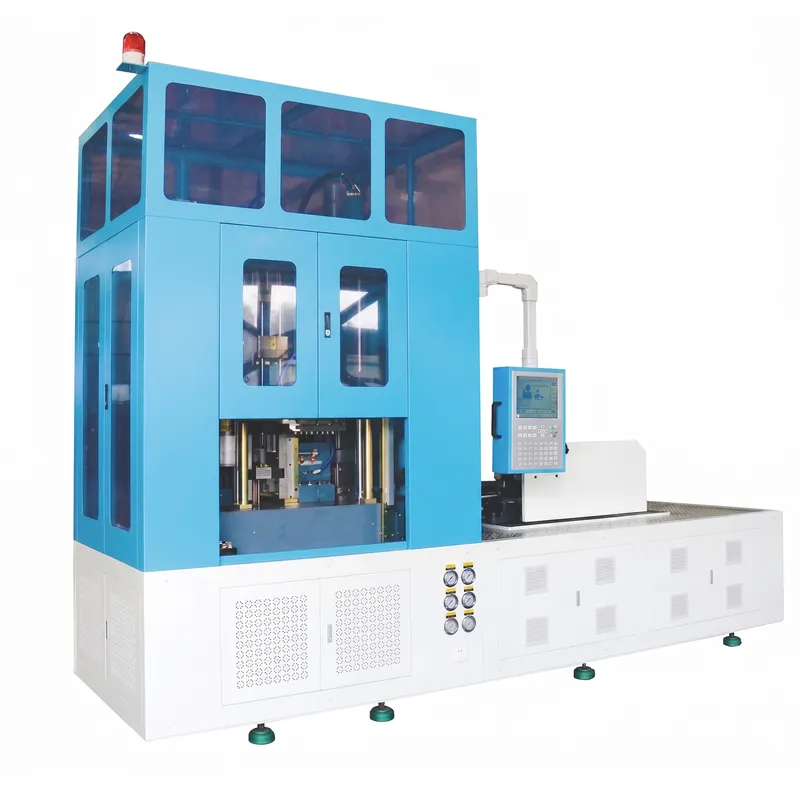 |
| Two-Stage Blow Molding Machine | Single-Stage Blow Molding Machine |
Compatible Raw Materials
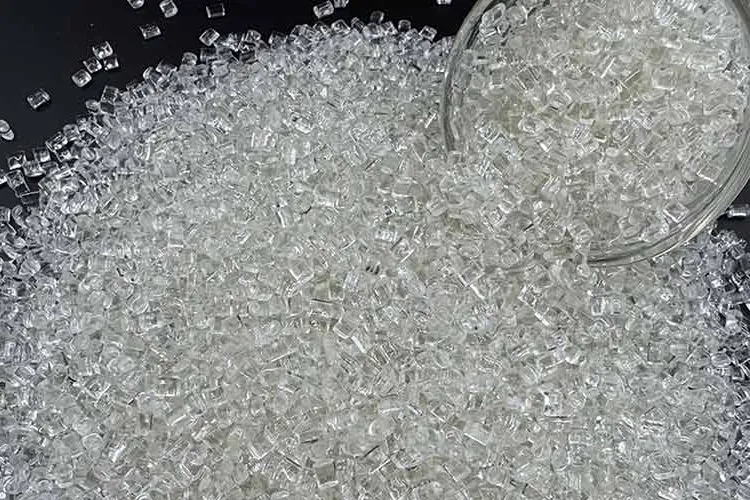
Polyethylene Terephthalate (PET)
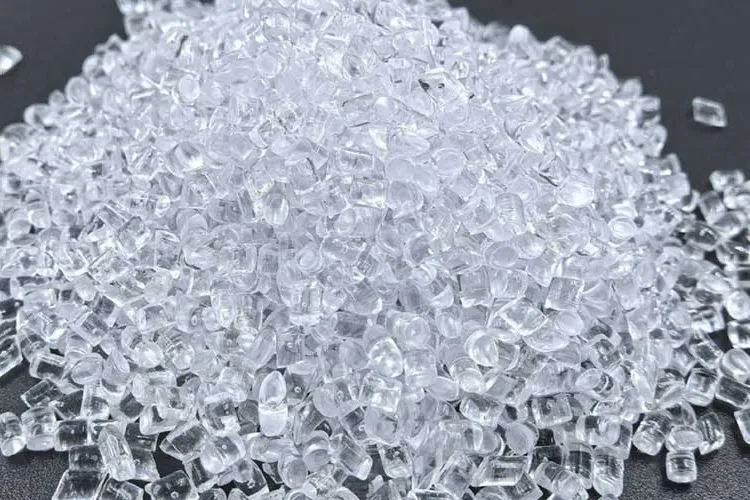
PET is the primary material processed by the EPA.ES-2C150 and most PET blow molding machines. Its exceptional clarity, lightweight nature, and outstanding gas-barrier properties make it the global standard for edible oil, condiment, and beverage containers. PET bottles produced on this machine meet food-contact safety regulations including FDA and EU food packaging standards, offering excellent rigidity at thin wall thicknesses while remaining fully recyclable within established PET waste streams worldwide.
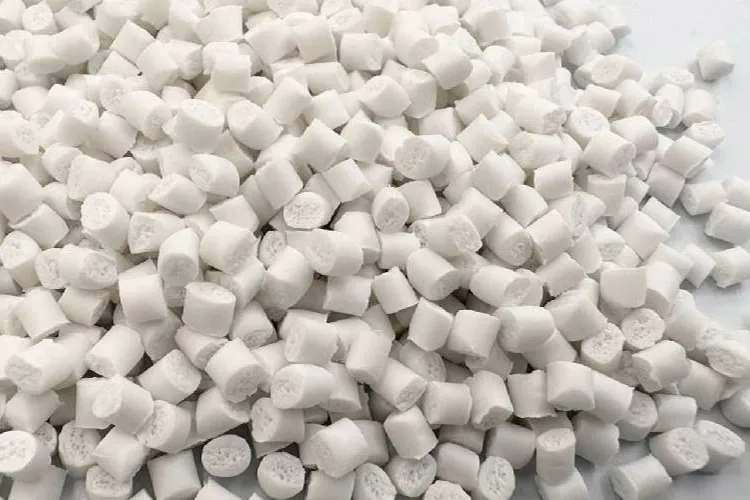
High-Density Polyethylene (HDPE)
HDPE is a robust, chemically resistant polymer widely used for large-format containers including motor oil bottles, detergent jugs, and agrochemical containers. In the context of this plastic blow molding machine, HDPE enables production of opaque, impact-resistant handle bottles that tolerate temperature fluctuations and aggressive chemical contents. HDPE containers are also suitable for recycling under standard polyethylene collection systems, supporting sustainability goals for brand owners in regulated markets.
Low-Density Polyethylene (LDPE)
LDPE brings flexibility and translucency to the container, making it ideal for squeeze-style bottles used in condiment dispensing, personal care, and food-service applications. When processed on this bottle blow molding machine, LDPE produces containers with excellent moisture resistance and good cold-temperature flexibility, making them suitable for refrigerated condiment packaging. Its softness also provides a pleasant tactile experience for end consumers, which is valued in premium food and hospitality product packaging.
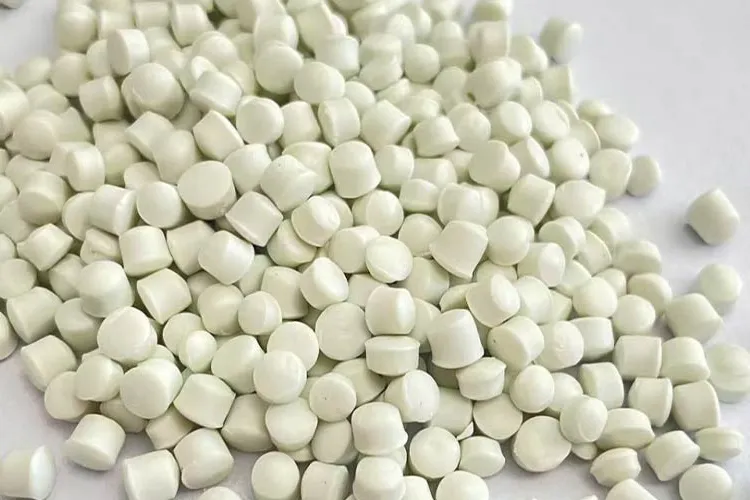
Polypropylene (PP)
PP is valued for its high melting point (160–170°C) and excellent chemical resistance, making it suitable for hot-fill applications and pharmaceutical or chemical packaging where thermal stability is essential. As a compatible material for this plastic blowing machine, PP enables production of opaque or semi-translucent containers that withstand both hot-fill condiment processing and cold-chain distribution. PP is also approved for direct food contact and is classified as safe for single-use and multi-use container applications by global food safety bodies.
Polycarbonate (PC)
PC is a high-performance engineering thermoplastic renowned for its exceptional impact resistance, optical clarity, and dimensional stability across a wide temperature range. When applicable for this blow molding machine, PC produces reusable water bottles, large-volume returnable containers, and specialty industrial packaging that must withstand mechanical stress in supply chain and field environments. PC containers offer glass-like clarity with far superior drop resistance, making them a premium option for applications where durability and appearance are equally important.
Polyethylene (PE)
PE blends combining HDPE and LDPE, or incorporating MDPE (Medium-Density Polyethylene), allow manufacturers to tailor stiffness and flexibility characteristics for specialized container requirements. This compatibility with PE blends makes the EPA.ES-2C150 a versatile blow molding machine suppliers solution, capable of processing a broad polymer specification to meet diverse customer requirements without extensive machine modification, supporting rapid product development cycles for packaging innovators.
PETG (Glycol-Modified PET)
PETG offers the clarity and processability of PET with improved toughness and chemical resistance, particularly against solvents and cleaning agents. For premium condiment and specialty food oil packaging, PETG enables the production of bottles with crystal-clear walls and excellent impact resistance, even at thinner gauges. Its slightly lower processing temperature compared to PET also reduces energy consumption in the heating oven, making PETG an efficient choice for high speed blow molding machine operations where both quality and throughput are priorities.
 |
 |
 |
 |
EPA.ES-2C150 Plastic Blow Molding Machine Maintenance
1. Regular Infrared Lamp and Oven Inspection
Inspect all infrared heating lamps weekly for signs of dimming, cracking, or uneven radiation output. Lamps with degraded output cause non-uniform preform heating, leading to bottle defects such as uneven wall thickness and clarity loss. Replace any lamp showing more than 15% output deviation from its rated specification. Clean lamp reflectors monthly with a dry, lint-free cloth to remove resin dust accumulation, which can reduce heating efficiency and increase cycle times on this automatic blow molding machine.
2. Cooling Water Circuit Maintenance
The cooling water system must be checked bi-weekly for flow rate, temperature stability, and water quality. Maintain the system's operating temperature at 8–10°C using the connected chiller, and check flow rate against the rated 30 ltr/min for the EPA.ES-2C150. Flush the cooling circuits quarterly with a mild descaling agent to remove mineral scale that restricts flow and reduces cooling efficiency. Monitor water quality using conductivity and pH meters; deionized or softened water is strongly recommended to prevent internal corrosion and blockage of the mold cooling channels.
3. Mold Cavity and Parting Surface Care
Clean blow mold cavities at the end of each production shift using a soft brass brush and mild solvent to remove PET oligomer deposits and oil residues that accumulate on polished cavity surfaces. Inspect parting line surfaces for nicks, scratches, or wear that could cause flash on finished bottles. Apply a thin film of food-grade mold release lubricant to parting surfaces during extended shutdowns to prevent oxidation. Proper mold care directly influences the surface quality and dimensional accuracy of every bottle this fully automatic blow molding machine produces.
4. Lubrication of Mechanical Drive Components
All toggle clamping mechanism pins, guide rods, stretch rod bearings, and preform transport chain links must be lubricated according to the manufacturer's maintenance schedule, typically every 500 operating hours. Use only high-quality, temperature-resistant lubricants compatible with the materials specified in the machine manual. Under-lubrication leads to accelerated wear on precision-machined components, increasing play in the clamping system and degrading bottle dimensional consistency. Maintain a lubrication log to ensure no maintenance intervals are missed during high-demand production periods on this industrial blow molding machine.
5. Air Filter and Compressor System Checks
The high-pressure blowing circuit relies on clean, dry air to achieve consistent blow pressure of 26–35 kg/cm². Check and replace pre-filter and coalescing filter cartridges every 1,000 operating hours, or more frequently in dusty environments. Drain moisture traps in the air preparation unit daily to prevent water carryover into the blow circuit, which can cause cloudiness in bottles or mold cavity corrosion. Verify that the high-pressure compressor output meets the rated 1,000–1,500 ltr/min high-pressure air consumption of the EPA.ES-2C150 during peak production.
6. Control System and Electrical Inspections
Conduct a full electrical inspection of the PLC control panel, terminal connections, servo drive units, and HMI touchscreen quarterly. Check for loose terminal screws, signs of overheating on circuit breakers, and any corrosion on sensor connectors. Back up all production recipes and PLC programs to an external storage device monthly. Keep the control panel cabinet interior clean and free of dust accumulation using compressed air directed away from circuit boards. Properly maintained control systems are critical to the long-term precision and reliability of blow molding machine parts and overall production performance.
Edible Oil and Handle Bottle Blow Molding Machine Mould Features
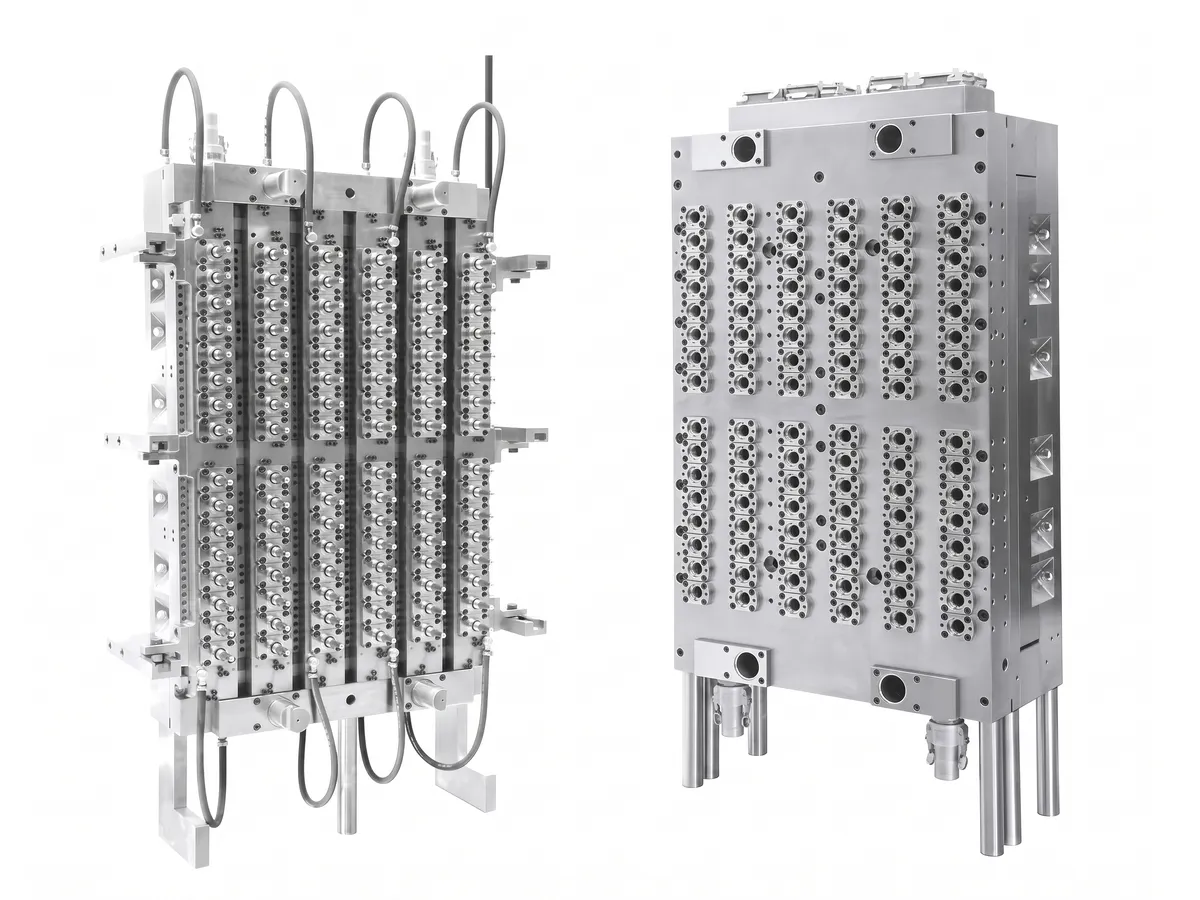
Preform Injection Mold
Dual-Part Die Lip Design
The die lip is composed of two precision-aligned components that guarantee coaxial alignment between the preform gate and core during each injection cycle. This design eliminates eccentricity in preform wall thickness distribution, which is the single most important factor in producing bottles with consistent wall strength and optical clarity across the full container body when processed by this blow molding machine.
Optimized Cooling Water Channel Layout
A strategically designed conformal cooling water circuit within the preform mold enhances cooling efficiency, reducing cycle times while ensuring rapid and uniform solidification of each preform. Shorter cooling cycles directly increase the hourly output capacity of the EPA.ES-2C150 system, and uniform cooling prevents differential shrinkage that would otherwise cause warped or off-spec preforms entering the blow molding stage.
Imported 2316 Tool Steel for Forming Components
All preform-forming components, including core and cavity inserts, are manufactured from imported 2316 stainless tool steel and subjected to thorough heat treatment. This steel grade offers excellent corrosion resistance in the presence of PET melt and cooling water, reducing maintenance frequency and extending mold service life. Hot-treatment hardening ensures that cavity surfaces maintain their mirror finish even after millions of injection cycles, preserving dimensional accuracy throughout the mold's operational lifespan.
420 Stainless Steel Structural Plates
Core plates, cavity plates, and other structural mold components are fabricated from 420 stainless steel, which provides superior corrosion resistance and machinability. This material choice ensures that the mold structure maintains its precision alignment and flatness even after prolonged exposure to cooling water and the thermal cycling inherent in high-speed injection processes, supporting the long-term reliability of the blow molding machine parts ecosystem.
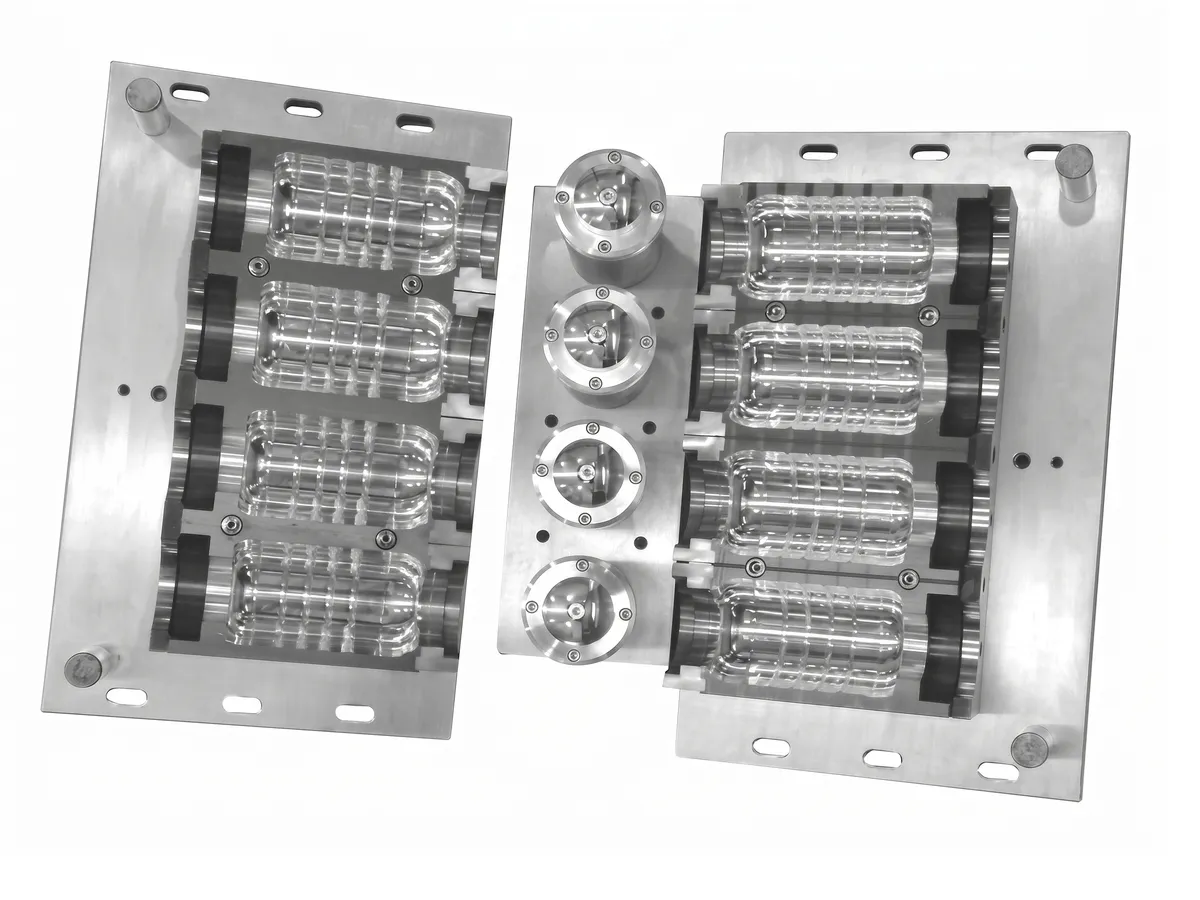
Blowing Mold
High-Quality Steel Raw Material
Blowing molds are machined from premium aerospace-grade aluminum alloy or hardened steel, depending on production volume and material requirements. The high-quality base material ensures that cavity surfaces resist wear from the repeated mechanical contact of the blown PET preform, maintaining the dimensional accuracy of bottle body diameter, handle geometry, and base profile across millions of production cycles on this handle bottle blow molding machine.
Advanced 3D CAD/CAM Design
Every blow mold is designed using advanced 3D CAD software with flow simulation analysis to verify that air pressure distribution within the mold will produce uniform wall thickness across the entire bottle body. Simulation-driven design eliminates costly physical prototyping iterations and allows Ever-Power's engineering team to guarantee that custom bottle shapes meet clients' structural and aesthetic specifications before the first mold is machined.
Versatile Bottle Design Catalogue
Ever-Power maintains an extensive library of standard bottle mold designs for common edible oil, condiment, and handle bottle configurations, enabling buyers to select and source proven tooling without the lead time and cost of fully custom mold development. For OEM clients, bespoke bottle designs are available with full 3D modeling and client-approval workflow, ensuring that the final mold delivers the exact aesthetic and functional properties required for the brand's packaging lineup.
CNC-Machined Metal Components
All metal components of the blowing mold, including cavity bodies, bottom inserts, and neck split inserts, are fully CNC-machined to tolerances within 0.02 mm. This level of precision ensures perfect parting-line registration, eliminating flash and gate vestige defects on finished bottles. CNC machining also guarantees repeatable interchangeability between replacement insert sets, reducing the downtime associated with mold maintenance and component replacement in high-volume production environments.
 |
 |
Common Faults and Troubleshooting
1. Uneven Wall Thickness on Finished Bottles
Symptoms: Bottles exhibit noticeably thicker or thinner walls on one side compared to the opposite side. Causes: Non-uniform preform heating due to lamp failure or oven zone temperature drift; misaligned stretch rod causing off-center stretching; preform eccentricity from injection molding stage. Solutions: Inspect and replace defective IR lamps; recalibrate oven zone temperatures; check stretch rod alignment and adjust centering; verify preform quality and injection parameters with the preform supplier.
2. Bottle Body Cloudiness or Haziness
Symptoms: Produced PET bottles appear hazy, milky, or lack the expected optical clarity. Causes: Preform temperature too high or too low causing stress whitening; excessive moisture in PET resin causing hydrolysis; contaminated cooling water causing surface fogging. Solutions: Verify preform moisture content is below 50 ppm before processing; adjust oven temperatures to the correct PET processing window (90–110°C); check cooling water purity and filter condition; inspect water temperature stability at 8–10°C.
3. Bottle Deformation or Shrinkage After Ejection
Symptoms: Bottles exhibit dimensional changes or shape distortion after ejection from the mold. Causes: Insufficient cooling time inside the mold; cooling water temperature too high; premature ejection before the bottle has fully solidified. Solutions: Increase mold cooling dwell time in the PLC cycle program; verify chiller output maintains 8–10°C consistently; check cooling water flow rate meets 30 ltr/min specification; inspect for blockages in the mold cooling channels that restrict flow and reduce heat extraction efficiency.
4. Preform Bursting During Blow Molding
Symptoms: Preforms rupture during the low-pressure pre-expansion or high-pressure blowing phase, triggering machine alarms and production stoppages. Causes: Preform overheating causing localized thinning before the blow stage; blow pressure ramp speed too fast for the preform thickness; preform weight or wall thickness below specification. Solutions: Reduce oven zone temperatures and verify preform temperature with an infrared pyrometer before blowing; slow the blow pressure ramp rate in PLC settings; verify preform specifications match the blow mold design requirements.
5. Flash on the Bottle Parting Line
Symptoms: Thin fins or excess material appear along the parting line or base insert seam of produced bottles. Causes: Mold parting surfaces worn or contaminated, preventing complete closure; clamping force insufficient for the blow pressure applied; mold alignment pins worn or damaged. Solutions: Inspect and clean mold parting surfaces; replace worn alignment pins and bushings; verify clamping force settings in the PLC are appropriate for the bottle volume and blow pressure; have the mold refaced if parting surface wear exceeds 0.05 mm deviation.
6. Inconsistent Output Rate Below 1,800 bph
Symptoms: Production output falls consistently below the rated 1,800 bottles per hour, reducing line efficiency. Causes: Preform feed jams in the transport system; extended cooling times due to chiller underperformance; PLC cycle timing not optimized for the current bottle specification. Solutions: Inspect preform hopper and transport mandrels for wear or misalignment; verify chiller capacity is adequate; review and optimize PLC cycle time parameters with Ever-Power's technical support team; ensure all blow molding machine parts are within service life limits.
Why Choose Ever-Power's Plastic Blow Molding Machine?
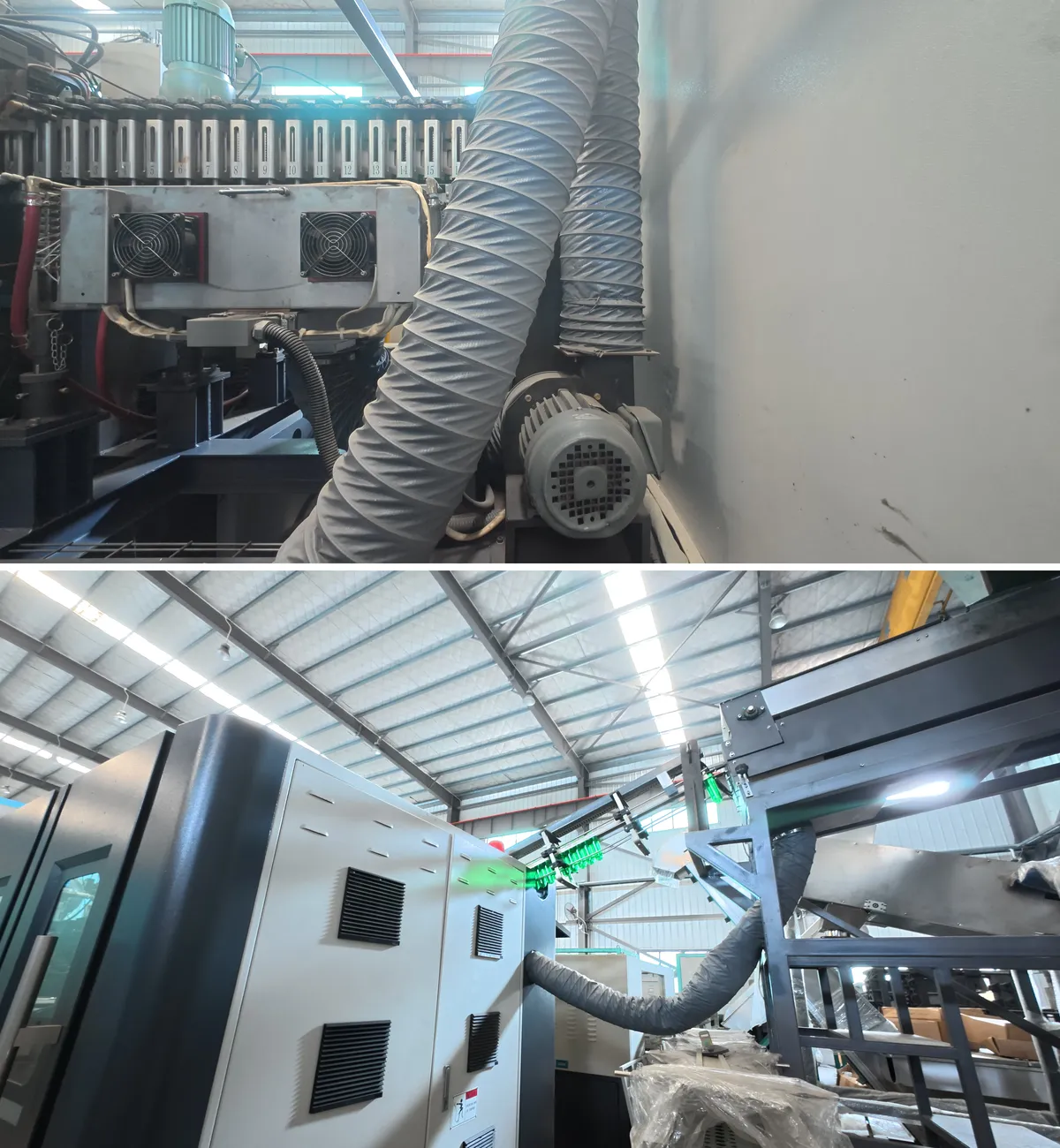
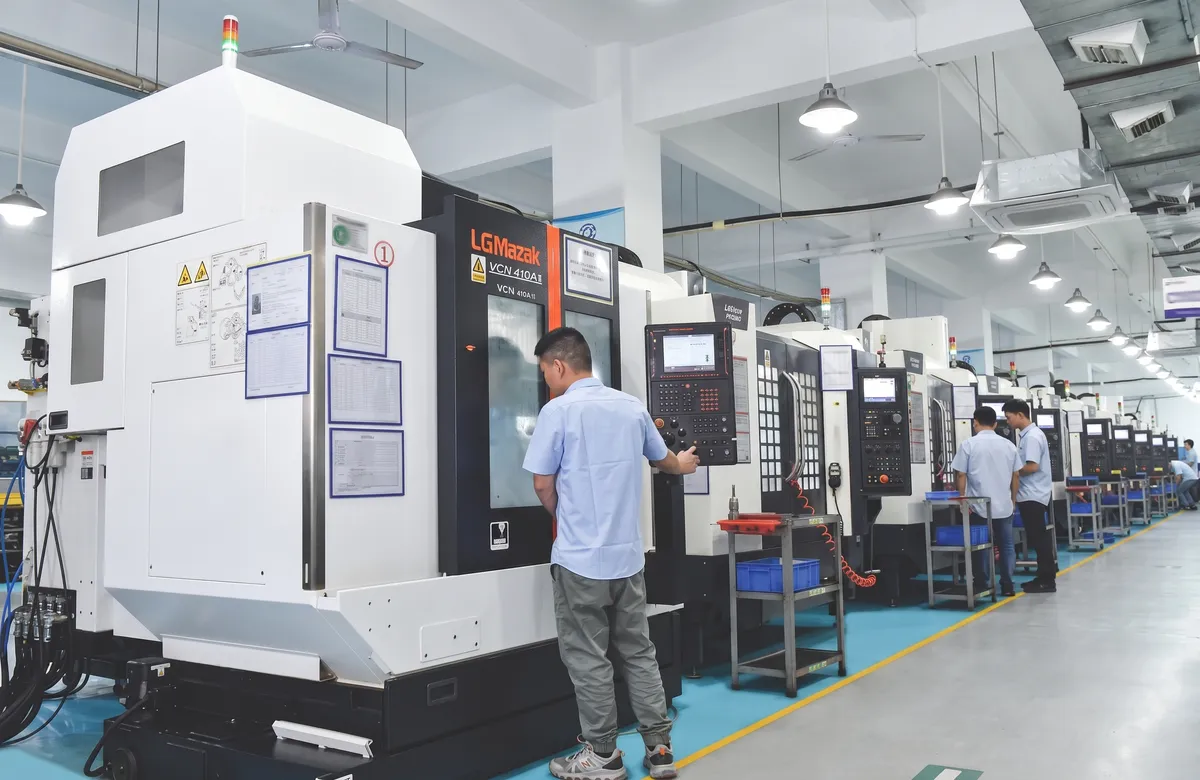
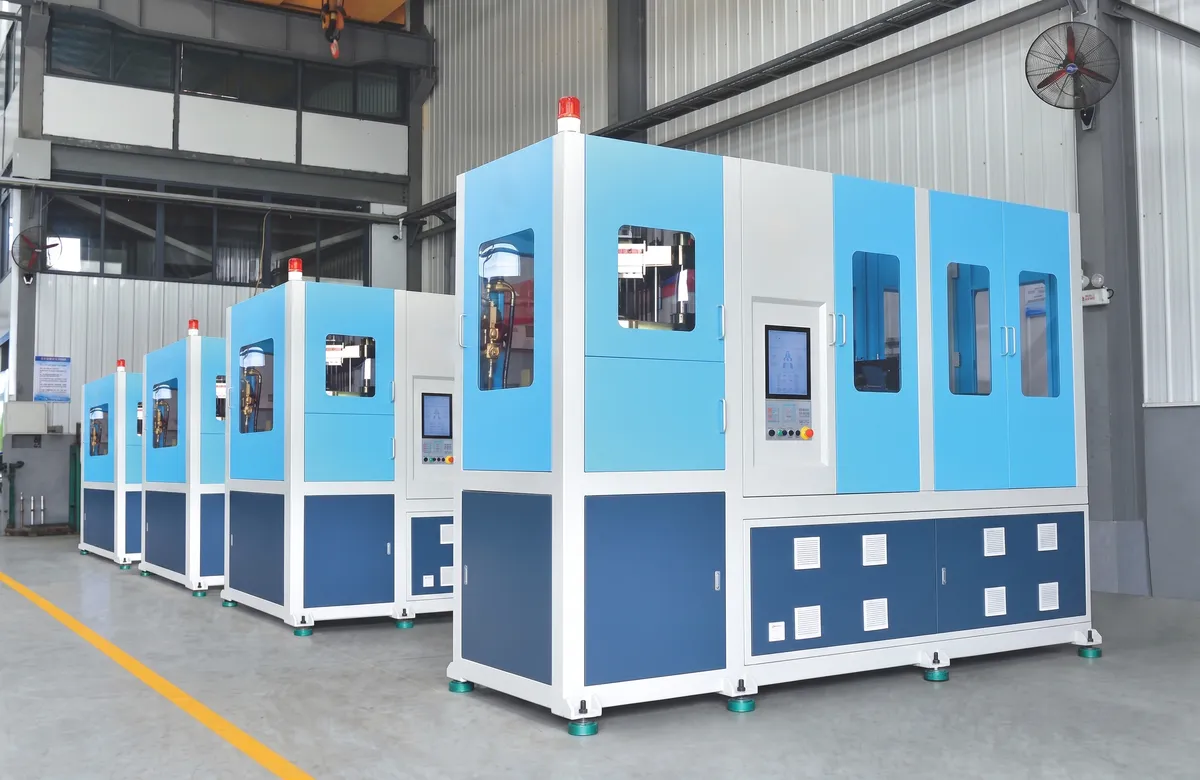
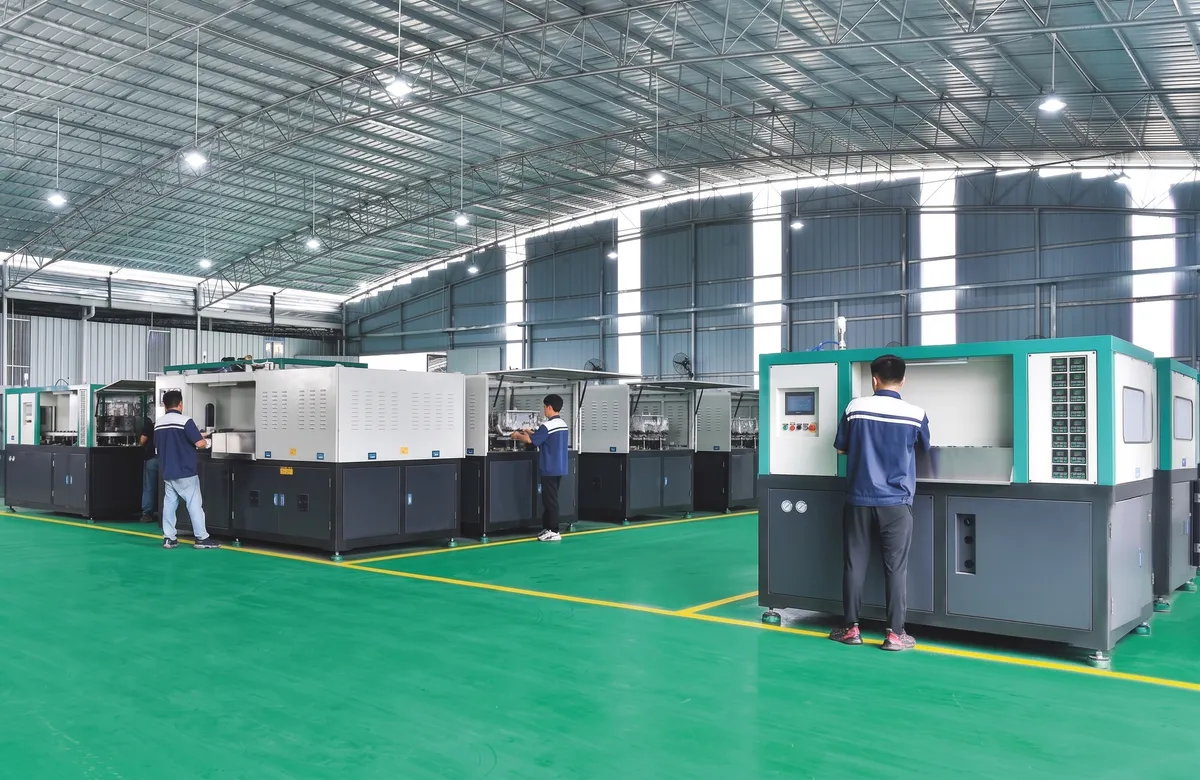
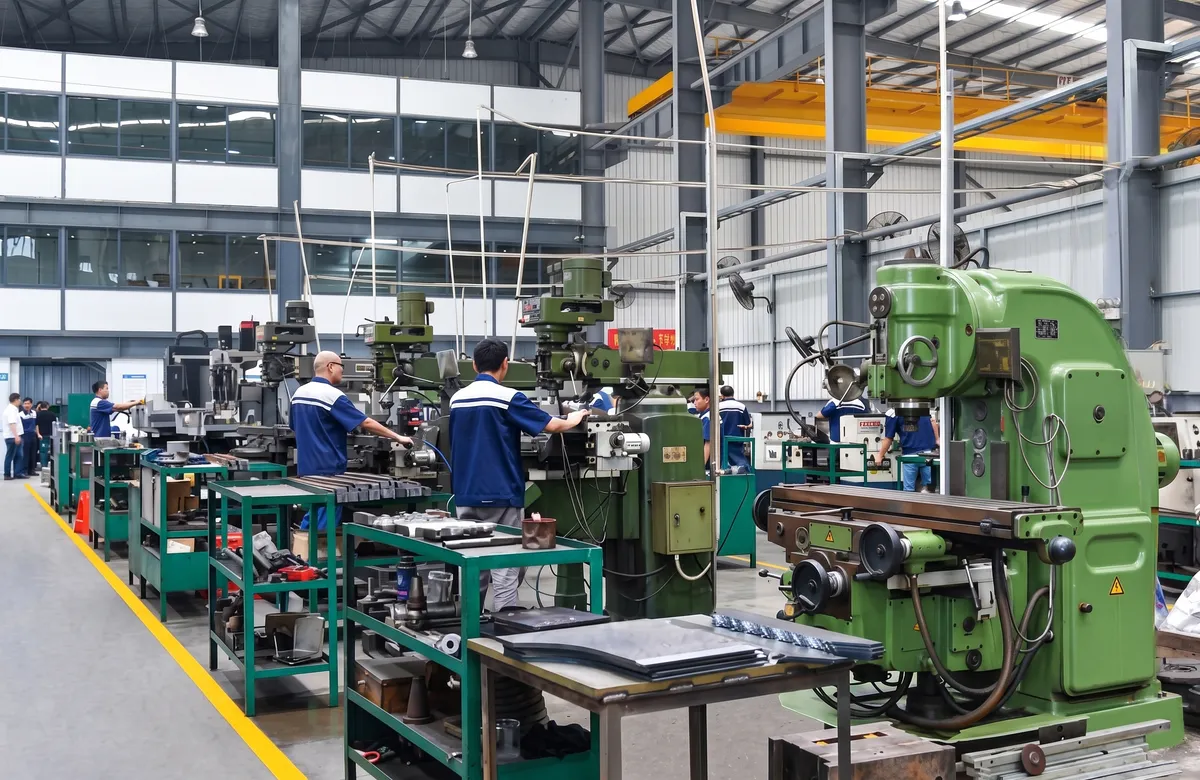
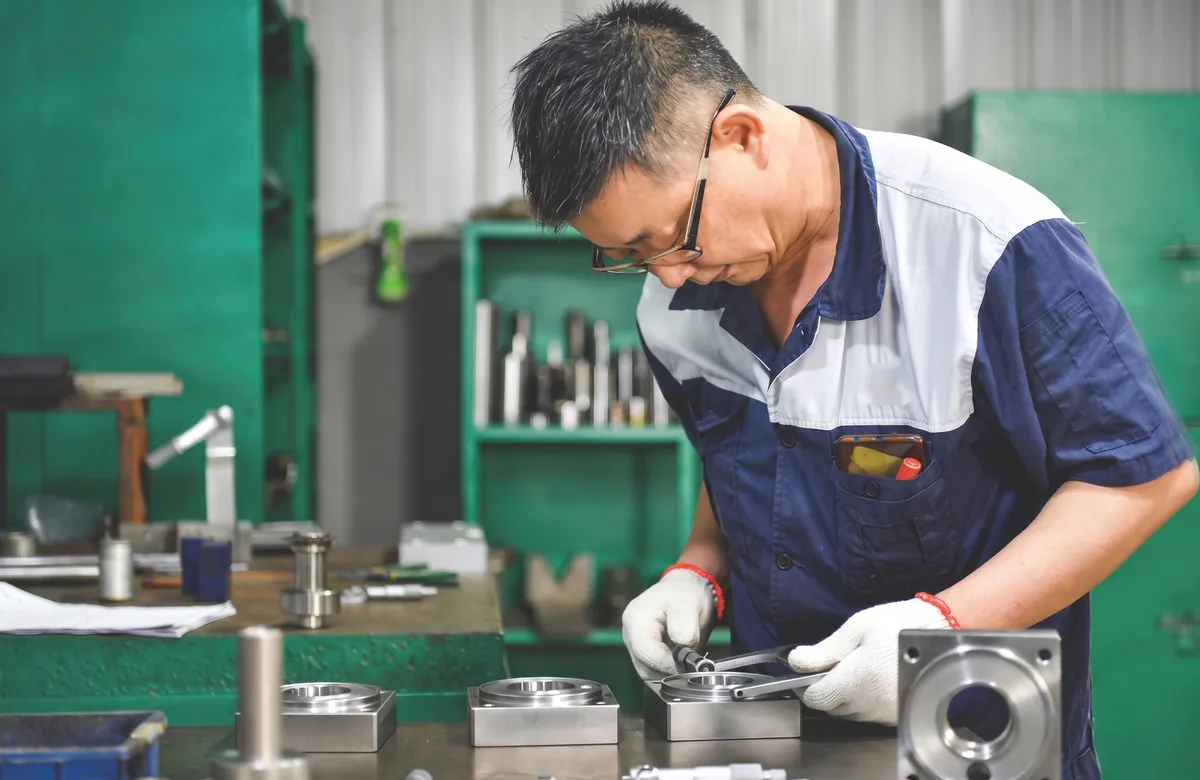
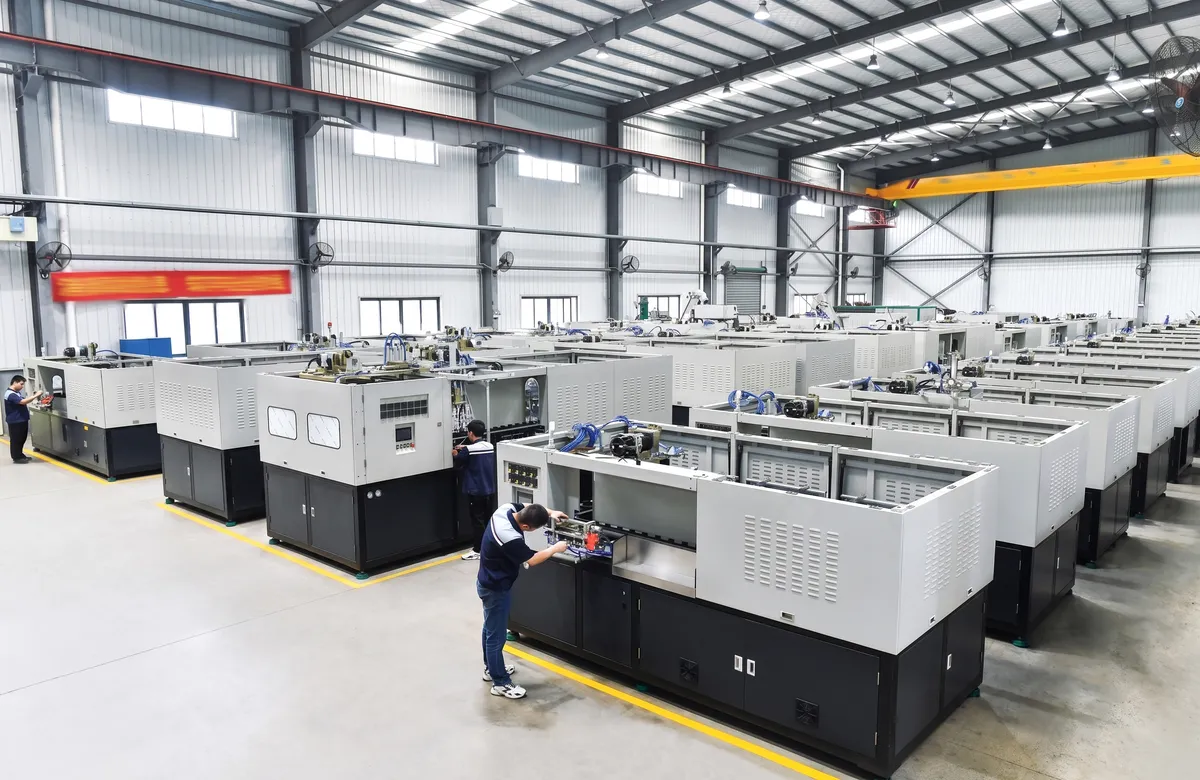
Mexico Ever-Power ISBM Machinery Co., Ltd is mainly engaged in the research, development, production, sales, and global trade of automatic injection blow molding machines and injection stretch blow molding machines. With more than two decades of manufacturing experience, our product range covers injection blow molding, extrusion blow molding machines, ISBM machines, and auxiliary equipment, serving packaging manufacturers across pharmaceuticals, food, cosmetics, healthcare, and industrial sectors worldwide. Ever-Power brings together a team of senior engineers and technical specialists with deep expertise in both injection-blowing machinery design and injection-blowing mold engineering. This dual competency in machine and mold development means our customers receive fully integrated solutions, not just hardware. Our R&D team continuously refines machine architecture, control software, and mold designs to keep Ever-Power at the forefront of the global blow molding machine manufacturers landscape.
Our machines process the full spectrum of packaging polymers: HDPE, LDPE, PET, PETG, PP, PS, PPSU, PC, Tritan, ABS, PLA, bioplastics, EVA, PCTG, and more. Container volumes range from 1 ml to 1,000 ml on ISBM platforms and up to 22,000 ml on the ES series. This breadth of material and size coverage makes Ever-Power the ideal partner for blow molding machine suppliers seeking a single-source solution across multiple product lines and market sectors. Ever-Power builds complete one-stop turnkey packaging lines, integrating blow molding with preform production, filling, capping, labeling, and packing systems. Our turnkey approach reduces the coordination burden on customers and ensures all equipment components are optimized to work together from day one. This capability distinguishes Ever-Power from pure equipment resellers and positions us as a true manufacturing partner for enterprises building new packaging facilities or expanding production capacity.
Ever-Power provides detailed and thoughtful service at every stage of the customer relationship. Pre-sale consultation includes bottle design review, material selection guidance, and production line planning. During delivery and installation, our engineers provide on-site commissioning support or remote video assistance. Post-sale, our technical team remains available for parameter optimization, operator training refreshers, and spare parts supply, ensuring customers extract maximum value from their plastic blow molding machine investment throughout its operational life. Ever-Power operates under the enterprise development principles of self-reliance, integrity, pragmatism, innovation, and responsibility. These values are reflected in every machine we build, every mold we design, and every customer relationship we maintain. We do not simply sell machines; we build long-term partnerships with packaging manufacturers who depend on our equipment to deliver quality, efficiency, and competitiveness in their markets. Choosing Ever-Power means choosing a supplier who is as invested in your production success as you are.
 |
 |
 |
 |
 |
 |
Frequently Asked Questions
Q: What bottle sizes can the EPA.ES-2C150 fully automatic blow molding machine produce?
A: The EPA.ES-2C150 is designed to produce containers with a maximum volume of 2,500 ml per cavity, with a maximum container diameter of 130 mm and a maximum container height of 250 mm. It is particularly optimized for edible oil and handle bottles in the 1L to 5L range. For larger volumes up to 22,000 ml (20L), the EPA.J-2C366(20L) model within the same series is available. Custom mold configurations allow the machine to accommodate a wide range of intermediate bottle sizes to meet specific production requirements.
Q: What is the theoretical output of the EPA.ES-2C150 edible oil bottle blow molding machine?
A: The EPA.ES-2C150 has a rated theoretical output of 1,800 bottles per hour based on 2-cavity production with standard PET preforms and optimized process parameters. In practice, sustained output typically reaches 1,700 to 1,780 bph depending on bottle size, preform weight, cooling requirements, and ambient conditions. For higher throughput requirements, the EPA.ES-2C200 model in the same series delivers a theoretical output of 1,600 bph with larger bottle volumes up to 5,000 ml.
Q: What materials are compatible with this plastic blow molding machine?
A: The EPA.ES-2C150 is primarily designed for PET (Polyethylene Terephthalate), which is the standard material for transparent edible oil and condiment bottles. The machine can also process PP (Polypropylene) and compatible thermoplastic resins. For HDPE applications, please consult our technical team regarding machine configuration requirements. All compatible materials must meet food-contact safety standards when used for edible oil or condiment packaging. Ever-Power can advise on material selection based on the specific container application and target market.
Q: How does the EPA.ES-2C150 compare to an extrusion blow molding machine for oil bottles?
A: The EPA.ES-2C150 uses injection stretch blow molding (ISBM), which differs fundamentally from an extrusion blow molding machine. ISBM produces bottles with superior wall-thickness uniformity, better optical clarity, higher burst strength, and more precise neck-thread dimensions compared to EBM. For edible oil packaging where clarity, label adhesion, and structural integrity are critical, ISBM is the preferred technology. Extrusion blow molding is more suitable for irregular shapes and handle containers where neck precision is less critical. For large-handle oil bottles requiring excellent transparency, the EPA.ES-2C150 is the stronger solution.
Q: What cooling water requirements does the EPA.ES-2C150 blow molding machine need?
A: The machine requires cooling water at an operating pressure of 5–6 kg/cm², maintained at a temperature of 8–10°C, with a flow rate of 30 ltr/min. A dedicated industrial chiller is required to achieve and maintain the 8–10°C setpoint reliably, regardless of ambient temperature. Using softened or deionized water is strongly recommended to prevent mineral scale buildup in the mold cooling channels, which would reduce cooling efficiency and increase bottle defect rates over time. Cooling water quality should be monitored monthly for conductivity and pH levels.
Q: Is this an all electric blow molding machine or does it use hydraulic systems?
A: The EPA.ES-2C150 utilizes a hybrid architecture combining servo-electric drives for clamping, stretching, and preform transport with pneumatic systems for the blow circuit. It is not a purely all electric blow molding machine or full electric blow molding machine in the strictest sense, as it relies on compressed air for the blow stage. However, it does not use traditional hydraulic oil circuits, which reduces maintenance complexity, eliminates hydraulic oil contamination risks, and improves energy efficiency compared to older hydraulic blow molding systems. For specific servo-electric configurations, please contact our sales team.
Q: What high-pressure air supply does the EPA.ES-2C150 require?
A: The EPA.ES-2C150 requires high-pressure air at a blowing pressure of 26–35 kg/cm² (approximately 25–35 bar), with a high-pressure air consumption of 1,000–1,500 ltr/min. A dedicated high-pressure air compressor rated for at least 35 bar is required. Low-pressure control air at 7 kg/cm² with consumption of 600 ltr/min is also needed for pneumatic actuators and pre-blowing circuits. Ever-Power recommends sourcing matched compressor and air dryer systems from our auxiliary machinery portfolio to ensure air supply compatibility and reliability for continuous production operations.
Q: How long does it take to change molds on the EPA.ES-2C150?
A: With trained operators following the standardized mold changeover procedure, mold changes on the EPA.ES-2C150 typically take 2 to 4 hours depending on the difference in bottle dimensions between the outgoing and incoming molds. Quick-release clamping fixtures and a modular blow mold design reduce mechanical changeover time significantly. After mold change, a short warm-up and parameter verification period of 30–60 minutes is required before full-speed production resumes. Ever-Power provides detailed mold changeover procedure documentation and offers remote support during the first changeover for new customers.
Q: What is the power supply requirement for the EPA.ES-2C150 blow molding machine?
A: The EPA.ES-2C150 requires a maximum heating power supply of 42.5 kW, with typical working heating power of 18 kW during steady-state production. The machine operates on a three-phase industrial power supply. The exact voltage and frequency specification (e.g., 380V/50Hz or 440V/60Hz) should be confirmed at the time of order placement to ensure compatibility with the buyer's local electrical infrastructure. A dedicated electrical panel with appropriate circuit breakers and safety disconnects must be installed by a licensed electrician prior to machine commissioning.
Q: Does Ever-Power provide custom blow molding machine configurations for non-standard bottle shapes?
A: Yes. Ever-Power offers fully customized blow molding machine and mold solutions for non-standard bottle geometries including asymmetric shapes, multi-handle designs, ergonomic grip profiles, and embossed branding elements. Our engineering team works with clients' packaging designers using 3D CAD software and flow simulation tools to develop mold designs that are manufacturable within the EPA.ES-2C150's clamping and blow station geometry. Custom mold development typically requires 6–10 weeks from design approval to first sample production. Please provide your bottle drawing or sample for a technical feasibility assessment.
Customer Reviews
Carlos Mendez, Edible Oil Industry, Brazil
"We installed the EPA.ES-2C150 about eight months ago at our edible oil bottling plant in Sao Paulo, and honestly the throughput has been rock solid. We are running 5-liter sunflower oil bottles and averaging around 1,750 to 1,780 bottles per hour consistently across our two daily shifts. The centralized heating design was something our engineering team was a bit skeptical about at first, but it has proven to be genuinely energy-efficient. Our electricity consumption per thousand bottles is down about 12% compared to our previous machine. The Ever-Power service team was also very professional during installation and stayed on-site for four days until we were comfortable with the system. Really satisfied with this purchase."
Li Weiming, Condiment Packaging, China
"I was looking for a reliable handle bottle blow molding machine for soy sauce containers between 2L and 5L for our factory in Shandong. We compared three different suppliers and ended up choosing Ever-Power mainly because of their technical support reputation and the fact that spare parts are readily available. The machine has been running for six months now without a single unplanned stoppage. Wall thickness consistency is very good, our QC rejection rate is under 0.5%, which is much better than our old equipment. Delivery was fast, arrived exactly on the schedule they quoted us."
Rajesh Patel, Food Packaging, India
"Very good experience with the procurement and logistics team at Ever-Power. We ordered the EPA.ES-2C150 from our facility in Gujarat to produce 3-liter PET edible oil bottles with rear handles. Shipping from Mexico to Nhava Sheva port was smooth and the customs documentation was complete and accurate, which saved us a lot of hassle. The machine itself was easy to install with the provided manual and the remote video support from their engineers. We have been running it for four months and it is performing above our expectations. The bottle transparency is excellent and our retail customers have noticed the quality improvement. We plan to order a second unit in the next quarter."
Hendra Sutanto, Lubricant Packaging, Indonesia
"We've been operating the EPA.ES-2C150 for nearly a year at our motor oil bottle production line in Karawang, West Java. We produce 4-liter and 5-liter HDPE handle bottles for automotive lubricant brands and the machine handles the material well. One thing I particularly appreciate is the PLC control system, the recipe storage feature means our operators can switch between bottle programs quickly without re-entering all the parameters manually every time. This has cut our changeover time by almost 40 minutes per shift, which adds up to significant additional production capacity over the month. After-sales support through WhatsApp has been surprisingly responsive too."
Sofia Ramirez, PET Bottle Production, Mexico
"The after-sales service from Ever-Power has been the best part of this experience. We run a small PET bottle production company in Mexico City and this was our first fully automatic blow molding machine purchase. When we had a question about setting the stretch rod speed for a new 2.5-liter bottle mold, their technical team got back to us within two hours and walked us through the PLC settings step by step on a video call. The machine itself has been reliable for the seven months since installation and our customers have commented positively on the improved clarity and consistency of the bottles. For small to mid-size bottlers in Mexico looking for a trustworthy supplier, Ever-Power is worth considering seriously."
Ahmed Hassan, Edible Oil Packaging, Egypt
"I will be honest, we initially had concerns about sourcing a blow molding machine from Mexico for our factory in Cairo. But we did our research carefully and the technical specifications and price of the EPA.ES-2C150 were very competitive. The machine arrived well-packaged with no damage. We produce 2-liter and 5-liter edible oil bottles and the output quality has been consistent from day one. The cooling water control system keeps temperature very stable at around 9 degrees Celsius which is important in our climate where ambient temperatures get quite high in summer. No issues with overheating or bottle deformation. I would recommend this machine to any Egyptian bottler looking to upgrade."
Mustafa Yildirim, Condiment Packaging, Turkey
"We are a mid-scale condiment manufacturer in Istanbul and we ordered the EPA.ES-2C150 for our vinegar and olive oil bottle production. The machine has been running three shifts daily for five months and we have not had any major mechanical issues at all. The output of 1,800 bottles per hour means we were able to reduce our production shifts from four to three while maintaining the same volume, which has saved us labor cost. The blow mold we ordered together with the machine was well-made and the bottles have very clean parting lines with no flash issues. Packaging and shipping to Turkey was professional and the insurance documentation was all in order."
Thabo Dlamini, Cleaning Products Packaging, South Africa
"We use the EPA.ES-2C150 to produce large 10-liter front-handle PET bottles for a household cleaning detergent brand here in Johannesburg. The machine has proven to be robust enough for our production environment where humidity and ambient temperature vary quite a bit seasonally. The cooling system has performed reliably in all conditions. What I appreciate most is that the machine does not require a highly skilled operator once it has been set up correctly. Our team picked up the operation quickly after the initial training video call with Ever-Power. Replacement parts like lamps and air valves are also reasonably priced. Very good value for the investment."
Nguyen Thi Lan, PET Bottle Production, Vietnam
"Our company in Ho Chi Minh City bought the EPA.ES-2C150 nine months ago to produce 2-liter and 3-liter PET edible oil bottles. Honestly the quality of the bottles is very good, our retail clients have noticed the improvement in clarity and uniformity compared to what we were producing before. The machine runs smoothly and the PLC interface is easy to understand even for our operators who are not very technical. The one thing I would mention is that the technical manual could be more detailed in the Vietnamese language, but the English version is clear enough and the video call support from the Ever-Power team is always helpful. Overall I am very happy with the decision to choose this supplier."
Additional information
| Edited by | Yjx |
|---|
Related products
-
EPA.ES-2C130 Fully Automatic Blow Molding Machine for Edible Oil and Handle Bottles
-
EPA.AS-2C114.3 Fully Automatic Blow Molding Machine for Daily Chemicals & Cosmetic Bottles
-
EPA.ES-4C76 Fully Automatic Blow Molding Machine for Pesticide and Chemical Bottles
-
EPA.ES-3C76 Fully Automatic Blow Molding Machine for Daily Chemicals & Cosmetic Bottles