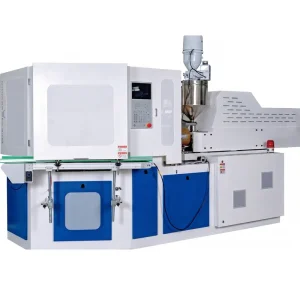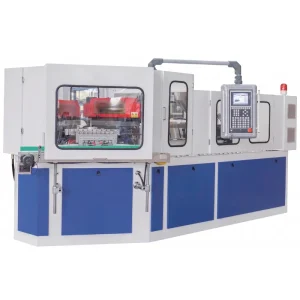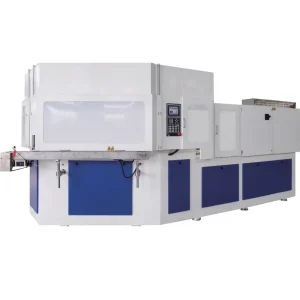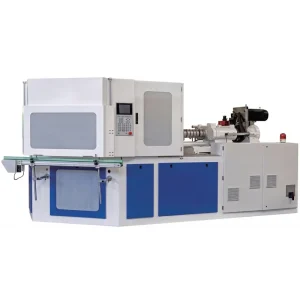
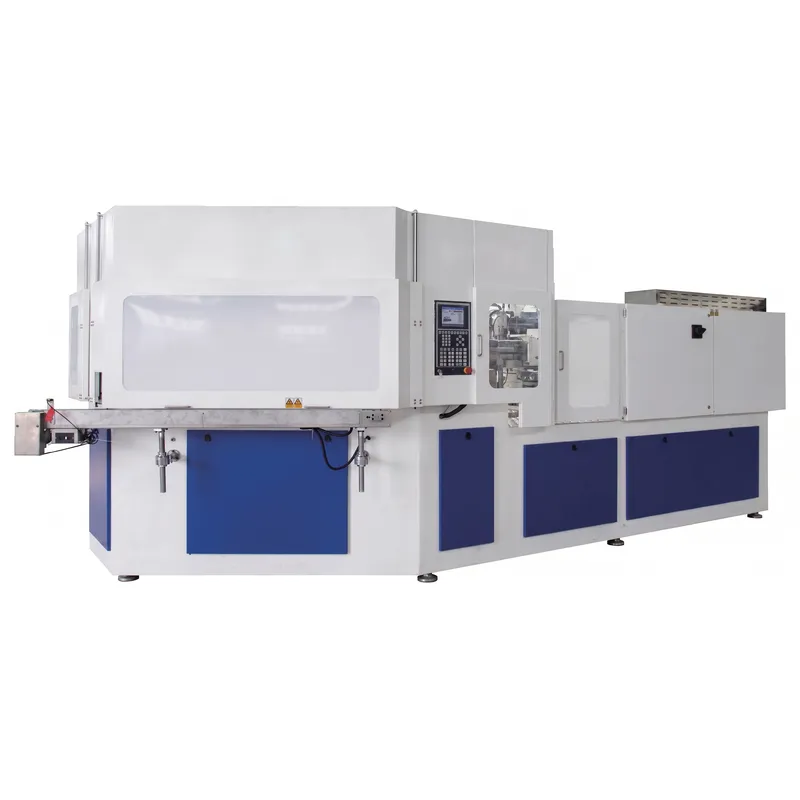
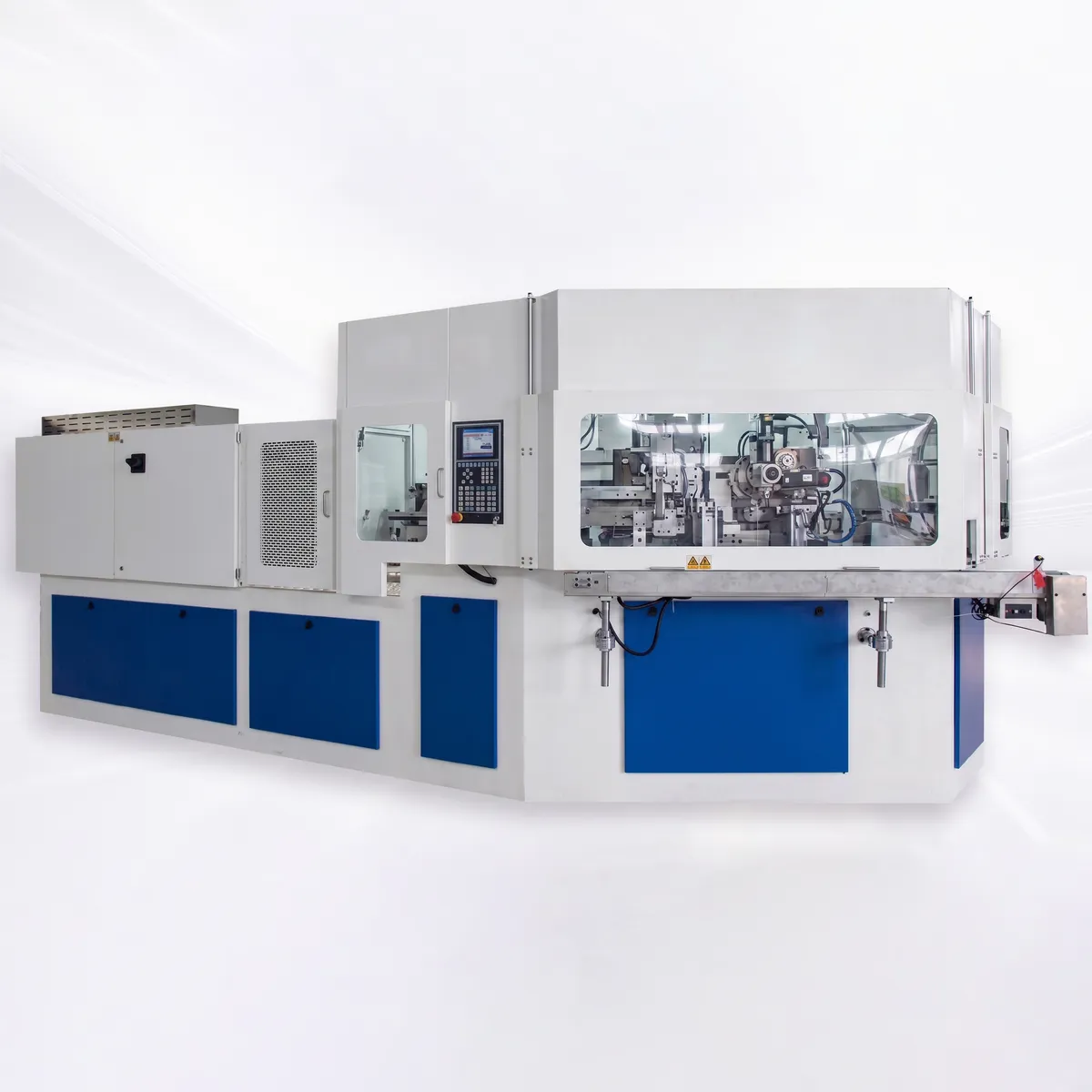
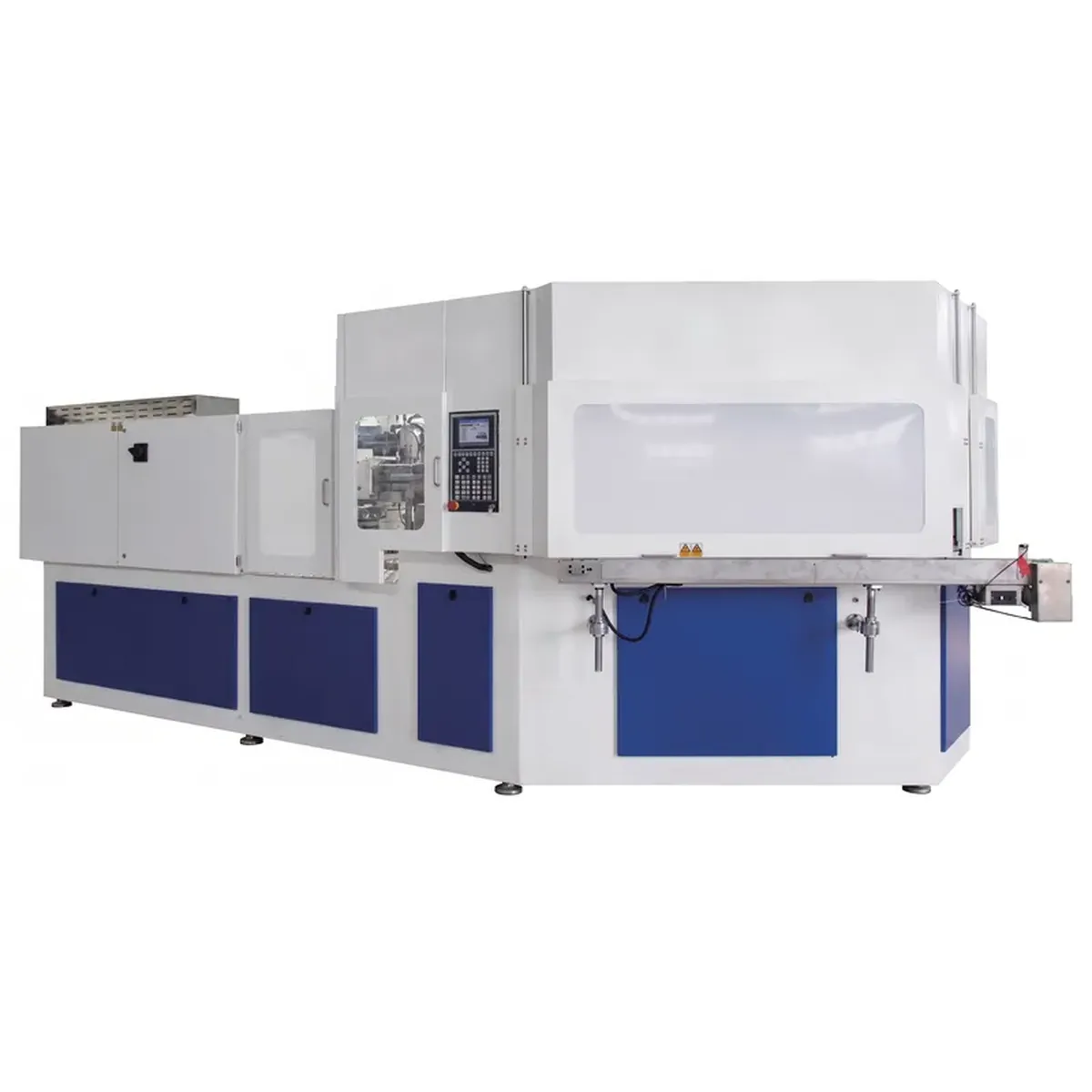
ZQ135 Injection Blow Molding Machine (European)
The ZQ135 is a fully servo-driven, all-electric injection blow molding machine built on a full European-style structure, eliminating hydraulic oil entirely to deliver a cleaner, greener, and more efficient production environment. Compared with conventional IBM machines, it achieves a 20% reduction in cycle time, processing 30 ml bottles in just 8.2 seconds per cycle and reaching a daily output of up to 115,000 bottles. Energy consumption is cut by 30%, with approximately 12 kWh per hour for 30 ml bottle runs. The integrated servo system uses absolute encoders, ensuring micron-level repeatability and precision across every production shift.
The ZQ135 is a fully servo-driven, all-electric injection blow molding machine built on a full European-style structure, eliminating hydraulic oil entirely to deliver a cleaner, greener, and more efficient production environment. Compared with conventional IBM machines, it achieves a 20% reduction in cycle time, processing 30 ml bottles in just 8.2 seconds per cycle and reaching a daily output of up to 115,000 bottles. Energy consumption is cut by 30%, with approximately 12 kWh per hour for 30 ml bottle runs. The integrated servo system uses absolute encoders, ensuring micron-level repeatability and precision across every production shift.
Engineered for pharmaceutical, cosmetic, food, and chemical packaging lines, this plastic injection blow molding machine features a proprietary bottom-up structural design that keeps mold areas free from lubricant contamination, satisfying the strictest hygiene standards. The adjustable clamping force ranging from 40 to 80 tons accommodates an exceptionally wide range of bottle specifications. An electric cylinder-driven injection unit delivers smooth, consistent melt flow for reduced maintenance and stable quality, making the ZQ135 one of the best injection blow molding machines available for high-volume, precision-demanding production. The downstream conveyor interfaces seamlessly with visual inspection systems, side-leak testers, labeling machines, and automatic packaging equipment to enable fully unattended, lights-out manufacturing.
Mold Cavitation (For Reference)
| Approx Volume | 10ml | 30ml | 60ml | 100ml | 250ml | 500ml | 1000ml |
| Max.cavitation | 30 | 26 | 22 | 18 | 14 | 10 | 8 |
Technical Specifications
| Item | Unit | ZQ135 |
| Injection System | ||
| Screw Diameter | mm | 70 |
| Screw L/D | % | 22:1 |
| Injection weight! | g | 650 |
| Heating power | KW | 30 |
| Number of barrel zone | 6+N | |
| Injection stroke | mm | 200 |
| Clamping System | ||
| Clamping force of injection | KN | 1350 |
| Opening stroke for injection | mm | 140 |
| C lamping force of blowing | KN | 200 |
| Opening stroke for blowing | mm | 140 |
| Lifing height of rotary ta ble | mm | 70 |
| Mould | ||
| Max.Platen size(LxW) | mm | 1300x500 |
| Mold thickness | mm | 280 |
| Dia.of bottle | mm | 120 |
| Botle height | mm | 220 |
| Suitable bottle height | mm | 1-2000 |
| Stripping stroke | mm | 280 |
| Hydraulic system | ||
| Hydraulic Pressure | Map | 14 |
| Motor power | KW | 37+37 |
| Dry cycle | S | 4 |
| Total Power | KW | 95 |
| Operating power | % | 52-70 |
| Others | ||
| Min.Air pressure ofcompressed air | MPa | 0.7- 1.2 |
| compressed air capacity | M³/min | 0.7 |
| Water flowage | M³/h | 4 |
| Cooling water pressure | MPa | 0.3- 0.4 |
| Dimension(Lx W x H ) | M | 5.5x2x2.4 |
| Net weight | Ton | 18 |
Replaceable Brand and Model
| Ever-Power | Clamping Force | Jomar | SUMA | Uniloy | Bloma |
| ZQ40 | 40T | IBM40 | 40iB | UIB70 | IBM45 |
| ZQ60 | 60T | IBM65 | 65iB | UIB90 | IBM50 |
| ZQ80 | 80T | IBM85S | 85iB | UIB120 | IBM85 |
| ZQ110 | 110T | IBM135 | 135iB | UIB150 | IBM135 |
| ZQ135 | 135T | IBM175 | 175iB | UIB180 |
IBM Machine Screw Diameter
| Ever-Power | Screw Diameter | Jomar | SUMA | Bloma |
| ZQ40 | 40/45 | 35/40 | 40 | 45 |
| ZQ60 | 45/50 | 45 | 40/50 | 50 |
| ZQ80 | 55 | 55 | 50/60 | 50 |
| ZQ110 | 65 | 65 | 65/76 | 70 |
| ZQ135 | 70 | 70 | 65/76 |
IBM Machine Injection Weight
| Ever-Power | Injection Weight | Jomar | SUMA | Bloma |
| ZQ40 | 190/260 | 180 | 169 | 180 |
| ZQ60 | 260/383 | 205 | 169/264 | 240 |
| ZQ80 | 466 | 300 | 333/480 | 310/280 |
| ZQ110 | 540 | 450/550 | 580/770 | 560 |
| ZQ135 | 650 | 450/550 | 580/770 |
IBM Machine Injection Clamping Force
| Ever-Power | Injection Clamping Force | Jomar | SUMA | Bloma |
| ZQ40 | 400KN | 340KN | 386KN | 350KN |
| ZQ60 | 600KN | 460KN | 580KN | 500KN |
| ZQ80 | 800KN | 680KN | 720KN | 700KN |
| ZQ110 | 1100KN | 1210KN | 1200KN | 1250KN |
| ZQ135 | 1350KN | 1560KN | 1600KN |
IBM Machine Mold Size
| Ever-Power | Mold Size | Jomar | SUMA | Bloma |
| ZQ40 | 480 × 340 | 394 × 508 | 470 × 350 | 450 × 390 |
| ZQ60 | 600 × 390 | 432 × 660 | 620 × 400 | 620 × 430 |
| ZQ80 | 800 × 400 | 464 × 749 | 700 × 400 | 620 × 430 |
| ZQ110 | 1100 × 460 | 559 × 1118 | 1000 × 500 | 900 × 480 |
| ZQ135 | 1300 × 500 | 635 × 1372 | 1200 × 600 |
IBM Machine Size
| Ever-Power | Mold Size (M) | Jomar | SUMA | Bloma |
| ZQ40 | 3.8 × 1.3 × 1.7 | 2.72 × 1.9 × 2.75 | 3.8 × 1.5 × 2.3 | 4.05 × 1.52 × 2.55 |
| ZQ60 | 3.8 × 1.4 × 1.8 | 2.92 × 1.98 × 3.41 | 4 × 1.7 × 2.3 | 620 × 430 × 2.55 |
| ZQ80 | 4.5 × 1.6 × 2 | 3.33 × 1.94 × 3.41 | 4.5 × 2 × 2.6 | 620 × 430 × 2.55 |
| ZQ110 | 5 × 1.8 × 2.2 | 3.79 × 2.4 × 3.41 | 5 × 2.4 × 2.7 | 900 × 480 × 2.55 |
| ZQ135 | 5.5 × 2 × 2.4 | 4.22 × 2.67 × 3.58 | 6 × 2.6 × 2.7 |
Note: Brands are mentioned only to help customers choose products, not to sell those brands' products.
ZQ135 Injection Blow Molding Machine Features
1. Full European-Style Structure with Superior Clamping Force
The ZQ135 adopts a complete European-style mechanical frame that delivers a clamping force 20% to 30% greater than comparable injection blow molding machines on the market. This reinforced structure minimizes flex and vibration, resulting in tighter dimensional tolerances, longer tooling life, and consistent bottle quality across high-volume production runs. The structural rigidity also supports high-cavitation molds without compromising precision, making it the preferred choice for manufacturers replacing aging systems or evaluating a new IBM machine.
2. High-Precision Angle Divider for Synchronized Turret Motion
A standard high-precision angle divider ensures perfect synchronization between the mold opening/closing action and the turret lifting movement. This coordinated motion eliminates timing discrepancies that can cause mold misalignment or preform deformation during transfer. The result is a smoother cycle, reduced mechanical wear, and improved repeatability, essential for a high-output one step injection blow molding machine running continuously around the clock.
3. Proprietary Pressurized Clamping Structure for 20-30% Energy Reduction
The booster cylinder in the ZQ135 is decoupled from the mold opening and closing sequence, participating only in the final clamping phase. This patented pressurized clamping design, combined with a standard hydraulic dual-circuit system, cuts overall energy consumption by 20% to 30% versus industry peers. For manufacturers benchmarking injection blow molding machine price against running cost, this energy saving translates into measurable ROI across a multi-year production lifecycle.
4. Full Servo Drive with Absolute Encoders for Micron Precision
Every operational movement in the ZQ135 is powered by a full servo drive system equipped with absolute encoders. Unlike relative encoders that require homing on startup, absolute encoders retain positional data at all times, enabling immediate restart after power interruption and delivering sub-millimeter repeatability across millions of cycles. This architecture classifies the ZQ135 as a true full electric injection blow molding machine, with no hydraulic oil required and significantly lower noise levels compared to conventional hydraulic IBM machines.
5. Bottom-Up Design for Pharmaceutical-Grade Hygiene Compliance
The ZQ135 features a bottom-up structural layout that physically separates lubrication circuits from the mold cavity area. This prevents any risk of oil contamination reaching the bottle or preform during production, a critical requirement for pharmaceutical packaging, food-contact containers, and high-grade cosmetic bottles. Manufacturers seeking a customized injection blow molding machine for sale specifically for GMP-regulated or FDA-compliant facilities will find this design standard, not optional.
6. Integrated Downstream Automation for Unattended Production
The ZQ135 conveyor output is engineered to connect directly with vision inspection systems (detecting foreign particles, underfill at the bottle mouth, and uneven base formation), side-leak pressure testers, labeling machines, and automatic case packers. This integration pathway allows the entire packaging line to operate without manual intervention, maximizing output per labor hour and ensuring consistent quality assurance. As a single stage injection stretch blow molding machine option, the ZQ135 reduces line complexity and floor space requirements substantially.
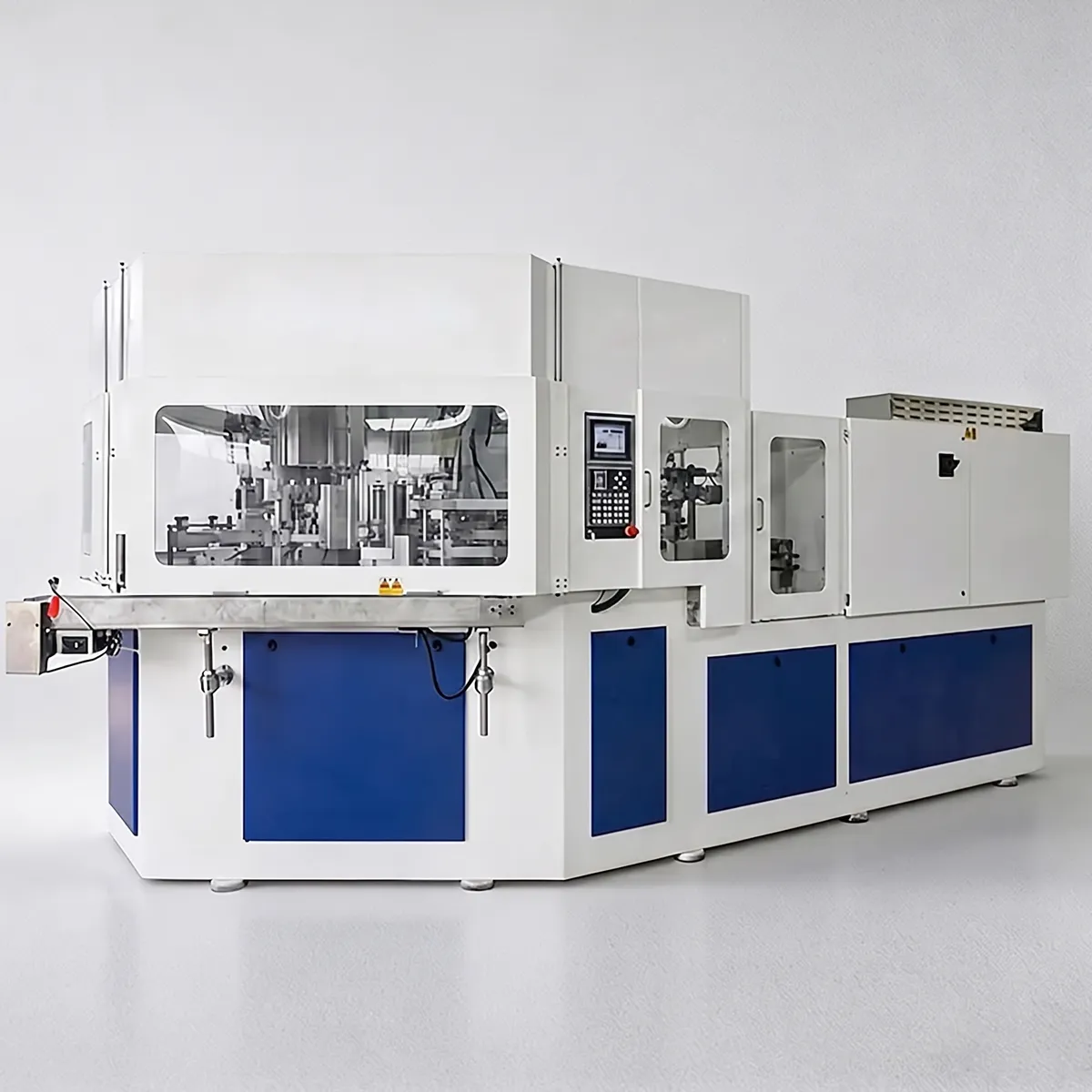
Working Principle
Station 1: Preform Injection
Molten plastic material is injected under precisely controlled pressure into the injection cavity, forming the preform body and accurately molding the bottle neck thread in a single operation. Neck geometry is critical for seal integrity, and the ZQ135 achieves consistent thread dimensions across every shot due to the high clamping force of 1,350 KN and the stable electric cylinder-driven injection unit. Once the preset dwell time completes and the melt solidifies, the mold opens and the mandrel carries the preform, still mounted on the core rod, and rotates it to the blow molding station. This station operates simultaneously with Stations 2 and 3, ensuring no idle time exists in the cycle of this blow injection molding machine.
Station 2: Blow Molding
At the blow station, compressed air is introduced through the mandrel, inflating the heated preform outward until it makes full contact with the cooled blow mold wall. The mold cavity shape defines the final bottle geometry, volume, shoulder profile, and bottom contour. With a blowing clamping force of 200 KN and an opening stroke of 140 mm, the ZQ135 handles a wide range from cosmetic vials to 1,000 ml containers. Cooling circuits within the mold rapidly extract heat, locking in the bottle shape. The mold then opens and the turret rotates the finished bottle to the stripping station. Bottle shape and number of cavities together determine total cycle throughput for this ISBM machine.
Station 3: Stripping
At the stripping station, completed bottles are automatically ejected from the cold core rods by the stripping mechanism and transferred onto the output conveyor for downstream processing. Because all three stations, injection, blowing, and stripping, operate simultaneously in a synchronized three-station cycle, the machine achieves extremely high efficiency with zero waste between cycles and zero scrap material generated (unlike extrusion blow molding processes that produce 20% to 40% flash). The stripping stroke is 280 mm, accommodating a wide range of bottle height specifications with no additional tooling adjustments. This concurrent three-station operation is the core reason the ZQ135 can achieve up to 115,000 bottles per day as an IBM injection blow molding machine.
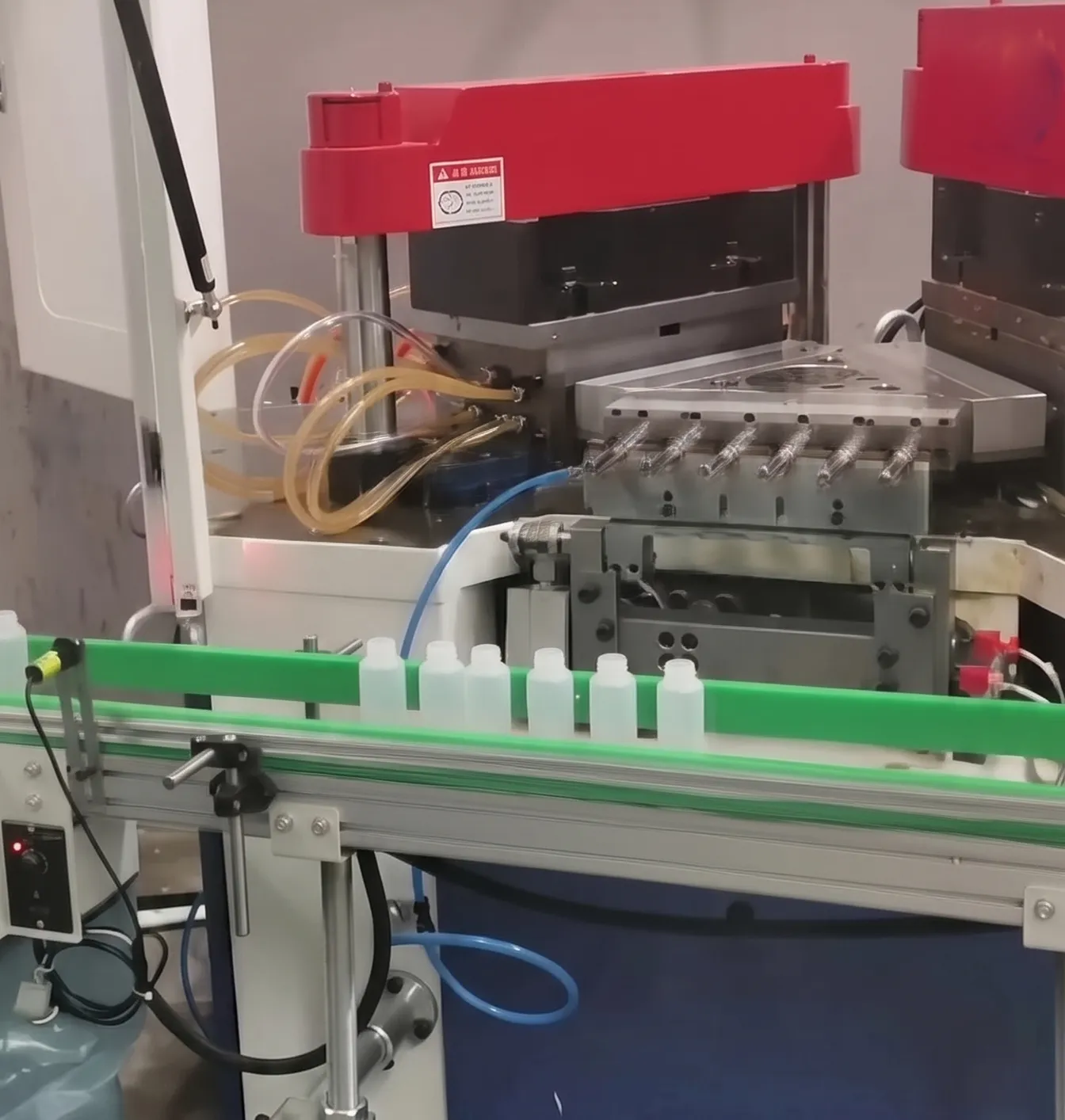
Application Industries
1. Cosmetic Bottles
Lotions, serums, toners, and fragrance packaging demand superior aesthetics and dimensional consistency. The ZQ135 delivers smooth external surfaces, precise shoulder curves, and burr-free mouths that meet high-end cosmetic brand specifications. With PS, ABS, and PCTG material compatibility, this machine produces optically clear or opaque cosmetic bottles from 10 ml up to 250 ml volumes with no scrap.
2. Pharmaceutical Bottles
Drug tablets, capsules, syrups, and liquid medications require containers that comply with USP and GMP standards. The ZQ135 bottom-up design keeps lubricating oil completely away from the mold area, meeting pharmaceutical hygiene requirements without additional cleanroom adaptation. HDPE and PP medical bottles produced on this all electric injection blow molding machine maintain 100% neck thread accuracy and sealed base integrity.
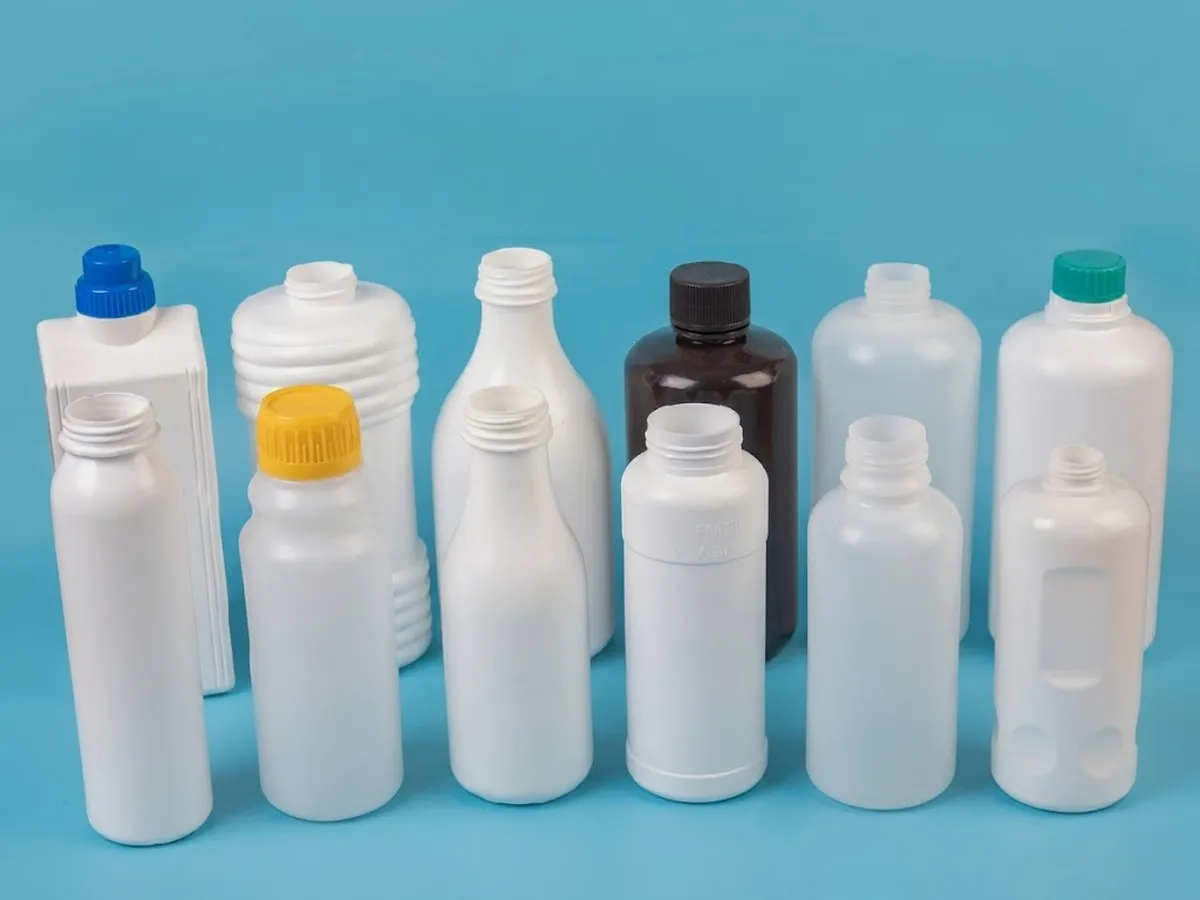
3. Chemical Bottles
From household cleaners to industrial solvents, the ZQ135 produces chemical-resistant HDPE and PP bottles with precise wall uniformity and tight thread tolerances. The zero-contamination mold area ensures product purity, and up to 18 cavities at 100 ml volume maximize throughput for high-demand chemical packaging lines.
4. Beverage Bottles
Juice, dairy drink, and flavored water brands require transparent, food-safe PS or PP containers with high clarity and consistent fill volume. The ZQ135 produces beverage bottles with uniform wall thickness (weight deviation within 1%) and pristine mouth sealing, supporting both short-shelf-life and extended-life packaging formats for global food safety standards.
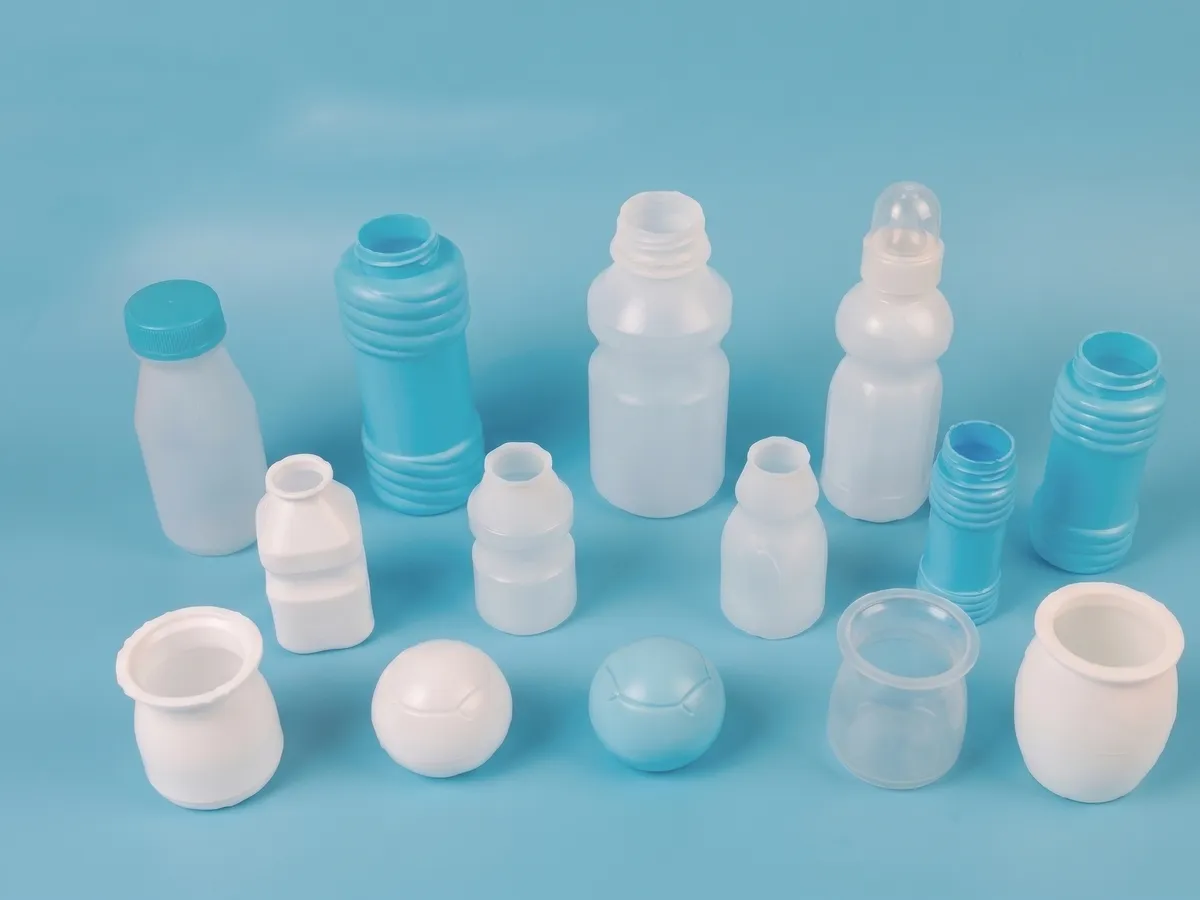
5. Feeding Bottles
Infant feeding bottles require BPA-free, food-safe materials with precise volume graduation and smooth inner surfaces that are easy to sterilize. The ZQ135 processes PP and PCTG resins at high cavitation counts to produce feeding bottles that meet international infant product safety standards. The oil-free mold zone ensures no chemical leaching risk during high-temperature sterilization cycles required for baby product regulations.
6. Eyedropper Bottles
Ophthalmic and ear-drop packaging requires extremely precise dropper neck dimensions and thin-wall bodies that compress uniformly under finger pressure. The ZQ135 achieves the tight tolerances required for dropper tip concentricity and bottle body wall uniformity in LDPE and PP materials. Up to 30 cavities at 10 ml volume make this one of the highest-productivity options for ophthalmic packaging manufacturers seeking the best injection blow molding machine for small-volume medical containers.
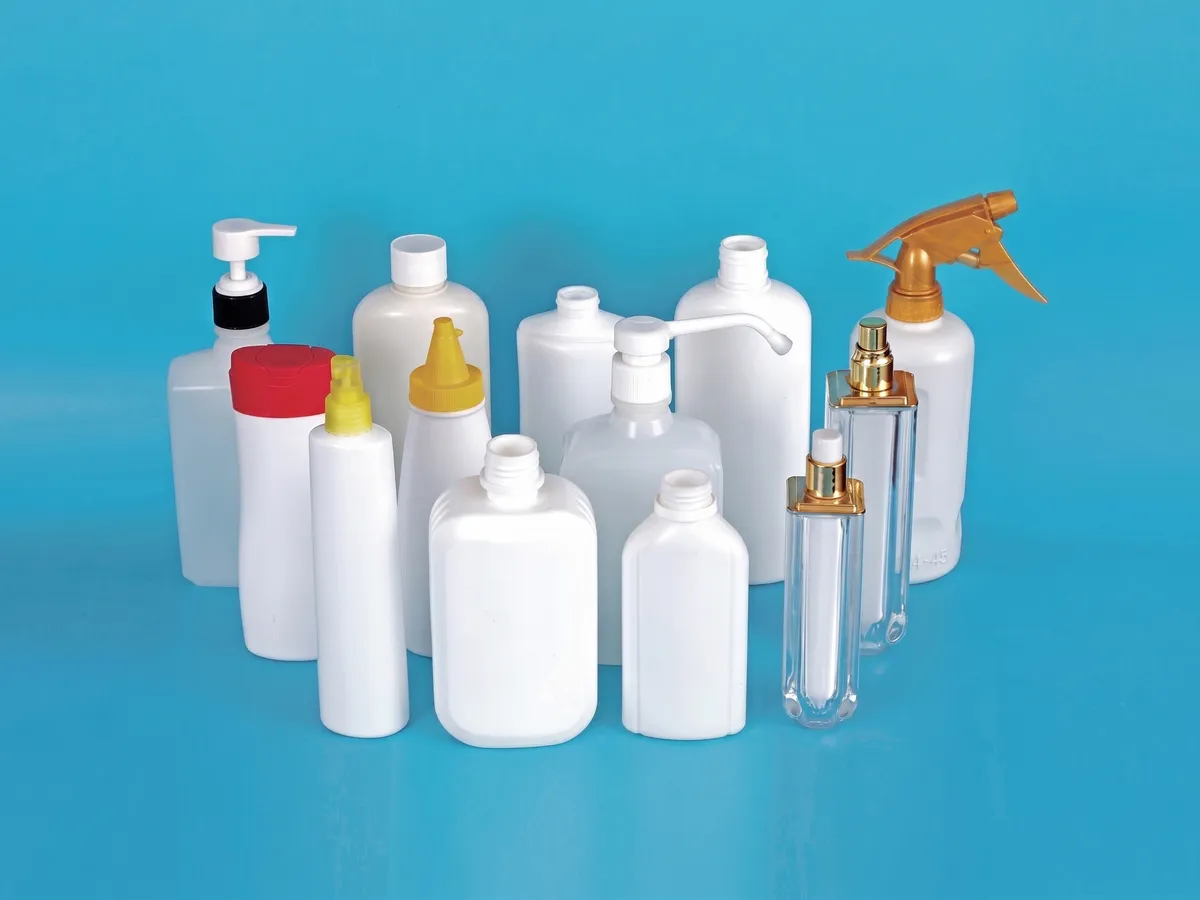
7. Body Wash Bottles
Shampoo, conditioner, shower gel, and hand soap containers in the 250 ml to 1,000 ml range are ideal applications for the ZQ135. The machine handles high-density molds of up to 8 to 10 cavities for large bottles, delivering consistent wall thickness that supports stable pump-dispensing and flip-cap closures. HDPE and PP material options provide both clarity and color flexibility for personal care brand differentiation in retail markets globally.
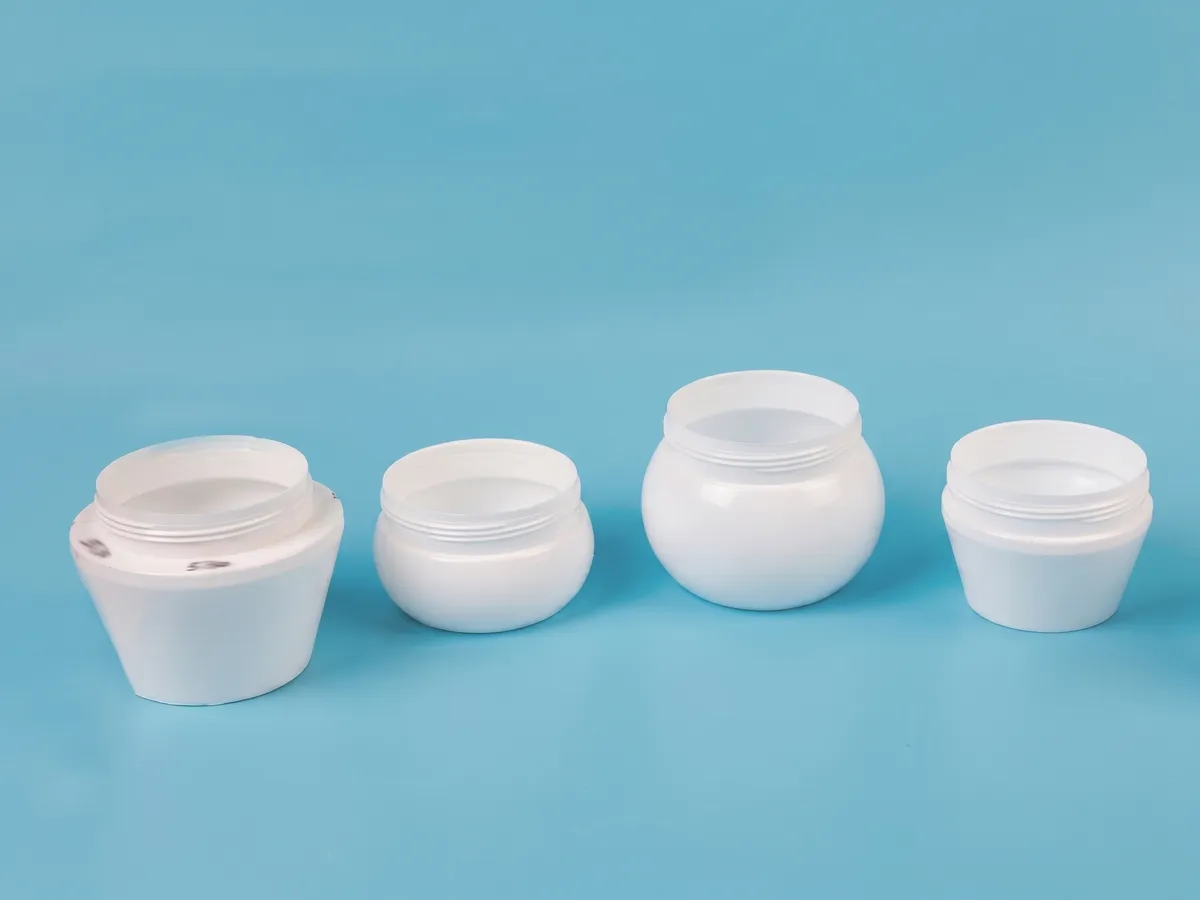
8. Wide Mouth Jars
Food storage jars, cosmetic cream containers, and supplement powder tubs with wide openings require flat, burr-free mouth surfaces for proper lid sealing. The ZQ135 produces wide mouth jars with a maximum bottle diameter of 120 mm, accommodating PP and HDPE in sizes from 60 ml to 500 ml. The precision thread molding ensures child-resistant and tamper-evident closures fit consistently across every jar in a production batch.
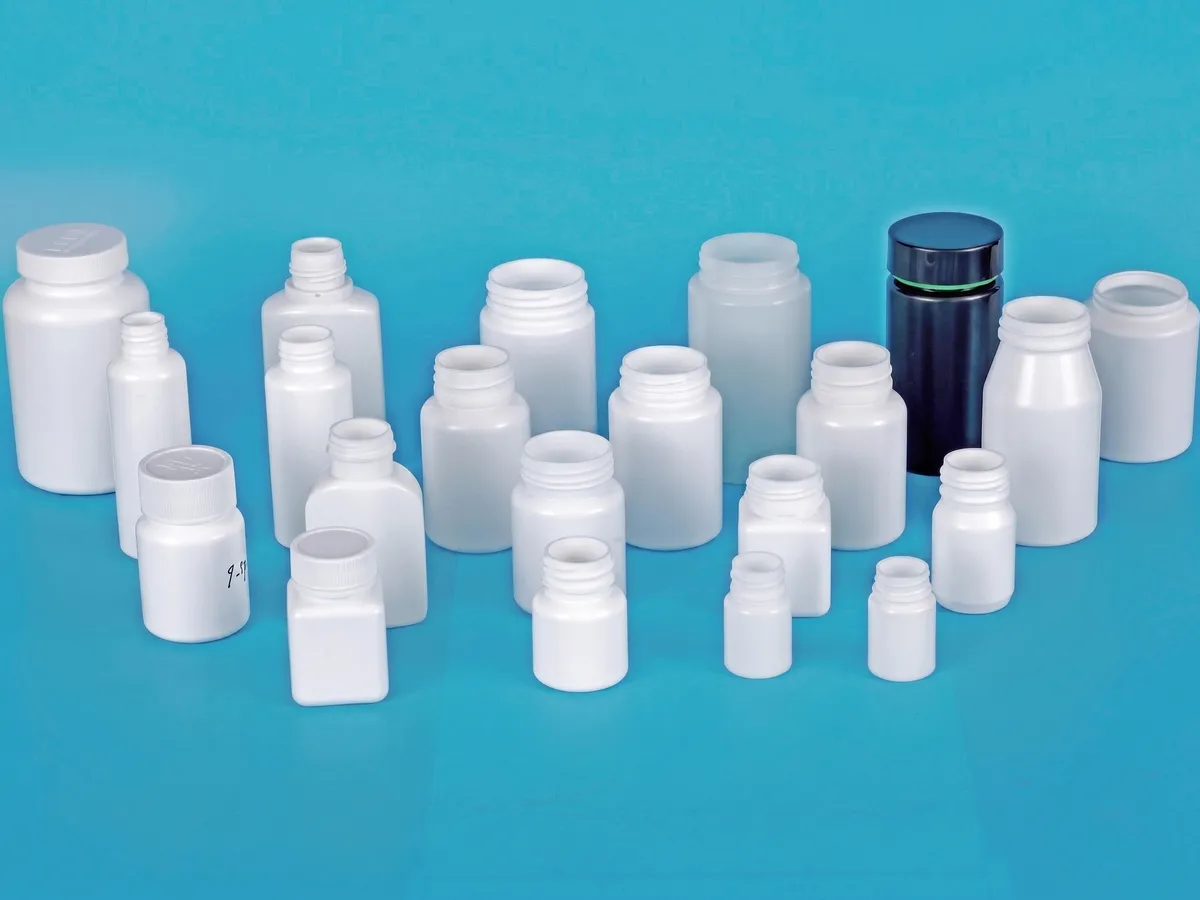 |
 |
 |
| Pharmaceutical Bottles | Cosmetic Bottles | Daily Chemical Bottles |
 |
 |
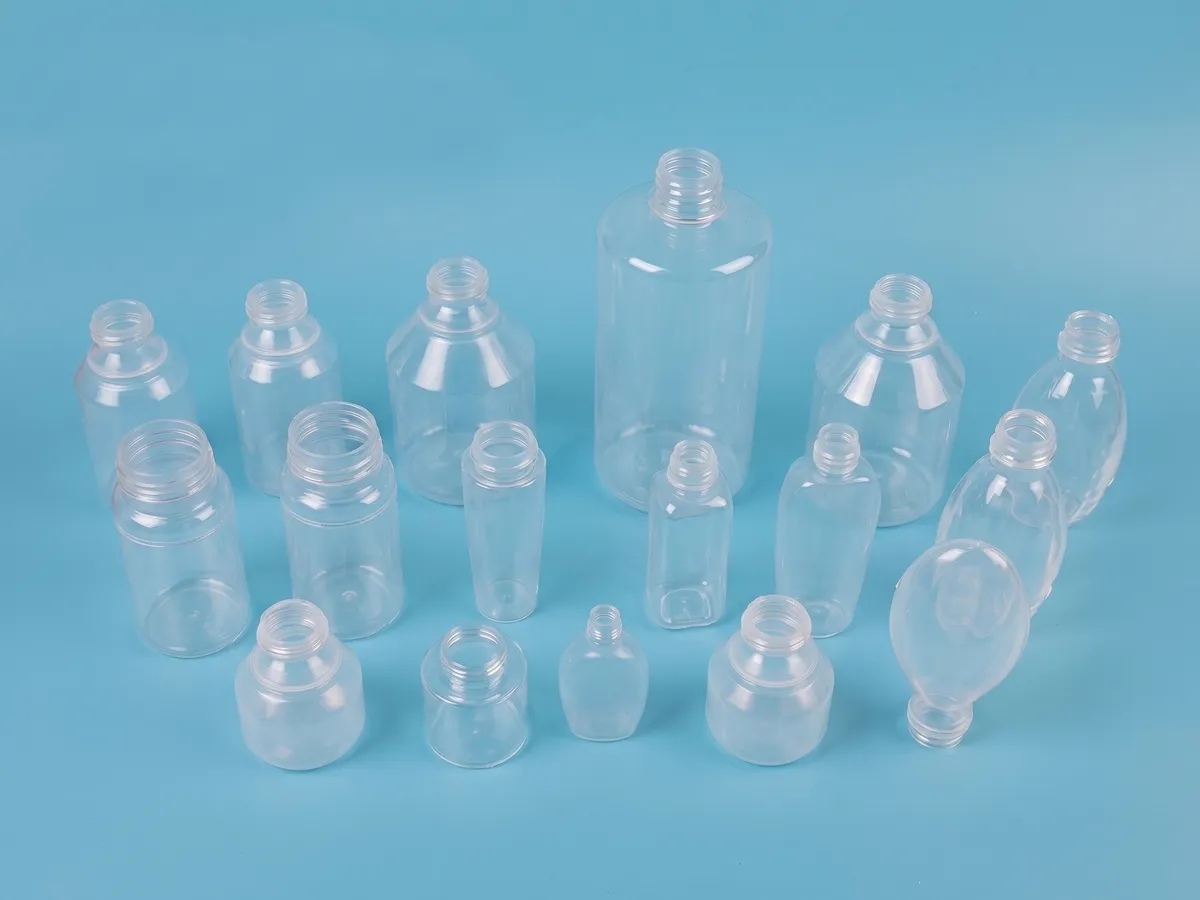 |
| Feeding Bottles | Food Bottles | PP Bottles |
Injection Blow Molding Machine Components
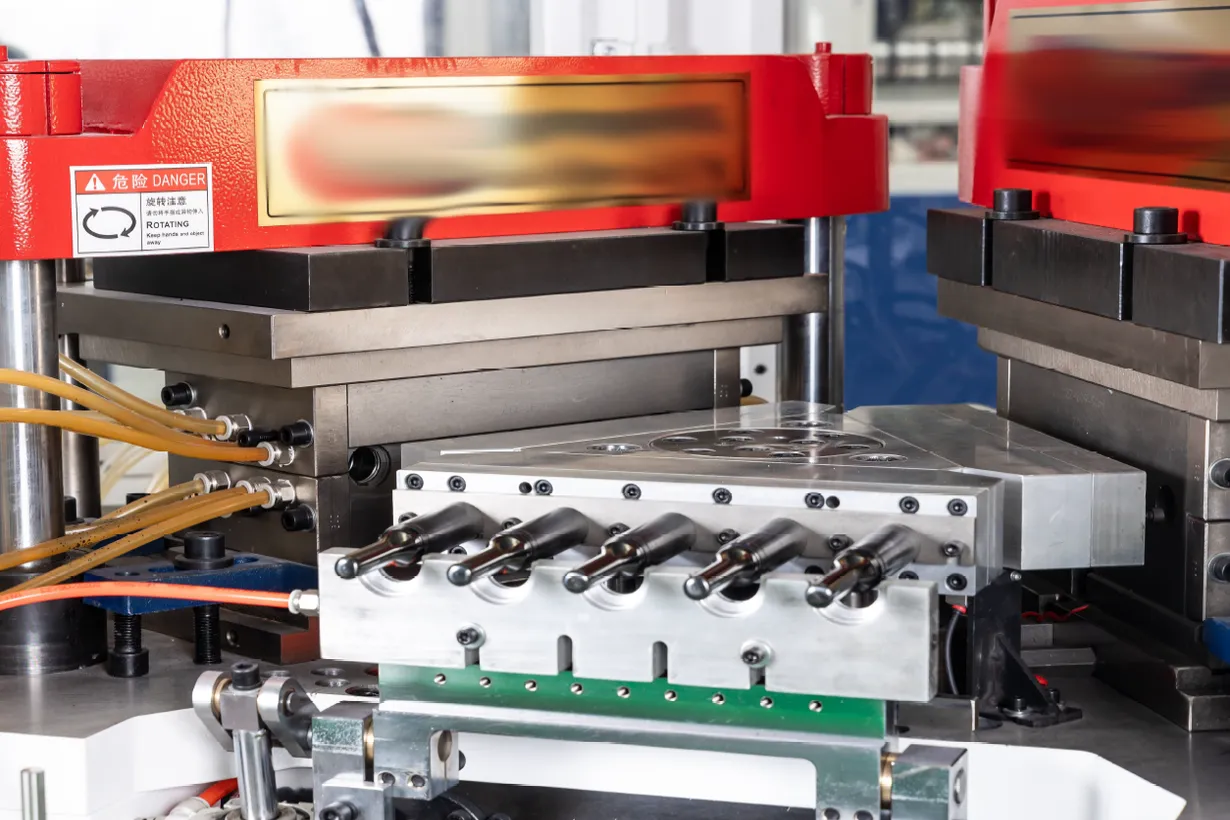
| 1 | Stock Preparation/injection Device | 2 | Hot Runner |
| 3 | Core Rod | 4 | Bottle Preform |
| 5 | Injection Mold | 6 | Injection Station |
| 7 | Blow Station | 8 | Blow Mold |
| 9 | Stripping Station |
1. Stock Preparation / Injection Device
The injection device houses a 70 mm diameter screw with a 22:1 L/D ratio, plasticizing resin through a 6+N zone heated barrel with 30 KW heating power. The electric cylinder drive controls injection at up to 650 g shot weight and 200 mm stroke, delivering consistent melt pressure and minimizing cycle-to-cycle variation. This component is the foundation for shot-weight accuracy across all cavity counts.
2. Hot Runner System
The optimized hot runner system maintains uniform melt temperature across all cavity gates, eliminating cold slug formation and ensuring balanced filling across high-cavitation molds. Temperature zones are independently controlled to compensate for thermal variation between cavities. This system is central to minimizing gram weight deviation and wall thickness inconsistency in multi-cavity production of injection blow moulding machine outputs.
3. Core Rod (Mandrel)
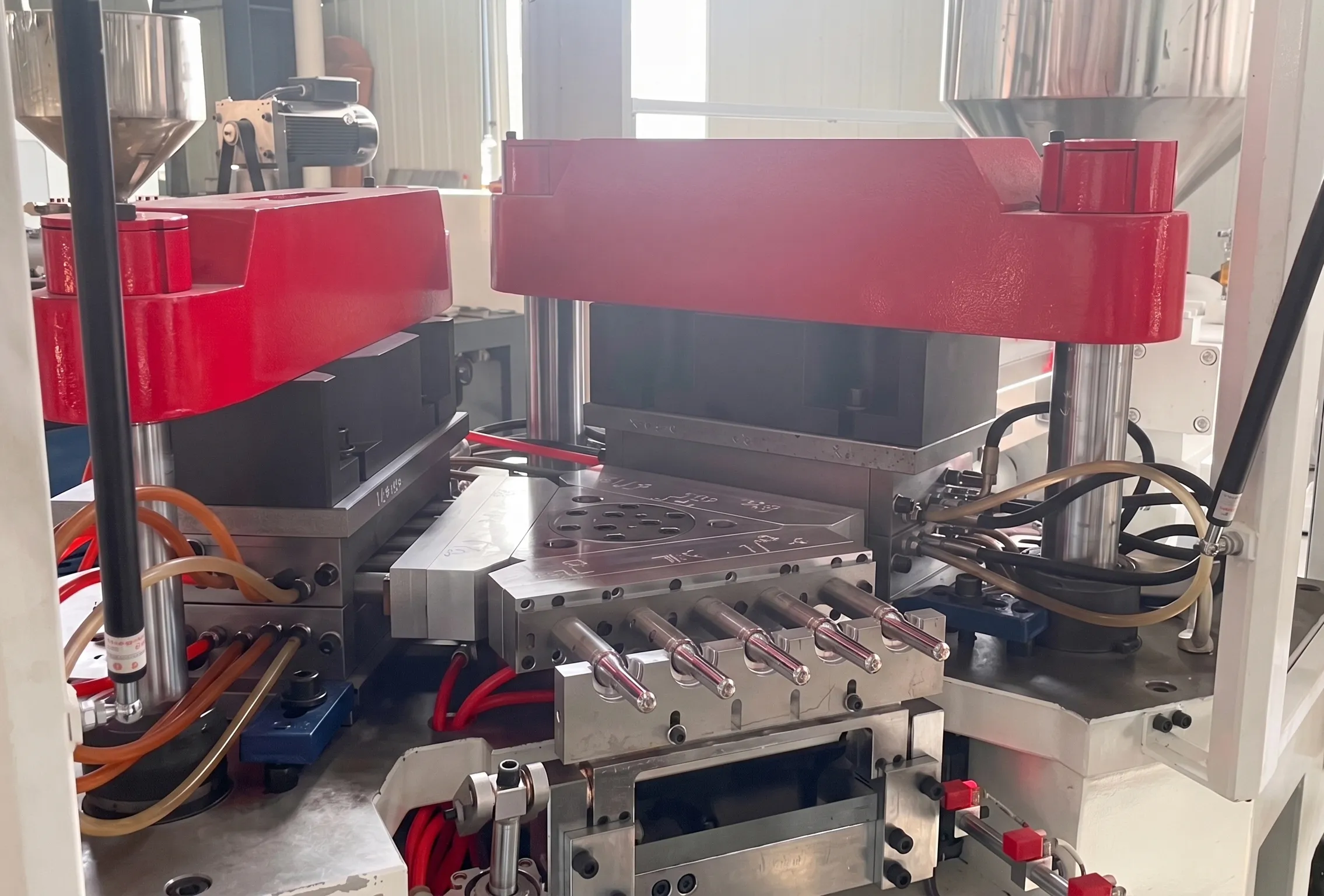
The core rod is the mechanical spine of the injection blow process, traveling with the preform from Station 1 through Stations 2 and 3. Engineered with internal cooling channels, the mandrel maintains precise temperature control to facilitate fast cycle times without compromising inner surface quality. Its special structure keeps the molding cycle short and the core cooling effect optimal, directly contributing to the 8.2-second cycle for 30 ml bottles.
4. Bottle Preform
The preform is the intermediate form created at the injection station, carrying the fully formed bottle neck and thread while the body remains in a thicker, unexpanded state. Because the ZQ135 conditions the preform in a single-stage process without reheating, the preform retains residual heat from injection, which is precisely managed to ensure optimal blow orientation and uniform wall expansion at the blow station. This eliminates the energy cost and quality risks of two-stage reheat processes.
5. Injection Mold
Manufactured from imported S136 stainless steel alloy or 4Cr13 stainless steel, the injection mold features activity-designed cavities with an independently controlled oil circuit for precise temperature uniformity across all cavitation positions. The platen accommodates mold sizes up to 1,300 x 500 mm, and the 1,350 KN injection clamping force ensures zero flash at parting lines even during high-speed, high-pressure injection cycles for demanding resins.
6. Injection Station
Station 1 of the three-position turret, the injection station is where plastic melt is introduced and the preform is formed. The angle divider synchronizes mold open/close with turret lifting at this station, ensuring clean transfer without mechanical collision or preform distortion. The opening stroke of 140 mm provides sufficient clearance for a wide range of mold heights and bottle neck configurations on this IBM injection blow molding machine.
7. Blow Station
Station 2 receives the heated preform and introduces compressed air at 0.7 to 1.2 MPa through the mandrel to expand the preform against the blow mold surface. The 200 KN blowing clamping force and 140 mm opening stroke are sized to accommodate bottles up to 120 mm in diameter and 220 mm in height. Cooling channels within the blow mold rapidly solidify the expanded bottle shape before the mold opens for rotation to the stripping station.
8. Blow Mold
The blow mold defines the finished bottle exterior geometry. Fabricated from high-grade steel with precision-machined cavity surfaces, it incorporates deep-drilled cooling circuits that surround the cavity for rapid and uniform heat extraction. Cavity surfaces are polished to the level required by the application, mirror finish for transparent cosmetic containers, or textured for grip-enhanced personal care bottles. Mold life is significantly longer than extrusion blow equivalents due to the lower cavity pressures involved in the injection blow process.
9. Stripping Station
Station 3 is the final stop in the turret cycle, where a 280 mm stripping stroke mechanism pushes the finished and cooled bottles off the core rods and delivers them onto the output conveyor. Because the core rods are cold at this position, bottles release cleanly without deformation. The simultaneous operation of all three stations means stripping adds no time to the overall cycle, contributing to the outstanding daily output figures of this machine as a leading injection blow molding machine manufacturer.
Injection Blowing vs. Extrusion Blowing
| Injection Blowing | Extrusion Blowing |
|
The weight of the bottle changes by about 1% |
The weight of the bottle changes by about 3% |
|
Uniform wall thickness |
The wall thickness varies by 10-20% |
|
No blank opening |
It has a cut-off mouth and reduces the strength of the bottle bottom |
|
The bottom of the bottle is very convex |
Bad convexity at the bottom of the bottle |
|
The production process does not produce waste |
20-40% scraps |
|
Products with very thin wall thickness cannot be formed |
The wall thickness can be adjusted using the controller |
|
Production is not sensitive to changes in the environment |
More adjustments are needed to maintain normality |
|
Large number of cavities, high yield, flat mouth |
less cavities, low output, uneven bottle neck |
|
Mold life is long, suitable for long-term production price |
Mold life is short, suitable for short-term production price is low |
|
Compact system, small footprint |
More auxiliaries, more land |
|
More difficult to shape oval products |
Easier to form |
Compatible Raw Materials
The ZQ135 pet injection blow molding machine platform processes a wide range of engineering and commodity resins
HDPE (High-Density Polyethylene)
HDPE is the most widely used resin for pharmaceutical, chemical, and food packaging on this machine. It offers excellent chemical resistance, rigidity, and moisture barrier properties. FDA-compliant HDPE grades are processable at standard barrel temperatures, and HDPE bottles produced on the ZQ135 meet UN specifications for hazardous material packaging with reliable wall uniformity.
LDPE (Low-Density Polyethylene)
LDPE is the preferred material for squeezable containers such as eyedropper bottles, nasal spray vials, and condiment dispensers. Its low modulus allows elastic deformation under finger pressure for controlled dispensing. The ZQ135 processes LDPE at tightly controlled melt temperatures to prevent sagging or uneven preform formation, producing squeezable containers with precise dispensing apertures.
PP (Polypropylene)
PP combines heat resistance up to 121 degrees Celsius with excellent chemical inertness, making it ideal for autoclave-sterilizable pharmaceutical bottles, baby feeding bottles, and hot-fill beverage containers. The ZQ135 processes PP with stable melt flow across all cavitation levels, and PP bottles produced show excellent hinge flexibility for snap-cap closures used in personal care applications.
PS (Polystyrene) and High-Transparency PS
General-purpose PS and high-clarity PS (including lactic acid bacteria packaging grades) are used for transparent cosmetic vials, dairy product cups, and supplement containers where glass-like clarity is required at plastic cost. The ZQ135 achieves excellent optical properties with PS resins, producing bottles with low haze values and bright surface gloss that enhance retail shelf presence in premium packaging applications.
ABS (Acrylonitrile Butadiene Styrene)
ABS is selected for applications requiring superior impact resistance, rigidity, and surface quality for post-mold decoration. Cosmetic packaging brands that require electroplating, UV printing, or hot stamping on bottle surfaces often specify ABS for its surface energy and adhesion compatibility. The ZQ135 processes ABS at precise melt and mold temperatures to deliver a Class A surface finish without sink marks or flow lines.
EVA (Ethylene-Vinyl Acetate)
EVA resins produce containers with rubber-like flexibility and excellent low-temperature impact properties, making them suitable for specialty personal care packaging and medical device components that must remain pliable in cold environments. The ZQ135 handles EVA processing within the supported melt temperature range, delivering flexible bottles with consistent wall thickness and smooth surfaces without tackiness or sticking on the core rod.
PCTG (Polycyclohexylenedimethylene Terephthalate Glycol)
PCTG combines the crystal clarity of glass with the toughness and chemical resistance needed for premium cosmetic and baby product packaging. It is commonly used for high-end perfume bottles, skincare containers, and infant feeding bottles marketed as BPA-free alternatives. The ZQ135 processes PCTG to produce containers with exceptional optical clarity, high gloss, and the dimensional stability required for precision-fit cap systems.
Environmental Corn (PLA-Based) Materials
As sustainability mandates grow globally, brands are specifying compostable or bio-based packaging resins derived from corn starch. The ZQ135 supports processing of compatible bio-plastic grades, enabling packaging manufacturers to produce eco-friendly containers for food, cosmetic, and personal care segments without changing machine platforms. This positions the ZQ135 as a future-compatible injection blow molding machine for green packaging transitions.
 |
 |
ZQ Series Automaticl Mould Characteristics
1. Activity-Designed Cavity and Neck Structure
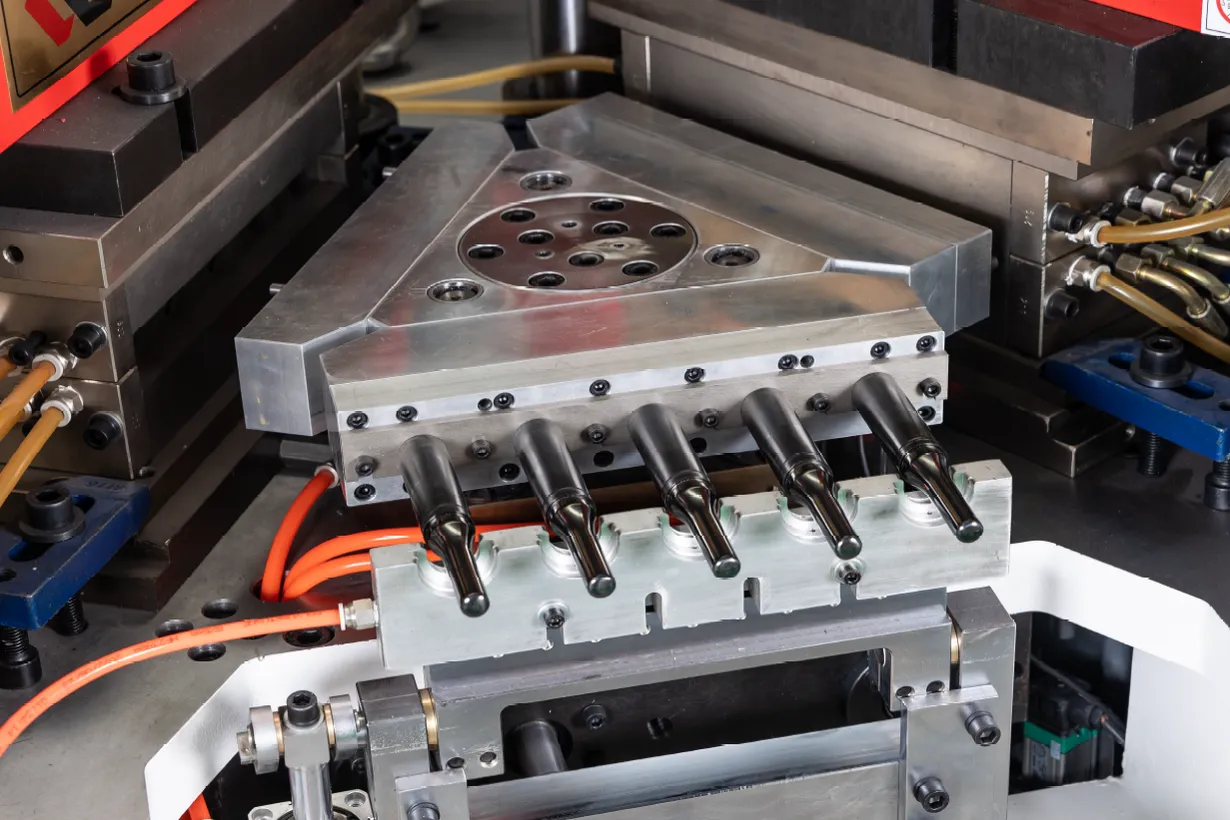
The injection mold features an activity-designed cavity and neck insert system with a specially engineered independent oil circuit for temperature control. This allows individual cavity temperature to be adjusted without affecting neighboring cavities, ensuring uniform preform wall thickness and neck geometry. The modular insert design means that when a single cavity wears, only that insert needs replacement rather than the entire mold block, dramatically reducing maintenance cost and production downtime.
2. Premium Steel Alloy for Extended Service Life
Injection mold components are manufactured from imported S136 stainless steel alloy or 4Cr13 stainless steel, both of which offer high hardness, excellent polishability, and strong corrosion resistance. These materials maintain dimensional stability over millions of injection cycles and are resistant to the minor corrosive effects of plasticizer outgassing from PVC-adjacent resins. The result is a mold that consistently delivers tight dimensional tolerances well beyond the service life of conventional steel tooling found on competing injection blow molding machines.
3. Optimized Hot Runner and Mandrel Cooling
The hot runner system is flow-balanced and temperature-zoned to ensure each cavity receives the same melt volume, temperature, and pressure simultaneously. Combined with the specially structured mandrel that maximizes internal cooling efficiency, gram weight deviation per cavity is minimized to within tight tolerances. This optimization of both the feeding side and the core cooling side enables the ZQ135 to sustain fast cycle times without sacrificing wall thickness uniformity or surface quality across all cavity positions.
4. 100% Sealed Mouth and Thread Accuracy
Because the bottle neck is formed by injection molding rather than by extrusion parison pinch-off, every thread turn and every sealing surface on the bottle mouth is molded to the exact cavity dimension with zero distortion. Thread pitch, outer diameter, and sealing bead geometry are consistent to within machining tolerances, ensuring that caps, pumps, and dispensing closures seat and seal correctly on the first application without additional torque or deformation, meeting 100% sealing requirements for pharmaceutical and food applications.
5. Zero Burrs and No Waste at Mouth or Base
The injection blow process produces no flash, no pinch-off line, and no trim waste at either the bottle mouth or the base. The mouth area is formed by closed cavity faces that meet at precise parting lines, while the bottle base is formed by the mandrel tip in a sealed cavity, producing a convex base without any pinch mark or seam. This clean finish eliminates the deburring or trimming operations required in extrusion blow production, reducing labor and secondary process costs.
6. Consistent Size, Weight, and Wall Thickness
All bottles produced by the ZQ Series mold system are consistent in outer dimensions, shot weight, parting line location, and wall thickness distribution across every cavity in the mold and across every cycle in the production run. This batch-to-batch consistency is essential for automated filling, capping, labeling, and inspection systems that rely on stable bottle dimensions to operate without adjustment. Statistical process control sampling intervals can be extended, lowering QC overhead for high-volume production facilities.
Common Troubleshooting
1. Uneven Wall Thickness in Finished Bottles
Uneven wall thickness typically results from non-uniform preform temperature at the blow station, mandrel misalignment, or imbalanced hot runner flow between cavities. Check the hot runner temperature zone settings for each cavity against specification. Inspect the mandrel for straightness and secure mounting torque. Verify that mold cooling water flow rates are balanced across all circuits using a flow meter. Adjust injection hold pressure to equalize shot weight across cavities. In most cases, a systematic check of these four parameters resolves wall thickness variation within one production shift.
2. Bottle Neck Flash or Thread Burrs
Flash at the bottle neck is caused by insufficient injection clamping force relative to the injection pressure, worn parting surface on the neck insert, or excessive injection fill speed. Verify that the injection clamping force setting is within the range appropriate for the mold. Inspect the neck insert parting face for wear or damage under 10x magnification. Reduce injection fill speed by 10% increments and observe whether flash diminishes. If the neck insert shows measurable wear beyond specification, it should be replaced immediately to prevent bottle neck rejection rates from increasing further in production.
3. Bottle Surface Whitening or Stress Marks
Surface whitening or stress-whitening on the bottle body indicates over-stretching of the preform at the blow station, typically caused by blowing too early (preform too hot), blowing at too high a pressure, or a mismatch between preform wall thickness and target bottle volume. Check that the preform conditioning dwell time in Station 1 has not been shortened. Reduce blow air pressure in 0.05 MPa increments and observe results. Verify preform wall thickness is within the specification for the target bottle volume. Preform design modifications with the mold supplier may be needed for persistent cases.
4. Bottle Not Releasing from Core Rod at Stripping Station
If bottles fail to strip cleanly from the core rod, the most common causes are insufficient cooling time at the blow station (bottle too hot and still soft), core rod temperature above specification (poor cooling circuit flow), or a core rod surface condition issue (worn release coating or minor surface damage). First, check cooling water flow rate and temperature at the core rod cooling circuit inlet and outlet. Extend the blow station cooling dwell by 0.2 seconds and re-evaluate. Inspect the core rod surface for scratching or coating loss and schedule re-coating or replacement if needed.
5. Shot Weight Variation Between Cavities
When individual cavities produce bottles of different shot weights, the issue is almost always rooted in hot runner temperature imbalance or physical flow restriction within the runner manifold. Use an infrared thermometer or thermocouple to verify actual hot runner zone temperatures match setpoints. Inspect gate tips for any signs of carbon buildup or partial blockage, which should be cleaned with appropriate tools during a scheduled maintenance stop. Re-run a balanced fill analysis by comparing individual cavity bottle weights across at least 20 consecutive cycles and adjusting zone temperatures to equalize the results.
6. Servo Position Error or Turret Sync Failure
A servo position error or turret synchronization alarm typically indicates either an encoder feedback issue, an overload on the servo axis, or a mechanical obstruction in the turret travel path. Power down the machine safely before inspecting the turret travel area for any fallen bottle fragments or tooling debris. Check the servo drive diagnostic display for specific axis fault codes. Inspect the absolute encoder cable connections for any looseness or damage at both the motor and controller ends. If the fault reoccurs after clearing, contact Ever-Power technical support with the fault code for axis-specific diagnostic guidance.
IBM Machine Maintenance Tips
Daily Pre-Shift Checks
Before each production shift, verify that cooling water inlet temperature is within the specification range of 8 to 15 degrees Celsius and that flow rates at the mold and core rod circuits are confirmed. Check compressed air supply pressure is stable between 0.7 and 1.2 MPa. Inspect the output conveyor belt for any damaged or displaced guide rails that could jam bottles. Confirm servo system status on the HMI dashboard shows no active fault codes from the previous shift. These daily checks prevent the most common production interruptions.
Weekly Lubrication and Inspection
Apply grease to the turret rotation bearing, guide rails, and toggle mechanism at the weekly maintenance interval using the lubrication grade specified in the ZQ135 maintenance manual. Inspect all servo drive belt tensions and adjust as needed per the manufacturer specification. Check all electrical cable connections within the control cabinet for signs of heat discoloration or loosening caused by vibration. Clean barrel air vents and heat sink surfaces on servo drives to prevent thermal buildup that shortens component life.
Monthly Screw and Barrel Inspection
Once per month, conduct a screw and barrel wear assessment by measuring shot weight consistency across a 50-cycle run and comparing variance against baseline specification. Screw flight tip clearance should be measured and compared against the acceptable wear threshold. Check barrel thermocouples for calibration accuracy using a reference probe. Clean the screw and barrel following the purging procedure in the maintenance manual if color change or material changeover leaves any residual contamination that could affect next-production quality.
Mold Care and Storage Protocol
After each mold removal, clean all cavity surfaces with a non-abrasive solvent approved for the mold steel grade. Apply a thin coat of anti-rust mold release oil to all polished cavity surfaces, gate inserts, and parting faces before placing the mold in storage. Store molds on dedicated racks in a low-humidity environment. Label each mold storage position clearly with the last production date, bottle SKU, cavity count, and resin processed so that next setup can be planned with accurate mold history for quality traceability.
Cooling System Maintenance
Inspect and clean water strainer filters at the main cooling water inlet on a monthly basis to prevent flow restriction from scale or debris buildup. Test cooling water conductivity and pH quarterly, treating with appropriate inhibitors to prevent scale formation inside mold water circuits. Annual descaling of all water channels using an approved chemical flush procedure is recommended to restore original flow rates. Adequate cooling circuit performance is essential for maintaining the 8.2-second cycle time specification on 30 ml bottle production.
Annual Servo Drive and Encoder Calibration
Schedule a full servo axis calibration and absolute encoder position verification annually, or following any major mechanical repair or collision event. Verify all servo axis home positions against machine reference marks. Test emergency stop response time and safety circuit function per the safety standard applicable to your jurisdiction. Replace any servo drive capacitors approaching end-of-life as indicated by drive diagnostic logs. Annual calibration protects the long-term positional accuracy and synchronization performance of the full electric injection blow molding machine.
Why Choose Ever-Power's Injection Blow Molding Machines?
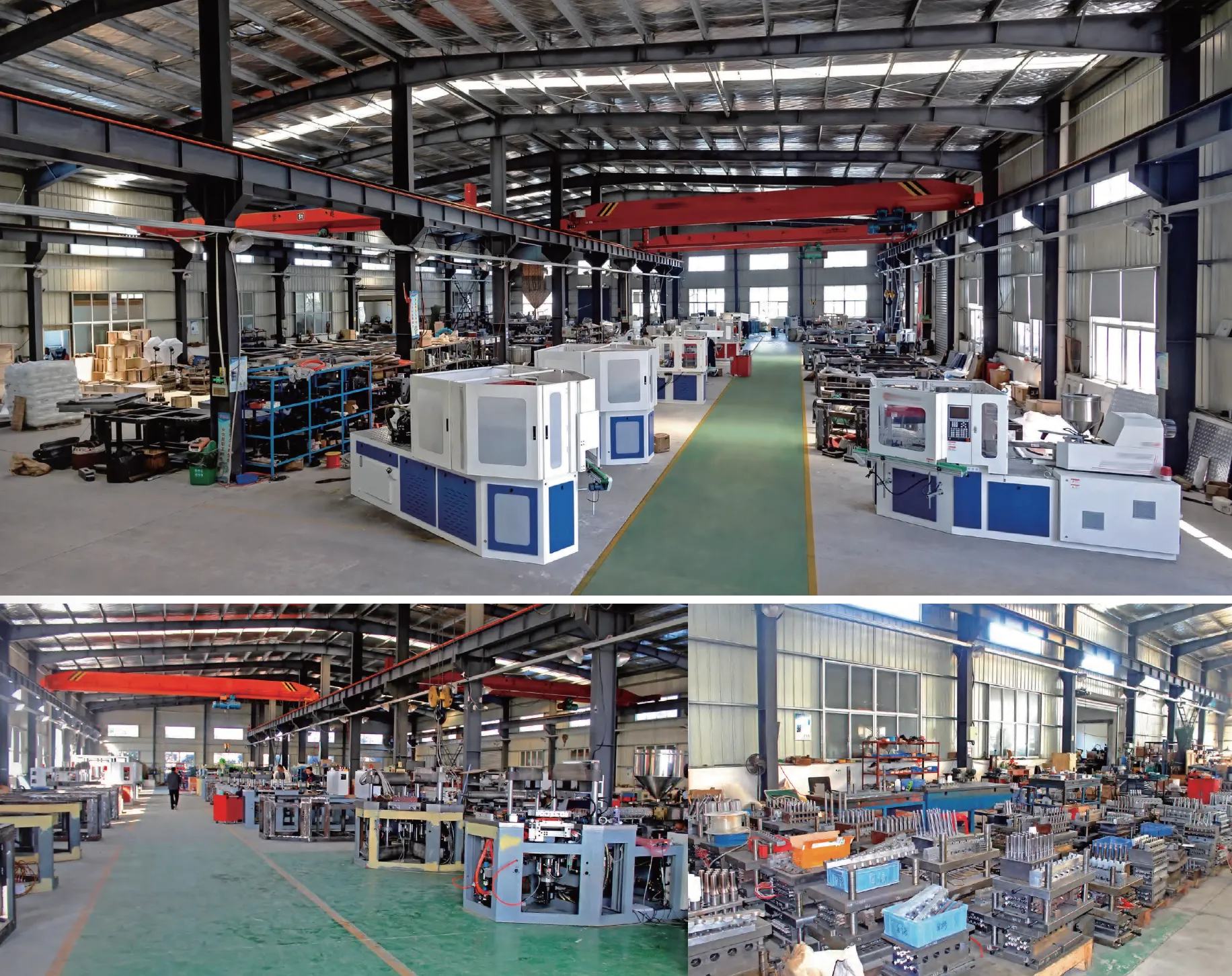
Mexico Ever-Power ISBM Machinery Co., Ltd. is a dedicated specialist in the research, development, manufacturing, and global distribution of automatic one-step injection blow molding machines and their associated injection-blowing molds. Our product portfolio covers injection blow molding machines, extrusion blow molding machines, injection stretch blow molding machines, and a full range of auxiliary equipment. Strategically located with excellent logistics connectivity, we serve customers across more than 20 countries through a network of regional distributors and direct export channels.
Our R&D team brings together engineers and technical specialists with deep expertise in injection-blowing machinery and mold engineering. With decades of combined practical experience, our team provides genuinely consultative pre-sale support, precise technical guidance during machine commissioning, and responsive after-sales service that keeps your lines running. We are not a trading company: every machine is designed, built, and tested by our own engineers, which means when you have a question, you speak to the people who built the equipment.
Ever-Power machines serve pharmaceutical packaging, food and beverage packaging, healthcare packaging, cosmetic packaging, and chemical packaging industries. Our platforms process HDPE, LDPE, PP, PS, high-transparency PS, ABS, EVA, PCTG, and environmental corn materials for products ranging from 1 ml to 1,000 ml. We adhere to our founding principles of self-reliance, integrity, pragmatism, innovation, and responsibility, delivering turnkey injection-blowing projects that give our customers a complete, validated production system ready for first-day output.
- Global Distribution Network: Agents in Korea, India, Turkey, Russia, South Africa, Brazil, the US, and Mexico with local installation and service capability.
- Full Turnkey Project Support: From bottle design and mold engineering to machine installation, training, and line integration, we manage the complete project.
- Industry-Leading Specifications: ZQ Series machines deliver 20% to 30% higher clamping force, 30% lower energy consumption, and up to 115,000 bottles per day.
- Expert R&D and Application Engineering: Our engineering team continuously advances IBM machine technology, supporting new resin types and application sectors for long-term competitiveness.
Frequently Asked Questions
Q1: What is the difference between the ZQ135 and a single stage injection stretch blow molding machine?
A: The ZQ135 is an injection blow molding machine that forms bottles without a stretch rod, using air pressure alone to expand the preform against the blow mold. A single stage injection stretch blow molding machine (ISBM) additionally uses a mechanical stretch rod to axially orient the preform before radial blowing, producing biaxial orientation that increases barrier properties and clarity. The ZQ135 is optimal for PP, HDPE, PS, and similar materials in the 1 ml to 1,000 ml range, while ISBM machines are better suited for PET bottles requiring high gas barrier or crystal clarity.
Q2: What is the injection blow molding machine price for the ZQ135, and what factors affect the cost?
A: The price for the ZQ135 injection blow molding machine varies based on mold configuration, cavitation count, optional downstream automation, and destination country. Key cost factors include the number of mold cavities, resin type compatibility options, and whether a vision inspection system or automatic packaging integration is included. Contact our sales team for a detailed quotation tailored to your bottle specifications and production volume targets. We offer competitive pricing as a direct injection blow molding machine manufacturer with no intermediary markups.
Q3: Can the ZQ135 replace an AOKI injection blow molding machine, and is compatibility maintained?
A: The ZQ135 is a direct replacement of AOKI injection blow molding machine models in the equivalent clamping force class. The European-style structure of the ZQ135 provides superior clamping force (20% to 30% higher), and molds can typically be adapted to fit the ZQ135 platen dimensions of 1,300 x 500 mm with minor modifications. Our engineering team provides tooling compatibility assessments before machine purchase to confirm whether your existing AOKI molds can be transferred and what adaptation work is required.
Q4: Is the ZQ135 a full electric injection blow molding machine or does it require hydraulic oil?
A: The ZQ135 European model is a full electric injection blow molding machine where all operational movements are servo-driven. It does not require hydraulic oil for any axis motion, which eliminates oil leakage risk, reduces fire hazard, simplifies maintenance, and meets the hygiene requirements for pharmaceutical and food packaging environments. The machine does include a hydraulic dual system for the proprietary pressurized clamping function, but this is a sealed, low-volume circuit rather than a conventional hydraulic power unit.
Q5: What bottle sizes and materials does the ZQ135 support?
A: The ZQ135 processes bottles from 1 ml to 1,000 ml in compatible resins including HDPE, LDPE, PP, PS, high-transparency PS, ABS, EVA, PCTG, and environmental corn-based materials. Maximum bottle diameter is 120 mm and maximum bottle height is 220 mm. The adjustable clamping force from 40 to 80 tons accommodates thin-wall cosmetic vials as well as thick-wall chemical containers. Cavitation ranges from 8 cavities (1,000 ml) to 30 cavities (10 ml), enabling high daily output across the full product size range.
Q6: Can the ZQ135 produce LED bulb covers as a LED bulb cover injection blow molding machine?
A: Yes, the ZQ135 can produce LED bulb covers in PC or PP with the appropriate mold design. LED cover production requires excellent optical clarity, consistent wall thickness, and precise dimensional tolerances to ensure even light diffusion. The ZQ135 precision servo control and balanced hot runner system deliver the dimensional consistency required for LED lighting applications. Contact our engineering team with your bulb cover dimensions and optical specifications to confirm the mold design requirements.
Q7: How does the ZQ135 achieve zero scrap production as a scrap edge injection blow molding machine?
A: In the injection blow process, the plastic material is precisely metered into the injection cavity by shot weight, forming a preform that is then blown to the final bottle shape. There is no parison pinch-off, no flash trimming, and no gate riser to remove. Every gram of resin injected becomes part of the finished bottle, with zero scrap edge or runner waste. This contrasts with extrusion blow molding where 20% to 40% of the material is wasted as flash requiring regrind systems. The elimination of scrap directly reduces raw material cost and energy consumption.
Q8: What after-sales support does Ever-Power provide for the ZQ135?
A: Ever-Power provides pre-sale technical consultation, mold design review, on-site installation and commissioning, operator training, and ongoing remote support via video call and HMI remote access. Spare parts for all critical wear components are stocked and available for international shipping within 24 hours. As an established injection blow molding machine manufacturer with customers in over 20 countries, we maintain a network of regional distributors and agents who provide local service support for faster response times.
Q9: Is it possible to buy a used PET injection blow molding machine instead of the new ZQ135?
A: While a used pet injection blow molding machine may appear to have a lower initial cost, buyers should consider the total cost of ownership including refurbishment, missing spare parts, unknown wear status of the screw, barrel, and molds, and the absence of manufacturer warranty or ongoing technical support. A new ZQ135 comes with a full manufacturer warranty, documented baseline performance specifications, factory training, and access to the latest servo and control technology that significantly reduces energy costs compared to older hydraulic machines on the used market.
Q10: How customizable is the ZQ135 for specific bottle requirements?
A: The ZQ135 is available as a customized injection blow molding machine for sale tailored to specific customer requirements. Customization options include adjustable clamping force ranges, specific mold platen configurations for non-standard bottle footprints, integrated downstream automation selection, resin-specific barrel and screw geometry for optimal melt quality, and special color or logo painting for facility branding. Our engineering team works with customers from initial bottle design through mold qualification to ensure the final machine and mold system meet the production output and quality targets specified before shipment.
Q11: What utilities are required to operate the ZQ135 injection blow molding machine?
A: The ZQ135 requires a three-phase power supply suitable for 95 KW total installed power, compressed air at 0.7 to 1.2 MPa with a capacity of 0.7 cubic meters per minute, and a cooling water supply at 0.3 to 0.4 MPa with a flow rate of 4 cubic meters per hour. Cooling water temperature should be maintained between 8 and 15 degrees Celsius for optimal cycle time performance. The machine footprint is 5.5 x 2 x 2.4 meters and weighs 18 tonnes, so floor loading capacity and installation access should be confirmed during facility planning.
Customer Reviews
Park Jae-won, Production Director, Korea
"We purchased the ZQ135 about nine months ago for our pharmaceutical tablet bottle line. We were running an older hydraulic IBM machine and honestly the difference is night and day. No hydraulic oil means the mold area stays clean and our QC team stopped flagging contamination issues almost immediately. Cycle time dropped from 10.4 seconds to 8.2 seconds for our 30ml HDPE bottles and we are now doing around 110,000 bottles a day consistently. The installation crew was professional and got us into full production in three days. Very happy with the decision."
Rajesh Kumar Patel, Operations Manager, India
"Good machine, good price. We compared several injection blow molding machine manufacturers before choosing Ever-Power and the ZQ135 stood out on clamping force and energy numbers. Our 60ml cosmetic bottles in PS are coming out with perfect transparency and the neck thread is so clean we cut our closure rejection rate by about 40 percent. The servo drive is quiet too which matters a lot in our facility. One small thing: the manual could be more detailed on HMI parameter explanations, but the after-sales team answered our questions quickly by video call. Would recommend."
Mehmet Yilmaz, Plant Manager, Turkey
"We needed a replacement for an old AOKI injection blow molding machine that was costing us too much in maintenance. After testing samples on the ZQ135, we placed the order. The 22-cavity mold for our 60ml PP syrup bottles runs at 8.5 seconds and we are easily hitting 95,000 bottles per day. The pressurized clamping system really does save energy. Our electricity bill for this line went down noticeably in the first full month. Shipping to Turkey took about 28 days and everything arrived in perfect condition. Very satisfied."
Dmitri Volkov, Technical Director, Russia
"The ZQ135 is performing well on our 350ml juice bottle line in PP. Wall thickness is very uniform compared to what we had with extrusion blow, and we have zero scrap now which is huge for our material cost budget. The machine has been running for six months with only one small issue: a cooling water flow sensor gave a false alarm in month two, but the Ever-Power support team diagnosed it remotely and sent the replacement part quickly. Delivery to Russia took longer than expected due to logistics but the product itself is solid. Downtime has been under 1 percent so far."
Sipho Ndlovu, Managing Director, South Africa
"We are Formosa Packaging and we bought two ZQ135 machines for our 300ml and 1L HDPE container production. Both have been excellent. The European-style structure gives it a really solid feel compared to other Asian-made IBM machines we looked at. Output has exceeded expectations. We regularly hit 112,000 units per day on the 300ml mold. The bottom-up design is important for us because we supply food brands and contamination standards are strict. Honestly I wish we had switched to injection blow sooner. Great machine, great support from the South Africa Ever-Power distributor."
Maria Gonzalez, Production Supervisor, Mexico
"We bought the ZQ135 to produce 120ml PP bottles for a cosmetics brand and the results are excellent. The quality of the bottle mouths is perfect. We previously had issues with caps not closing properly using extrusion, but now the closure is 100 percent. The machine consumes much less energy than expected, about 12 kWh per hour, just as the technical data sheet states. The Ever-Power Mexico installation team arrived on time, and we were in full production in less than four days. A very good experience from start to finish."
Carlos Zandei, Zandei Packaging, Brazil
"We run a high-volume personal care packaging operation here in Sao Paulo and we added the ZQ135 six months ago for our 250ml shampoo bottle line in HDPE. Previously we had an extrusion blow machine with a lot of scrap. The switch to injection blow eliminated the regrind system entirely and freed up floor space. Bottles are better too: uniform walls, no seam marks, and the base convexity is excellent for our capping line sensors. The Brazilian distributor provided good pre-sale technical support and helped us choose the right mold cavitation for our daily targets. No regrets at all."
Kevin Hartman, VP Manufacturing, United States
"We evaluated four injection blow molding machine manufacturers before selecting Ever-Power for our PS lactic acid bacteria bottle contract in the US. The ZQ135 sample bottles had better clarity and more consistent neck geometry than the other brands we tested. We have been running for about eight months now with a 26-cavity mold on 30ml PS bottles and are hitting 104,000 to 108,000 pieces daily. The machine is quiet, clean, and the HMI is easy to use even for operators who are new to injection blow. Would definitely recommend to any US manufacturer evaluating this technology."
Ayse Kaya, Quality Manager, Turkey
"We purchased the ZQ135 for PCTG feeding bottle production here in Istanbul. The hygiene compliance was our top concern and the oil-free mold area design addressed that directly. After 10 months of operation, bottle rejection rate is below 0.3 percent which is far better than our previous process. The absolute encoder system means every morning startup is instant: no homing cycles, just power on and run. After-sales support has been responsive whenever we had questions about parameter optimization for the PCTG resin. Very professional company and an excellent injection blow moulding machine overall."
Additional information
| Edited by | Yjx |
|---|