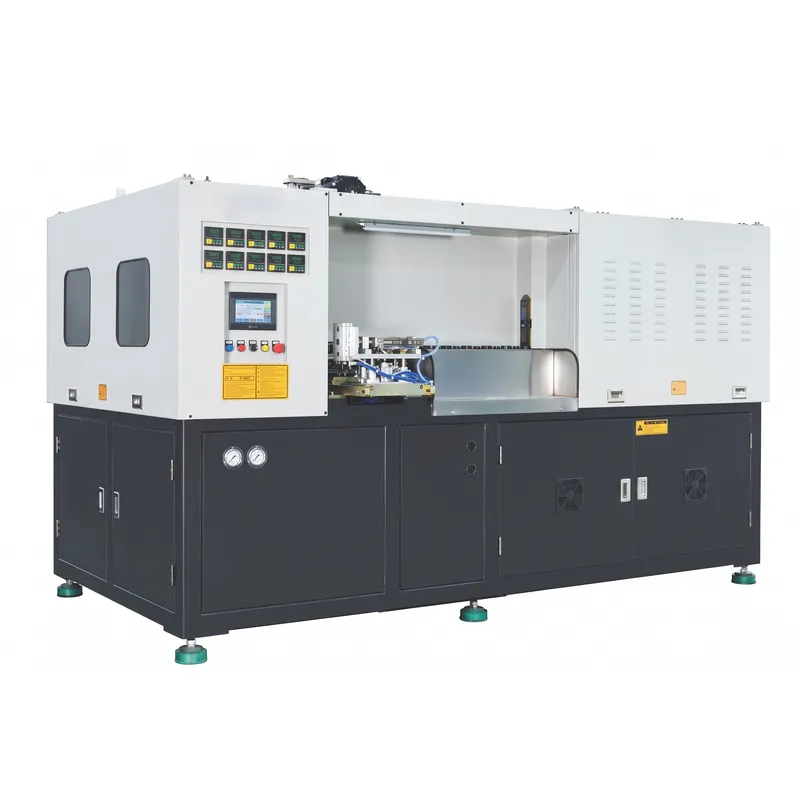
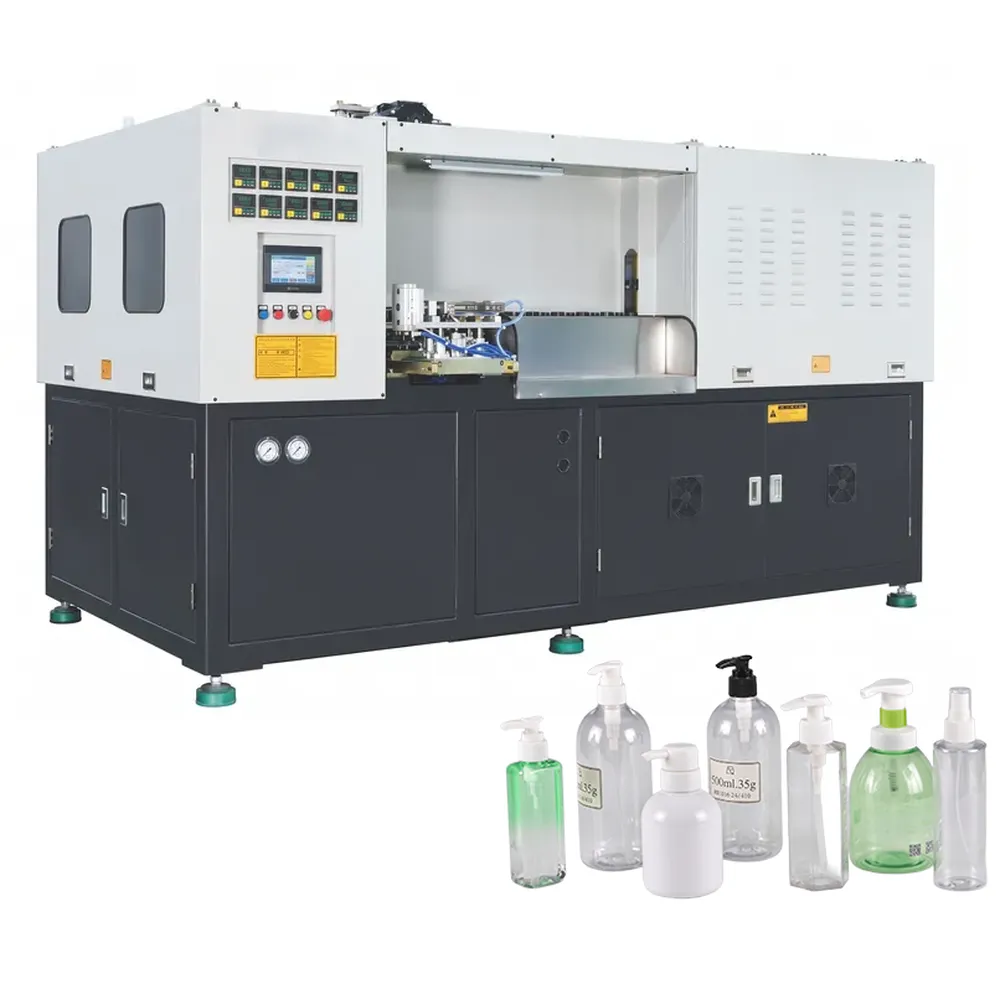
EPA.ES-4C100 Fully Automatic Blow Molding Machine for Daily Chemicals & Cosmetic Bottles
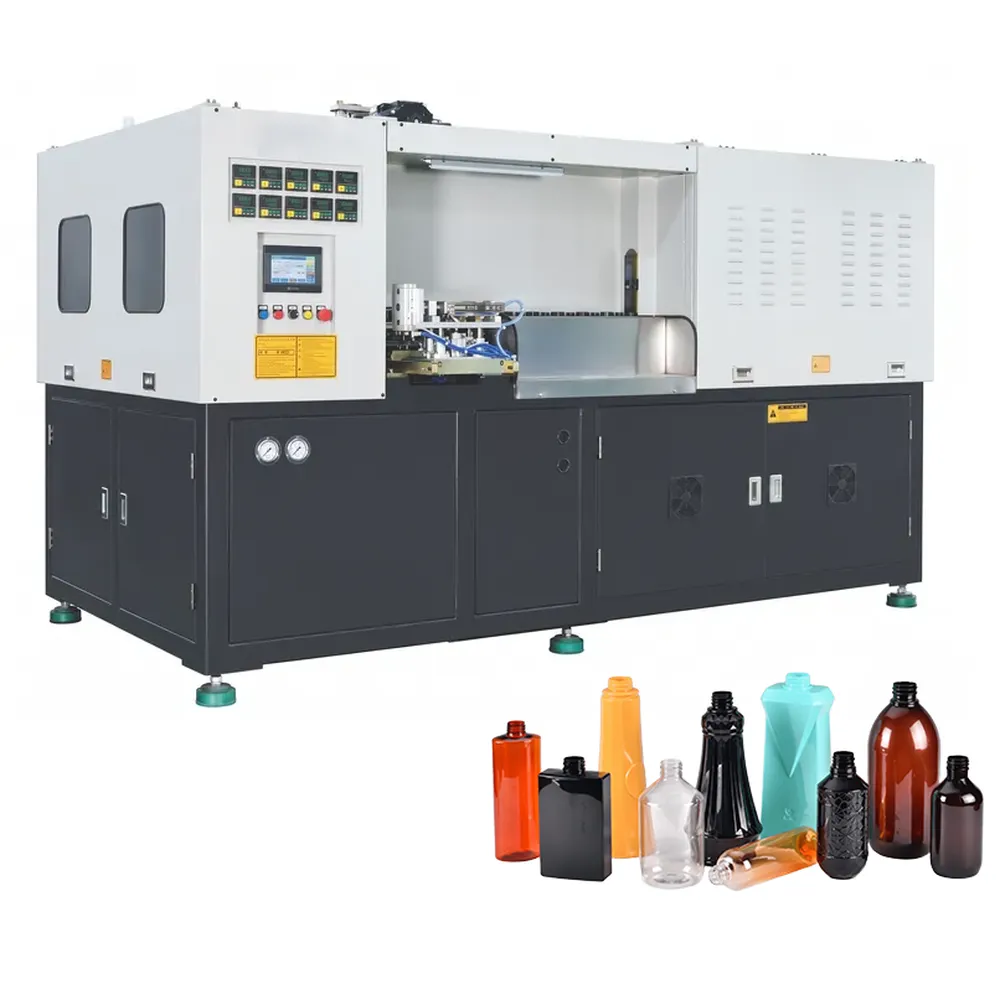
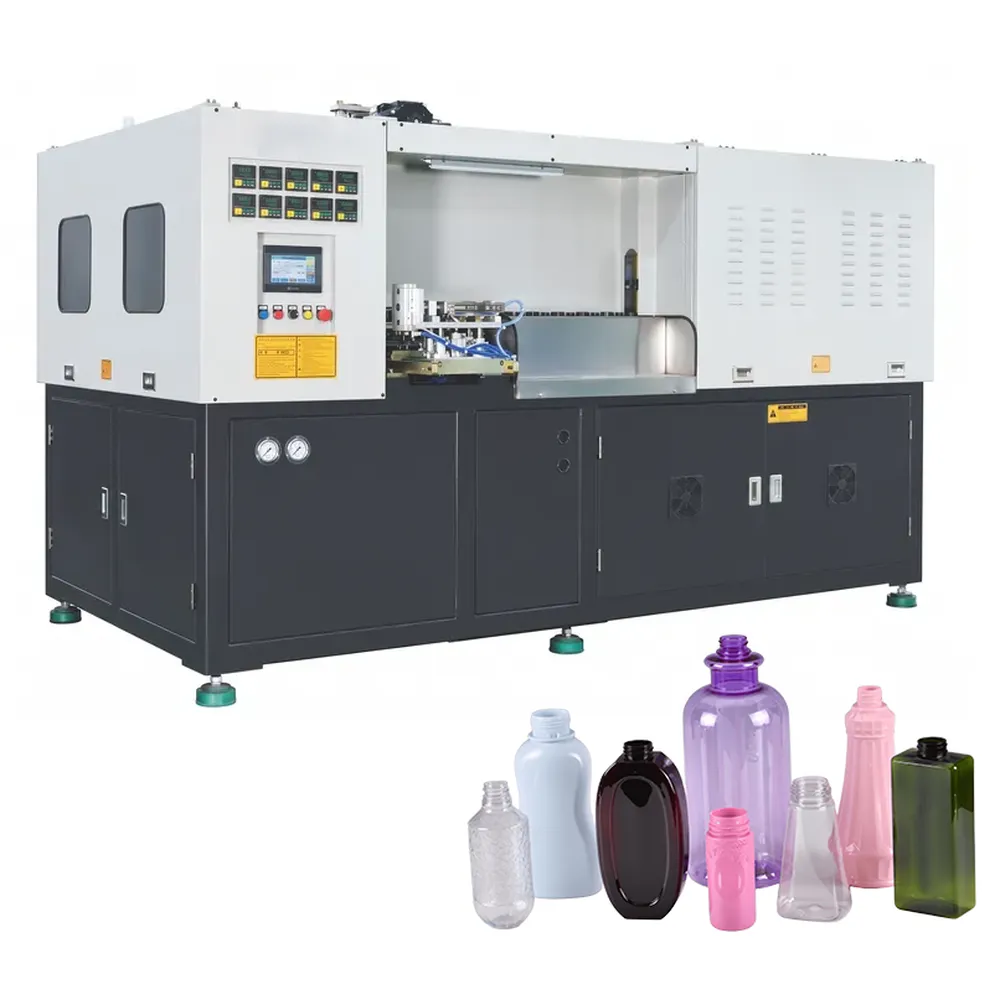
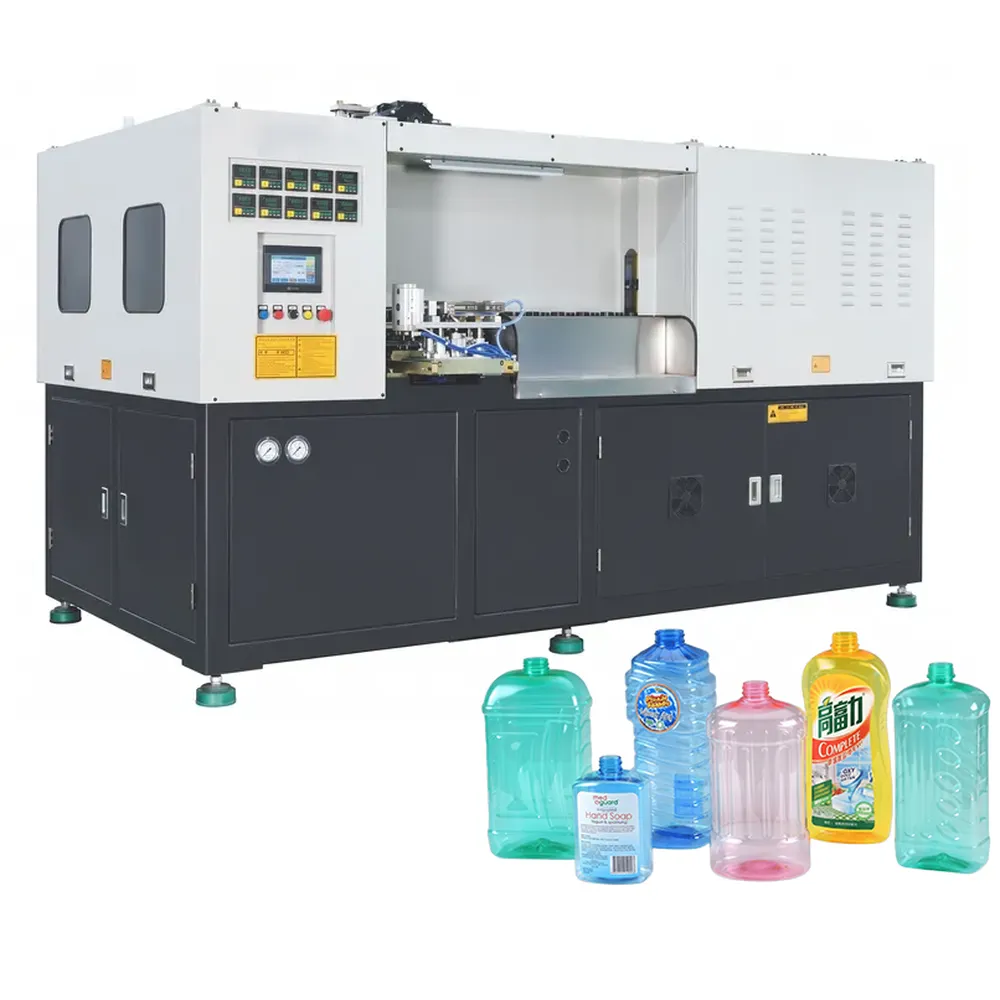
The EPA.ES-4C100 fully automatic blow molding machine is designed and manufactured by Mexico Ever-Power ISBM Machinery Co., Ltd. as a leading-class plastic blow molding machine for the daily chemicals and cosmetics packaging industry. Adopting internationally recognized brand servo motors, reducers, precision electrical components, and advanced PLC control systems, this automatic PET blow molding machine delivers outstanding stability, reliability, efficiency, durability, and energy-saving performance in continuous industrial operation.
The EPA.ES-4C100 fully automatic blow molding machine is designed and manufactured by Mexico Ever-Power ISBM Machinery Co., Ltd. as a leading-class plastic blow molding machine for the daily chemicals and cosmetics packaging industry. Adopting internationally recognized brand servo motors, reducers, precision electrical components, and advanced PLC control systems, this automatic PET blow molding machine delivers outstanding stability, reliability, efficiency, durability, and energy-saving performance in continuous industrial operation. The machine processes PET and PETG materials with equal precision, accommodating a wide spectrum of container shapes, neck diameters, and volumes to meet the diverse needs of cosmetic bottle manufacturers worldwide. It is particularly noted among blow molding machine manufacturers for its exceptional capability in producing complex special-shaped bottles that demand high dimensional accuracy and consistent wall thickness.
In real-world production environments, the EPA.ES-4C100 serves as the preferred bottle blow molding machine for shampoo bottles, lotion bottles, liquid soap dispensers, cosmetic jars, hand cream containers, facial toner bottles, and a broad variety of other daily chemical packaging formats. Its 4-cavity mold configuration and theoretical output of 4,600 bottles per hour make it a true high speed blow molding machine suited for large-scale production lines. Whether you are a packaging brand, contract manufacturer, or OEM supplier seeking a dependable industrial blow molding machine from trusted blow molding machine suppliers, the EPA.ES-4C100 is engineered to deliver consistent quality, reduced scrap rates, and a low total cost of ownership across multi-shift production schedules.
Technical Parameter
| Model | Unit | EPA.ES-4C100 | |
|---|---|---|---|
| Molding | Clamping stroke | mm | 128 |
| Mold-open distance | mm | 328 | |
| Mold-close distance | mm | 200 | |
| Stretching stroke | mm | 350 | |
| Mold-open distance | mm | 50 | |
| Mold-close distance | mm | 100 | |
| Preform Holder | 92 | ||
| Cavities | 4 | ||
| Container | Max.Container Volume | ml | 800 |
| Neck Diameter Range | mm | 68 | |
| Max.Container Diameter | mm | 80 | |
| Max.Container Height | mm | 250 | |
| Theoretical Output | bph | 4600 | |
| Electrical System | Max.Heating Power | kw | 62.5 |
| Heating Power | kw | 21 | |
| Air System | Operating Pressure | kg/cm² | 7 |
| Low Pressure Air Consumption | ltr/min | 800 | |
| Blowing Pressure | kg/cm² | 35 | |
| High-pressure air consumption | ltr/min | 4000 | |
| Cooling water | Operating Pressure | kg/cm² | 5-6 |
| Temperature | ℃ | 8-12 | |
| Flow rate | ltr/min | 30 | |
| Machine | Size (L*W*H) | mm | 4170*1930*2340 |
| Weight | kg | 4000 | |
Features of the EPA.ES-4C100 Daily Chemical Blow Molding Machine
1. High-Speed Efficiency
With a theoretical output of 4,600 bottles per hour, the EPA.ES-4C100 is a genuine high speed blow molding machine built for large-scale, continuous production. The 4-cavity mold design multiplies throughput per cycle, dramatically reducing per-unit production cost. The servo-driven mechanism ensures rapid and precise cycle times without sacrificing dimensional accuracy, making this machine a competitive asset for any facility targeting high-volume daily chemical and cosmetic bottle output with consistent quality across shifts.
2. Superior Build Durability
Designed for industrial-grade endurance, the EPA.ES-4C100 uses premium structural steel and precision-machined components across all mechanical contact points. This plastic blow molding machine is built to perform reliably under continuous multi-shift operation with minimal downtime. The robust clamping unit, reinforced stretching mechanism, and corrosion-resistant air and water circuits ensure long service life. Customers operating in humid or chemically active production environments can rely on this machine to maintain consistent mechanical integrity throughout its operational lifespan.
3. Precise PLC Control System
The integrated PLC-based control system provides accurate, repeatable operation across all motion axes and thermal zones. Operators can fine-tune preform heating profiles, blow pressure timing, and mold clamping force with intuitive parameter interfaces. This precision is critical for producing special-shaped cosmetic bottles where wall thickness uniformity and neck dimension consistency are non-negotiable. As a leading automatic blow molding machine in its class, the EPA.ES-4C100 actively reduces scrap rates and ensures every bottle leaving the mold meets tight customer specifications.
4. Versatile Application Range
The EPA.ES-4C100 handles PET and PETG materials across a broad range of container volumes from small cosmetic vials up to 800 ml bottles with neck diameters up to 68 mm. This versatility makes it suitable for cosmetics, daily chemicals, pharmaceutical packaging, and food-grade liquid containers. Whether producing symmetrical round bottles or complex contoured containers requiring precise biaxial orientation, this injection stretch blow molding machine-class equipment delivers the geometry accuracy and optical clarity that premium brand customers demand from their packaging supplier.
5. Energy-Efficient Servo Drive
Powered by internationally renowned servo motor technology, the EPA.ES-4C100 consumes only what is needed at each production stage. The actual working heating power is 21 kW against a peak rating of 62.5 kW, reflecting intelligent thermal management that dramatically reduces electricity costs in long-run production. Compared to conventional hydraulic or non-servo automatic blow molding machine alternatives, this energy-efficient design translates directly into lower operating costs per thousand bottles, improving the economics for manufacturers, contract packagers, and blow molding machine suppliers offering turnkey production solutions.
6. Fully Automatic Operation
As a fully automatic blow molding machine, the EPA.ES-4C100 automates the entire production sequence: preform loading, heating, stretching, blow molding, and bottle ejection, all without manual intervention at each cycle. This full automation significantly reduces labor costs, eliminates human-introduced process variation, and enables consistent quality across high-volume production runs. The machine is designed for simple, intuitive operation, meaning smaller teams can supervise larger output volumes, an ideal choice for manufacturers targeting lean production goals while scaling capacity in competitive markets.
Blow Molding Machine Process: Step by Step
Step 1: Raw Material Preparation
The blow molding machine process begins with rigorous raw material preparation. PET, PETG, and related materials undergo precise screening, moisture control, blending, and feeding into the hopper. Crystallinity and intrinsic viscosity are verified to ensure the material meets processing requirements. Proper preparation at this stage directly impacts preform clarity, mechanical strength, and the consistency of final container wall thickness across all 4 cavities simultaneously.
Step 2: Injection Molding (Preform)
Prepared raw materials are injected into a precision preform mold under controlled temperature, pressure, and injection speed parameters. The injection unit melts the resin, plastifies it uniformly, and fills the mold cavity with consistent shot weight to produce high-quality preforms. In a two-stage blow molding machine workflow, preforms are produced separately and reheated before blow molding, ensuring greater flexibility in production scheduling and quality control at each stage independently.
Step 3: Infrared Preheating
After preform formation, each preform travels through the infrared heating oven where its body temperature is raised uniformly to the optimal stretch-blow window, typically between 95 and 115 deg C for PET. The EPA.ES-4C100 uses zoned infrared lamps with independent power control, enabling tailored temperature profiles across the preform height. This uniform thermal conditioning is the critical prerequisite for biaxial orientation during stretch blow molding, determining final bottle wall clarity and mechanical integrity.
Step 4: Stretch Blow Molding
The heated preform is transferred into the blowing mold where a stretch rod simultaneously extends the preform axially while high-pressure air at 35 kg/cm2 expands it radially. This dual-axis stretching process achieves biaxial molecular orientation in the PET material, resulting in containers with superior clarity, barrier properties, and drop-impact resistance. The precise timing and pressure control defines the final bottle dimensions and enables the machine to reproduce special-shaped cosmetic bottle geometries with repeatable accuracy at 4,600 BPH.
What the EPA.ES-4C100 Produces
1. Cosmetic Bottles
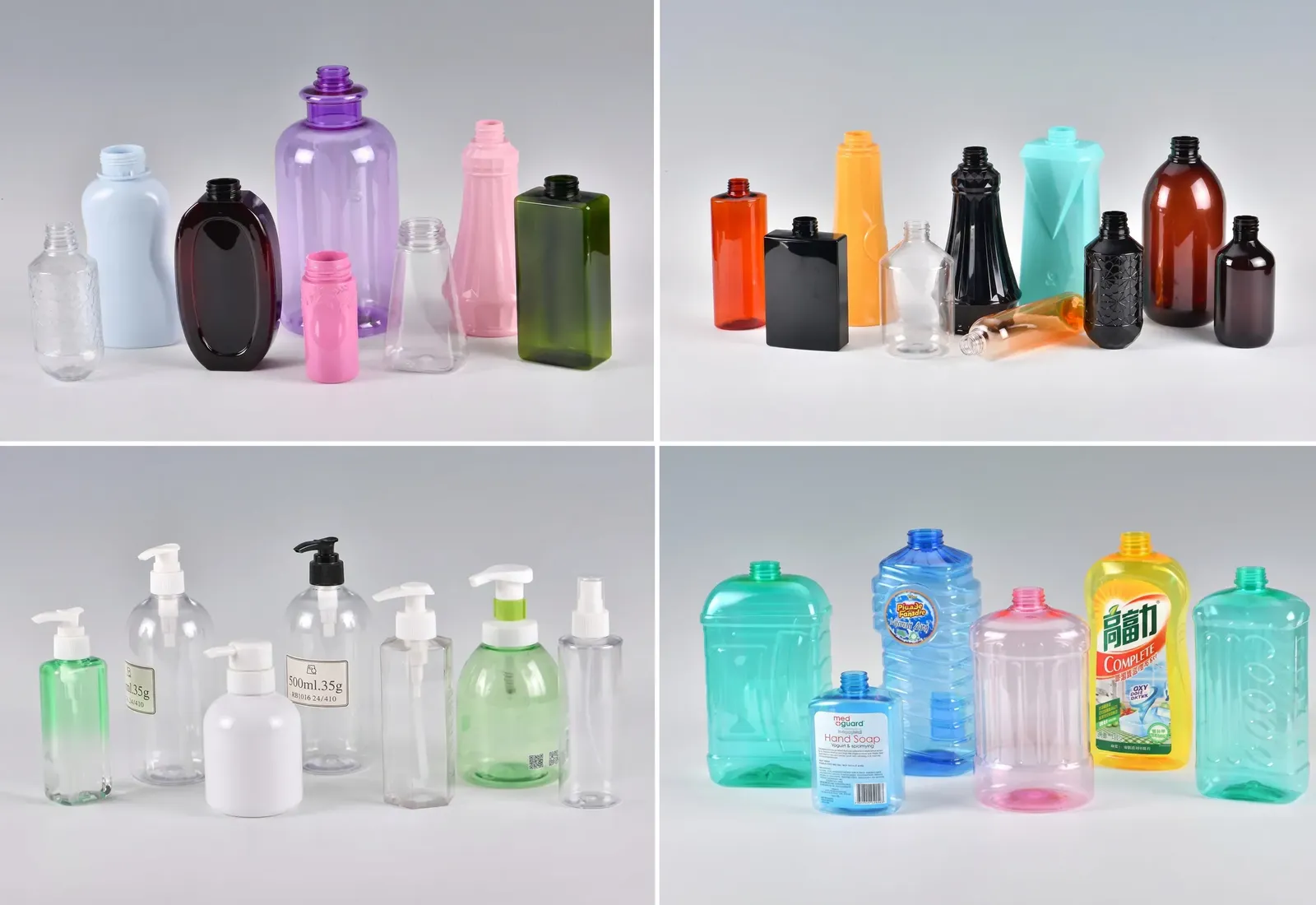
The EPA.ES-4C100 is specially optimized as a daily chemical blow molding machine for cosmetic bottle production. It handles toner bottles, lotion pumps, serum bottles, and contoured luxury containers with precision. The machine produces clear, high-gloss PET containers in unique shapes that reflect premium brand aesthetics, supporting customers in beauty, skincare, and personal care markets. Special-shaped bottles with complex geometry are a recognized strength of this machine platform.
2. Chemical Bottles
For the daily chemical sector, including household detergents, fabric softeners, surface cleaners, and industrial cleaners, the EPA.ES-4C100 delivers thick-walled, chemically resistant PET containers. Its high-pressure blow system at 35 kg/cm2 ensures dense, robust bottle walls that withstand chemical compositions of common household and commercial cleaning agents without deformation or permeation failure over the product shelf life.
3. Pharmaceutical Bottles
Pharmaceutical liquid packaging demands exceptional dimensional accuracy, cleanliness, and barrier performance. The EPA.ES-4C100 produces PET pharmaceutical bottles suitable for liquid medicines, vitamin suspensions, topical solutions, and supplement syrups. The fully enclosed machine design minimizes environmental contamination risk, and the high-consistency neck dimensions ensure leak-free compatibility with caps and pump dispensers used in healthcare packaging worldwide.
4. Beverage Bottles
As a PET bottle blow molding machine, the EPA.ES-4C100 can produce small-format beverage containers including flavored water, juice, sports drinks, and energy drink bottles up to 800 ml. The biaxial stretch orientation provides excellent CO2 retention for carbonated formats and superior moisture barrier properties for still beverage packaging in both retail and institutional distribution channels served by packaging buyers globally.
5. Food Bottles
Food-grade packaging applications including sauce bottles, condiment containers, salad dressing bottles, and honey containers benefit from the EPA.ES-4C100s ability to produce wide-neck PETG containers with excellent food contact compliance. The machine produces clear, transparent bottles that showcase product color and quality effectively at retail, meeting FDA and equivalent international food contact material requirements for safe consumer packaging.
6. Shampoo Bottles
Shampoo, conditioner, body wash, and hair care bottle production represents one of the most volume-intensive segments for a plastic bottle blow molding machine. The EPA.ES-4C100 handles typical squeeze-bottle geometry common in haircare, producing ergonomic shapes with consistent wall thickness distribution that balances rigidity with manual squeezability, resolved through precise preform temperature profiling and optimized blow timing parameters.
7. Feeding Bottles
Baby feeding bottles require the highest standards of material purity, dimensional precision, and surface clarity. The EPA.ES-4C100 produces PETG feeding bottles with BPA-free material options, excellent optical clarity, and accurate neck thread dimensions compatible with standard nipple assemblies. The machine performs reliably in demanding food-contact baby product applications where regulatory compliance and zero-defect production standards are mandatory for market access in North American and European markets.
8. Cosmetic Jar Bottles
Wide-mouth cosmetic jars for face cream, body butter, eye cream, and mask products demand precision neck dimensions that allow secure lid engagement and tamper-evidence. The EPA.ES-4C100 accommodates neck diameters up to 68 mm, covering wide-mouth cosmetic jar formats. The high-clarity PET material used produces containers with glass-like visual appeal at a fraction of the weight and cost, highly preferred by premium cosmetic brand packaging designers globally.
EPA.ES-4C100 Cosmetic Bottle Blow Molding Machine Parts
Servo Motor Drive Unit
The heart of this full electric blow molding machine concept is its internationally sourced servo motor drive system. It governs all primary machine motions including preform conveying, mold opening and closing, stretch rod actuation, and bottle ejection with precise position and torque control. The servo drive eliminates hydraulic oil systems, reduces noise, lowers energy consumption by up to 30% versus traditional drives, and enables parameter-level repeatability across every production cycle without mechanical drift or oil contamination risk.
Infrared Heating Oven
The preform heating oven uses zoned near-infrared lamps arranged to penetrate the PET preform wall uniformly. The oven is divided into multiple independent temperature zones along the preform height, allowing operators to tailor the axial temperature gradient for specific bottle shapes. This zoned control is essential for special-shaped cosmetic containers where different body regions require different degrees of plastic deformation. Efficient reflector geometry and forced-air cooling protect the preform neck from overheating during the heating cycle.
Clamping Unit
The clamping unit applies and holds the mold closed against the internal blow pressure of 35 kg/cm2 during the stretch-blow cycle. With a clamping stroke of 128 mm and a mold-close distance of 200 mm, it accommodates a wide range of cosmetic bottle mold configurations. The symmetric, rigid clamping frame ensures that both mold halves meet precisely at the parting line without flash or mismatch, which is critical for producing cosmetic bottles with clean seam lines and consistent appearance on the production line.
High-Pressure Blowing Unit
The blowing unit delivers compressed air at 35 kg/cm2 into the heated preform through a blow nozzle that seals against the preform neck. High-pressure air consumption is 4,000 liters per minute at peak production, requiring an adequately sized air compressor in the production facility. The blow valve timing is programmable through the PLC control, enabling fine-tuning of pressure delivery timing to optimize wall thickness uniformity for each specific bottle shape and mold geometry in the production program.
Stretch Rod Assembly
The stretch rod assembly is responsible for the axial mechanical stretching of the heated preform before and during blowing. With a stretching stroke of 350 mm, it can accommodate container heights up to 250 mm. The stretch rod advances at a precisely controlled velocity synchronized with the blow pressure onset, achieving the biaxial orientation that gives PET bottles their superior mechanical and barrier properties. Stretch rod tip geometry is matched to the preform base design to avoid stress concentration during high-speed production.
PLC Control System
The machine is governed by a professional PLC from an internationally recognized brand, paired with a color touchscreen HMI. All production parameters including heating zone temperatures, blow timing, pressure profiles, transfer timing, and output counts are managed through the HMI. The control system supports fault diagnosis with alarm codes, production statistics logging, and recipe storage for multiple bottle formats, enabling rapid changeover between different cosmetic bottle designs without loss of setup parameter history.
Cooling Water Circuit
Efficient mold cooling is essential for cycle time and bottle quality. The EPA.ES-4C100 operates a dedicated cooling water circuit at 5-6 kg/cm2 operating pressure with water temperature between 8 and 12 deg C and a flow rate of 30 liters per minute. This chilled water is circulated through channels within the blow mold to rapidly solidify the hot blown bottle, enabling fast mold opening and bottle ejection. Consistent cooling is a critical factor in achieving the rated 4,600 BPH output while maintaining dimensional stability in finished container geometry.
Preform Transfer and Conveying System
The preform conveying and transfer system feeds 92 preforms simultaneously through the heating oven on precisely spaced spindles, ensuring uniform heating dwell time across all preform positions. Servo-controlled transfer arms pick and place heated preforms into the blow mold with speed and accuracy synchronized to the overall machine cycle time. The system is designed to handle preforms for neck diameters up to 68 mm without jamming, mis-feeds, or orientation errors, supporting uninterrupted automated production at rated speed.
Raw Materials for Plastic Bottle Blow Molding Machine
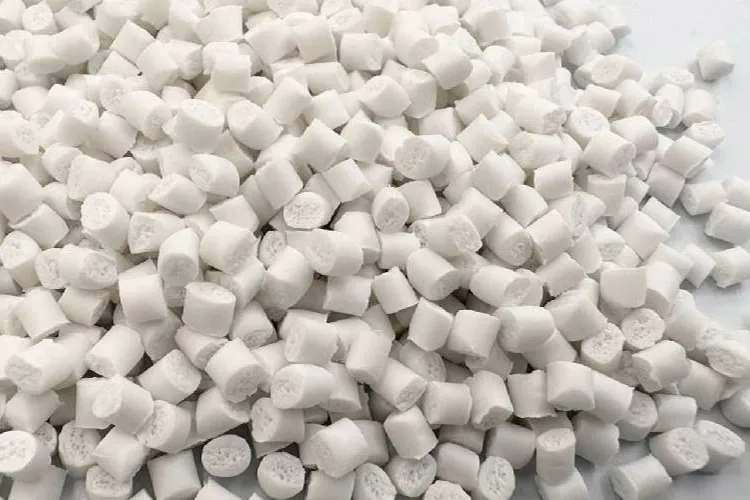
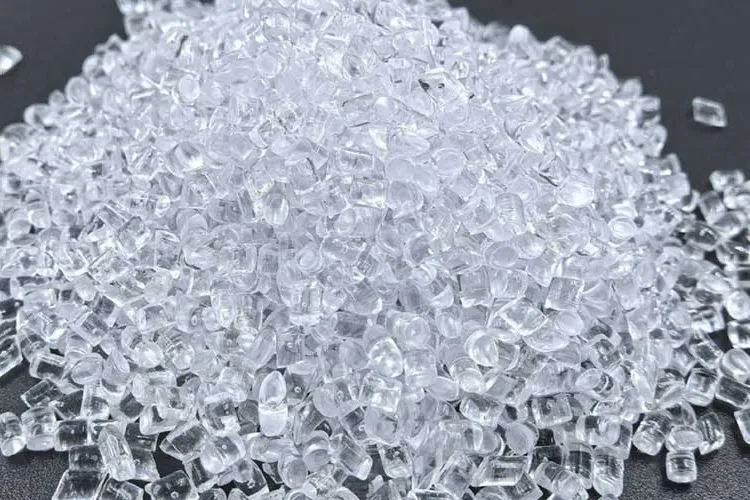
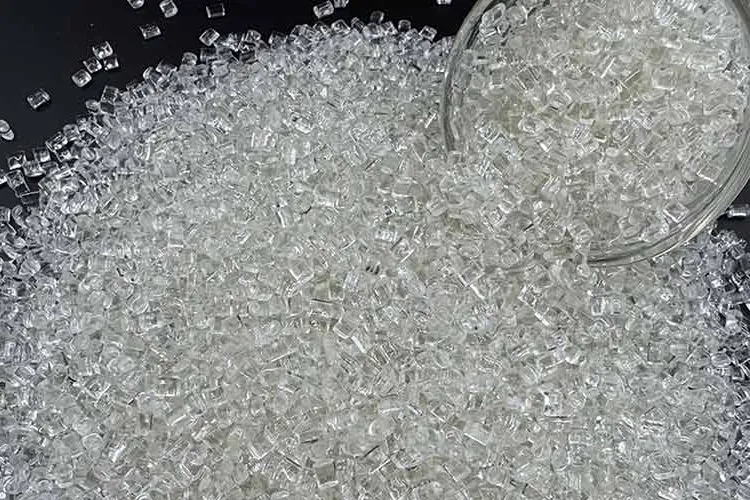
PET (Polyethylene Terephthalate)
PET is the primary raw material for the EPA.ES-4C100 as an automatic PET blow molding machine. It offers high optical transparency, excellent gas barrier properties, strong tensile strength, and outstanding food contact safety performance. PET is the material of choice for mineral water bottles, carbonated beverage containers, edible oil bottles, pharmaceutical liquids, and high-clarity cosmetic bottles. Its inherent recyclability also supports sustainability goals in consumer packaging markets globally.
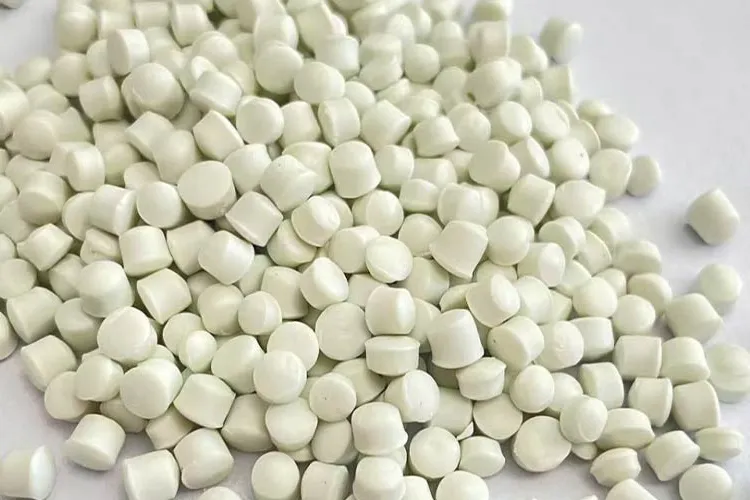
PETG (Polyethylene Terephthalate Glycol)
PETG is a copolymer of PET with improved impact resistance, slightly lower processing temperature requirements, and excellent clarity without the need for biaxial orientation. It is widely used in cosmetic packaging, medical device containers, and special-shaped bottles where complex geometry makes standard PET orientation challenging. The EPA.ES-4C100 processes PETG effectively, producing cosmetic jars and uniquely contoured containers with the glass-like visual appeal that premium cosmetic brands require.
PP (Polypropylene)
Polypropylene offers excellent chemical resistance, high-temperature tolerance up to 130 deg C, and suitability for hot-fill packaging applications. As a blow molding machine material, PP is commonly used in food containers that require steam sterilization, medicine bottles for hospital-grade disinfectant solutions, and chemical packaging. PP containers have good hinge performance and are commonly used in flip-top cap bottle formats for personal care and food service industries globally.
PC (Polycarbonate)
Polycarbonate delivers exceptional impact strength, high-temperature resistance, and outstanding optical clarity. In blow molding applications, PC is used for premium baby bottles, large water dispensing bottles (3-5 gallon), and laboratory containers requiring high transparency and autoclave-resistance. Its high processing temperature requires appropriately equipped machines. PC containers are valued wherever glass-like appearance, safety, and durability are simultaneously required at a lower weight than glass alternatives.
PE (Polyethylene) HDPE and LDPE
High-Density Polyethylene and Low-Density Polyethylene are widely processed on extrusion blow molding machine platforms for producing chemical containers, household cleaner bottles, industrial jerricans, and flexible squeeze bottles. HDPE offers exceptional chemical resistance and is FDA-compliant for direct food contact. LDPE provides flexibility ideal for soft squeeze containers like eye drop bottles, travel shampoo tubes, and laboratory reagent bottles in small dosage formats.
PVC (Polyvinyl Chloride)
PVC offers high dimensional stability, strong chemical resistance, and good clarity at moderate cost. In blow molding, rigid PVC is used for cosmetic packaging, mineral water bottles in select markets, and chemical containers where cost-effective transparency is required. Plasticized PVC enables soft, flexible bottles used in pharmaceutical and medical device applications. Processing PVC requires careful temperature control and appropriate stabilizer systems when used on any plastic blow molding machine platform.
 |
 |
 |
 |
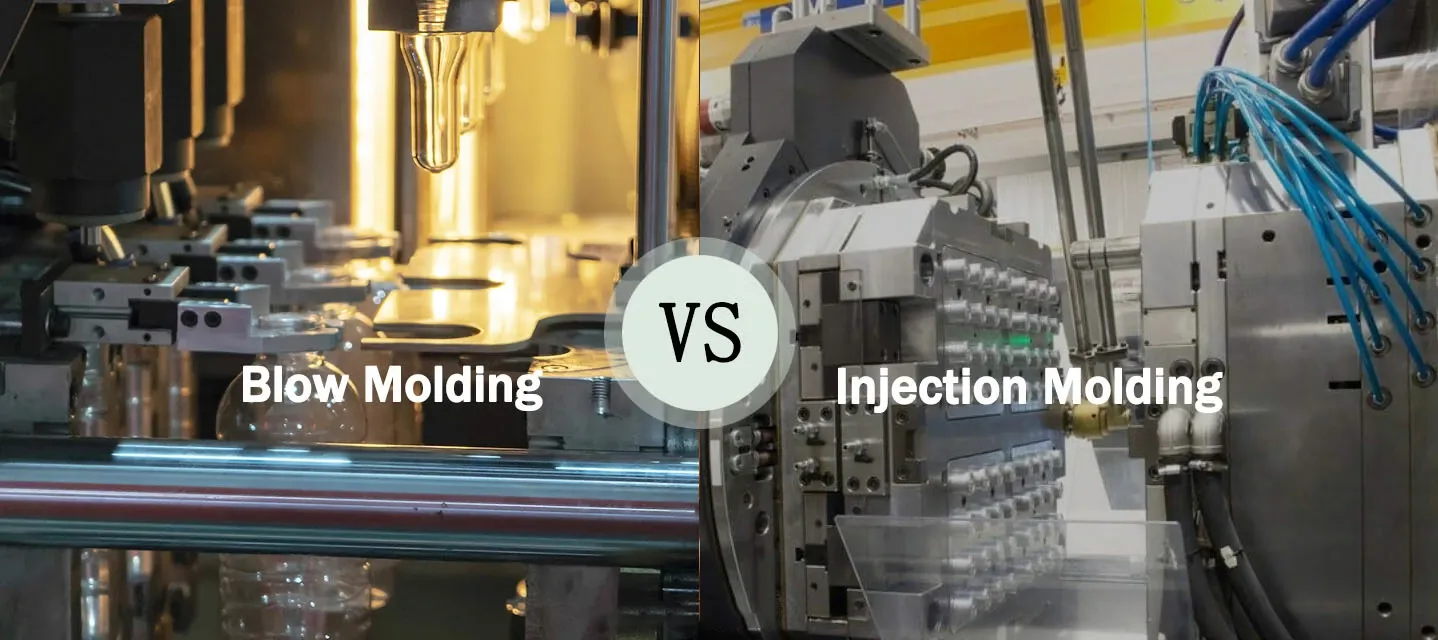
Differences Between Blow Molding and Injection Molding
What is Blow Molding?
Blow molding is a plastic forming process that produces hollow containers by expanding a heated plastic tube (parison or preform) inside a mold using compressed air pressure. In the blow molding machine process, raw thermoplastic material is heated and either extruded into a hollow tube or injection-molded into a solid preform. The parison or preform is then placed between two mold halves, sealed, and inflated with compressed air at pressures around 80 to 500 psi depending on the process variant. The plastic expands against the mold walls, taking the exact shape of the cavity. Once cooled and solidified, the mold opens and the finished hollow container is ejected. The EPA.ES-4C100 represents the injection stretch blow molding machine variant of this technology, combining injection-formed preforms with stretch-blow forming for superior material orientation and container properties.
Types of Blow Molding
There are three primary categories relevant to buyers choosing between types of blow molding machines:
- Injection Blow Molding (IBM): A core rod injects the parison directly, producing a preform that is then blown without a separate reheating step. Best for small, precise containers like pharmaceutical vials and cosmetic bottles requiring tight neck dimensions. This process is also known as injection blow molding machine technology.
- Extrusion Blow Molding (EBM): An extrusion blow molding machine continuously or intermittently extrudes a hollow parison downward into a two-part mold. Suitable for complex shapes, handles, and multilayer bottles. Common for HDPE containers in industrial and household chemical applications at lower tooling cost.
- Injection Stretch Blow Molding (ISBM): A preform is injection-molded, reheated, mechanically stretched axially, and blown simultaneously. This two-stage approach, used in the EPA.ES-4C100, produces superior clarity, barrier properties, and wall uniformity in PET bottles, making it the preferred method for cosmetic, beverage, and pharmaceutical containers worldwide.
Advantages of Blow Molding
- Lower tooling cost compared to injection molding for hollow containers
- Suitable for large-volume hollow parts that injection molding cannot produce efficiently
- Eliminates the need for two-part assembly for containers with integrated handles or complex hollow geometries
- High design flexibility for container shape and size variation
- Cost-effective per-unit economics at production volumes above several hundred thousand units annually
What is Injection Molding?
Injection molding is a manufacturing process for producing solid plastic parts by injecting molten plastic material into a closed, precision mold under high pressure. The mold is typically machined from hardened steel and held tightly closed against the injection pressure by a clamping unit. After the molten plastic fills the mold cavity and cools, the part is ejected and the cycle repeats. Injection molding excels at producing complex solid parts with fine surface details, tight tolerances, and multiple features in a single shot. It is the dominant process for solid components such as bottle caps, container closures, pump bodies, cosmetic compacts, and precision mechanical parts. An injection blow molding machine combines both technologies to produce preforms that are then blown into finished bottles.
Advantages of Injection Molding
- Development of highly detailed molds with multi-cavity options for high-volume solid part production
- Exceptional precision and repeatability for complex part geometries and tight dimensional tolerances
- Cost-effective for very high-volume production of identical solid parts
- Great material flexibility and color options across engineering-grade polymers and specialty resins
Key Differences: Blow Molding vs Injection Molding
| Comparison Factor | Blow Molding | Injection Molding |
|---|---|---|
| Part Type | Hollow containers (bottles, tanks, jars) | Solid or complex-geometry parts (caps, closures, cases) |
| Molding Process | Air pressure expands heated plastic inside a mold | Molten plastic injected under pressure into a closed mold |
| Mold Complexity | High flexibility in container shape design | Highly precise molds required for complex solid features |
| Materials | PET, PETG, PP, HDPE, LDPE (flexible and semi-rigid) | Wide range including PC, ABS, PVC, nylon, hard resins |
| Tooling Cost | Lower for hollow containers | Higher due to precision cavity requirements |
| Best Applications | Bottles, jars, containers, cosmetic packaging | Caps, closures, automotive parts, medical devices |
How to Improve the Production Efficiency of Blow Molding Machine
1. Optimize Raw Material Selection
Selecting blow molding grade resins with consistent intrinsic viscosity, low moisture content, and appropriate particle size distribution directly improves throughput and reduces rejected bottles. For PET, targeting IV values matched to the container wall thickness and orientation stretch ratio enables the machine to run at rated speed without excessive pressure drops or preform crystallization issues. Investing in quality raw materials from certified suppliers is the foundation of high-efficiency blow molding machine operation across all production shifts.
2. Precision Equipment and Servo Technology
Modern blow molding machine manufacturers design high-efficiency machines with servo-driven axes that reduce cycle time, eliminate hydraulic response lag, and enable precise motion profiling. Investing in servo-based equipment like the EPA.ES-4C100 rather than conventional hydraulic machines reduces energy consumption per unit produced, lowers maintenance frequency, and enables tighter process control. Multi-cavity configurations further multiply per-cycle output without proportionally increasing energy or labor costs in the production facility.
3. Mold Temperature Management
Consistent mold temperature is a critical lever for production efficiency. Under-cooled molds extend cycle time because bottles require longer cooling before ejection. Over-cooled molds increase energy cost and risk bottle sticking. Maintaining cooling water at 8-12 deg C with stable flow rates of 30 liters per minute as specified for the EPA.ES-4C100 ensures optimal cycle time. Regular inspection and cleaning of water channels prevents scale buildup that degrades cooling performance over extended production campaigns.
4. Infrared Heating Optimization
Heating efficiency directly controls cycle time in a two-stage PET blow molding machine. Optimizing lamp zone setpoints, reflector cleanliness, and spindle rotation speed ensures preforms reach the stretch-blow temperature window uniformly in the minimum heating time. Regular lamp replacement before failure avoids unplanned downtime and batch quality degradation. Thermal imaging tools can audit oven temperature profiles and identify cold zones that cause incomplete orientation or thick spots in finished bottles during production validation.
5. Preventive Maintenance Programs
Scheduled preventive maintenance on all blow molding machine parts including stretch rods, blow nozzles, preform spindles, chain drives, and transfer arms is essential for sustained high efficiency. Worn stretch rod tips introduce preform base defects. Degraded blow nozzle seals cause pressure leaks that reduce blow efficiency and bottle top-load strength. A documented maintenance schedule with part replacement intervals matched to production volume ensures maximum machine availability and consistent bottle quality over the service life.
6. Data-Driven Process Monitoring
Modern industrial blow molding machine installations benefit significantly from real-time process data monitoring. Recording and trending parameters such as heating zone temperatures, blow pressure curves, cycle times, and rejection rates enables early detection of process drift before it escalates into major quality events. PLC-based production counters on the EPA.ES-4C100 facilitate shift-level OEE tracking. Statistical process control applied to critical bottle dimensions further reduces scrap rates and improves customer satisfaction in quality-sensitive markets.
Daily Chemical Blow Molding Machine Mould
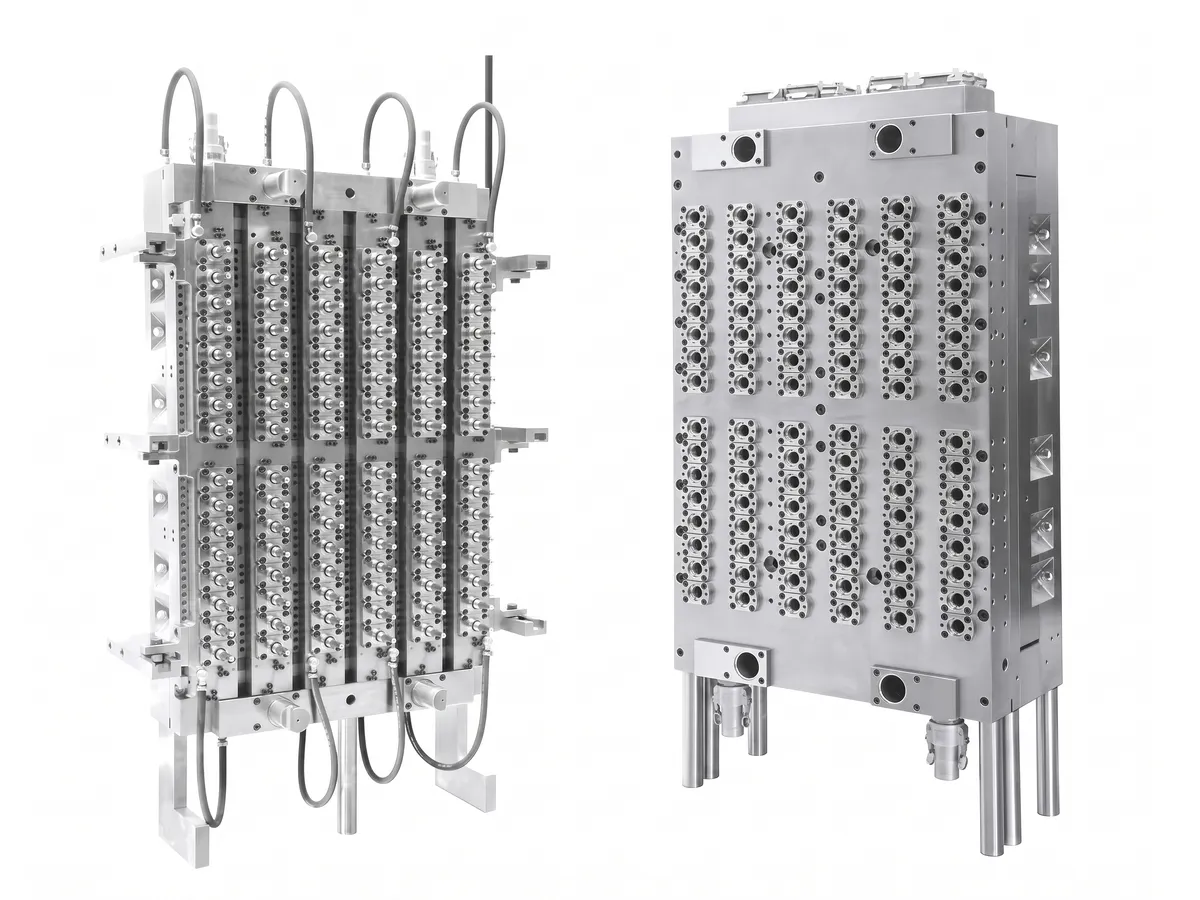
Preform Injection Mold
- The die lip assembly is composed of two precisely machined parts that guarantee coaxial alignment of the preform neck and body during formation, eliminating thread eccentricity that causes closure engagement failures in production.
- Rationally designed internal cooling water channels maximize heat extraction from the preform during the injection cycle, reducing cycle time and guaranteeing a fast, consistent production tempo at rated output speeds.
- All forming cavity inserts and gate components use imported die steel grade 2316, which is intrinsically rust-resistant and undergoes full heat treatment to HRC 30-34, ensuring dimensional stability over millions of production cycles without tooling degradation.
- Core plates, cavity plates, and structural mold frames use 420 stainless steel with surface treatments optimized for corrosion resistance against humid air and cooling water contact over long production runs in challenging environments.
- Standard, interchangeable die fittings and an accessible mold layout enable rapid maintenance by site technicians without specialist tooling, minimizing unplanned downtime and keeping the production line operational between planned service intervals.
- Advanced mold design allows a single preform mold to produce more than one preform geometry variant, giving manufacturers flexibility to support multiple bottle product lines from a single mold investment and capital budget.
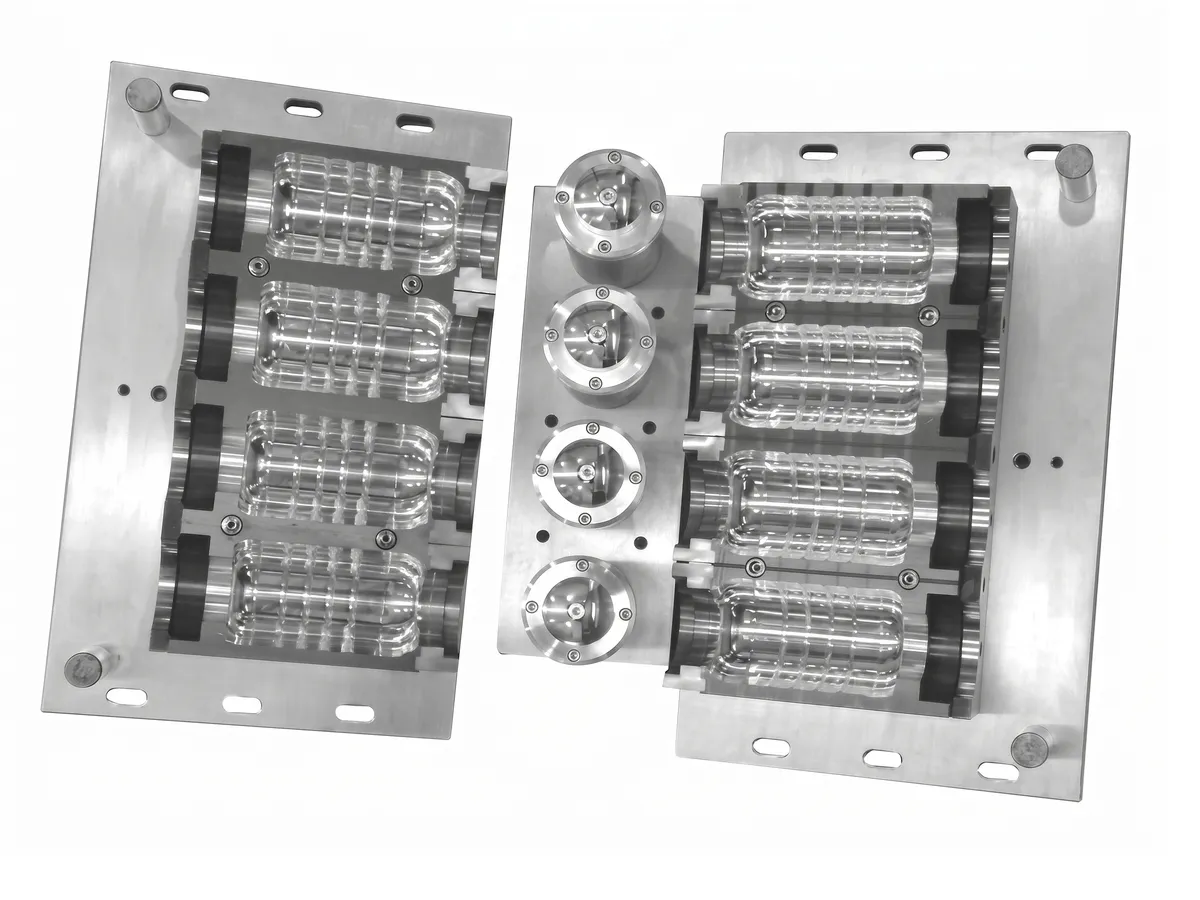
Blowing Mold
- Blowing mold bodies are fabricated from high-quality aluminum alloy with hardened steel inserts at the parting line and neck area, combining light weight for fast mold movement with hardness and wear resistance where it matters most.
- Every bottle geometry in the blowing mold is designed using industry-standard 3D CAD and simulation software, enabling virtual validation of wall thickness distribution, blow ratio, and parting line placement before any physical tooling is cut.
- A wide range of customer-specific bottle designs can be realized in blowing mold format, including complex contoured cosmetic bottles, multi-sided geometric shapes, and bottles with integrated grip features or embossed brand identity elements.
- The internal cooling channel design within each mold cavity is optimized by simulation to deliver uniform, rapid cooling across the entire bottle surface, preventing hot spots that would cause warping, distortion, or slow cycle times in production.
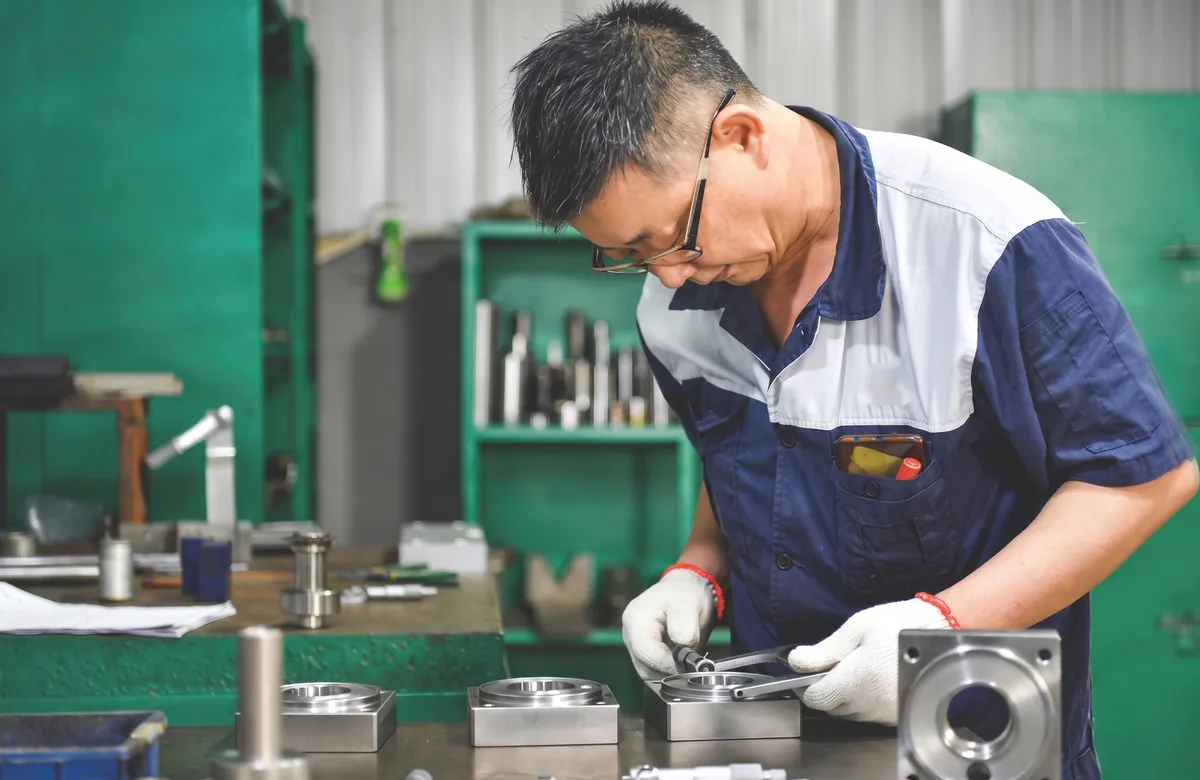
- All metal components in contact with the blown bottle or subject to mechanical wear are CNC-machined to precise dimensional tolerances, ensuring that every bottle produced meets the specification for diameter, height, neck thread form, and overall visual quality.
 |
 |
Why Choose Ever-Power's Blow Molding Machine?
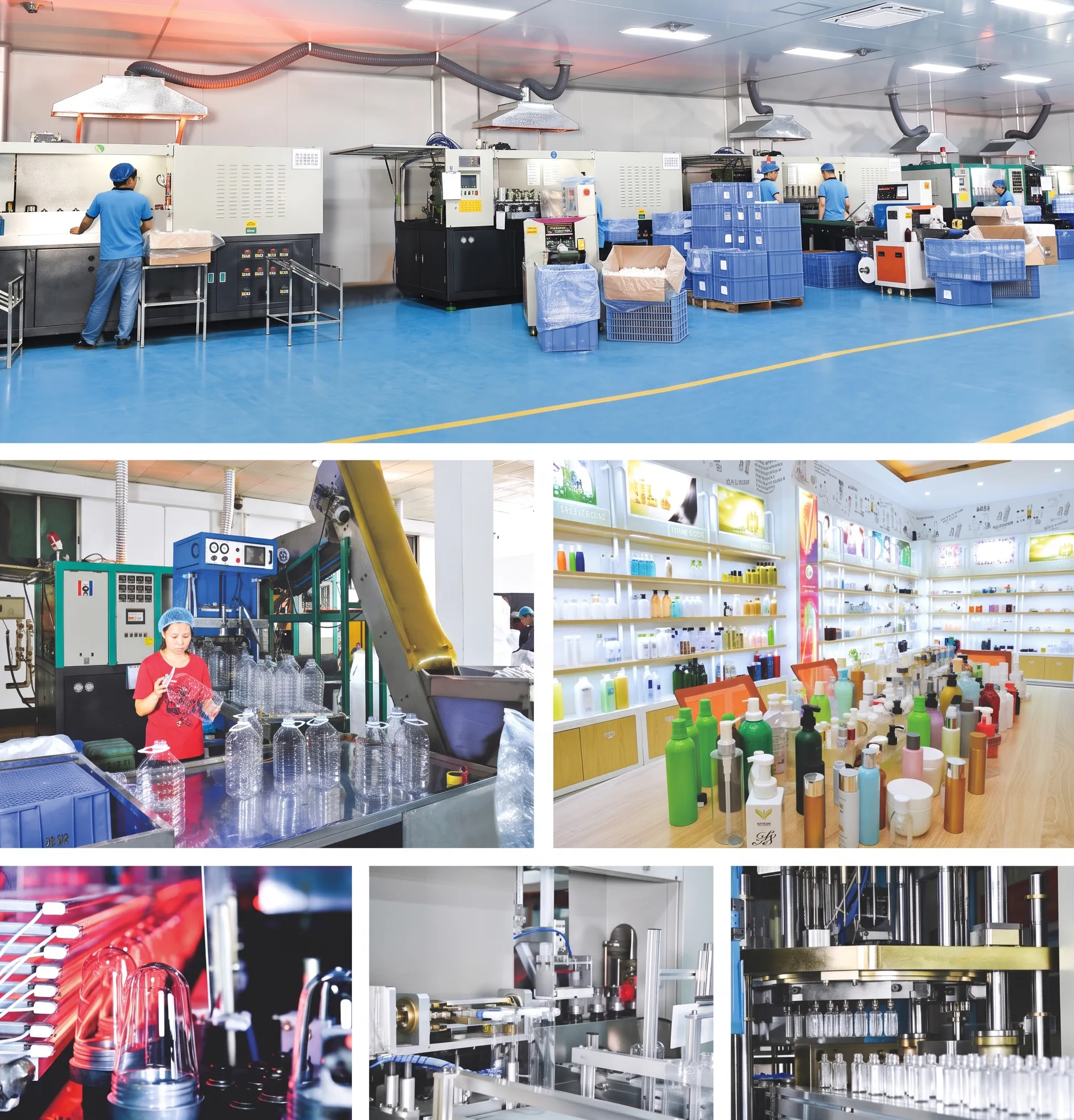
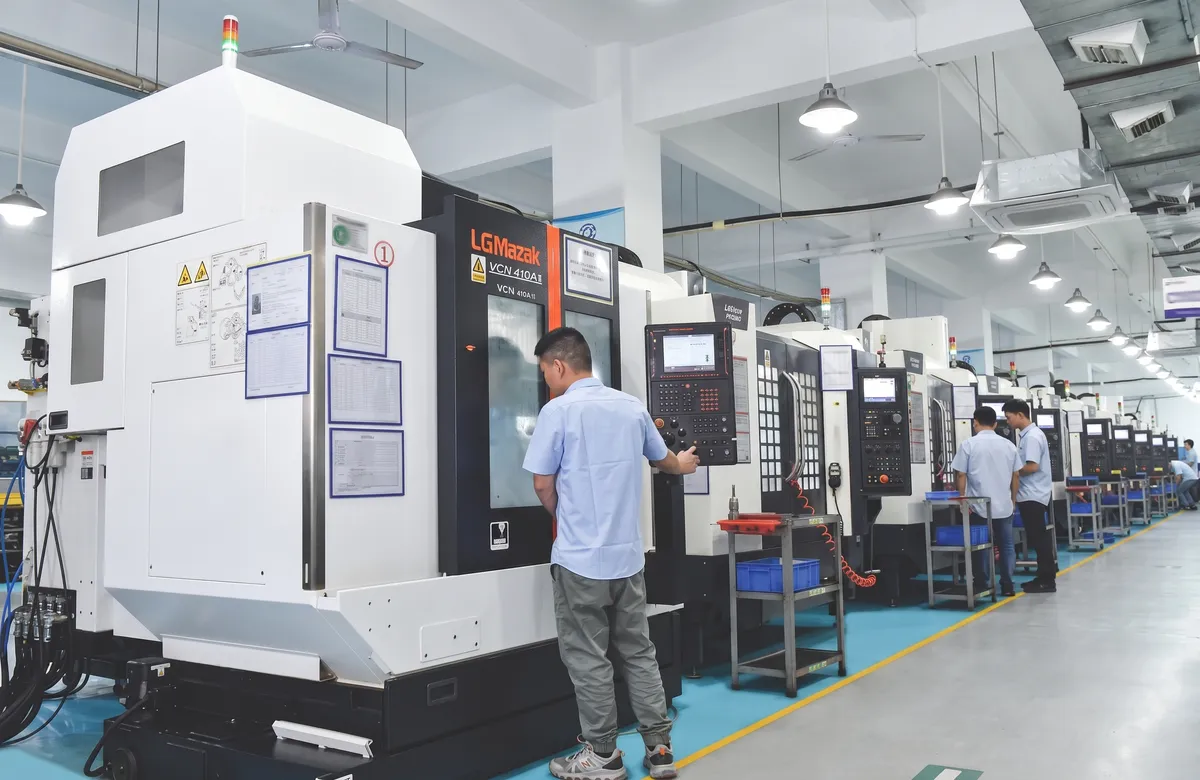
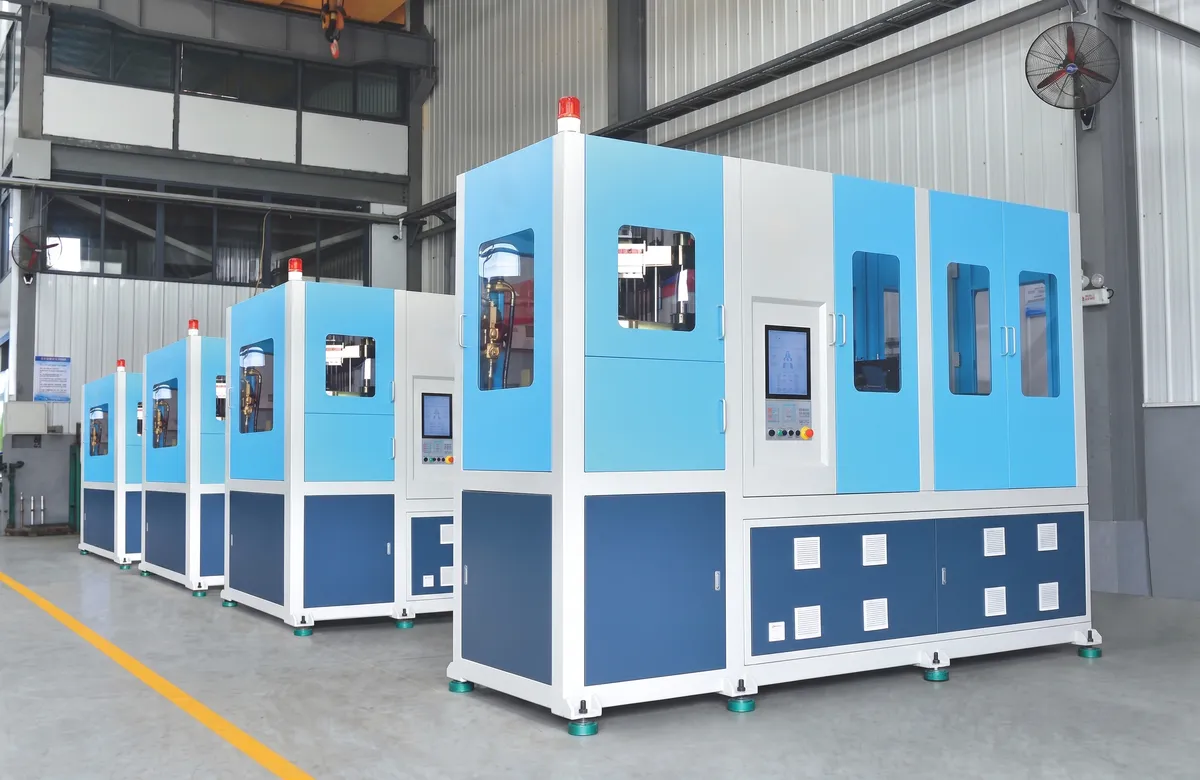
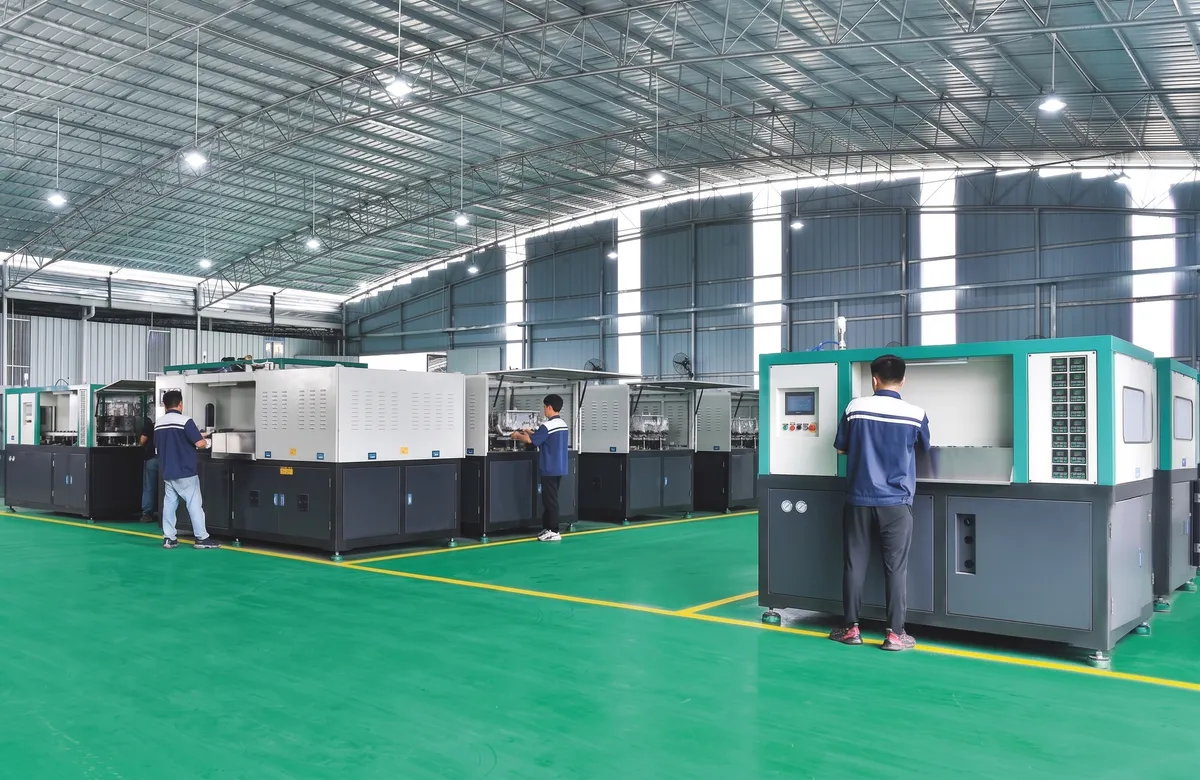
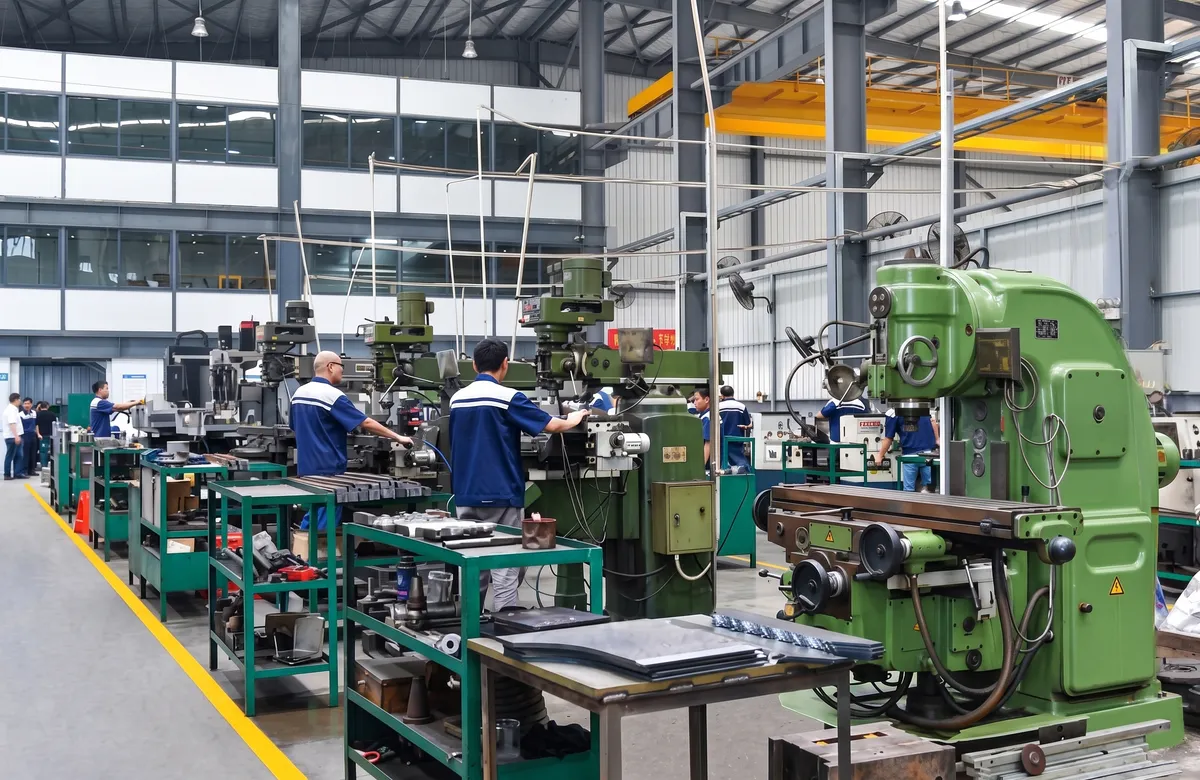
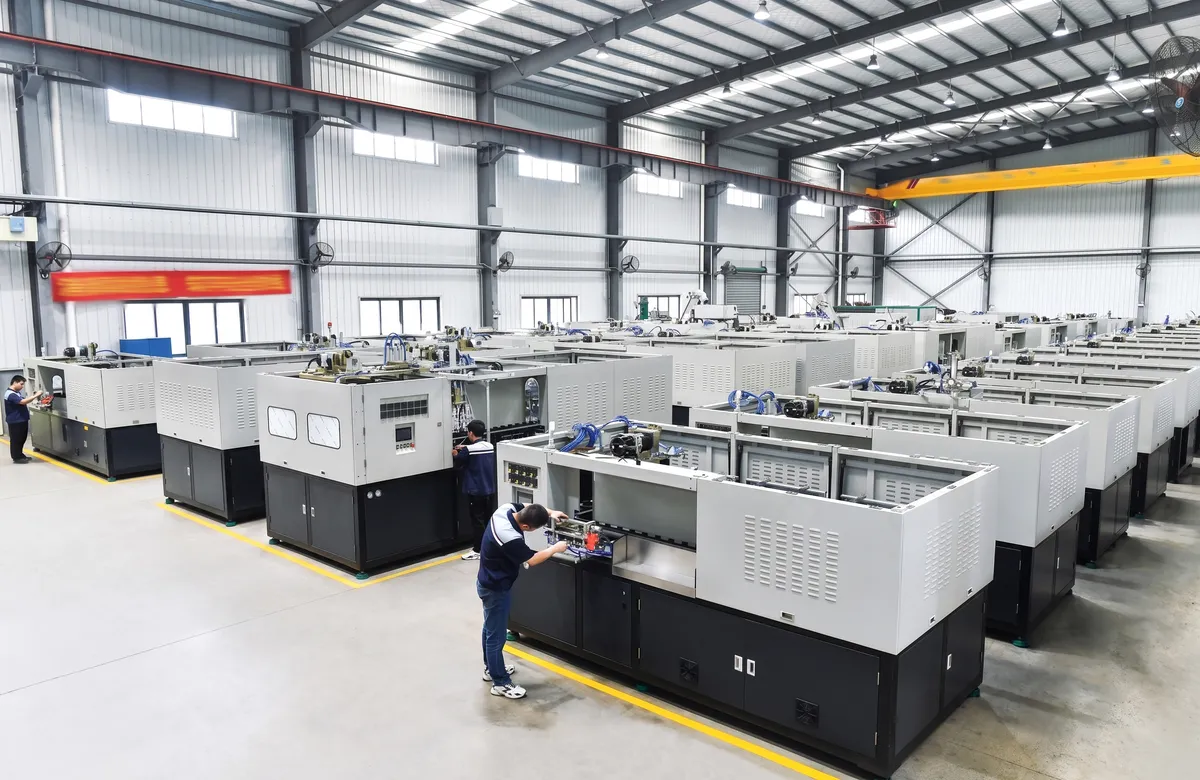
Mexico Ever-Power ISBM Machinery Co., Ltd. is primarily engaged in the research and development, production, sales, and international trade of automatic one-step Injection Blow Molding Machines and Injection Stretch Blow Molding Machines. Our product portfolio spans injection blow molding machines, extrusion blow molding machines, injection stretch blow molding machines, and comprehensive auxiliary machine solutions, all engineered for precision performance in demanding B2B packaging production environments globally.
Ever-Power maintains an elite R&D team composed of senior engineering professionals with deep theoretical and hands-on experience in injection-blow machinery design and injection-blow mold engineering. This expertise enables us to provide detailed, thorough pre-sale consultation, responsive in-sale technical coordination, and committed after-sale field and remote support services. Our engineering team works directly with buyers to configure machines to their specific bottle requirements, mold specifications, and production volume targets, functioning as a genuine technical partner rather than simply a machine vendor in the global packaging market.
Our machine applications cover pharmaceutical packaging, food packaging, healthcare product packaging, cosmetic packaging, and specialty industrial plastic packaging. We produce containers from 1 ml to 1,000 ml across a broad material range including HDPE, LDPE, PET, PETG, PP, PS, PPSU, PC, Tritan, ABS, PLA, biodegradable corn material, EVA, and PCTG, making Ever-Power one of the most material-versatile blow molding machine manufacturers in our market segment internationally.
Ever-Power adheres to its founding enterprise development philosophy of self-reliance, integrity, pragmatism, innovation, and responsibility. We build complete one-stop turnkey project capability for high-end injection-blow product lines, from machine supply and mold tooling through installation, commissioning, operator training, and long-term maintenance support, delivering user satisfaction through consistent first-class quality at every stage of the customer relationship and throughout the full operational life of our equipment.
 |
 |
 |
 |
 |
 |
Frequently Asked Questions
Q: What is the actual output of the EPA.ES-4C100 fully automatic blow molding machine per hour?
A: The theoretical output of the EPA.ES-4C100 is 4,600 bottles per hour based on a 4-cavity mold configuration running at rated cycle speed. Actual production output in real factory conditions depends on factors including preform quality, cooling water temperature stability, operator efficiency during startup, and any planned stoppages for quality checks. Most customers operating this fully automatic blow molding machine in continuous two-shift production achieve 90 to 95% of theoretical rated output in optimized production environments.
Q: What materials can the EPA.ES-4C100 PET blow molding machine process?
A: The EPA.ES-4C100 is designed primarily as a PET blow molding machine for processing PET and PETG resins. PET is the standard material for transparent cosmetic, pharmaceutical, and beverage bottles. PETG is used for complex-geometry cosmetic jars, impact-resistant containers, and applications where slightly lower processing temperature is beneficial. For other materials such as PP or PC, it is advisable to consult Ever-Power technical specialists to confirm processing compatibility for your specific application requirements.
Q: What bottle sizes and neck diameters does the EPA.ES-4C100 accommodate?
A: The EPA.ES-4C100 processes containers up to 800 ml maximum volume, with a maximum container diameter of 80 mm and a maximum container height of 250 mm. The neck diameter range accommodates up to 68 mm, which covers standard cosmetic bottle neck finishes as well as wider-mouth formats for lotion jars and similar applications. For containers outside these dimensions, Ever-Power offers other models in the HGA series with different cavity configurations and container size ranges to cover both smaller and significantly larger bottle formats.
Q: What compressed air supply does the EPA.ES-4C100 require?
A: The EPA.ES-4C100 requires two air supply systems: a low-pressure system at 7 kg/cm2 with a consumption of 800 liters per minute for machine actuation, and a high-pressure blowing system at 35 kg/cm2 with a peak consumption of 4,000 liters per minute during production. Buyers must ensure that their facility has an appropriately sized high-pressure air compressor and receiver tank before installation. Ever-Power can advise on compatible auxiliary air compressor specifications as part of the turnkey installation planning service.
Q: How does the EPA.ES-4C100 compare to a two-stage blow molding machine setup?
A: The EPA.ES-4C100 is itself a two-stage blow molding machine in the ISBM category, where preforms are produced separately (stage one) and then reheated and blow-molded (stage two). This two-stage approach gives greater flexibility versus one-step machines: preforms can be purchased externally or produced on a separate injection machine, the blow machine can run multiple preform designs, and production planning for each stage can be optimized independently. The two-stage process also enables superior biaxial orientation in PET, producing bottles with better clarity and mechanical properties than one-step alternatives for cosmetic and pharmaceutical applications.
Q: What is the electrical power requirement for the EPA.ES-4C100?
A: The EPA.ES-4C100 has a maximum installed heating power of 62.5 kW, representing the peak demand when all heating zones are active during warmup. The typical working heating power during sustained production is 21 kW, reflecting the energy efficiency of the servo drive system and intelligent thermal management of the infrared oven. Buyers should plan their electrical supply based on the 62.5 kW peak demand plus the servo drive power draw during production to correctly size their facility incoming power circuit, transformer, and wiring to this industrial blow molding machine.
Q: Can the EPA.ES-4C100 produce special-shaped cosmetic bottles with complex contours?
A: Yes, producing special-shaped and high-difficulty cosmetic bottles is one of the stated design strengths of the EPA.ES-4C100. The machine is especially capable of blowing special-shaped bottles with high difficulty and high requirements, including non-circular cross-sections, sculpted panels, embossed surfaces, and complex shoulder and base geometry. This capability is supported by the zoned infrared heating oven which enables tailored temperature profiles along the preform body, combined with the precise servo-controlled stretch and blow timing that ensures consistent material distribution even in asymmetric bottle shapes.
Q: Does Ever-Power provide molds together with the blow molding machine?
A: Yes, Ever-Power can supply both preform injection molds and blowing molds as part of a complete turnkey solution for the EPA.ES-4C100. Preform injection molds are manufactured using imported 2316 die steel with hot treatment and 420 stainless steel for structural components. Blowing molds are designed using 3D CAD software with simulation-verified cooling channel layouts. Buyers can supply their own bottle 3D design files for custom mold development, or work with the Ever-Power technical team to develop new bottle designs from concept through production validation as a custom blow molding machine project.
Q: What cooling water system does the EPA.ES-4C100 need?
A: The EPA.ES-4C100 requires a chilled water supply at 8-12 deg C, 5-6 kg/cm2 operating pressure, and a flow rate of 30 liters per minute to the mold cooling circuit. Most facilities in warm climates will need a dedicated water chiller unit to maintain the required temperature, especially during summer months. Ever-Power recommends and can source compatible chiller units as auxiliary equipment. Proper cooling water temperature management is essential for achieving rated cycle speed and consistent bottle dimensional quality in continuous production operation.
Q: What are the key differences between extrusion blow molding and injection stretch blow molding for cosmetic bottles?
A: An extrusion blow molding machine produces hollow containers by extruding a hollow parison downward and blowing it inside a mold. It is suited for HDPE, PP, and large containers but produces seam lines and less precise neck dimensions. Injection stretch blow molding, as used in the EPA.ES-4C100, produces preforms by injection molding (ensuring perfect neck thread accuracy), then reheats and biaxially orients the preform during stretch-blow, resulting in superior optical clarity, better wall thickness uniformity, stronger containers, and tighter dimensional tolerances. For premium cosmetic, pharmaceutical, and food-grade PET bottles, ISBM consistently delivers superior results compared to EBM technology.
Customer Reviews
Carlos Mendes, Daily Chemical Packaging, Brazil
"We installed the EPA.ES-4C100 about eight months ago for our shampoo and conditioner bottle line. We run it two shifts a day and it has been more consistent than anything we had before. The 4-cavity setup gets us close to the rated 4,600 BPH on a good day and our rejection rate is way below 1%. The Ever-Power installation team spent nearly a week on-site making sure our operators understood every parameter properly. For anyone in daily chemicals looking for a fully automatic blow molding machine, this is the one."
Sophie Dufresne, Cosmetic Packaging, France
"I was skeptical about buying an automatic blow molding machine from outside Europe but the technical documentation was solid and the pre-sale support was genuinely impressive. The machine arrived well-packed, installation was smooth, and within three days we were producing cosmetic bottles at spec. We run 300 ml PETG lotion bottles and the clarity is excellent, clients have complimented us on the packaging. The energy consumption is noticeably lower compared to our older hydraulic machine. Will buy again when we expand."
Muhammad Arshad, Pharmaceutical Packaging, Pakistan
"We needed a PET bottle blow molding machine for our pharmaceutical liquid packaging facility in Karachi and chose the EPA.ES-4C100 after comparing three manufacturers. What stood out was the build quality and the PLC system that gives our quality team full traceability on every production parameter. We produce 100 ml and 200 ml oral liquid PET bottles and the neck dimension consistency has been outstanding. After-sales response is fast. The machine has been running for over a year now with no major issues at all."
Hany Ibrahim, Cosmetic Packaging Solutions, Egypt
"Our company produces packaging for three major local cosmetic brands in Cairo and the EPA.ES-4C100 has been central to that growth. We were previously outsourcing bottle production and investing in our own automatic blow molding machine was a major decision. The machine paid back its cost within 14 months based on savings versus buying finished bottles externally. Special-shaped bottles that our clients want for premium lines are no problem for this machine. The mold supplier Ever-Power referred us to was also reliable."
Rustam Nazarov, Personal Care Packaging, Uzbekistan
"Ordered two EPA.ES-4C100 units last year for a new cosmetics line expansion. Both machines now run in parallel producing 500 ml shampoo bottles and we have had zero quality complaints from our brand customers in six months. The servo drive system is noticeably quieter than our old equipment and the operators prefer working on it. Would have liked slightly faster initial technical response during commissioning but overall very satisfied with the performance and the output consistency across both machines."
Adaeze Okafor, Cosmetic Packaging, Nigeria
"We produce cosmetic jars for the local beauty market here in Lagos. The EPA.ES-4C100 was the most cost-effective plastic bottle blow molding machine we found that could handle the wide-neck 68 mm format our jars require. Shipping was longer than expected but the logistics team kept us updated. The machine runs great on our three-phase supply and the cooling system handles our tropical climate without issues. Production output has allowed us to take on new brand clients we could not have served before."
Priyanka Jayawardena, Contract Packaging, Sri Lanka
"I run a contract packaging company in Colombo and we supply to multinational FMCG clients who have strict bottle quality specs. The EPA.ES-4C100 produces within our clients tolerances consistently, which is the most important thing for us. The PLC data logging helps us provide production reports with temperature and pressure records for each batch, something our multinational clients now request as standard. This machine has elevated our quality credibility in the market. Tech support via video call has worked well for the few questions we had after commissioning."
Youssef Benali, Cosmetic Bottle Packaging, Morocco
"We evaluated five different blow molding machine suppliers over about four months before choosing Ever-Power. The deciding factors were the detailed technical documentation, the fact that the machine uses internationally sourced servo components rather than proprietary drives that are hard to source locally, and the competitive price point. The machine has been in operation for seven months producing cosmetic bottles for skincare brands in Casablanca. Bottle clarity and finish quality has been excellent, exactly matching what was shown in the factory samples."
Nguyen Thi Lan, Cosmetic Packaging, Vietnam
"We purchased the EPA.ES-4C100 for a new lotion bottle line serving pharmaceutical and cosmetic clients in Vietnam. The machine handles 150 ml and 250 ml PETG lotion bottle formats very well. What I want to highlight is how good the after-sales technical support has been. We had one issue with a heating zone controller in month three and the Ever-Power team diagnosed it remotely, had the replacement part identified and shipped within days, and guided our technician through the swap via video call. That kind of support matters enormously when your production line depends on the machine."
Additional information
| Edited by | Yjx |
|---|
Related products
-
EPA.ES-2C200 Fully Automatic Blow Molding Machine for Daily Chemicals & Cosmetic Bottles
-
EPA.ES-2C100 Fully Automatic Blow Molding Machine for Daily Chemicals & Cosmetic Bottles
-
EPA.ES-2C130 Fully Automatic Blow Molding Machine for Daily Chemicals & Cosmetic Bottles
-
EPA.ES-3C76 Fully Automatic Blow Molding Machine for Daily Chemicals & Cosmetic Bottles