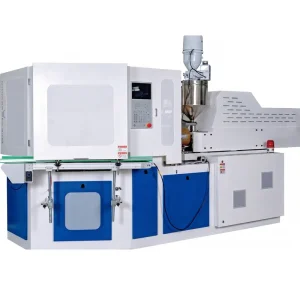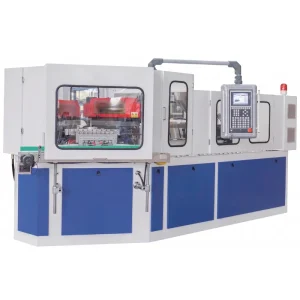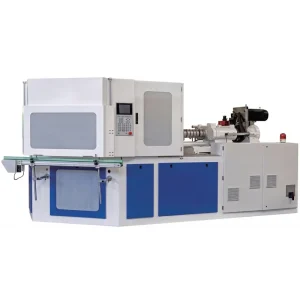
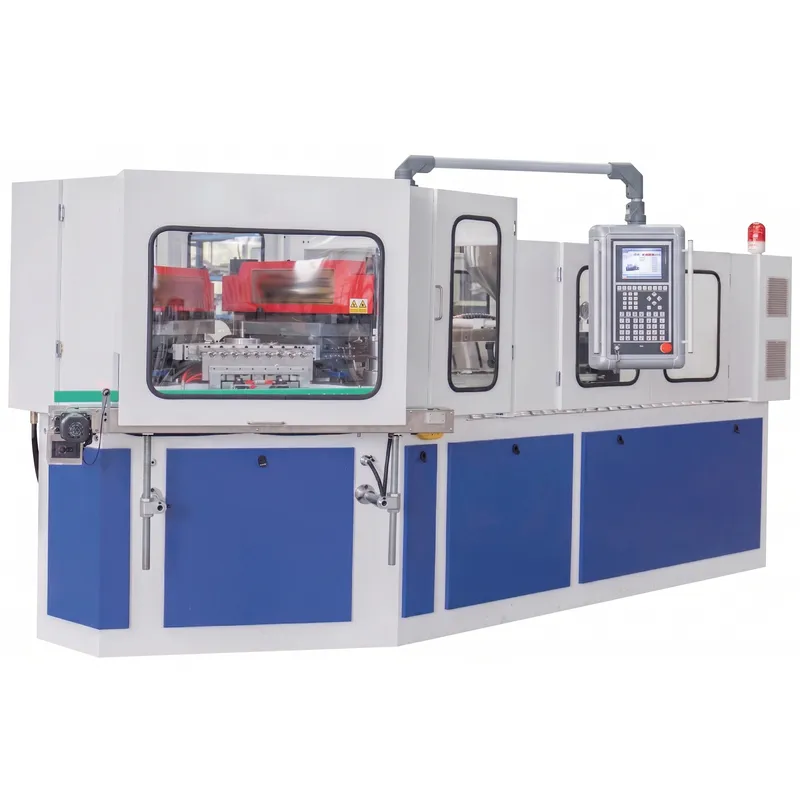
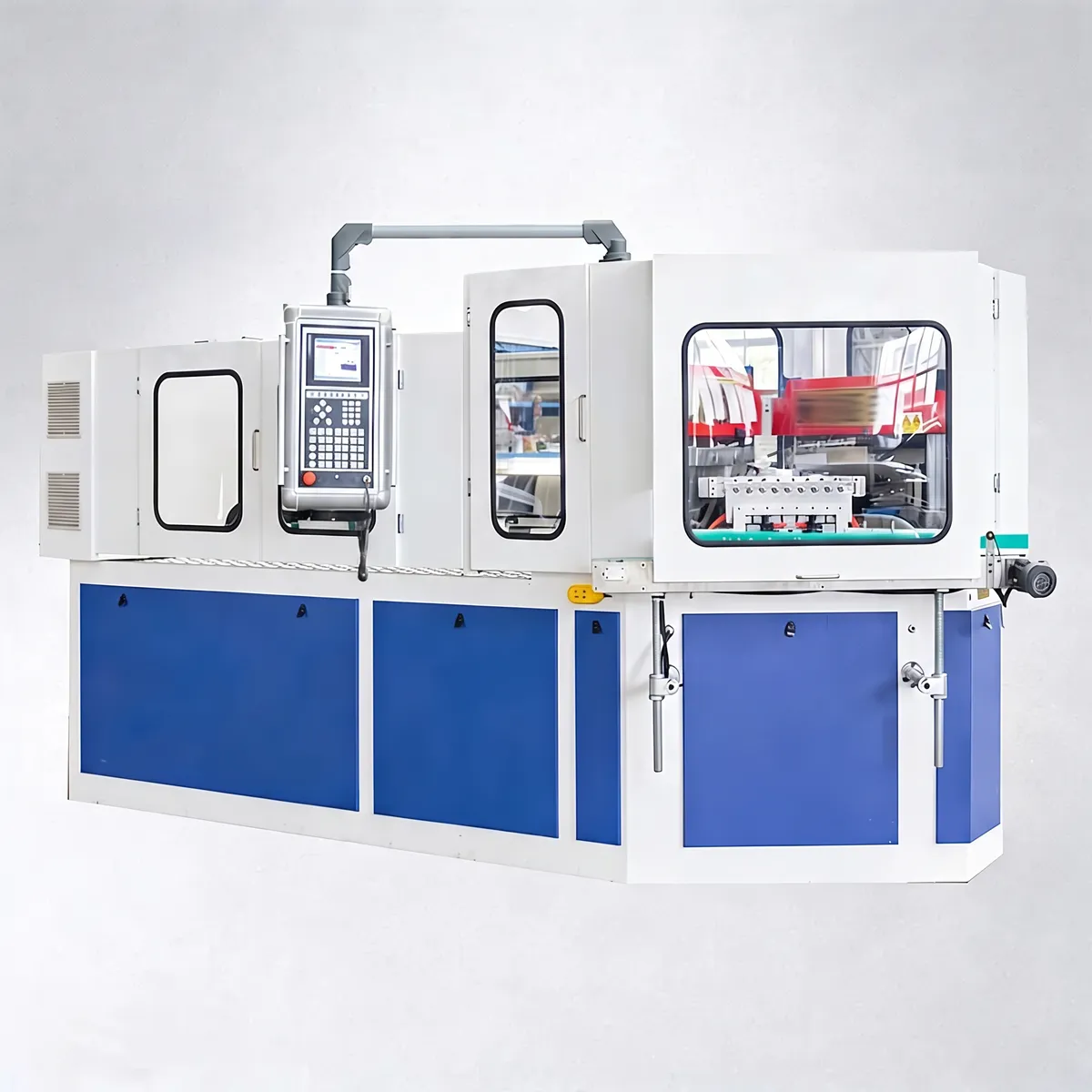
Mesin Cetak Tiup Injeksi ZQ60 Pengganti untuk Model Bloma IBM50
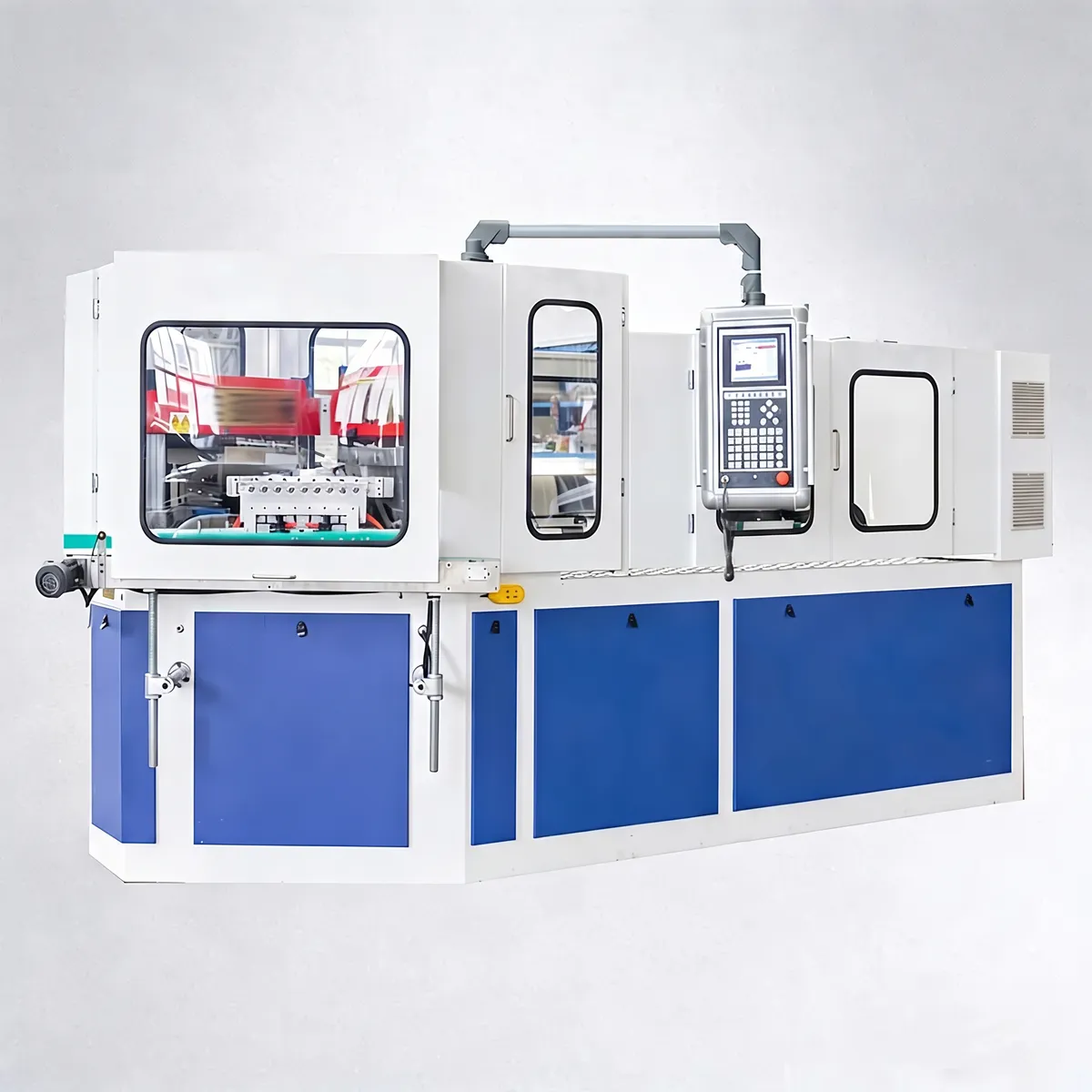
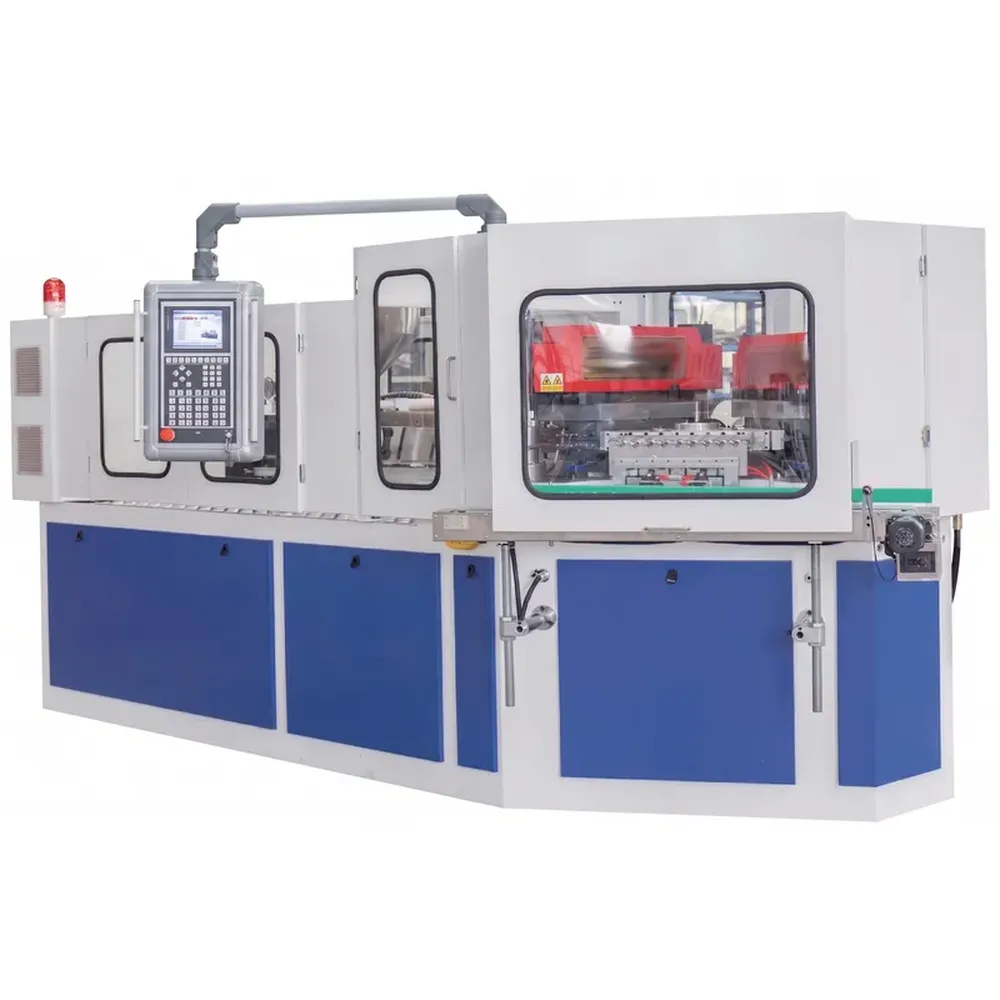
Mesin Cetak Tiup Injeksi ZQ60 adalah mesin IBM berkinerja tinggi dan sepenuhnya elektrik yang dirancang sebagai pengganti langsung untuk Model Bloma IBM50. Semua gerakan mesin sepenuhnya digerakkan oleh servo, menghilangkan penggunaan oli hidrolik dan risiko polusi yang terkait dengannya. Mesin cetak tiup injeksi satu langkah ini memberikan waktu siklus yang 20% lebih cepat daripada mesin hidrolik konvensional: untuk botol 30ml, setiap siklus selesai hanya dalam 8,2 detik, mencapai output harian standar 105.000 botol dan kapasitas puncak 115.000 botol per 24 jam.
Mesin Cetak Tiup Injeksi ZQ60 adalah mesin IBM berkinerja tinggi dan sepenuhnya elektrik yang dirancang sebagai pengganti langsung untuk Model Bloma IBM50. Semua gerakan mesin sepenuhnya digerakkan oleh servo, menghilangkan penggunaan oli hidrolik dan risiko polusi yang terkait dengannya. Mesin cetak tiup injeksi satu langkah ini memberikan waktu siklus yang 20% lebih cepat daripada mesin hidrolik konvensional: untuk botol 30ml, setiap siklus selesai hanya dalam 8,2 detik, mencapai output harian standar 105.000 botol dan kapasitas puncak 115.000 botol per 24 jam. Efisiensi energi ditingkatkan sebesar 30% dibandingkan model yang sebanding, dengan konsumsi daya hanya 12 kWh per jam selama produksi botol 30ml. Beroperasi pada tingkat kebisingan yang jauh lebih rendah daripada peralatan berbasis hidrolik, ZQ60 menggunakan encoder absolut di seluruh sistem servo-nya untuk menjamin pengulangan dan presisi dimensi yang luar biasa dari batch ke batch. Ini adalah mesin cetak tiup injeksi plastik yang ideal untuk fasilitas yang membutuhkan kepatuhan terhadap standar farmasi, kosmetik, atau makanan.
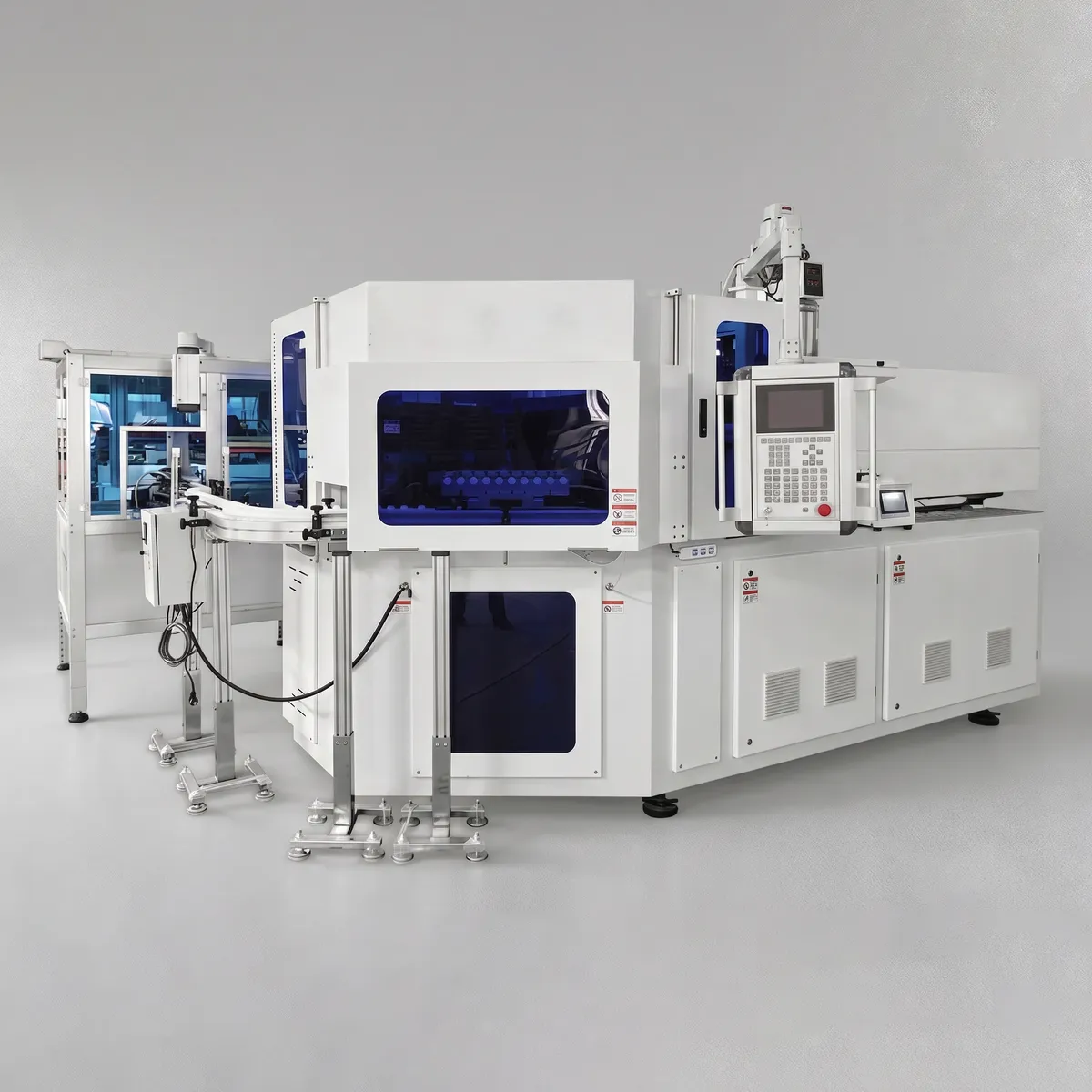
Mekanisme penjepit bertekanan yang dirancang khusus memberikan gaya penjepit yang dapat disesuaikan mulai dari 40 hingga 80 ton, memungkinkan adaptasi terhadap berbagai ukuran botol dan ketebalan dinding, dari vial 10 ml hingga wadah 1000 ml. Desain struktural dari bawah ke atas sepenuhnya mencegah oli pelumas masuk ke area cetakan, memenuhi standar higienis ketat yang dibutuhkan untuk lini pengemasan farmasi dan botol kosmetik premium. Sebagai mesin cetak tiup injeksi yang sepenuhnya dapat disesuaikan, mesin ini menggabungkan unit injeksi silinder listrik untuk konsistensi tembakan yang unggul dan interval perawatan yang jauh lebih singkat. Sistem konveyor terintegrasi dapat dihubungkan ke peralatan inspeksi visual (untuk deteksi partikel asing, bahan leher yang tidak mencukupi, dan identifikasi dasar yang tidak rata), penguji kebocoran samping, mesin pelabelan, dan lini pengemasan karton otomatis, memungkinkan produksi 24 jam tanpa pengawasan sepenuhnya. ZQ60 adalah pilihan yang kompetitif dan tahan masa depan di antara produsen dan pemasok mesin cetak tiup injeksi di seluruh dunia.
Mold Cavitation (For Reference)
| Perkiraan Volume | 10 ml | 30 ml | 60 ml | 100 ml | 250 ml | 500 ml | 1000 ml |
| Kavitasi Maksimum | 14 | 10 | 10 | 8 | 5 | 3 | 2 |
Spesifikasi Teknis
| Barang | Satuan | ZQ60 |
| Sistem Injeksi | ||
| Diameter Sekrup | mm | 45/50 |
| Sekrup L/D | % | 22:1 |
| Berat suntikan! | G | 260/383 |
| Daya pemanasan | KW | 14 |
| Jumlah zona barel | 3+N | |
| Langkah injeksi | mm | 160 |
| Sistem Penjepit | ||
| Gaya penjepitan injeksi | KN | 600 |
| Langkah pembukaan untuk injeksi | mm | 140 |
| Gaya jepit tiupan | KN | 100 |
| Langkah pembuka untuk meniup | mm | 140 |
| Tinggi angkat meja putar | mm | 70 |
| Cetakan | ||
| Ukuran Pelat Maksimum (PxL) | mm | 600x390 |
| Ketebalan cetakan | mm | 240 |
| Diameter botol | mm | 120 |
| Tinggi botol | mm | 220 |
| Tinggi botol yang sesuai | mm | 15-200 |
| Gerakan pengupasan | mm | 230 |
| Sistem hidrolik | ||
| Tekanan Hidraulik | Peta | 14 |
| Tenaga motor | KW | 18.5/22 |
| Siklus pengeringan | S | 4 |
| Daya Total | KW | 37 |
| Daya operasi | % | 52-70 |
| Yang lain | ||
| Tekanan udara minimum udara terkompresi | MPa | 0.7-1.2 |
| Kapasitas udara terkompresi | M³/menit | 0.7 |
| Aliran air | M³/jam | 4 |
| Tekanan air pendingin | MPa | 0.3-0.4 |
| Dimensions (L x W x H ) | M | 3.8x1.4x2.18 |
| Berat bersih | Ton | 5 |
Merek dan Model yang Dapat Diganti
| Kekuatan Abadi | Gaya Jepit | Jomar | SUMA | Uniloy | Bloma |
| ZQ40 | 40T | IBM40 | 40iB | UIB70 | IBM45 |
| ZQ60 | 60T | IBM65 | 65iB | UIB90 | IBM50 |
| ZQ80 | 80T | IBM85S | 85iB | UIB120 | IBM85 |
| ZQ110 | 110T | IBM135 | 135iB | UIB150 | IBM135 |
| ZQ135 | 135T | IBM175 | 175iB | UIB180 |
Diameter Sekrup Mesin IBM
| Kekuatan Abadi | Diameter Sekrup | Jomar | SUMA | Bloma |
| ZQ40 | 40/45 | 35/40 | 40 | 45 |
| ZQ60 | 45/50 | 45 | 40/50 | 50 |
| ZQ80 | 55 | 55 | 50/60 | 50 |
| ZQ110 | 65 | 65 | 65/76 | 70 |
| ZQ135 | 70 | 70 | 65/76 |
Mesin IBM Injeksi Berat
| Kekuatan Abadi | Berat Injeksi | Jomar | SUMA | Bloma |
| ZQ40 | 190/260 | 180 | 169 | 180 |
| ZQ60 | 260/383 | 205 | 169/264 | 240 |
| ZQ80 | 466 | 300 | 333/480 | 310/280 |
| ZQ110 | 540 | 450/550 | 580/770 | 560 |
| ZQ135 | 650 | 450/550 | 580/770 |
Gaya Penjepit Injeksi Mesin IBM
| Kekuatan Abadi | Gaya Penjepitan Injeksi | Jomar | SUMA | Bloma |
| ZQ40 | 400KN | 340KN | 386KN | 350KN |
| ZQ60 | 600KN | 460KN | 580KN | 500KN |
| ZQ80 | 800KN | 680KN | 720KN | 700KN |
| ZQ110 | 1100KN | 1210KN | 1200KN | 1250KN |
| ZQ135 | 1350KN | 1560KN | 1600KN |
Ukuran Cetakan Mesin IBM
| Kekuatan Abadi | Ukuran Cetakan | Jomar | SUMA | Bloma |
| ZQ40 | 480 × 340 | 394 × 508 | 470 × 350 | 450 × 390 |
| ZQ60 | 600 × 390 | 432 × 660 | 620 × 400 | 620 × 430 |
| ZQ80 | 800 × 400 | 464 × 749 | 700 × 400 | 620 × 430 |
| ZQ110 | 1100 × 460 | 559 × 1118 | 1000 × 500 | 900 × 480 |
| ZQ135 | 1300 × 500 | 635 × 1372 | 1200 × 600 |
Ukuran Mesin IBM
| Kekuatan Abadi | Ukuran Cetakan (M) | Jomar | SUMA | Bloma |
| ZQ40 | 3,8 × 1,3 × 1,7 | 2,72 × 1,9 × 2,75 | 3,8 × 1,5 × 2,3 | 4,05 × 1,52 × 2,55 |
| ZQ60 | 3,8 × 1,4 × 1,8 | 2,92 × 1,98 × 3,41 | 4 × 1,7 × 2,3 | 620 × 430 × 2,55 |
| ZQ80 | 4,5 × 1,6 × 2 | 3,33 × 1,94 × 3,41 | 4,5 × 2 × 2,6 | 620 × 430 × 2,55 |
| ZQ110 | 5 × 1,8 × 2,2 | 3,79 × 2,4 × 3,41 | 5 × 2,4 × 2,7 | 900 × 480 × 2,55 |
| ZQ135 | 5,5 × 2 × 2,4 | 4,22 × 2,67 × 3,58 | 6 × 2,6 × 2,7 |
Catatan: Merek-merek disebutkan hanya untuk membantu pelanggan memilih produk, bukan untuk menjual produk dari merek-merek tersebut.
Karakteristik Mesin Cetak Tiup Injeksi ZQ60
1. Kapasitas Produksi Tinggi
Mesin cetak tiup injeksi ZQ60 menghasilkan output berkelanjutan sebanyak 105.000 botol per hari untuk wadah 30ml, dengan throughput puncak 115.000 botol dalam 24 jam. Waktu siklus 20% lebih singkat daripada mesin hidrolik, sistem ini membutuhkan intervensi manual minimal, dan operasi berkelanjutan didukung sepenuhnya. Produsen yang melayani sektor kosmetik, farmasi, atau makanan bervolume tinggi mendapatkan keunggulan kompetitif langsung dalam memenuhi pesanan besar sesuai jadwal.
2. Opsi Cetakan yang Dapat Disesuaikan
Salah satu keunggulan utama mesin cetak tiup injeksi kustom yang dijual ini adalah keserbagunaannya. Gaya penjepit yang dapat disesuaikan dari 40 hingga 80 ton mengakomodasi volume botol dari 10ml hingga 1000ml dengan hingga 14 rongga. Mesin ini dapat menangani format silinder, oval, dan bulat. Para insinyur dapat menyempurnakan parameter injeksi, tata letak rongga, dan langkah pelepasan untuk menyesuaikan dengan persyaratan produk yang tepat, sehingga cocok untuk berbagai lini pengemasan tanpa investasi modal tambahan.
3. Efisiensi Energi yang Unggul
Sebagai mesin cetak tiup injeksi listrik sepenuhnya, ZQ60 mengkonsumsi sekitar 12 kWh per jam dalam produksi botol standar 30ml, pengurangan sebesar 30% dibandingkan dengan mesin hidrolik yang setara. Arsitektur penggerak servo sepenuhnya menghilangkan kehilangan pompa hidrolik saat idle, dan struktur penjepit bertekanan yang unik memastikan silinder penguat tidak ikut serta dalam langkah buka/tutup, sehingga semakin mengurangi penggunaan energi sebesar 10 hingga 20% dibandingkan dengan rata-rata industri. Tagihan listrik yang lebih rendah dan jejak karbon yang berkurang menjadikannya pilihan berkelanjutan bagi para produsen.
4. Pengoperasian dan Perawatan yang Mudah
Meskipun dilengkapi teknologi gerak servo canggih, ZQ60 dirancang untuk pengoperasian harian yang sederhana. Antarmuka kontrol PLC yang intuitif memungkinkan pengaturan parameter dan perubahan produksi yang cepat. Unit injeksi silinder listrik secara signifikan mengurangi kebutuhan perawatan dibandingkan dengan rakitan hidrolik, karena tidak ada segel oli, pompa, atau sistem filtrasi yang perlu diservis. Encoder absolut pada sumbu servo mempertahankan posisi program melalui siklus daya, mengurangi waktu pengaturan setelah penghentian dan meminimalkan kebutuhan teknisi terampil.
5. Kontrol Kualitas dan Konsistensi
Encoder absolut di setiap sumbu servo memastikan pengulangan yang luar biasa dari satu tembakan ke tembakan berikutnya. Variasi ketebalan dinding dijaga dalam kisaran sekitar 1%, dibandingkan dengan 10 hingga 20% pada bagian yang dicetak dengan ekstrusi tiup. Penyelesaian leher yang dicetak injeksi menghilangkan sisa material yang terkait dengan proses ekstrusi, menghasilkan ulir tertutup 100% dan berat botol yang seragam. Integrasi inspeksi visual hilir lebih lanjut melindungi dari partikel asing, material mulut yang tidak mencukupi, dan cacat dasar, membangun rantai jaminan kualitas yang dibutuhkan oleh pelanggan industri farmasi dan industri yang diatur.
6. Kompatibel dengan Bloma IBM50 dan Lainnya
ZQ60 adalah pengganti terverifikasi untuk mesin IBM model Bloma IBM50, menawarkan gaya penjepitan injeksi 600 kN dibandingkan dengan Bloma IBM50 yang hanya 500 kN, dan pelat cetakan berukuran 600x390mm. Mesin ini juga menggantikan Jomar IBM65, SUMA 65iB, dan Uniloy UIB90, memberikan fasilitas yang melakukan peningkatan dari platform mana pun dengan bentuk yang familiar namun dengan kinerja penggerak listrik yang jauh lebih canggih dan harga mesin cetak tiup injeksi per unit output yang lebih kompetitif.
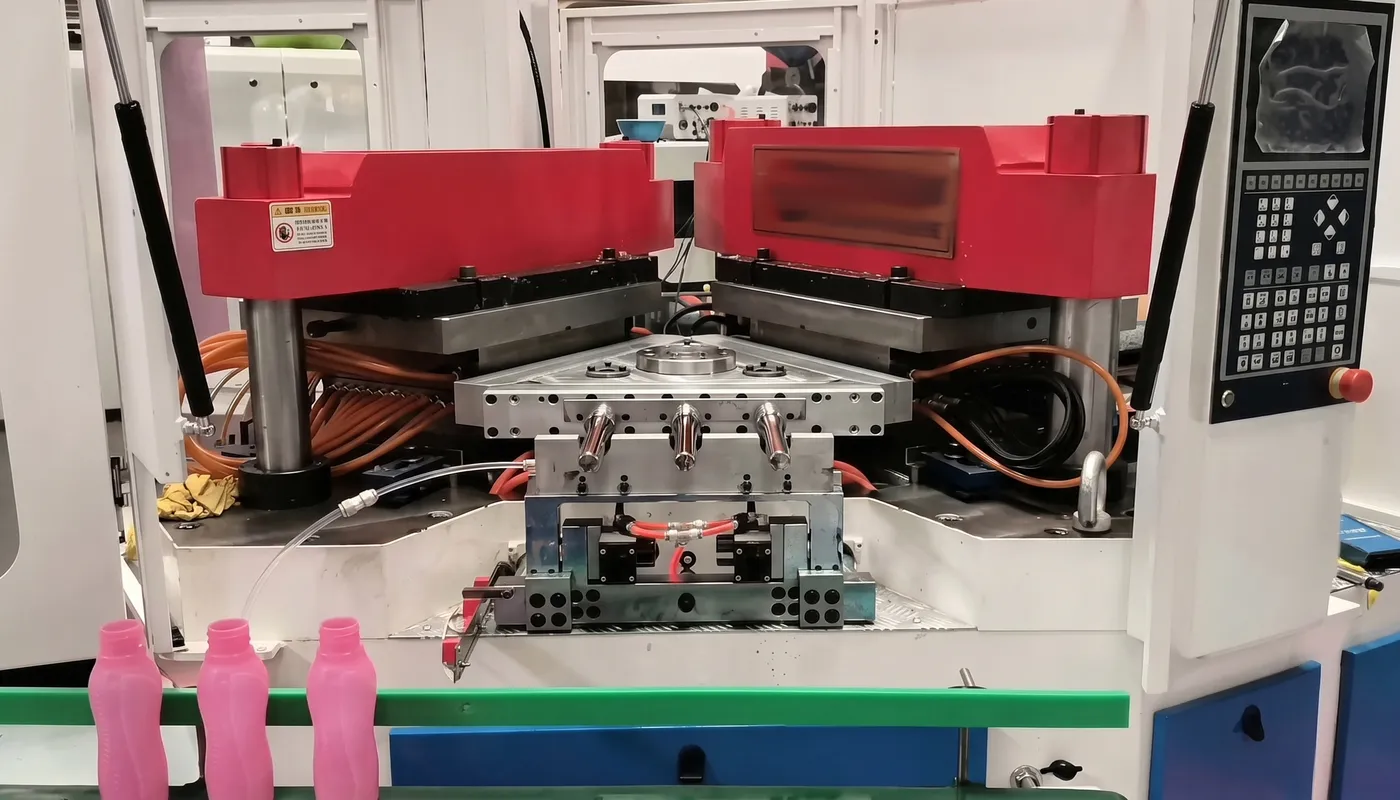
Injection Blow Molding Machine Process
Mesin cetak tiup injeksi IBM menggunakan proses multi-tahap untuk memproduksi botol plastik berkualitas tinggi. Setiap tahap memainkan peran penting dalam membentuk produk akhir dan memastikan konsistensi di setiap rongga dan setiap siklus.
Langkah 1: Injeksi
Pada tahap injeksi, mesin melelehkan polimer yang dipilih dan menyuntikkannya di bawah tekanan yang tepat ke dalam rongga cetakan baja yang terbelah. Ini membentuk preform, juga dikenal sebagai parison, dengan distribusi material yang mencerminkan dinding botol akhir. Metode preform cetakan injeksi memastikan setiap botol dimulai dari bentuk dasar yang seragam sempurna, yang sangat penting untuk menjaga kualitas hilir dan mencapai akurasi penyelesaian leher yang konsisten yang tidak dapat ditiru oleh metode tiup.
Langkah 2: Transfer
Setelah preform dibentuk pada batang inti di stasiun injeksi, meja putar mengangkat dan mengindeksnya ke stasiun pencetakan tiup. Pemindahan ini diatur waktunya secara tepat untuk mempertahankan suhu preform optimal untuk proses peniupan. Pembagi sudut presisi tinggi pada ZQ60 menyinkronkan pengangkatan dan rotasi turret, memastikan setiap batang inti tiba di stasiun peniupan dalam orientasi yang benar, menjaga posisi ketebalan dinding yang konsisten di semua rongga secara bersamaan.
Langkah 3: Pencetakan Tiup
Udara bertekanan 0,7 hingga 1,2 MPa disuntikkan ke dalam preform di dalam cetakan tiup aluminium, mengembangkannya melawan dinding rongga untuk membentuk bentuk wadah akhir. Langkah pencetakan tiup injeksi IBM ini memungkinkan kontrol yang tepat atas geometri botol, distribusi ketebalan dinding, dan rasio peregangan material. Hasilnya adalah botol dengan integritas struktural yang sangat baik, permukaan internal yang halus, dan penampilan yang seragam, menjadikannya metode pilihan untuk aplikasi mesin pencetakan tiup injeksi PET di sektor farmasi dan perawatan pribadi.
Langkah 4: Pengeluaran
Pada tahap pelepasan akhir, wadah jadi dikeluarkan dari batang inti dengan langkah pelepasan 230 mm. Struktur mesin dari bawah ke atas memastikan tidak ada pelumas yang bersentuhan dengan botol selama atau setelah pelepasan, sehingga menjaga kepatuhan terhadap standar kebersihan. Karena pencetakan tiup injeksi tidak menghasilkan sisa parison atau limbah pemangkasan, setiap botol yang dikeluarkan adalah produk jadi yang tidak memerlukan operasi pemangkasan sekunder. Karakteristik bebas limbah dari mesin pencetakan tiup injeksi IBM ini merupakan keuntungan biaya utama dibandingkan alternatif berbasis ekstrusi.
Sektor Aplikasi
1. Botol Kosmetik
Kemasan kosmetik premium membutuhkan hasil akhir permukaan yang sempurna, akurasi dimensi, dan konsistensi di seluruh produksi volume tinggi. Plastik ZQ60 mesin cetak tiup injeksi Memproduksi botol serum, wadah alas bedak, botol lotion, dan kemasan roll-on dari PCTG, ABS, dan PS. Ketebalan dinding yang seragam dan ulir leher yang dicetak dengan injeksi memastikan penutupan yang rapat dan anti bocor, sebuah persyaratan penting untuk lini kosmetik merek mewah di mana tingkat penolakan kualitas harus mendekati nol.
2. Botol Minuman
Untuk aplikasi minuman kelas makanan yang membutuhkan wadah PP atau HDPE hingga 1000ml, ZQ60 menghadirkan produksi yang aman untuk makanan tanpa risiko kontaminasi oli hidrolik. Desain bottom-up dan area cetakan yang higienis membuatnya sesuai dengan peraturan bahan kontak makanan. Dengan hingga 10 rongga dalam konfigurasi 30ml, sangat cocok untuk porsi minuman kesehatan sekali saji, produk susu dalam botol PP, dan kemasan bakteri asam laktat dalam wadah PS transparan.
3. Botol Kimia
ZQ60 menangani botol kimia HDPE dan PP yang membutuhkan ketahanan kimia dan integritas dinding yang kuat. Konfigurasi rongga yang dapat disesuaikan mendukung berbagai volume mulai dari wadah semprot pemicu hingga botol besar 1000ml untuk bahan pembersih industri, larutan agrokimia, dan reagen laboratorium. Proses IBM yang bebas limbah menjaga biaya per unit tetap sangat kompetitif bahkan untuk kemasan bahan kimia khusus yang membutuhkan toleransi ketat.
4. Botol Farmasi
Pengemasan farmasi merupakan aplikasi yang paling menantang untuk mesin cetak tiup injeksi mana pun. ZQ60 memenuhi persyaratan higienis GMP melalui desain zona cetakan bebas minyak dan akurasi ulir tertutup 100%. Mesin ini menghasilkan botol tablet, wadah sirup, botol tetes mata, botol semprot hidung, dan vial penetes dalam bahan PP, HDPE, dan PC. Setiap botol keluar dari mesin tanpa perlu dipotong, dengan distribusi dinding yang seragam dan hasil cetakan leher yang presisi, tahan anak atau anti-rusak.
5. Botol Sabun Cuci Tangan
Segmen perawatan pribadi membutuhkan produksi massal dispenser sabun cuci tangan, pembersih tangan, dan sabun cair berbahan HDPE atau PP. Mesin ZQ60 memproduksi wadah-wadah ini sebanyak 105.000 unit per hari dalam ukuran standar 30ml, dan dapat ditingkatkan ke ukuran 100ml, 250ml, dan 500ml. Kompatibilitas dengan mesin pelabelan hilir dan lini pengemasan otomatis memungkinkan produksi tanpa pengawasan sepenuhnya, sehingga mengurangi biaya tenaga kerja secara signifikan bagi produsen FMCG yang bersaing dalam hal volume dan kecepatan pengiriman.
6. Botol Peras
Botol tekan fleksibel LDPE dan HDPE untuk bumbu, perekat, gel perawatan luka, dan pewarna rambut memerlukan kontrol ketebalan dinding yang presisi yang hanya dapat diberikan oleh mesin cetak tiup injeksi IBM. ZQ60 mempertahankan variasi ketebalan dinding di bawah 1% per botol, memastikan gaya tekan yang konsisten dan pengeluaran yang andal. Kompatibilitas materialnya yang luas dan gaya penjepit yang dapat disesuaikan memungkinkan mesin ini untuk menghasilkan versi kaku dan semi-fleksibel dari desain wadah yang sama.
7. Botol Sampo
Merek perawatan rambut membutuhkan kemasan dengan kilap yang konsisten, bagian dinding yang seragam, dan tanpa cacat garis sambungan. Proses mesin cetak injeksi tiup ZQ60 menghasilkan permukaan yang bebas dari noda garis sambungan dan bekas cetakan berlebih, menghasilkan botol sampo, kondisioner, dan perawatan rambut dengan kapasitas 250ml hingga 1000ml dengan 2 hingga 5 rongga per siklus. Mesin ini terintegrasi dengan jalur pelabelan, sehingga ideal untuk fasilitas peng bottling sampo dengan produksi tinggi.
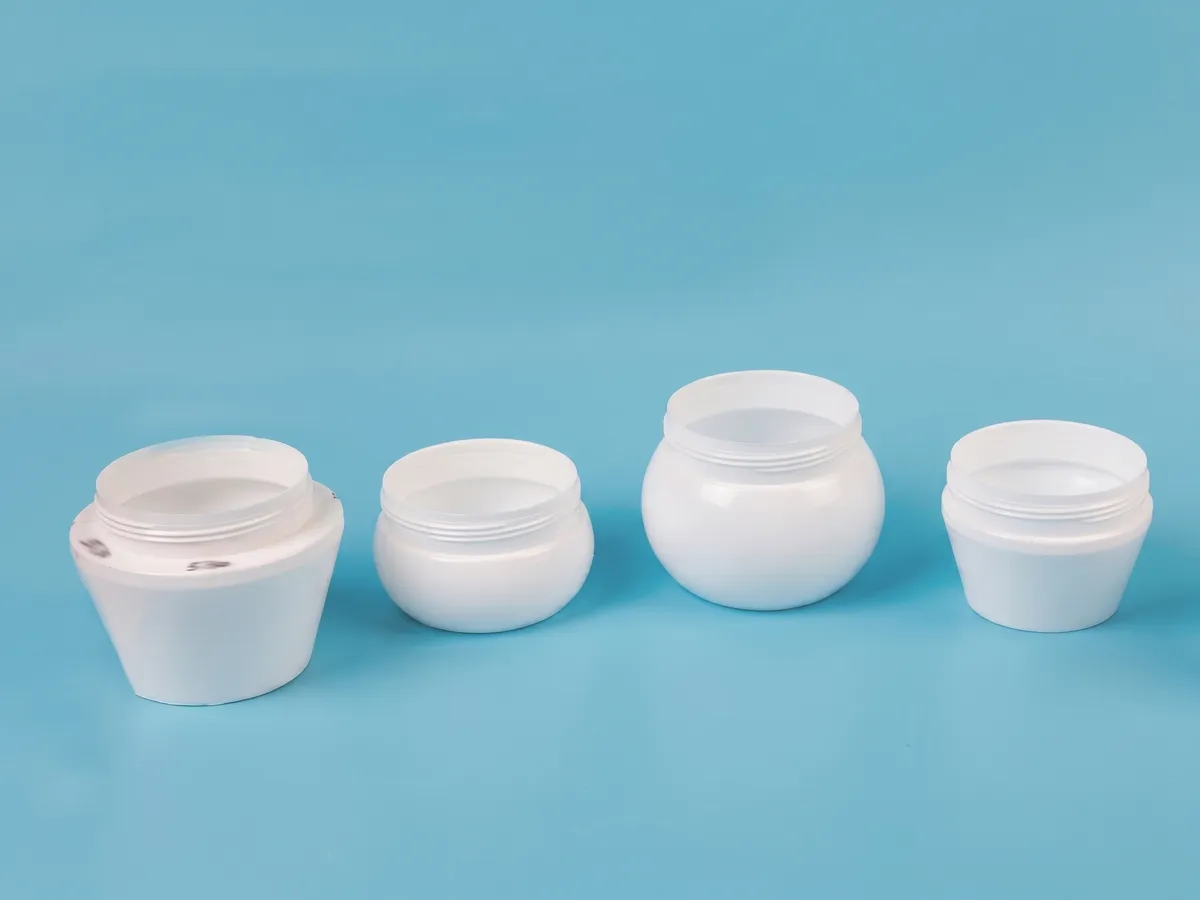 |
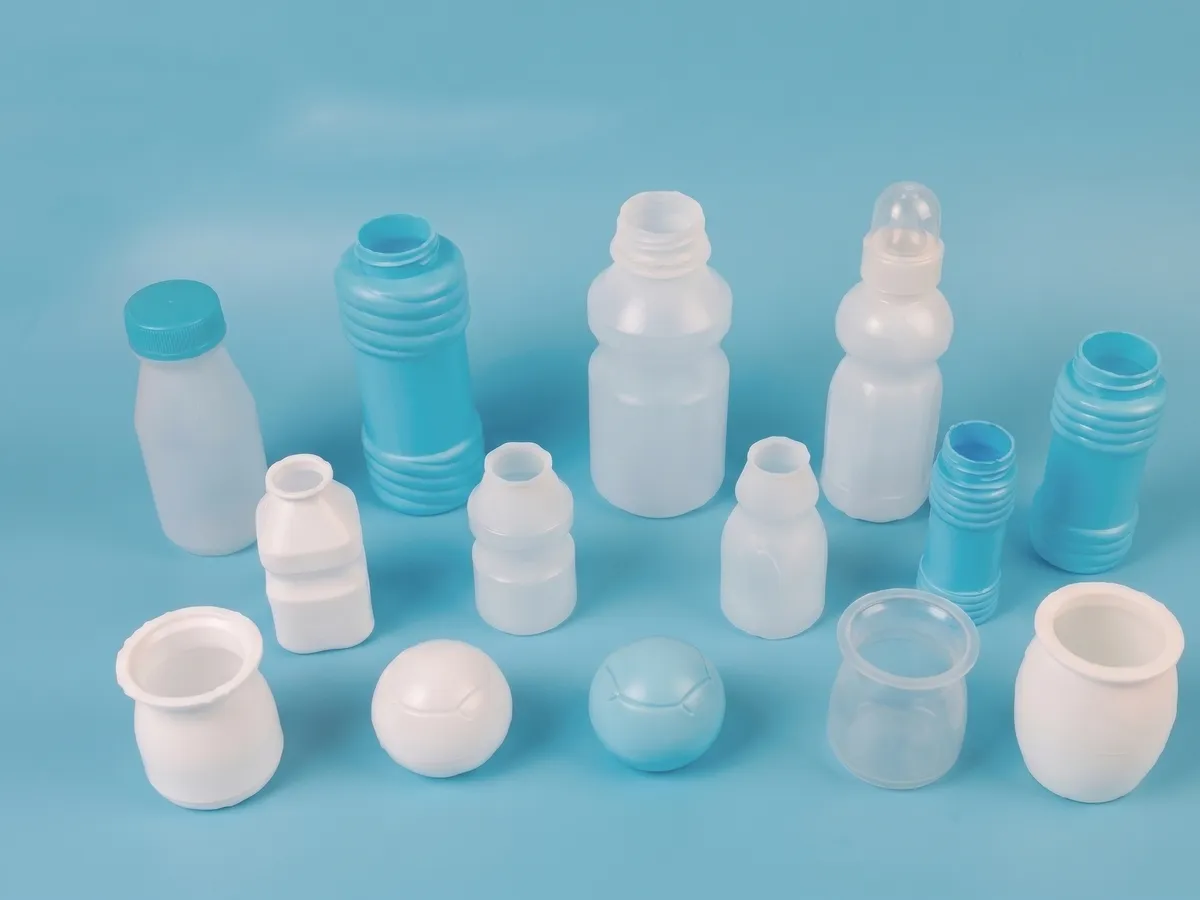 |
| Botol Kosmetik | Feeding Bottles |
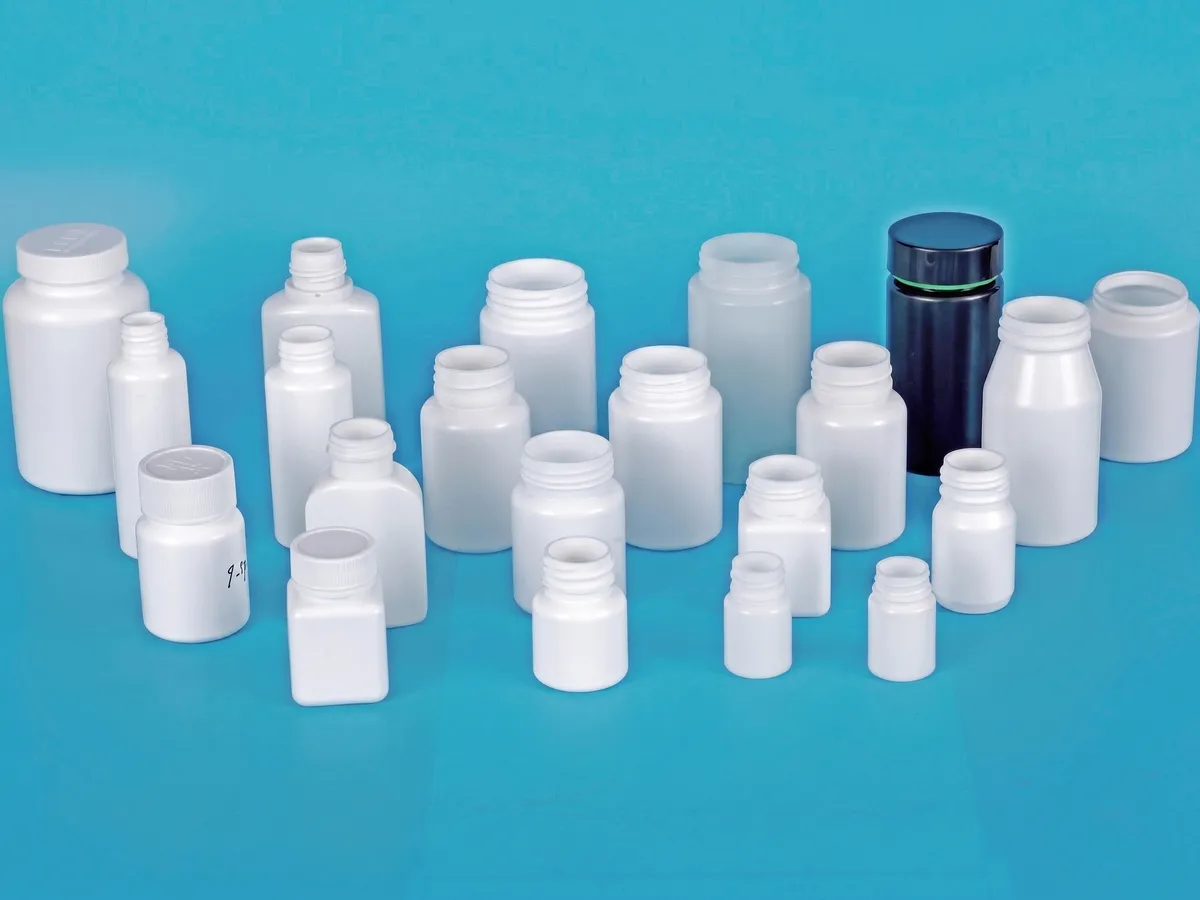 |
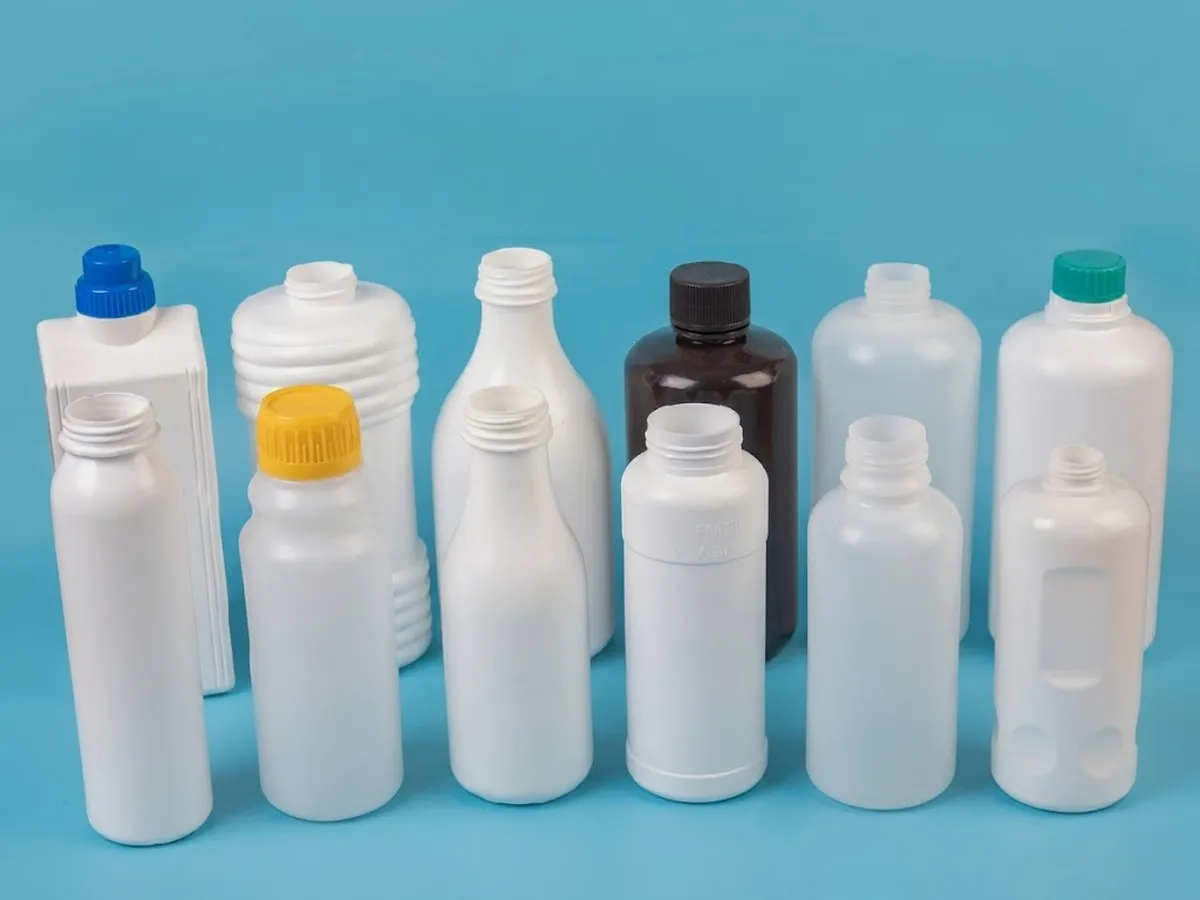 |
| Botol Farmasi | Botol Makanan |
ZQ60 IBM Machine Components
Sebagai mesin cetak tiup injeksi satu langkah, mesin ZQ60 IBM mengintegrasikan semua tahapan produksi dalam satu unit kompak.
1. Persiapan Stok / Perangkat Injeksi
Unit injeksi terdiri dari tabung pemanas dengan sekrup 45/50mm, 3+N zona pemanas, dan daya pemanas 14 kW. Unit ini memplastiskan butiran polimer mentah dan menghasilkan 260g atau 383g lelehan per tembakan dengan penggerak silinder listrik yang memastikan volume injeksi yang berulang, menghilangkan variasi tekanan dan degradasi segel yang biasa terjadi pada sistem injeksi hidrolik pada Bloma IBM50 dan mesin serupa.
2. Sistem Hot Runner
Sistem hot runner yang dioptimalkan mendistribusikan polimer cair ke setiap rongga injeksi pada suhu dan tekanan yang seragam. Hal ini mencegah penyimpangan berat gram antar rongga dan meminimalkan limbah. Desain hot runner Seri ZQ menggabungkan nozel yang dipanaskan secara independen, memastikan kedatangan muka lelehan yang konsisten dan ketebalan dinding yang seragam di setiap preform di seluruh lebar pelat 600x390mm.
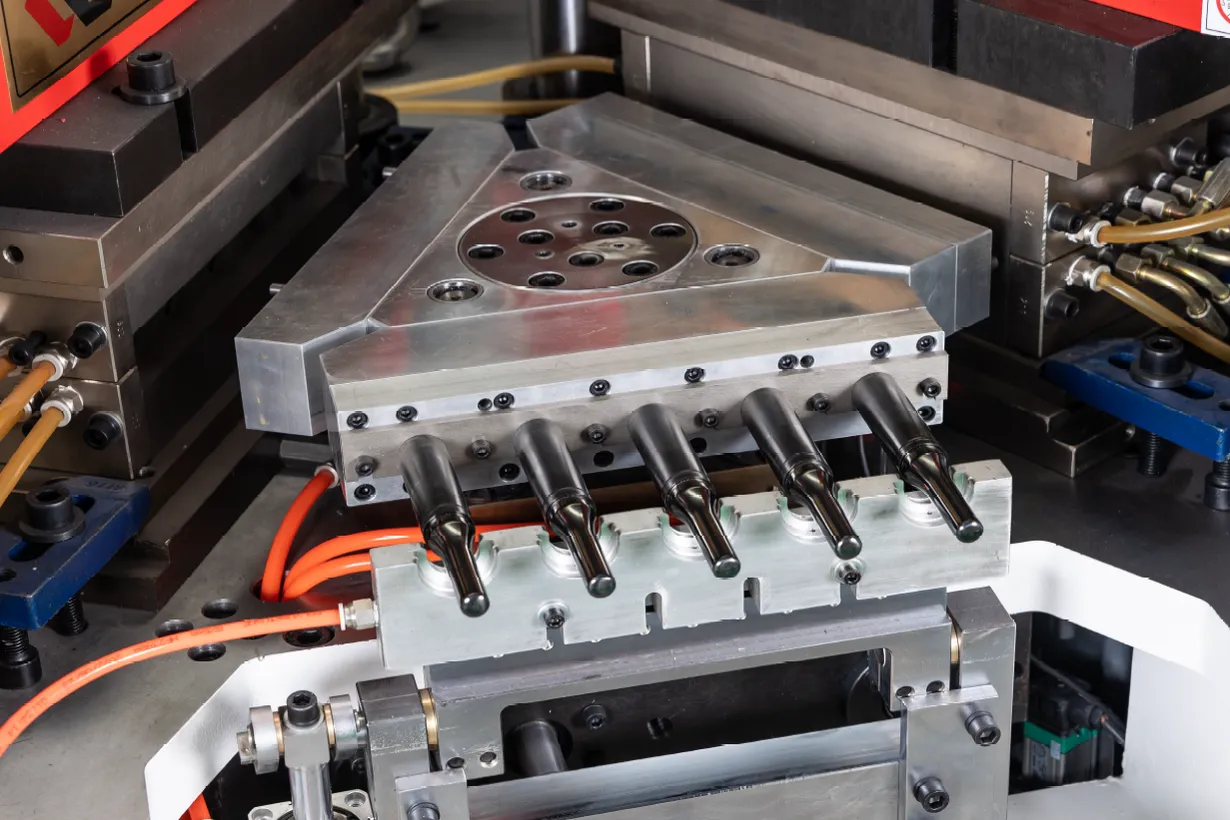
3. Core Rod (Mandrel)
Batang inti merupakan komponen presisi utama dari setiap mesin IBM, yang menentukan geometri internal dari preform dan botol. Mandrel ZQ60 memiliki struktur khusus yang dioptimalkan untuk siklus pencetakan cepat dan efisiensi pendinginan inti yang lebih baik. Suhu mandrel yang konsisten secara langsung mengontrol distribusi dinding preform, dan desain dari bawah ke atas memastikan oli pelumas tidak pernah bersentuhan dengan permukaan mandrel atau bagian dalam botol.
4. Preform Botol (Parison)
Preform cetakan injeksi adalah produk antara yang membawa ulir leher botol akhir, massa material, dan profil dinding. Tidak seperti parison ekstrusi, setiap preform IBM memiliki bentuk yang dikontrol secara presisi tanpa variasi lendutan gravitasi. Leher preform sepenuhnya dibentuk pada tahap injeksi, menjamin akurasi dimensi 100% dan kompatibilitas segel kedap udara sebelum tahap peniupan dimulai.
5. Cetakan Injeksi
Terbuat dari paduan baja S136 impor atau baja tahan karat 4Cr13, cetakan injeksi ini memberikan bentuk eksternal untuk preform. Desain rongga aktif dan sisipan leher memungkinkan penggantian komponen tanpa melepas seluruh dasar cetakan, sehingga secara signifikan mengurangi waktu henti pergantian. Cetakan ini mencakup jalur penyaluran oli yang dirancang khusus untuk menjaga suhu tetap stabil dan seragam di seluruh rongga, sehingga memperpanjang masa pakai secara signifikan.
6. Stasiun Injeksi
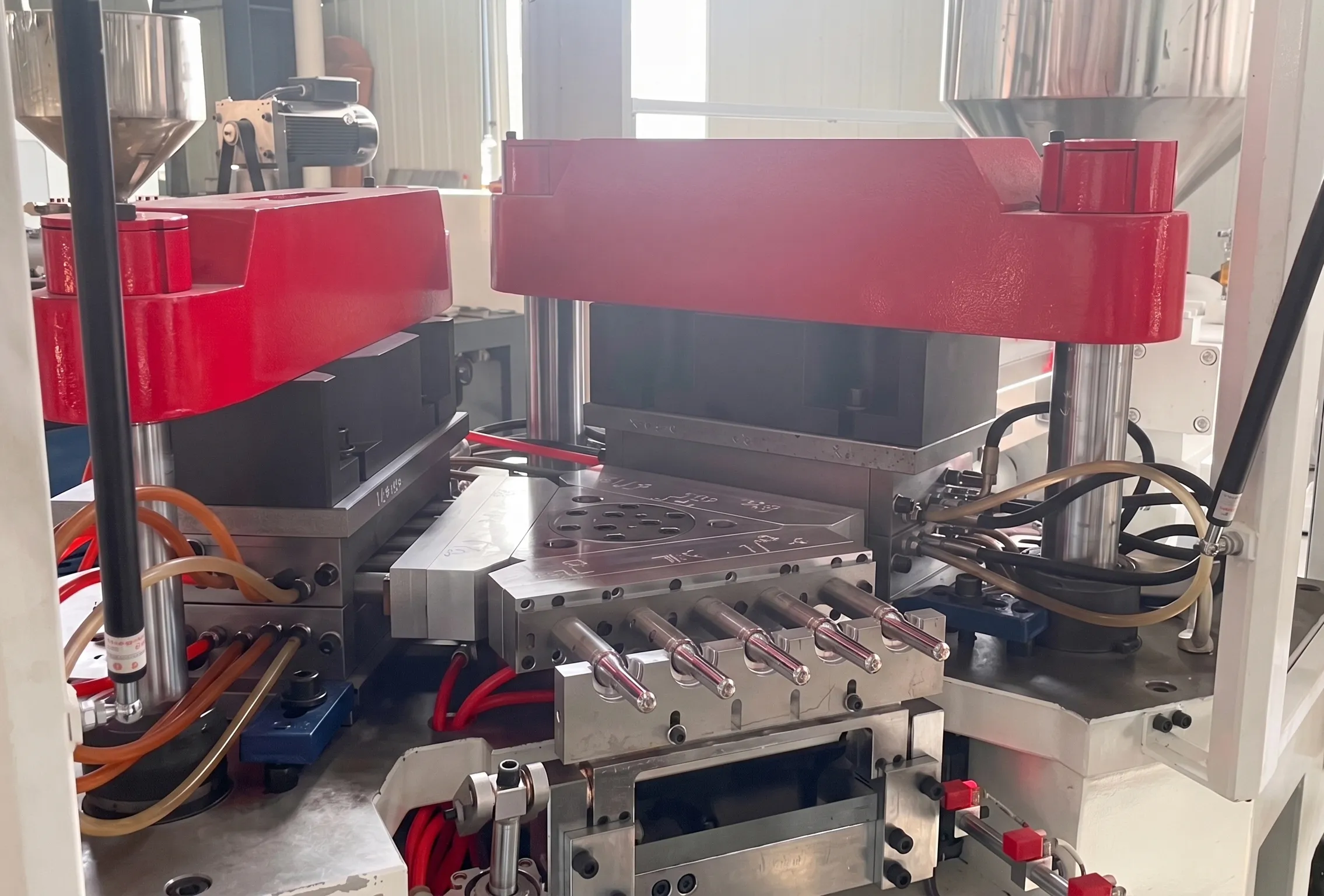
Stasiun injeksi adalah tempat lelehan dari laras diinjeksikan ke dalam rongga cetakan tertutup di sekitar batang inti dengan gaya penjepit 600 kN dan langkah pembukaan 140 mm. Struktur pelat dengan kekakuan tinggi pada ZQ60 menjaga paralelisme cetakan di bawah beban, mencegah kelebihan material pada permukaan garis pemisah dan memastikan ulir leher preform terbentuk dengan dimensi yang tepat, yang merupakan prasyarat untuk kepatuhan kemasan farmasi.
7 dan 8. Stasiun Peniupan dan Cetakan Peniupan
Di stasiun peniupan, preform dimasukkan ke dalam cetakan tiup aluminium dan udara dengan tekanan 0,7 hingga 1,2 MPa disuntikkan untuk mengembangkan preform hingga mencapai bentuk wadah akhir. ZQ60 memberikan gaya penjepitan tiup 100 kN dan langkah pembukaan tiup 140 mm. Cetakan tiup dikerjakan dengan presisi untuk membentuk dinding botol, alas, dan geometri badan, dengan saluran air yang menjaga suhu cetakan sehingga memastikan pendinginan cepat dan waktu siklus yang singkat.
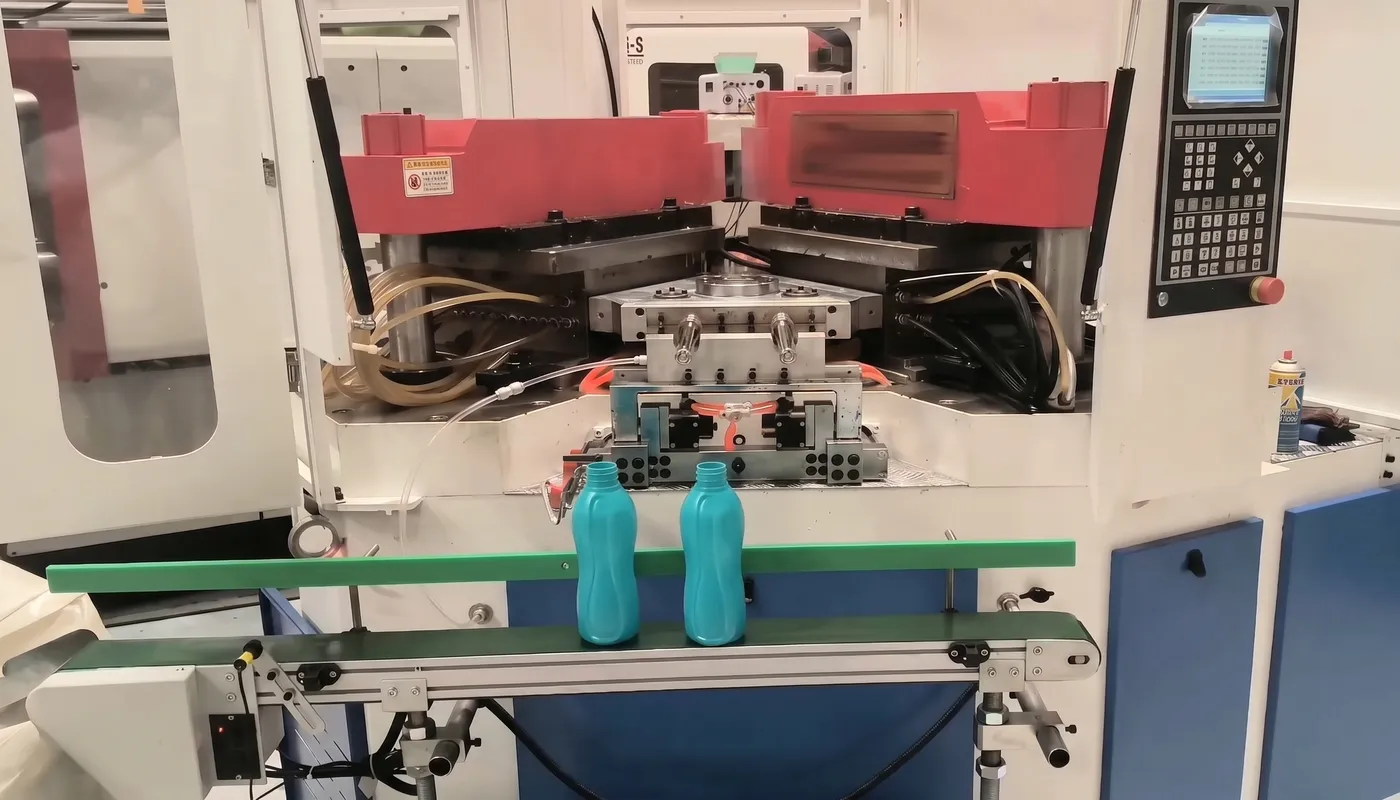
9. Stasiun Pengupasan
Stasiun pengupas mengeluarkan botol yang sudah jadi dan dingin dari batang inti dengan langkah pengupasan 230 mm. Pengeluaran yang bersih dan terkontrol sangat penting untuk mencegah deformasi botol atau kerusakan pada bagian leher botol di stasiun terakhir sebelum wadah mencapai konveyor. Mekanisme pengupasan ZQ60 dikalibrasi untuk seluruh rentang ketinggian botol 15 hingga 200 mm dan terintegrasi langsung dengan konveyor hilir dan jalur inspeksi visual opsional.
Keunggulan ZQ60 vs. Model Bloma IBM50
1. Higher Injection Clamping Force
ZQ60 menghasilkan gaya penjepitan injeksi 600 kN dibandingkan dengan Model Bloma IBM50 yang memiliki rating 500 kN. Kapasitas penjepitan yang lebih besar ini memungkinkan ZQ60 untuk menahan cetakan dengan lebih aman pada kecepatan siklus yang lebih cepat, mengurangi pergerakan cetakan, pembentukan flash, dan waktu henti terkait flash, sekaligus mendukung berbagai konfigurasi rongga cetakan dan material dengan viskositas lebih tinggi termasuk PC dan ABS.
2. Sistem Servo Penuh vs. Sistem Penggerak Hidraulik
Mesin Bloma IBM50 beroperasi dengan sistem penggerak hidrolik yang memerlukan penggantian oli, filter, dan perawatan pompa secara berkala. Mesin cetak tiup injeksi listrik penuh ZQ60 menghilangkan semua oli hidrolik, sehingga menghilangkan risiko kebakaran, risiko kontaminasi terhadap produk farmasi, biaya pembuangan oli, dan biaya perawatan sistem hidrolik sepenuhnya. Biaya operasional selama periode 3 tahun berkurang secara signifikan.
3. 30% Lower Energy Consumption
Poros yang digerakkan servo hanya mengonsumsi daya selama gerakan aktif, tidak seperti pompa hidrolik yang beroperasi terus menerus di bawah beban. ZQ60 mengonsumsi sekitar 12 kWh per jam untuk produksi botol 30ml, dibandingkan dengan perkiraan 17 kWh atau lebih untuk IBM50 hidrolik yang setara dengan kapasitas produksi yang sama. Selama jadwal produksi tahunan 300 hari, peningkatan tunggal ini menghasilkan penghematan biaya listrik tahunan yang signifikan.
4. 20% Waktu Siklus Lebih Cepat
Motor servo merespons lebih cepat daripada aktuator hidrolik dan mencapai posisi target dengan akurasi dan pengulangan yang lebih tinggi, mengurangi waktu transisi yang tidak produktif di semua tahapan. ZQ60 mencapai siklus 8,2 detik untuk botol 30ml dibandingkan dengan siklus yang lebih lama yang menjadi ciri khas mesin hidrolik IBM, menghasilkan 105.000 botol per 24 jam dalam kondisi standar dan hingga 115.000 pada output puncak.
5. Gaya Jepit yang Dapat Diatur (40 hingga 80T)
Sementara Bloma IBM50 beroperasi dengan spesifikasi penjepitan tetap, ZQ60 memiliki rentang gaya penjepitan variabel dari 40 hingga 80 ton, yang dapat dikonfigurasi melalui parameter kontrol servo. Satu mesin dapat mengoptimalkan penjepitan untuk berbagai berat botol, ketebalan dinding, dan material tanpa penyesuaian mekanis, sehingga mempercepat pergantian produk dan mengurangi keausan cetakan akibat penjepitan berlebihan pada wadah yang lebih kecil dan ringan.
6. Desain Higienis dari Bawah ke Atas
ZQ60 menggabungkan tata letak struktural dari bawah ke atas yang secara fisik mencegah oli pelumas mencapai area cetakan. Desain ini tidak ditawarkan sebagai standar pada platform Bloma IBM50. Untuk fasilitas pengemasan farmasi, nutrisi, dan makanan yang harus memenuhi persyaratan kepatuhan GMP atau FDA, keunggulan struktural ini menghilangkan jalur risiko kontaminasi yang signifikan dan menyederhanakan audit dan sertifikasi fasilitas.
Karakteristik Cetakan Otomatis Seri ZQ
- Desain Rongga dan Leher Aktif
Cetakan injeksi ini memiliki rongga desain aktif dan sisipan leher dengan tata letak saluran oli yang dirancang khusus. Sisipan rongga individual dapat diganti dengan mudah tanpa membongkar seluruh dasar cetakan, memastikan ukuran billet tabung dan suhu cetakan tetap stabil selama dan setelah penggantian komponen. Pendekatan modular ini meminimalkan waktu henti produksi selama perawatan atau perubahan ukuran produk pada lini produksi mesin cetak tiup injeksi apa pun. - Konstruksi Baja Premium
Cetakan injeksi Seri ZQ diproduksi dari paduan baja S136 impor atau baja tahan karat 4Cr13, keduanya menawarkan kekerasan tinggi, ketahanan korosi, dan kemampuan pemolesan seperti cermin. Spesifikasi baja berkekuatan tinggi secara langsung meningkatkan masa pakai cetakan, mengurangi frekuensi penggantian cetakan yang mahal dan mempertahankan akurasi dimensi selama jutaan siklus, yang sangat penting bagi pelanggan farmasi dan kosmetik yang melakukan produksi dalam jangka panjang. - Hot Runner dan Mandrel yang Dioptimalkan
Sistem hot runner Seri ZQ dirancang untuk meminimalkan penyimpangan berat gram dan variasi ketebalan dinding antar rongga. Mandrel menggabungkan struktur internal khusus yang mempertahankan siklus pencetakan yang cepat dan pendinginan inti yang sangat efektif. Kombinasi ini memastikan setiap preform keluar dari stasiun injeksi dengan distribusi dinding yang seragam sebelum ditiup, secara langsung meningkatkan konsistensi botol dan mengurangi tingkat penolakan inspeksi kualitas di tahap selanjutnya. - Akurasi Ulir Tertutup 100%
Karena mulut botol dan ulirnya dibentuk dengan cetakan injeksi dan bukan dengan cara ditiup atau dipotong, cetakan Seri ZQ menghasilkan hasil akhir leher botol yang akurat ukurannya dan tersegel sesuai standar 100%. Ini adalah karakteristik kualitas terpenting untuk kemasan farmasi, nutrisi, dan kosmetik, di mana ulir leher botol yang tidak sempurna menyebabkan kebocoran, kegagalan uji torsi, dan ketidakpatuhan terhadap peraturan selama audit kualitas. - Tanpa Kilatan, Tanpa Limbah
Cetakan Seri ZQ dirancang sedemikian rupa sehingga botol keluar dari mesin tanpa gerigi, sisa material, atau limbah material pada mulut atau dasar botol. Tidak seperti wadah hasil cetakan tiup ekstrusi di mana 20 hingga 40% limbah dihasilkan melalui pemangkasan sisa material, produk hasil cetakan tiup injeksi dari ZQ60 tidak memerlukan operasi pemangkasan sekunder. Hal ini menghilangkan satu stasiun kerja, pemborosan material, dan risiko kualitas akibat kerusakan pemangkasan pada ulir leher wadah. - Kualitas Dimensi yang Konsisten
Desain cetakan Seri ZQ memastikan dimensi produk, berat, posisi garis pemisah, dan ketebalan dinding konsisten di semua rongga dan sepanjang masa pakai cetakan selama produksi. Variasi berat botol dijaga sekitar 1%, garis pemisah minimal, dan posisi garis cetakan ditetapkan oleh perkakas baja presisi. Tingkat konsistensi ini menyederhanakan operasi pengisian, penutupan, dan pelabelan selanjutnya serta mendukung dokumentasi sistem mutu ISO dan GMP.
Bagaimana Mesin IBM Meningkatkan Kualitas Produk?
Mesin cetak tiup injeksi IBM menggunakan kontrol yang presisi terhadap suhu, tekanan, dan aliran material untuk menghasilkan ketebalan dinding yang seragam, hasil akhir leher botol yang akurat, dan botol berkualitas tinggi dengan lebih sedikit cacat dan kinerja penyegelan yang lebih baik.
1. Kontrol Suhu Presisi
ZQ60 mengatur suhu barel di 3+N zona yang dikontrol secara independen, memastikan lelehan polimer tiba di setiap gerbang rongga pada viskositas optimal untuk pengisian sempurna tanpa degradasi. Kontrol suhu cetakan yang presisi melalui sirkuit pendingin air 4 m3/jam menjaga suhu preform yang konsisten saat transfer, secara langsung mengontrol orientasi molekuler dan keseragaman dinding yang dicapai selama ekspansi tiup pada mesin cetak tiup injeksi ini.
2. Ketebalan Dinding Seragam
Konsistensi ketebalan dinding adalah keunggulan kualitas utama dari pencetakan tiup injeksi dibandingkan alternatif ekstrusi. Pada ZQ60, preform dicetak injeksi dengan profil dinding yang dikontrol secara presisi, dan pendinginan mandrel memastikan preform mempertahankan distribusi ini selama proses transfer. Variasi ketebalan dinding botol jadi sekitar 1% per botol secara rutin tercapai, dibandingkan dengan 10 hingga 20% yang biasanya terjadi pada wadah cetakan tiup ekstrusi dengan volume yang sama.
3. Penyelesaian Leher yang Akurat
Leher botol dan ulirnya dicetak dengan metode injeksi, bukan tiup, sehingga memberikan akurasi dimensi yang tidak dapat dicapai melalui proses tiup saja. Gaya penjepitan injeksi ZQ60 600 kN menahan sisipan leher botol dengan tepat selama pengisian cetakan, menghasilkan profil ulir yang memenuhi standar penyelesaian GPI/ISBT. Tutup, pompa, dan pemicu semprot terpasang secara konsisten tanpa kebocoran, kegagalan torsi, atau penolakan pemasangan selama operasi jalur penutupan hilir.
4. Konsistensi Bobot dari Satu Pukulan ke Pukulan Lainnya
Encoder absolut pada sumbu injeksi servo ZQ60 merekam posisi sekrup yang tepat di akhir setiap tembakan, memungkinkan sistem kontrol untuk mengidentifikasi dan mengkompensasi setiap penyimpangan pada siklus berikutnya. Variasi berat botol selama proses produksi dijaga hingga sekitar 1%, yang sangat penting untuk wadah dosis farmasi di mana berat botol digunakan sebagai proksi untuk keseragaman ketebalan dinding dalam dokumentasi QC peraturan.
5. Pengurangan Cacat Melalui Integrasi Visual
Konveyor ZQ60 terhubung langsung ke sistem inspeksi visual berbasis kamera yang memindai setiap botol untuk mendeteksi partikel asing, kekurangan material di mulut botol, dan pembentukan dasar yang tidak rata. Wadah yang cacat secara otomatis ditolak sebelum mencapai jalur pengisian, sehingga dikeluarkan dari produksi tanpa penyortiran manual. Gerbang kualitas otomatis ini mengurangi kesalahan inspeksi manusia dan mendukung dokumentasi ketertelusuran batch dalam lingkungan produksi yang teregulasi.
6. Integritas Proses Bebas Limbah
Karena pencetakan tiup injeksi tidak menghasilkan sisa material dan tidak memerlukan pemangkasan, ZQ60 menghilangkan risiko kontaminasi dari sisa material hasil pemangkasan yang melekat pada pencetakan tiup ekstrusi. Setiap gram polimer yang masuk ke mesin keluar sebagai wadah yang sesuai dengan spesifikasi. Karakteristik bebas sisa material ini merupakan argumen kualitas yang signifikan untuk lingkungan pengemasan farmasi dan makanan yang diatur di mana masuknya sisa material hasil pemangkasan dapat memicu kejadian ketidaksesuaian GMP.
Pemecahan Masalah Umum
1. Pengisian Kurang / Praforma Tidak Lengkap
Jika preform selalu kurang terisi, penyebab paling umum adalah suhu barel yang tidak mencukupi di zona pengukuran, tekanan injeksi yang tidak memadai, atau nosel hot runner yang tersumbat. Pada ZQ60, periksa suhu setiap zona barel terhadap titik pengaturan program, verifikasi parameter tekanan injeksi servo, dan periksa ujung nosel hot runner untuk material yang mengeras. Sedikit meningkatkan tekanan balik seringkali dapat mengatasi kekurangan pengisian pada material dengan viskositas rendah seperti LDPE.
2. Ketebalan Dinding Tidak Merata
Ketebalan dinding yang tidak merata pada botol jadi paling sering disebabkan oleh suhu preform yang tidak merata saat transfer, ketidaksejajaran mandrel, atau pendinginan yang tidak merata di saluran air cetakan tiup. Periksa pengaturan pengontrol suhu cetakan, verifikasi aliran air melalui setiap sirkuit pendingin cetakan pada spesifikasi tekanan air pendingin ZQ60 0,3 hingga 0,4 MPa, dan periksa apakah mandrel berada di tengah dan bebas dari keausan yang dapat menyebabkan dinding preform eksentrik.
3. Kilatan pada Ulir Leher Botol
Adanya sisa material pada ulir leher cetakan injeksi menunjukkan bahwa gaya penjepitan injeksi tidak cukup untuk menutup garis pemisah sepenuhnya, atau permukaan pemisah cetakan telah aus. Pada ZQ60, verifikasi bahwa gaya penjepitan injeksi diatur ke nilai yang benar dalam rentang yang dapat disesuaikan 400 hingga 800 kN untuk cetakan yang digunakan. Periksa permukaan pemisah cetakan injeksi untuk keausan, kontaminasi, atau deformasi yang mencegah kontak penuh selama penjepitan.
4. Menempelkan Botol di Cetakan Tiup
Jika botol tidak terlepas dengan bersih dari cetakan tiup setelah tekanan udara dikeluarkan, pendinginan cetakan mungkin tidak mencukupi atau sudut kemiringan pelepasan cetakan mungkin aus. Periksa apakah suhu air cetakan tiup sesuai spesifikasi melalui pengontrol suhu cetakan, pastikan aliran air pendingin pada 4 m3/jam, dan periksa permukaan rongga cetakan tiup untuk korosi atau kekasaran yang meningkatkan gesekan selama pelepasan.
5. Alarm Servo atau Kerusakan Sumbu
Kerusakan sumbu servo pada ZQ60 dilaporkan dengan kode alarm spesifik pada antarmuka PLC. Penyebab umum meliputi penggerak yang kelebihan beban karena pengikatan cetakan, kerusakan kabel encoder akibat keausan atau terjepit, atau kegagalan kipas pendingin penggerak servo yang menyebabkan trip termal. Lihat kode alarm servo dalam manual perawatan ZQ60 untuk mengidentifikasi sumbu dan penyebabnya secara spesifik. Jangan mematikan dan menghidupkan daya untuk menghapus alarm tanpa menyelesaikan akar penyebabnya, karena kelebihan beban servo yang berulang dapat merusak unit penggerak.
6. Variasi Berat Antar Rongga
Jika beberapa rongga secara konsisten menghasilkan botol yang lebih ringan atau lebih berat daripada yang lain, keseimbangan hot runner adalah titik investigasi utama. Pada ZQ60, periksa apakah semua suhu zona hot runner sesuai dengan titik pengaturan dan tidak ada pemanas nozzle yang rusak. Gerbang yang sebagian tersumbat atau terlalu besar pada satu rongga akan menyebabkan pengisiannya berbeda. Dimensi gerbang dapat diverifikasi dan disesuaikan selama perawatan cetakan terjadwal tanpa pembongkaran cetakan secara keseluruhan.
Pencetakan Tiup Injeksi vs. Pencetakan Tiup Ekstrusi
Apa itu Extrusion Blow Molding (EBM)?
Ekstrusi tiup (extrusion blow moulding) adalah proses di mana plastik dilelehkan dan diekstrusi secara terus menerus melalui cetakan untuk membentuk tabung berongga yang disebut parison. Parison tersebut dijepit dalam cetakan logam berpendingin air, dan udara bertekanan ditiupkan ke dalam parison, mengembangkannya ke dinding cetakan untuk membentuk bentuk wadah. Setelah plastik mendingin, cetakan dibuka dan bagian tersebut dikeluarkan. Berat parison menyebabkannya melengkung selama ekstrusi, sehingga kontrol ketebalan dinding yang tepat menjadi lebih sulit.
EBM cocok untuk wadah besar, bentuk kompleks dengan pegangan, dan produksi dalam jumlah kecil di mana biaya perkakas cetakan yang rendah diprioritaskan. Produk EBM yang umum meliputi saluran udara otomotif, produk keselamatan lalu lintas, wadah, pendingin, penyiram tanaman, dan botol berukuran besar. EBM menghasilkan 20 hingga 401 TP3T limbah berupa sisa cetakan dan potongan yang harus diambil kembali dan didaur ulang.
Apa itu Injection Blow Molding (IBM)?
Pencetakan tiup injeksi adalah proses dua tahap di mana polimer pertama-tama dicetak injeksi ke batang inti untuk membentuk preform presisi, kemudian dipindahkan ke stasiun peniupan di mana udara bertekanan mengembangkannya menjadi bentuk wadah akhir. Ini adalah proses yang mendefinisikan mesin pencetakan tiup injeksi IBM dan keluarga mesin pencetakan tiup injeksi satu langkah, yang disingkat sebagai proses IBM.
IBM adalah proses pilihan untuk wadah presisi kecil di bawah sekitar 500ml di mana akurasi dimensi, kualitas penyelesaian leher botol, dan keseragaman distribusi material sangat penting. Produk IBM yang umum meliputi botol farmasi, botol kosmetik, wadah sekali pakai, botol pil dan tablet, botol penetes, wadah deodoran roll-on, dan kemasan oval atau bulat Boston untuk merek perawatan pribadi.
Perbandingan Utama: IBM vs. EBM
| Kriteria | IBM (Pencetakan Tiup Injeksi) | EBM (Extrusion Blow Moulding) |
|---|---|---|
| Variasi Berat Botol | ~1% | ~3% |
| Keseragaman Ketebalan Dinding | Sangat seragam | Variasi 10 hingga 20% |
| Akurasi Penyelesaian Leher | Dicetak dengan metode injeksi, kualitas sangat tinggi. | Rusak, akurasi lebih rendah |
| Pembuatan Besi Tua | Tidak ada kilatan cahaya, tidak perlu pemangkasan. | 20 hingga 40% flash scrap |
| Kualitas Bagian Bawah Botol | Dasar cembung yang sangat baik | Cembung berkurang |
| Jumlah Rongga / Output | Banyak gigi berlubang, banyak produksi gigi, mulut rata. | Lebih sedikit gigi berlubang, leher tidak rata |
| Masa Pakai Cetakan | Panjang, cocok untuk lari jarak jauh. | Lebih pendek, biaya awal lebih rendah |
| Rentang Ukuran Kontainer | Sebaiknya di bawah 500ml (16 oz) | 1 ons setara dengan 55 galon |
| Pegangan atau Bentuk Kompleks | Terbatas, rasio pembesaran maksimal 3:1 | Sangat bagus untuk pegangan |
| Biaya Perkakas | Lebih tinggi (membutuhkan dua jenis cetakan) | Peralatan awal yang lebih rendah |
| Aplikasi Terbaik | Farmasi, kosmetik, perawatan pribadi | Industri, otomotif, kontainer besar |
Keunggulan IBM
- Proses tanpa limbah dan tanpa operasi pemangkasan yang diperlukan
- Bagian leher dicetak dengan metode injeksi dengan akurasi dimensi tinggi.
- Pengendalian berat sangat presisi, distribusi material seragam.
- Biaya per unit sangat rendah untuk wadah kecil dengan kapasitas di bawah 5 ons.
- Ukuran mesin yang ringkas, membutuhkan area lantai produksi yang kecil.
- Tidak sensitif terhadap perubahan lingkungan selama produksi.
Kelemahan IBM
- Biaya perkakas yang lebih tinggi memerlukan dua jenis cetakan per wadah.
- Tidak ada fleksibilitas cetakan setelah perkakas ditetapkan pada bentuk tertentu.
- Tidak ekonomis untuk wadah dengan kapasitas di atas 500ml (16 oz).
- Bentuk wadah dibatasi pada rasio pembesaran 3:1 atau kurang.
- Tidak cocok untuk wadah dengan pegangan terintegrasi atau fitur eksternal yang kompleks.
Keunggulan EBM
- Biaya pembuatan cetakan awal yang rendah.
- Fleksibilitas perkakas; cetakan dapat mengakomodasi hasil akhir leher yang dapat diganti-ganti.
- Ukuran wadah dapat berkisar dari kurang dari 1 ons hingga 55 galon.
- Bentuk wadah tidak dibatasi; botol bisa panjang dan pipih atau memiliki pegangan.
- Beragam pilihan mesin; peralatan dapat dirancang khusus untuk memenuhi kebutuhan volume pengemasan.
Kekurangan EBM
- Kontainer memiliki bagian yang menonjol yang harus dipangkas dan diambil kembali.
- Biaya per unit jauh lebih tinggi dibandingkan botol yang dibuat dengan metode injeksi tiup untuk kapasitas kurang dari 5 ons.
- Keahlian operator sangat penting untuk mengontrol berat dan kualitas kontainer.
Panduan Seleksi Proses
Saat mengevaluasi IBM versus EBM, pilihan harus mencerminkan kekhususan aplikasi wadah. Wadah dengan pegangan lebih cocok untuk EBM, sedangkan wadah bermulut lebar dan wadah yang membutuhkan toleransi paling ketat di bagian leher sebaiknya menggunakan IBM. Untuk wadah berkapasitas kecil di bawah 5 ons dalam aplikasi farmasi, kosmetik, atau perawatan pribadi yang membutuhkan akurasi dimensi tertinggi, mesin cetak tiup injeksi adalah pilihan proses yang tepat. Volume produksi tahunan yang lebih besar semakin meningkatkan ekonomi IBM, karena amortisasi perkakas per unit menurun dan keuntungan biaya proses tanpa limbah akan terus meningkat seiring waktu.
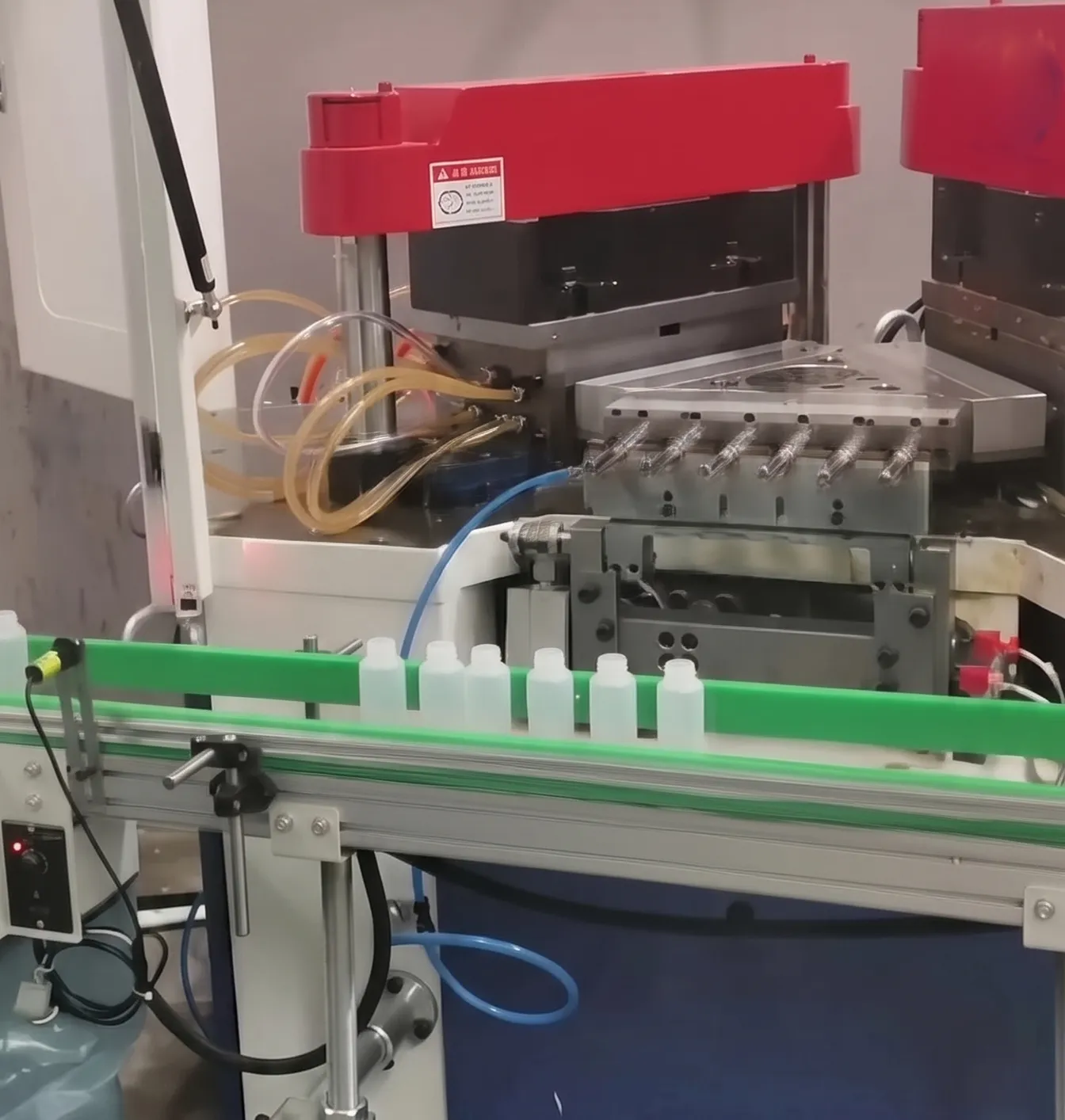
Mengapa Memilih Mesin Cetak Tiup Injeksi Ever-Power?
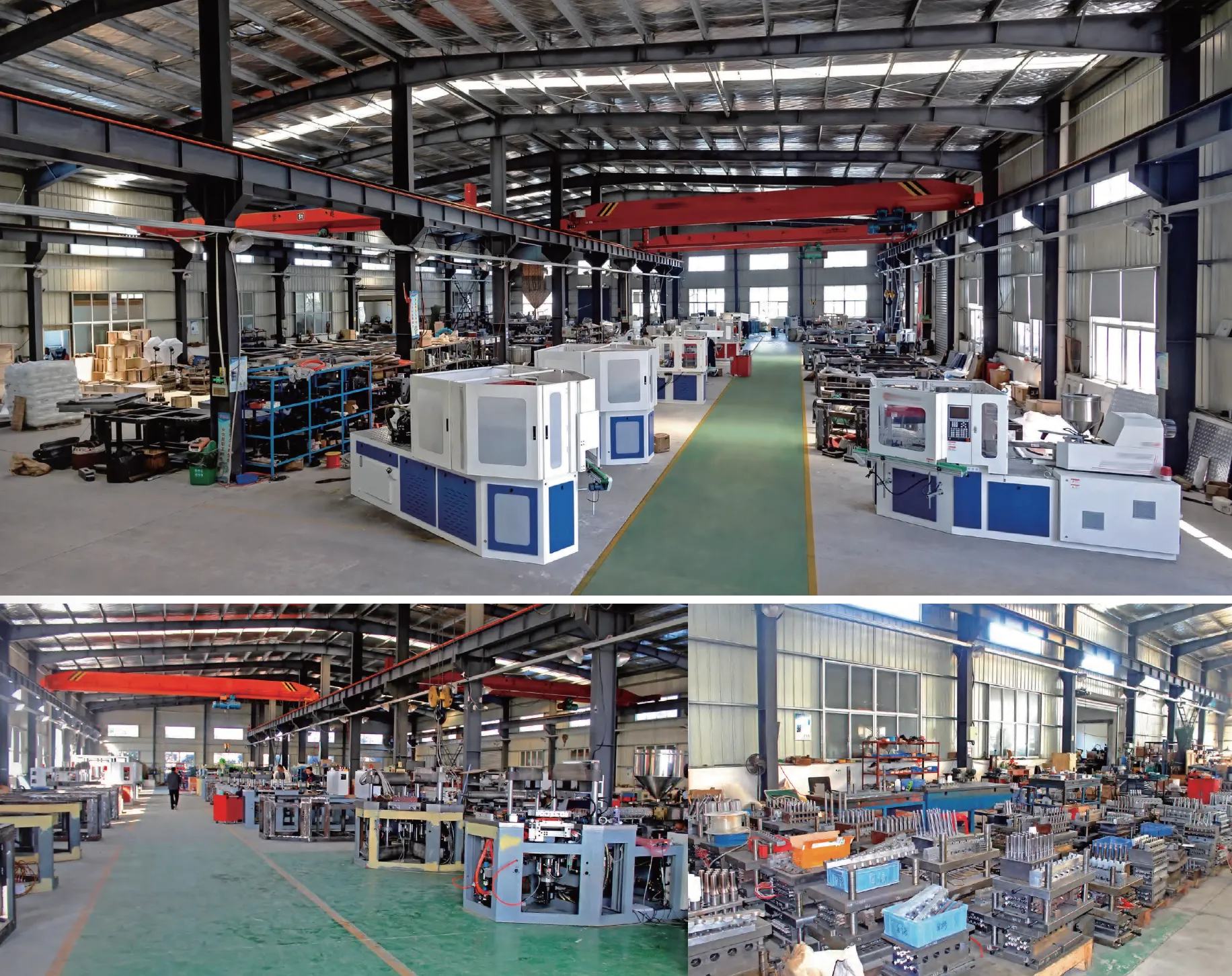
Mexico Ever-Power ISBM Machinery Co., Ltd. adalah salah satu produsen mesin cetak tiup injeksi yang paling dihormati, yang mengkhususkan diri dalam penelitian, pengembangan, produksi, penjualan, dan ekspor mesin cetak tiup injeksi otomatis satu langkah dan cetakan pendukungnya. Perusahaan ini memiliki lokasi geografis yang menguntungkan dengan akses logistik internasional yang mudah, mendukung pelanggan di semua pasar global utama dengan waktu tunggu yang andal dan struktur harga mesin cetak tiup injeksi yang kompetitif.
Tim Litbang kami menyatukan para insinyur senior dan spesialis teknis dengan keahlian yang terakumulasi selama puluhan tahun dalam desain mesin cetak tiup injeksi dan rekayasa cetakan cetak tiup injeksi. Kedalaman kemampuan internal ini memungkinkan kami untuk memberikan konsultasi teknis pra-penjualan yang komprehensif kepada pelanggan, rekomendasi mesin yang sesuai dengan aplikasi, dan dukungan purna-penjualan yang menyeluruh. Baik Anda memilih mesin IBM pertama Anda atau mengganti Bloma IBM50 Model, Jomar IBM65, SUMA 65iB, atau Uniloy UIB90 dengan mesin cetak tiup injeksi listrik penuh yang lebih mumpuni, tim kami memandu seluruh proses mulai dari spesifikasi hingga validasi produksi.
Portofolio produk kami mencakup mesin cetak tiup injeksi, mesin cetak tiup ekstrusi, mesin cetak tiup peregangan injeksi, dan berbagai peralatan bantu. Aplikasinya meliputi kemasan farmasi, kemasan makanan, kemasan perawatan kesehatan, kemasan kosmetik, dan kemasan plastik umum untuk botol dari 1ml hingga 1000ml. Kami memproses HDPE, LDPE, PP, PS, ABS, PCTG, PC, EVA, PVC, dan bahan ramah lingkungan berbahan dasar jagung yang dapat terurai secara hayati. Ever-Power berpegang pada prinsip pengembangan perusahaan yaitu kemandirian, integritas, pragmatisme, inovasi, dan tanggung jawab, memberikan layanan proyek terpadu satu atap yang komprehensif yang mencakup pasokan mesin, pembuatan cetakan, instalasi, pengoperasian, pelatihan, dan dukungan teknis berkelanjutan. Jaringan agen luar negeri kami tersebar di Korea, India, Turki, Rusia, Afrika Selatan, Brasil, Amerika Serikat, dan Meksiko, memastikan respons pasar lokal bagi pemasok mesin cetak tiup injeksi di setiap wilayah.
Pertanyaan yang Sering Diajukan (FAQ)
T: Apakah ZQ60 benar-benar pengganti langsung untuk mesin cetak tiup injeksi Bloma IBM50 Model?
A: Ya. ZQ60 dirancang sebagai pengganti langsung untuk Model Bloma IBM50 dengan spesifikasi yang setara atau lebih unggul di setiap kategori utama. Gaya penjepitan injeksi pada ZQ60 adalah 600 kN dibandingkan dengan Bloma IBM50 yang 500 kN. Opsi diameter sekrup 45/50 mm sesuai atau melebihi spesifikasi Bloma IBM50 50 mm. Ukuran pelat 600x390 mm kompatibel dengan ukuran cetakan IBM50 620x430 mm. Pembeli yang melakukan peningkatan dari Bloma IBM50 biasanya dapat menggunakan kembali cetakan yang ada dengan sedikit adaptasi, dan arsitektur penggerak servo ZQ60 memberikan peningkatan waktu siklus, energi, dan perawatan dibandingkan dengan platform hidrolik IBM50.
T: Berapa harga mesin cetak tiup injeksi untuk ZQ60?
A: Harga mesin cetak tiup injeksi untuk ZQ60 bervariasi berdasarkan konfigurasi, pilihan ukuran sekrup (45mm atau 50mm), peralatan bantu, dan logistik pasar tujuan. Sebagai mesin cetak tiup injeksi listrik penuh dengan penggerak servo, ZQ60 memiliki harga yang kompetitif dibandingkan model serupa dari pemasok mesin cetak tiup injeksi lainnya, dan biaya operasional energi yang lebih rendah serta biaya perawatan hidrolik yang hampir nol pada 30% memberikan peningkatan signifikan pada total biaya kepemilikan selama masa pakai mesin. Silakan hubungi tim penjualan Ever-Power untuk penawaran khusus yang disesuaikan dengan kebutuhan produksi Anda.
T: Bahan apa saja yang dapat diproses oleh mesin cetak tiup injeksi ZQ60?
A: Mesin cetak tiup injeksi plastik ZQ60 kompatibel dengan HDPE, LDPE, PP, PET, ABS, PC, PVC, PS (termasuk PS transparan bakteri asam laktat), PCTG, EVA, dan material ramah lingkungan berbahan dasar jagung yang dapat terurai secara hayati. Konfigurasi zona barel 3+N yang dikontrol secara independen memberikan fleksibilitas untuk mengoptimalkan profil suhu leleh untuk setiap jenis material, mulai dari suhu pemrosesan yang lebih rendah yang dibutuhkan untuk LDPE dan EVA hingga suhu yang lebih tinggi yang dibutuhkan untuk aplikasi mesin cetak tiup injeksi PC dan PET.
T: Bagaimana perbandingan ZQ60 dengan mesin ISBM (mesin cetak tiup peregangan injeksi) untuk botol PET?
A: Mesin cetak tiup injeksi IBM (ZQ60) dan mesin ISBM (mesin cetak tiup peregangan injeksi satu tahap) keduanya dimulai dengan preform cetakan injeksi, tetapi ISBM menambahkan tahap batang peregangan memanjang sebelum peniupan, mengorientasikan molekul PET secara biaxial untuk mencapai kejernihan luar biasa, kinerja penghalang gas, dan kekuatan melingkar yang dibutuhkan untuk botol minuman berkarbonasi. Proses IBM lebih disukai untuk wadah farmasi dan kosmetik berdinding tebal yang lebih kecil di bawah 200ml di mana orientasi biaxial tidak diperlukan dan toleransi penyelesaian leher yang lebih ketat dari preform cetakan injeksi adalah persyaratan kualitas utama.
T: Berapa ukuran botol maksimum dan minimum yang dapat diproduksi oleh ZQ60?
A: Mesin cetak tiup injeksi ZQ60 dapat menangani botol dengan tinggi 15mm hingga 200mm, dengan diameter botol maksimum 120mm. Tabel referensi rongga cetakan menunjukkan bahwa mesin ini dapat menghasilkan wadah 10ml hingga 14 rongga dan wadah 1000ml hingga 2 rongga. Untuk volume di atas 1000ml atau tinggi di atas 200mm, model ZQ80, ZQ110, atau ZQ135 yang lebih besar dalam jajaran mesin Ever-Power IBM akan lebih tepat.
T: Dapatkah ZQ60 dihubungkan ke sistem inspeksi visual untuk lini pengemasan farmasi?
A: Ya. Sistem konveyor ZQ60 dirancang untuk diintegrasikan dengan peralatan inspeksi visual hilir yang memindai botol untuk mendeteksi partikel asing di dalam badan botol, kekurangan material di mulut botol, dan pembentukan dasar yang tidak rata. Mesin ini juga dapat dihubungkan ke alat uji kebocoran samping, mesin pelabelan, dan peralatan pengemasan otomatis untuk membentuk lini produksi yang lengkap, sepenuhnya otomatis, dan tanpa pengawasan. Kemampuan otomatisasi ujung-ke-ujung ini sangat berharga di lingkungan pengemasan farmasi di mana GMP mensyaratkan inspeksi wadah 100%.
T: Apakah mesin IBM ZQ60 cocok untuk produksi kemasan farmasi GMP?
A: ZQ60 menggabungkan beberapa fitur desain yang secara khusus menangani persyaratan kepatuhan GMP. Desain struktural bottom-up secara fisik mencegah oli pelumas masuk ke area cetakan atau bersentuhan dengan permukaan botol. Proses pencetakan tiup injeksi tanpa limbah menghilangkan risiko kontaminasi hasil penggilingan ulang yang ada pada pencetakan tiup ekstrusi. Ulir leher yang dicetak injeksi mencapai akurasi dimensi dan kinerja penyegelan 100%. Terhubung ke inspeksi visual untuk kontrol kualitas wadah 100% melengkapi lingkungan produksi yang kompatibel dengan GMP. Pelanggan farmasi di Rusia, Korea, dan India telah berhasil menerapkan ZQ60 pada lini pengemasan obat yang diatur.
T: Berapa kapasitas produksi harian ZQ60 untuk berbagai ukuran botol?
A: Untuk botol 30ml dengan 10 rongga, ZQ60 mencapai 105.000 botol per 24 jam standar dan hingga 115.000 botol pada output puncak, dengan waktu siklus 8,2 detik. Output harian meningkat seiring dengan jumlah rongga dan volume botol. Pada 10ml dengan 14 rongga, output per siklus lebih tinggi, sedangkan pada 1000ml dengan 2 rongga, output lebih rendah. Waktu siklus pengeringan 4 detik berfungsi sebagai siklus minimum teoritis; siklus produksi aktual bergantung pada bahan, ketebalan dinding, dan kebutuhan pendinginan.
T: Dukungan purna jual apa yang tersedia untuk mesin cetak tiup injeksi ZQ60?
A: Ever-Power menyediakan dukungan purna jual komprehensif termasuk instalasi dan komisioning di lokasi oleh para insinyur senior berpengalaman yang tetap berada di lokasi hingga produksi stabil tercapai. Layanan pengingat perawatan preventif disediakan untuk membantu pelanggan menjadwalkan servis rutin dan menghindari penghentian yang tidak direncanakan. Pelatihan teknis profesional yang mencakup pengoperasian mesin, pemrosesan cetakan, dan perawatan disertakan pada saat komisioning. Layanan hotline perawatan 24x7 tersedia untuk dukungan teknis darurat. Persediaan suku cadang yang memadai dipelihara untuk meminimalkan waktu henti pelanggan, dengan pengiriman suku cadang ke semua pasar utama termasuk Korea, India, Turki, Rusia, Afrika Selatan, Brasil, Amerika Serikat, dan Meksiko.
T: Peralatan bantu apa yang direkomendasikan untuk lini produksi mesin IBM ZQ60?
A: Lini produksi mesin cetak tiup injeksi ZQ60 lengkap biasanya mencakup kompresor udara ulir untuk memasok 0,7 m3/menit pada 0,7 hingga 1,2 MPa, pengontrol suhu cetakan untuk menjaga pemanasan cetakan yang presisi, pendingin untuk pendinginan tambahan di lingkungan dengan suhu ambien tinggi, mesin inspeksi visual botol untuk kontrol kualitas 100%, pemuat otomatis untuk pengumpanan material tanpa campur tangan manusia, mesin pengemas untuk pengemasan karton selanjutnya, dan kompresor udara sebagai cadangan. Ever-Power memasok atau merekomendasikan peralatan bantu yang kompatibel untuk semua mesin seri ZQ untuk menyederhanakan pengadaan dan memastikan kompatibilitas integrasi sistem.
Ulasan Pelanggan
Park Ji-woon, Pengemasan Farmasi, Korea
"Kami mengganti mesin Bloma IBM50 lama kami dengan ZQ60 sekitar delapan bulan yang lalu dan perbedaannya sangat mencolok. Mesin berjalan lebih tenang, waktu siklus lebih cepat, dan tagihan listrik kami turun secara signifikan. Kami menggunakan botol penetes farmasi 30ml berbahan LDPE dan konsistensi antar rongga sangat baik. Kualitas ulir leher cetakan injeksi telah lolos setiap audit penyegelan yang dilakukan tim QC kami. Sangat puas dengan mesin dan tim layanan purna jualnya."
Rajesh Patel, Manufaktur Kosmetik, India
"Kami membeli mesin cetak tiup injeksi ZQ60 untuk lini kosmetik kami di Mumbai. Kami memproduksi botol serum PCTG 100ml dan kualitas hasil produksinya sejak hari pertama sangat mengesankan. Permukaan hasil cetakannya sangat bersih tanpa bekas garis pemisah dan tanpa kelebihan material sama sekali. Tingkat penolakan produk kami turun dari lebih dari 3% dengan mesin sebelumnya menjadi kurang dari 0,5%. Teknisi instalasi tiba pada tanggal yang disepakati dan mesin sudah beroperasi dalam waktu tiga hari. Kami sudah mempertimbangkan untuk membeli unit kedua."
Emre Yilmaz, Produksi Pengemasan, Turki
"Kami memasok botol sampo dan sabun cuci tangan ke beberapa merek di Istanbul dan ZQ60 telah memungkinkan kami untuk meningkatkan produksi secara signifikan. Kami memproduksi botol HDPE 250ml dengan 5 rongga dan mesin beroperasi 24 jam tanpa masalah. Penghematan energi dibandingkan dengan mesin hidrolik lama kami benar-benar nyata dan telah kami ukur. Desain bottom-up juga berarti kami tidak lagi khawatir tentang kontaminasi minyak pada botol yang ditujukan untuk pelanggan makanan dan perawatan pribadi. Harga mesin cetak tiup injeksi untuk spesifikasi ini sangat kompetitif."
Dmitri Volkov, Pharma Bottling, Rusia
"Kami menggunakan ZQ60 untuk memproduksi botol tablet farmasi PP di fasilitas kami dekat Moskow. Kami membutuhkan pengganti untuk model Bloma IBM50 kami dan ZQ60 direkomendasikan kepada kami. Sejak dioperasikan tahun lalu, kami belum pernah mengalami penghentian produksi besar. Sistem servo-nya andal dan ketersediaan suku cadang dari Ever-Power sangat baik. Yang paling mengejutkan kami adalah betapa jauh lebih stabilnya berat botol dibandingkan dengan mesin Bloma. Dokumentasi QC batch kami menjadi jauh lebih sederhana sebagai hasilnya."
Sipho Nkosi, Pengemasan Kimia, Afrika Selatan
"Perusahaan kami di Johannesburg mengoperasikan unit ZQ60 yang memproduksi botol HDPE 300ml dan 1 liter untuk produk kimia rumah tangga. Kami sempat khawatir tentang dukungan layanan mengingat jaraknya, tetapi kemampuan diagnostik jarak jauh dan kualitas dokumentasi memungkinkan tim perawatan kami untuk menangani semuanya secara lokal. Kami mengalami masalah nozzle hot runner setelah sekitar enam bulan dan suku cadang tiba dalam waktu dua minggu. Secara keseluruhan, mesin ini sangat andal dan produktif."
Fernanda Costa, Kosmetik, Brasil
"Kami memproduksi botol kosmetik 120ml di sini, di Sao Paulo, dan telah menggunakan ZQ60 selama lebih dari setahun. Mesin ini dibuat dengan sangat baik dan sistem servo serba listriknya bekerja dengan sangat lancar. Dibandingkan dengan mesin cetak tiup injeksi hidrolik kami sebelumnya, tingkat kebisingannya jauh lebih rendah dan operator kami merasa lebih mudah untuk mengoperasikannya. Koneksi sistem inspeksi visual juga merupakan tambahan yang bagus. Sekarang kami menjalankan shift malam tanpa pengawasan sepenuhnya."
Michael Larson, Pengemasan Kontrak, AS
"Kami adalah perusahaan pengemasan kontrak di Ohio dan kami membeli ZQ60 untuk menambahkan kemampuan mesin IBM ke lini produksi kami. Mesin ini menangani HDPE dan PP tanpa masalah dan peralihan antar material sangat mudah. Kami terutama memproduksi botol sampel farmasi dalam kisaran 10ml hingga 60ml dan pilihan jumlah rongga sangat bagus. Dengan 14 rongga untuk botol 10ml, angka throughputnya luar biasa. Layanan pelanggan dari tim Ever-Power selama pengaturan responsif dan berpengetahuan luas."
Carlos Mendoza, Botol Kosmetik, Meksiko
"Kami telah menggunakan ZQ60 pada lini pengemasan kosmetik kami di Guadalajara selama hampir sepuluh bulan. Mesin ini menghasilkan botol PP 50ml dengan 10 rongga dan kualitasnya sangat baik. Produksi 105.000 botol per hari konsisten dan konsumsi energinya benar-benar lebih rendah daripada mesin hidrolik kami sebelumnya. Tim teknis dari Ever-Power Mexico hadir selama instalasi dan melatih kami dengan sangat baik. Kami merekomendasikan produsen mesin cetak tiup injeksi ini tanpa ragu."
Ahmed Al-Rashid, Pengemasan Farmasi, Arab Saudi
"Saya mengelola pengadaan untuk fasilitas pengemasan farmasi dan kami mengevaluasi beberapa pemasok mesin cetak tiup injeksi sebelum memilih ZQ60. Spesifikasi teknisnya tampak bagus, tetapi yang meyakinkan kami adalah desain zona cetakan bebas minyak. Kami memproduksi botol suspensi antibiotik yang sesuai dengan GMP dalam kemasan PP 60ml dan persyaratan higienisnya sangat ketat. ZQ60 telah lulus setiap audit internal sejak dioperasikan. Berat botol secara konsisten berada dalam batas 1% dan akurasi ulir leher botol sempurna di setiap batch yang telah kami uji."
Informasi Tambahan
| Diedit oleh | Yjx |
|---|