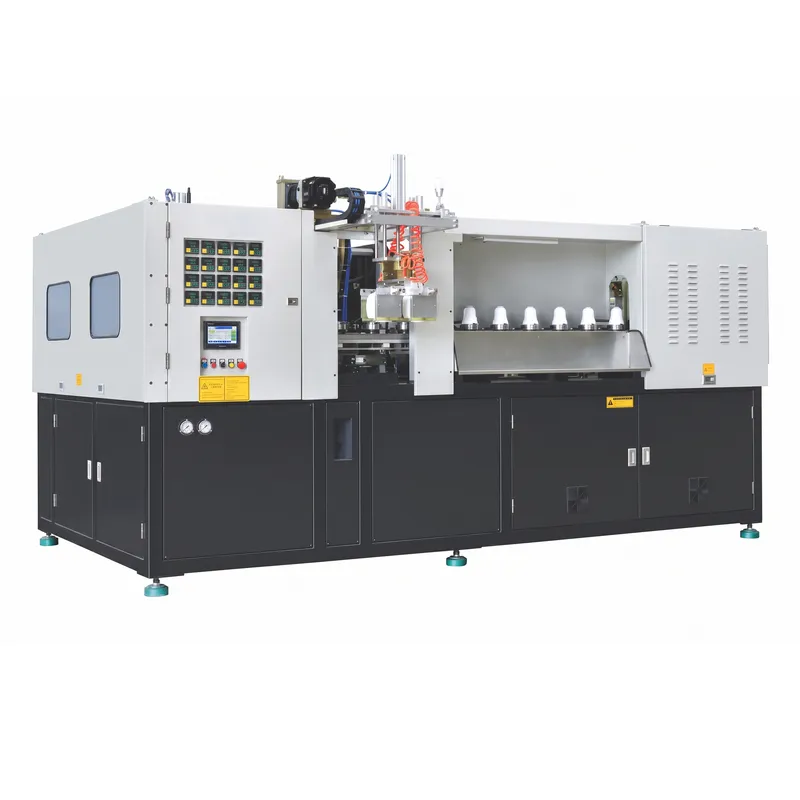
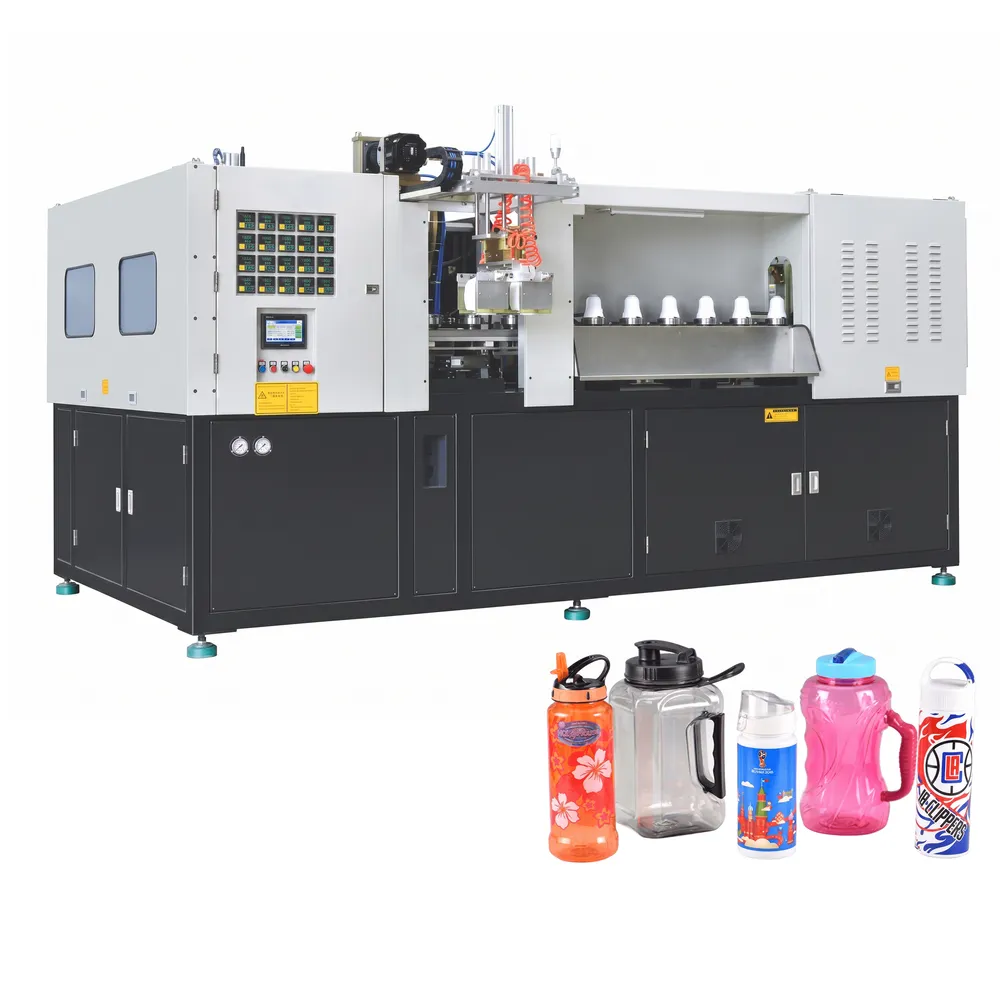
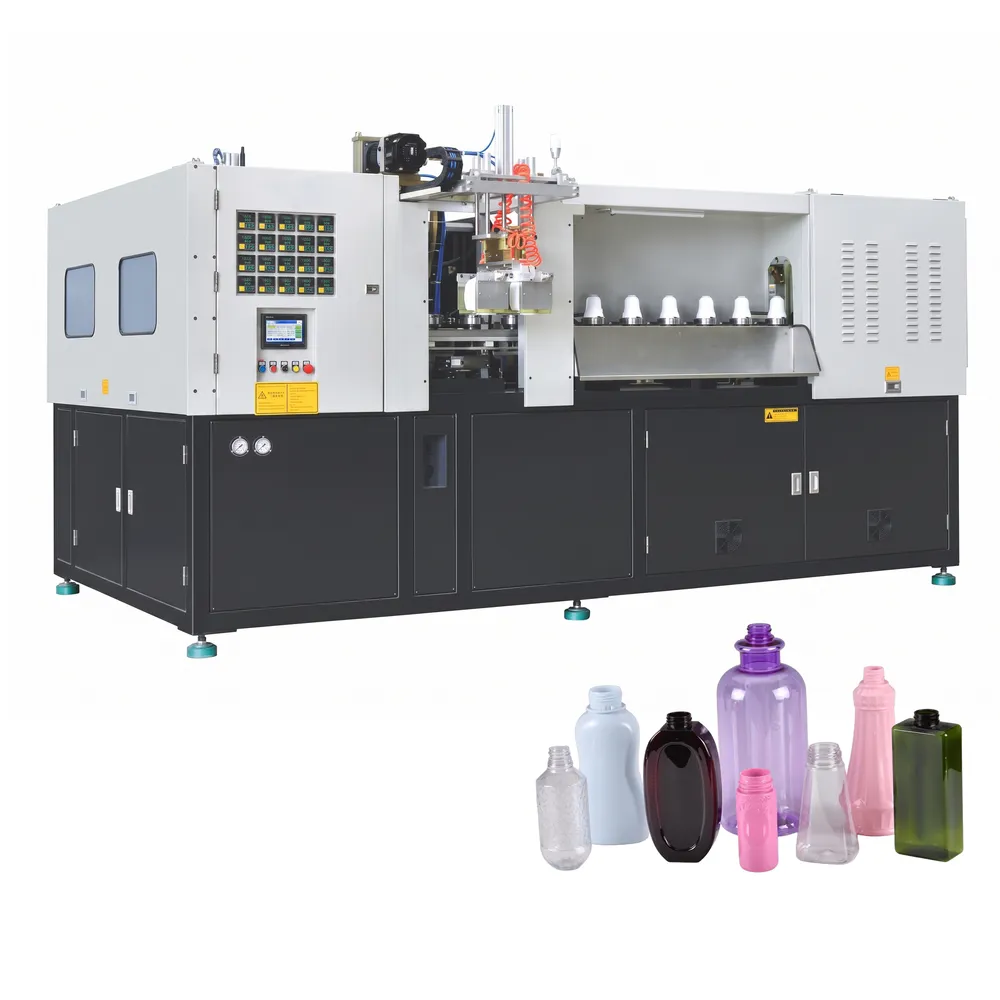
EPA.ES-2C260 Fully Automatic Blow Molding Machine for Crafts and Special-Shaped Bottles
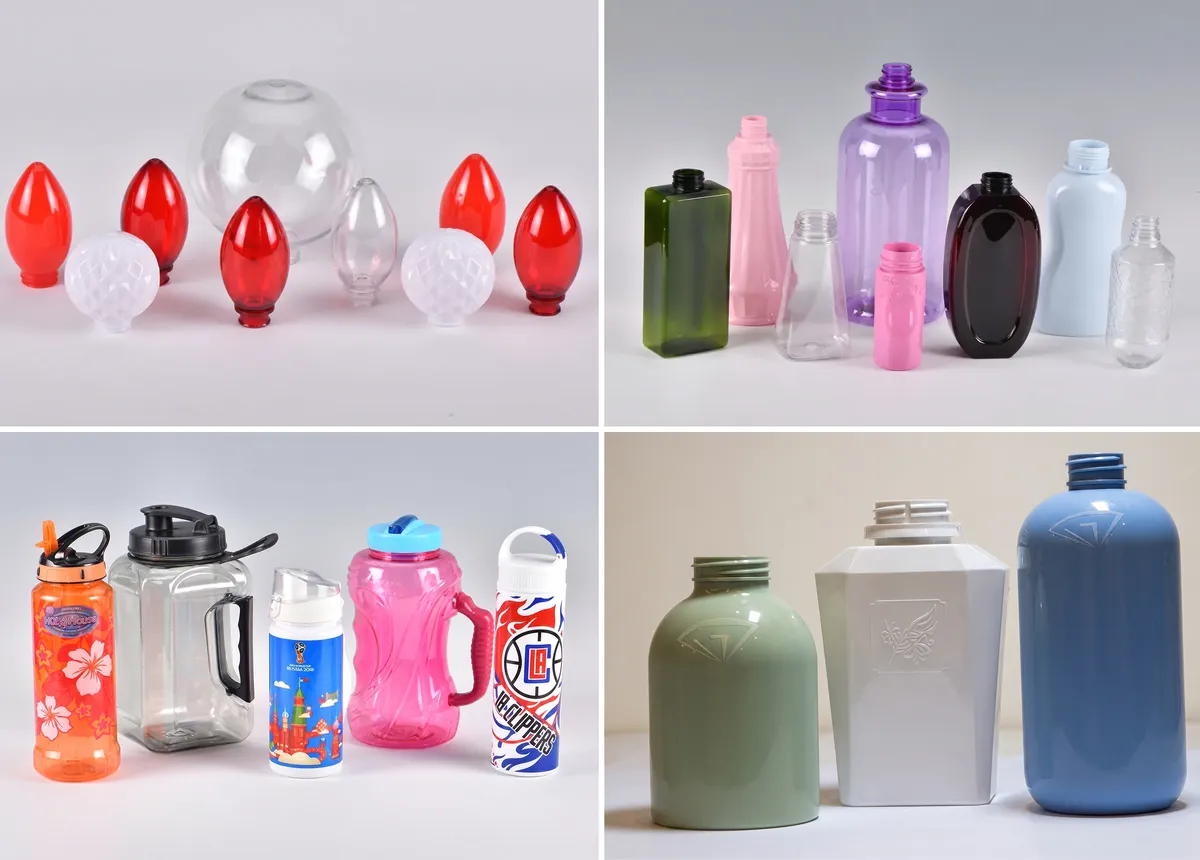
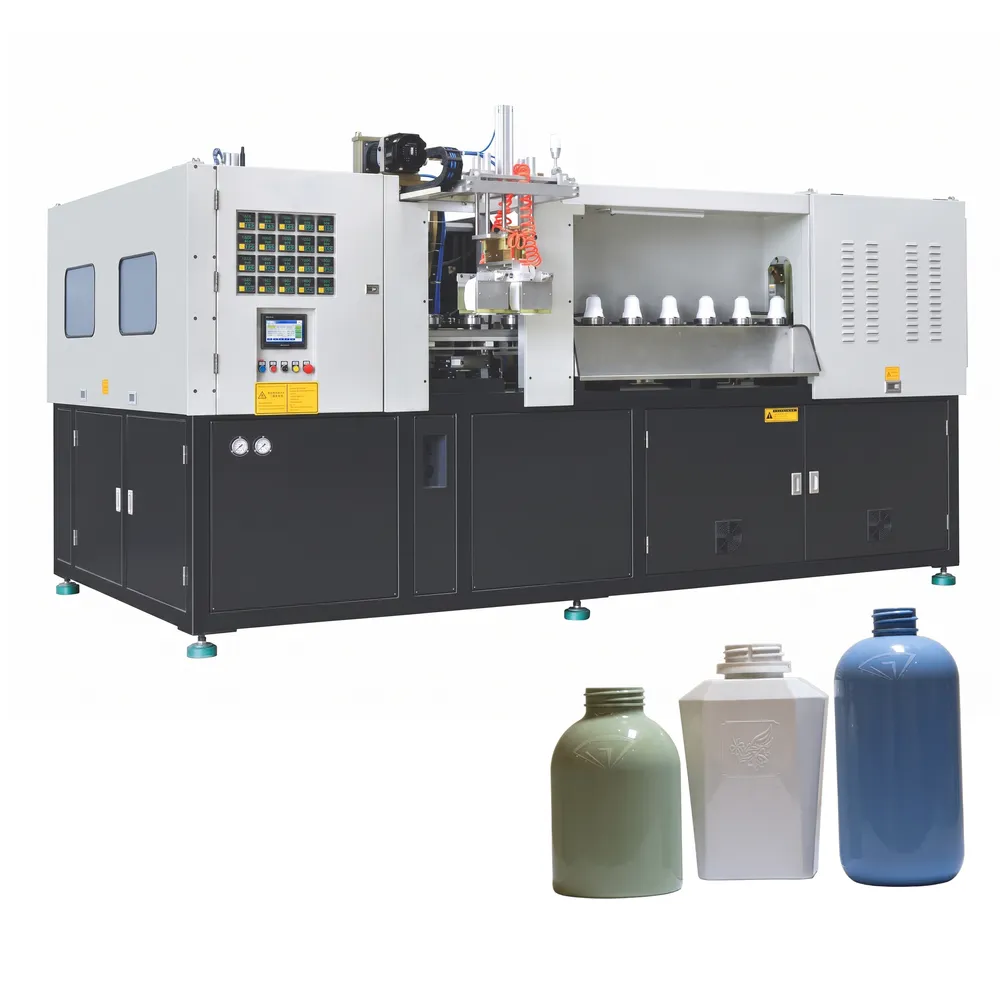
The EPA.ES-2C260 Fully Automatic Blow Molding Machine for Crafts and Special-Shaped Bottles is a professional-grade PET bottle blow molding machine engineered for the production of multi-shape, multi-material containers. It efficiently produces baby feeding bottles, PP bottles, and premium special-shaped craft bottles across diverse specifications. This series of automatic blow molding machine equipment spans models including EPA.FS-1CG130, EPA.FS-1CG220, and multi-station variants, accommodating container volumes from 1,000 ml to 15,000 ml with a peak theoretical output of 2,800 bottles per hour on the EPA.JS-4C114 model.
The EPA.ES-2C260 Fully Automatic Blow Molding Machine for Crafts and Special-Shaped Bottles is a professional-grade PET bottle blow molding machine engineered for the production of multi-shape, multi-material containers. It efficiently produces baby feeding bottles, PP bottles, and premium special-shaped craft bottles across diverse specifications. This series of automatic blow molding machine equipment spans models including EPA.FS-1CG130, EPA.FS-1CG220, and multi-station variants, accommodating container volumes from 1,000 ml to 15,000 ml with a peak theoretical output of 2,800 bottles per hour on the EPA.JS-4C114 model. Blowing pressure is consistently maintained at 30 to 35 kg/cm², while the precision cooling system holds temperature between 8 and 12°C, resulting in uniform wall thickness and a flawless surface finish that meets the most demanding quality standards.
With its stable servo-driven performance and superior product consistency, the EPA.ES-2C260 plastic blow molding machine excels across a wide range of applications: infant care products such as feeding bottles, high-transparency daily-use packaging, pharmaceutical containers, and artisan craft bottles with complex geometries. It is particularly valued in industries where precision and aesthetics converge, including premium cosmetic packaging, specialty gifts, and food-grade containers requiring both structural integrity and visual elegance. As a trusted choice among blow molding machine manufacturers, Mexico Ever-Power delivers a machine that balances industrial reliability with the flexibility demanded by modern special-shaped bottle production lines.
Technical Parameter
| Crafts and Special-Shaped Bottle Blow Molding Machine | |||
|---|---|---|---|
| Model | Unit | EPA.ES-2C260 | |
| Molding | Clamping stroke | mm | 275 |
| Mold-open distance | mm | 635 | |
| Mold-close distance | mm | 360 | |
| Stretching stroke | mm | 550 | |
| Mold-open distance | mm | 50 | |
| Mold-close distance | mm | 260 | |
| Preform Holder | 42 | ||
| Cavities | 2 | ||
| Container | Max.Container Volume | ml | 15000 |
| Neck Diameter Range | mm | 168 | |
| Max.Container Diameter | mm | 240 | |
| Max.Container Height | mm | 450 | |
| Theoretical Output | bph | 900 | |
| Electrical System | Max.Heating Power | kw | 68 |
| Heating Power | kw | 35 | |
| Air System | Operating Pressure | kg/cm² | 7 |
| Low Pressure Air Consumption | ltr/min | 1200 | |
| Blowing Pressure | kg/cm² | 35 | |
| High Pressure Air Consumption | ltr/min | 16000 | |
| Cooling water | Operating Pressure | kg/cm² | 5-6 |
| Temperature | °C | 8-10 | |
| Flow rate | ltr/min | 50 | |
| Machine | Size (L*W*H) | mm | 5570*2090*2500 |
| Weight | kg | 7500 | |
Advantages of EPA.ES-2C260 Fully Automatic Blow Molding Machine
1. Extensive Adaptability for Multi-Type Preform Production
The EPA.ES-2C260 series supports production of a wide spectrum of containers including baby feeding bottles, PP bottles, craft bottles, and complex special-shaped bottles. Container volumes span from 1,000 ml to 15,000 ml, with maximum body diameters up to 240 mm and container heights up to 450 mm. Models such as EPA.FS-1CG196 and EPA.P.FS-2C150(L) further accommodate varied bottle heights and neck finish requirements, making this baby bottle blow molding machine and PP bottle blow molding machine series exceptionally versatile for high-consistency manufacturing of demanding geometries and feeding bottle applications across diverse markets worldwide.
2. High Efficiency and Energy Savings
The EPA.ES-2C260 operates with a heating power of 35 kW (max 68 kW), with blowing pressure stabilized at 35 kg/cm² for consistent bottle formation. High-pressure and low-pressure air consumption are precisely tunable, delivering measurable energy savings over older hydraulic-driven designs. The cooling water system maintains a precise 8 to 10°C with a 50 ltr/min flow rate, ensuring uniform preform cooling, reducing thermal deformation, and maximizing yield. This automatic PET blow molding machine delivers fully automated precision control with minimal energy waste throughout the production cycle, lowering operating costs significantly.
3. Stable Operation and Flexible Production Adaptability
Built with international-brand servo motors, reducers, and control components, the EPA.ES-2C260 industrial blow molding machine achieves remarkably low failure rates and straightforward maintenance routines. The 635 mm maximum mold-open distance and balanced clamping force allow quick mold changes between bottle types, enabling flexible multi-product production on a single machine. At 7,500 kg and dimensions of 5,570 x 2,090 x 2,500 mm, the compact and robust footprint integrates smoothly into standard workshop layouts, making it a practical choice for expanding bottle manufacturers needing versatility without sacrificing floor space efficiency.
4. Excellent Output Quality
Capable of steadily processing both PP and PET materials, the machine consistently produces bottles with precisely dimensioned neck finishes, uniform wall thickness across the full container height, and exceptional surface transparency. Every bottle fully complies with the stringent standards required for infant care products, pharmaceutical packaging, and premium craft containers. This PET bottle blow molding machine is particularly suited for feeding bottles, creative craft vessels, and intricate special-shaped containers where both functional integrity and aesthetic excellence are non-negotiable requirements in high-end consumer and professional markets.
5. Fully Automatic Operation
The EPA.ES-2C260 is a fully automatic blow molding machine that eliminates manual intervention throughout the blow-molding cycle. Automated preform loading, infrared heating, stretch-blow actuation, cooling, and bottle ejection all operate sequentially under PLC control with servo-driven precision. This not only reduces labor costs and human error but also achieves stable cycle-to-cycle repeatability at 900 bottles per hour. Operators monitor and adjust all parameters through an intuitive touchscreen interface, making this high speed blow molding machine accessible even for facilities with limited technical staffing resources.
6. Broad Application Range
The EPA.ES-2C260 custom blow molding machine serves an exceptionally wide range of industries and container types. From infant feeding bottles and pediatric pharmaceutical containers to premium decorative craft vessels, gift packaging, and large-capacity household products, this machine adapts to diverse production requirements with minimal tooling changeover time. Its compatibility with PET, PP, PC, and other engineered resins, combined with its 2-cavity layout and 15,000 ml maximum volume, positions it as a genuinely versatile bottle blow molding machine for manufacturers targeting both high-volume commodity markets and niche specialty packaging segments.
How Does the EPA.ES-2C260 PET Blow Molding Machine Work
Step 1: Raw Material Preparation
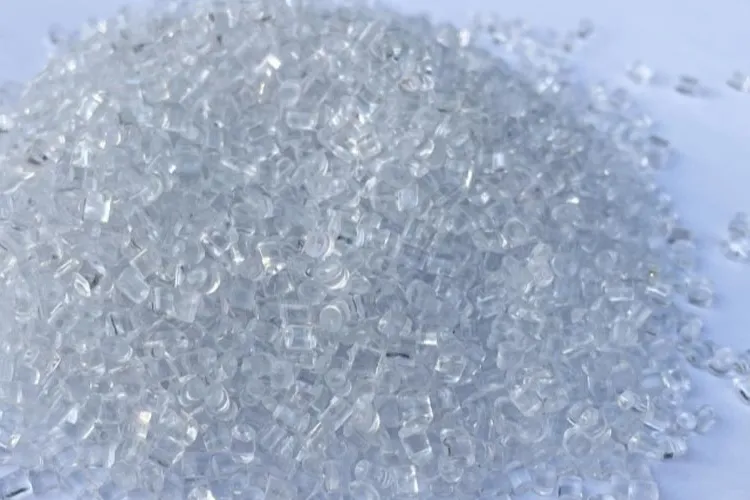
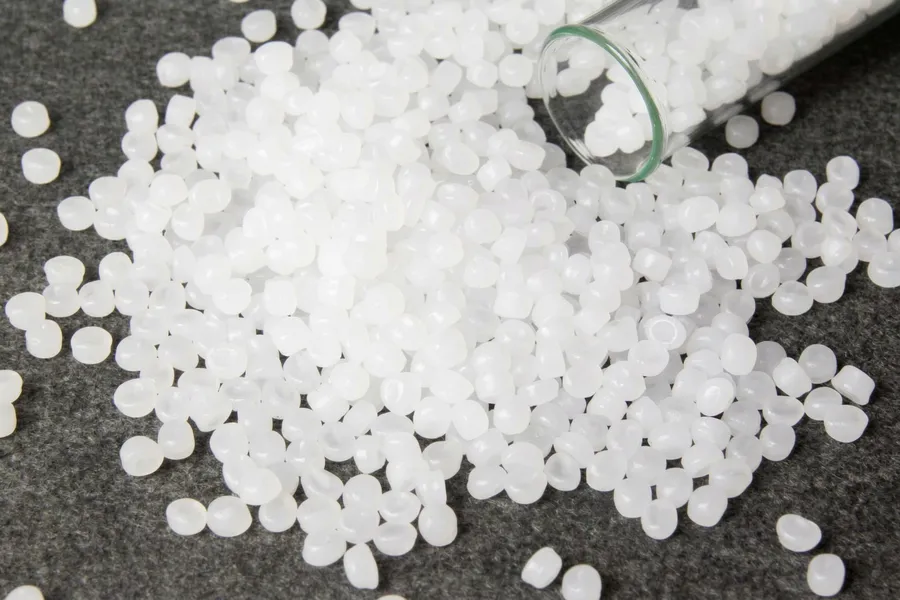
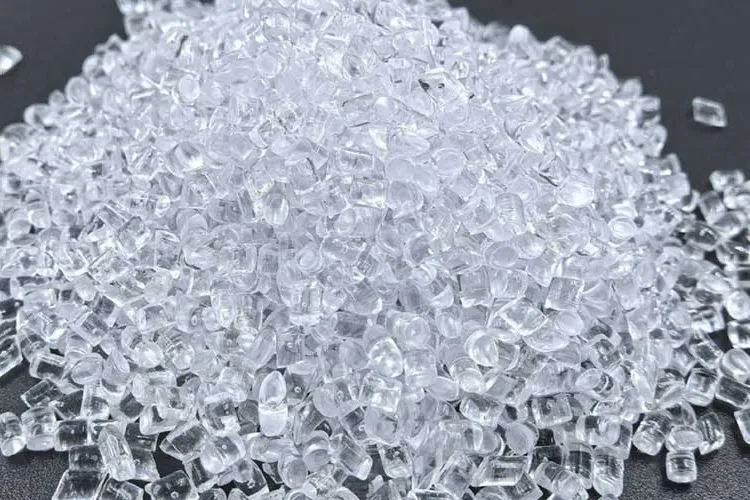
The blow molding machine process begins with raw materials including PP, PET, and PC being thoroughly screened, blended, and fed into the hopper system. These materials undergo precise dosing and moisture-removal treatment before entering production. Strict testing and quality control at this stage eliminate contamination that could cause surface defects or structural weaknesses in the finished container. Proper raw material management is the foundation of high-yield, low-reject bottle production runs across all container types.
Step 2: Injection Molding (Preform Formation)
In the injection blow molding machine stage, carefully blended raw materials are injected into a precision mold under controlled temperature, pressure, and injection speed. The molten polymer fills the preform cavity to create a test-tube shaped precursor with an already-formed neck thread. This preform defines the bottle neck dimension, weight distribution, and wall thickness profile. The 2316 tool steel mold construction ensures dimensional accuracy and extended service life across high-volume production cycles.
Step 3: Preform Preheating
After injection forming, preforms are conveyed through the infrared heating tunnel of the two-stage blow molding machine. The 42-position preform holder ensures uniform heat absorption across all preforms simultaneously. Temperature is raised gradually and uniformly across the wall thickness, improving plasticity and flexibility. The EPA.ES-2C260 heating system delivers 35 kW of working power (max 68 kW), enabling rapid warm-up and precise zonal temperature control optimized for each preform geometry and target container wall thickness requirement.
Step 4: Stretch Blow Molding
In the core injection stretch blow molding machine stage, preheated preforms are transferred into the 2-cavity blow mold. A stretch rod axially extends the preform to a 550 mm stretching stroke while high-pressure air at 35 kg/cm² simultaneously inflates it radially to fill the mold cavity. This biaxial orientation process aligns polymer chains in both directions, producing containers with superior clarity, impact resistance, and barrier properties. Servo-driven precision control ensures consistent wall thickness distribution across every bottle produced.
Applications of Plastic Blow Molding Machine
Our precision automatic blow molding machines are engineered for manufacturers who demand both structural performance and visual perfection across diverse packaging categories.
1. Infant and Baby Care Products
The baby bottle blow molding machine configuration excels at producing FDA-grade, BPA-free feeding bottles in PP, PC, PPSU, and Tritan materials. These bottles require flawless neck finish tolerances, crystal clarity, and zero surface contamination. The EPA.ES-2C260 delivers all of these requirements with its precision servo control and clean production environment, serving major infant care brands worldwide with consistent quality across every production run.
2. Pharmaceutical and Medical Packaging
Medical-grade PP and PET containers require the highest dimensional consistency, chemical inertness, and sterility compatibility. The machine's closed-loop cooling and blowing pressure control ensure every bottle meets GMP-aligned specifications. It is widely used for syrup bottles, eye-drop containers, supplement jars, and pharmaceutical packaging where consistency across large production batches is critical for both patient safety and regulatory compliance.
3. Premium Craft and Decorative Bottles
For gift packaging, artisanal products, and specialty retail containers, the EPA.ES-2C260's 240 mm maximum body diameter and 450 mm container height enable production of striking large-format craft bottles with complex geometries. The biaxial stretch process gives these containers an exceptional glass-like clarity that elevates brand perception and shelf appeal in premium retail environments and specialty gifting markets globally.
4. Cosmetics and Personal Care
Premium lotion bottles, serum containers, shampoo vessels, and specialty pump-top bottles all benefit from the EPA.ES-2C260's ability to produce consistently shaped, smooth-surfaced PET and PETG containers. The machine's plastic blow molding machine precision makes it especially suitable for cosmetic brands requiring consistent color, optical properties, and surface finish across large production runs serving high-end retail channels worldwide.
5. Food-Grade Wide-Mouth Containers
Wide-mouth jars, condiment containers, and specialty food packaging all fall within the EPA.ES-2C260's production envelope. With a neck diameter range of up to 168 mm, the machine handles large-opening containers for honey, sauces, dry goods, and confectionery. All food-contact surfaces comply with relevant food-safety material standards, making it a trusted choice among food industry blow molding machine suppliers serving demanding global retailer requirements.
6. Household Chemicals and Daily Essentials
Detergent bottles, disinfectant containers, and multi-purpose household cleaning product packaging require chemical resistance and structural robustness. The EPA.ES-2C260 produces these containers in PET and PP with excellent wall uniformity, making them resistant to deformation under internal pressure and storage conditions common in household chemical supply chains serving major global retail and e-commerce distribution networks.
7. Industrial and Agricultural Chemical Bottles
Large-capacity agricultural pesticide bottles, chemical reagent containers, and industrial lubricant packaging demand high wall thickness uniformity and material integrity. The EPA.ES-2C260's 15,000 ml maximum volume and 35 kg/cm² blowing pressure make it capable of producing thick-walled, robust containers that withstand the demanding storage and transport conditions of industrial distribution channels across diverse regional markets.
8. Custom Specialty Containers
As a custom blow molding machine platform, the EPA.ES-2C260 supports rapid mold changeovers for contract packaging manufacturers producing diverse product lines for multiple clients. Its flexible 42-position preform holder and wide neck diameter accommodation allow the same machine to switch between dramatically different bottle geometries, making it ideal for toll blowing operations serving the specialty packaging market across multiple industries simultaneously.
EPA.ES-2C260 Craft Bottle Blow Molding Machine Parts
Feeding System
The feeding system comprises mechanical steering and electrical conveying components including the hopper, preform conveyor belt, orientator, and gravity rails. Raw preforms are automatically sorted, oriented, and fed into the blow station at a controlled pace matched to the machine's production rate. This automation eliminates manual preform loading, reduces operator labor, and ensures a steady, interruption-free supply of correctly positioned preforms throughout the full production shift at all output speeds.
Preform Tilter
When producing PET-based bottles, the preform tilter automatically supplies injection-molded preforms from bulk storage to the conveyor in the correct orientation. It handles the mechanical reorientation of randomly arranged preforms into a consistent neck-up position before entering the heating tunnel. This component significantly reduces jamming incidents, ensures cycle-time consistency, and protects downstream components from misaligned preform damage that can cause both quality defects and unplanned machine stoppages.
Infrared Heating Oven
The multi-zone infrared heating oven controls preform temperature across different body sections independently. Individual lamp intensity in each zone is adjustable through the touchscreen interface, enabling optimized thermal profiles for different preform wall thickness distributions. The EPA.ES-2C260's 35 kW heating system ensures stable and reproducible heating even under continuous high-cycle production conditions, with preform rotation ensuring circumferential heating uniformity critical for symmetrical wall thickness in the finished container.
Blow Mold Station
The 2-cavity blow mold station is the core production unit where preforms are stretched and blown into their final container shape. The mold clamping system applies balanced force across the parting line using a 275 mm clamping stroke, with 635 mm mold-open distance providing generous access for mold maintenance. CNC-machined from high-quality tool steel, mold cavities are designed with optimized water cooling channels that integrate directly with the machine's precision 8 to 10°C cooling water circuit for consistent cycle performance.
Compressor Station
The compressor station provides the dual-pressure air supply essential to the blow molding machine process. Low-pressure air at 7 kg/cm² (1,200 ltr/min) handles pneumatic actuation, while high-pressure air at 35 kg/cm² (16,000 ltr/min) delivers the main blowing force forming each container. The station integrates screw compressors, high-pressure boosters, pressure regulators, air tanks, and automatic drain valves maintaining stable pressure output regardless of production speed variations throughout the working day.
Water Cooling System
The water cooling system dissipates heat generated during the blow molding cycle from mold cavities and mechanical drives. Cooling water circulates at 5 to 6 kg/cm² operating pressure with a 50 ltr/min flow rate maintained at 8 to 10°C by an external chiller. Precise temperature control prevents mold temperature drift, which directly impacts bottle wall uniformity, cycle time, and product clarity. Consistent cooling performance is essential for achieving the rated 900 bph output at the specified quality standards.
Bottle Exit Conveyor
The bottle exit conveyor transports finished containers from the mold station to downstream filling, labeling, or packaging equipment. Engineered for smooth, non-scuffing bottle transport that protects surface finish and prevents bottle toppling at the rated 900 bottles per hour output speed. Conveyor speed is synchronized with machine cycle time through the PLC control system, and belt width accommodates the EPA.ES-2C260's maximum container diameter of 240 mm across all configured bottle formats.
PLC Control System
The PLC-based control system manages all machine functions through a color touchscreen interface. Operators store and recall production recipes for different bottle types, monitor real-time sensor data, adjust heating zone temperatures independently, modify blowing and stretching parameters, and configure alarm thresholds for automatic fault detection. This digital control architecture enables rapid changeovers between bottle formats and consistent parameter reproduction, supporting the machine's role as a versatile custom blow molding machine platform for multi-product manufacturers.
Raw Materials for EPA.ES-2C260 Plastic Blow Molding Machine
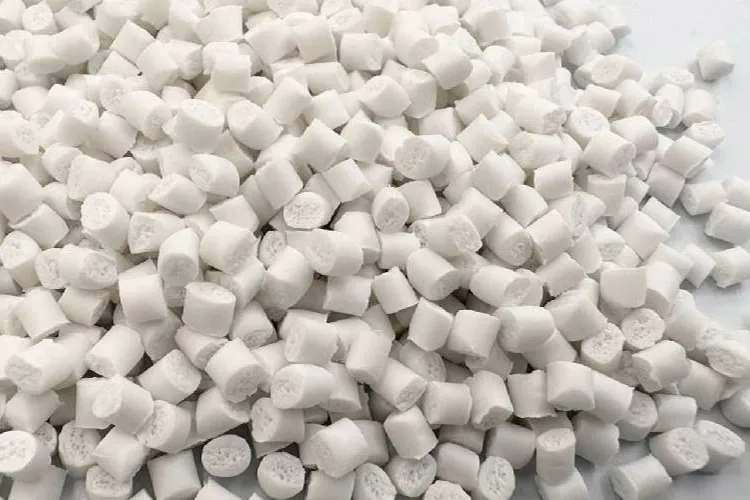
PET (Polyethylene Terephthalate)
PET is the primary material for this PET bottle blow molding machine. It offers outstanding optical clarity, excellent gas barrier properties, and high tensile strength. PET containers produced by ISBM achieve near-glass transparency ideal for premium beverages, cosmetics, and food packaging. Its lightweight nature reduces transportation costs while maintaining structural integrity under internal pressure and during normal handling and storage throughout the distribution chain.
PP (Polypropylene)
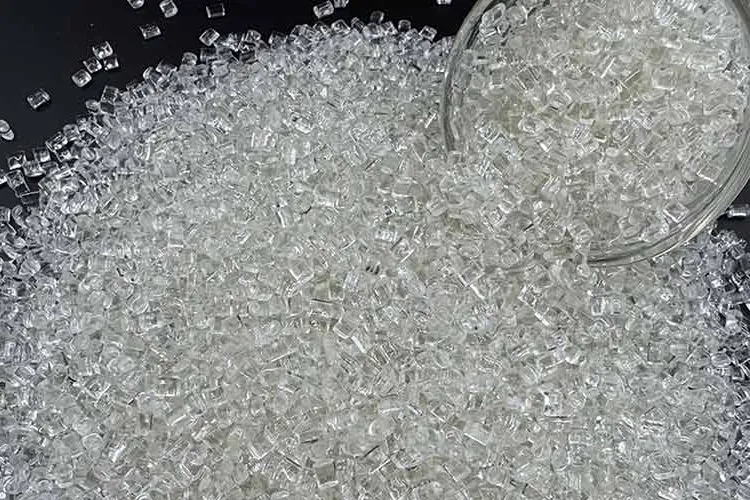
This PP bottle blow molding machine configuration handles polypropylene for baby feeding bottles, food containers, and medical packaging. PP offers exceptional chemical resistance, food-contact safety, high heat resistance for hot-fill applications, and FDA/EU-compliant formulations. Its flexibility enables squeezable containers and specialty packaging formats that PET's rigidity cannot accommodate, expanding the machine's total addressable product range significantly.
PC (Polycarbonate)
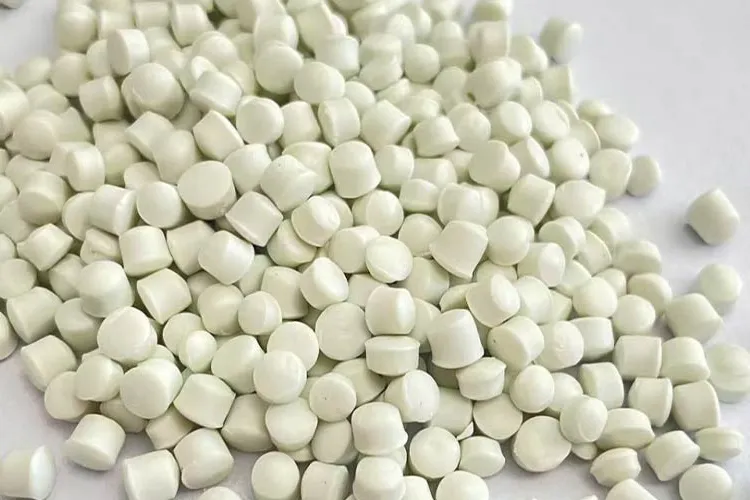
Polycarbonate processing on the EPA.ES-2C260 enables production of high-impact-resistant, reusable bottles and premium containers. PC offers glass-like clarity combined with exceptional toughness that withstands repeated drop impact without cracking. It is particularly valued for reusable baby bottles, laboratory containers, and specialty craft vessels where long service life and optical quality are both required. BPA-free PC grades are available for food-contact applications meeting current regulatory standards.
PE, HDPE and LDPE
Polyethylene variants offer excellent chemical resistance, moisture barrier properties, and processing ease. HDPE produces rigid, durable containers ideal for detergents, household chemicals, and industrial fluids. LDPE enables softer, squeezable packaging formats for condiments, personal care products, and specialty dispensing containers. Both materials are widely recycled, supporting sustainable packaging initiatives increasingly demanded by global brand owners and major retailers targeting circular economy compliance.
Tritan (Copolyester)
Tritan copolyester by Eastman Chemical is increasingly specified for premium baby bottles, drinkware, and food containers requiring BPA-free certification, exceptional clarity, and dishwasher durability. The EPA.ES-2C260 processes Tritan to produce containers with glass-like aesthetics and proven durability across repeated use cycles. Tritan's broad chemical compatibility makes it suitable for beverages including vitamin drinks, sports nutrition products, and meal replacement formulations sold through premium retail channels.
PETG (Glycol-Modified PET)
PETG combines the clarity and processability of PET with improved impact resistance and easier thermoformability. It is widely used in cosmetic packaging, display containers, and specialty retail bottles where high optical quality and resistance to surface damage are required. PETG containers produced by the EPA.ES-2C260 exhibit excellent gloss retention, making them particularly appealing for high-end beauty and personal care product packaging targeting premium retail channels with demanding aesthetic standards.
PPSU (Polyphenylsulfone)
PPSU represents the highest-performance material for baby bottles and medical containers. It offers outstanding resistance to repeated steam sterilization cycles, complete BPA and BPS freedom, and excellent clarity that holds through hundreds of autoclave cycles without yellowing or hazing. For manufacturers of premium medical-grade feeding bottles or laboratory containers requiring sterilization compatibility, the EPA.ES-2C260's precision heating and pressure control delivers consistent PPSU processing results that meet the most stringent safety requirements.
 |
 |
 |
 |
 |
 |
EPA.ES-2C260 Craft Bottle Blow Molding Machine Mould
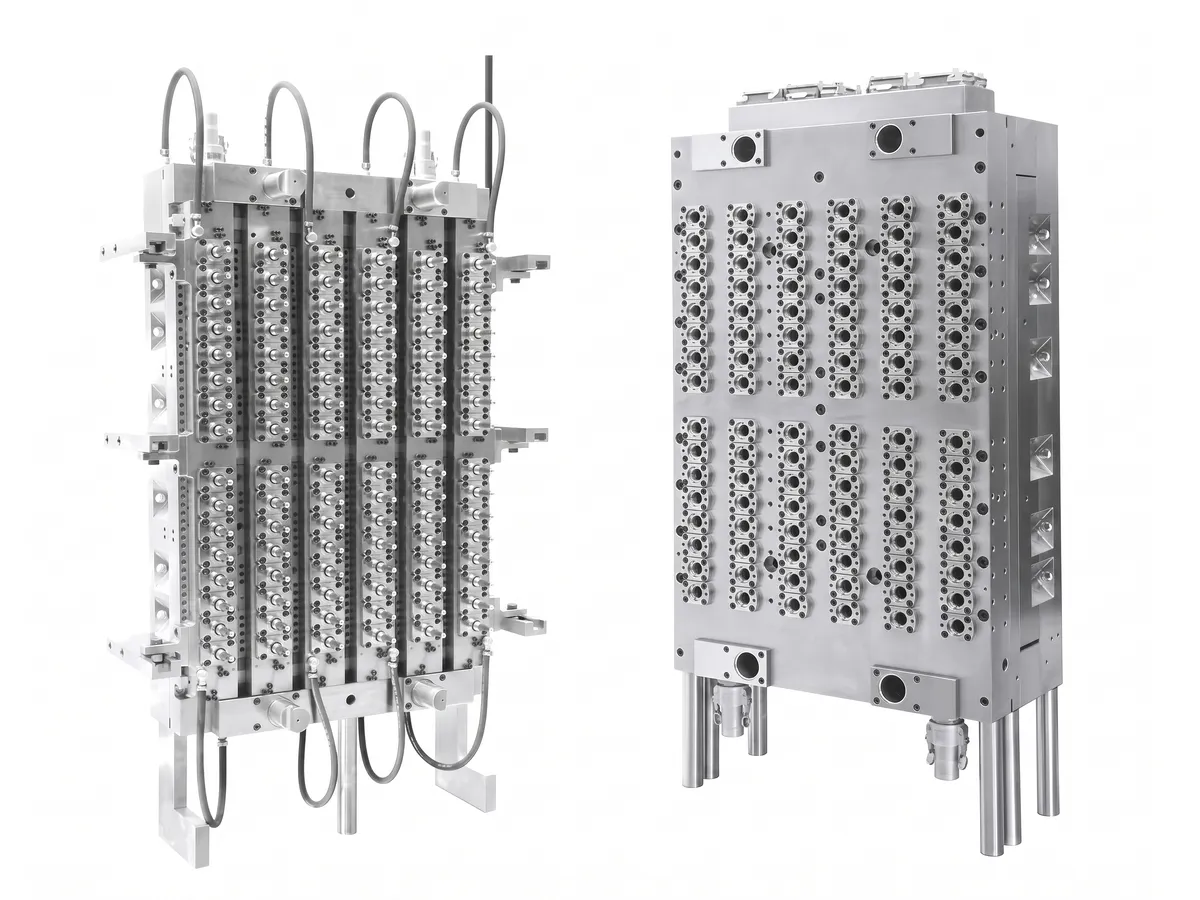
Preform Injection Mold
- The two-part die lip design guarantees coaxial alignment between the preform gate and body, eliminating eccentricity that causes uneven wall distribution during blow molding. This precision alignment is critical for special-shaped bottle production where asymmetric geometries amplify any preform imperfection into visible quality defects.
- The optimized cooling water channel layout within the mold accelerates heat extraction from freshly injected preforms, enabling shorter cycle times and higher throughput without sacrificing dimensional stability. Efficient preform cooling is a primary determinant of overallblow molding machineproductivity and output consistency.
- Forming components use imported 2316 die steel with full heat treatment, providing exceptional rust resistance and hardness that extends mold service life significantly. This premium steel choice protects the mold investment and maintains dimensional accuracy across millions of production cycles without significant wear-related dimensional drift.
- Core plates, cavity plates, and structural components use 420 stainless steel, which resists corrosion from cooling water, cleaning agents, and the processing environment. This ensures long-term structural integrity of the mold assembly without coating or plating maintenance requirements that would add cost to the maintenance program.
- Standard interchangeable die fittings and a maintenance-friendly assembly design allow technicians to disassemble, clean, and reassemble mold components quickly during scheduled maintenance windows, minimizing unplanned downtime and extending overall mold operational life across production campaigns.
- The advanced modular mold design allows a single mold to produce multiple preform types across different production runs by swapping individual core and cavity inserts, maximizing the utility and return on investment of each mold purchased for the EPA.ES-2C260 machine platform.
Blow Mold
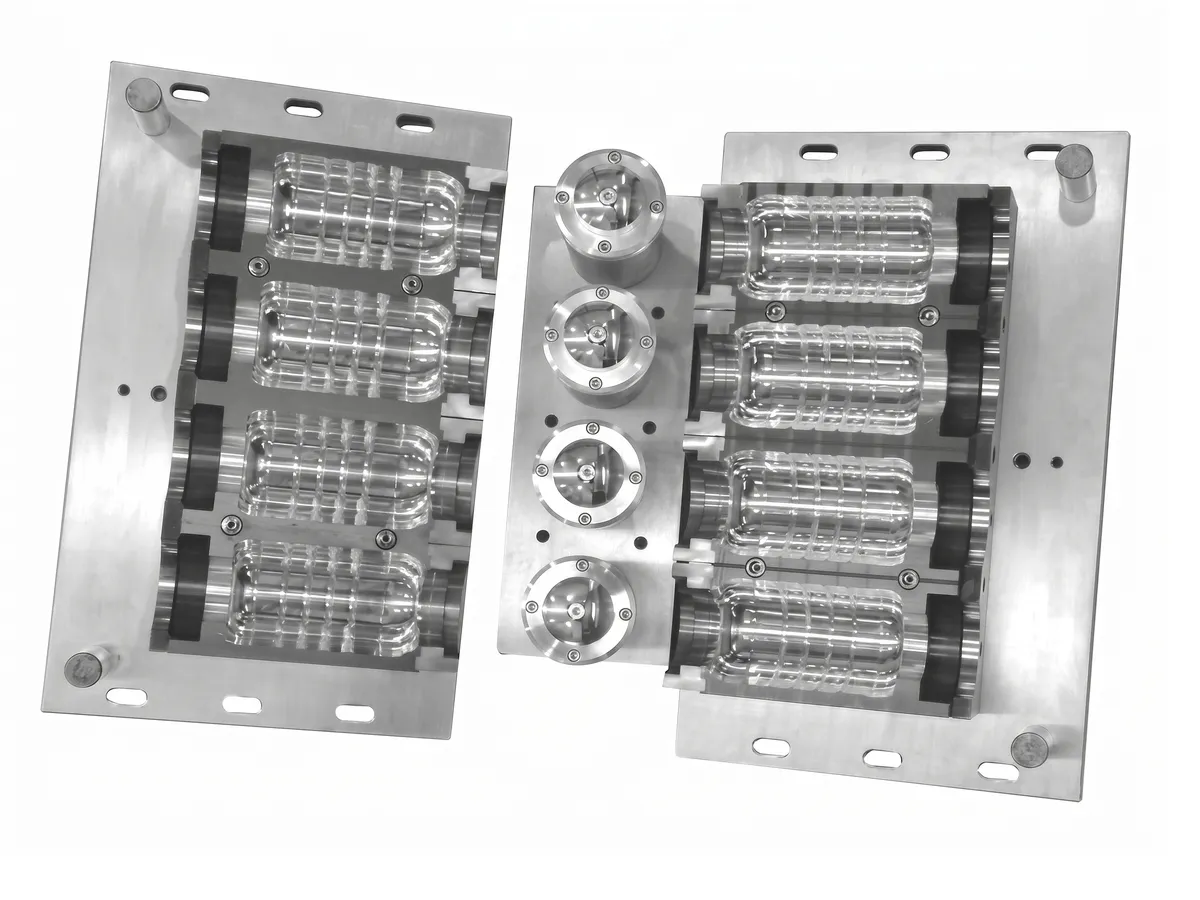
- Blow mold cavities are machined from high-quality aircraft-grade aluminum or P20 steel, selected for their optimal combination of thermal conductivity, machinability, and dimensional stability. Material selection is based on the target production volume and container geometry complexity to ensure molds deliver the required production cycle count with maintained dimensional accuracy.
- All bottle geometries are designed and validated using advanced 3D CAD/CAM software, enabling complex special-shaped bottle designs including asymmetric profiles, multi-faceted surfaces, and intricate craft bottle aesthetics to be produced with first-article approval accuracy and repeatable quality throughout the entire production life of the mold.
- The blow mold design library includes a diverse range of standard bottle profiles including round, oval, square, rectangular, and specialty craft bottle shapes, enabling rapid product launch without extended mold development timelines for common container categories that are frequently requested across the customer base.
- The internal cooling water channel design within each blow mold cavity delivers uniform thermal extraction across the full cavity surface, preventing localized hot spots that cause differential cooling and the associated wall thickness variation or surface imperfections in the finished container that would trigger quality rejection.
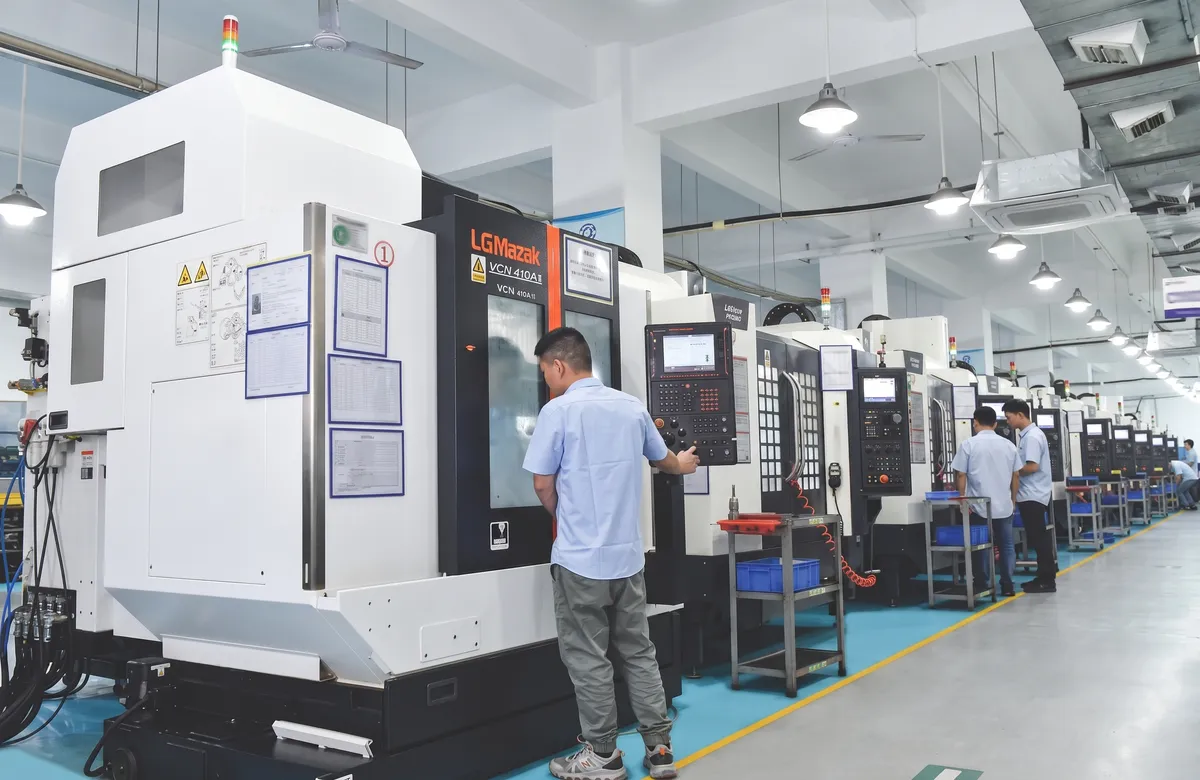
- All metal mold parts are finish-machined using CNC equipment to achieve precise surface roughness values appropriate for the intended bottle surface finish, whether high-gloss, matte, or textured. CNC machining eliminates dimensional variation between cavity halves, ensuring consistent parting line alignment and uniform bottle appearance across all production shifts and machine operators.
 |
 |
Injection Stretch Blow Molding vs Extrusion Blow Molding
Blow molding is an essential process in plastic manufacturing, widely used for producing bottles, containers, and industrial components. Among the different types of blow molding machine, extrusion blow molding and injection stretch blow molding stand out for their distinct efficiencies and application strengths. Choosing the right method depends on product requirements, material usage, cost considerations, and production scalability objectives.
Extrusion Blow Molding (EBM)
The extrusion blow molding machine process begins by melting plastic resin and continuously extruding it through a die head to form a hollow parison tube. This parison is then clamped between two mold halves, sealed at one end, and inflated by compressed air to take the shape of the mold cavity. After sufficient cooling the mold opens and the finished part is ejected, with flash material trimmed from the parting line. EBM is a continuous, high-throughput process well suited to large containers and complex multi-layer structures across diverse material families.
Key Features of EBM
- Ideal for hollow plastic objects including bottles, industrial containers, and fuel tanks
- Compatible with HDPE, LDPE, PP, PVC, and multi-layer material combinations
- Capable of producing large and complex shapes with generally uniform wall thickness
- High production speed with relatively low tooling investment compared to ISBM
Advantages of EBM
- Cost-Effective: Lower initial investment in molds and equipment than ISBM
- Versatility: Handles both small and very large containers up to 200+ liters
- Shorter Cycle Time: Continuous parison extrusion enables fast production throughput
- Material Range: Accepts broader range of resins including colored and filled compounds
Industries Using EBM
- Packaging: Shampoo bottles, detergent containers, and dairy packaging
- Automotive: Fuel tanks and fluid reservoirs requiring complex 3D shapes
- Medical: Large-format pharmaceutical bottles and medical equipment housings
- Industrial: Jerry cans, chemical drums, and material handling containers
Injection Stretch Blow Molding (ISBM)
The injection stretch blow molding machine operates as a two-stage process. In the first stage, precision injection molding creates a preform with an already-formed neck thread and controlled wall thickness distribution. In the second stage, this preform is reheated to an optimal temperature and simultaneously stretched axially by a rod and inflated radially by high-pressure air. This biaxial orientation aligns polymer chains in both directions, producing containers with significantly superior mechanical properties and optical clarity compared to EBM. The EPA.ES-2C260 represents this technology with precision control over stretching stroke (550 mm) and blowing pressure (35 kg/cm²).
Key Features of ISBM
- Primarily used for PET, PP, and PC bottles and precision containers
- Produces lightweight, highly durable, and optically transparent products
- Ensures consistent wall thickness and precise dimensional tolerances throughout
- Superior material distribution through the biaxial orientation process
Advantages of ISBM
- Enhanced Strength: Polymer chain orientation dramatically improves impact and burst resistance
- High Clarity: PET bottles achieve glass-like transparency preferred by premium brands
- Lightweight Efficiency: Better material utilization enables lighter containers at equal strength
- Precision Neck Finish: Injection-formed necks ensure perfect thread consistency for sealing
Industries Using ISBM
- Beverage: Water bottles, carbonated drink bottles, and juice containers
- Pharmaceutical: Medicine bottles, healthcare packaging, and eye-drop containers
- Cosmetics: Premium perfume bottles, lotion containers, and specialty packaging
- Baby Care: Feeding bottles, sippy cups, and food storage containers
EBM vs. ISBM: Which One Is Right for You?
| Feature | Extrusion Blow Molding (EBM) | Injection Stretch Blow Molding (ISBM) |
|---|---|---|
| Material Used | HDPE, LDPE, PP, PVC | PET, PP, PC, Tritan, PPSU |
| Product Type | Large, hollow, and complex shapes | Clear, lightweight, and precision bottles |
| Production Cost | Lower initial investment | Higher investment, efficient for high volumes |
| Wall Thickness | Uniform but less precise | Highly precise and consistent |
| Clarity and Strength | Moderate clarity, high strength | High clarity, excellent strength |
| Applications | Industrial, automotive, household | Food, pharma, cosmetics, baby care |
For manufacturers targeting premium consumer packaging, pharmaceutical containers, or specialized craft bottles with high optical clarity requirements, the ISBM process delivered by the EPA.ES-2C260 automatic blow molding machine consistently outperforms EBM in quality, precision, and final product aesthetics at scale.
Proper Machine Maintenance
1. Daily Inspection Routine
Each production shift should begin with a systematic visual inspection of all pneumatic connections, checking for air leaks at fittings and hose joints that could compromise blowing pressure stability. Verify cooling water inlet and outlet temperatures, confirm flow rate indicators, and inspect preform feeding system components including the orientator and gravity rails for debris accumulation. Record PLC parameter values and compare against the established production recipe to confirm no drift has occurred since the previous shift.
2. Weekly Lubrication Schedule
All mechanical motion points including mold clamping guides, stretching rod bushings, conveyor bearings, and preform transfer chain assemblies require weekly lubrication with the manufacturer-specified grease or oil grade. Over-lubrication attracts dust and debris that accelerates component wear, so apply only the specified quantity at each lubrication point. Document all lubrication activities in the maintenance log to ensure consistent coverage and track positions requiring unusually frequent attention that may indicate underlying alignment issues.
3. Infrared Lamp Inspection and Replacement
Infrared heating lamps degrade gradually, producing less output at the same power draw and causing heating inconsistencies affecting bottle wall uniformity. Monthly inspection of lamp output using a calibrated pyrometer, combined with tracking operational hours against the manufacturer-specified service life, enables proactive replacement before output degradation affects product quality. Lamp replacement should always be performed in matched sets within the same heating zone to maintain balanced and reproducible thermal profiles.
4. Cooling Water System Maintenance
The cooling water circuit should be flushed and treated with corrosion inhibitors and biocides monthly to prevent mineral scale buildup in mold cooling channels and chiller heat exchangers. Scale accumulation in mold channels reduces cooling efficiency and can cause localized hot spots that produce bottle defects. Inspect and clean the chiller filter monthly, check refrigerant levels quarterly, and service the chiller compressor according to the chiller manufacturer's schedule to reliably maintain the required 8 to 10°C.
5. Mold Cleaning and Inspection
Blow mold cavities should be removed and thoroughly cleaned every 500 to 1,000 production hours depending on the resin being processed. PET produces relatively little residue, while PP and colored materials may require more frequent attention. Use approved non-abrasive cleaning agents to avoid cavity surface scratching. Inspect parting line sealing surfaces for wear that could cause flash formation, and check cavity venting slots for blockages that might cause trapped-air surface defects in finished bottles.
6. Electrical System and PLC Maintenance
The electrical control cabinet should be cleaned of accumulated dust quarterly using dry compressed air with panels closed. Check all terminal connections for loosening or corrosion caused by humidity and temperature cycling. Back up PLC production programs and parameter settings to an external storage device monthly to protect against data loss. Verify servo motor drive cooling fan operation and replace drive cooling filters according to the drive manufacturer's schedule to prevent thermal shutdown events during production.
Why Choose Ever-Power's PET Blow Molding Machine?
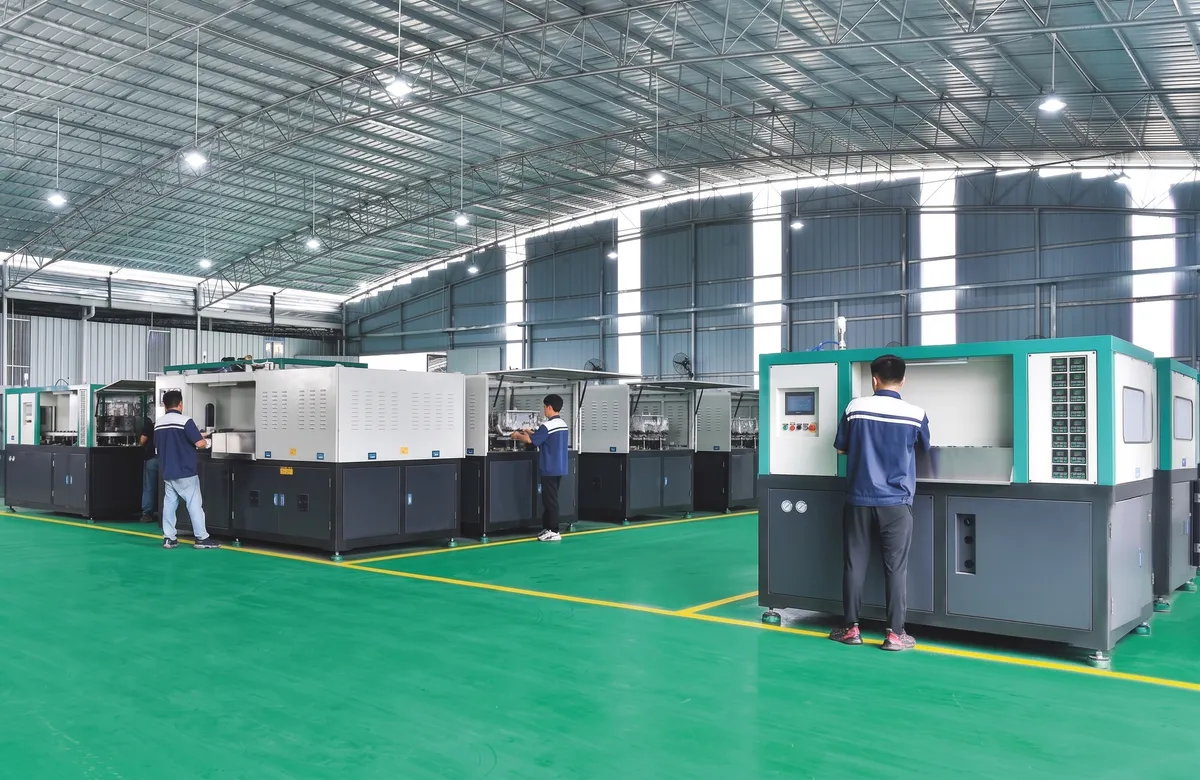
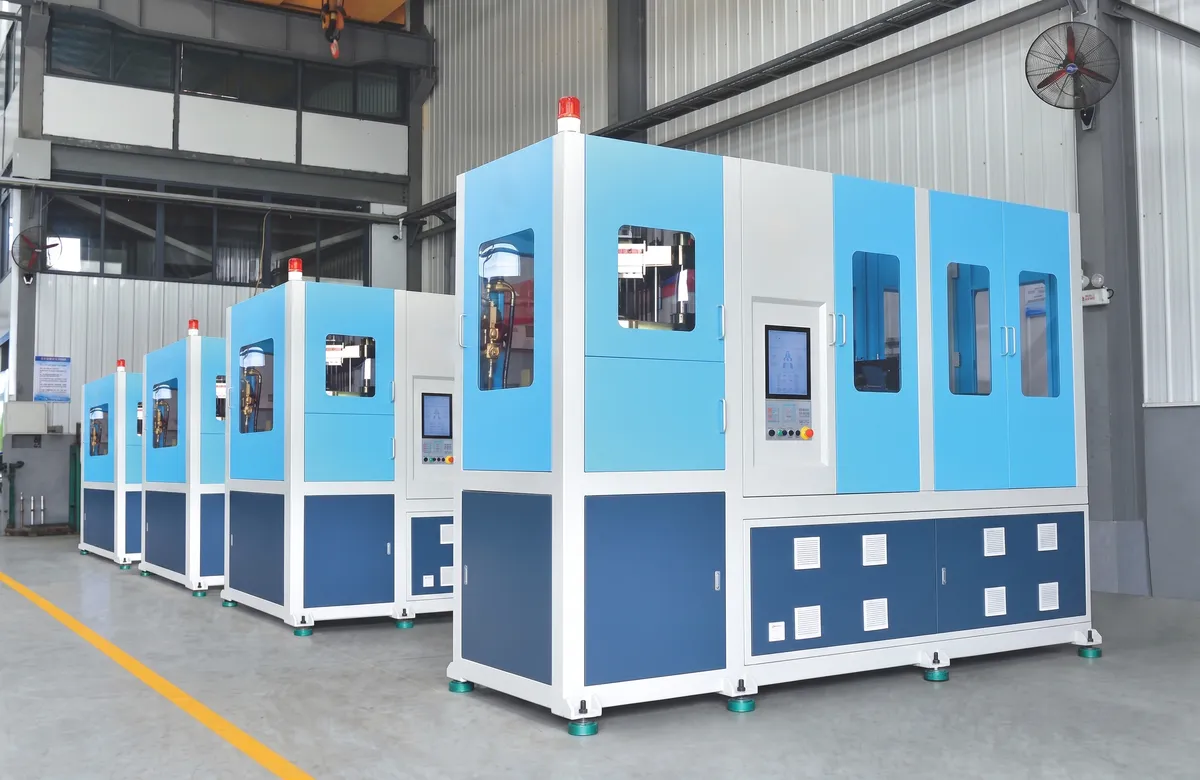
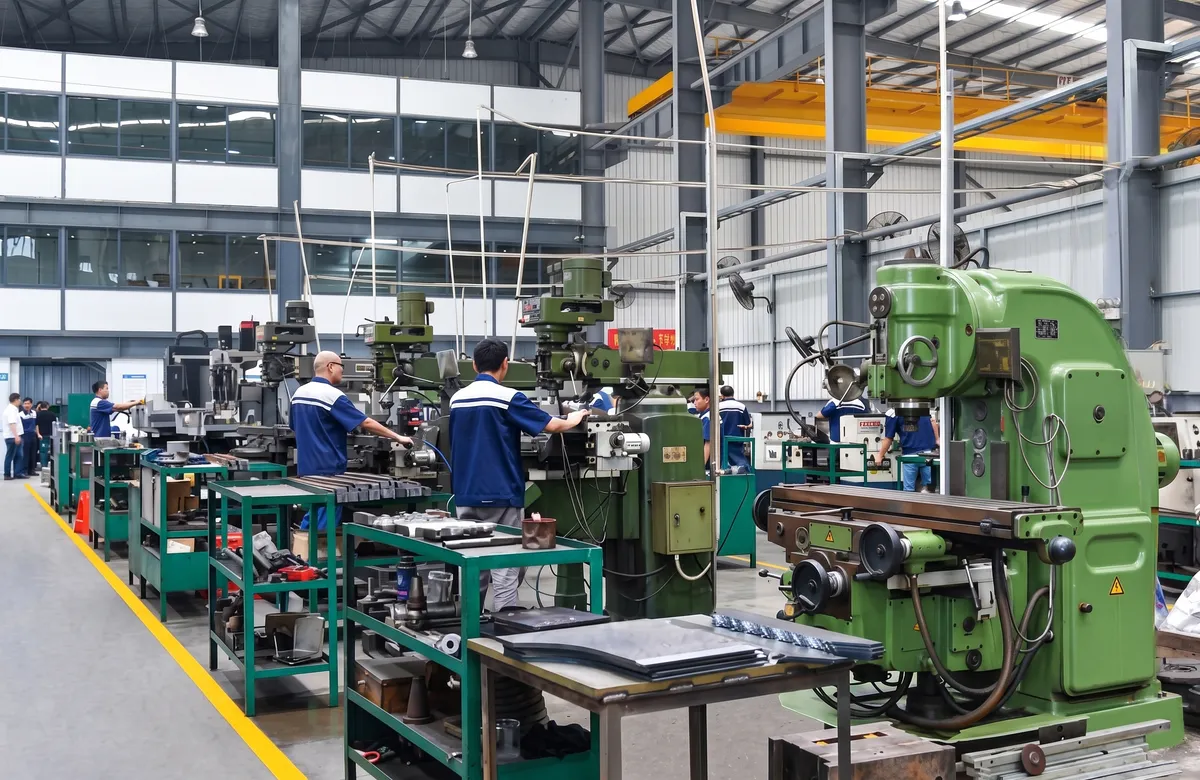
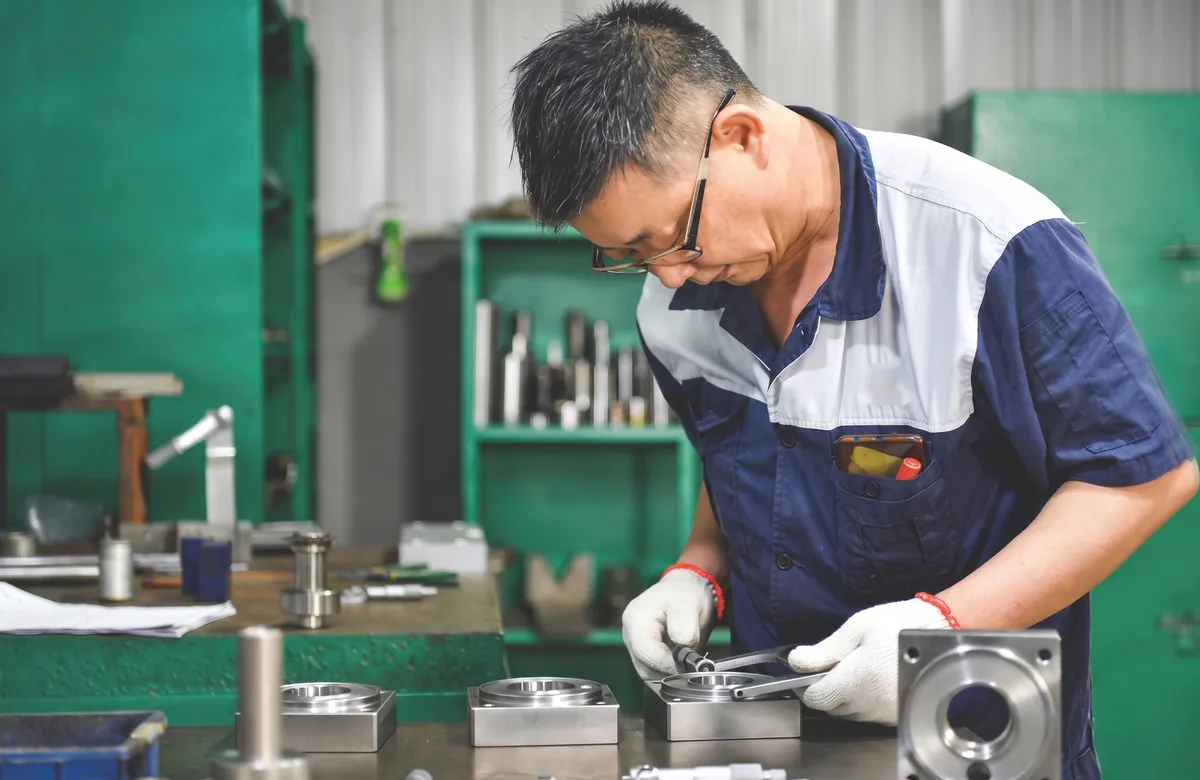
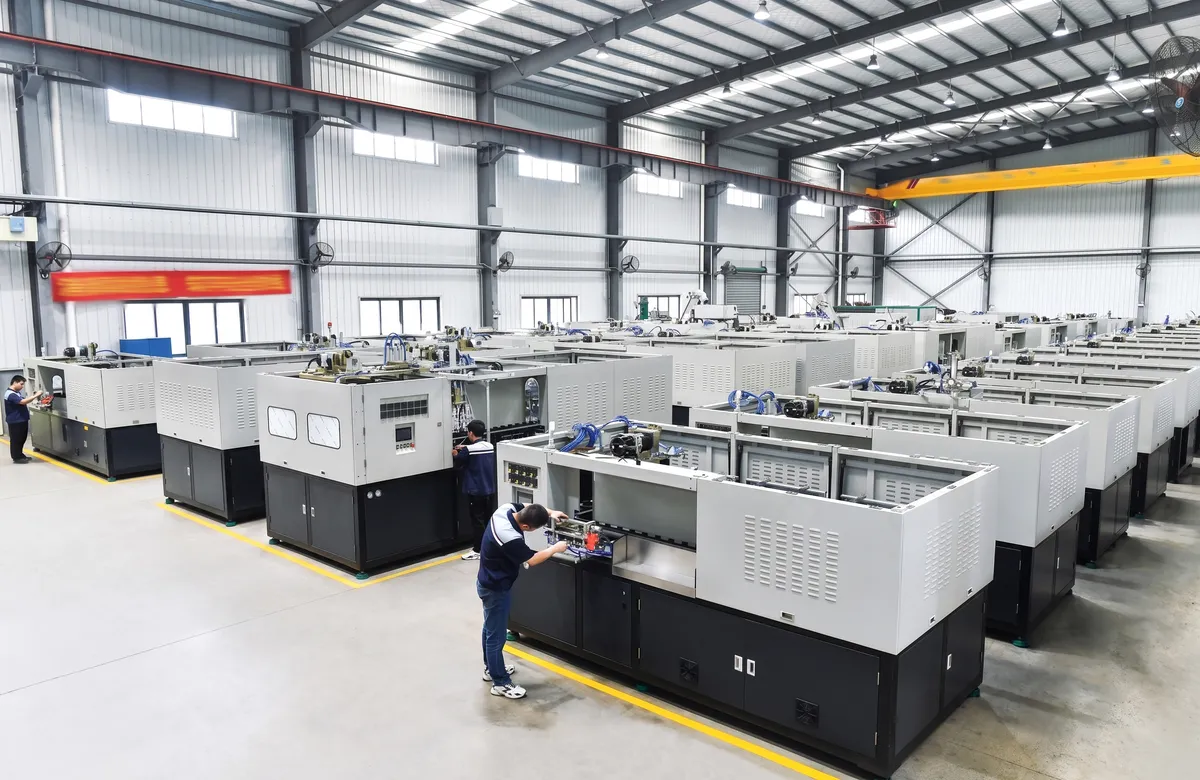
Mexico Ever-Power ISBM Machinery Co., Ltd is primarily engaged in the research and development, production, sales, and global trade of automatic one-step and two-step injection blow molding machines and injection stretch blow molding machines. Our product portfolio spans injection blow molding machines, extrusion blow molding machines, fully automatic blow molding machines, and the auxiliary machinery that supports complete bottle production lines. Backed by over two decades of technical expertise in the blow molding industry, we have built an outstanding R&D team that brings together senior engineering and technical specialists with deep practical experience in injection-blow machinery design and precision mold engineering for global markets.
Our machinery handles the full spectrum of engineering polymers including HDPE, LDPE, PET, PETG, PP, PS, PPSU, PC, Tritan, ABS, PLA, EVA, PCTG, and bio-based corn material compounds, producing containers from 1 ml to 1,000 ml and larger specialty formats. Application coverage includes pharmaceutical packaging, food and beverage packaging, healthcare product containers, premium cosmetic packaging, baby care products, and a full range of industrial and consumer plastic packaging categories. This breadth of capability reflects our commitment to serving diverse global markets through a single trusted supplier relationship that simplifies procurement, technical support, and ongoing machine lifecycle management.
Ever-Power adheres to the enterprise development philosophy of self-reliance, integrity, pragmatism, innovation, and responsibility in everything we build and deliver. We construct complete turnkey production solutions including machine, mold, compressor, chiller, and after-sales technical support, enabling our customers to launch bottle production operations with a single, accountable partner. Our pre-sale consultation process, in-production commissioning support, and responsive after-sales technical service team ensure that customers across six continents receive the assistance they need throughout the full life cycle of their Ever-Power equipment investment. Choose Ever-Power as your blow molding machine manufacturers partner and gain access to the technology, expertise, and support infrastructure that leading packaging companies worldwide have trusted for over twenty years.
 |
 |
|
 |
 |
 |
Frequently Asked Questions
Q: What is the maximum container volume the EPA.ES-2C260 can produce?
A: The EPA.ES-2C260 fully automatic blow molding machine can produce containers with a maximum volume of 15,000 ml (15 liters). The machine accommodates a maximum container diameter of 240 mm and a maximum container height of 450 mm. This large-volume capability makes it suitable for a wide range of applications including craft bottles, food service containers, agricultural chemical bottles, and large household product packaging, all produced with the same precision and surface quality as smaller container formats at the rated 900 bph output.
Q: What materials is the EPA.ES-2C260 PET bottle blow molding machine compatible with?
A: The EPA.ES-2C260 is compatible with PET, PP, PC, PETG, Tritan, PPSU, HDPE, LDPE, and various engineering resins and copolymers. This broad material compatibility makes it versatile across pharmaceutical, food-grade, baby care, cosmetics, and industrial packaging applications. Material compatibility depends on correct preform specification and processing parameter optimization, which Ever-Power's technical team can assist with based on your specific product requirements and the resin grades available in your regional market.
Q: What is the theoretical output rate of the EPA.ES-2C260 automatic blow molding machine?
A: The EPA.ES-2C260 achieves a theoretical output of 900 bottles per hour with its 2-cavity mold configuration. Actual achieved output in production conditions typically ranges from 820 to 900 bottles per hour depending on container geometry, wall thickness, material grade, and cooling time requirements. Larger containers with thicker walls require longer cooling dwell time and will produce at the lower end of this range, while smaller thin-wall containers can reach the rated 900 bph output in optimal production conditions.
Q: How does the EPA.ES-2C260 compare to a standard extrusion blow molding machine for craft bottle production?
A: The EPA.ES-2C260 uses injection stretch blow molding (ISBM) technology rather than the extrusion blow molding machine process. For craft and special-shaped bottles, ISBM delivers superior optical clarity (glass-like transparency in PET), more precise dimensional control, better wall thickness uniformity, and higher material strength through biaxial polymer chain orientation. EBM excels at producing large industrial containers and handles a wider range of opaque resins at lower tooling cost. For premium craft bottles where appearance and precision matter, ISBM consistently outperforms EBM equipment in output quality.
Q: What cooling system specifications does the EPA.ES-2C260 blow molding machine require?
A: The EPA.ES-2C260 requires cooling water at 5 to 6 kg/cm² operating pressure, maintained at 8 to 10°C, with a minimum flow rate of 50 liters per minute. An external industrial chiller unit is required to achieve and maintain this temperature range throughout production. Ever-Power offers matched chiller units as auxiliary machinery pre-configured for the EPA.ES-2C260's cooling requirements, simplifying installation and ensuring compatibility. Proper cooling water treatment to prevent scale and corrosion is essential for sustained performance and extended mold life.
Q: Can the EPA.ES-2C260 produce baby feeding bottles that meet international safety standards?
A: Yes. The EPA.ES-2C260 baby bottle blow molding machine is designed to handle the materials and tolerances required for infant care products. When configured with appropriate PP, PC, Tritan, or PPSU preforms from certified food-contact grade resin suppliers, the machine produces bottles with the dimensional consistency and surface quality required for international baby product safety certifications including FDA, LFGB, and relevant EN standards. Material certification must be sourced through your resin supplier, as the machine itself is a precision processing platform rather than a material certifier.
Q: What compressed air supply is required for the EPA.ES-2C260 plastic blow molding machine?
A: The EPA.ES-2C260 requires a dual-pressure compressed air supply. Low-pressure air for pneumatic actuation operates at 7 kg/cm² with a consumption of 1,200 liters per minute. High-pressure blowing air operates at 35 kg/cm² with a consumption of 16,000 liters per minute during the blowing phase. A dedicated high-pressure booster compressor is required to generate the 35 kg/cm² blowing pressure, as standard factory air systems typically deliver only 6 to 8 kg/cm². Ever-Power offers matched compressor stations as auxiliary equipment integrating directly with the machine's air management system.
Q: How long does it take to change molds on the EPA.ES-2C260 for different bottle types?
A: Mold changeover time on the EPA.ES-2C260 typically ranges from 45 minutes to 2 hours depending on the degree of difference between the outgoing and incoming molds, operator experience level, and whether the new mold requires significantly different processing parameters. The 635 mm mold-open distance provides excellent access for mold removal and installation. Molds sharing the same neck finish and preform specification as existing molds change over faster since heating and stretching parameters require minimal adjustment during the transition.
Q: Does Ever-Power offer custom blow molding machine configurations for specific industry requirements?
A: Yes. Mexico Ever-Power ISBM Machinery Co., Ltd offers custom blow molding machine configurations beyond the standard EPA.ES-2C260 specification. Customization options include clean-room compatible enclosures for pharmaceutical production, modified preform handling systems for unusual preform geometries, different cavity counts, specialized mold configurations for handle bottles or wide-mouth containers, and integration with downstream filling and labeling systems. Contact our technical sales team with your specific production requirements for a customization assessment and tailored quotation.
Customer Reviews
Carlos Mendonca, Craft Packaging, Brazil
"We ordered the EPA.ES-2C260 for our artisan glass substitute bottle line in Sao Paulo about fourteen months ago. To be honest we were a little nervous buying from overseas but the machine arrived on time, well packed, and the installation team helped us remotely over video calls. We make decorative craft bottles for the gifting market and the surface finish we get is just stunning, our customers keep asking how we achieve that glass-like clarity. Running at around 820 bottles per hour consistently."
Liu Wei, Baby Products, China
"We have been using this machine for PP baby bottle production in our Shenzhen facility for close to two years now. The neck finish tolerance is exceptional, our QC rejection rate on neck dimensions is under 0.4% which is way better than our old equipment. The cooling system really makes a difference, keeping at 8 to 9 degrees means we can push the cycle speed without seeing any deformation. Ever-Power engineers were very thorough during commissioning, spending three days on site with my team."
Rajesh Patel, Pharma Packaging, India
"Good machine, good price. We are making pharmaceutical PP bottles in Mumbai, medium size runs around 500 ml and 1000 ml. The machine is straightforward to operate, our production staff were trained up within the first week. What I like most is how stable the blowing pressure is, we never see the pressure drop that used to give us problems with wall thickness inconsistency. Spare parts have been available promptly when we needed them which is very important in our location."
Dewi Susanto, Cosmetics Packaging, Indonesia
"We purchased two EPA.ES-2C260 units for our cosmetic bottle production line in Jakarta around ten months ago. The machines have been running very reliably, almost zero downtime once we got past the initial learning curve. The 15 liter maximum container capacity is useful for our larger lotion pump bottles. We produce quite complex shapes with embossed surface details and the mold quality from Ever-Power is impressive, the detail reproduction is sharp. Would buy again without hesitation."
Miguel Torres, Spirits Packaging, Mexico
"My factory in Guadalajara has been producing PET craft bottles for the artisan spirits market for three years. When we expanded last year we evaluated several suppliers and chose Ever-Power based on the technical specs and pricing. The EPA.ES-2C260 gives us better surface quality than our old machine, the bottle clarity is visibly superior which our clients in the premium tequila sector notice immediately. Shipping from Mexico took about 35 days which is very reasonable for our planning purposes."
Kim Sang-ho, Baby Care, South Korea
"The customer service from Ever-Power has been outstanding. We had a heating lamp issue about four months after delivery and they diagnosed it within an hour on a video call and shipped replacement parts within two days. The actual machine performance has been excellent for our PPSU baby bottle line in Seoul. PPSU is tricky to process and I was worried about compatibility but the precision heating control handles it really well. Running at 870 bottles per hour average on the ES-2C260."
Thomas Hoffmann, Contract Packaging, Germany
"We are a toll blowing operation in Frankfurt running seven different machine brands. The EPA.ES-2C260 we added eight months ago is now our go-to machine for special-shaped and craft bottle orders because mold changeover time is faster than most of our other equipment and the bottle quality for complex geometries is consistently better. The 635mm mold opening distance gives plenty of access. Energy consumption is also noticeably lower than our older hydraulic machines at equivalent output rates."
Ahmed Hassan, Household Chemicals, Egypt
"We source machinery carefully for our household chemical bottle operation in Cairo because after-sales support is critical when you are this far from Chinese manufacturers. Ever-Power has been very responsive via email and WhatsApp whenever we had questions. The machine itself has been rock solid for the nine months we have been running it, no significant mechanical issues. The preform holder design is clever, loading and unloading is much smoother than with our previous supplier's machine."
Tanaka Hiroshi, Food Packaging, Japan
"This is our second purchase from Ever-Power after a good experience with a smaller model three years ago. The EPA.ES-2C260 is a significant step up in terms of bottle size capability, we needed it for a new line of 5 to 10 liter containers for the food service market in Osaka. The machine handles these larger containers really well, the 240mm body diameter is just right for what we need. Documentation is good and the PLC interface is intuitive enough that our team learned it quickly."
Additional information
| Edited by | Yjx |
|---|
Related products
-
EPA.ES-2C130 Fully Automatic Blow Molding Machine for Edible Oil and Handle Bottles
-
EPA.AS-2C114.3 Fully Automatic Blow Molding Machine for Daily Chemicals & Cosmetic Bottles
-
EPA.ES-2C114.3 Fully Automatic Blow Molding Machine for Daily Chemicals & Cosmetic Bottles
-
EPA.ES-4C76 Fully Automatic Blow Molding Machine for Daily Chemicals & Cosmetic Bottles