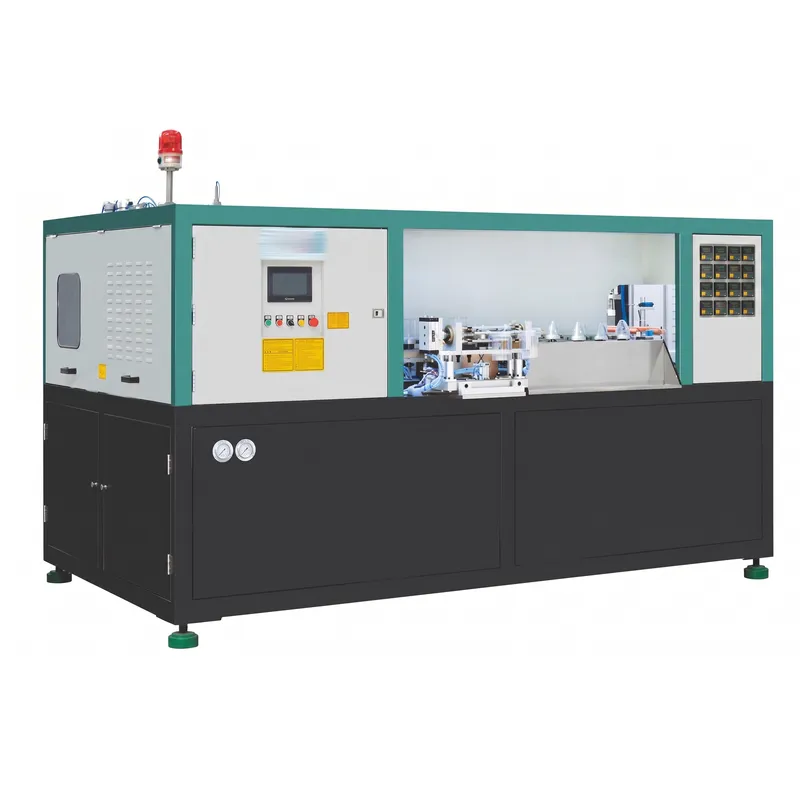
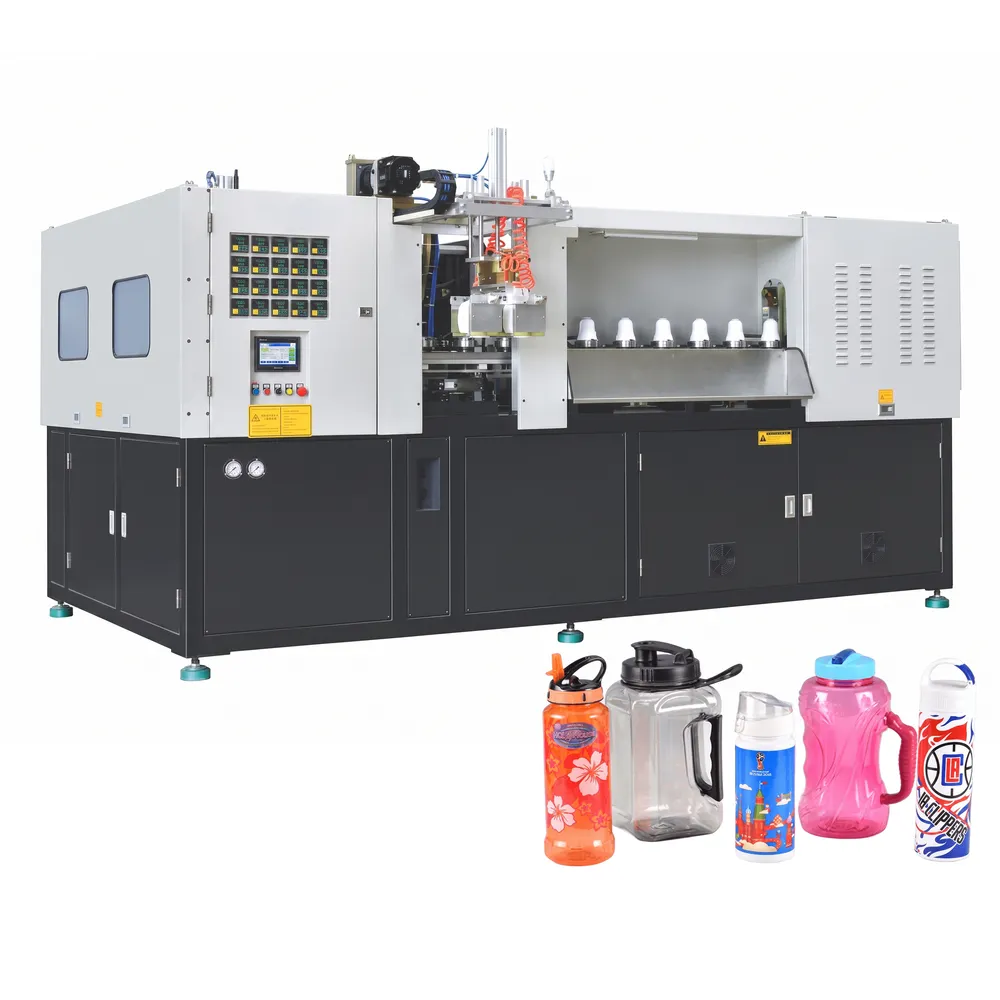
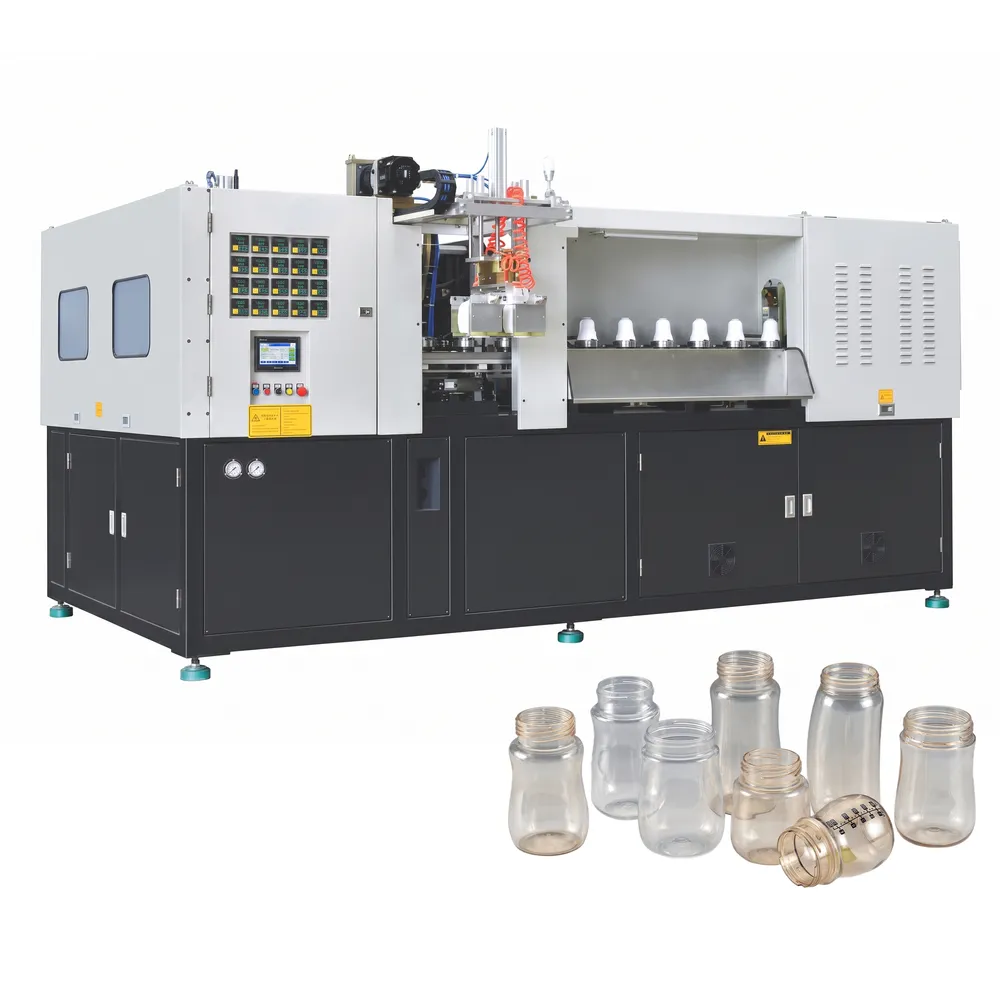
EPA.FS-1CG150 Fully Automatic Blow Molding Machine for Baby Bottles and PP Bottles
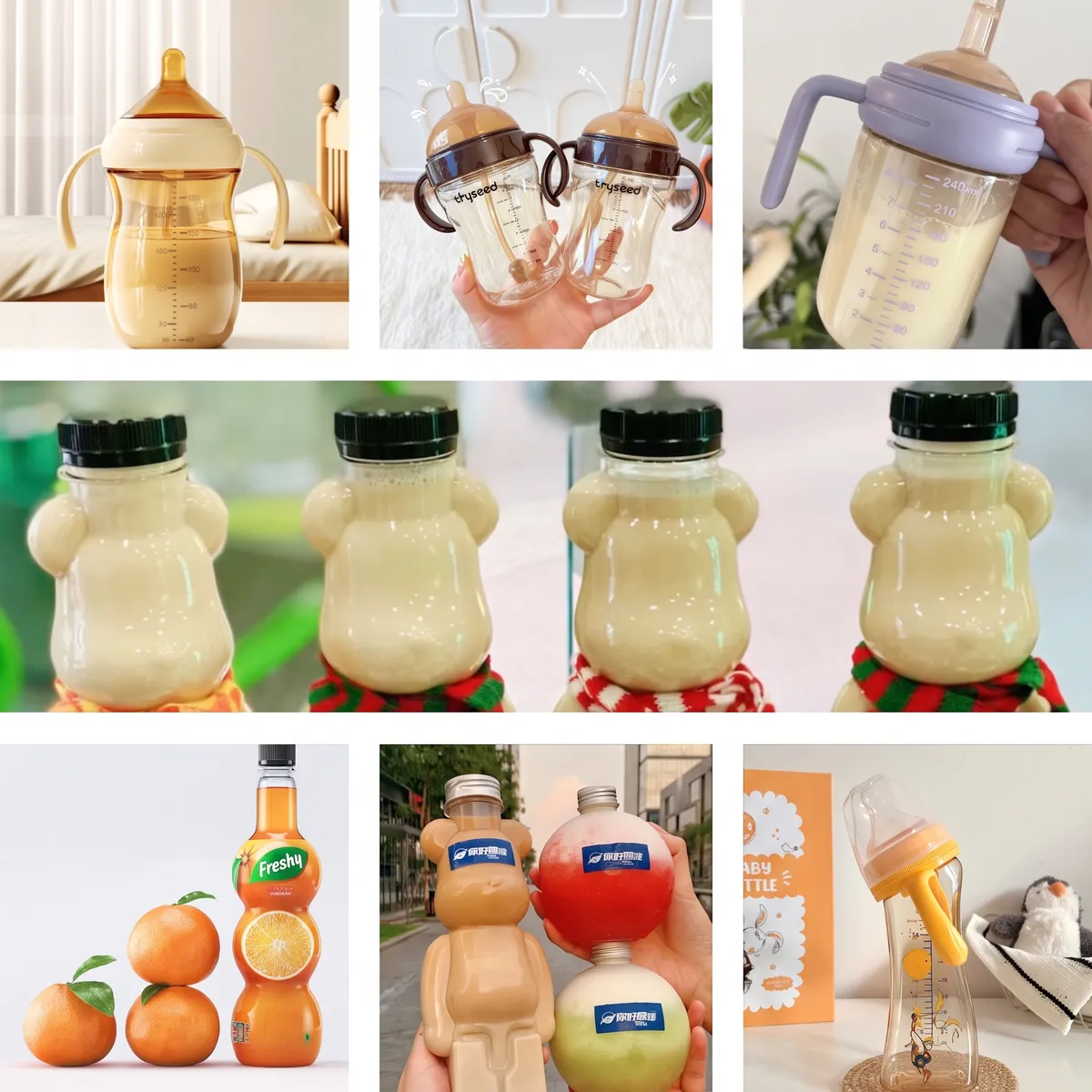
The EPA.FS-1CG150 Fully Automatic Blow Molding Machine for Baby Bottles and PP Bottles is an advanced two-stage PET bottle blow moulding machine engineered for the precision manufacturing of multi-shape, multi-material containers. Designed to efficiently produce feeding bottles, PP bottles, and special-shaped craft bottles across a wide specification range, this automatic PET blow molding machine combines exceptional output consistency with energy-efficient operation. The series covers models including EPA.FS-1CG130, EPA.FS-1CG196, EPA.FS-1CG220, and multi-station configurations, serving capacities from 1,000 ml to 15,000 ml.
The EPA.FS-1CG150 Fully Automatic Blow Molding Machine for Baby Bottles and PP Bottles is an advanced two-stage PET bottle blow moulding machine engineered for the precision manufacturing of multi-shape, multi-material containers. Designed to efficiently produce feeding bottles, PP bottles, and special-shaped craft bottles across a wide specification range, this automatic PET blow molding machine combines exceptional output consistency with energy-efficient operation. The series covers models including EPA.FS-1CG130, EPA.FS-1CG196, EPA.FS-1CG220, and multi-station configurations, serving capacities from 1,000 ml to 15,000 ml. With a theoretical output reaching up to 2,800 bottles/hour (model EPA.JS-4C114), stable blowing pressure at 30 to 35 kg/cm², and a precision cooling system controlling temperature at 8 to 12°C, this plastic blow molding machine guarantees uniform wall thickness and superior surface finish across every production cycle.
The EPA.FS-1CG150 is the go-to industrial blow molding machine for manufacturers of infant care products, pharmaceutical-grade PP packaging, premium cosmetic containers, and artisan craft bottles. Its servo-driven mechanics and internationally sourced electrical components deliver the low failure rates, rapid mold-change capability, and repeatable accuracy demanded by high-end OEM and export production environments. As one of the leading fully automatic blow molding machine suppliers in the market, Mexico Ever-Power ISBM Machinery backs every unit with comprehensive pre-sale consultation, on-site commissioning, and full after-sales support, making this bottle blow molding machine the preferred choice for B2B buyers worldwide.
Technical Parameter
| Baby Bottle and PP Bottle Blow Molding Machine | |||
|---|---|---|---|
| Model | Unit | EPA.FS-1CG150 | |
| Molding | Clamping stroke | mm | 200 |
| Mold-open distance | mm | 430 | |
| Mold-close distance | mm | 230 | |
| Stretching stroke | mm | 400 | |
| Mold-open distance | mm | 50 | |
| Mold-close distance | mm | 150 | |
| Preform Holder | 42 | ||
| Cavities | 1 | ||
| Container | Max.Container Volume | ml | 2500 |
| Neck Diameter Range | mm | 110 | |
| Max.Container Diameter | mm | 130 | |
| Max.Container Height | mm | 250 | |
| Theoretical Output | bph | 700 | |
| Electrical System | Max.Heating Power | kw | 12 |
| Heating Power | kw | 10 | |
| Air System | Operating Pressure | kg/cm² | 7 |
| Low Pressure Air Consumption | ltr/min | 800 | |
| Blowing Pressure | kg/cm² | 35 | |
| High Pressure Air Consumption | ltr/min | 2000 | |
| Cooling water | Operating Pressure | kg/cm² | 5-6 |
| Temperature | °C | 8-12 | |
| Flow rate | ltr/min | 30 | |
| Machine | Size (L*W*H) | mm | 3100*1450*1800 |
| Weight | kg | 2500 | |
Features of the EPA.FS-1CG150 Baby Bottle Blow Molding Machine
1. High Efficiency and Energy Savings
The equipment covers a heating power range of 10 to 42 kW across the series (e.g., EPA.P.FS-2CB130 reaches 38 kW), with blowing pressure stabilized at 30 to 35 kg/cm². High and low-pressure air consumption can be independently and accurately adjusted to minimize energy waste in each production cycle. The closed-loop cooling water system maintains a precise temperature of 8 to 12°C with a flow rate of 30 L/min, ensuring uniform preform cooling, significantly reducing deformation rates, and improving finished product yield. This fully automatic blow moulding machine delivers precision control throughout the entire blow molding machine process from start to finish.
2. Stable Operation and Flexible Production Adaptability
Featuring international-brand servo motors, reducers, and control components, the EPA.FS-1CG150 achieves industry-leading low failure rates with straightforward daily maintenance. With a maximum mold opening distance of 635 mm (EPA.ES-2C260) and precisely balanced clamping force, the machine supports rapid mold-change procedures and flexible multi-type bottle production across short or long runs. Machine weights ranging from 2,000 kg to 7,500 kg across the series allow compact footprints suitable for diverse workshop and factory floor layouts, making this plastic blow molding machine a versatile long-term investment for industrial blow molding machine operations.
3. Extensive Adaptability for Multi-Type Preform Production
The EPA.FS series supports the production of baby bottles, PP bottles, craft bottles, and special-shaped containers with capacities from 1,000 ml to 15,000 ml (e.g., model EPA.ES-2C260) and maximum body diameters up to 300 mm. Models such as EPA.FS-1CG196 and EPA.P.FS-2C150(L) accommodate bottle heights up to 330 mm and diverse neck finish requirements. This injection stretch blow molding machine excels at consistent, high-volume production of complex special-shaped feeding bottles, showcasing the exceptional adaptability of this preform bottle blow molding machine across multiple container categories and market verticals.
4. Excellent Output Quality
Capable of consistently processing PP and PET materials, the EPA.FS-1CG150 baby bottle blow molding machine produces containers with precise neck dimensions, uniform wall thickness distribution, and high optical transparency. Every bottle fully complies with the stringent safety and dimensional standards required for infant products, pharmaceutical-grade packaging, and high-end craft bottle applications. Smooth surface finishes and consistent shaping satisfy the dual requirements of aesthetic appeal and functional performance demanded by premium B2B customers in global export markets, confirming this PET bottle blow molding machine as a benchmark for quality production.
5. Fully Automatic: Maximum Labor Efficiency
The EPA.FS-1CG150 is a fully automatic blow molding machine that automates preform loading, heating, stretching, blowing, and product ejection within a single continuous production loop. Operators are freed from repetitive manual handling, allowing a single technician to oversee multiple stations simultaneously. Automation drastically reduces human error, stabilizes cycle time, and enables 24/7 production capability without sacrificing bottle consistency or quality. This level of automation directly reduces per-unit labor costs and increases the competitive advantage of manufacturing operations using this automatic blow molding machine platform.
6. Broad Application Range Across Multiple Industries
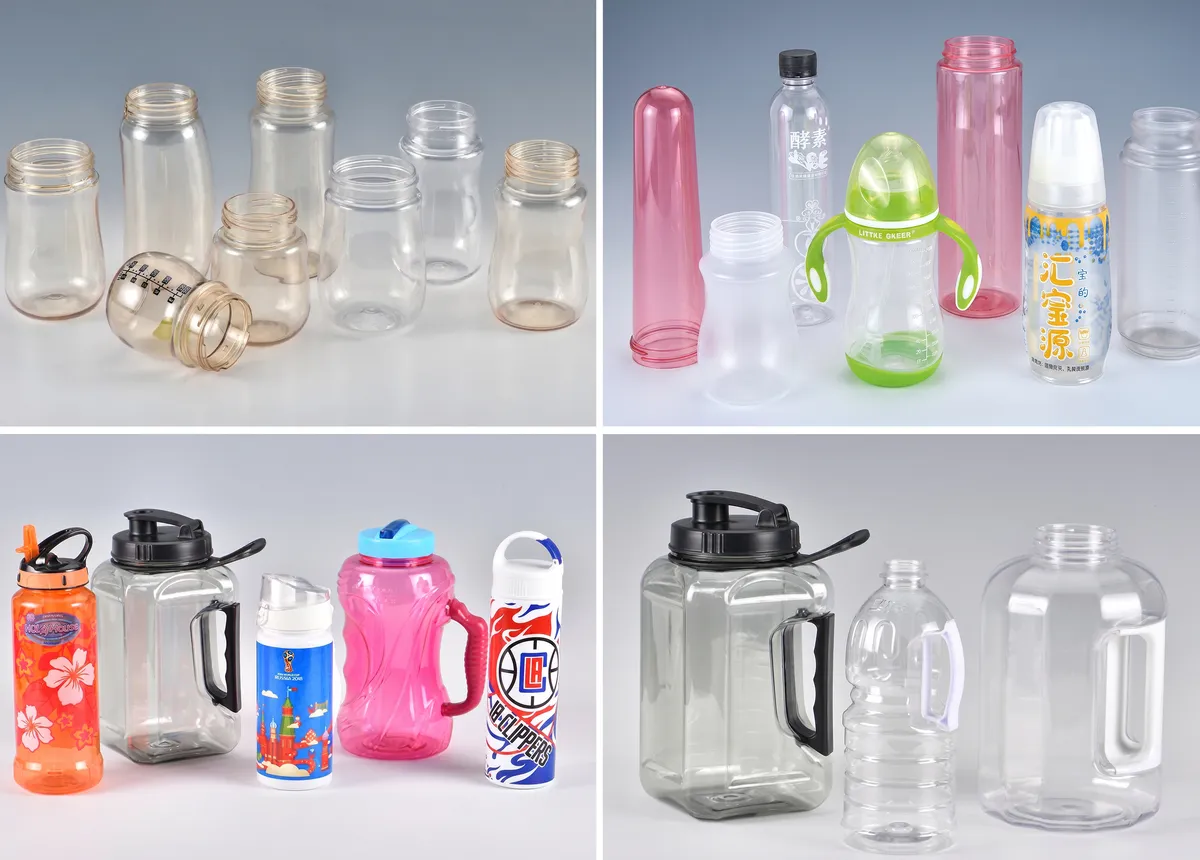
From infant feeding bottles and pediatric pharmaceutical packaging to premium cosmetic vessels and artisan-grade decorative craft containers, the EPA.FS-1CG150 PET blow molding machine serves a remarkable breadth of production applications. The series covers standard round bottles, wide-mouth jars, handle bottles, and highly complex special-shaped geometries in volumes from 1,000 ml through 15,000 ml. This versatility positions the machine as an ideal custom blow molding machine solution for B2B clients operating across mother-and-baby, pharmaceutical, food and beverage, daily chemical, and luxury packaging verticals, where both output volume and product quality standards are non-negotiable.
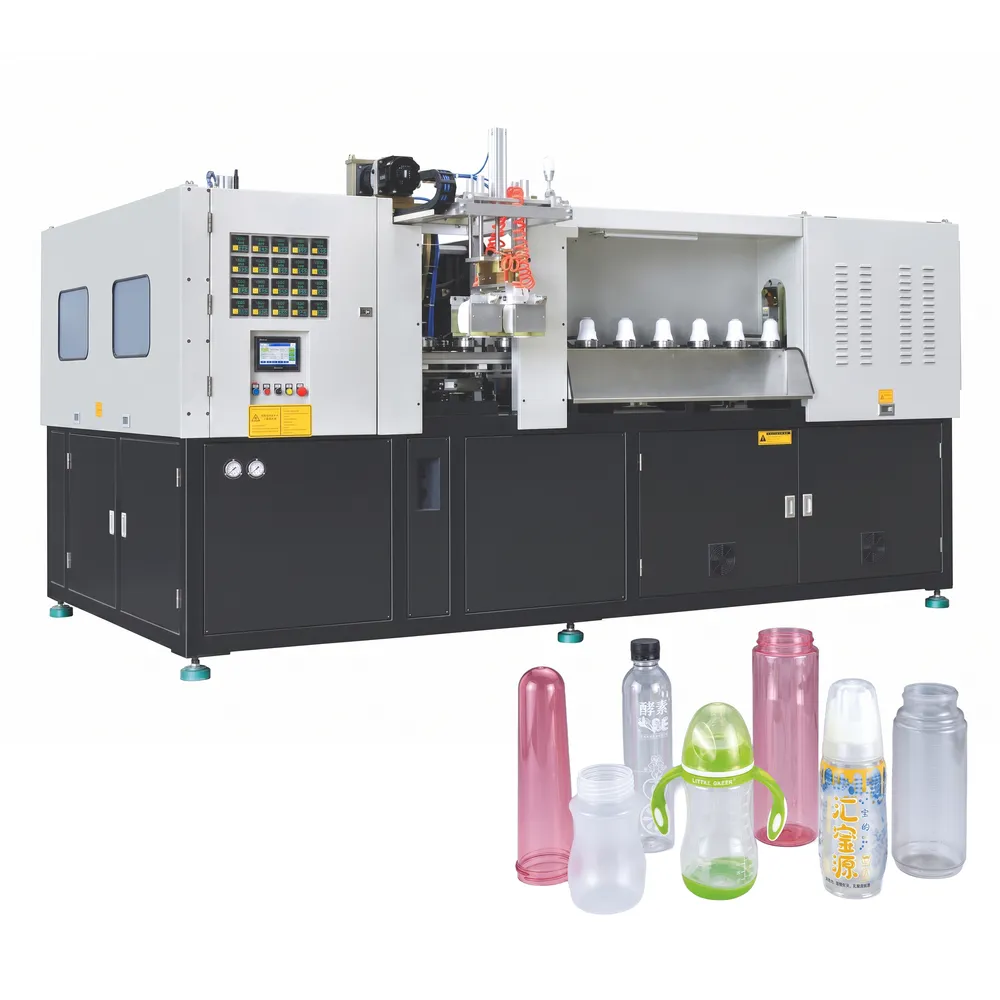
Working Principle of EPA.FS-1CG150 Fully Automatic Blow Molding Machine
Step 1: Raw Material Preparation
The raw materials for the two-stage bottle blow molding machine primarily include PP, PE, PET, and other engineering plastics. These materials undergo comprehensive screening, blending, feeding, and plasticizing treatment before entering the production process. Strict quality control at this stage ensures that every resin batch meets the purity, melt index, and moisture content specifications required for consistent, defect-free finished bottles. This foundational step is critical for maintaining the performance and output quality of the automatic PET blow molding machine throughout extended production runs.
Step 2: Injection Molding of Preform
During injection molding, precisely screened and blended raw materials are fed into the injection unit. After being heated, melted, and plasticized under controlled conditions, the molten polymer is injected under high pressure into the preform mold cavity, where it cools and solidifies into a test-tube-shaped preform. This stage demands tight control of barrel temperature profiles, injection pressure, screw speed, and hold pressure to ensure preform dimensional accuracy, wall uniformity, and surface clarity, which directly determines the quality of the finished bottle in this injection blow molding machine process.
Step 3: Infrared Preheating
After injection molding and preform ejection, the preforms enter the infrared heating zone of the EPA.FS-1CG150. The heating system uniformly raises the preform body temperature to the ideal stretch-blow window, paying particular attention to achieving consistent temperature across varying wall thickness zones. This controlled preheating step is essential for enhancing polymer chain mobility and plasticity, ensuring the preform stretches evenly during the subsequent blow molding stage. Precise temperature management at this step is a core factor that differentiates high-quality plastic bottle blow molding machines from commodity alternatives.
Step 4: Stretch Blow Molding and Cooling
During the blow molding stage, the preheated preform is transferred into the blow mold, where the stretch rod extends axially to initiate mechanical orientation while high-pressure air at 35 kg/cm² is injected radially to expand the preform to the final bottle shape. The mold's internal cooling channels rapidly reduce the bottle temperature to 8 to 12°C, locking in the final geometry and molecular orientation. This two-axis orientation process significantly improves bottle wall strength, optical clarity, and gas barrier properties, delivering finished containers that meet the strict quality benchmarks of this industrial blow molding machine application.
Applications of the EPA.FS-1CG150 Plastic Blow Molding Machine
Baby Bottles and Infant Care
The EPA.FS-1CG150 is purpose-built for manufacturing feeding bottles from safe, food-grade PP and PPSU materials. It produces containers with precisely controlled neck dimensions, uniform wall thickness, and flawless smooth surfaces that meet international infant safety standards. The machine is ideal for brands requiring GMP-compatible production environments and zero-defect output for mother-and-baby products.
Pharmaceutical-Grade PP Bottles
This PP bottle blow molding machine produces pharmaceutical-grade containers including oral liquid bottles, tablet containers, and ophthalmic packaging with precise small-mouth tolerances. The stable blowing pressure and consistent cooling control eliminate dimensional variations that could compromise drug integrity or dosing accuracy, making this machine a preferred choice for pharmaceutical packaging manufacturers seeking a reliable PET blow molding machine solution.
Premium Cosmetic Packaging
Leading cosmetics brands demand exceptional bottle clarity, lustrous surface finish, and complex geometric precision. The EPA.FS-1CG150 delivers high-transparency PET and PETG cosmetic bottles with smooth, scratch-free exteriors ready for labeling and sleeve application. Its special-shaped bottle capability handles everything from flat oval serums to multi-faceted luxury perfume bottles, making it one of the most capable plastic bottle blow molding machine platforms for the beauty industry.
High-End Craft and Decorative Vessels
For manufacturers of special-shaped craft bottles, ornamental containers, and gift packaging, this fully automatic blow molding machine excels at replicating intricate geometries with production-level consistency. Whether producing limited-edition collectible bottles or high-volume artisan packaging for spirits, sauces, and premium foods, the EPA.FS-1CG150 delivers the dimensional repeatability and surface quality that distinguish craft bottle producers in competitive markets worldwide.
Daily Chemical and Household Products
The EPA.FS-1CG150 is fully capable of producing daily chemical bottles for detergent, shampoo, fabric softener, and personal care product packaging. Its rapid cycle time of 700 bph ensures high-volume daily chemical production lines remain cost-competitive, while the durable blow mold construction sustains production quality across millions of cycles. This bottle blow molding machine configuration is widely used by household cleaning product manufacturers seeking a cost-effective automatic blow molding machine for fast-moving consumer goods applications.
Water and Beverage Bottles
Mineral water and beverage bottle production demands high-speed output without compromising wall uniformity or bottle strength. The series' multi-station configurations and multi-cavity options enable output rates suitable for large-scale bottling operations. The machine's two-stage blow molding machine design ensures complete separation of preform production and blowing, enabling flexible inventory management and the ability to run mixed product types across production shifts with minimal changeover time.
Food Packaging and Condiment Jars
Wide-mouth food jars, condiment containers, and edible oil bottles benefit from the EPA.FS-1CG150's precise neck dimension control and wide container diameter range up to 130 mm. The machine handles the demanding tolerance requirements of screw-cap and snap-fit food jar necks while maintaining consistent sidewall thickness critical to stackable container designs used in retail food packaging, dry goods, and specialty condiment production for domestic and international food export markets.
Custom OEM Bottle Designs
As a leading custom blow molding machine supplier, Ever-Power supports B2B clients requiring bespoke bottle geometries, proprietary neck finishes, and brand-specific container silhouettes. The EPA.FS-1CG150 works seamlessly with custom-designed preform injection molds and blow molds engineered and manufactured in-house using imported die steel 2316 and CNC-machined components, providing brands with a complete custom blow molding machine solution from mold engineering through to certified production-ready sample approval and full-scale volume output.
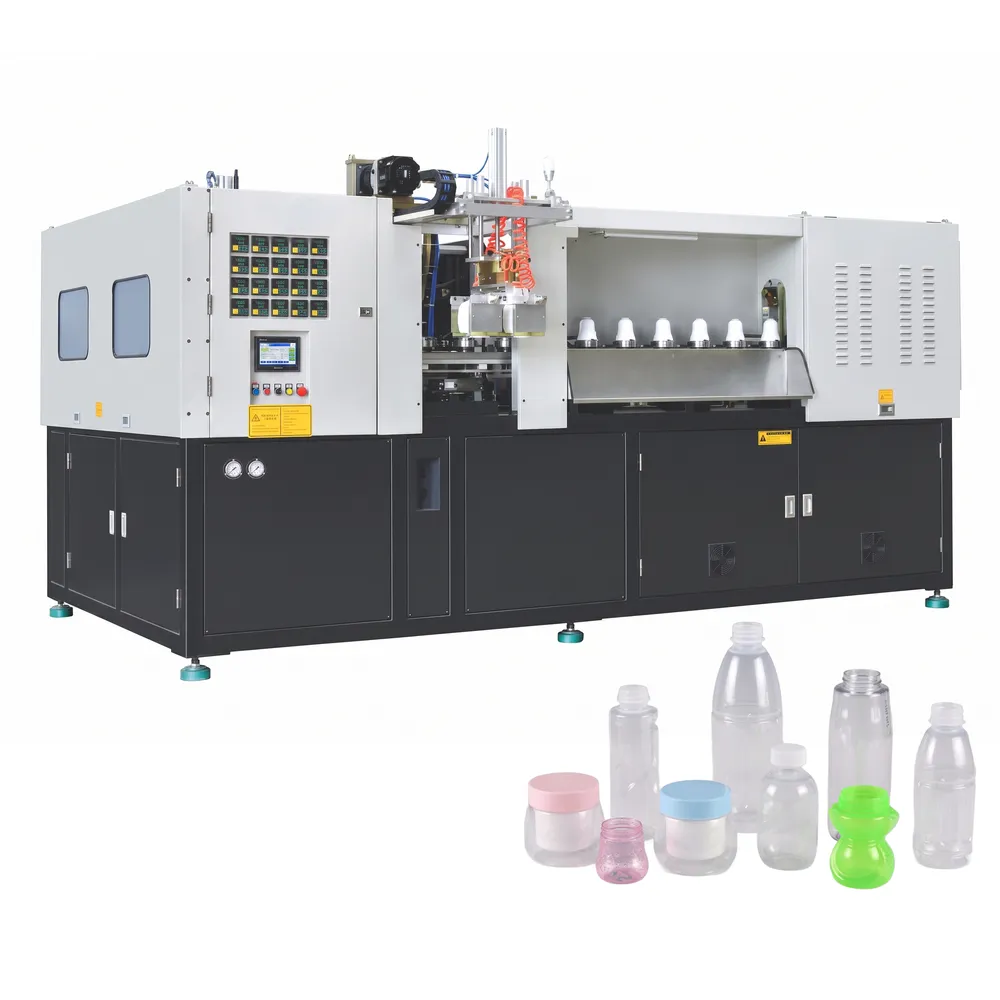
EPA.FS-1CG150 PET Blow Molding Machine Parts
1. Preform Feeding System
The feeding system comprises the hopper, preform conveyor, orientator, and gravity rails. Preforms are automatically sorted, oriented, and delivered to the heating zone in a continuous, controlled flow. The system eliminates manual preform handling, ensuring consistent spacing and orientation that allows the blow molding machine parts to operate at rated throughput without jamming or orientation errors during high-speed automatic production cycles.
2. Infrared Heating Module
The infrared heating module uses precision-controlled lamp arrays to raise the preform body to the optimal stretch temperature while protecting the neck finish from heat distortion. The heating zone allows zone-by-zone temperature adjustment, providing the flexibility required for different preform wall thickness profiles and material types including PET, PP, and PC. This module is a critical blow molding machine part that directly determines preform stretchability and finished bottle wall uniformity.
3. Mold Clamping Unit
The mold clamping unit generates and maintains precise clamping force throughout the blow cycle, preventing mold flash and parting line defects. With a clamping stroke of 200 mm and mold-open distance of 430 mm, the EPA.FS-1CG150's clamping unit accommodates single-cavity blow molds suitable for baby bottles and PP bottles up to 2,500 ml. International-brand servo actuators ensure repeatability across millions of cycles, minimizing mold wear and extending the operational lifespan of this automatic blow molding machine.
4. Stretch Rod Mechanism
The stretch rod mechanism achieves a maximum stretching stroke of 400 mm, initiating axial preform orientation before radial air pressure is applied. Precise servo-controlled rod speed and timing ensure the stretch ratio is consistent across every cycle, which is critical for achieving the biaxial molecular orientation that gives the finished bottle its strength, clarity, and gas barrier performance. This component is what differentiates this injection stretch blow molding machine from lower-performance equipment on the market.
5. High-Pressure Air Compressor Station
The compressor station provides high-pressure air at 35 kg/cm² for blow molding and low-pressure air at 7 kg/cm² for auxiliary machine functions. It consists of boosters, interconnecting manifolds, air tanks, and safety pressure control valves. High-pressure air consumption reaches 2,000 ltr/min at full output. An efficient compressor station is essential for maintaining consistent blowing pressure cycle-to-cycle, directly impacting bottle wall uniformity and dimensional accuracy across the production run of this high speed blow molding machine.
6. Water Cooling System
The closed-loop water cooling system maintains mold temperature between 8 and 12°C with a flow rate of 30 L/min at operating pressure of 5 to 6 kg/cm². Rapid and uniform cooling is essential for locking in the bottle's final geometry, preventing shrinkage warpage, and achieving rapid cycle times. The system's precision temperature control significantly reduces cooling-related defects such as ovality, deformation, and haze in the finished containers produced by this plastic bottle blow molding machine.
7. Bottle Exit Conveyor
The bottle exit conveyor automatically transfers finished bottles from the blow mold to downstream packaging, filling, or inspection equipment without manual intervention. The conveyor is designed to handle various bottle sizes and shapes gently, preventing surface scratching or deformation of the soft, freshly cooled bottles. Its speed is synchronized with the machine cycle rate to maintain continuous production flow without bottle accumulation or line stoppage in the fully automatic blow molding machine production line.
8. PLC Control Panel
The PLC-based control panel integrates touch-screen HMI operation with recipe-based parameter storage, allowing operators to recall saved production programs for different bottle types instantly. The control system monitors heating zone temperatures, pressure values, cycle timing, and fault diagnostics in real time, with alarm functions alerting operators to deviations before defects occur. This intelligent control architecture makes the EPA.FS-1CG150 one of the most operator-friendly automatic PET blow molding machines available, reducing the skill threshold required for efficient machine operation.
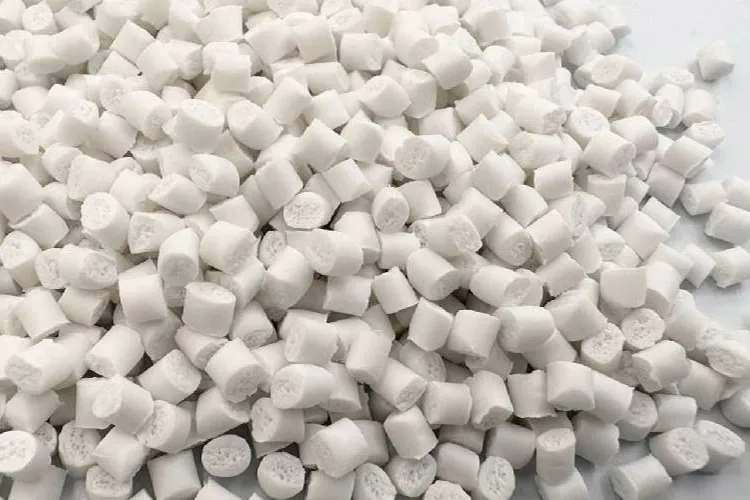
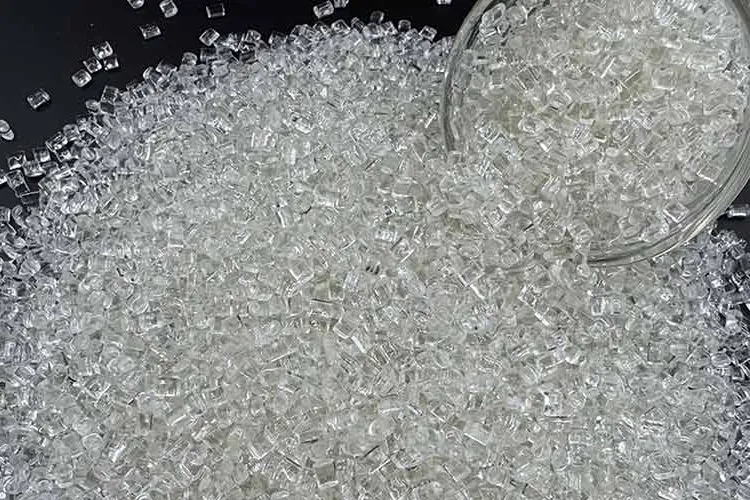
Raw Materials of the EPA.FS-1CG150 Baby Bottle Blow Molding Machine
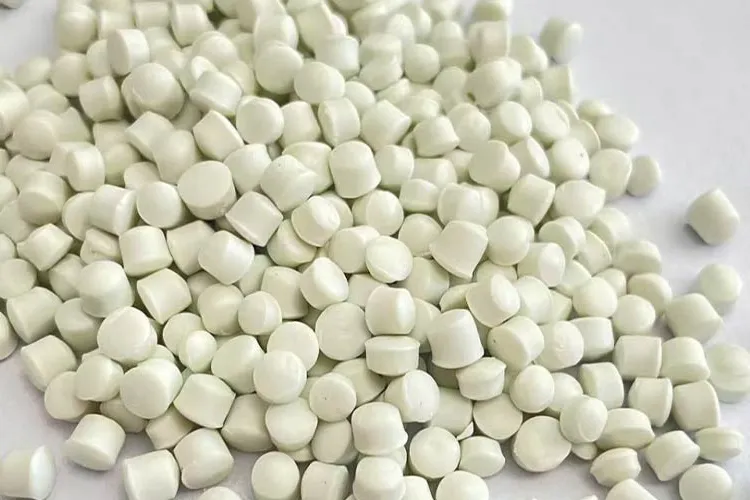
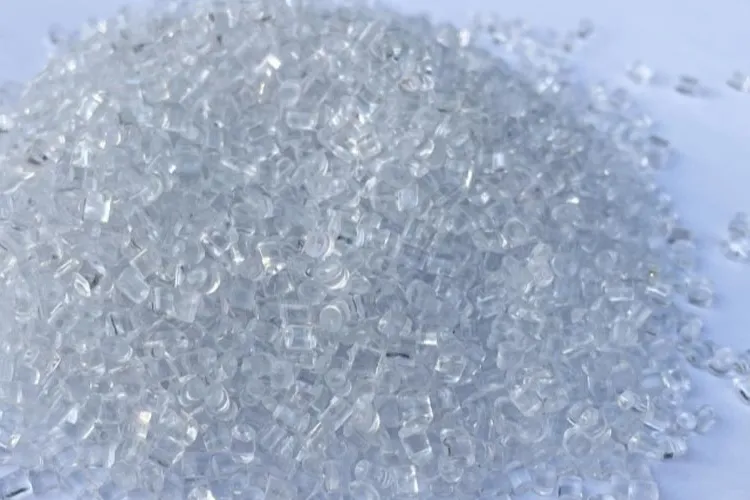
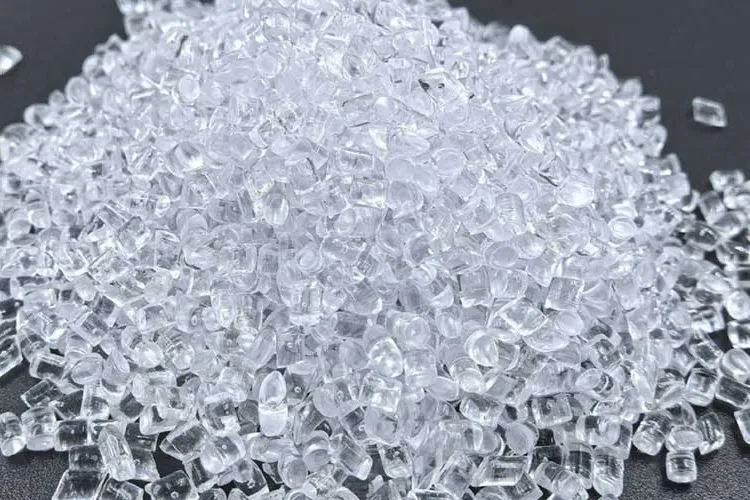
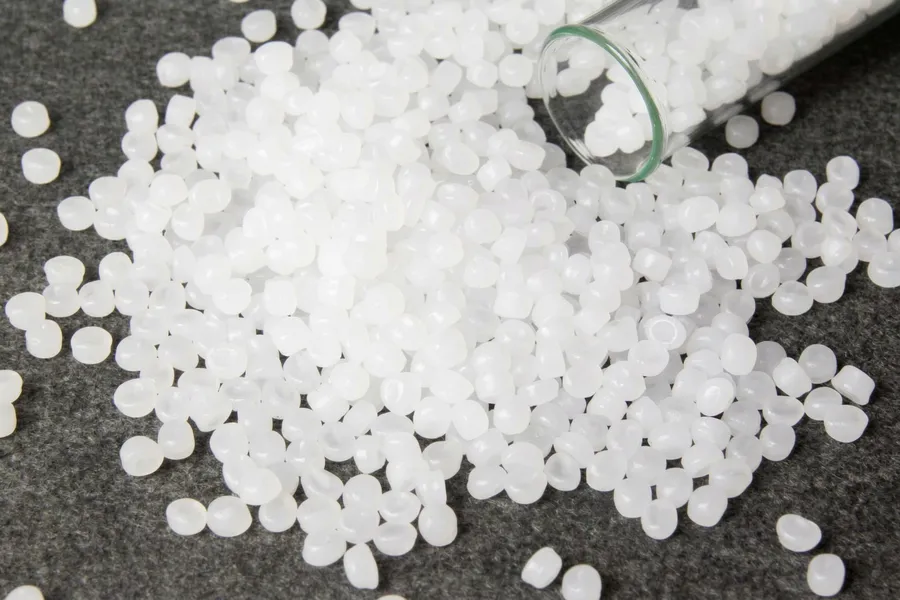
PET (Polyethylene Terephthalate)
The most widely used material in this PET bottle blow molding machine, PET offers outstanding clarity, excellent gas barrier properties, and strong impact resistance. Ideal for water bottles, beverage containers, cosmetic packaging, and food-grade containers. PET's high stretch ratio enables very thin, lightweight bottle walls while maintaining structural rigidity and producing the crystal-clear transparency demanded by premium packaging markets globally.
PP (Polypropylene)
PP is the primary material for baby feeding bottles, pharmaceutical containers, and heat-resistant packaging. This PP bottle blow molding machine produces PP containers that are BPA-free, autoclave-sterilizable, and resistant to chemical attack, making them the preferred choice for infant care, medical, and food-contact applications. PP's natural semi-opacity creates the milky white appearance characteristic of quality baby bottles in global markets.
PC (Polycarbonate)
Polycarbonate offers exceptional impact strength, dimensional stability at elevated temperatures, and optical clarity comparable to glass. PC is used in demanding applications including reusable sports bottles, industrial water cooler bottles, and premium craft containers. The EPA.FS-1CG150 can process PC to produce robust, crystal-clear bottles suitable for repeated filling, cleaning, and sterilization across professional and consumer environments.
Tritan
Tritan combines the clarity and scratch resistance of PC with full BPA-free status and dishwasher-safe performance. Increasingly specified for premium baby bottles, children's drinking bottles, and high-end reusable water bottles in markets where chemical safety regulations are stringent. This blow molding machine processes Tritan at appropriate barrel and blow temperatures to achieve the material's outstanding optical and mechanical properties in finished containers.
HDPE (High-Density Polyethylene)
HDPE is a versatile, cost-effective material used for agricultural chemical bottles, household cleaning product containers, and industrial packaging. Its excellent chemical resistance, moisture barrier, and rigidity make it ideal for bottles containing corrosive or reactive substances. The machine's adjustable heating and pressure parameters accommodate HDPE's processing characteristics to produce bottles with consistent wall thickness and strong base integrity for demanding chemical storage applications.
LDPE (Low-Density Polyethylene)
LDPE is valued for its flexibility, low-temperature performance, and excellent film-forming properties. It is used in squeeze bottles, dropper bottles, and flexible packaging containers where hand-compressibility is required by the end user. This plastic blow molding machine processes LDPE to produce soft, flexible containers with good seal-ability and chemical resistance, serving applications in pharmaceutical dispensing, food condiment squeeze packaging, and personal care product formats.
PETG
PETG offers the clarity of PET with improved impact resistance and easier thermoforming at lower temperatures, making it popular for cosmetic packaging, specialty food containers, and premium retail packaging. The EPA.FS-1CG150 processes PETG to produce bottles with exceptional gloss, easy printability, and reliable sealing performance, meeting the presentation standards of luxury cosmetics and high-end specialty food brands that require visually distinctive container designs.
 |
 |
 |
 |
 |
 |
Two-Stage Blow Molding Machine vs. Single-Stage Blow Molding Machine
Single-Stage Blow Molding Machine
A single-stage configuration integrates preform injection molding, mechanical stretching, and pneumatic blowing within a single unified machine chassis. Because the preform never leaves the machine, the entire blow molding machine process is a continuous loop that fully exploits residual polymer heat from injection, eliminating the need to reheat cold preforms.
3-Station Systems feature injection, stretch-blowing, and ejection zones. By using residual injection heat, facilities eliminate separate preform reheating energy costs, with thermal energy savings of roughly 25%. Ideal for specialty containers requiring close control of preform-to-bottle thermal history.
4-Station Systems add a dedicated thermal conditioning station between injection and blowing. This extra zone stabilizes preform internal temperature profiles, enabling more precise wall thickness distribution across complex or asymmetrical bottle geometries, making it the preferred choice for high-difficulty special-shaped containers.
Best suited for: Small-to-medium batch runs, high-precision specialty bottles, pharmaceutical containers, complex custom shapes, and production environments where preform inventory management is not practical or cost-effective.
Two-Stage Blow Molding Machine
The two-stage blow molding machine, the configuration of the EPA.FS-1CG150, separates preform injection molding and stretch blow molding into two independent stages. Preforms are manufactured in bulk on injection molding machines, stored, and then fed into the blow molding machine where they are reheated and blown into the final container shape.
This separation provides significant operational flexibility: preform inventory can be built up during off-peak periods and consumed during peak demand, and separate preform and bottle production lines can be optimized independently for maximum efficiency across the blow molding machine process.
Multi-station rotary or linear systems in the two-stage format achieve significantly higher throughput than single-stage machines of comparable investment, making the two-stage platform the dominant choice for high-speed blow molding machine operations in beverage, water, condiment, and daily chemical packaging where output volume is paramount.
Best suited for: High-volume production, standard bottle shapes, beverage and water bottles, operations with established preform supply chains, and facilities requiring flexible scheduling between preform injection and bottle blowing shifts.
Quick Comparison: Two-Stage vs. Single-Stage
| Criteria | Two-Stage (EPA.FS-1CG150) | Single-Stage |
|---|---|---|
| Output Volume | High | Medium |
| Complex Bottle Shapes | Good | Excellent |
| Production Flexibility | High | Medium |
| Energy per Bottle | Slightly Higher | Lower |
| Best Application | Volume production | Specialty / short run |
Baby Bottle Blow Molding Machine Mould Features
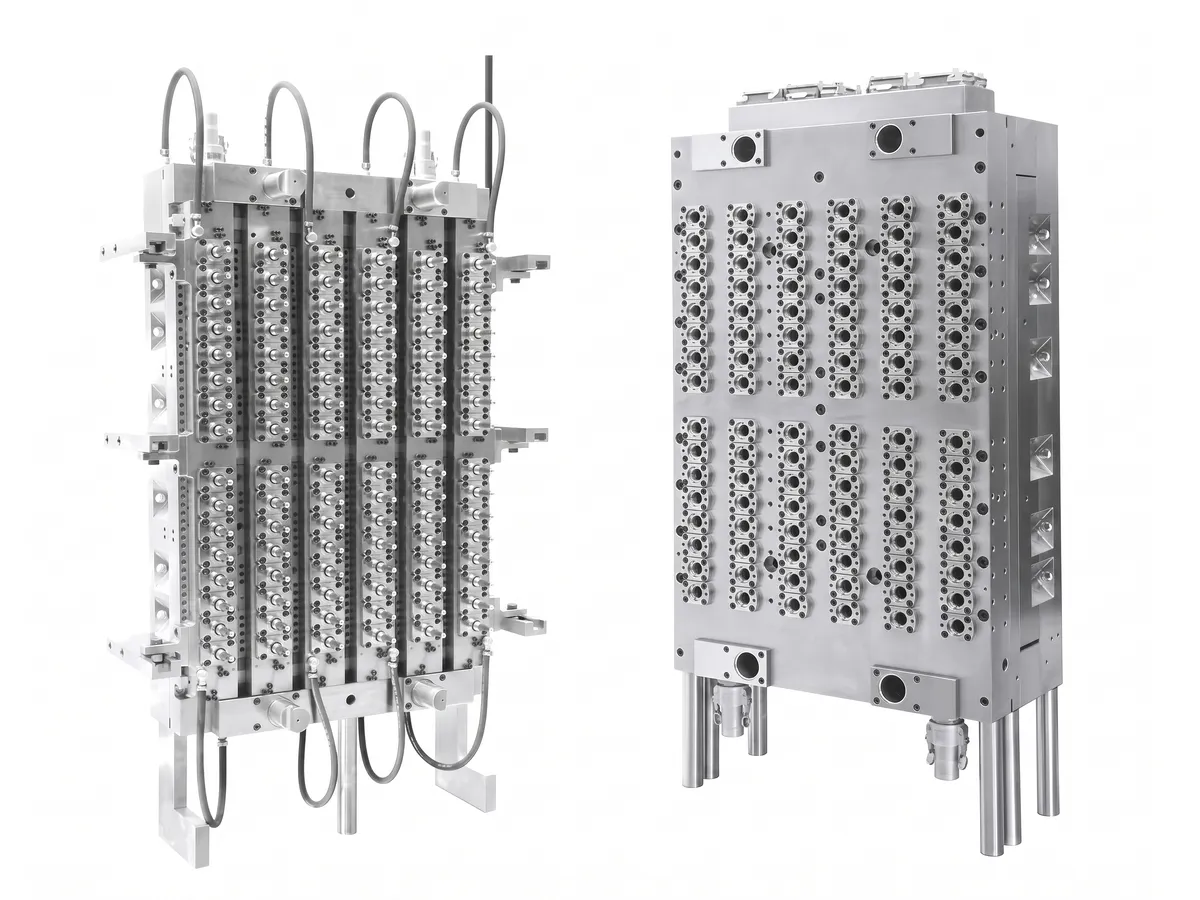
Preform Injection Mold
- Two-Part Die Lip Design: The die lip is composed of two precision-machined parts that guarantee true coaxiality between the preform gate and body axis during the injection phase, ensuring perfectly centered wall distribution for consistent downstream blow molding performance and reduced material waste in each cycle.
- Optimized Cooling Channel Design: Rationally designed cooling water channels distribute coolant uniformly around every preform cavity, maximizing heat transfer efficiency and enabling the fastest possible cycle times. This directly reduces per-unit production costs in any baby bottle blow molding machine operation at commercial scale.
- Imported Die Steel 2316 Formation Components: All cavity-forming components are machined from imported 2316 die steel, which is fully rust-resistant and has undergone heat treatment to achieve consistent hardness throughout the tool. This selection ensures the mold withstands prolonged high-temperature, high-cycle production without surface degradation or corrosion.
- 420 Stainless Steel Structural Components: Core plates, cavity plates, and all load-bearing structural parts are fabricated from 420 stainless steel, chosen specifically for its superior corrosion resistance in the humid, cooling-water-cooled mold environment. This material selection extends service life dramatically compared to standard tool steels used by lower-grade blow molding machine manufacturers.
- Standard Interchangeable Die Fittings and Multi-Type Capability: Standard interchangeable die fittings reduce spare parts inventory complexity and simplify on-site maintenance. The advanced mold design allows a single mold to produce more than one type of preform where neck dimensions are compatible, maximizing tooling investment return for multi-SKU production environments.
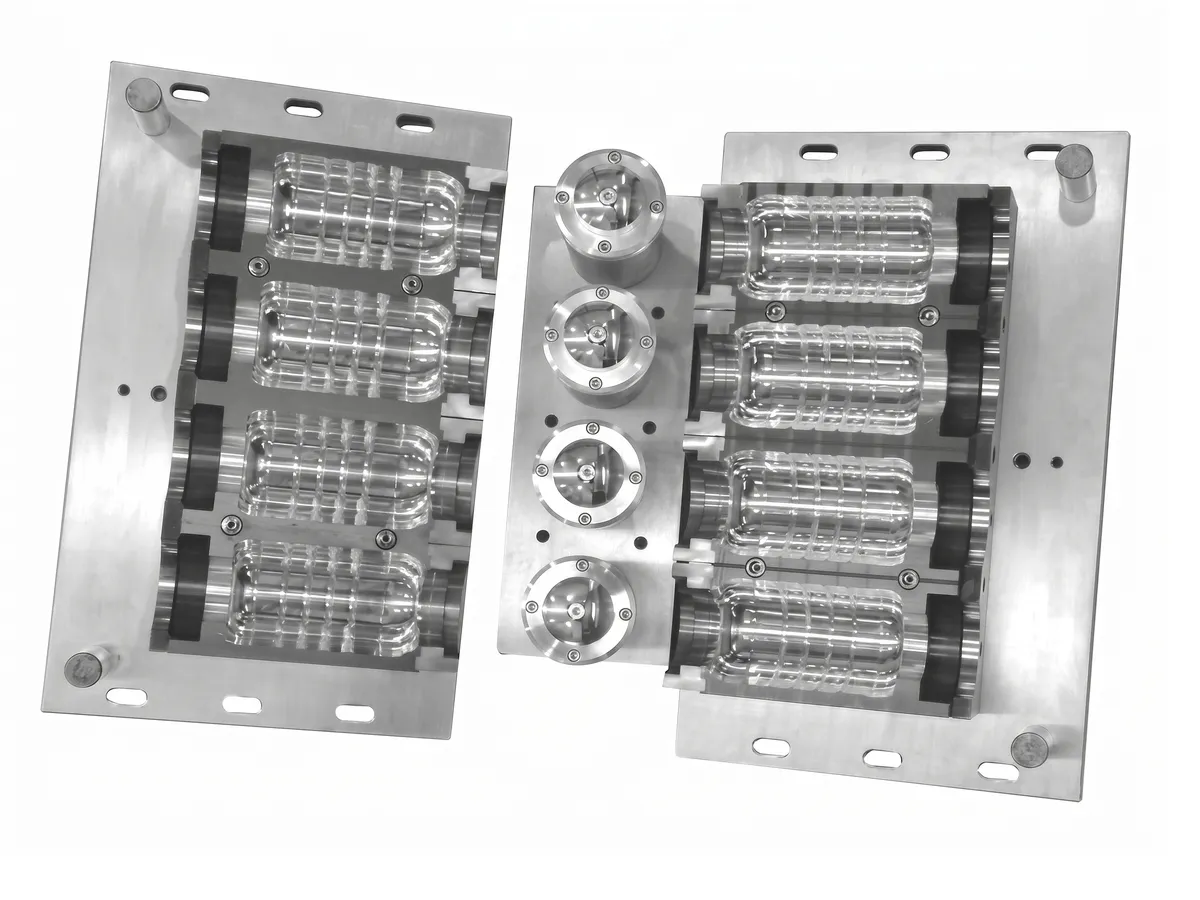
Blowing Mold
- High-Quality Steel Construction: Blow mold raw materials are selected from premium grade steels, chosen for their strength, machinability, and thermal conductivity properties. High-quality steel ensures the mold cavity surfaces maintain dimensional precision across millions of blow cycles without fatigue cracking, distortion, or surface delamination in this high speed blow molding machine environment.
- Advanced 3D CAD Design and Versatile Bottle Options: All bottle forms are designed using advanced 3D modeling software that enables precise cavity geometry validation before cutting begins. Ever-Power offers a library of versatile bottle design templates for standard baby bottle, PP bottle, and craft bottle shapes, as well as full custom mold design services for proprietary bottle geometries unique to your brand.
- Rational Cooling Channel Layout: Blow mold cooling channels are engineered to deliver uniform coolant flow around all critical cavity zones, including challenging areas such as the bottle base and handle sections. Balanced cooling eliminates hot spots that cause localized wall thinning, crystallinity variation, or surface haze in the finished bottle from this plastic blow molding machine.
- Full CNC Machining of All Metal Parts: Every metallic component of the blow mold, including cavity halves, neck inserts, base plugs, and guide pillars, is machined on CNC machining centers. CNC precision ensures that mating surfaces close within tight tolerance, eliminating parting line flash and ensuring the dimensional repeatability that infant care and pharmaceutical packaging markets demand from a certified blow molding machine manufacturer.
 |
 |
How to Choose the Right Blow Molding Machine for Your Production
1. Production Volume Requirements
Assess your required daily and annual output in bottles per hour. The EPA.FS-1CG150 delivers 700 bph for single-cavity baby bottle production. For higher volumes, multi-station or multi-cavity models from the series reach up to 2,800 bph. Match the machine output to your projected demand, leaving a 20 to 30% capacity buffer to accommodate demand peaks and scheduled maintenance downtime without impacting your production commitments.
2. Bottle Design Complexity
Evaluate the complexity and geometric variety of the bottle shapes your product range requires. Standard round bottles and simple ovals are readily accommodated by standard blow molding machine configurations. Special-shaped, asymmetrical, wide-mouth, or multi-handled containers require machines with appropriate stretch rod stroke, clamping distance, and mold-open distance specifications. The EPA.FS-1CG150's 400 mm stretching stroke and 430 mm mold-open distance handle a wide range of baby bottle and PP bottle geometries within the 2,500 ml volume ceiling.
3. Automation Level and Labor Budget
Decide the degree of automation your operation requires for preform loading, bottle ejection, quality inspection, and downstream packaging integration. Fully automatic blow molding machines like the EPA.FS-1CG150 minimize operator headcount and eliminate variability introduced by manual handling. For operations with limited labor budgets or located in high-wage markets, investing in full automation delivers the fastest return on investment through reduced per-unit labor cost over the machine's operational lifespan.
4. Energy Efficiency and Operating Cost
Review the machine's rated max heating power (12 kW for the EPA.FS-1CG150) and operational heating power (10 kW) against local electricity tariffs to estimate monthly energy cost. Ask suppliers about servo motor energy recovery systems, intelligent heating zone shutoff features, and air recycling options that reduce high-pressure air consumption. Energy-efficient blow molding machine configurations significantly lower the total cost of ownership across a 10-year operating horizon, particularly in markets with rising industrial electricity prices.
5. Material Compatibility and Regulatory Requirements
Confirm the machine's compatibility with the specific resins your application demands. Baby bottle production targeting regulated markets may require PP, Tritan, or PPSU materials with specific FDA, EU food contact, or local infant safety certification. Pharmaceutical packaging requires documented GMP compliance. Verify that the machine's temperature range, screw design, and barrel configuration are compatible with your specified material grades before finalizing the machine selection to avoid costly post-purchase modifications.
6. After-Sales Service and Spare Parts Availability
Select a blow molding machine supplier that provides comprehensive after-sales service including on-site commissioning, operator training, and a local or regional service network. Confirm that critical spare parts, including heating lamps, valve seats, stretch rods, and PLC components, are available from the supplier's warehouse with short lead times. Ever-Power's global service network ensures that EPA.FS-1CG150 owners in all major markets can access technical support and spare parts to minimize unplanned downtime.
7. Factory Floor Space and Installation Requirements
Review the machine's footprint dimensions (3,100 x 1,450 x 1,800 mm for the EPA.FS-1CG150) against your available workshop space, including clearance zones for mold change access, ventilation, and downstream conveyor runs. Confirm utility requirements: compressed air supply specifications, cooling water inlet pressure of 5 to 6 kg/cm², and single or three-phase electrical supply. Proper facility planning before machine arrival prevents costly installation delays and ensures safe, regulation-compliant operation from the first production day.
Why Choose Ever-Power's PET Blow Molding Machine?
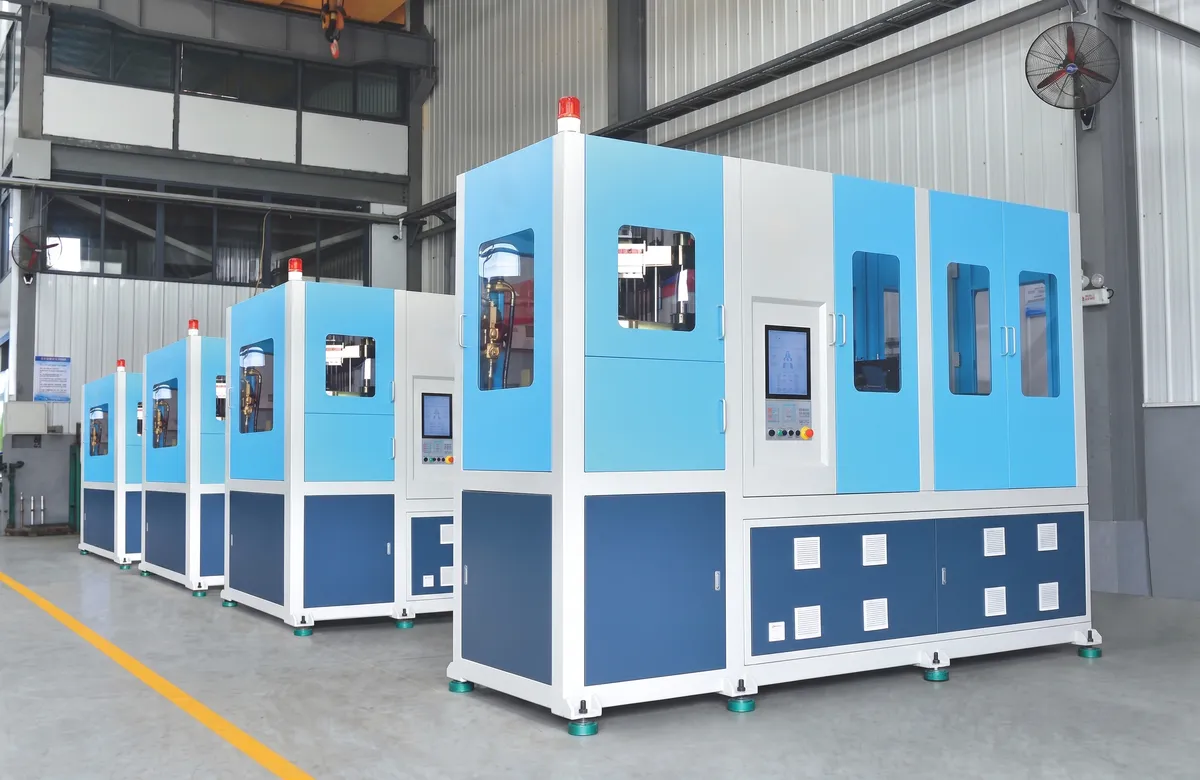
Mexico Ever-Power ISBM Machinery Co., Ltd is a dedicated manufacturer and global supplier of automatic one-step Injection Blow Molding Machines and Injection Stretch Blow Molding Machines, with more than 20 years of continuous research, development, and manufacturing experience. Our product range encompasses injection blow molding machines, extrusion blow molding machines, injection stretch blow molding machines, and a complete range of auxiliary machinery and tooling, making us one of the most comprehensive blow molding machine manufacturers serving the global market today.
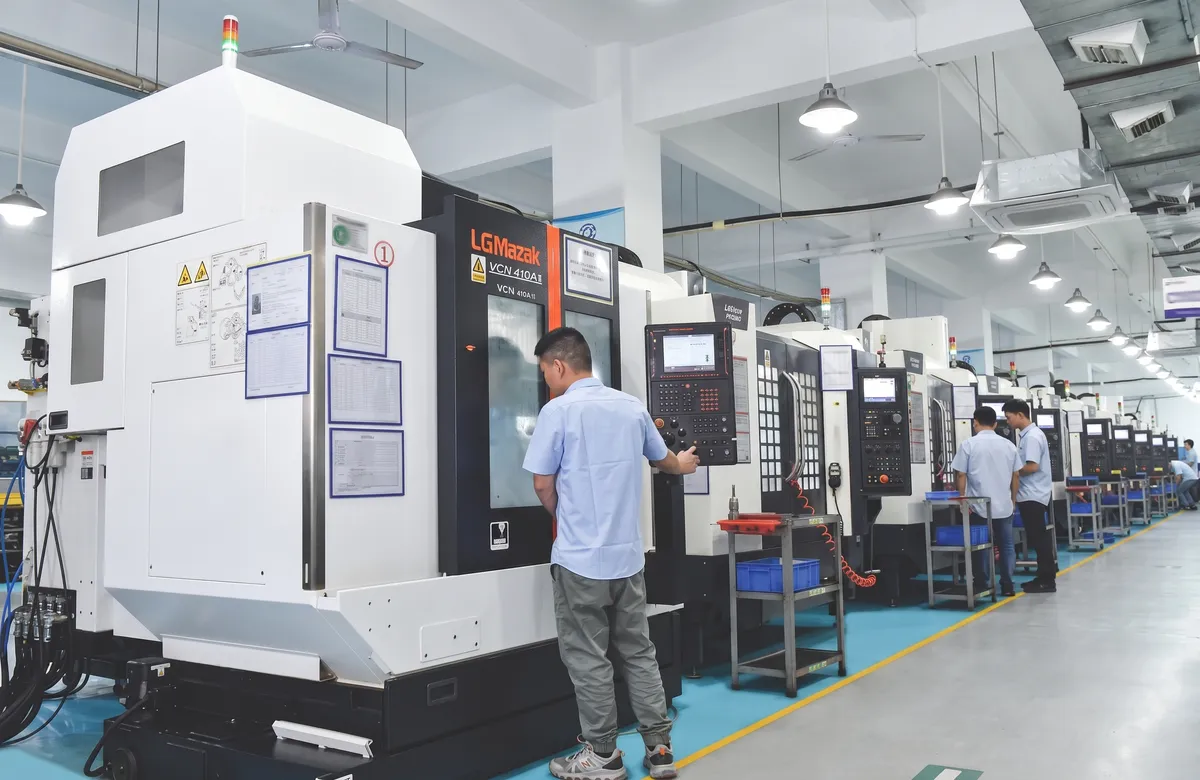
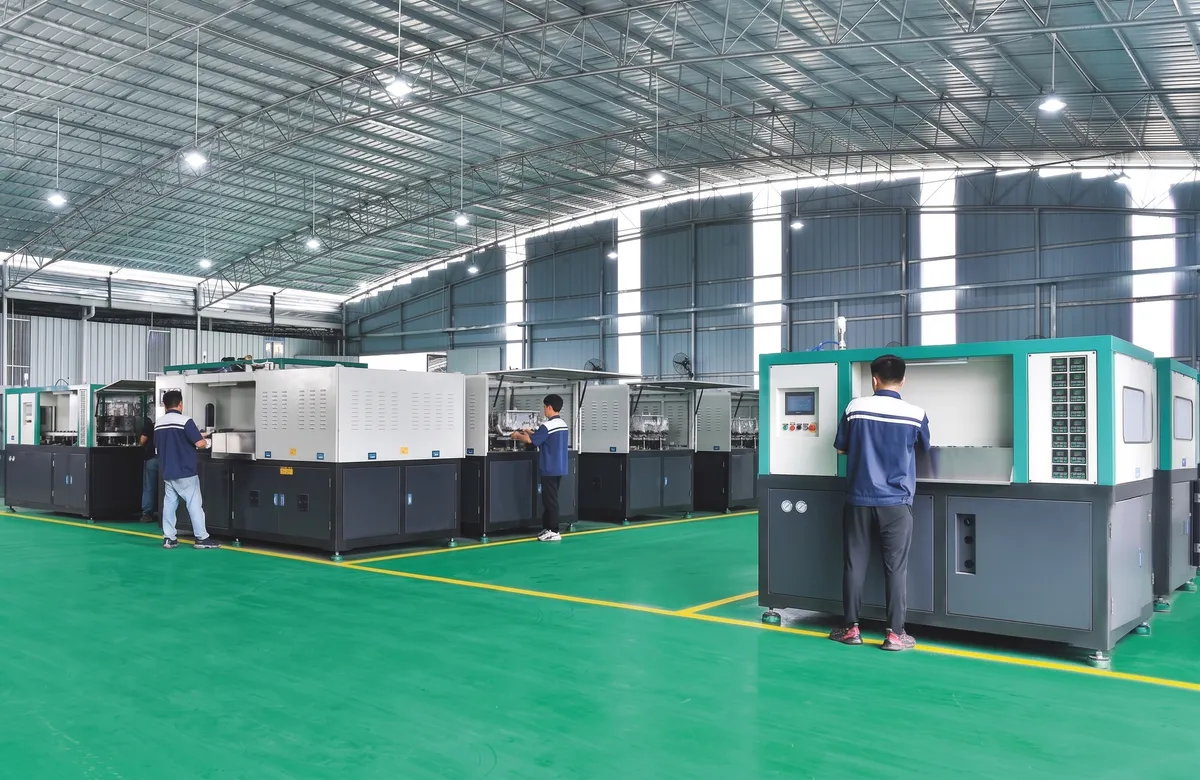
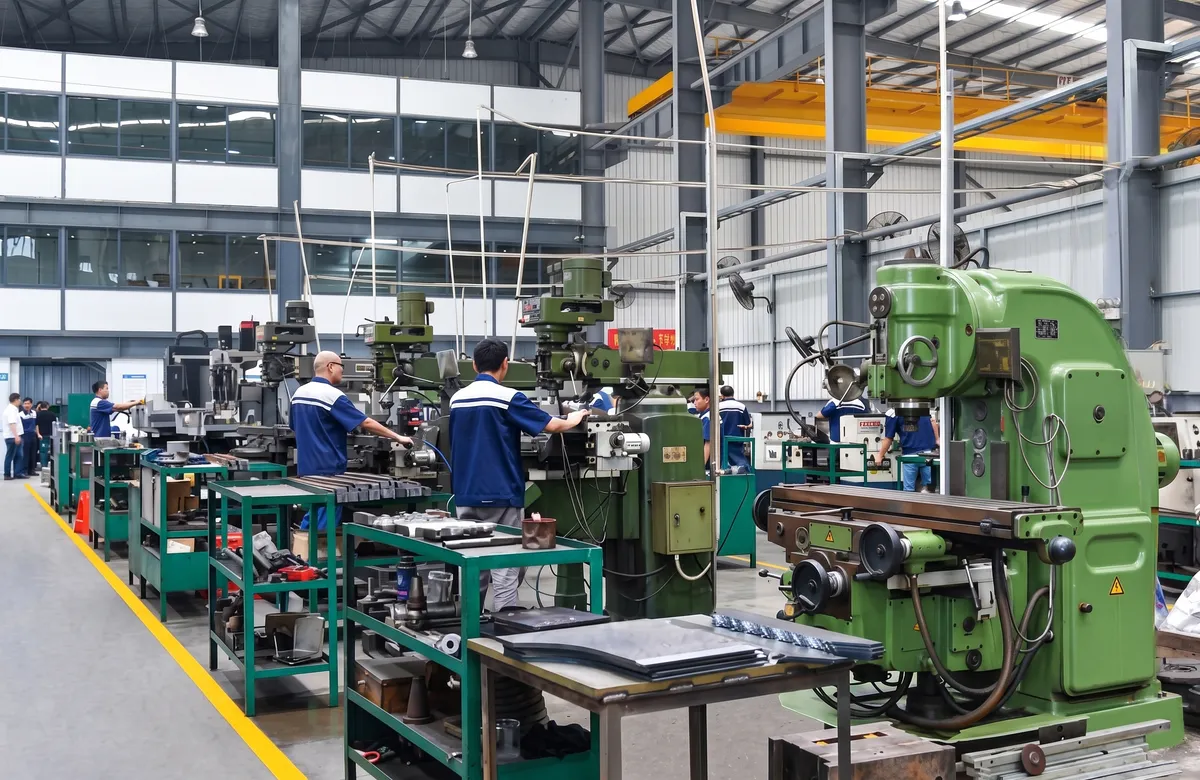
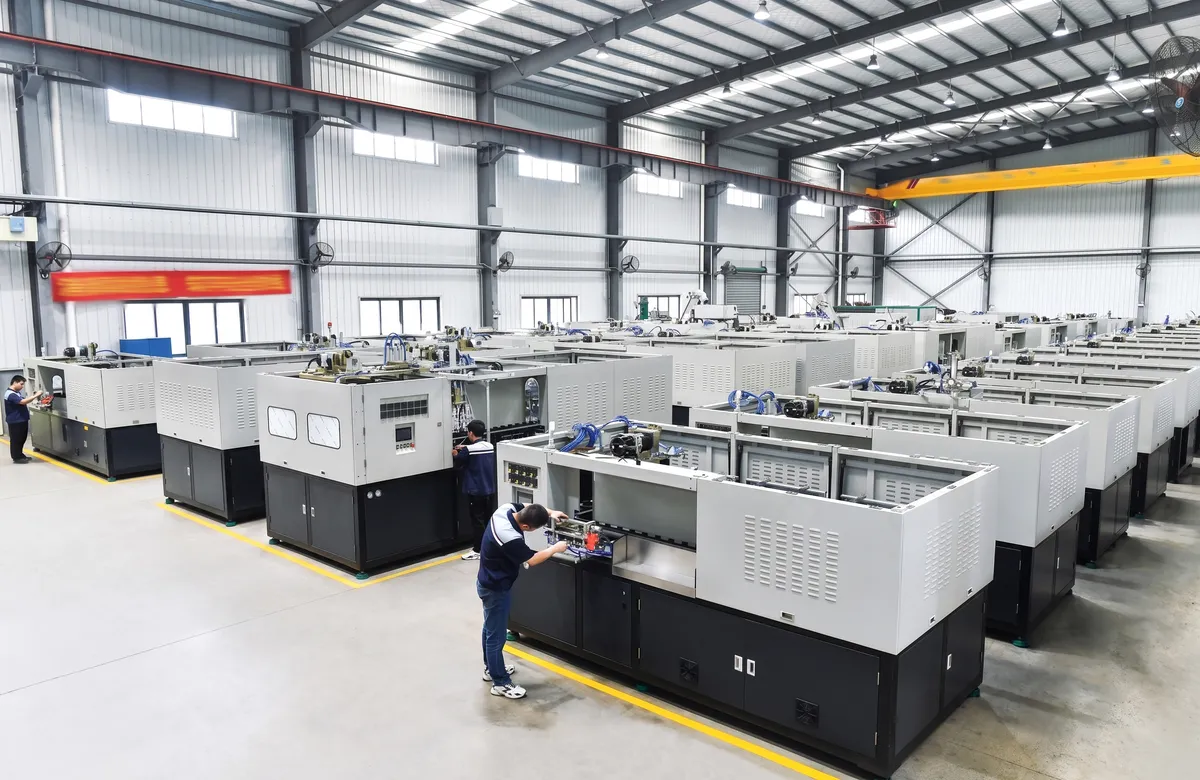
Our manufacturing base in Guangdong Province spans more than 20,000 square meters and is equipped with state-of-the-art CNC machining centers, dedicated assembly lines, and fully equipped QC laboratories. Ever-Power holds multiple national patents and has earned industry-leading positions in high-end cosmetics, food, and pharmaceutical blow molding machine applications, working with globally recognized brands including C'ESTBON, HAITIAN, Luhua, Walch, Blue Moon, PROYA, Liby, Estee Lauder, Wal-Mart, Dasenlin, and Shanliang Eye Drops.
Our plastic blow molding machines can process a comprehensive range of engineering and commodity plastics including HDPE, LDPE, PET, PETG, PP, PS, PPSU, PC, Tritan, ABS, PLA, EVA, PCTG, and corn-based environmental materials, producing containers from 1 ml to 1,000 ml capacity for pharmaceutical, food, cosmetic, and specialty industrial packaging applications worldwide.
Adhering to the enterprise development philosophy of "self-reliance, integrity, pragmatism, innovation, and responsibility," Ever-Power has built a complete one-stop turnkey project capability covering mold engineering, machine manufacturing, installation, commissioning, operator training, and long-term after-sales support. Our export sales network reaches customers in the USA, Canada, Mexico, Brazil, Peru, Chile, Argentina, UK, Germany, France, Italy, Norway, Russia, South Korea, Japan, Malaysia, Indonesia, Philippines, Australia, Qatar, Angola, Mozambique, and Morocco, among other markets.
When you invest in an Ever-Power automatic blow molding machine, you receive far more than a machine. You gain access to a team of engineering and technical specialists who bring rich theoretical and practical experience in injection-blowing machinery and injection-blowing mold design, committed to providing detailed and thoughtful pre-sale, in-sale, and after-sale services that protect your production investment for the full operational lifespan of the equipment.
 |
 |
 |
 |
 |
 |
Frequently Asked Questions
Q: What is the maximum bottle volume the EPA.FS-1CG150 fully automatic blow molding machine can produce?
A: The EPA.FS-1CG150 supports a maximum container volume of 2,500 ml, with a maximum container diameter of 130 mm and maximum container height of 250 mm. For larger volume requirements up to 5,000 ml or 15,000 ml, other models in the EPA series such as the EPA.FS-1CG220 and EPA.ES-2C260 are available. Contact Ever-Power's technical team to identify the optimal model for your specific bottle dimensions and production volume targets.
Q: Is the EPA.FS-1CG150 baby bottle blow molding machine suitable for producing food-grade and pharmaceutical-grade containers?
A: Yes. The EPA.FS-1CG150 is designed to process food-grade PP, PET, and Tritan materials that meet FDA and EU food contact material regulations. For pharmaceutical applications, the machine's fully automatic no-hand-contact production process aligns with GMP pharmaceutical packaging standards. Customers should verify that their specific preform material grade and bottle geometry meet the relevant regulatory standards in their target market before committing to production.
Q: What is the difference between the EPA.FS-1CG150 two-stage blow molding machine and a single-stage injection stretch blow molding machine?
A: The EPA.FS-1CG150 is a two-stage blow molding machine: preforms are manufactured separately on an injection molding machine, stored, and then reheated and blown into bottles in the EPA.FS-1CG150. A single-stage injection stretch blow molding machine completes both injection and blowing in one machine without a separate preform storage step. The two-stage approach offers higher output flexibility and throughput, while the single-stage approach offers energy efficiency advantages for small production runs. Please refer to our full comparison section above for detailed guidance on which machine type best suits your operation.
Q: What preform neck diameter range is compatible with the EPA.FS-1CG150 PET bottle blow molding machine?
A: The EPA.FS-1CG150 supports a neck diameter range up to 110 mm, making it suitable for a wide variety of bottle neck finishes used in baby bottles, PP bottles, wide-mouth cosmetic containers, and craft bottles. The 42-position preform holder accommodates standard preform sizes within this neck diameter specification. For bottles requiring neck diameters outside this range, other models in the EPA series provide expanded neck diameter compatibility up to 168 mm.
Q: What compressed air supply is required to operate this plastic blow molding machine?
A: The EPA.FS-1CG150 requires a low-pressure air supply at 7 kg/cm² with a consumption of 800 ltr/min for auxiliary machine functions. The blowing operation requires high-pressure air at 35 kg/cm² with a consumption of 2,000 ltr/min. Facilities must install an appropriately sized compressor and booster system capable of maintaining these pressure and flow specifications continuously during rated production. The auxiliary machinery page of this product covers compatible compressor configurations available from Ever-Power.
Q: Can the EPA.FS-1CG150 produce special-shaped and asymmetrical craft bottles?
A: Yes. The EPA.FS-1CG150 and the broader EPA series are specifically noted for their capability in producing special-shaped, asymmetrical, and craft bottles including decorative vessels, promotional gift bottles, and complex geometric containers. Achieving optimal results for special-shaped containers requires custom-designed blow molds engineered to the specific bottle geometry. Ever-Power's in-house mold engineering team provides mold design, machining, and trialing services for complex custom bottle shapes in close collaboration with the customer's product design team.
Q: How long does mold changeover take on the EPA.FS-1CG150 automatic blow molding machine?
A: Mold changeover time on the EPA.FS-1CG150 is typically 30 to 60 minutes for a trained two-person maintenance crew, depending on the degree of difference between the outgoing and incoming mold configurations. The machine's accessible mold clamping design and standard mold mounting system facilitate rapid die changes. After changeover, a trial run of 50 to 100 bottles is recommended to verify dimensional conformance before resuming full production. For operations with frequent product changeovers, Ever-Power can advise on mold carrier and quick-change tooling options.
Q: What after-sales service does Ever-Power provide for international buyers of this blow molding machine?
A: Ever-Power provides comprehensive after-sales service covering on-site commissioning by factory-trained technicians, structured operator and maintenance training programs, remote technical support via video call and instant messaging, and a recommended spare parts package dispatched with each machine. Our global sales network ensures that customers in major markets including the USA, Mexico, India, Brazil, Indonesia, Malaysia, South Korea, Germany, and Australia have access to local or regional service support. Warranty terms and extended service contracts are available. Contact Ever-Power's export sales team for country-specific service arrangements.
Q: Is the EPA.FS-1CG150 classified as a full electric blow molding machine or a pneumatic blow molding machine?
A: The EPA.FS-1CG150 is a servo-electric driven blow molding machine that uses servo motors for the primary mechanical movements including clamping, stretching, and preform transfer, while utilizing high-pressure pneumatics for the bottle blowing process. This is the standard configuration for two-stage reheat stretch blow molding machines, sometimes referred to as all electric blow molding machine configurations for the mechanical drive system. Fully hydraulic machines represent an older design generation. The servo-electric drive system provides superior repeatability, lower noise, and reduced energy consumption compared to purely hydraulic equivalents.
Q: How does the EPA.FS-1CG150 high speed blow molding machine compare to extrusion blow molding machines for baby bottle production?
A: The EPA.FS-1CG150 uses the injection stretch blow molding process, which is fundamentally different from extrusion blow molding machines. The injection stretch blow process produces bottles with superior wall thickness uniformity, higher optical clarity, stronger biaxial molecular orientation, and far more precise neck finish dimensions compared to extrusion blow molding. For baby bottles and PP pharmaceutical bottles where dimensional precision, transparency, and material purity are critical, the injection stretch blow molding machine approach is strongly preferred. Extrusion blow molding machines are more commonly used for products like HDPE containers, technical parts, or bottles where neck precision is less critical.
Customer Reviews
Zhang Wei, Baby Products, China
"We have been running the EPA.FS-1CG150 in our baby bottle factory in Guangdong for about eight months now and honestly it has been really solid. We produce 150 ml to 300 ml PP feeding bottles mainly, and the wall thickness consistency is noticeably better than our previous equipment. Rejection rate dropped from around 3.5% to under 0.8% within the first two months. The Ever-Power technician spent three days on-site with us during commissioning and that made a huge difference in getting the heating parameters dialed in correctly. Very happy with the investment."
Rajesh Patel, Pharmaceutical Packaging, India
"We imported the EPA.FS-1CG150 for our pharmaceutical bottle line in Mumbai. We manufacture oral liquid PET bottles of 100 ml and 200 ml and the dimensional accuracy has been meeting our QC standards consistently. What impressed us most was how straightforward the mold change is. We run four different bottle types across two shifts and the changeover takes our team around 45 minutes now. Shipping from Mexico to India was smooth, the packaging was solid, no transit damage. Ever-Power's export documentation team was also very organized which helped our customs clearance go without issues."
Siti Rahayu, Cosmetic Packaging, Indonesia
"I run a cosmetics packaging operation in Jakarta and we specifically needed a machine that could handle our special-shaped PET bottles for a premium skincare client. The EPA.FS-1CG150 was recommended to us and it has worked out very well. The stretch rod control is very precise and we are getting bottles with the flat-oval cross-section our client requires with very minimal wall thickness variation. Output is steady at around 680 to 700 bph in our facility. One thing I would say is make sure you get the right compressor setup before the machine arrives. Our existing compressor was undersized and we had to upgrade it before full production started."
Carlos Mendes, Plastic Packaging, Brazil
"The machine arrived within the delivery window promised and was in perfect condition. We are a packaging company in Sao Paulo that supplies baby bottle blanks to several domestic brands. The EPA.FS-1CG150 is our third Ever-Power machine and the reliability record has been excellent across all three units. The heating module on this model is more uniform than older generations we used. Our quality control team ran statistical sampling for the first four weeks and bottle weight and height variation was within plus or minus 0.5% which easily meets our customer specifications. After-sales response from Ever-Power is also consistently fast, usually within 24 hours for technical questions."
Kim Jae-won, Gift and Craft Packaging, South Korea
"We purchased the EPA.FS-1CG150 for producing PP craft bottles with a rather unusual geometry for a gift packaging client in Seoul. The machine handled the special-shaped mold perfectly from the very first production run. What really stood out was the quality of the blow mold that Ever-Power supplied alongside the machine. The cavity surface finish is excellent and after six months and roughly 2.5 million cycles there is no visible wear or dimensional drift. The machine's energy consumption has also been lower than we expected based on the nameplate specifications, which has been a pleasant surprise for our factory electricity budget."
Manuel Gutierrez, Beverage Packaging, Mexico
"Freight from Mexico to our factory in Monterrey arrived faster than the estimated transit time. Unboxing and installation was done with guidance from Ever-Power's video call support team since we could not get a technician on-site immediately. The installation went quite smoothly following the documentation provided. We produce 500 ml PET water bottles for a regional beverage brand and the bottles are clean, clear, and consistent in weight. Our production manager was particularly impressed by how quiet this machine runs compared to older hydraulic equipment we replaced. We are already discussing ordering a second unit."
Mohammad Islam, PET Container, Bangladesh
"Our group operates a PET bottle manufacturing plant near Dhaka. We evaluated three different blow molding machine suppliers before selecting Ever-Power and the deciding factor was the after-sales support commitment combined with the pricing being very competitive for the specification level. We have been running the EPA.FS-1CG150 for ten months now producing 2,000 ml cooking oil containers. The machine has had only two brief stops related to a sensor issue and a heating lamp replacement, both resolved within hours using spare parts from the stock we maintain on-site following the recommended spare parts list provided by Ever-Power. Overall very satisfied."
Lee Mei Ling, Health Supplement Packaging, Malaysia
"We are a contract packaging company in Kuala Lumpur specializing in health supplement bottles. The clarity of PET bottles we produce on the EPA.FS-1CG150 is genuinely impressive. Our clients who sell nutraceuticals in premium retail channels require glass-like clarity and the bottles from this machine consistently meet that standard. The neck finish accuracy is also excellent, our capping line has had zero sealing failures attributable to neck dimension issues since we installed this machine. The sales team communicated clearly throughout the ordering process and we received accurate delivery timelines, which is critical for our production planning."
Ahmed Hassan, Household Chemical Packaging, Egypt
"I manage procurement for a mid-sized household chemical bottle producer in Cairo. We ordered the EPA.FS-1CG150 after seeing it demonstrated at a trade exhibition. The sales process was professional and the technical documentation provided was comprehensive enough for our engineering team to plan the installation independently. The machine has been running for five months and we are achieving close to rated output consistently. The cooling system in particular works very reliably in our climate, maintaining the 8 to 12°C spec even during summer months when ambient temperatures in our factory can be quite high. Good quality machine overall and will definitely consider Ever-Power for future expansion."
Additional information
| Edited by | Yjx |
|---|
Related products
-
EPA.AS-2C114.3 Fully Automatic Blow Molding Machine for Daily Chemicals & Cosmetic Bottles
-
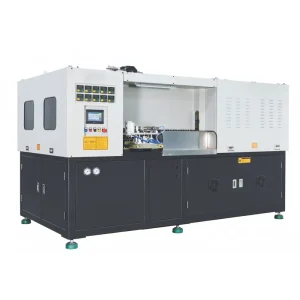
EPA.ES-2C150 Fully Automatic Blow Molding Machine for Daily Chemicals & Cosmetic Bottles
-
EPA.ES-4C76 Fully Automatic Blow Molding Machine for Daily Chemicals & Cosmetic Bottles
-
EPA.ES-3C114 Fully Automatic Blow Molding Machine for Daily Chemicals & Cosmetic Bottles