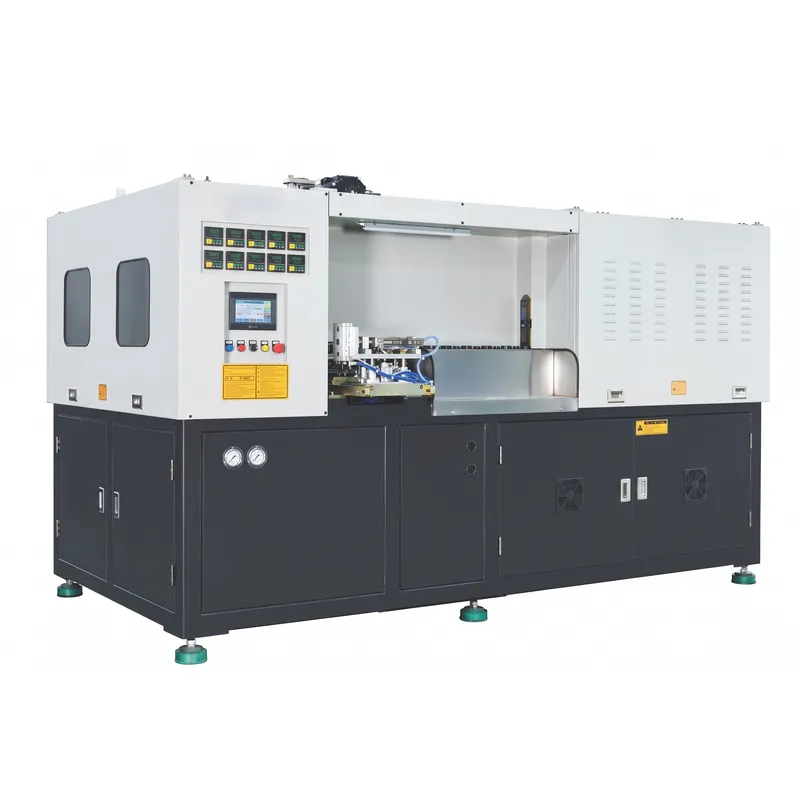
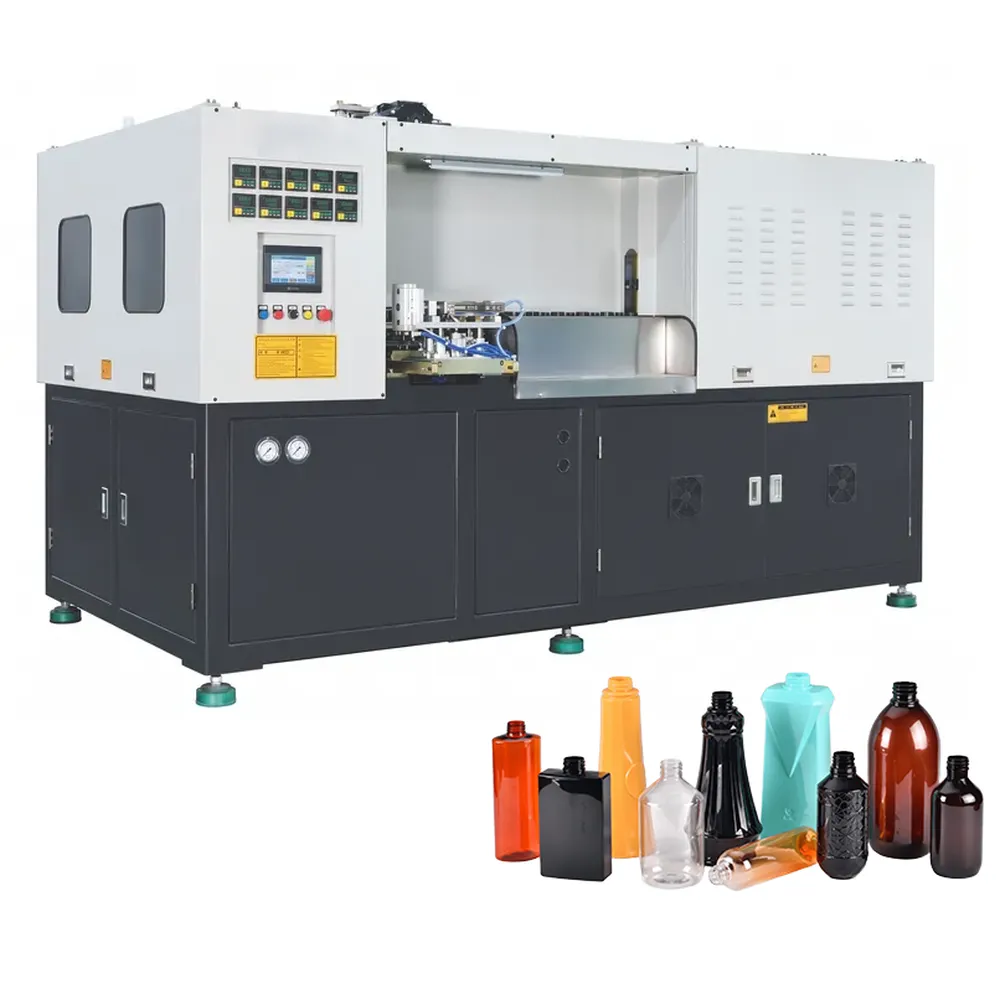
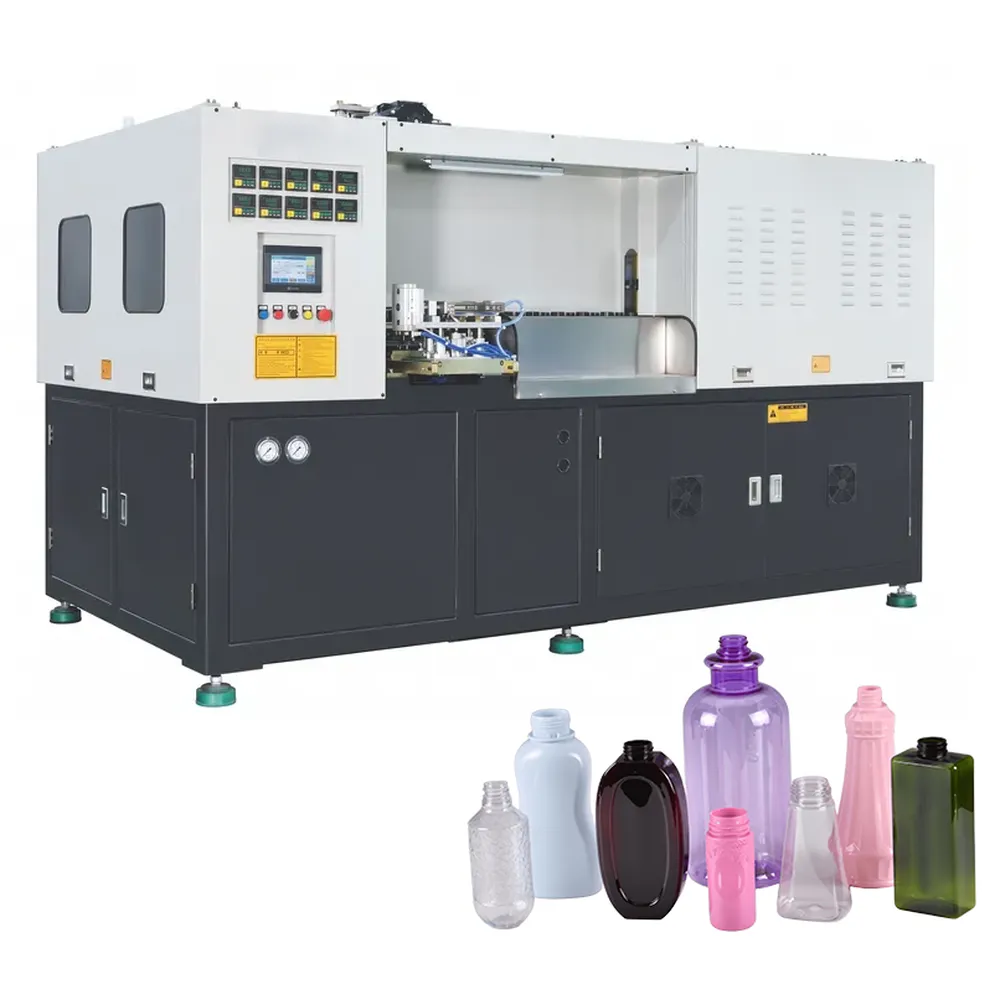
EPA.ES-2C114.3 Fully Automatic Blow Molding Machine for Daily Chemicals & Cosmetic Bottles
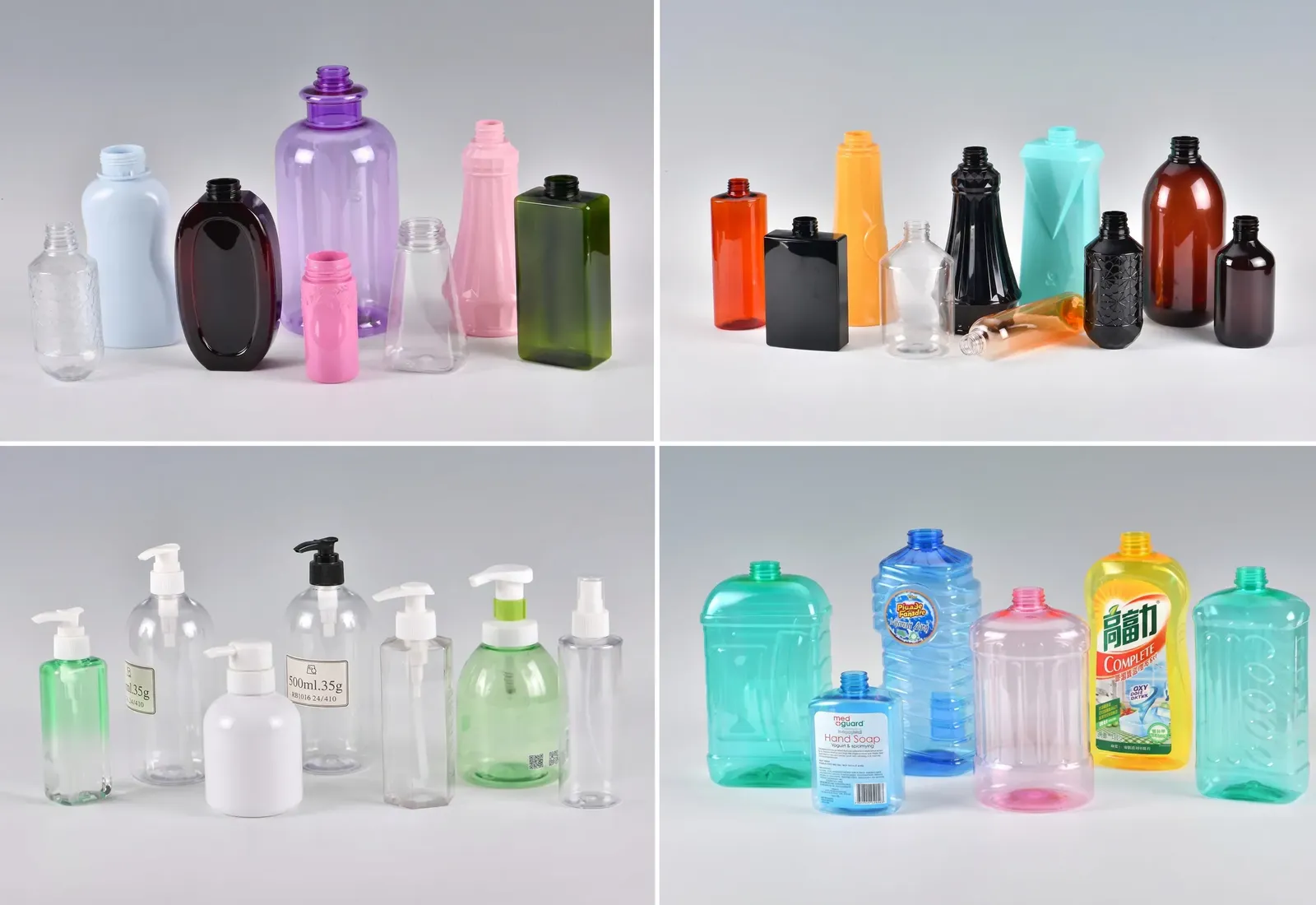
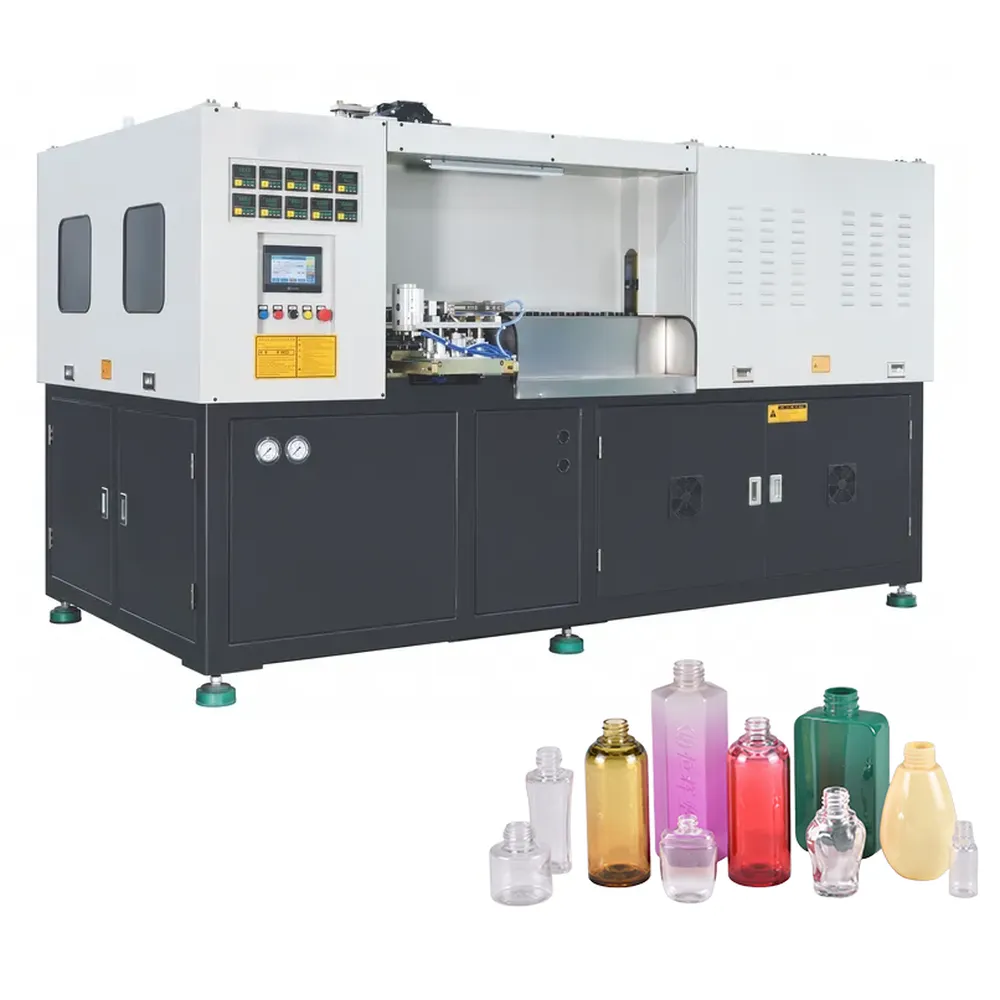
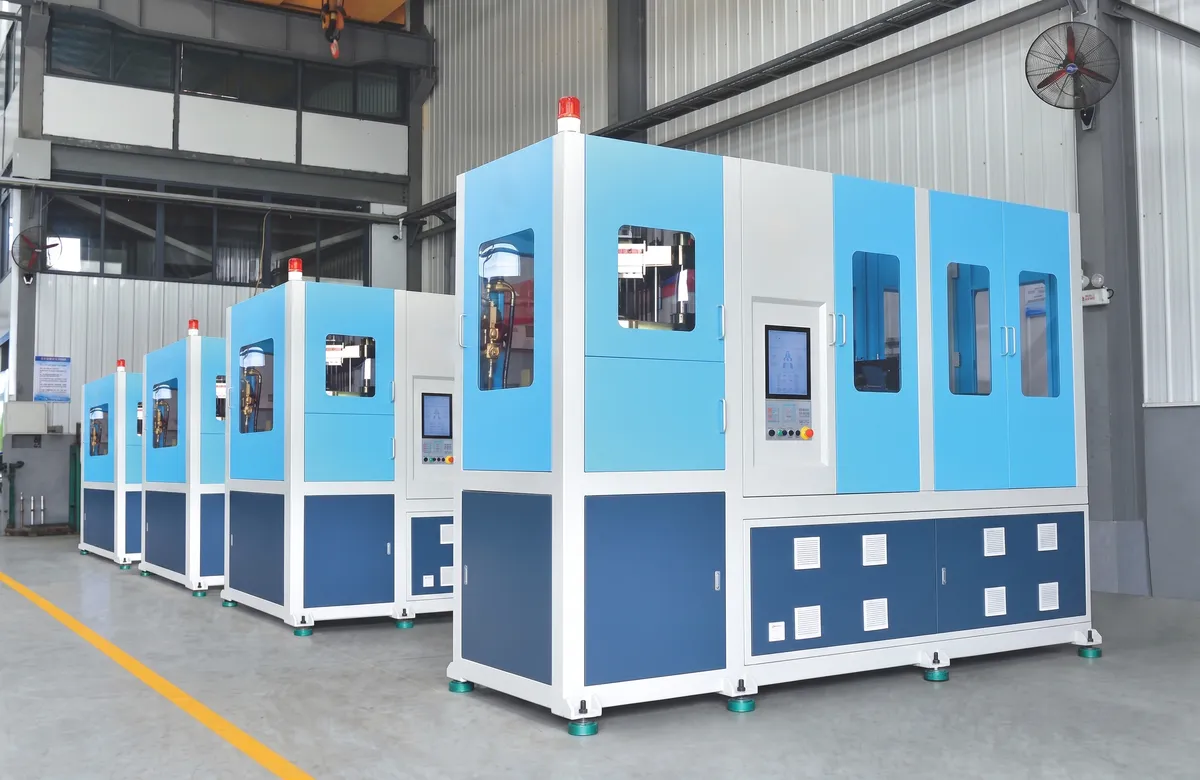
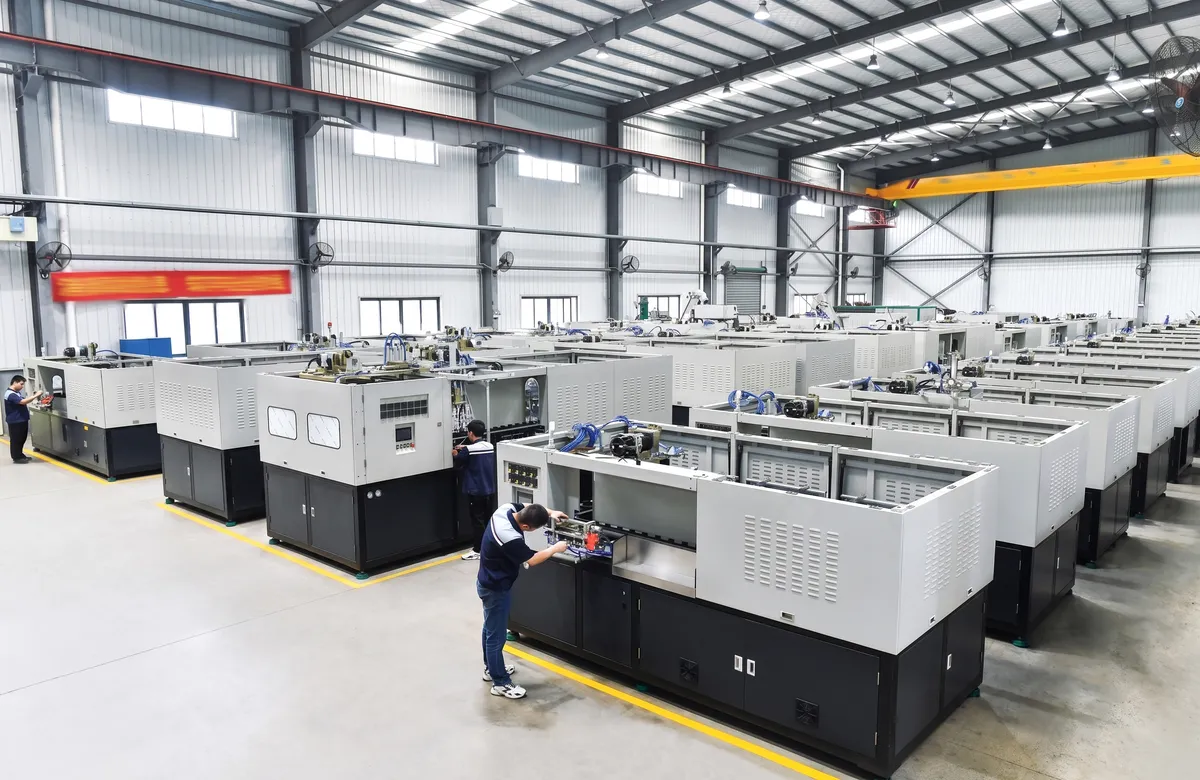
The EPA.ES-2C114.3 Fully Automatic Blow Molding Machine is engineered for high-performance production of daily chemical and cosmetic packaging. Adopting internationally renowned brand servo motors, reducers, electrical components, and precision control systems, this fully automatic blow molding machine delivers exceptional stability, reliability, efficiency, and energy-saving performance. The EPA.ES-2C114.3 is designed for shampoo bottles, body wash containers, lotion bottles, facial toner packaging, liquid soap dispensers, and other special-shaped cosmetic or daily chemical bottles that demand high precision and complex geometries.
The EPA.ES-2C114.3 Fully Automatic Blow Molding Machine is engineered for high-performance production of daily chemical and cosmetic packaging. Adopting internationally renowned brand servo motors, reducers, electrical components, and precision control systems, this fully automatic blow molding machine delivers exceptional stability, reliability, efficiency, and energy-saving performance. As a flagship cosmetic blow molding machine in the Ever-Power lineup, the EPA.ES-2C114.3 is designed with a 2-cavity configuration and 60-preform holder, producing up to 2,000 bottles per hour for PET and PETG materials, making it ideal for shampoo bottles, body wash containers, lotion bottles, facial toner packaging, liquid soap dispensers, and other special-shaped cosmetic or daily chemical bottles that demand high precision and complex geometries.
As a professional two-step blow molding machine (also referred to as a two-stage blow molding machine), the EPA.ES-2C114.3 separates the preform injection phase from the stretch-blow phase, enabling superior wall thickness control and dimensional accuracy. Its application scenarios span personal care brands, household cleaning product manufacturers, pharmaceutical packaging lines, and premium cosmetics producers worldwide. Whether you need a shampoo bottle blow molding machine, a PET blow molding machine for custom cosmetic packaging, or a high speed blow molding machine for large-scale daily chemical production, this model is built to meet and exceed B2B production benchmarks while keeping operational costs competitive.
Technical Parameter
| Model | Unit | EPA.ES-2C114.3 | |
|---|---|---|---|
| Molding | Clamping stroke | mm | 132 |
| Mold-open distance | mm | 312 | |
| Mold-close distance | mm | 180 | |
| Stretching stroke | mm | 400 | |
| Mold-open distance | mm | 50 | |
| Mold-close distance | mm | 114.3 | |
| Preform Holder | 60 | ||
| Cavities | 2 | ||
| Container | Max.Container Volume | ml | 1000 |
| Neck Diameter Range | mm | 88 | |
| Max.Container Diameter | mm | 94 | |
| Max.Container Height | mm | 260 | |
| Theoretical Output | bph | 2000 | |
| Electrical System | Max.Heating Power | kw | 50 |
| Heating Power | kw | 16 | |
| Air System | Operating Pressure | kg/cm² | 7 |
| Low Pressure Air Consumption | ltr/min | 600 | |
| Blowing Pressure | kg/cm² | 35 | |
| High-pressure air consumption | ltr/min | 1000 | |
| Cooling water | Operating Pressure | kg/cm² | 6 |
| Temperature | ℃ | 8-12 | |
| Flow rate | ltr/min | 30 | |
| Machine | Size (L*W*H) | mm | 3220*1660*2010 |
| Weight | kg | 3000 | |
Features of EPA.ES-2C114.3 Fully Automatic Blow Molding Machine
1. High Efficiency Output
With a theoretical output of 2,000 bottles per hour on a 2-cavity configuration, the EPA.ES-2C114.3 is engineered for demanding large-scale production lines. Whether running cosmetic toners, shampoo bottles, or liquid soap containers, this high speed blow molding machine minimizes cycle time through servo-driven precision motion and intelligent preform heating management, delivering consistent throughput that maximises line uptime and reduces per-unit production cost significantly.
2. Superior Structural Durability
Built with premium-grade structural steel and corrosion-resistant components, the machine is designed for uninterrupted continuous operation across multi-shift production environments. Critical wear points use hardened materials that extend service intervals, reduce unplanned downtime, and keep blow molding machine maintenance costs predictable. The robust frame construction ensures dimensional stability throughout extended production runs, which is critical for maintaining the tight tolerances required in cosmetic and daily chemical packaging applications.
3. Precise PLC Control System
The integrated PLC-based control system provides operators with granular, real-time control over every phase of the blow molding cycle, including heating zones, stretching speed, blowing pressure, and mold clamping force. This precision dramatically reduces parameter drift, ensures consistent bottle wall thickness, and simplifies blow molding machine troubleshooting by logging operational data for diagnostic review. The intuitive HMI touchscreen interface enables rapid recipe changeovers between different bottle formats, reducing downtime between product runs.
4. Versatile Application Range
The EPA.ES-2C114.3 excels as a custom blow molding machine capable of handling diverse cosmetic and daily chemical bottle geometries, including round, oval, flat, and complex asymmetric special-shaped designs. With a maximum container diameter of 94 mm and height of 260 mm, and neck diameter accommodation up to 88 mm, it covers the vast majority of personal care packaging formats. Compatible materials include PET and PETG, making it a highly versatile plastic blow molding machine for both transparent and semi-transparent premium cosmetic containers.
5. Energy-Efficient Design
Equipped with internationally branded servo motors and variable-frequency drive technology, the EPA.ES-2C114.3 significantly reduces energy consumption versus hydraulic-dominant machines of comparable output. The normal heating power is only 16 kW against a max rating of 50 kW, allowing production managers to optimise heating zone configurations for energy efficiency without sacrificing output quality. This energy-aware architecture supports facilities targeting lower carbon footprints and reduced operating utility costs over the machine lifecycle.
6. Fully Automated Operation
As a genuine fully automatic blow molding machine, the EPA.ES-2C114.3 handles preform loading, heating, stretching, blowing, cooling, and bottle ejection with minimal manual intervention. Automation reduces labour dependency, eliminates human-error-driven defects, and allows facilities to operate with smaller, more skilled teams. The automated preform-to-bottle workflow also ensures superior hygiene standards essential for cosmetic and daily chemical packaging, where contamination control and batch consistency are non-negotiable production requirements.
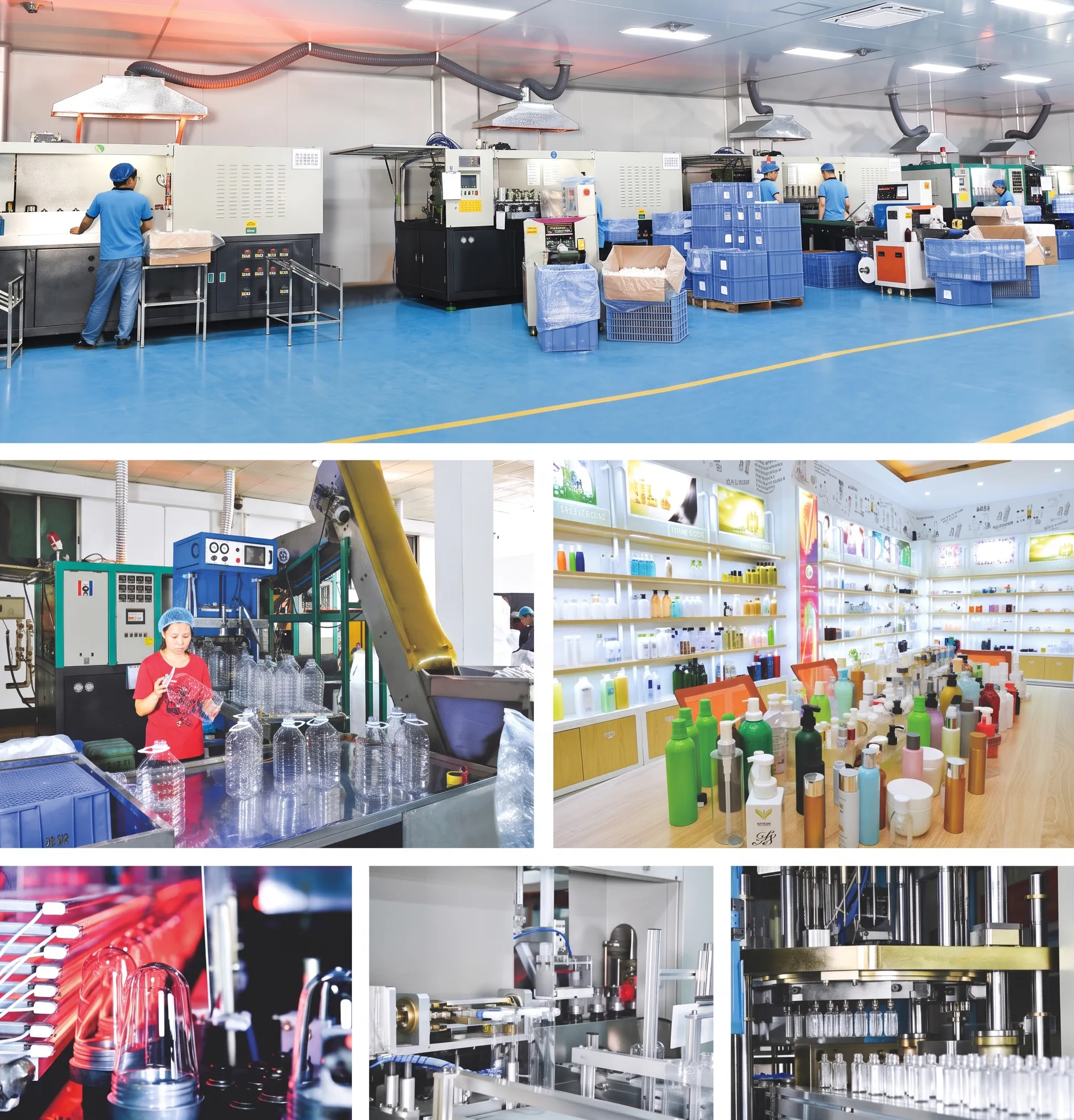
Working Principle of Plastic Blow Molding Machine
1. Raw Material Preparation
The raw materials for this two-stage blow molding machine primarily include PET and PETG resins. Prior to production, materials undergo thorough screening, moisture analysis, drying, blending, and feeding processes. Strict quality control of incoming resin ensures correct intrinsic viscosity levels, colour consistency, and contamination absence, all of which directly affect transparency, mechanical strength, and FDA or food-contact compliance of the finished cosmetic bottle.
2. Preform Injection Molding
In the two-stage process, preforms are produced separately in an injection molding machine. Resin is melted, plasticised, and injected into precision preform molds under controlled temperature, pressure, and injection speed. The resulting preforms carry a fully formed neck finish with accurate thread geometry, which is a defining advantage of injection-based preform production over extrusion alternatives, ensuring neck consistency that is critical for closures in the cosmetic and personal care packaging sector.
3. Preform Preheating
Preforms are loaded into the EPA.ES-2C114.3 preform holder system and transported through an infrared heating oven. During this stage, the preform body temperature is raised uniformly from ambient to a precise blow temperature window, typically between 90 and 115 degC for PET, with special attention given to wall thickness zones to ensure even plasticity distribution. Correct preheating is the foundation of uniform wall thickness in the finished bottle and is critical for controlling material distribution in complex cosmetic special-shaped designs.
4. Stretch and Blow Molding
Once preheated, preforms are transferred to the blowing station where a stretch rod first elongates the preform axially while low-pressure air initiates radial expansion. High-pressure air at 35 kg/cm2 then fully inflates the preform against the cooled cavity walls of the blowing mold, forming the final bottle shape. This biaxial orientation process strengthens the molecular structure of the PET material, delivering bottles with superior clarity, impact resistance, and barrier properties compared to single-axis or non-stretch methods.
Applications of Cosmetic Bottle Blow Molding Machine
Cosmetic Bottle
The EPA.ES-2C114.3 is the definitive cosmetic bottle blow molding machine for premium brands. It reliably produces toner bottles, serum bottles, lotion containers, and foundation packaging in PET and PETG with optical-grade transparency, consistent wall thickness, and the fine surface finish required for cosmetic shelf presentation. Its special-shaped bottle capability makes it the preferred choice for brands seeking unique, differentiated packaging designs.
Chemical Bottle
As a reliable daily chemical blow molding machine, the EPA.ES-2C114.3 handles PET containers for household cleaning agents, fabric softeners, glass cleaners, and surface disinfectants. The machine produces bottles with the structural rigidity and chemical compatibility needed for alkaline and mildly acidic formulations. The high-output 2-cavity design supports daily chemical brands that require fast, consistent production to meet retail supply chain deadlines.
Pharmaceutical Bottle
For pharmaceutical manufacturers requiring clean, contamination-free packaging, the EPA.ES-2C114.3 produces PET medicine bottles with precise neck finishes for tamper-evident and child-resistant closures. The fully automated workflow minimises human contact with the container interior, supporting GMP-compliant production environments. Consistent wall thickness and dimensional accuracy also ensure reliable sealing performance, which is mandatory in pharmaceutical liquid and syrup packaging applications.
Beverage Bottle
While primarily configured for cosmetic and daily chemical applications, the EPA.ES-2C114.3 can also produce smaller-format PET beverage bottles for functional drinks, dietary supplements, and speciality beverage segments up to 1,000 ml. The machine is compatible with food-contact grade PET resins, and the biaxial stretch orientation delivers the CO2 barrier and pressure resistance properties required for carbonated and functional drink packaging in premium retail markets.
Food Bottle
The PET jar blow molding machine capability of the EPA.ES-2C114.3 extends to food-grade containers for condiments, sauces, honey, and dry-food packaging in the small-to-medium volume range. PET and PETG materials are fully food-contact compliant when using approved resin grades, and the machine produces containers with the optical clarity that consumers and retail buyers demand for food products where contents visibility is a key purchasing driver.
Shampoo, Body Wash and Dish Soap Bottle
The EPA.ES-2C114.3 is a purpose-built shampoo bottle blow molding machine and body wash container producer, handling the large-diameter, ergonomic shapes typical in personal care packaging. Its ability to blow special-shaped bottles with high difficulty means brands can realise custom grip designs, asymmetric profiles, and non-standard neck configurations. Dish soap and liquid detergent bottles in the 200 ml to 1,000 ml range are efficiently produced with the speed and consistency that mass retail supply chains demand.
Key Equipment
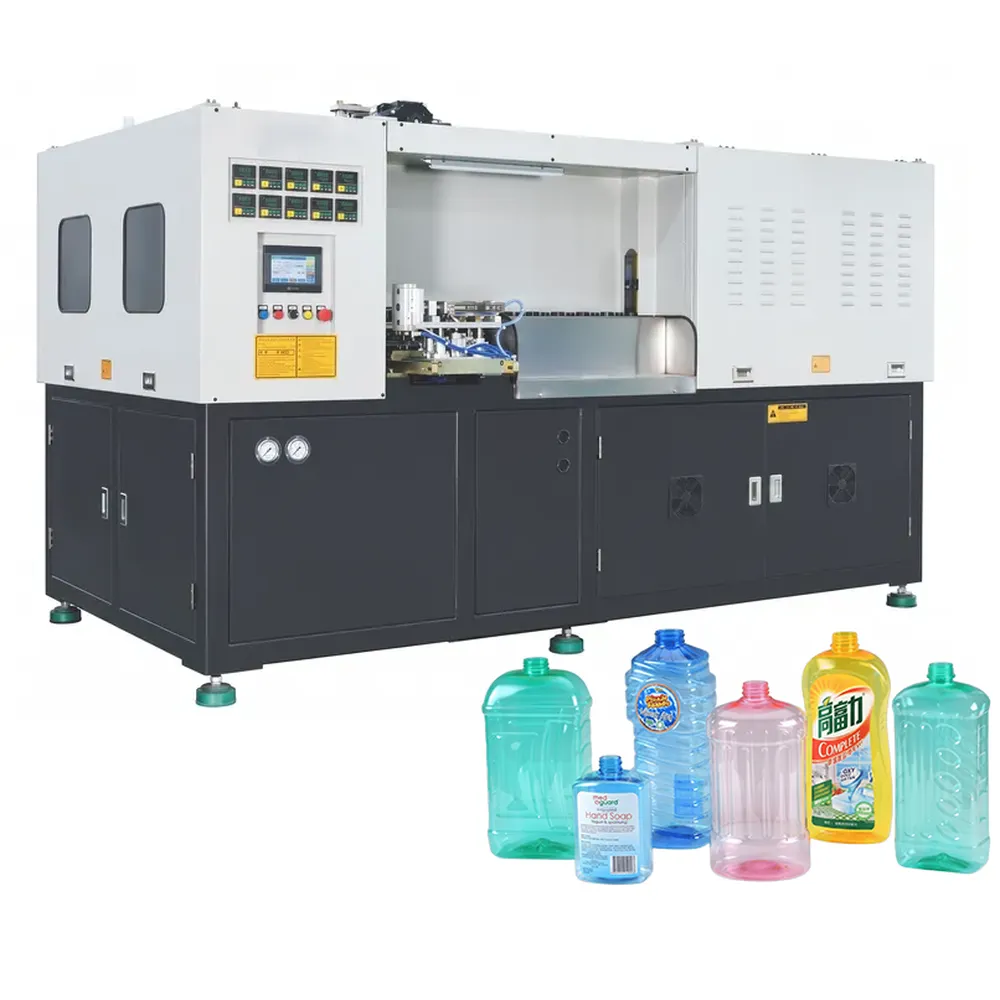
Servo Motor Drive System
The EPA.ES-2C114.3 uses internationally branded servo motors for all primary motion axes including mold opening and closing, stretching rod actuation, and preform transport. Servo drive architecture delivers fast, repeatable positioning with energy recovery on deceleration, significantly reducing power consumption versus hydraulic systems. The servo system also enables precise speed and torque profiling for each phase of the blow cycle, which is essential when producing complex special-shaped cosmetic and daily chemical bottles with tight dimensional tolerances.
Infrared Preform Heating Oven
The heating oven is equipped with independently controllable infrared lamp zones that allow operators to customise the temperature profile across the preform length and circumference. This zone-by-zone control is critical for achieving uniform material distribution in asymmetric or special-shaped bottle designs common in cosmetic packaging. The 60-preform holder configuration ensures a continuous supply of thermally conditioned preforms to the blowing station, supporting the 2,000 bph output rate without thermal inconsistency that would compromise bottle quality.
Mold Clamping Unit
The clamping unit applies controlled force to hold the blowing mold closed during the high-pressure inflation phase at 35 kg/cm2. With a clamping stroke of 132 mm and mold-close distance of 114.3 mm, the unit is precisely engineered for the target bottle format range. The servo-controlled clamping mechanism reduces flash generation at the parting line, improves bottle seam quality, and extends mold life versus hydraulic clamping systems that can produce uneven force distribution across the mold face during rapid cycling.
High-Pressure Blowing System
The pneumatic blowing circuit is engineered for a blowing pressure of 35 kg/cm2 with a high-pressure air consumption of 1,000 ltr/min. A two-stage air delivery architecture first applies low-pressure pre-blow at 7 kg/cm2 to initiate controlled parison expansion, followed by high-pressure final blow to force the material into full conformance with the mold cavity geometry. This staged blowing sequence is especially important for cosmetic special-shaped bottles where premature full-pressure contact with sharp mold features can cause localised thinning or stress concentration in the container wall.
PLC Control System and HMI
The machine is governed by a PLC-based control system interfaced with a colour touchscreen HMI, giving operators complete visibility and control over all production parameters. Recipe storage enables rapid format changeovers, while process monitoring functions support proactive blow molding machine troubleshooting and predictive maintenance scheduling. Alarm logging, cycle count tracking, and parameter deviation alerts ensure quality incidents are identified and resolved before significant reject quantities accumulate on the production line.
Cooling Water Circuit
An integrated cooling water circuit operates at 6 kg/cm2 with a temperature range of 8 to 12 degC and a flow rate of 30 ltr/min, ensuring rapid and uniform thermal extraction from the blowing mold after each cycle. Consistent mold temperature is essential for dimensional repeatability, particularly for containers with tight tolerances at the base and shoulder. Proper cooling also prevents post-mold deformation, a common issue in high-speed production of thin-walled cosmetic bottles, and is a key factor in achieving the theoretical 2,000 bph output sustainably.
Stretch Rod Mechanism
The servo-driven stretch rod extends through the preform neck to mechanically elongate the softened preform to a stretching stroke of 400 mm before and during the blow phase. This axial stretching, combined with radial pneumatic expansion, produces biaxial molecular orientation in the PET container wall. The result is significantly higher crystallinity, clarity, and impact strength versus unoriented containers. Stretch rod speed and penetration depth are precisely programmable for each bottle design, allowing optimisation for wall thickness distribution and material efficiency across different cosmetic container formats.
Preform Transport and Loading System
The automated preform transport system manages the movement of preforms from the loading hopper through the heating oven to the blowing station with consistent timing and orientation control. A 60-preform holder capacity ensures adequate thermal conditioning buffer, preventing cycle starvation at the blowing station during minor upstream interruptions. The automated loading and sorting mechanism eliminates the manual handling of preforms that would otherwise introduce contamination, orientation errors, and cycle time variability that degrades output quality and throughput consistency.
Injection Blow Molding vs Extrusion Blow Molding
Understanding the process differences between injection blow molding (IBM) and extrusion blow molding (EBM) is essential for selecting the right blow molding machine for plastic bottles in your application. Both methods create hollow plastic containers, but they diverge significantly in process architecture, precision capability, waste generation, and optimal application range.
Injection Blow Molding (IBM)
- Molten plastic injected around a core rod to form a precision preform and neck finish.
- Preform moves to the blow station and is inflated inside the bottle mold.
- Finished bottle removed without trimming flash, producing near-zero scrap.
- Delivers extremely high neck accuracy, consistent thread geometry, and reliable seal performance.
- Best for pharmaceutical, cosmetic, medical, and high-value precision packaging.
- Higher upfront mold investment, justified by lower per-unit waste and downstream quality cost.
Extrusion Blow Molding (EBM)
- Molten plastic extruded downward as a hollow tube (parison) from a die head.
- Mold closes around the parison, pinching and sealing the bottom.
- Air blown in to expand parison against the mold cavity, then flash trimmed after cooling.
- Lower initial tooling cost, particularly for larger container formats.
- Best for large hollow containers such as jerry cans, drums, tanks, and industrial bottles.
- Flash trimming adds secondary processing step and generates recyclable scrap waste.
Side-by-Side Process Comparison
| Feature / Factor | Injection Blow Molding (IBM) | Extrusion Blow Molding (EBM) |
|---|---|---|
| Starting Form | Injection molded preform | Extruded parison |
| Neck Precision | Extremely high; neck pre-molded by injection | Standard; depends on mold closing and trimming |
| Scrap / Waste | Near zero flash; very low process waste | Flash requires trimming and recycling |
| Best Container Size | Small to medium precision bottles | Medium to large hollow containers |
| Initial Mold Cost | Higher; precision tooling and core rods | Lower for large hollow container formats |
| Best Applications | Cosmetics, pharma, daily chemicals, lab containers | Jerry cans, detergent drums, large milk jugs |
| Quality Priority | Dimensional consistency and sealing reliability | Size flexibility and container-volume economics |
Which Process Should You Choose?
Choose injection blow molding when your application demands small to medium precision bottles with accurate threaded necks, clean production without secondary trimming, and stable dimensions essential in pharmaceutical, cosmetic, or laboratory packaging. The EPA.ES-2C114.3 is a fully integrated two-step blow molding machine that delivers exactly this level of precision at industrial production rates.
Choose extrusion blow molding when your priority is large bottles, jerry cans, drums, or tanks where shape flexibility and lower initial tooling cost outweigh the neck precision advantages of IBM. For pharma and medical projects, the repeatability and cleanliness of IBM typically justify its higher initial investment even when EBM equipment is mechanically capable of producing the bottle size.
Raw Materials Compatible with the Blow Molding Machine
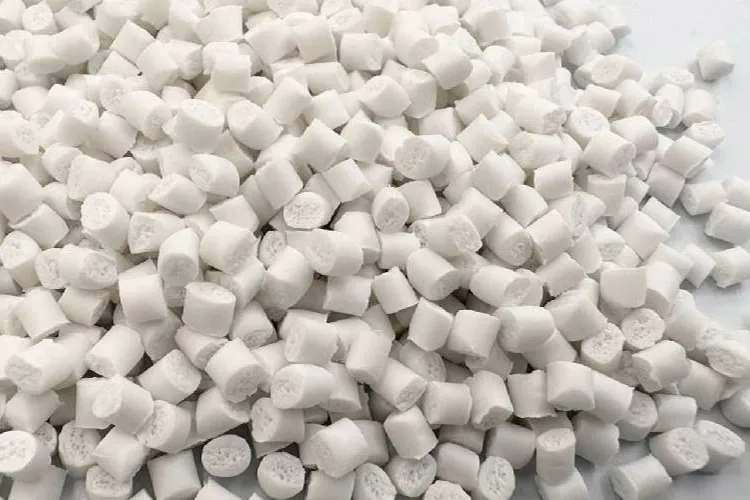
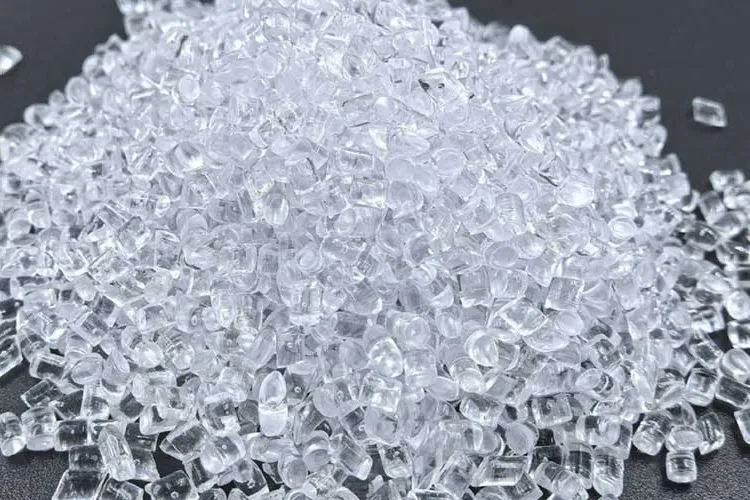
PET (Polyethylene Terephthalate)
PET is the primary recommended resin for the EPA.ES-2C114.3. It offers exceptional transparency, high tensile strength, excellent gas barrier properties, and outstanding food and cosmetic safety compliance. PET is widely used for mineral water bottles, carbonated beverage containers, edible oil packaging, cosmetic toners, and daily chemical bottles, and is the optimal material for biaxial stretch blow molding due to its strain-hardening behaviour during the stretch phase.
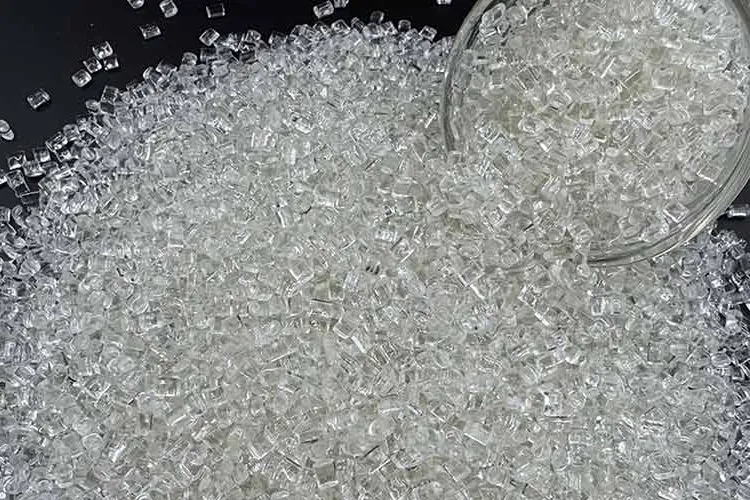
PETG (Polyethylene Terephthalate Glycol)
PETG is the machine is second core material, offering superior clarity compared to standard PET, easier processability at lower blowing temperatures, and outstanding impact resistance without requiring biaxial stretch orientation. It is widely specified for premium cosmetic packaging, luxury daily chemical bottles, and specialty pharmaceutical containers where optical perfection and chemical resistance to alcohol-based formulations are both required simultaneously in the same packaging format.
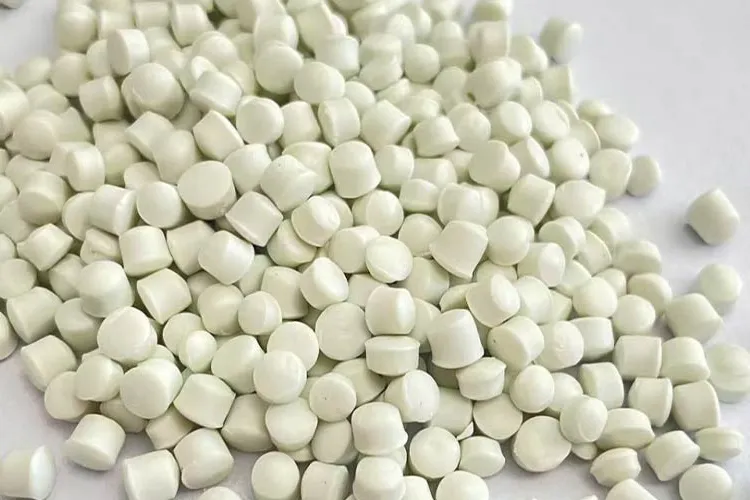
PP (Polypropylene)
PP is chosen when high-temperature resistance is the primary packaging requirement, making it suitable for hot-fill cosmetic products, food packaging processed at elevated temperatures, pharmaceutical containers exposed to sterilisation processes, and certain chemical bottles. PP retains its structural integrity at temperatures where PET would deform, making it the preferred material for packaging formats that must withstand pasteurisation, hot water sterilisation, or autoclaving procedures in regulated packaging environments.
PC (Polycarbonate)
Polycarbonate offers the combination of very high optical clarity, near-glass transparency, and superior impact resistance that positions it for premium reusable cosmetic containers, laboratory sample bottles, and specialty packaging formats where consumers expect glass-like aesthetics with the safety and light weight of plastic. PC is also resistant to high temperatures, making it compatible with sterilisable cosmetic packaging and dispensers in professional salon, medical, and high-end retail environments.
PE (Polyethylene)
Polyethylene, particularly HDPE and LDPE grades, is used for applications requiring chemical resistance, flexibility, and cost efficiency. HDPE is preferred for household chemical bottles, industrial cleaning agents, and agricultural chemical containers where rigidity and chemical barrier are needed. LDPE provides the soft, squeezable feel required for certain cosmetic tube-bottle formats and speciality dispensing containers. PE is widely available, recyclable, and compatible with a broad range of chemical and food-grade packaging regulations globally.
 |
 |
 |
 |
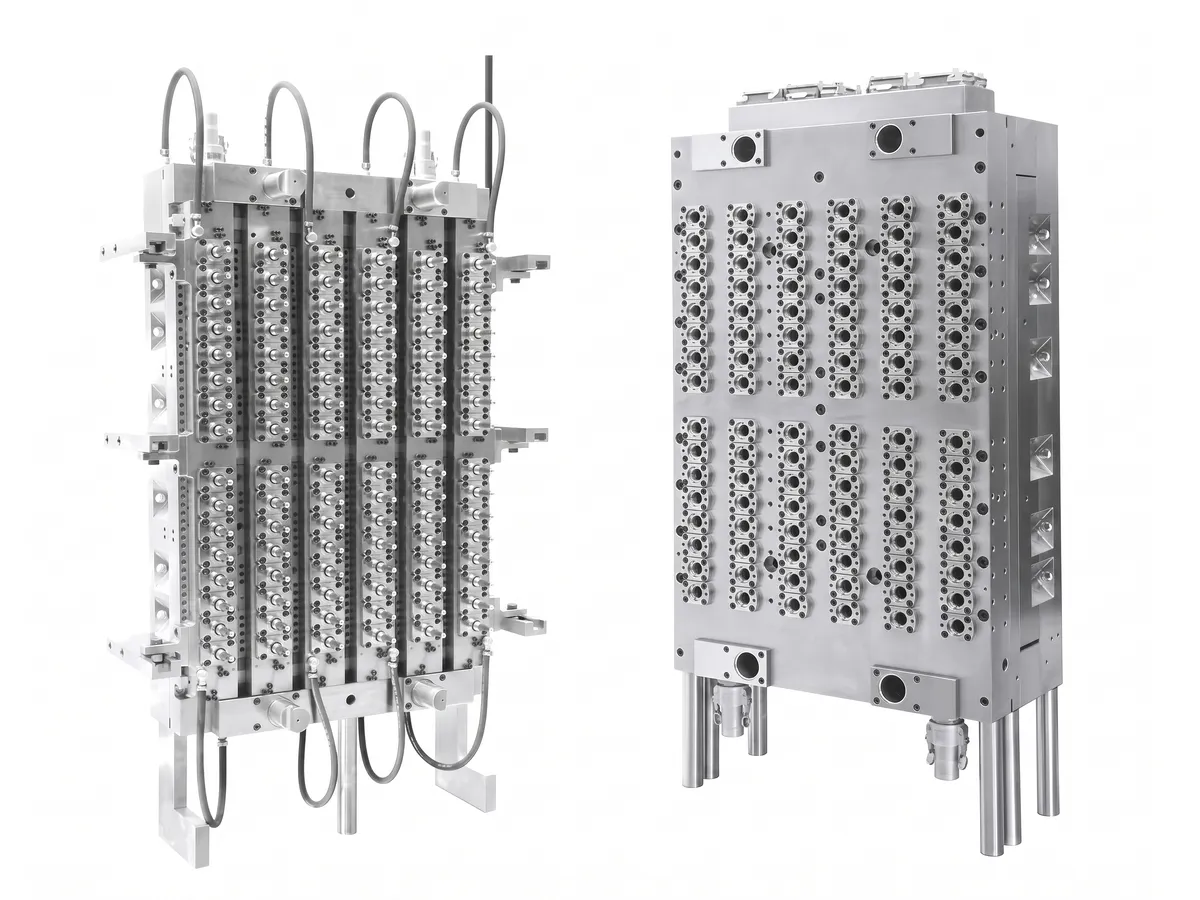
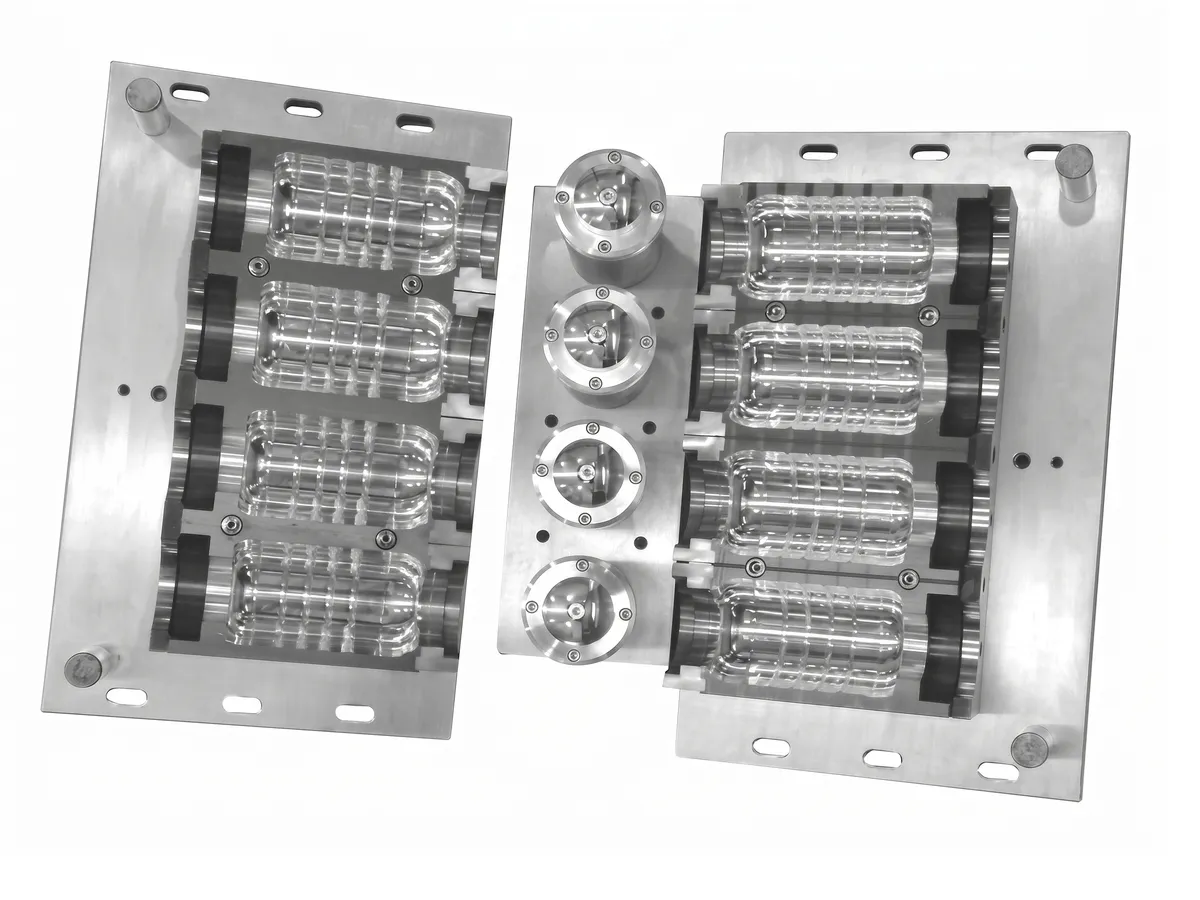
Cosmetic Bottle Blow Molding Machine Mould
Preform Injection Mold
- The die lip design is composed of two precision-machined parts, guaranteeing coaxial alignment between the preform body and neck finish throughout the injection and forming cycle, which is critical for subsequent blowing accuracy.
- An optimised cooling water channel layout ensures rapid, uniform thermal extraction from the entire preform surface after injection, shortening the overall cycle time and guaranteeing a fast producing rhythm at the 2,000 bph production rate.
- The forming components use imported grade 2316 die steel, which is corrosion-resistant, polishable to high surface finish, and has undergone heat treatment to ensure dimensional stability and long service life under demanding production conditions.
- The core plate, cavity plate, and other structural components are constructed from 420 stainless steel to ensure corrosion resistance against PET hydrolysis and the humid thermal environment inside the injection mold during continuous production cycles.
- Standard interchangeable die fittings and a logical component layout make the preform injection mold straightforward to inspect, clean, and service, minimising planned maintenance downtime and enabling rapid response to any tooling wear or damage.
- An advanced modular mold design enables a single preform injection mold to produce more than one preform variant, offering production flexibility and reducing total tooling investment for manufacturers with multiple cosmetic bottle format requirements.
Blowing Mold
- Blowing mold raw material is high-quality aluminum alloy or tool steel, selected for its optimal combination of thermal conductivity for rapid cooling, machinability for fine surface detailing, and structural strength to withstand repeated high-pressure inflation cycles at 35 kg/cm2.
- Every plastic bottle cavity is designed using advanced 3D CAD and simulation software, ensuring the mold geometry accurately reflects the target bottle design with correct draft angles, parting line placement, and surface texture specifications before any machining begins.
- A library of versatile bottle designs is available for immediate selection, enabling buyers to reduce new tooling lead times for standard bottle formats while reserving custom tooling development budget for genuinely differentiated packaging designs that require new mold engineering.
- The water cooling channel inside the blowing mold is designed with optimal proximity to the cavity surface, maximising heat transfer from the inflated bottle to the mold body and enabling the fastest possible solidification without creating localised hot spots that would cause deformation or dimensional inconsistency.
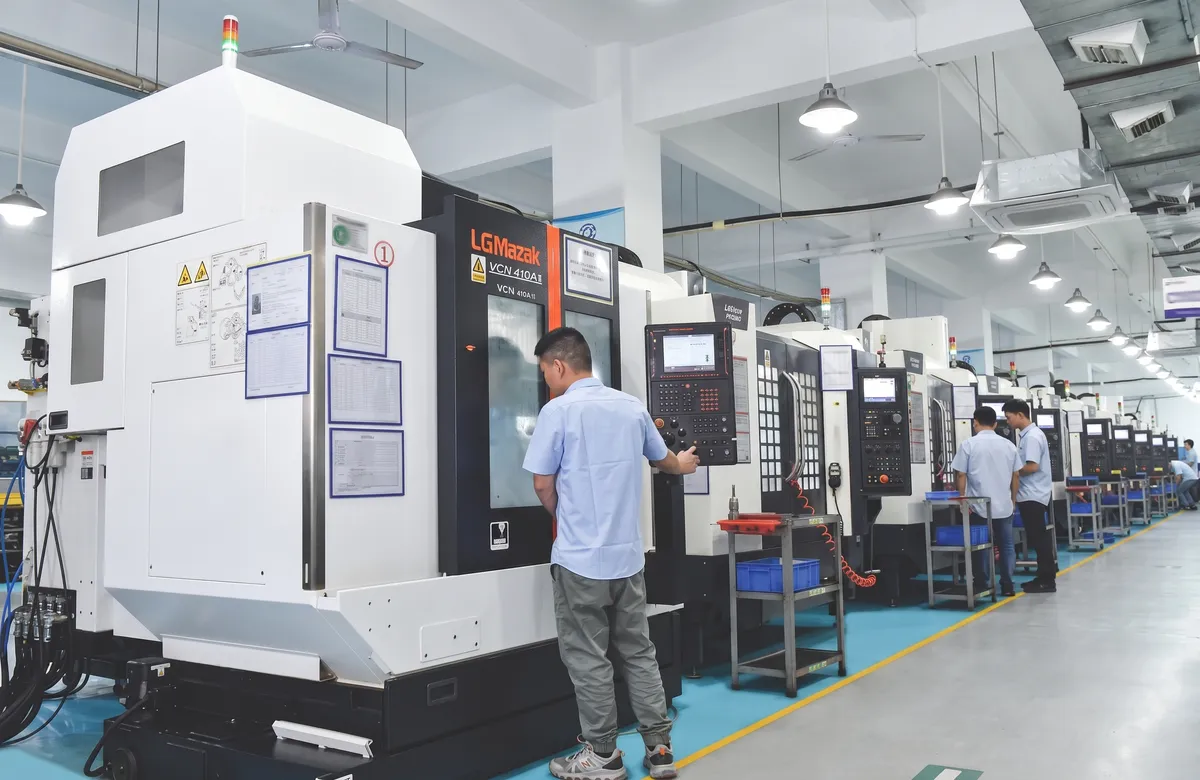
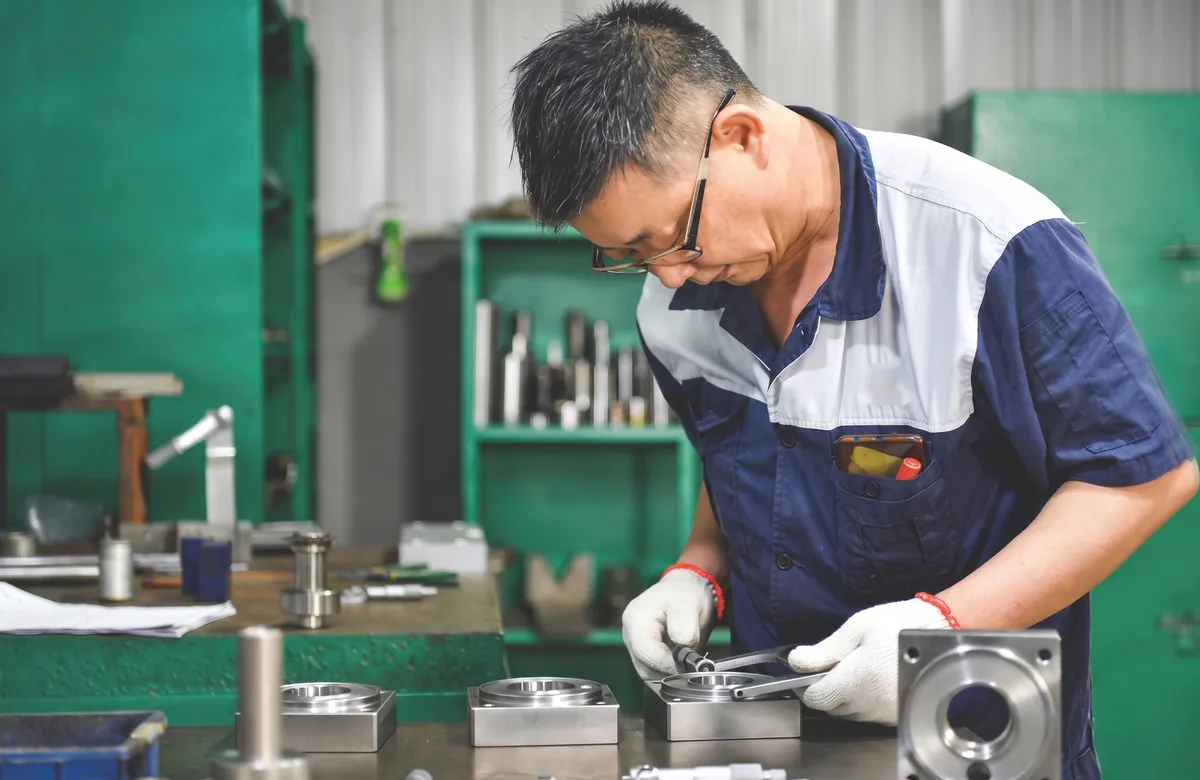
- All metal components in the blowing mold are precision-machined on CNC equipment, ensuring the tight dimensional tolerances and surface finish quality required for cosmetic packaging applications where every bottle must meet exacting visual and dimensional specifications before leaving the production line.
 |
 |
Different Types of Blow Molding
Blow molding involves inflating a hollow plastic tube into a mold cavity to form the desired container shape. The three principal blow molding types each have distinct process characteristics, material compatibility, application strengths, and equipment requirements. Understanding them helps buyers select the right plastic blow molding machine for their specific production scenario.
1. Extrusion Blow Molding (EBM)
EBM is one of the most widely used blow molding types globally. Plastic is heated, extruded through a die as a hollow parison, the mold closes around the parison, and air is blown in to form the container. Cooling fixes the shape and the mold opens to eject the finished part.
Advantages: Well-suited for large, hollow parts including drums, tanks, and large bottles. Accommodates multi-layer and complex-geometry containers. Lower initial tooling cost for large formats.
Disadvantages: Flash trimming required. Wall thickness control is less precise than IBM or ISBM for fine-detail containers.
Applications: Detergent drums, fuel tanks, motor oil containers, agricultural chemical bottles, large industrial storage containers.
2. Injection Blow Molding (IBM)
IBM first injection-molds a precise preform around a core rod, then transfers the preform to a blow station where it is inflated to the final bottle shape. The finished bottle is removed without flash trimming, making it a clean, low-waste process ideal for precision small containers.
Advantages: Superior neck accuracy, consistent wall thickness, zero flash waste, and clean production conditions suited to pharmaceutical and cosmetic GMP requirements.
Disadvantages: Higher machine and mold investment; less suited to very large containers or complex external handle geometries.
Applications: Cosmetic bottles, pharmaceutical containers, laboratory packaging, personal care bottles, daily chemical dispensers.
3. Injection Stretch Blow Molding (ISBM)
ISBM is a specialized blow molding type that adds a mechanical stretching step to the IBM process, stretching the preform both axially (by a stretch rod) and radially (by air pressure). This biaxial orientation significantly improves the strength, clarity, and barrier properties of PET containers.
Advantages: Produces high-clarity, lightweight, strong containers with excellent CO2 and O2 barrier performance. Enables thinner walls with no reduction in functional integrity.
Disadvantages: Requires specialised equipment, higher production cost, and is less suited for small-run or highly customised bottle format changes.
Applications: PET water and beverage bottles, carbonated drink containers, cosmetic bottles, shampoo and conditioner packaging, personal care products.
Applications of Different Blow Molding Types
EBM Application
Ideal for large, hollow industrial containers including fuel tanks, large chemical containers, and detergent bottles. EBM is also used in automotive manufacturing for fluid reservoirs and large-format industrial storage containers where volume and geometry flexibility matter more than fine dimensional precision.
IBM Application
Best matched to small, precision containers for pharmaceutical liquids, cosmetics, laboratory reagents, and high-value personal care products. IBM is the process of choice in industries where neck accuracy, sealing reliability, and clean production without secondary operations are mandatory requirements.
ISBM Application
Predominantly used for high-volume PET beverage packaging including water, carbonated soft drinks, juice, and energy drinks. ISBM is also used for personal care containers requiring crystal clarity and light weight, and household cleaning product packaging where strong CO2 barrier is needed for pressurised contents.
How to Choose the Right Full Electric Blow Molding Machine
1. Define Your Bottle Specifications First
Before evaluating any blow molding machine model, clearly define your target bottle volume range, neck diameter, body diameter, height, wall thickness, and any special-shaped geometry requirements. The EPA.ES-2C114.3 covers containers up to 1,000 ml, neck diameters to 88 mm, and body diameters to 94 mm. Matching your bottle envelope to the machine specifications prevents costly mismatches and ensures you can run your full product range on a single platform without compromising output quality.
2. Assess Required Output Capacity
Calculate your required daily and annual bottle production volumes before selecting machine size, cavity count, and output rate. The EPA.ES-2C114.3 delivers 2,000 bph on a 2-cavity configuration, making it suitable for mid-to-large scale cosmetic and daily chemical production lines. Under-specifying output leads to production bottlenecks and overtime; over-specifying results in under-utilised capital that increases per-unit cost. Match machine output to your near-term demand with headroom for projected growth.
3. Confirm Material Compatibility
Different cosmetic and daily chemical formulations impose different packaging material requirements. Verify that your chosen plastic blow molding machine is compatible with your target resins, whether PET, PETG, PP, or others. The EPA.ES-2C114.3 is optimised for PET and PETG. If your product roadmap includes PP hot-fill containers or speciality bio-resins, confirm compatibility and any parameter adjustment requirements with the Ever-Power technical team before finalising your machine selection and tooling investment.
4. Evaluate Automation Level and Labour Cost
For high-volume cosmetic and daily chemical production, a fully automatic blow molding machine like the EPA.ES-2C114.3 delivers the best return on labour investment by eliminating manual handling of preforms and bottles throughout the production cycle. Consider the total labour cost per thousand bottles on a semi-automatic versus fully automatic machine, factoring in reject rates, quality consistency, and the value of human error elimination in regulated cosmetic and personal care packaging environments where contamination or dimensional defects generate costly recalls.
5. Consider Energy Efficiency and Total Operating Cost
The purchase price of a blow molding machine for plastic bottles is only one component of the total cost of ownership. Factor in electricity consumption, compressed air demand (the EPA.ES-2C114.3 requires 7 kg/cm2 at 600 ltr/min low pressure and 35 kg/cm2 at 1,000 ltr/min high pressure), cooling water supply, mold amortisation, and planned blow molding machine maintenance intervals. Servo-driven machines typically deliver 20 to 40 percent energy savings versus hydraulic equivalents, which compounds into significant operating cost advantages over a 5 to 10 year machine lifecycle.
6. Verify After-Sales Support and Parts Availability
For a production-critical asset like a custom blow molding machine, after-sales technical support, spare parts availability, remote diagnostics capability, and on-site engineering service coverage are as important as the machine specifications themselves. Ever-Power provides comprehensive pre-sale consultation, commissioning support, operator training, remote technical assistance, and a global spare parts network to minimise downtime risk and ensure your investment delivers productive return across its full operational life in demanding cosmetic and daily chemical manufacturing environments.
Why Choose Ever-Power Blow Molding Machine?
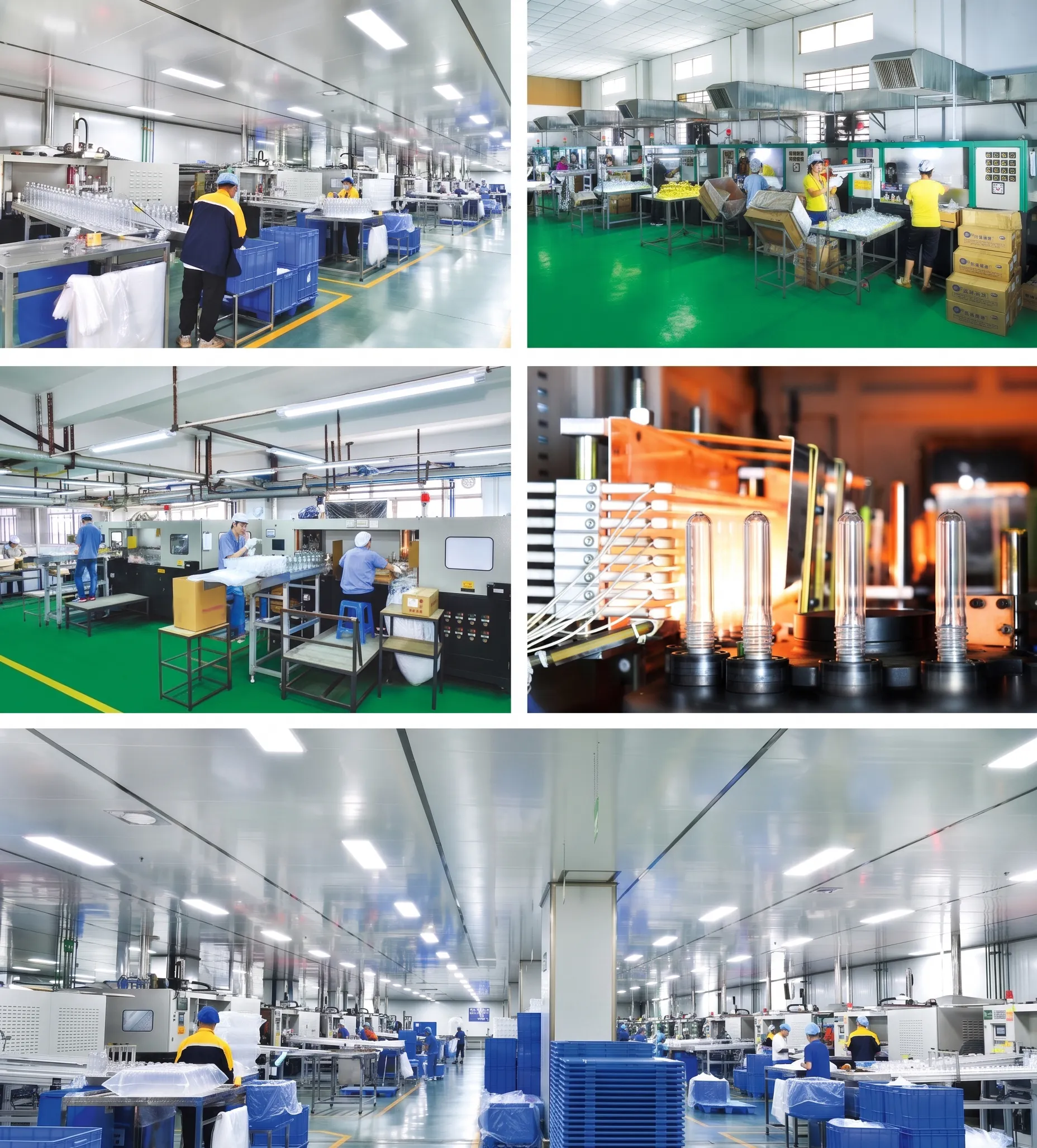
Mexico Ever-Power ISBM Machinery Co., Ltd is a specialist manufacturer focused exclusively on automatic blow molding machine technology, including two-step stretch blow molding machines, injection blow molding machines, and the full range of auxiliary equipment that supports them. Unlike generalist industrial machinery suppliers, our engineering and technical teams are organized entirely around the science and practice of plastic blow molding, which means that the knowledge embedded in every machine we design reflects decades of accumulated process expertise rather than general mechanical manufacturing capability.
Our product portfolio spans injection blow molding machines, extrusion blow molding machines, injection stretch blow molding machines, and associated auxiliary equipment, covering the full range of plastic bottle production technologies used in pharmaceutical packaging, food packaging, health care packaging, cosmetic packaging, and other plastic packaging sectors. We can produce finished bottles in HDPE, LDPE, PET, PETG, PP, PS, PPSU, PC, Tritan, ABS, PLA, EVA, PCTG, and environmental corn material, giving customers a genuine single-source capability across an exceptionally wide material and application range from 1 ml to 1,000 ml.
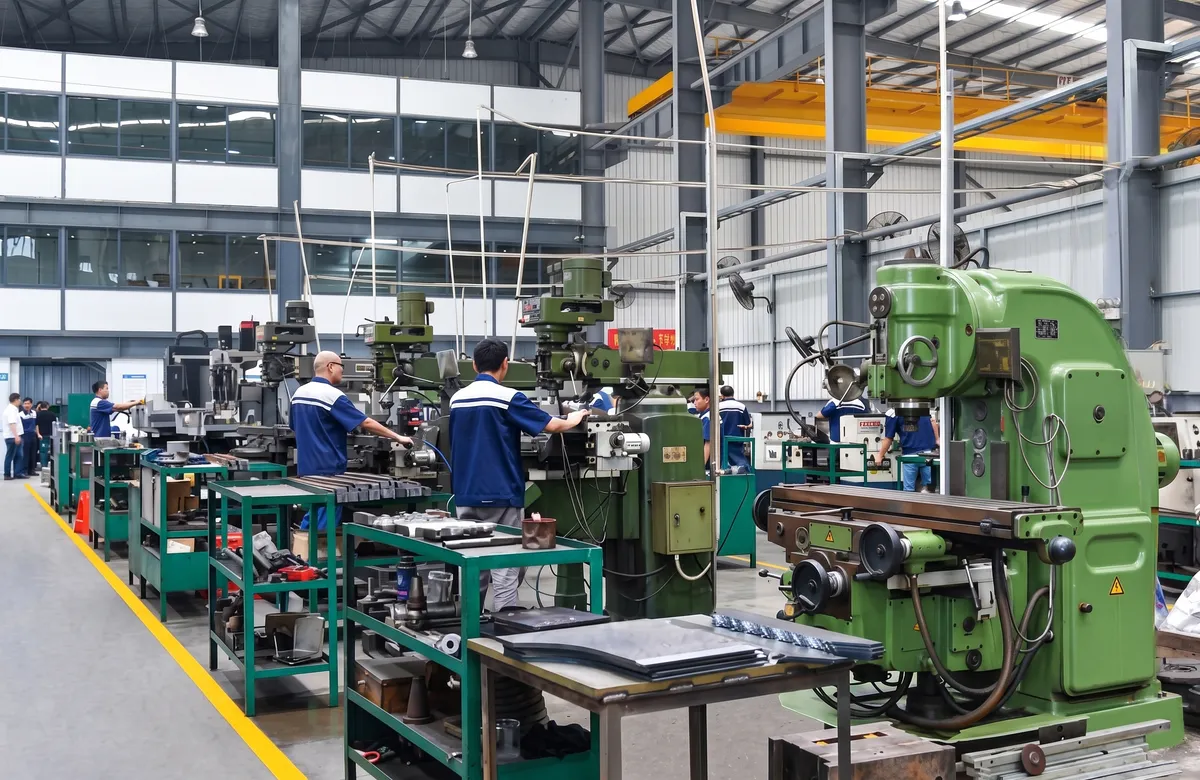
Ever-Power brings together senior engineering and technical personnel with deep specialist backgrounds in both injection-blowing machinery and injection-blowing mold design under one organization. This integrated capability, with machine and mold expertise in-house, means that customers can source the complete production solution, machine, mold tooling, process parameters, and application support, from a single accountable supplier. It also means that our engineers can optimize machine and mold design together for specific bottle applications, rather than treating them as independent products from different suppliers that the customer must integrate themselves.
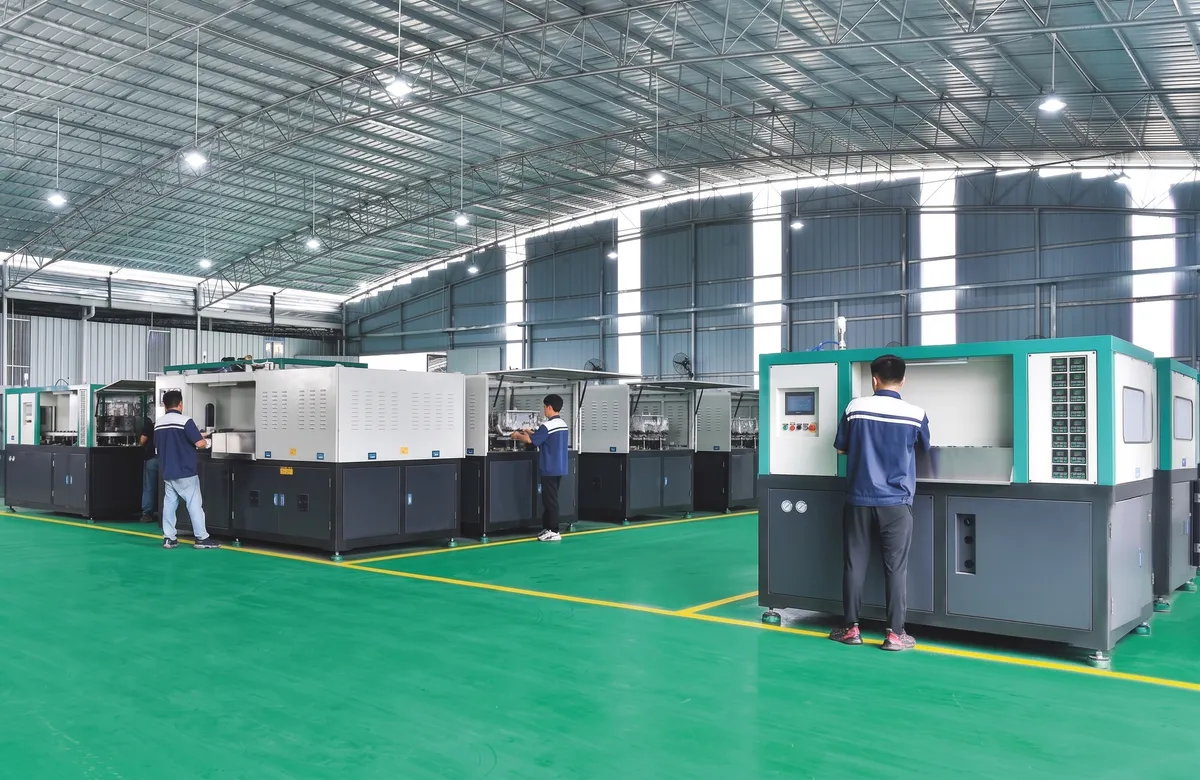
Our service model is built around the full customer lifecycle: pre-sale technical consultation to match machine and mold specifications to the customer bottle design and production volume requirement; installation and commissioning support that transfers genuine process knowledge to the the customer operating team rather than just starting the machine and leaving; and responsive after-sales technical support that keeps production lines running efficiently across the full machine service life.
 |
 |
 |
 |
 |
 |
Additional information
| Edited by | Yjx |
|---|
Related products
-
EPA.ES-2C130 Fully Automatic Blow Molding Machine for Food Wide-Mouth Jars and Cans
-
EPA.ES-2C200 Fully Automatic Blow Molding Machine for Crafts and Special-Shaped Bottles
-
EPA.AS-2C114.3 Fully Automatic Blow Molding Machine for Daily Chemicals & Cosmetic Bottles
-
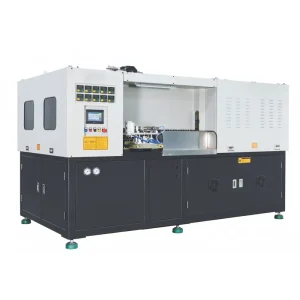
EPA.ES-3C76 Fully Automatic Blow Molding Machine for Daily Chemicals & Cosmetic Bottles