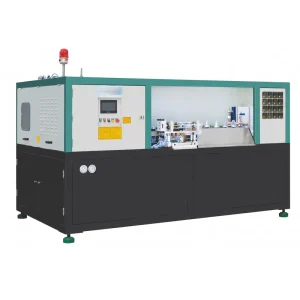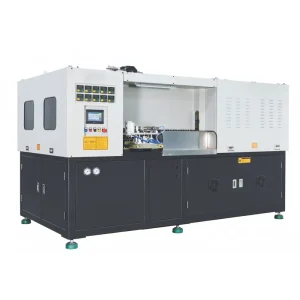
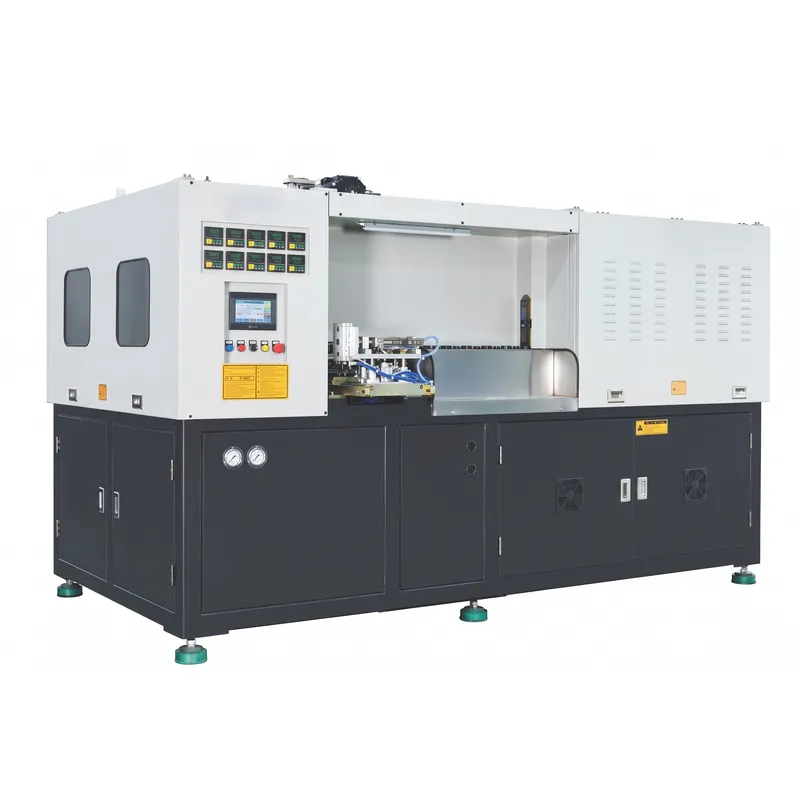
EPA.ES-3C114 日用化学薬品・化粧品ボトル用全自動ブロー成形機
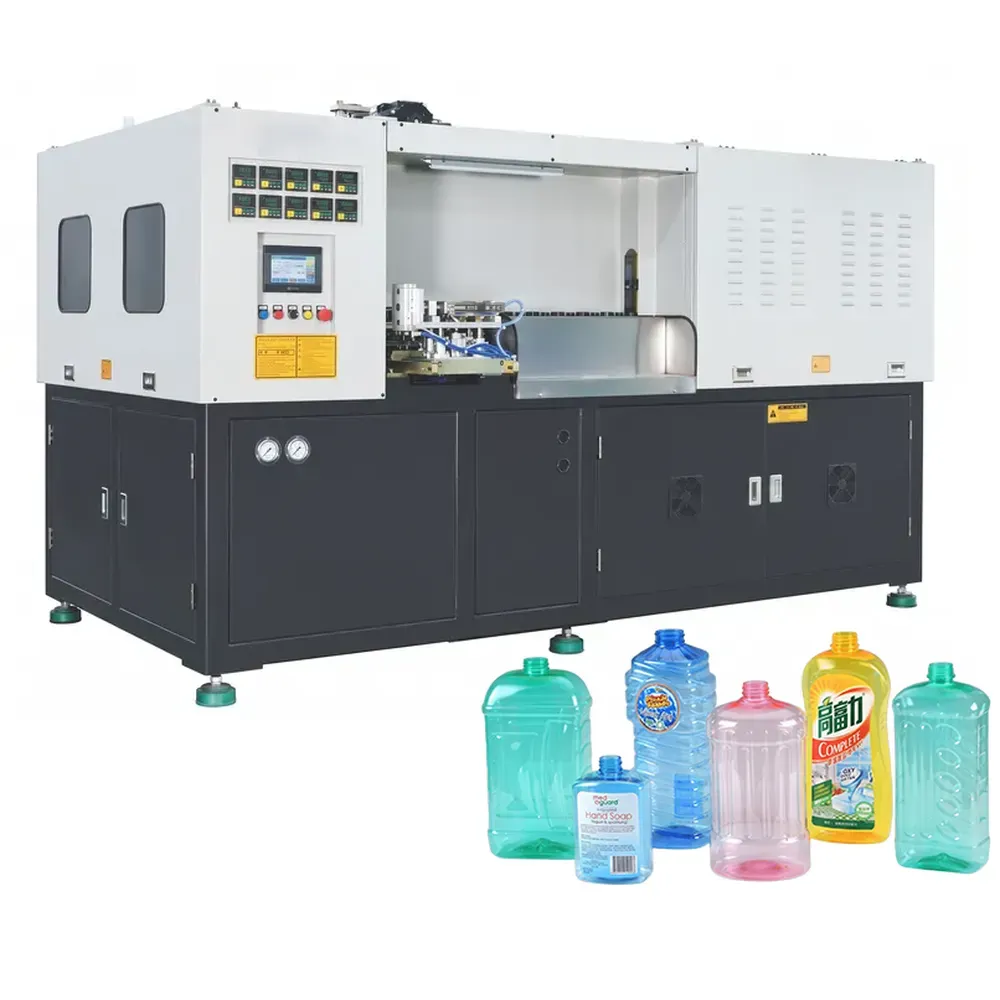
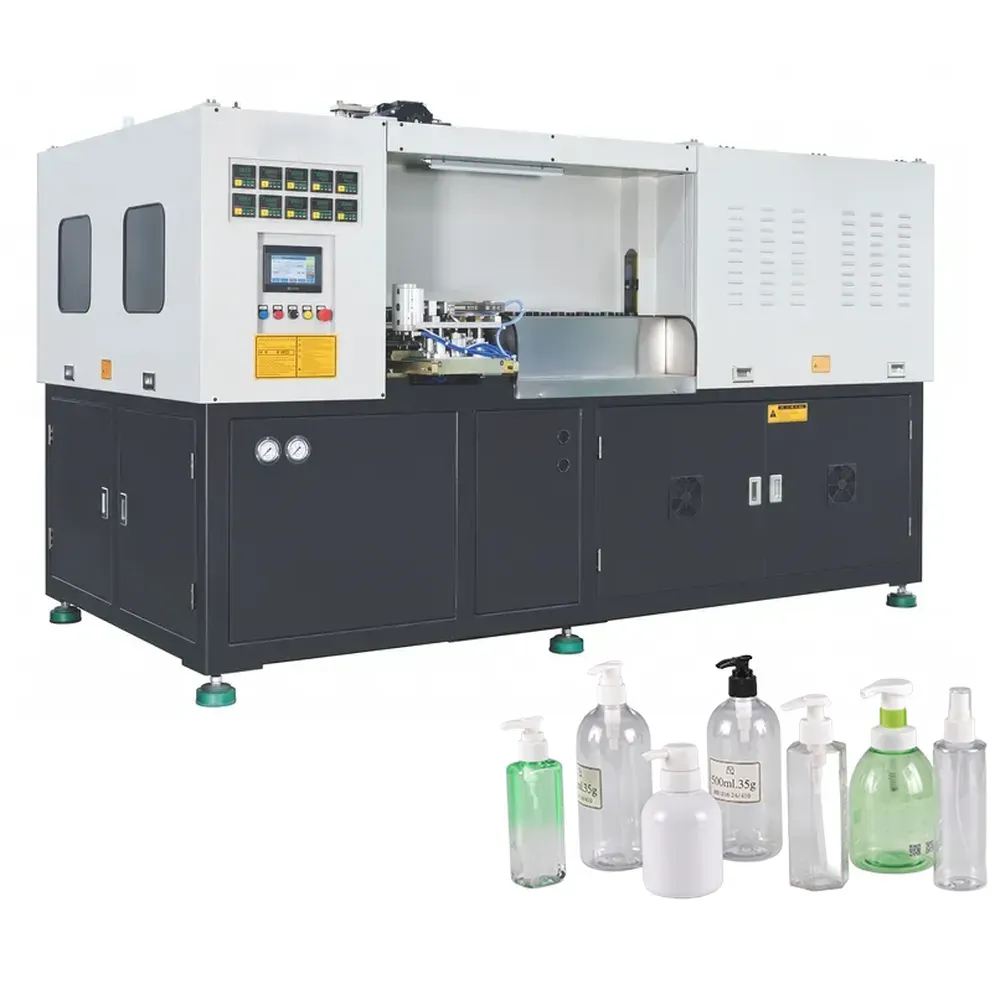
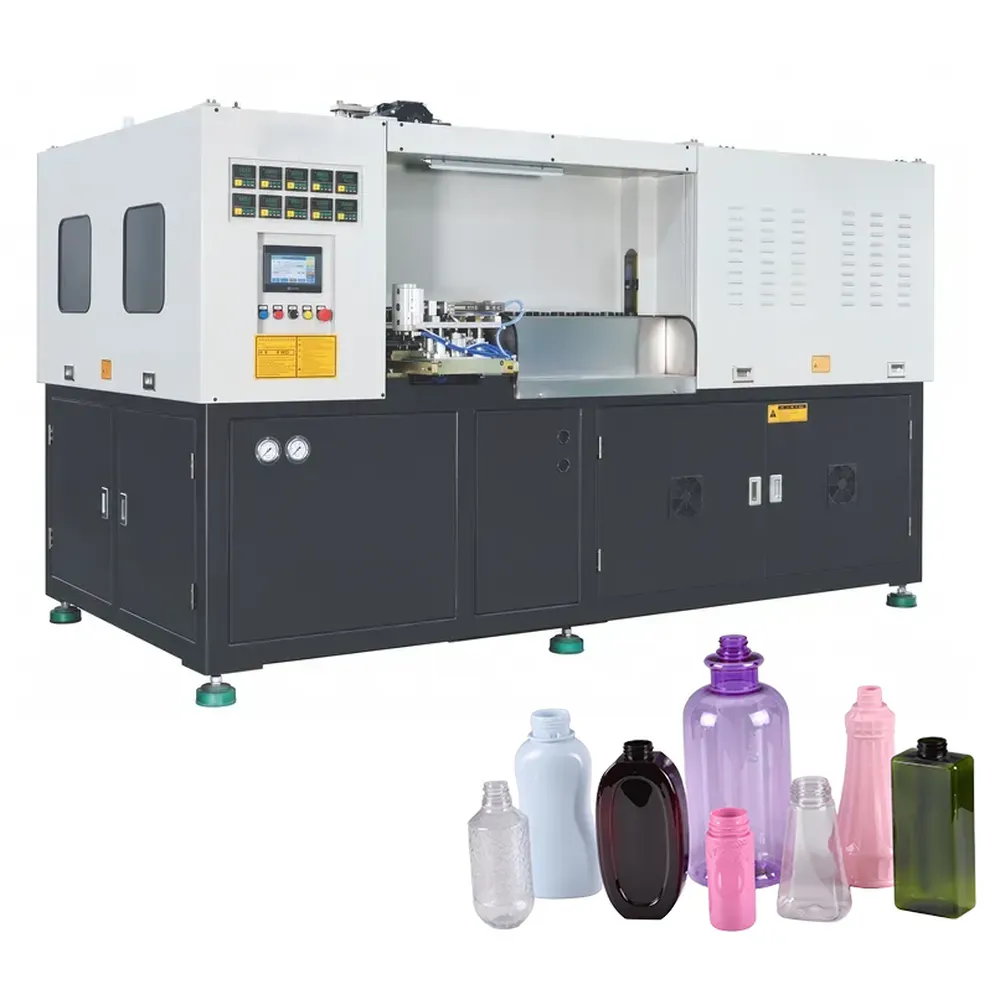
EPA.ES-3C114は、化学薬品や化粧品のボトルを日常的に生産するために特別に設計された、高性能な全自動ブロー成形機です。国際的に定評のあるサーボモーター、精密減速機、高度な電気制御システムを中心に構築されたこの自動PETブロー成形機は、現代の包装ラインが求める安定性、信頼性、そしてエネルギー効率に優れた運転を実現します。化粧品ボトル専用に設計されたEPA.ES-3C114は、PETおよびPETG素材に優れ、3つのキャビティで同時に幅広いボトル形状とネック仕上げを製造できます。
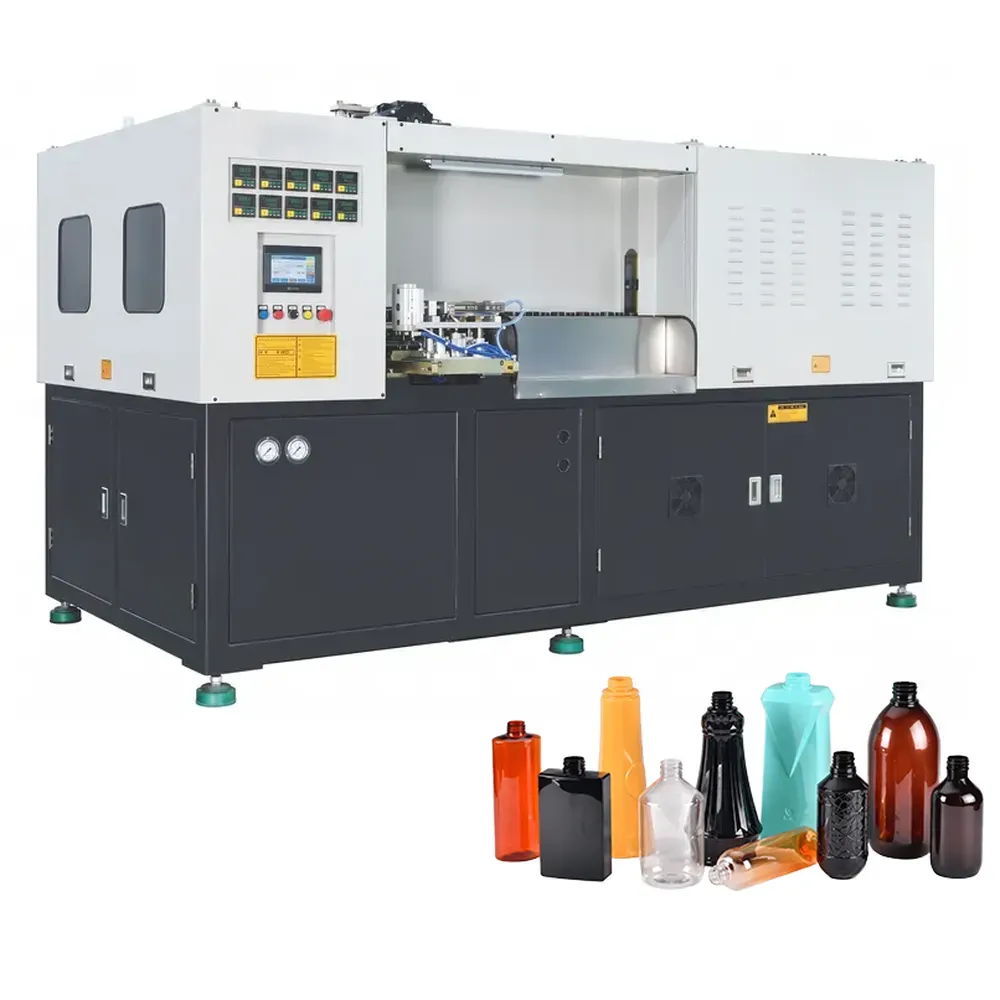
The EPA.ES-3C114 is a high-performance fully automatic blow molding machine engineered specifically for daily chemical and cosmetic bottle production. Built around internationally renowned servo motors, precision reducers, and advanced electrical control systems, this automatic PET blow molding machine delivers the stable, reliable, and energy-efficient operation that modern packaging lines demand. As a purpose-built cosmetic bottle blow molding machine, the EPA.ES-3C114 excels with PET and PETG materials, producing a wide range of bottle shapes and neck finishes across 3 cavities simultaneously. Its particular strength lies in manufacturing complex, irregularly shaped bottles that challenge standard equipment, making it a preferred plastic blow molding machine for premium cosmetic and personal care brands. With a theoretical output of 2,400 bottles per hour and a compact footprint of 3,240 x 1,800 x 2,000mm, it suits both greenfield installations and factory-floor upgrades where space efficiency matters.
As a versatile daily chemical bottle blow molding machine, the EPA.ES-3C114 handles container volumes from 30ml to 1,500ml, covering toner bottles, lotion containers, serum dispensers, shampoo bottles, and body wash packaging in a single machine platform. The servo-driven injection stretch blow molding machine architecture guarantees repeatable wall thickness, accurate neck finishes, and high transparency in the finished container. Its user-friendly interface reduces operator learning time, while optimized energy management makes this industrial blow molding machine an economical long-term investment. By combining high molding precision with broad material applicability, the EPA.ES-3C114 helps manufacturers scale output, control production costs, and raise product quality to meet the increasingly demanding standards of global cosmetic and daily chemical markets. For buyers evaluating types of blow molding machine technology for cosmetic packaging, this model represents the current benchmark in its class.
技術パラメータ
| モデル | ユニット | EPA.ES-3C114 | |
|---|---|---|---|
| 成形 | 締め付けストローク | mm | 133 |
| 金型開口距離 | mm | 363 | |
| 金型との距離 | mm | 230 | |
| ストレッチングストローク | mm | 350/450 | |
| 金型開口距離 | mm | 50 | |
| 金型との距離 | mm | 114 | |
| プリフォームホルダー | 74 | ||
| 虫歯 | 3 | ||
| 容器 | 最大コンテナ容量 | ml | 1500 |
| ネック径範囲 | mm | 40 | |
| 最大容器直径 | mm | 95 | |
| コンテナの最大高さ | mm | 250/330 | |
| 理論的出力 | 良性前立腺肥大症 | 2400 | |
| 電気系統 | 最大加熱出力 | キロワット | 40 |
| 火力 | キロワット | 18 | |
| 空気システム | 作動圧力 | kg/cm² | 7 |
| 低圧空気消費量 | リットル/分 | 1500 | |
| 吹き出し圧力 | kg/cm² | 35 | |
| 高圧空気消費量 | リットル/分 | 3200 | |
| 冷却水 | 作動圧力 | kg/cm² | 5-6 |
| 温度 | ℃ | 8-12 | |
| 流量 | リットル/分 | 30 | |
| 機械 | サイズ(長さ×幅×高さ) | mm | 3240*1800*2000 |
| 重さ | kg | 4000 | |
Features of the EPA.ES-3C114 Cosmetic Bottle Blow Molding Machine
1. 高品質で信頼性の高いコアコンポーネント
Every critical component in the EPA.ES-3C114 is sourced from internationally renowned suppliers, including servo motors, precision reducers, and electrical and control elements. This ensures stable and durable operation from the very first production cycle. The servo control system responds with exceptional sensitivity and high control accuracy, which directly reduces the machine failure rate and extends equipment service life well beyond industry averages. Manufacturers investing in a quality blow molding machine will find this component strategy delivers lower total cost of ownership across multi-year production runs.
2. 高い適応性と多様なボトルスタイル
The ES-3C114 series covers a broad range of model configurations, capable of producing bottles from 30ml to 1,500ml. Body diameter, container height, and neck dimensions are all flexibly adjustable. Processing PET and PETG materials with equal precision, this PET bottle blow molding machine handles standard cylindrical bottles and highly complex irregular shapes with consistent quality. It serves as a professional plastic bottle blow molding machine for lotion, toner, serum, shampoo, conditioner, hand sanitizer, and specialty cosmetic packaging, providing a single versatile platform for diverse SKU portfolios across cosmetic and daily chemical product lines.
3.高効率と省エネルギー
The electrical system operates with a max heating power of 40kW and a working heating power of 18kW, combining servo drive technology to significantly reduce energy consumption compared to conventional hydraulic systems. The blowing system achieves a maximum pressure of 35 kg/cm², delivering high blow molding efficiency with a theoretical output of 2,400 bottles per hour across 3 cavities. This makes the EPA.ES-3C114 a genuine high speed blow molding machine for cosmetic and daily chemical production. Manufacturers switching from older equipment will experience measurable reductions in electricity costs alongside increased throughput, which directly improves per-unit production economics at scale.
4. 高い安定性と容易なメンテナンス
The EPA.ES-3C114 features a scientifically optimized structural design with a cooling water system maintaining temperatures between 8 and 12 degrees Celsius, ensuring consistent bottle molding quality across long production runs. Air pressure parameters and electrical systems are pre-configured to optimal ranges, resulting in a low failure rate under continuous operation. Daily maintenance routines are straightforward, with accessible service points reducing downtime and labor costs. For production managers running multiple shifts, the machine's operational stability translates directly into predictable output schedules and reduced unplanned maintenance events throughout the equipment's service life.
5. コンパクトな構造と省スペース
At 3,240 x 1,800 x 2,000mm and 4,000kg, the EPA.ES-3C114 is engineered with a compact, factory-floor-friendly footprint that makes layout planning straightforward even in constrained workshop spaces. This size profile is particularly valuable for cosmetic manufacturers operating in urban manufacturing parks or facilities where floor space is at a premium. Despite its compact dimensions, the machine delivers full medium-to-large scale production capability. When comparing types of blow molding machine configurations on a floor-space-per-output basis, the EPA.ES-3C114 consistently demonstrates a strong advantage for cosmetic and daily chemical packaging producers worldwide.
6. Fully Automatic Operational Efficiency
As a fully automatic blow molding machine, the EPA.ES-3C114 eliminates the need for manual intervention at each production stage. From preform loading through bottle ejection, every step is automated and program-controlled. This full automation reduces reliance on skilled manual labor, minimizes human error in the production process, and enables consistent 24-hour operation with minimal operator supervision. For factories transitioning from semi-automatic or manual systems, the productivity gains are immediate and substantial. The automated blow molding machine process also enhances product consistency across large batch runs, a key quality requirement for cosmetic and daily chemical brands with strict packaging specifications and retailer quality audits.
How Does the EPA.ES-3C114 Fully Automatic Blow Molding Machine Work
ステップ1:原材料の準備
The blow molding machine process begins with thorough raw material preparation. PET, PETG, and compatible polymers undergo rigorous screening, blending, and moisture control before entering the production feed. For PET materials, pre-drying is critical to prevent hydrolytic degradation during processing. Strict incoming material quality control ensures that resin grade, viscosity, and contamination levels meet specification, setting the quality baseline for every bottle produced in the batch.
ステップ2:プリフォーム射出成形
In the injection phase of the automatic PET blow molding machine process, selected and blended raw materials are fed into the injection system. After heating, melting, and plasticizing under precise temperature and pressure control, molten polymer is injected into the preform mold cavity. Parameters including melt temperature, injection pressure, hold time, and cooling duration are all servo-controlled to produce preforms with consistent wall thickness and accurate neck geometry for downstream blowing.
ステップ3:予熱を行う
Following injection molding, preforms pass through a carefully calibrated infrared preheating tunnel. During this stage, the temperature of each preform is raised uniformly, with particular attention to the body wall thickness zone. The target is to achieve consistent plasticity and flexibility across all 74 preform positions simultaneously. Controlled preheating is critical for the two-stage blow molding machine process because uneven temperature distribution directly causes wall thickness variation and dimensional inconsistency in the finished bottles.
ステップ4:延伸ブロー成形
At the core of the injection stretch blow molding machine process, preheated preforms enter the 3-cavity blow mold. The stretch rod extends to biaxially orient the material longitudinally while high-pressure air at up to 35 kg/cm2 expands the preform radially against the mold cavity walls. This biaxial orientation significantly improves the mechanical strength, clarity, and barrier properties of the finished PET bottle. Precise servo control of stretch timing and air pressure profiles ensures consistent cavity-to-cavity quality across all three positions in every production cycle.
Applications of the EPA.ES-3C114 Daily Chemical Blow Molding Machine
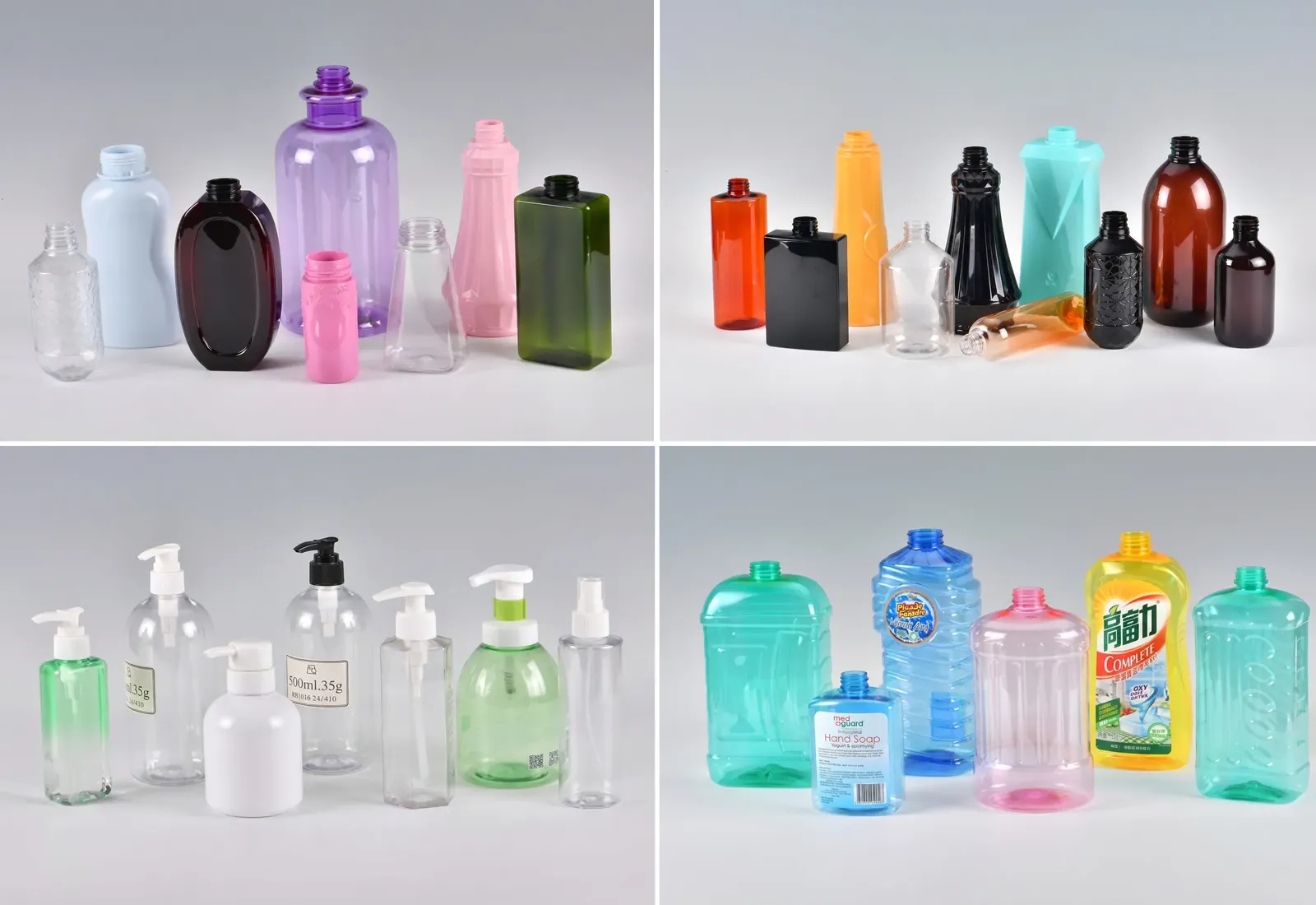
Skincare and Serum Packaging
The EPA.ES-3C114 PET blow molding machine excels at producing premium skincare bottles including essences, serums, and facial toners. With neck diameter precision at 40mm and container heights reaching 330mm, it accommodates the slender, sophisticated bottle profiles that high-end cosmetic brands require. Superior wall thickness uniformity and crystal clarity in PET output meet the optical standards that retail shelf presence and brand premium positioning demand from modern cosmetic packaging lines worldwide.
Lotion and Cream Bottle Production
For moisturizer, body lotion, and facial cream containers, the machine's 95mm maximum body diameter and flexible cavity spacing accommodate the wide, round bottle formats popular in mass-market and professional cosmetic categories. The automatic blow molding machine process delivers smooth, blemish-free exterior surfaces that accept labeling, sleeve-shrink decoration, and direct screen printing without secondary surface treatment, reducing downstream finishing costs for high-volume daily chemical packaging manufacturers.
Shampoo and Hair Care Containers
Handling containers from 300ml to 1,500ml, the EPA.ES-3C114 daily chemical blow molding machine is ideally sized for shampoo, conditioner, hair mask, and scalp treatment bottles. Consistent neck finish at 40mm supports standard flip-top, disc-top, and pump closures used across the personal care sector. High production output at 2,400 bottles per hour enables cosmetic manufacturers to meet large retailer purchase orders and seasonal demand peaks without additional machine investment or extended production lead times.
Shower Gel and Body Wash Bottles
The machine's exceptional capability in producing irregularly shaped bottles makes it a strong fit for differentiating shower gel packaging. Brands increasingly use unique container geometry as a point-of-sale differentiation tool, and the EPA.ES-3C114 handles complex contoured shapes that challenge standard プラスチックブロー成形機 platforms. PETG material compatibility further expands design flexibility, allowing enhanced gloss, tinted transparency, and distinctive tactile surface textures that premium bath and body care brands increasingly specify in their packaging briefs.
Perfume and Fragrance Packaging
For fragrance secondary packaging and ancillary containers, the EPA.ES-3C114 delivers the dimensional accuracy and optical clarity that luxury fragrance presentation requires. The bottle blow molding machine produces containers with consistent clarity and precise neck finishes that interface reliably with crimped and threaded fine-mist spray closures. Its servo-controlled process minimizes batch-to-batch variation, an important capability for fragrance brands that maintain strict quality verification protocols for export shipments to European, North American, and Gulf market retailers.
Hand Care and Sanitizer Bottles
The EPA.ES-3C114 produces hand wash, hand cream, and hand sanitizer containers across the full 30ml to 1,500ml volume range. PET material compatibility provides the chemical resistance required for alcohol-based and surfactant-rich formulations used in hand hygiene products. The custom blow molding machine configuration options allow producers to customize bottle shape, shoulder geometry, and base design to match specific brand architecture or to produce private-label containers for multiple retail customers from a single mold set on the same machine platform.
Baby Care and Sensitive Skin Products
Baby shampoo, gentle body wash, and infant care product containers demand zero flash contamination and strict dimensional consistency. The EPA.ES-3C114, operating as a true fully automatic blow molding machine, eliminates manual handling at critical production stages and reduces particulate contamination risk. PETG options provide BPA-free clarity with superior impact resistance for the baby care segment. Clean production and high bottle-to-bottle consistency support quality certification requirements that major retailers and international baby care brands mandate for their approved supplier packaging programs.
Household Cleaning Product Containers
Household surface cleaners, fabric softeners, and dishwashing liquid bottles in the 500ml to 1,500ml segment are efficiently produced on this industrial blow molding machine platform. PET's excellent chemical resistance to common cleaning agents makes it the preferred material choice. The 2,400 bph output rate at 3 cavities ensures that household cleaning product manufacturers, who typically operate on thin margin economics requiring maximum production volume, can achieve the per-unit cost targets necessary to compete in mass retail and private-label cleaning product categories across both domestic and export markets.
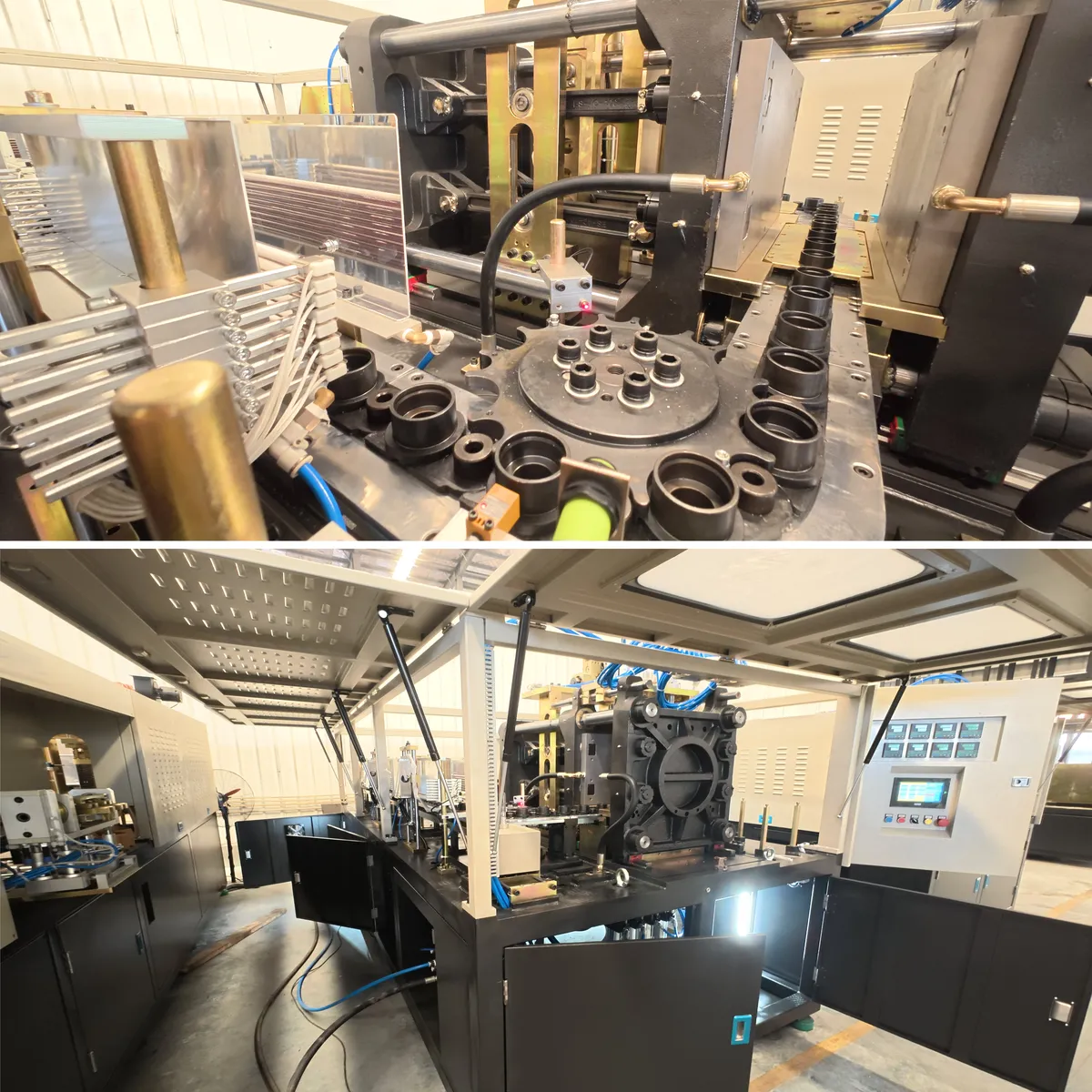
EPA.ES-3C114 PET Blow Molding Machine Parts
給餌システム
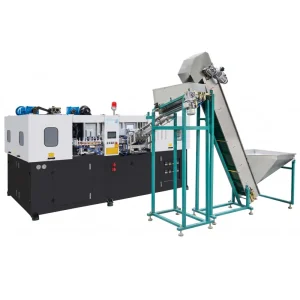
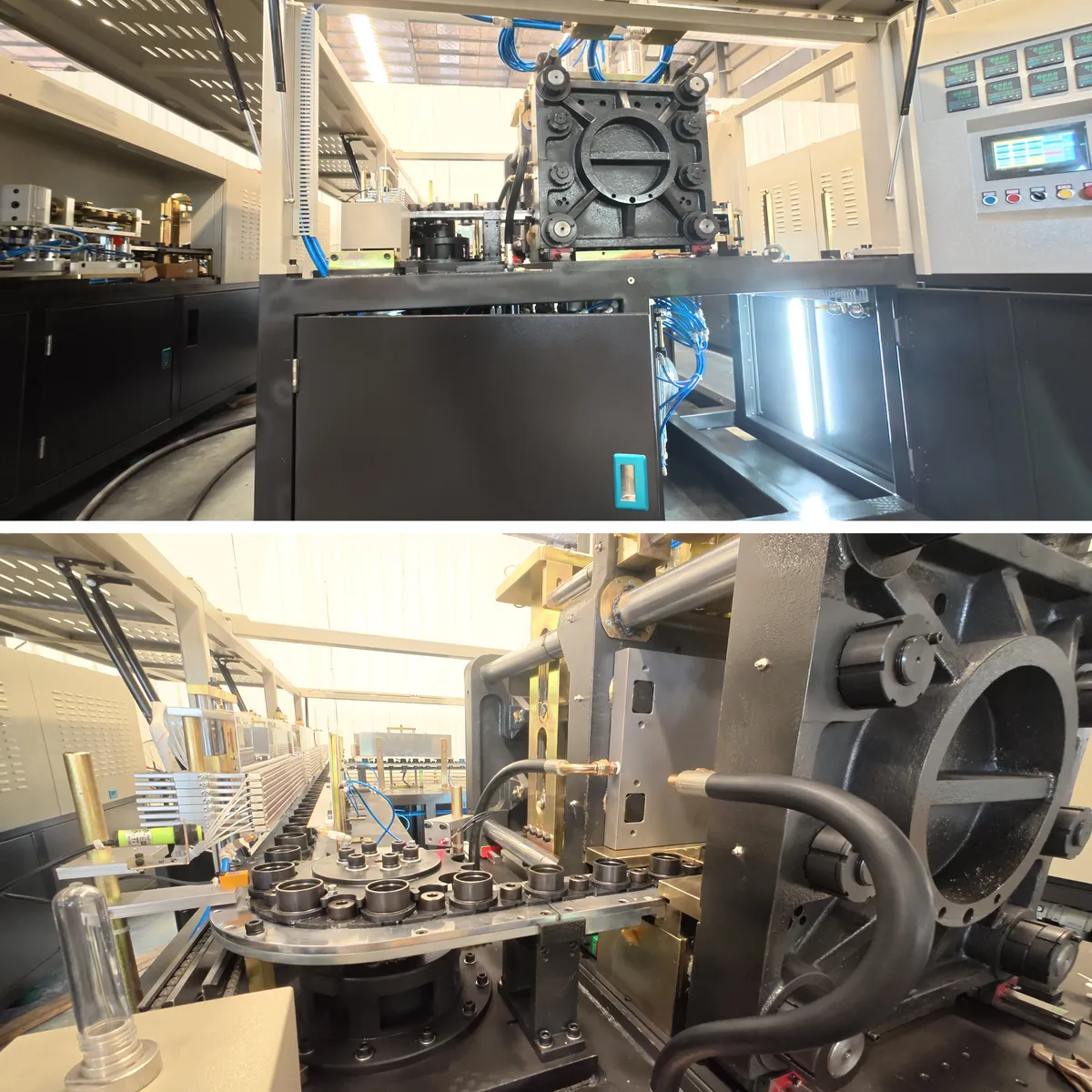
The feeding system comprises the hopper, preform conveyor, orientator, gravity rail, and associated steering and electric drive components. Raw PET preforms are fed into the blow molding machine through this fully automated loading path. The orientator aligns preforms correctly before they enter the conveying rail, ensuring consistent neck-up orientation for every preform entering the heating section. A reliable feeding system is fundamental to achieving the rated output of 2,400 bottles per hour without manual re-alignment or feeding interruptions during production shifts.
プリフォームチルト装置
Because the EPA.ES-3C114 processes PET preforms, the preform tilter is a key blow molding machine part that automatically supplies pre-oriented preforms to the system hopper from bulk storage. The tilter handles the transition from randomly stacked bulk preforms to the single-file neck-up orientation required for the heating carousel. Its automated operation removes a manual labor step that can introduce inconsistency and injury risk in high-throughput production environments, contributing to the machine's suitability for continuous multi-shift operation.
Infrared Heating Section
The infrared heating section uses zoned quartz lamp arrays to raise preform temperatures uniformly to the blow-ready range. With a maximum heating power of 40kW and a working heating power of 18kW, the system delivers precise thermal profiles adjustable by zone and lamp intensity. The 74-position preform holder carousel ensures that all preforms reach identical temperature before entering the blow station. Independent zone adjustment allows operators to fine-tune temperature gradients for different bottle shapes, neck designs, and wall thickness profiles across the wide container range the machine supports.
ブロー成形型締めユニット
The 3-cavity blow mold clamping unit secures the blow molds with a clamping stroke of 133mm and a mold-close distance of 114mm, providing the rigidity required to withstand 35 kg/cm2 blowing pressure without mold deflection. The precision mold alignment system ensures consistent parting-line quality and prevents flashing on finished bottles. Servo-driven mold closing delivers smooth, repeatable clamping force across every production cycle, which is critical for maintaining dimensional accuracy in complex-shaped cosmetic bottles where minor mold movement would cause unacceptable visual defects and functional failure at closure interfaces.
High-Pressure Air Compressor Station
The compressor station supplies both low-pressure operating air at 7 kg/cm2 and high-pressure blowing air at up to 35 kg/cm2. Low-pressure air consumption stands at 1,500 ltr/min while high-pressure consumption reaches 3,200 ltr/min at full production speed. The station integrates boosters, connectors, air tank, and pressure management controls. Stable air pressure supply directly determines bottle wall uniformity and dimensional accuracy in the bottle blow molding machine process, making compressor station sizing and reliability a critical specification factor for production engineers evaluating this equipment category.
水冷システム
The integrated water cooling system maintains mold temperature between 8 and 12 degrees Celsius at an operating pressure of 5 to 6 kg/cm2 with a flow rate of 30 ltr/min. Precise temperature control in the blow mold is fundamental to achieving rapid cycle times while producing dimensionally stable bottles. Inadequate cooling causes extended cycle times, bottle deformation, and inconsistent wall crystallinity. The EPA.ES-3C114's optimized cooling channel design ensures uniform mold temperature distribution across all three cavities, supporting both high output rates and consistent bottle quality across extended production runs.
ストレッチロッドアセンブリ
The stretch rod assembly performs the biaxial orientation that gives PET bottles their characteristic strength, clarity, and barrier properties. With a stretching stroke of 350 to 450mm, the servo-controlled rods extend into each preform cavity simultaneously, orienting the polymer chains longitudinally before high-pressure air completes the radial blow. Precise stretch ratio control is essential for producing lightweight bottles with optimal wall thickness distribution. The EPA.ES-3C114's servo stretch system allows recipe-based parameter storage, enabling rapid mold changeovers between different bottle formats without manual adjustment calibration for each production run.
ボトル排出コンベア
The bottle exit conveyor transfers finished blown containers from the mold station to downstream filling or unscrambling systems. Designed to handle the full range of bottle shapes and sizes the machine produces, from small 30ml cosmetic bottles to 1,500ml daily chemical containers, the conveyor maintains bottle orientation and avoids scratching or marking the finished container surface. Its integration with downstream packaging lines supports seamless high-speed production at 2,400 bph, eliminating bottlenecks at the transition from blowing to filling that would otherwise limit the automatic blow molding machine's effective output in a complete packaging line configuration.
適合する原材料
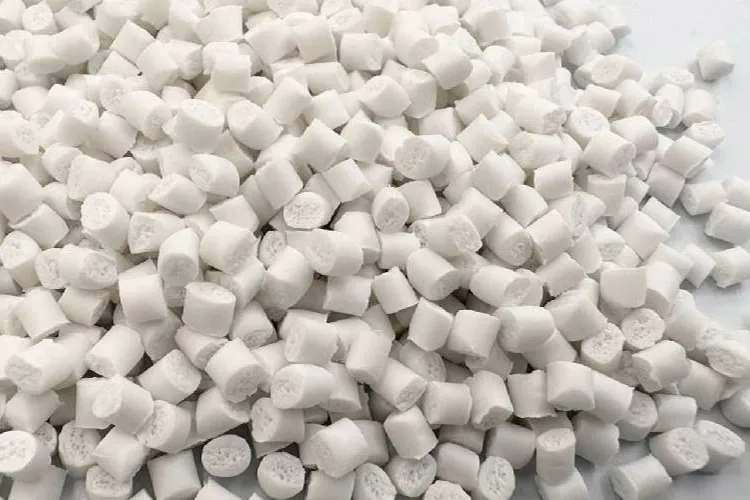
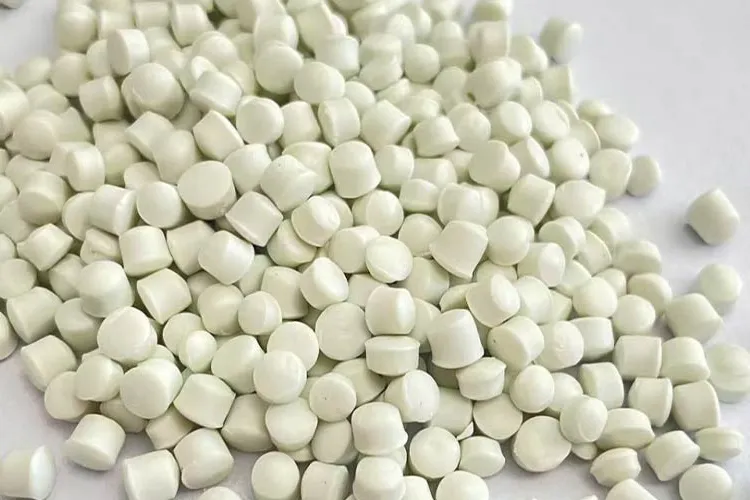
PP(ポリプロピレン)
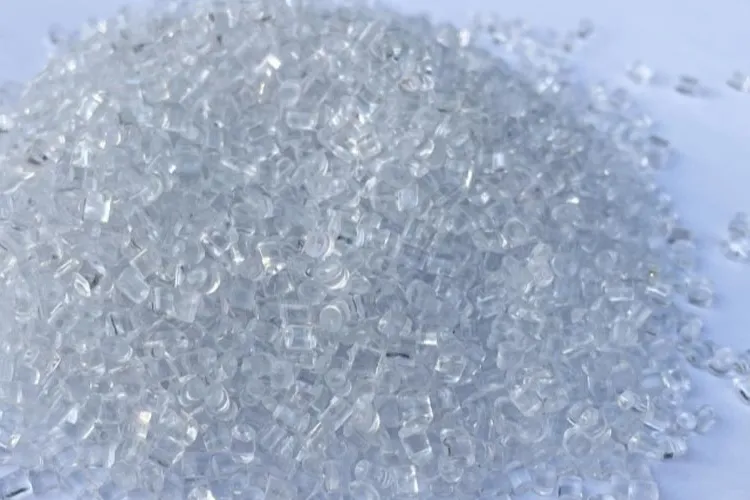
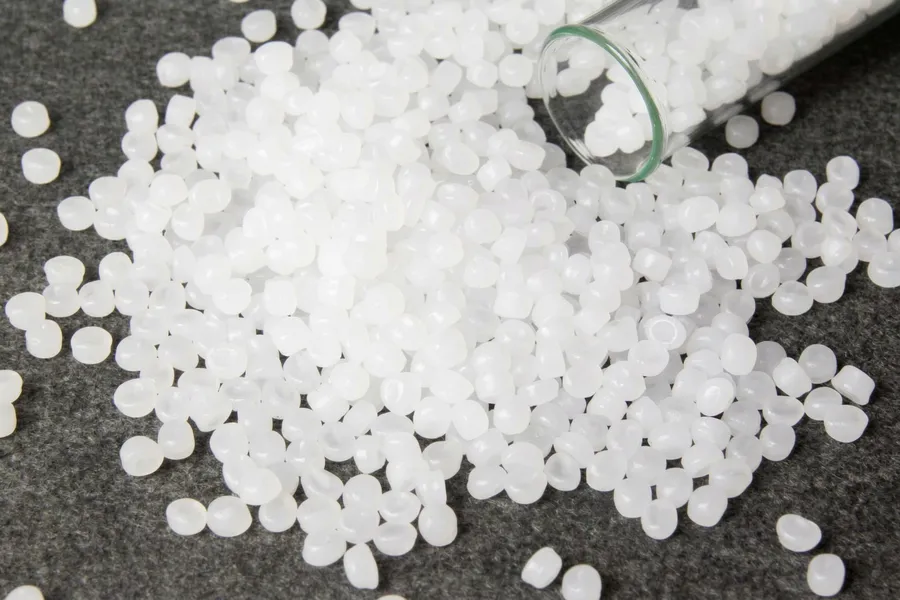
Polypropylene offers an excellent strength-to-weight ratio combined with good chemical resistance and a moderate processing temperature profile. It is particularly suited for daily chemical and cosmetic containers that require both flexibility and structural rigidity. PP's natural translucency and ability to accept colorants across the full spectrum makes it versatile for brand color programs. As a material option for the daily chemical blow molding machine, PP supports the production of refillable containers, dispensing bottles, and application-specific packaging with integrated functional elements like handles and grips.
PE(ポリエチレン)
Polyethylene, encompassing both LDPE and LLDPE grades, provides exceptional flexibility, moisture barrier properties, and ease of processing on this plastic blow molding machine. LDPE is widely used for squeeze bottles, travel-size containers, and flexible packaging formats in the cosmetic and personal care sectors. Its softness allows products to be dispensed by squeezing the container directly. LDPE bottles maintain flexibility even at low temperatures, making them suitable for cosmetic products sold in colder climate markets across Europe, North America, and East Asia.
PC(ポリカーボネート)
Polycarbonate delivers exceptional impact resistance and high-temperature tolerance that makes it suitable for reusable cosmetic containers, professional hair care packaging, and salon-grade product bottles that must withstand repeated use and sterilization cycles. PC's exceptional optical clarity rivals glass in finished container appearance, supporting premium brand positioning for luxury cosmetic lines. Where product formulations are compatible with PC chemistry, this material raises the perceived value of the packaging significantly, allowing cosmetic manufacturers to target higher retail price points with their finished product ranges.
PS(ポリスチレン)
Polystyrene, particularly in its oriented form, provides good clarity and a smooth surface finish suitable for cosmetic and personal care containers in the value and mass-market segments. Its ease of processing and low material cost make PS an economical option for high-volume daily chemical packaging where transparency and reasonable surface quality are required but premium optical performance is not the primary specification. PS accepts printing and labeling readily, supporting the decoration requirements of mass-market cosmetic packaging produced in large volumes for retail chains and private-label programs.
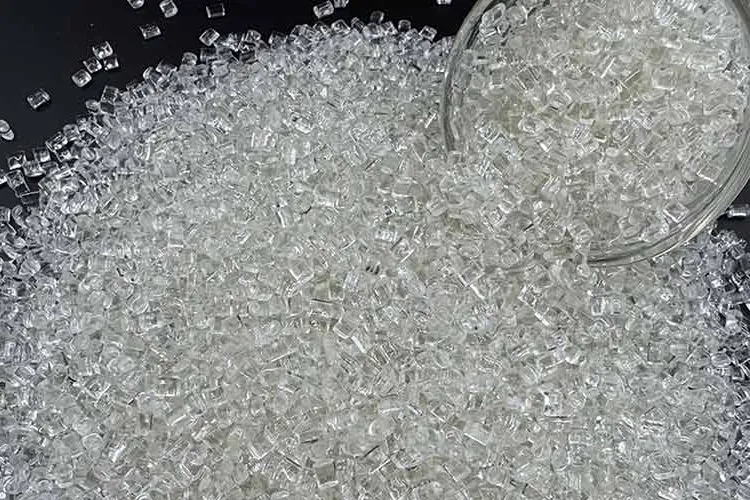
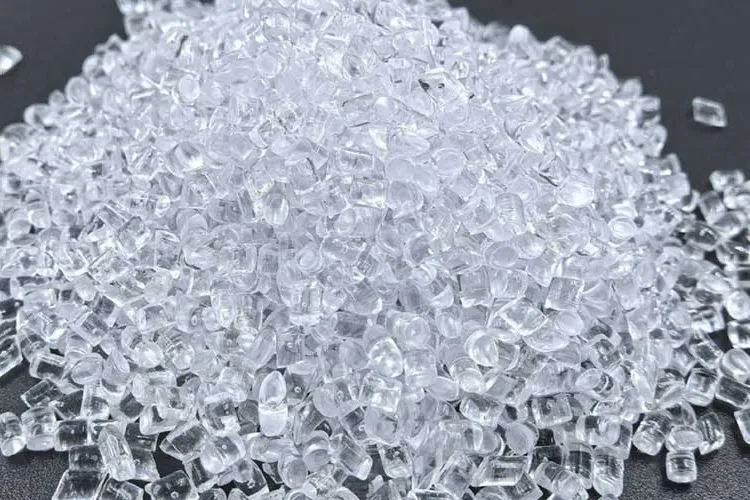
PET(ポリエチレンテレフタレート)
PET is the primary material for the EPA.ES-3C114 PET blow molding machine. Its combination of exceptional clarity, high strength, lightweight structure, and excellent gas barrier properties makes it the material of choice for premium cosmetic, personal care, and beverage bottles. PET produces bottles with a glass-like appearance that enhances product presentation on retail shelves. Its recyclability also supports sustainability objectives that cosmetic brands increasingly communicate to consumers as part of their product positioning and environmental responsibility programs.
PETG(ポリエチレンテレフタレートグリコール)
PETG is the preferred material for high-end cosmetic packaging requiring enhanced clarity, superior toughness, and greater design flexibility compared to standard PET. It processes at lower temperatures than PET, reducing thermal stress on the blow mold. PETG accepts metallic and tinted coloration more readily, supports deep embossing and unique tactile surface textures, and offers strong chemical resistance to alcohol-based cosmetic formulations. As a custom blow molding machine material option, PETG expands the range of premium packaging designs achievable on the EPA.ES-3C114 platform.
HDPE(高密度ポリエチレン)
HDPE is widely used for opaque daily chemical bottles including laundry detergents, household cleaners, and personal care products where chemical resistance and container rigidity are the primary requirements. Its excellent resistance to temperature changes, acids, and bases makes it suitable for a broad range of cleaning product formulations. HDPE is also among the most widely recycled plastics globally, supporting regulatory compliance and brand sustainability programs in markets where extended producer responsibility legislation governs packaging material choices for daily chemical manufacturers.
PVC (Polyvinyl Chloride)
PVC is less commonly specified for new cosmetic packaging programs today due to evolving environmental regulations in major markets, but it remains in use for certain cleaning product containers where specific chemical resistance properties are required and where alternative materials do not meet formulation compatibility requirements. For buyers evaluating raw material options on their blow molding machine suppliers shortlist, PVC compatibility should be confirmed against local packaging regulations and retailer material restrictions before inclusion in a new product packaging specification program in key export markets.
 |
 |
 |
 |
 |
 |
射出ブロー成形と押出ブロー成形の比較
Buyers evaluating blow molding machine manufacturers often face a foundational process selection decision: injection blow molding (IBM) or extrusion blow molding (EBM). Both processes create hollow plastic containers, but they form the starting shape in entirely different ways. Understanding this distinction is essential before specifying any automatic blow molding machine for a new production line.
Injection blow molding starts from an injection-molded preform. Molten plastic is injected around a core rod to form a precise preform and neck finish. The preform then moves to the blow station and is inflated inside the bottle mold. The finished bottle is removed without trimming flash. In British English the same process is often referenced as injection blow moulding.
Extrusion blow molding starts from a continuously extruded parison. The mold closes around the hollow tube and pinches off excess material. High-pressure air forms the bottle inside the mold, and flash must be trimmed after cooling. This process difference fundamentally affects neck precision, wall thickness control, trimming waste, and the type of container each process can produce economically.
| 特徴 | 射出ブロー成形(IBM) | 押出ブロー成形(EBM) |
|---|---|---|
| 開始フォーム | 射出成形プリフォーム | 押し出し成形パリソン |
| ネックプレシジョン | Extremely high; neck is pre-molded by injection | Standard; depends on mold closing and neck calibration |
| スクラップ/廃棄物 | Zero flash and very low process waste | トリミングとリサイクルが必要なフラッシュを生成する |
| 最適な容器サイズ | Small to medium precision bottles (30ml to 1,500ml) | Medium to large hollow containers and industrial parts |
| 金型費用 | Higher upfront investment for precision tooling | Lower initial mold costs for large hollow containers |
| 最適なアプリケーション | Pharmaceutical, cosmetic, lab, medical packaging | Jerry cans, drums, tanks, large industrial containers |
| 品質優先 | 寸法の一貫性とシール性能の信頼性 | サイズの柔軟性とコンテナ容積の経済性 |
射出ブロー成形を選択するタイミング
- Small and medium precision bottles with accurate threaded necks
- Pharmaceutical, medical, cosmetic, laboratory, or high-value packaging applications
- Production environments requiring zero flash waste and clean operation without secondary trimming
- Applications demanding stable bottle dimensions, repeatable wall thickness, and reliable closure sealing
- PET and PETG bottle production for cosmetic and daily chemical packaging
When to Choose Extrusion Blow Molding
- Large bottles, jerry cans, drums, tanks, and complex hollow industrial parts
- Applications where lower tooling cost is a priority over highest neck precision
- Wide product geometry variety including handled containers and asymmetric shapes
- Applications where trimming flash is an acceptable part of the production process
Cost Perspective: EBM equipment can carry a lower initial purchase price for large containers, but the total production cost calculation must also include resin loss from flash trimming, secondary labor, reject rates, and downstream handling. For precision cosmetic bottles where IBM reduces waste and quality risk, the total cost of ownership over a multi-year production period often favors the IBM process even when initial machine and mold investment is higher. For large industrial containers, EBM typically remains the more economical process choice. Materials used across both processes include HDPE, PP, LDPE, PET, PETG, and PVC, with material choice always validated against bottle geometry, regulatory requirements, and sealing specifications.
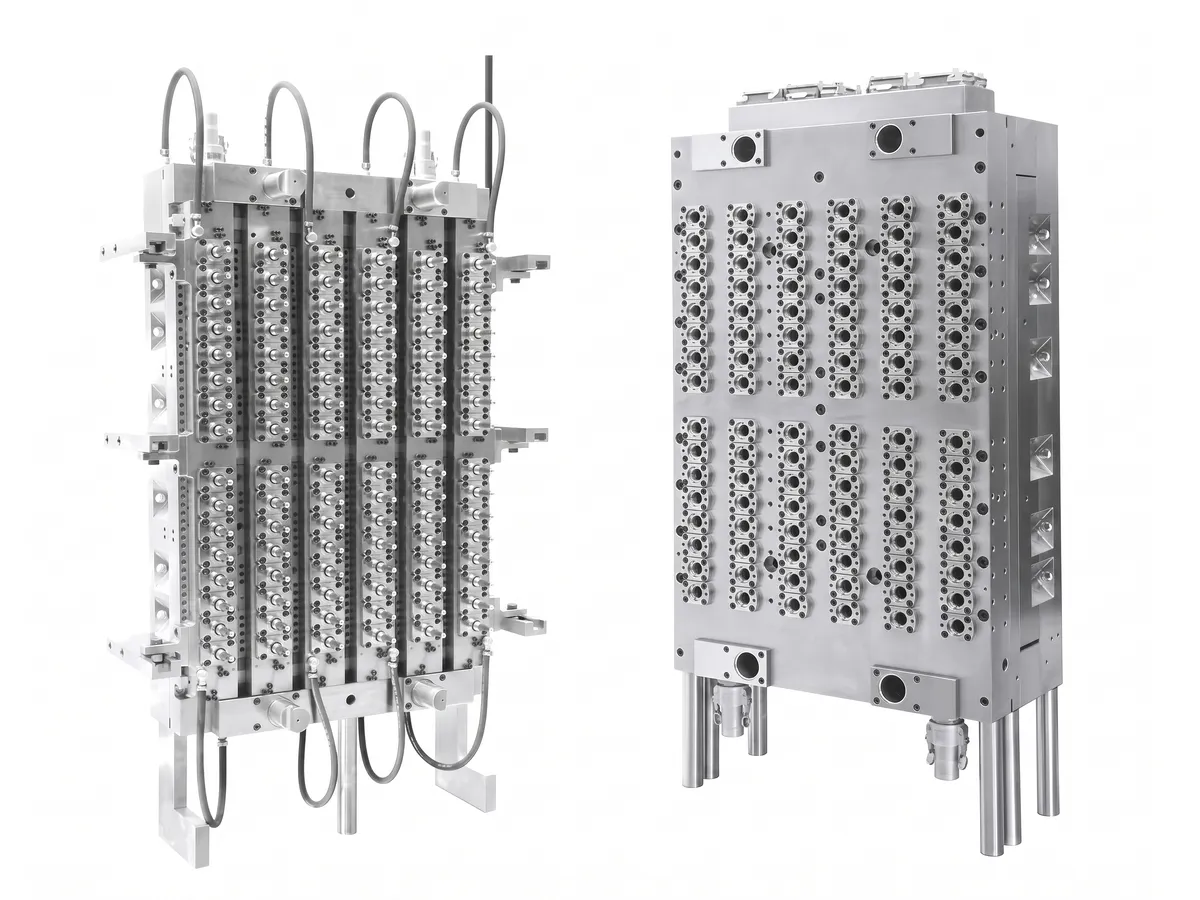
化粧品ボトルブロー成形機金型の特徴
プリフォーム射出成形金型
- The two-part die lip design guarantees coaxial alignment between the preform and the neck finish during every injection cycle, eliminating the neck eccentricity that causes closure sealing failures in finished bottles.
- Optimized cooling water channel geometry improves preform cooling efficiency and ensures rapid cycle times without compromising dimensional stability in the cooled preform wall.
- Preform-forming components use imported 2316 die steel, which is inherently rust-resistant and has undergone heat treatment to achieve the hardness and dimensional stability required for precision cosmetic bottle neck production.
- Core plate, cavity plate, and other structural components use 420 stainless steel, providing excellent corrosion resistance in the humid, temperature-cycled environment of continuous injection mold operation.
- The maintenance-accessible design reduces mold servicing time during scheduled maintenance intervals, minimizing production downtime on this blow molding machine platform.
- Standard interchangeable die fittings across the mold range reduce spare parts inventory requirements and allow cross-utilization of components between compatible mold sets.
- Advanced modular mold design allows a single mold set to produce more than one preform variant, increasing tooling investment efficiency for manufacturers with multiple bottle SKUs.
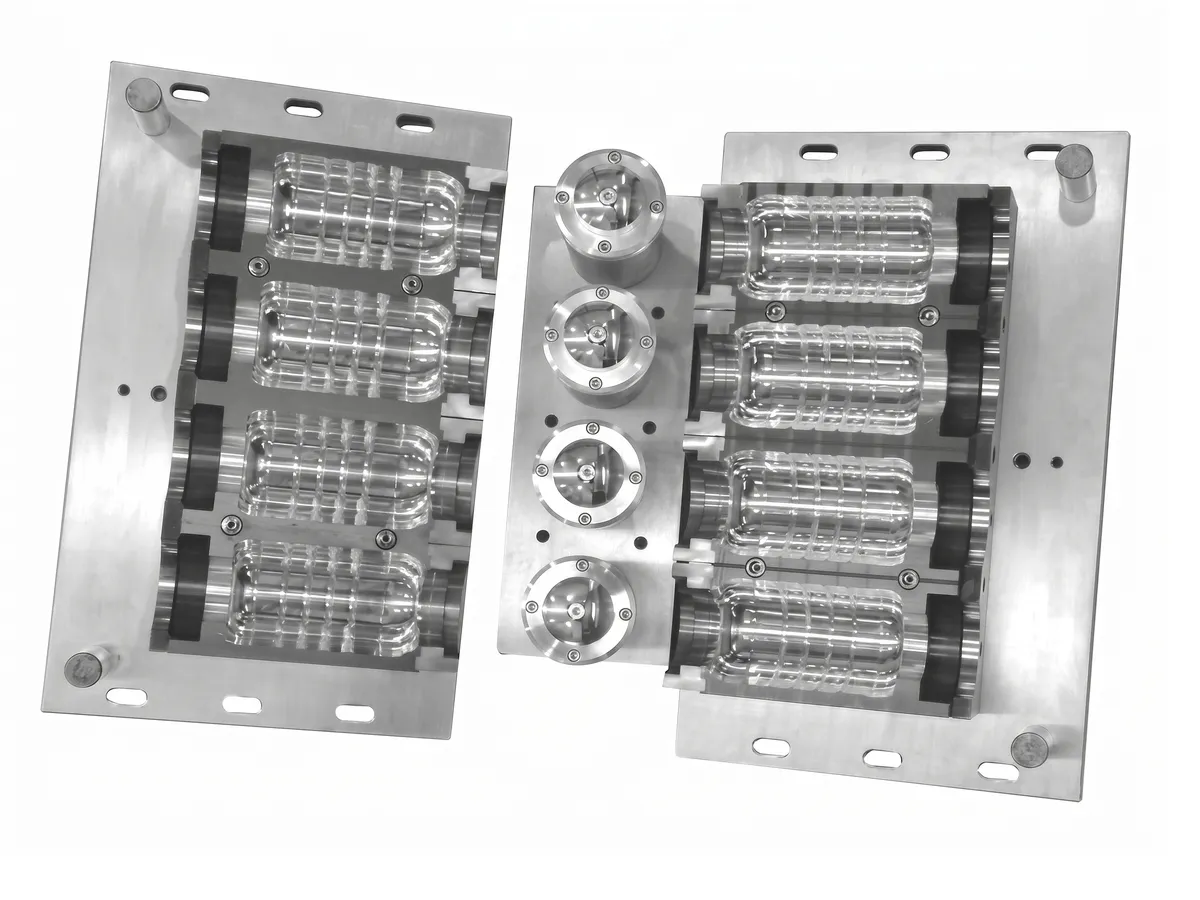
吹き込み型
- Blow mold bodies are manufactured from high-quality steel selected for its thermal conductivity, machinability, and resistance to the fatigue stresses generated by repeated high-pressure blowing cycles at 35 kg/cm2.
- All plastic bottle cavity geometries are designed using advanced 3D CAD and simulation software, ensuring that cavity shapes achieve the target wall thickness distribution before the first physical mold is cut.
- A broad range of standard and custom bottle designs is available for selection, allowing buyers to start production with proven cavity geometries while specifying custom cavities for proprietary bottle shapes.
- Cooling water channels within the blow mold body are designed to deliver uniform temperature distribution across the entire cavity surface, preventing hot spots that cause uneven crystallinity and dimensional variation in finished bottles.
- All structural metal components in the blow mold assembly are machined on CNC machining centers, ensuring dimensional accuracy and surface finish consistency that would not be achievable with conventional machining methods for precision cosmetic bottle blow molding machine tooling.
- Mold parting surface precision and surface texture are optimized to minimize parting line marks on finished bottle exterior surfaces, reducing secondary cosmetic rejection rates for premium cosmetic packaging production runs.
 |
 |
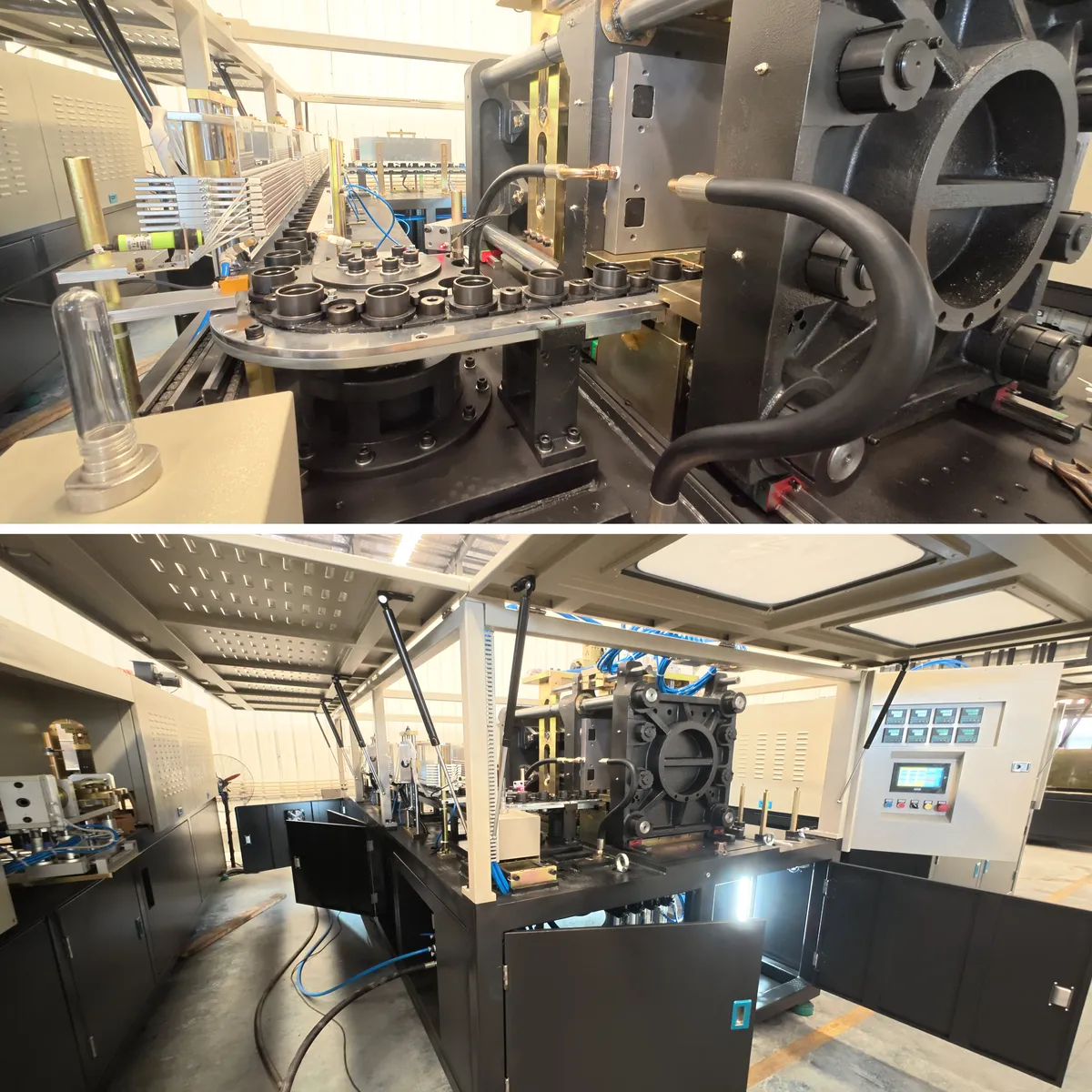
EPA.ES-3C114 Plastic Blow Molding Machine Operating Precautions
1. Pre-Startup Inspection Protocol
Before every production startup, operators must conduct a systematic inspection of all mechanical connections, lubrication points, and fastener torque levels. Verify that cooling water supply is active and within the specified 5 to 6 kg/cm2 pressure range and 8 to 12 degree Celsius temperature range. Confirm that air supply lines are secure and that both low-pressure and high-pressure systems are functioning correctly. Check electrical panel indicators for any fault codes from the previous production session before initiating the startup sequence. This pre-startup routine prevents equipment damage and ensures operator safety on the fully automatic blow molding machine.
2. Preform Quality and Material Verification
Only use PET or PETG preforms that meet the specifications confirmed during mold qualification testing. Verify preform weight, IV (intrinsic viscosity), moisture content (maximum 50 ppm for PET), and dimensional consistency before loading each new batch. Using out-of-specification preforms is the single most common cause of bottle defects, burst failures in the blow station, and mold damage in a PET bottle blow molding machine. Pre-dry all PET preforms at 160 to 180 degrees Celsius for a minimum of 4 hours to prevent hydrolytic degradation during processing, which permanently reduces polymer molecular weight and compromises finished bottle mechanical properties.
3. Temperature Parameter Management
Heating zone temperatures must be set and verified against the approved process parameter sheet for each bottle format and preform design. Never override automatic temperature safeguards or run the blow molding machine with heating zones that have not reached setpoint temperature. Overheated preforms cause premature crystallization and whitening; underheated preforms cause burst failures in the blow station or produce bottles with unacceptable wall thickness distribution. Record heating zone setpoints and actual temperatures at the start of each production run as part of the batch quality documentation required for cosmetic manufacturing compliance programs.
4. Air Pressure System Safety
The EPA.ES-3C114 operates with blowing pressures up to 35 kg/cm2, which represents a significant stored energy hazard. All personnel must maintain safe distances from the blow station during active production. Never attempt to open the blow mold manually during a cycle or insert tools into the mold area while the machine is running. Verify pressure relief valves are functional and set to the correct relief pressure before startup. Inspect all high-pressure air hoses, fittings, and connections for wear, cracking, or leakage on a daily basis, and replace any components showing deterioration immediately to prevent pressure release incidents on the production floor.
5. Mold Changeover Procedures
Mold changeovers on the EPA.ES-3C114 must be performed following the documented lockout-tagout energy isolation procedure. Allow the blow mold to cool to below 40 degrees Celsius before handling. Use the correct lifting tools and personnel team size specified in the maintenance manual for mold weights. After installing a new mold, verify that all cooling water connections are secure and leak-free before initiating a trial cycle. Run a slow-speed trial sequence and inspect the first 20 bottles from each cavity before releasing to full production speed. Document changeover completion time and first-article inspection results in the production log as part of the blow molding machine process quality record.
6. Routine Maintenance and Lubrication Schedule
Follow the manufacturer-prescribed lubrication schedule for all guide rails, cam tracks, stretch rod linear bearings, and preform transfer mechanisms. Use only the specified lubricant grades to avoid contaminating product contact surfaces or causing accelerated component wear. Clean heating lamps and reflector surfaces at the scheduled interval to maintain heating efficiency and prevent uneven preform temperature profiles. Replace worn seals, O-rings, and blow valve components at the intervals specified in the maintenance schedule rather than waiting for visible failure. Proactive maintenance on this industrial blow molding machine significantly extends component life and prevents unplanned production stoppages that generate disproportionate costs in high-output packaging operations.
How to Select the Right Blow Molding Machine
1. Define Your Container Volume Range
The first specification parameter for any blow molding machine selection is the target container volume range. The EPA.ES-3C114 covers 30ml to 1,500ml, making it ideal for cosmetic and personal care bottles. If your product range extends to 5,000ml or beyond, consider models in the 4-cavity series or food jar category from the Ever-Power range. Matching machine container capacity to your product portfolio ensures that you are not running an oversized machine at reduced efficiency or attempting to produce containers outside the equipment's design parameters, both of which increase per-unit production costs and quality risk.
2. Match Cavity Count to Output Requirements
Cavity count directly determines the output rate of any automatic blow molding machine. The EPA.ES-3C114's 3-cavity configuration delivers 2,400 bph at rated speed. Calculate your required annual output, account for planned downtime and changeover hours, and work backward to determine the minimum cavity count and machine speed that meets your production plan. If output requirements significantly exceed this model's rated capacity, evaluate the 4-cavity and 6-cavity models from the same product series. Over-specifying cavity count increases capital cost without proportional operational benefit for smaller production volumes.
3. Confirm Material and Process Compatibility
Verify that the blow molding machine suppliers you are evaluating can confirm compatibility between the machine and your specific resin grades. The EPA.ES-3C114 is designed and validated for PET and PETG, which cover the vast majority of cosmetic and daily chemical packaging applications. If your product requires PP, HDPE, or specialty engineering resins, evaluate whether the machine's heating system and process parameters support those materials. Material incompatibility discovered after purchase is an expensive problem that requires either accepting suboptimal bottle quality or investing in machine modifications that may not be technically feasible.
4. Evaluate Bottle Shape Complexity
Evaluate whether your target bottle shapes require standard cylindrical geometry or complex irregular profiles. Not all plastic blow molding machine platforms handle high-complexity shapes equally. The EPA.ES-3C114 is specifically engineered for complex, irregularly shaped cosmetic bottles that challenge standard equipment. If your product portfolio includes unique contoured bottles, oval cross-sections, deep grip recesses, or complex shoulder geometries, confirm that the supplier has produced similar shapes on the specific machine model you are evaluating, and request sample bottles and technical validation data before committing to a purchase decision.
5. Assess Energy Consumption and Operating Cost
The total cost of machine ownership over a five to ten year production life includes purchase price, installation, tooling, maintenance, and electricity consumption. Servo-driven fully automatic blow molding machine platforms like the EPA.ES-3C114, with 18kW working heating power versus the 40kW maximum, offer significant energy efficiency advantages over older hydraulic systems. Request energy consumption data at rated output for each machine you evaluate and model the 5-year electricity cost at your facility's local energy tariff. Energy cost difference between machine generations often exceeds the initial purchase price premium of newer servo-driven equipment in high-utilization production environments.
6.アフターサービスとスペアパーツの入手可能性を評価する
For any industrial blow molding machine investment, after-sales support capability is as important as machine performance specifications. Verify that the supplier maintains spare parts inventory for critical wear components including blow valves, stretch rods, preform holders, heating lamps, and drive belts. Confirm maximum committed response time for technical support and on-site service for your region. Evaluate the completeness and language quality of the machine manual and process setup documentation. A machine that produces well but loses two weeks of production awaiting spare parts delivers a much lower return on investment than the initial purchase cost calculation suggested.
Ever-PowerのPETブロー成形機を選ぶ理由とは?
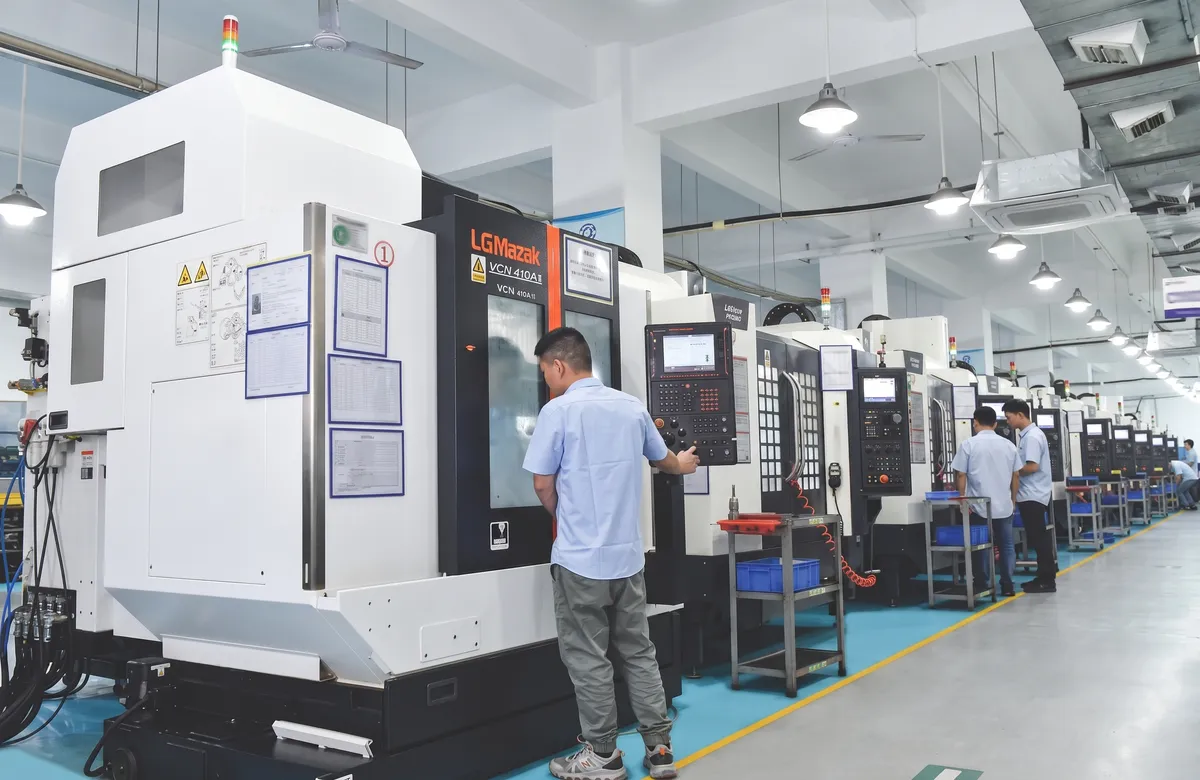
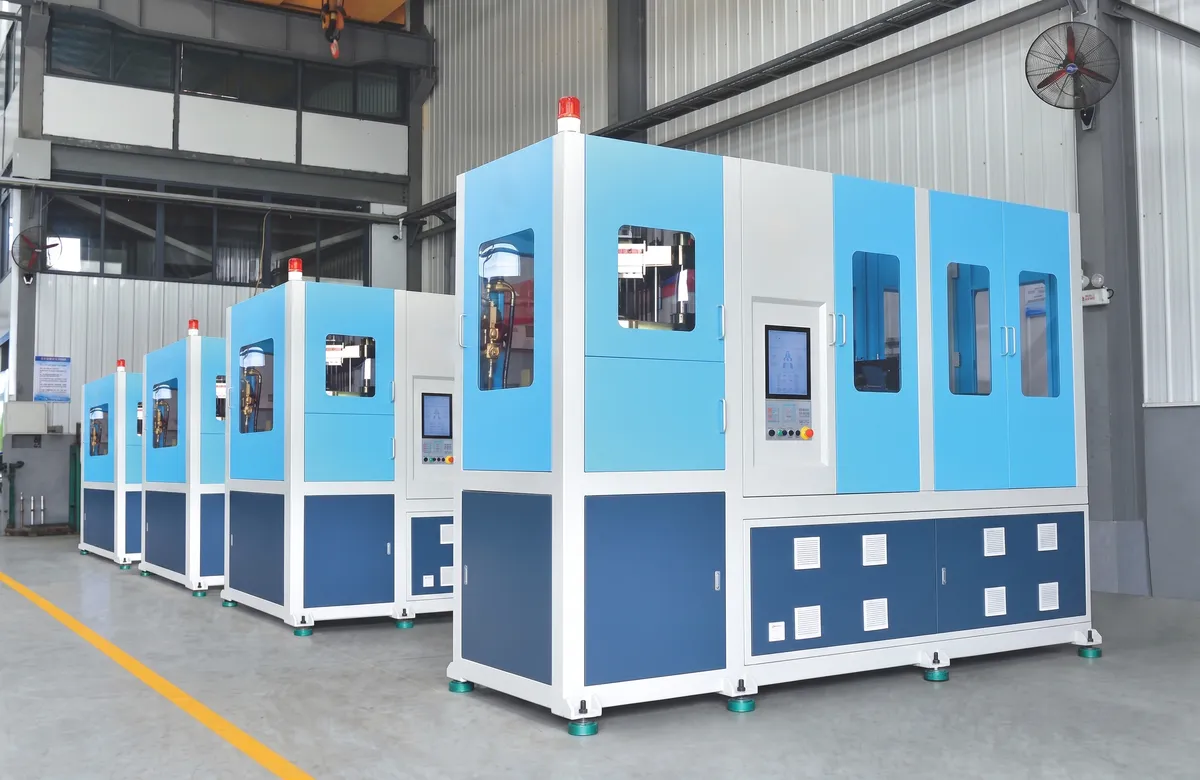
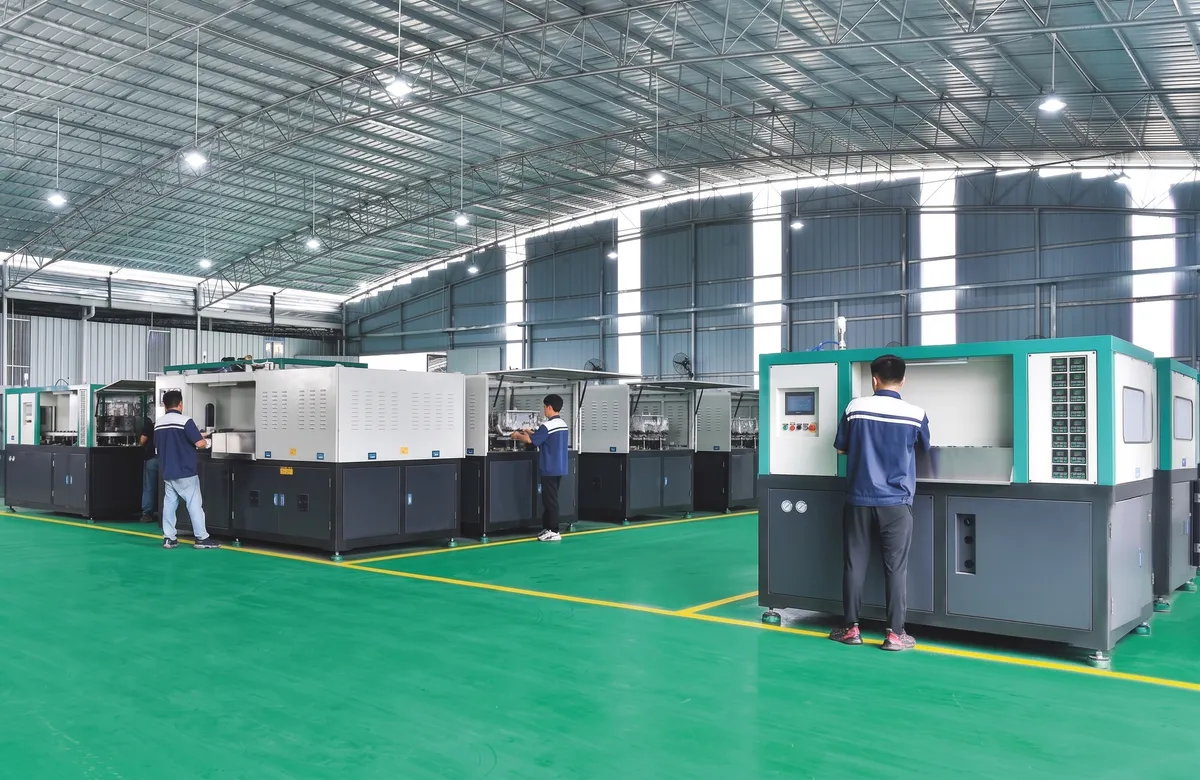
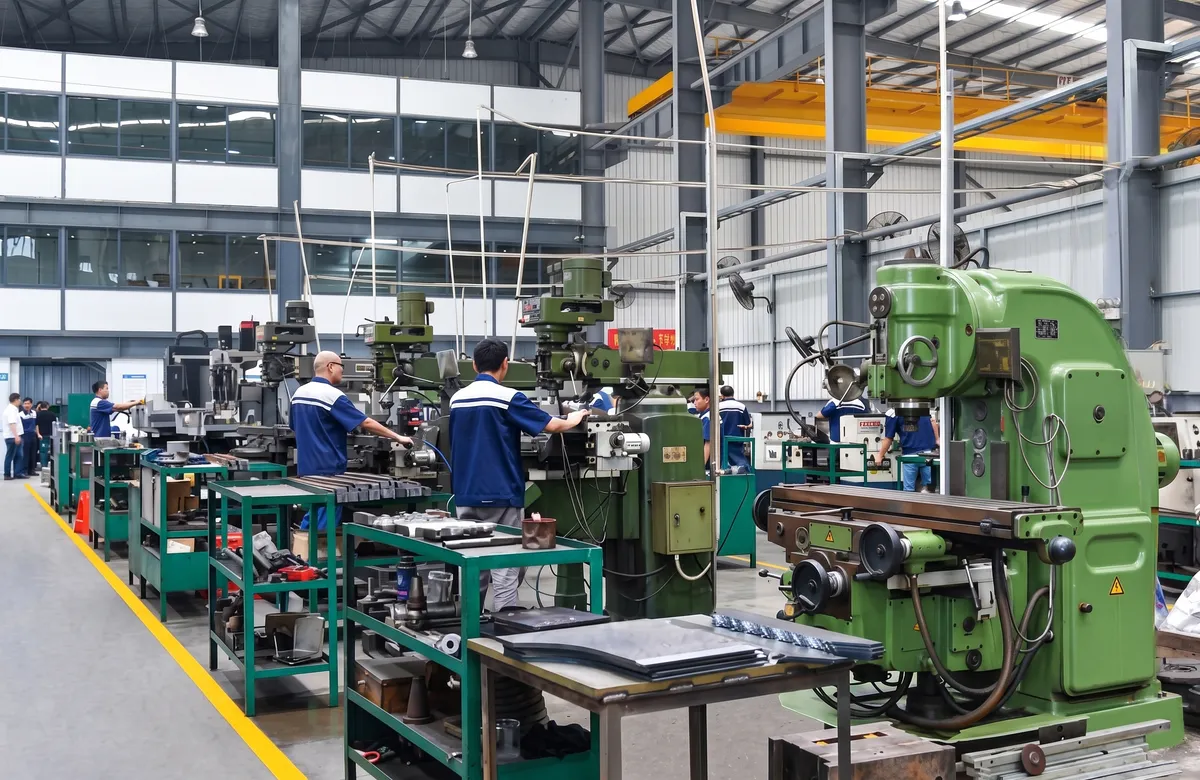
Mexico Ever-Power ISBM Machinery Co., Ltd is a specialist company dedicated to the research and development, production, sales, and international trade of fully automatic blow molding machines. Our product range encompasses injection blow molding machines, extrusion blow molding machines, injection stretch blow molding machines, and auxiliary machinery, giving buyers a complete solution source for any hollow plastic container manufacturing requirement.
Ever-Power maintains an excellent R&D team that brings together experienced engineers and technical personnel who have spent their careers specializing in injection-blowing machinery and injection-blowing mold development. With deep theoretical knowledge and extensive practical experience across hundreds of production deployments, our technical team provides the detailed, application-specific guidance that generic blow molding machine manufacturers cannot match. We deliver thorough pre-sale technical consultation, responsive in-sale support, and committed after-sale service to every customer globally.
Our product applications cover pharmaceutical packaging, food packaging, health care packaging, and cosmetic packaging, encompassing all major plastic packaging categories. We produce and support equipment capable of handling HDPE, LDPE, PET, PETG, PP, PS, PPSU, PC, Tritan, ABS, PLA, environmental corn materials, EVA, PCTG, and other specialty resins across container volumes from 1ml to 1,000ml and beyond. This breadth of material and application expertise means that regardless of your product category or packaging specification, Ever-Power has the technical knowledge to advise you on the optimal machine configuration for your requirements.
Ever-Power adheres to the enterprise development principles of self-reliance, integrity, pragmatism, innovation, and responsibility. We build one-stop turnkey projects to produce high-end injection-blowing products that meet the quality standards our customers require, with manufacturing quality and consistency that earns lasting partnerships with cosmetic, pharmaceutical, food, and daily chemical packaging manufacturers worldwide. Cooperating with globally recognized brands including C'ESTBON, Haitian, Luhua, Walch, Blue Moon, PROYA, Liby, Estee Lauder, Walmart, Dasenlin, and Shanliang Eye Drops confirms the quality level that Ever-Power delivers as a committed long-term blow molding machine supplier partner.
 |
 |
 |
 |
 |
 |
よくある質問
Q: What is the maximum bottle size the EPA.ES-3C114 blow molding machine can produce?
A: The EPA.ES-3C114 produces containers up to 1,500ml in volume, with a maximum container diameter of 95mm and a maximum height of 250mm in standard configuration or 330mm with the extended stretching stroke option. The neck diameter range is up to 40mm, covering the standard closures used in cosmetic and daily chemical packaging. For containers larger than 1,500ml, the 4-cavity or multi-cavity models in the same Ever-Power product series cover volumes up to 15,000ml and beyond, depending on model selection and configuration.
Q: What materials can the EPA.ES-3C114 automatic blow molding machine process?
A: The EPA.ES-3C114 is specifically engineered and optimized for PET and PETG materials, which are the dominant resins in cosmetic and daily chemical bottle production. PET delivers exceptional clarity, strength, and barrier properties for premium cosmetic packaging. PETG offers enhanced design flexibility, superior toughness, and excellent compatibility with tinted and metallic colorants for luxury cosmetic brands. If your application requires PP, HDPE, or other resins not in this list, please contact our technical team to discuss alternative models in the Ever-Power range that may better match your specific material requirements and bottle designs.
Q: What is the actual production output of the EPA.ES-3C114 PET bottle blow molding machine in real manufacturing conditions?
A: The rated theoretical output is 2,400 bottles per hour across 3 cavities. In real manufacturing conditions, actual output typically ranges from 90% to 97% of rated capacity depending on preform quality consistency, bottle shape complexity, resin grade, and ambient conditions. Customer feedback consistently reports sustained output between 2,250 and 2,380 bph in well-maintained facilities with quality-controlled preform supply. Building in a 5% to 10% efficiency buffer when calculating annual production capacity for factory planning purposes is recommended for conservative financial modeling of the machine investment.
Q: What air compressor capacity is required for the EPA.ES-3C114 automatic blow molding machine?
A: The EPA.ES-3C114 requires a low-pressure air supply at 7 kg/cm2 with a consumption of 1,500 ltr/min, and a high-pressure blowing air supply at 35 kg/cm2 with a consumption of 3,200 ltr/min. Compressor sizing should add a margin of at least 20% above these rated consumption figures to account for pressure drops in distribution pipework and to handle startup demand peaks without starving the blow station. For most installations, a dedicated high-pressure booster compressor system is recommended alongside the low-pressure facility air supply. Our technical team can provide specific compressor sizing guidance based on your facility piping configuration and existing compressed air infrastructure.
Q:EPA.ES-3C114ブロー成形機の設置と試運転にはどのくらい時間がかかりますか?
A: EPA.ES-3C114 の標準的な設置および試運転期間は、設備の準備状況、ユーティリティの利用可能性、金型が事前認定済みか現場での調整が必要かによって、5~10 営業日です。圧縮空気、冷却水、電力供給を含むすべてのユーティリティが機械到着前に試運転済みで、試運転期間中にオペレーターが常時待機している施設では、この期間の最短日数で完了することが一般的です。Ever-Power は、徹底した起動プロセスを円滑に進めるための試運転サポートとオペレーター向けトレーニング資料を提供しており、購入パッケージに現場サポートが含まれていない設置の場合、試運転期間中はリモート技術サポートが利用可能です。
Q:EPA.ES-3C114化粧品ボトルブロー成形機は、不規則な形状のボトルを製造できますか?
A:はい、複雑で不規則な形状のボトルを製造することは、EPA.ES-3C114プラットフォームの特長の一つであり、製品仕様書にも明記されています。サーボ制御のストレッチロッドシステム、精密なブロー圧力管理、安定した冷却水温度制御により、楕円形の断面、非対称形状、深いグリップ凹部、輪郭のあるボディなど、従来の機械では製造が困難な非円筒形のボトル形状を安定して製造できます。複数の顧客が、競合他社の機械では製造できなかったボトル形状で、この能力を実証しています。特定の複雑なボトル設計の妥当性を検証するために、購入確定前にボトルの図面を技術レビューのために提出することをお勧めします。
Q:EPA.ES-3C114ブロー成形機の金型交換にかかる一般的な時間はどれくらいですか?
A:経験豊富なオペレーターであれば、EPA.ES-3C114の金型交換作業(ブロー成形金型の取り外し、新しい金型の取り付け、冷却水の再接続、パラメータ設定、初回品検査を含む)を通常2~4時間で完了できます。新しい金型設計での最初の交換作業では、初期パラメータの最適化にさらに時間がかかる場合があります。各ボトルフォーマットごとに事前に文書化されたパラメータ設定を含む金型保管を整理し、機械のレシピ保存機能を使用している施設では、交換時間をこの範囲の短い方で一貫して達成できます。化粧品や日用化学品の包装ラインで頻繁にフォーマット変更を行う施設には、専用の交換作業トレーニングと標準化された交換作業手順書の導入をお勧めします。
Q:EPA.ES-3C114ブロー成形機は、どのような認証および品質基準を満たしていますか?
A:Ever-Power Machinery社のプラットフォームをベースにしたEPA.ES-3C114は、国際的な品質基準に基づいて製造されています。Ever-Power Machinery社は複数の国内実用新案特許を保有しており、同社の認証証明書文書に示されているように、製品ラインナップの関連モデルについてCE認証を取得しています。輸入目的で特定の安全認証または文書を必要とする規制市場の購入者は、EPA.ES-3C114に適用される最新の認証文書パッケージを請求し、工業用ブロー成形機の輸入に関する仕向地市場の規制要件に関連する認証を確認するために、弊社の営業チームにお問い合わせください。
Q:EPA.ES-3C114は、化粧品包装用の他のブロー成形機と比べてどうですか?
A: 化粧品包装に使用される主なブロー成形機の中で、EPA.ES-3C114は2段階射出延伸ブロー成形機(ISBM)であり、自動ボトル生産において最高レベルの透明度、ネック精度、肉厚の一貫性を実現します。押出ブロー成形機(EBM)と比較すると、バリの発生がなく、ネック仕上げ精度に優れています。1段階射出ブロー成形機(IBM)と比較すると、2段階構造によりプリフォーム温度の最適化が容易になり、化粧品や日用化学品分野の生産量において高い生産率をサポートします。精密なクロージャー性能を備えたプレミアム透明PETまたはPETG化粧品ボトルを必要とするブランドにとって、2段階延伸ブロー成形プラットフォームは、包装品質と生産効率の両面で常に他の選択肢を凌駕します。
Q:EPA.ES-3C114ブロー成形機用に、現場にどのようなスペアパーツを在庫しておくべきですか?
A: EPA.ES-3C114 の推奨オンサイト予備部品在庫には、すべての加熱ゾーン用の赤外線加熱ランプ、ブローバルブシールとOリング、ストレッチロッドエンドチップ、プリフォームホルダースピンドル、低圧システムと高圧システム両方のエアフィルターエレメント、冷却水ソレノイドバルブ、および最も一般的なサーボドライブとPLCヒューズサイズが含まれます。これらの消耗が早く、重大な影響を及ぼす可能性のある部品を手元に用意しておくことで、メンテナンスチームは、国際的な予備部品の配送を待つことなく、最も一般的な生産中断を解決できます。機械をご購入いただく際には、当社の技術チームが、お客様の年間生産計画量とシフトパターンに基づいて、EPA.ES-3C114 専用の推奨予備部品リストを提供いたします。
顧客レビュー
ラジェシュ・パテル、デイリー・ケミカル・インダストリー、インド
「全体的に優れた機械です。昨年、ムンバイのシャンプーボトル製造ライン用にES-3C114モデルを購入しました。当社の環境では、生産量は安定して毎時2,300~2,350本程度で、定格の毎時2,400本に非常に近い値です。電気代は以前の機械と比べて明らかに安く、電気料金が高いこの地域ではこれは非常に重要な点です。一点だけ改善点を挙げるとすれば、販売前の連絡がもう少し迅速だと良いのですが、購入後の技術サポートチームは質問があるたびに迅速に対応してくれました。注文したスペアパーツは2週間以内に届き、当社の計画上許容範囲内です。今後、製造ラインを拡張する際には、間違いなくEver-Powerの機械を検討します。」
アナ・カルヴァーリョ、ブラジルの化粧品包装業界
「サンパウロ郊外にある当社工場では、ブラジルの複数の美容ブランド向けに化粧品ボトルを製造するため、この機械を3台稼働させています。Ever-Powerを選んだ理由は、不規則な形状のボトルに対応できるという評判でした。そして、その評判はまさにその通りでした。当社では、楕円形の断面を持つ美容液ボトルを製造しているのですが、テストした他の2つのメーカーの機械ではうまくいきませんでした。しかし、ES-3C114は初期設定後、大きな調整をすることなく、安定して製造できます。冷却水の温度制御が非常に安定しているため、不規則な形状のボトル製造に大いに役立っています。14ヶ月の稼働期間を経て、非常に満足しています。不良品率は1.2%以下で、このボトル形状において、これまで使用したどの機器よりも優れた結果です。」
Budi Santoso、パーソナルケア パッケージング、インドネシア
「輸送に関する物流調整は非常にスムーズでした。機械の重量が4,000kgもあったため、ジャカルタの当社施設への納期を心配していましたが、輸出書類は完全かつ正確で、機械は約束された期間内に予定通りに到着しました。試運転時にはリモート技術サポートが提供され、設置も順調に進みました。PETG製の300mlボディウォッシュボトルを約6ヶ月間製造していますが、透明度は非常に良好です。小売顧客からも、以前のサプライヤーのボトルと比べて外観が向上したと好評をいただいています。8~12℃の冷却水温度範囲の推奨は、当社のPETG製造条件にまさに最適でした。」
ミゲル・トーレス、メキシコ化粧品包装業界
「メキシコシティ近郊の工場に新設する化粧品包装ライン向けに、ブロー成形機のサプライヤー4社を評価した上で、Ever-Power社を選定しました。EPA.ES-3C114は価格競争力がありましたが、Ever-Power社を真に際立たせたのは、評価プロセスにおける技術サポートの対応でした。購入前に、当社独自のPETグレードに合わせた詳細なプロセスパラメータの推奨事項を提供していただいたことで、当社の用途を真に理解していると確信できました。150mlから800mlまでのローションボトルを製造し始めて5ヶ月が経過しましたが、パラメータ設定を保存しておけば、ボトルサイズの切り替えは簡単です。メンテナンスチームも機械の操作が容易だと感じており、定期点検時のサービスチームの作業効率向上に大きく貢献しています。」
グエン・ティ・ラン、ベトナムの契約包装業界
「私たちはハノイ近郊で中規模のパーソナルケア製品包装受託製造事業を営んでおり、約10ヶ月前に化粧品ボトル製造ラインに3台目の機械としてEPA.ES-3C114を導入しました。正直なところ、この機械の品質は、3年間大きな問題なく稼働している最初の2台のEver-Power製機械と遜色ありません。サーボ駆動システムは、以前使用していた旧型の油圧式機械よりも明らかに静かで、作業員の作業環境が改善されました。特に感銘を受けたのは、加熱ゾーンの安定性です。16時間シフトで稼働していますが、シフト全体を通して温度の安定性が非常に高く、品質サンプリングの頻度を減らし、品質管理に費やす時間を確保できています。投資額に見合う価値のある製品です。」
陳偉(中国化粧品包装業界)
「広州にある当社の化粧品包装工場でEPA.ES-3C114を約8ヶ月間稼働させていますが、正直なところ、これは最近の設備投資の中でも最良の選択の一つでした。当社では主に200mlから500mlのPET製トナーボトルとローションボトルを製造していますが、ボトルごとの品質のばらつきは非常に良好です。特にネック部の仕上がり精度は当社にとって重要です。なぜなら、厳しい公差が求められるポンプ式キャップを使用しているからです。導入以来、キャップからの液漏れによる不良品はほとんど発生していません。機械のセットアップはオペレーターのトレーニングを含めて約5日間で完了し、提供されたドキュメントは当社のエンジニアがほとんどのパラメータ調整を独自に行えるほど包括的でした。」
メフメト・ユルマズ、プレミアム化粧品パッケージング、トルコ
「当社はイスタンブールの工場で、ヨーロッパおよび国内の複数の美容ブランド向けに高級スキンケア製品のパッケージを製造しています。EPA.ES-3C114の購入を決定した主な理由は、ヨーロッパの顧客が高級製品の差別化のためにますます指定するようになった、不規則な形状のボトルに対応できる能力です。この機械は、9ヶ月間の生産期間中に12種類のボトルデザインで当社が要求したあらゆる複雑な形状に対応できました。加熱ゾーンセンサーに初期トラブルが発生した際、カスタマーサービスの対応は迅速で、交換部品は通関手続きを含めて9営業日以内に届きました。メキシコからの国際配送であることを考えると、これは許容範囲内です。全体として、当社の用途分野において信頼性の高い機械です。」
Sipho Dlamini、デイリーケミカルパッケージング、南アフリカ
「この機械をハウテン州の工場でほぼ1年間稼働させ、毎日化学薬品ボトルを生産しています。3,240mm×1,800mmの設置面積は、当社の工場レイアウトにおける重要な制約であった床面積にぴったり収まりました。200mlのハンドソープボトルで、毎時約2,380本の生産量を安定して維持しています。当初、毎分3,200リットルの高圧空気消費量に対応するエアコンプレッサーのサイズ選定についていくつか疑問がありましたが、技術チームから明確なガイダンスをいただき、適切なサイズのコンプレッサーを選定することができました。冷却システムはこれまで全く問題なく稼働しており、これは重要な点です。というのも、この地域の気温は夏季には水冷システムにとって厳しいものとなるからです。当社の生産要件を満たす、確かな性能を発揮する機械です。」
マリア・サントス、パーソナルケア製品パッケージング、フィリピン
「当社はマニラの工場で、東南アジアの複数のスーパーマーケットチェーン向けにプライベートブランドのパーソナルケアボトルを製造しています。老朽化した設備の代替として、7か月前にEPA.ES-3C114を導入しましたが、生産性が大幅に向上しました。以前の機械は同程度のキャビティ数で毎時約1,600本でしたが、毎時2,400本に増産したことで、稼働率が大幅に改善しました。生産量が増えたにもかかわらず、エネルギー消費量も減少しており、運用チームは特に喜んでいます。また、複数のPETグレードに対応している点も、顧客が様々な樹脂仕様を使用しているため非常に役立っています。今回の経験に基づき、来年度には2台目の導入を計画しています。」
追加情報
| 編集者 | Yjx |
|---|