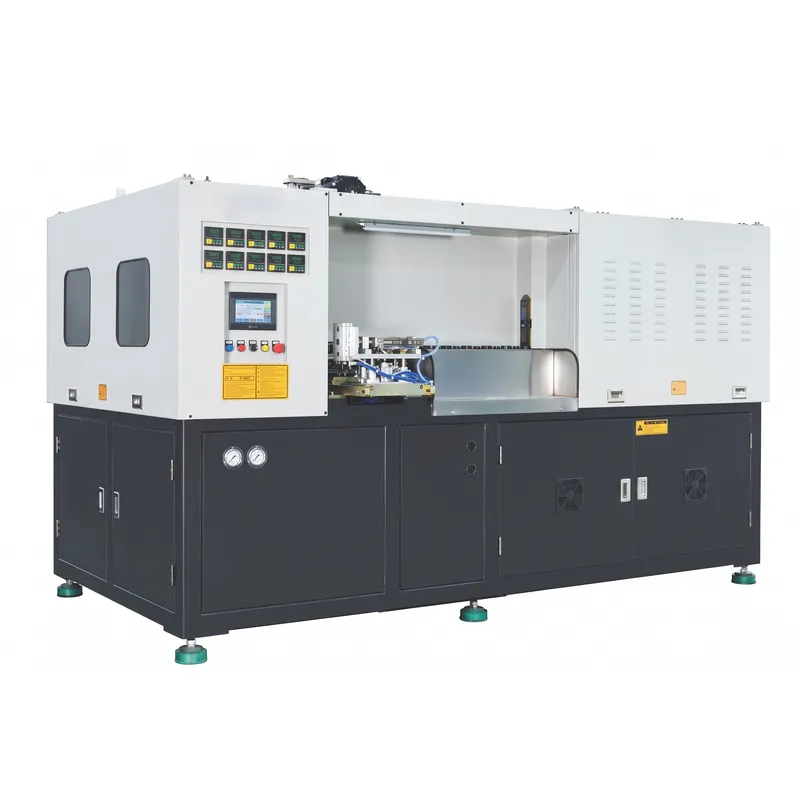
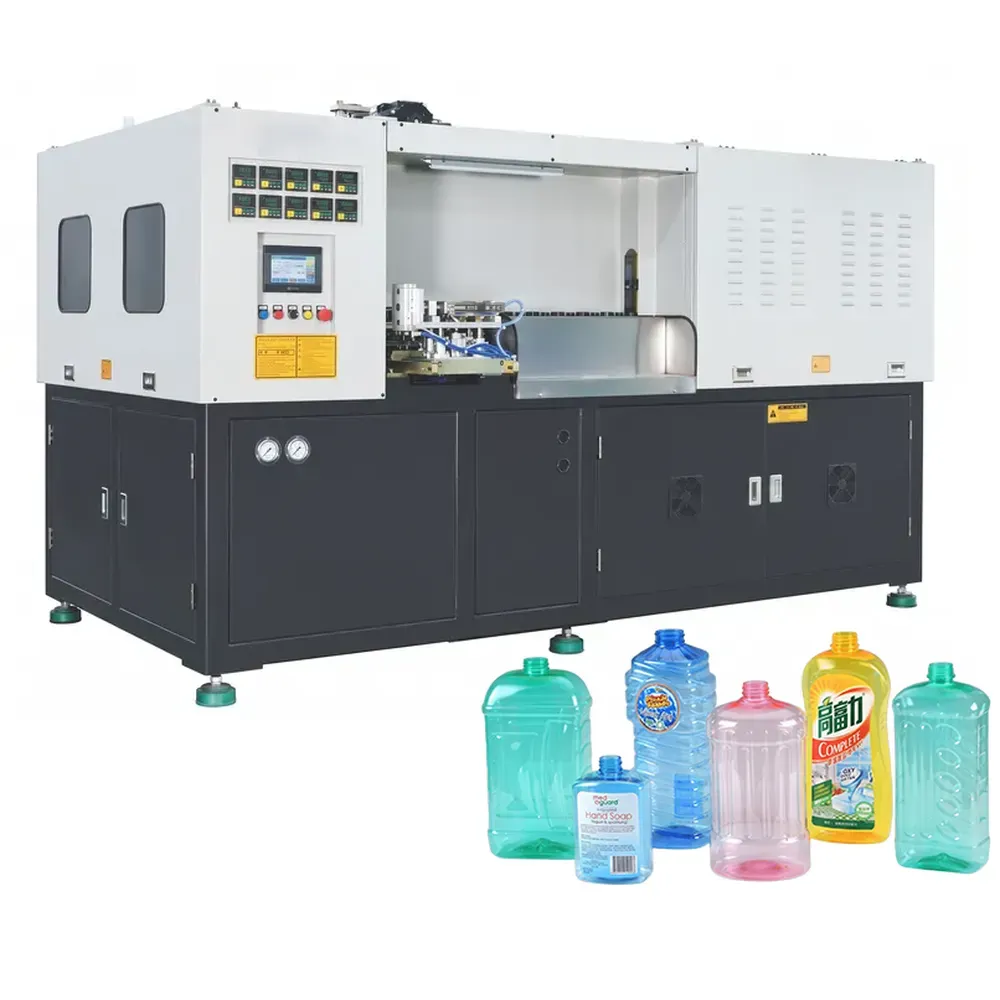
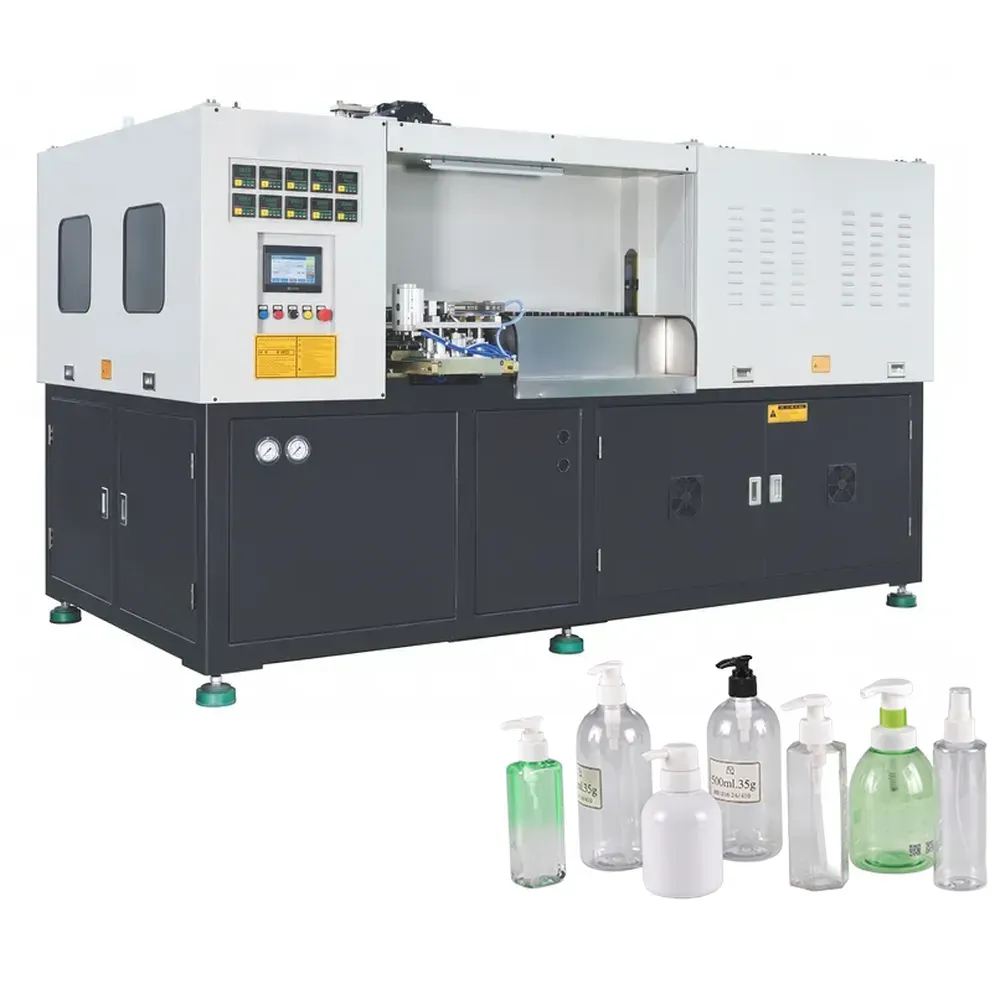
EPA.ES-3C114 Günlük Kimyasal ve Kozmetik Şişeleri için Tam Otomatik Şişirme Kalıplama Makinesi
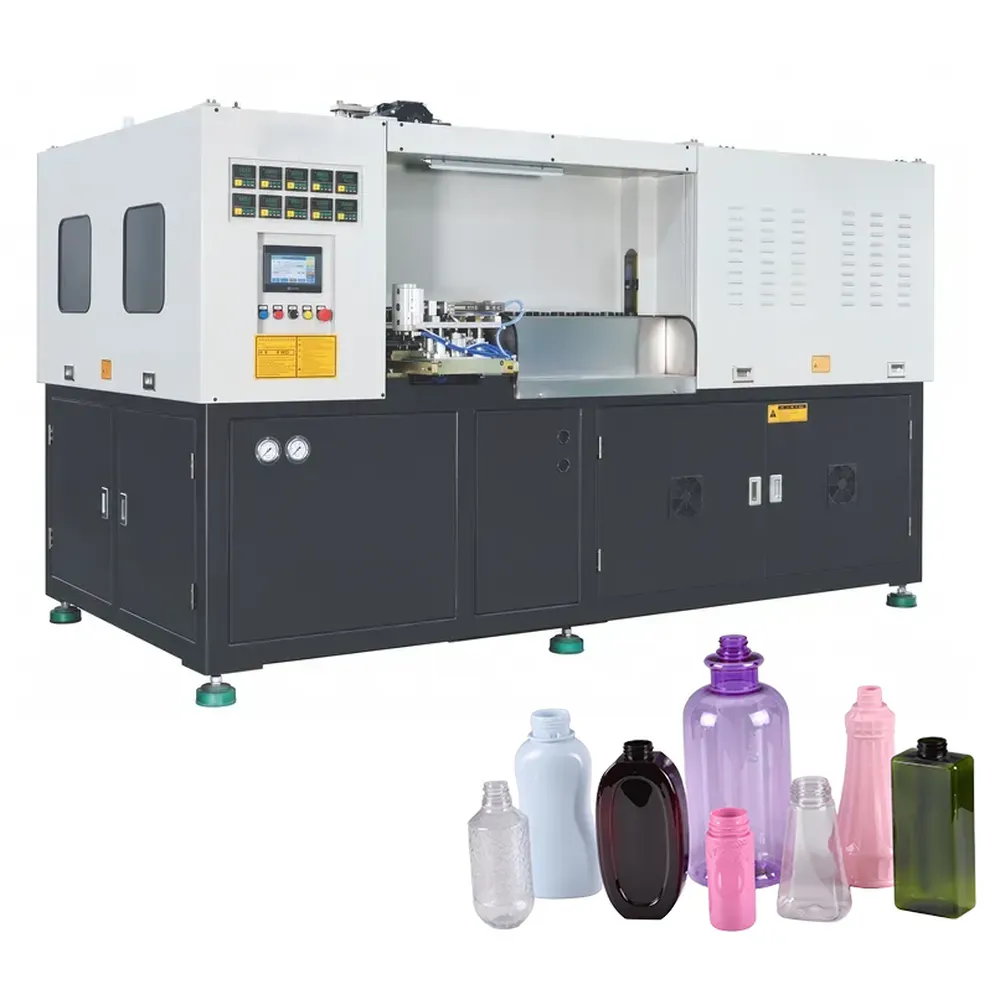
EPA.ES-3C114, günlük kimyasal ve kozmetik şişe üretimi için özel olarak tasarlanmış yüksek performanslı, tam otomatik bir şişirme kalıplama makinesidir. Uluslararası alanda tanınmış servo motorlar, hassas redüktörler ve gelişmiş elektrik kontrol sistemleri etrafında inşa edilen bu otomatik PET şişirme kalıplama makinesi, modern ambalaj hatlarının gerektirdiği istikrarlı, güvenilir ve enerji verimli çalışmayı sunar. Amaca yönelik olarak kozmetik şişe şişirme kalıplama makinesi olarak tasarlanan EPA.ES-3C114, PET ve PETG malzemelerle mükemmel performans göstererek, aynı anda 3 kalıp boşluğunda çok çeşitli şişe şekilleri ve boyun bitişleri üretir.
The EPA.ES-3C114 is a high-performance fully automatic blow molding machine engineered specifically for daily chemical and cosmetic bottle production. Built around internationally renowned servo motors, precision reducers, and advanced electrical control systems, this automatic PET blow molding machine delivers the stable, reliable, and energy-efficient operation that modern packaging lines demand. As a purpose-built cosmetic bottle blow molding machine, the EPA.ES-3C114 excels with PET and PETG materials, producing a wide range of bottle shapes and neck finishes across 3 cavities simultaneously. Its particular strength lies in manufacturing complex, irregularly shaped bottles that challenge standard equipment, making it a preferred plastic blow molding machine for premium cosmetic and personal care brands. With a theoretical output of 2,400 bottles per hour and a compact footprint of 3,240 x 1,800 x 2,000mm, it suits both greenfield installations and factory-floor upgrades where space efficiency matters.
As a versatile daily chemical bottle blow molding machine, the EPA.ES-3C114 handles container volumes from 30ml to 1,500ml, covering toner bottles, lotion containers, serum dispensers, shampoo bottles, and body wash packaging in a single machine platform. The servo-driven injection stretch blow molding machine architecture guarantees repeatable wall thickness, accurate neck finishes, and high transparency in the finished container. Its user-friendly interface reduces operator learning time, while optimized energy management makes this industrial blow molding machine an economical long-term investment. By combining high molding precision with broad material applicability, the EPA.ES-3C114 helps manufacturers scale output, control production costs, and raise product quality to meet the increasingly demanding standards of global cosmetic and daily chemical markets. For buyers evaluating types of blow molding machine technology for cosmetic packaging, this model represents the current benchmark in its class.
Teknik Parametre
| Model | Birim | EPA.ES-3C114 | |
|---|---|---|---|
| Kalıplama | Sıkıştırma stroku | mm | 133 |
| Kalıp açık mesafesi | mm | 363 | |
| Küf-yakın mesafe | mm | 230 | |
| Germe hareketi | mm | 350/450 | |
| Kalıp açık mesafesi | mm | 50 | |
| Küf-yakın mesafe | mm | 114 | |
| Ön Kalıp Tutucu | 74 | ||
| Çürükler | 3 | ||
| Konteyner | Maksimum Konteyner Hacmi | ml | 1500 |
| Boyun Çapı Aralığı | mm | 40 | |
| Maksimum Konteyner Çapı | mm | 95 | |
| Maksimum Konteyner Yüksekliği | mm | 250/330 | |
| Teorik Çıktı | bph | 2400 | |
| Elektrik Sistemi | Maksimum Isıtma Gücü | kw | 40 |
| Isıtma Gücü | kw | 18 | |
| Hava Sistemi | Çalışma Basıncı | kg/cm² | 7 |
| Düşük Basınçlı Hava Tüketimi | litre/dakika | 1500 | |
| Üfleme Basıncı | kg/cm² | 35 | |
| Yüksek basınçlı hava tüketimi | litre/dakika | 3200 | |
| Soğutma suyu | Çalışma Basıncı | kg/cm² | 5-6 |
| Sıcaklık | ℃ | 8-12 | |
| Akış hızı | litre/dakika | 30 | |
| Makine | Boyut (Uzunluk*Genişlik*Yükseklik) | mm | 3240*1800*2000 |
| Ağırlık | kilogram | 4000 | |
Features of the EPA.ES-3C114 Cosmetic Bottle Blow Molding Machine
1. Yüksek Kaliteli ve Güvenilir Temel Bileşenler
Every critical component in the EPA.ES-3C114 is sourced from internationally renowned suppliers, including servo motors, precision reducers, and electrical and control elements. This ensures stable and durable operation from the very first production cycle. The servo control system responds with exceptional sensitivity and high control accuracy, which directly reduces the machine failure rate and extends equipment service life well beyond industry averages. Manufacturers investing in a quality blow molding machine will find this component strategy delivers lower total cost of ownership across multi-year production runs.
2. Yüksek Uyarlanabilirlik ve Çeşitli Şişe Stilleri
The ES-3C114 series covers a broad range of model configurations, capable of producing bottles from 30ml to 1,500ml. Body diameter, container height, and neck dimensions are all flexibly adjustable. Processing PET and PETG materials with equal precision, this PET bottle blow molding machine handles standard cylindrical bottles and highly complex irregular shapes with consistent quality. It serves as a professional plastic bottle blow molding machine for lotion, toner, serum, shampoo, conditioner, hand sanitizer, and specialty cosmetic packaging, providing a single versatile platform for diverse SKU portfolios across cosmetic and daily chemical product lines.
3. Yüksek Verimlilik ve Enerji Tasarrufu
The electrical system operates with a max heating power of 40kW and a working heating power of 18kW, combining servo drive technology to significantly reduce energy consumption compared to conventional hydraulic systems. The blowing system achieves a maximum pressure of 35 kg/cm², delivering high blow molding efficiency with a theoretical output of 2,400 bottles per hour across 3 cavities. This makes the EPA.ES-3C114 a genuine high speed blow molding machine for cosmetic and daily chemical production. Manufacturers switching from older equipment will experience measurable reductions in electricity costs alongside increased throughput, which directly improves per-unit production economics at scale.
4. Yüksek Stabilite ve Kolay Bakım
The EPA.ES-3C114 features a scientifically optimized structural design with a cooling water system maintaining temperatures between 8 and 12 degrees Celsius, ensuring consistent bottle molding quality across long production runs. Air pressure parameters and electrical systems are pre-configured to optimal ranges, resulting in a low failure rate under continuous operation. Daily maintenance routines are straightforward, with accessible service points reducing downtime and labor costs. For production managers running multiple shifts, the machine's operational stability translates directly into predictable output schedules and reduced unplanned maintenance events throughout the equipment's service life.
5. Kompakt Yapı ve Küçük Alan Kaplama
At 3,240 x 1,800 x 2,000mm and 4,000kg, the EPA.ES-3C114 is engineered with a compact, factory-floor-friendly footprint that makes layout planning straightforward even in constrained workshop spaces. This size profile is particularly valuable for cosmetic manufacturers operating in urban manufacturing parks or facilities where floor space is at a premium. Despite its compact dimensions, the machine delivers full medium-to-large scale production capability. When comparing types of blow molding machine configurations on a floor-space-per-output basis, the EPA.ES-3C114 consistently demonstrates a strong advantage for cosmetic and daily chemical packaging producers worldwide.
6. Fully Automatic Operational Efficiency
As a fully automatic blow molding machine, the EPA.ES-3C114 eliminates the need for manual intervention at each production stage. From preform loading through bottle ejection, every step is automated and program-controlled. This full automation reduces reliance on skilled manual labor, minimizes human error in the production process, and enables consistent 24-hour operation with minimal operator supervision. For factories transitioning from semi-automatic or manual systems, the productivity gains are immediate and substantial. The automated blow molding machine process also enhances product consistency across large batch runs, a key quality requirement for cosmetic and daily chemical brands with strict packaging specifications and retailer quality audits.
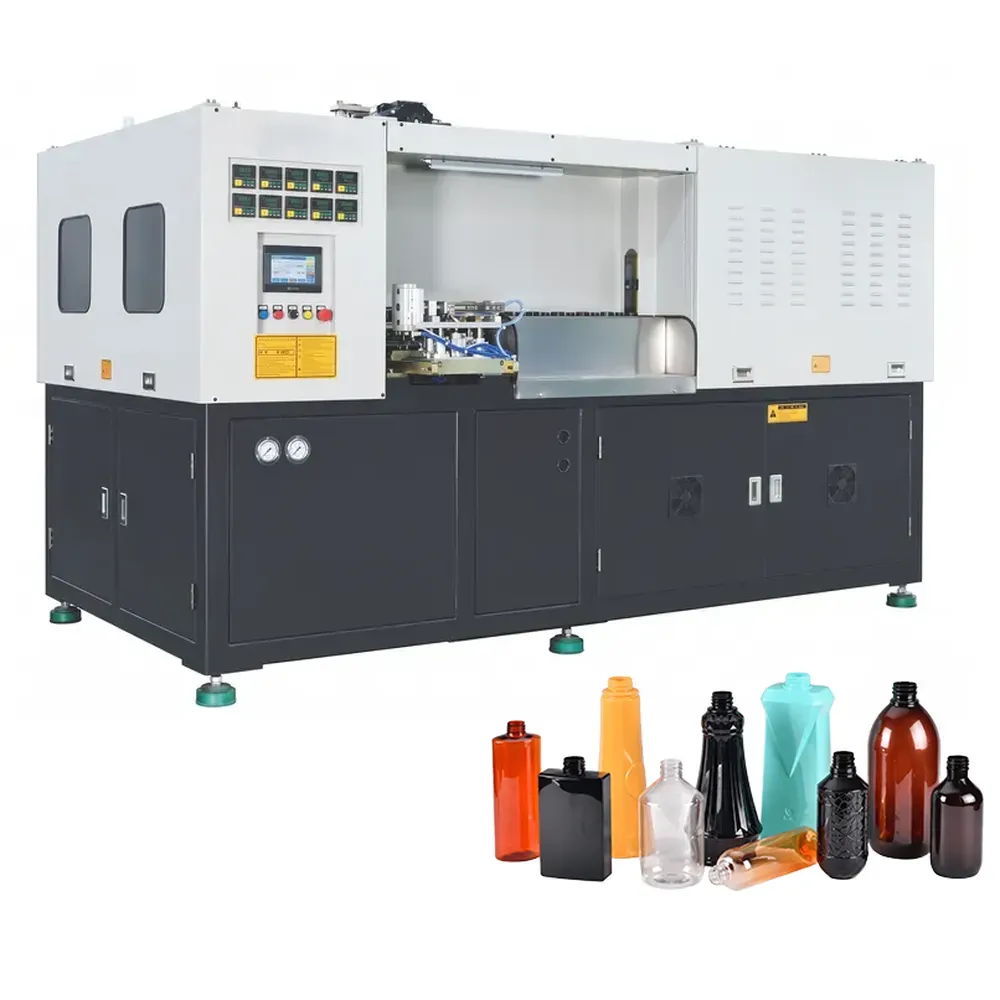
How Does the EPA.ES-3C114 Fully Automatic Blow Molding Machine Work
Adım 1: Hammadde Hazırlığı
The blow molding machine process begins with thorough raw material preparation. PET, PETG, and compatible polymers undergo rigorous screening, blending, and moisture control before entering the production feed. For PET materials, pre-drying is critical to prevent hydrolytic degradation during processing. Strict incoming material quality control ensures that resin grade, viscosity, and contamination levels meet specification, setting the quality baseline for every bottle produced in the batch.
Adım 2: Ön Şekil Enjeksiyon Kalıplama
In the injection phase of the automatic PET blow molding machine process, selected and blended raw materials are fed into the injection system. After heating, melting, and plasticizing under precise temperature and pressure control, molten polymer is injected into the preform mold cavity. Parameters including melt temperature, injection pressure, hold time, and cooling duration are all servo-controlled to produce preforms with consistent wall thickness and accurate neck geometry for downstream blowing.
Adım 3: Ön Kalıp Ön Isıtma
Following injection molding, preforms pass through a carefully calibrated infrared preheating tunnel. During this stage, the temperature of each preform is raised uniformly, with particular attention to the body wall thickness zone. The target is to achieve consistent plasticity and flexibility across all 74 preform positions simultaneously. Controlled preheating is critical for the two-stage blow molding machine process because uneven temperature distribution directly causes wall thickness variation and dimensional inconsistency in the finished bottles.
Adım 4: Gerdirme Yöntemiyle Şişirme
At the core of the injection stretch blow molding machine process, preheated preforms enter the 3-cavity blow mold. The stretch rod extends to biaxially orient the material longitudinally while high-pressure air at up to 35 kg/cm2 expands the preform radially against the mold cavity walls. This biaxial orientation significantly improves the mechanical strength, clarity, and barrier properties of the finished PET bottle. Precise servo control of stretch timing and air pressure profiles ensures consistent cavity-to-cavity quality across all three positions in every production cycle.
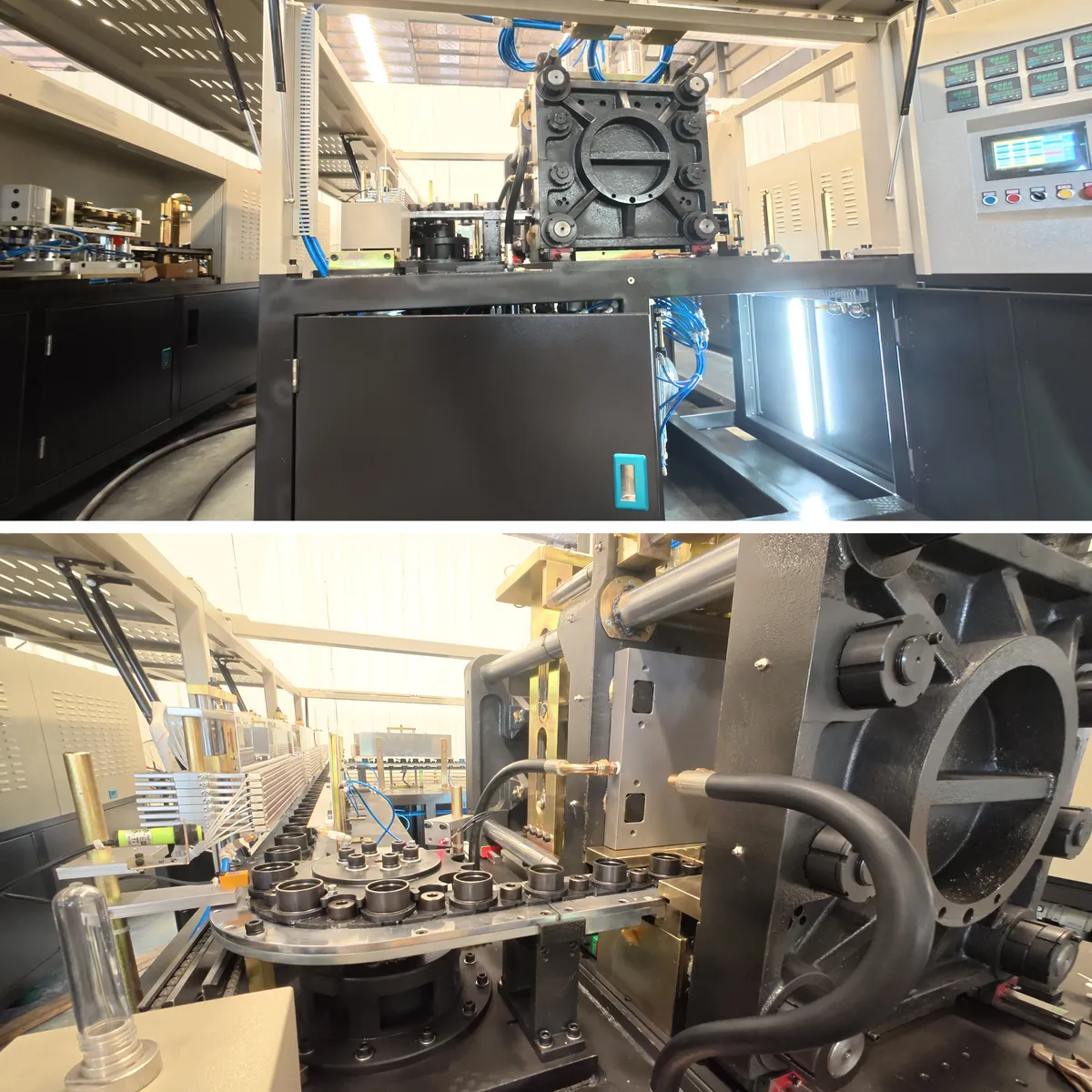
Applications of the EPA.ES-3C114 Daily Chemical Blow Molding Machine
Skincare and Serum Packaging
The EPA.ES-3C114 PET blow molding machine excels at producing premium skincare bottles including essences, serums, and facial toners. With neck diameter precision at 40mm and container heights reaching 330mm, it accommodates the slender, sophisticated bottle profiles that high-end cosmetic brands require. Superior wall thickness uniformity and crystal clarity in PET output meet the optical standards that retail shelf presence and brand premium positioning demand from modern cosmetic packaging lines worldwide.
Lotion and Cream Bottle Production
For moisturizer, body lotion, and facial cream containers, the machine's 95mm maximum body diameter and flexible cavity spacing accommodate the wide, round bottle formats popular in mass-market and professional cosmetic categories. The automatic blow molding machine process delivers smooth, blemish-free exterior surfaces that accept labeling, sleeve-shrink decoration, and direct screen printing without secondary surface treatment, reducing downstream finishing costs for high-volume daily chemical packaging manufacturers.
Shampoo and Hair Care Containers
Handling containers from 300ml to 1,500ml, the EPA.ES-3C114 daily chemical blow molding machine is ideally sized for shampoo, conditioner, hair mask, and scalp treatment bottles. Consistent neck finish at 40mm supports standard flip-top, disc-top, and pump closures used across the personal care sector. High production output at 2,400 bottles per hour enables cosmetic manufacturers to meet large retailer purchase orders and seasonal demand peaks without additional machine investment or extended production lead times.
Shower Gel and Body Wash Bottles
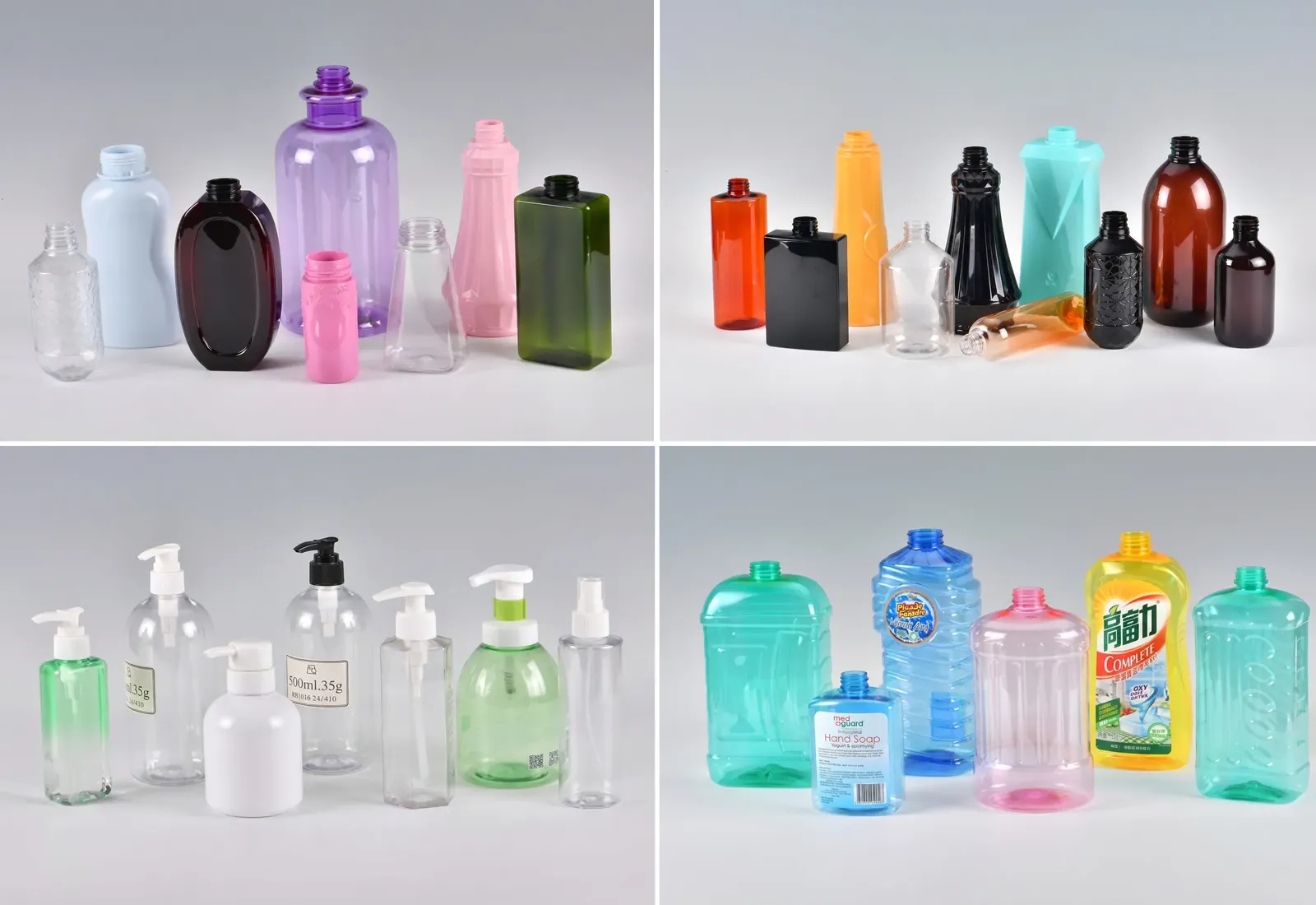
The machine's exceptional capability in producing irregularly shaped bottles makes it a strong fit for differentiating shower gel packaging. Brands increasingly use unique container geometry as a point-of-sale differentiation tool, and the EPA.ES-3C114 handles complex contoured shapes that challenge standard plastik şişirme kalıplama makinesi platforms. PETG material compatibility further expands design flexibility, allowing enhanced gloss, tinted transparency, and distinctive tactile surface textures that premium bath and body care brands increasingly specify in their packaging briefs.
Perfume and Fragrance Packaging
For fragrance secondary packaging and ancillary containers, the EPA.ES-3C114 delivers the dimensional accuracy and optical clarity that luxury fragrance presentation requires. The bottle blow molding machine produces containers with consistent clarity and precise neck finishes that interface reliably with crimped and threaded fine-mist spray closures. Its servo-controlled process minimizes batch-to-batch variation, an important capability for fragrance brands that maintain strict quality verification protocols for export shipments to European, North American, and Gulf market retailers.
Hand Care and Sanitizer Bottles
The EPA.ES-3C114 produces hand wash, hand cream, and hand sanitizer containers across the full 30ml to 1,500ml volume range. PET material compatibility provides the chemical resistance required for alcohol-based and surfactant-rich formulations used in hand hygiene products. The custom blow molding machine configuration options allow producers to customize bottle shape, shoulder geometry, and base design to match specific brand architecture or to produce private-label containers for multiple retail customers from a single mold set on the same machine platform.
Baby Care and Sensitive Skin Products
Baby shampoo, gentle body wash, and infant care product containers demand zero flash contamination and strict dimensional consistency. The EPA.ES-3C114, operating as a true fully automatic blow molding machine, eliminates manual handling at critical production stages and reduces particulate contamination risk. PETG options provide BPA-free clarity with superior impact resistance for the baby care segment. Clean production and high bottle-to-bottle consistency support quality certification requirements that major retailers and international baby care brands mandate for their approved supplier packaging programs.
Household Cleaning Product Containers
Household surface cleaners, fabric softeners, and dishwashing liquid bottles in the 500ml to 1,500ml segment are efficiently produced on this industrial blow molding machine platform. PET's excellent chemical resistance to common cleaning agents makes it the preferred material choice. The 2,400 bph output rate at 3 cavities ensures that household cleaning product manufacturers, who typically operate on thin margin economics requiring maximum production volume, can achieve the per-unit cost targets necessary to compete in mass retail and private-label cleaning product categories across both domestic and export markets.
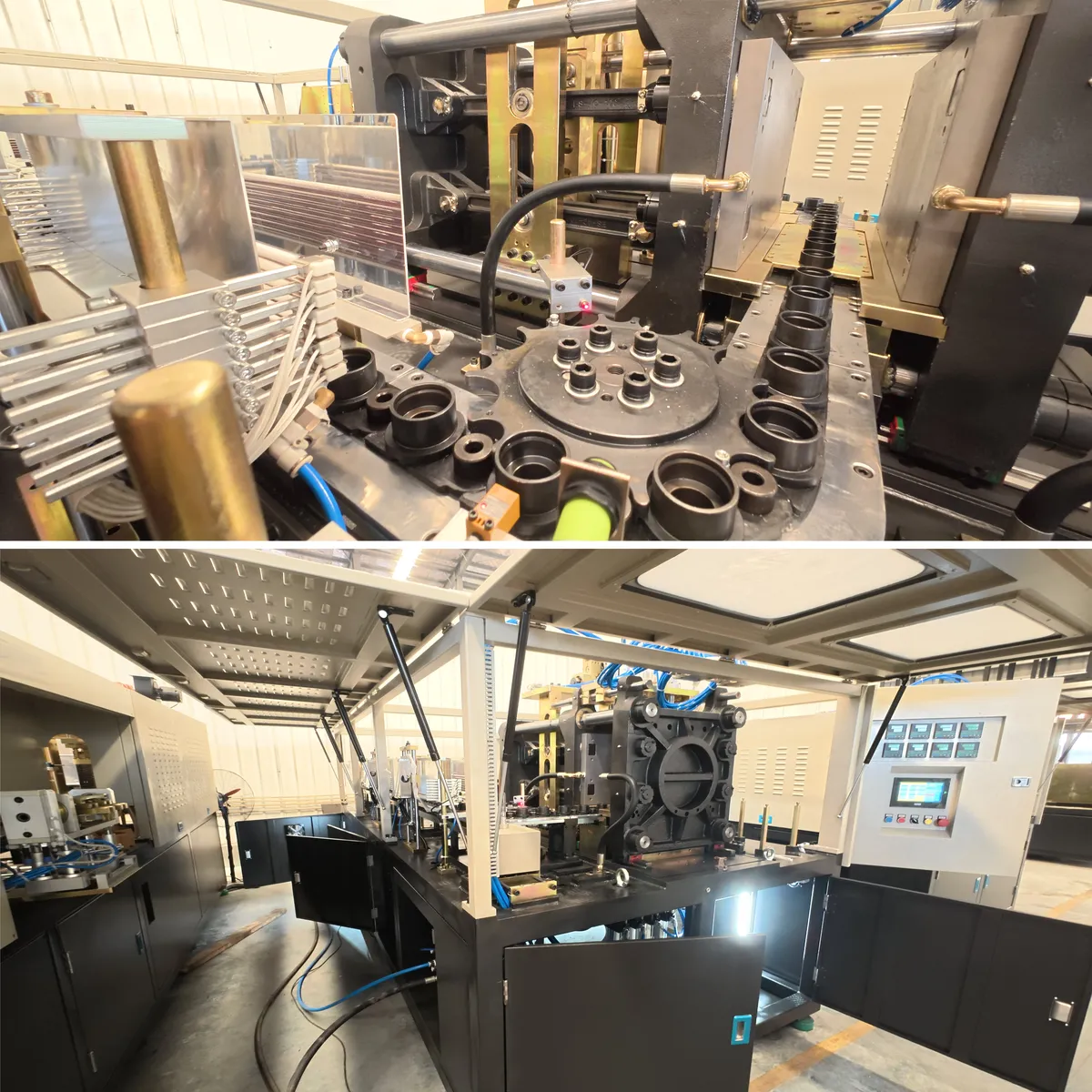
EPA.ES-3C114 PET Blow Molding Machine Parts
Besleme Sistemi
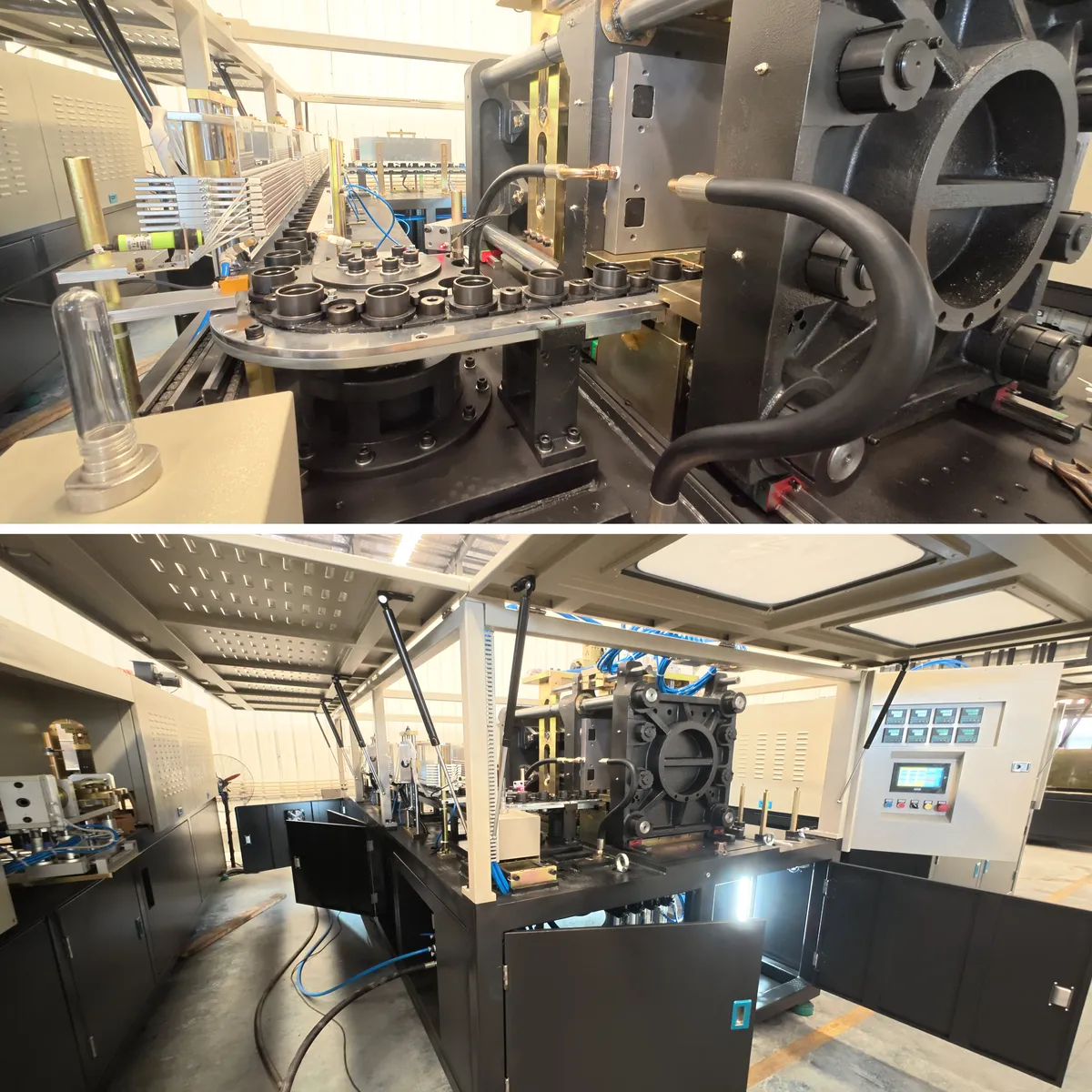
The feeding system comprises the hopper, preform conveyor, orientator, gravity rail, and associated steering and electric drive components. Raw PET preforms are fed into the blow molding machine through this fully automated loading path. The orientator aligns preforms correctly before they enter the conveying rail, ensuring consistent neck-up orientation for every preform entering the heating section. A reliable feeding system is fundamental to achieving the rated output of 2,400 bottles per hour without manual re-alignment or feeding interruptions during production shifts.
Ön Şekil Devirici
Because the EPA.ES-3C114 processes PET preforms, the preform tilter is a key blow molding machine part that automatically supplies pre-oriented preforms to the system hopper from bulk storage. The tilter handles the transition from randomly stacked bulk preforms to the single-file neck-up orientation required for the heating carousel. Its automated operation removes a manual labor step that can introduce inconsistency and injury risk in high-throughput production environments, contributing to the machine's suitability for continuous multi-shift operation.
Infrared Heating Section
The infrared heating section uses zoned quartz lamp arrays to raise preform temperatures uniformly to the blow-ready range. With a maximum heating power of 40kW and a working heating power of 18kW, the system delivers precise thermal profiles adjustable by zone and lamp intensity. The 74-position preform holder carousel ensures that all preforms reach identical temperature before entering the blow station. Independent zone adjustment allows operators to fine-tune temperature gradients for different bottle shapes, neck designs, and wall thickness profiles across the wide container range the machine supports.
Şişirme Kalıp Sıkıştırma Ünitesi
The 3-cavity blow mold clamping unit secures the blow molds with a clamping stroke of 133mm and a mold-close distance of 114mm, providing the rigidity required to withstand 35 kg/cm2 blowing pressure without mold deflection. The precision mold alignment system ensures consistent parting-line quality and prevents flashing on finished bottles. Servo-driven mold closing delivers smooth, repeatable clamping force across every production cycle, which is critical for maintaining dimensional accuracy in complex-shaped cosmetic bottles where minor mold movement would cause unacceptable visual defects and functional failure at closure interfaces.
High-Pressure Air Compressor Station
The compressor station supplies both low-pressure operating air at 7 kg/cm2 and high-pressure blowing air at up to 35 kg/cm2. Low-pressure air consumption stands at 1,500 ltr/min while high-pressure consumption reaches 3,200 ltr/min at full production speed. The station integrates boosters, connectors, air tank, and pressure management controls. Stable air pressure supply directly determines bottle wall uniformity and dimensional accuracy in the bottle blow molding machine process, making compressor station sizing and reliability a critical specification factor for production engineers evaluating this equipment category.
Su Soğutma Sistemi
The integrated water cooling system maintains mold temperature between 8 and 12 degrees Celsius at an operating pressure of 5 to 6 kg/cm2 with a flow rate of 30 ltr/min. Precise temperature control in the blow mold is fundamental to achieving rapid cycle times while producing dimensionally stable bottles. Inadequate cooling causes extended cycle times, bottle deformation, and inconsistent wall crystallinity. The EPA.ES-3C114's optimized cooling channel design ensures uniform mold temperature distribution across all three cavities, supporting both high output rates and consistent bottle quality across extended production runs.
Germe Çubuğu Montajı
The stretch rod assembly performs the biaxial orientation that gives PET bottles their characteristic strength, clarity, and barrier properties. With a stretching stroke of 350 to 450mm, the servo-controlled rods extend into each preform cavity simultaneously, orienting the polymer chains longitudinally before high-pressure air completes the radial blow. Precise stretch ratio control is essential for producing lightweight bottles with optimal wall thickness distribution. The EPA.ES-3C114's servo stretch system allows recipe-based parameter storage, enabling rapid mold changeovers between different bottle formats without manual adjustment calibration for each production run.
Şişe Çıkış Konveyörü
The bottle exit conveyor transfers finished blown containers from the mold station to downstream filling or unscrambling systems. Designed to handle the full range of bottle shapes and sizes the machine produces, from small 30ml cosmetic bottles to 1,500ml daily chemical containers, the conveyor maintains bottle orientation and avoids scratching or marking the finished container surface. Its integration with downstream packaging lines supports seamless high-speed production at 2,400 bph, eliminating bottlenecks at the transition from blowing to filling that would otherwise limit the automatic blow molding machine's effective output in a complete packaging line configuration.
Uyumlu Hammaddeler
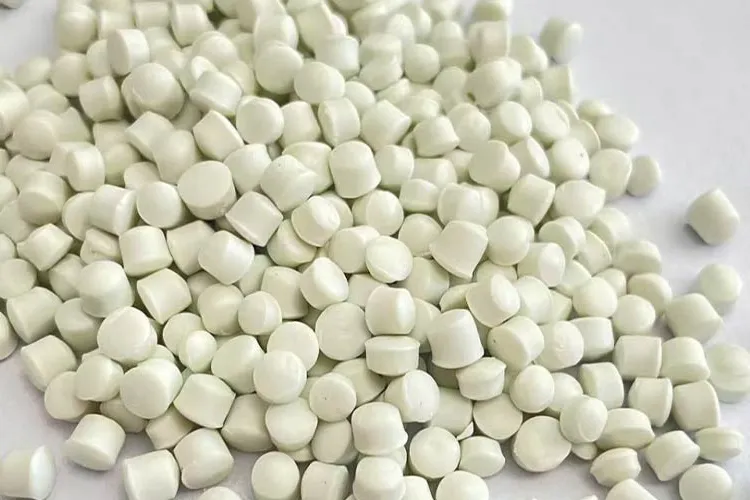
PP (Polipropilen)
Polypropylene offers an excellent strength-to-weight ratio combined with good chemical resistance and a moderate processing temperature profile. It is particularly suited for daily chemical and cosmetic containers that require both flexibility and structural rigidity. PP's natural translucency and ability to accept colorants across the full spectrum makes it versatile for brand color programs. As a material option for the daily chemical blow molding machine, PP supports the production of refillable containers, dispensing bottles, and application-specific packaging with integrated functional elements like handles and grips.
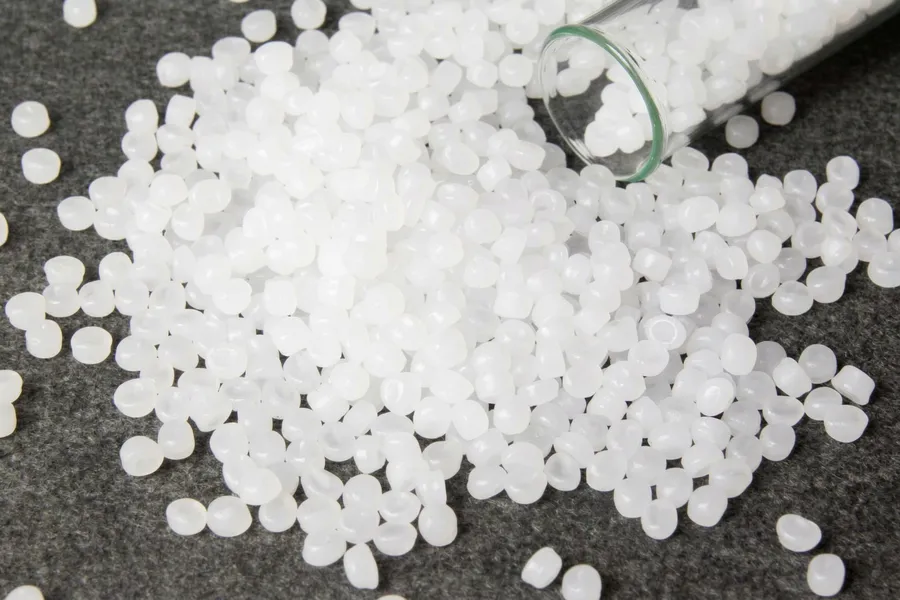
PE (Polietilen)
Polyethylene, encompassing both LDPE and LLDPE grades, provides exceptional flexibility, moisture barrier properties, and ease of processing on this plastic blow molding machine. LDPE is widely used for squeeze bottles, travel-size containers, and flexible packaging formats in the cosmetic and personal care sectors. Its softness allows products to be dispensed by squeezing the container directly. LDPE bottles maintain flexibility even at low temperatures, making them suitable for cosmetic products sold in colder climate markets across Europe, North America, and East Asia.
PC (Polikarbonat)
Polycarbonate delivers exceptional impact resistance and high-temperature tolerance that makes it suitable for reusable cosmetic containers, professional hair care packaging, and salon-grade product bottles that must withstand repeated use and sterilization cycles. PC's exceptional optical clarity rivals glass in finished container appearance, supporting premium brand positioning for luxury cosmetic lines. Where product formulations are compatible with PC chemistry, this material raises the perceived value of the packaging significantly, allowing cosmetic manufacturers to target higher retail price points with their finished product ranges.
PS (Polistiren)
Polystyrene, particularly in its oriented form, provides good clarity and a smooth surface finish suitable for cosmetic and personal care containers in the value and mass-market segments. Its ease of processing and low material cost make PS an economical option for high-volume daily chemical packaging where transparency and reasonable surface quality are required but premium optical performance is not the primary specification. PS accepts printing and labeling readily, supporting the decoration requirements of mass-market cosmetic packaging produced in large volumes for retail chains and private-label programs.
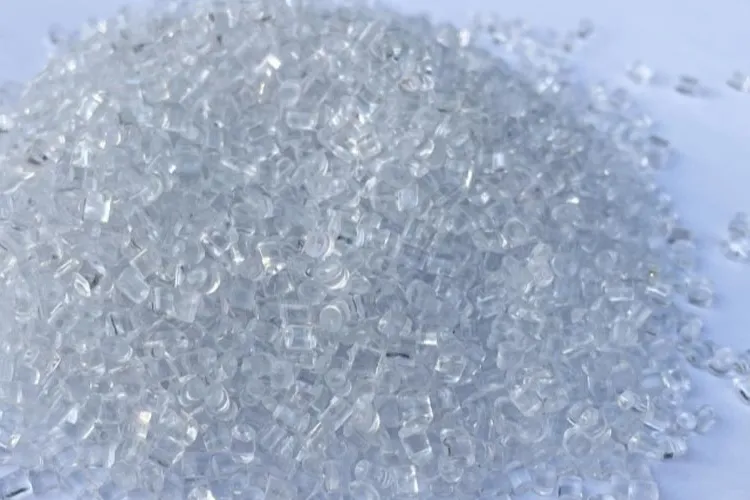
PET (Polietilen Tereftalat)
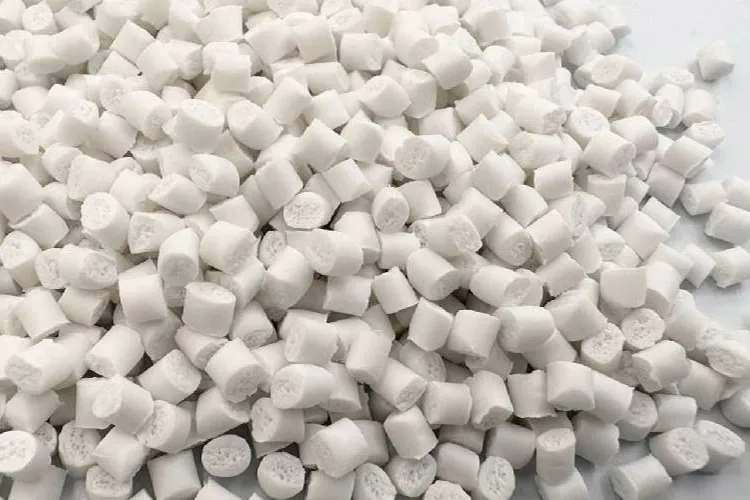
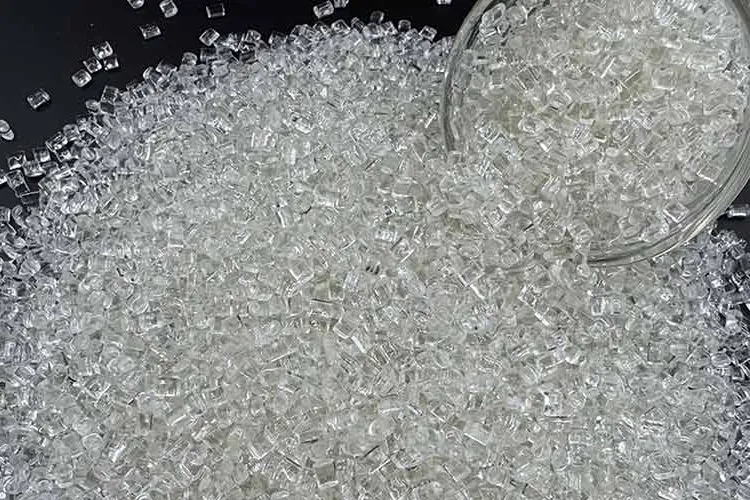
PET is the primary material for the EPA.ES-3C114 PET blow molding machine. Its combination of exceptional clarity, high strength, lightweight structure, and excellent gas barrier properties makes it the material of choice for premium cosmetic, personal care, and beverage bottles. PET produces bottles with a glass-like appearance that enhances product presentation on retail shelves. Its recyclability also supports sustainability objectives that cosmetic brands increasingly communicate to consumers as part of their product positioning and environmental responsibility programs.
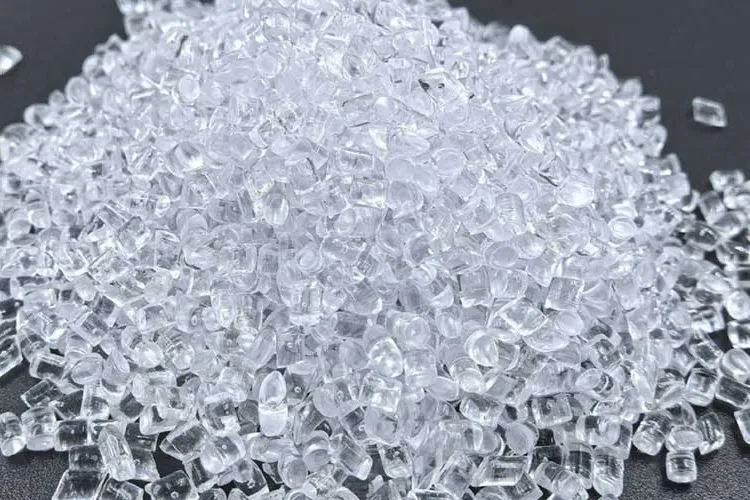
PETG (Polietilen Tereftalat Glikol)
PETG is the preferred material for high-end cosmetic packaging requiring enhanced clarity, superior toughness, and greater design flexibility compared to standard PET. It processes at lower temperatures than PET, reducing thermal stress on the blow mold. PETG accepts metallic and tinted coloration more readily, supports deep embossing and unique tactile surface textures, and offers strong chemical resistance to alcohol-based cosmetic formulations. As a custom blow molding machine material option, PETG expands the range of premium packaging designs achievable on the EPA.ES-3C114 platform.
HDPE (Yüksek Yoğunluklu Polietilen)
HDPE is widely used for opaque daily chemical bottles including laundry detergents, household cleaners, and personal care products where chemical resistance and container rigidity are the primary requirements. Its excellent resistance to temperature changes, acids, and bases makes it suitable for a broad range of cleaning product formulations. HDPE is also among the most widely recycled plastics globally, supporting regulatory compliance and brand sustainability programs in markets where extended producer responsibility legislation governs packaging material choices for daily chemical manufacturers.
PVC (Polyvinyl Chloride)
PVC is less commonly specified for new cosmetic packaging programs today due to evolving environmental regulations in major markets, but it remains in use for certain cleaning product containers where specific chemical resistance properties are required and where alternative materials do not meet formulation compatibility requirements. For buyers evaluating raw material options on their blow molding machine suppliers shortlist, PVC compatibility should be confirmed against local packaging regulations and retailer material restrictions before inclusion in a new product packaging specification program in key export markets.
 |
 |
 |
 |
 |
 |
Enjeksiyonlu Şişirme Kalıplama ile Ekstrüzyonlu Şişirme Kalıplama Karşılaştırması
Buyers evaluating blow molding machine manufacturers often face a foundational process selection decision: injection blow molding (IBM) or extrusion blow molding (EBM). Both processes create hollow plastic containers, but they form the starting shape in entirely different ways. Understanding this distinction is essential before specifying any automatic blow molding machine for a new production line.
Injection blow molding starts from an injection-molded preform. Molten plastic is injected around a core rod to form a precise preform and neck finish. The preform then moves to the blow station and is inflated inside the bottle mold. The finished bottle is removed without trimming flash. In British English the same process is often referenced as injection blow moulding.
Extrusion blow molding starts from a continuously extruded parison. The mold closes around the hollow tube and pinches off excess material. High-pressure air forms the bottle inside the mold, and flash must be trimmed after cooling. This process difference fundamentally affects neck precision, wall thickness control, trimming waste, and the type of container each process can produce economically.
| Özellik | Enjeksiyonlu Şişirme Kalıplama (IBM) | Ekstrüzyon Şişirme Kalıplama (EBM) |
|---|---|---|
| Başlangıç Formu | Enjeksiyon kalıplı ön şekil | Ekstrüde edilmiş parison |
| Boyun Hassasiyeti | Extremely high; neck is pre-molded by injection | Standard; depends on mold closing and neck calibration |
| Hurda / Atık | Zero flash and very low process waste | Fotoğrafta oluşan flaş ışığın kırpılması ve yeniden işlenmesi gerekiyor. |
| En İyi Konteyner Boyutu | Small to medium precision bottles (30ml to 1,500ml) | Medium to large hollow containers and industrial parts |
| Kalıp Maliyeti | Higher upfront investment for precision tooling | Lower initial mold costs for large hollow containers |
| En İyi Uygulamalar | Pharmaceutical, cosmetic, lab, medical packaging | Jerry cans, drums, tanks, large industrial containers |
| Kalite Önceliği | Boyutsal tutarlılık ve sızdırmazlık güvenilirliği | Boyut esnekliği ve konteyner hacmi ekonomisi |
Enjeksiyonlu Şişirme Kalıplama Ne Zaman Seçilmelidir?
- Small and medium precision bottles with accurate threaded necks
- Pharmaceutical, medical, cosmetic, laboratory, or high-value packaging applications
- Production environments requiring zero flash waste and clean operation without secondary trimming
- Applications demanding stable bottle dimensions, repeatable wall thickness, and reliable closure sealing
- PET and PETG bottle production for cosmetic and daily chemical packaging
When to Choose Extrusion Blow Molding
- Large bottles, jerry cans, drums, tanks, and complex hollow industrial parts
- Applications where lower tooling cost is a priority over highest neck precision
- Wide product geometry variety including handled containers and asymmetric shapes
- Applications where trimming flash is an acceptable part of the production process
Cost Perspective: EBM equipment can carry a lower initial purchase price for large containers, but the total production cost calculation must also include resin loss from flash trimming, secondary labor, reject rates, and downstream handling. For precision cosmetic bottles where IBM reduces waste and quality risk, the total cost of ownership over a multi-year production period often favors the IBM process even when initial machine and mold investment is higher. For large industrial containers, EBM typically remains the more economical process choice. Materials used across both processes include HDPE, PP, LDPE, PET, PETG, and PVC, with material choice always validated against bottle geometry, regulatory requirements, and sealing specifications.
Kozmetik Şişe Üfleme Kalıplama Makinesi Kalıp Özellikleri
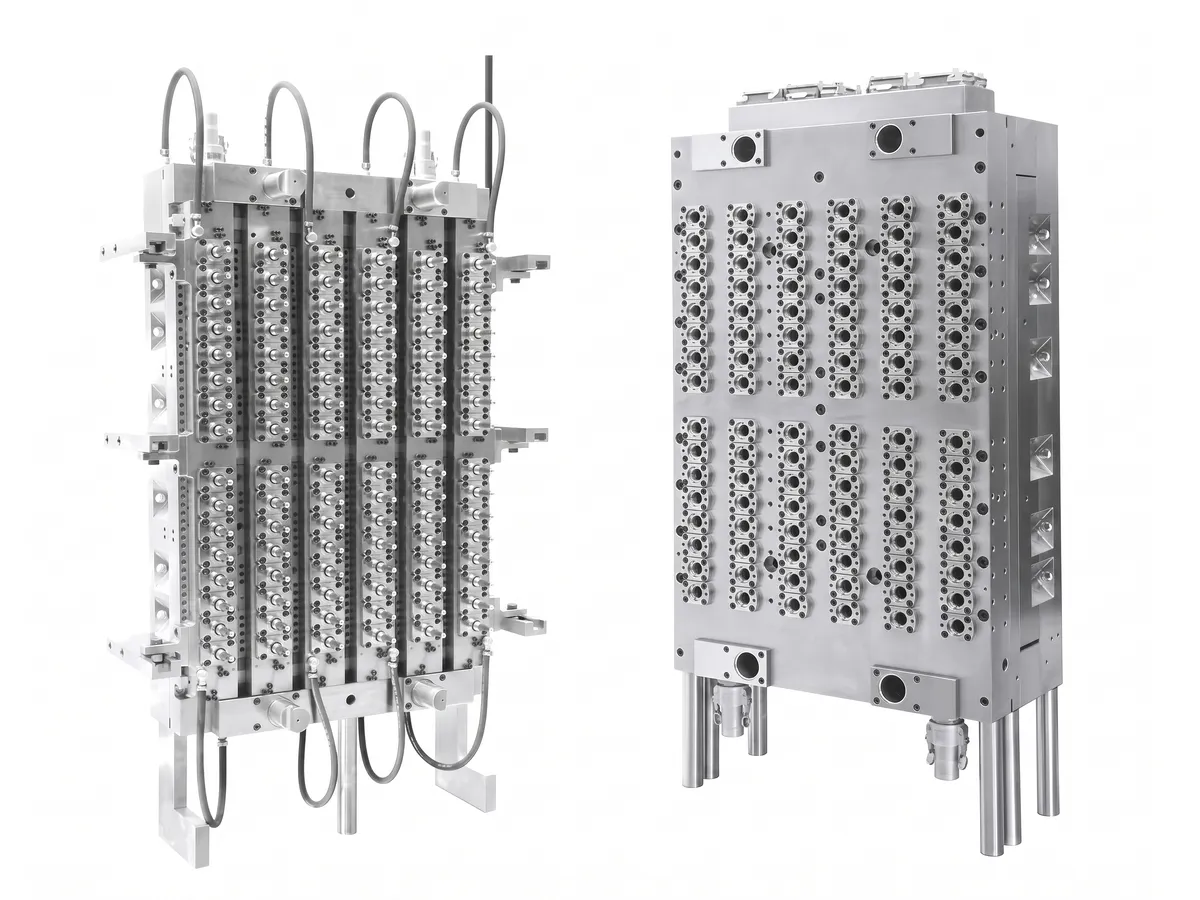
Ön Şekil Enjeksiyon Kalıbı
- The two-part die lip design guarantees coaxial alignment between the preform and the neck finish during every injection cycle, eliminating the neck eccentricity that causes closure sealing failures in finished bottles.
- Optimized cooling water channel geometry improves preform cooling efficiency and ensures rapid cycle times without compromising dimensional stability in the cooled preform wall.
- Preform-forming components use imported 2316 die steel, which is inherently rust-resistant and has undergone heat treatment to achieve the hardness and dimensional stability required for precision cosmetic bottle neck production.
- Core plate, cavity plate, and other structural components use 420 stainless steel, providing excellent corrosion resistance in the humid, temperature-cycled environment of continuous injection mold operation.
- The maintenance-accessible design reduces mold servicing time during scheduled maintenance intervals, minimizing production downtime on this blow molding machine platform.
- Standard interchangeable die fittings across the mold range reduce spare parts inventory requirements and allow cross-utilization of components between compatible mold sets.
- Advanced modular mold design allows a single mold set to produce more than one preform variant, increasing tooling investment efficiency for manufacturers with multiple bottle SKUs.
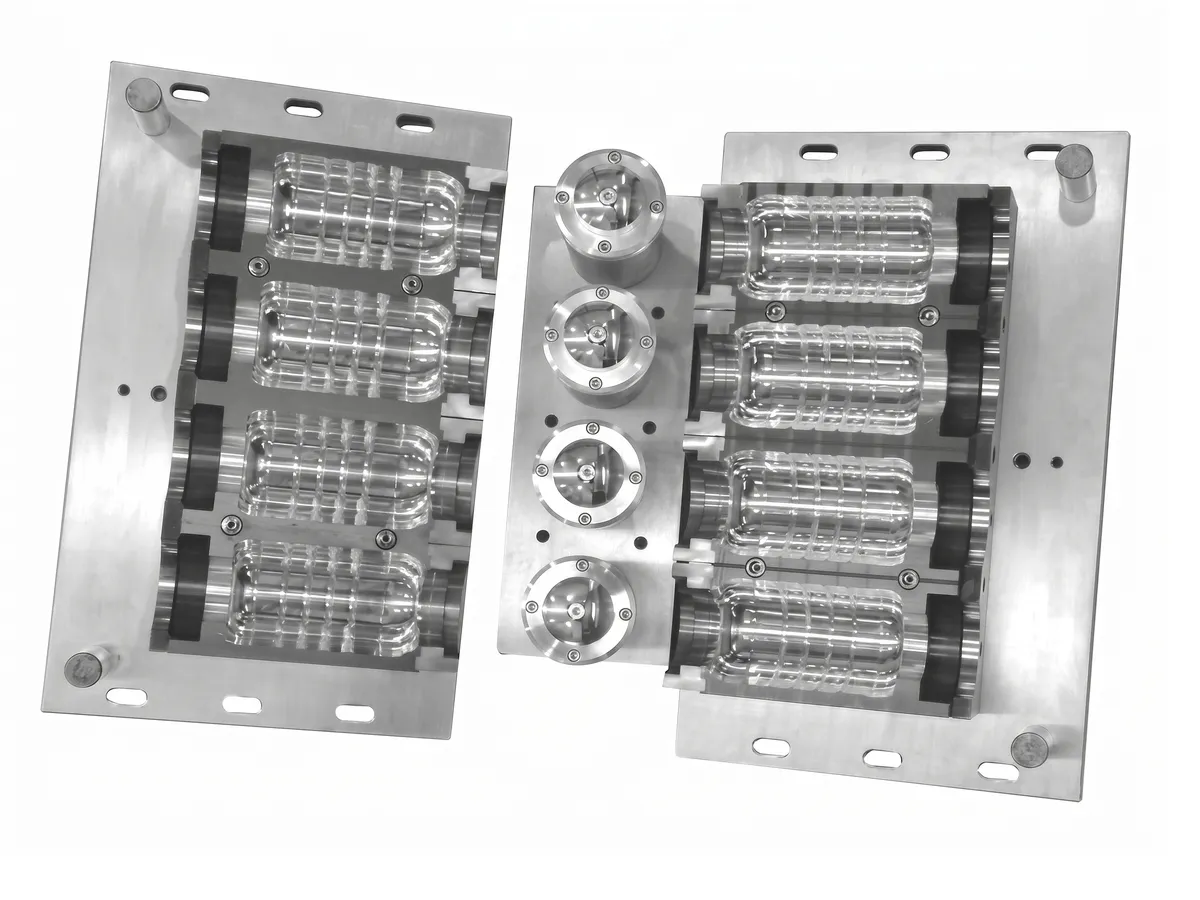
Üfleme Kalıp
- Blow mold bodies are manufactured from high-quality steel selected for its thermal conductivity, machinability, and resistance to the fatigue stresses generated by repeated high-pressure blowing cycles at 35 kg/cm2.
- All plastic bottle cavity geometries are designed using advanced 3D CAD and simulation software, ensuring that cavity shapes achieve the target wall thickness distribution before the first physical mold is cut.
- A broad range of standard and custom bottle designs is available for selection, allowing buyers to start production with proven cavity geometries while specifying custom cavities for proprietary bottle shapes.
- Cooling water channels within the blow mold body are designed to deliver uniform temperature distribution across the entire cavity surface, preventing hot spots that cause uneven crystallinity and dimensional variation in finished bottles.
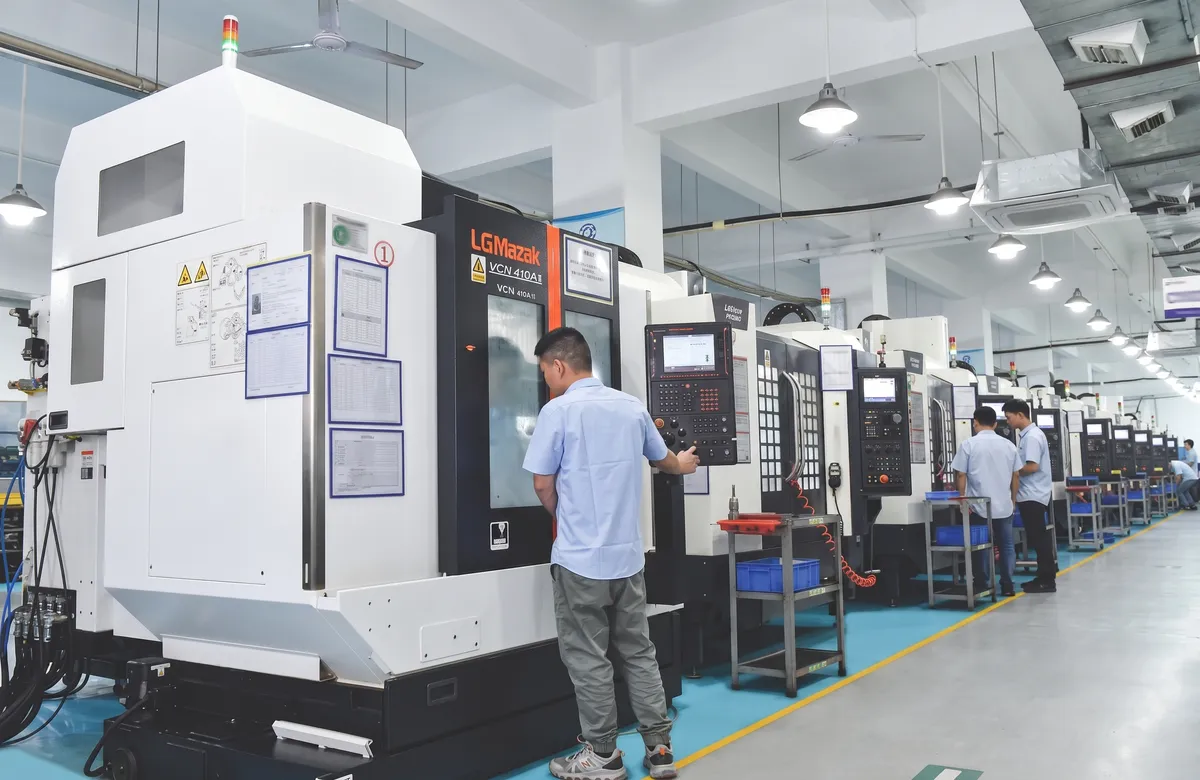
- All structural metal components in the blow mold assembly are machined on CNC machining centers, ensuring dimensional accuracy and surface finish consistency that would not be achievable with conventional machining methods for precision cosmetic bottle blow molding machine tooling.
- Mold parting surface precision and surface texture are optimized to minimize parting line marks on finished bottle exterior surfaces, reducing secondary cosmetic rejection rates for premium cosmetic packaging production runs.
 |
 |
EPA.ES-3C114 Plastic Blow Molding Machine Operating Precautions
1. Pre-Startup Inspection Protocol
Before every production startup, operators must conduct a systematic inspection of all mechanical connections, lubrication points, and fastener torque levels. Verify that cooling water supply is active and within the specified 5 to 6 kg/cm2 pressure range and 8 to 12 degree Celsius temperature range. Confirm that air supply lines are secure and that both low-pressure and high-pressure systems are functioning correctly. Check electrical panel indicators for any fault codes from the previous production session before initiating the startup sequence. This pre-startup routine prevents equipment damage and ensures operator safety on the fully automatic blow molding machine.
2. Preform Quality and Material Verification
Only use PET or PETG preforms that meet the specifications confirmed during mold qualification testing. Verify preform weight, IV (intrinsic viscosity), moisture content (maximum 50 ppm for PET), and dimensional consistency before loading each new batch. Using out-of-specification preforms is the single most common cause of bottle defects, burst failures in the blow station, and mold damage in a PET bottle blow molding machine. Pre-dry all PET preforms at 160 to 180 degrees Celsius for a minimum of 4 hours to prevent hydrolytic degradation during processing, which permanently reduces polymer molecular weight and compromises finished bottle mechanical properties.
3. Temperature Parameter Management
Heating zone temperatures must be set and verified against the approved process parameter sheet for each bottle format and preform design. Never override automatic temperature safeguards or run the blow molding machine with heating zones that have not reached setpoint temperature. Overheated preforms cause premature crystallization and whitening; underheated preforms cause burst failures in the blow station or produce bottles with unacceptable wall thickness distribution. Record heating zone setpoints and actual temperatures at the start of each production run as part of the batch quality documentation required for cosmetic manufacturing compliance programs.
4. Air Pressure System Safety
The EPA.ES-3C114 operates with blowing pressures up to 35 kg/cm2, which represents a significant stored energy hazard. All personnel must maintain safe distances from the blow station during active production. Never attempt to open the blow mold manually during a cycle or insert tools into the mold area while the machine is running. Verify pressure relief valves are functional and set to the correct relief pressure before startup. Inspect all high-pressure air hoses, fittings, and connections for wear, cracking, or leakage on a daily basis, and replace any components showing deterioration immediately to prevent pressure release incidents on the production floor.
5. Mold Changeover Procedures
Mold changeovers on the EPA.ES-3C114 must be performed following the documented lockout-tagout energy isolation procedure. Allow the blow mold to cool to below 40 degrees Celsius before handling. Use the correct lifting tools and personnel team size specified in the maintenance manual for mold weights. After installing a new mold, verify that all cooling water connections are secure and leak-free before initiating a trial cycle. Run a slow-speed trial sequence and inspect the first 20 bottles from each cavity before releasing to full production speed. Document changeover completion time and first-article inspection results in the production log as part of the blow molding machine process quality record.
6. Routine Maintenance and Lubrication Schedule
Follow the manufacturer-prescribed lubrication schedule for all guide rails, cam tracks, stretch rod linear bearings, and preform transfer mechanisms. Use only the specified lubricant grades to avoid contaminating product contact surfaces or causing accelerated component wear. Clean heating lamps and reflector surfaces at the scheduled interval to maintain heating efficiency and prevent uneven preform temperature profiles. Replace worn seals, O-rings, and blow valve components at the intervals specified in the maintenance schedule rather than waiting for visible failure. Proactive maintenance on this industrial blow molding machine significantly extends component life and prevents unplanned production stoppages that generate disproportionate costs in high-output packaging operations.
How to Select the Right Blow Molding Machine
1. Define Your Container Volume Range
The first specification parameter for any blow molding machine selection is the target container volume range. The EPA.ES-3C114 covers 30ml to 1,500ml, making it ideal for cosmetic and personal care bottles. If your product range extends to 5,000ml or beyond, consider models in the 4-cavity series or food jar category from the Ever-Power range. Matching machine container capacity to your product portfolio ensures that you are not running an oversized machine at reduced efficiency or attempting to produce containers outside the equipment's design parameters, both of which increase per-unit production costs and quality risk.
2. Match Cavity Count to Output Requirements
Cavity count directly determines the output rate of any automatic blow molding machine. The EPA.ES-3C114's 3-cavity configuration delivers 2,400 bph at rated speed. Calculate your required annual output, account for planned downtime and changeover hours, and work backward to determine the minimum cavity count and machine speed that meets your production plan. If output requirements significantly exceed this model's rated capacity, evaluate the 4-cavity and 6-cavity models from the same product series. Over-specifying cavity count increases capital cost without proportional operational benefit for smaller production volumes.
3. Confirm Material and Process Compatibility
Verify that the blow molding machine suppliers you are evaluating can confirm compatibility between the machine and your specific resin grades. The EPA.ES-3C114 is designed and validated for PET and PETG, which cover the vast majority of cosmetic and daily chemical packaging applications. If your product requires PP, HDPE, or specialty engineering resins, evaluate whether the machine's heating system and process parameters support those materials. Material incompatibility discovered after purchase is an expensive problem that requires either accepting suboptimal bottle quality or investing in machine modifications that may not be technically feasible.
4. Evaluate Bottle Shape Complexity
Evaluate whether your target bottle shapes require standard cylindrical geometry or complex irregular profiles. Not all plastic blow molding machine platforms handle high-complexity shapes equally. The EPA.ES-3C114 is specifically engineered for complex, irregularly shaped cosmetic bottles that challenge standard equipment. If your product portfolio includes unique contoured bottles, oval cross-sections, deep grip recesses, or complex shoulder geometries, confirm that the supplier has produced similar shapes on the specific machine model you are evaluating, and request sample bottles and technical validation data before committing to a purchase decision.
5. Assess Energy Consumption and Operating Cost
The total cost of machine ownership over a five to ten year production life includes purchase price, installation, tooling, maintenance, and electricity consumption. Servo-driven fully automatic blow molding machine platforms like the EPA.ES-3C114, with 18kW working heating power versus the 40kW maximum, offer significant energy efficiency advantages over older hydraulic systems. Request energy consumption data at rated output for each machine you evaluate and model the 5-year electricity cost at your facility's local energy tariff. Energy cost difference between machine generations often exceeds the initial purchase price premium of newer servo-driven equipment in high-utilization production environments.
6. Satış Sonrası Destek ve Yedek Parça Bulunabilirliğini Değerlendirin
For any industrial blow molding machine investment, after-sales support capability is as important as machine performance specifications. Verify that the supplier maintains spare parts inventory for critical wear components including blow valves, stretch rods, preform holders, heating lamps, and drive belts. Confirm maximum committed response time for technical support and on-site service for your region. Evaluate the completeness and language quality of the machine manual and process setup documentation. A machine that produces well but loses two weeks of production awaiting spare parts delivers a much lower return on investment than the initial purchase cost calculation suggested.
Ever-Power'ın PET Şişirme Kalıplama Makinesini Neden Seçmelisiniz?
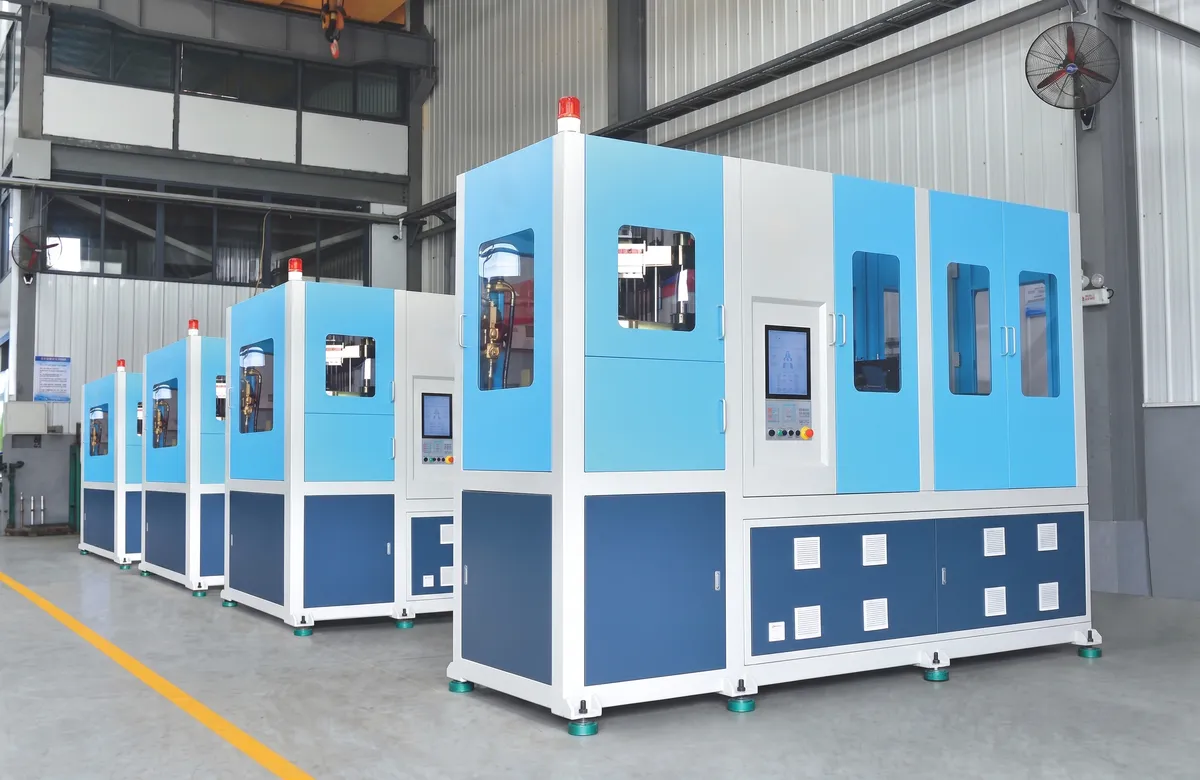
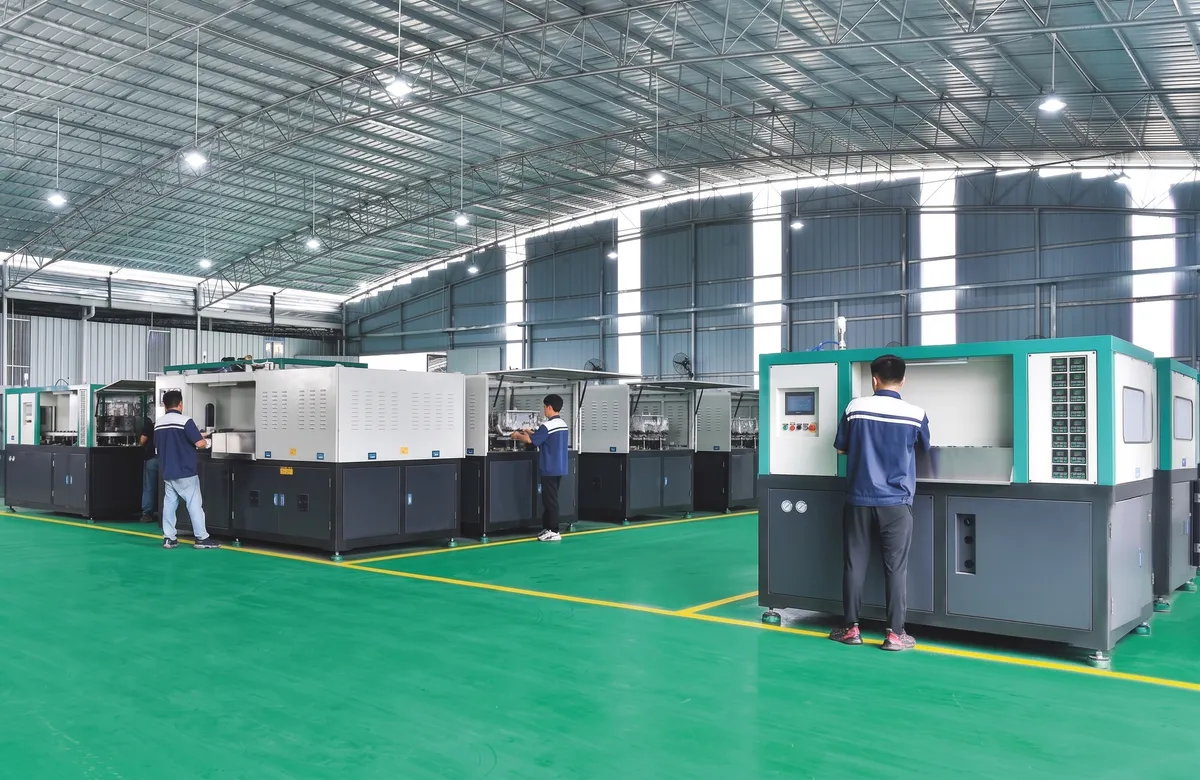
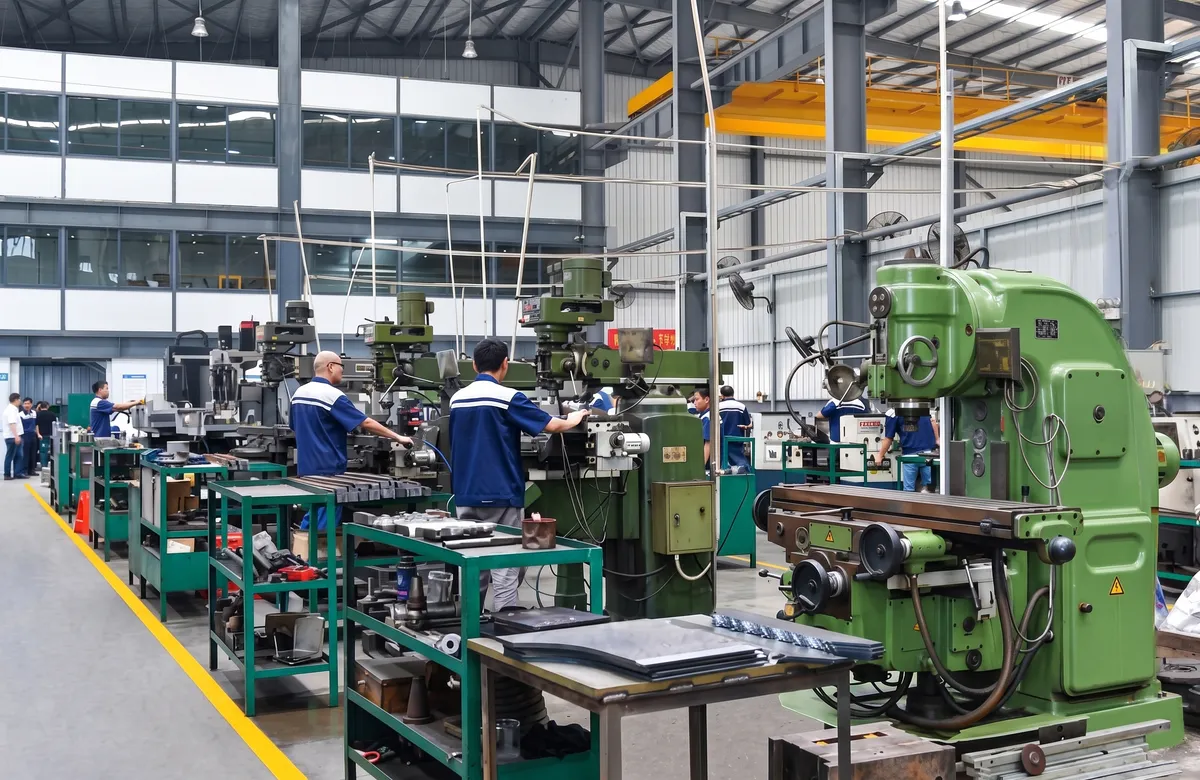
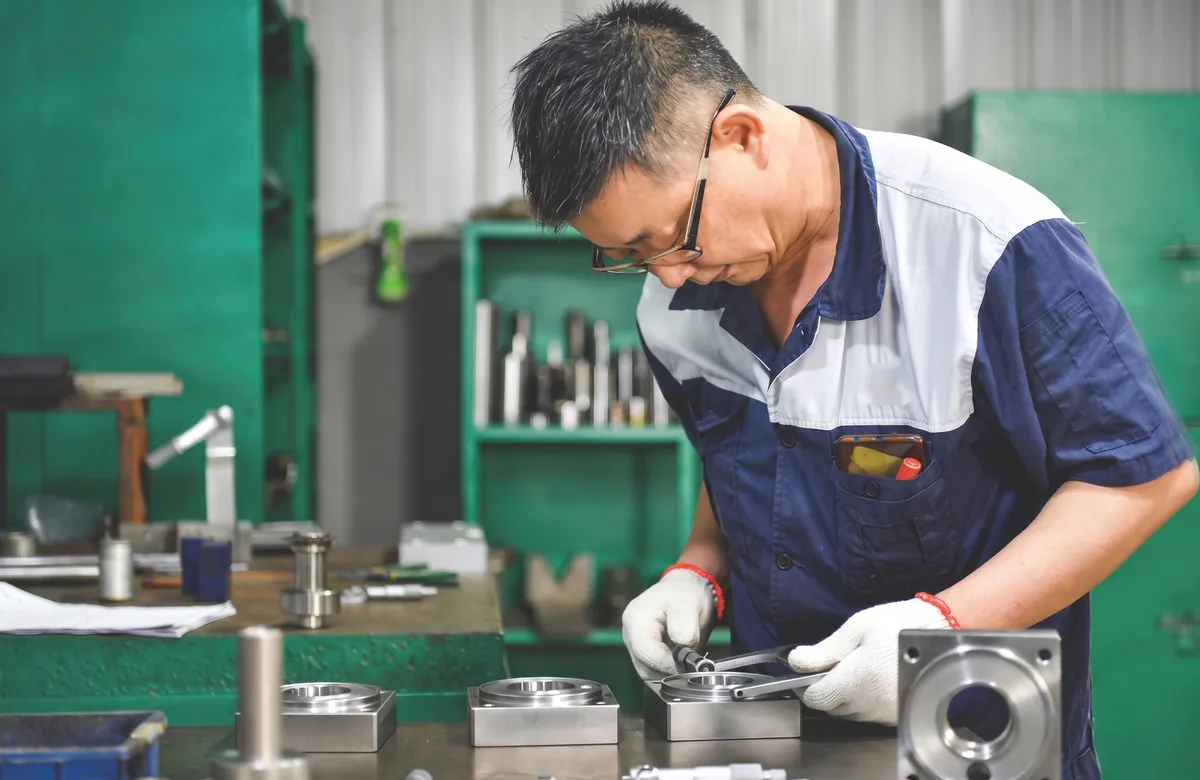
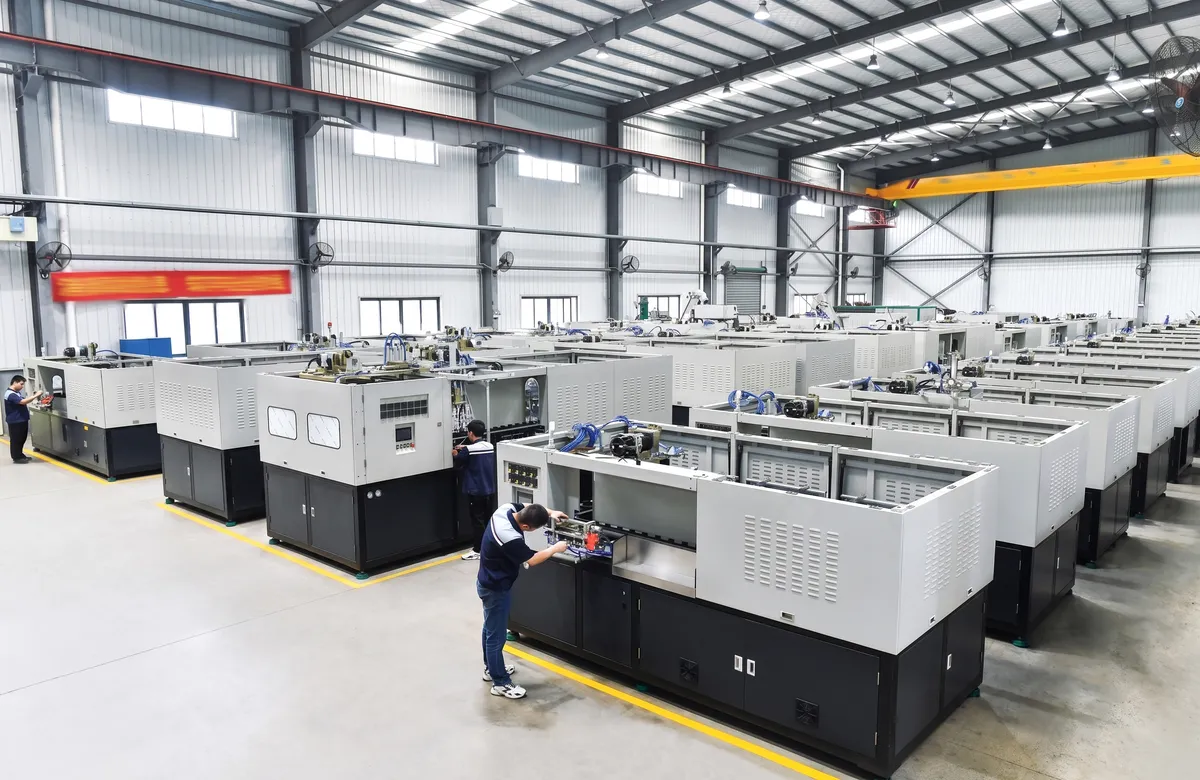
Mexico Ever-Power ISBM Machinery Co., Ltd is a specialist company dedicated to the research and development, production, sales, and international trade of fully automatic blow molding machines. Our product range encompasses injection blow molding machines, extrusion blow molding machines, injection stretch blow molding machines, and auxiliary machinery, giving buyers a complete solution source for any hollow plastic container manufacturing requirement.
Ever-Power maintains an excellent R&D team that brings together experienced engineers and technical personnel who have spent their careers specializing in injection-blowing machinery and injection-blowing mold development. With deep theoretical knowledge and extensive practical experience across hundreds of production deployments, our technical team provides the detailed, application-specific guidance that generic blow molding machine manufacturers cannot match. We deliver thorough pre-sale technical consultation, responsive in-sale support, and committed after-sale service to every customer globally.
Our product applications cover pharmaceutical packaging, food packaging, health care packaging, and cosmetic packaging, encompassing all major plastic packaging categories. We produce and support equipment capable of handling HDPE, LDPE, PET, PETG, PP, PS, PPSU, PC, Tritan, ABS, PLA, environmental corn materials, EVA, PCTG, and other specialty resins across container volumes from 1ml to 1,000ml and beyond. This breadth of material and application expertise means that regardless of your product category or packaging specification, Ever-Power has the technical knowledge to advise you on the optimal machine configuration for your requirements.
Ever-Power adheres to the enterprise development principles of self-reliance, integrity, pragmatism, innovation, and responsibility. We build one-stop turnkey projects to produce high-end injection-blowing products that meet the quality standards our customers require, with manufacturing quality and consistency that earns lasting partnerships with cosmetic, pharmaceutical, food, and daily chemical packaging manufacturers worldwide. Cooperating with globally recognized brands including C'ESTBON, Haitian, Luhua, Walch, Blue Moon, PROYA, Liby, Estee Lauder, Walmart, Dasenlin, and Shanliang Eye Drops confirms the quality level that Ever-Power delivers as a committed long-term blow molding machine supplier partner.
 |
 |
 |
 |
 |
 |
Sıkça Sorulan Sorular
Q: What is the maximum bottle size the EPA.ES-3C114 blow molding machine can produce?
A: The EPA.ES-3C114 produces containers up to 1,500ml in volume, with a maximum container diameter of 95mm and a maximum height of 250mm in standard configuration or 330mm with the extended stretching stroke option. The neck diameter range is up to 40mm, covering the standard closures used in cosmetic and daily chemical packaging. For containers larger than 1,500ml, the 4-cavity or multi-cavity models in the same Ever-Power product series cover volumes up to 15,000ml and beyond, depending on model selection and configuration.
Q: What materials can the EPA.ES-3C114 automatic blow molding machine process?
A: The EPA.ES-3C114 is specifically engineered and optimized for PET and PETG materials, which are the dominant resins in cosmetic and daily chemical bottle production. PET delivers exceptional clarity, strength, and barrier properties for premium cosmetic packaging. PETG offers enhanced design flexibility, superior toughness, and excellent compatibility with tinted and metallic colorants for luxury cosmetic brands. If your application requires PP, HDPE, or other resins not in this list, please contact our technical team to discuss alternative models in the Ever-Power range that may better match your specific material requirements and bottle designs.
Q: What is the actual production output of the EPA.ES-3C114 PET bottle blow molding machine in real manufacturing conditions?
A: The rated theoretical output is 2,400 bottles per hour across 3 cavities. In real manufacturing conditions, actual output typically ranges from 90% to 97% of rated capacity depending on preform quality consistency, bottle shape complexity, resin grade, and ambient conditions. Customer feedback consistently reports sustained output between 2,250 and 2,380 bph in well-maintained facilities with quality-controlled preform supply. Building in a 5% to 10% efficiency buffer when calculating annual production capacity for factory planning purposes is recommended for conservative financial modeling of the machine investment.
Q: What air compressor capacity is required for the EPA.ES-3C114 automatic blow molding machine?
A: The EPA.ES-3C114 requires a low-pressure air supply at 7 kg/cm2 with a consumption of 1,500 ltr/min, and a high-pressure blowing air supply at 35 kg/cm2 with a consumption of 3,200 ltr/min. Compressor sizing should add a margin of at least 20% above these rated consumption figures to account for pressure drops in distribution pipework and to handle startup demand peaks without starving the blow station. For most installations, a dedicated high-pressure booster compressor system is recommended alongside the low-pressure facility air supply. Our technical team can provide specific compressor sizing guidance based on your facility piping configuration and existing compressed air infrastructure.
S: EPA.ES-3C114 şişirme kalıplama makinesinin kurulumu ve devreye alınması ne kadar sürer?
A: EPA.ES-3C114 için tipik bir kurulum ve devreye alma süresi, tesisin hazır olma durumuna, altyapı hizmetlerinin kullanılabilirliğine ve kalıpların ön yeterlilik belgesine sahip olup olmamasına veya yerinde ayarlama gerektirip gerektirmediğine bağlı olarak 5 ila 10 iş günü arasında değişmektedir. Makine gelmeden önce basınçlı hava, soğutma suyu ve elektrik beslemesi dahil tüm altyapı hizmetleri devreye alınmış ve devreye alma sırasında tam zamanlı operatörleri bulunan tesisler, bu sürenin daha kısa olan kısmına sürekli olarak ulaşmaktadır. Ever-Power, kapsamlı bir başlatma sürecini kolaylaştırmak için devreye alma desteği ve operatör eğitim dokümantasyonu sağlamakta olup, yerinde destek satın alma paketine dahil olmayan kurulumlar için devreye alma süresi boyunca uzaktan teknik destek mevcuttur.
S: EPA.ES-3C114 kozmetik şişe üfleme kalıplama makinesi düzensiz şekilli şişeler üretebilir mi?
A: Evet, karmaşık ve düzensiz şekilli şişelerin üretimi, EPA.ES-3C114 platformunun özel tasarım güçlü yönlerinden biridir ve ürün özelliklerinde açıkça belirtilmiştir. Makinenin servo kontrollü gergi çubuğu sistemi, hassas üfleme basıncı yönetimi ve kararlı soğutma suyu sıcaklık kontrolü, oval kesitler, asimetrik şekiller, derin tutma yerleri ve daha az yetenekli ekipmanları zorlayan konturlu gövdeler de dahil olmak üzere silindirik olmayan şişe geometrilerinin tutarlı bir şekilde üretilmesini sağlar. Birden fazla müşteri, rakip makinelerde başarıyla üretilemeyen şişe şekilleriyle bu yeteneği doğrulamıştır. Belirli bir karmaşık şişe tasarımını doğrulamak için, satın alma onayından önce şişe çiziminizi teknik inceleme için göndermenizi öneririz.
S: EPA.ES-3C114 şişirme kalıplama makinesinde tipik kalıp değiştirme süresi ne kadardır?
A: Deneyimli operatörler, EPA.ES-3C114 modelinde, şişirme kalıbının çıkarılması, yeni kalıbın takılması, soğutma suyunun yeniden bağlanması, parametre yükleme ve ilk ürün muayenesi de dahil olmak üzere, kalıp değişimini genellikle 2 ila 4 saat içinde tamamlarlar. Yeni bir kalıp tasarımında ilk değişim, ilk parametre optimizasyonu için ek süre gerektirebilir. Her şişe formatı için önceden belgelenmiş parametre reçeteleriyle organize kalıp depolaması yapan ve makinenin reçete depolama işlevini kullanan tesisler, bu aralığın daha kısa ucuna doğru tutarlı bir şekilde değişim süreleri elde ederler. Kozmetik ve günlük kimyasal ambalaj hatlarında sık format değişiklikleri yapan tesisler için özel değişim eğitimi ve standartlaştırılmış değişim prosedürü belgeleri önerilir.
S: EPA.ES-3C114 şişirme kalıplama makinesi hangi sertifikalara ve kalite standartlarına uygundur?
A: Ever-Power Machinery platformu üzerine inşa edilen EPA.ES-3C114, uluslararası kalite standartlarına uygun olarak üretilmiştir. Ever-Power Machinery, çok sayıda ulusal faydalı model patentine sahiptir ve şirket yeterlilik belgesi dokümanında gösterildiği gibi, ürün yelpazesindeki ilgili modeller için CE sertifikası doğrulaması almıştır. Düzenlemeye tabi pazarlardaki alıcılar için, ithalat amacıyla belirli güvenlik sertifikaları veya dokümanları gerekiyorsa, lütfen EPA.ES-3C114 için geçerli olan güncel sertifika doküman paketini talep etmek ve hedef pazarınızın endüstriyel şişirme kalıplama makinesi ithalatı için düzenleyici gereksinimlerine hangi sertifikaların uygun olduğunu doğrulamak için satış ekibimizle iletişime geçin.
S: EPA.ES-3C114, kozmetik ambalajlar için kullanılan diğer şişirme kalıplama makineleriyle nasıl karşılaştırılır?
A: Kozmetik ambalajlarda kullanılan başlıca şişirme kalıplama makineleri arasında EPA.ES-3C114, otomatik şişe üretiminde elde edilebilecek en yüksek şişe şeffaflığı, boyun hassasiyeti ve duvar kalınlığı tutarlılığını sağlayan iki aşamalı enjeksiyonlu germe şişirme kalıplama makinesidir (ISBM). Ekstrüzyonlu şişirme kalıplama makinelerine (EBM) kıyasla, sıfır çapak atığı ve üstün boyun bitiş hassasiyeti üretir. Tek aşamalı enjeksiyonlu şişirme kalıplama makinelerine (IBM) kıyasla, iki aşamalı mimari, daha iyi ön kalıp sıcaklığı optimizasyonuna olanak tanır ve kozmetik ve günlük kimyasal ürün yelpazesindeki üretim hacimleri için daha yüksek çıktı oranlarını destekler. Hassas kapatma performansına sahip birinci sınıf şeffaf PET veya PETG kozmetik şişeleri gerektiren markalar için, iki aşamalı germe şişirme platformu, genel ambalaj kalitesi ve üretim verimliliğinde alternatiflerden sürekli olarak daha iyi performans gösterir.
S: EPA.ES-3C114 şişirme kalıplama makinesi için hangi yedek parçaları stokta bulundurmalıyım?
A: EPA.ES-3C114 için önerilen yerinde yedek parça envanteri, tüm ısıtma bölgeleri için kızılötesi ısıtma lambaları, üfleme valfi contaları ve O-ringleri, gergi çubuğu uçları, ön şekillendirme tutucu milleri, hem düşük hem de yüksek basınç sistemleri için hava filtresi elemanları, soğutma suyu solenoid valfleri ve en yaygın servo sürücü ve PLC sigorta boyutlarını içerir. Bu hızlı aşınan ve yüksek riskli bileşenlerin elinizde bulunması, bakım ekibinizin uluslararası yedek parça teslimatını beklemeden en yaygın üretim kesintilerini çözmesine olanak tanır. Makineyi satın aldığınızda, teknik ekibimiz planlanan yıllık üretim hacminize ve vardiya düzeninize göre EPA.ES-3C114'e özel önerilen bir yedek parça listesi sağlayabilir.
Müşteri Yorumları
Rajesh Patel, Daily Chemical Industry, Hindistan
"Genel olarak iyi bir makine. Geçen yıl Mumbai'deki şampuan şişeleme hattımız için ES-3C114 modelini satın aldık. Koşullarımızda üretim sürekli olarak saatte 2.300 ila 2.350 şişe civarında seyrediyor ki bu da nominal 2.400'e çok yakın. Enerji faturaları önceki makinemize göre belirgin şekilde daha düşük, bu da önemli çünkü burada elektrik maliyetleri oldukça yüksek. Söyleyebileceğim tek şey, satış öncesi iletişimin bazen daha hızlı olabileceği, ancak satın alma sonrası teknik ekip sorularımız olduğunda her zaman hızlı yanıt verdi. Sipariş ettiğimiz yedek parçalar iki hafta içinde geldi, bu da planlamamız için kabul edilebilir bir süre. Hattımızı genişlettiğimizde bir sonraki makinemiz için kesinlikle Ever-Power'ı düşüneceğiz."
Ana Carvalho, Kozmetik Ambalaj Sanayi, Brezilya
"Sao Paulo dışındaki tesisimizde, çeşitli Brezilya güzellik markaları için kozmetik şişeleri üretmek üzere bu makinelerden üçünü kullanıyoruz. Ever-Power'ı seçmemizin nedeni, düzensiz şişe şekillerini işleme konusundaki itibarıydı ve kesinlikle bunu başardılar. Test ettiğimiz diğer iki makine markasını alt eden, özellikle oval kesitli bir serum şişesi üretiyoruz, ancak ES-3C114, ilk kurulumdan sonra önemli bir ayarlama yapmadan bunu tutarlı bir şekilde üretiyor. Soğutma suyu sıcaklık kontrolü çok kararlı, bu da düzensiz şekil için büyük ölçüde yardımcı oluyor. 14 aylık kullanımdan sonra çok memnunuz. Kalite red oranımız 1,2%'nin altında, bu da bu şişe tasarımında herhangi bir ekipmanla elde ettiğimiz en iyi sonuç."
Budi Santoso, Kişisel Bakım Paketleme, Endonezya
"Nakliye için lojistik koordinasyonu gerçekten sorunsuzdu. Makinenin 4.000 kg ağırlığı nedeniyle Jakarta'daki tesisimize teslimat süresi konusunda endişeliydik, ancak ihracat belgeleri eksiksiz ve doğruydu ve makine taahhüt edilen zaman dilimi içinde zamanında geldi. Devreye alma sırasında sağlanan uzaktan teknik destek sayesinde kurulum sorunsuz geçti. Yaklaşık altı aydır PETG'den 300 ml'lik vücut yıkama şişeleri üretiyoruz ve elde ettiğimiz berraklık mükemmel. Perakende müşterimiz, önceki tedarikçimize kıyasla şişe görünümündeki iyileşme konusunda olumlu yorumlarda bulundu. 8 ila 12 derece soğutma suyu aralığı önerisi, PETG üretim koşullarımız için tam isabet oldu."
Miguel Torres, Kozmetik Ambalaj Sanayi, Meksika
"Meksika Şehri yakınlarındaki fabrikamızda yeni kozmetik ambalaj hattımız için Ever-Power'ı seçmeden önce dört şişirme kalıplama makinesi tedarikçisini değerlendirdik. EPA.ES-3C114 fiyat açısından rekabetçiydi, ancak Ever-Power'ı gerçekten farklı kılan şey, değerlendirme sürecimiz boyunca sağladıkları teknik destekti. Satın almadan önce, özel PET kalitemiz için ayrıntılı proses parametre önerileri sundular; bu da uygulamamızı gerçekten anladıklarına dair bize güven verdi. Beş aydır 150 ml'den 800 ml'ye kadar losyon şişeleri üretiyoruz ve parametre tarifleri kaydedildikten sonra şişe formatları arasında geçiş oldukça kolay. Bakım ekibi makinenin üzerinde çalışmanın kolay olduğunu gördü; bu da planlı duruşlar sırasında servis ekibimizin iş akışı için önemli."
Nguyen Thi Lan, Sözleşmeli Ambalaj Sanayi, Vietnam
"Hanoi yakınlarında orta ölçekli bir kişisel bakım ambalajı fason üretim tesisi işletiyoruz ve yaklaşık on ay önce kozmetik şişe hattımıza üçüncü bir makine olarak EPA.ES-3C114'ü ekledik. Dürüst olmak gerekirse, makinenin kalitesi, üç yıldır büyük sorunlar yaşamadan kullandığımız ilk iki Ever-Power ünitemizle tutarlı. Servo tahrik sistemi, daha önce kullandığımız eski hidrolik makinelerden belirgin şekilde daha sessiz, bu da operatörler için çalışma koşullarını iyileştiriyor. Bizi etkileyen bir şey de ısıtma bölgesinin kararlılığı oldu. 16 saatlik vardiyalarla çalışıyoruz ve tüm vardiya boyunca sıcaklık tutarlılığı çok iyi, bu da doğrudan kalite örnekleme sıklığımızı azaltıyor ve kalite kontrol zamanımızı artırıyor. Yatırım seviyesine göre iyi bir değer."
Chen Wei, Kozmetik Ambalaj Sanayi, Çin
"Guangzhou'daki kozmetik ambalaj fabrikamızda yaklaşık sekiz aydır EPA.ES-3C114 modelini kullanıyoruz ve dürüst olmak gerekirse, son zamanlarda aldığımız en iyi ekipman kararlarından biri oldu. Ağırlıklı olarak 200 ml ile 500 ml arasında PET tonik ve losyon şişeleri üretiyoruz ve şişeler arası tutarlılık çok iyi. Özellikle boyun kısmının hassasiyeti bizim için çok önemli çünkü sıkı tolerans gereksinimleri olan pompa kapakları kullanıyoruz ve kurulumdan bu yana neredeyse hiç kapak sızıntısı reddi görmüyoruz. Makine kurulumu, operatör eğitimi de dahil olmak üzere yaklaşık beş günde tamamlandı ve sağlanan dokümantasyon, mühendislerimizin çoğu parametre ayarını bağımsız olarak yapabilmesi için yeterince kapsamlıydı."
Mehmet Yılmaz, Premium Kozmetik Ambalaj, Türkiye
"İstanbul'daki tesisimizde birçok Avrupa ve yerli güzellik markası için birinci sınıf cilt bakım ürünleri ambalajı üretiyoruz. EPA.ES-3C114'ü satın alma kararımız, öncelikle Avrupa'daki müşterilerimizin birinci sınıf ürün farklılaştırması için giderek daha fazla talep ettiği düzensiz şekilli şişelerle başa çıkabilme yeteneğine dayanıyordu. Makine, dokuz aylık üretim süresi boyunca 12 farklı şişe tasarımında karşılaştığımız her karmaşık şekli sorunsuz bir şekilde işledi. İlk ısıtma bölgesi sensörü sorunumuzda müşteri hizmetleri yanıtı hızlıydı ve yedek parça, gümrük işlemleri de dahil olmak üzere dokuz iş günü içinde geldi; Meksika'dan uluslararası nakliye göz önüne alındığında bunu kabul edilebilir bulduk. Genel olarak, uygulama kategorimiz için güvenilir bir makine."
Sipho Dlamini, Günlük Kimyasal Ambalaj, Güney Afrika
"Bu makineyi Gauteng eyaletindeki fabrikamızda yaklaşık bir yıldır günlük kimyasal şişe üretimi için kullanıyoruz. 3.240 x 1.800 mm'lik taban alanı, tesis yerleşimimizdeki önemli bir kısıtlama olan mevcut zemin alanımıza tam olarak uydu. 200 ml'lik el yıkama şişesi formatında saatte yaklaşık 2.380 şişe üretim kapasitesi istikrarlı bir şekilde devam ediyor. 3.200 ltr/dakika yüksek basınç tüketimi için hava kompresörü boyutlandırması konusunda başlangıçta bazı sorularımız vardı ve teknik ekip, kompresör yatırımımızı doğru boyutlandırmamıza yardımcı olan net bir rehberlik sağladı. Soğutma sistemi baştan beri sorunsuz çalıştı, bu da önemli çünkü buradaki ortam sıcaklığı yaz aylarında su soğutmalı sistemleri zorlayabilir. Üretim gereksinimlerimiz için sağlam bir performans sergiliyor."
Maria Santos, Kişisel Bakım Ürünleri Ambalajı, Filipinler
"Manila'daki fabrikamızda Güneydoğu Asya'daki çeşitli süpermarket zincirleri için özel etiketli kişisel bakım şişeleri üretiyoruz. Yedi ay önce eski ekipmanımızın yerine EPA.ES-3C114 modelini satın aldık ve verimlilik artışı oldukça önemli oldu. Önceki makinemiz benzer bir kalıp sayısıyla saatte yaklaşık 1.600 şişe üretiyordu, bu nedenle saatte 2.400 şişeye çıkmak kapasite kullanımımızı anlamlı bir şekilde iyileştirdi. Daha yüksek üretime rağmen enerji tüketimi de daha düşük, bu da operasyon ekibimizi özellikle memnun etti. Makinenin birden fazla PET sınıfıyla uyumluluğu, müşterilerimizin farklı reçine spesifikasyonları kullanması nedeniyle faydalı oldu. Bu deneyime dayanarak önümüzdeki mali yıl için ikinci bir ünite planlıyoruz."
Ek Bilgiler
| Düzenleyen | Yjx |
|---|
İlgili ürünler
-
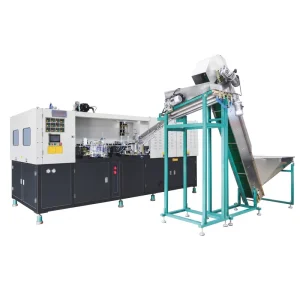
EPA.ES-2C150 Yenilebilir Yağ ve Saplı Şişeler için Tam Otomatik Şişirme Kalıplama Makinesi
-
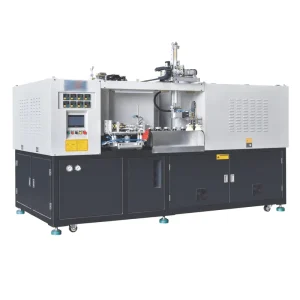
EPA.ES-2C130 Tam Otomatik Şişirme Kalıplama Makinesi, Geniş Ağızlı Kavanoz ve Konserve Kutuları İçin
-
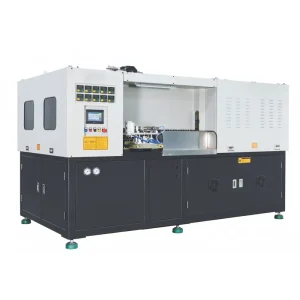
EPA.AS-4C76.2 Günlük Kimyasal ve Kozmetik Şişeleri için Tam Otomatik Şişirme Kalıplama Makinesi
-
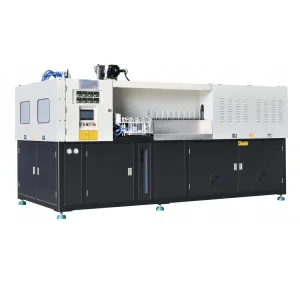
EPA.AS-4C76.2 İlaç Şişeleri için Tam Otomatik Şişirme Kalıplama Makinesi