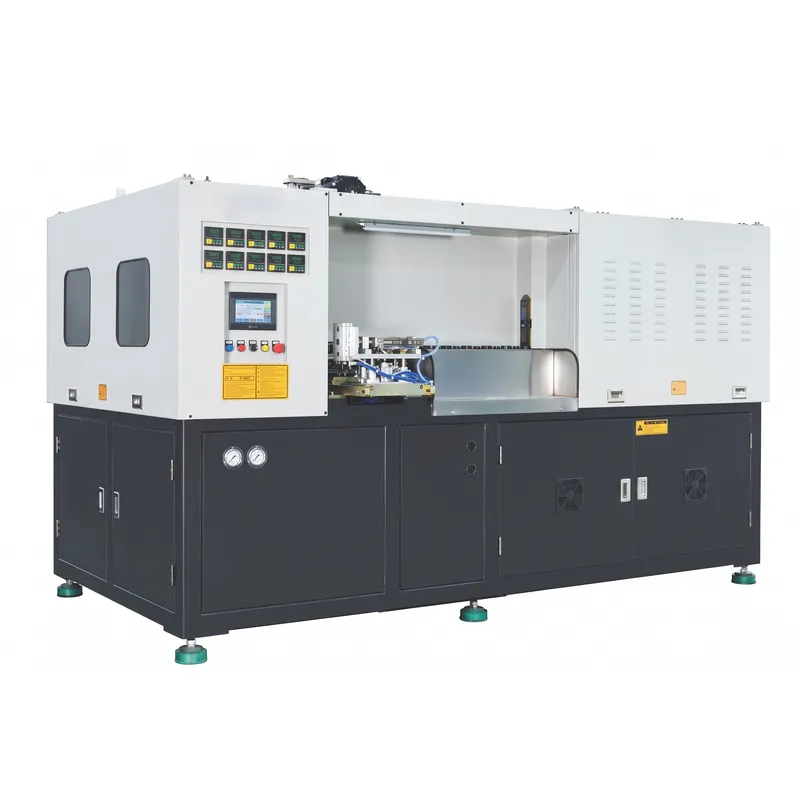
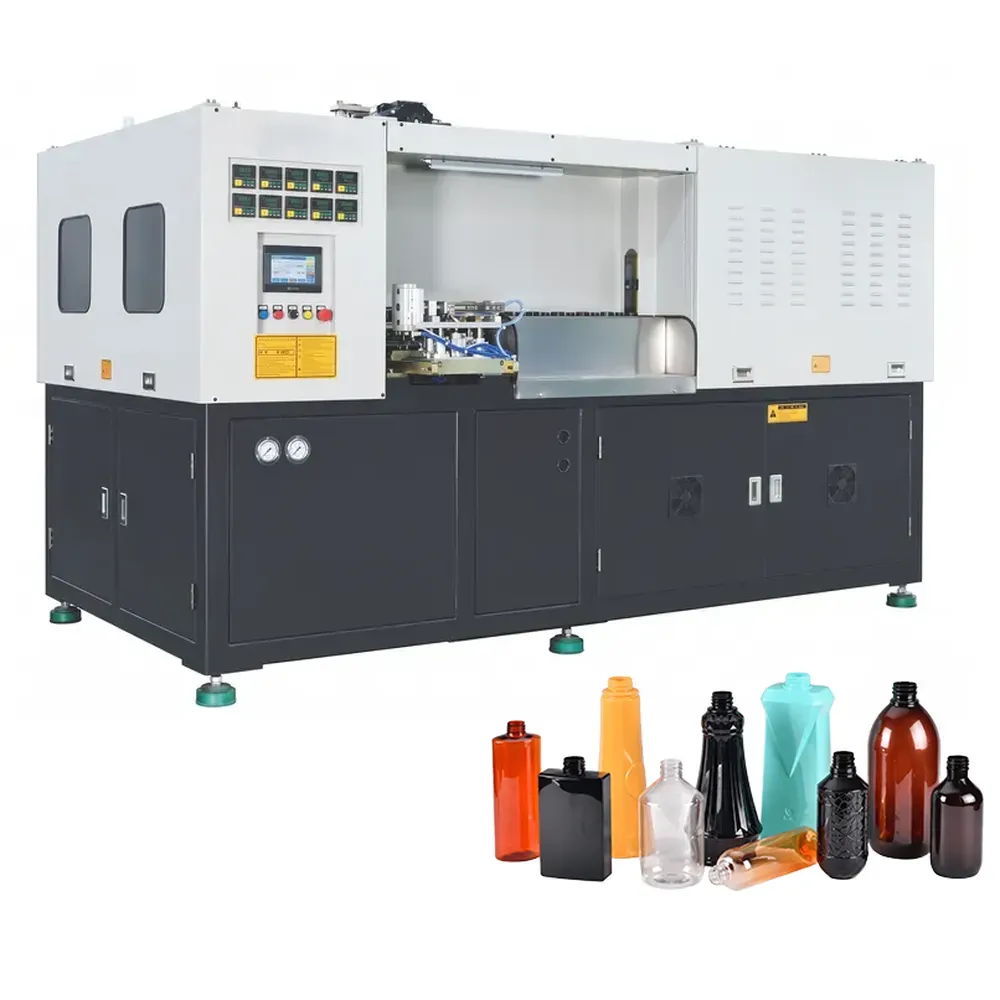
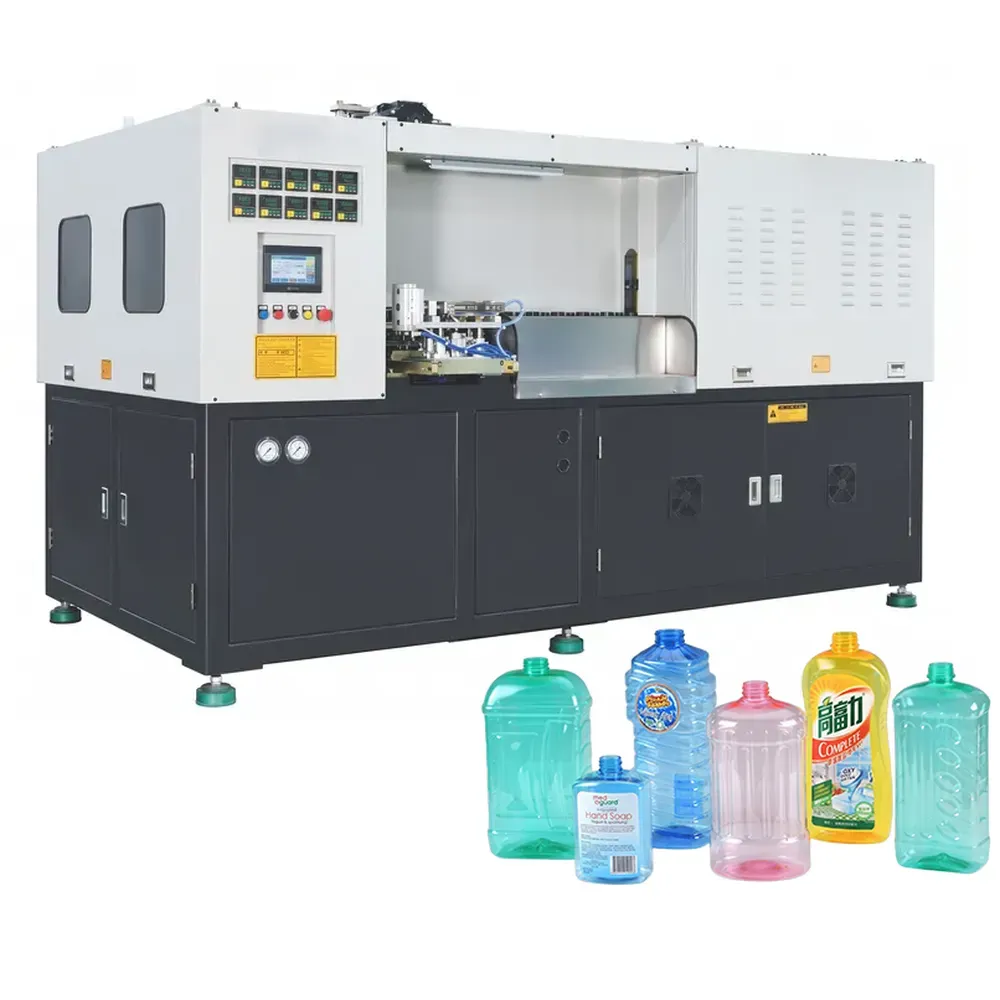
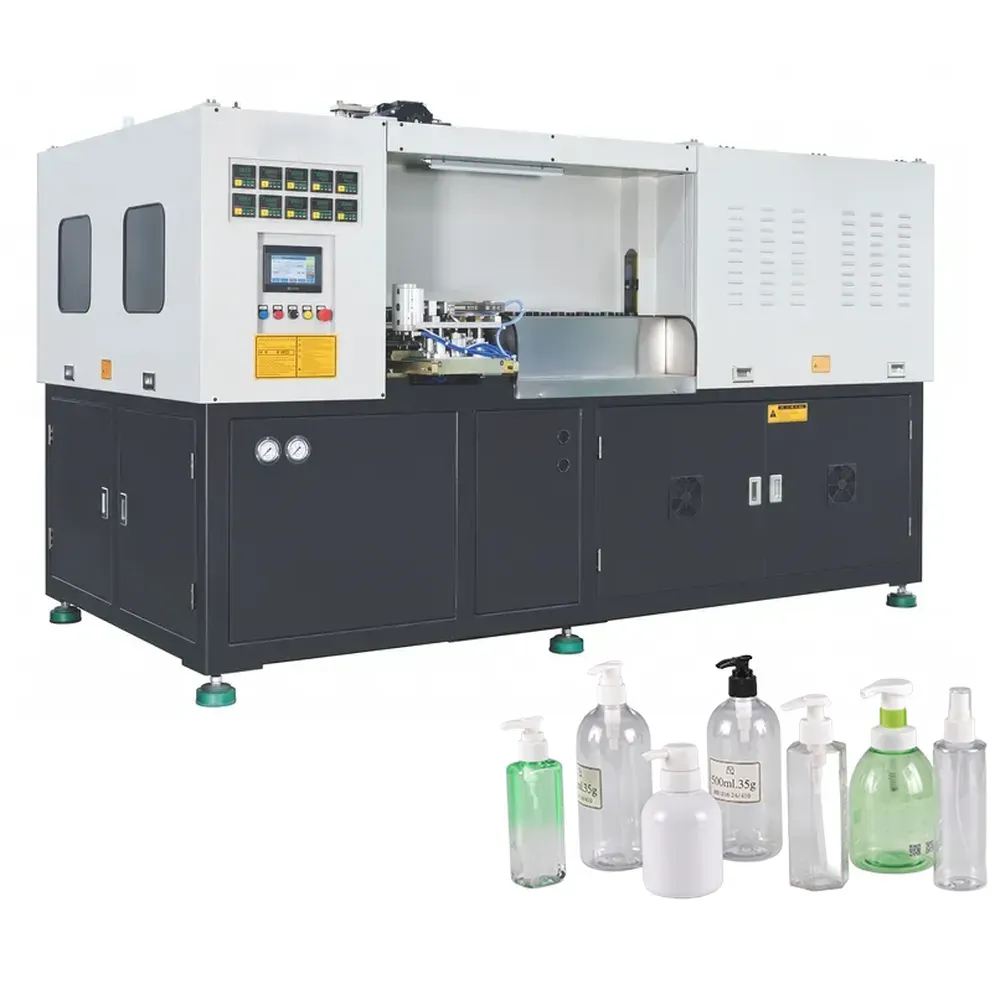
EPA.ES-3C114 เครื่องเป่าขึ้นรูปอัตโนมัติเต็มรูปแบบ สำหรับขวดผลิตภัณฑ์เคมีภัณฑ์และเครื่องสำอาง
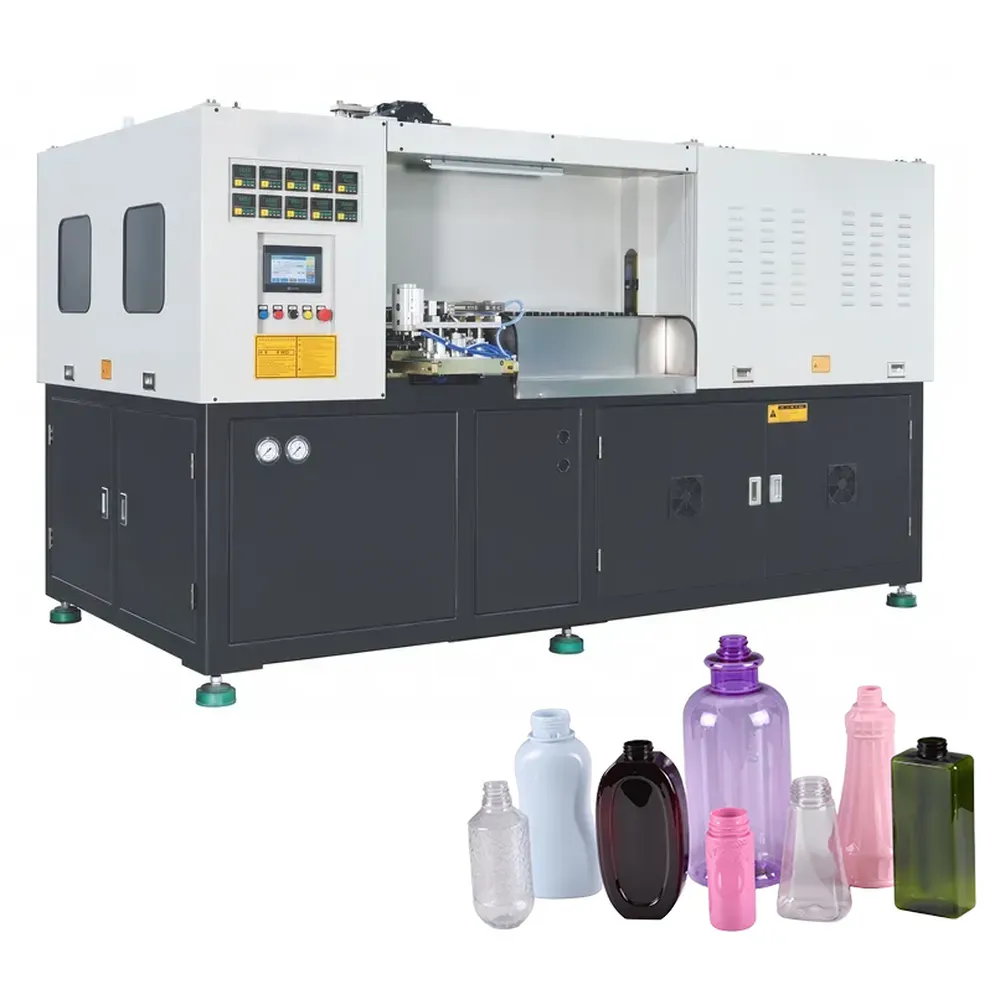
เครื่องเป่าขึ้นรูปพลาสติกอัตโนมัติรุ่น EPA.ES-3C114 เป็นเครื่องเป่าขึ้นรูปประสิทธิภาพสูง ออกแบบมาโดยเฉพาะสำหรับการผลิตขวดบรรจุสารเคมีและเครื่องสำอางในชีวิตประจำวัน สร้างขึ้นจากมอเตอร์เซอร์โวที่มีชื่อเสียงระดับนานาชาติ ตัวลดเกียร์ที่มีความแม่นยำ และระบบควบคุมไฟฟ้าขั้นสูง เครื่องเป่าขึ้นรูป PET อัตโนมัตินี้จึงมอบการทำงานที่เสถียร เชื่อถือได้ และประหยัดพลังงาน ซึ่งเป็นสิ่งที่สายการผลิตบรรจุภัณฑ์สมัยใหม่ต้องการ ในฐานะเครื่องเป่าขึ้นรูปขวดเครื่องสำอางที่สร้างขึ้นโดยเฉพาะ EPA.ES-3C114 โดดเด่นด้วยวัสดุ PET และ PETG สามารถผลิตขวดรูปทรงและคอขวดที่หลากหลายได้พร้อมกันใน 3 ช่อง
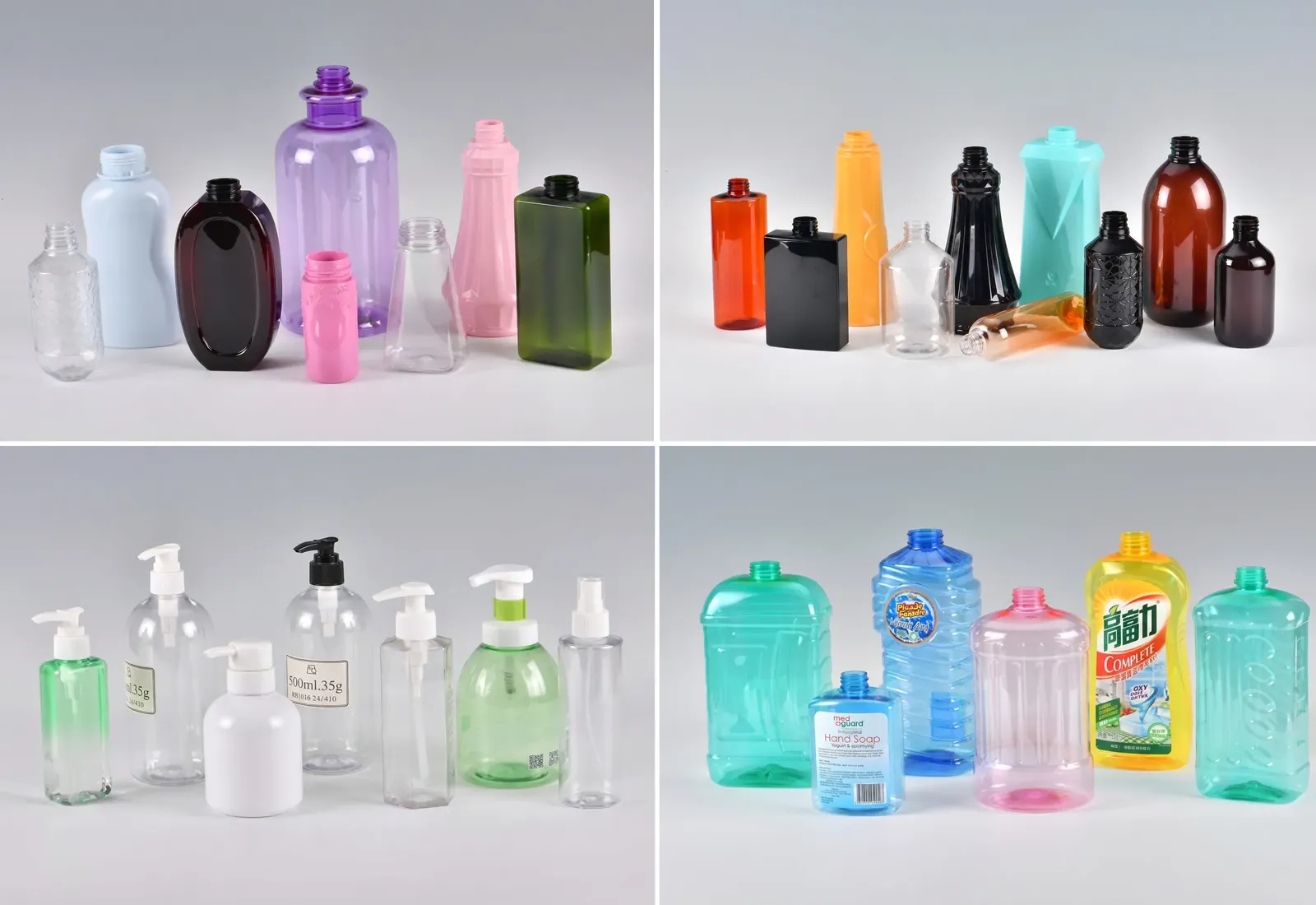
The EPA.ES-3C114 is a high-performance fully automatic blow molding machine engineered specifically for daily chemical and cosmetic bottle production. Built around internationally renowned servo motors, precision reducers, and advanced electrical control systems, this automatic PET blow molding machine delivers the stable, reliable, and energy-efficient operation that modern packaging lines demand. As a purpose-built cosmetic bottle blow molding machine, the EPA.ES-3C114 excels with PET and PETG materials, producing a wide range of bottle shapes and neck finishes across 3 cavities simultaneously. Its particular strength lies in manufacturing complex, irregularly shaped bottles that challenge standard equipment, making it a preferred plastic blow molding machine for premium cosmetic and personal care brands. With a theoretical output of 2,400 bottles per hour and a compact footprint of 3,240 x 1,800 x 2,000mm, it suits both greenfield installations and factory-floor upgrades where space efficiency matters.
As a versatile daily chemical bottle blow molding machine, the EPA.ES-3C114 handles container volumes from 30ml to 1,500ml, covering toner bottles, lotion containers, serum dispensers, shampoo bottles, and body wash packaging in a single machine platform. The servo-driven injection stretch blow molding machine architecture guarantees repeatable wall thickness, accurate neck finishes, and high transparency in the finished container. Its user-friendly interface reduces operator learning time, while optimized energy management makes this industrial blow molding machine an economical long-term investment. By combining high molding precision with broad material applicability, the EPA.ES-3C114 helps manufacturers scale output, control production costs, and raise product quality to meet the increasingly demanding standards of global cosmetic and daily chemical markets. For buyers evaluating types of blow molding machine technology for cosmetic packaging, this model represents the current benchmark in its class.
พารามิเตอร์ทางเทคนิค
| แบบอย่าง | หน่วย | EPA.ES-3C114 | |
|---|---|---|---|
| การขึ้นรูป | ระยะการหนีบ | มม. | 133 |
| ระยะห่างของการเปิดแม่พิมพ์ | มม. | 363 | |
| ระยะห่างใกล้แม่พิมพ์ | มม. | 230 | |
| จังหวะการยืดกล้ามเนื้อ | มม. | 350/450 | |
| ระยะห่างของการเปิดแม่พิมพ์ | มม. | 50 | |
| ระยะห่างใกล้แม่พิมพ์ | มม. | 114 | |
| ที่ยึดพรีฟอร์ม | 74 | ||
| ฟันผุ | 3 | ||
| คอนเทนเนอร์ | ปริมาตรสูงสุดของตู้คอนเทนเนอร์ | มล. | 1500 |
| ช่วงเส้นผ่านศูนย์กลางคอ | มม. | 40 | |
| เส้นผ่านศูนย์กลางภาชนะสูงสุด | มม. | 95 | |
| ความสูงสูงสุดของตู้คอนเทนเนอร์ | มม. | 250/330 | |
| ผลลัพธ์เชิงทฤษฎี | บีเอฟพี | 2400 | |
| ระบบไฟฟ้า | กำลังความร้อนสูงสุด | kw | 40 |
| กำลังความร้อน | kw | 18 | |
| ระบบอากาศ | แรงดันใช้งาน | กก./ซม.² | 7 |
| การใช้ลมแรงดันต่ำ | ลิตร/นาที | 1500 | |
| แรงดันลม | กก./ซม.² | 35 | |
| การใช้ลมแรงดันสูง | ลิตร/นาที | 3200 | |
| น้ำหล่อเย็น | แรงดันใช้งาน | กก./ซม.² | 5-6 |
| อุณหภูมิ | ℃ | 8-12 | |
| อัตราการไหล | ลิตร/นาที | 30 | |
| เครื่องจักร | ขนาด (ยาว*กว้าง*สูง) | มม. | 3240*1800*2000 |
| น้ำหนัก | กก. | 4000 | |
Features of the EPA.ES-3C114 Cosmetic Bottle Blow Molding Machine
1. ส่วนประกอบหลักคุณภาพสูงและเชื่อถือได้
Every critical component in the EPA.ES-3C114 is sourced from internationally renowned suppliers, including servo motors, precision reducers, and electrical and control elements. This ensures stable and durable operation from the very first production cycle. The servo control system responds with exceptional sensitivity and high control accuracy, which directly reduces the machine failure rate and extends equipment service life well beyond industry averages. Manufacturers investing in a quality blow molding machine will find this component strategy delivers lower total cost of ownership across multi-year production runs.
2. ความสามารถในการปรับตัวสูง และรูปแบบขวดที่หลากหลาย
The ES-3C114 series covers a broad range of model configurations, capable of producing bottles from 30ml to 1,500ml. Body diameter, container height, and neck dimensions are all flexibly adjustable. Processing PET and PETG materials with equal precision, this PET bottle blow molding machine handles standard cylindrical bottles and highly complex irregular shapes with consistent quality. It serves as a professional plastic bottle blow molding machine for lotion, toner, serum, shampoo, conditioner, hand sanitizer, and specialty cosmetic packaging, providing a single versatile platform for diverse SKU portfolios across cosmetic and daily chemical product lines.
3. ประสิทธิภาพสูงและประหยัดพลังงาน
The electrical system operates with a max heating power of 40kW and a working heating power of 18kW, combining servo drive technology to significantly reduce energy consumption compared to conventional hydraulic systems. The blowing system achieves a maximum pressure of 35 kg/cm², delivering high blow molding efficiency with a theoretical output of 2,400 bottles per hour across 3 cavities. This makes the EPA.ES-3C114 a genuine high speed blow molding machine for cosmetic and daily chemical production. Manufacturers switching from older equipment will experience measurable reductions in electricity costs alongside increased throughput, which directly improves per-unit production economics at scale.
4. มีเสถียรภาพสูงและบำรุงรักษาง่าย
The EPA.ES-3C114 features a scientifically optimized structural design with a cooling water system maintaining temperatures between 8 and 12 degrees Celsius, ensuring consistent bottle molding quality across long production runs. Air pressure parameters and electrical systems are pre-configured to optimal ranges, resulting in a low failure rate under continuous operation. Daily maintenance routines are straightforward, with accessible service points reducing downtime and labor costs. For production managers running multiple shifts, the machine's operational stability translates directly into predictable output schedules and reduced unplanned maintenance events throughout the equipment's service life.
5. โครงสร้างกะทัดรัดและใช้พื้นที่น้อย
At 3,240 x 1,800 x 2,000mm and 4,000kg, the EPA.ES-3C114 is engineered with a compact, factory-floor-friendly footprint that makes layout planning straightforward even in constrained workshop spaces. This size profile is particularly valuable for cosmetic manufacturers operating in urban manufacturing parks or facilities where floor space is at a premium. Despite its compact dimensions, the machine delivers full medium-to-large scale production capability. When comparing types of blow molding machine configurations on a floor-space-per-output basis, the EPA.ES-3C114 consistently demonstrates a strong advantage for cosmetic and daily chemical packaging producers worldwide.
6. Fully Automatic Operational Efficiency
As a fully automatic blow molding machine, the EPA.ES-3C114 eliminates the need for manual intervention at each production stage. From preform loading through bottle ejection, every step is automated and program-controlled. This full automation reduces reliance on skilled manual labor, minimizes human error in the production process, and enables consistent 24-hour operation with minimal operator supervision. For factories transitioning from semi-automatic or manual systems, the productivity gains are immediate and substantial. The automated blow molding machine process also enhances product consistency across large batch runs, a key quality requirement for cosmetic and daily chemical brands with strict packaging specifications and retailer quality audits.
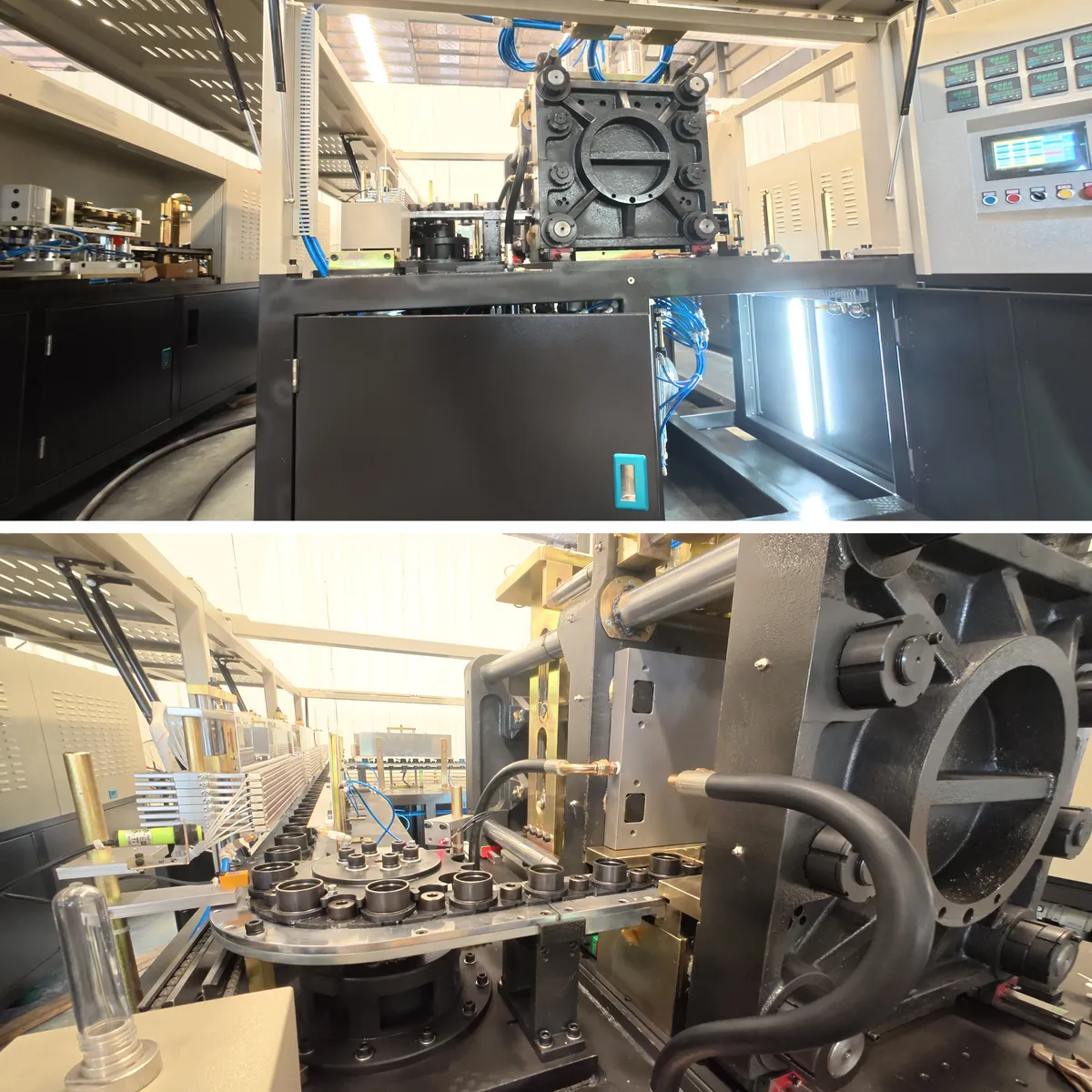
How Does the EPA.ES-3C114 Fully Automatic Blow Molding Machine Work
ขั้นตอนที่ 1: การเตรียมวัตถุดิบ
The blow molding machine process begins with thorough raw material preparation. PET, PETG, and compatible polymers undergo rigorous screening, blending, and moisture control before entering the production feed. For PET materials, pre-drying is critical to prevent hydrolytic degradation during processing. Strict incoming material quality control ensures that resin grade, viscosity, and contamination levels meet specification, setting the quality baseline for every bottle produced in the batch.
ขั้นตอนที่ 2: การฉีดขึ้นรูปพรีฟอร์ม
In the injection phase of the automatic PET blow molding machine process, selected and blended raw materials are fed into the injection system. After heating, melting, and plasticizing under precise temperature and pressure control, molten polymer is injected into the preform mold cavity. Parameters including melt temperature, injection pressure, hold time, and cooling duration are all servo-controlled to produce preforms with consistent wall thickness and accurate neck geometry for downstream blowing.
ขั้นตอนที่ 3: การอุ่นชิ้นงานขึ้นรูปเบื้องต้น
Following injection molding, preforms pass through a carefully calibrated infrared preheating tunnel. During this stage, the temperature of each preform is raised uniformly, with particular attention to the body wall thickness zone. The target is to achieve consistent plasticity and flexibility across all 74 preform positions simultaneously. Controlled preheating is critical for the two-stage blow molding machine process because uneven temperature distribution directly causes wall thickness variation and dimensional inconsistency in the finished bottles.
ขั้นตอนที่ 4: การขึ้นรูปด้วยการเป่าแบบยืด
At the core of the injection stretch blow molding machine process, preheated preforms enter the 3-cavity blow mold. The stretch rod extends to biaxially orient the material longitudinally while high-pressure air at up to 35 kg/cm2 expands the preform radially against the mold cavity walls. This biaxial orientation significantly improves the mechanical strength, clarity, and barrier properties of the finished PET bottle. Precise servo control of stretch timing and air pressure profiles ensures consistent cavity-to-cavity quality across all three positions in every production cycle.
Applications of the EPA.ES-3C114 Daily Chemical Blow Molding Machine
Skincare and Serum Packaging
The EPA.ES-3C114 PET blow molding machine excels at producing premium skincare bottles including essences, serums, and facial toners. With neck diameter precision at 40mm and container heights reaching 330mm, it accommodates the slender, sophisticated bottle profiles that high-end cosmetic brands require. Superior wall thickness uniformity and crystal clarity in PET output meet the optical standards that retail shelf presence and brand premium positioning demand from modern cosmetic packaging lines worldwide.
Lotion and Cream Bottle Production
For moisturizer, body lotion, and facial cream containers, the machine's 95mm maximum body diameter and flexible cavity spacing accommodate the wide, round bottle formats popular in mass-market and professional cosmetic categories. The automatic blow molding machine process delivers smooth, blemish-free exterior surfaces that accept labeling, sleeve-shrink decoration, and direct screen printing without secondary surface treatment, reducing downstream finishing costs for high-volume daily chemical packaging manufacturers.
Shampoo and Hair Care Containers
Handling containers from 300ml to 1,500ml, the EPA.ES-3C114 daily chemical blow molding machine is ideally sized for shampoo, conditioner, hair mask, and scalp treatment bottles. Consistent neck finish at 40mm supports standard flip-top, disc-top, and pump closures used across the personal care sector. High production output at 2,400 bottles per hour enables cosmetic manufacturers to meet large retailer purchase orders and seasonal demand peaks without additional machine investment or extended production lead times.
Shower Gel and Body Wash Bottles
The machine's exceptional capability in producing irregularly shaped bottles makes it a strong fit for differentiating shower gel packaging. Brands increasingly use unique container geometry as a point-of-sale differentiation tool, and the EPA.ES-3C114 handles complex contoured shapes that challenge standard เครื่องเป่าขึ้นรูปพลาสติก platforms. PETG material compatibility further expands design flexibility, allowing enhanced gloss, tinted transparency, and distinctive tactile surface textures that premium bath and body care brands increasingly specify in their packaging briefs.
Perfume and Fragrance Packaging
For fragrance secondary packaging and ancillary containers, the EPA.ES-3C114 delivers the dimensional accuracy and optical clarity that luxury fragrance presentation requires. The bottle blow molding machine produces containers with consistent clarity and precise neck finishes that interface reliably with crimped and threaded fine-mist spray closures. Its servo-controlled process minimizes batch-to-batch variation, an important capability for fragrance brands that maintain strict quality verification protocols for export shipments to European, North American, and Gulf market retailers.
Hand Care and Sanitizer Bottles
The EPA.ES-3C114 produces hand wash, hand cream, and hand sanitizer containers across the full 30ml to 1,500ml volume range. PET material compatibility provides the chemical resistance required for alcohol-based and surfactant-rich formulations used in hand hygiene products. The custom blow molding machine configuration options allow producers to customize bottle shape, shoulder geometry, and base design to match specific brand architecture or to produce private-label containers for multiple retail customers from a single mold set on the same machine platform.
Baby Care and Sensitive Skin Products
Baby shampoo, gentle body wash, and infant care product containers demand zero flash contamination and strict dimensional consistency. The EPA.ES-3C114, operating as a true fully automatic blow molding machine, eliminates manual handling at critical production stages and reduces particulate contamination risk. PETG options provide BPA-free clarity with superior impact resistance for the baby care segment. Clean production and high bottle-to-bottle consistency support quality certification requirements that major retailers and international baby care brands mandate for their approved supplier packaging programs.
Household Cleaning Product Containers
Household surface cleaners, fabric softeners, and dishwashing liquid bottles in the 500ml to 1,500ml segment are efficiently produced on this industrial blow molding machine platform. PET's excellent chemical resistance to common cleaning agents makes it the preferred material choice. The 2,400 bph output rate at 3 cavities ensures that household cleaning product manufacturers, who typically operate on thin margin economics requiring maximum production volume, can achieve the per-unit cost targets necessary to compete in mass retail and private-label cleaning product categories across both domestic and export markets.
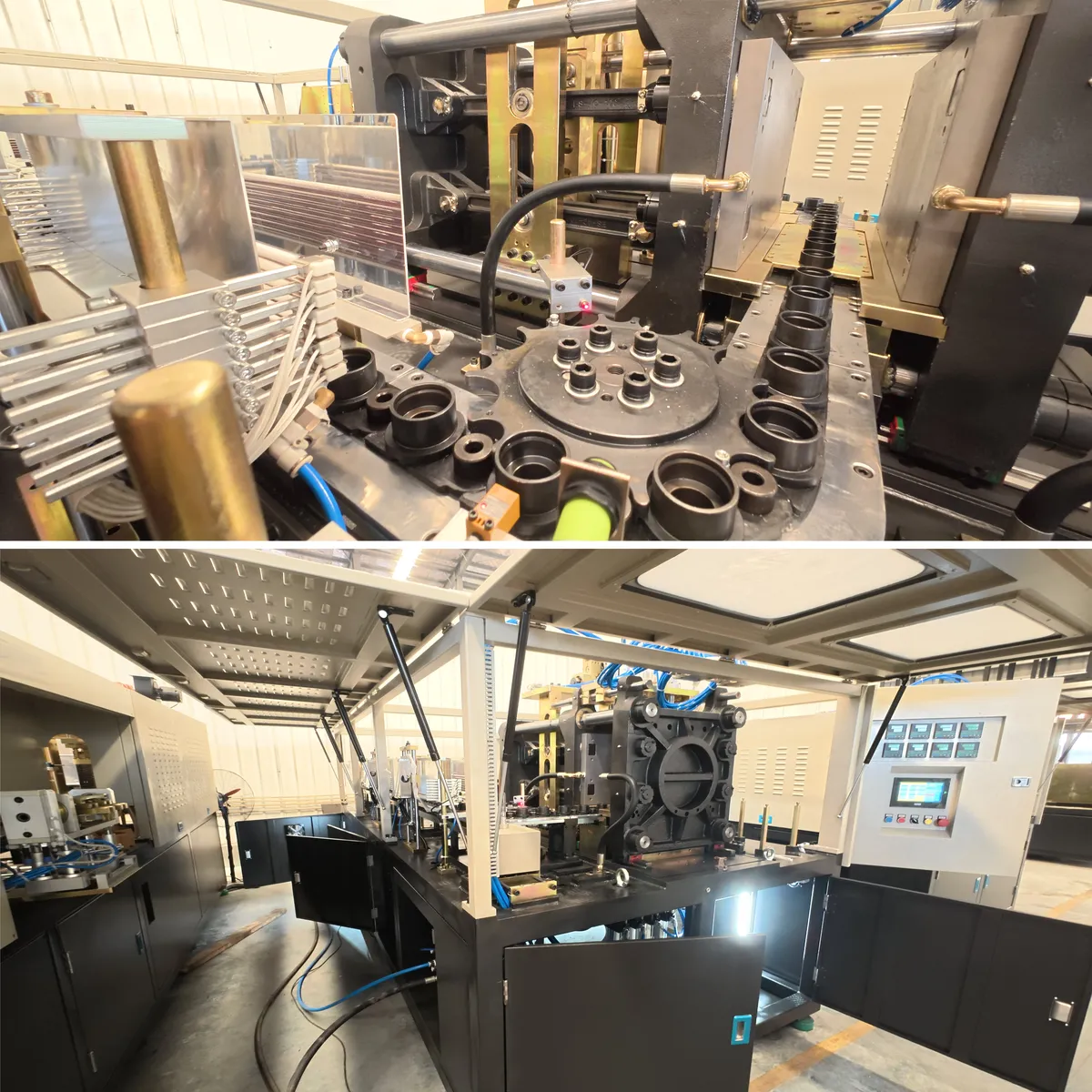
EPA.ES-3C114 PET Blow Molding Machine Parts
ระบบการให้อาหาร
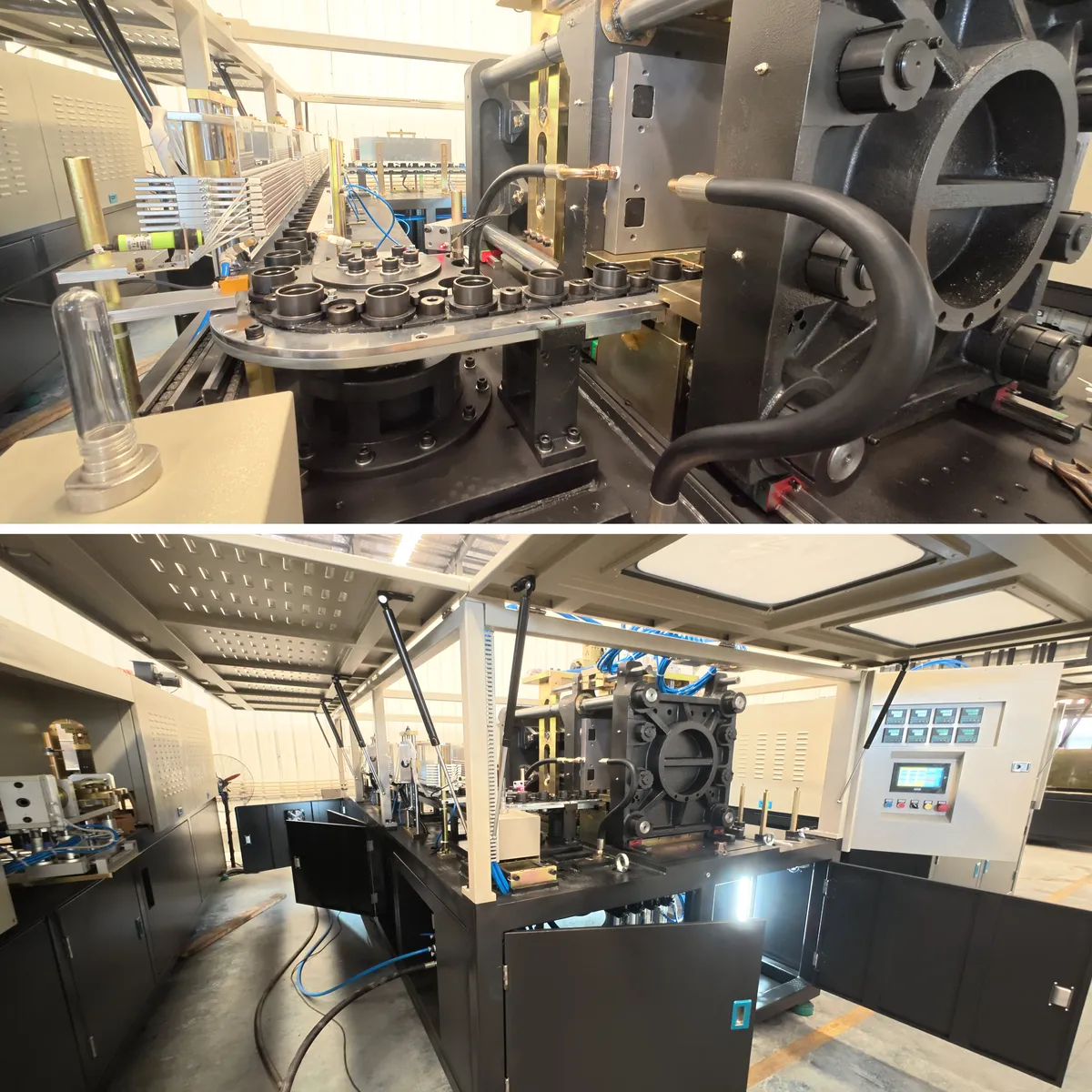
The feeding system comprises the hopper, preform conveyor, orientator, gravity rail, and associated steering and electric drive components. Raw PET preforms are fed into the blow molding machine through this fully automated loading path. The orientator aligns preforms correctly before they enter the conveying rail, ensuring consistent neck-up orientation for every preform entering the heating section. A reliable feeding system is fundamental to achieving the rated output of 2,400 bottles per hour without manual re-alignment or feeding interruptions during production shifts.
เครื่องเอียงพรีฟอร์ม
Because the EPA.ES-3C114 processes PET preforms, the preform tilter is a key blow molding machine part that automatically supplies pre-oriented preforms to the system hopper from bulk storage. The tilter handles the transition from randomly stacked bulk preforms to the single-file neck-up orientation required for the heating carousel. Its automated operation removes a manual labor step that can introduce inconsistency and injury risk in high-throughput production environments, contributing to the machine's suitability for continuous multi-shift operation.
Infrared Heating Section
The infrared heating section uses zoned quartz lamp arrays to raise preform temperatures uniformly to the blow-ready range. With a maximum heating power of 40kW and a working heating power of 18kW, the system delivers precise thermal profiles adjustable by zone and lamp intensity. The 74-position preform holder carousel ensures that all preforms reach identical temperature before entering the blow station. Independent zone adjustment allows operators to fine-tune temperature gradients for different bottle shapes, neck designs, and wall thickness profiles across the wide container range the machine supports.
ชุดจับยึดสำหรับขึ้นรูปด้วยการเป่า
The 3-cavity blow mold clamping unit secures the blow molds with a clamping stroke of 133mm and a mold-close distance of 114mm, providing the rigidity required to withstand 35 kg/cm2 blowing pressure without mold deflection. The precision mold alignment system ensures consistent parting-line quality and prevents flashing on finished bottles. Servo-driven mold closing delivers smooth, repeatable clamping force across every production cycle, which is critical for maintaining dimensional accuracy in complex-shaped cosmetic bottles where minor mold movement would cause unacceptable visual defects and functional failure at closure interfaces.
High-Pressure Air Compressor Station
The compressor station supplies both low-pressure operating air at 7 kg/cm2 and high-pressure blowing air at up to 35 kg/cm2. Low-pressure air consumption stands at 1,500 ltr/min while high-pressure consumption reaches 3,200 ltr/min at full production speed. The station integrates boosters, connectors, air tank, and pressure management controls. Stable air pressure supply directly determines bottle wall uniformity and dimensional accuracy in the bottle blow molding machine process, making compressor station sizing and reliability a critical specification factor for production engineers evaluating this equipment category.
ระบบระบายความร้อนด้วยน้ำ
The integrated water cooling system maintains mold temperature between 8 and 12 degrees Celsius at an operating pressure of 5 to 6 kg/cm2 with a flow rate of 30 ltr/min. Precise temperature control in the blow mold is fundamental to achieving rapid cycle times while producing dimensionally stable bottles. Inadequate cooling causes extended cycle times, bottle deformation, and inconsistent wall crystallinity. The EPA.ES-3C114's optimized cooling channel design ensures uniform mold temperature distribution across all three cavities, supporting both high output rates and consistent bottle quality across extended production runs.
ชุดประกอบแกนยืด
The stretch rod assembly performs the biaxial orientation that gives PET bottles their characteristic strength, clarity, and barrier properties. With a stretching stroke of 350 to 450mm, the servo-controlled rods extend into each preform cavity simultaneously, orienting the polymer chains longitudinally before high-pressure air completes the radial blow. Precise stretch ratio control is essential for producing lightweight bottles with optimal wall thickness distribution. The EPA.ES-3C114's servo stretch system allows recipe-based parameter storage, enabling rapid mold changeovers between different bottle formats without manual adjustment calibration for each production run.
สายพานลำเลียงขวดออก
The bottle exit conveyor transfers finished blown containers from the mold station to downstream filling or unscrambling systems. Designed to handle the full range of bottle shapes and sizes the machine produces, from small 30ml cosmetic bottles to 1,500ml daily chemical containers, the conveyor maintains bottle orientation and avoids scratching or marking the finished container surface. Its integration with downstream packaging lines supports seamless high-speed production at 2,400 bph, eliminating bottlenecks at the transition from blowing to filling that would otherwise limit the automatic blow molding machine's effective output in a complete packaging line configuration.
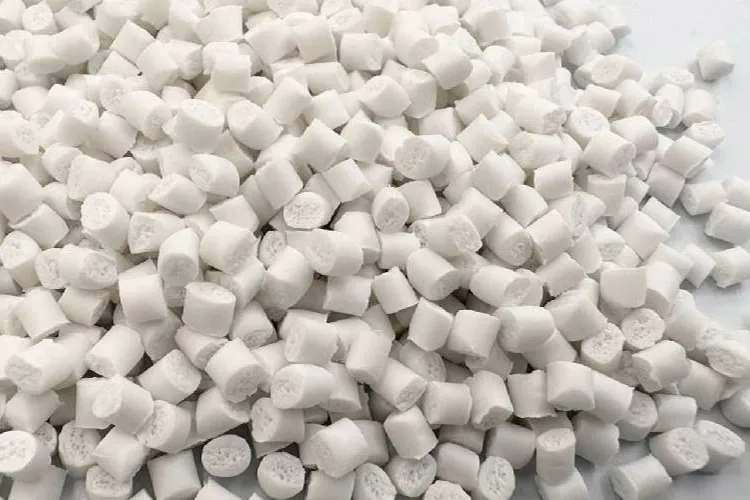
วัตถุดิบที่เข้ากันได้
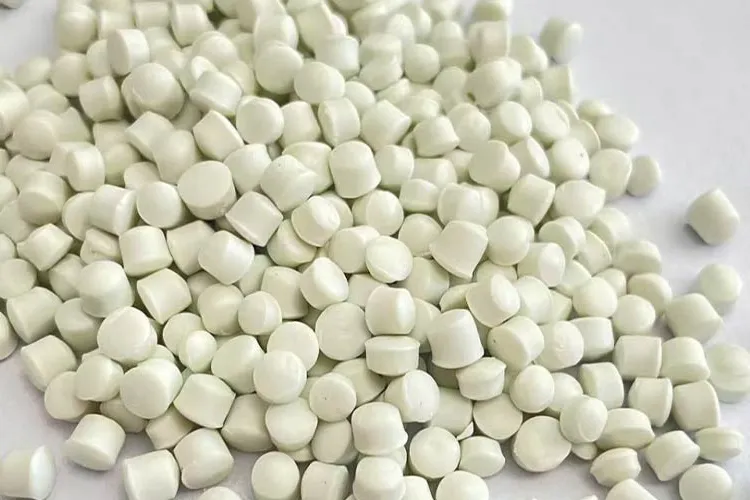
พีพี (โพลีโพรพีลีน)
Polypropylene offers an excellent strength-to-weight ratio combined with good chemical resistance and a moderate processing temperature profile. It is particularly suited for daily chemical and cosmetic containers that require both flexibility and structural rigidity. PP's natural translucency and ability to accept colorants across the full spectrum makes it versatile for brand color programs. As a material option for the daily chemical blow molding machine, PP supports the production of refillable containers, dispensing bottles, and application-specific packaging with integrated functional elements like handles and grips.
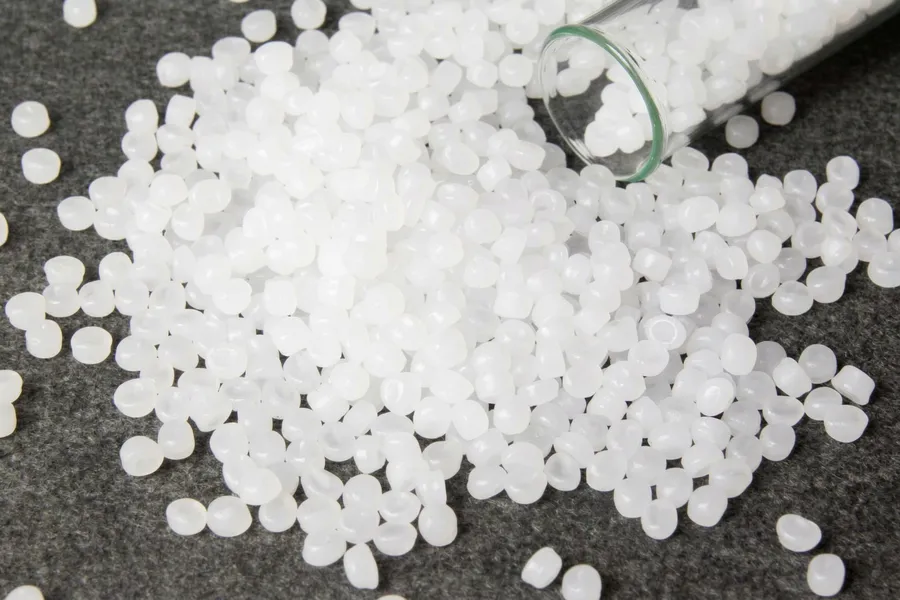
พีอี (โพลีเอทิลีน)
Polyethylene, encompassing both LDPE and LLDPE grades, provides exceptional flexibility, moisture barrier properties, and ease of processing on this plastic blow molding machine. LDPE is widely used for squeeze bottles, travel-size containers, and flexible packaging formats in the cosmetic and personal care sectors. Its softness allows products to be dispensed by squeezing the container directly. LDPE bottles maintain flexibility even at low temperatures, making them suitable for cosmetic products sold in colder climate markets across Europe, North America, and East Asia.
พีซี (โพลีคาร์บอเนต)
Polycarbonate delivers exceptional impact resistance and high-temperature tolerance that makes it suitable for reusable cosmetic containers, professional hair care packaging, and salon-grade product bottles that must withstand repeated use and sterilization cycles. PC's exceptional optical clarity rivals glass in finished container appearance, supporting premium brand positioning for luxury cosmetic lines. Where product formulations are compatible with PC chemistry, this material raises the perceived value of the packaging significantly, allowing cosmetic manufacturers to target higher retail price points with their finished product ranges.
PS (โพลีสไตรีน)
Polystyrene, particularly in its oriented form, provides good clarity and a smooth surface finish suitable for cosmetic and personal care containers in the value and mass-market segments. Its ease of processing and low material cost make PS an economical option for high-volume daily chemical packaging where transparency and reasonable surface quality are required but premium optical performance is not the primary specification. PS accepts printing and labeling readily, supporting the decoration requirements of mass-market cosmetic packaging produced in large volumes for retail chains and private-label programs.
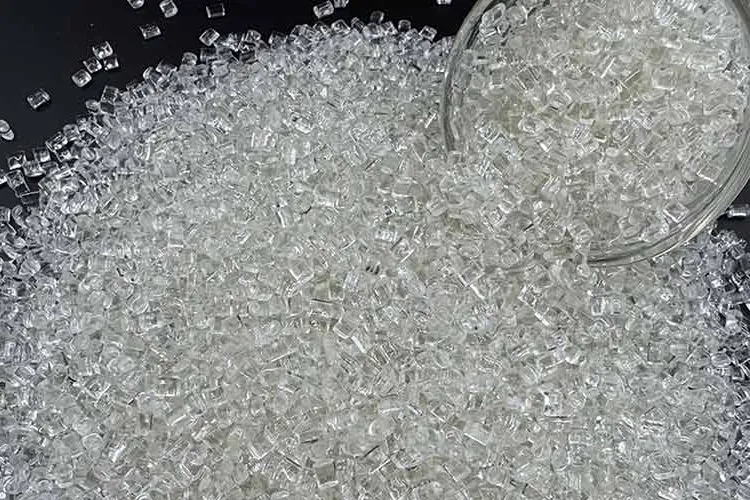
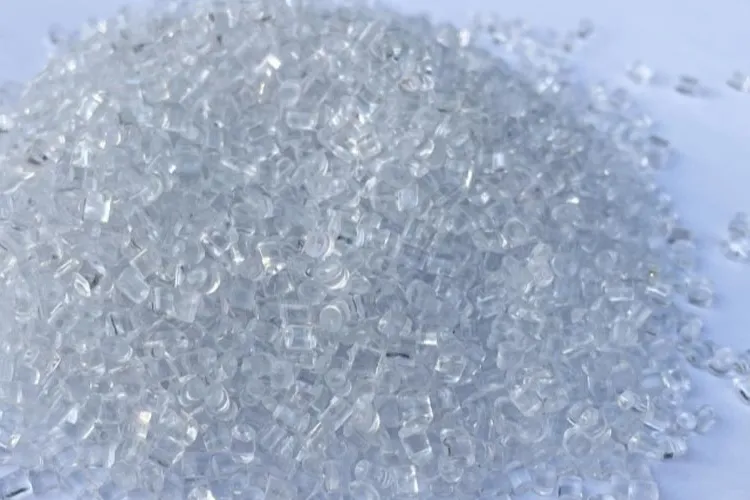
PET (โพลีเอทิลีนเทเรฟทาเลต)
PET is the primary material for the EPA.ES-3C114 PET blow molding machine. Its combination of exceptional clarity, high strength, lightweight structure, and excellent gas barrier properties makes it the material of choice for premium cosmetic, personal care, and beverage bottles. PET produces bottles with a glass-like appearance that enhances product presentation on retail shelves. Its recyclability also supports sustainability objectives that cosmetic brands increasingly communicate to consumers as part of their product positioning and environmental responsibility programs.
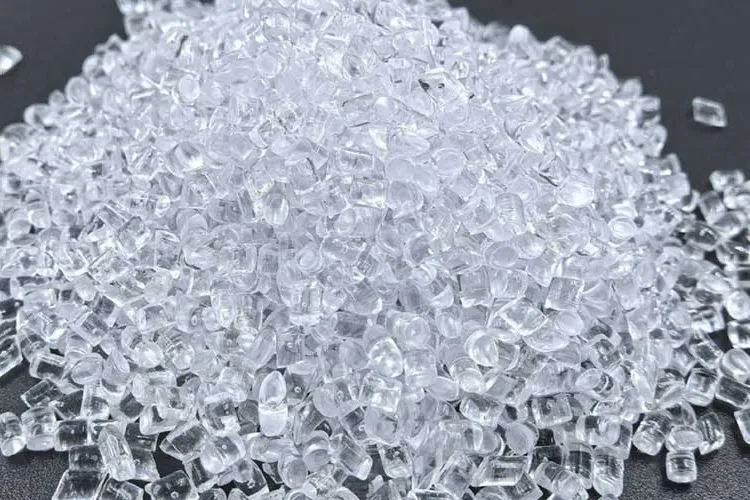
PETG (Polyethylene Terephthalate Glycol)
PETG is the preferred material for high-end cosmetic packaging requiring enhanced clarity, superior toughness, and greater design flexibility compared to standard PET. It processes at lower temperatures than PET, reducing thermal stress on the blow mold. PETG accepts metallic and tinted coloration more readily, supports deep embossing and unique tactile surface textures, and offers strong chemical resistance to alcohol-based cosmetic formulations. As a custom blow molding machine material option, PETG expands the range of premium packaging designs achievable on the EPA.ES-3C114 platform.
HDPE (โพลีเอทิลีนความหนาแน่นสูง)
HDPE is widely used for opaque daily chemical bottles including laundry detergents, household cleaners, and personal care products where chemical resistance and container rigidity are the primary requirements. Its excellent resistance to temperature changes, acids, and bases makes it suitable for a broad range of cleaning product formulations. HDPE is also among the most widely recycled plastics globally, supporting regulatory compliance and brand sustainability programs in markets where extended producer responsibility legislation governs packaging material choices for daily chemical manufacturers.
PVC (Polyvinyl Chloride)
PVC is less commonly specified for new cosmetic packaging programs today due to evolving environmental regulations in major markets, but it remains in use for certain cleaning product containers where specific chemical resistance properties are required and where alternative materials do not meet formulation compatibility requirements. For buyers evaluating raw material options on their blow molding machine suppliers shortlist, PVC compatibility should be confirmed against local packaging regulations and retailer material restrictions before inclusion in a new product packaging specification program in key export markets.
 |
 |
 |
 |
 |
 |
การขึ้นรูปด้วยการฉีดและเป่า (Injection Blow Molding) เทียบกับการขึ้นรูปด้วยการอัดรีดและเป่า (Extrusion Blow Molding)
Buyers evaluating blow molding machine manufacturers often face a foundational process selection decision: injection blow molding (IBM) or extrusion blow molding (EBM). Both processes create hollow plastic containers, but they form the starting shape in entirely different ways. Understanding this distinction is essential before specifying any automatic blow molding machine for a new production line.
Injection blow molding starts from an injection-molded preform. Molten plastic is injected around a core rod to form a precise preform and neck finish. The preform then moves to the blow station and is inflated inside the bottle mold. The finished bottle is removed without trimming flash. In British English the same process is often referenced as injection blow moulding.
Extrusion blow molding starts from a continuously extruded parison. The mold closes around the hollow tube and pinches off excess material. High-pressure air forms the bottle inside the mold, and flash must be trimmed after cooling. This process difference fundamentally affects neck precision, wall thickness control, trimming waste, and the type of container each process can produce economically.
| คุณสมบัติ | การฉีดขึ้นรูปด้วยการเป่า (IBM) | การขึ้นรูปด้วยการเป่าแบบอัดรีด (EBM) |
|---|---|---|
| แบบฟอร์มเริ่มต้น | Injection molded preform | Extruded parison |
| ความแม่นยำของคอ | Extremely high; neck is pre-molded by injection | Standard; depends on mold closing and neck calibration |
| เศษวัสดุ / ของเสีย | Zero flash and very low process waste | ก่อให้เกิดแสงแฟลชที่ต้องตัดแต่งและนำกลับมาใช้ใหม่ |
| ขนาดภาชนะที่เหมาะสมที่สุด | Small to medium precision bottles (30ml to 1,500ml) | Medium to large hollow containers and industrial parts |
| ต้นทุนแม่พิมพ์ | Higher upfront investment for precision tooling | Lower initial mold costs for large hollow containers |
| แอปพลิเคชันที่ดีที่สุด | Pharmaceutical, cosmetic, lab, medical packaging | Jerry cans, drums, tanks, large industrial containers |
| ให้ความสำคัญกับคุณภาพ | ความสม่ำเสมอของขนาดและความน่าเชื่อถือในการปิดผนึก | ความยืดหยุ่นด้านขนาดและความคุ้มค่าด้านปริมาตรของตู้คอนเทนเนอร์ |
When to Choose Injection Blow Molding
- Small and medium precision bottles with accurate threaded necks
- Pharmaceutical, medical, cosmetic, laboratory, or high-value packaging applications
- Production environments requiring zero flash waste and clean operation without secondary trimming
- Applications demanding stable bottle dimensions, repeatable wall thickness, and reliable closure sealing
- PET and PETG bottle production for cosmetic and daily chemical packaging
When to Choose Extrusion Blow Molding
- Large bottles, jerry cans, drums, tanks, and complex hollow industrial parts
- Applications where lower tooling cost is a priority over highest neck precision
- Wide product geometry variety including handled containers and asymmetric shapes
- Applications where trimming flash is an acceptable part of the production process
Cost Perspective: EBM equipment can carry a lower initial purchase price for large containers, but the total production cost calculation must also include resin loss from flash trimming, secondary labor, reject rates, and downstream handling. For precision cosmetic bottles where IBM reduces waste and quality risk, the total cost of ownership over a multi-year production period often favors the IBM process even when initial machine and mold investment is higher. For large industrial containers, EBM typically remains the more economical process choice. Materials used across both processes include HDPE, PP, LDPE, PET, PETG, and PVC, with material choice always validated against bottle geometry, regulatory requirements, and sealing specifications.
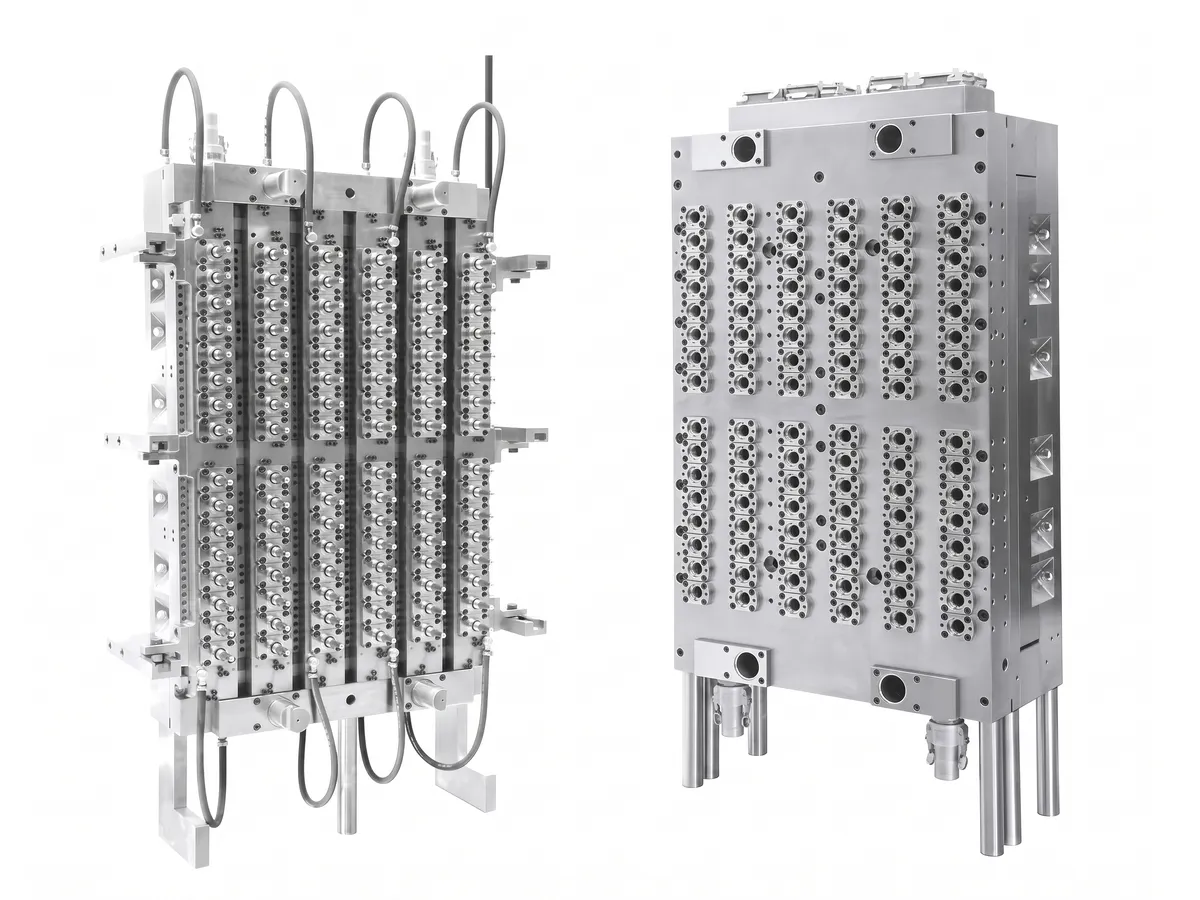
คุณสมบัติของแม่พิมพ์เครื่องเป่าขึ้นรูปขวดเครื่องสำอาง
แม่พิมพ์ฉีดขึ้นรูป
- The two-part die lip design guarantees coaxial alignment between the preform and the neck finish during every injection cycle, eliminating the neck eccentricity that causes closure sealing failures in finished bottles.
- Optimized cooling water channel geometry improves preform cooling efficiency and ensures rapid cycle times without compromising dimensional stability in the cooled preform wall.
- Preform-forming components use imported 2316 die steel, which is inherently rust-resistant and has undergone heat treatment to achieve the hardness and dimensional stability required for precision cosmetic bottle neck production.
- Core plate, cavity plate, and other structural components use 420 stainless steel, providing excellent corrosion resistance in the humid, temperature-cycled environment of continuous injection mold operation.
- The maintenance-accessible design reduces mold servicing time during scheduled maintenance intervals, minimizing production downtime on this blow molding machine platform.
- Standard interchangeable die fittings across the mold range reduce spare parts inventory requirements and allow cross-utilization of components between compatible mold sets.
- Advanced modular mold design allows a single mold set to produce more than one preform variant, increasing tooling investment efficiency for manufacturers with multiple bottle SKUs.
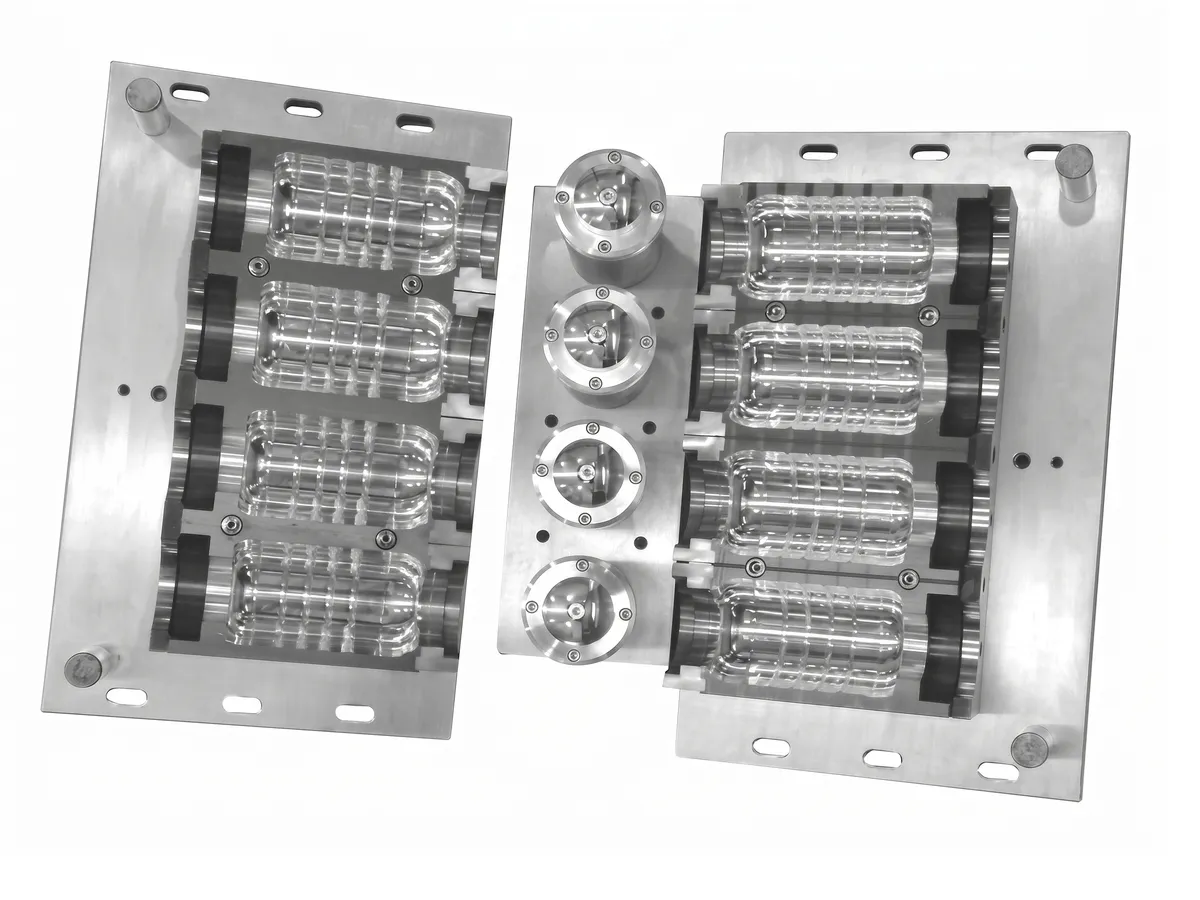
เป่าขึ้นรูป
- Blow mold bodies are manufactured from high-quality steel selected for its thermal conductivity, machinability, and resistance to the fatigue stresses generated by repeated high-pressure blowing cycles at 35 kg/cm2.
- All plastic bottle cavity geometries are designed using advanced 3D CAD and simulation software, ensuring that cavity shapes achieve the target wall thickness distribution before the first physical mold is cut.
- A broad range of standard and custom bottle designs is available for selection, allowing buyers to start production with proven cavity geometries while specifying custom cavities for proprietary bottle shapes.
- Cooling water channels within the blow mold body are designed to deliver uniform temperature distribution across the entire cavity surface, preventing hot spots that cause uneven crystallinity and dimensional variation in finished bottles.
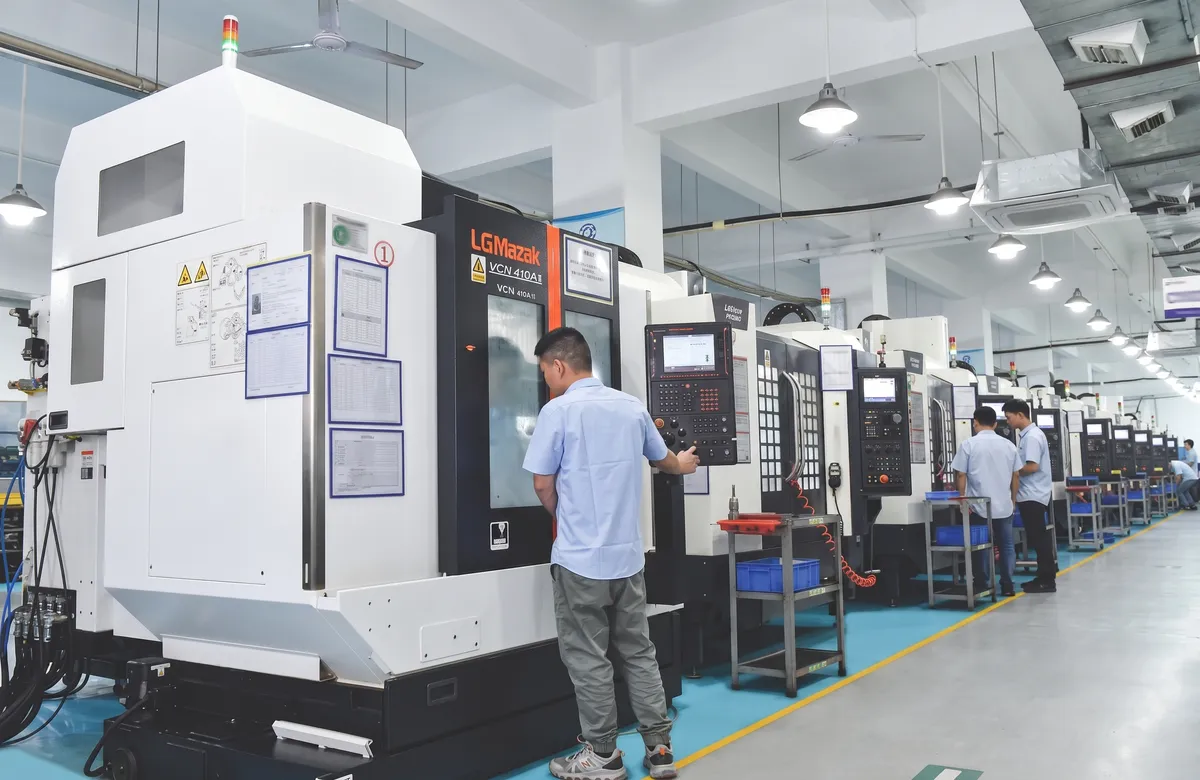
- All structural metal components in the blow mold assembly are machined on CNC machining centers, ensuring dimensional accuracy and surface finish consistency that would not be achievable with conventional machining methods for precision cosmetic bottle blow molding machine tooling.
- Mold parting surface precision and surface texture are optimized to minimize parting line marks on finished bottle exterior surfaces, reducing secondary cosmetic rejection rates for premium cosmetic packaging production runs.
 |
 |
EPA.ES-3C114 Plastic Blow Molding Machine Operating Precautions
1. Pre-Startup Inspection Protocol
Before every production startup, operators must conduct a systematic inspection of all mechanical connections, lubrication points, and fastener torque levels. Verify that cooling water supply is active and within the specified 5 to 6 kg/cm2 pressure range and 8 to 12 degree Celsius temperature range. Confirm that air supply lines are secure and that both low-pressure and high-pressure systems are functioning correctly. Check electrical panel indicators for any fault codes from the previous production session before initiating the startup sequence. This pre-startup routine prevents equipment damage and ensures operator safety on the fully automatic blow molding machine.
2. Preform Quality and Material Verification
Only use PET or PETG preforms that meet the specifications confirmed during mold qualification testing. Verify preform weight, IV (intrinsic viscosity), moisture content (maximum 50 ppm for PET), and dimensional consistency before loading each new batch. Using out-of-specification preforms is the single most common cause of bottle defects, burst failures in the blow station, and mold damage in a PET bottle blow molding machine. Pre-dry all PET preforms at 160 to 180 degrees Celsius for a minimum of 4 hours to prevent hydrolytic degradation during processing, which permanently reduces polymer molecular weight and compromises finished bottle mechanical properties.
3. Temperature Parameter Management
Heating zone temperatures must be set and verified against the approved process parameter sheet for each bottle format and preform design. Never override automatic temperature safeguards or run the blow molding machine with heating zones that have not reached setpoint temperature. Overheated preforms cause premature crystallization and whitening; underheated preforms cause burst failures in the blow station or produce bottles with unacceptable wall thickness distribution. Record heating zone setpoints and actual temperatures at the start of each production run as part of the batch quality documentation required for cosmetic manufacturing compliance programs.
4. Air Pressure System Safety
The EPA.ES-3C114 operates with blowing pressures up to 35 kg/cm2, which represents a significant stored energy hazard. All personnel must maintain safe distances from the blow station during active production. Never attempt to open the blow mold manually during a cycle or insert tools into the mold area while the machine is running. Verify pressure relief valves are functional and set to the correct relief pressure before startup. Inspect all high-pressure air hoses, fittings, and connections for wear, cracking, or leakage on a daily basis, and replace any components showing deterioration immediately to prevent pressure release incidents on the production floor.
5. Mold Changeover Procedures
Mold changeovers on the EPA.ES-3C114 must be performed following the documented lockout-tagout energy isolation procedure. Allow the blow mold to cool to below 40 degrees Celsius before handling. Use the correct lifting tools and personnel team size specified in the maintenance manual for mold weights. After installing a new mold, verify that all cooling water connections are secure and leak-free before initiating a trial cycle. Run a slow-speed trial sequence and inspect the first 20 bottles from each cavity before releasing to full production speed. Document changeover completion time and first-article inspection results in the production log as part of the blow molding machine process quality record.
6. Routine Maintenance and Lubrication Schedule
Follow the manufacturer-prescribed lubrication schedule for all guide rails, cam tracks, stretch rod linear bearings, and preform transfer mechanisms. Use only the specified lubricant grades to avoid contaminating product contact surfaces or causing accelerated component wear. Clean heating lamps and reflector surfaces at the scheduled interval to maintain heating efficiency and prevent uneven preform temperature profiles. Replace worn seals, O-rings, and blow valve components at the intervals specified in the maintenance schedule rather than waiting for visible failure. Proactive maintenance on this industrial blow molding machine significantly extends component life and prevents unplanned production stoppages that generate disproportionate costs in high-output packaging operations.
How to Select the Right Blow Molding Machine
1. Define Your Container Volume Range
The first specification parameter for any blow molding machine selection is the target container volume range. The EPA.ES-3C114 covers 30ml to 1,500ml, making it ideal for cosmetic and personal care bottles. If your product range extends to 5,000ml or beyond, consider models in the 4-cavity series or food jar category from the Ever-Power range. Matching machine container capacity to your product portfolio ensures that you are not running an oversized machine at reduced efficiency or attempting to produce containers outside the equipment's design parameters, both of which increase per-unit production costs and quality risk.
2. Match Cavity Count to Output Requirements
Cavity count directly determines the output rate of any automatic blow molding machine. The EPA.ES-3C114's 3-cavity configuration delivers 2,400 bph at rated speed. Calculate your required annual output, account for planned downtime and changeover hours, and work backward to determine the minimum cavity count and machine speed that meets your production plan. If output requirements significantly exceed this model's rated capacity, evaluate the 4-cavity and 6-cavity models from the same product series. Over-specifying cavity count increases capital cost without proportional operational benefit for smaller production volumes.
3. Confirm Material and Process Compatibility
Verify that the blow molding machine suppliers you are evaluating can confirm compatibility between the machine and your specific resin grades. The EPA.ES-3C114 is designed and validated for PET and PETG, which cover the vast majority of cosmetic and daily chemical packaging applications. If your product requires PP, HDPE, or specialty engineering resins, evaluate whether the machine's heating system and process parameters support those materials. Material incompatibility discovered after purchase is an expensive problem that requires either accepting suboptimal bottle quality or investing in machine modifications that may not be technically feasible.
4. Evaluate Bottle Shape Complexity
Evaluate whether your target bottle shapes require standard cylindrical geometry or complex irregular profiles. Not all plastic blow molding machine platforms handle high-complexity shapes equally. The EPA.ES-3C114 is specifically engineered for complex, irregularly shaped cosmetic bottles that challenge standard equipment. If your product portfolio includes unique contoured bottles, oval cross-sections, deep grip recesses, or complex shoulder geometries, confirm that the supplier has produced similar shapes on the specific machine model you are evaluating, and request sample bottles and technical validation data before committing to a purchase decision.
5. Assess Energy Consumption and Operating Cost
The total cost of machine ownership over a five to ten year production life includes purchase price, installation, tooling, maintenance, and electricity consumption. Servo-driven fully automatic blow molding machine platforms like the EPA.ES-3C114, with 18kW working heating power versus the 40kW maximum, offer significant energy efficiency advantages over older hydraulic systems. Request energy consumption data at rated output for each machine you evaluate and model the 5-year electricity cost at your facility's local energy tariff. Energy cost difference between machine generations often exceeds the initial purchase price premium of newer servo-driven equipment in high-utilization production environments.
6. ประเมินการบริการหลังการขายและความพร้อมของอะไหล่
For any industrial blow molding machine investment, after-sales support capability is as important as machine performance specifications. Verify that the supplier maintains spare parts inventory for critical wear components including blow valves, stretch rods, preform holders, heating lamps, and drive belts. Confirm maximum committed response time for technical support and on-site service for your region. Evaluate the completeness and language quality of the machine manual and process setup documentation. A machine that produces well but loses two weeks of production awaiting spare parts delivers a much lower return on investment than the initial purchase cost calculation suggested.
เหตุใดจึงควรเลือกเครื่องเป่าขึ้นรูป PET ของ Ever-Power?
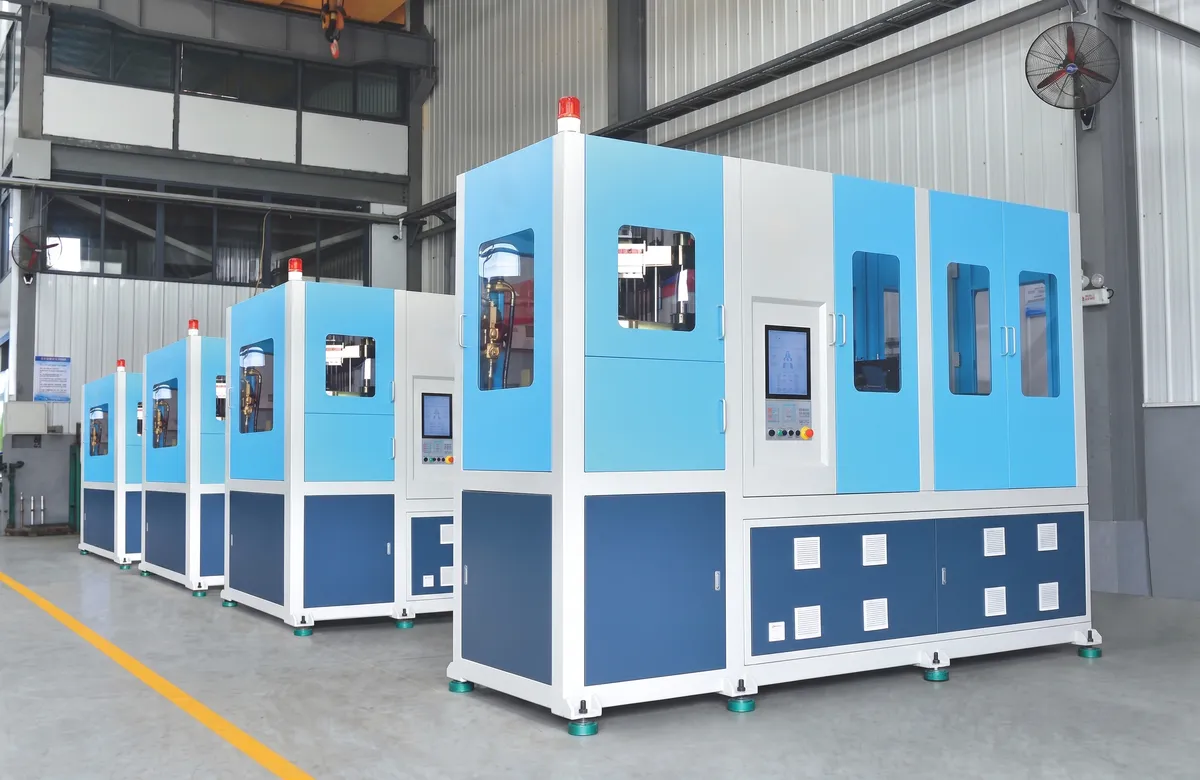
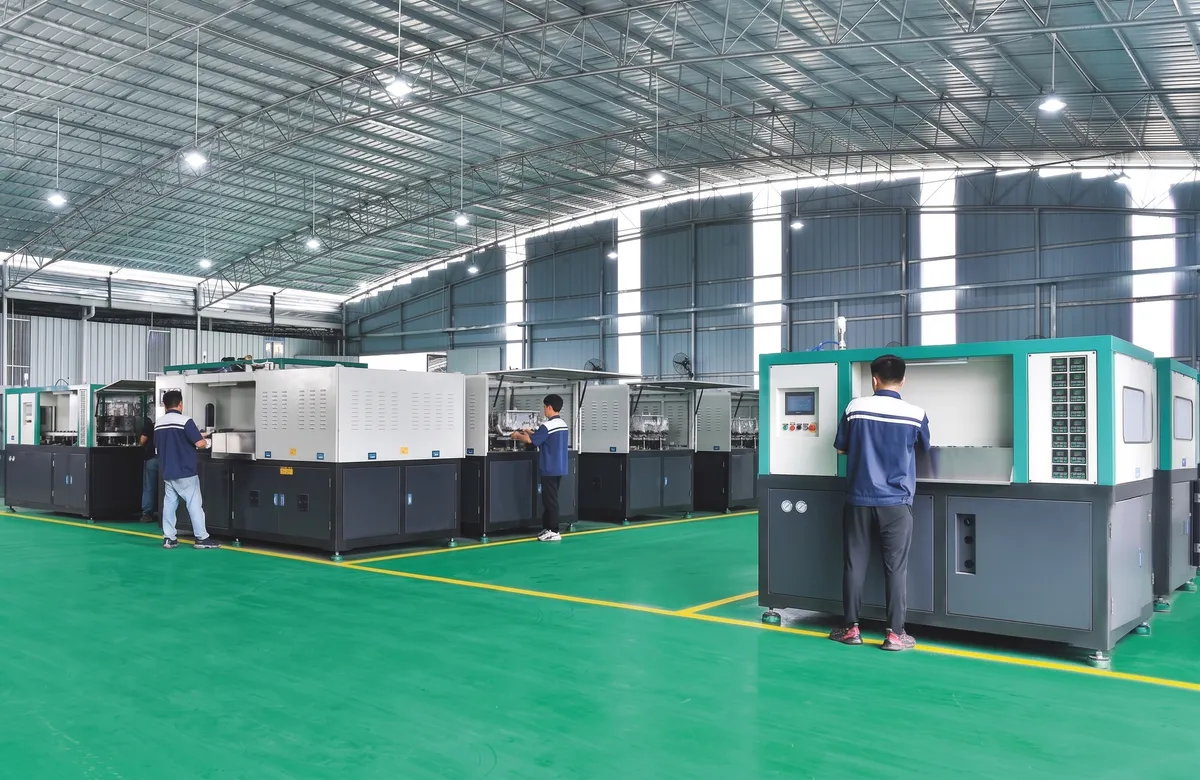
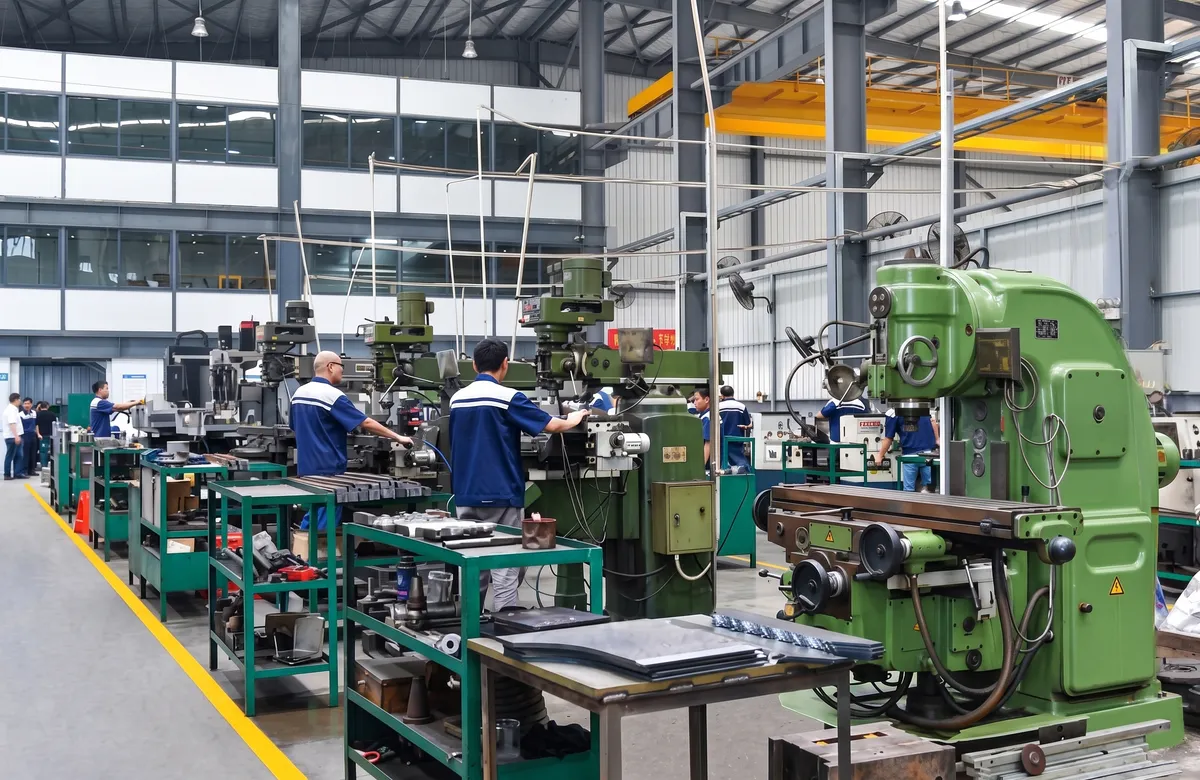
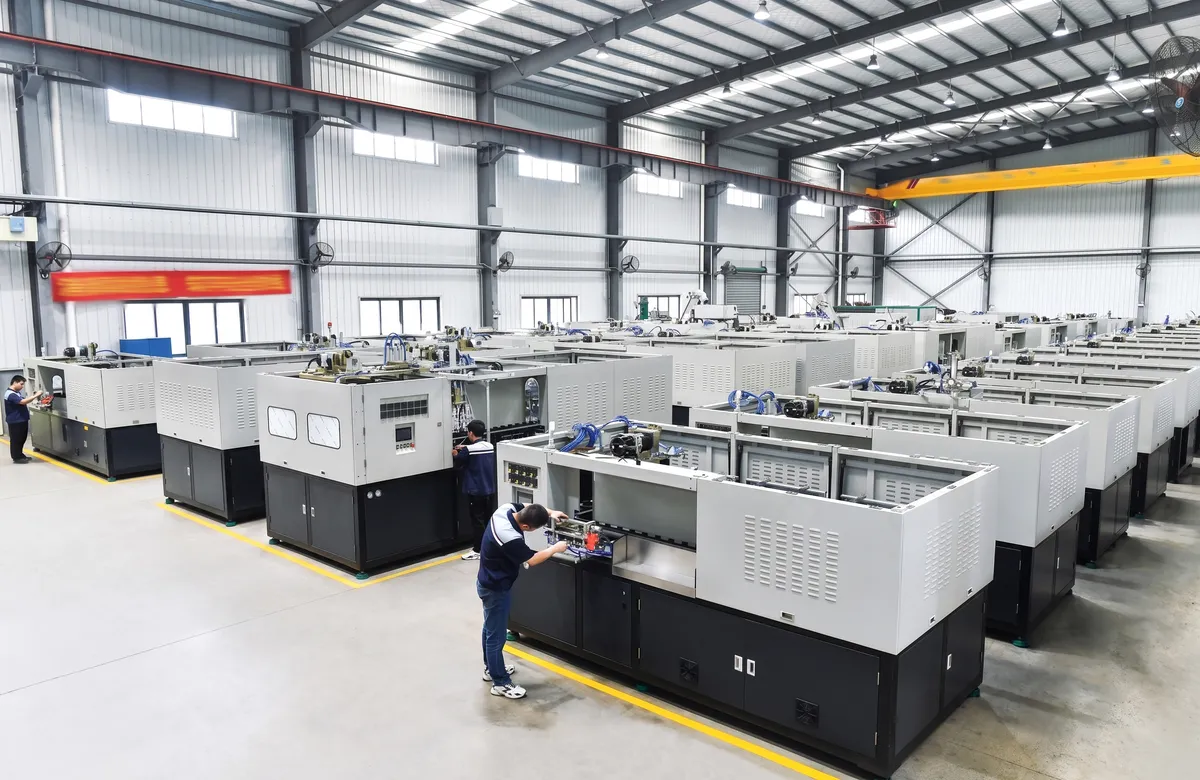
Mexico Ever-Power ISBM Machinery Co., Ltd is a specialist company dedicated to the research and development, production, sales, and international trade of fully automatic blow molding machines. Our product range encompasses injection blow molding machines, extrusion blow molding machines, injection stretch blow molding machines, and auxiliary machinery, giving buyers a complete solution source for any hollow plastic container manufacturing requirement.
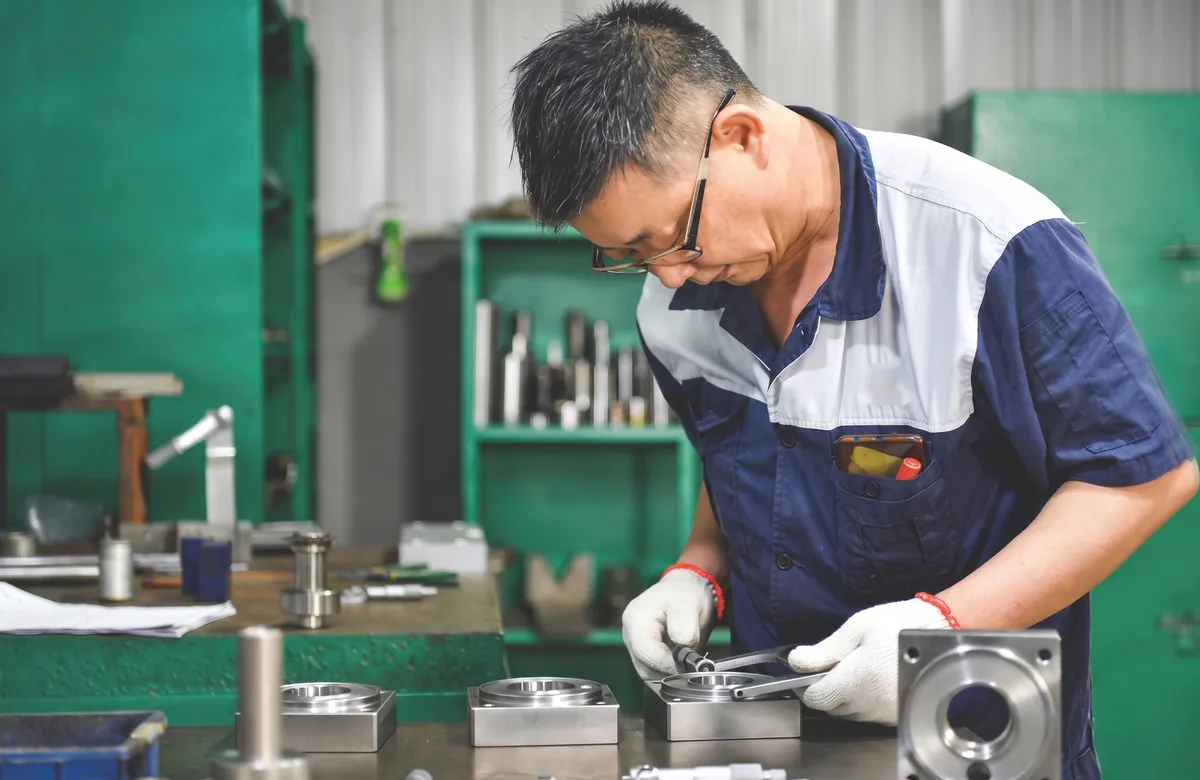
Ever-Power maintains an excellent R&D team that brings together experienced engineers and technical personnel who have spent their careers specializing in injection-blowing machinery and injection-blowing mold development. With deep theoretical knowledge and extensive practical experience across hundreds of production deployments, our technical team provides the detailed, application-specific guidance that generic blow molding machine manufacturers cannot match. We deliver thorough pre-sale technical consultation, responsive in-sale support, and committed after-sale service to every customer globally.
Our product applications cover pharmaceutical packaging, food packaging, health care packaging, and cosmetic packaging, encompassing all major plastic packaging categories. We produce and support equipment capable of handling HDPE, LDPE, PET, PETG, PP, PS, PPSU, PC, Tritan, ABS, PLA, environmental corn materials, EVA, PCTG, and other specialty resins across container volumes from 1ml to 1,000ml and beyond. This breadth of material and application expertise means that regardless of your product category or packaging specification, Ever-Power has the technical knowledge to advise you on the optimal machine configuration for your requirements.
Ever-Power adheres to the enterprise development principles of self-reliance, integrity, pragmatism, innovation, and responsibility. We build one-stop turnkey projects to produce high-end injection-blowing products that meet the quality standards our customers require, with manufacturing quality and consistency that earns lasting partnerships with cosmetic, pharmaceutical, food, and daily chemical packaging manufacturers worldwide. Cooperating with globally recognized brands including C'ESTBON, Haitian, Luhua, Walch, Blue Moon, PROYA, Liby, Estee Lauder, Walmart, Dasenlin, and Shanliang Eye Drops confirms the quality level that Ever-Power delivers as a committed long-term blow molding machine supplier partner.
 |
 |
 |
 |
 |
 |
คำถามที่พบบ่อย
Q: What is the maximum bottle size the EPA.ES-3C114 blow molding machine can produce?
A: The EPA.ES-3C114 produces containers up to 1,500ml in volume, with a maximum container diameter of 95mm and a maximum height of 250mm in standard configuration or 330mm with the extended stretching stroke option. The neck diameter range is up to 40mm, covering the standard closures used in cosmetic and daily chemical packaging. For containers larger than 1,500ml, the 4-cavity or multi-cavity models in the same Ever-Power product series cover volumes up to 15,000ml and beyond, depending on model selection and configuration.
Q: What materials can the EPA.ES-3C114 automatic blow molding machine process?
A: The EPA.ES-3C114 is specifically engineered and optimized for PET and PETG materials, which are the dominant resins in cosmetic and daily chemical bottle production. PET delivers exceptional clarity, strength, and barrier properties for premium cosmetic packaging. PETG offers enhanced design flexibility, superior toughness, and excellent compatibility with tinted and metallic colorants for luxury cosmetic brands. If your application requires PP, HDPE, or other resins not in this list, please contact our technical team to discuss alternative models in the Ever-Power range that may better match your specific material requirements and bottle designs.
Q: What is the actual production output of the EPA.ES-3C114 PET bottle blow molding machine in real manufacturing conditions?
A: The rated theoretical output is 2,400 bottles per hour across 3 cavities. In real manufacturing conditions, actual output typically ranges from 90% to 97% of rated capacity depending on preform quality consistency, bottle shape complexity, resin grade, and ambient conditions. Customer feedback consistently reports sustained output between 2,250 and 2,380 bph in well-maintained facilities with quality-controlled preform supply. Building in a 5% to 10% efficiency buffer when calculating annual production capacity for factory planning purposes is recommended for conservative financial modeling of the machine investment.
Q: What air compressor capacity is required for the EPA.ES-3C114 automatic blow molding machine?
A: The EPA.ES-3C114 requires a low-pressure air supply at 7 kg/cm2 with a consumption of 1,500 ltr/min, and a high-pressure blowing air supply at 35 kg/cm2 with a consumption of 3,200 ltr/min. Compressor sizing should add a margin of at least 20% above these rated consumption figures to account for pressure drops in distribution pipework and to handle startup demand peaks without starving the blow station. For most installations, a dedicated high-pressure booster compressor system is recommended alongside the low-pressure facility air supply. Our technical team can provide specific compressor sizing guidance based on your facility piping configuration and existing compressed air infrastructure.
Q: How long does installation and commissioning take for the EPA.ES-3C114 blow molding machine?
A: A typical installation and commissioning timeline for the EPA.ES-3C114 ranges from 5 to 10 working days, depending on facility readiness, utilities availability, and whether molds are pre-qualified or require on-site adjustment. Facilities that have all utilities including compressed air, cooling water, and electrical supply commissioned before machine arrival, and that have operators available full-time during commissioning, consistently achieve the shorter end of this timeline. Ever-Power provides commissioning support and operator training documentation to facilitate a thorough startup process, and remote technical support is available throughout the commissioning period for installations where on-site support is not included in the purchase package.
ถาม: เครื่องเป่าขึ้นรูปขวดเครื่องสำอางรุ่น EPA.ES-3C114 สามารถผลิตขวดที่มีรูปทรงไม่สม่ำเสมอได้หรือไม่?
A: ใช่แล้ว การผลิตขวดรูปทรงซับซ้อนและไม่สม่ำเสมอเป็นหนึ่งในจุดแข็งด้านการออกแบบเฉพาะของแพลตฟอร์ม EPA.ES-3C114 และมีการเน้นย้ำอย่างชัดเจนในข้อกำหนดผลิตภัณฑ์ ระบบก้านยืดควบคุมด้วยเซอร์โว การจัดการแรงดันการเป่าที่แม่นยำ และการควบคุมอุณหภูมิน้ำหล่อเย็นที่เสถียรของเครื่องจักร ช่วยให้สามารถผลิตขวดรูปทรงที่ไม่เป็นทรงกระบอกได้อย่างสม่ำเสมอ รวมถึงรูปทรงวงรี รูปทรงไม่สมมาตร ร่องจับลึก และตัวขวดที่มีรูปทรงโค้ง ซึ่งเป็นสิ่งที่เครื่องจักรที่มีประสิทธิภาพน้อยกว่าไม่สามารถทำได้ ลูกค้าหลายรายได้ยืนยันความสามารถนี้กับรูปทรงขวดที่ไม่สามารถผลิตได้สำเร็จบนเครื่องจักรของคู่แข่ง เพื่อตรวจสอบความถูกต้องของการออกแบบขวดที่ซับซ้อนเฉพาะ เราขอแนะนำให้คุณส่งแบบร่างขวดของคุณเพื่อการตรวจสอบทางเทคนิคก่อนยืนยันการซื้อ
ถาม: โดยทั่วไปแล้วเครื่องเป่าขึ้นรูป EPA-ES-3C114 ใช้เวลานานเท่าใดในการเปลี่ยนแม่พิมพ์?
A: โดยทั่วไปแล้ว ผู้ปฏิบัติงานที่มีประสบการณ์จะสามารถเปลี่ยนแม่พิมพ์ทั้งหมดบนเครื่อง EPA.ES-3C114 ได้อย่างสมบูรณ์ภายใน 2 ถึง 4 ชั่วโมง ซึ่งรวมถึงการถอดแม่พิมพ์เป่าขึ้นรูป การติดตั้งแม่พิมพ์ใหม่ การเชื่อมต่อระบบน้ำหล่อเย็น การโหลดพารามิเตอร์ และการตรวจสอบชิ้นงานตัวอย่างแรก การเปลี่ยนแม่พิมพ์ครั้งแรกสำหรับแม่พิมพ์ดีไซน์ใหม่ อาจต้องใช้เวลาเพิ่มเติมสำหรับการปรับพารามิเตอร์เบื้องต้น โรงงานที่จัดเก็บแม่พิมพ์อย่างเป็นระเบียบพร้อมสูตรพารามิเตอร์ที่บันทึกไว้ล่วงหน้าสำหรับขวดแต่ละขนาด และใช้ฟังก์ชันการจัดเก็บสูตรของเครื่อง จะสามารถเปลี่ยนแม่พิมพ์ได้เร็วกว่าช่วงเวลาดังกล่าว การฝึกอบรมการเปลี่ยนแม่พิมพ์โดยเฉพาะและเอกสารขั้นตอนการเปลี่ยนแม่พิมพ์ที่เป็นมาตรฐานนั้นแนะนำสำหรับโรงงานที่มีการเปลี่ยนรูปแบบบรรจุภัณฑ์เครื่องสำอางและผลิตภัณฑ์เคมีภัณฑ์ประจำวันบ่อยครั้ง
ถาม: เครื่องเป่าขึ้นรูปพลาสติก EPA.ES-3C114 ผ่านการรับรองและมาตรฐานคุณภาพใดบ้าง?
A: เครื่อง EPA.ES-3C114 ซึ่งผลิตบนแพลตฟอร์มของ Ever-Power Machinery นั้น ผลิตขึ้นตามมาตรฐานคุณภาพระดับสากล Ever-Power Machinery ถือครองสิทธิบัตรแบบจำลองอรรถประโยชน์ระดับประเทศหลายฉบับ และได้รับการรับรอง CE สำหรับรุ่นที่เกี่ยวข้องในกลุ่มผลิตภัณฑ์ของบริษัท ดังที่แสดงในเอกสารรับรองคุณสมบัติของบริษัท สำหรับผู้ซื้อในตลาดที่มีการควบคุมซึ่งต้องการใบรับรองความปลอดภัยหรือเอกสารเฉพาะสำหรับการนำเข้า โปรดติดต่อทีมขายของเราเพื่อขอแพ็คเกจเอกสารรับรองปัจจุบันที่ใช้ได้กับ EPA.ES-3C114 และยืนยันว่าใบรับรองใดบ้างที่เกี่ยวข้องกับข้อกำหนดด้านกฎระเบียบของตลาดปลายทางของคุณสำหรับการนำเข้าเครื่องเป่าขึ้นรูปอุตสาหกรรม
ถาม: เครื่อง EPA.ES-3C114 แตกต่างจากเครื่องเป่าขึ้นรูปบรรจุภัณฑ์เครื่องสำอางประเภทอื่นๆ อย่างไร?
A: ในบรรดาเครื่องเป่าขึ้นรูปหลักๆ ที่ใช้สำหรับบรรจุภัณฑ์เครื่องสำอาง เครื่อง EPA.ES-3C114 เป็นเครื่องเป่าขึ้นรูปฉีดและยืดสองขั้นตอน (ISBM) ซึ่งผลิตขวดที่มีความใสสูงสุด ความแม่นยำของคอขวด และความสม่ำเสมอของความหนาของผนังสูงสุดเท่าที่จะทำได้ในกระบวนการผลิตขวดอัตโนมัติ เมื่อเทียบกับเครื่องเป่าขึ้นรูปด้วยการอัดรีด (EBM) เครื่องนี้ผลิตเศษพลาสติกส่วนเกินเป็นศูนย์และมีความแม่นยำของคอขวดที่เหนือกว่า เมื่อเทียบกับเครื่องเป่าขึ้นรูปฉีดและยืดขั้นตอนเดียว (IBM) สถาปัตยกรรมสองขั้นตอนช่วยให้สามารถปรับอุณหภูมิของพรีฟอร์มได้ดีขึ้นและรองรับอัตราการผลิตที่สูงขึ้นสำหรับปริมาณการผลิตในกลุ่มเครื่องสำอางและผลิตภัณฑ์เคมีภัณฑ์ประจำวัน สำหรับแบรนด์ที่ต้องการขวดเครื่องสำอาง PET หรือ PETG ใสคุณภาพสูงที่มีประสิทธิภาพในการปิดฝาที่แม่นยำ แพลตฟอร์มการเป่าขึ้นรูปยืดสองขั้นตอนจะเหนือกว่าทางเลือกอื่นๆ อย่างสม่ำเสมอในด้านคุณภาพบรรจุภัณฑ์โดยรวมและประสิทธิภาพการผลิต
ถาม: ฉันควรสำรองชิ้นส่วนอะไหล่ใดบ้างไว้ในสถานที่สำหรับเครื่องเป่าขึ้นรูป EPA.ES-3C114?
A: รายการอะไหล่สำรองที่แนะนำให้จัดเก็บไว้ ณ สถานที่ปฏิบัติงานสำหรับเครื่อง EPA.ES-3C114 ได้แก่ หลอดไฟอินฟราเรดสำหรับโซนทำความร้อนทั้งหมด ซีลวาล์วเป่าลมและโอริง ปลายก้านยืด แกนยึดชิ้นงานขึ้นรูป ตัวกรองอากาศสำหรับระบบแรงดันต่ำและสูง วาล์วโซลินอยด์น้ำหล่อเย็น และฟิวส์เซอร์โวไดรฟ์และ PLC ขนาดที่ใช้กันทั่วไป การมีชิ้นส่วนที่สึกหรอเร็วและมีผลกระทบสูงเหล่านี้ไว้พร้อมใช้งานจะช่วยให้ทีมบำรุงรักษาของคุณสามารถแก้ไขปัญหาการหยุดชะงักการผลิตที่พบบ่อยที่สุดได้โดยไม่ต้องรอการจัดส่งอะไหล่จากต่างประเทศ ทีมงานด้านเทคนิคของเราสามารถจัดทำรายการอะไหล่สำรองที่แนะนำเฉพาะสำหรับ EPA.ES-3C114 โดยอิงจากปริมาณการผลิตประจำปีและรูปแบบการทำงานของคุณเมื่อคุณซื้อเครื่องจักร
รีวิวจากลูกค้า
ราเจช ปาเทล, อุตสาหกรรมเคมีภัณฑ์รายวัน, อินเดีย
"โดยรวมแล้วเป็นเครื่องจักรที่ดี เราซื้อรุ่น ES-3C114 สำหรับสายการผลิตขวดแชมพูในมุมไบเมื่อปีที่แล้ว ผลผลิตอยู่ที่ประมาณ 2,300 ถึง 2,350 ขวดต่อชั่วโมงอย่างสม่ำเสมอในสภาพแวดล้อมของเรา ซึ่งใกล้เคียงกับที่ระบุไว้ที่ 2,400 ขวดต่อชั่วโมง ค่าไฟลดลงอย่างเห็นได้ชัดเมื่อเทียบกับเครื่องจักรตัวเก่าของเรา ซึ่งเป็นเรื่องสำคัญเพราะค่าไฟฟ้าที่นี่ค่อนข้างสูง สิ่งเดียวที่ผมอยากจะติก็คือ การสื่อสารก่อนการขายอาจจะช้าไปบ้างในบางครั้ง แต่ทีมงานด้านเทคนิคหลังการขายตอบสนองได้ดีทุกครั้งที่เรามีคำถาม ชิ้นส่วนอะไหล่ที่เราสั่งซื้อมาถึงภายในสองสัปดาห์ ซึ่งเป็นที่ยอมรับได้สำหรับการวางแผนของเรา เราจะพิจารณา Ever-Power สำหรับเครื่องจักรตัวต่อไปของเราอย่างแน่นอนเมื่อเราขยายสายการผลิต"
อนา คาร์วัลโญ่, อุตสาหกรรมบรรจุภัณฑ์เครื่องสำอาง, บราซิล
“เราใช้เครื่องจักรเหล่านี้ 3 เครื่องในโรงงานของเราที่อยู่นอกเมืองเซาเปาโล เพื่อผลิตขวดเครื่องสำอางให้กับแบรนด์ความงามของบราซิลหลายแบรนด์ เหตุผลที่เราเลือก Ever-Power คือชื่อเสียงในการจัดการกับรูปทรงขวดที่ไม่ปกติ และพวกเขาก็ทำได้ตามที่กล่าวไว้จริงๆ เราผลิตขวดเซรั่มรูปทรงวงรีแบบพิเศษ ซึ่งเครื่องจักรอีกสองยี่ห้อที่เราทดสอบไม่สามารถผลิตได้ แต่เครื่อง ES-3C114 สามารถผลิตได้สม่ำเสมอโดยไม่ต้องปรับแต่งอะไรมากหลังจากตั้งค่าเริ่มต้น การควบคุมอุณหภูมิน้ำหล่อเย็นมีความเสถียรมาก ซึ่งช่วยได้อย่างมากในการจัดการกับรูปทรงที่ไม่ปกติ เราพอใจมากหลังจากใช้งานมา 14 เดือน อัตราการปฏิเสธคุณภาพของเราต่ำกว่า 1.2% ซึ่งเป็นอัตราที่ดีที่สุดที่เราเคยทำได้กับเครื่องจักรใดๆ สำหรับการออกแบบขวดแบบนี้”
Budi Santoso บรรจุภัณฑ์เพื่อการดูแลส่วนบุคคล อินโดนีเซีย
“การประสานงานด้านโลจิสติกส์สำหรับการขนส่งราบรื่นมาก เรากังวลเรื่องระยะเวลาการส่งมอบไปยังโรงงานของเราในจาการ์ตา เนื่องจากเครื่องจักรมีน้ำหนักถึง 4,000 กิโลกรัม แต่เอกสารการส่งออกครบถ้วนและถูกต้อง และเครื่องจักรมาถึงตามกำหนดเวลาภายในช่วงเวลาที่ตกลงกันไว้ การติดตั้งเป็นไปด้วยดี โดยได้รับการสนับสนุนทางเทคนิคจากระยะไกลระหว่างการทดสอบระบบ เราผลิตขวดเจลอาบน้ำขนาด 300 มล. จากวัสดุ PETG มาประมาณหกเดือนแล้ว และความใสที่ได้นั้นยอดเยี่ยมมาก ลูกค้าปลีกของเราแสดงความคิดเห็นในเชิงบวกเกี่ยวกับรูปลักษณ์ของขวดที่ดูดีขึ้นเมื่อเทียบกับซัพพลายเออร์รายก่อนของเรา ช่วงอุณหภูมิน้ำหล่อเย็นที่แนะนำไว้ที่ 8 ถึง 12 องศาเซลเซียสนั้นเหมาะสมกับสภาวะการผลิต PETG ของเราเป็นอย่างมาก”
มิเกล ตอร์เรส, อุตสาหกรรมบรรจุภัณฑ์เครื่องสำอาง, เม็กซิโก
“เราได้ประเมินซัพพลายเออร์เครื่องเป่าขึ้นรูปพลาสติกสี่รายก่อนที่จะเลือก Ever-Power สำหรับสายการผลิตบรรจุภัณฑ์เครื่องสำอางใหม่ในโรงงานของเราใกล้เมืองเม็กซิโกซิตี้ เครื่องรุ่น EPA.ES-3C114 มีราคาที่แข่งขันได้ แต่สิ่งที่ทำให้ Ever-Power แตกต่างอย่างแท้จริงคือการตอบสนองด้านการสนับสนุนทางเทคนิคในระหว่างกระบวนการประเมิน พวกเขาให้คำแนะนำพารามิเตอร์กระบวนการโดยละเอียดสำหรับเกรด PET เฉพาะของเราก่อนการซื้อ ซึ่งทำให้เรามั่นใจว่าพวกเขาเข้าใจการใช้งานของเราอย่างแท้จริง เราใช้งานมาแล้วห้าเดือนในการผลิตขวดโลชั่นขนาดตั้งแต่ 150 มล. ถึง 800 มล. และการเปลี่ยนระหว่างขนาดขวดทำได้ง่ายเมื่อคุณบันทึกสูตรพารามิเตอร์ไว้แล้ว ทีมบำรุงรักษาพบว่าเครื่องจักรนั้นใช้งานง่าย ซึ่งเป็นสิ่งสำคัญสำหรับขั้นตอนการทำงานของทีมบริการของเราในระหว่างการหยุดซ่อมบำรุงตามกำหนด”
เหงียน ถิ ลาน, อุตสาหกรรมรับจ้างบรรจุภัณฑ์, เวียดนาม
“เราดำเนินธุรกิจรับจ้างผลิตบรรจุภัณฑ์เครื่องสำอางขนาดกลางใกล้กรุงฮานอย และเราได้เพิ่มเครื่อง EPA.ES-3C114 เป็นเครื่องที่สามในสายการผลิตขวดเครื่องสำอางของเราเมื่อประมาณสิบเดือนที่แล้ว คุณภาพของเครื่องจักรนั้นสอดคล้องกับเครื่อง Ever-Power สองเครื่องแรกที่เราใช้งานมาสามปีโดยไม่มีปัญหาใหญ่ใดๆ ระบบขับเคลื่อนเซอร์โวนั้นเงียบกว่าเครื่องไฮดรอลิกแบบเก่าที่เราเคยใช้มาก ซึ่งช่วยปรับปรุงสภาพการทำงานของผู้ปฏิบัติงาน สิ่งหนึ่งที่ทำให้เราประทับใจคือความเสถียรของโซนทำความร้อน เราทำงานกะละ 16 ชั่วโมง และความสม่ำเสมอของอุณหภูมิตลอดทั้งกะนั้นดีมาก ซึ่งช่วยลดความถี่ในการสุ่มตัวอย่างคุณภาพและเพิ่มเวลาให้ฝ่ายควบคุมคุณภาพ คุ้มค่ากับการลงทุน”
เฉิน เว่ย, อุตสาหกรรมบรรจุภัณฑ์เครื่องสำอาง, ประเทศจีน
"เราใช้งานเครื่อง EPA.ES-3C114 มาประมาณแปดเดือนแล้วที่โรงงานบรรจุภัณฑ์เครื่องสำอางของเราในกว่างโจว และบอกตามตรงว่านี่เป็นการตัดสินใจเลือกอุปกรณ์ที่ดีที่สุดอย่างหนึ่งที่เราทำในช่วงนี้ เราผลิตขวดโทนเนอร์และโลชั่นขนาด 200 มล. ถึง 500 มล. ในบรรจุภัณฑ์ PET เป็นหลัก และความสม่ำเสมอของขวดต่อขวดนั้นดีมาก ความแม่นยำของคอขวดมีความสำคัญอย่างยิ่งสำหรับเรา เพราะเราใช้ฝาปั๊มที่มีข้อกำหนดความคลาดเคลื่อนที่เข้มงวด และเราแทบไม่พบการรั่วซึมของฝาขวดเลยนับตั้งแต่ติดตั้ง การตั้งค่าเครื่องเสร็จสมบูรณ์ในเวลาประมาณห้าวัน รวมทั้งการฝึกอบรมผู้ปฏิบัติงาน และเอกสารที่ให้มานั้นครอบคลุมเพียงพอสำหรับวิศวกรของเราในการปรับพารามิเตอร์ส่วนใหญ่ได้ด้วยตนเอง"
เมห์เม็ต ยิลมาซ, บรรจุภัณฑ์เครื่องสำอางระดับพรีเมียม, ตุรกี
"เราผลิตบรรจุภัณฑ์ผลิตภัณฑ์ดูแลผิวระดับพรีเมียมให้กับแบรนด์ความงามหลายแบรนด์ทั้งในยุโรปและในประเทศ จากโรงงานของเราในอิสตันบูล การตัดสินใจซื้อเครื่อง EPA.ES-3C114 นั้นเกิดจากความสามารถในการผลิตบรรจุภัณฑ์สำหรับขวดรูปทรงไม่สม่ำเสมอ ซึ่งลูกค้าในยุโรปของเราระบุให้ใช้รูปทรงเหล่านี้มากขึ้นเรื่อยๆ เพื่อสร้างความแตกต่างให้กับผลิตภัณฑ์ระดับพรีเมียม เครื่องจักรนี้สามารถรับมือกับรูปทรงที่ซับซ้อนทุกรูปแบบที่เราได้ทดลองใช้กับขวดถึง 12 แบบ ตลอดระยะเวลาการผลิตเก้าเดือน การบริการลูกค้าตอบสนองอย่างรวดเร็วเมื่อเราประสบปัญหาเกี่ยวกับเซ็นเซอร์โซนความร้อนในครั้งแรก และชิ้นส่วนอะไหล่มาถึงภายในเก้าวันทำการ รวมทั้งการผ่านพิธีการศุลกากร ซึ่งเราคิดว่ายอมรับได้เมื่อพิจารณาว่าเป็นการขนส่งระหว่างประเทศจากเม็กซิโก โดยรวมแล้วเป็นเครื่องจักรที่เชื่อถือได้สำหรับงานประเภทของเรา"
Sipho Dlamini, บรรจุภัณฑ์เคมีรายวัน, แอฟริกาใต้
“เราใช้งานเครื่องจักรนี้ที่โรงงานของเราในจังหวัดเกาเต็งมาเกือบหนึ่งปีแล้ว เพื่อผลิตขวดบรรจุสารเคมีสำหรับใช้ในชีวิตประจำวัน ขนาดพื้นที่ 3,240 x 1,800 มม. พอดีกับพื้นที่ว่างในโรงงานของเรา ซึ่งเป็นข้อจำกัดสำคัญในการวางผังโรงงานของเรา กำลังการผลิตคงที่อยู่ที่ประมาณ 2,380 ขวดต่อชั่วโมง สำหรับขวดสบู่เหลวขนาด 200 มล. เรามีข้อสงสัยเกี่ยวกับการเลือกขนาดคอมเพรสเซอร์ลมสำหรับการใช้งานแรงดันสูง 3,200 ลิตร/นาที และทีมงานด้านเทคนิคได้ให้คำแนะนำที่ชัดเจนซึ่งช่วยให้เราเลือกขนาดคอมเพรสเซอร์ได้อย่างเหมาะสม ระบบระบายความร้อนทำงานได้อย่างราบรื่นตลอด ซึ่งเป็นสิ่งสำคัญเพราะอุณหภูมิแวดล้อมที่นี่อาจเป็นปัญหาสำหรับระบบระบายความร้อนด้วยน้ำในช่วงฤดูร้อน เครื่องจักรนี้ทำงานได้ดีเยี่ยมตรงตามความต้องการในการผลิตของเรา”
มาเรีย ซานโตส, บรรจุภัณฑ์ผลิตภัณฑ์ดูแลส่วนบุคคล, ฟิลิปปินส์
"เราผลิตขวดบรรจุภัณฑ์สำหรับผลิตภัณฑ์ดูแลส่วนบุคคลภายใต้แบรนด์ของลูกค้าให้กับห้างสรรพสินค้าหลายแห่งทั่วเอเชียตะวันออกเฉียงใต้จากโรงงานของเราในกรุงมะนิลา เราซื้อเครื่อง EPA.ES-3C114 เมื่อเจ็ดเดือนก่อนเพื่อทดแทนเครื่องจักรเก่า และประสิทธิภาพการผลิตก็ดีขึ้นอย่างมาก เครื่องจักรเดิมของเราทำงานได้ประมาณ 1,600 ขวดต่อชั่วโมง โดยมีจำนวนช่องใกล้เคียงกัน ดังนั้นการเพิ่มกำลังการผลิตเป็น 2,400 ขวดต่อชั่วโมงจึงช่วยเพิ่มประสิทธิภาพการใช้กำลังการผลิตของเราได้อย่างมีนัยสำคัญ การใช้พลังงานก็ลดลงเช่นกันแม้ว่าผลผลิตจะสูงขึ้น ซึ่งทีมปฏิบัติการของเราพอใจเป็นอย่างยิ่ง ความเข้ากันได้ของเครื่องจักรกับ PET หลายเกรดนั้นมีประโยชน์มาก เนื่องจากลูกค้าของเราใช้ข้อกำหนดของเรซินที่แตกต่างกัน เรากำลังวางแผนที่จะซื้อเครื่องที่สองสำหรับปีงบประมาณถัดไปโดยอิงจากประสบการณ์นี้"
ข้อมูลเพิ่มเติม
| เรียบเรียงโดย | วายเจเอ็กซ์ |
|---|
สินค้าที่เกี่ยวข้อง
-
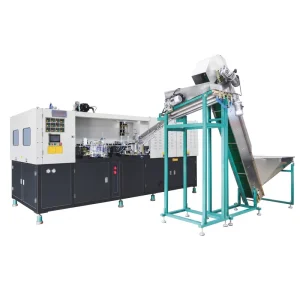
EPA.ES-2C130 เครื่องเป่าขึ้นรูปอัตโนมัติเต็มรูปแบบสำหรับขวดน้ำมันพืชและขวดมีหูหิ้ว
-
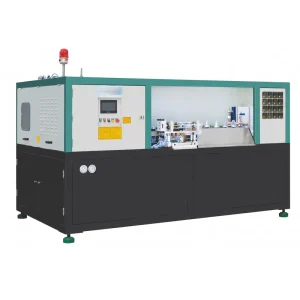
EPA.FS-1CG130 เครื่องเป่าขึ้นรูปอัตโนมัติเต็มรูปแบบ สำหรับขวดนมเด็กและขวด PP
-
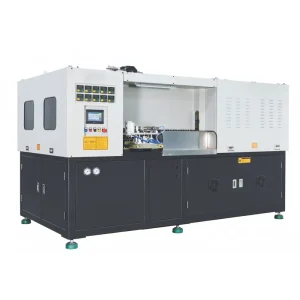
EPA.ES-2C114.3 เครื่องเป่าขึ้นรูปอัตโนมัติเต็มรูปแบบสำหรับขวดผลิตภัณฑ์เคมีภัณฑ์และเครื่องสำอาง
-
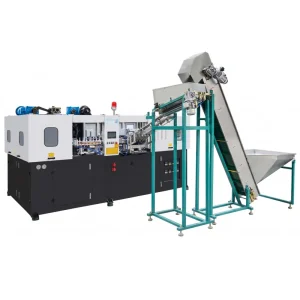
EPA.AS-2C114.3 เครื่องเป่าขึ้นรูปอัตโนมัติเต็มรูปแบบสำหรับขวดน้ำและเครื่องดื่ม