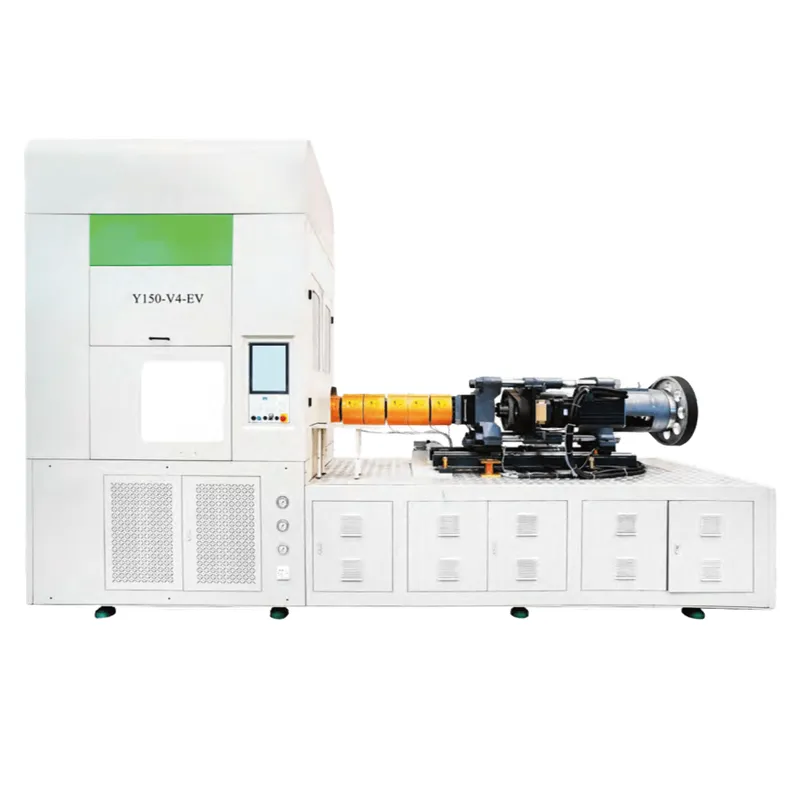
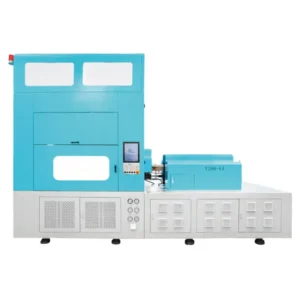
YS150-V4-EV Injection Stretch Blow Molding Machine Replacement for Japanese ASB-12M
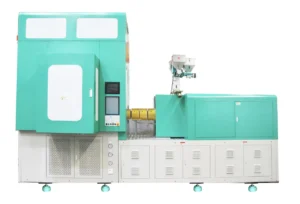
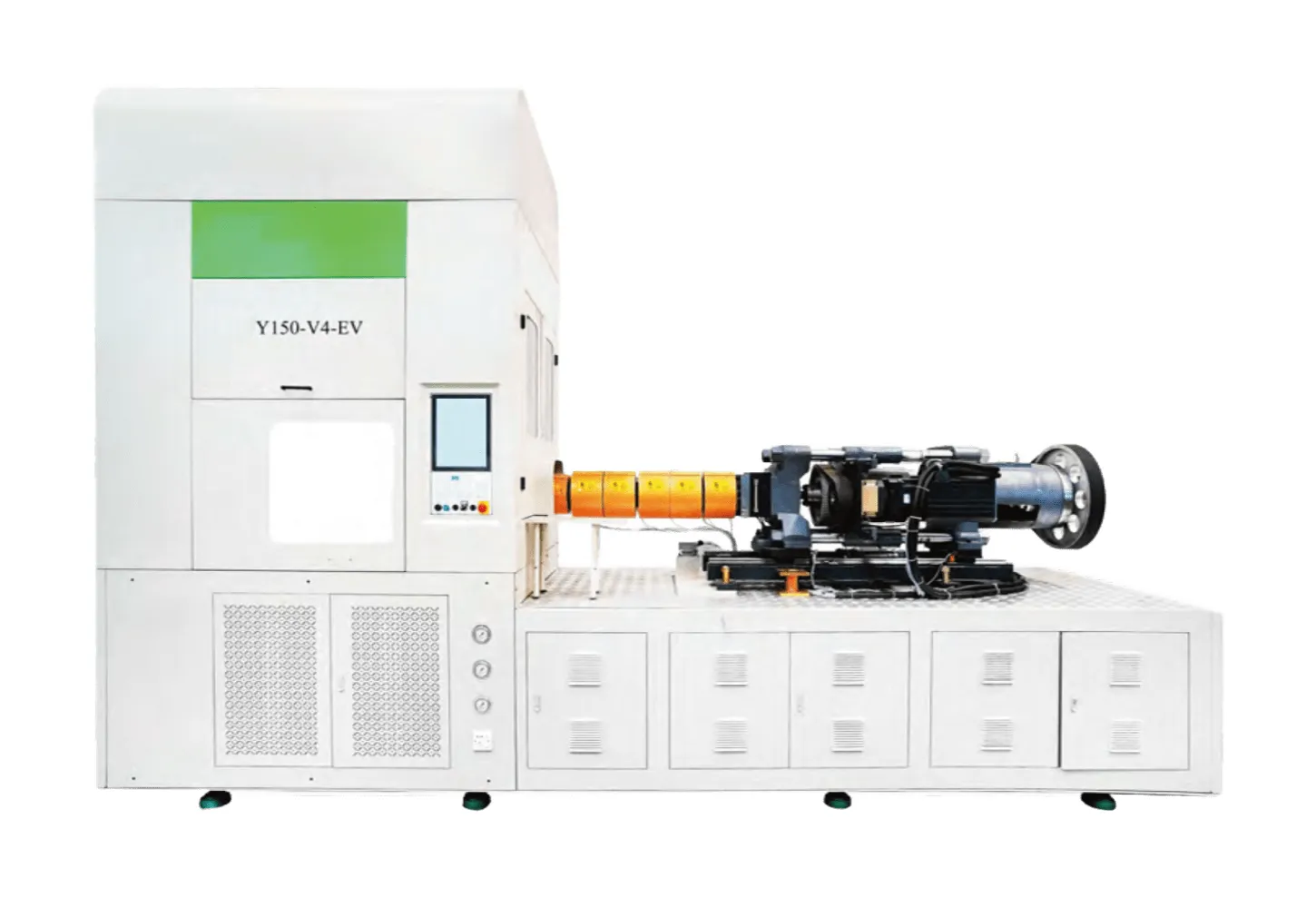
The YS150-V4-EV injection stretch blow molding machine is a fully electric, 4-station one-step ISBM machine engineered as a direct performance upgrade and cost-efficient replacement for the Japanese ASB-12M model. Built by Ever-Power under standardized design principles with imported-brand mechanical components, this single-stage injection stretch blow molding machine integrates injection, preform conditioning, stretch blow molding, and bottle ejection in one continuous automated cycle, eliminating intermediate reheating steps and dramatically improving throughput consistency.
The YS150-V4-EV injection stretch blow molding machine is a fully electric, 4-station one-step ISBM machine engineered as a direct performance upgrade and cost-efficient replacement for the Japanese ASB-12M model. Built by Ever-Power under standardized design principles with imported-brand mechanical components, this single-stage injection stretch blow molding machine integrates injection, preform conditioning, stretch blow molding, and bottle ejection in one continuous automated cycle, eliminating intermediate reheating steps and dramatically improving throughput consistency.
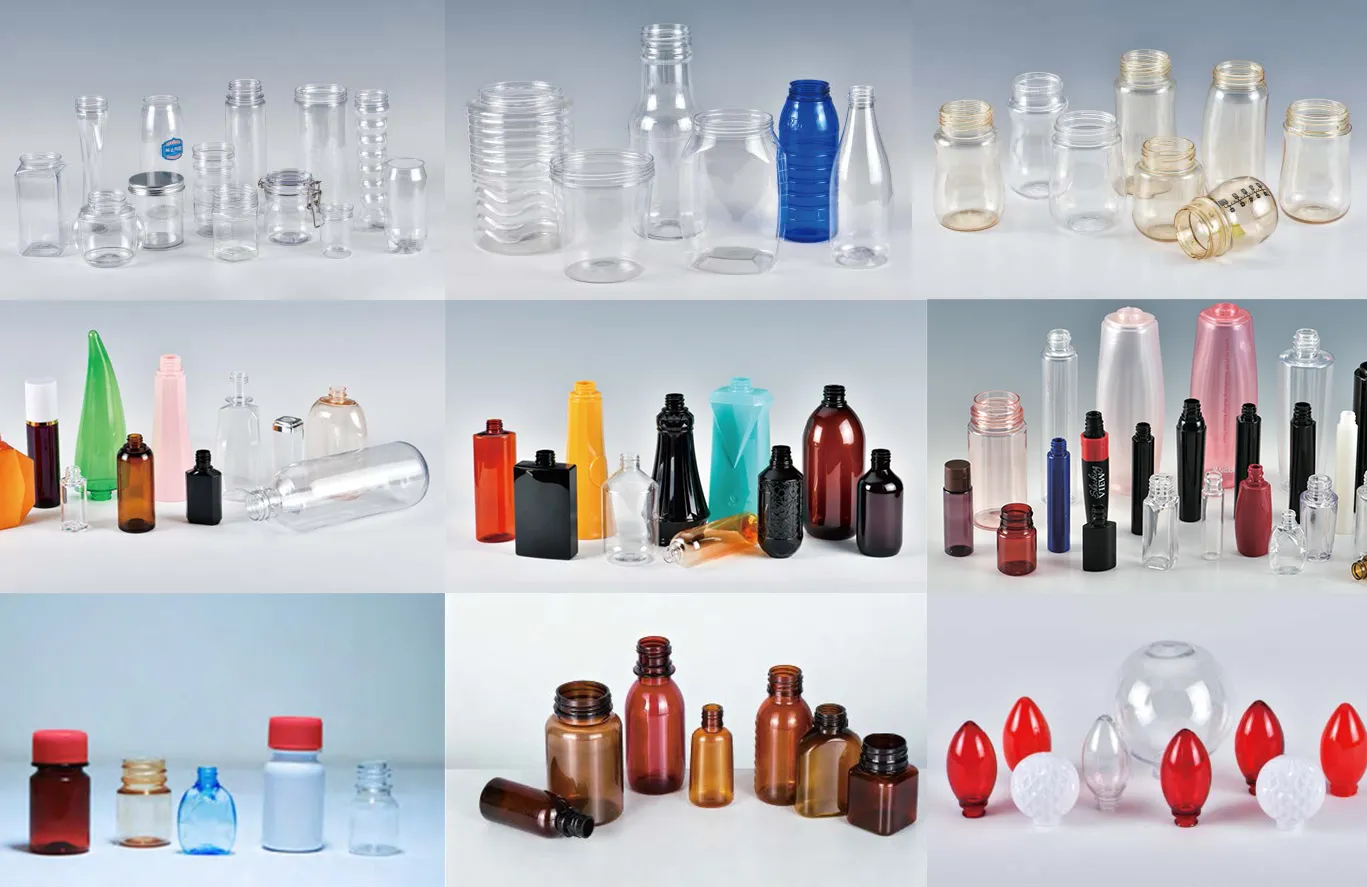
Equipped with 10 sets of Inovance or WEICHI servo motor control systems delivering 102.8 kW of total motor power, the YS150-V4-EV is purpose-built for manufacturers who demand GMP-compliant production, zero hydraulic contamination risk, and high dimensional repeatability. It processes PET and PETG materials to produce medicine bottles, cosmetics bottles, baby feeding bottles, wide-mouth food jars, water bottles, dropper vials, and special-shaped containers ranging from 20 ml to 2,500 ml. Whether you operate a pharmaceutical packaging line, a premium cosmetics filling operation, or a high-volume beverage container facility, this full electric injection stretch blow molding machine delivers the precision, uptime, and hygiene compliance your application requires.
Product Model Comparison Table
1. Replacement for Japanese ASB Model
| Y/ YS Machine Model | Configuration / Remarks | Compatible Japanese Model |
| Y150-V4-2 | Standard configuration | ASB-12M |
| YS150-V4-EV | Full Servo | ASB-12M |
| Y250-V4 | Standard configuration | ASB-70DPH |
| Y250-V4-B | B Series | ASB-70DPW |
| Y650-V4 | Large-capacity model | ASB-650 |
2. Replacement for Japanese AOKI Model
| Y/YS Machine Model | Configuration / Remarks | Compatible Japanese Model |
| Y150-V4-B | B Series | SBIII-100L-20 |
| Y150-V3-B | 3-Station Model | SBIII-100L-20 |
| Y200-V4-B | B Series | SBIII-250LL-50S |
| Y200-V3 | 3-Station Model | SBIII-250LL-50S |
| YS350-V4-EV | Full Servo | AL-350LL-40 |
| Standard Model | Servo Model | Fully Electric Model |
 |
 |
 |
Our Advanatges
1. The quality is better. The plastic bottles produced by the blow molding machines from Japan all have a parting line. There is a protrusion of plastic in the middle of the two molds on either side, which results in a mark. However, our molds have extremely high precision, and the mark is completely invisible.
2. Our production is fast, with a large amount of screw solutions and high speed. While Japan can produce four plastic bottles at a time, we can produce six.
3. Save energy. Our machines consume 15% to 25% less energy than those in Japan, Europe, and the United States.
4. A wide range of electric control technologies has been adopted to replace hydraulic and pneumatic components. For example, the pneumatic components used in the bottom cutting mechanism in Japan are replaced by servo motors here, and the speed of the servo motors is doubled. In the pharmaceutical industry and other fields, fully servo motors can be used without any hydraulic systems, ensuring compliance with GMP standards and operation in an oil-free and pollution-free environment.
Product Specifications
| Item | Unit | Specifications | |||||||
| Name | One-step Injection Stretch Blow Molding Machine(4-station) |
||||||||
| Model | YS150-V4-EV (Compatible with Japanese ASB-12M model) | ||||||||
| Manufacturer | Mexico Ever-Power | ||||||||
| Material | PET/PETG | ||||||||
| Screw Diameter | MM | 40 | 50 | 55 | / | ||||
| Theoretical Injection Volume | CM³ | 188 | 392 | 475 | / | ||||
| Screw Rotational Speed(RPM) | r/min | 350 | 350 | 350 | / | ||||
| Injection Clamping Force | KN | 150 | |||||||
| Blowing Clamping Force | KN | 200 | |||||||
| Motor Power | KW | 102.8 | |||||||
| Heating Power | KW | 10 | |||||||
| Blowing air pressure | Mpa | 2.0-3.5 | |||||||
| Cooling Water Pressure | Mpa | 0.4-0.6 | |||||||
| Machine Oil Cooler Water Pressure | Mpa | 0.3-0.4 | |||||||
| Machine Oil Cooler Water Temperature | ℃ | 20-25 | |||||||
| Voltage | V | 370-400 | |||||||
| (L*W*H) Size(L*W*H) | MM | 5200x1800x3300 | |||||||
| Weight | T | 7 | |||||||
| Product Dimensions | |||||||||
| Product Quantity | PCS | 1 | 2 | 3 | 4 | 5 | 6 | 7 | 8 |
| Bottle Diameter (BD) | MM | 118 | 80 | 66 | 56 | 54 | 45 | 28 | 26 |
| Bottle Height (H) | MM | 210 | 150 | 100 | |||||
| Neck Diameter (E) | MM | 83 | 62 | 48 | 38 | 32 | 25 | 17 | 15 |
| Max. Bottle Volume (ml) | ML | 2500 | 1500 | 900 | 400 | 250 | 100 | 30 | 20 |
| Max. Bottle Weight (W) | G | 130 | 65 | 43 | 32 | 26 | 22 | 18 | 16 |
Machine Parameter
| Compatible Model: | Compatible with Japanese ASB-12M model |
| Screw Diameter: | 50mm(optional) |
| Theoretical Injection Capacity: | 392g |
| Injection clamping force: | 150KN |
| Upper mold stroke: | 250mm |
| Lower mold stroke: | 205mm |
| TEMP. Regulating core stroke: | 250mm |
| TEMP. regulating barrel stroke: | 230mm |
| Take-out stroke: | 170mm |
| Blowing clamping force: | 200KN (single side) |
| Blow core stroke: | 250mm |
| Blow mold stroke: | 75+75mm |
| Size(L×W×H): | 5.2*1.8*3.3m |
| Weight: | 7T |
Technical Standard
| Servo Control System: | Using 10 sets of servo motor control systems. |
| Servo Motor Power: | Inovance/ WEICHI servo motor power: 102.8KW. |
| Computer Control System: | Using the Inovance/ MiRLE PLC. |
| Turntable Drive: | The turntable is equipped with a Japan Yaskawa servo motor or a WEICHI servo motor with a Taiwan TSUNTIEN reducer. |
| Blow Molding Structure: | The blow molding structure adopts a dual servo motor mold clamping system with a high-pressure compensation function. |
| High- Pressure Valve: | Using the American Parker high- pressure valve. |
| Air Cylinder: | Using the Aitak air cylinder. |
| Temperature Control: | Using integrated control box to control temperature, which is highly accurate, stable and easy to operate. |
| Screw Heated: | The screw is heated by a nano-far- infrared energy-saving heating ring(10KW). |
| Lead Screw | Lead screw: NSK Japan; |
| Total Power of the Machine: | Total power of the machine:112.8KW. |
Features of YS150-V4-EV Injection Stretch Blow Molding Machine
1. Fully Electric, Zero Hydraulics
The YS150-V4-EV replaces all hydraulic and pneumatic actuators used in comparable Japanese models with 10 servo motor axes. This eliminates hydraulic oil contamination risk entirely, making the machine compliant with GMP pharmaceutical packaging standards and suitable for clean-room adjacent environments. The fully electric architecture also reduces energy consumption by 15% to 25% versus Japanese, European, and US equivalents, delivering measurable operating cost reduction over the machine life cycle.
2. Superior Mold Precision, No Parting Line
Japanese ISBM machines produce bottles with a visible parting line, a plastic protrusion at the mold junction that creates an aesthetic defect on high-end packaging. The YS150-V4-EV uses ultra-high-precision molds where the parting line is completely invisible, making this one step injection stretch blow molding machine the preferred choice for premium cosmetics, pharmaceutical, and personal care bottle producers who maintain zero-tolerance surface quality standards.
3. Higher Throughput Than Japanese Originals
Where the Japanese ASB-12M produces four containers per cycle, the YS150-V4-EV design supports configurations producing up to six containers per cycle through its large-volume screw solution and high-speed injection architecture. This means significantly higher annual output capacity for the same floor area, dramatically improving your cost-per-unit economics and allowing faster payback on the capital investment compared with the original Japanese equipment.
4. Excellent Barrier Properties and Bottle Strength
The biaxial stretching inherent to the one-step injection stretch blow moulding machine process orients PET polymer chains in two directions simultaneously, resulting in containers with significantly higher compression resistance, superior gas and moisture barrier performance, and improved optical clarity compared with non-stretched alternatives. These properties are critical for pharmaceutical, beverage, and edible oil applications where product shelf life, tamper evidence, and mechanical durability are non-negotiable specifications.
5. ASB-12M Mold Compatibility
As a direct replacement of ASB ISBM machine tooling, the YS150-V4-EV is fully compatible with existing Japanese ASB-12M molds. Facilities transitioning from Japanese equipment can reuse their existing mold assets without costly retooling, reducing the total cost of equipment changeover significantly. This compatibility is verified and supported by the Ever-Power engineering team during installation and commissioning, providing confidence to procurement managers planning machinery upgrades.
6. Environmentally Friendly and Low Waste
One-step ISBM machine technology inherently produces minimal scrap material because the preform is injection-molded to precise dimensions and immediately stretched into the final container, leaving no flash or parison trim. Combined with the energy-saving nano-far-infrared heating ring (10 KW) and fully servo-driven architecture, the YS150-V4-EV supports corporate ESG targets by reducing per-unit energy usage, eliminating hydraulic waste oil disposal, and enabling the use of recycled PET resin streams.
Working Principle of ISBM Machines
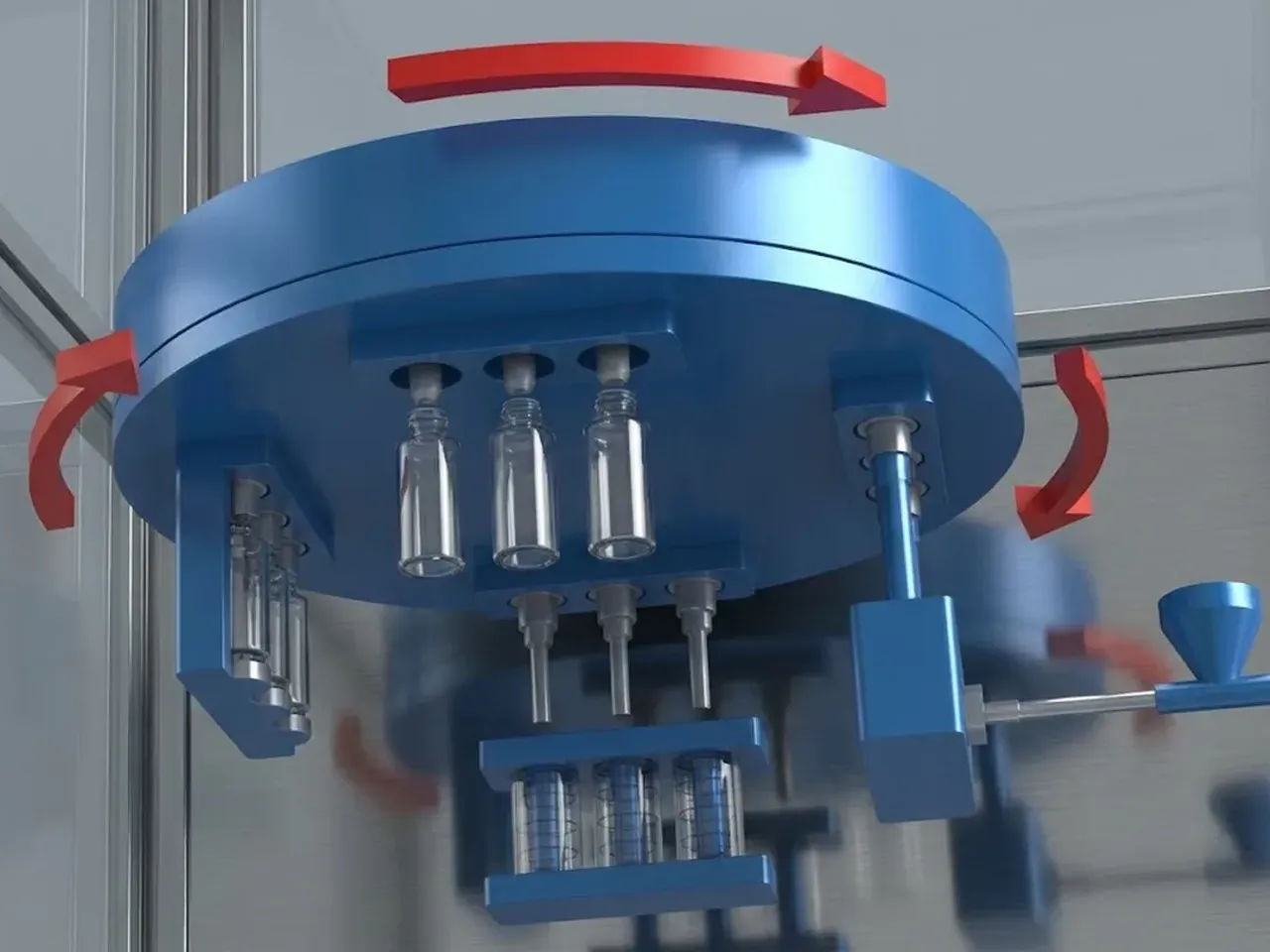
Step 1: Injection Molding
PET resin is heated to a molten state and injected into a preform mold cavity under 150 KN clamping force. The preform is partially cooled to stabilize its geometry while retaining sufficient thermal energy to eliminate secondary reheating. During this phase the neck finish is formed in its final dimensionally accurate form, ensuring reliable sealing and proper thread geometry for downstream capping operations. The screw diameter options of 40 mm, 50 mm, or 55 mm allow the machine to be configured for theoretical injection volumes of 188 CM3, 392 CM3, or 475 CM3 respectively, matching a wide range of container preform weights.
Step 1: Preform Conditioning and Transfer
The 4-station rotary turntable, driven by a Yaskawa or WEICHI servo motor through a Taiwan TSUNTIEN precision reducer, indexes the freshly molded preform from the injection station to the temperature conditioning zone. The integrated control box maintains a thermally uniform preform profile with the regulating core stroke set to 250 mm and the barrel stroke set to 230 mm. Consistent thermal conditioning across the preform wall is essential for achieving uniform wall thickness distribution and preventing stress-related defects during the subsequent stretch stage.
Step 3: Stretch Blow Molding
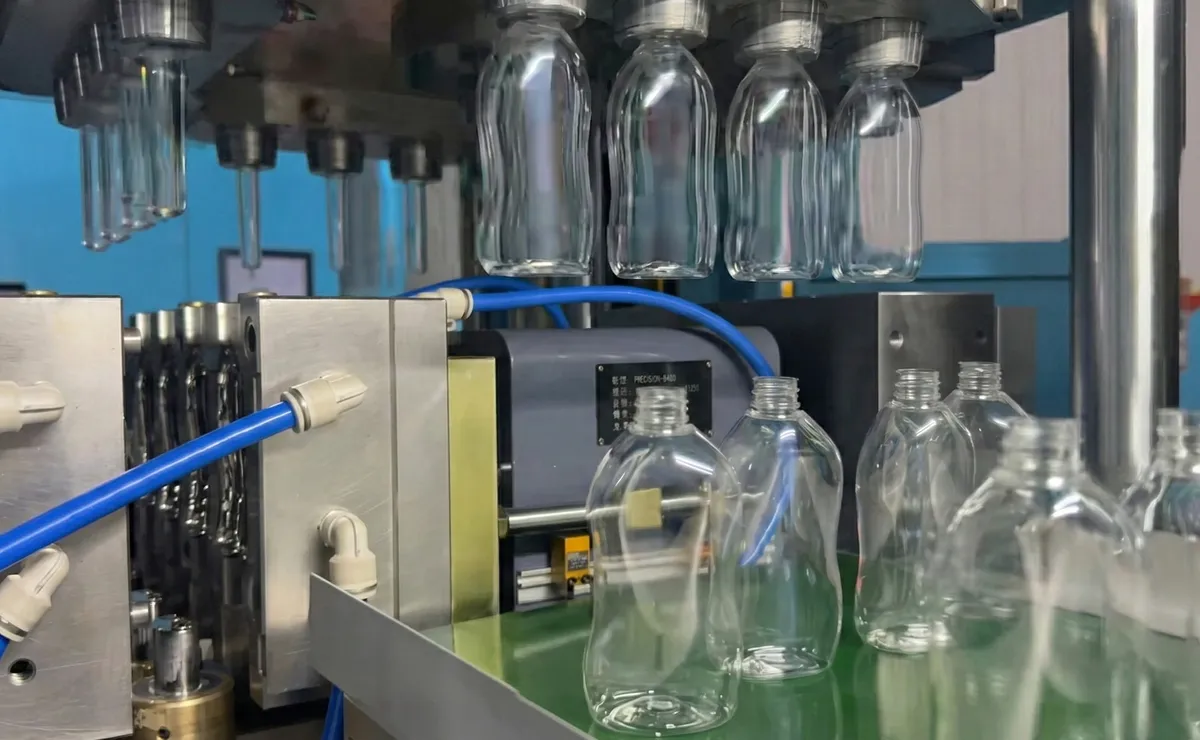
This is the defining stage of the PET injection stretch blow molding machine process. A blow core (stroke: 250 mm) descends to seal the preform neck, and a stretch rod extends the preform axially while compressed air at 2.0 to 3.5 MPa inflates it radially against the blow mold at 200 KN single-side clamping force with a blow mold stroke of 75 plus 75 mm. This biaxial stretching aligns PET molecular chains in two directions simultaneously, markedly improving impact resistance, gas barrier performance, optical transparency, and container sidewall strength. The dual servo motor mold clamping system with high-pressure compensation ensures uniform cavity pressure and repeatable dimensional output across every cycle.
Step 4: Cooling and Ejection
Chilled water at 0.4 to 0.6 MPa circulates through the blow mold channels to rapidly solidify the container shape and lock in dimensional accuracy. Once sufficient cooling time has elapsed, the mold opens and the take-out arm (stroke: 170 mm) automatically retrieves the finished bottles and transfers them to the outfeed conveyor, completing the molding cycle without any human contact. This closed-loop automated ejection fully satisfies GMP pharmaceutical packaging standards. The entire four-step sequence repeats continuously, producing a ready-to-fill container at each index.
Application Areas
The YS150-V4-EV is a genuinely versatile injection blow molding machine covering eight primary container categories across multiple regulated and consumer industries.
Pharmaceutical Bottles
The YS150-V4-EV meets GMP pharmaceutical packaging standards with its fully servo, oil-free architecture. It produces oral liquid bottles, tablet containers, syrup bottles, and specialized pharmaceutical packaging in PET and PETG with zero risk of hydraulic oil contamination, making it ideal for ISO-certified pharmaceutical manufacturers and contract packagers serving regulated markets in the US, EU, and Japan.
Cosmetic Bottles
Premium cosmetics packaging demands invisible parting lines, crystal-clear walls, and precise neck dimensions for pump and spray fitments. The machine produces lotion, serum, toner, and foundation bottles in complex shapes that meet the zero-defect visual standards of luxury beauty brands, including the ultra-high-precision molds that eliminate the parting line protrusion found on Japanese-made equivalents.
Chemical Bottles
PETG and PET containers produced on this ISBM machine manufacturer platform deliver excellent chemical resistance for agrochemical, cleaning agent, and industrial lubricant packaging. The biaxial stretch process produces high barrier properties that inhibit solvent permeation and maintain container integrity over extended shelf-life periods required for regulated chemical product categories.
Beverage Bottles
With bottle volumes from 20 ml to 2,500 ml and the superior CO2 barrier properties inherent to biaxially stretched PET, the YS150-V4-EV suits carbonated beverage, still water, juice, and functional drink container production. The machine produces six containers per cycle at competitive throughput rates, supporting high-volume beverage brands seeking to consolidate preform sourcing and container manufacturing in a single automated step.
Baby Feeding Bottles
Baby bottle production imposes some of the strictest hygiene and dimensional tolerances of any consumer packaging category. The fully electric, no-human-contact cycle of this one step ISBM machine ensures that containers are produced in a contamination-controlled environment compliant with food contact safety regulations. PETG material options add heat resistance and clarity suited to sterilization cycles.
Dropper Bottles
Small-volume dropper bottles for eye drops, ear drops, essential oils, and oral tinctures require precise neck geometry and consistent wall thickness for reliable dropper tip fitment. The 7-cavity and 8-cavity configurations of the YS150-V4-EV produce dropper bottles down to 20 ml with neck diameters from 15 mm, meeting the tight tolerances demanded by pharmaceutical and nutraceutical dropper assembly lines.
Edible Oil Bottles
Edible oil packaging requires excellent oxygen barrier performance to prevent lipid oxidation and rancidity. Biaxially stretched PET containers from this machine provide superior O2 barrier properties versus unstretched blow-molded alternatives, extending the shelf life of cooking oils, olive oil, and specialty food oils. The wide-mouth and standard configurations support both retail and food service container formats.
Squeeze Bottles
Condiment, gel, adhesive, and personal care squeeze bottles produced on the YS150-V4-EV benefit from the consistent wall thickness control that biaxial stretching provides. Even squeeze force response and predictable dose delivery depend on uniform wall distribution, which the machine achieves through servo-controlled preform conditioning and precise temperature management across the 4-station turntable cycle.
Key Equipment for Injection Stretch Blow Molding
1. Clamping Unit
The injection clamping unit delivers 150 KN of locking force with an upper mold stroke of 250 mm and lower mold stroke of 205 mm. The blow clamping unit adds 200 KN of single-side force. Both are driven by servo motors with high-pressure compensation function, eliminating the mechanical wear and pressure variability associated with conventional hydraulic toggles, and ensuring consistent cavity alignment over millions of production cycles.
2. Injection Unit
Three screw diameter options (40 mm, 50 mm, 55 mm) provide theoretical injection volumes of 188, 392, and 475 CM3 respectively at a screw speed of 350 r/min. The screw is heated by a nano-far-infrared energy-saving heating ring rated at 10 KW, significantly reducing the heat-up time and energy loss compared with resistive band heaters. NSK Japan lead screws ensure linear positioning accuracy of the injection carriage over the full stroke.
3. Mold System
The YS150-V4-EV is fully compatible with Japanese ASB-12M molds, protecting customers existing tooling investment. The machine also accepts custom ISBM molds produced by Ever-Power covering bottle formats from 1 PCS to 8 PCS per cycle, with bottle diameters from 26 mm to 118 mm and volumes from 20 ml to 2,500 ml. Ultra-high-precision mold manufacture eliminates the parting line protrusion found on Japanese-equivalent equipment.
4. Blow Pin (Blow Core)
The blow core operates with a stroke of 250 mm, sealing the preform neck finish with precision before compressed air at 2.0 to 3.5 MPa is introduced for biaxial expansion. American Parker high-pressure valves control the air circuit, providing reliable sealing and precise pressure delivery. The servo-driven blow core descent eliminates the speed variability of pneumatic actuation, improving neck sealing consistency and reducing closure-related scrap.
5. Cooling System
A dedicated mold cooling circuit operates at 0.4 to 0.6 MPa water pressure. A separate machine oil cooler circuit maintains hydraulic-adjacent components at 20 to 25 degrees C with water pressure of 0.3 to 0.4 MPa. The integrated temperature control box with high-accuracy thermal management ensures that both mold and preform temperatures remain within tight process windows, directly supporting dimensional consistency, wall thickness uniformity, and cycle time stability.
6. Ejection System
Servo-controlled bottle take-out arm with a stroke of 170 mm retrieves finished containers from the blow mold and transfers them to the outfeed conveyor without any manual handling. This closed-loop automated ejection satisfies the no-human-contact requirement specified in GMP pharmaceutical packaging standards, and also improves personnel safety and reduces labor costs in high-volume production environments. Airtak cylinders support auxiliary ejection and transfer functions throughout the cycle.
7. Servo and PLC Control Architecture
The Inovance or MiRLE PLC provides centralized process management with a color touchscreen HMI, recipe management for rapid product changeover, real-time alarm monitoring, and production data logging. Communication between PLC and the 10 servo axes uses fast digital fieldbus protocols, enabling synchronous motion coordination across injection, conditioning, blow molding, and ejection stations for maximum cycle efficiency and process repeatability.
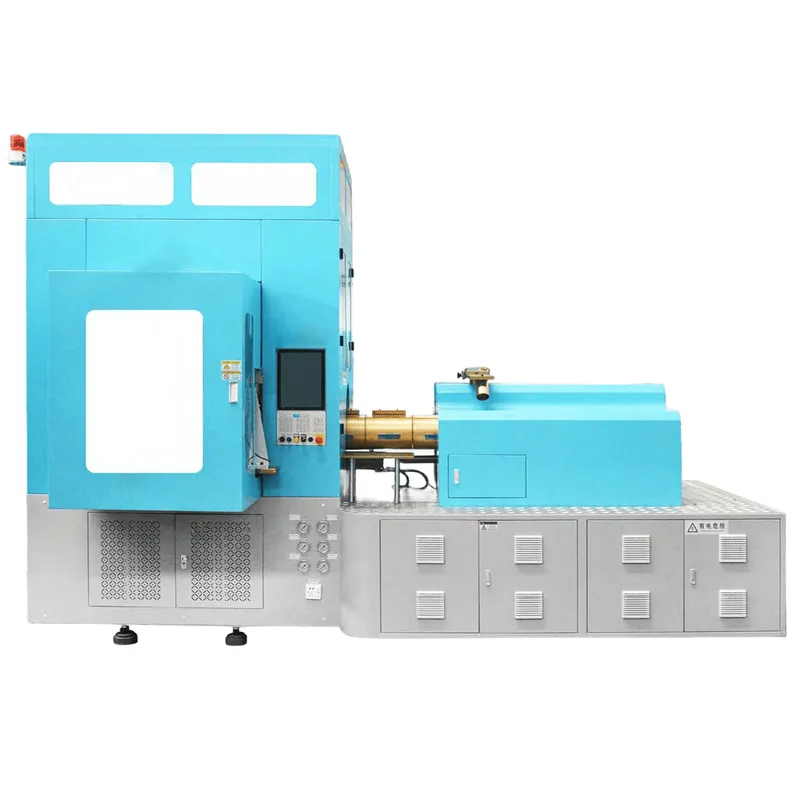
Injection Stretch Blow Molding Machine vs. Extrusion Blow Molding Machine
Understanding ISBM and EBM
ISBM (Injection Stretch Blow Molding) is a process where plastic is first injection-molded into a preform, which is then conditioned and biaxially stretched within a blow mold to form the final container. This method is the technology of choice for producing high-clarity, high-strength PET bottles for pharmaceutical, cosmetics, and beverage applications. The YS150-V4-EV is a leading example of this ISBM machine manufacturer offering, delivering full servo automation and ASB-12M mold compatibility.
EBM (Extrusion Blow Molding) involves extruding a molten plastic tube (parison), which is captured by a mold and inflated to form the desired shape. EBM is widely used for containers with integrated handles, complex geometries, and larger volumes such as detergent bottles, automotive fluid containers, and industrial drums. Both technologies are available from Mexico Ever-Power.
Cost and Performance Comparison
Initial Investment
ISBM: Higher upfront cost due to precision injection and blow mold tooling. Dual mold sets (preform and blow) increase tooling investment but deliver superior container quality justifying the premium for regulated industries. EBM: Typically lower machine and mold cost, making it accessible for startup operations producing simple shapes at lower volumes without strict optical requirements.
Operating Costs
ISBM: The fully electric YS150-V4-EV consumes 15% to 25% less energy than Japanese, European, and US equivalents. Minimal scrap and no hydraulic oil replacement costs reduce total operating expenses significantly. EBM: Can be more energy-intensive, especially for thick-walled containers. Flash trimming generates material waste requiring recycling or disposal, adding to operational overhead.
Material Utilization
ISBM: Excellent material utilization with near-zero scrap, as the precisely dimensioned preform is directly stretched to the final container form with no parison or flash trimming required. EBM: Generates more scrap due to the parison and trimming requirements, which must be regranulated and reprocessed, adding indirect cost and reducing net material efficiency.
Product Quality and Clarity
ISBM: Produces containers with superior optical clarity, high dimensional accuracy, and excellent wall thickness uniformity. Ideal for pharmaceutical, cosmetic, and beverage applications demanding tight tolerances and premium surface aesthetics. EBM: Offers design flexibility for handles and complex geometries, but wall thickness varies and surface finish is generally less refined, limiting suitability for high-visibility retail packaging.
Sustainability and Automation
Both ISBM and EBM technologies are advancing toward greater sustainability. The ISBM process, with its minimal material waste, lightweight container design, and compatibility with recycled PET, aligns strongly with eco-friendly packaging initiatives and ESG reporting requirements. Mexico Ever-Power invests in R&D to incorporate energy-saving features and smart servo controls across both process families, supporting global sustainability goals without compromising production throughput.
Which Technology Is Right for You?
Choose ISBM when your priority is high-clarity, lightweight PET containers with tight dimensional tolerances, minimal scrap, and GMP compliance, especially for pharmaceutical, cosmetic, and beverage markets. Choose EBM when you need integrated handles, complex container geometries, larger volumes, or lower upfront tooling investment for non-critical packaging applications. Mexico Ever-Power technical teams provide comprehensive process selection support.
ISBM vs EBM: Summary Comparison
| Factor | ISBM | EBM |
|---|---|---|
| Initial Machine Cost | Higher | Moderate |
| Mold Cost | Higher (dual molds) | Lower |
| Material Waste | Very Low | Higher |
| Energy Consumption (per unit) | Lower | Higher |
| Clarity and Finish | Excellent | Good |
| Container Strength | High | Moderate |
| Design Flexibility | Limited (no integral handles) | High |
| Wall Thickness Control | Excellent | Variable |
| GMP Suitability | Yes (oil-free) | Limited |
 |
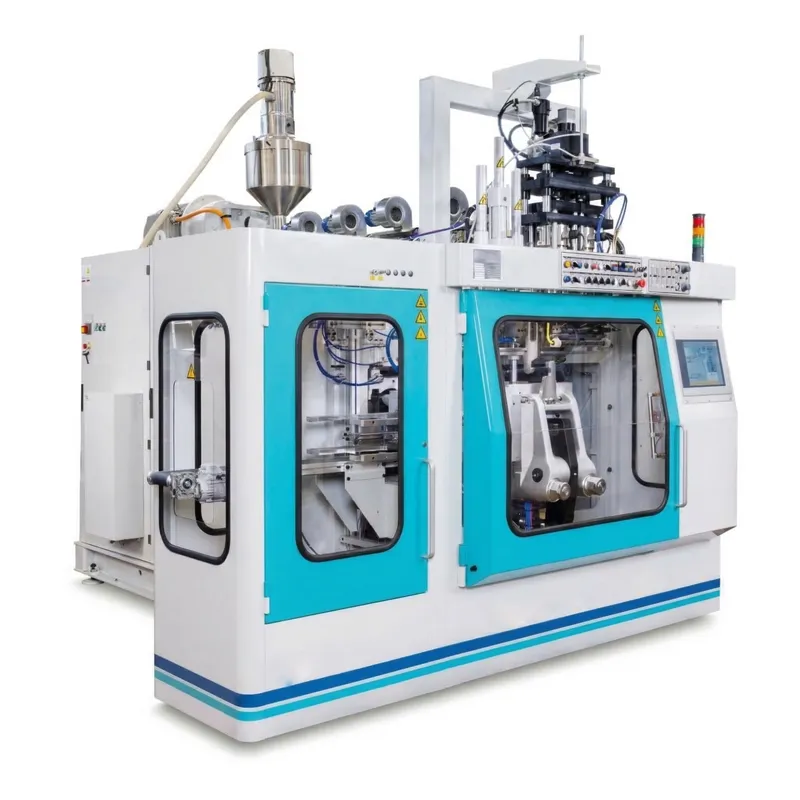 |
| ISBM Machine | EBM Machine |
|---|
Compatible Materials
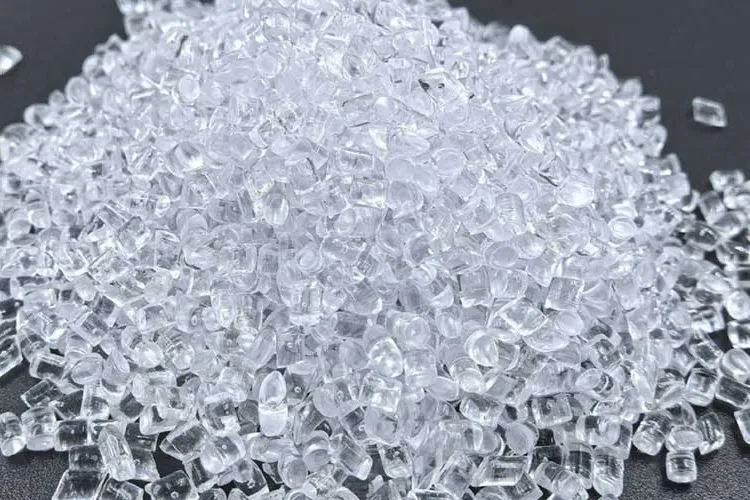
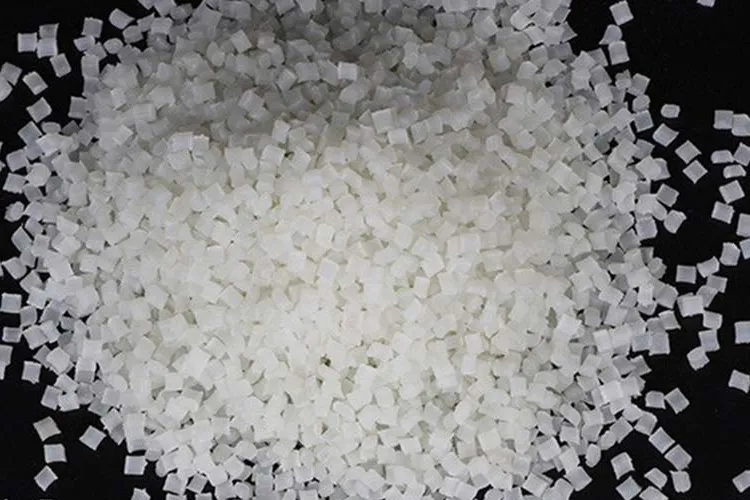
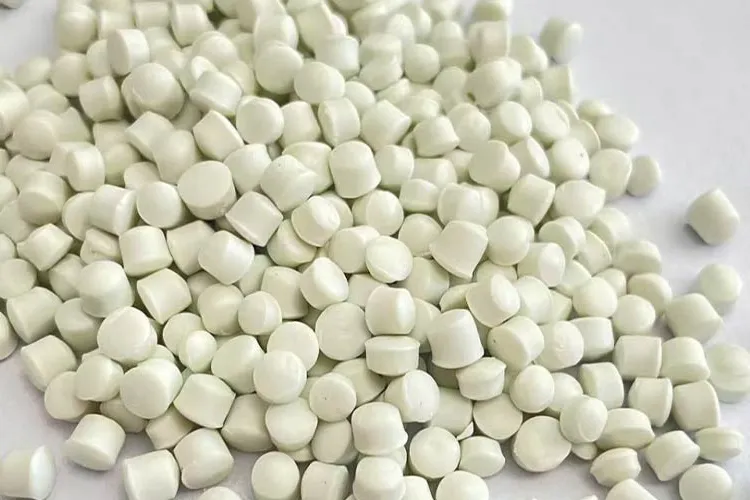
PET
Polyethylene Terephthalate is the primary material for this machine. It offers excellent optical clarity, superior CO2 and O2 barrier performance, outstanding impact resistance, and full food contact safety approval. PET is the industry standard for beverage, pharmaceutical, and personal care containers, and is widely recyclable through established collection infrastructure globally.
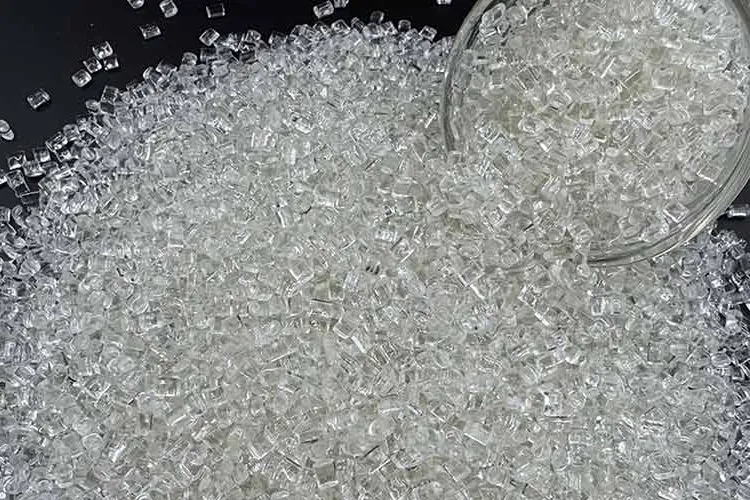
PETG
Polyethylene Terephthalate Glycol is a copolymer of PET with improved toughness and processability. PETG exhibits excellent clarity similar to PET while offering better impact resistance at low temperatures and improved compatibility with certain cosmetic and food contact applications. It is preferred for cosmetics, medical device packaging, and specialty food containers requiring enhanced mechanical performance over standard PET.
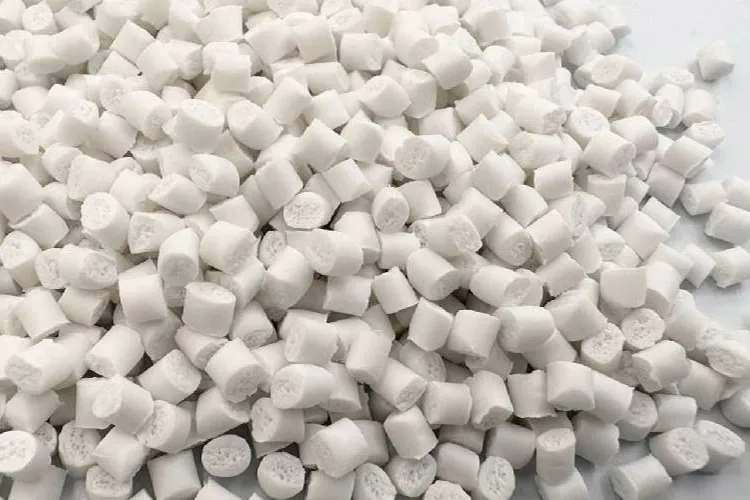
PP
Polypropylene offers excellent chemical resistance, high temperature tolerance (up to approximately 120 degrees C), and suitability for hot-fill and autoclave sterilization applications. PP containers produced on compatible ISBM configurations are widely used in food processing, pharmaceutical, and laboratory packaging where thermal stability and broad chemical compatibility are required alongside dimensional precision.
PE
Polyethylene (HDPE and LDPE variants) provides excellent moisture barrier properties, chemical resistance, and low-temperature flexibility. PE containers are standard in agrochemical, personal care, and household product packaging. Compatible IBM machine configurations process PE for squeeze bottles, caps, and specialty containers where clarity is secondary to barrier performance and impact toughness.
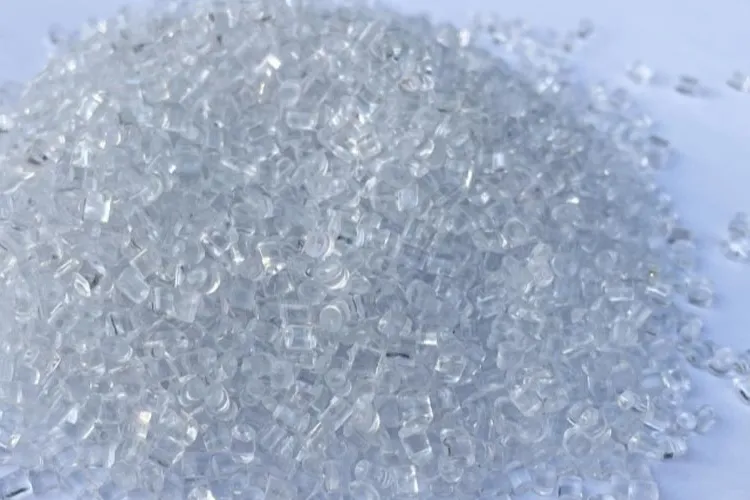
PC
Polycarbonate delivers exceptional impact strength, high optical clarity, and a broad operating temperature range from approximately minus 40 to plus 130 degrees C. PC is specified for reusable water bottles, baby bottles, medical device housings, and industrial sight glasses where long-term mechanical durability and thermal stability are critical. PC containers produced via ISBM maintain dimensional accuracy under repeated sterilization cycles.
PCT / PCTG
PCT (Polycyclohexylene Dimethylene Terephthalate) and PCTG are specialty polyesters offering exceptional chemical resistance, water clarity, and high temperature performance superior to standard PET. They are preferred for laboratory ware, premium cosmetics packaging, and food service containers where contact with aggressive cleaning agents, high pH substances, or elevated temperatures demands a material beyond standard PET or PETG capabilities.
 |
 |
 |
 |
 |
 |
Common Fault Troubleshooting
1. Inconsistent Bottle Wall Thickness
Symptoms: Wall thickness varies excessively between containers or within a single container.
Causes: Uneven preform temperature from the conditioning station, incorrect temperature control settings, or clogged cooling channels in the conditioning core.
Solutions: Verify that the TEMP. regulating core temperature setpoints are uniform across all zones. Inspect and clean temperature conditioning cores for blockages. Check that the integrated control box is maintaining setpoint accurately. Verify screw rotational speed (350 r/min) and barrel temperature profiles are consistent with the resin specification.
2. Bottle Neck Deformation or Out-of-Round Neck
Symptoms: Neck dimension fails to meet specification, leaking at closure, or caps cannot be applied correctly.
Causes: Injection mold neck insert wear, incorrect injection clamping force (should be 150 KN), preform neck over-temperature during conditioning, or turntable indexing positioning error.
Solutions: Inspect the preform neck cavity insert for wear and replace if measured diameter exceeds tolerance. Confirm injection clamping force is at 150 KN. Reduce the conditioning station temperature setpoint for the neck zone. Verify turntable positioning accuracy using a dial indicator on the index pin.
3. Parting Line Flash or Visible Seam
Symptoms: A visible flash or raised seam appears on the bottle body at the blow mold parting line.
Causes: Excessive blow pressure, blow mold clamping force below 200 KN specification, blow mold parting surface wear, or mold installation misalignment.
Solutions: Verify blow clamping force is set to 200 KN single-side with high-pressure compensation active. Inspect the blow mold parting surface for wear or damage. Confirm mold halves are aligned with a feeler gauge. Check Parker high-pressure valve operation to ensure maximum blow pressure does not exceed 3.5 MPa specification.
4. Servo Alarm or Motion Axis Fault
Symptoms: PLC alarm on one or more of the 10 servo axes; machine stops mid-cycle or fails to home.
Causes: Servo drive overtemperature, encoder cable damage, drive parameter mismatch after power cycle, or mechanical obstruction on the axis.
Solutions: Note the specific axis alarm code from the Inovance / MiRLE PLC HMI. Check servo drive cooling vent for blockage and verify ambient temperature in the control cabinet is within specification. Inspect the encoder cable for damage at connectors and cable trays. Jog the axis slowly while monitoring for mechanical binding. Contact the Mexico Ever-Power service team with the alarm code for parameter-level diagnosis.
5. Bottle Transparency or Haze Issues
Symptoms: Finished PET containers appear cloudy, hazy, or have crystalline white patches rather than optically clear walls.
Causes: Preform conditioning temperature too low (causes over-crystallization during stretch), cooling water temperature above 25 degrees C, resin moisture content too high before processing, or stretch ratio mismatch for the specific PET grade.
Solutions: Verify cooling water temperature is at 20 to 25 degrees C as specified. Increase conditioning station temperature setpoints incrementally in 2 degree steps. Confirm PET resin has been dried to less than 0.005% moisture content before processing. Review the blow rod stretch ratio against the PET resin manufacturer specification for that IV grade.
6. Short Shot or Incomplete Preform Fill
Symptoms: Preforms are incompletely filled, missing material at the base or body, or have voids.
Causes: Insufficient injection pressure or speed, barrel temperature too low for the resin viscosity, screw wear causing reduced plasticizing capacity, or blocked hot runner nozzle.
Solutions: Check barrel temperature zone profiles against resin processing guidelines and increase if below minimum melt temperature. Verify injection pressure and screw recovery speed settings in the PLC recipe. Measure screw tip and check ring wear if the problem persists. Inspect hot runner nozzle heater continuity and thermocouple readings. Confirm theoretical injection volume matches the preform weight at 392 g for the 50 mm screw configuration.
Mexico Ever-Power - ISBM Machine Manufacturer
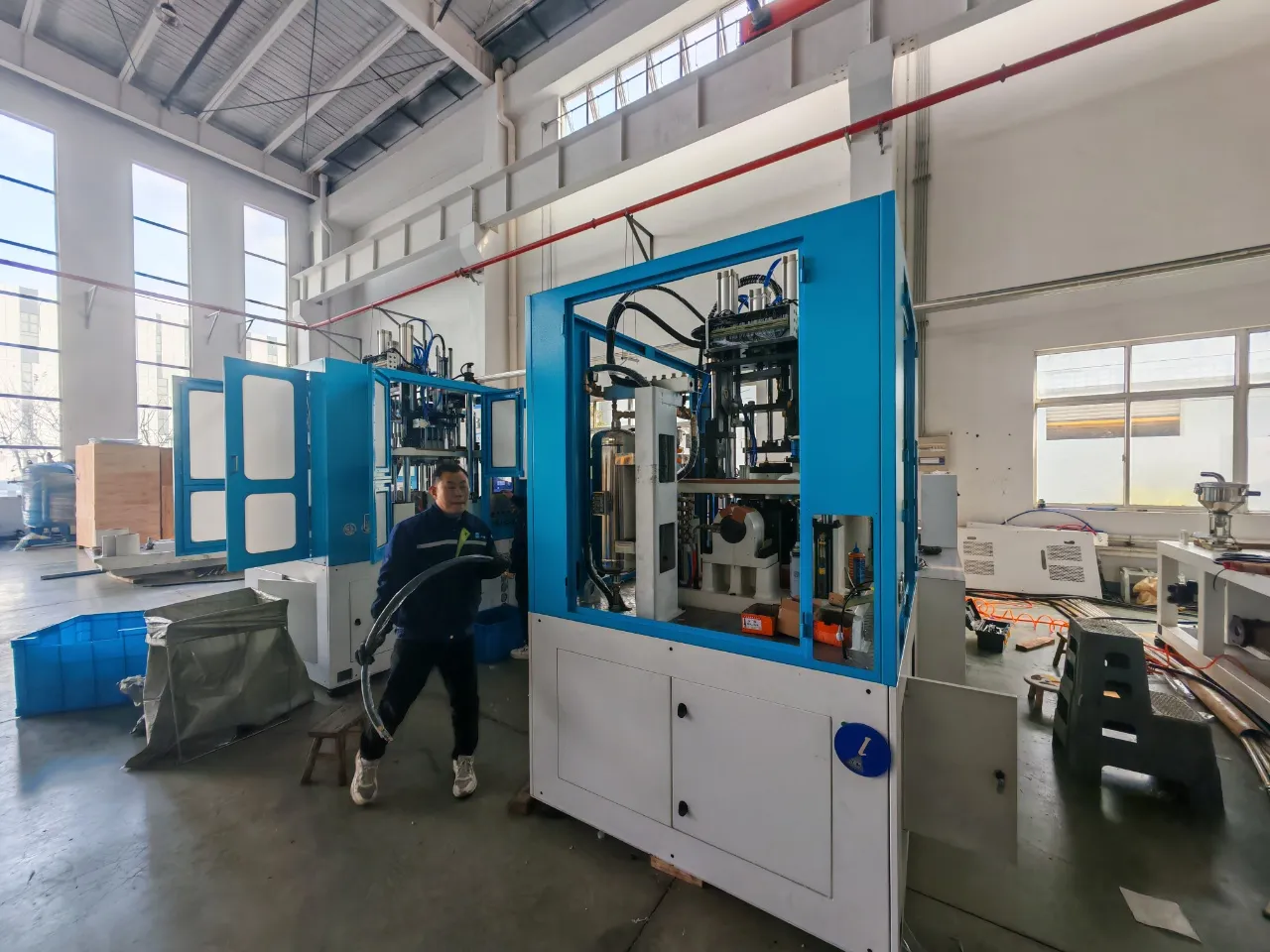
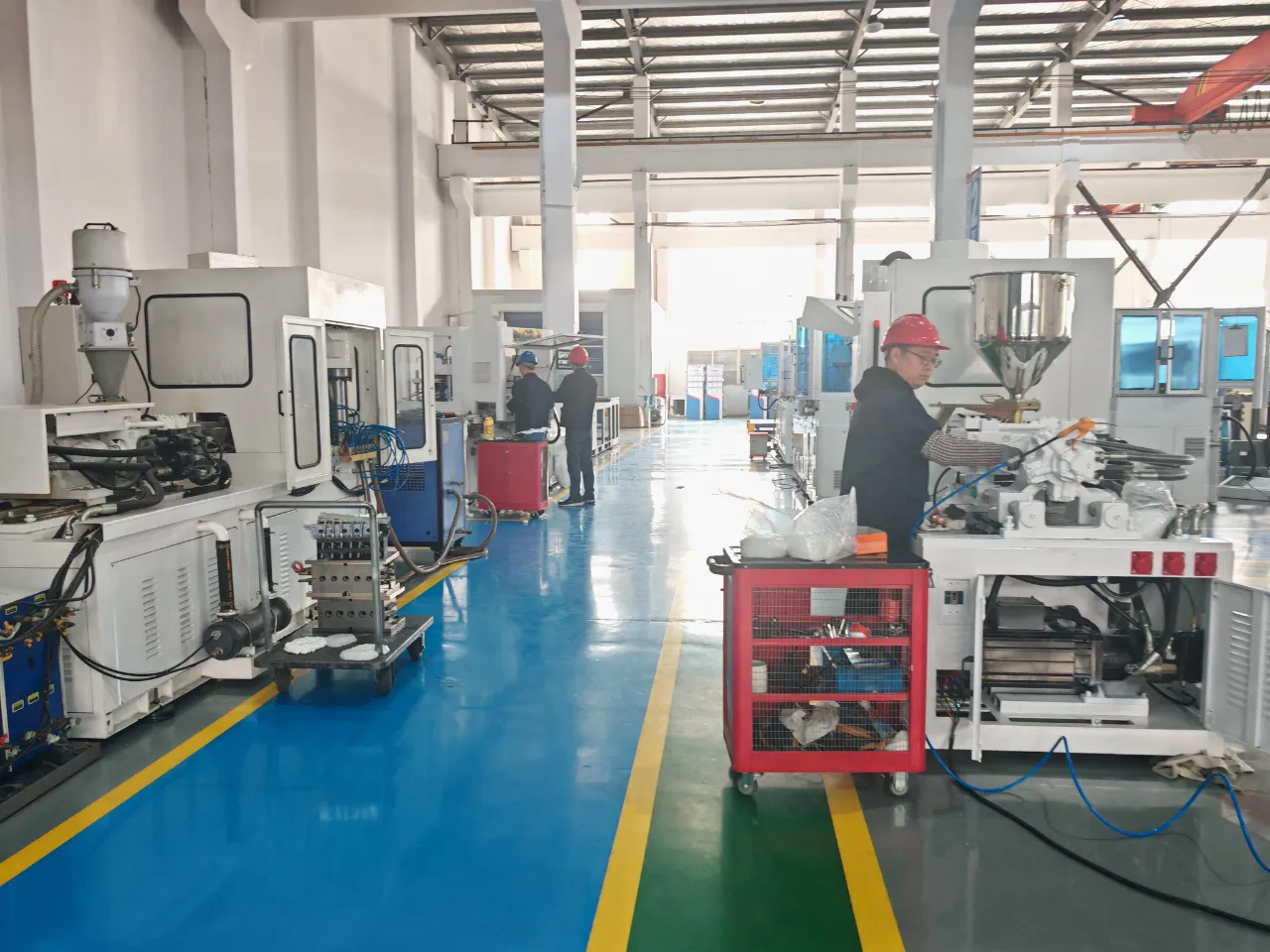
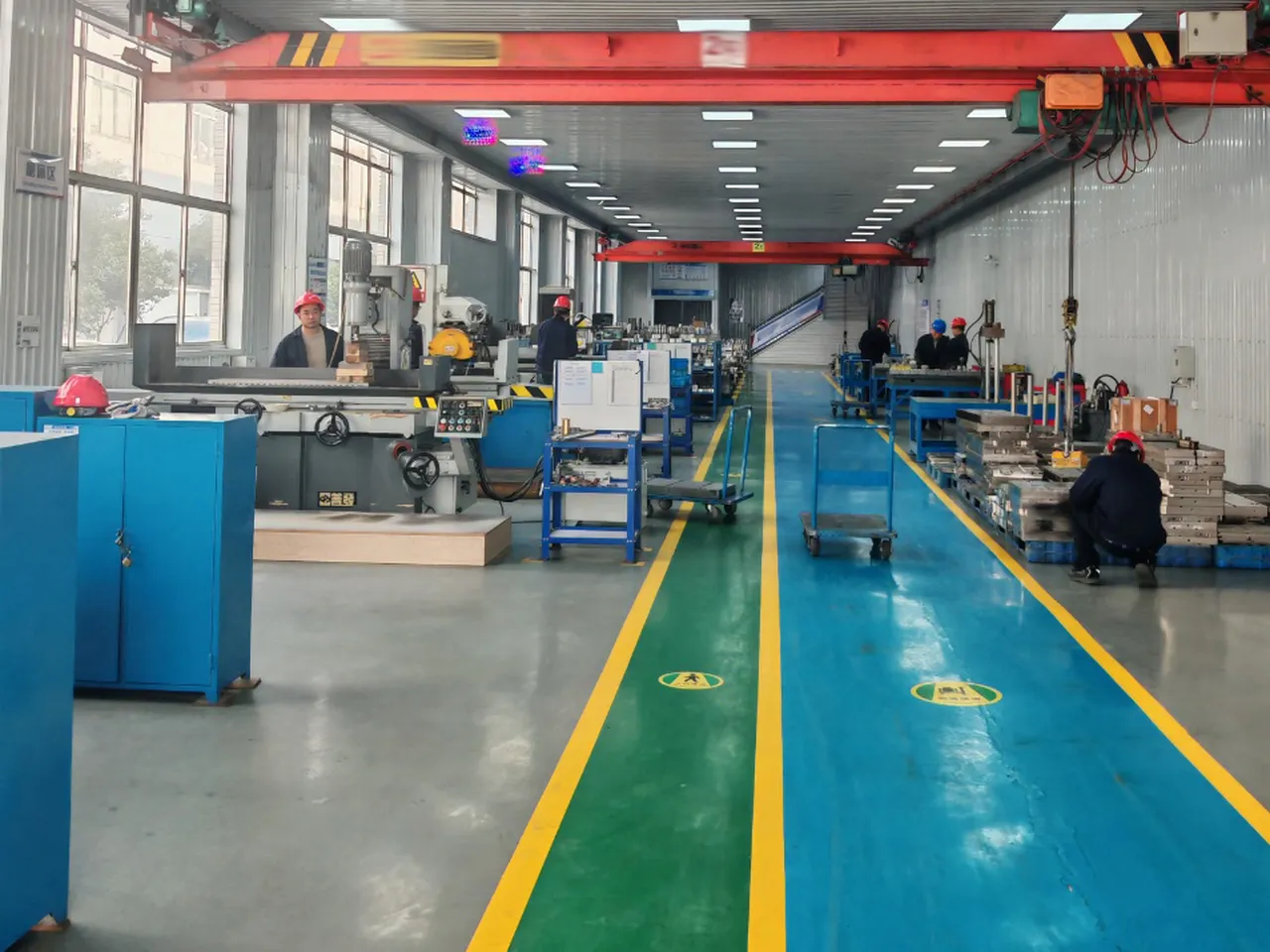
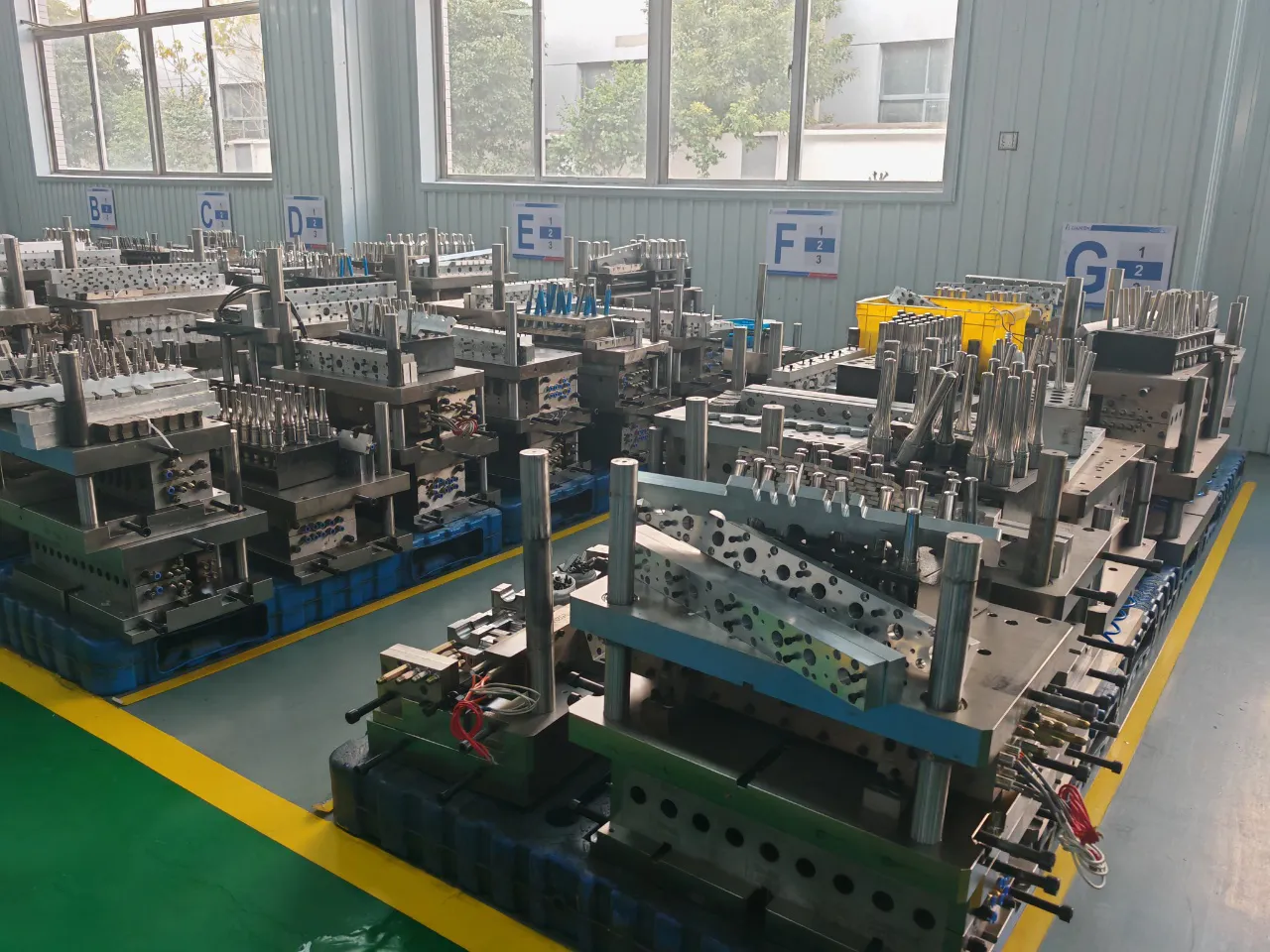
Mexico Ever-Power ISBM Machinery Co., Ltd stands as a premier choice for professionals seeking reliable injection stretch blow molding solutions, backed by more than two decades of specialized experience since its founding in 2003. Operating from an expansive production facility exceeding 20,000 square meters, the company excels in delivering innovative machinery tailored for diverse packaging needs, including containers made from PET, PETG, PC, PCTG, and PP. This expertise positions it as a leader in high-end applications for cosmetics, beverages, pharmaceuticals, and food products, where precision and durability are paramount.
The firm's commitment to advancement is demonstrated through multiple national patents that improve machine dependability and operational efficiency, enabling seamless compatibility with established models such as ASB and Aoki systems. Clients benefit from a comprehensive one-stop service encompassing custom design, precise manufacturing, and dedicated after-sales assistance, ensuring equipment like the Y150-V4-EV integrates effortlessly into existing operations as an effective replacement option.
Quality assurance remains central, with ISO-certified protocols and a focused research and development team driving continuous improvements. Partnerships with renowned global brands, including C’ESTBON, HAITIAN, Luhua, Walch, Blue Moon, PROYA, Liby, Estee Lauder, Wal-Mart, Dasenlin, and Shanliang Eye Drops, underscore the company's ability to meet stringent international standards while fostering mutually beneficial relationships.
Key strengths further distinguish Mexico Ever-Power:
- Competitive pricing structures that yield substantial returns on investment through reduced operational costs and enhanced productivity.
- Prompt and responsive customer service, supported by a team of industry experts who provide timely guidance and resolutions.
- Full compatibility with ASB and Aoki models, facilitating smooth transitions and upgrades without extensive retooling.
- Emphasis on energy efficiency and superior performance, with machines designed to minimize consumption while maximizing output quality.
- Versatility in handling multiple materials like PET, PETG, PP, and PC, allowing for flexible production across various sectors.
 |
 |
 |
 |
FAQs
Q: Is the YS150-V4-EV a direct replacement for the Japanese ASB-12M injection stretch blow molding machine?
A: Yes. The YS150-V4-EV is specifically engineered as a performance-equivalent and cost-efficient replacement for the Japanese ASB-12M. It is fully compatible with existing ASB-12M mold tooling, meaning you can transfer your current preform and blow molds to the new machine without modification. The key injection clamping force (150 KN), blowing clamping force (200 KN), and key stroke parameters are matched to the ASB-12M specifications. Mexico Ever-Power engineering team verifies mold compatibility during the pre-sale technical review process.
Q: What is the difference between a one-step ISBM machine and a two-step stretch blow molding process?
A: A one-step injection stretch blow molding machine like the YS150-V4-EV performs injection molding, preform conditioning, stretch blow molding, and ejection in a single continuous automated cycle on one piece of equipment. The preform uses retained heat from injection, eliminating secondary reheating. A two-step process uses a separate injection molding machine to produce preforms, which are cooled, stored, and then reheated in a separate reheat stretch blow molding machine. The one-step process offers superior energy efficiency, better crystallinity control, reduced labor, smaller footprint, and eliminates preform storage and reheating logistics.
Q: Does the YS150-V4-EV meet GMP pharmaceutical packaging requirements?
A: Yes. The YS150-V4-EV is a fully electric machine with no hydraulic oil system. This eliminates the risk of hydraulic oil vapor contamination, making it compliant with GMP pharmaceutical packaging production standards. The closed-loop automated production cycle has no human contact with containers at any stage from resin injection to bottle ejection. A wide range of electric control technologies has been adopted to replace hydraulic and pneumatic components, including the servo-driven bottom-cutting mechanism which replaces the pneumatic equivalent used on Japanese machines, fully supporting oil-free clean production environments.
Q: What bottle sizes and volumes can the YS150-V4-EV produce?
A: The machine supports 1 to 8 cavities per cycle, producing bottles from 20 ml (8 cavities, neck diameter 15 mm, bottle diameter 26 mm) up to 2,500 ml (1 cavity, neck diameter 83 mm, bottle diameter 118 mm). Bottle height ranges from 100 mm (smaller multi-cavity configurations) to 210 mm (single or dual cavity). Maximum bottle weight ranges from 16 g (8 cavities) to 130 g (1 cavity). This wide format range makes the machine suitable for dropper vials, cosmetic bottles, pharmaceutical containers, beverage bottles, and wide-mouth food jars in a single machine platform.
Q: How much energy does the YS150-V4-EV save compared to Japanese or European ISBM machines?
A: The YS150-V4-EV consumes 15% to 25% less energy than comparable machines from Japan, Europe, and the United States. This saving results from three main factors: (1) the one-step process eliminates secondary preform reheating energy entirely; (2) the nano-far-infrared energy-saving heating ring (10 KW) on the screw is significantly more efficient than resistive band heaters; and (3) all 10 servo motor axes consume energy only during active motion, unlike hydraulic pump systems that run continuously. Total machine power is 112.8 KW, with motor power at 102.8 KW and heating power at 10 KW.
Q: What materials can be processed on the YS150-V4-EV injection stretch blow molding machine?
A: The machine is rated for PET and PETG as primary materials. Extended compatibility includes PP, PE, PC, PCT, and PCTG on appropriately configured variants. PET is standard for beverage, pharmaceutical, and cosmetic containers. PETG offers enhanced toughness and clarity for premium packaging and sterilizable applications. Contact Mexico Ever-Power to confirm material compatibility for your specific resin grade, as intrinsic viscosity, melt flow index, and moisture content requirements vary by material and bottle geometry.
Q: What is the lead time for ordering the YS150-V4-EV, and what does the after-sales service include?
A: Standard lead time for the YS150-V4-EV is approximately 10 to 14 weeks from order confirmation and deposit receipt, subject to current production scheduling. Mexico Ever-Power provides comprehensive after-sales service including pre-delivery factory acceptance testing, remote commissioning guidance via video call, on-site installation support (quoted separately based on destination), operator and maintenance training (3 to 5 days on-site), spare parts provision, and ongoing technical support by phone, email, and video call. A spare parts list and recommended initial stock kit are provided with every machine delivery.
Q: Can the YS150-V4-EV be customized for specific bottle shapes or production requirements?
A: Yes. As a customized injection stretch blow molding machine provider, Mexico Ever-Power works with customers to configure the YS150-V4-EV for specific bottle geometries, cavity counts (1 to 8 per cycle), screw diameter selection (40 mm, 50 mm, or 55 mm), and material compatibility. Custom mold design and manufacture for both preform and blow molds is available in-house, supporting special shapes, pharmaceutical design requirements, and premium cosmetics bottle geometries. Provide your bottle drawing, volume, neck standard, and annual production volume to receive a tailored technical proposal.
Q: What are the voltage and utility requirements for installing the YS150-V4-EV?
A: The machine operates on 370 to 400 V, 3-phase power supply with a total connected power of 112.8 KW. Cooling water must be supplied at 0.4 to 0.6 MPa and maintained at 20 to 25 degrees C for the mold cooling circuit. Machine oil cooler water requires 0.3 to 0.4 MPa at 20 to 25 degrees C. Blowing air supply must be provided at 2.0 to 3.5 MPa from an appropriately sized industrial air compressor. Machine footprint is 5,200 mm long x 1,800 mm wide x 3,300 mm high, with a total weight of 7 tonnes. A concrete floor with a minimum load rating of 2 tonne per square meter is required.
Q: How does the YS150-V4-EV compare with AOKI injection stretch blow molding machines?
A: The YS150-V4-EV and companion models in the Ever-Power ISBM range are engineered as alternatives to both ASB and AOKI injection stretch blow molding machines. The B-Series variants (e.g. Y150-V4-B, Y150-V3-B) are specifically configured as replacements for AOKI SBIII-100L-20, while the YS150-V4-EV targets ASB-12M replacement. Mexico Ever-Power can advise which model best matches your existing AOKI tooling dimensions and production parameters. The key advantages over Japanese originals remain consistent: 15% to 25% energy saving, invisible parting line precision, higher throughput per cycle, and full servo oil-free operation.
Customer Reviews
Kim Jae-won, Pharmaceutical Packaging, South Korea
"We have been running the YS150-V4-EV at our pharmaceutical packaging plant in Incheon for about ten months now. We switched from a two-step system and honestly the improvement was immediately noticeable. The fully electric setup with no hydraulic oil was the main reason we chose it - our cleanroom standards are strict and we had problems with oil vapor contamination before. We are running 50 ml oral liquid PET bottles 4 cavities per cycle and dimensional rejection on the neck is below 0.3% which is excellent. The Mexico Ever-Power engineers spent three full days with our team during commissioning and made sure everything was set up properly. Very impressed."
Lukas Brandt, Cosmetics Packaging, Germany
"We produce serum and lotion bottles for a few mid-range cosmetics brands here in Germany, so the appearance of the parting line was always a problem with our previous Japanese machine. Our brand clients kept flagging it in visual inspection. The YS150-V4-EV completely solved that. The bottles come out with absolutely no visible seam and our clients stopped complaining within the first week of production. The energy savings are also real - our electricity consumption on this product line dropped noticeably. Delivery took about 12 weeks which was as promised. Happy to recommend."
Carlos Mendoza, Beverage Industry, Mexico
"I manage procurement for a beverage company in Mexico and we have now installed two of these machines at our Guadalajara facility. We needed to replace an old ASB-12M and the mold compatibility was the deciding factor - we reused all our existing molds and saved a significant amount on tooling. The machine was delivered on schedule and the installation team from Mexico Ever-Power was professional and efficient. Output rate is higher than the Japanese original. We are producing 500 ml water bottles and 250 ml juice bottles. Overall reliability in the first six months has been very good, only one minor sensor issue which was resolved remotely in about an hour."
Priya Nair, Baby Products, India
"Our factory in Mumbai produces baby feeding bottles in PET and PETG and we have very strict buyers who audit our production environment. The GMP compliance of the YS150-V4-EV was critical for us. The no-human-contact cycle and zero hydraulic oil is exactly what our international retail customers require. Machine quality overall is very solid. I will say the user manual could be better translated in some sections, we had a few questions during the first month of operation, but the after-sales support team responded quickly by video call and helped us resolve things. Machine performance itself is excellent and bottle quality is consistent."
Rachid Benbrahim, Essential Oil Packaging, Morocco
"Purchased for our dropper bottle line producing 30 ml essential oil bottles. We are running 6 cavities per cycle and the output volume is exactly what we needed to meet our export orders to Europe and the US. The Airtak cylinders and Parker valves are quality components - we had some bad experiences in the past with cheaper alternatives from other suppliers. The servo system is quiet and smooth, a big difference from our hydraulic machines. Logistics and shipping from the factory to Casablanca was handled well and the machine arrived without any damage. Good investment."
Fernanda Oliveira, Edible Oil Packaging, Brazil
"We produce edible oil bottles for supermarket private label brands in Brazil. Compared to our previous extrusion blow molding setup, the clarity of the bottles from this machine is a completely different level. Our retail buyers specifically commented on the improved shelf presence of our oil bottles since we switched. The energy bill is also noticeably lower even though we increased our output. One thing I appreciated a lot was the pre-delivery testing - Mexico Ever-Power sent us a full video of the machine running our bottle specs before shipment, which gave us confidence before the equipment even left the factory. That is good service."
Ahmed Al-Rashidi, Chemical Products, Saudi Arabia
"We manufacture bottles for hand sanitizer and antiseptic products and switched to the YS150-V4-EV about eight months ago. The chemical resistance of the PETG bottles has been excellent and we have had zero compatibility issues with our alcohol-based filling products. The machine itself is straightforward to operate once the operators complete training. We did a 3-day training session with the Mexico Ever-Power technician on-site and now our team handles it independently. Response from the support team when we have technical questions is fast, usually same day. Solid machine, good supplier relationship."
Nguyen Thi Lan, Contract Packaging, Vietnam
"As a contract packaging company in Vietnam we needed a machine that could handle multiple bottle formats without long changeover times. The PLC recipe system on this machine stores all our different product settings and changeover between formats takes less than 40 minutes now. We run pharmaceutical vials in the morning and cosmetic pump bottles in the afternoon with the same machine. The mold compatibility with ASB-12M tooling also meant we could source molds from multiple suppliers. Very flexible solution for a contract manufacturer. The build quality is noticeably better than other Chinese machines we have looked at."
James Hartley, Nutraceutical Supplement Packaging, United Kingdom
"We are a nutraceutical company in the UK producing supplement bottles in PET. We needed a machine that could meet our MHRA production environment requirements and the oil-free servo system was the main reason we selected this model. Machine was delivered FOB and arrived in good condition. Installation went smoothly with the Mexico Ever-Powertechnical team guiding us remotely. The Yaskawa servo motors are a quality brand we trust. The bottles have excellent clarity and our filling line runs without any neck dimension issues. If I had one suggestion it would be to include more English spare parts labeling in the documentation pack, but overall very satisfied with the purchase."
Additional information
| Edited by | Yjx |
|---|
Related products
-
YS350-V4-EV Injection Stretch Blow Molding Machine Replacement for Japanese AOKI AL-350LL-40
-
Y250-V4 Injection Stretch Blow Molding Machine Replacement for Japanese ASB-70DPH
-
Y150-V4 One Step Injection Stretch Blow Molding Machine (4-Station)
-
Y200-V4 One Step Injection Stretch Blow Molding Machine (4-Station)