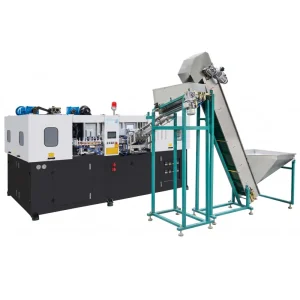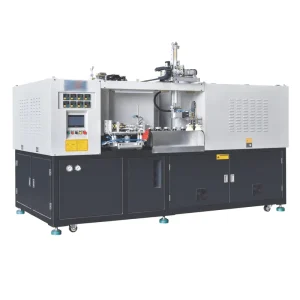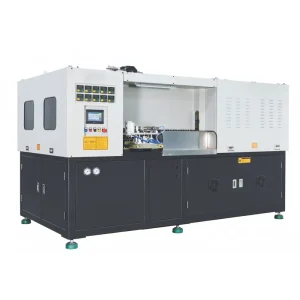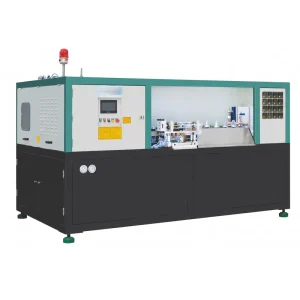
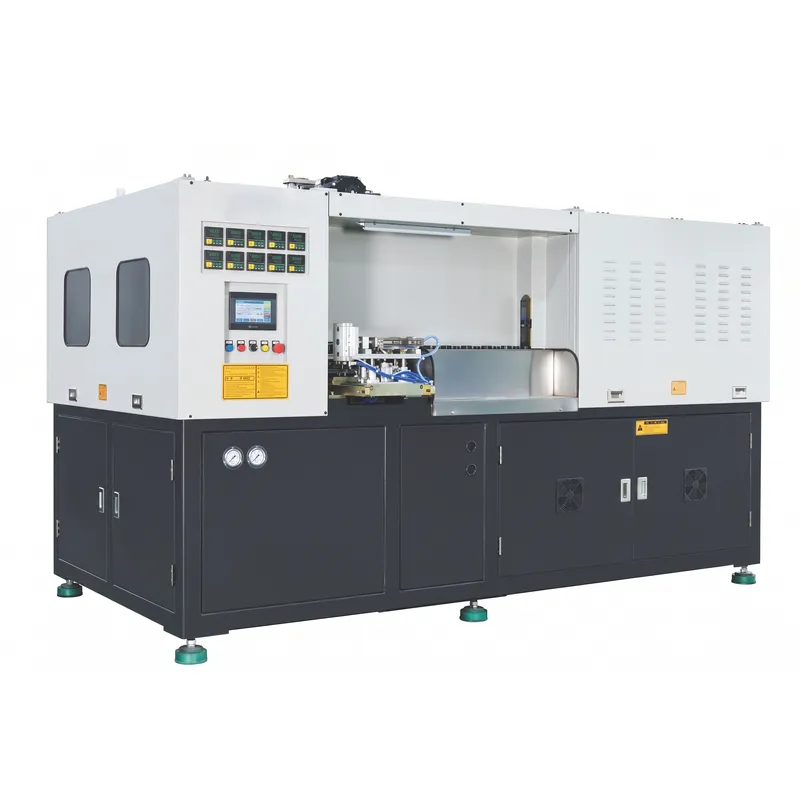
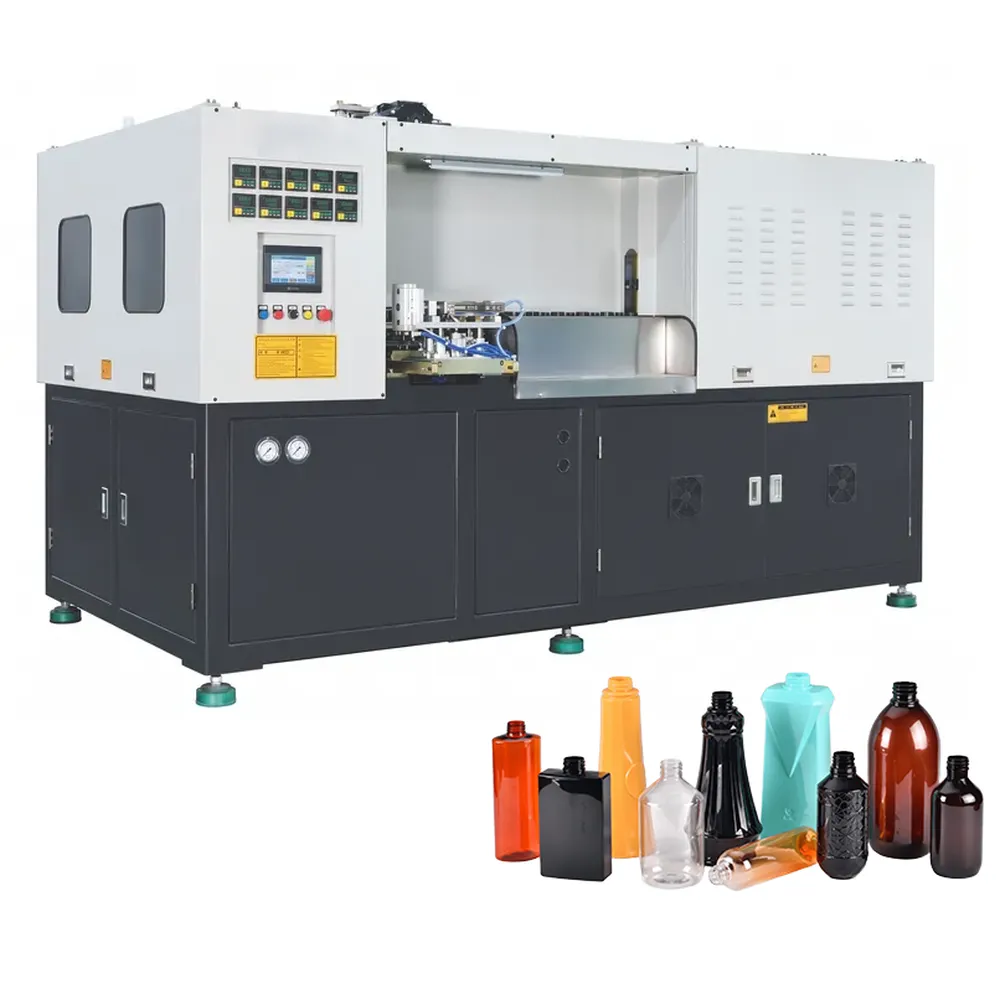
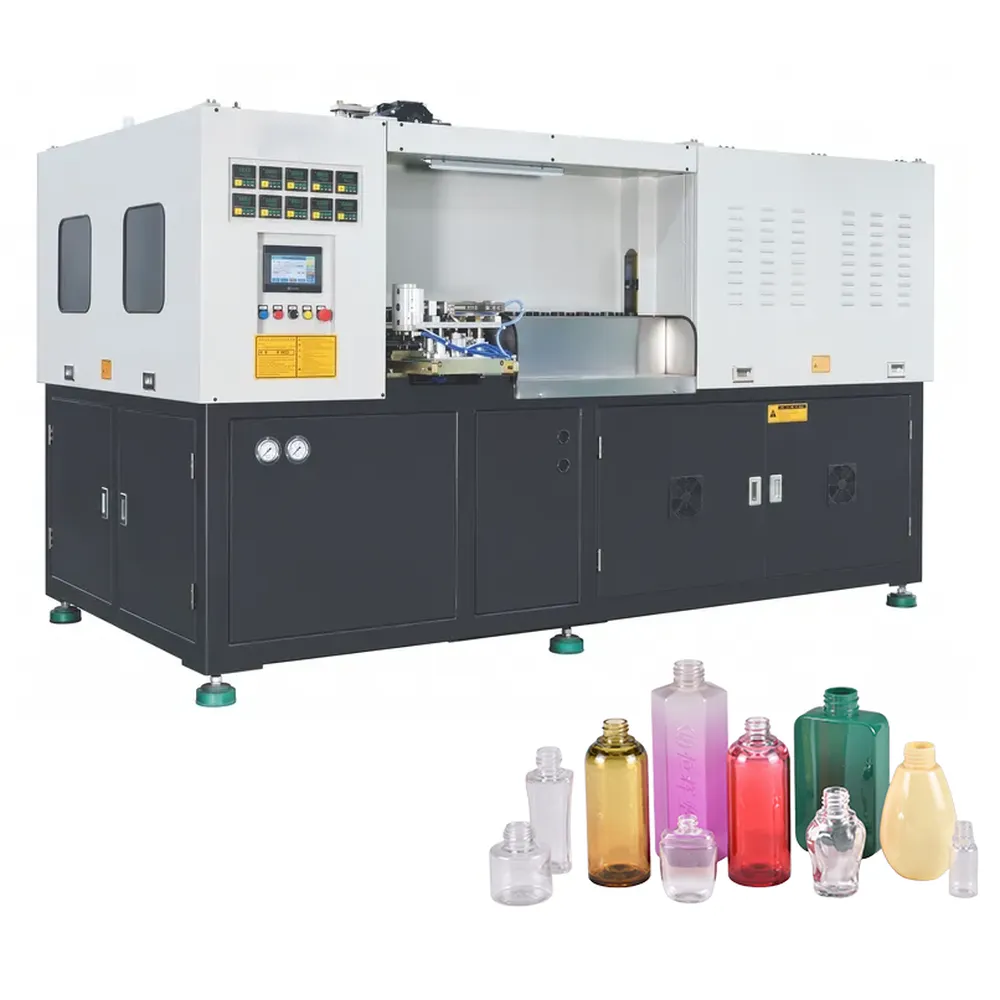
EPA.AS-2C114.3 全自动吹塑成型机,适用于日用化学品和化妆品瓶
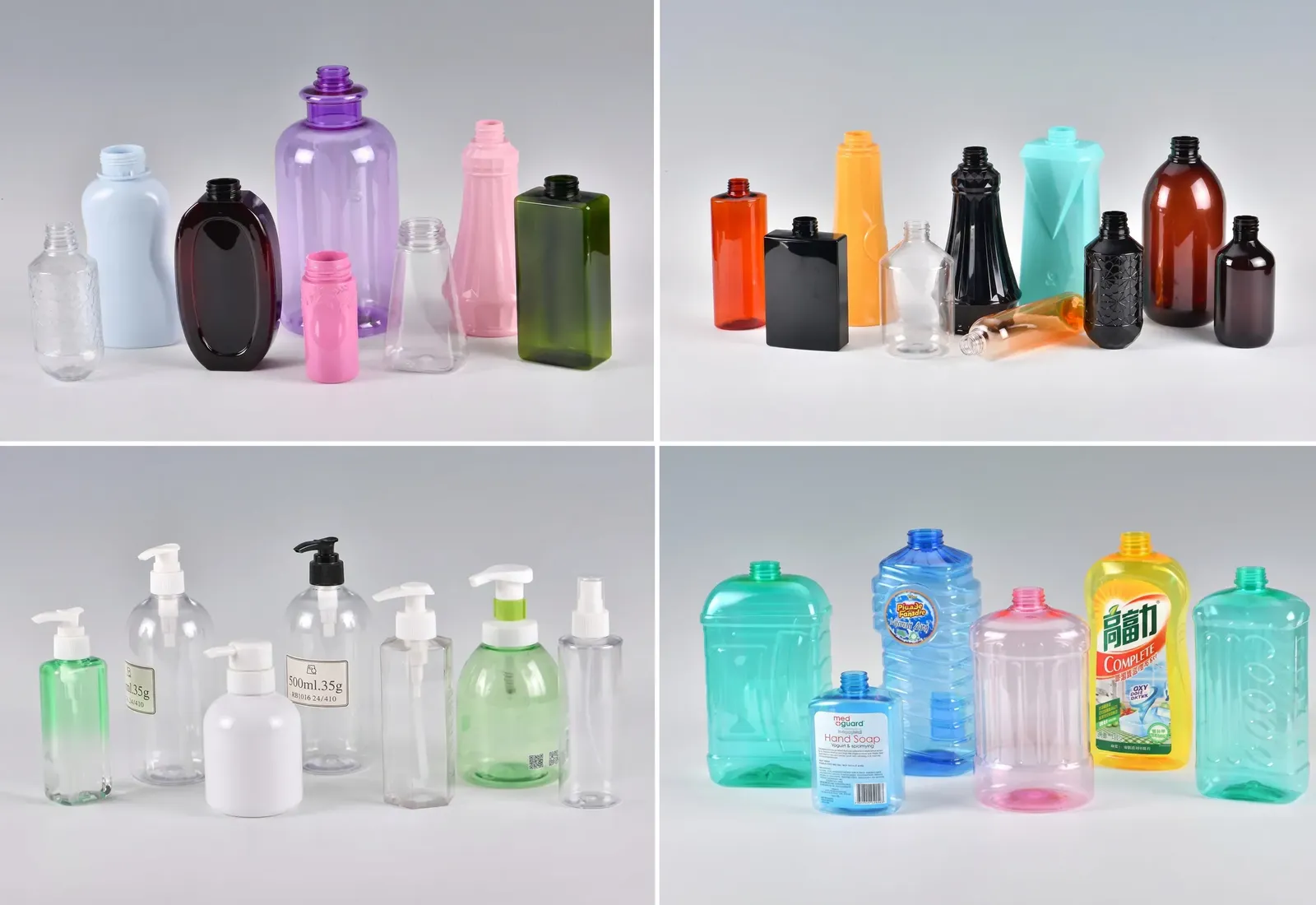
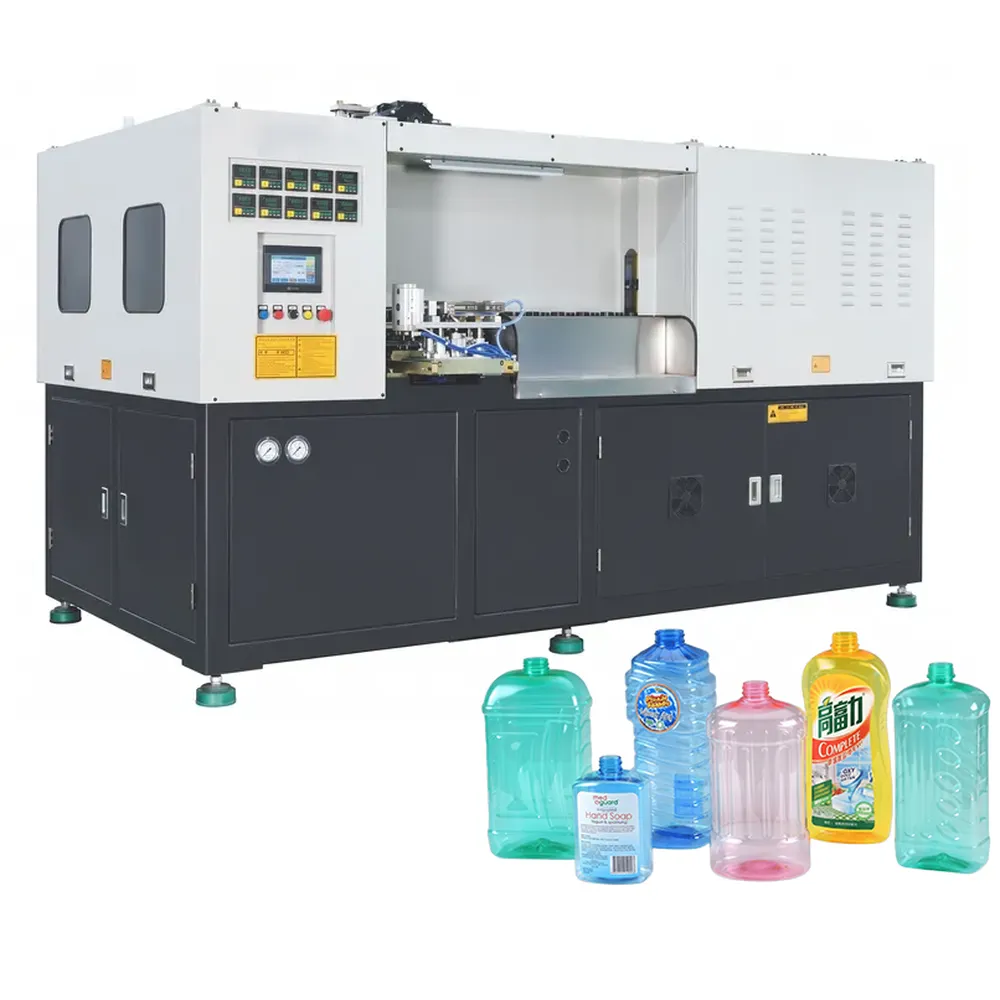
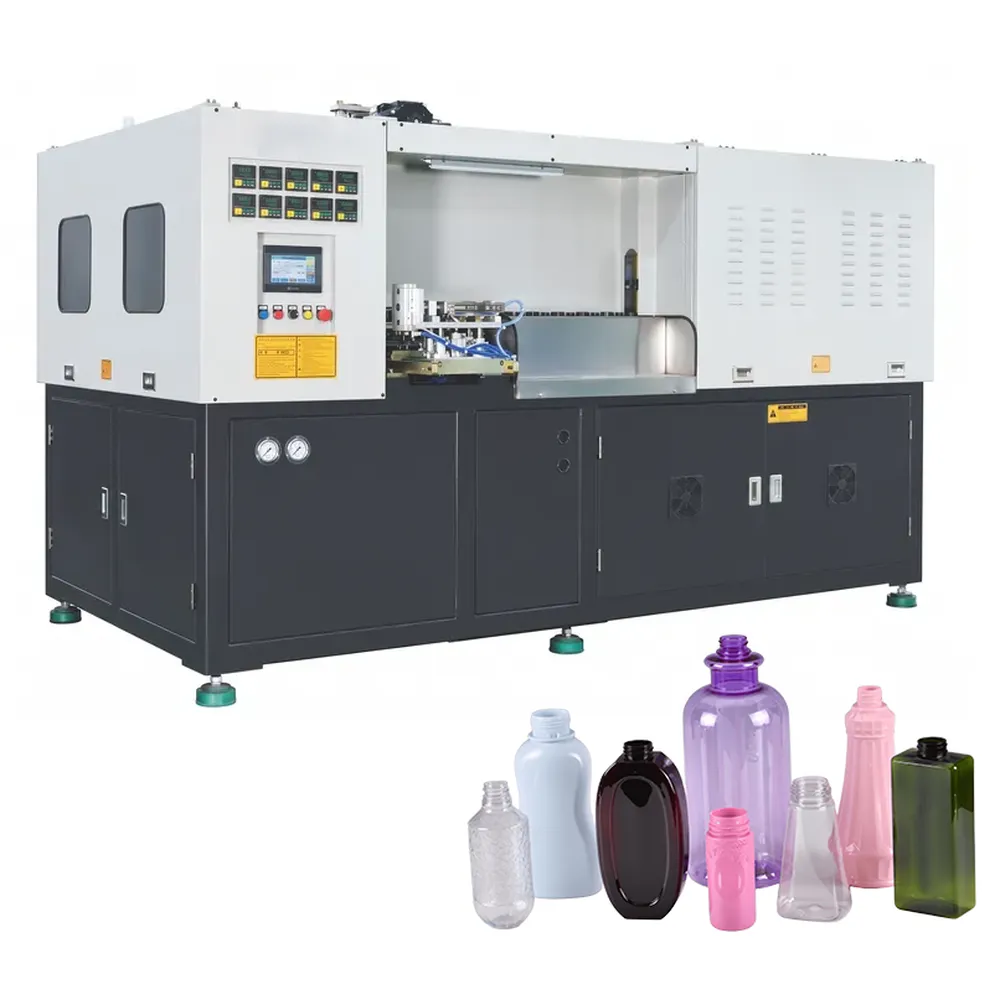
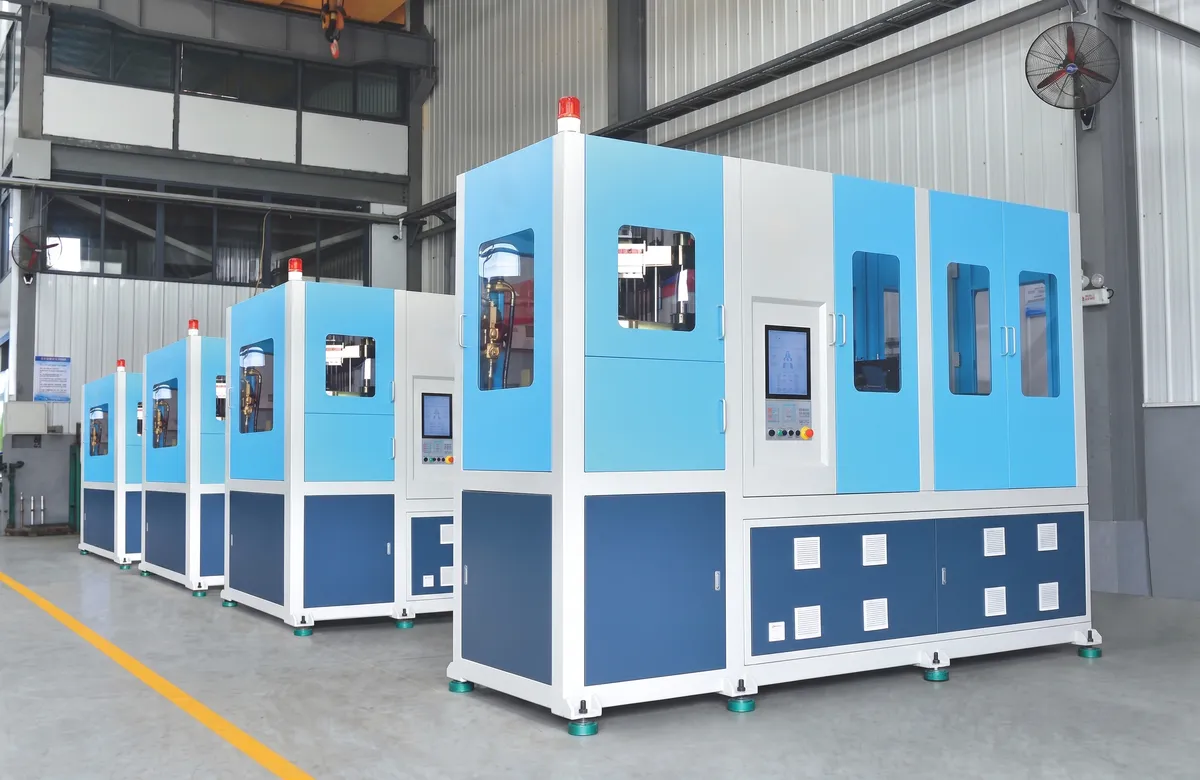
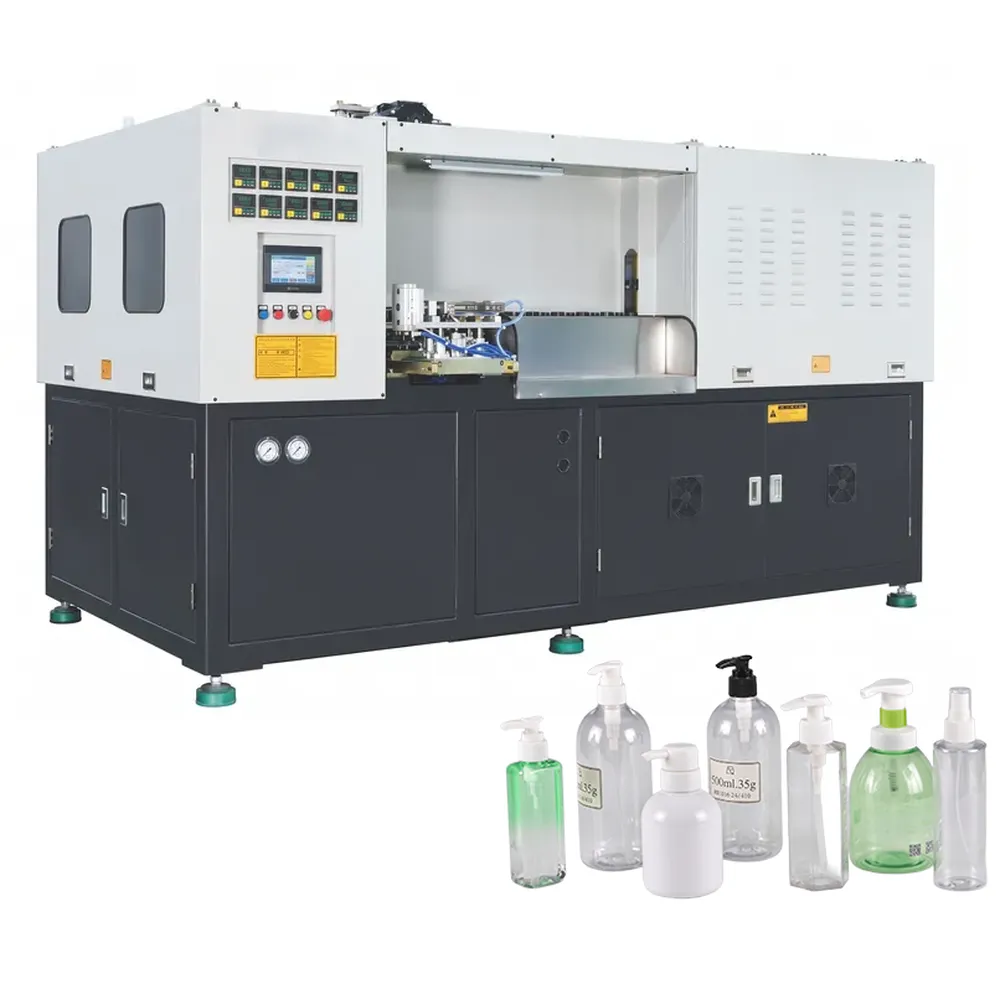
EPA.AS-2C114.3 全自动吹塑机专为对化妆品和日用化学品包装精度、可靠性和产量有较高要求的制造商而设计。该两步吹塑机采用国际知名的伺服电机、减速器、电气元件和先进的控制系统,可在连续生产周期中提供稳定、耐用且节能的性能。它拥有两个模腔,理论产量为每小时 2000 瓶,专为吹制各种外观和复杂几何形状的 PET/PETG 化妆品瓶而设计。
The EPA.AS-2C114.3 fully automatic blow molding machine is engineered for manufacturers demanding precision, reliability, and high output in cosmetic and daily chemical packaging. Adopting internationally renowned servo motors, reducers, electrical components, and advanced control systems, this two-step blow molding machine delivers stable, durable, and energy-saving performance across continuous production cycles. With 2 cavities and a theoretical output of 2,000 bottles per hour, it is purpose-built for blowing PET/PETG cosmetic bottles in various appearances and complex geometries, including special-shaped bottles that require high dimensional accuracy. The compact footprint of 2,660 x 1,660 x 2,150 mm makes it well suited for optimized factory floor layouts without compromising throughput.
As a cosmetic blow molding machine, the EPA.AS-2C114.3 excels in applications where bottle aesthetics and dimensional consistency are non-negotiable, including shampoo bottles, body wash containers, serum dispensers, lotion pumps, and skincare packaging for brands operating at industrial scale. The plastic blow molding machine supports neck diameter ranges up to 88 mm and maximum container volumes of 1,000 ml, giving packaging engineers the flexibility to run diverse SKUs on a single platform. Powered by a PLC-based control system, every production parameter, from stretching stroke to blowing pressure, is tightly regulated, ensuring batch-to-batch repeatability that meets the quality demands of OEM cosmetic and daily chemical supply chains worldwide.
技术参数
| 模型 | 单元 | EPA.AS-2C114.3 | |
|---|---|---|---|
| 成型 | 夹紧行程 | 毫米 | 122 |
| 模具开口距离 | 毫米 | 302 | |
| 模具近距离 | 毫米 | 180 | |
| 拉伸笔画 | 毫米 | 400 | |
| 模具开口距离 | 毫米 | 50 | |
| 模具近距离 | 毫米 | 114.3 | |
| 预成型件支架 | 48 | ||
| 龋齿 | 2 | ||
| 容器 | 最大容器容积 | 毫升 | 1000 |
| 颈部直径范围 | 毫米 | 88 | |
| 最大容器直径 | 毫米 | 94 | |
| 最大容器高度 | 毫米 | 260 | |
| 理论产出 | 良性前列腺增生 | 2000 | |
| 电气系统 | 最大加热功率 | 千瓦 | 45 |
| 加热功率 | 千瓦 | 20 | |
| 空气系统 | 工作压力 | kg/cm² | 7 |
| 低压空气消耗 | 升/分钟 | 600 | |
| 吹气压力 | kg/cm² | 35 | |
| High-pressure air consumption | 升/分钟 | 1600 | |
| Cooling water | 工作压力 | kg/cm² | 6 |
| 温度 | ℃ | 8-12 | |
| 流速 | 升/分钟 | 30 | |
| 机器 | 尺寸(长*宽*高) | 毫米 | 2660*1660*2150 |
| 重量 | 公斤 | 2600 | |
Features of EPA.AS-2C114.3 Fully Automatic Blow Molding Machine
1. High Efficiency Output
With a theoretical output of 2,000 bottles per hour across its 2-cavity configuration, the EPA.AS-2C114.3 fully automatic blow molding machine is engineered for sustained, large-scale cosmetic packaging production. The 48-position preform holder minimizes idle time between cycles, keeping throughput high across extended production runs without operator fatigue becoming a limiting factor. This performance level makes it the right choice for factories targeting consistent daily volume commitments to major FMCG and beauty brands.
2. Superior Build Durability
Structural components are fabricated from high-grade steel and precision-machined via CNC equipment, ensuring dimensional integrity over years of continuous operation. The machine frame is designed to absorb cyclic clamping forces without fatigue, making it suitable for 24/7 production environments. Corrosion-resistant materials are used throughout contact zones, which is critical when processing specialty PET/PETG resins that may carry acidic or hygroscopic characteristics. Long service intervals and robust component sourcing reduce downtime and total cost of ownership across a typical 10-year operational lifespan.
3. Precise PLC Control
The integrated PLC-based control system gives operators granular command over every machine parameter, including heating lamp output, stretching stroke, blowing pressure, and cooling dwell time. This level of precision is essential when producing special-shaped cosmetic bottles where wall thickness uniformity across asymmetric geometries determines product quality. Recipe storage allows technicians to switch between bottle SKUs with minimal changeover time, making the machine highly adaptable on lines that run diverse cosmetic packaging formats within the same shift.
4. Versatile Bottle Applications
Supporting containers from small pump-top serum vials up to 1,000 ml household cleaning bottles, and neck diameters up to 88 mm, this daily chemical blow molding machine handles an exceptionally wide application range without requiring a platform change. It is equally at home producing transparent PET shampoo bottles, opaque PETG lotion containers, and complex multi-facet special-shaped packaging that would challenge less capable machinery. This versatility lets contract packaging operations serve multiple brand clients on a single machine investment.
5. Energy-Efficient Servo Drive
Adopting internationally recognized servo motor technology, the EPA.AS-2C114.3 operates at a normal heating power of just 20 kW against a maximum rated 45 kW, meaning the machine draws power proportional to actual production demand rather than running at constant peak load. Servo-driven actuators recover energy during deceleration phases, and the optimized heating zone layout minimizes infrared lamp idle consumption. For factories operating multiple PET blow molding machines around the clock, the cumulative energy savings compared to conventional hydraulic-drive alternatives translate to a measurable reduction in per-unit packaging cost.
6. Fully Automated Operation
The end-to-end automated workflow of this two-stage blow molding machine spans preform loading, heating, stretching, blowing, and bottle discharge with minimal manual intervention required. Automated bottle output conveying reduces touch contamination risks, which is important for personal care packaging where hygiene standards are enforced by brand owners. The reduced reliance on skilled labor per machine also lowers the operational complexity for production managers, enabling smaller teams to oversee larger equipment banks without sacrificing output quality or consistency.
How the Two-Step Blow Molding Machine Works
1. Raw Material Preparation
The process begins with rigorous raw material handling. PET, PETG, and compatible polymers are screened, blended, and dried to precise moisture content levels before entering the production process. For PET in particular, pre-crystallization and drying to below 50 ppm moisture is mandatory to prevent hydrolytic degradation during subsequent heating stages. Strict material quality control at this stage directly determines the optical clarity and mechanical strength of the finished cosmetic bottle. Batch testing and color masterbatch integration are also managed here, allowing consistent color reproduction across high-volume production runs.
2. Preform Injection Molding
In the two-step process, the prepared resin is first fed into an injection molding machine where it is heated, melted, and plasticized before being injected into a precision preform mold. Machine temperature, injection pressure, and fill speed are tightly controlled at this stage because the preform geometry, neck thread accuracy, and wall distribution directly determine the quality of the final blown bottle. Preforms produced in this step can be cooled, inspected, and stored or transported before being fed into the EPA.AS-2C114.3, giving manufacturers scheduling flexibility that single-stage machines cannot offer.
3. Preform Preheating
Preforms loaded onto the 48-position holder pass through a precisely zoned infrared heating tunnel where temperature is raised uniformly across the body wall while the neck finish area remains cool to preserve thread geometry. The heating profile is calibrated per bottle specification through the PLC, ensuring that thicker wall zones receive sufficient heat penetration to achieve the plasticity needed for clean stretching without thin-spot failure. Proper preheating is the single most critical variable in achieving consistent wall thickness distribution in complex cosmetic bottle shapes.
4. Stretch Blow Molding
The conditioned preform is transferred into the two-cavity blow station where a stretch rod extends axially to 400 mm stroke while high-pressure air at 35 kg/cm2 simultaneously expands the preform radially against the mold cavity walls. This bi-axial orientation process aligns polymer chains in two directions simultaneously, producing bottles with significantly improved barrier properties, drop resistance, and optical clarity compared to non-oriented alternatives. The clamping force and blowing sequence are electronically controlled to ensure repeatable results every cycle, which is essential for cosmetic bottle lines where visual appearance and dimensional tolerance are enforced quality gates by brand owners.
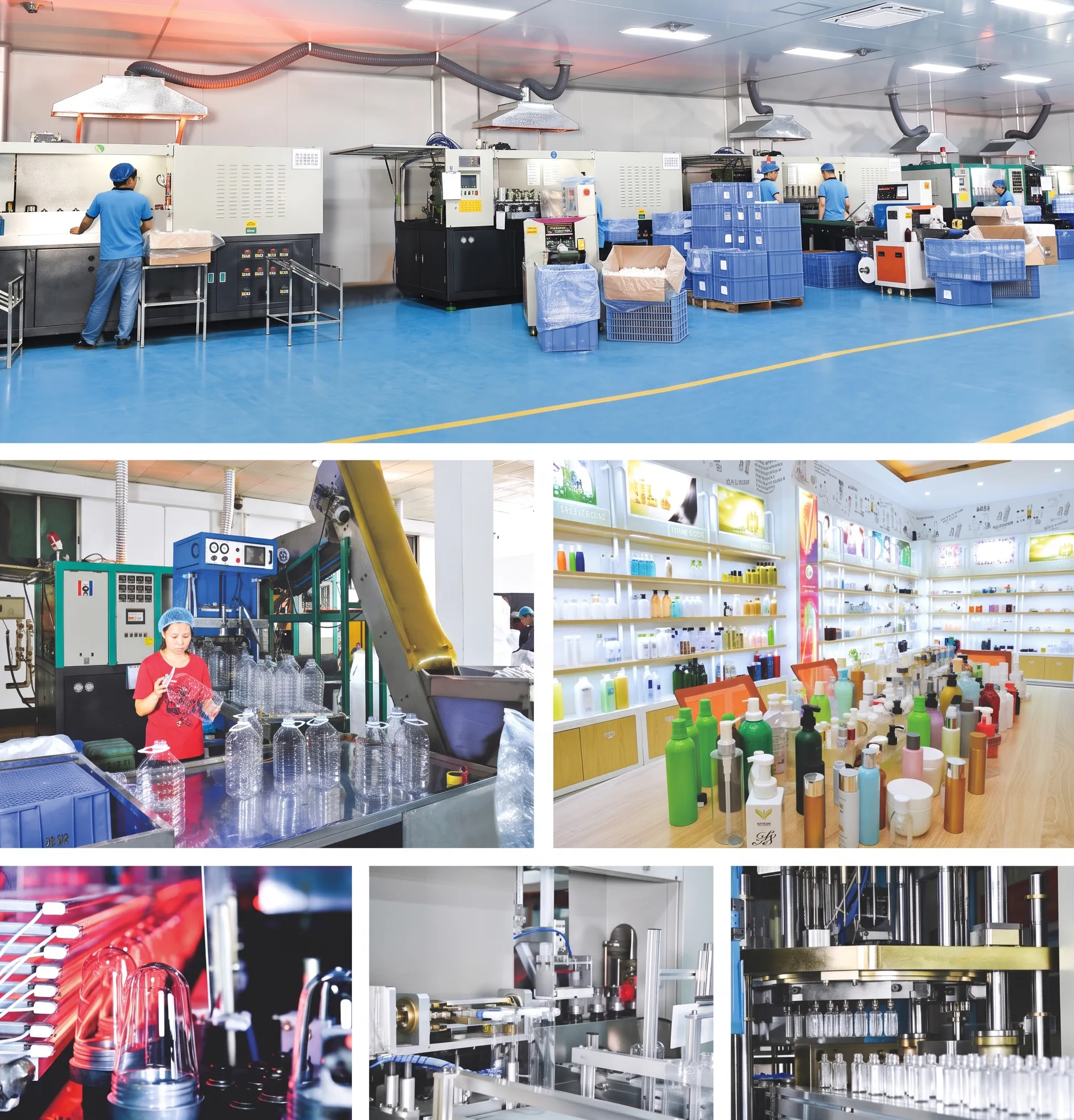
应用领域
The EPA.AS-2C114.3 plastic blow molding machine serves a wide range of packaging industries where precision and aesthetics matter equally.
1. Pharmaceutical Bottles
The machine produces PET pharmaceutical bottles with high dimensional accuracy on thread finish and body roundness, meeting the tight tolerances required by capping and filling line machinery. Its clean, enclosed production environment and automated discharge minimize contamination risk, making it applicable to OTC liquid medicine, vitamin supplement, and oral care packaging that requires consistent clarity and tamper-evident neck compatibility.
2. 化妆品瓶
As a dedicated cosmetic blow molding machine, the EPA.AS-2C114.3 is particularly skilled at producing special-shaped bottles with complex curved profiles, narrow waists, embossed patterns, and asymmetric geometries that define premium beauty packaging. PETG processing capability adds the crystal clarity and scratch resistance favored by luxury skincare, fragrance, and color cosmetics brands across markets in Europe, North America, and Asia.
3. 化学品瓶
For household and industrial chemical packaging, this daily chemical blow molding machine produces bottles with robust wall strength and chemical resistance suitable for cleaning agents, disinfectants, and detergent concentrates. The wide neck diameter capability of up to 88 mm accommodates trigger-spray fitments, push-pull caps, and foam pump closures that are standard across the home care product category in markets worldwide.
4. Juice Bottles
The machine produces crystal-clear PET juice bottles with the bi-axial orientation that provides the gas barrier performance needed to maintain flavor integrity and extend shelf life without secondary packaging layers. Bottle volumes from small single-serve sizes up to the 1,000 ml family-size format can be accommodated, giving juice producers the flexibility to produce multiple SKUs on a single platform with rapid mold changeover capability.
5. Food Bottles
Food-grade PET bottles for sauces, condiments, cooking oil, and nutritional supplements are produced with the clarity and structural integrity that food safety regulations and retailer shelf standards demand. The machine precise wall thickness control reduces material usage per bottle while maintaining the drop resistance and pressure performance needed to survive retail distribution chains, contributing directly to packaging cost reduction for food brand owners.
6. Shampoo Bottles
Shampoo packaging demands a combination of squeeze flexibility, surface decoration compatibility, and neck finish accuracy for pump fitment sealing. The EPA.AS-2C114.3 handles PETG shampoo bottle production with the surface smoothness that label adhesion and hot-stamping decoration processes require, while delivering the consistent ovality tolerance that inline filling and capping equipment on high-speed FMCG lines expects from an incoming bottle supplier.
7. Dish Soap Bottles
Dish soap bottles present specific design challenges including ergonomic grip zones, flip-top neck compatibility, and the ability to contain concentrated alkaline formulas without stress-cracking over product life. The machine produces dish soap bottles with consistent wall distribution in grip area undercuts, and the high blowing pressure of 35 kg/cm2 ensures complete mold cavity fill even in complex label panel and grip feature geometries common in premium dishwashing liquid brands.
8. 沐浴露瓶
Body wash packaging merges cosmetic aesthetics with functional daily use requirements: clarity to showcase product color, strength to survive wet bathroom environments, and neck accuracy for lotion pump or disc-top closures. The EPA.AS-2C114.3 production of body wash bottles in PETG delivers the glass-like transparency that positions products at the premium end of shower care retail, while the machine throughput of 2,000 bph ensures that personal care contract manufacturers can meet retailer volume commitments profitably.
Key Equipment Components
Preform Loading Unit
The 48-position preform holder provides a continuous supply buffer between the heating zone and blow station, ensuring that the machine never starves for preforms during sustained production. Preform orientation and spacing are managed automatically, reducing the operator touchpoints that are a typical contamination and consistency risk on lower-automation equipment. This unit is designed for rapid tooling changeover when switching between different preform neck sizes or body lengths.
Infrared Heating Station
Multiple independently controlled infrared lamp zones heat the preform body to the precise temperature profile required for each bottle specification. The neck finish area is shielded from heat exposure to preserve the thread geometry that determines closure sealing performance. Zone-by-zone power control managed through the PLC allows technicians to compensate for seasonal ambient temperature variation and material batch differences, maintaining consistent preform conditioning across full production days.
夹紧单元
The servo-driven clamping unit opens to 302 mm and closes to 180 mm with a 122 mm clamping stroke, providing the force and repeatability needed to hold blow molds under 35 kg/cm2 high-pressure blowing without flash or parting line defects. Precision guide rails maintain mold parallelism throughout millions of open-close cycles, which is a key durability factor on machines operating in high-volume cosmetic bottle production environments where mold investment costs are significant.
Stretch Rod Mechanism
The axial stretch rod travels 400 mm to pre-stretch the heated preform before high-pressure air completes radial expansion. This bi-axial stretching sequence is what creates the superior barrier properties, wall thickness uniformity, and drop resistance that distinguish blown PET bottles from alternative packaging formats. The stretch rod speed and travel are adjustable through the control system, allowing fine-tuning for bottles with elongated body profiles or specialized wall distribution requirements.
High-Pressure Blow System
Operating at a blowing pressure of 35 kg/cm2 with a high-pressure air consumption of 1,600 liters per minute, the blow system delivers the force needed to fully replicate complex mold cavity geometries including embossed lettering, faceted surfaces, and tight-radius undercuts that define premium cosmetic bottle aesthetics. A low-pressure pre-blow stage at 7 kg/cm2 conditions the parison before full pressure is applied, preventing localized thin-wall failure on difficult special-shaped designs.
Mold Cooling Circuit
Chilled water circulating at 8 to 12 degrees Celsius through internal mold channels removes heat from the freshly blown bottle rapidly, setting the polymer crystallinity and dimensional stability before the mold opens. A flow rate of 30 liters per minute at 6 kg/cm2 operating pressure keeps the mold surface temperature stable across extended production runs. Consistent mold temperature is one of the most important variables in maintaining bottle-to-bottle dimensional repeatability on high-speed production lines.
PLC控制系统
The central PLC integrates control of all machine functions through a touch-screen human-machine interface, providing operators with real-time parameter monitoring, alarm management, and production data logging. Recipe storage enables fast product changeover with confidence that stored parameters will reproduce previously qualified bottle quality without re-development time. The system supports remote diagnostic connectivity, allowing Ever-Power technical engineers to assist with troubleshooting and parameter optimization without requiring on-site travel in many cases.
Servo Motor Drive Train
Internationally branded servo motors and matched reducers provide the precise, repeatable motion control that underlies consistent bottle quality on the EPA.AS-2C114.3. Servo drives respond to position and torque feedback in milliseconds, delivering the smooth, controlled motion profiles that minimize mechanical shock and extend mold and machine component service life. Energy recovery during deceleration phases contributes to the machine efficient power consumption profile compared to traditional hydraulic actuation systems.
Two-Stage vs. Single-Stage Blow Molding Machine
两段式吹塑机
Core Principle
The two-stage, or two-step blow molding machine, separates the injection molding of the preform from the blow molding of the finished bottle into two independent machines and processes. Step one, preform injection, and step two, stretch blow molding, can be performed in different locations, at different times, or by different companies entirely. This architectural separation is what defines the two-stage process and creates its unique set of advantages for high-volume operations.
生产灵活性
Preforms produced in the injection phase can be bulk-stored in standard boxes and shipped to geographically distributed blow molding facilities, enabling a centralized injection operation to supply multiple regional packaging plants. This separation also means that each machine can be optimized independently for its specific process step, with the injection press sized for preform output and the blow molding machine tuned for container geometry and throughput. This flexibility makes the two-stage approach the standard choice for large-scale preform suppliers and contract packaging organizations serving multiple brand clients.
High-Volume Production Advantage
Because preform injection and bottle blowing are decoupled, each process can run at its own optimal cycle time without forcing the other to wait. High-cavity injection molds can produce preforms at rates that serve multiple downstream blow molding machines simultaneously, creating an efficient manufacturing cascade. For cosmetic, beverage, and daily chemical packaging operations running above 5 million bottles per month, the two-stage approach consistently delivers lower per-unit cost than single-stage alternatives at equivalent quality levels.
Material and Geometry Range
The EPA.AS-2C114.3 as a two-stage machine is capable of processing PET and PETG preforms produced by any compatible injection press, giving buyers the freedom to source preforms competitively or produce them in-house. The blow station can accommodate a wide range of bottle shapes, from simple cylindrical bodies to complex multi-facet cosmetic designs, provided that appropriate blow molds are fitted, making a single machine investment serviceable across a diverse product portfolio over its operational life.
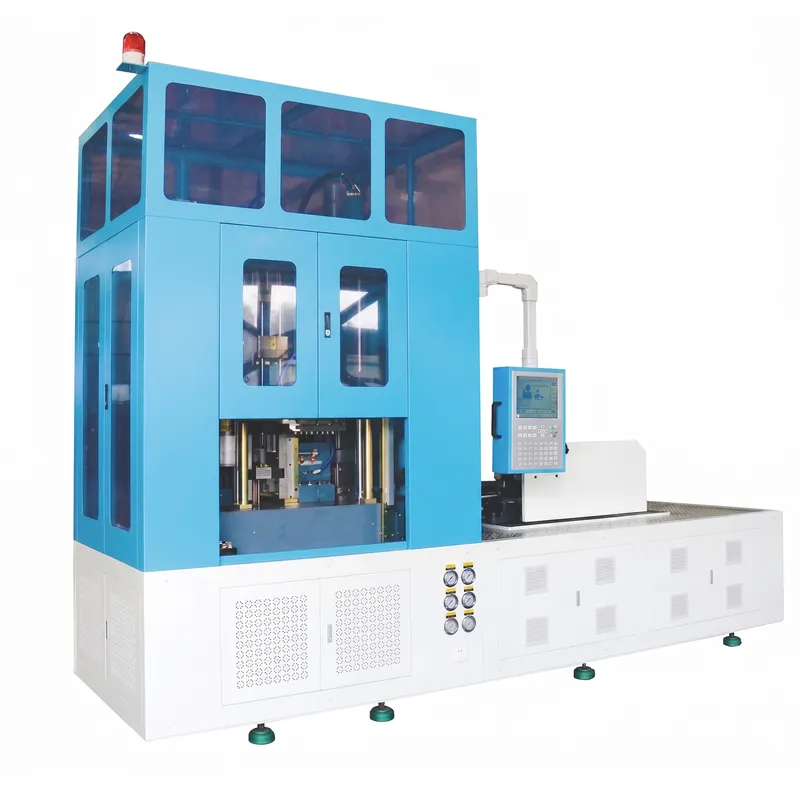
单级吹塑机
Core Principle
Single-stage machines complete the entire process from raw resin pellets to finished bottles within one integrated machine, without an intermediate preform storage or transportation step. Raw material enters at the injection station, where a preform is formed and immediately transferred, still hot from injection, to the blow station. No separate preform molding machine, storage system, or reheating infrastructure is required. The entire process completes in a single continuous cycle.
Lower Volume and High Precision Applications
Single-stage machines are better suited for low-to-medium production volumes where the capital and floor space investment of a separate injection press and preform handling system cannot be justified. They excel at producing bottles requiring exceptionally tight neck finish tolerances, such as pharmaceutical grade containers, because the preform transfers to the blow station while still thermally conditioned from injection, eliminating the reheating variability inherent in two-stage systems.
Reduced Contamination Risk
Because preforms are never exposed to the ambient environment between injection and blowing in a single-stage machine, contamination risk from handling, storage dust, and transportation is eliminated. This is a significant advantage in pharmaceutical and medical-grade packaging applications where hygiene validation requirements are stringent. The one-machine format also simplifies quality traceability documentation, as there is no preform supply chain to audit and validate separately.
Key Limitation: Throughput Ceiling
The fundamental throughput limitation of single-stage machines is that injection cycle time sets the production rate ceiling for the entire machine. Because injection molding is inherently slower than blow molding for most bottle sizes, the blow station operates below its capacity potential whenever it is paired with an injection unit. For large-volume cosmetic and daily chemical packaging operations where throughput above 1,500 bph is required, the two-stage platform represented by the EPA.AS-2C114.3 consistently proves more economical at scale.
Which Platform Is Right for Your Operation?
If your operation requires output above 1,500 bottles per hour, runs standard PET or PETG packaging, sources preforms from an established supply chain, or needs the flexibility to produce the same bottle design across multiple regional facilities, the two-stage approach of the EPA.AS-2C114.3 is the technically and economically superior choice. Single-stage machines remain the better option for pharmaceutical containers below 100 ml, complex multi-layer bottles, or low-volume specialty production where tooling flexibility outweighs throughput requirements. Contact the Ever-Power technical team for a production audit to identify which platform best matches your current and projected needs.
 |
 |
兼容的原材料
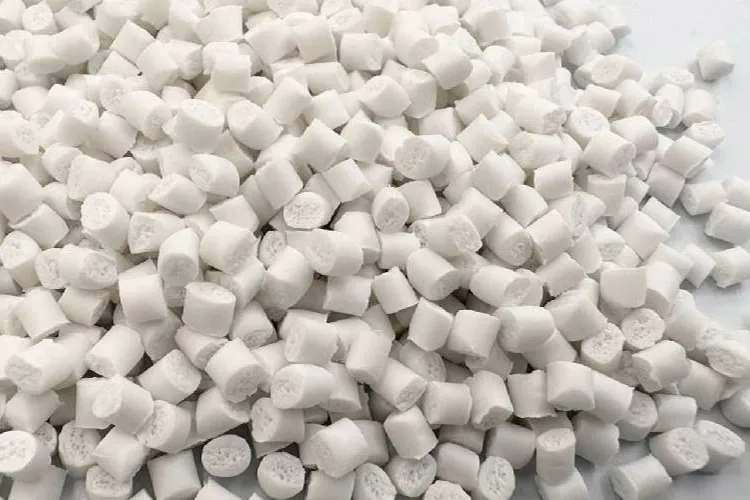
PET(聚对苯二甲酸乙二醇酯)
The primary and most widely used raw material for the EPA.AS-2C114.3, PET delivers exceptional optical clarity, high tensile strength, and verified food safety approvals that make it the material of choice for cosmetic, beverage, and food packaging worldwide. Its excellent stretchability during bi-axial orientation produces bottles with outstanding wall uniformity and barrier properties. PET must be dried to below 50 ppm moisture before processing to prevent hydrolytic degradation and haze formation in the finished bottle.
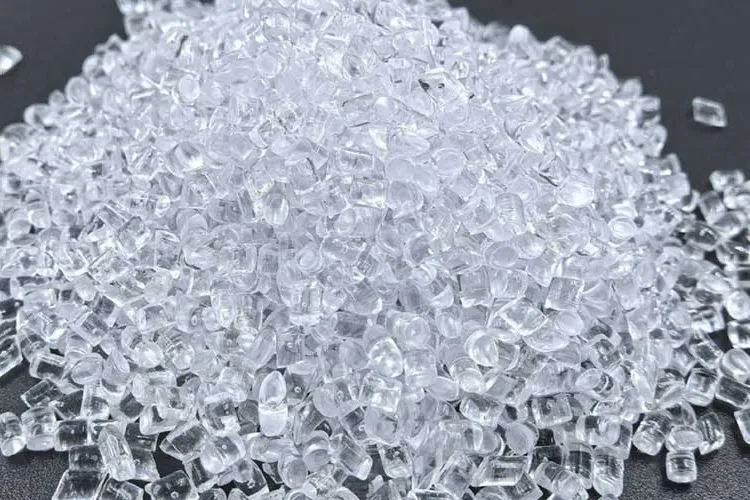
PETG (PET-Glycol Modified)
PETG offers the clarity of PET with improved impact resistance and lower processing temperatures, making it particularly popular for premium cosmetic packaging where glass-like appearance is required without the fragility of glass. It is easier to thermoform around complex geometries than standard PET, which makes it well suited to the special-shaped cosmetic bottle designs that are a signature capability of the EPA.AS-2C114.3 platform.
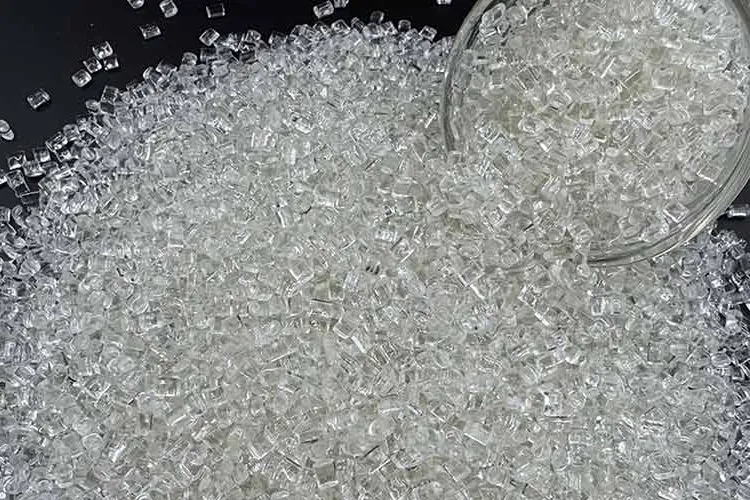
PP(聚丙烯)
Polypropylene is the material of choice for hot-fill applications where bottle contents are filled at temperatures above 70 degrees Celsius, including some food, sauce, and pharmaceutical liquid products. PP has excellent chemical resistance to both acidic and alkaline formulas, making it broadly compatible with household cleaning products, agricultural chemicals, and certain pharmaceutical applications. It has good high-temperature resistance and is widely used in food packaging, medicine bottles, and chemical containers across the daily chemical sector.
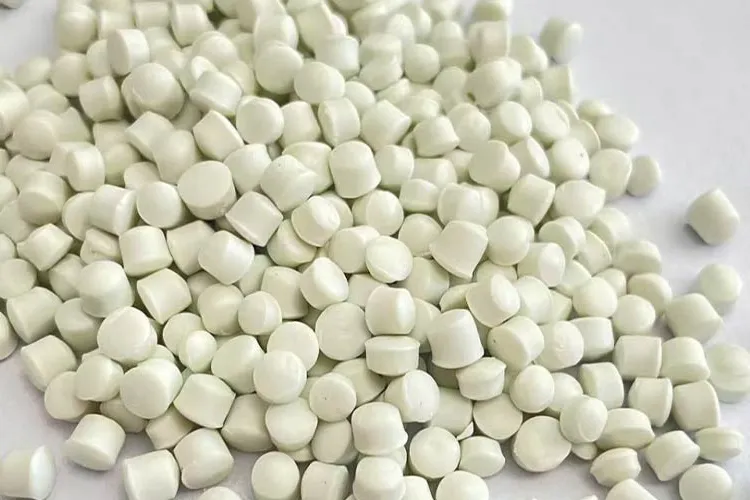
PC(聚碳酸酯)
Polycarbonate delivers exceptional optical clarity combined with very high impact resistance and dimensional stability at elevated temperatures, making it the preferred material for reusable bottles, sports water bottles, and specialty packaging applications requiring both transparency and toughness. PC is used when manufacturing high-temperature resistant or impact-resistant bottles. Its high material cost relative to PET positions it primarily in premium or functional packaging segments rather than high-volume commodity applications.
PE (Polyethylene)
Polyethylene, in both HDPE and LDPE grades, offers good flexibility and outstanding chemical resistance across a wide pH range, making it well suited for certain soft bottles or special packaging applications in household chemicals, detergents, and agricultural products. HDPE in particular provides excellent environmental stress-crack resistance, which is important for containers that will be stored for extended periods after filling with surfactant-rich formulas commonly found in the daily chemical product category.
 |
 |
 |
 |
Two-Step Blow Molding Mold Features
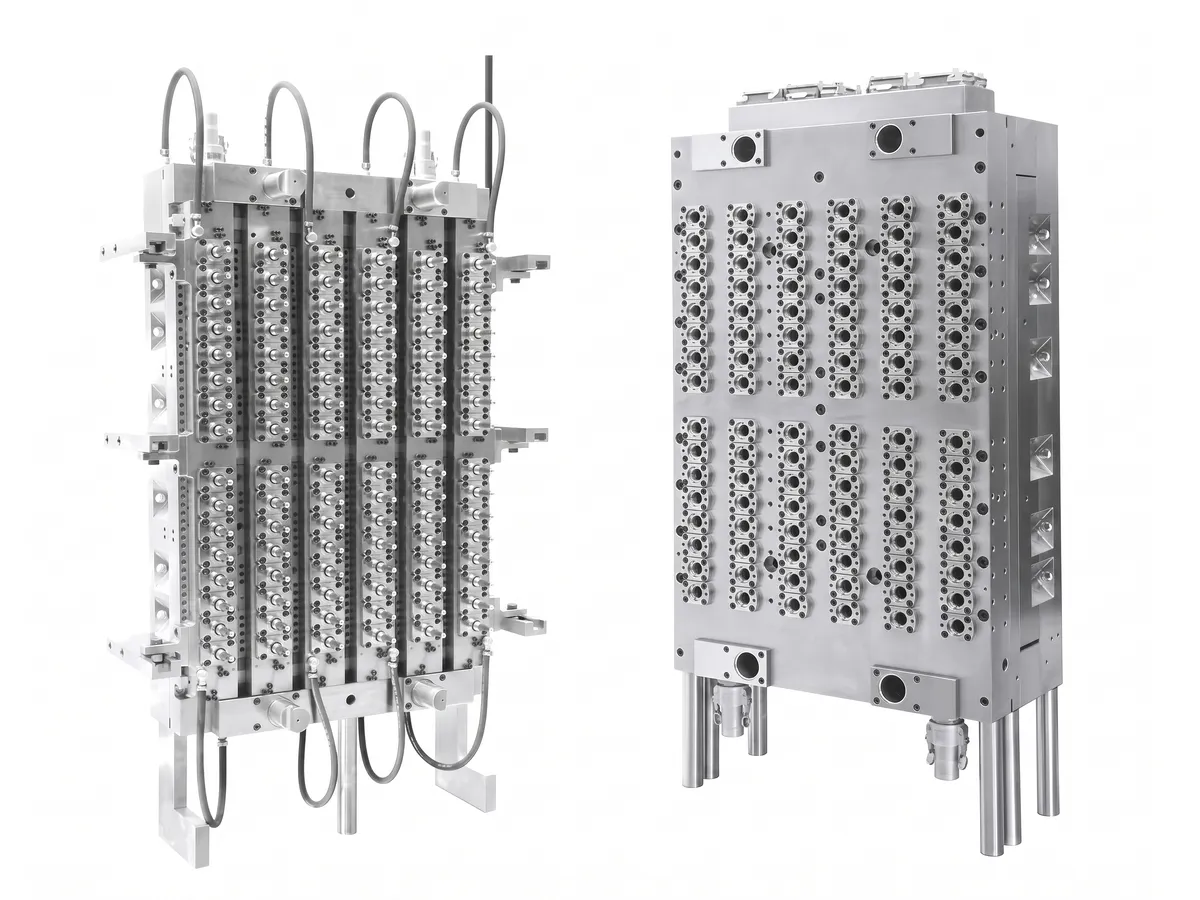
预成型注塑模具
- The two-part die lip design ensures that the preform and blow mold maintain perfect coaxial alignment during formation, which is critical for producing bottles with consistent neck thread accuracy and body symmetry across both cavities.
- Optimized internal cooling water channel geometry removes heat from the preform efficiently after injection, shortening cycle time and ensuring dimensional stability of the preform before it exits the mold, which directly affects downstream blow quality.
- Core formation components are manufactured from imported die steel grade 2316, which provides superior corrosion resistance and has undergone thermal hardening treatment, ensuring dimensional stability across millions of injection cycles without deformation or wear-related dimensional drift.
- Core plates, cavity plates, and load-bearing structural components are manufactured from 420-grade stainless steel, chosen for its resistance to corrosion from cooling water and cleaning chemicals over a long service life in production environments.
- The mold is engineered for straightforward maintenance access, with modular component design that allows technicians to inspect, clean, and replace wear parts without specialized tooling or disassembling major structural assemblies, minimizing planned maintenance downtime.
- Standard interchangeable die fittings and an advanced single-mold design capable of producing multiple preform types allow packaging manufacturers to maximize mold asset utilization across different product lines without investing in dedicated tooling for each application.
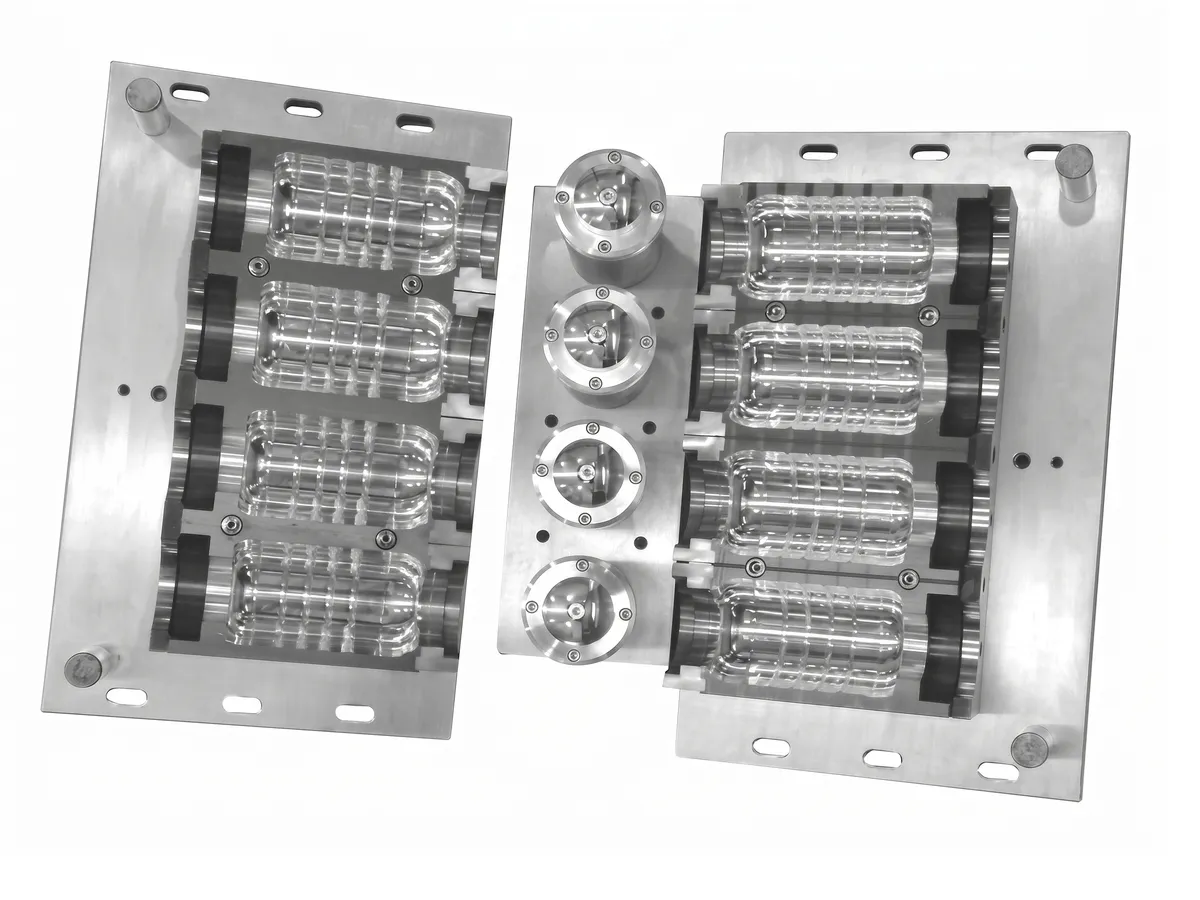
吹塑
- Blow mold bodies are machined from high-quality steel selected for fatigue resistance under the cyclic clamping and pressurization loads of continuous production, ensuring that mold dimensional accuracy is maintained throughout the rated service life without progressive deformation that would lead to bottle quality drift.
- Bottle cavity geometry is designed using advanced 3D CAD software with computational fluid dynamics analysis of blow air distribution and cooling channel effectiveness, ensuring that even complex special-shaped cosmetic bottle designs achieve complete cavity fill and consistent wall thickness distribution in production.
- The Ever-Power design team can provide versatile bottle cavity designs across a wide range of cosmetic, daily chemical, and pharmaceutical container geometries, allowing buyers to select from an established design library or commission custom bottle tooling for proprietary packaging shapes requiring market exclusivity.
- Internal water cooling channel geometry is designed to provide uniform mold surface temperature across the entire bottle cavity, eliminating hot spots that cause localized crystallinity variation and ensuring that bottles exit the mold with consistent dimensional accuracy and surface gloss from the first cycle of each production shift.
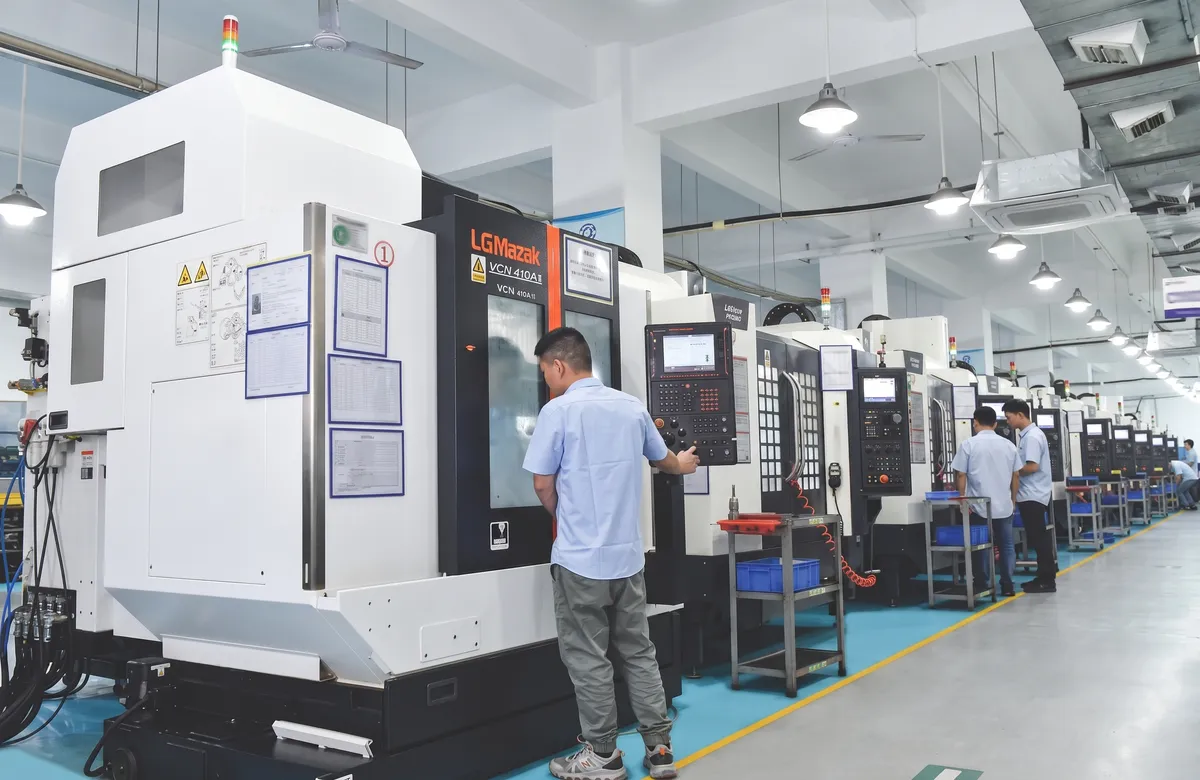
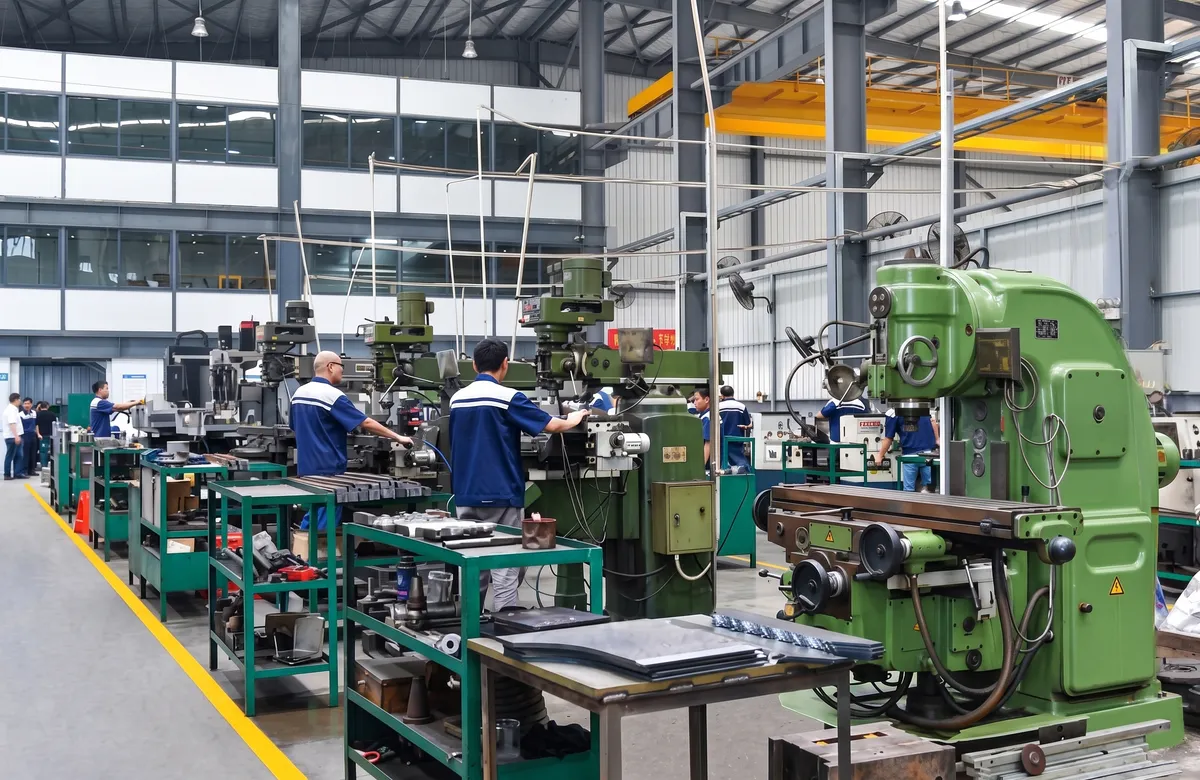
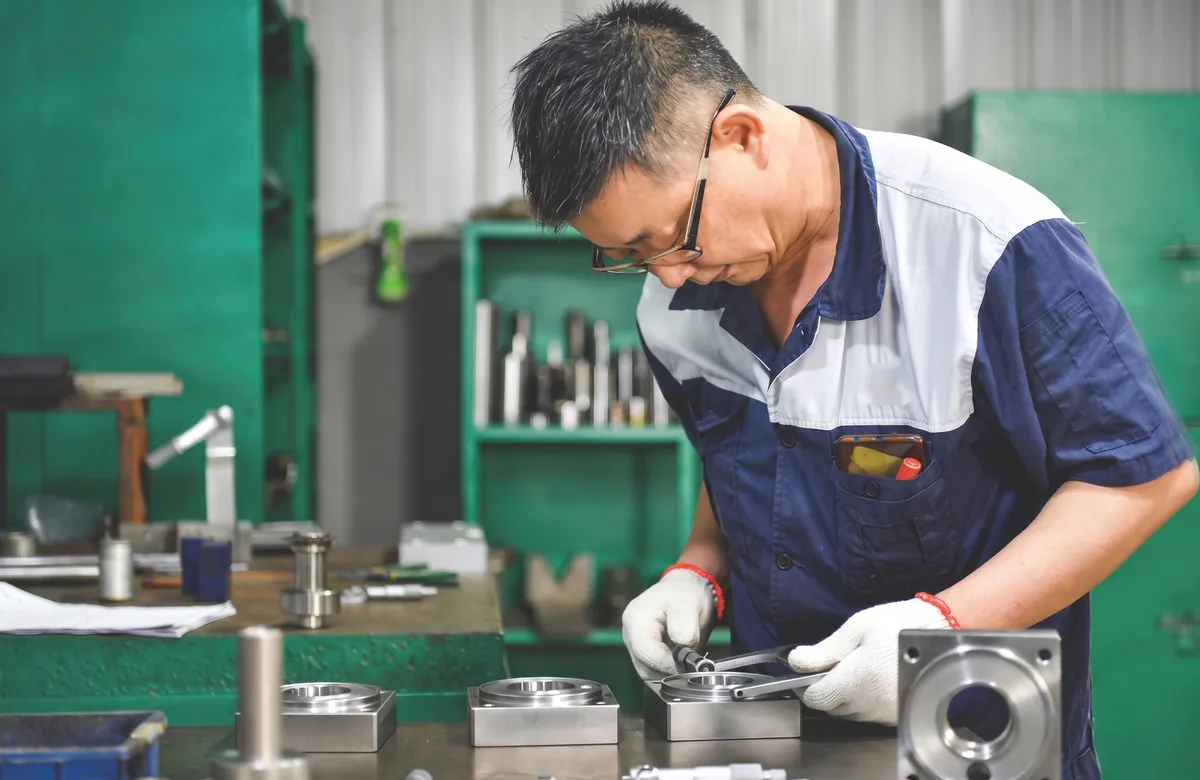
- All metal components and critical structural parts are finish-machined on CNC machining centers, ensuring dimensional tolerances that support clean parting line closure, accurate bottle body geometry, and repeatable mold opening and closing without flash formation across the rated production volume of the tooling.
 |
 |
Maintenance Tips for Cosmetic Bottle Blow Molding Machine
1. Daily Heating Zone Inspection
Before each production shift, inspect all infrared heating lamp elements for signs of darkening, uneven glow, or physical damage. A single failed lamp creates a cold zone in the preform heating profile that will produce bottles with wall thickness defects that may not be visible until downstream quality inspection. Replace suspect lamps proactively during scheduled maintenance windows rather than waiting for complete failure, which would require an unplanned production stoppage.
2. Cooling Water System Maintenance
Maintain cooling water temperature between 8 and 12 degrees Celsius and check water flow rate at the mold inlet and outlet connections at the start of each shift. Scale buildup in cooling channels reduces heat transfer efficiency over time, leading to progressive mold temperature creep that causes bottle dimension and gloss variation. Flush the cooling circuit with a descaling solution according to the manufacturer recommended schedule, typically every three to six months depending on local water hardness levels.
3. Mold Parting Line Cleaning
Clean mold parting line surfaces and cavity vents at the end of every production shift using soft cloths and a non-abrasive cleaning agent appropriate for the mold steel grade. Polymer residue and dust accumulation on parting line surfaces causes progressive flash formation that degrades bottle cosmetic appearance. On cosmetic bottle production lines where surface finish is a critical quality attribute, mold cavity polishing should be performed according to the mold manufacturer schedule to maintain the surface roughness specification required for high-gloss or transparent bottle production.
4. Servo System and Drive Checks
Inspect servo motor and reducer mounting fasteners for torque retention every 500 operating hours, as vibration from normal machine cycling can cause progressive loosening that eventually leads to positional inaccuracy in clamping and stretch rod motion. Check servo drive cooling fan operation and control cabinet filter cleanliness monthly, as blocked cooling air flow causes drive electronics overtemperature faults that can trigger unplanned shutdowns during production. Log all servo alarm codes and monitor for recurring fault patterns that indicate developing mechanical or electrical issues requiring proactive service.
5. Air System Maintenance
The high-pressure air system operating at 35 kg/cm2 must be supplied with clean, dry compressed air to prevent moisture contamination of the blow mold cavity and preform interior during the blowing cycle. Inspect and drain compressed air dryer and filter bowls daily. Check high-pressure air line fittings and blow valve seals for leakage monthly, as leakage at this pressure represents both a safety risk and a significant compressed air energy waste. Record air consumption trends; a gradual increase in air consumption at constant output may indicate developing valve seal or check valve wear requiring service before a production-disrupting failure occurs.
6. Lubrication and Mechanical Inspection
Apply specified lubricants to all guide rail, linear bearing, and pivot point lubrication fittings according to the maintenance schedule in the machine manual. Insufficient lubrication accelerates wear on precision motion components and increases cycle noise and vibration levels. Inspect stretch rod guide bushings for wear and clearance at every 1,000-hour service interval. A worn stretch rod guide allows lateral movement during extension that causes inconsistent preform center contact, producing bottles with asymmetric wall thickness distribution that will fail quality inspection at the filling line. Replace worn bushings before dimensional capability is compromised.
Why Choose Ever-Power Blow Molding Machine?
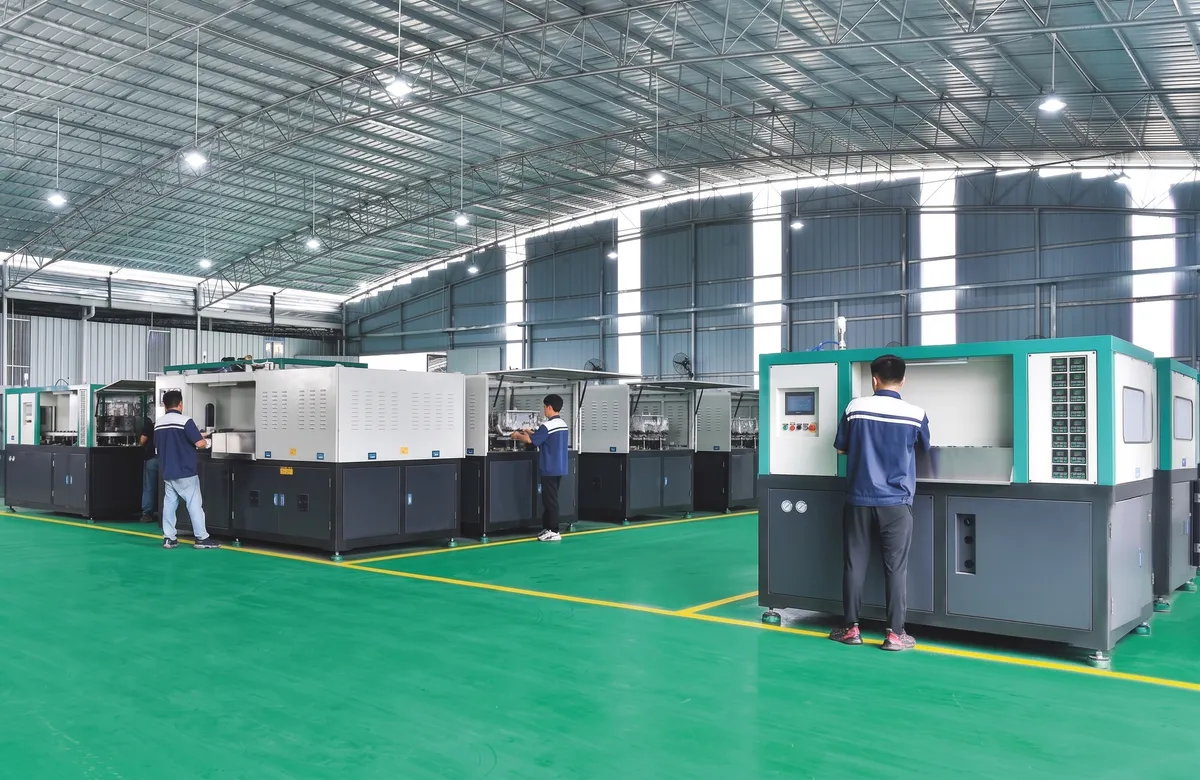
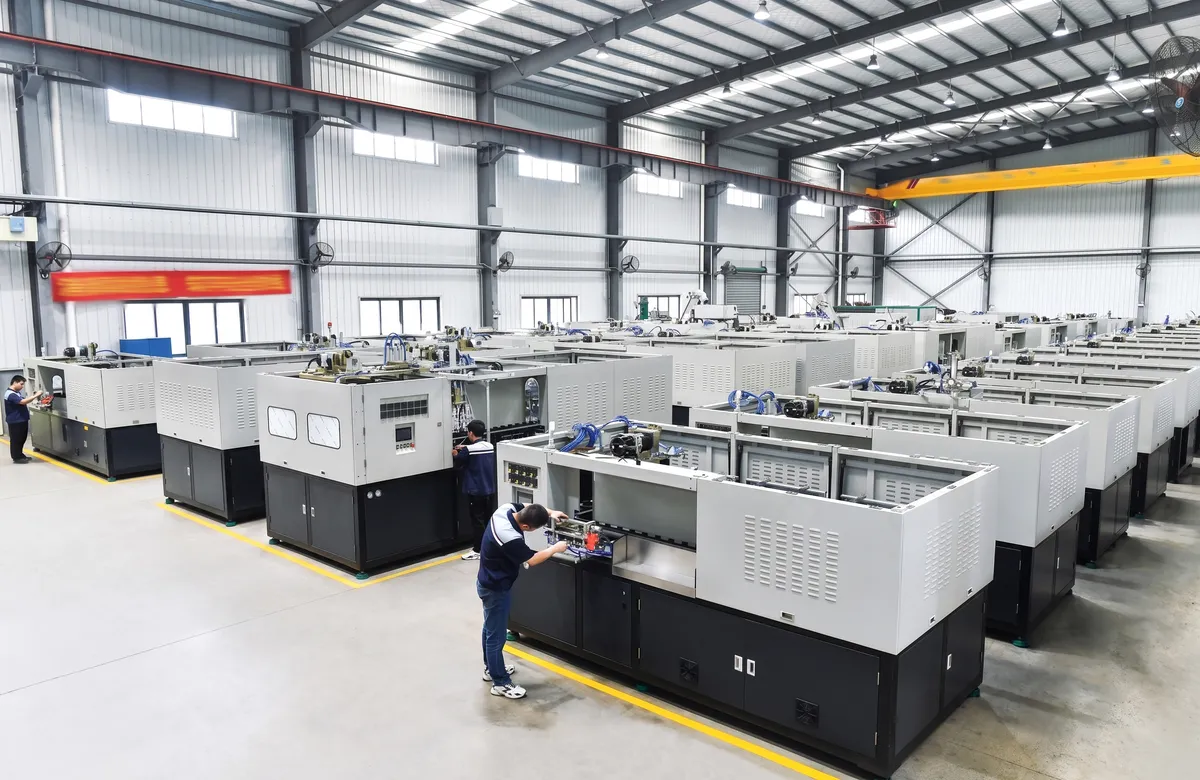
Mexico Ever-Power ISBM Machinery Co., Ltd is a specialist manufacturer focused exclusively on automatic blow molding machine technology, including two-step stretch blow molding machines, injection blow molding machines, and the full range of auxiliary equipment that supports them. Unlike generalist industrial machinery suppliers, our engineering and technical teams are organized entirely around the science and practice of plastic blow molding, which means that the knowledge embedded in every machine we design reflects decades of accumulated process expertise rather than general mechanical manufacturing capability.
Our product portfolio spans injection blow molding machines, extrusion blow molding machines, injection stretch blow molding machines, and associated auxiliary equipment, covering the full range of plastic bottle production technologies used in pharmaceutical packaging, food packaging, health care packaging, cosmetic packaging, and other plastic packaging sectors. We can produce finished bottles in HDPE, LDPE, PET, PETG, PP, PS, PPSU, PC, Tritan, ABS, PLA, EVA, PCTG, and environmental corn material, giving customers a genuine single-source capability across an exceptionally wide material and application range from 1 ml to 1,000 ml.
Ever-Power brings together senior engineering and technical personnel with deep specialist backgrounds in both injection-blowing machinery and injection-blowing mold design under one organization. This integrated capability, with machine and mold expertise in-house, means that customers can source the complete production solution, machine, mold tooling, process parameters, and application support, from a single accountable supplier. It also means that our engineers can optimize machine and mold design together for specific bottle applications, rather than treating them as independent products from different suppliers that the customer must integrate themselves.
Our service model is built around the full customer lifecycle: pre-sale technical consultation to match machine and mold specifications to the customer bottle design and production volume requirement; installation and commissioning support that transfers genuine process knowledge to the the customer operating team rather than just starting the machine and leaving; and responsive after-sales technical support that keeps production lines running efficiently across the full machine service life.
Ever-Power adheres to the enterprise development tenet of self-reliance, integrity, pragmatism, innovation, and responsibility. We build one-stop turnkey project capability to produce high-end injection-blowing products that satisfy our customers on quality, on delivery, and on the total cost of ownership over the life of the equipment. When you invest in an Ever-Power fully automatic blow molding machine, you are investing in a supplier relationship designed to support your packaging production operation for the decade ahead, not just the delivery date.
 |
 |
 |
 |
 |
 |
常见问题解答
Q: What is the difference between a two-step blow molding machine and a one-step injection blow molding machine?
A: A two-step, or two-stage, machine separates preform injection molding from the blowing process into two independent machines. The EPA.AS-2C114.3 is a two-step blow molding machine that receives pre-made preforms and reheats and blows them into finished bottles. A one-step injection blow molding machine completes the entire process from raw resin to finished bottle in a single integrated machine. Two-step machines are better suited to high-volume production and offer greater scheduling flexibility, while one-step machines suit lower-volume specialty and pharmaceutical applications where preform-to-bottle traceability is critical.
Q: What materials can the EPA.AS-2C114.3 fully automatic blow molding machine process?
A: The machine is designed primarily for PET and PETG preforms, which cover the vast majority of cosmetic and daily chemical bottle applications. With appropriate preform tooling and process parameter adjustment, it can also process PP, PC, and PE preforms. PET is the most common choice for its combination of optical clarity, barrier performance, and recyclability. PETG is favored for premium cosmetic packaging requiring glass-like aesthetics. Contact the Ever-Power technical team for specific guidance on processing parameters for non-standard materials.
Q: What is the actual production output of the EPA.AS-2C114.3 cosmetic blow molding machine?
A: The theoretical output is 2,000 bottles per hour with the 2-cavity configuration. Actual production output in practice typically ranges between 80% and 95% of theoretical rated capacity depending on bottle complexity, preform conditioning quality, and operator experience. For production planning purposes, we recommend using 1,700 to 1,800 bph as your baseline capacity figure for standard PET cosmetic bottles while your team develops familiarity with the machine. Complex special-shaped bottles may run at slightly lower effective rates due to extended blowing and cooling dwell times.
Q: Can the EPA.AS-2C114.3 produce special-shaped cosmetic bottles with complex geometries?
A: Yes, this is one of the key design strengths of the EPA.AS-2C114.3 platform. The machine is specifically noted for its capability in blowing special-shaped bottles with high difficulty and high dimensional requirements. The 400 mm stretching stroke, 35 kg/cm2 blowing pressure, and precise PLC parameter control provide the process capability needed to achieve complete cavity fill and consistent wall thickness distribution in bottles with asymmetric profiles, embossed surfaces, narrow waists, and complex multi-facet body geometries. We recommend providing your target bottle design for pre-assessment before committing to mold tooling investment.
Q: What preform specifications are compatible with the EPA.AS-2C114.3 blow molding machine?
A: The machine accommodates preforms with neck diameters up to 88 mm and is designed for 2-cavity operation with a 48-position preform holder. Compatible preform length and body diameter ranges are determined by the specific blow mold design and stretch rod stroke, which can be configured at time of mold manufacture to match your target bottle dimensions. The machine is not proprietary to a specific preform brand or source, allowing buyers to source preforms competitively from any compatible injection molding supplier, providing an important supply chain flexibility advantage.
Q: How long does mold changeover take on the EPA.AS-2C114.3 two-stage blow molding machine?
A: With a trained operator and pre-prepared mold tooling, a complete blow mold changeover on the EPA.AS-2C114.3 typically takes between 60 and 120 minutes, including mold removal, installation, cooling water reconnection, and process parameter loading from the PLC recipe library. If the changeover also involves switching preform specifications, additional time is required for adjusting the preform holder setup and heating profile. Regular changeover practice and a well-organized mold storage system are the most effective ways to minimize changeover time and maximize machine productive utilization on multi-SKU production lines.
Q: What utilities and infrastructure does the EPA.AS-2C114.3 PET blow molding machine require?
A: The machine requires a three-phase electrical supply supporting up to 45 kW peak heating power, with normal running load of approximately 20 kW. A clean, dry compressed air supply at 7 kg/cm2 providing at least 600 ltr/min low-pressure flow and high-pressure air at 35 kg/cm2 at 1,600 ltr/min is required. Cooling water at 6 kg/cm2 operating pressure, 8 to 12 degrees Celsius temperature, and 30 ltr/min flow rate must be available at the machine connection points. The machine footprint is 2,660 x 1,660 mm with a height of 2,150 mm, and at 2,600 kg it requires a concrete floor with adequate load rating.
Q: Is the EPA.AS-2C114.3 daily chemical blow molding machine suitable for food contact packaging?
A: When operated with food-grade PET preforms from a certified supplier and in compliance with food safety hygiene operating practices, the EPA.AS-2C114.3 can produce bottles suitable for food contact applications including juice, condiments, cooking oil, and nutritional supplements. Food-grade certification of the finished bottle depends on the food safety compliance of the raw material (PET resin), not solely the machine. We recommend working with your preform supplier and local regulatory authority to ensure that your complete production chain meets applicable food contact material regulations in your target market.
Q: How do I request a quotation or sample trial arrangement for the EPA.AS-2C114.3 blow molding machine?
A: Contact the Ever-Power sales engineering team via the inquiry form on this page or through direct email with your technical requirements including target bottle volume, material, neck diameter, estimated annual production volume, and target delivery location. For buyers who wish to verify machine capability before ordering, Ever-Power can arrange sample blowing trials at the factory using customer-supplied preforms and a standard or custom blow mold matching your target bottle design. We strongly recommend a sample trial for any complex special-shaped cosmetic bottle application before committing to the full machine and tooling investment.
用户评价
Park Ji-yeon, Cosmetic Packaging, South Korea
“我们化妆品包装厂使用EPA.AS-2C114.3已经大约八个月了,不得不说,这台机器的性能远超我的预期。我们用它生产PETG材质的洗发水和沐浴露瓶。瓶壁的均匀性确实令人印象深刻。尺寸检测的次品率远低于1%,比我们之前使用的旧机器要好得多。伺服系统的噪音也明显降低。对于这类工作来说,这是一台非常好的机器。”
卡洛斯·门多萨,墨西哥制作总监
“二月份订购了两台机器,它们完好无损地运抵墨西哥。Ever-Power公司的安装团队非常专业,培训也很到位。我们生产家用清洁用品的PET瓶,每小时2000瓶的产量完全满足了我们的生产目标。与之前的液压机相比,能耗更低,这确实降低了运营成本。我们对此次采购非常满意,已经在计划订购第三台了。”
阿米拉·哈桑,运营经理,埃及
“我们需要一台能够加工具有复杂弧度的特殊形状化妆品瓶的机器,我们一开始有点怀疑中国制造商能否做到这一点。我们在订购前做了样品试用,瓶子的质量让我们信服。目前我们已经使用EPA.AS-2C114.3机器为一家高端护肤品牌生产了六个月,其外观质量始终如一,足以满足品牌方的质量审核。从下单到工厂生产的周期为14周,这是可以接受的。”
阮氏兰,工厂经理,越南
“售后支持非常好。调试大约三个月后,我们遇到了一个参数问题,技术团队在24小时内通过视频通话回复,并指导我们完成了调整。对于生产线来说,这种支持至关重要,因为我们无法承受长时间停机等待技术人员飞过来。PLC界面逻辑清晰,我们的操作员很快就上手了。我们采用两班制运行,每天生产化学品包装。”
印度采购主管拉杰什·库马尔
“在选择Ever-Power之前,我们比较了三家供应商。价格很有竞争力,但真正打动我们的是他们在下单前提供的详细技术文档。技术参数完全符合我们的瓶子设计要求,模具团队还帮助我们设计了与我们现有瓶坯模具相匹配的吹塑模具。这台机器已经为一家食品调味品客户生产1000毫升PET瓶四个月了,我们对质量没有任何不满。”
法蒂玛·拉希德,工厂主管,沙特阿拉伯
“我们是一家中型合同包装公司,使用EPA.AS-2C114.3设备为化妆品瓶客户生产产品。我最喜欢PLC中的配方存储系统。我们为不同的客户切换不同的瓶型设计,而存储的参数意味着切换过程只需大约90分钟,包括模具更换,而我们以前的设备需要花费半天时间从头开始重新设置工艺参数。仅此一项切换效率的提升,就使我们一年的可计费产能显著增加。”
巴西技术总监马塞洛·桑托斯
“运往巴西的时间比我们预期的要长,但机器完好无损地送达,清关文件齐全且专业。在Ever-Power团队的视频通话支持下,我们到货后一周内就让机器投入运行。我们生产用于个人护理产品的PET包装,瓶子的质量很好。瓶颈封口精度非常高,这对我们的封盖生产线至关重要。我会向其他正在寻找类似产能的巴西包装公司推荐这款产品。”
土耳其质量经理 Emre Yilmaz 博士
我们购买的这台机器用于生产非处方液体药品的药用级PET容器。购买前我们进行了全面的尽职调查,对恒港工厂的考察也让我们对其生产标准感到放心。我们运行这台EPA.AS-2C114.3机器已经近一年了,瓶颈直径的瓶身尺寸Cpk值一直远高于我们内部设定的1.33的标准。备件供应充足,我们需要的那个部件在一周内就发货了。
Chukwuemeka Obi,尼日利亚董事总经理
“我们在尼日利亚生产日用化学品包装,寻找既优质又价格合理的吹塑设备一直是个难题。EPA.AS-2C114.3 正好满足了我们的需求。从交付、安装支持到为我们的操作人员提供的培训,一切都非常专业。这台机器已经连续运行五个月,用于生产 500 毫升的家用清洁剂瓶,没有出现任何重大问题。与我们之前使用的设备相比,我们的产量增加了约 351 吨。我们对这项投资非常满意。”
附加信息
| 编辑 | Yjx |
|---|