
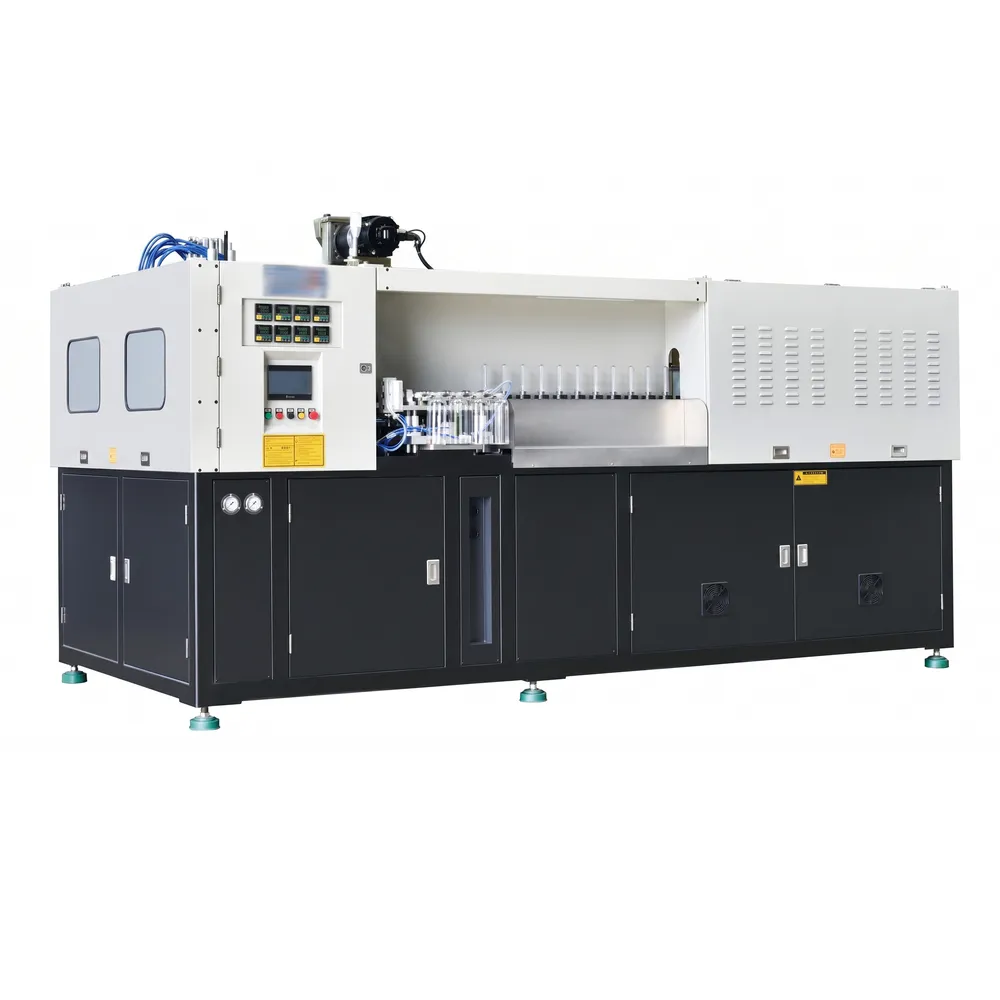
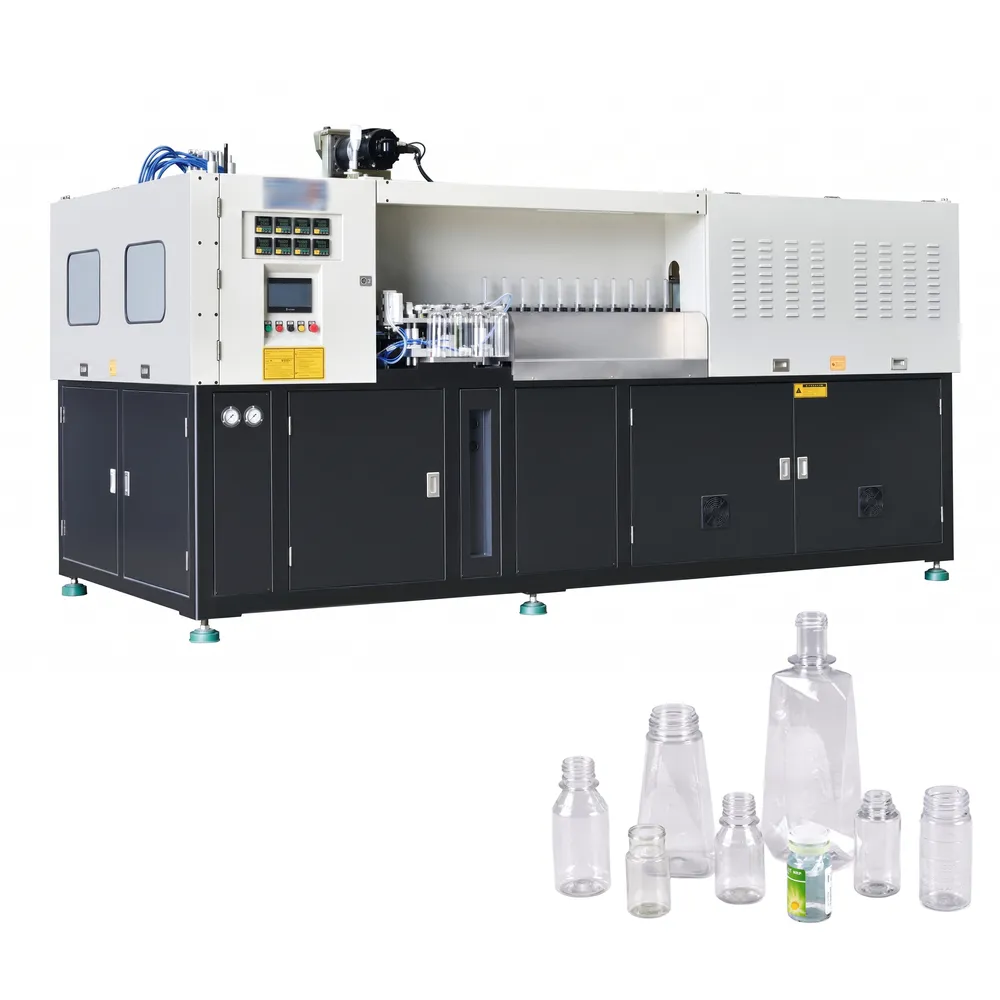
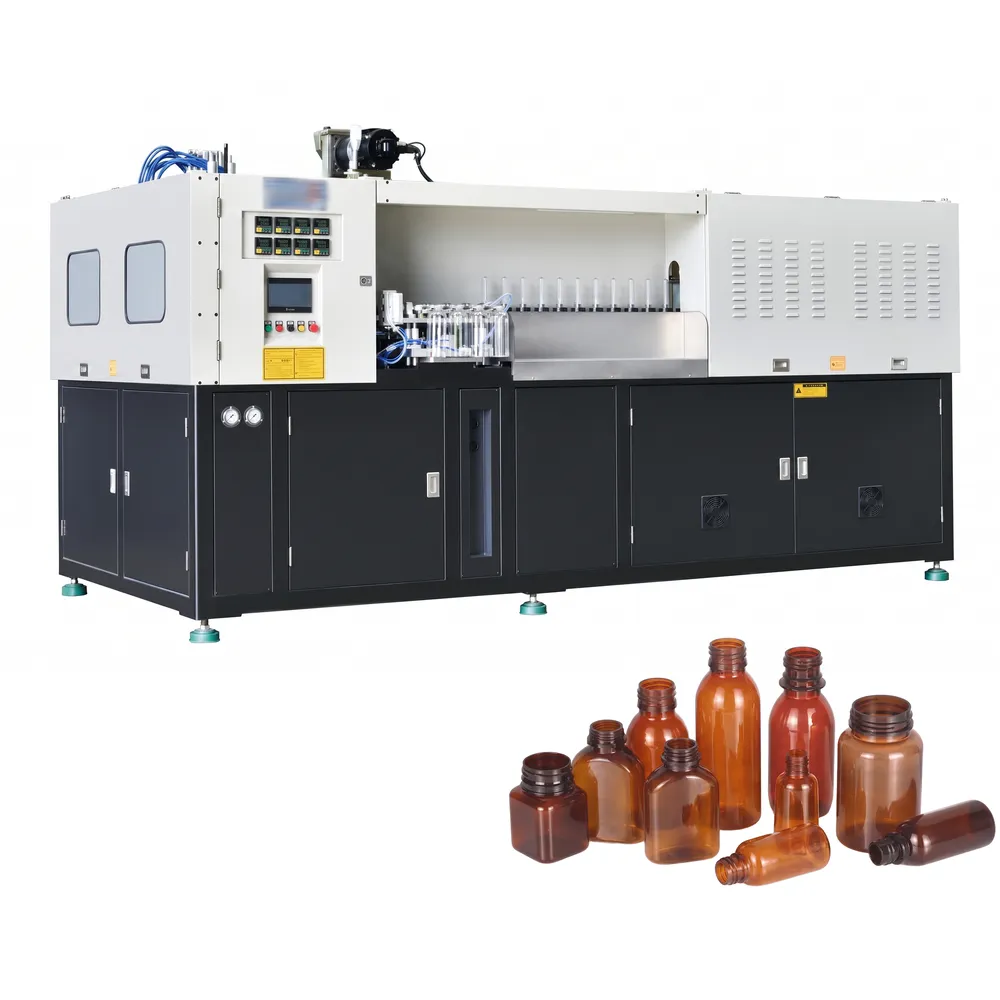
EPA.AS-2C114.3 Fully Automatic Blow Molding Machine for Medicine Bottles
The EPA.AS-2C114.3 fully automatic blow molding machine is a precision-engineered pharmaceutical bottle blow molding machine designed exclusively for the demands of modern pharmaceutical packaging. As a high-performance injection stretch blow molding machine, it handles a wide production range from 50 ml to 1,500 ml medical containers, covering oral liquid bottles, syrup bottles, tablet containers, ophthalmic drops bottles, and health supplement packaging. The series spans multiple cavity configurations from 2-cavity to 6-cavity models, with a peak theoretical output reaching 7,200 bottles/hour on the EPA.ES-6C76.
The EPA.AS-2C114.3 fully automatic blow molding machine is a precision-engineered pharmaceutical bottle blow molding machine designed exclusively for the demands of modern pharmaceutical packaging. As a high-performance injection stretch blow molding machine, it handles a wide production range from 50 ml to 1,500 ml medical containers, covering oral liquid bottles, syrup bottles, tablet containers, ophthalmic drops bottles, and health supplement packaging. The series spans multiple cavity configurations from 2-cavity to 6-cavity models, with a peak theoretical output reaching 7,200 bottles/hour on the EPA.ES-6C76. This automatic PET blow molding machine maintains blowing pressure precisely at 26-35 kg/cm² and holds cooling water temperature steadily between 8-12°C, delivering uniform wall thickness and exceptional molding accuracy that satisfies international pharmaceutical hygiene and GMP safety standards.
In real-world production environments, this fully automatic blow molding machine is deployed across oral solid dosage lines, liquid medicine packaging workshops, sterile bottle production plants, and nutraceutical packaging facilities. Its compact industrial footprint, intuitive HMI interface, and low-maintenance mechanical structure make it an ideal plastic blow molding machine for pharmaceutical companies seeking to scale production without sacrificing bottle quality or regulatory compliance. Whether you operate a high-volume pharmaceutical manufacturer or a specialized contract packaging facility, this medicine bottle blow molding machine delivers consistent, repeatable output with minimal operator intervention.
Technical Parameter
| Medicine Bottle Blow Molding Machine | |||
|---|---|---|---|
| Model | Unit | EPA.AS-2C114.3 | |
| Molding | Clamping stroke | mm | 122 |
| Mold-open distance | mm | 302 | |
| Mold-close distance | mm | 180 | |
| Stretching stroke | mm | 400 | |
| Bottom mold stroke | mm | 50 | |
| Pitch | mm | 114.3 | |
| Preform Holder | 48 | ||
| Cavities | 2 | ||
| Container | Max.Container Volume | ml | 1000 |
| Neck Diameter Range | mm | 38 | |
| Max.Container Diameter | mm | 94 | |
| Max.Container Height | mm | 260 | |
| Theoretical Output | bph | 2000 | |
| Electrical System | Max.Heating Power | kw | 45 |
| Heating Power | kw | 20 | |
| Air System | Operating Pressure | kg/cm² | 7 |
| Low Pressure Air Consumption | ltr/min | 600 | |
| Blowing Pressure | kg/cm² | 35 | |
| High-pressure air consumption | ltr/min | 1600 | |
| Cooling water | Operating Pressure | kg/cm² | 6 |
| Temperature | ℃ | 8-12 | |
| Flow rate | ltr/min | 30 | |
| Machine | Size (L*W*H) | mm | 2660*1660*2150 |
| Weight | kg | 2600 | |
Features of the EPA.AS-2C114.3 Medicine Bottle Blow Molding Machine
1. Flexible Models for Diverse Production Needs
The series encompasses multiple automatic blow molding machine configurations from 2-cavity EPA.AS-2C114.3 to the 6-cavity EPA.ES-6C76, covering bottle volumes from 50 ml to 1,500 ml. Production teams can choose the exact model matching their batch size and container specification. The high-output EPA.ES-6C76 delivers 7,200 bottles per hour, while the EPA.ES-2C100 targets 500 ml pharmaceutical containers. This flexibility makes the range an outstanding custom blow molding machine solution for pharmaceutical manufacturers with evolving order profiles and multi-SKU production schedules.
2. Energy Efficiency and Precise Temperature Control
This industrial blow molding machine operates with a working heating power of just 20 kW (45 kW maximum), significantly reducing energy consumption against rated capacity. Blowing pressure is stably maintained at 26-35 kg/cm², and high-pressure air consumption is precisely adjustable per bottle format. The cooling system holds water temperature at 8-12°C with a 30 ltr/min flow rate, ensuring uniform preform cooling during every cycle. Controlled thermal management eliminates deformation and improves wall thickness uniformity, a critical requirement for GMP pharmaceutical packaging production environments.
3. Stable Operation and Simplified Maintenance
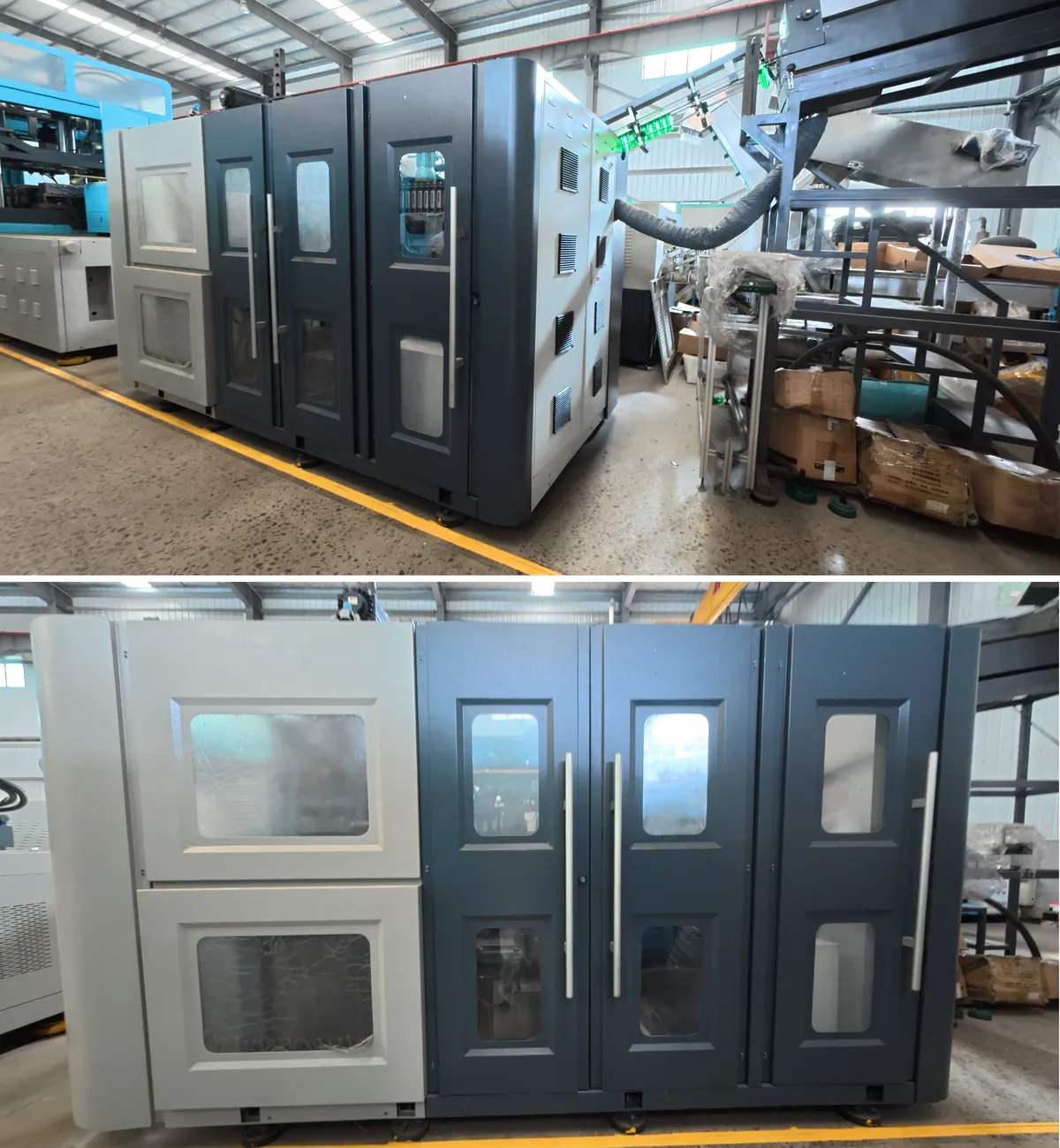
Designed around internationally sourced key components, this bottle blow molding machine achieves notably low mechanical failure rates and straightforward daily upkeep. The mold-open distance of 302 mm and 122 mm clamping stroke provide ample workspace for quick tooling changeovers between bottle formats. Weighing 2,600 kg with a 2660 x 1660 x 2150 mm footprint, the compact chassis integrates smoothly into cleanroom pharmaceutical production cells. Technicians benefit from accessible service panels and a logical mechanical layout that reduces mean time to repair and maximizes uptime.
4. High-Quality Output Compliant with Pharmaceutical Packaging
As a leading PET blow molding machine for pharmaceutical applications, this equipment produces bottles with precisely controlled neck dimensions, uniform wall thickness, and high optical transparency from medical-grade PET, PP, and PETG. Neck diameter is accurately controlled at 38 mm for the base model, with dimensional tolerances meeting the stringent GMP and pharmaceutical packaging hygiene standards required by global drug regulatory agencies. The resulting containers provide excellent chemical resistance, moisture barrier performance, and seal integrity for oral liquids, tablets, syrups, and health supplements.
5. Fully Automatic Operation Reduces Labor Dependency
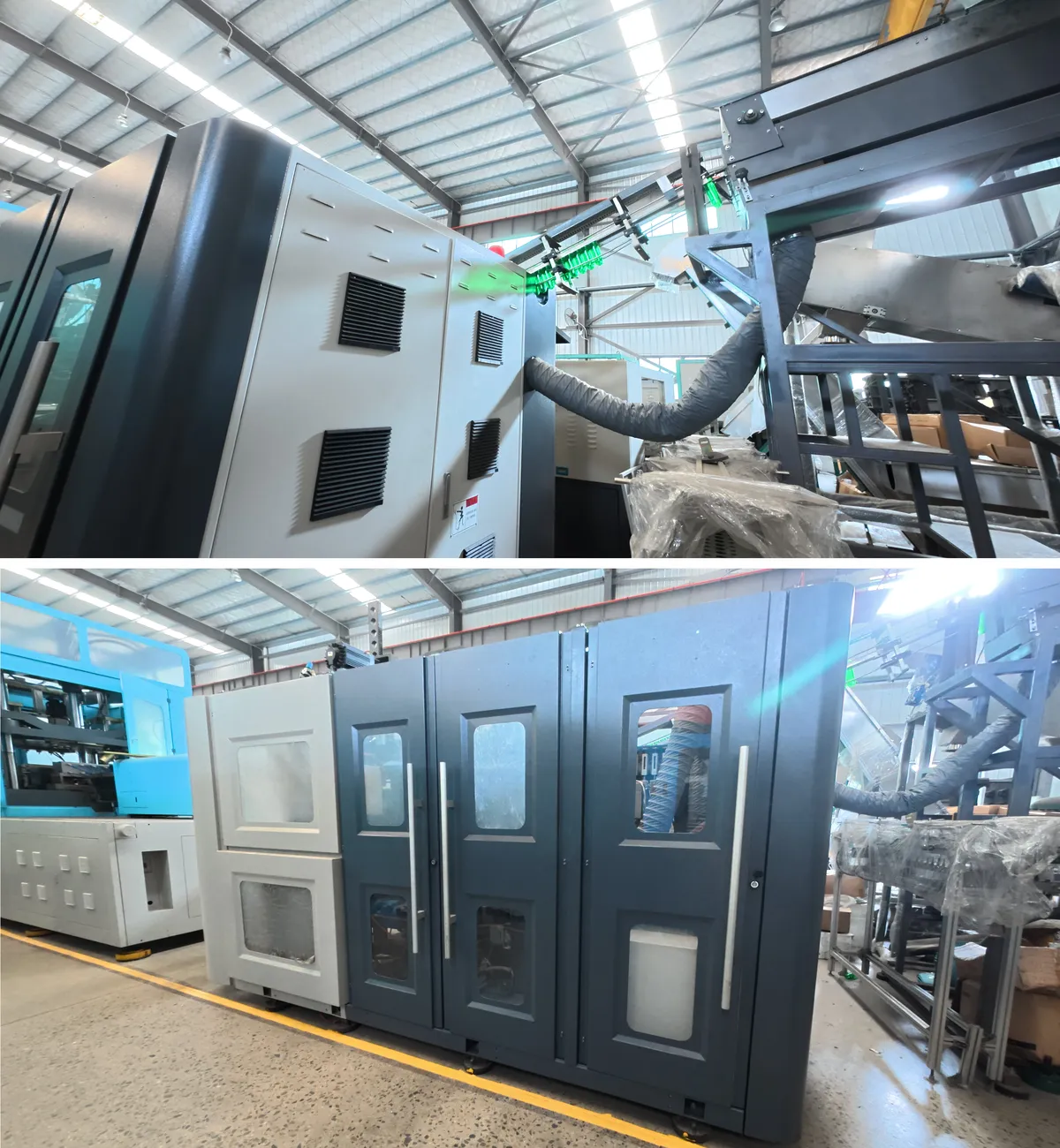
This fully automatic blow molding machine executes the complete two-stage production cycle autonomously: preform feeding, infrared heating, stretch-blow molding, cooling, and bottle ejection all run without manual intervention. The automation system significantly reduces per-unit labor cost and eliminates inconsistencies caused by operator variability. A central HMI control panel provides real-time monitoring of all process parameters with intuitive touchscreen navigation. For pharmaceutical manufacturers scaling output or targeting cleanroom compliance, full automation is an essential advantage of this plastic bottle blow molding machine.
6. Proven Two-Stage Blow Molding Process Architecture
The EPA series employs the established two-stage blow molding machine architecture, where preform injection and bottle blowing are separate optimized processes. This separation allows independent tuning of heating profiles, stretching ratios, and blowing sequences for each bottle geometry and resin grade. Unlike single-stage systems, the two-stage approach achieves superior output flexibility and permits preform stockpiling to buffer production scheduling variability. For high-volume pharmaceutical packaging operations requiring both product consistency and production agility, this automatic PET blow molding machine platform delivers the right engineering foundation.
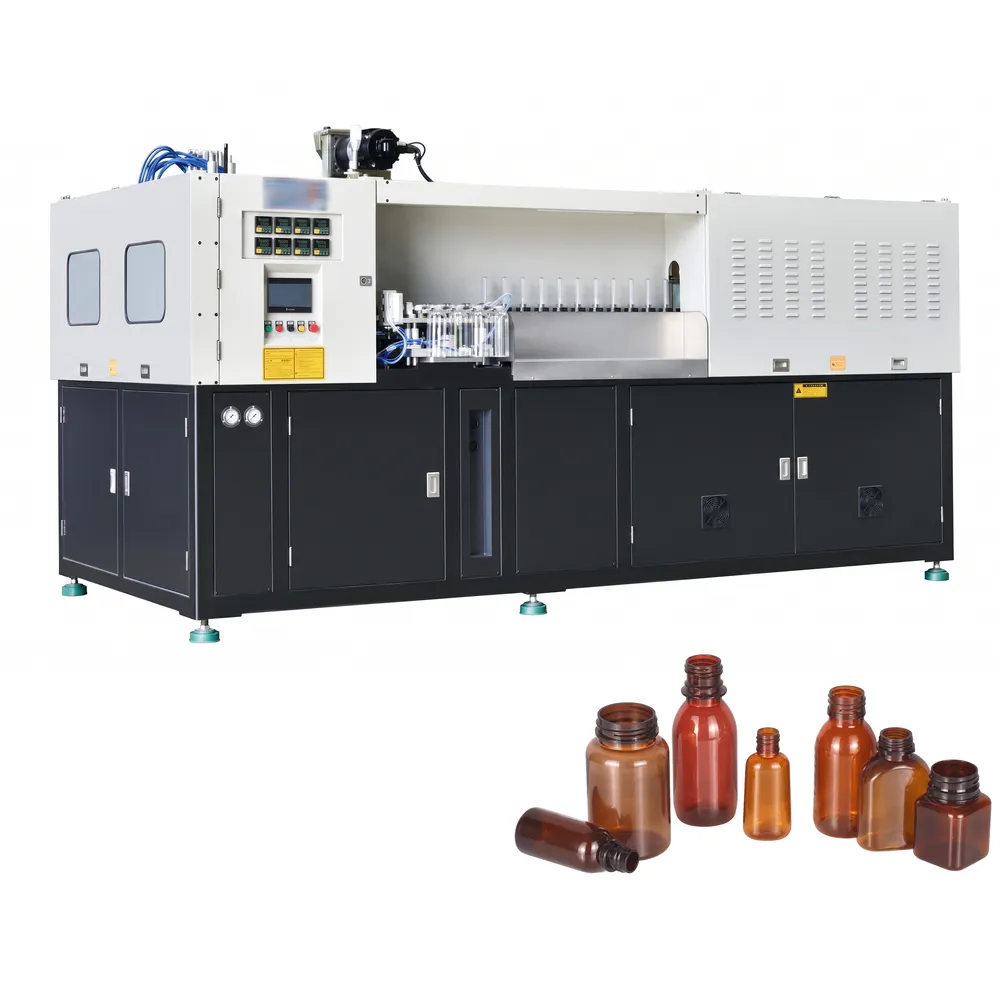
Working Principle of EPA.AS-2C114.3 Plastic Blow Molding Machine
Step 1: Raw Material Preparation
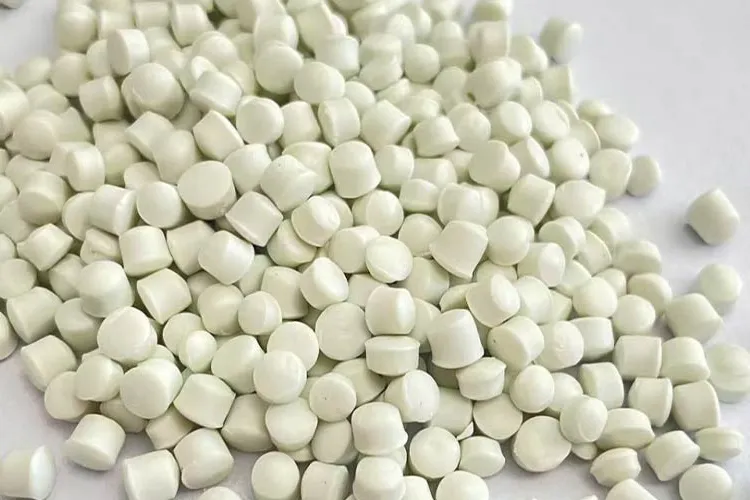
Medical-grade PET, PP, or PETG granules are carefully screened, blended, and fed into the drying and dosing system. Moisture content is rigorously controlled to prevent hydrolytic degradation during heating, a critical step ensuring raw material purity meets pharmaceutical resin specifications. Only materials passing incoming quality checks enter the blow molding machine process.
Step 2: Preform Injection Molding
In the injection blow molding machine stage, selected and conditioned resin is injected into precision steel molds to form the preform with an already-finished neck thread. Temperature, injection speed, and holding pressure are tightly controlled by servo systems, producing preforms with consistent wall distribution and neck geometry that directly determines final bottle dimensional accuracy.
Step 3: Preform Preheating
Formed preforms are loaded onto the 48-position preform holder carousel and pass through calibrated infrared heating zones. The heating system raises preform body temperature uniformly, especially across wall-thickness variation zones, to achieve the ideal stretch temperature range for PET crystallinity and clarity control. Precise zone-by-zone heating is fundamental to producing pharmaceutical bottles with uniform wall thickness and high transparency.
Step 4: Stretch Blow Molding
The conditioned preform enters the blow station where a mechanical stretch rod extends axially (400 mm stroke) while high-pressure air at 35 kg/cm² inflates the preform radially against the cavity wall. This biaxial stretching aligns the polymer chains, increasing tensile strength, impact resistance, and barrier performance. The precise control over this blow molding machine process step is what delivers the dimensional accuracy demanded by GMP pharmaceutical packaging standards.
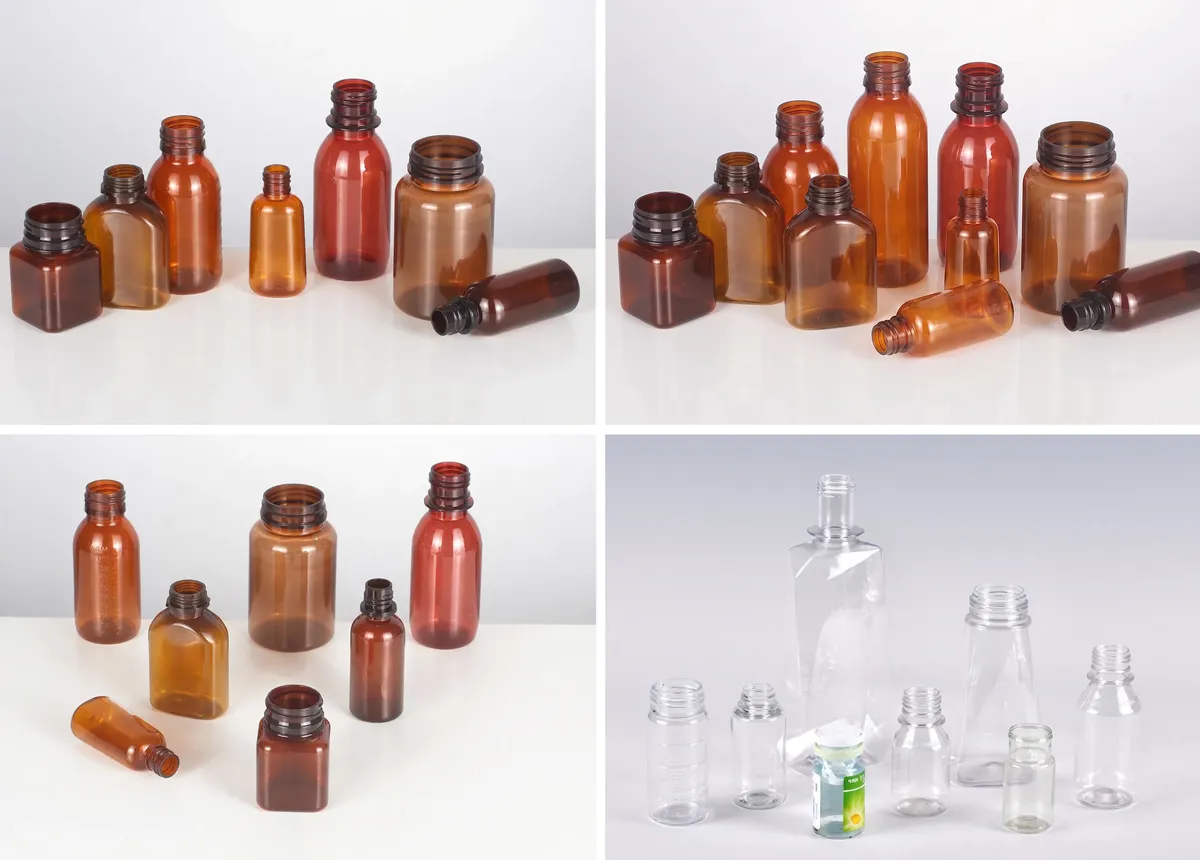
Application Fields
Where the medicine bottle blow molding machine performs across pharmaceutical and healthcare packaging
1. Oral Liquid and Syrup Bottles
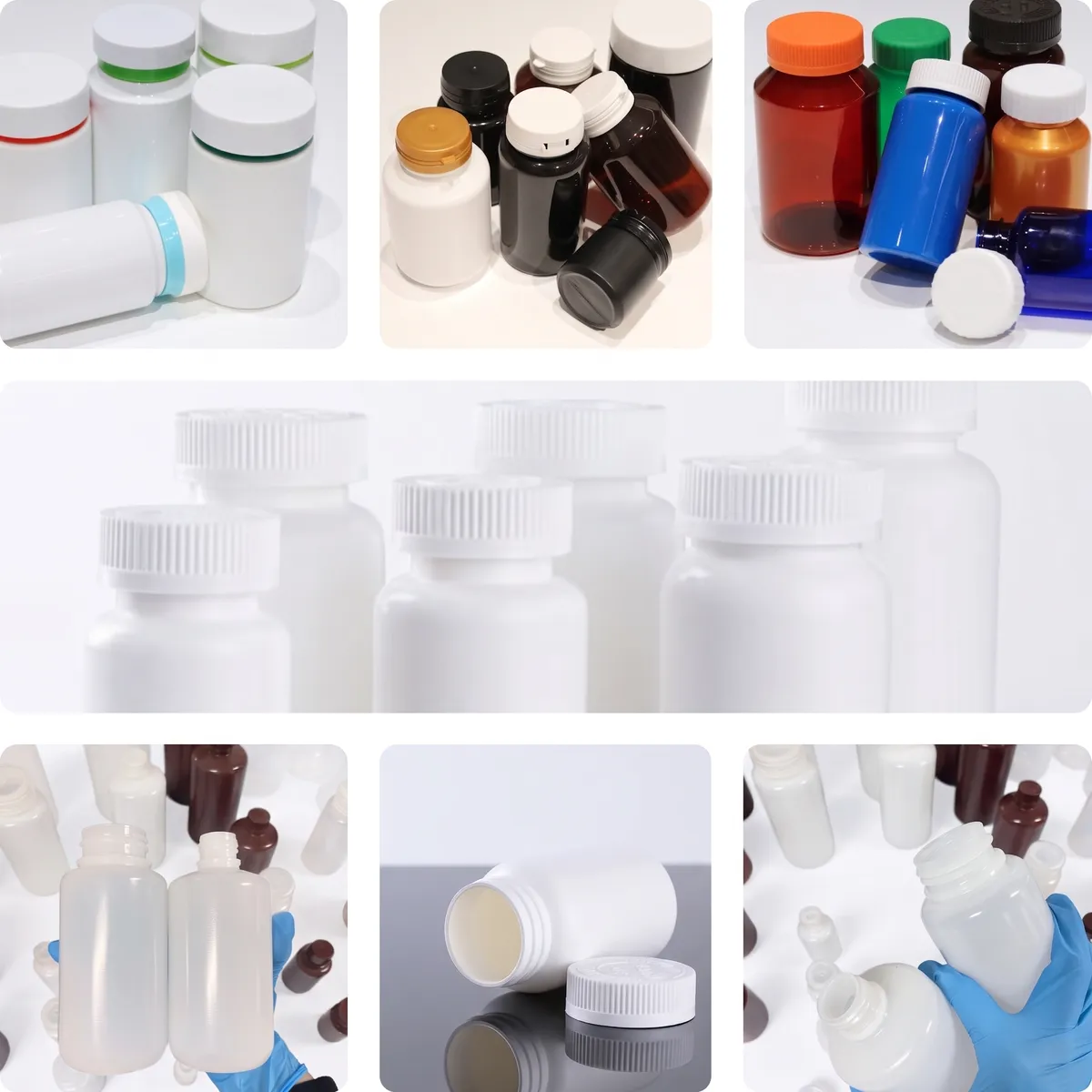
This pharmaceutical bottle blow molding machine excels at producing 50 ml to 500 ml oral liquid and syrup containers from medical-grade PET and PP. Bottles are formed with precise neck tolerances to achieve leak-proof sealing with tamper-evident closures. High transparency ensures visual inspection of liquid color and volume, while excellent chemical resistance prevents interaction between the container and active pharmaceutical ingredients stored for extended shelf life periods.
2. Ophthalmic Drops and Nasal Spray Containers
Small-volume sterile packaging for ophthalmic dropss and nasal spray products demands exceptional dimensional accuracy and cleanliness. The EPA series automatic PET blow molding machine produces these precision containers with controlled neck geometry down to narrow-thread specifications. The two-stage injection stretch blow molding machine process eliminates flash trimming waste and reduces particulate contamination risk, which is critical for ophthalmic product compliance with ISO sterility requirements.
3. Tablet and Capsule Containers
Rigid PET or PP bottles for tablet and capsule storage require moisture-barrier performance and wide-mouth access for high-speed automated filling lines. The EPA.AS-2C114.3 accommodates containers up to 94 mm diameter and 260 mm height, covering standard pharmaceutical solid dosage formats from 30-count to 500-count bottles. Consistent wall thickness and shoulder geometry ensure reliable capping torque performance on high-speed packaging lines without container deformation.
4. Health Supplement and Nutraceutical Packaging
The nutraceutical sector increasingly demands pharmaceutical-grade bottle quality for vitamins, minerals, probiotics, and functional food products. This plastic bottle blow molding machine produces the high-clarity, UV-protection-capable containers that premium supplement brands require to differentiate their products at retail. Larger capacity models in the series, such as the EPA.ES-2C130 producing up to 1,500 ml containers, accommodate jumbo-size supplement bottles for club-store retail and subscription packaging formats.
5. Sterile Medical Device Packaging
Beyond drug containers, this high speed blow molding machine platform supports production of sterile packaging for single-use medical devices and diagnostic reagent bottles. The no-flash, no-trimming nature of the injection stretch blow molding process minimizes surface contamination and production waste, a significant advantage for medical device manufacturers operating validated clean production environments subject to FDA, CE, or other global regulatory oversight requirements.
6. Veterinary and Animal Health Packaging
The veterinary pharmaceutical market requires robust, tamper-evident, and chemically resistant bottles for liquid medications, oral solutions, and topical treatments. This PET bottle blow molding machine produces veterinary containers meeting the same dimensional and barrier standards as human pharmaceutical packaging. Large-volume models in the series handle the 500 ml to 1,000 ml container sizes common in large-animal treatment formulations across livestock and equine veterinary applications.
7. Hospital and Clinical Pharmacy Packaging
Hospital pharmacy departments and clinical compounding facilities require small to medium production runs of sterile containers for unit-dose packaging, IV admixture containers, and liquid formulation storage. The compact EPA.AS-2C114.3 with a 2,660 x 1,660 mm footprint is particularly suited to on-site pharmaceutical manufacturing environments with limited floor space, providing a self-contained medicine bottle blow molding machine solution that meets GMP room classification constraints.
EPA.AS-2C114.3 Medicine Bottle Blow Molding Machine Parts
Preform Feeding and Transport Unit
The preform feeding assembly includes a hopper, unscrambler, and conveyor that automatically orient and deliver preforms to the 48-position preform holder carousel. Precise spacing and orientation control ensure each preform enters the heating zone correctly aligned, preventing jams and misfeeds that could contaminate the batch or interrupt the continuous blow molding machine process cycle. Gentle preform handling preserves neck thread integrity before the heating stage.
Infrared Heating Module
The oven section contains multiple independently controllable infrared lamp zones with a maximum rated power of 45 kW and typical operating consumption of 20 kW. Each zone is tuned to achieve the correct temperature gradient from preform base to shoulder, accounting for wall thickness variations. This precision zonal heating is one of the most critical blow molding machine parts influencing final bottle clarity, strength, and dimensional repeatability in pharmaceutical production.
Clamping Unit
The clamping system generates and maintains the mold locking force during high-pressure blowing at 35 kg/cm². With a clamping stroke of 122 mm and mold-close distance of 180 mm, the unit accommodates a wide range of bottle mold sizes. The precision-guided clamping platens ensure parallel closure and consistent parting line positioning, directly affecting bottle flash-free production and container dimensional accuracy. Rapid cycle timing minimizes dwell time and maximizes output per hour.
Stretch-Blow Station
The stretch-blow assembly combines a servo-driven stretch rod (400 mm stroke) with a high-pressure air delivery system capable of 35 kg/cm² blowing pressure and 1,600 ltr/min high-pressure air consumption. This simultaneous axial stretching and radial blowing creates the biaxial molecular orientation in PET that delivers superior barrier performance, impact resistance, and clarity. The bottom mold stroke of 50 mm accommodates various container base geometries for different pharmaceutical bottle profiles.
Cooling Water System
The integrated cooling circuit maintains water temperature within the 8-12°C range at 6 kg/cm² operating pressure with a 30 ltr/min flow rate through mold cooling channels. Consistent mold temperature is essential for stable cycle times and uniform bottle shrinkage behavior. The chilled-water circuit connects directly to an external chiller unit and distributes coolant through precisely engineered channels in the blow mold halves, controlling the solidification rate of the PET wall to prevent stress whitening or surface defects in finished pharmaceutical containers.
PLC Control System
The central programmable logic controller coordinates all machine subsystems including preform transport, heating zone outputs, stretch-blow timing, mold clamping, and ejection sequencing. The color touchscreen HMI provides operators with real-time parameter monitoring, recipe storage for multiple bottle formats, and alarm diagnostics with fault history logging. Process recipes can be saved and recalled for different bottle specifications, minimizing changeover time when this medicine bottle blow molding machine switches between pharmaceutical container types.
Bottle Ejection and Collection System
After the blow-cool-open cycle, finished bottles are removed from the mold cavity by an automated ejection mechanism and transferred via a collection conveyor to downstream handling equipment such as leak testers, vision inspection systems, or filling lines. The non-contact ejection design avoids bottle surface contact that could introduce contamination or cosmetic defects on pharmaceutical containers. Output-rated at 2,000 bottles per hour for this base model, the ejection system keeps pace with the full cycle rate without becoming a production bottleneck.
Air Compression and Distribution Circuit
The machine interfaces with an external high-pressure compressor to supply both low-pressure operating air at 7 kg/cm² (600 ltr/min for actuation) and high-pressure blowing air at 35 kg/cm² (1,600 ltr/min). Precision pressure regulators and filtration assemblies ensure clean, dry, oil-free air reaches the blow station, protecting both the mold surface and the interior of the finished pharmaceutical containers from contamination. These blow molding machine parts in the air circuit are critical for maintaining bottle cleanliness compliance.
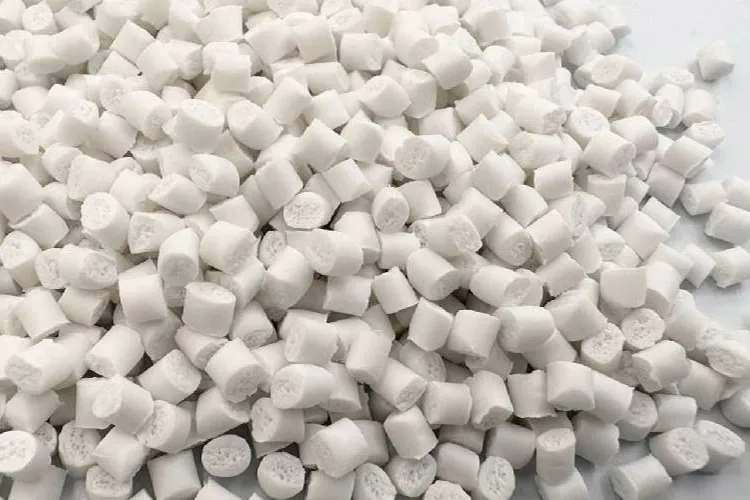
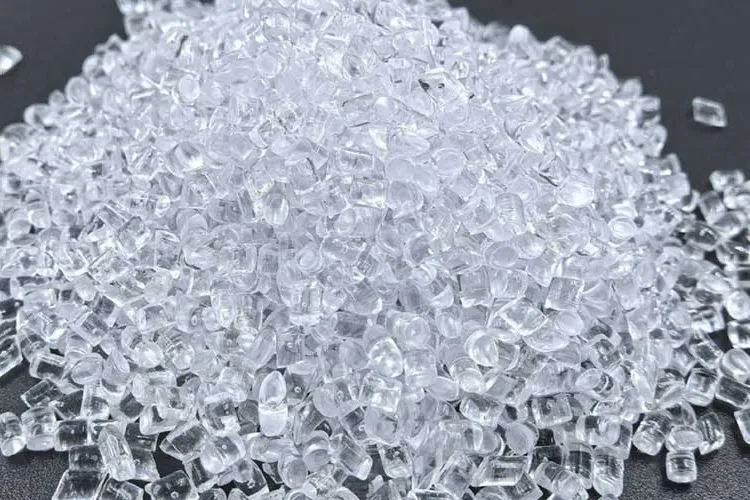
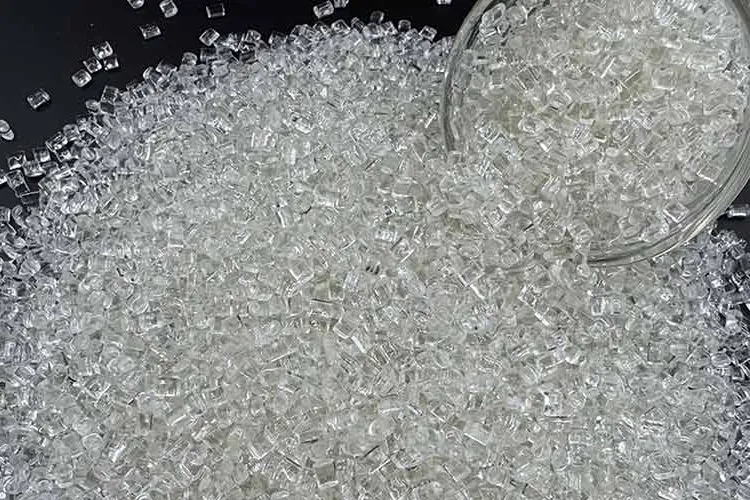
Raw Materials of the EPA.AS-2C114.3 Pharmaceutical Bottle Blow Molding Machine
Polyethylene Terephthalate (PET)
PET is the primary resin for this PET blow molding machine platform. This thermoplastic polymer offers exceptional clarity, strength, and chemical resistance ideal for pharmaceutical liquids and solid dosage containers. PET bottles produced on this machine meet FDA, EU, and ICH packaging material requirements, providing low oxygen and moisture vapor transmission rates to protect drug stability. Biaxial stretching during the blow phase further enhances PET barrier performance and impact resistance.
High-Density Polyethylene (HDPE)
HDPE is widely used in pharmaceutical packaging for its excellent chemical resistance, moisture barrier properties, and compatibility with solid and semi-solid formulations. This durable polymer withstands a broad range of temperatures and resists cracking under stress, making it suitable for tablet bottles, ointment containers, and bulk packaging applications. HDPE processed on this bottle blow molding machine produces opaque or natural containers with strong sidewalls and reliable neck integrity.
Polypropylene (PP)
PP is widely selected for pharmaceutical containers requiring autoclave sterilization compatibility, higher temperature resistance, and rigidity. This tough resin is the material of choice for hospital pharmacy packaging, IV bottle caps, and oral solid dosage containers demanding high levels of product purity. PP bottles produced on this pharmaceutical bottle blow molding machine offer excellent hinge fatigue resistance and chemical compatibility with a wide range of active pharmaceutical ingredient formulations.
Polyethylene Terephthalate Glycol (PETG)
PETG combines the clarity and processability of PET with enhanced toughness and impact resistance. This transparent thermoplastic is increasingly used for premium pharmaceutical packaging and medical device containers where glass-like aesthetics combined with shatter resistance are required. PETG bottles show excellent compatibility with labels, UV coatings, and secondary decoration processes, making them a premium option for this medicine bottle blow molding machine when brand differentiation is a product requirement.
Low-Density Polyethylene (LDPE)
LDPE is a flexible translucent material used in squeeze bottle formats for nasal drops, ear drops, and topical pharmaceutical preparations requiring dispensing by gentle manual pressure. The material offers excellent moisture resistance and chemical compatibility with many pharmaceutical excipients. LDPE processed on this plastic bottle blow molding machine produces soft-sided containers that deliver metered doses reliably while maintaining sterile seal integrity throughout the product shelf life period.
Polycarbonate (PC)
PC is a highly transparent, impact-resistant thermoplastic used for reusable pharmaceutical containers, graduated medicine cups, and specialty laboratory bottles. Its dimensional stability under thermal stress and optical clarity make it suitable for hospital and clinical settings requiring autoclavable containers. When processed on this automatic blow molding machine, PC produces robust containers that withstand repeated sterilization cycles without deformation or surface degradation under typical pharmaceutical storage conditions.
Polyvinyl Chloride (PVC)
PVC offers excellent chemical resistance and versatile moldability, historically used in pharmaceutical packaging for blister backing films and certain liquid containers. On this bottle blow molding machine, PVC can produce flexible containers for topical formulations and diagnostic reagent packaging. However, regulatory trends in pharmaceutical packaging are shifting toward PET and PP alternatives in many markets, and compatibility with specific drug substances should always be verified against pharmacopoeia container testing requirements before production use.
 |
 |
 |
 |
Injection Blow Molding vs Extrusion Blow Molding
Both injection blow molding and extrusion blow molding create hollow plastic containers, but they form the starting shape in fundamentally different ways. Injection blow molding (IBM) starts from a precision injection-molded preform with an already-finished neck thread. Extrusion blow molding (EBM) starts from an extruded parison, a hollow tube of molten plastic that is clamped and blown inside the bottle mold. In British English, the same comparison is written as injection blow moulding vs extrusion blow moulding. This core difference affects neck precision, wall thickness uniformity, flash generation, mold investment, compatible container sizes, and the total cost of ownership for packaging operations.
The EPA.AS-2C114.3 uses an injection stretch blow molding machine process (a variant of IBM where a stretch rod is added for biaxial orientation of PET), making it particularly well-suited to pharmaceutical, medical, and high-value precision packaging applications where neck accuracy, cleanliness, and dimensional repeatability are non-negotiable production requirements.
Step-by-Step Process Comparison
Injection Blow Molding (IBM) Process
- Injection: Molten plastic is injected around a core rod inside a precision preform mold, forming a finished neck thread and consistent preform body.
- Blowing: The preform transfers to the blow station, where high-pressure air inflates it against the bottle cavity wall to final shape.
- Stripping: The finished bottle is removed cleanly with zero flash, requiring no secondary trimming operations.
Extrusion Blow Molding (EBM) Process
- Extrusion: Molten plastic is extruded downward as a hollow parison tube from an extrusion die head, with wall thickness variability along the parison length.
- Clamping and blowing: The mold closes around the parison, pinching off excess material, and compressed air forms the bottle inside the closed mold.
- Trimming: Flash is cut from the pinch-off areas after cooling, generating trimming waste that requires recycling management.
IBM vs EBM: Side-by-Side Comparison
| Feature | Injection Blow Molding (IBM) | Extrusion Blow Molding (EBM) |
|---|---|---|
| Starting Form | Injection-molded preform | Extruded parison tube |
| Neck Precision | Extremely high; pre-molded by injection | Standard; depends on mold clamping and trimming |
| Flash / Waste | Zero flash, very low process waste | Flash requires trimming and recycling |
| Best Container Size | Small to medium precision bottles | Medium to large hollow containers |
| Initial Mold Cost | Higher for precision tooling and core rods | Lower for large hollow containers |
| Best Applications | Pharma, medical, cosmetics, lab containers | Jerry cans, drums, tanks, detergent bottles |
| Quality Priority | Dimensional consistency, clean production, sealing | Size flexibility and container-volume economics |
Choose IBM When You Need
- Small or medium precision bottles with accurate threaded necks
- Pharmaceutical, medical, or high-value cosmetic packaging
- Zero flash waste and clean production without secondary trimming
- Stable dimensions, repeatable wall thickness, and reliable sealing
Choose EBM When You Need
- Large bottles, jerry cans, drums, tanks, or irregular hollow parts
- Lower tooling cost for less precision-critical packaging
- Wide container geometry options and shape flexibility
- Applications where flash trimming is acceptable in the process
EPA.AS-2C114.3 Fully Automatic Blow Molding Machine Troubleshooting
1. Uneven Wall Thickness on Finished Bottles
This common defect in pharmaceutical bottle production is most often caused by uneven preform heating in the infrared oven. Check each heating zone lamp output and verify that no lamps have failed or reduced their output. Verify that the preform rotation mechanism is functioning correctly so all sides of the preform receive equal infrared exposure. Also review the preform cooling position time to ensure the temperature gradient is appropriate before the preform enters the blow station. Stretching rod alignment should also be inspected for centering accuracy.
2. Hazy or Opaque Bottle Surfaces
Haze in PET pharmaceutical bottles indicates premature crystallization during the blow phase, typically caused by insufficient preform heating temperature or cooling water temperature running too cold. Verify that the cooling water circuit is maintaining 8-12°C as specified rather than falling below this range. Also verify the PET preform resin has been properly dried to below 0.02% moisture before processing; undried PET undergoes hydrolytic degradation that reduces IV (intrinsic viscosity) and produces haze and brittleness in finished bottles that would fail pharmaceutical packaging clarity specifications.
3. Bottle Neck Deformation or Shrinkage
Neck deformation during the blow molding process results from excessive heat migration from the preform body into the neck area during the infrared heating phase. The neck zone should remain below the glass transition temperature of PET at approximately 75°C throughout heating. Inspect the neck cooling air blower to verify it is operating at sufficient flow to keep the neck zone thermally stable. Check preform holder position relative to the heating zone entry point, and verify that the neck shielding plates are correctly positioned to block infrared radiation from reaching the neck threads of each preform.
4. High-Pressure Air Blow Failure
If bottles fail to fully expand to mold cavity dimensions, the first diagnostic step is to verify that high-pressure air supply to the machine is reaching the specified 35 kg/cm² at the rated 1,600 ltr/min consumption. Check the compressor output pressure and pipeline pressure decrease from the compressor to the machine. Inspect blow valve seals and needle valve adjustments on the blow circuit for internal leakage that would reduce delivered pressure. Also verify the high-pressure air timing sequence in the PLC recipe matches the preform material and bottle geometry being produced.
5. Preform Jamming in Feeding System
Preform feeding jams reduce production efficiency and can damage preforms in a pharmaceutical production environment where traceability of batch materials is important. Inspect the unscrambler bowl and conveyor rail widths to verify they are set for the neck diameter and body diameter of the specific preform size in use (38 mm neck for the EPA.AS-2C114.3). Remove any preforms with flash, oversized dimensions, or surface defects that can catch on the feeding rails. Verify conveyor belt tension and sensor calibration for proper preform-present detection to prevent double-feeding events.
6. Stretch Rod Impact Defects on Bottle Base
When the stretch rod contacts the preform base before high-pressure blowing begins, it can create stress marks, thin spots, or gate marks in the base panel of pharmaceutical containers that affect aesthetic appearance and structural integrity. Verify that the stretch rod speed, timing, and deceleration profile in the PLC recipe are correctly configured for the preform wall thickness and body length in use. Inspect the stretch rod tip condition for wear or damage. Check that the bottom mold stroke of 50 mm is engaging correctly to seat the base mold before the stretch rod reaches maximum extension during the blow cycle.
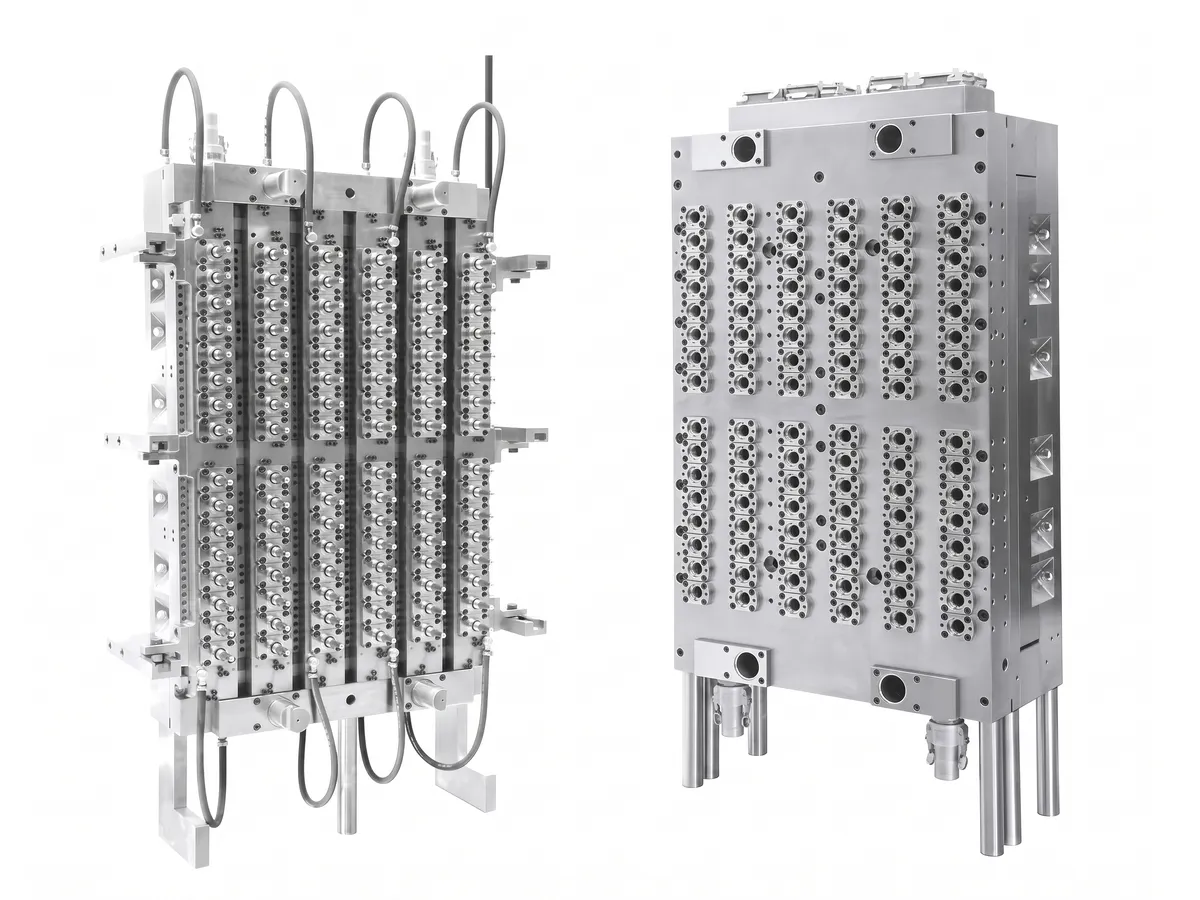
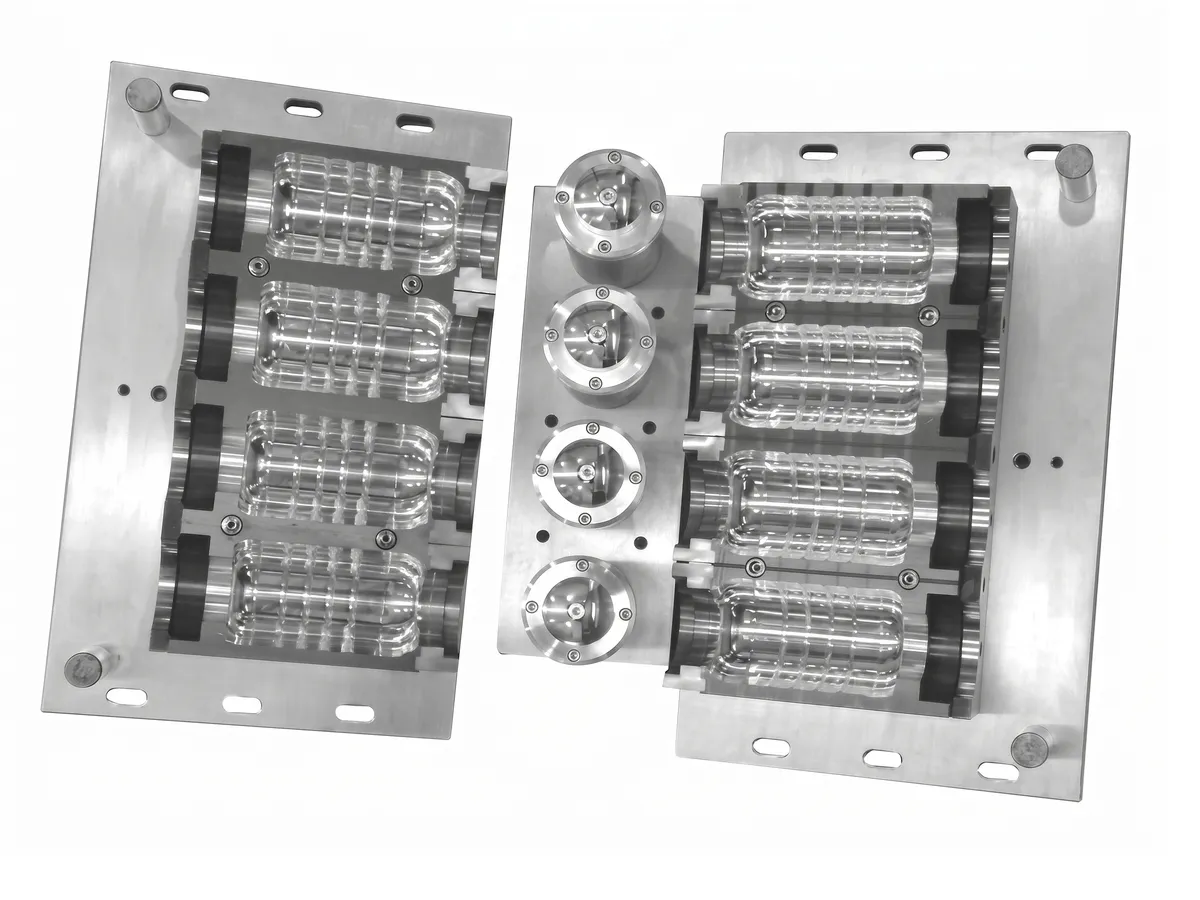
EPA.AS-2C114.3 Medicine Bottle Blow Molding Machine Mould
Preform Injection Mold
- The die lip is composed of two precision-matched parts to guarantee coaxial alignment between preform body and neck during formation, eliminating eccentricity defects in pharmaceutical container necks.
- Optimally engineered cooling water channel geometry improves preform cooling uniformity and efficiency, shortening cycle time while maintaining consistent preform temperature profiles critical for this blow molding machine process.
- Formation components use imported die steel grade 2316, providing excellent rust resistance and uniform hardness after heat treatment for long service life in pharmaceutical production environments.
- Core plate, cavity plate, and structural components use 420-grade stainless steel for superior corrosion resistance and cleanroom compatibility without surface treatment degradation over production lifetime.
- Maintenance-friendly design with clearly accessible service points and straightforward cavity replacement procedures to minimize production downtime during scheduled maintenance intervals.
- Standard interchangeable die fittings and advanced mold architecture allow a single mold to produce more than one type of preform geometry, improving tooling investment return for blow molding machine manufacturers.
Blowing Mold
- Blowing mold raw material uses high-quality steel alloys selected for thermal conductivity, hardness, and machinability to withstand the repeated thermal cycling and high blowing pressure loads of pharmaceutical production.
- Bottle geometry is designed using advanced 3D CAD and flow simulation software, optimizing cavity profiles, parting line placement, and venting positions to produce pharmaceutical bottles free of surface defects and dimensional non-conformances.
- A versatile range of bottle design templates is available from Ever-Power engineering, covering standard pharmaceutical container forms as well as custom shapes developed to meet customer brand or functional specifications.
- The water cooling channel layout within the blowing mold is precisely engineered using thermal analysis, placing channels in optimal proximity to the cavity surface to achieve uniform heat extraction across all bottle panels.
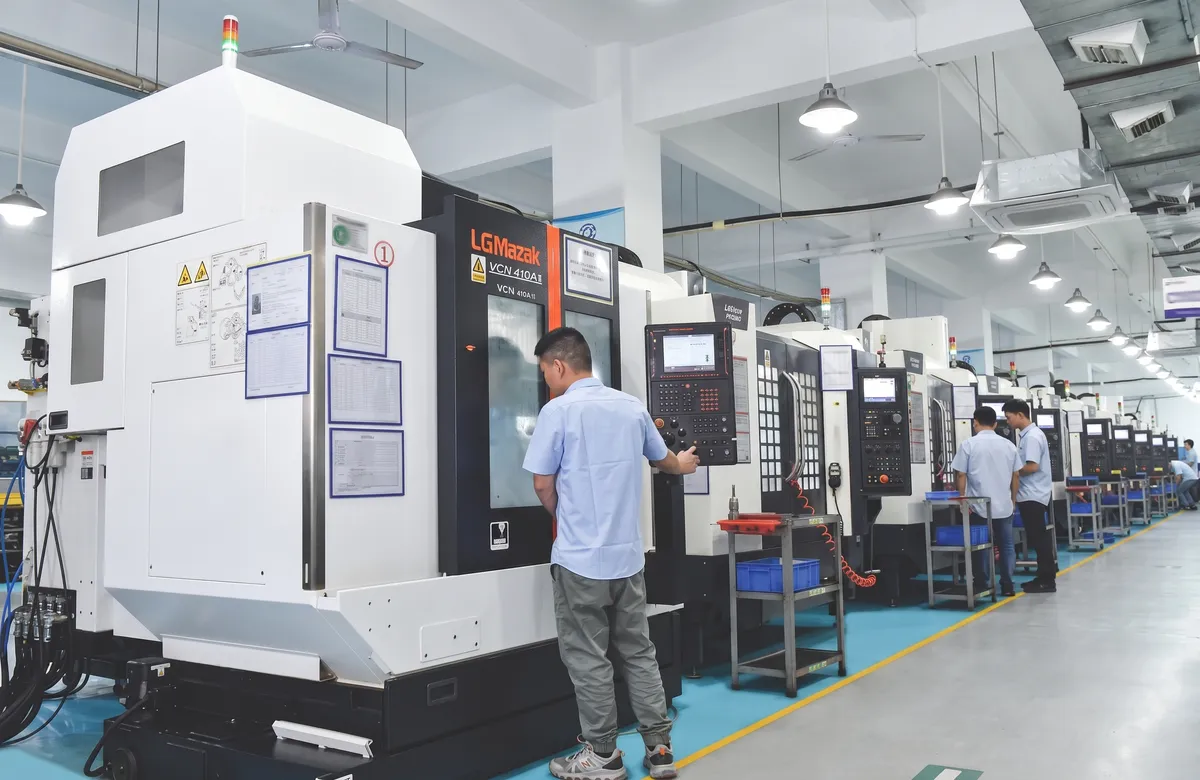
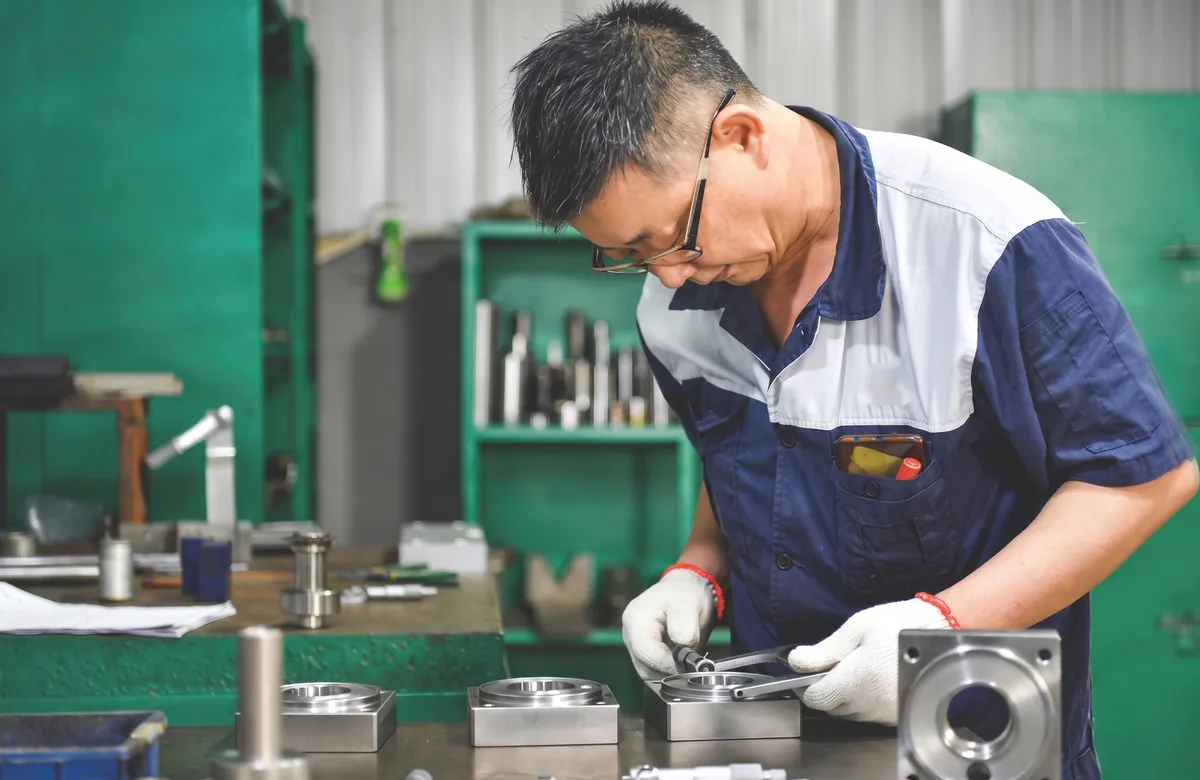
- All metal components of the blow mold are final-machined on CNC machining centers, ensuring dimensional accuracy within tight tolerances to deliver consistent bottle geometry across the full production run of this pharmaceutical bottle blow molding machine.
 |
 |
Why Choose Ever-Power's Plastic Blow Molding Machine?
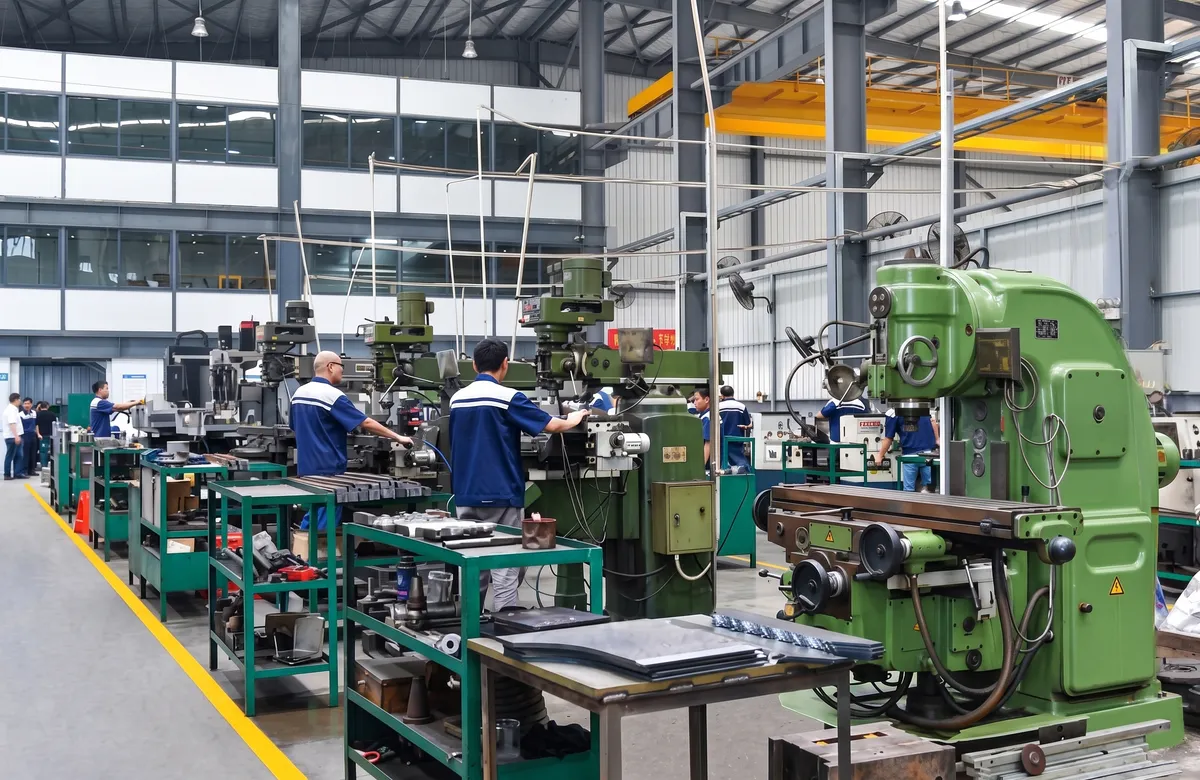
Mexico Ever-Power ISBM Machinery Co., Ltd specializes in the research and development, production, sales, and international trade of automatic Injection Blow Molding Machines and Injection Stretch Blow Molding Machines. Our complete product portfolio encompasses injection blow molding machines, extrusion blow molding machines, injection stretch blow molding machines, and integrated auxiliary machinery, providing customers with a comprehensive one-stop packaging machinery solution.
Ever-Power brings together senior engineering and technical specialists with deep expertise in both injection-blowing machinery design and precision blow molding tooling. Our R&D team draws on rich theoretical knowledge and practical production experience accumulated over more than twenty years in the industry, enabling us to provide pharmaceutical, food, cosmetic, and healthcare packaging manufacturers with comprehensive pre-sale consultation, in-sale engineering support, and responsive after-sale service that goes well beyond equipment delivery.
Our application expertise covers the complete pharmaceutical packaging spectrum: oral solid dosage containers, liquid medicine bottles, sterile packaging, health supplement containers, veterinary pharmaceutical packaging, and medical device packaging. Compatible materials include HDPE, LDPE, PET, PETG, PP, PS, PPSU, PC, Tritan, ABS, PLA, EVA, PCTG, and environmental corn-based biodegradable materials, covering the full range of plastics from 1 ml to 1,000 ml containers demanded by global pharmaceutical packaging buyers. Ever-Power adheres to the enterprise development values of self-reliance, integrity, pragmatism, innovation, and responsibility, building a one-stop turnkey project capability that delivers high-end injection-blowing products with quality that satisfies users and after-sales service that earns long-term partnership trust.
- 20+ Years of Blow Molding Machine Manufacturing
Founded in 2003, Ever-Power has accumulated over two decades of specialized experience in automatic blow molding machine design, manufacture, and global supply, with installations in 20+ countries across pharmaceutical, food, and cosmetic packaging sectors. - 20,000 m² Production Facility
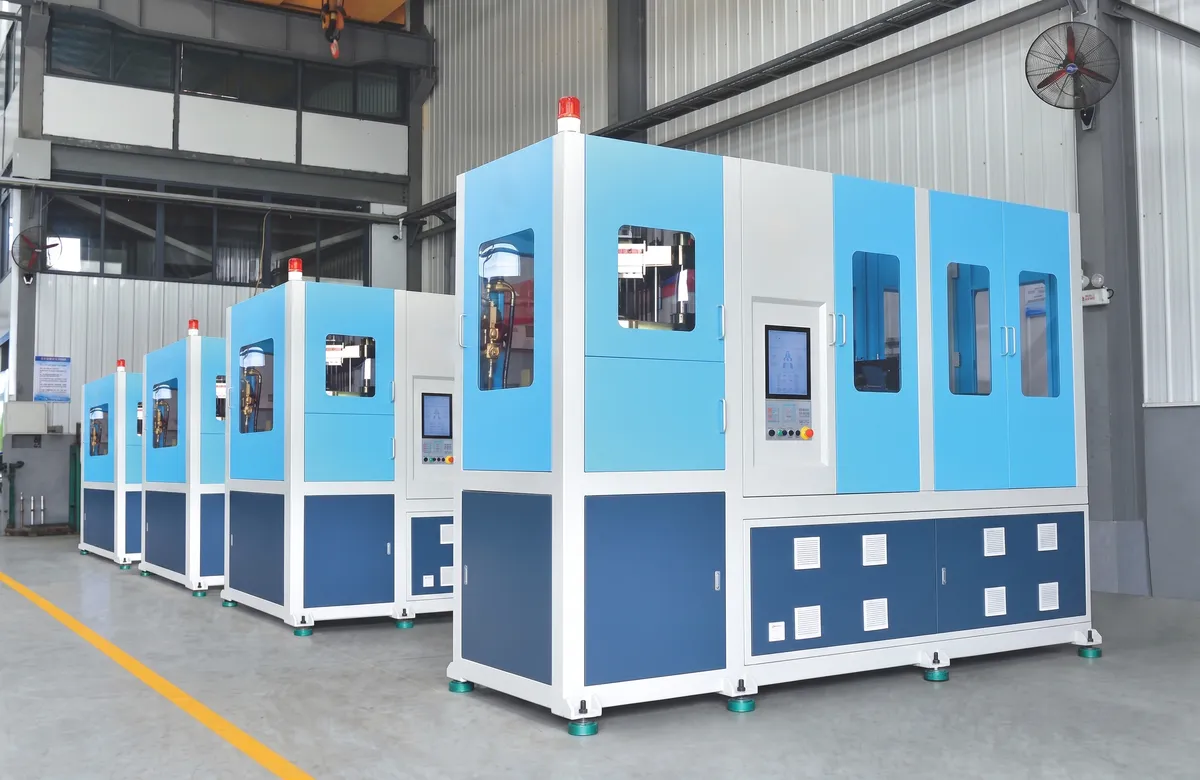
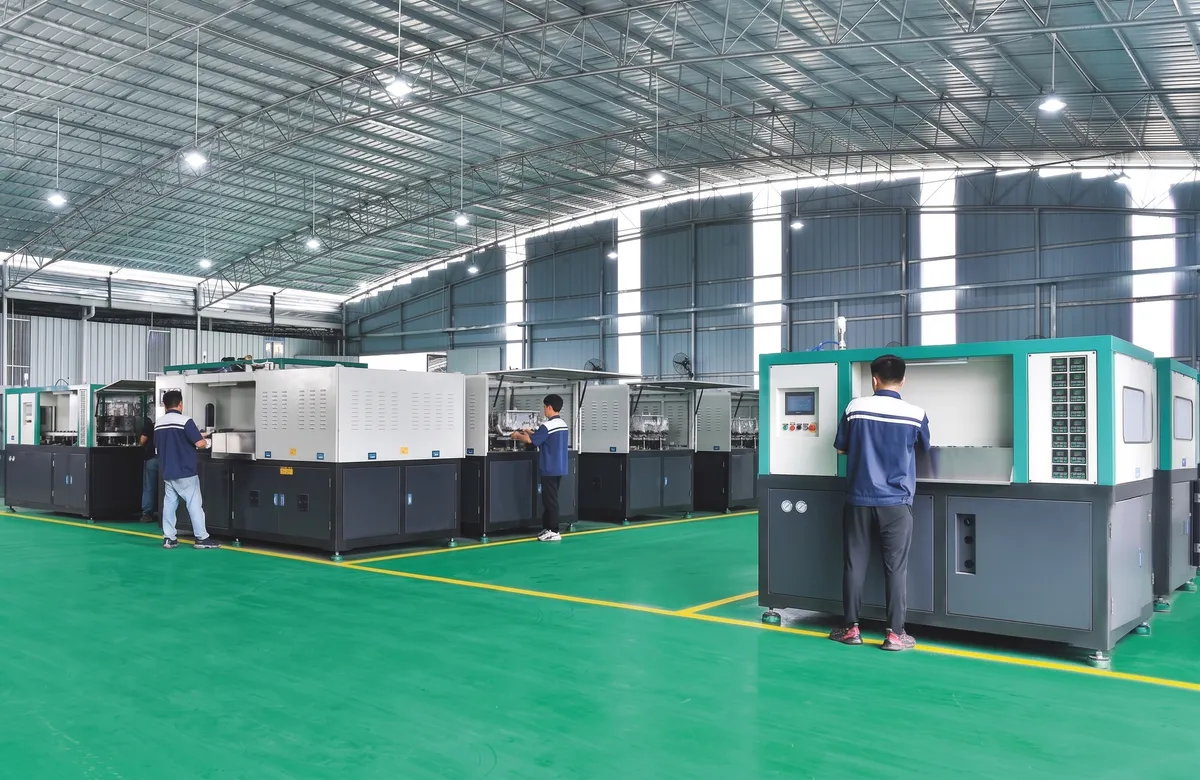
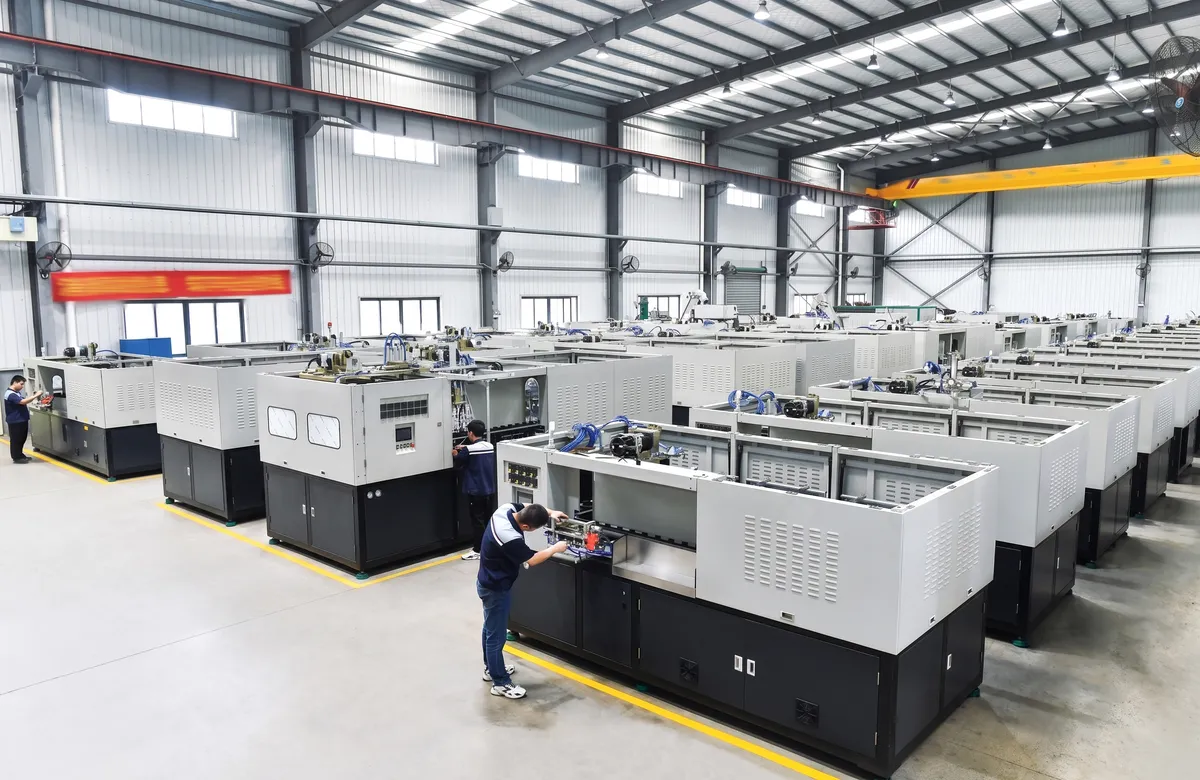
The Qingyuan production base covers 20,000+ square meters with advanced CNC machining centers, precision assembly workshops, and complete factory acceptance testing facilities, ensuring every automatic blow molding machine meets specifications before shipment. - ISO 9001 Certified and Multiple Patents
Ever-Power holds ISO 9001 quality management certification, CE compliance verification, and multiple national utility model patents covering innovation in blow molding machine parts design that enhance production efficiency and container quality for pharmaceutical customers. - Global Sales Network and Named Brand Partners
Ever-Power machines operate at facilities of globally recognized brands including CESTBON, HAITIAN, Luhua, Walch, Blue Moon, PROYA, Liby, Estee Lauder, Wal-Mart, and Shanliang Ophthalmic Dropss, demonstrating trusted performance at world-class blow molding machine customer installations.
 |
 |
 |
 |
 |
 |
Frequently Asked Questions
Q: What bottle sizes can the EPA.AS-2C114.3 medicine bottle blow molding machine produce?
A: The EPA.AS-2C114.3 accommodates pharmaceutical containers up to 1,000 ml maximum volume, with a maximum container diameter of 94 mm and maximum height of 260 mm. Neck diameter is 38 mm for the standard configuration. The broader EPA series extends from the EPA.AS-4C76.2 for 500 ml containers to the EPA.ES-2C130 handling up to 1,500 ml pharmaceutical bottles, giving pharmaceutical manufacturers a complete size range selection across a consistent machine platform from the same blow molding machine manufacturers.
Q: What is the difference between an injection stretch blow molding machine and an extrusion blow molding machine for pharmaceutical bottles?
A: An injection stretch blow molding machine like the EPA.AS-2C114.3 forms a precision preform by injection molding first, then stretches and blows it into the final bottle shape. This produces zero flash, extremely accurate neck threads, and superior wall thickness uniformity, making it the process of choice for pharmaceutical and medical packaging. An extrusion blow molding machine extrudes a parison of molten plastic that is clamped and blown, generating flash waste requiring trimming. EBM suits large hollow containers like jerry cans and drums but is generally less precise for small pharmaceutical bottles requiring GMP quality standards.
Q: Is the EPA.AS-2C114.3 blow molding machine GMP compliant for pharmaceutical production?
A: The EPA.AS-2C114.3 is designed for pharmaceutical packaging environments requiring GMP compliance. The machine operates on a no-flash, no-trimming process that minimizes particulate generation. The fully automated production sequence eliminates direct hand contact with bottles during the blow molding process. Ever-Power provides comprehensive equipment documentation packages including machine specifications, calibration certificates, and FAT protocols that support IQ, OQ, and PQ validation activities required by pharmaceutical manufacturers operating under FDA 21 CFR Part 211, EU GMP Annex 15, and equivalent national regulatory frameworks.
Q: What resins can be processed on this pharmaceutical bottle blow molding machine?
A: This plastic blow molding machine is compatible with PET (the primary resin for pharmaceutical bottles), PETG, PP, and HDPE. PET is most commonly used for oral liquid, syrup, and supplement bottles due to its clarity, strength, and barrier properties. PP is selected for autoclavable containers and hot-fill applications. HDPE is used for moisture-sensitive tablet packaging. PETG is chosen for premium packaging requiring enhanced clarity and impact resistance. Material selection should always be validated against specific drug substance compatibility through ICH Q1 extractables and leachables testing before production registration.
Q: How long does mold changeover take on this fully automatic blow molding machine?
A: Mold changeover time on the EPA.AS-2C114.3 typically ranges from 60 to 90 minutes for a complete preform holder and blow mold change, depending on operator experience and bottle size difference between the outgoing and incoming format. The 302 mm mold-open distance and 122 mm clamping stroke provide sufficient workspace for efficient mold removal and installation. PLC recipe switching between stored bottle formats takes only minutes. For multi-SKU pharmaceutical operations with frequent product changeovers, Ever-Power recommends investing in parallel mold preparation procedures to minimize production line downtime during format changes.
Q: What is the actual energy consumption of this PET blow molding machine during production?
A: The EPA.AS-2C114.3 is rated at 45 kW maximum heating power, but typical production heating power consumption is 20 kW during steady-state operation. This represents an energy efficiency ratio of approximately 44% of rated capacity under normal pharmaceutical production conditions, significantly lower than the worst-case energy budgeting figure. The cooling water system operates at 6 kg/cm² with a 30 ltr/min flow rate, and low-pressure air consumption is 600 ltr/min at 7 kg/cm². Total facility utility planning should account for all three utility requirements: electricity, cooling water, and compressed air including the 1,600 ltr/min high-pressure blowing air circuit.
Q: Does Ever-Power provide custom blow molding machine configurations for specific pharmaceutical container requirements?
A: Yes. As experienced blow molding machine manufacturers with over 20 years in the industry, Ever-Power offers customization services for the EPA series including non-standard neck diameter configurations, specialized preform holder spacing for custom preform pitch dimensions, integration with downstream leak testing and vision inspection equipment, and custom mold tooling for unique pharmaceutical container geometries. Buyers requiring small-volume specialty pharmaceutical bottles, unusual neck finishes, or integrated production line connections should contact the Ever-Power engineering team early in the project to discuss technical feasibility and lead time requirements.
Q: What spare parts should be stocked for the EPA.AS-2C114.3 blow molding machine?
A: For continuous pharmaceutical production operation, recommended minimum spare parts inventory for this medicine bottle blow molding machine includes: infrared heating lamp elements (2-4 per zone), preform holder pins and clamps, blow valve seal kits, stretch rod sealing components, PLC input/output modules, proximity and photoelectric sensors, cooling water solenoid valves, and air filter elements for the high-pressure circuit. Ever-Power provides a recommended spare parts list specific to each model with the equipment delivery documentation, and genuine spare parts are available through the Ever-Power direct supply channel to maintain production continuity.
Q: Can this high speed blow molding machine be integrated into an existing pharmaceutical filling and packaging line?
A: Yes. The EPA.AS-2C114.3 can be integrated with downstream pharmaceutical packaging line equipment including rotary leak testers, air rinsers, filling machines, capping systems, and labeling lines. The bottle output conveyor transfers finished containers to the connected downstream equipment at the machine production rate of 2,000 bottles per hour. Line integration should account for buffer conveyor length between the blow molding machine output and filling line input to absorb any transient rate differences. Ever-Power engineering can advise on interface specifications and conveyor transfer system design as part of the project scope discussion for complete line integration projects.
Q: What types of blow molding machine certification and quality management does Ever-Power maintain?
A: Ever-Power maintains ISO 9001 quality management system certification for design, manufacture, and sales of blow molding machines. Equipment carries CE marking for European market compliance and has passed ECM Verification of Compliance certification. Multiple national utility model patents cover proprietary machine design innovations in the EPA series platform. The 20,000+ square meter production facility in Qingyuan, Guangdong operates under systematic quality control at every production stage, from raw material incoming inspection through finished machine factory acceptance testing before shipment to blow molding machine suppliers and end customers globally.
Customer Reviews
Carlos Mendoza, Pharmaceutical Packaging, Mexico
"We installed the EPA.AS-2C114.3 about eight months ago at our oral liquid packaging line in Monterrey and honestly the output consistency has been better than we expected. Running 2,000 bph on 100 ml syrup bottles in PET, and our in-process QC rejection rate for neck dimension deviations has dropped to under 0.4%. The cooling system stability at 10 degrees C is exactly what keeps the cycle time consistent across the shift. The commissioning team from Ever-Power spent four days with us making sure everything was dialled in properly. Very satisfied."
Ana Paula Ferreira, Pharmaceutical Packaging, Brazil
"We compared three blow molding machine suppliers before selecting Ever-Power for our new pharmaceutical bottle line in Sao Paulo. The technical specifications on the EPA series were the most detailed we received, and the pre-sales support team actually understood pharmaceutical GMP requirements rather than just quoting output numbers. The machine arrived on schedule, documentation was complete for our ANVISA validation file, and startup was smooth. Been running for six months with only one minor sensor replacement."
Zhang Wei, Nutraceutical Packaging, China
"Our facility in Guangzhou produces health supplement bottles for export to the US and EU markets, so the bottle quality standard is very high. We run the EPA.ES-4C76 for 300 ml vitamin containers. The wall thickness uniformity on the shoulder and base panels improved significantly compared to our previous machine. Energy consumption is also lower, about 18 kW average heating power against the 40 kW maximum rated. After fourteen months of operation, our maintenance cost per thousand bottles is very competitive."
Rajesh Patel, Pharmaceutical Packaging, India
"The logistics and shipping coordination for our order to Mumbai was handled very professionally by Ever-Power. Everything arrived in perfect condition, properly crated and with full packing list matching the invoice. Installation support was provided via video call with an English-speaking technician who walked our local team through the setup process step by step. For a company purchasing a blow moulding machine internationally for the first time this level of after-sale support was really important to us."
Kim Jae-won, Pharmaceutical Packaging, South Korea
"I was a bit sceptical at first given the price point compared to European automatic PET blow molding machines, but after running the EPA.ES-3C76 for ten months producing 200 ml ophthalmic drops and nasal spray containers in PP, I can say the quality is really there. Bottle dimensions are consistent across the shift and the PLC recipe system makes it easy to switch between our different container formats. The mould-change procedure takes about 90 minutes with two operators which is acceptable for our production schedule."
Mohammed Al-Rashidi, Medicine Packaging, Saudi Arabia
"We use the machine for producing 500 ml medicine bottles and 1000 ml supplement containers on different shifts. The ability to switch bottle formats on one machine with stored PLC recipes really helps us manage contract packaging for multiple clients. The blowing pressure stability at 35 kg/cm squared is consistently maintained which means we rarely see rejects from under-blown bottles. Support response from Ever-Power when we have questions is fast, usually same-day answers via WhatsApp or email."
Siti Rahayu, Pharmaceutical Packaging, Indonesia
"We purchased the EPA.AS-2C114.3 for a new 50 ml to 250 ml oral liquid line at our facility near Jakarta. Our team had no previous experience with this type of blow molding machine, so we were worried about the learning curve. The technical manual was thorough and the remote video support during our first production runs helped our operators understand how to adjust the heating zones for different preform sizes. After about three weeks we were running consistently at target output. Very good value for the investment."
Nguyen Thi Lan, Pharmaceutical Plant, Vietnam
"The machine footprint was a key factor for us since we were fitting it into an existing GMP room with limited space. The 2660 by 1660 mm floor plan of the EPA.AS-2C114.3 works very well in our cleanroom layout. We have been running 150 ml tablet bottles in HDPE for about five months. The cooling system stability is impressive and our validation team found the process parameters very repeatable across multiple validation runs. The documentation package provided by Ever-Power made our IQ and OQ protocols much easier to compile."
Hans Brecker, Veterinary Pharma Packaging, Germany
"As a procurement manager I deal with multiple blow molding machine suppliers every year. What stood out with Ever-Power was the transparency in technical specifications and the willingness to provide reference customer contacts for verification before we committed to the purchase. The EPA.ES-4C100 we ordered for our veterinary pharmaceutical bottle line in Germany has been running for seven months without any significant downtime. Output is 4,600 bph on 500 ml containers which matches the quoted specification exactly. Would recommend."
Additional information
| Edited by | Yjx |
|---|
Related products
-
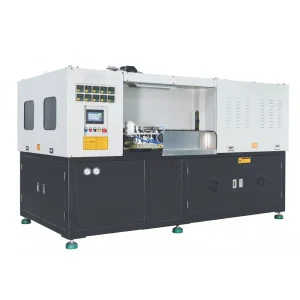
EPA.AS-2C114.3 Fully Automatic Blow Molding Machine for Daily Chemicals & Cosmetic Bottles
-
EPA.ES-2C130 Fully Automatic Blow Molding Machine for Daily Chemicals & Cosmetic Bottles
-
EPA.ES-3C114 Fully Automatic Blow Molding Machine for Daily Chemicals & Cosmetic Bottles
-
EPA.ES-4C76 Fully Automatic Blow Molding Machine for Daily Chemicals & Cosmetic Bottles