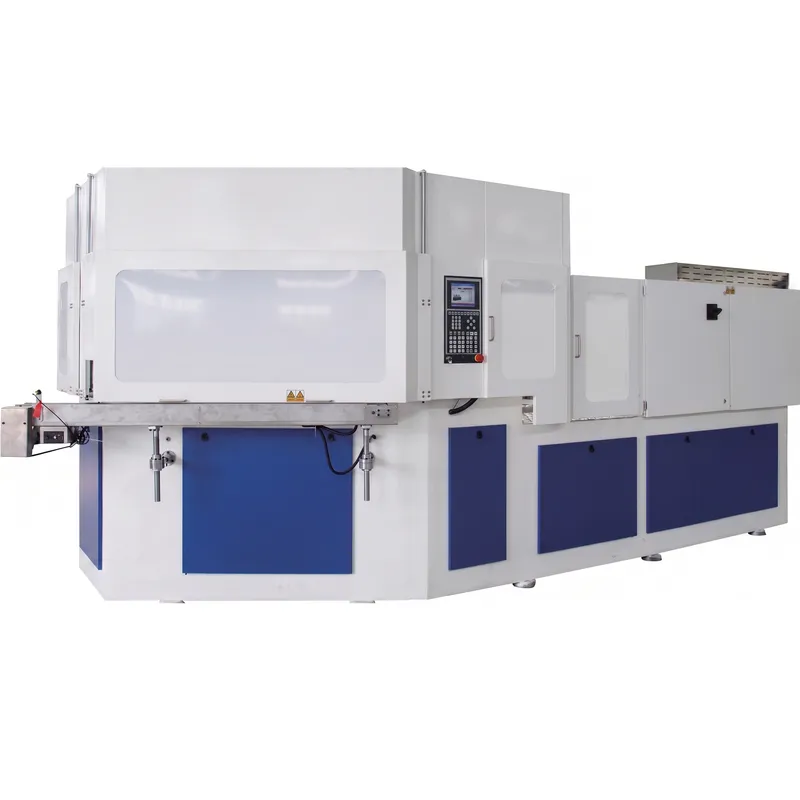
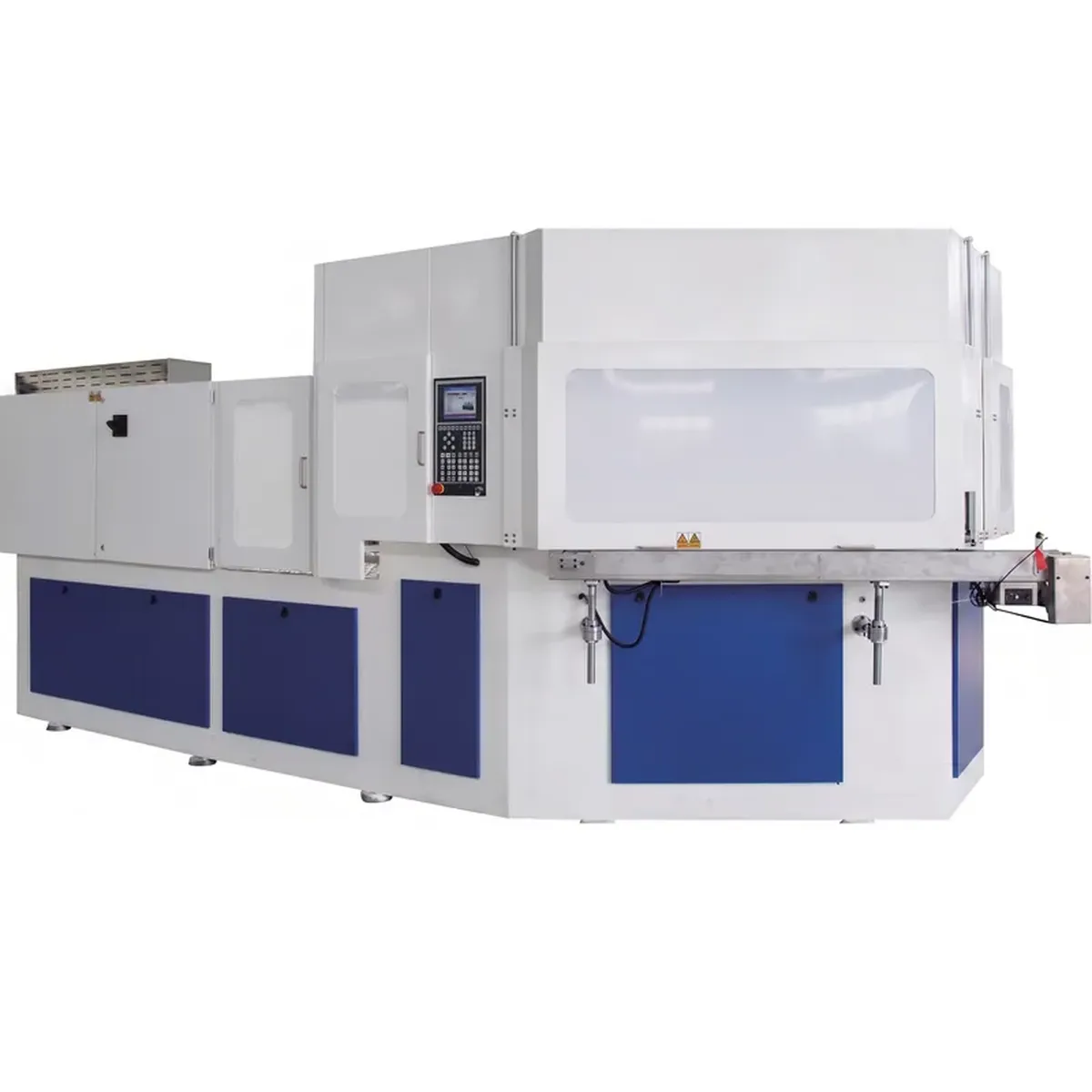
Machine de moulage par injection-soufflage ZQ110, remplacement pour le modèle SUMA 135iB
La machine de moulage par injection-soufflage ZQ110, remplaçant la SUMA 135iB, offre des performances de pointe aux opérateurs passant de la plateforme IBM SUMA 135iB à une nouvelle génération de machines. Entièrement motorisée (injection, fermeture, indexage de la table rotative et éjection), cette machine élimine totalement l'huile hydraulique. L'absence d'actionnement hydraulique garantit un environnement de production plus propre, plus sûr et plus précis que la plateforme hydraulique SUMA 135iB, répondant ainsi aux exigences d'hygiène des lignes de production de flacons pharmaceutiques, de bouteilles cosmétiques, d'emballages alimentaires et de contenants chimiques.
The ZQ110 Injection Blow Molding Machine Replacement for SUMA 135iB Model delivers a new standard of performance for operators upgrading from the SUMA 135iB IBM machine platform. Driven entirely by servo motors across all machine movements, including injection, clamping, rotary table indexing, and stripping, this injection blow molding machine eliminates hydraulic oil from the system architecture entirely. The elimination of hydraulic actuation provides a cleaner, safer, and more precise production environment than the SUMA 135iB hydraulic platform, directly addressing the hygiene requirements of pharmaceutical vial production, cosmetic bottle manufacturing, food-contact packaging, and chemical container lines. The ZQ110 achieves a cycle time of 8.2 seconds per cycle for 30ml bottles, 20% faster than comparable hydraulic IBM machines, and sustains a standard daily output of 105,000 bottles with a maximum of 115,000 bottles per day. Energy consumption for 30ml bottle production is approximately 12 kWh per hour, reflecting a roughly 30% reduction versus hydraulic IBM machines operating in the same production class, providing a measurable operating cost improvement across every production shift and across the machine's full service life.
A purpose-engineered special clamping structure provides 40 to 80 tons of adjustable clamping force, enabling the same ZQ110 to handle the complete product range from 10ml pharmaceutical vials to 1000ml food and chemical containers without requiring a machine size change. The bottom-up design principle keeps the mold area entirely free of lubricating oil, meeting GMP pharmaceutical packaging hygiene standards and food-contact production compliance requirements. An electric cylinder injection unit replaces the hydraulic injection actuator of the SUMA 135iB, delivering superior injection stability, tighter shot weight repeatability, and significantly lower maintenance costs by eliminating hydraulic seals, proportional valves, and oil filter replacement from the maintenance schedule. The servo system is equipped with absolute encoders for high positional repeatability and low-noise operation throughout production. The rear conveyor integrates with visual inspection cameras, side-leak testers, labeling machines, and automatic packaging equipment, enabling fully unattended production with automated detection of foreign particle contamination, insufficient neck material fill, and uneven bottle base formation. This one step injection blow molding machine is an effective replacement for SUMA 135iB equipment in personal care packaging, healthcare container production, dairy product packaging, and industrial bottle manufacturing facilities across global markets.
Cavitation du moule (à titre de référence)
| ApproxVolume | 10 ml | 30 ml | 60 ml | 100 ml | 250 ml | 500 ml | 1000 ml |
| Cavitation maximale | 20 | 18 | 14 | 12 | 8 | 5-6 | 3-4 |
Spécifications techniques
| Article | Unité | ZQ110 |
| Injection System | ||
| Diamètre de la vis | mm | 65 |
| Vis L/D | % | 22:1 |
| Poids d'injection | g | 540 |
| puissance de chauffage | KW | 20 |
| Nombre de zones de barils | 5+N | |
| coup d'injection | mm | 200 |
| Système de serrage | ||
| Force de serrage de l'injection | KN | 1100 |
| Coup d'ouverture pour injection | mm | 140 |
| Force de serrage du soufflage | KN | 150 |
| coup d'ouverture pour souffler | mm | 140 |
| Hauteur de levage de la table rotative | mm | 70 |
| Moule | ||
| Dimensions maximales du plateau (L x l) | mm | 1100x460 |
| Épaisseur du moule | mm | 280 |
| Diamètre de la bouteille | mm | 120 |
| Bottle height | mm | 220 |
| Hauteur de bouteille appropriée | mm | 1-2000 |
| Coup de dénudage | mm | 260 |
| Système hydraulique | ||
| Pression hydraulique | Carte | 14 |
| Puissance du moteur | KW | 22+22 |
| Cycle de séchage | S | 4 |
| Puissance totale | KW | 80 |
| Puissance de fonctionnement | % | 52-70 |
| Autres | ||
| Pression minimale de l'air comprimé | MPa | 0.7-1.2 |
| Capacité d'air comprimé | M³/min | 0.7 |
| débit d'eau | M³/h | 4 |
| Pression de l'eau de refroidissement | MPa | 0.3-0.4 |
| Dimensions (L x l x H) | M | 5 x 1,8 x 2,2 |
| Poids net | Tonne | 15 |
Marque et modèle remplaçables
| Toujours-Puissance | Force de serrage | Jomar | SUMA | Uniloy | Bloma |
| ZQ40 | 40T | IBM40 | 40iB | UIB70 | IBM45 |
| ZQ60 | 60T | IBM65 | 65iB | UIB90 | IBM50 |
| ZQ80 | 80T | IBM85S | 85iB | UIB120 | IBM85 |
| ZQ110 | 110T | IBM135 | 135iB | UIB150 | IBM135 |
| ZQ135 | 135T | IBM175 | 175iB | UIB180 |
Diamètre de la vis à métaux IBM
| Toujours-Puissance | Diamètre de la vis | Jomar | SUMA | Bloma |
| ZQ40 | 40/45 | 35/40 | 40 | 45 |
| ZQ60 | 45/50 | 45 | 40/50 | 50 |
| ZQ80 | 55 | 55 | 50/60 | 50 |
| ZQ110 | 65 | 65 | 65/76 | 70 |
| ZQ135 | 70 | 70 | 65/76 |
Poids d'injection de la machine IBM
| Toujours-Puissance | Poids d'injection | Jomar | SUMA | Bloma |
| ZQ40 | 190/260 | 180 | 169 | 180 |
| ZQ60 | 260/383 | 205 | 169/264 | 240 |
| ZQ80 | 466 | 300 | 333/480 | 310/280 |
| ZQ110 | 540 | 450/550 | 580/770 | 560 |
| ZQ135 | 650 | 450/550 | 580/770 |
Force de serrage par injection de machine IBM
| Toujours-Puissance | Force de serrage par injection | Jomar | SUMA | Bloma |
| ZQ40 | 400 kN | 340 kN | 386 kN | 350 kN |
| ZQ60 | 600 kN | 460 kN | 580 kN | 500 kN |
| ZQ80 | 800 kN | 680 kN | 720 kN | 700 kN |
| ZQ110 | 1100 kN | 1210 kN | 1200 kN | 1250 kN |
| ZQ135 | 1350 kN | 1560 kN | 1600 kN |
Taille du moule de la machine IBM
| Toujours-Puissance | Taille du moule | Jomar | SUMA | Bloma |
| ZQ40 | 480 × 340 | 394 × 508 | 470 × 350 | 450 × 390 |
| ZQ60 | 600 × 390 | 432 × 660 | 620 × 400 | 620 × 430 |
| ZQ80 | 800 × 400 | 464 × 749 | 700 × 400 | 620 × 430 |
| ZQ110 | 1100 × 460 | 559 × 1118 | 1000 × 500 | 900 × 480 |
| ZQ135 | 1300 × 500 | 635 × 1372 | 1200 × 600 |
Taille de la machine IBM
| Toujours-Puissance | Taille du moule (M) | Jomar | SUMA | Bloma |
| ZQ40 | 3,8 × 1,3 × 1,7 | 2,72 × 1,9 × 2,75 | 3,8 × 1,5 × 2,3 | 4,05 × 1,52 × 2,55 |
| ZQ60 | 3,8 × 1,4 × 1,8 | 2,92 × 1,98 × 3,41 | 4 × 1,7 × 2,3 | 620 × 430 × 2,55 |
| ZQ80 | 4,5 × 1,6 × 2 | 3,33 × 1,94 × 3,41 | 4,5 × 2 × 2,6 | 620 × 430 × 2,55 |
| ZQ110 | 5 × 1,8 × 2,2 | 3,79 × 2,4 × 3,41 | 5 × 2,4 × 2,7 | 900 × 480 × 2,55 |
| ZQ135 | 5,5 × 2 × 2,4 | 4,22 × 2,67 × 3,58 | 6 × 2,6 × 2,7 |
Remarque : Les marques sont mentionnées uniquement pour aider les clients à choisir les produits, et non pour vendre les produits de ces marques.
Machine de moulage par injection-soufflage ZQ110 : Caractéristiques principales
1. High Production Capacity with Stable Throughput
The ZQ110 operates at 8.2-second cycles for 30ml bottles, delivering up to 115,000 bottles per day at maximum output and a standard daily production of 105,000 units. Full servo motor actuation eliminates the pressure variability of hydraulic IBM machines, maintaining consistent cycle times across three-shift continuous production schedules. For personal care, pharmaceutical, and food packaging producers operating at scale, this injection blow molding machine provides the output density and production stability required to meet large B2B customer order commitments reliably.
2. Wide Customization for Diverse Bottle Requirements
The ZQ110 supports a bottle volume range of 1ml to 1000ml with mold cavity counts from 3 to 20 depending on product size, a max platen of 1100 x 460mm, and bottle diameters up to 120mm. The 40 to 80-ton adjustable clamping force allows the same machine to run lightweight pharmaceutical vials, mid-weight cosmetic bottles, and heavy-duty chemical containers without a machine replacement. As a customized injection blow molding machine for sale, the ZQ110 is configured per customer drawing, resin grade, cavity count, and downstream automation specification.
3. 30% Energy Cost Reduction vs Hydraulic IBM
This full electric injection blow molding machine reduces energy consumption by approximately 30% compared to hydraulic IBM machines operating at equivalent output levels, consuming roughly 12 kWh per hour for 30ml bottle production. Servo drives operate on demand with zero standby oil pump losses. The operating power at 52 to 70% of total rated capacity confirms the efficiency advantage over always-on hydraulic pump systems. For multi-shift production facilities, the energy savings compound meaningfully across an annual production calendar, improving plant profitability and reducing carbon output per bottle produced.
4. Simple Operation and Reduced Maintenance Cost
The ZQ110 electric cylinder injection unit eliminates hydraulic seals, oil filters, proportional valves, and hydraulic hose assemblies from the maintenance schedule, cutting both scheduled maintenance time and unexpected repair costs compared to the SUMA 135iB hydraulic platform. The HMI control interface provides clear process parameter management including injection speed profiles, barrel zone temperatures, blow timing, and clamping force, enabling production operators to set up and optimize the machine efficiently. Resin-specific parameter sets stored in the HMI allow quick changeover between product runs without manual recalibration from scratch.
5. Precision Quality Control Across All Cavities
The absolute encoder servo system of this best injection blow molding machine guarantees shot-to-shot repeatability across all cavity positions throughout the production run. The 5+N barrel zone temperature management maintains melt homogeneity for consistent preform wall distribution, while the optimized hot runner system minimizes gram weight deviation between cavities. The rear conveyor interfaces directly with visual inspection systems and side-leak testers for 100% automated inline quality detection of contamination, insufficient neck material, and base defects, meeting pharmaceutical GMP and food-grade packaging quality assurance requirements.
6. Direct Functional Replacement for SUMA 135iB IBM Machine
The ZQ110 is engineered to replace the SUMA 135iB in the 110-ton clamping force class, with matching specifications across screw diameter (65mm, versus SUMA's 65 to 76mm range), mold platen dimensions (1100 x 460mm versus SUMA's 1000 x 500mm), and bottle volume range. SUMA 135iB molds can be reviewed for ZQ110 compatibility before tooling decisions are finalized, allowing customers to protect existing mold assets while gaining the full performance and efficiency advantages of the modern all electric injection blow molding machine platform from Ever-Power.
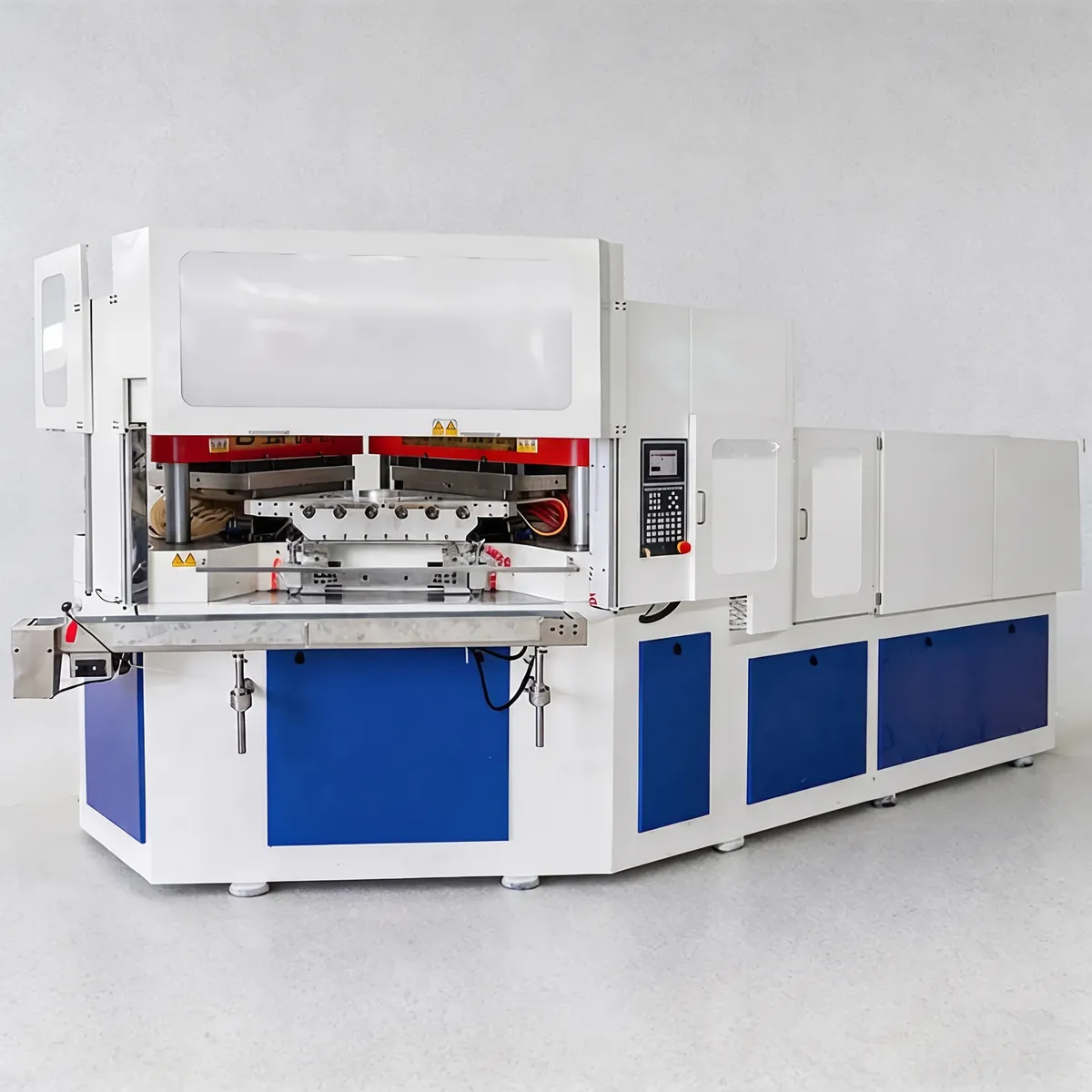
Principe de fonctionnement
Station 1: Preform Injection
At the injection station, the servo-controlled electric cylinder injection unit delivers measured molten resin at up to 540g maximum shot weight through the balanced hot runner system into the injection mold, forming the preform around the precision core rod. The bottle neck, thread, and sealing surface are completely and dimensionally accurately formed at this stage, a critical IBM advantage that defines the neck quality of every bottle produced. The injection mold closes under 1100 kN clamping force and follows a precisely timed sequence of injection, pressure hold, cooling, and mold opening. Because the injection unit of the ZQ110 is servo-driven rather than hydraulically actuated as in the SUMA 135iB, injection velocity profiles are more consistent, shot weight repeatability is tighter, and the risk of over-pressure events that can damage mold components is significantly reduced. When the injection station opens, the mandrel assembly carrying the preform indexes 120 degrees to the blow station, maintaining the preform at the precise temperature required for correct blow-out performance.
Poste 2 : Moulage par soufflage
At the blow station, the preform-loaded mandrel assembly is enclosed by the blow mold closing under 150 kN clamping force. Compressed air at 0.7 to 1.2 MPa is delivered through the hollow core rod into the warm preform, inflating it outward against the blow mold surface to form the complete bottle body, shoulder, and base geometry. The blow mold's integrated cooling channels rapidly solidify the container to its final dimensions while it remains clamped. Blow timing, air pressure, and mold temperature are independently adjustable through the HMI for different resin types including HDPE, PP, LDPE, PET, and PS, allowing the same injection blow molding machine to be optimized for very different product applications without hardware changes. The number of blow cavities matches the injection cavity count, ensuring all positions produce simultaneously. After blowing and solidification, the mold opens and the mandrel assembly with finished bottles advances 120 degrees to the stripping station, while the previously indexed preforms simultaneously begin their blow cycle at this station.
Station 3 : Déshabillage
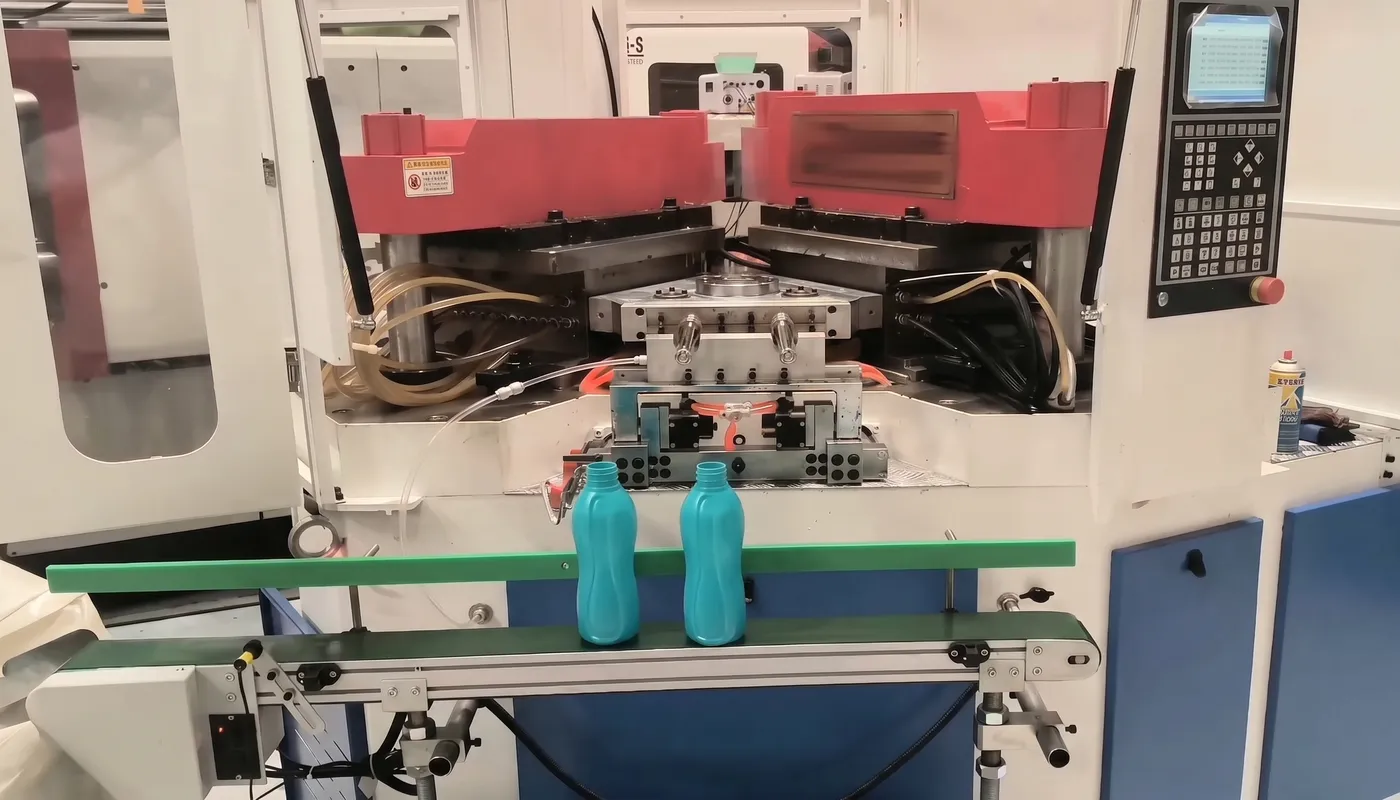
The stripping station automatically ejects completed bottles from the cold core rods using a 260mm stripping stroke. Because the IBM process creates no parison pinch point, finished bottles exit the machine with absolutely zero flash on the mouth or base, requiring no trimming, no deflashing station, and no secondary material handling before transfer to the filling line. Ejected bottles move directly onto the conveyor integrated with the downstream visual inspection camera system, side-leak tester, and automatic packaging equipment. The critical operational efficiency of the ZQ110 injection blow molding machine comes from the simultaneous nature of all three stations: during every single machine cycle, preforms are being injected at Station 1, preforms from the previous cycle are being blown at Station 2, and fully formed bottles from the cycle before that are being stripped at Station 3. This three-station parallel operation is what produces the 105,000 to 115,000 daily bottle output at 8.2-second cycles, with zero material waste and no secondary processing required before filling or packaging.
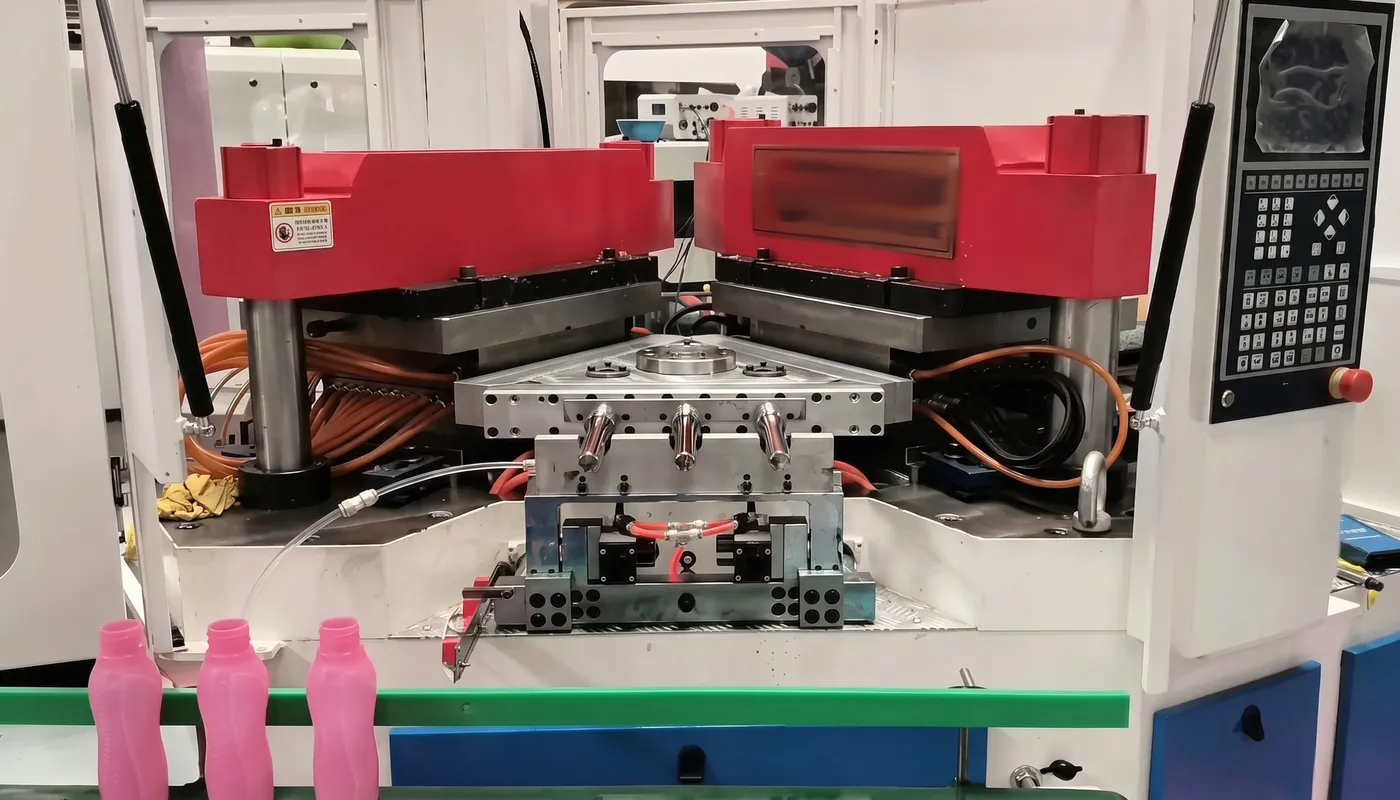
Application Fields
1. Chemical Bottles
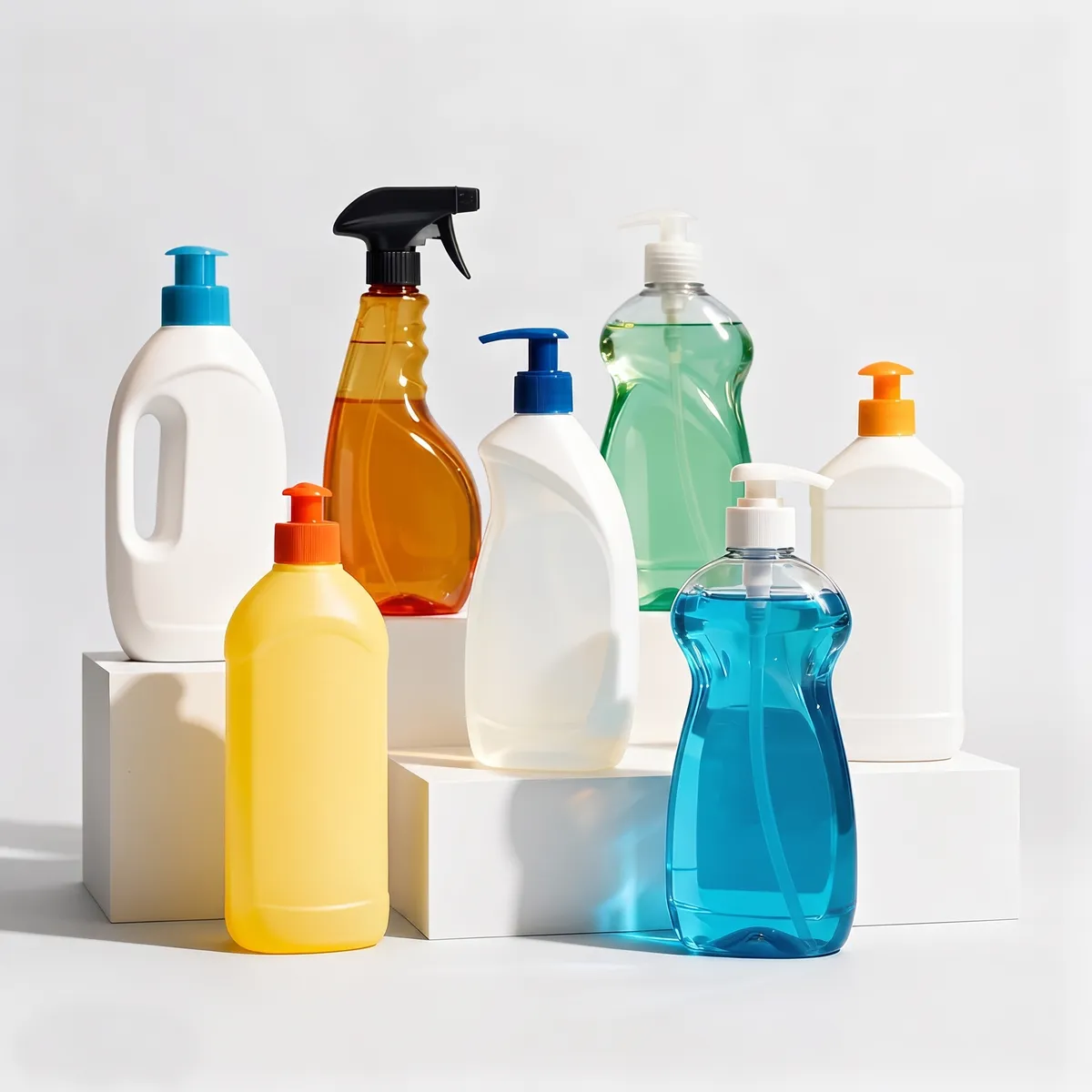
HDPE and PP chemical bottles from 100ml to 1000ml for agricultural pesticides, industrial cleaning products, automotive fluids, and laboratory chemical packaging are among the core applications for this IBM injection blow molding machine. The zero-flash IBM process produces chemically resistant bottles with precisely formed threads ready for child-resistant and safety-sealed closures without secondary trimming or deflashing operations at the filling line.
2. Flacons pharmaceutiques
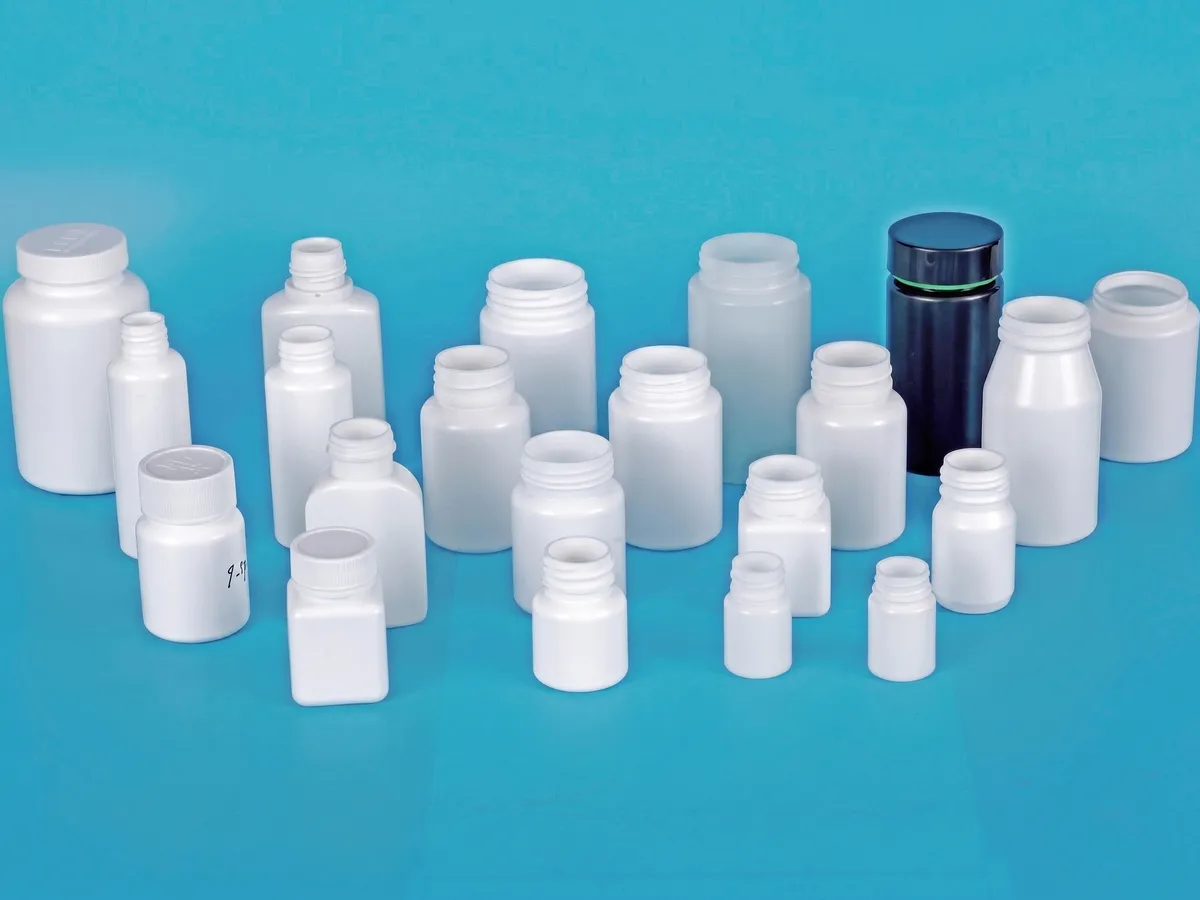
Pharmaceutical pill bottles, syrup bottles, and prescription medicine containers from 10ml to 250ml in HDPE and PP are precision-critical applications for this injection blow molding machine. Injection-formed neck accuracy ensures 100% fitment compatibility with child-resistant, tamper-evident, and dropper closures. The oil-free mold area and bottom-up design meet GMP pharmaceutical packaging hygiene standards, and the absolute encoder servo system delivers batch-to-batch consistency required for pharmaceutical packaging validation records.
3. Flacons cosmétiques
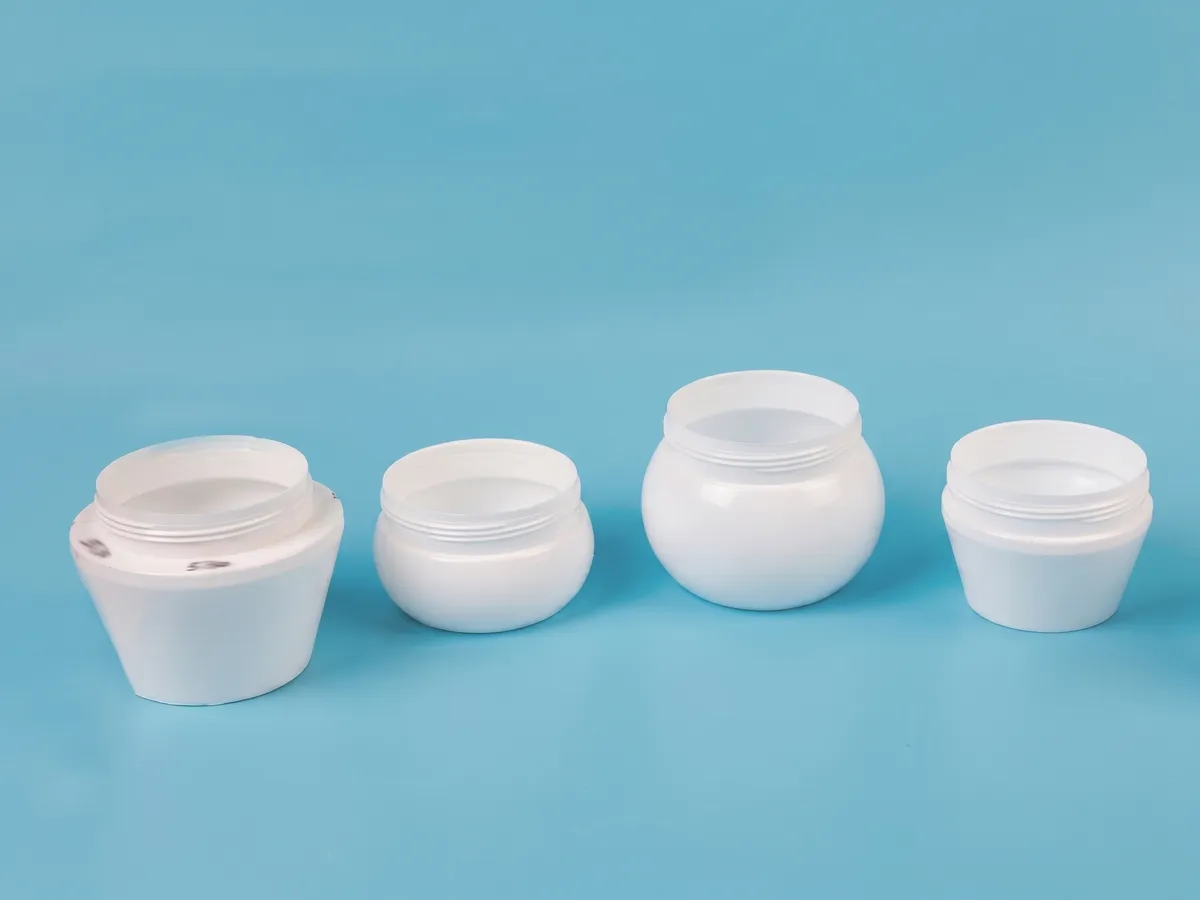
PP and PET cosmetic bottles for skincare serums, toners, facial mists, and foundation packaging are produced on this plastic injection blow molding machine with consistent surface gloss, uniform wall distribution, and precise pump or spray thread geometry. IBM-produced cosmetic bottles support premium label printing, hot stamping, and UV coating without surface quality variation, meeting the aesthetic standards of global cosmetic brand customers and private-label cosmetic suppliers who require consistent batch-to-batch appearance.
4. Dish Soap Bottles
HDPE and LDPE dish soap and dishwashing liquid bottles are a cost-sensitive, volume-driven application where output per shift directly determines profitability. The ZQ110 injection blow molding machine's capacity of up to 115,000 bottles per day and zero scrap output deliver the throughput efficiency and material yield needed for competitive dish soap bottle packaging operations supplying supermarket, foodservice, and institutional cleaning product markets at scale.
5. Food Bottles
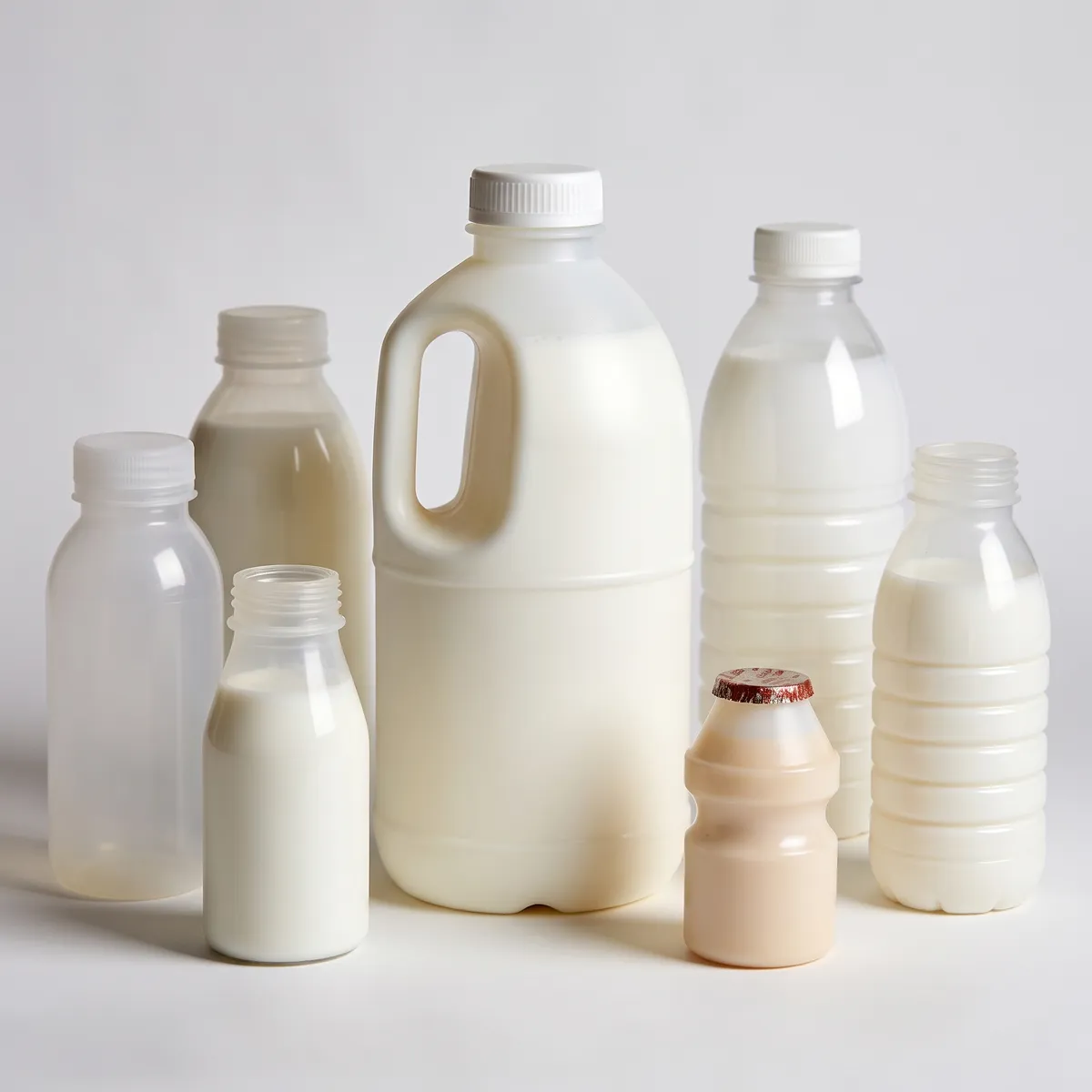
Food-contact PP and HDPE bottles for sauces, condiments, syrups, nutritional supplements, honey, and health beverages are produced on the ZQ110 with the cleanliness and dimensional consistency required for food packaging certification and retailer compliance. The oil-free production environment eliminates mold area contamination risks that complicate food-grade qualification in hydraulic IBM machine platforms, making this injection blow molding machine the preferred choice for food container production lines where cleanroom-compatible manufacturing is a customer or regulatory requirement.
6. Flacons compte-gouttes
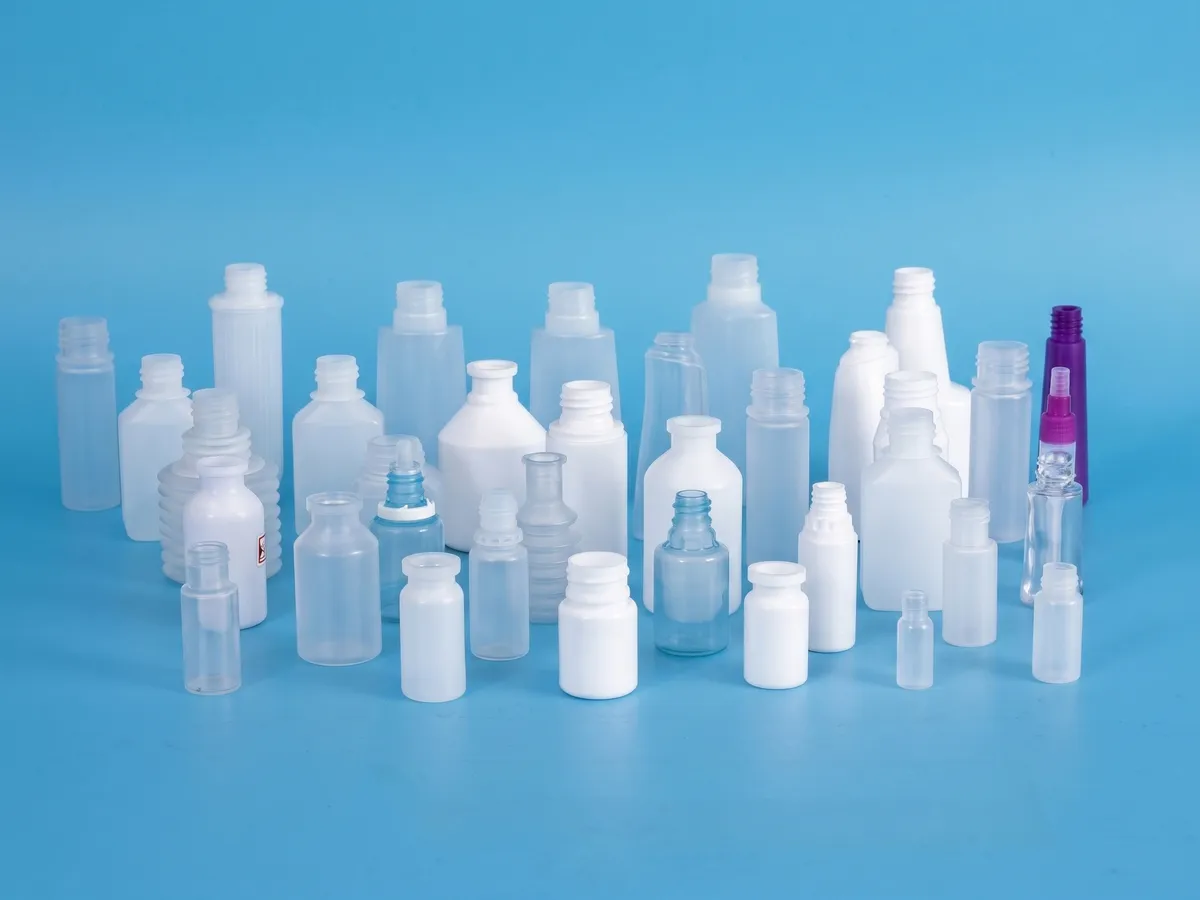
LDPE eyedropper bottles for ophthalmic solutions, nasal sprays, and ear drops are among the most dimensionally critical applications for this IBM machine. The ZQ110 produces squeezable LDPE containers with consistent orifice geometry, controlled wall thickness, and accurate neck dimensions for dropper tip fitment. The precise drop volume delivered by each dispense is directly controlled by the sidewall thickness and orifice geometry produced by this injection blow molding machine's mandrel and blow mold combination.
7. Feeding Bottles
Baby feeding bottles in food-safe PP and HDPE demand the highest cleanliness and dimensional precision available from any injection blow molding machine. The ZQ110's oil-free mold environment, zero-flash IBM output, and precise neck thread geometry ensure feeding bottles meet food contact regulations and infant product safety standards, with accurate measurement graduation compatibility and consistent teat ring thread engagement required for infant feeding safety.
8. Flacons de gel douche
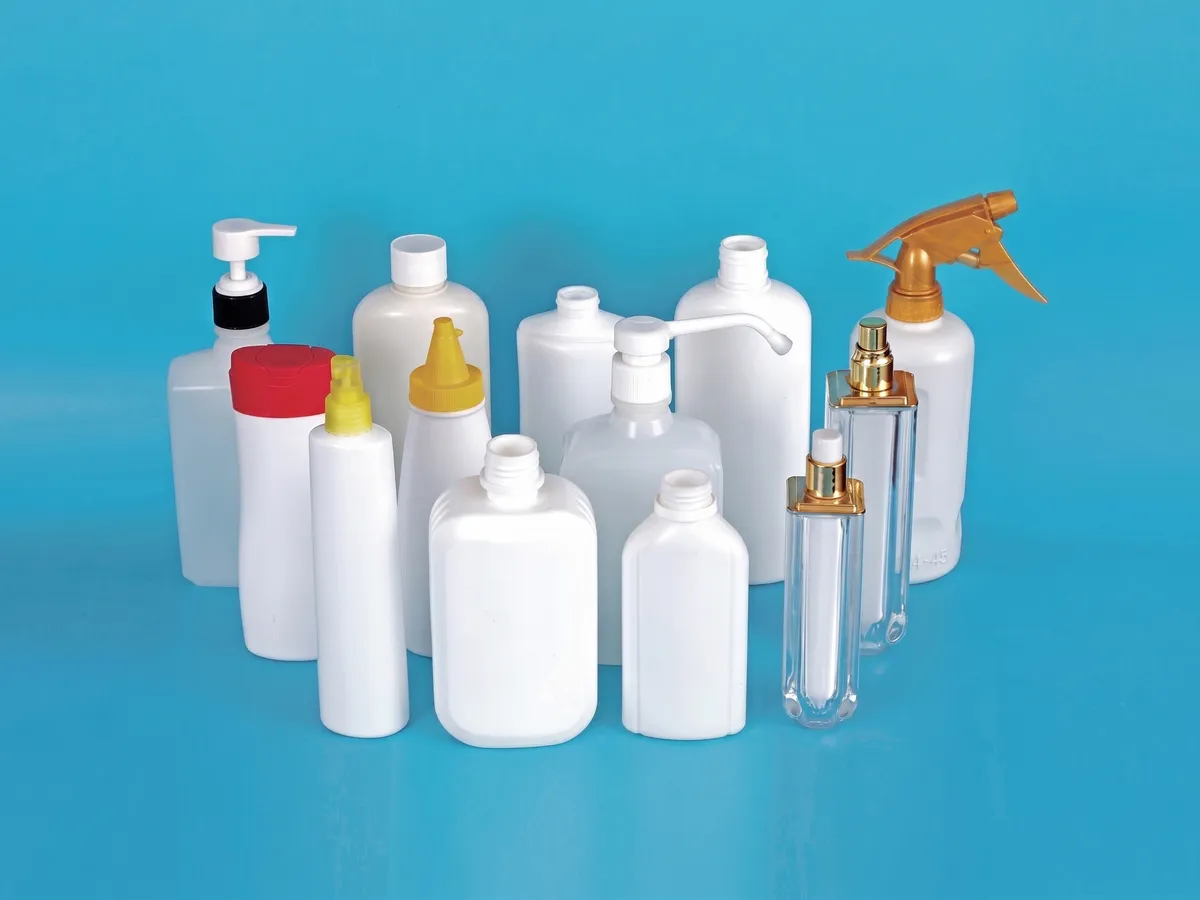
PP and HDPE body wash, liquid soap, and shower gel bottles from 200ml to 500ml represent a high-volume personal care application for this injection blowing molding machine. IBM-produced bottles provide accurate pump thread geometry for leak-free pump fitment without the flash trimming and secondary handling required by EBM alternatives, improving filling line efficiency. Consistent bottle shoulder geometry and sidewall smoothness support clean label application for retail personal care brand and private-label body wash customers worldwide.
 |
 |
 |
 |
Composants de la machine de moulage par injection-soufflage ZQ110
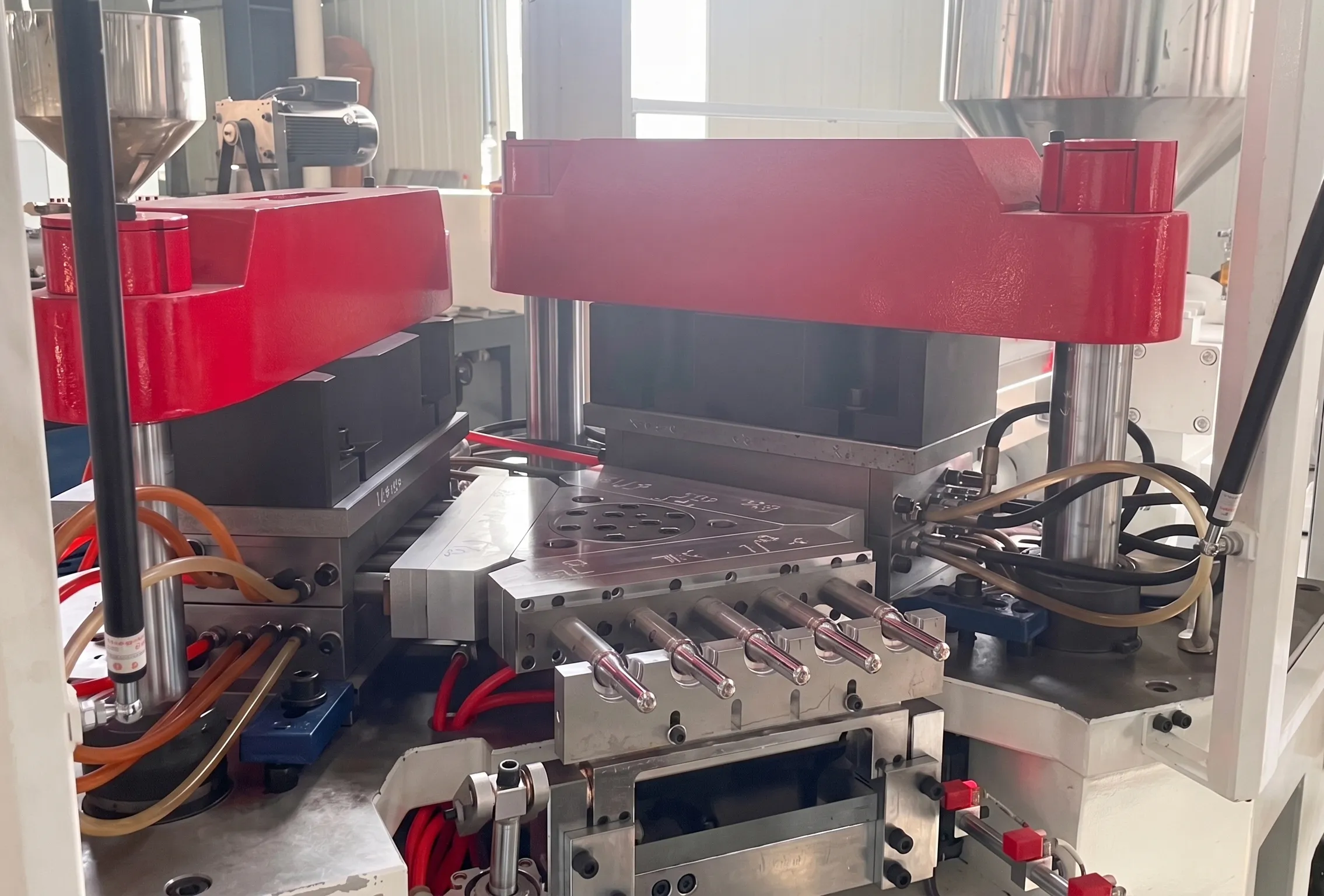
Moule d'injection
ZQ series injection molds are manufactured from imported S136 stainless steel alloy or 4Cr13 high-strength stainless steel, selected for corrosion resistance, high-polish capability, and long production service life. The independently replaceable cavity and neck insert design enables single-component exchange when product specifications change, protecting the customer's full mold base investment. Controlled cooling channel geometry maintains stable mold temperature across the full production run, contributing to consistent preform quality in this plastic injection blow molding machine.
Station d'injection
The injection station applies 1100 kN clamping force and manages the full injection, hold, cool, and open sequence within the servo-timed machine cycle. A 140mm opening stroke accommodates the geometry of the full mold range from small pharmaceutical multi-cavity tools to large 3 to 4-cavity 1000ml molds. The ZQ110 injection station clamping force of 1100 kN compares to the SUMA 135iB's 1200 kN, reflecting the ZQ110's optimized pressurized clamping structure that delivers equivalent or superior mold protection through better force distribution geometry in this injection blow molding machine.
Station de soufflage
At the blow station, compressed air at 0.7 to 1.2 MPa is delivered via the core rod to inflate the preform against the blow mold surface under 150 kN clamping force. Integrated blow mold cooling channels rapidly solidify the container geometry. Air pressure, timing, and mold temperature are independently adjustable through the ZQ110 HMI for optimization across different resin types and bottle wall profiles, enabling this injection blow molding machine to produce both flexible LDPE squeeze containers and rigid PP or HDPE pharmaceutical and food bottles on the same platform with quick parameter changeover.
Moule par soufflage
The blow mold defines the final exterior shape, surface texture, and base geometry of the finished bottle. The ZQ110 supports blow molds up to 1100 x 460mm platen size, accommodating bottles up to 120mm diameter and 220mm height. Blow molds for the ZQ110 are manufactured to the same S136 or 4Cr13 premium steel standards as injection molds, ensuring consistent surface finish and long cavity life. Ever-Power evaluates SUMA 135iB blow mold compatibility for transfer to the ZQ110 platform as part of the upgrade consultation for customers replacing existing SUMA equipment.
Station de décapage
The stripping station ejects finished bottles from the cold core rods via a 260mm stripping stroke, delivering them directly to the output conveyor connected to inline inspection and packaging equipment. No trimming is required because the IBM process produces zero flash at the bottle mouth and base. Simultaneous three-station operation means every ZQ110 machine cycle generates a new batch of injected preforms, blown bottles, and stripped finished containers in parallel, producing the rated 105,000 to 115,000 daily output of this injection blow molding machine without interruption or material waste between stations.
Stock Preparation / Injection Device
The injection device integrates the 65mm screw, 5+N zone heated barrel, and servo-controlled electric cylinder injection actuator to plasticize raw resin, meter a maximum shot weight of 540g, and inject molten material into the hot runner and mold cavity at precision-controlled velocity and pressure. The servo electric cylinder replaces the hydraulic injection actuator used in the SUMA 135iB, providing more consistent injection profiles, tighter shot repeatability, and lower maintenance requirements throughout the injection blow molding machine's operational life.
Système à canaux chauds
The ZQ110 hot runner distributes molten resin simultaneously and uniformly to all injection cavities from a single injection point, eliminating cold runner waste and ensuring equal fill distribution across every cavity in the tool. Independent temperature zone control at each hot runner drop minimizes gram weight deviation between cavities and wall thickness variation in the preform, critical for consistent product quality across high-cavity pharmaceutical and personal care packaging molds running continuously on this IBM injection blow molding machine.
Core Rod (Mandrel)
The precision-machined core rod forms the inside geometry of the preform at the injection station and delivers blow air through its hollow interior at the blow station. Its special internal structure provides accelerated core cooling during the blow and cooling phase, supporting the 8.2-second cycle while maintaining the preform temperature uniformity required for consistent wall distribution in finished bottles. Mandrel concentricity is maintained through all three stations, ensuring uniform preform wall thickness in every cavity of this injection blow molding machine regardless of cavity position.
Préforme de bouteille
The preform is the intermediate injection-molded form carrying the fully finished neck, thread, and sealing geometry of the final bottle. Because the neck is formed entirely by injection in the IBM process, preform neck accuracy from the ZQ110 is dimensionally superior to alternatives where necks are formed by parison pinching. This neck precision directly determines closure torque performance, tamper-evident band retention, pump and spray thread engagement, and dropper fitment reliability across pharmaceutical, cosmetic, and food container applications.
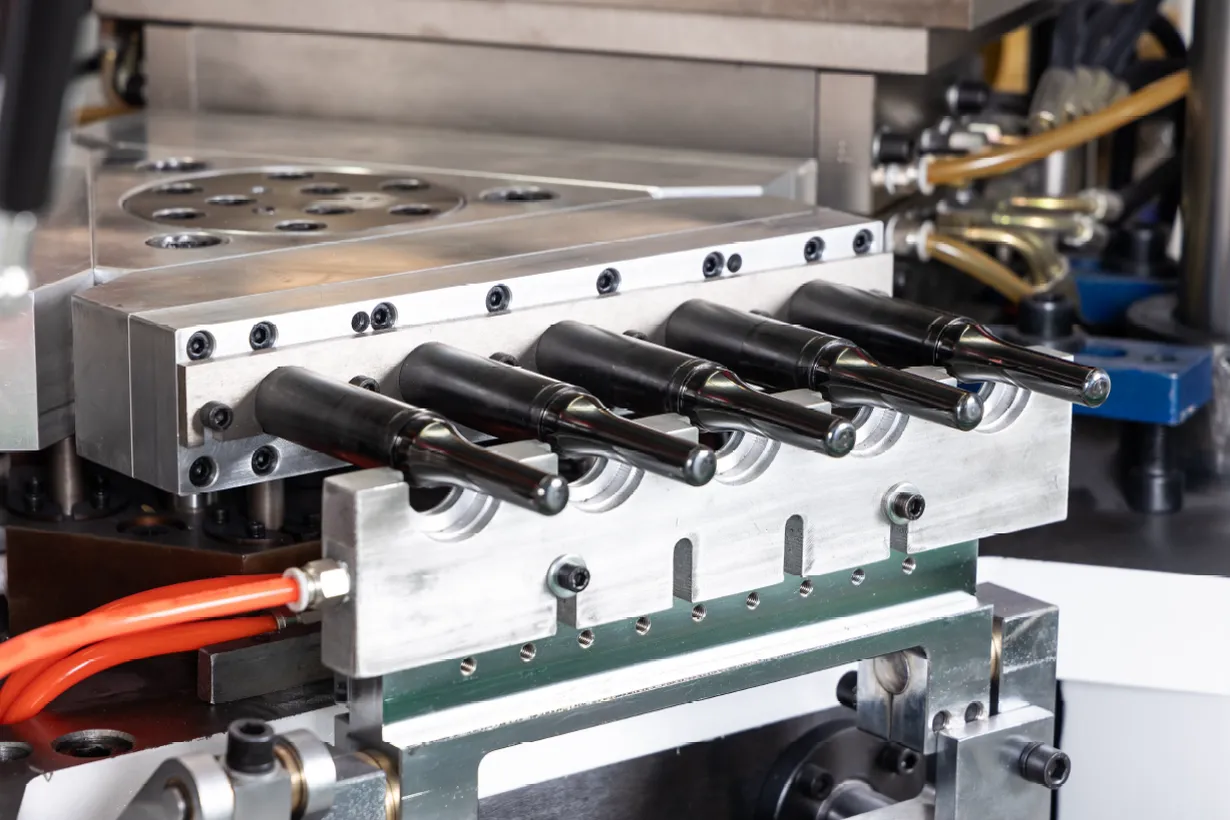
ZQ110 vs. SUMA 135iB: Our Advantages
1. Larger Mold Platen with More Flexible Layout
The ZQ110 offers a maximum mold platen of 1100 x 460mm, larger than the SUMA 135iB platen of 1000 x 500mm, providing more usable platen width for mold designs that optimize cavity count in the longer axis. This increased platen dimension enables ZQ110 customers to achieve higher cavity counts in specific bottle size ranges and gives mold designers more layout flexibility when developing new tooling for the ZQ110 IBM injection blow molding machine platform compared to SUMA 135iB mold base design constraints.
2. Servo Electric Injection vs. SUMA Hydraulic Actuation
The ZQ110 replaces the SUMA 135iB's hydraulic injection actuator with a precision servo electric cylinder, delivering significantly more repeatable injection velocity profiles and shot weight consistency. The servo system's absolute encoder feedback provides real-time positional data for every injection stroke, catching deviation before it results in product defects. Electric cylinder maintenance requirements are fundamentally lower than hydraulic actuators, removing hydraulic seals, check valves, proportional valve servicing, and oil management from the routine maintenance schedule of this full electric injection blow molding machine.
3. Lower Operating Energy Consumption
The ZQ110 operates at approximately 12 kWh per hour for 30ml bottle production, delivering roughly 30% energy savings over comparable hydraulic IBM machine configurations. The ZQ110's unique pressurized clamping structure, where the booster cylinder does not participate in the opening and closing action, reduces the energy demand of the clamping cycle specifically, and the servo-on-demand drive system eliminates the constant hydraulic pump energy consumption present in the SUMA 135iB during standby and non-active machine phases across each production cycle.
4. Zero Hydraulic Oil, Cleaner Production Environment
The ZQ110 all electric machine de moulage par injection-soufflage eliminates hydraulic oil entirely from all machine movements, removing the contamination risk that hydraulic systems represent in pharmaceutical, food-grade, and cosmetic packaging environments. Operators upgrading from the SUMA 135iB no longer require hydraulic oil change schedules, oil filter replacement, hydraulic hose inspection routines, or GMP mold-area contamination monitoring programs. The oil-free bottom-up design keeps the mold area provably clean for regulatory documentation and customer quality audits in hygiene-sensitive markets.
5. Empreinte au sol compacte
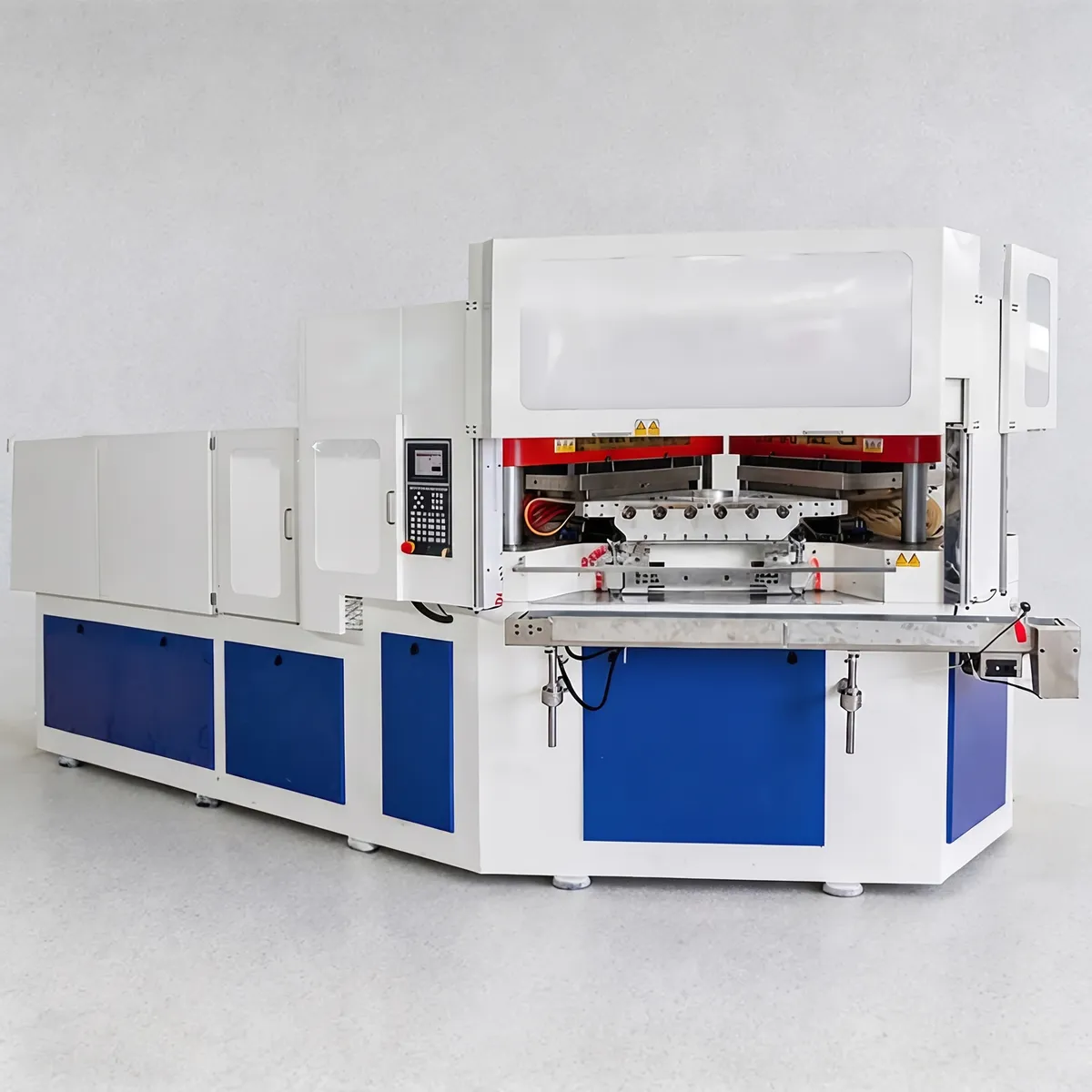
The ZQ110 has a machine footprint of 5.0 x 1.8 x 2.2 meters, significantly smaller than the SUMA 135iB's 5.0 x 2.4 x 2.7 meter envelope. This footprint reduction frees meaningful floor space in production facilities, enabling injection blow molding machine operators to fit more production capacity into existing plant infrastructure or reduce facility size requirements for new installation projects without sacrificing output capability in the 110-ton IBM class.
6. Integrated Full Automation Capability
The ZQ110 rear conveyor is engineered for direct integration with visual inspection cameras, side-leak testers, labeling machines, and automatic packaging equipment, enabling fully unattended 24-hour production with 100% automated inline quality control. This complete automation architecture supports the pharmaceutical and food industry trend toward reduced operator intervention and unattended production line operation, a capability that is not standard in the SUMA 135iB platform design and requires significant additional integration engineering to replicate on the older IBM machine architecture.
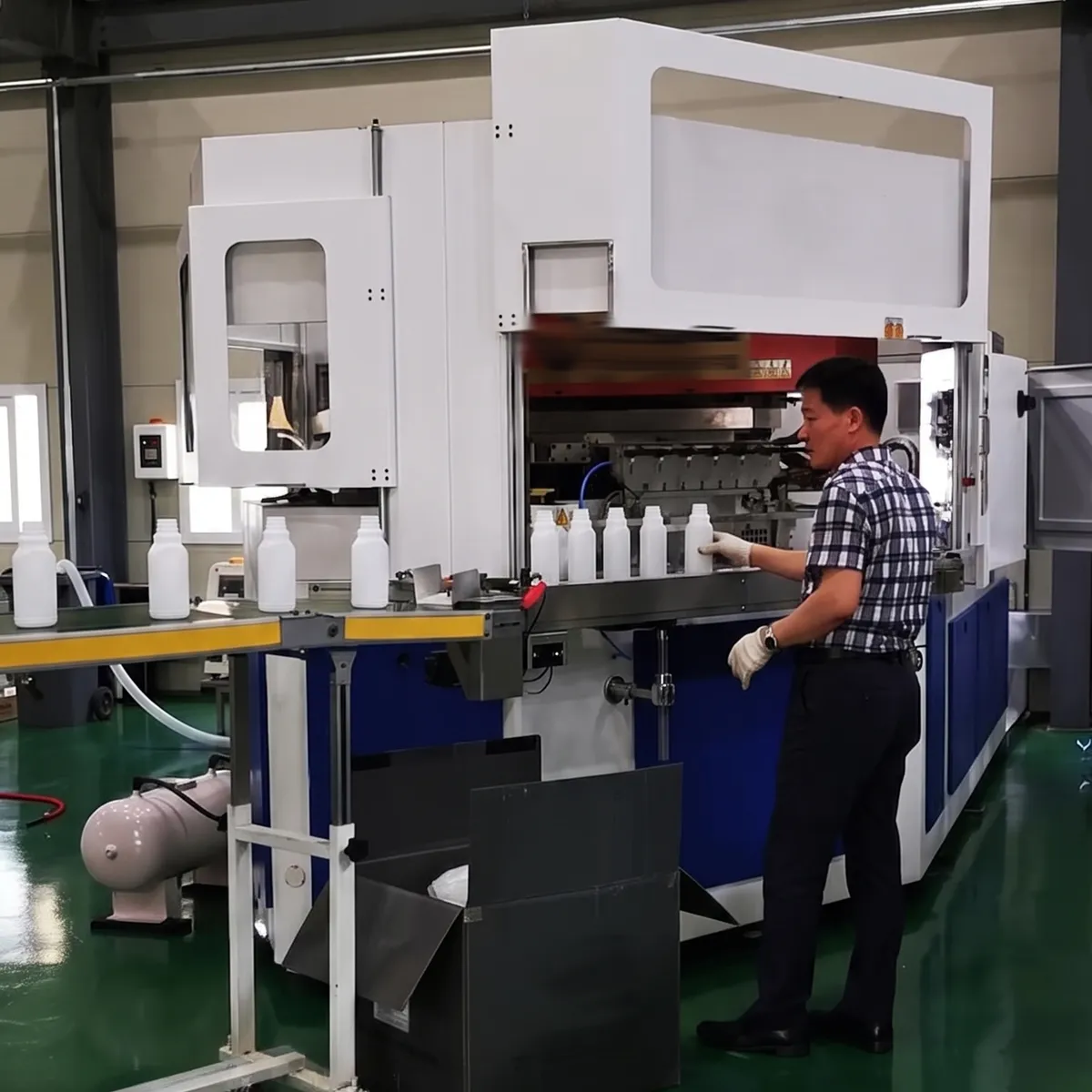
Matières premières compatibles
PEHD
High-density polyethylene is the most widely processed resin on the ZQ110 for pharmaceutical containers, household chemical bottles, food packaging, and personal care products. HDPE delivers excellent chemical resistance, rigid structural integrity, broad closure compatibility, and regulatory acceptance for pharmaceutical and food-contact applications across all major global markets served by injection blow molding machine manufacturers in the pharmaceutical and consumer packaged goods sectors.
PEBD
Low-density polyethylene is the preferred resin for flexible squeeze bottles including eyedroppers, nasal spray containers, and medical dispensers. LDPE's flexibility, low melt viscosity, and controlled compressibility make it the standard material for ophthalmic and ENT pharmaceutical packaging produced on IBM injection blow molding machines where sidewall compressibility and consistent dispensed volume are primary functional requirements.
Polypropylène (PP)
Polypropylene is widely used on the ZQ110 for autoclavable pharmaceutical bottles, hot-fill food containers, cosmetic packaging, and baby feeding bottles requiring high clarity and heat resistance. PP's high melting point, stiffness-to-weight ratio, and food-contact certification make it the preferred resin for dairy, condiment, supplement, and personal care containers produced on this plastic injection blow molding machine for pharmaceutical and food market customers globally.
PE
Polyethylene grades including MDPE are processed on the ZQ110 for agricultural chemical containers, industrial packaging, and household product bottles where intermediate flexibility and broad chemical resistance are required. PE grade selection is guided by bottle size, wall thickness target, and closure specification, and the ZQ110's adjustable processing parameters accommodate the full PE viscosity range required across pharmaceutical, household, and industrial injection blow molding machine applications.
ANIMAL DE COMPAGNIE
The ZQ110 PET injection blow molding machine processes PET and PETG for glass-clear pharmaceutical bottles, premium cosmetic packaging, and food containers requiring exceptional transparency and oxygen barrier properties. The ZQ110's precise 5+N zone barrel temperature management prevents PET crystallization, haze, and acetaldehyde generation that compromise clarity and food-contact compliance when PET is processed outside its optimal temperature window in IBM machine applications.
PS (Polystyrène)
High-transparency polystyrene, including lactic acid bacteria packaging grades and crystal PS, is processed on the ZQ110 for dairy product containers, transparent cosmetic bottles, and food sample packaging. PS injection blow molding machine applications benefit from the IBM process's uniform wall thickness that maximizes optical clarity and minimizes haze in finished bottles. The ZQ110's balanced hot runner system is particularly effective for high-transparency PS where uniform temperature distribution directly controls optical performance.
ABS
Acrylonitrile butadiene styrene is processed on this injection blow molding machine for impact-resistant industrial containers, premium cosmetic packaging with a hard tactile surface, and medical device housings requiring structural rigidity and dimensional stability. The ZQ110 5+N zone barrel heating system controls ABS processing temperatures precisely to prevent thermal degradation and surface discoloration that reduce cosmetic and industrial packaging quality during extended production runs on this injection blowing molding machine.
PVC
Polyvinyl chloride is processed on the ZQ110 for transparent pharmaceutical bottles, chemical-resistant packaging, and industrial containers where PVC provides glass-like clarity and excellent barrier properties. PVC is thermally sensitive and requires precise processing temperature control. The ZQ110's servo-driven barrel heating system with independent zone management maintains precise PVC processing temperatures within the required range to prevent thermal degradation and ensure consistent bottle quality in this injection blow moulding machine across extended pharmaceutical packaging production runs.
 |
 |
Common Fault and Resolution
Uneven Wall Thickness Across Cavities
Inconsistent bottle wall thickness across cavities or between production batches is one of the most commercially impactful quality faults in high-cavity pharmaceutical and cosmetic injection blow molding machine production. Primary causes include temperature imbalance between hot runner drops causing differential fill rates, mandrel cooling channel blockage from water scale reducing preform temperature uniformity, mandrel misalignment in one or more cavity positions causing off-center preform walls, or blow pressure variation across the cavity set during the blow phase.
Diagnosis: Measure actual bottle weight and wall thickness from each individual cavity across five consecutive cycles. Identify which cavities are producing out-of-specification product and at what point in the wall profile. Weight deviation greater than 2% per cavity typically indicates hot runner temperature imbalance.
Résolution: Balance hot runner zone temperatures starting from the lightest cavity. Flush cooling channels with pressurized water to remove scale. Check mandrel alignment at each cavity position. Verify blow pressure at each cavity and adjust the pressure regulator and air supply piping for uniform delivery on this injection blow molding machine.
Cycle Time Instability and Machine Alarms
Unstable cycle times, intermittent machine alarms, or unexpected production stoppages on this injection blow molding machine are commonly caused by cooling water temperature or pressure fluctuation outside the 0.3 to 0.4 MPa and 4 m3/h specification, compressed air supply pressure falling below the 0.7 MPa minimum required for consistent blow pressure, servo drive system faults from overheating or electrical cabinet temperature exceedance, or sensor calibration drift that causes false alarm conditions without a real process fault.
Diagnosis: Review the HMI alarm log to identify the specific alarm code and frequency pattern. Check the utility supply monitoring data for cooling water temperature, pressure, and flow deviations that correlate in time with the cycle instability events. Inspect the electrical cabinet cooling fans and ambient temperature. Verify compressed air line pressure at the machine connection point during the blow phase.
Résolution: Restore utility supplies to specification before adjusting machine parameters. Clean or replace electrical cabinet cooling filters. Recalibrate sensors identified as the alarm source using the HMI calibration function. Contact Ever-Power's 24-hour service hotline with the alarm code list for remote diagnosis support specific to this injection blow molding machine model.
Bottle Appearance Defects
Visible surface defects including silver streaks, black specks, hazing, sink marks, and surface pitting are appearance faults that cause batch rejection in pharmaceutical, cosmetic, and food packaging production. Silver streaks typically indicate resin moisture; black specks indicate barrel or hot runner carbonization deposits; hazing in transparent resins indicates temperature management errors or contamination; sink marks indicate insufficient hold time or pressure at the injection station; pitting indicates mold surface damage or contamination on this injection blow molding machine.
Resolution for moisture defects: Increase resin drying temperature and time. Verify dew point of drying air. Inspect hopper dryer for airflow blockage. For PET and ABS specifically, insufficient drying is the single most common cause of silver streak appearance defects in IBM production.
Resolution for contamination defects: Perform a full barrel and hot runner purge cycle using a food-grade purging compound. Visually inspect all mold cavities for surface damage or resin deposits using a flashlight and magnifier. For recurring black specks that return after purging, the barrel or hot runner may require mechanical cleaning or component replacement. Implement a scheduled inspection interval based on running hours rather than calendar time for pharmaceutical-grade injection blow molding machine mold maintenance.
Semi Automatic Molding Machine vs Fully Automatic Molding Machine
Semi Automatic Molding Machine
A semi automatic molding machine combines manual and automated processes. Operators load materials and initiate cycles, while the machine handles mold setup and monitoring. Quick-change mold systems allow fast transitions between products. Automated setup processes reduce errors and save time. Real-time data tracking helps monitor key metrics and maintain consistency. Semi-automatic chocolate molding machines use similar principles, offering flexibility for small batches and specialty products. These machines suit businesses that value easy maintenance and lower investment.
Fully Automatic Molding Machine
Fully automatic molding machine operates with minimal human intervention. High-speed injection systems fill molds rapidly, ensuring uniformity and quality. Precision control systems adjust parameters for optimal results. Recent advancements include Internet of Things integration, advanced robotics, and artificial intelligence. These technologies enable real-time monitoring, remote control, and improved decision-making. Fully automatic chocolate molding machines deliver consistent output and high efficiency, making them ideal for large-scale production.
Machine IBM
IBM machine stands for Injection Blow Molding machine. This technology uses energy-efficient components and optimized processing techniques. Recycling capabilities help reduce material waste. IBM machine produces hollow plastic items, such as bottles and containers. Bottle injection molding machines, including ISBM (Injection Stretch Blow Moulding) machines, share similar applications. ISBM machine stretches and blows plastic to create strong, lightweight bottles. Both IBM and ISBM machines offer high output and support sustainable manufacturing practices.
Comparaison
Besoins en main-d'œuvre
Labor requirements differ significantly between machine types. In medium-sized factories, a semi automatic molding machine usually needs one or two operators per machine. These operators handle manual tasks such as preform loading, cycle activation, and bottle removal. The skill level required ranges from basic to moderate, and training takes only a few days to a week. Operators often experience higher fatigue due to repetitive manual work.
A fully automatic molding machine requires fewer operators. One person can oversee several machines, focusing on system monitoring and troubleshooting. Operators need technical skills and must understand human-machine interfaces. Training takes longer, sometimes several weeks. Fatigue is lower because most tasks are automated. Labor cost per bottle is much lower for fully automatic machines.
| Aspect | Machine semi-automatique à 4 cavités | Machine entièrement automatique à 4 cavités |
|---|---|---|
| Opérateurs par machine (direct) | 1 – 2 | 0,5 – 1 |
| Tâches principales | Manipulation manuelle, activation du cycle, retrait de la bouteille | Surveillance, réglage, dépannage |
| Niveau de compétence requis | De base à modéré | Modéré à élevé |
| Temps d'entraînement | De quelques jours à une semaine | Semaines ; possibilité de poursuite |
| Facteur de fatigue | Haut | Faible |
| Coût de main-d'œuvre par bouteille | Plus haut | Nettement inférieur |
Vitesse de production
Production speed plays a crucial role in determining the right machine for a business. Fully automatic molding machine delivers high efficiency and can produce a large number of bottles per hour. Continuous automation ensures rapid cycles and minimal downtime. The machine suits large-scale operations that require high output.
Semi-automatic molding machine operates at moderate speeds. The machine allows flexibility for smaller production runs and quick changeovers. Operators can adjust settings for different products, but manual intervention slows the process. These machines work well for small and medium businesses that do not need maximum output.
Qualité du produit
Quality and consistency matter in molding operations. Fully automatic molding machine uses computer control to maintain stable performance. Infrared lamps provide uniform heating, and pneumatic cylinders deliver strong clamping force. These features result in consistent quality, smooth barrel mouths, and low leakage risk. Large factories benefit from reliable output and fewer defects.
Semi-automatic molding machine relies on manual operation. Heating and clamping may vary, which can affect product quality. Operators must pay close attention to avoid errors. Quality may fluctuate, especially during long shifts or with inexperienced staff. However, semi-automatic molding machine allows for quick adjustments, which helps when producing specialty items.
| Fonctionnalité | Fully Automatic Molding Machine | Semi-Automatic Molding Machine |
|---|---|---|
| Performance | Stable, contrôlé par ordinateur | Manuel, variable |
| Chauffage | Uniforme, infrarouge | Manuel, incohérent |
| Force de serrage | Solide, pneumatique | Variable, manuel |
| Qualité du produit | Haute performance, fonctionnement fluide, faible fuite | Variable, risque de défauts |
| Capacité de production | Haut | Inférieur, flexible |
Flexibilité
Flexibility is important for manufacturers producing different product types. Semi-automatic molding machine balances manual labor and automation. Operators can quickly adjust settings and change molds with minimal downtime. This flexibility benefits businesses that need to switch between products, such as food manufacturers handling various packaging designs.
Fully automatic molding machine excel at high-volume production but require more rigid setups. Changing molds or adjusting parameters takes longer and may interrupt production. These machines work best for factories focusing on a single product type or large batches.
Besoins en espace
Space requirements vary between machine types. Semi-automatic molding machine has a smaller footprint and need less auxiliary equipment. The machine fits easily into small or medium production facilities.
Fully automatic molding machine requires more space. The main machine and auxiliary equipment occupy a larger area. Large factories must allocate significant floor space for installation and operation.
| Type de machine | Empreinte au sol de la machine principale | Zone d'équipement auxiliaire | Superficie totale estimée |
|---|---|---|---|
| Semi-automatique | ~4-6 m² | ~10-15 m² | ~25-40 m² |
| Entièrement automatique | ~25-40 m² | ~40-60 m² | ~80-120 m² |
Choisir pour votre entreprise
Small and Medium Businesses
Les petites et moyennes entreprises sont souvent confrontées à des défis spécifiques lors du choix d'une machine de moulage. Elles doivent concilier leurs besoins de production, la main-d'œuvre disponible et leurs contraintes budgétaires. Une machine semi-automatique représente une solution économique pour les entreprises aux ressources limitées. Une formation de base suffit aux opérateurs pour maîtriser ces machines, ce qui contribue à réduire l'investissement initial et les frais d'exploitation.
Le tableau suivant résume les recommandations d'experts en matière de sélection de machines en fonction de la taille de l'entreprise et des besoins de production :
| Taille de l'entreprise | Type de machine recommandé | Plage de débit (BPH) |
|---|---|---|
| Petites entreprises (startups) | Machines de soufflage de bouteilles en plastique manuelles ou semi-automatiques | 500 à 1 500 bouteilles/heure |
| Moyenne échelle (Marques en croissance) | Machines à cavité unique entièrement automatiques | 2 000 à 6 000 bouteilles/heure |
| Production à grande échelle (production de masse) | Systèmes multicavités entièrement automatiques | 8 000 à plus de 20 000 bouteilles par heure |
A semi-automatic molding machine offers flexible production, allowing quick changes between product types. This flexibility is valuable for businesses that produce seasonal or specialty items. Labor requirements remain manageable, and the business can scale up as demand grows. For small-scale operations, a bottle blow molding machine with manual or semi-automatic features meets most needs. These machines keep investment low and support gradual growth.
| Type de machine | Caractéristiques clés | Adapté aux PME |
|---|---|---|
| Semi-automatique | Rentable, flexible, nécessite une intervention manuelle | Ressources limitées et exigences de production |
| Entièrement automatique | Réduit les coûts de main-d'œuvre, augmente l'efficacité de la production | Besoins de production à grand volume |
Production à grande échelle
Large-scale production environments demand high output, efficiency, and consistency. Fully automatic molding machine delivers these benefits by automating most processes. The machine requires a higher initial investment but provide lower long-term labor costs and greater throughput. Companies that produce thousands of bottles per hour benefit from multi-cavity systems, which maximize productivity.
La planification budgétaire joue un rôle crucial dans le choix des machines pour les grandes opérations. Plusieurs facteurs influencent l'investissement total :
| Facteur | Impact sur les coûts | Explication |
|---|---|---|
| Complexité des pièces | Augmente le coût des moules, potentiellement le temps de cycle. | Plus de détails (contre-dépouilles, filetages) = moule complexe, éjection/refroidissement difficile |
| Taille du moule | Coût des matériaux plus élevé et temps d'usinage plus longs | Les moules plus grands nécessitent davantage de matières premières et des temps de traitement plus longs. |
| Choix des matériaux | Influe sur le coût des matériaux par pièce et le choix du matériau du moule | Les résines techniques coûtent plus cher ; les résines abrasives/corrosives nécessitent un acier de meilleure qualité. |
| cavitation | Coût du moule plus élevé, coût par pièce/temps machine plus faible. | Un plus grand nombre de pièces par cycle machine augmente le débit. |
| Finition de surface | Augmente le coût du moule (polissage), peut nécessiter un acier de meilleure qualité. | Les finitions de haute qualité nécessitent une main-d'œuvre importante et des aciers spécifiques. |
| Tolérances | Augmente le coût des moules, et potentiellement les coûts de contrôle qualité. | Des tolérances plus serrées nécessitent un usinage de précision et un contrôle plus rigoureux. |
| Emplacement | Cela influe sur le coût des moules, les tarifs de main-d'œuvre et la logistique. | Différences régionales importantes en matière de main-d'œuvre, de frais généraux, d'acier et de coûts d'expédition |
Pourquoi choisir les machines de moulage par injection-soufflage d'Ever-Power ?
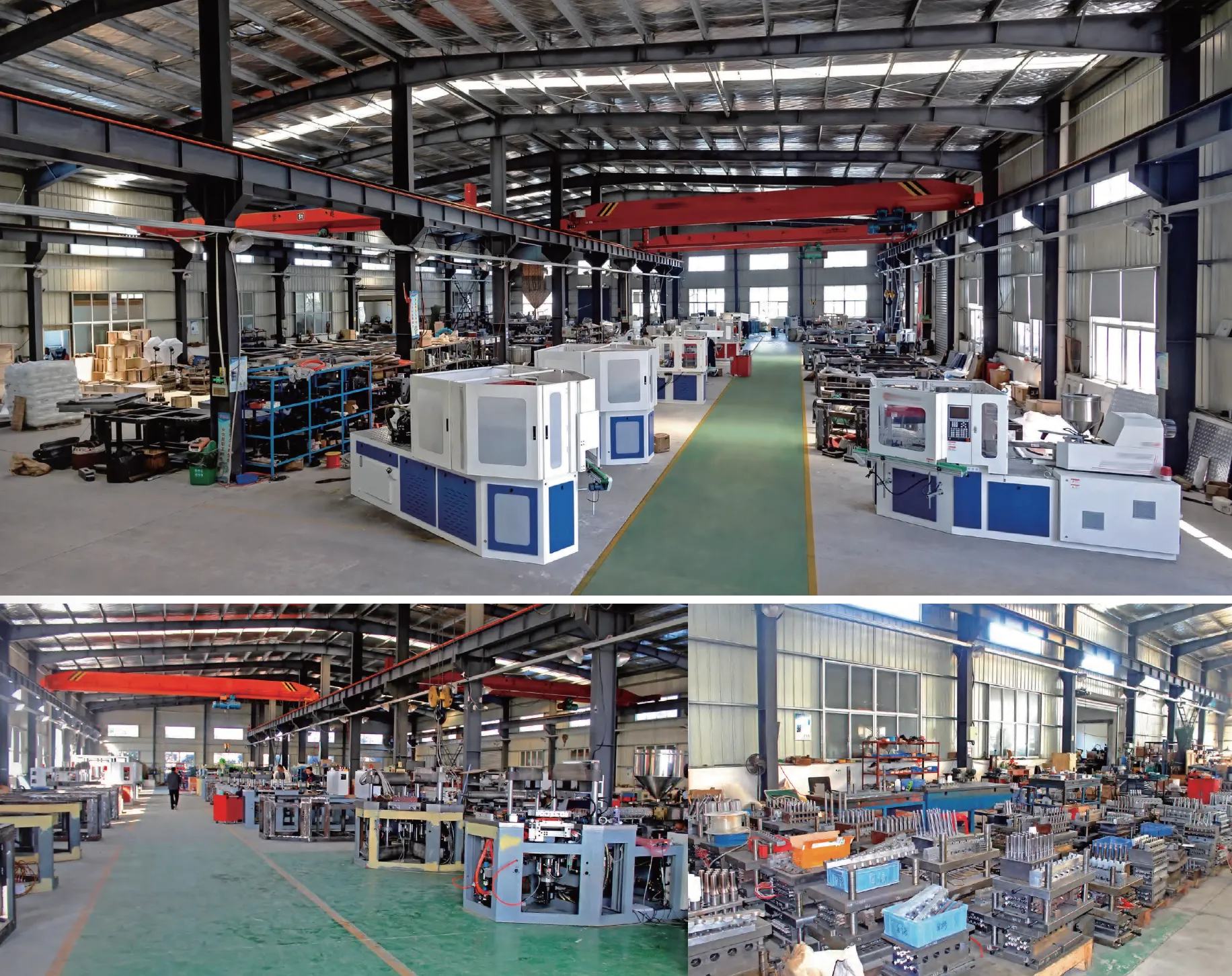
Mexico Ever-Power ISBM Machinery Co., Ltd. specializes in the research, development, manufacture, and global trade of automatic one-step injection-blowing blow molding machines and precision injection-blowing molds. Our product range covers injection blow molding machines, extrusion blow molding machines, injection stretch blow molding machines, and the full range of supporting auxiliary equipment for IBM machine production lines. Operating from a well-connected industrial base with efficient logistics infrastructure, Ever-Power serves customers across six continents through a structured global agent and service network in Korea, India, Turkey, Russia, South Africa, Brazil, the United States, Mexico, and additional regional markets.
The Ever-Power R&D and engineering team brings together specialists with extensive hands-on experience in injection-blowing machine design, mold engineering, servo drive integration, resin processing optimization, and production line automation. This combined expertise enables us to provide comprehensive pre-sale technical consultation, precise specification support for complex bottle geometry and closure requirements, custom machine configuration for unique application needs, and rigorous on-site commissioning support that does not end until the customer's production line reaches stable, certified output. Every ZQ110 delivered by Ever-Power is configured specifically for the customer's bottle design, resin grade, cavity count, and automation integration requirements, with factory acceptance testing conducted before shipment to verify conformance to the agreed specification.
Ever-Power injection blow molding machines process HDPE, LDPE, PP, PS, high-transparency PS, ABS, EVA, PVC, PETG, environmental corn-based materials, and other packaging resins. Our machines produce plastic containers from 1ml to 1000ml for pharmaceutical packaging, food packaging, healthcare packaging, cosmetic packaging, personal care packaging, chemical packaging, and industrial container applications. We deliver and validate machines to GMP, food contact, and international quality standards required by pharmaceutical and food-grade production environments, making Ever-Power a preferred injection blow molding machine supplier for regulated market packaging producers in pharmaceutical contract manufacturing and food brand packaging supply chains worldwide.
Whether you are replacing aging SUMA 135iB equipment, evaluating injection blow molding machine suppliers for a new production line, or comparing customized injection blow molding machine for sale options across multiple vendors, Mexico Ever-Power ISBM Machinery Co., Ltd. is the long-term manufacturing partner built to support your production growth and quality objectives.
Foire aux questions
Q: Is the ZQ110 a confirmed functional replacement for the SUMA 135iB injection blow molding machine?
A: Yes. The ZQ110 is specifically designed as a functional upgrade replacement for the SUMA 135iB in the 110-ton clamping force class. The 65mm screw diameter, 540g injection weight, 1100 x 460mm mold platen, and 10ml to 1000ml bottle volume range align with the SUMA 135iB production specification. Ever-Power's engineering team reviews SUMA 135iB mold drawings to evaluate compatibility with the ZQ110 platform before tooling decisions are finalized.
Q: What is the injection blow molding machine price for the ZQ110 SUMA 135iB replacement?
A: The price for injection blow molding machine configurations depends on cavity count, resin requirements, mold steel specification, downstream automation integration, and delivery destination. Contact Mexico Ever-Power ISBM Machinery Co., Ltd. with your bottle drawings, production volume targets, and resin specifications to receive a detailed formal injection blow molding machine price quotation tailored to your project requirements.
Q: Can my existing SUMA 135iB molds be transferred to the ZQ110?
A: SUMA 135iB mold transfer feasibility depends on platen dimensions, mandrel pitch, mold thickness, and cooling connection positions. The ZQ110 mold platen (1100 x 460mm) differs from the SUMA 135iB platen (1000 x 500mm), meaning not all SUMA molds can transfer directly without adaptation. Ever-Power performs a technical mold compatibility review using customer drawings before project commitment, identifying which molds can transfer, which require adapter plates, and which may require new tooling. This review protects the customer's mold asset investment in the upgrade decision.
Q: What is the daily output of the ZQ110 full electric injection blow molding machine?
A: The ZQ110 delivers 8.2-second cycles for 30ml bottles, producing a standard daily output of 105,000 bottles and a maximum of 115,000 bottles per day. Actual output per shift varies by bottle volume and cavity count, from up to 20 cavities for 10ml containers to 3 to 4 cavities for 1000ml bottles. Ever-Power engineers calculate expected daily output for each specific bottle and cavity configuration during the quotation process.
Q: How does the ZQ110 reduce energy consumption versus the SUMA 135iB?
A: The ZQ110 all electric injection blow molding machine uses servo motors for all machine movements, operating only during active machine actions with no standby hydraulic pump losses. The unique pressurized clamping structure eliminates the booster cylinder from the opening and closing cycle, reducing clamping energy consumption. Actual energy consumption for 30ml bottle production is approximately 12 kWh per hour, delivering roughly 30% savings versus comparable hydraulic IBM machine energy consumption figures in the same production class as the SUMA 135iB.
Q : Quelles résines la machine de moulage par injection-soufflage IBM ZQ110 traite-t-elle ?
A: The ZQ110 processes HDPE, LDPE, PP, PE, PET, PETG, PS, high-transparency PS, ABS, PVC, EVA, environmental corn-based materials, and other packaging resins. The 5+N barrel zone heating system accommodates the processing windows of all major packaging resins. Resin-specific parameter sets can be stored in the HMI for quick product changeover between resin grades without manual recalibration from scratch on each run.
Q: Why is the ZQ110 footprint smaller than the SUMA 135iB?
A: The ZQ110 machine dimensions are 5.0 x 1.8 x 2.2 meters, compared to the SUMA 135iB at 5.0 x 2.4 x 2.7 meters. The ZQ110's full electric servo drive architecture eliminates the hydraulic power unit that occupies significant space alongside the SUMA 135iB machine body. The bottom-up design principle also contributes to a more compact machine width. This reduced footprint is particularly valuable in production facilities where floor space is constrained and IBM machine density per square meter directly influences plant output capacity.
Q: Can the ZQ110 injection blow molding machine be connected to downstream automation equipment?
A: Yes. The ZQ110 rear conveyor is engineered for direct integration with visual inspection cameras, side-leak testers, labeling machines, and automatic packaging equipment. Signal interfaces support automated rejection of bottles detected with foreign particle contamination, insufficient neck fill, and uneven base formation. This downstream automation architecture supports fully unattended 24-hour production with 100% inline quality verification, meeting the operational requirements of modern pharmaceutical and food packaging production lines.
Q: What is the difference between a led bulb cover injection blow molding machine and a standard IBM machine?
A: A led bulb cover injection blow molding machine refers to an IBM machine configured with specific mold tooling and resin parameters to produce the transparent or frosted PC or PMMA light diffuser covers used in LED lighting fixtures. The ZQ110 base machine platform can be configured for LED bulb cover production with appropriate mold design, though this application typically uses PC or PMMA resins with specific processing requirements that differ from standard packaging resin profiles. Contact Ever-Power's engineering team to discuss LED bulb cover application requirements for the ZQ110 platform.
Q: Does Ever-Power supply customized injection blow molding machines for sale with non-standard specifications?
A: Yes. Every ZQ110 supplied by Ever-Power is configured to the customer's specific bottle drawing, resin type, cavity layout, and downstream automation requirements. Custom options include mold material selection, core rod geometry, conveyor length, inspection system integration, and special resin processing parameters. Contact Mexico Ever-Power ISBM Machinery Co., Ltd. with complete project specifications to receive a customized injection blow molding machine for sale quotation with all relevant project configuration details.
Avis clients
Oleg Nikitin, Chemical Bottle Packaging, Russia
"I was specifically looking for a scrap edge injection blow molding machine replacement that could run our existing SUMA 135iB mold tooling, as we had invested heavily in molds and didn't want to scrap them. Ever-Power evaluated our three molds and confirmed two were directly transferable and one needed a minor adapter plate, which they supplied at no extra cost. We've been running all three on the ZQ110 for five months without issue. The energy saving alone has made the upgrade financially compelling."
Nomvula Dube, Infant Products Packaging, South Africa
"We produce PP baby feeding bottles for the Southern African market and have strict food contact compliance requirements. The ZQ110's oil-free production area was the critical factor in our supplier decision. We needed documented evidence of a clean mold environment for our retail customers' audits. The machine delivers exactly what was promised: zero oil contamination, consistent bottle dimensions, and reliable throughput. We've now been running 14-cavity 60ml molds for seven months with production averaging around 100,000 pieces daily."
Luciana Barbosa, Personal Care Packaging, Brazil
"We bought the ZQ110 for the production of 150ml PP bottles for personal care products. The machine was installed in four days, faster than expected. Since the start of production, the quality of the pump caps has been perfect, with no rejections due to sealing problems. The control interface is intuitive, and our team learned to operate the machine quickly without difficulties. Energy consumption is noticeably lower than on the previous machine. We recommend the product without reservation."
Robert Harrington, Nutraceutical Packaging, United States
"Our facility runs 24 hours across four machines. We added the ZQ110 as a SUMA 135iB replacement for our 100ml HDPE nutritional supplement line. In nine months of continuous three-shift operation, we have had no unplanned downtime attributable to the machine. The maintenance requirements are genuinely lower than the SUMA platform. No oil changes, no hydraulic filter replacements, no oil-related cleaning of the mold area. Our maintenance department calculated a 40% reduction in planned maintenance hours per year compared to the machine it replaced."
Diego Alvarez, Pharmaceutical Packaging, Mexico
« Nous produisons des flacons de 10 ml en PEBD pour gouttes nasales avec la ZQ110 depuis huit mois, et les résultats sont excellents. La précision du col est exactement celle requise pour les bouchons doseurs de précision que nous utilisons. Auparavant, nous avions des problèmes de variation de col avec une autre machine, et l'équipe d'Ever-Power Mexique en a identifié la cause et ajusté les paramètres lors de la mise en service. Depuis, la production est stable et sans rebuts. Le service après-vente est rapide et compétent. »
Lee Ji-young, Fabrication de cosmétiques, Corée
« Nous produisons des flacons cosmétiques en ABS à finition brillante pour des marques de soins de la peau haut de gamme. Trouver un fabricant de machines de moulage par injection-soufflage capable de maîtriser la transformation de l'ABS et de fournir la qualité de surface exigée par nos clients n'a pas été chose facile. L'équipe d'Ever-Power a démontré une solide expertise des exigences de transformation de l'ABS lors des discussions préalables à la vente, et la ZQ110 a permis d'obtenir précisément la finition de surface spécifiée par nos clients. Douze mois après son utilisation, l'état de surface du moule est excellent, sans rayures ni dégradation du polissage. Nous sommes très satisfaits de cet investissement. »
Choi Hyun-soo, Emballage de contenants pharmaceutiques, Corée
« Nous avons remplacé une SUMA 135iB, en service depuis plus de douze ans, par la ZQ110 et l'amélioration est significative sur tous les indicateurs que nous suivons. Le temps de cycle est passé d'environ 10 secondes à 8,2 secondes pour nos flacons de capsules pharmaceutiques en PEHD de 30 ml. La régularité des dimensions du col est nettement meilleure et notre ligne de production de bouchons CRC n'a enregistré aucun rejet dû au couple en quatre mois. L'encombrement de la machine est également sensiblement plus faible que celui de l'ancienne SUMA, ce qui a libéré de l'espace pour une étiqueteuse que nous devions ajouter. »
Suresh Mehta, Emballage ophtalmique, Inde
Notre entreprise produit des flacons de gouttes oculaires et des flacons de spray nasal en PEBD pour des distributeurs pharmaceutiques en Inde et en Asie du Sud-Est. Nous avions évalué plusieurs fournisseurs de machines de moulage par injection-soufflage IBM avant de choisir Ever-Power. La documentation technique fournie était complète et l'ingénieur venu installer la machine maîtrisait parfaitement son fonctionnement. Les paramètres de transformation du PEBD ont été correctement réglés dès le premier jour. Depuis la mise en service, nous n'avons enregistré aucun rejet de produit lié à l'ajustement du col ou de l'embout compte-gouttes. Le service après-vente, par téléphone et visioconférence, s'est montré très réactif.
Emine Demir, Emballage de produits laitiers, Turquie
« La ZQ110 produit pour nous des bouteilles laitières en PS haute transparence depuis environ six mois. Notre machine précédente présentait des variations d'épaisseur de paroi chroniques sur le format 250 ml, ce qui entraînait des rebuts sur la ligne d'étiquetage : les irrégularités de la paroi provoquaient des étiquettes froissées. Depuis que nous sommes passés à la machine de moulage par injection-soufflage ZQ110, ce problème a été entièrement résolu. Le système de canaux chauds équilibrés semble faire une réelle différence pour le PS. La machine a été livrée avec deux semaines d'avance et l'équipe de mise en service était professionnelle et bien préparée. »
Informations Complémentaires
| Édité par | Yjx |
|---|
Produits associés
-
Machine de moulage par injection-soufflage ZQ40, pièce de rechange pour le modèle SUMA 40iB
-
Machine de moulage par injection-soufflage ZQ60, remplacement pour le modèle Bloma IBM50
-
Machine de moulage par injection-soufflage ZQ60, remplacement pour le modèle SUMA 65iB
-
Machine de moulage par injection-soufflage ZQ60 (européenne)