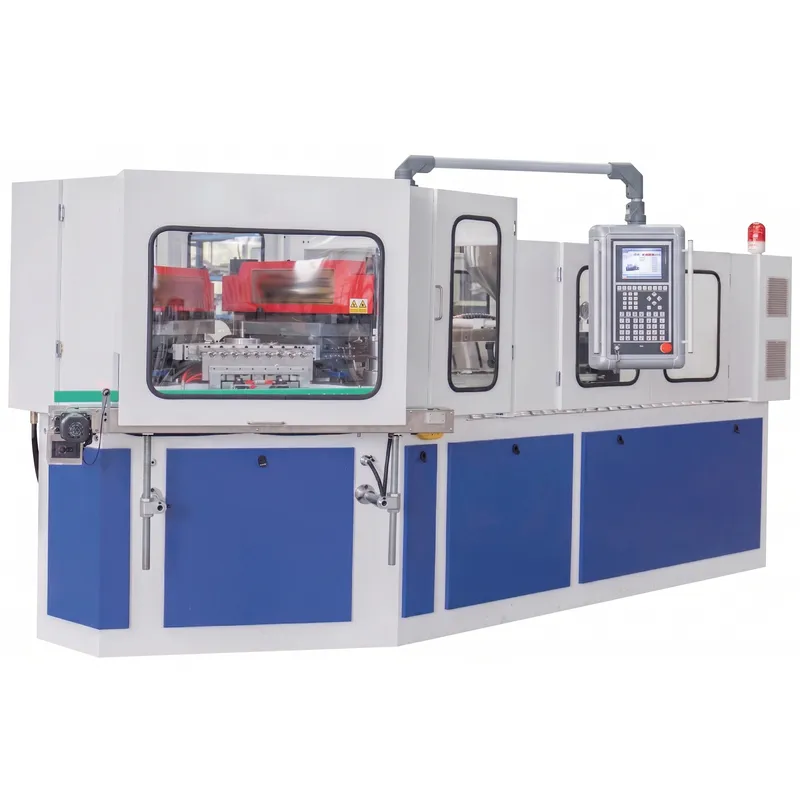
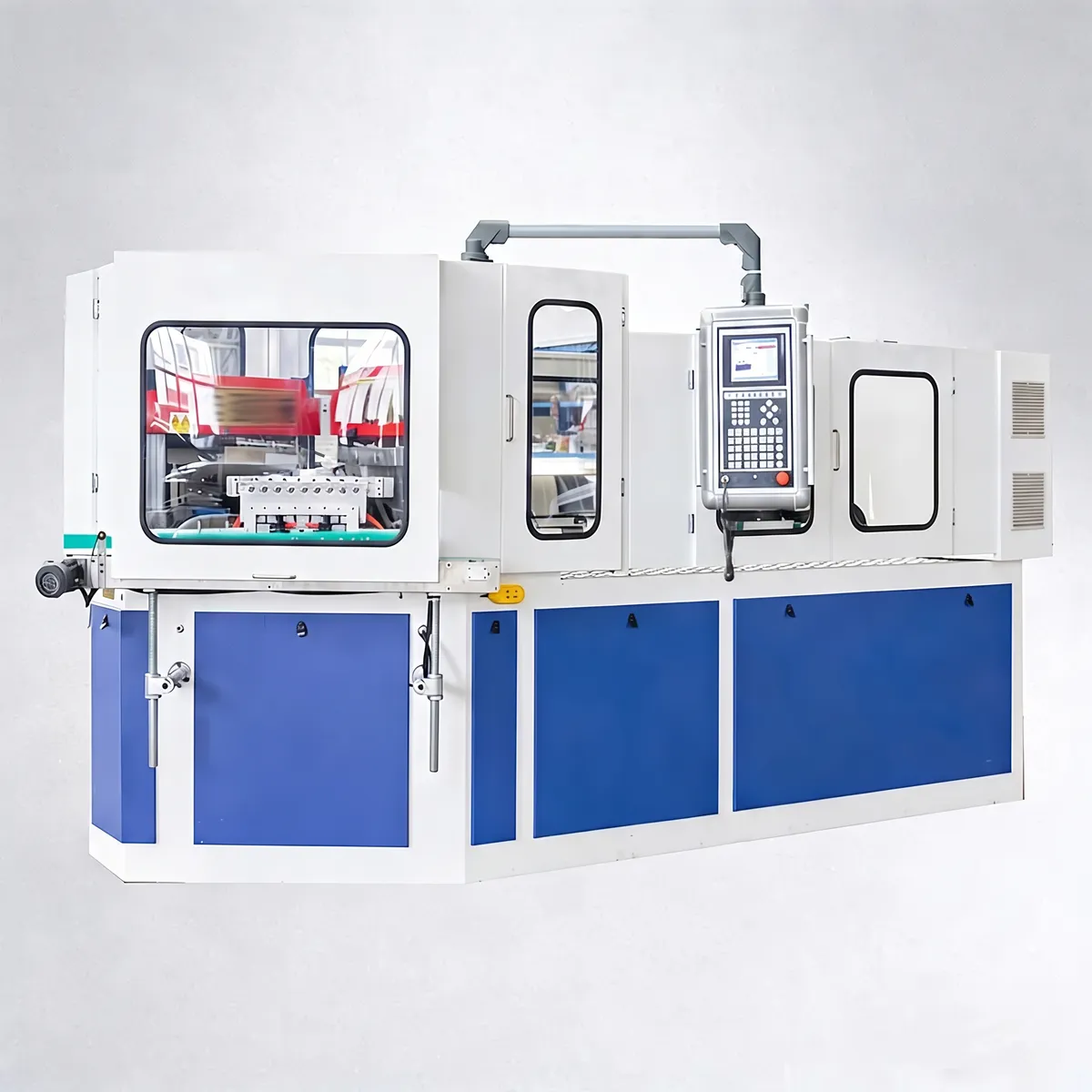
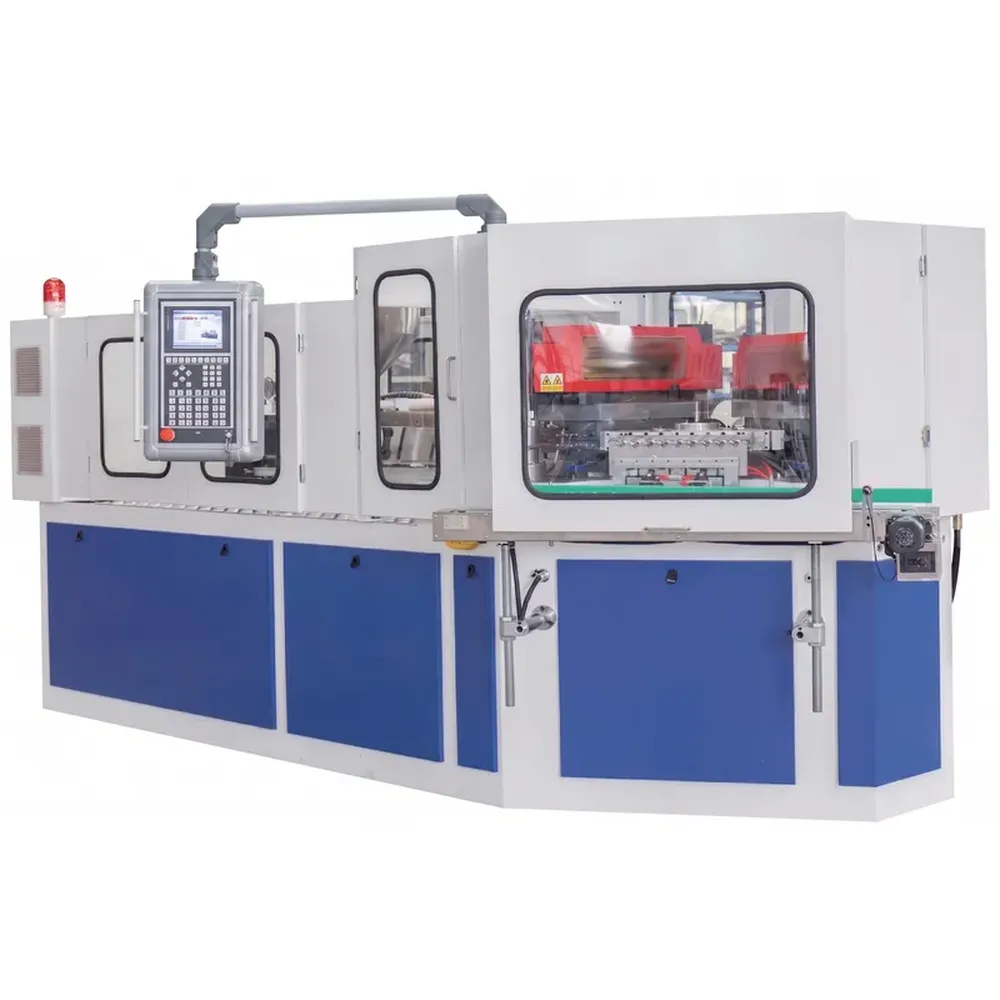
Machine de moulage par injection-soufflage ZQ60, remplacement pour le modèle SUMA 65iB
La machine de moulage par injection-soufflage ZQ60 est une machine haute performance entièrement servo-motorisée, conçue pour remplacer directement le modèle SUMA 65iB. Tous les mouvements de la machine sont servo-actionnés, éliminant ainsi toute utilisation d'huile hydraulique et les risques de contamination associés. Comparée aux machines IBM hydrauliques conventionnelles, la ZQ60 offre des temps de cycle 20% plus rapides : pour les flacons de 30 ml, chaque cycle s'effectue en seulement 8,2 secondes, permettant une production journalière standard de 105 000 flacons et une capacité de pointe de 115 000 flacons par 24 heures. La consommation d'énergie est réduite de 30%, avec une consommation de seulement 12 kWh par heure pour la production de flacons de 30 ml.
La machine de moulage par injection-soufflage ZQ60 est une machine haute performance entièrement servo-motorisée, conçue pour remplacer directement le modèle SUMA 65iB. Tous les mouvements de la machine sont servo-actionnés, éliminant ainsi toute utilisation d'huile hydraulique et les risques de contamination associés. Comparée aux machines hydrauliques IBM classiques, la ZQ60 offre des temps de cycle 20% plus rapides : pour les flacons de 30 ml, chaque cycle s'effectue en seulement 8,2 secondes, atteignant une production journalière standard de 105 000 flacons et une capacité de pointe de 115 000 flacons par 24 heures. La consommation d'énergie est réduite de 30%, avec seulement 12 kWh par heure pour la production de flacons de 30 ml. Équipée d'encodeurs absolus dans l'ensemble de son système servo-motorisé, la ZQ60 garantit une répétabilité et une précision dimensionnelle exceptionnelles, tout en fonctionnant à des niveaux sonores nettement inférieurs à ceux des anciennes machines hydrauliques IBM disponibles sur le marché. Figurant parmi les fabricants de machines de moulage par injection-soufflage les plus fiables, Ever-Power accompagne chaque ZQ60 d'une assistance technique complète et d'un service après-vente rapide.
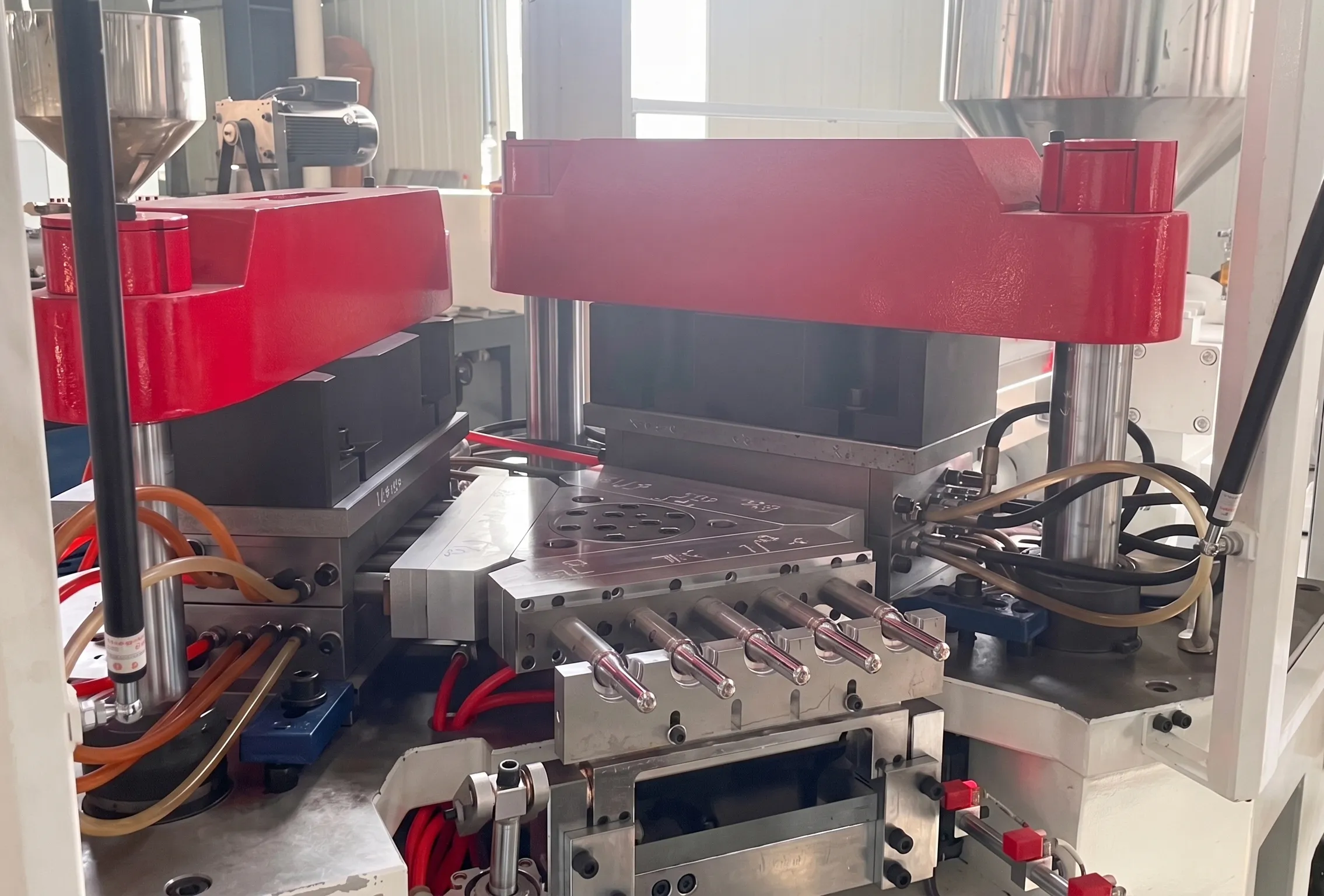
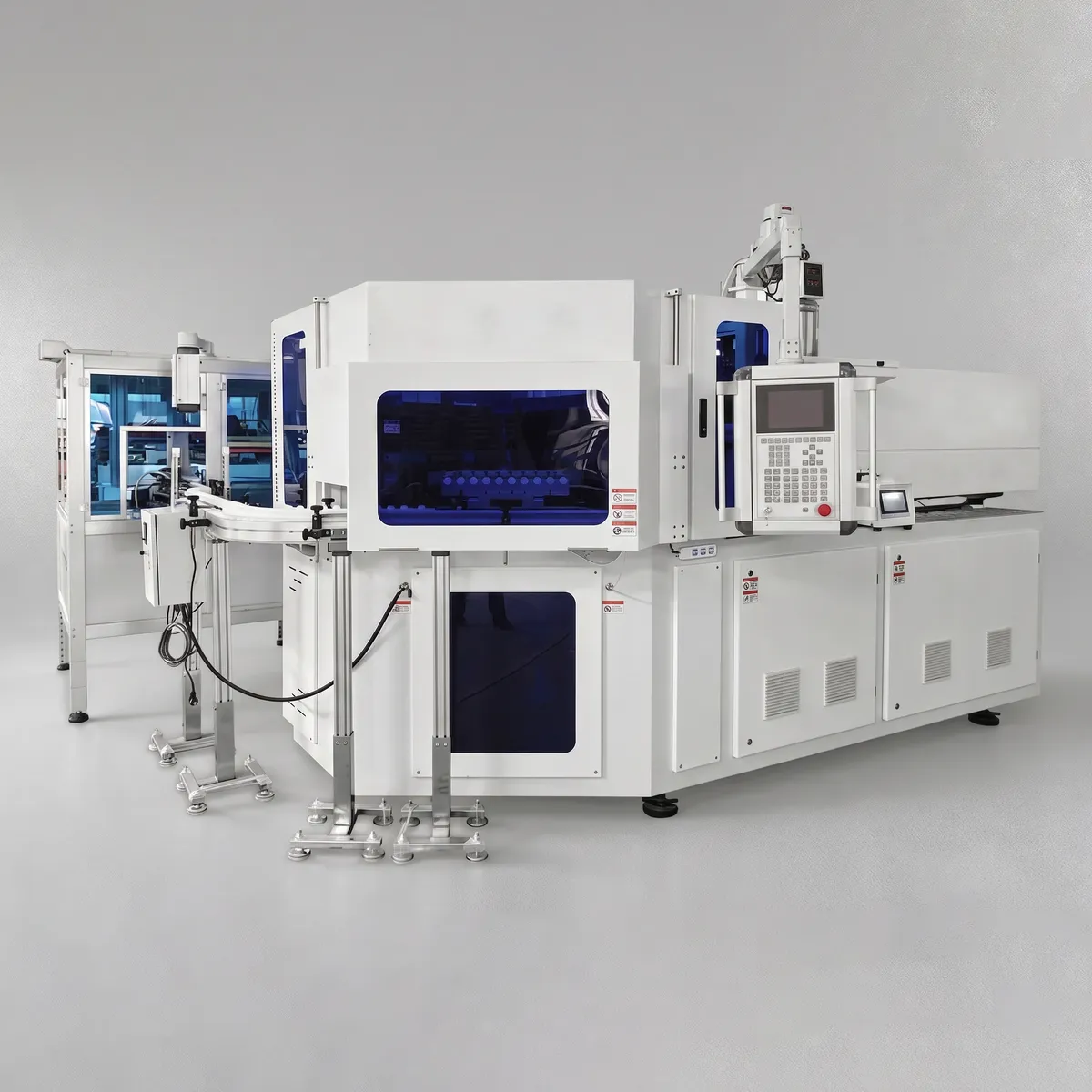
La ZQ60 est dotée d'un mécanisme de serrage spécial breveté, offrant une force de serrage réglable de 40 à 80 tonnes. Elle s'adapte ainsi à une large gamme de contenants sans nécessiter de coûteux changements d'outillage. Sa conception structurelle ascendante empêche physiquement l'huile de lubrification de pénétrer dans la zone du moule, répondant aux normes d'hygiène les plus strictes requises pour les emballages pharmaceutiques et les flacons en plastique haut de gamme. L'unité d'injection à cylindre électrique garantit une régularité d'injection supérieure et réduit les coûts de maintenance à long terme. L'intégration en aval est entièrement prise en charge : le système de convoyage peut être connecté à des équipements d'inspection visuelle automatisés (détection de particules étrangères, de manque de matière au niveau du col et de bases irrégulières), à des testeurs d'étanchéité latérale, à des étiqueteuses et à des lignes d'emballage automatisées. La ZQ60 se transforme ainsi en une cellule de production entièrement automatisée et sans surveillance, idéale pour la fabrication de flacons pharmaceutiques, d'emballages cosmétiques, de contenants pour produits d'hygiène personnelle, de flacons en PEHD de qualité alimentaire et de récipients de précision en PET ou PP. Que vous évaluiez la compétitivité des prix des machines de moulage par injection-soufflage ou que vous recherchiez une machine personnalisée, la ZQ60 vous offre un retour sur investissement mesurable dès le premier jour.
Cavitation du moule (à titre de référence)
| Volume approximatif | 10 ml | 30 ml | 60 ml | 100 ml | 250 ml | 500 ml | 1000 ml |
| Cavitation maximale | 14 | 10 | 10 | 8 | 5 | 3 | 2 |
Spécifications techniques
| Article | Unité | ZQ60 |
| Système d'injection | ||
| Diamètre de la vis | mm | 45/50 |
| Vis L/D | % | 22:1 |
| Poids d'injection ! | g | 260/383 |
| puissance de chauffage | KW | 14 |
| Nombre de zones de barils | 3+N | |
| coup d'injection | mm | 160 |
| Système de serrage | ||
| Force de serrage de l'injection | KN | 600 |
| Coup d'ouverture pour injection | mm | 140 |
| Force de serrage du soufflage | KN | 100 |
| coup d'ouverture pour souffler | mm | 140 |
| Hauteur de levage de la table rotative | mm | 70 |
| Moule | ||
| Dimensions maximales du plateau (L x l) | mm | 600x390 |
| Épaisseur du moule | mm | 240 |
| Diamètre de la bouteille | mm | 120 |
| Hauteur de la bouteille | mm | 220 |
| Hauteur de bouteille appropriée | mm | 15-200 |
| Coup de dénudage | mm | 230 |
| Système hydraulique | ||
| Pression hydraulique | Carte | 14 |
| Puissance du moteur | KW | 18.5/22 |
| Cycle de séchage | S | 4 |
| Puissance totale | KW | 37 |
| Puissance de fonctionnement | % | 52-70 |
| Autres | ||
| Pression minimale de l'air comprimé | MPa | 0.7-1.2 |
| Capacité d'air comprimé | M³/min | 0.7 |
| débit d'eau | M³/h | 4 |
| Pression de l'eau de refroidissement | MPa | 0.3-0.4 |
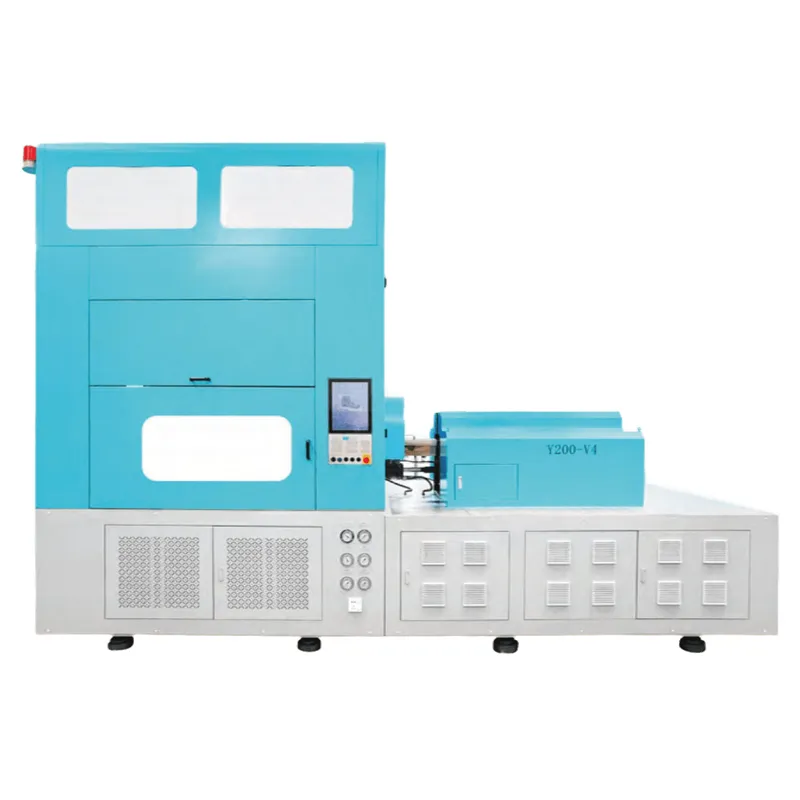
| Dimensions (L x l x H) | M | 3,8 x 1,4 x 2,18 |
| Poids net | Tonne | 5 |
Marque et modèle remplaçables
| Toujours-Puissance | Force de serrage | Jomar | SUMA | Uniloy | Bloma |
| ZQ40 | 40T | IBM40 | 40iB | UIB70 | IBM45 |
| ZQ60 | 60T | IBM65 | 65iB | UIB90 | IBM50 |
| ZQ80 | 80T | IBM85S | 85iB | UIB120 | IBM85 |
| ZQ110 | 110T | IBM135 | 135iB | UIB150 | IBM135 |
| ZQ135 | 135T | IBM175 | 175iB | UIB180 |
Diamètre de la vis à métaux IBM
| Toujours-Puissance | Diamètre de la vis | Jomar | SUMA | Bloma |
| ZQ40 | 40/45 | 35/40 | 40 | 45 |
| ZQ60 | 45/50 | 45 | 40/50 | 50 |
| ZQ80 | 55 | 55 | 50/60 | 50 |
| ZQ110 | 65 | 65 | 65/76 | 70 |
| ZQ135 | 70 | 70 | 65/76 |
Poids d'injection de la machine IBM
| Toujours-Puissance | Poids d'injection | Jomar | SUMA | Bloma |
| ZQ40 | 190/260 | 180 | 169 | 180 |
| ZQ60 | 260/383 | 205 | 169/264 | 240 |
| ZQ80 | 466 | 300 | 333/480 | 310/280 |
| ZQ110 | 540 | 450/550 | 580/770 | 560 |
| ZQ135 | 650 | 450/550 | 580/770 |
Force de serrage par injection de machine IBM
| Toujours-Puissance | Force de serrage par injection | Jomar | SUMA | Bloma |
| ZQ40 | 400 kN | 340 kN | 386 kN | 350 kN |
| ZQ60 | 600 kN | 460 kN | 580 kN | 500 kN |
| ZQ80 | 800 kN | 680 kN | 720 kN | 700 kN |
| ZQ110 | 1100 kN | 1210 kN | 1200 kN | 1250 kN |
| ZQ135 | 1350 kN | 1560 kN | 1600 kN |
Taille du moule de la machine IBM
| Toujours-Puissance | Taille du moule | Jomar | SUMA | Bloma |
| ZQ40 | 480 × 340 | 394 × 508 | 470 × 350 | 450 × 390 |
| ZQ60 | 600 × 390 | 432 × 660 | 620 × 400 | 620 × 430 |
| ZQ80 | 800 × 400 | 464 × 749 | 700 × 400 | 620 × 430 |
| ZQ110 | 1100 × 460 | 559 × 1118 | 1000 × 500 | 900 × 480 |
| ZQ135 | 1300 × 500 | 635 × 1372 | 1200 × 600 |
Taille de la machine IBM
| Toujours-Puissance | Taille du moule (M) | Jomar | SUMA | Bloma |
| ZQ40 | 3,8 × 1,3 × 1,7 | 2,72 × 1,9 × 2,75 | 3,8 × 1,5 × 2,3 | 4,05 × 1,52 × 2,55 |
| ZQ60 | 3,8 × 1,4 × 1,8 | 2,92 × 1,98 × 3,41 | 4 × 1,7 × 2,3 | 620 × 430 × 2,55 |
| ZQ80 | 4,5 × 1,6 × 2 | 3,33 × 1,94 × 3,41 | 4,5 × 2 × 2,6 | 620 × 430 × 2,55 |
| ZQ110 | 5 × 1,8 × 2,2 | 3,79 × 2,4 × 3,41 | 5 × 2,4 × 2,7 | 900 × 480 × 2,55 |
| ZQ135 | 5,5 × 2 × 2,4 | 4,22 × 2,67 × 3,58 | 6 × 2,6 × 2,7 |
Remarque : Les marques sont mentionnées uniquement pour aider les clients à choisir les produits, et non pour vendre les produits de ces marques.
Principales caractéristiques de la machine IBM ZQ60
1. Capacité de production élevée
La machine de moulage par injection-soufflage ZQ60 produit jusqu'à 105 000 bouteilles par jour et jusqu'à 115 000 bouteilles par 24 heures. Son mécanisme entièrement servo-motorisé permet un fonctionnement continu et sans surveillance, réduisant considérablement les interventions manuelles. Les entreprises bénéficient ainsi d'un avantage concurrentiel certain en pouvant honorer rapidement des commandes importantes tout en garantissant une qualité constante pour chaque cycle de production.
2. Options de moulage personnalisables
La ZQ60, une presse à injecter-souffler personnalisable, est disponible à la vente. Elle permet de produire des contenants de 1 ml à 1 000 ml, quelle que soit leur géométrie. Sa force de fermeture réglable de 40 à 80 tonnes s'adapte aux différentes spécifications des produits sans nécessiter de réoutillage important. Qu'il s'agisse de produire des flacons pharmaceutiques, des pots cosmétiques ou des emballages alimentaires en PEHD, cette machine peut être configurée avec précision pour répondre à vos exigences de production exactes.
3. Efficacité énergétique
La ZQ60 est une véritable machine de moulage par injection-soufflage entièrement électrique, consommant seulement 12 kWh par heure pour la production de flacons de 30 ml, soit une amélioration de 301 TP3T par rapport aux machines hydrauliques. Son architecture à servocommande élimine les pertes hydrauliques à pression constante. Les entreprises réduisent ainsi leurs coûts énergétiques et leur empreinte carbone, faisant de la ZQ60 un choix écoresponsable pour les fabricants soucieux du développement durable à travers le monde.
4. Facilité d'utilisation et d'entretien
Bien que figurant parmi les machines de moulage par injection-soufflage de plastique les plus sophistiquées du marché, la ZQ60 est dotée d'une interface homme-machine intuitive et d'une logique de commande simplifiée, rapidement maîtrisables par les opérateurs. Son système d'injection à vérin électrique élimine la complexité du circuit hydraulique, réduisant ainsi considérablement les besoins de maintenance. L'entretien courant est minimal, prévisible et facile à planifier, garantissant une disponibilité de production optimale et constante sur tous les quarts de travail.
5. Contrôle de la qualité et constance
Les codeurs absolus intégrés à chaque axe d'asservissement permettent à la ZQ60 de garantir une répétabilité au micron près sur des millions de cycles. La surveillance en temps réel de la température, de la pression et des paramètres de cycle assure que chaque contenant respecte les tolérances dimensionnelles et les épaisseurs de paroi cibles. La compatibilité avec les stations d'inspection visuelle et de contrôle d'étanchéité latérales en aval crée une chaîne d'assurance qualité en boucle fermée, renforçant ainsi la confiance des clients dans vos produits finis.
6. Compatible avec la machine IBM SUMA 65iB
La ZQ60 est conçue comme un remplacement certifié de la machine SUMA 65iB IBM. Ses principaux paramètres, tels que la force de fermeture par injection (600 kN contre 580 kN pour la SUMA), le diamètre de la vis (45/50 mm contre 40/50 mm pour la SUMA) et les dimensions du plateau porte-moule (600 x 390 mm contre 620 x 400 mm pour la SUMA), sont quasiment identiques, voire supérieurs. La compatibilité des moules SUMA 65iB existants peut généralement être évaluée, ce qui simplifie la transition vers la plateforme ZQ60, plus écoénergétique, sans nécessiter de réoutillage complet.
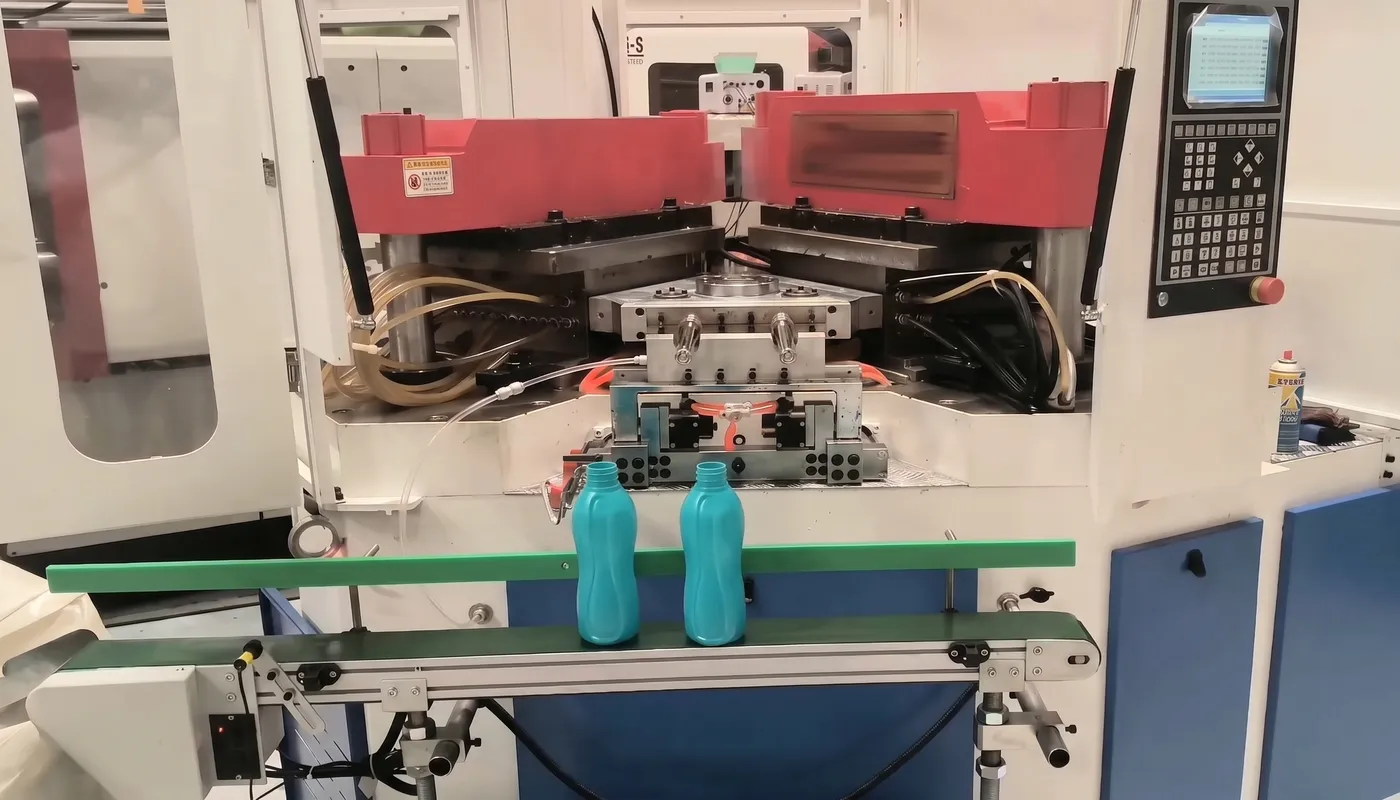
Principe de fonctionnement d'une machine de moulage par injection-soufflage
La ZQ60 fonctionne comme une véritable machine de moulage par injection-soufflage en une seule étape, combinant l'injection de préformes, le soufflage et l'éjection des pièces au sein d'un cycle rotatif continu. Les trois stations fonctionnent simultanément, optimisant ainsi le débit tout en éliminant les besoins en énergie de réchauffage entre les étapes.
1. Injection de préforme
La résine plastique, dosée avec précision, est plastifiée dans le cylindre puis injectée dans la cavité du moule sous pression asservie. Le col et le filetage du flacon sont formés avec une précision dimensionnelle exceptionnelle à ce poste. Une fois la pression de maintien et le temps de refroidissement optimaux atteints, le moule s'ouvre et le mandrin, avec la paraison ainsi formée, est transféré vers le poste de soufflage. L'encodeur absolu garantit une répétabilité d'injection optimale, avec des tolérances très serrées, un point crucial pour les cols de flacons pharmaceutiques nécessitant une étanchéité par filetage 100%.
2. Moulage par soufflage
À la station de soufflage, de l'air comprimé est insufflé par le mandrin à des pressions comprises entre 0,7 et 1,2 MPa, dilatant la paraison pour qu'elle épouse parfaitement la surface de la cavité du moule. La force de serrage de 100 kN assure la fermeture ferme du moule durant cette phase. Un refroidissement contrôlé à l'intérieur du moule solidifie la paroi du récipient et fixe la géométrie finale. Le moule s'ouvre ensuite et le mandrin pivote vers la station d'éjection, tandis que la préforme suivante est simultanément injectée à la première station. Ce fonctionnement en parallèle confère à la ZQ60 son rendement de cycle supérieur aux presses à injecter par soufflage hydrauliques séquentielles.
3. Déshabillage et éjection
À la station d'éjection, les bouteilles finies sont automatiquement détachées des mandrins et tombent sur le convoyeur de sortie pour leur transfert vers les étapes suivantes. La course d'éjection de 230 mm permet de traiter des bouteilles d'une hauteur maximale de 200 mm. Grâce au fonctionnement simultané des trois stations, il n'y a aucun temps mort entre les phases d'injection, de soufflage et d'éjection. Cette architecture à trois stations simultanées fait de la ZQ60 une solution de moulage par injection-soufflage à partir de rebuts : le processus en une seule étape produit des bouteilles finies sans bavures, sans déchets de découpe et sans opérations de finition secondaires, ce qui permet de réduire les pertes de matière à un niveau quasi nul par cycle.
Application Fields
1. Chemical Bottles
La ZQ60 produit des flacons robustes en PEHD et PP pour produits chimiques, offrant une excellente résistance chimique. Son goulot hermétique garantit l'absence de fuites lors du transport ou du stockage de solvants agressifs, de produits de nettoyage et de liquides industriels. La machine s'adapte aux variations d'épaisseur de paroi exigées par les normes d'emballage chimique et prend en charge des volumes allant de petits flacons de réactifs de 10 ml à des bidons de produits de 1 000 ml.
2. Flacons cosmétiques
Les marques de cosmétiques haut de gamme exigent une finition de surface impeccable et une transparence constante. La ZQ60 produit des flacons cosmétiques en PP et PCTG à haute brillance, sans lignes de soudure, sans bavures et sans ébarbage. Son outillage multicavités prend en charge jusqu'à 14 cavités pour les formats de 10 ml, permettant une production à grande vitesse de flacons de parfum, de lotion et de sérum répondant aux exigences esthétiques strictes du marché des cosmétiques de luxe.
3. Bouteilles de boissons
Pour les applications de boissons de qualité alimentaire, la ZQ60 transforme les résines PP, PEHD et ABS conformes aux normes FDA en bouteilles à paroi uniforme et aux excellentes propriétés barrières. Ce procédé monobloc sans déchets élimine les risques de contamination liés aux opérations secondaires. Jusqu'à 10 cavités, disponibles en formats 30 ml et 60 ml, permettent aux marques de boissons d'accroître rapidement leur production tout en maintenant la qualité requise pour les salles blanches, notamment pour les jus, les boissons énergisantes et les produits laitiers.
4. Pharmaceutical Bottles
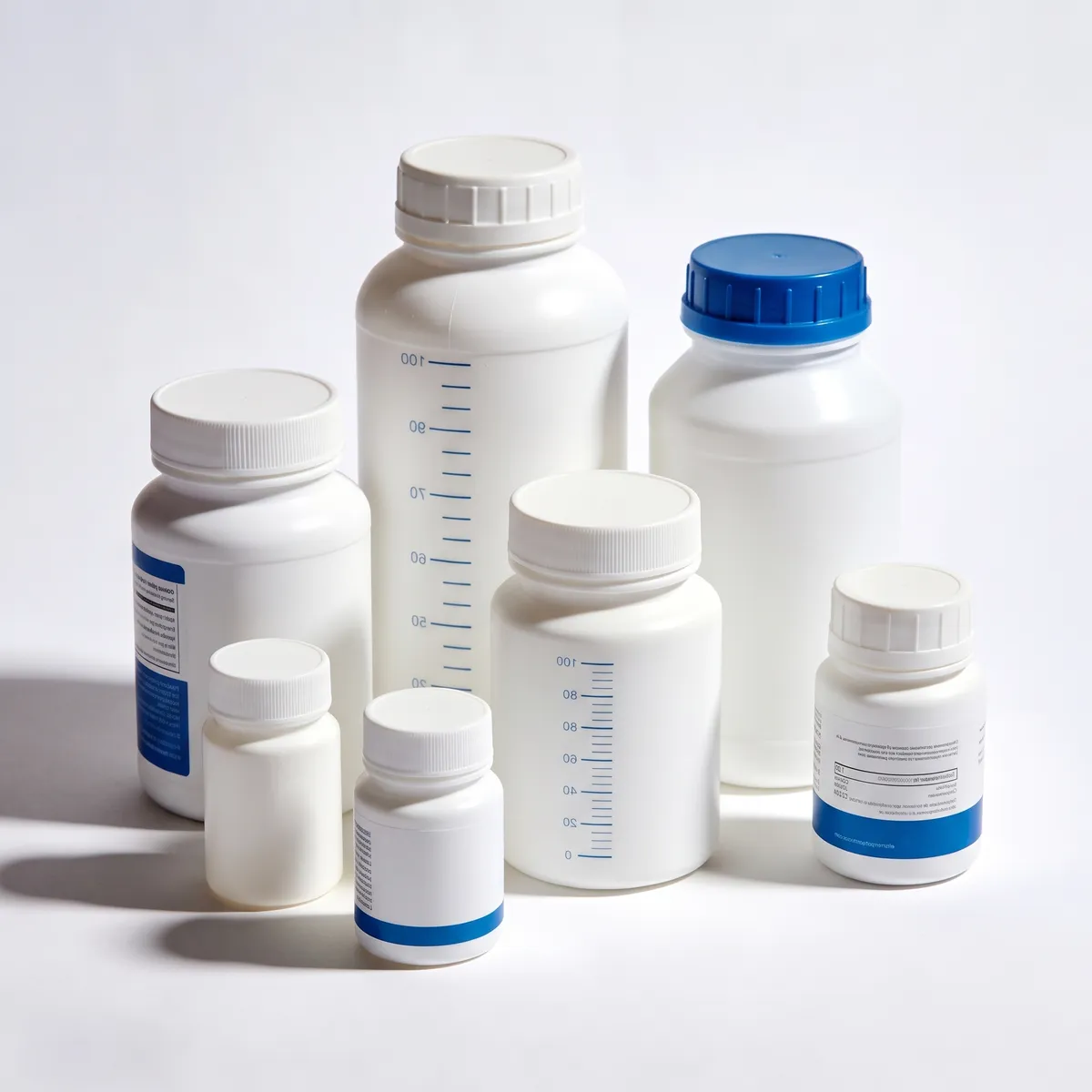
La ZQ60 excelle dans le conditionnement pharmaceutique, où le respect des normes d'hygiène est impératif. Sa conception ascendante empêche physiquement l'huile de lubrification de pénétrer dans la zone de moulage, répondant ainsi aux exigences de fabrication propre des BPF. Les filetages du col sont moulés avec une précision d'étanchéité 100% et une constance dimensionnelle absolue, ce qui rend la machine idéale pour la production de flacons de comprimés, de flacons de sirop et de récipients stériles pour liquides, à partir de matériaux PEHD ou PP de qualité pharmaceutique, et ce, dans de multiples configurations de cavités.
5. Flacons compte-gouttes
Les flacons compte-gouttes exigent des tolérances extrêmement serrées au niveau du col et une uniformité de paroi exceptionnelle pour garantir un dosage précis. Le procédé de moulage par injection-soufflage ZQ60 produit des flacons compte-gouttes avec des orifices de forme précise et une géométrie de col constante sur l'ensemble des cavités. L'unité d'injection servo-commandée prévient les variations de poids, tandis que le retour d'information absolu par codeur assure l'identité dimensionnelle de chaque lot, permettant ainsi d'obtenir des flacons compte-gouttes conformes aux normes de distribution ophtalmique et pharmaceutique.
6. Biberons
Les biberons nécessitent des matériaux sans BPA, un volume interne précis et une finition de surface impeccable. La ZQ60 traite les résines PP, PCTG et ABS sans contamination, grâce à sa zone de moulage sans huile. L'épaisseur de paroi uniforme obtenue par moulage par injection-soufflage en une seule étape élimine les défauts de surface courants dans les procédés d'extrusion-soufflage. Il en résulte des biberons conformes aux normes de sécurité internationales pour les produits infantiles sur les marchés d'Amérique du Nord, d'Europe, de Corée et d'ailleurs.
7. Flacons de pulvérisation médicinale
Les sprays nasaux, les sprays pour le soin des plaies et les flacons de pulvérisation orale nécessitent des cols de précision avec des dimensions de montage de pompe standardisées. La ZQ60 produit les corps et les cols des flacons pulvérisateurs en une seule étape, garantissant ainsi des filetages de pompe aux dimensions exactes à chaque cycle. Le système d'injection servo élimine la dérive dimensionnelle qui affecte les anciennes machines hydrauliques lors des longues séries de production, faisant de la ZQ60 la solution IBM de choix. machine de moulage par injection-soufflage Le choix privilégié des fabricants pharmaceutiques sous contrat à l'échelle mondiale.
8. Shampoo Bottles
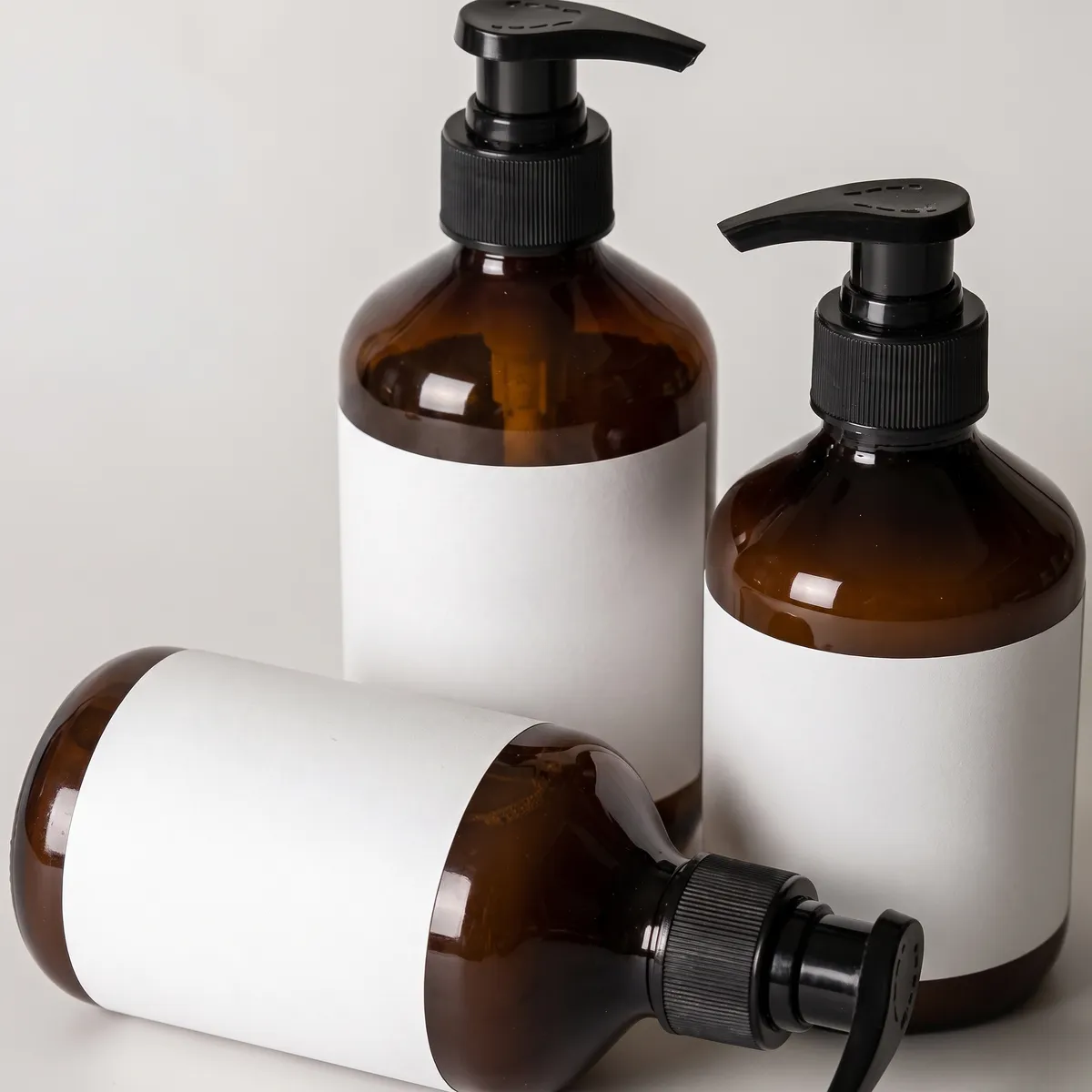
Les flacons de shampoing et d'après-shampoing pour produits de soins personnels nécessitent de grandes cavités, une finition de surface soignée et la capacité de travailler le PEHD et le PP avec des épaisseurs de paroi variables. Avec un plateau de 600 x 390 mm et une course d'éjection de 230 mm, la ZQ60 accepte les moules pour flacons de shampoing de 100 ml à 500 ml. Sa capacité de production journalière élevée de 105 000 pièces garantit des coûts de production unitaires compétitifs, faisant de la ZQ60 la machine de moulage par injection-soufflage idéale pour les fabricants à façon de produits de soins personnels.
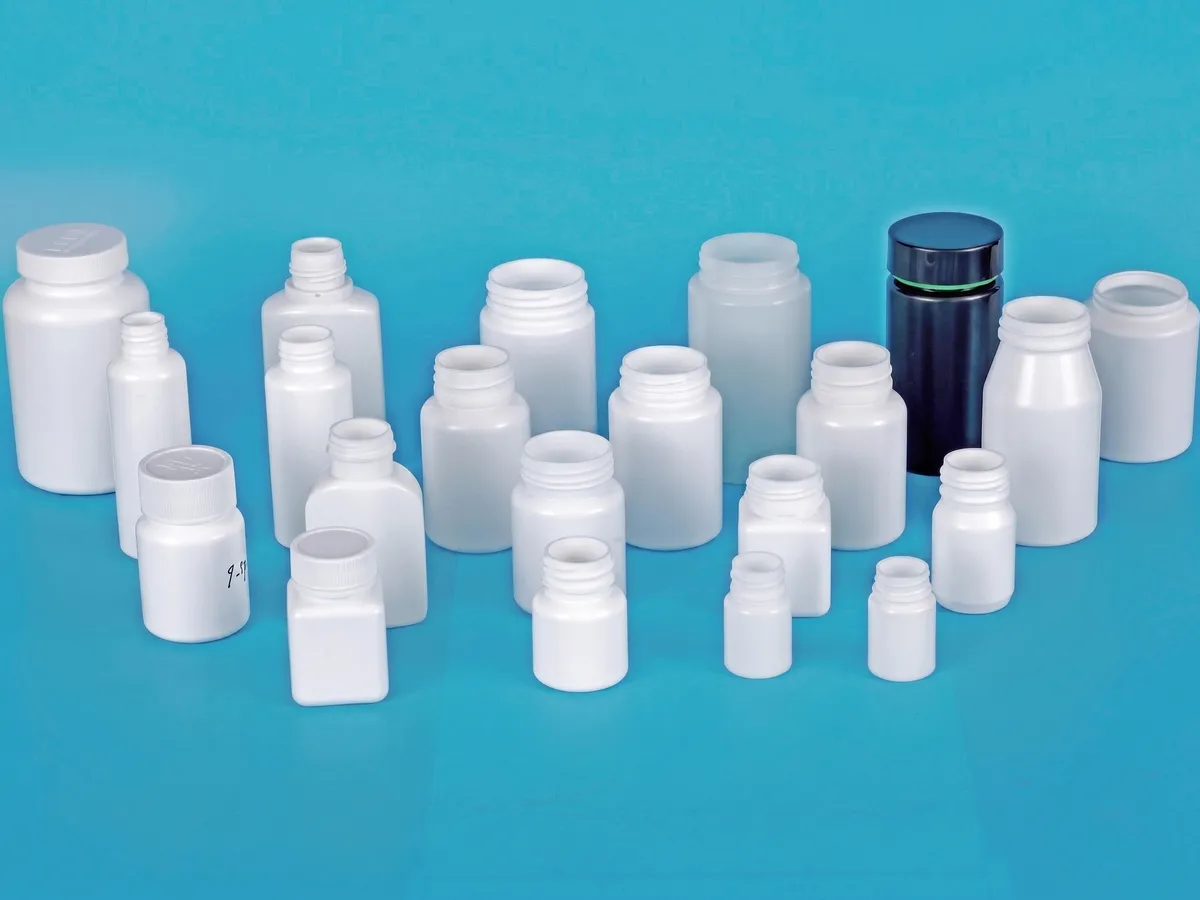 |
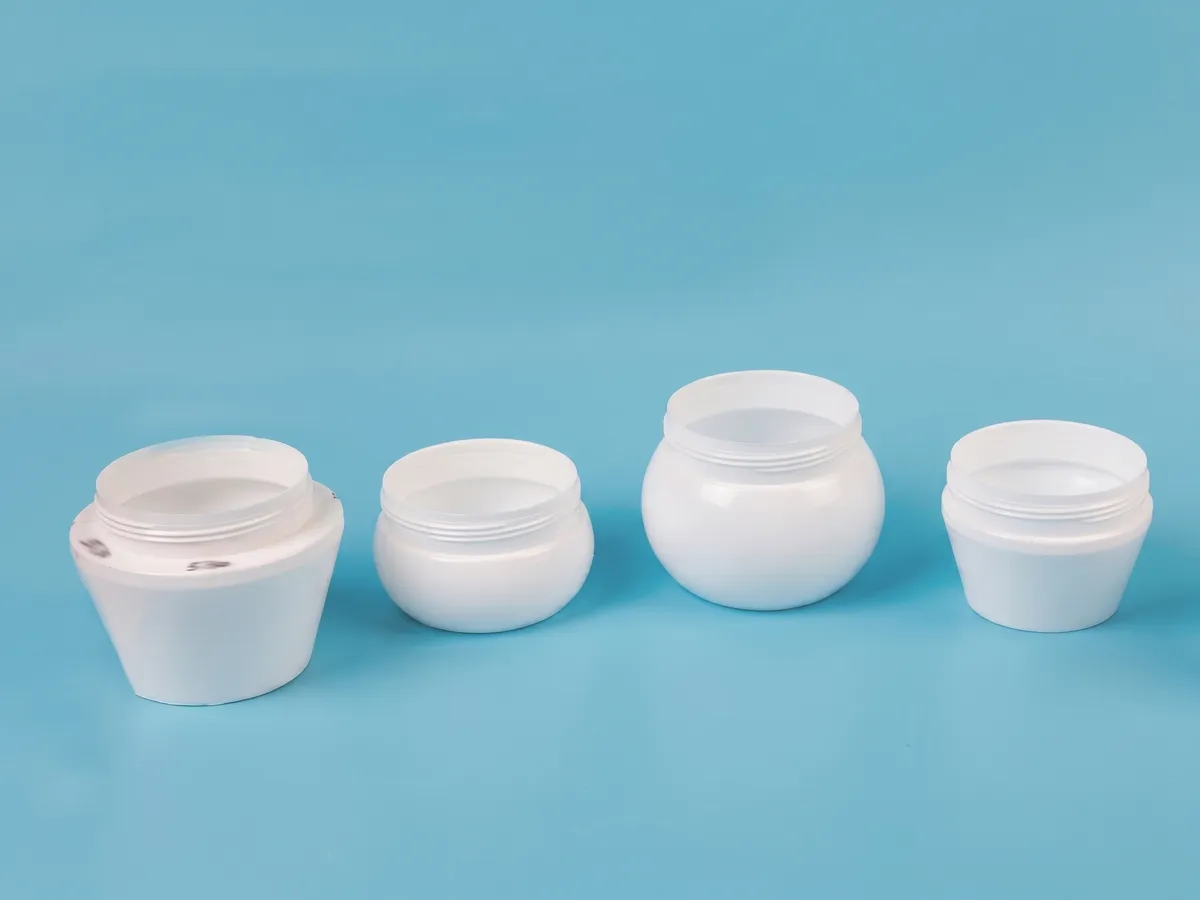 |
| Flacons pharmaceutiques | Flacons cosmétiques |
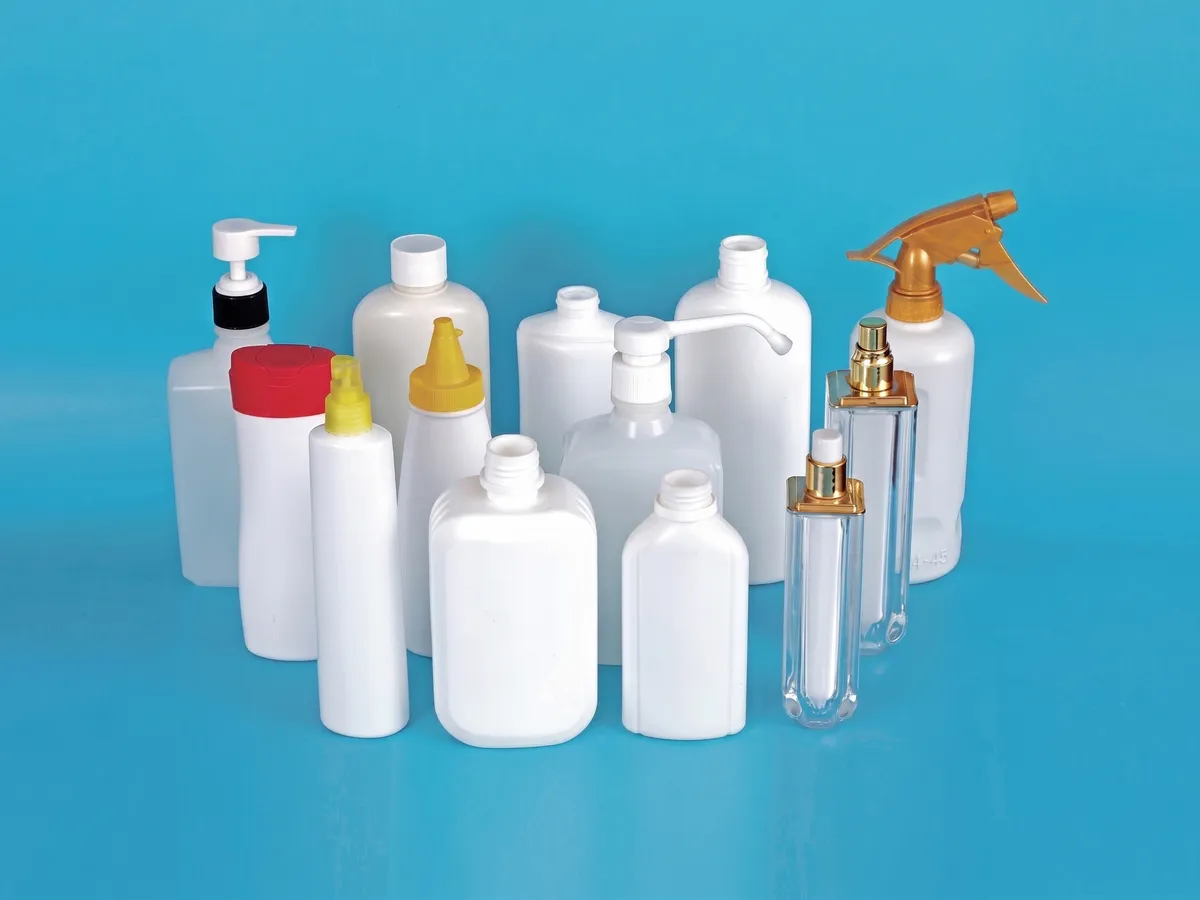 |
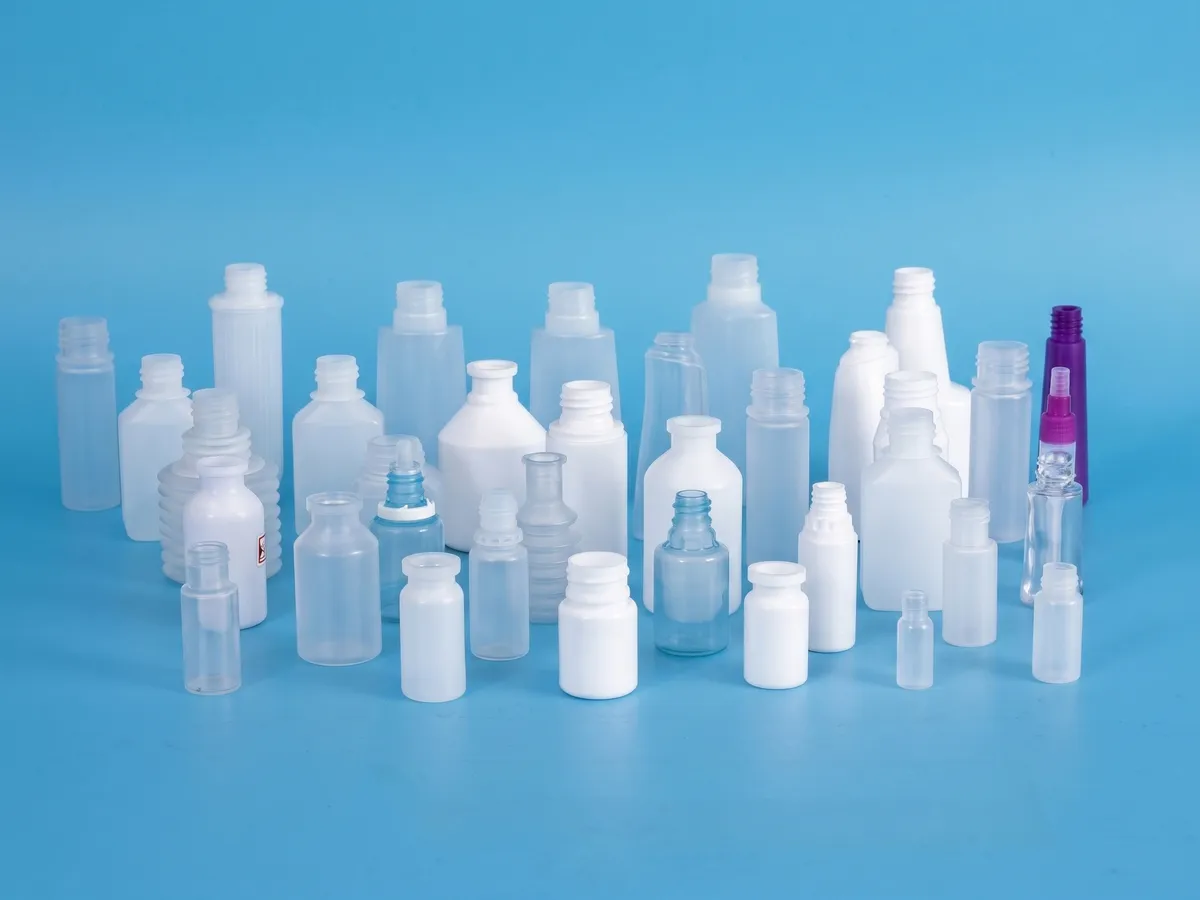 |
| Bouteilles de produits chimiques | Flacons compte-gouttes |
Composants de la machine de moulage par injection-soufflage ZQ60
1. Unité de serrage
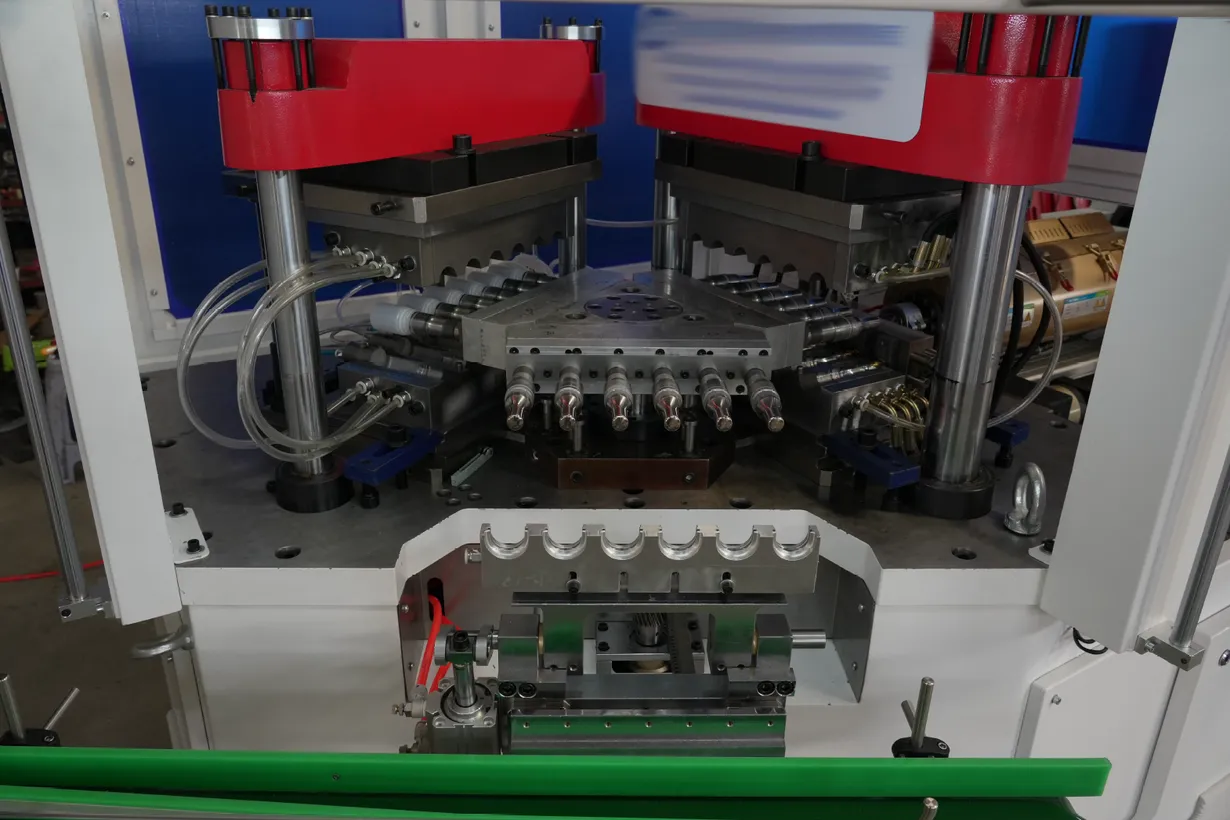
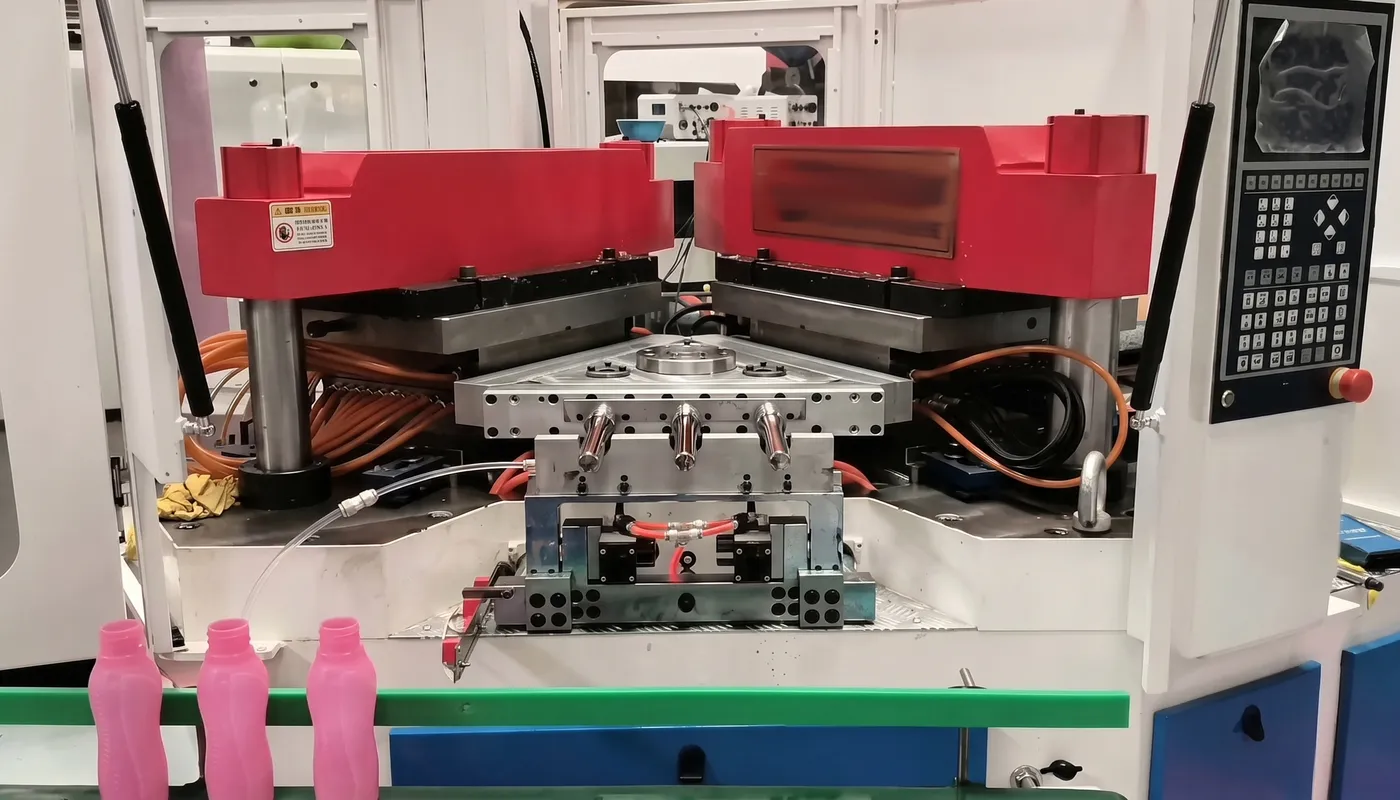
L'unité de fermeture assure l'étanchéité du moule lors des phases d'injection et de soufflage. Sur la ZQ60, la force de fermeture lors de l'injection atteint 600 kN, tandis que celle lors du soufflage est de 100 kN. La structure de fermeture pressurisée unique utilise un vérin auxiliaire qui ne participe pas aux mouvements d'ouverture et de fermeture, ce qui réduit la consommation d'énergie de 10 à 200 kN par rapport aux systèmes de fermeture conventionnels de même tonnage. La plage de réglage de 40 à 80 tonnes offre une grande polyvalence pour de nombreuses gammes de produits.
2. Unité d'injection
L'unité d'injection à cylindre électrique fond, homogénéise et injecte la résine plastique avec une répétabilité supérieure aux systèmes d'injection hydrauliques. Deux diamètres de vis (45 mm et 50 mm) permettent d'adapter l'injection à différentes viscosités de résine et jusqu'à 383 g de poids. Le système de chauffage à trois zones + N, d'une puissance totale de 14 kW, assure un profilage précis de la température de fusion pour les résines sensibles telles que le PET, l'ABS et le PP de qualité pharmaceutique. Un mélange-maître de colorant peut être introduit à la sortie pour une pigmentation en ligne.
3. Unité de commande électronique
L'unité électronique constitue le cœur du système ZQ60. Elle intègre un automate programmable (PLC) et une interface homme-machine (IHM) tactile pour une gestion intuitive des paramètres de process. Tous les axes servo sont coordonnés par ce système, permettant un fonctionnement multi-stations synchronisé avec une précision inférieure à la milliseconde. Le système mémorise les paramètres de recette pour différents formats de produits, autorisant des changements rapides entre les productions. L'enregistrement des données en temps réel répond aux exigences de traçabilité des process dans les environnements de production pharmaceutique et agroalimentaire.
4. Système d'entraînement servo
Remplaçant le système hydraulique conventionnel, le système d'entraînement servo ZQ60 convertit l'énergie électrique en mouvements mécaniques précis pour toutes les fonctions de la machine. Des servomoteurs d'une puissance de 18,5 à 22 kW alimentent les axes de mouvement principaux, fournissant des forces à la demande, uniquement lorsque cela est nécessaire, au lieu de maintenir une pression hydraulique constante. Cette architecture à la demande est essentielle à la réduction de la consommation d'énergie du modèle 30% par rapport aux machines IBM hydrauliques équivalentes. Des codeurs absolus sur chaque axe servo assurent un retour d'information de position en boucle fermée avec une répétabilité inférieure au millimètre pendant toute la durée de vie de la machine.
5. Système de table rotative et de mandrin
La table rotative à servocommande transfère les mandrins et les paraisons entre les stations d'injection, de soufflage et de démoulage avec une hauteur de levage de 70 mm et une précision d'indexation garantissant un alignement parfait entre les stations. La conception du mandrin est un facteur de performance déterminant : elle assure un refroidissement interne efficace de la paraison pendant et après le soufflage, ce qui réduit le temps de cycle global à 8,2 secondes pour les flacons de 30 ml. La géométrie du noyau du mandrin est optimisée pour maintenir des cycles de moulage rapides sans compromettre l'efficacité du refroidissement ni l'uniformité de l'épaisseur des parois.
6. Système de sécurité et de protection
La ZQ60 intègre un système de protection multicouche comprenant des protections mécaniques, des interverrouillages électroniques, des circuits d'arrêt d'urgence et des capteurs de protection du moule. Des portillons de sécurité empêchent l'accès de l'opérateur aux zones mobiles pendant le fonctionnement de la machine. Des routines de protection du moule détectent les obstacles avant l'application de la force de serrage maximale, évitant ainsi des dommages coûteux au moule. Cette structure de sécurité complète, conforme aux normes européennes, garantit la conformité aux exigences de la certification CE, permettant l'exportation vers les marchés européens et nord-américains où la réglementation en matière de sécurité des machines exige des systèmes de protection certifiés.
7. Système d'air et de refroidissement
La ZQ60 nécessite de l'air comprimé à une pression de 0,7 à 1,2 MPa et un débit de 0,7 m³/min pour le soufflage et les fonctions pneumatiques auxiliaires. Le circuit d'eau de refroidissement fonctionne à une pression de 0,3 à 0,4 MPa et un débit de 4 m³/h afin de maintenir des températures constantes dans le moule et le cylindre. Un refroidissement efficace est indispensable pour atteindre un cycle de 8,2 secondes à pleine capacité. La conception du circuit d'eau permet un contrôle indépendant de la température des zones d'injection et de soufflage, optimisant ainsi la qualité des préformes et la cristallinité du moulage par soufflage pour chaque formulation.
ZQ60 vs. SUMA 65iB : Nos avantages
| Paramètre | ZQ60 (Ever-Power) | SUMA 65iB |
|---|---|---|
| Force de serrage | 600 kN | 580 kN |
| Poids d'injection | 260 / 383 g | 169 / 264 g |
| Taille maximale du plateau | 600 x 390 mm | 620 x 400 mm |
| Technologie de conduite | Tout servo | Hydraulique |
| Économies d'énergie | 30% contre hydraulique | Ligne de base |
| Taille de la machine | 3,8 x 1,4 x 2,18 m | 4,0 x 1,7 x 2,3 m |
1. Poids d'injection plus élevé
La ZQ60 offre des poids d'injection de 260 g et 383 g, contre 169 à 264 g pour la SUMA 65iB. Cette capacité d'injection nettement supérieure permet à la ZQ60 de traiter des contenants à parois plus épaisses et des produits de plus grand volume, sans les limitations de poids d'injection qui restreignent la plateforme SUMA. Les fabricants ciblant des contenants de 250 ml à 500 ml bénéficient particulièrement de cette capacité d'injection étendue, leur permettant d'accéder à des formats de produits qui nécessitaient auparavant une machine plus imposante.
2. Architecture entièrement servo vs. hydraulique
La SUMA 65iB utilise des systèmes hydrauliques qui requièrent des vidanges d'huile régulières, le remplacement des filtres et l'entretien du système de refroidissement. La ZQ60 élimine tout besoin en huile hydraulique, réduisant ainsi considérablement les coûts de maintenance et les risques de contamination. Les servomoteurs offrent également une réponse plus rapide et une meilleure répétabilité que les actionneurs hydrauliques, ce qui se traduit directement par une plus grande constance du processus et une qualité supérieure des bouteilles finies. Cet avantage est particulièrement important pour les fabricants de bouteilles pharmaceutiques et alimentaires soumis aux audits BPF.
3. Empreinte au sol réduite, implantation facilitée
Avec des dimensions de 3,8 x 1,4 x 2,18 m, la ZQ60 occupe une surface au sol nettement plus réduite que la SUMA 65iB (4,0 x 1,7 x 2,3 m). Pour les fabricants disposant d'espaces de production optimaux, cette réduction de taille permet soit une implantation plus compacte des lignes de production, soit l'installation d'une machine supplémentaire sur la même surface, augmentant ainsi directement la densité de production sans coûts d'extension. Son châssis compact réduit également le temps d'installation et simplifie le positionnement des chariots élévateurs lors de la mise en service.
4. Force de serrage supérieure
Avec une force de fermeture par injection de 600 kN contre 580 kN pour la SUMA 65iB, la ZQ60 offre une meilleure résistance au décollement du moule, réduisant ainsi les risques de bavures lors des productions à haut débit. Sa conception structurelle de type européen lui confère une rigidité de fermeture de 20 à 301 TP3T supérieure à celle des machines concurrentes de la même catégorie, selon les données de tests du fabricant. Cet avantage structurel se traduit par une durée de vie accrue du moule, des cycles de maintenance réduits et une précision dimensionnelle constante des bouteilles, même après de longues périodes de production continue à pleine capacité.
5. Coût total de possession inférieur
Grâce à sa consommation d'énergie réduite (norme 30%), à l'élimination des coûts d'entretien de l'huile hydraulique, à la réduction des exigences de conformité aux normes sonores sur le lieu de travail et à l'augmentation du rendement par poste, la ZQ60 offre un coût total de possession nettement inférieur à celui de la SUMA 65iB sur un cycle de production standard de 5 ans. Les acheteurs qui évaluent le prix d'une machine de moulage par injection-soufflage uniquement en fonction du coût d'acquisition initial doivent prendre en compte ces différences de coûts d'exploitation pour parvenir à une comparaison d'investissement réaliste entre les deux plateformes.
6. Intégration complète de l'automatisation
La ZQ60 s'intègre parfaitement aux caméras d'inspection visuelle, aux testeurs d'étanchéité latérale, aux étiqueteuses et aux lignes de conditionnement automatisées, contrairement à la SUMA 65iB qui peut nécessiter l'intervention d'un tiers. Cette compatibilité immédiate avec les systèmes d'automatisation en aval permet un fonctionnement entièrement automatisé des cellules de production, réduisant ainsi les besoins en personnel par ligne et autorisant une production 24 h/24 sans présence constante d'opérateur. Pour les fabricants qui développent leur production à grande échelle sur des marchés concurrentiels, cette facilité d'automatisation représente un avantage décisif par rapport à la plateforme SUMA.
Matières premières compatibles
La machine de moulage par injection-soufflage de plastique ZQ60 est conçue pour traiter une gamme complète de résines thermoplastiques, ce qui en fait l'une des machines de moulage par injection-soufflage les plus polyvalentes de sa catégorie de force de serrage.
PEHD (polyéthylène haute densité)
Le PEHD est la résine la plus couramment transformée sur la ZQ60, utilisée pour les flacons pharmaceutiques, les contenants de produits chimiques ménagers, les emballages alimentaires et les produits de soins personnels. Il offre une excellente résistance chimique, une faible absorption d'humidité et est conforme aux normes FDA pour le contact alimentaire. Le profil de température du cylindre de la ZQ60 pour le PEHD se situe généralement entre 160 et 220 °C, le système d'injection servo assurant une homogénéité de la matière fondue constante, nécessaire à une épaisseur de paroi uniforme dans toutes les cavités.
PEBD (polyéthylène basse densité)
Le PEBD permet de fabriquer des flacons souples et compressibles, idéaux pour les collyres, les sprays nasaux et les lotions nécessitant un dosage précis. La ZQ60, grâce à ses zones de contrôle programmables, permet d'utiliser le PEBD à des températures de fusion et des pressions d'injection inférieures à celles du PEHD. Les flacons en PEBD produits sur la ZQ60 offrent une excellente transparence, une bonne résistance chimique et la flexibilité contrôlée requise pour la distribution par pression dans les applications pharmaceutiques, pour des volumes de 5 à 100 ml.
PP (Polypropylène)
Le polypropylène (PP) est la résine de choix pour les flacons pharmaceutiques nécessitant une stérilisation en autoclave et pour les contenants cosmétiques haut de gamme exigeant une transparence et une résistance chimique élevées. La machine ZQ60 transforme le PP de qualité pharmaceutique à des températures de 200 à 250 °C. Les contenants en PP produits par la ZQ60 présentent une excellente résistance des charnières pour les bouchons à pression, une résistance thermique supérieure jusqu'à 130 °C et une brillance de surface exceptionnelle, répondant aux exigences esthétiques des marques de soins personnels de luxe.
PVC (Polyvinyl Chloride)
Le PVC est transformé sur la ZQ60 pour la fabrication d'emballages transparents destinés aux produits pharmaceutiques et aux dispositifs médicaux, où la rigidité dimensionnelle et la clarté optique sont essentielles. La transformation du PVC exige une gestion rigoureuse de la température du fourreau afin d'éviter toute dégradation thermique. Le système de chauffage multizone de la ZQ60, avec contrôle indépendant de chaque zone, assure la plage de température précise nécessaire à une transformation stable du PVC. Les contenants en PVC présentent une excellente rigidité, de bonnes propriétés de barrière chimique et la transparence optique requise pour le contrôle visuel du produit par l'utilisateur final.
PET (polyéthylène téréphtalate)
Le traitement du PET sur les plateformes IBM exige une gestion rigoureuse de l'humidité et de la température de fusion afin de prévenir la dégradation de l'IV et la formation de voile. Le ZQ60, en tant que machine de moulage par injection-soufflage PET IBM fabrique des contenants PET petit format (5 à 100 ml) d'une clarté exceptionnelle, offrant d'excellentes propriétés de barrière à l'oxygène et au dioxyde de carbone, et d'une grande légèreté. Ces contenants sont largement utilisés dans les secteurs des cosmétiques, des compléments alimentaires et des produits alimentaires spécialisés, où la qualité optique et l'aspect haut de gamme en rayon sont des atouts majeurs.
ABS (Acrylonitrile Butadiène Styrène)
L'ABS offre une combinaison de haute résistance aux chocs, de rigidité et d'excellente finition de surface, ce qui le rend populaire pour les pots cosmétiques haut de gamme et les emballages spéciaux où durabilité et esthétique doivent aller de pair. La ZQ60 transforme l'ABS à des températures de cylindre de 200 à 260 °C avec des pressions d'injection asservies qui préviennent les bavures et les défauts d'injection. Les contenants en ABS produits sur la ZQ60 se prêtent à la peinture, à la métallisation et au revêtement UV après traitement, ouvrant ainsi des possibilités de conception impossibles à obtenir avec les résines à base de polyoléfines.
PC (Polycarbonate)
Le polycarbonate offre une clarté optique inégalée, associée à une résistance exceptionnelle aux chocs et à la chaleur, ce qui le rend idéal pour les flacons cosmétiques haut de gamme, les biberons et les dispositifs médicaux réutilisables. Sa fabrication exige un pré-séchage rigoureux et des températures de cylindre élevées, de l'ordre de 260 à 310 °C, nécessitant un système de contrôle de la température d'injection extrêmement réactif. La ZQ60 assure une transformation fiable du polycarbonate grâce à ses commandes indépendantes par zone de cylindre et à la stabilité de son injection par servocommande, produisant des contenants en polycarbonate à biréfringence minimale et à la finition cristalline qui caractérise les emballages haut de gamme sur les marchés de détail concurrentiels.
 |
 |
Dépannage et contrôle qualité des machines IBM
La gestion proactive de la qualité garantit que chaque conteneur produit par la machine IBM ZQ60 répond aux normes requises. Les opérateurs doivent suivre des protocoles structurés de diagnostic et d'assurance qualité afin de maintenir la constance de la production et de prévenir les défauts tout au long des cycles de production.
Problèmes courants des machines et mesures correctives
1. La machine ne démarre pas
Les opérateurs doivent vérifier les connexions de l'alimentation principale, inspecter les câbles des servomoteurs pour détecter tout dommage ou borne desserrée, et s'assurer que toutes les températures des zones cylindriques ont atteint leurs valeurs de consigne. Le réglage des pressostats et l'état du circuit d'arrêt d'urgence doivent également être vérifiés dans le cadre d'un diagnostic de démarrage systématique. Un réglage incorrect du verrouillage de température figure parmi les causes les plus fréquentes d'empêchement du démarrage des servomoteurs IBM.
2. La machine ne supporte pas la pression
Lorsque la pression de maintien d'injection ne peut être assurée, les opérateurs doivent vérifier l'intégrité du câblage du servomoteur et des connexions de l'encodeur, contrôler la pression d'air comprimé au niveau du régulateur et examiner l'étanchéité des raccords des conduites pneumatiques et des joints des vérins. Des filtres d'admission obstrués peuvent restreindre le débit et provoquer des pertes de pression apparentes. Le remplacement des joints usés et le nettoyage des éléments filtrants résolvent généralement ce problème sans nécessiter d'intervention majeure.
3. Bruit excessif des machines
Tout bruit mécanique inhabituel en fonctionnement doit inciter à vérifier les paramètres de contrôle de vitesse du servomoteur, le couple de l'accouplement et l'alignement de l'indexage de la table rotative. Les opérateurs doivent également inspecter les surfaces des cavités du moule et les ajustements du mandrin afin de détecter toute usure dimensionnelle susceptible de provoquer des vibrations lors du serrage ou de la rotation. Les fuites d'air dans les circuits pneumatiques produisent un sifflement audible, détectable en écoutant au niveau des jonctions du circuit à basse vitesse et à puissance réduite.
4. Qualité défectueuse des bouteilles
Les défauts des contenants finis proviennent généralement de paramètres de cycle incorrects, notamment la température de fusion, la vitesse d'injection, la pression de maintien, le temps de refroidissement ou la pression de soufflage. La contamination des surfaces du moule par migration de lubrifiant ou résidus de résine est également à l'origine de ces défauts. Avant d'attribuer les défauts à des causes mécaniques au sein de la machine IBM, les opérateurs doivent nettoyer soigneusement les cavités du moule, ajuster les paramètres de cycle dans les plages optimales validées et vérifier que la teneur en humidité du matériau est conforme aux spécifications du fournisseur de résine.
Protocole d'inspection de contrôle de la qualité
- Qualification d'installation (IQ)
Vérifiez que la machine ZQ60 et toutes les infrastructures de soutien, y compris l'air comprimé, l'eau de refroidissement et l'alimentation électrique, ont été installées conformément au manuel d'installation de la machine avant de commencer les activités de qualification de la production. - Qualification opérationnelle (OQ)
Vérifiez que toutes les fonctions de la machine fonctionnent dans les plages de fonctionnement spécifiées en parcourant systématiquement chaque station, en mesurant les températures, les pressions et la précision de positionnement par rapport aux spécifications des paramètres validés avant de démarrer la production. - Qualification de performance (PQ)
Démontrer que le processus de production complet produit de manière constante des conteneurs répondant à tous les critères de qualité spécifiés, y compris le poids, les dimensions, l'épaisseur de la paroi, l'intégrité du joint de filetage et l'aspect visuel, sur une série de qualification définie d'au moins trois lots de production consécutifs. - Surveillance critique Variables
Surveillez en continu la température de fusion, la pression de maintien d'injection, la pression de soufflage, la température de l'eau de refroidissement et le temps de cycle pendant la production grâce à la fonction d'enregistrement des données de la machine. Tout écart par rapport aux plages validées entraîne l'arrêt de la ligne et une enquête avant la reprise de la production. - Entretien de routine Conformité
Nettoyer les cavités des moules et les surfaces des mandrins aux intervalles prescrits, lubrifier les composants d'entraînement mécanique conformément au calendrier d'entretien et inspecter le retour d'information du servocodeur pour détecter les signatures de dérive pouvant indiquer une usure mécanique naissante avant qu'elle ne se manifeste par des défauts de qualité dimensionnelle en production. - Formation des opérateurs et Certification
Assurez-vous que tous les opérateurs de machines ZQ60 aient suivi une formation structurée couvrant les procédures de démarrage, le réglage des paramètres de processus, le fonctionnement de la protection du moule, le fonctionnement du système de sécurité et le dépannage de première ligne avant d'être autorisés à exécuter la production sans supervision sur la machine.
Sécurité et entretien
Routine de soins quotidiens
- Avant chaque prise de poste, effectuez une inspection complète de la ZQ60 afin de détecter toute anomalie mécanique, tout dommage électrique ou toute fuite d'air avant le démarrage de la production. Consignez vos observations sur une liste de contrôle de poste à des fins de traçabilité et de planification de la maintenance.
- Purgez le cylindre au démarrage pour éliminer toute trace de résine résiduelle de la production précédente et éviter ainsi toute contamination par dégradation thermique du nouveau lot. Cette purge stabilise également la température de fusion avant les premières injections.
- Lubrifiez toutes les pièces mobiles spécifiées, notamment les tiges de guidage, les roulements de la table rotative et les accouplements de l'arbre de transmission, conformément au programme de lubrification quotidien. Une lubrification adéquate prévient l'usure prématurée et assure un mouvement d'indexage fluide tout au long des cycles de production prolongés.
- Inspectez et nettoyez le ventilateur de refroidissement du moteur et la ventilation du panneau électrique afin d'éviter la surchauffe des servomoteurs et de l'électronique de commande, en particulier pendant le fonctionnement estival ou dans des environnements d'usine à température ambiante élevée où le flux d'air de refroidissement peut être restreint.
- Vérifiez le bon fonctionnement de tous les boutons d'arrêt d'urgence, des dispositifs de sécurité des portes et des capteurs de protection des moules au début de chaque poste. Ne désactivez ni ne contournez jamais aucun dispositif de sécurité pendant la production, quelles que soient les contraintes de production ou l'urgence d'un arrêt machine.
Programme d'entretien à long terme
- Inspectez mensuellement les câbles et connecteurs de retour d'information du servocodeur afin de détecter tout signe d'usure, d'abrasion ou d'oxydation des connecteurs. La dégradation du signal du codeur se développe progressivement et peut entraîner des incohérences dimensionnelles intermittentes avant de déclencher une alarme de défaut ; une inspection proactive des câbles est donc essentielle pour garantir une qualité de production constante.
- Démontez la vis d'injection chaque année pour un contrôle complet des spires, du diamètre intérieur du cylindre et de la géométrie du siège du clapet anti-retour. Reportez les mesures dimensionnelles par rapport aux plans d'origine afin d'établir un taux d'usure et de prévoir les intervalles de remplacement avant que la dégradation des performances n'affecte la qualité du produit.
- Vérifiez trimestriellement le bon fonctionnement des résistances chauffantes à l'aide d'une sonde de température étalonnée, en vous assurant que chaque zone du cylindre atteint sa température de consigne conformément aux spécifications. Remplacez toute résistance chauffante présentant une dérive ou des dommages visibles au niveau des fils lors de cette inspection afin de prévenir toute hétérogénéité de température entre les zones du cylindre.
- Inspectez annuellement le serpentin de l'échangeur de chaleur à eau de refroidissement et nettoyez-le avec une solution acide douce afin d'éliminer les dépôts de tartre qui réduisent l'efficacité du refroidissement au fil du temps. L'accumulation de tartre dans les canaux de refroidissement augmente la durée des cycles de moulage et peut entraîner un refroidissement irrégulier, ce qui provoque des variations dimensionnelles dans les contenants finis.
- Inspectez tous les vérins pneumatiques, les joints et les distributeurs deux fois par an afin de détecter les fuites et de vérifier le temps de réponse. Les fuites au niveau des joints pneumatiques entraînent un gaspillage d'air comprimé, une augmentation des coûts d'exploitation et peuvent provoquer un fonctionnement erratique des machines lors de la production à grande vitesse ; ce dysfonctionnement est difficile à diagnostiquer sans un protocole d'inspection systématique du circuit de pression.
Machine IBM ou ISBM : laquelle convient le mieux à votre production ?
Choisir la bonne technologie de moulage est essentiel pour obtenir la qualité de produit, l'efficacité de production et les propriétés des matériaux requises pour votre application spécifique. Le moulage par injection-soufflage (IBM) et le moulage par injection-étirage-soufflage (ISBM) sont les deux principales technologies utilisées pour la production de contenants en plastique creux, mais elles diffèrent considérablement en termes de procédés, de matériaux adaptés, de caractéristiques du produit et de rentabilité. Comprendre ces différences permet aux acheteurs de prendre la bonne décision d'investissement lors de l'évaluation des options. machines de moulage par injection-soufflage contre machines de moulage par injection-étirage-soufflage.
1. Aperçu du processus
Le moulage par injection-soufflage (IBM) combine le moulage par injection et le soufflage dans une seule machine rotative à trois stations. La résine plastique est injectée dans un moule pour former une préforme, qui est ensuite transférée vers une station de soufflage où de l'air comprimé la gonfle pour lui donner la forme finale du contenant avant son éjection. Le procédé se déroule sans étape de réchauffage, ce qui le rend particulièrement économe en énergie. Le moulage par injection-étirage-soufflage (ISBM) ajoute une étape d'étirage mécanique : après la création de la préforme, une tige d'étirage l'allonge axialement avant une expansion radiale par soufflage d'air, créant une orientation moléculaire biaxiale qui améliore la résistance mécanique et la transparence.
2. Comparaison des processus
| Fonctionnalité | IBM (ZQ60) | ISBM |
|---|---|---|
| Étapes du processus | Injecter, souffler, éjecter | Injecter, réchauffer, étirer, souffler, éjecter |
| Réchauffage nécessaire | Non | Oui |
| Orientation biaxiale | Non | Oui |
| Matériaux primaires | PP, PEHD, PEBD, PVC, ABS, PC | PET, PP |
| Taille typique du conteneur | 1 ml à 1 000 ml | 100 ml à plusieurs litres |
| Complexité des machines | Inférieur | Plus haut |
| Flash et déchets | Aucun (zéro déchet) | Minimal (vestige de porte) |
3. Adéquation des matériaux
Les machines IBM, comme la ZQ60, sont particulièrement performantes avec le PP, le PEHD, le PEBD, le PVC, l'ABS et le PC, des matériaux largement utilisés dans les industries pharmaceutique, cosmétique et des soins personnels. La technologie ISBM est optimisée principalement pour le PET, exploitant l'orientation biaxiale possible dans ce matériau pour produire des bouteilles de boissons légères, d'une clarté exceptionnelle et présentant d'excellentes propriétés de barrière à la carbonatation. Pour les entreprises produisant des contenants autres que le PET, d'une contenance de 1 à 500 ml, les solutions IBM offrent presque toujours un coût machine inférieur, une utilisation plus simple et de meilleures performances hygiéniques que les alternatives ISBM.
4. Comparaison des applications des produits
| Fonctionnalité | IBM | ISBM |
|---|---|---|
| Produits courants | Flacons de gouttes ophtalmiques, pots cosmétiques, flacons, produits pharmaceutiques | Bouteilles d'eau, bouteilles de soda, contenants de jus |
| Format de la bouteille | De petite à moyenne taille | Moyen à grand |
| Épaisseur de paroi | Uniforme, contrôlé | Parois minces, haute résistance |
| Finition de surface | Très fluide, haute précision | Excellente transparence |
5. Avantages et limites
Avantages d'IBM
- Haute précision dimensionnelle et précision du filetage
- Zéro bavure et zéro déchet de coupe
- Architecture machine plus simple et coût d'investissement réduit
- Adapté aux exigences de conformité pharmaceutique et cosmétique
- Compatibilité étendue avec les résines autres que le PET
Limitations d'IBM
- Ne convient pas aux grandes bouteilles de boissons en PET.
- Aucun avantage en termes de résistance à l'orientation biaxiale
- Limité aux petits et moyens formats de conteneurs
6. Considérations relatives aux coûts et à la production
Les machines IBM sont généralement plus abordables à l'achat, plus simples à utiliser et moins coûteuses à entretenir que les systèmes ISBM. Pour les fabricants de produits pharmaceutiques, cosmétiques et de produits de consommation de petit format, la plateforme IBM offre généralement un meilleur retour sur investissement et une complexité opérationnelle moindre. Les systèmes ISBM offrent une efficacité supérieure pour la production en grande série de boissons en PET, où l'orientation biaxiale et l'allègement sont des exigences essentielles. Le choix doit être guidé par le type de résine, la géométrie du contenant, le volume de production et l'application visée.
7. Quelle technologie choisir ?
Optez pour une machine IBM comme la ZQ60 si votre entreprise produit des contenants de petite et moyenne taille en PP, PEHD, PEBD, PVC, ABS ou PC pour les secteurs pharmaceutique, cosmétique, des soins personnels ou chimique, où la précision dimensionnelle, la conformité aux normes d'hygiène et la flexibilité des résines sont essentielles. Choisissez une machine ISBM si vous avez besoin de bouteilles PET grand volume offrant une transparence exceptionnelle, des parois légères et une résistance mécanique maximale pour les marchés des boissons gazeuses ou plates. Pour les entreprises actives dans les deux secteurs, les plateformes IBM et ISBM sont complémentaires au sein d'une unité de production diversifiée.
|
 |
| Machine IBM | Machine ISBM |
|---|
Pourquoi choisir les machines de moulage par injection-soufflage d'Ever-Power ?
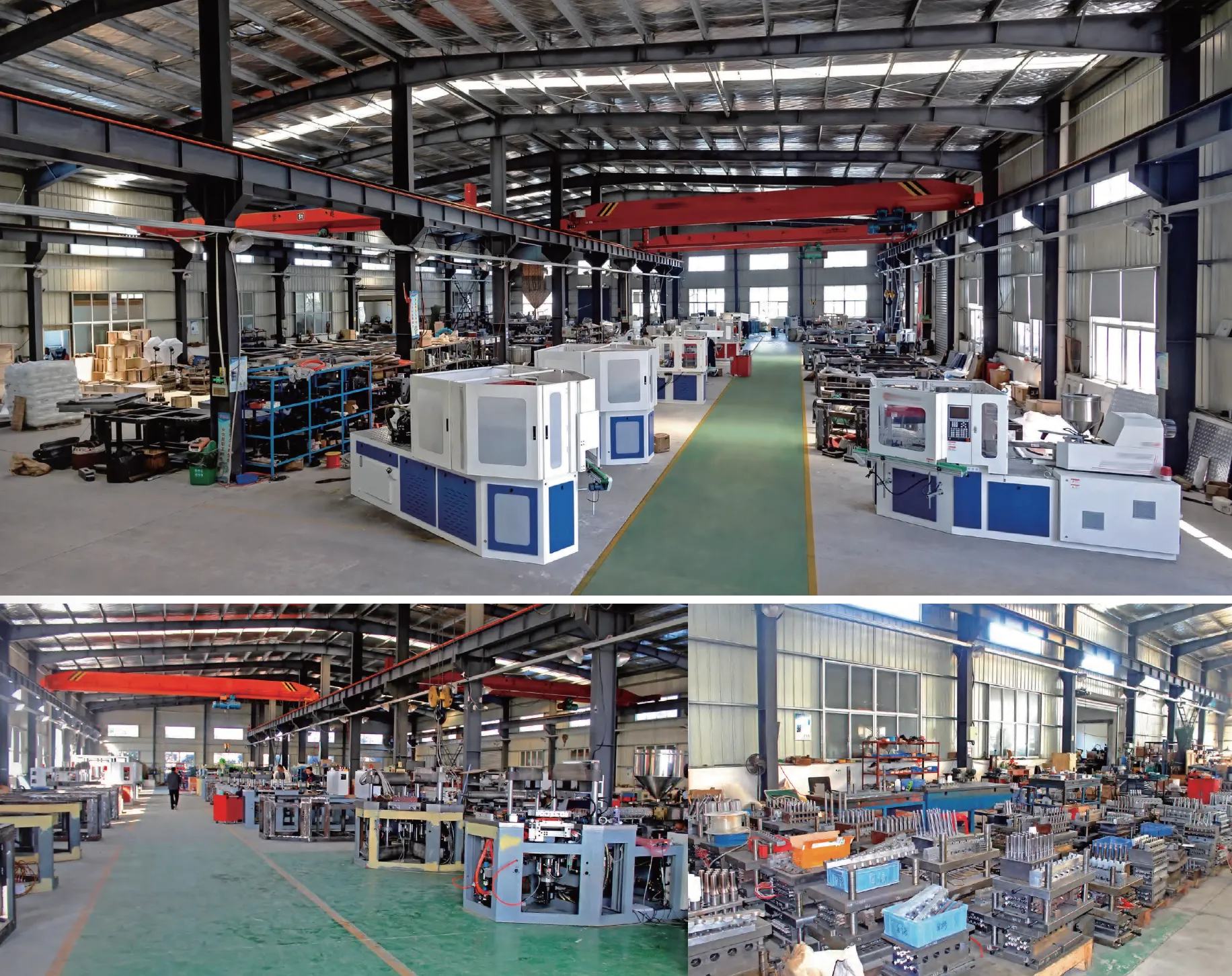
Mexico Ever-Power ISBM Machinery Co., Ltd. se consacre principalement à la recherche et au développement, à la production, à la vente et à la commercialisation de machines de moulage par injection-soufflage automatiques en une étape, ainsi que des moules associés. Notre gamme de produits comprend des machines IBM, des machines de moulage par extrusion-soufflage, des machines de moulage par injection-étirage-soufflage et des lignes complètes d'équipements auxiliaires. Notre situation géographique stratégique et notre infrastructure logistique performante garantissent des livraisons fiables à nos clients du monde entier, notamment en Corée, en Inde, en Turquie, en Russie, en Afrique du Sud, au Brésil, aux États-Unis et au Mexique.
Mexico Ever-Power ISBM Machinery Co., Ltd. réunit une équipe R&D de haut niveau, forte d'une solide expérience en ingénierie des machines d'injection-soufflage et en conception de moules. Nos ingénieurs conjuguent expertise théorique et expérience pratique de la production pour vous offrir un accompagnement complet : conseil avant-vente, assistance pendant la vente et service après-vente, garantissant ainsi la protection de votre investissement tout au long du cycle de vie de la machine. Nos produits sont utilisés dans les emballages pharmaceutiques, alimentaires, médicaux, cosmétiques et pour une large gamme d'autres formats d'emballages plastiques. La ZQ60 et la série ZQ permettent de traiter des matériaux tels que le PEHD, le PEBD, le PP, le PS (anti-lactique), le PS haute transparence, l'ABS, les matériaux biosourcés à base de maïs, l'EVA et le PCTG, pour des volumes de contenants allant de 1 ml à 1 000 ml. Mexico Ever-Power ISBM Machinery Co., Ltd. s'appuie sur une philosophie d'entreprise fondée sur l'autonomie, l'intégrité, le pragmatisme, l'innovation et la responsabilité, et propose des solutions de production clés en main pour l'injection-soufflage, répondant aux plus hautes exigences de qualité et de satisfaction client.
- Expérience mondiale avérée
Machines en service dans plus de 9 pays, dans les secteurs pharmaceutique, cosmétique, alimentaire et de l'emballage chimique, avec des références de performance documentées disponibles. - Ingénierie de moules interne
Conception complète du moule, usinage de l'acier S136, ingénierie des canaux chauds et qualification du moule réalisés en interne, garantissant une compatibilité machine-moule parfaite et une responsabilité unique. - Leadership en technologie All-Servo
Les machines de la série ZQ dominent le marché en matière de technologie de machines IBM entièrement servo, offrant des économies d'énergie 30%, un risque nul lié à l'huile hydraulique et une précision absolue de l'encodeur inégalée dans cette catégorie de prix. - Assistance après-vente complète tout au long du cycle de vie
La mise en service sur site, la formation des opérateurs, l'assistance technique à distance et la fourniture de pièces détachées sont assurées à l'échelle mondiale, garantissant ainsi la protection et la productivité de votre investissement dans les machines IBM pendant des années. - Valeur d'investissement compétitive
Des performances équivalentes aux modèles européens et japonais, pour un coût d'investissement nettement inférieur. L'analyse du coût total de possession sur 5 ans privilégie systématiquement le ZQ60 par rapport aux modèles importés traditionnels. - Capacité de projet clé en main
Ever-Power propose des solutions de production clés en main complètes pour le soufflage par injection, incluant la machine, le moule, les équipements auxiliaires, l'installation, la formation et l'intégration de l'automatisation en aval, le tout dans le cadre d'un contrat unique.
FAQ
Q : La machine de moulage par injection-soufflage ZQ60 peut-elle remplacer directement une SUMA 65iB ?
R : Oui, la ZQ60 est conçue pour remplacer directement la SUMA 65iB. Les principaux paramètres, notamment la force de fermeture (600 kN contre 580 kN), les dimensions du plateau (600 x 390 mm contre 620 x 400 mm) et l'encombrement de la machine, sont comparables. Il convient d'évaluer au cas par cas la compatibilité des outillages de moules SUMA 65iB existants avec les dimensions du plateau et la géométrie du mandrin de la ZQ60. L'équipe d'ingénierie d'Ever-Power peut analyser les spécifications de vos moules existants avant l'achat afin de confirmer la compatibilité ou d'identifier les modifications nécessaires.
Q : Quel est le temps de cycle de la machine de moulage par injection-soufflage entièrement électrique ZQ60 pour différentes tailles de bouteilles ?
A : Pour les flacons de 30 ml avec un moule à 10 cavités, la ZQ60 atteint un temps de cycle de 8,2 secondes, produisant 105 000 flacons par jour de production standard et jusqu'à 115 000 flacons par cycle de production maximal de 24 heures. Le temps de cycle à sec (mouvement de la machine sans matière) est de 4 secondes. Les temps de cycle pour les autres formats de flacons et configurations de cavités varient et dépendent de facteurs tels que l'épaisseur de la paroi, la viscosité du matériau et le temps de refroidissement nécessaire. Contactez Ever-Power en précisant les caractéristiques de vos flacons pour obtenir une estimation de la capacité de production adaptée à votre application.
Q : Quels matériaux plastiques la machine IBM ZQ60 peut-elle traiter ?
A: La ZQ60 est compatible avec une vaste gamme de résines thermoplastiques, notamment le PEHD, le PEBD, le PP, le PVC, le PET, l'ABS, le PC, le PCTG et l'EVA. Cette large compatibilité la rend idéale pour les applications d'emballage pharmaceutique, cosmétique, alimentaire, de soins personnels et chimique. Les deux diamètres de vis disponibles (45 mm et 50 mm) et le chauffage multizone programmable du fourreau permettent le traitement de matériaux présentant une large plage de viscosités et de températures de fusion. Il est toujours conseillé de discuter de votre nuance de résine et de vos exigences de traitement avec Ever-Power avant de finaliser la configuration de la machine.
Q : Le ZQ60 est-il adapté à la production d'emballages pharmaceutiques conformes aux BPF ?
R : Oui. La ZQ60 intègre plusieurs caractéristiques de conception répondant spécifiquement aux exigences BPF (Bonnes Pratiques de Fabrication) pour la production d'emballages pharmaceutiques. Sa conception structurelle ascendante empêche l'huile de lubrification de pénétrer dans la zone du moule, éliminant ainsi un risque majeur de contamination lors de la fabrication des flacons pharmaceutiques. L'entraînement entièrement servo-commandé supprime totalement l'huile hydraulique de la machine. Les filetages du col sont formés avec une précision dimensionnelle 100% et une étanchéité parfaite à chaque cycle. La machine prend également en charge les exigences de documentation de validation IQ/OQ/PQ. La compatibilité en aval avec les systèmes d'inspection visuelle permet le rejet automatisé des contenants non conformes avant le conditionnement.
Q : Comment le prix de la machine de moulage par injection-soufflage ZQ60 se compare-t-il à celui des marques européennes importées ?
A: La ZQ60 offre des performances comparables aux principales marques européennes de machines IBM, pour un coût d'investissement nettement plus compétitif. Grâce à sa consommation d'énergie réduite (30%) et à l'élimination des coûts d'entretien de l'huile hydraulique, le coût total de possession de la ZQ60 sur 5 ans est sensiblement inférieur à celui des alternatives européennes. Les acheteurs ayant déjà évalué les prix des machines IBM européennes ou japonaises sont invités à demander un devis formel pour la ZQ60 afin d'obtenir une comparaison directe des coûts d'investissement et d'exploitation, adaptée à leur volume de production et aux spécifications de leurs bouteilles.
Q : Quelles tailles de bouteilles la machine de moulage par injection-soufflage monobloc ZQ60 peut-elle produire ?
A : La ZQ60 peut produire des flacons d'un volume de 1 ml à 1 000 ml, avec des hauteurs adaptées de 15 mm à 200 mm et des diamètres jusqu'à 120 mm. Les configurations de cavités disponibles vont de 14 cavités pour 10 ml à 2 cavités pour 1 000 ml, comme indiqué dans le tableau de référence des cavités de moule. La taille maximale du plateau (600 x 390 mm) permet d'accueillir une grande variété de formes de contenants. Pour des configurations de cavités personnalisées, hors tableau de référence standard, il est possible d'en discuter avec l'équipe d'ingénierie des moules d'Ever-Power afin de répondre aux exigences spécifiques de votre produit.
Q : Quel type d'assistance à l'installation et à la mise en service propose Ever-Power ?
A: Ever-Power propose des services complets avant-vente, pendant la vente et après-vente pour toutes les machines ZQ60. Cela inclut les tests de réception en usine avant expédition, une documentation d'installation détaillée et une assistance à la mise en service sur site assurée par des ingénieurs techniques expérimentés. La formation des opérateurs dans les locaux du client couvre le fonctionnement de la machine, le réglage des paramètres de processus, le changement de moule, la maintenance courante et le dépannage de base. Une assistance technique à distance par visioconférence et messagerie est disponible pendant toute la durée de vie de la machine. La disponibilité des pièces détachées est garantie pour répondre aux besoins de service après-vente à long terme dans le monde entier.
Q : Le ZQ60 peut-il être connecté à des équipements d'emballage automatisés en aval ?
R : Oui. La sortie du convoyeur ZQ60 est conçue pour être connectée à une gamme complète d'équipements d'automatisation en aval, notamment des systèmes d'inspection visuelle par caméra (détection de particules étrangères, de manque de matière au niveau du goulot et d'irrégularités au niveau du fond des bouteilles), des testeurs d'étanchéité latérale, des étiqueteuses, des capsuleuses et des lignes de conditionnement automatiques. Cette capacité d'intégration permet un fonctionnement entièrement automatisé et sans surveillance de la cellule de production, réduisant ainsi les besoins en main-d'œuvre et autorisant une production continue 24 h/24. Ever-Power peut vous aider à choisir les équipements auxiliaires compatibles et vous conseiller sur les protocoles d'intégration adaptés à la configuration spécifique de votre ligne de production.
Q : Quelle est la différence entre une machine de moulage par injection-soufflage en une étape et un processus de moulage par soufflage en deux étapes ?
A: Une machine de moulage par injection-soufflage en une seule étape, comme la ZQ60, combine l'injection et le soufflage des préformes au sein d'une seule machine, en un seul processus continu, sans étape de réchauffage entre les deux phases. Ceci élimine les coûts énergétiques et les pertes de temps liés au réchauffage, simplifie la manutention des matériaux et supprime les risques de contamination associés au stockage et au transport des préformes. Les procédés en deux étapes consistent à produire les préformes séparément, à les stocker, puis à les réchauffer et à les souffler dans une machine distincte. Le procédé IBM en une seule étape est privilégié pour les emballages pharmaceutiques et cosmétiques de petit format, où la maîtrise de la contamination, la précision dimensionnelle et le zéro déchet sont essentiels.
Q : Comment puis-je demander un devis pour une machine de moulage par injection-soufflage personnalisée ?
A: Pour obtenir un devis personnalisé pour la ZQ60 ou toute autre machine Ever-Power IBM, veuillez nous fournir les informations suivantes : volume et géométrie des flacons souhaités, volume de production journalier requis, matériau et qualité de la résine, nombre d’équipes de production par jour, pays d’installation et spécifications d’alimentation électrique, ainsi que toute exigence de conformité particulière (BPF pharmaceutiques, contact alimentaire, certification CE, etc.). Notre équipe technico-commerciale vous proposera rapidement une configuration machine sur mesure et une proposition d’investissement après réception de vos spécifications.
Avis clients
Park Joon-Ho, emballage pharmaceutique, Corée
« Nous avons remplacé notre ancienne SUMA 65iB par la ZQ60 il y a environ huit mois et, honnêtement, la différence est flagrante. Nous produisons des flacons pharmaceutiques de 30 ml et le temps de cycle est tombé à environ 8,2 secondes, ce qui correspond exactement aux promesses. La facture d'électricité a également baissé de manière significative. Le plus important pour moi, c'est son fonctionnement silencieux ; nos opérateurs l'apprécient beaucoup. L'encombrement de la machine est également plus réduit que celui de la SUMA, ce qui a permis de libérer de l'espace sur la ligne de production. »
Ramesh Agarwal, fabricant de flacons pour produits chimiques, Inde
« Nous fabriquons des bouteilles en PEHD pour produits agrochimiques ici en Inde, et la ZQ60 fonctionne depuis environ 10 mois sans problème majeur. Sa force de fermeture de 600 kN est parfaitement adaptée à notre moule pour contenants de 250 ml. J'ai particulièrement apprécié que l'équipe d'Ever-Power ait assuré elle-même l'installation et la mise en service, et ait formé nos techniciens sur site pendant une semaine complète. Le service après-vente s'est montré très réactif à chaque fois que nous avons eu des questions. »
Mehmet Yilmaz, Emballage cosmétique, Turquie
J'étais un peu sceptique à l'idée de passer d'une machine de marque européenne à une machine d'un fabricant chinois, mais honnêtement, la ZQ60 a largement dépassé mes attentes. Nous produisons des flacons cosmétiques en PP en Turquie et la qualité de surface est excellente. Aucun défaut, aucune retouche nécessaire. Le moule fourni avec la machine est en acier S136 et la finition de la cavité est toujours impeccable après plus de six mois de production.
Alexei Sorokin, Emballages plastiques, Russie
« Nous avons commandé une ZQ60 pour notre ligne de conditionnement à Moscou et la coordination logistique d'Ever-Power a été très professionnelle. La livraison a été effectuée dans les délais malgré la complexité du transport international. La machine fonctionne parfaitement : nous produisons des contenants de 350 ml en PP et la qualité est constante. Le système servo est beaucoup plus silencieux que notre précédente machine hydraulique et la maintenance a été minimale jusqu'à présent. L'unité d'injection à vérin électrique est sans aucun doute son atout majeur. »
Thabo Nkosi, Emballage pharmaceutique, Afrique du Sud
« Notre usine de Johannesburg utilise deux machines ZQ60 pour la production de flacons en polypropylène de qualité pharmaceutique. La conformité aux BPF a été un argument de vente déterminant : aucun risque de contamination par l’huile dans la zone de moulage et des dimensions de filetage du col très constantes. Un auditeur a examiné notre installation de production et s’est déclaré satisfait de la conception hygiénique de la machine. Ever-Power nous a également accompagnés dans la configuration du raccordement pour l’inspection visuelle en aval, qui s’intègre parfaitement à notre ligne de production existante. »
Ana Paula Ferreira, Flacons de cosmétiques, Brésil
« Nous utilisons cette machine depuis environ un an dans notre unité de production de flacons cosmétiques ici à São Paulo. La ZQ60 produit parfaitement nos flacons en PP de 60 ml et 100 ml, et sa cadence de production est très fiable. J'ai été surpris par les économies d'énergie : notre consommation d'électricité a considérablement diminué par rapport à notre ancienne machine hydraulique. Le service client de l'équipe technique est également excellent ; ils répondent rapidement aux messages WhatsApp malgré le décalage horaire. »
Michael R. Thompson, Flacons pharmaceutiques, États-Unis
« Nous avons comparé plusieurs fabricants de machines IBM avant de choisir Ever-Power pour notre usine de l'Ohio. La ZQ60 offrait le meilleur compromis entre capacité de production, efficacité énergétique et technologie entièrement servo à un prix compétitif. Nous utilisons cette machine pour la fabrication de flacons pharmaceutiques en PEHD depuis environ 11 mois et elle s'est montrée extrêmement fiable. Aucun temps d'arrêt imprévu depuis sa mise en service. La documentation de formation et l'assistance à distance sont également un atout précieux pour notre équipe d'ingénierie. »
Carlos Mendoza, flacons de soins personnels, Mexique
« Nous avons installé deux machines ZQ60 dans notre usine de Guadalajara il y a sept mois et les résultats sont très satisfaisants. Nous produisons des flacons de shampoing en PEHD et nos objectifs de production journaliers sont atteints de manière constante. Les machines sont silencieuses, propres et faciles à entretenir pour nos techniciens. Ever-Power a dépêché un technicien pour accompagner la mise en service et a également formé nos opérateurs. Le délai de livraison était raisonnable compte tenu du transport international. »
Fatima Al-Rashidi, Emballage de flacons compte-gouttes, Émirats arabes unis
« Notre usine produit des flacons compte-gouttes pour une gamme de produits ophtalmiques, et la précision des dimensions du col est essentielle. Depuis sa mise en service, la ZQ60 produit systématiquement dans les limites de nos tolérances dimensionnelles. La géométrie du filetage est parfaite à chaque cycle et nous n'avons constaté aucune fuite sur plus de 200 000 flacons produits à ce jour. Je recommande vivement cette machine à tout fabricant de flacons pharmaceutiques qui recherche une alternative plus compétitive aux anciennes marques européennes de machines IBM. »
Informations Complémentaires
| Édité par | Yjx |
|---|
Produits associés
-
Machine de moulage par injection-soufflage ZQ80 (européenne)
-
Machine de moulage par injection-soufflage ZQ60 (européenne)
-
Machine de moulage par injection-soufflage ZQ60, remplacement pour le modèle Uniloy UIB90
-
Machine de moulage par injection-soufflage ZQ80, remplacement pour le modèle Jomar IBM85S