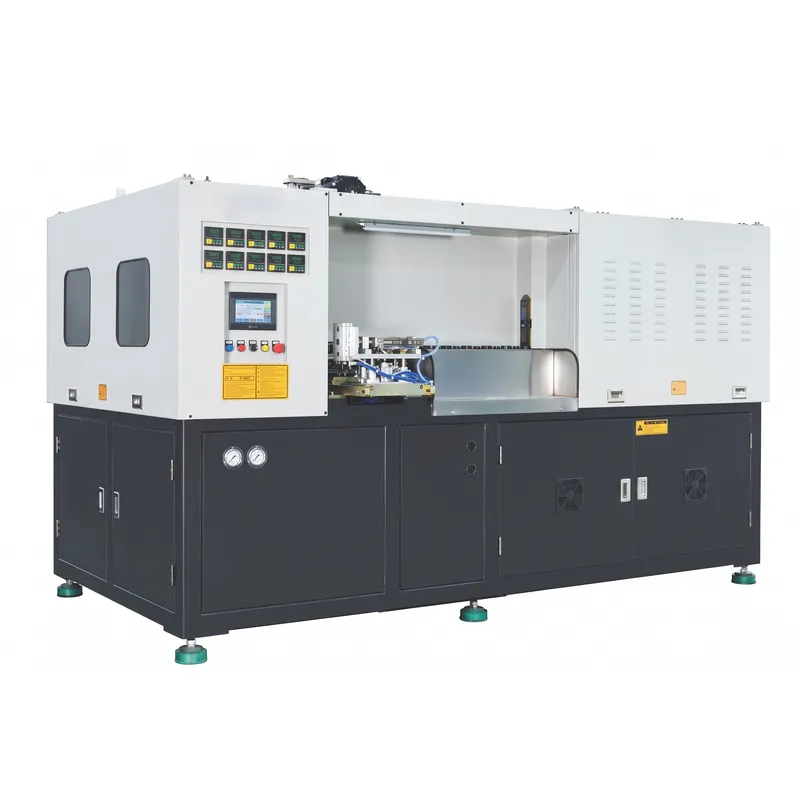
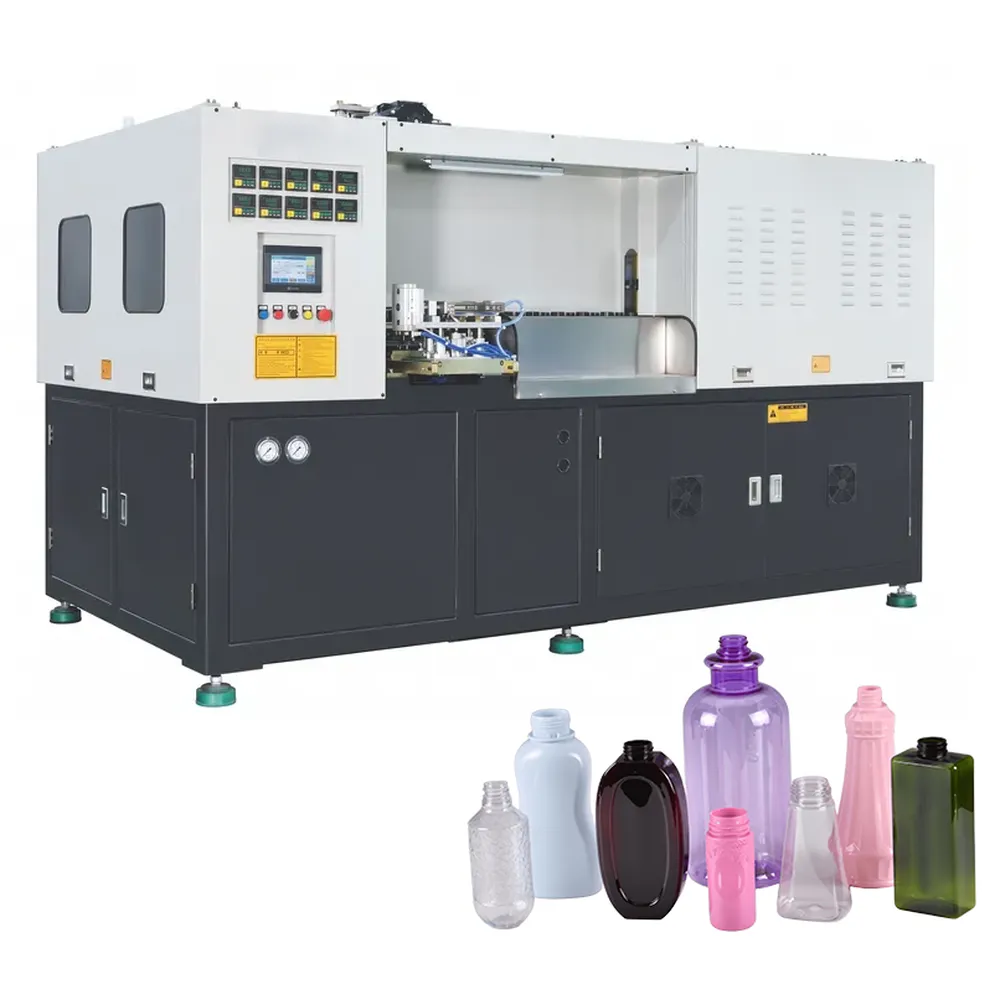
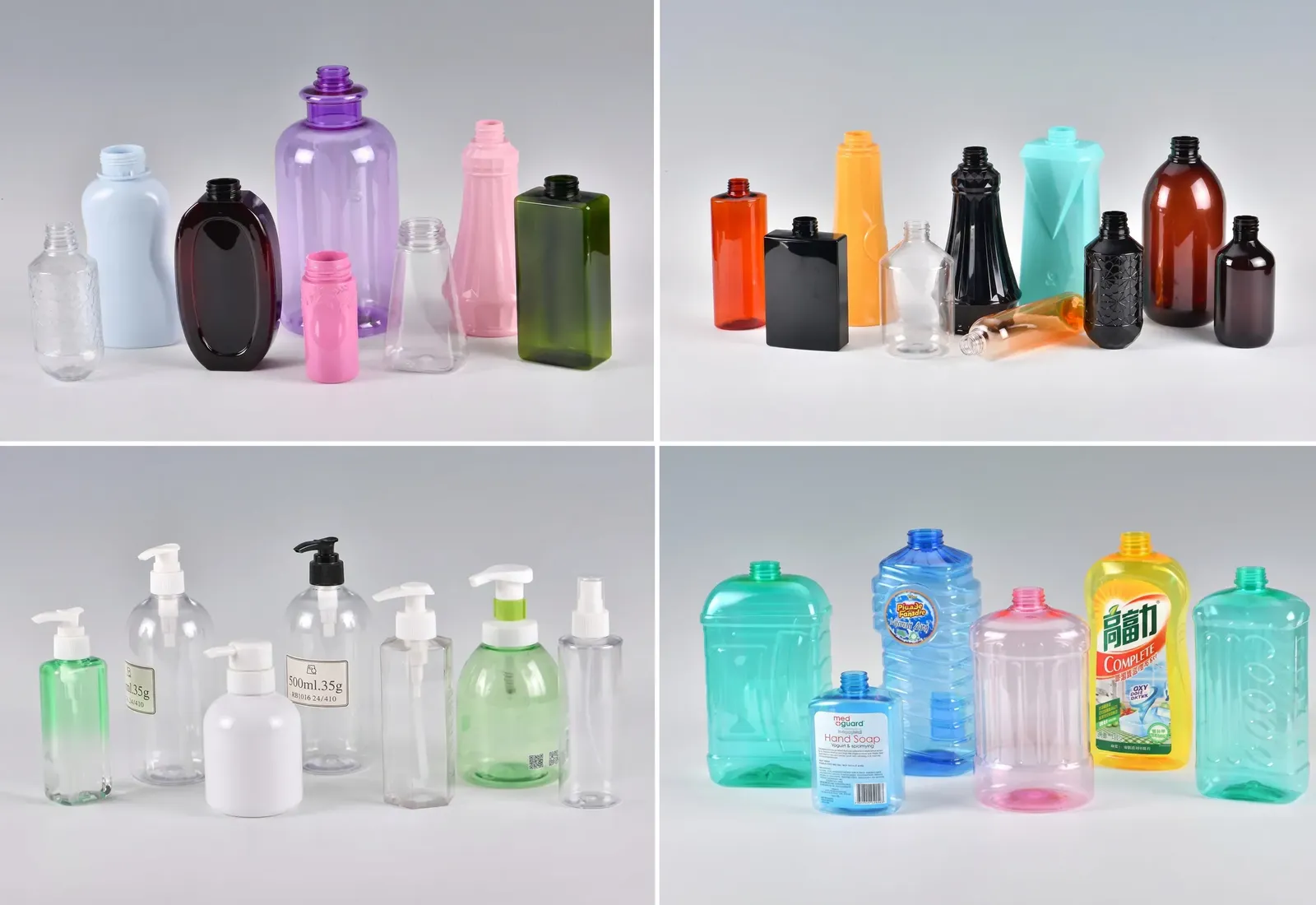
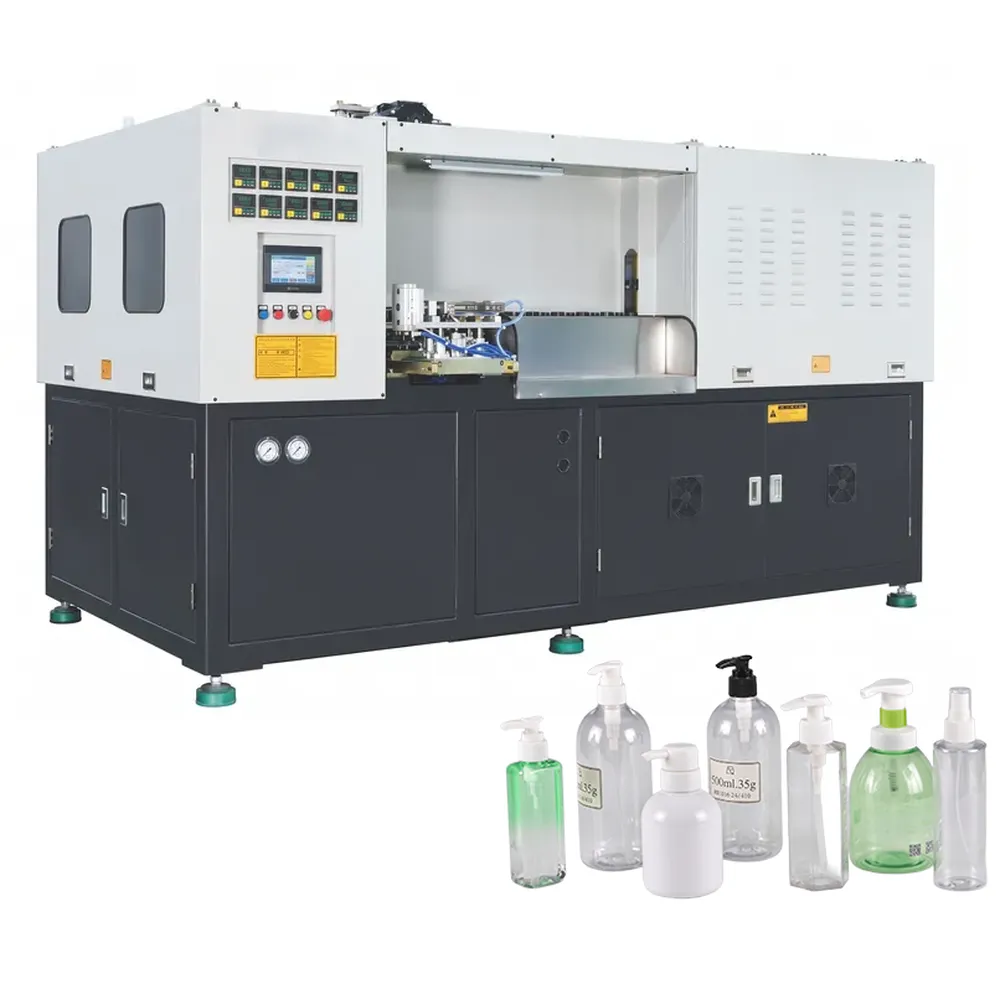
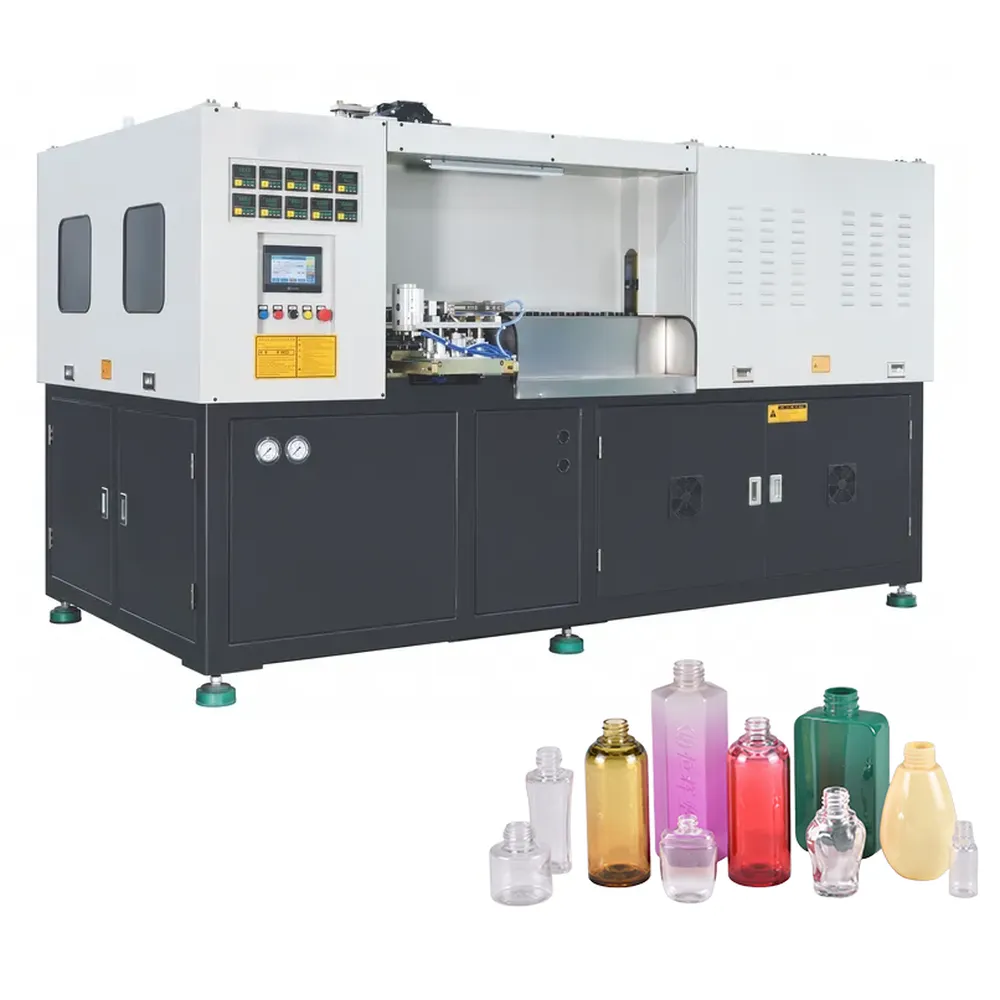
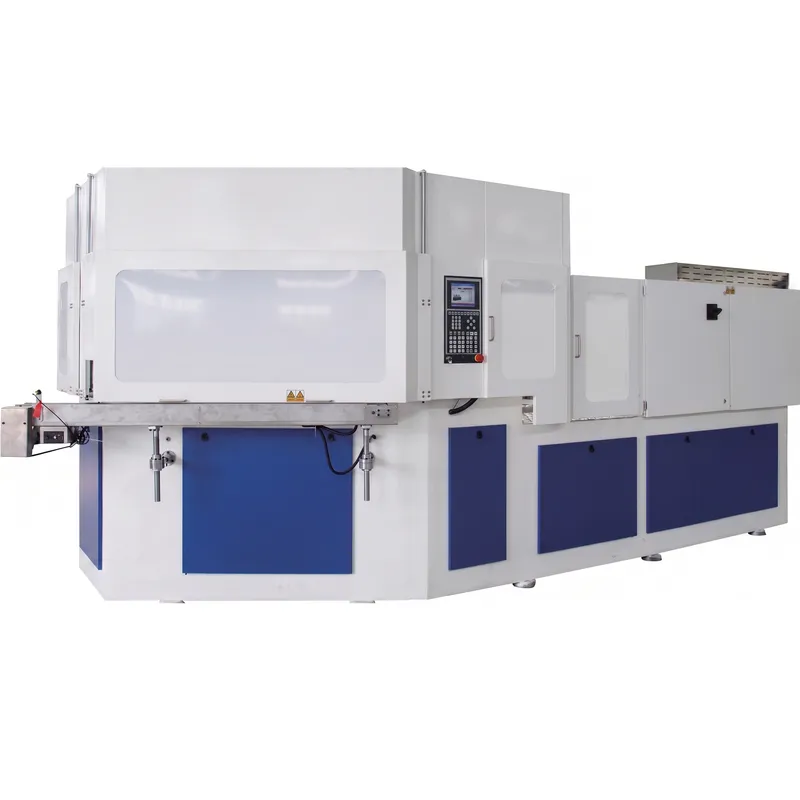
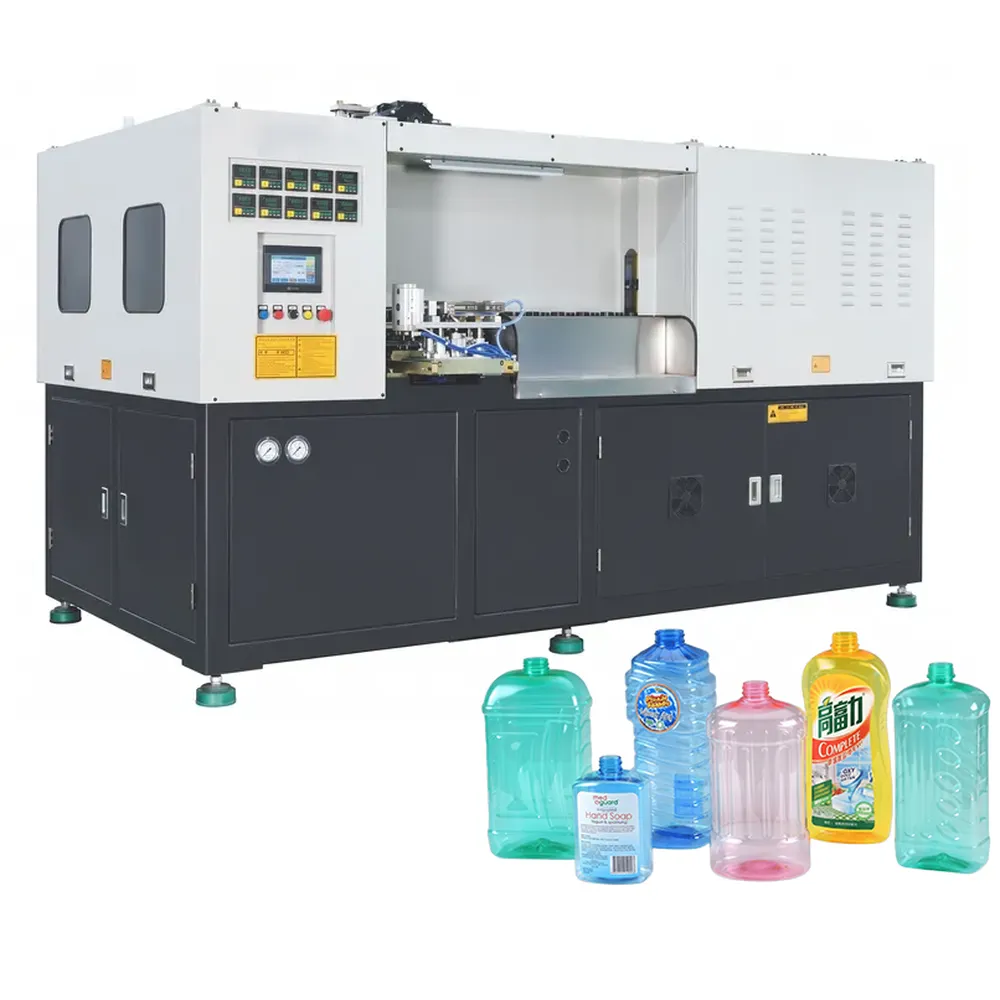
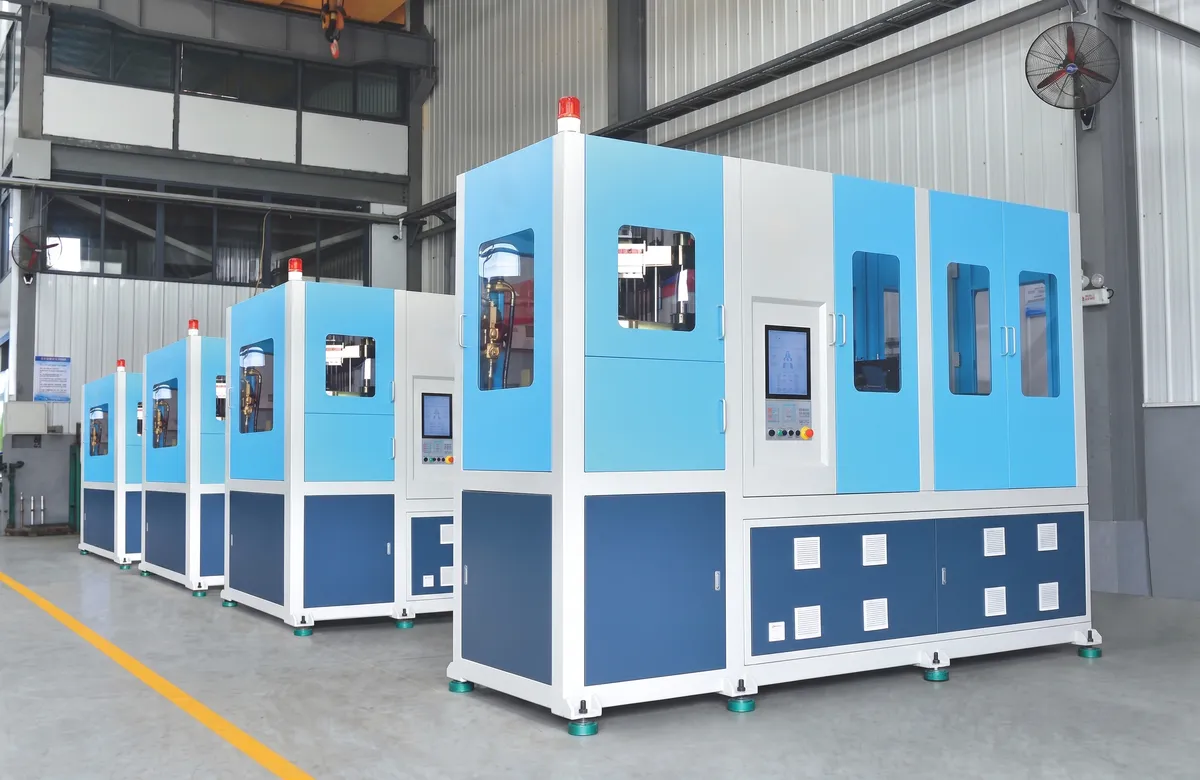
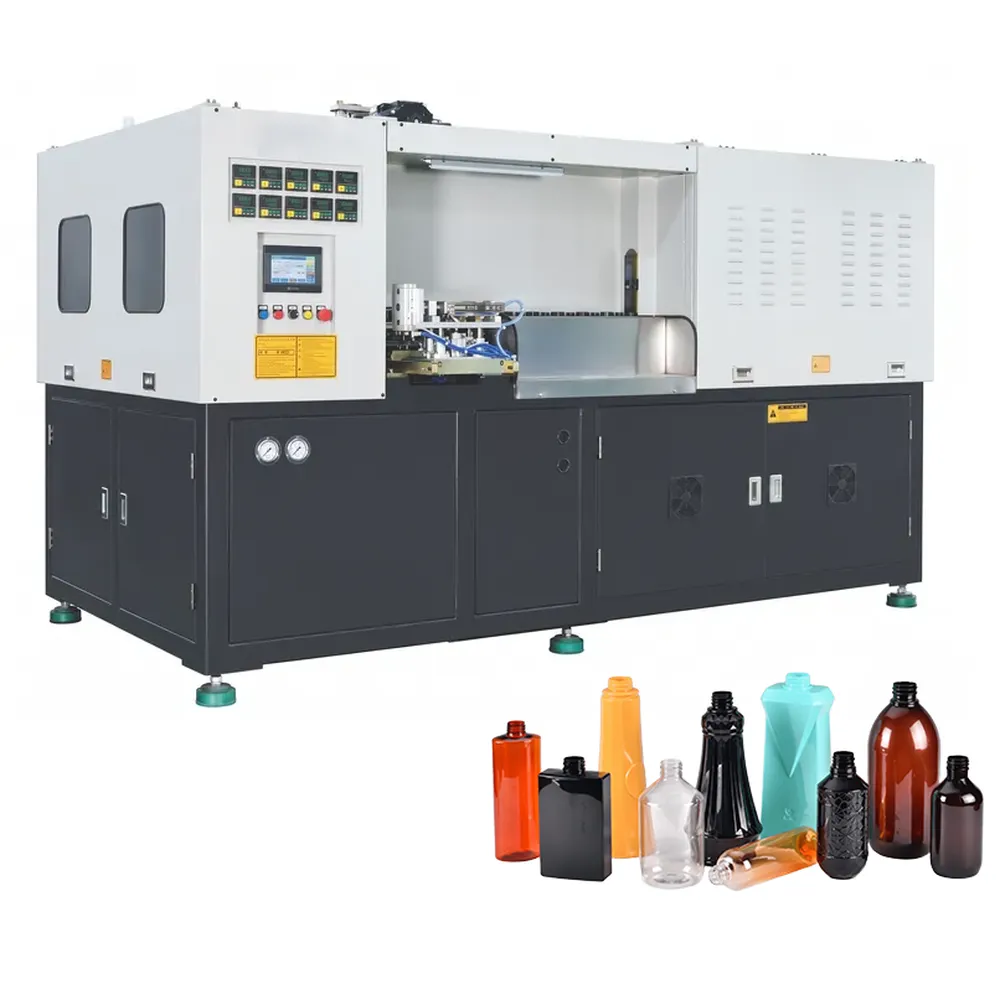
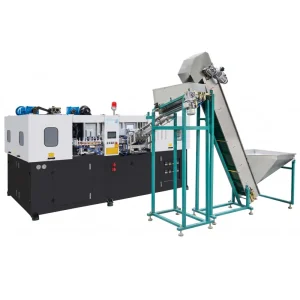
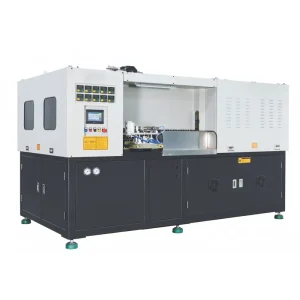
Máy thổi khuôn tự động hoàn toàn EPA.ES-4C76 dùng để sản xuất chai đựng hóa chất tiêu dùng hàng ngày và mỹ phẩm.
Máy thổi khuôn EPA.ES-4C76 là máy ép thổi tự động hiệu suất cao, được thiết kế chuyên dụng cho ngành sản xuất chai lọ hóa chất và mỹ phẩm hàng ngày. Tích hợp động cơ servo đạt tiêu chuẩn quốc tế, bộ giảm tốc chính xác và hệ thống điều khiển PLC tiên tiến, máy thổi khuôn PET tự động này mang lại sự ổn định, độ tin cậy và hiệu quả năng lượng vượt trội trong môi trường sản xuất liên tục 24/7. Thích hợp để thổi nhiều loại chai mỹ phẩm PET và PETG với các hình dạng và đường kính khác nhau, bao gồm cả các loại chai có hình dạng đặc biệt phức tạp đòi hỏi độ chính xác cao nhất.
The EPA.ES-4C76 is a high-performance, fully automatic blow molding machine purpose-built for the daily chemical and cosmetic bottle manufacturing sector. Incorporating internationally recognized servo motors, precision reducers, and an advanced PLC-based control system, this automatic PET blow molding machine delivers outstanding stability, reliability, and energy efficiency in round-the-clock production environments. Suitable for blowing a wide variety of PET and PETG cosmetic bottles in different shapes and diameters, including complex special-shaped containers that demand the highest precision, the EPA.ES-4C76 stands out as a dependable plastic blow molding machine for brands that require consistent output and impeccable bottle quality.
From body lotion and shampoo bottles to fine-mist perfume and high-end serum containers, the EPA.ES-4C76 covers the full spectrum of cosmetic packaging requirements. With 4 cavities, a theoretical output of 4,800 bottles per hour, and a maximum container volume of 700 ml, this industrial blow molding machine adapts seamlessly to the demands of modern automated production lines. As one of the most respected blow molding machine suppliers in the market, Ever-Power integrates cutting-edge components with a streamlined mechanical structure, making the EPA.ES-4C76 easy to operate, maintain, and scale.
Thông số kỹ thuật
| Người mẫu | Đơn vị | EPA.ES-4C76 | |
|---|---|---|---|
| Khuôn đúc | Hành trình kẹp | mm | 100 |
| Khoảng cách mở khuôn | mm | 300 | |
| Khoảng cách gần với khuôn | mm | 200 | |
| Động tác kéo giãn | mm | 350 | |
| Khoảng cách mở khuôn | mm | 50 | |
| Khoảng cách gần với khuôn | mm | 76 | |
| Giá đỡ phôi | 96 | ||
| Sâu răng | 4 | ||
| Thùng chứa | Thể tích tối đa của thùng chứa | ml | 700 |
| Phạm vi đường kính cổ | mm | 48 | |
| Đường kính tối đa của thùng chứa | mm | 68 | |
| Chiều cao tối đa của thùng chứa | mm | 240 | |
| Sản lượng lý thuyết | bph | 4800 | |
| Hệ thống điện | Công suất sưởi tối đa | kw | 40 |
| Công suất sưởi ấm | kw | 18 | |
| Hệ thống không khí | Áp suất hoạt động | kg/cm² | 7 |
| Tiêu thụ không khí áp suất thấp | lít/phút | 800 | |
| Áp suất thổi | kg/cm² | 35 | |
| Tiêu thụ khí nén cao | lít/phút | 3900 | |
| Nước làm mát | Áp suất hoạt động | kg/cm² | 5-6 |
| Nhiệt độ | ℃ | 8-12 | |
| Tốc độ dòng chảy | lít/phút | 30 | |
| Máy móc | Kích thước (Dài*Rộng*Cao) | mm | 3290*1850*2260 |
| Cân nặng | kg | 3500 | |
Key Features of EPA.ES-4C76 Fully Automatic Blow Molding Machine
1. Superior Structural Durability
Every major structural component of the EPA.ES-4C76 is constructed with industrial-grade precision materials to withstand the rigors of continuous operation. The mechanical frame resists wear and vibration while maintaining tight tolerances across all motion axes. This robust build quality minimizes unplanned downtime and extends the machine service life well beyond typical industry averages, making it a long-term asset for any cosmetic or daily chemical packaging manufacturer.
2. Precise PLC-Based Control
The EPA.ES-4C76 features an advanced PLC-based control system with an intuitive touch-screen interface, enabling operators to set, monitor, and fine-tune every production parameter in real time. Heating zone temperatures, blowing pressure, stretching speed, and cycle timing are all precisely managed, resulting in uniform wall thickness and neck dimension accuracy across every batch. This level of control reduces reject rates significantly and maintains consistent product quality at scale.
3. High-Speed Production Output
With a theoretical output of 4,800 bottles per hour and 4 cavities per cycle, the EPA.ES-4C76 is engineered for high-volume, continuous production. Whether your facility runs single-shift or 24-hour operations, this high speed blow molding machine sustains throughput without compromising dimensional accuracy or bottle wall consistency. It is ideally suited for brands scaling their daily chemical or cosmetic packaging lines.
4. Phạm vi ứng dụng đa dạng
Engineered for flexibility, the EPA.ES-4C76 processes PET and PETG materials to produce bottles for cosmetics, personal care, household chemicals, pharmaceutical liquids, food-grade condiments, and more. Its generous container diameter range of up to 68 mm and maximum height of 240 mm accommodate a broad spectrum of bottle designs, including irregular and asymmetric special-shaped containers that challenge conventional plastic blow molding machines. A single platform, multiple industries.
5. Energy-Efficient Servo Drive System
The EPA.ES-4C76 employs internationally branded servo motors and intelligent energy management across all motion axes, reducing electrical consumption significantly compared to conventional hydraulic-driven machines. With a standard heating power of just 18 kW against a maximum capacity of 40 kW, the machine draws power precisely when and where it is needed. This energy-efficient design lowers operating costs per bottle and aligns with the sustainability targets of forward-thinking manufacturers.
6. Vận hành hoàn toàn tự động
As a fully automatic blow molding machine, the EPA.ES-4C76 automates the entire production sequence from preform loading and heating through stretch-blow molding to bottle discharge. Minimal human intervention is required during steady-state production, which lowers labor costs, eliminates handling-related contamination, and dramatically improves operational efficiency. Automated fault detection and alarm systems further enhance uptime by alerting operators to deviations before they escalate into costly production stoppages.
Blow Molding Machine Process
Chuẩn bị nguyên liệu thô
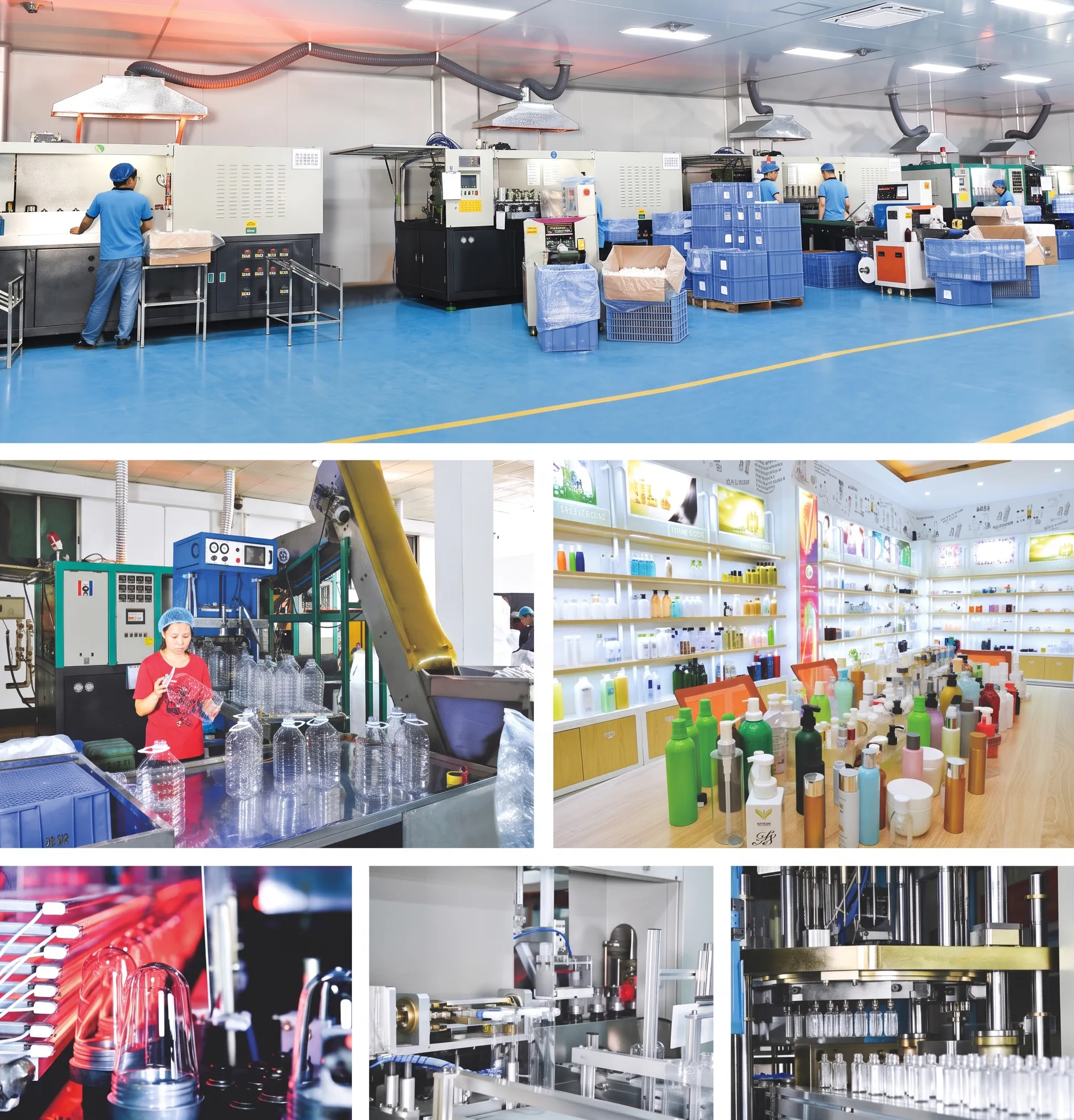
Raw materials for the injection stretch blow molding machine process, primarily PET and PETG resins, undergo rigorous screening, moisture drying, blending, and controlled feeding before entering production. PET resin must be dried to a moisture content below 50 ppm to prevent hydrolytic degradation during processing. This preparation stage is critical to ensuring the mechanical strength, clarity, and food-grade safety of the finished cosmetic bottle. Proper raw material handling eliminates defects such as haze, bubbles, and uneven wall thickness at the source.
Injection Molding of Preforms
Dried resin is fed into the injection unit where it is heated, melted, and plasticized to a precise melt temperature before being injected under controlled pressure into the preform mold cavities. The injection molding stage determines the neck finish accuracy, preform weight, and wall distribution profile that will govern the quality of the blown bottle. Process parameters, including melt temperature, injection speed, packing pressure, and cooling time, are all governed by the PLC control system to ensure cavity-to-cavity consistency across the 96-holder preform system.
Infrared Preheating
Molded preforms are transported through a multi-zone infrared heating oven where their body temperature is raised uniformly to the ideal stretch-blow temperature range, typically between 90 and 110 degrees Celsius for PET. Independent heating zone control allows the operator to program custom temperature profiles that match the wall thickness distribution of each specific preform design. Uniform preheating is the foundation of consistent wall thickness in the finished bottle, particularly in complex special-shaped cosmetic containers where uneven heating causes thinning defects.
Ép thổi kéo giãn
Heated preforms enter the 4-cavity blowing station where a mechanical stretching rod extends axially at controlled speed while high-pressure air at up to 35 kg/cm2 is introduced radially, biaxially orienting the PET material to conform precisely to the blow mold cavity shape. Biaxial orientation through this injection stretch blow molding process dramatically enhances the tensile strength, barrier properties, and optical clarity of the finished bottle wall compared to extrusion blow molding. The stretch stroke of 350 mm accommodates tall cosmetic containers, and precise timing ensures repeatable bottle geometry cycle after cycle.
Applications Areas
Chai đựng mỹ phẩm
The EPA.ES-4C76 excels in producing high-clarity PET cosmetic bottles for serums, foundations, facial toners, and premium skincare products. Its ability to handle special-shaped, asymmetric mold geometries with tight dimensional tolerances makes it the preferred bottle máy thổi khuôn for cosmetic brands that demand distinctive packaging as part of their product identity and shelf appeal.
Chai đựng hóa chất
For household and industrial chemical packaging, the EPA.ES-4C76 produces sturdy PET and PETG bottles capable of withstanding the chemical loads of detergents, disinfectants, surface cleaners, and fabric softeners. The machine outputs bottles with uniform wall strength and reliable neck-finish accuracy, ensuring leak-free sealing essential for chemical product distribution and retail shelf placement.
Chai thuốc
Precision neck-finish tolerances and consistent wall thickness distribution make the EPA.ES-4C76 suitable for pharmaceutical liquid packaging, including oral syrups, antiseptic solutions, and topical preparations. The machine supports GMP-aligned production workflows and integrates smoothly with downstream capping, labeling, and filling equipment used in regulated pharmaceutical packaging environments.
Chai đựng đồ uống
With its high-pressure blowing capability of 35 kg/cm2 and biaxial stretch orientation, the EPA.ES-4C76 produces PET bottle blow molding outputs with excellent CO2 barrier retention and drop-impact resistance, meeting the rigorous standards of juice, functional drink, and mineral water producers who require high-transparency, food-safe PET packaging in moderate to smaller volume sizes.
Chai đựng thức ăn
The EPA.ES-4C76 supports food-safe production of PETG and PET containers for condiments, sauces, cooking oils in smaller sizes, and salad dressings. Its controlled blowing and cooling process ensures the dimensional stability required for tamper-evident closure systems and ensures that each bottle meets the food-contact material standards demanded by both retail buyers and food safety certification bodies globally.
Chai dầu gội
As a dedicated daily chemical blow molding machine, the EPA.ES-4C76 is particularly well suited to shampoo, conditioner, and body wash bottle production. Its robust 4-cavity output, wide neck diameter range, and compatibility with curved and ergonomic body shapes make it a competitive choice for personal care brands producing standard 200 to 700 ml PET or PETG shampoo packaging at scale.
Bình sữa
For manufacturers producing infant feeding bottles and baby care packaging, the EPA.ES-4C76 offers the precision and cleanliness required by this sensitive market segment. Its servo-driven operation eliminates hydraulic oil contamination risk, and its tight dimensional control produces baby bottle bodies with the wall clarity and strength that parents and regulatory authorities expect from infant-grade packaging products.
Cosmetic Jar Bottles
Wide-mouth cosmetic jars for face creams, hair masks, body scrubs, and solid serums fall within the production range of the EPA.ES-4C76, leveraging its versatile neck diameter accommodation and robust clamping system. The machine handles wide-opening mold geometries with consistent precision, producing jar bodies with the smooth exterior finish and dimensional uniformity that high-end cosmetic brands require for decoration, labeling, and retail presentation.
Cosmetic Bottle Blow Molding Machine Parts
1. Bộ phận tiêm
The injection unit is the first critical stage of the blow molding machine process. It precisely melts, measures, and injects PET or PETG resin into the preform mold at controlled temperatures and pressures. The servo-driven screw and barrel design ensures consistent melt quality, uniform shot weight, and fast recovery cycles, which directly determines preform quality and downstream bottle integrity. Its sealed barrel prevents material contamination and supports a clean-room compatible production environment.
2. Infrared Heating Oven
The multi-zone infrared heating oven is one of the most important blow molding machine parts for quality control. Independent temperature zones allow precise profiling of heat distribution along the preform body, enabling different temperature gradients for the base, body, and shoulder regions. The 96-preform holder system maximizes thermal conditioning throughput, and reflector optimization reduces heat loss, contributing directly to the machines energy-efficient operation at a standard 18 kW heating load.
3. Bộ phận kẹp
The hydraulic or servo-driven clamping unit holds the blow mold halves together with precisely controlled force during the high-pressure blowing phase. With a clamping stroke of 100 mm and a mold-open distance of 300 mm, the EPA.ES-4C76 clamping system accommodates the full range of cosmetic bottle molds without manual adjustment, enabling rapid mold changeovers. Consistent clamping force prevents flash formation at the parting line and ensures bottle dimensional accuracy batch after batch.
4. Stretch-Blow Unit
The stretch-blow unit combines mechanical axial stretching via a servo-controlled stretch rod with radial pneumatic blowing to biaxially orient the heated preform into the mold cavity. The 350 mm stretching stroke and 35 kg/cm2 blowing pressure are calibrated for PET and PETG to maximize molecular orientation, resulting in bottles with outstanding clarity, drop strength, and pressure resistance. The high-pressure air consumption of 3,900 ltr/min is managed through an efficient valve block system for precise blowing cycle timing.
5. PLC Control System
The programmable logic controller serves as the intelligence center of the EPA.ES-4C76, coordinating all machine subsystems through a centralized touch-screen human machine interface. Operators can store and recall multiple product recipes, enabling fast changeovers between different bottle formats. The control system monitors temperatures, pressures, position encoders, and cycle times in real time and triggers automatic alarms or shutdowns in the event of parameter deviations, protecting both product quality and machine longevity.
6. Cooling Water System
Rapid and uniform mold cooling is essential to cycle time and bottle dimensional stability. The EPA.ES-4C76 cooling water system operates at 5-6 kg/cm2 with a target chiller temperature of 8-12 degrees Celsius and a flow rate of 30 ltr/min, engineered to extract heat from the blow mold efficiently and consistently. Optimized cooling channel geometry in the mold tooling ensures that each bottle releases cleanly from the cavity without distortion, supporting the 4,800 bph theoretical throughput at full production speed.
7. Preform Transfer System
The automated preform transfer mechanism transports molded preforms from the injection station to the heating oven and then to the blow station without manual handling, maintaining both production speed and hygiene standards. Precision gripper tooling holds each preform by the neck ring to prevent body contact contamination, which is especially important for cosmetic and pharmaceutical applications where surface cleanliness of the finished bottle interior is subject to strict quality standards and regulatory requirements.
8. Servo Drive Assembly
Internationally sourced servo motors and matched gear reducers power all primary motion axes of the EPA.ES-4C76, replacing traditional hydraulic drives in key actuation functions. Servo drives deliver precise, repeatable positioning with low noise and minimal heat generation, while recovering energy during deceleration phases for improved overall electrical efficiency. The servo assembly is central to the machines positioning as an all electric blow molding machine alternative, cutting energy bills while improving motion precision and reducing maintenance complexity compared to hydraulic systems.
Extrusion Blow Molding Machine vs Injection Blow Molding Machine
Ép đùn thổi (EBM) là gì?
Extrusion blow molding is a manufacturing process whereby plastic resin is melted and extruded continuously through a die into a hollow tube called a parison. The parison is captured and sealed within a split metal mold. Compressed air is then blown into the parison, forcing the hot plastic outward against the cooled mold walls, shaping it into the desired bottle or container geometry. Once the plastic solidifies, the mold opens and the part is ejected, typically with a flash tail that requires trimming. EBM is widely used for producing large, irregular, or handle-bearing containers such as detergent bottles, fuel tanks, industrial drums, and dairy containers from materials including HDPE, PP, and PET.
Because the parison is formed continuously and the mold halves simply capture it, EBM offers great flexibility in container shape, particularly for asymmetric or multi-layer structures. Tooling costs are lower than injection molding, and containers can range from less than one ounce to 55 gallons in capacity. However, EBM is less precise than injection blow molding, wall thickness control is more variable, and each part requires flash removal operations that generate recoverable but real scrap material. Operator skill has a significant influence on container weight and quality consistency.
Ép phun thổi (IBM) là gì?
Injection blow molding begins with a conventional injection molding step in which the plastic is melted, injected into a cavity, and molded around a core pin to form a precise preform. This preform is then transferred to a blowing station where it is expanded by compressed air into the final bottle shape within a blow mold. Unlike EBM, the preform in IBM is an injection-molded part with tightly controlled dimensions, particularly at the neck finish, which is shaped entirely by injection rather than blow molding and therefore holds extremely precise thread and sealing surface geometry.
IBM is a scrap-free process. There is no flash to trim, no material to reclaim. Wall thickness distribution is highly controllable through preform design, and weight control is extremely precise. Unit costs are very competitive for small to medium capacity containers below approximately 500 ml. IBM is the method of choice for pharmaceutical, cosmetic, and personal care packaging where consistent neck finish accuracy, high clarity, and lightweight construction are all essential. The EPA.ES-4C76 operates on the injection stretch blow molding principle, which adds a biaxial stretching step to IBM, further enhancing bottle strength, clarity, and barrier performance.
Types of Materials Compared
EBM typically processes:
- Polyetylen mật độ cao (HDPE)
- Polypropylene (PP)
- Polyethylene terephthalate (PET) for specific forms
IBM typically processes:
- Acrylic and polycarbonate
- Polyoxymethylene (POM)
- PET, PETG, and various engineering resins
Products and Shapes
IBM is typically used to form more precise, lighter-weight parts. EBM is used for manufacturing larger, more hollow parts like bottles and containers. Extrusion blow molding can produce more complex shapes including those with handles, while injection blow molding produces large volumes of high-quality, dimensionally accurate parts quickly. Containers requiring handles are better suited for EBM, while wide-mouth containers and precision neck finishes favor IBM. The greater the annual production quantity and the smaller the container, the more IBM economics favor the process.
Mold Design Differences
For IBM, a high-precision match between both halves of the preform mold and the blow mold is essential, and most engineering investment goes into tooling. IBM requires two types of molds (preform and blow), while EBM requires only one. In EBM, there is more design flexibility in the parting line and wall thickness management. IBM tooling costs are substantially higher than EBM, but IBM moulds deliver superior neck finish accuracy that EBM cannot match, which is critical for pharmaceutical and cosmetic closure integrity.
 |
 |
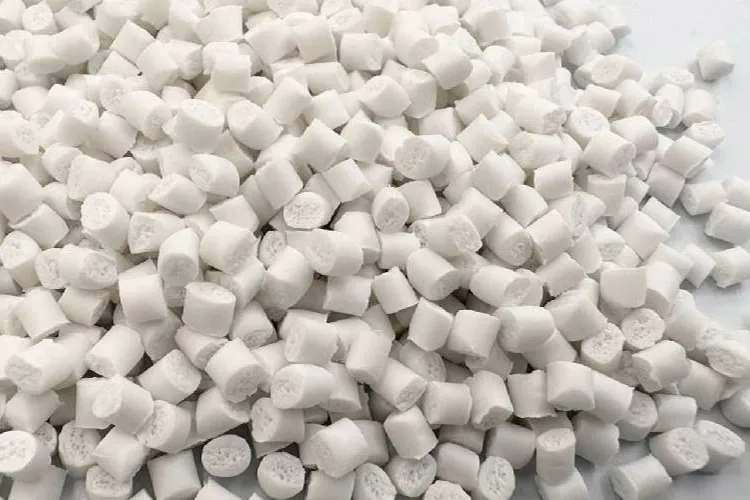
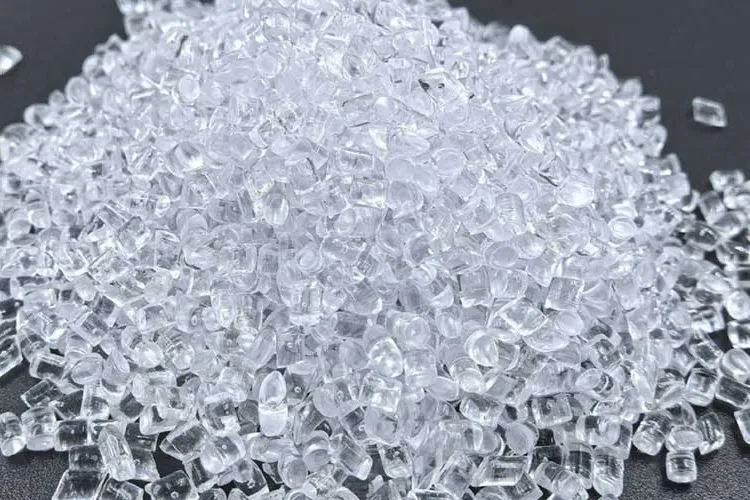
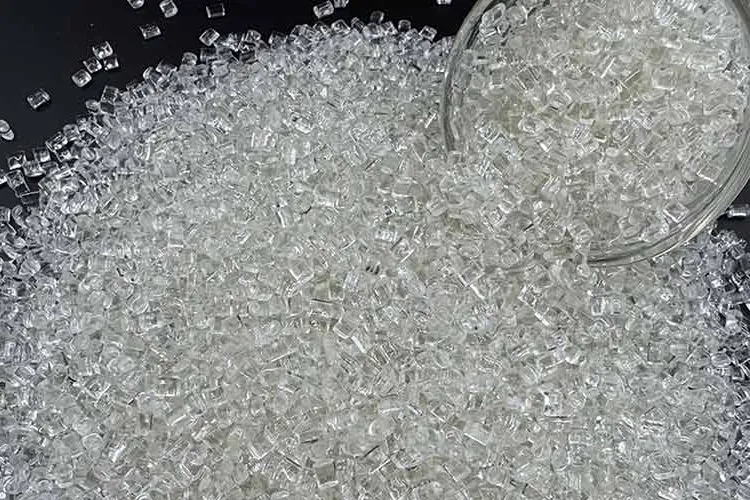
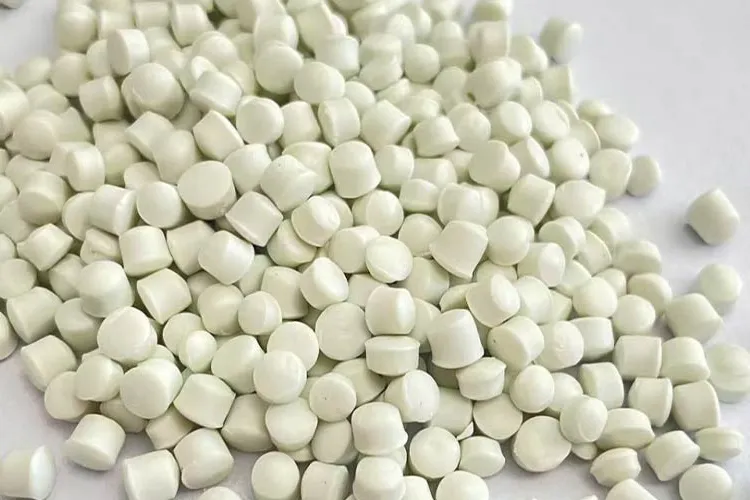
Nguyên liệu thô tương thích
PET (Polyethylene Terephthalate)
PET is the primary resin processed by the EPA.ES-4C76 and the most widely used material in plastic bottle blow molding machine applications. It offers exceptional optical clarity, excellent strength-to-weight ratio, outstanding food safety credentials, and strong CO2 and oxygen barrier performance. PET is ideal for mineral water, carbonated beverages, edible oils, pharmaceuticals, and premium cosmetic packaging requiring crystal-clear transparency and high gloss finish.
PETG (Polyethylene Terephthalate Glycol)
PETG is a modified form of PET with enhanced impact toughness and flexibility, making it particularly valuable for cosmetic packaging that requires scratch resistance and a premium tactile feel. PETG offers similar optical clarity to PET but processes at lower temperatures and is less prone to stress whitening during stretch blow molding, making it an excellent choice for complex special-shaped cosmetic bottles and containers requiring vivid color transparency.
PP (Polypropylene)
Polypropylene is valued for its excellent high-temperature resistance, making it the material of choice for hot-fill packaging applications where the container must withstand sterilization temperatures. PP is widely used in food packaging, pharmaceutical bottles, and certain chemical containers where both heat resistance and chemical compatibility are required. The EPA.ES-4C76 can be configured to process PP for applicable bottle formats within its container dimension specifications.
PC (Polycarbonate)
Polycarbonate delivers exceptional impact resistance and high-temperature stability combined with outstanding optical clarity, making it the premium choice for reusable water bottles, baby feeding bottles, and laboratory-grade containers. PC maintains dimensional stability at elevated temperatures and provides superior protection for sensitive contents. For manufacturers producing premium reusable packaging or specialty products requiring BPA-free PC alternatives such as Tritan, the EPA.ES-4C76 offers the precision necessary for demanding PC applications.
PE (Polyethylene)
Polyethylene, in both HDPE and LDPE grades, is known for its excellent chemical resistance, flexibility, and moisture barrier properties. PE is extensively used for household chemical packaging, personal care squeeze bottles, and certain food-grade containers. LDPE offers particularly soft, flexible characteristics ideal for dispensing packages, while HDPE provides rigidity and broad chemical resistance. PE-compatible machine configurations are an important part of a comprehensive two-stage blow molding machine product range.
Specialty Resins (PCTG, Tritan, PLA)
Beyond standard resins, Ever-Power machines are engineered to handle a range of specialty plastics including PCTG, Tritan copolyester, and PLA biodegradable resins, reflecting the growing demand for BPA-free and sustainable packaging materials. Tritan offers outstanding clarity and dishwasher durability for reusable containers, while PLA aligns with eco-certification requirements for brands marketing to environmentally conscious consumers. Compatibility with these materials makes the EPA.ES-4C76 a future-ready plastic blow molding machine investment.
 |
 |
 |
 |
Daily Chemical Blow Molding Machine Mould Features
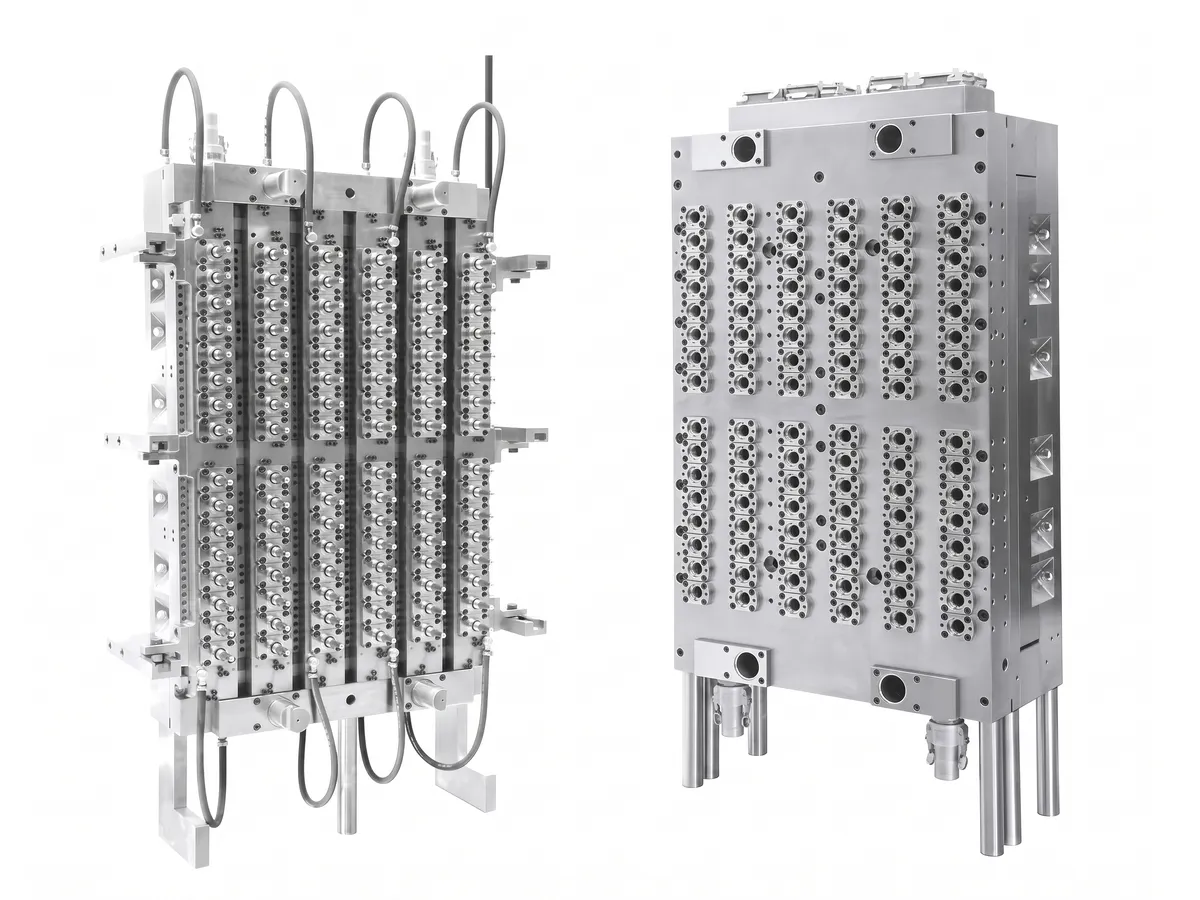
Khuôn ép phun phôi
- The die lip design is composed of two precisely matched parts that guarantee coaxial alignment between the preform body and neck during the formation cycle, ensuring consistent wall distribution and neck thread accuracy essential for reliable cap sealing on cosmetic and daily chemical containers.
- A rationally engineered cooling water channel network runs through all mold plates, optimizing heat extraction from the preform surface uniformly and enabling rapid cycle times without compromising preform dimensional stability or creating residual thermal stresses in the material.
- All forming components of the preform mold are manufactured from imported die steel grade 2316, which offers excellent rust resistance and has undergone full hardening heat treatment, ensuring long tool life even in the demanding thermal cycling conditions of high-speed continuous blow molding production.
- Core plates, cavity plates, and all load-bearing structural mold components are fabricated from 420 stainless steel to ensure corrosion resistance and to maintain surface finish integrity over extended production campaigns, protecting against moisture and cleaning chemical exposure in cosmetic packaging environments.
- The modular mold architecture simplifies routine maintenance and component replacement. Standard interchangeable die fittings reduce spare parts inventory requirements and allow technicians to conduct targeted maintenance without dismantling the complete mold assembly, minimizing planned maintenance downtime.
- Advanced mold design allows a single preform mold to produce more than one type of preform through simple core and cavity changeover, giving manufacturers flexibility to produce different preform specifications from a shared mold base, reducing overall tooling investment for multi-SKU bottle portfolios.
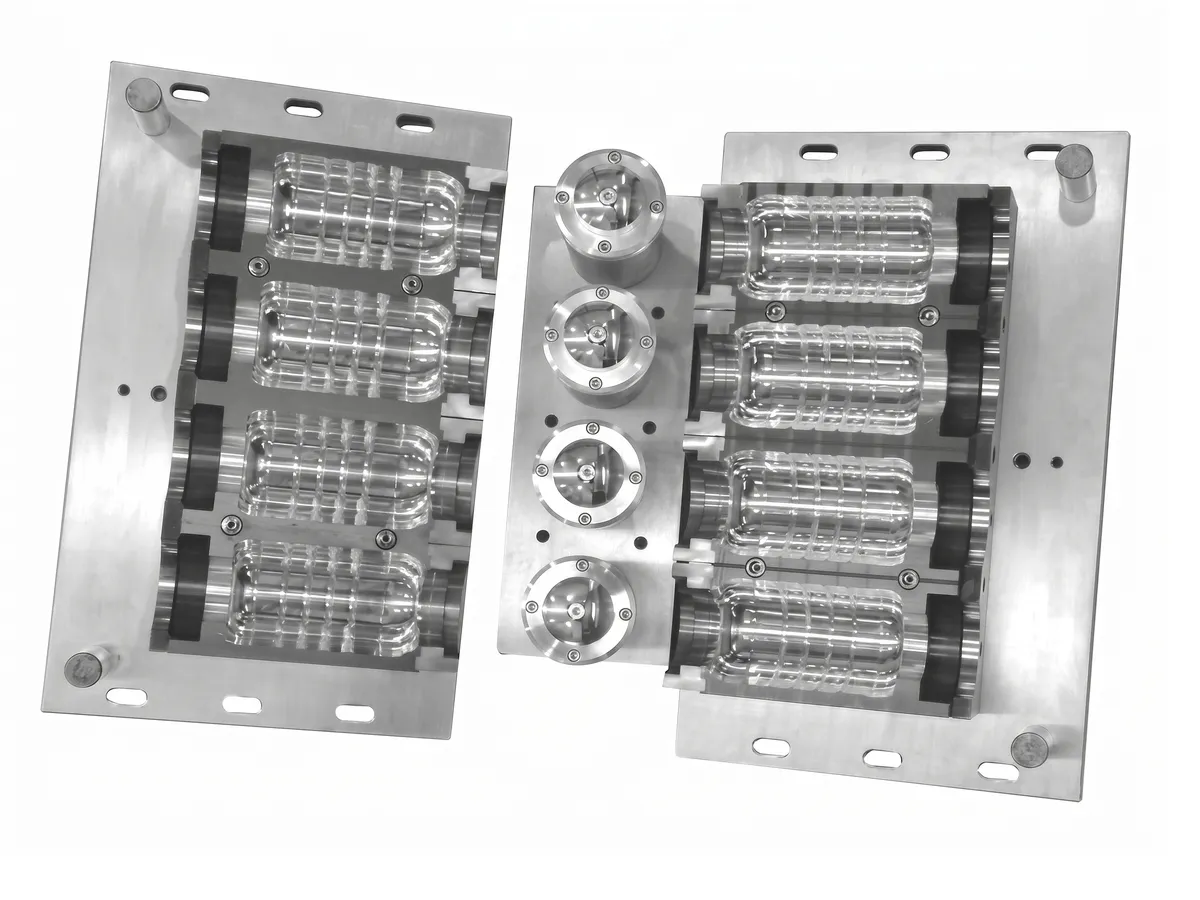
Khuôn thổi
- All blow mold bodies are machined from premium quality alloy steel selected for its hardness, thermal conductivity, and dimensional stability. High material grade ensures that mold cavity surfaces maintain their polished surface finish over millions of production cycles, consistently delivering bottles with superior exterior gloss and clarity that meet cosmetic brand standards.
- Each bottle geometry is designed using advanced 3D CAD and simulation software, enabling virtual validation of the stretch-blow process before tooling is cut. This simulation-driven design approach reduces tooling iterations, accelerates time-to-market for new bottle designs, and ensures that wall thickness distribution targets are met in the first physical trial.
- A versatile range of bottle shapes and designs is available for customer selection, including standard round, oval, square, and complex special-shaped cosmetic bottle geometries. Customization of mold designs is fully supported, allowing brands to bring unique proprietary bottle shapes to production on the EPA.ES-4C76 platform with full tooling support from the Ever-Power engineering team.
- Cooling channel geometry within the blow mold body is designed with computer-aided flow simulation to achieve uniform temperature distribution across the mold cavity surface. Controlled and rapid cooling reduces cycle time while preventing bottle warpage and dimensional variation, critical factors in achieving consistent label application and cap sealing performance in downstream packaging line operations.
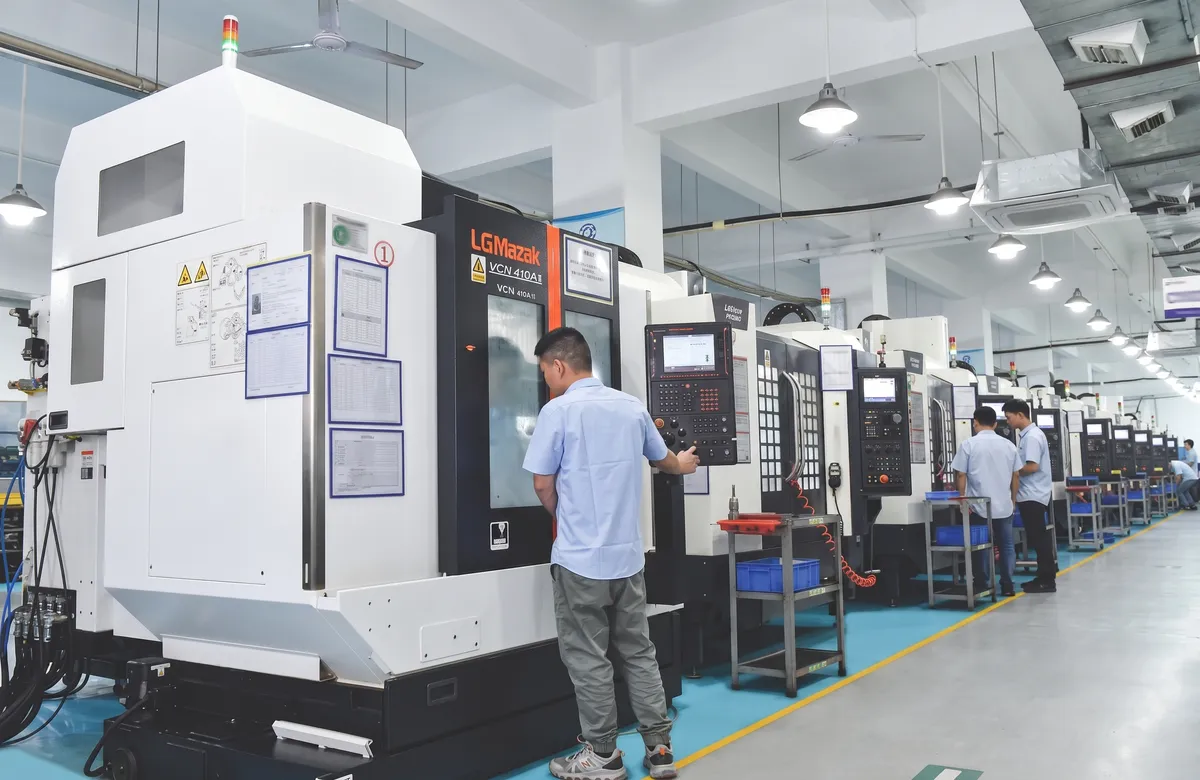
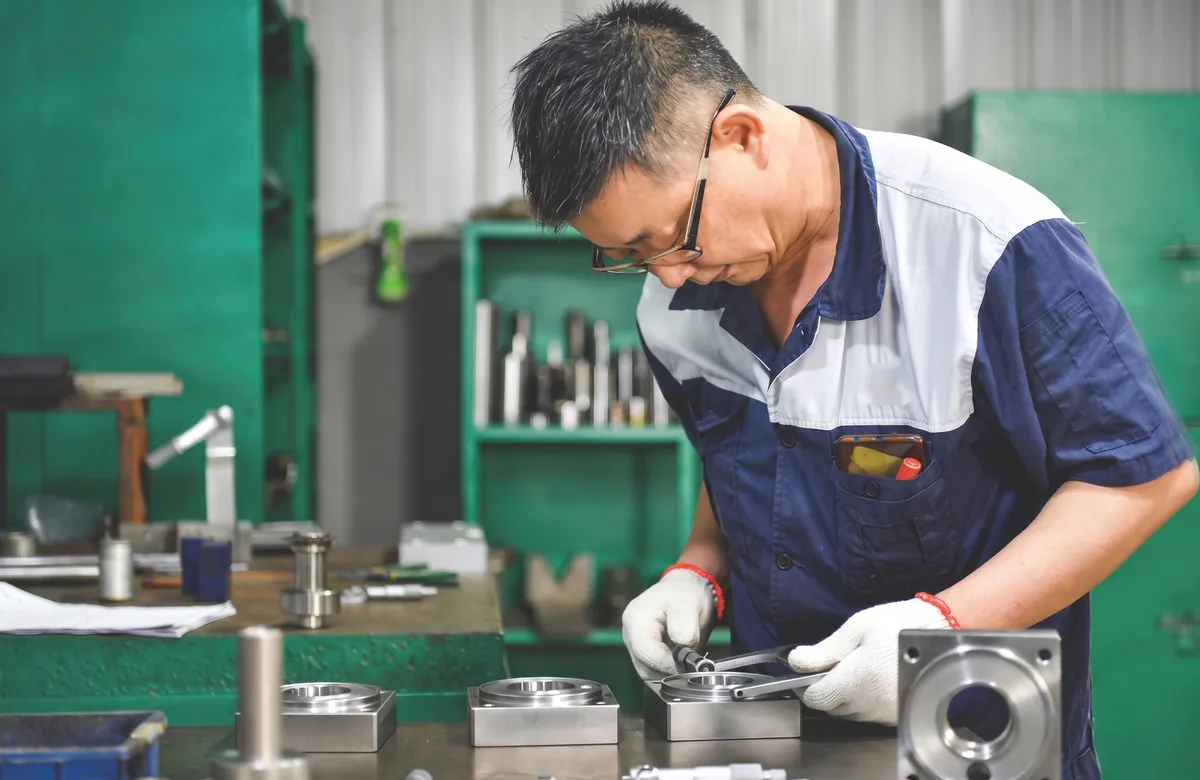
- All metal blow mold parts, including cavity components, base plates, and neck rings, are precision machined on CNC machining centers to exacting tolerances. CNC machining eliminates manual fitting errors and ensures repeatable dimensional accuracy across mold sets, which is essential for maintaining consistent bottle quality when multiple mold sets are operated simultaneously on a high-output production line.
 |
 |
How to Properly Maintain the EPA.ES-4C76 Plastic Blow Molding Machine
1. Daily Inspection Routine
Before each production shift, operators should inspect all pneumatic connections and air supply lines for leaks, verify that cooling water flow rates and temperatures are within specification, check all safety guards and interlocks for correct function, and visually inspect conveyor belts and preform hoppers for debris. Recording inspection findings in a daily log creates a valuable maintenance history that helps identify recurring issues before they escalate into unplanned equipment failures.
2. Lubrication and Mechanical Care
All linear guides, ball screws, cams, and bearing housings on the EPA.ES-4C76 require lubrication according to the manufacturer-specified schedule, typically using food-grade or industrial-grade grease appropriate for the operating temperature and load conditions of each component. Over-lubrication is as damaging as under-lubrication. Servo gearbox oil levels should be checked monthly and replaced annually. Proper lubrication directly reduces wear rates on blow molding machine parts and extends the interval between major overhauls.
3. Heating System Maintenance
Infrared heating lamps in the oven should be inspected weekly for any signs of discoloration, cracking, or reduced output, as degraded lamps cause inconsistent preform heating that directly impacts bottle quality and wall thickness distribution. Lamp reflector surfaces should be cleaned regularly to maintain their reflective efficiency and ensure accurate heat profiling. Temperature sensor calibration should be verified quarterly to ensure that the PLC setpoints correspond accurately to actual oven zone temperatures experienced by the preforms.
4. Mold Care and Cleaning
Blow molds and preform molds should be cleaned after each production run using approved non-corrosive cleaning agents and soft cloths to remove PET residue, release agents, and condensation deposits from cavity surfaces. Cooling channel blockages should be flushed periodically with a descaling solution to maintain heat transfer efficiency and prevent cycle time creep. Mold cavity surfaces should be inspected for scratches or pitting and polished as necessary to prevent surface defect transfer to the bottle exterior finish.
5. Electrical and Control System Checks
The PLC control system, servo drives, and all electrical cabinet connections should be inspected monthly for loose terminals, signs of overheating, and accumulation of dust or moisture. Electrical enclosures should be cleaned with filtered compressed air to prevent dust buildup that can cause component overheating. PLC program backups should be maintained on external media and updated whenever production parameters are changed. Servo drive firmware should be kept current in line with manufacturer recommendations to ensure optimal motion control performance.
6. Scheduled Preventive Maintenance Program
Beyond daily and weekly tasks, a structured preventive maintenance calendar covering quarterly, semi-annual, and annual overhaul activities is essential for maximizing the service life of the EPA.ES-4C76. Quarterly tasks include servo motor coupling inspection and tension verification. Semi-annual tasks include screw and barrel wear measurement and high-pressure valve block servicing. Annual tasks include full mechanical alignment verification, seal and O-ring replacement in the blowing circuit, and comprehensive electrical insulation testing. Adhering to this program prevents unplanned breakdowns and protects the capital investment in this industrial blow molding machine.
Tại sao nên chọn máy ép thổi của Ever-Power?
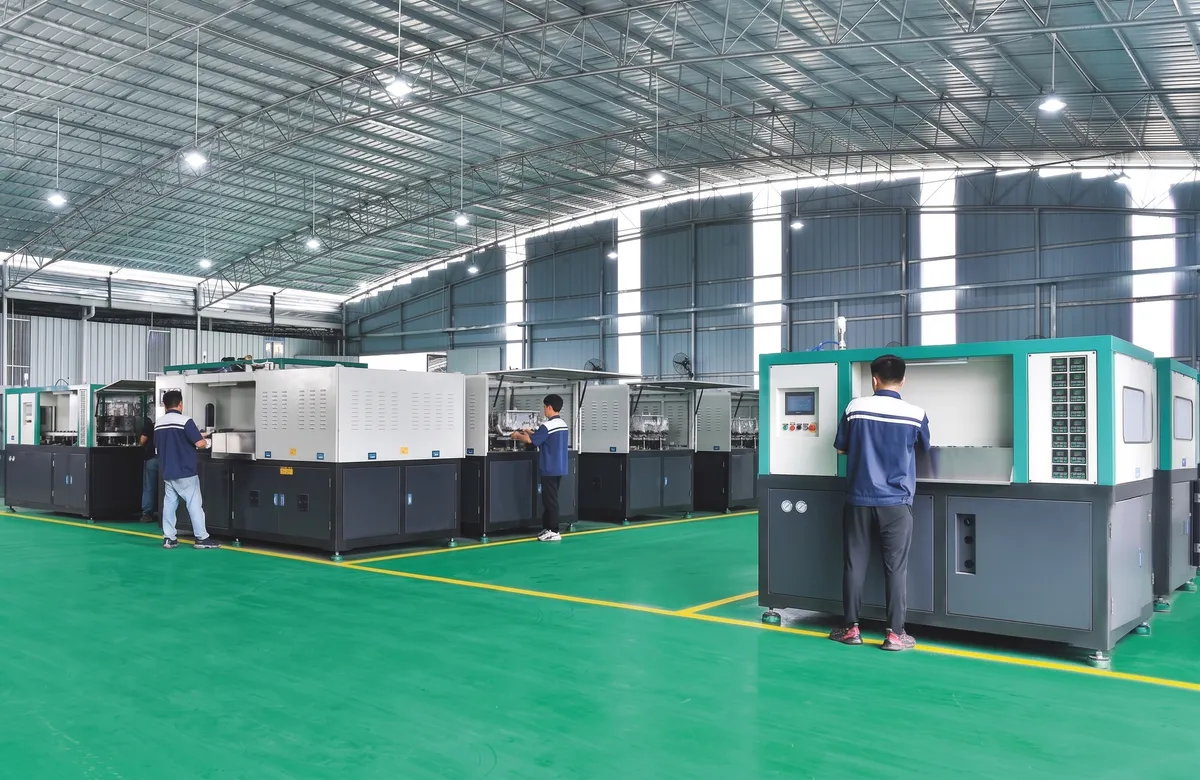
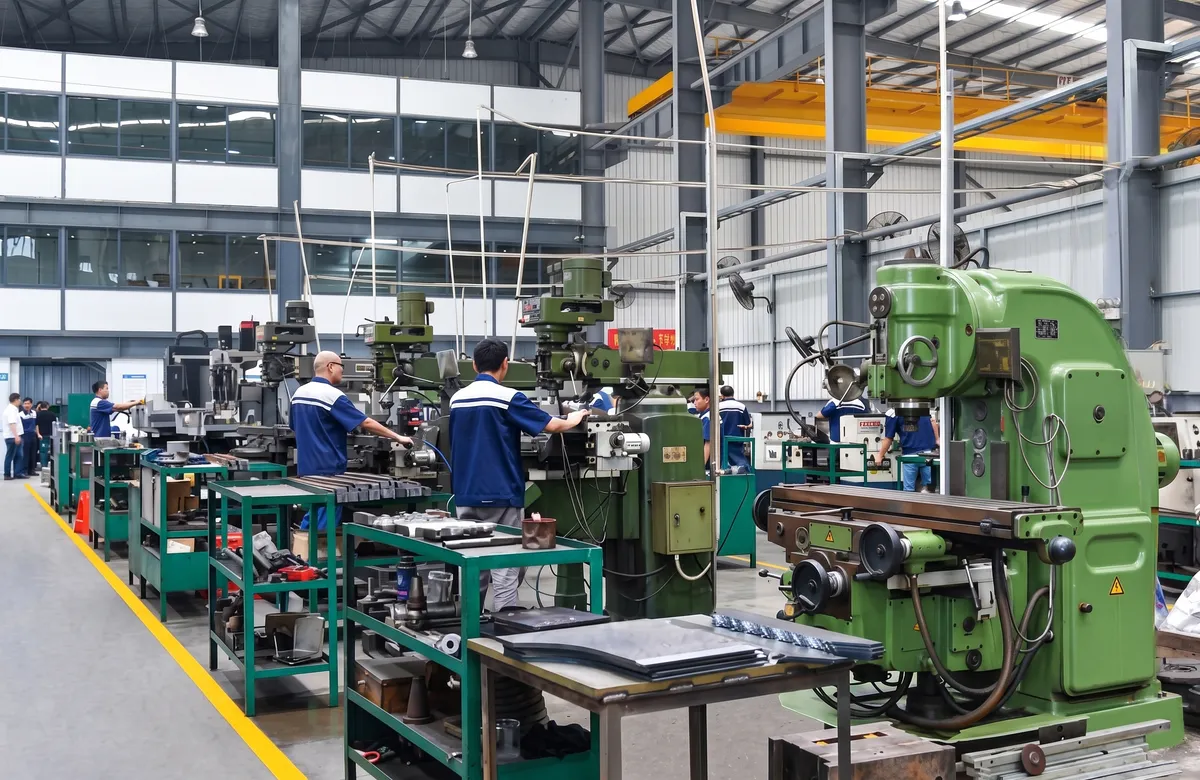
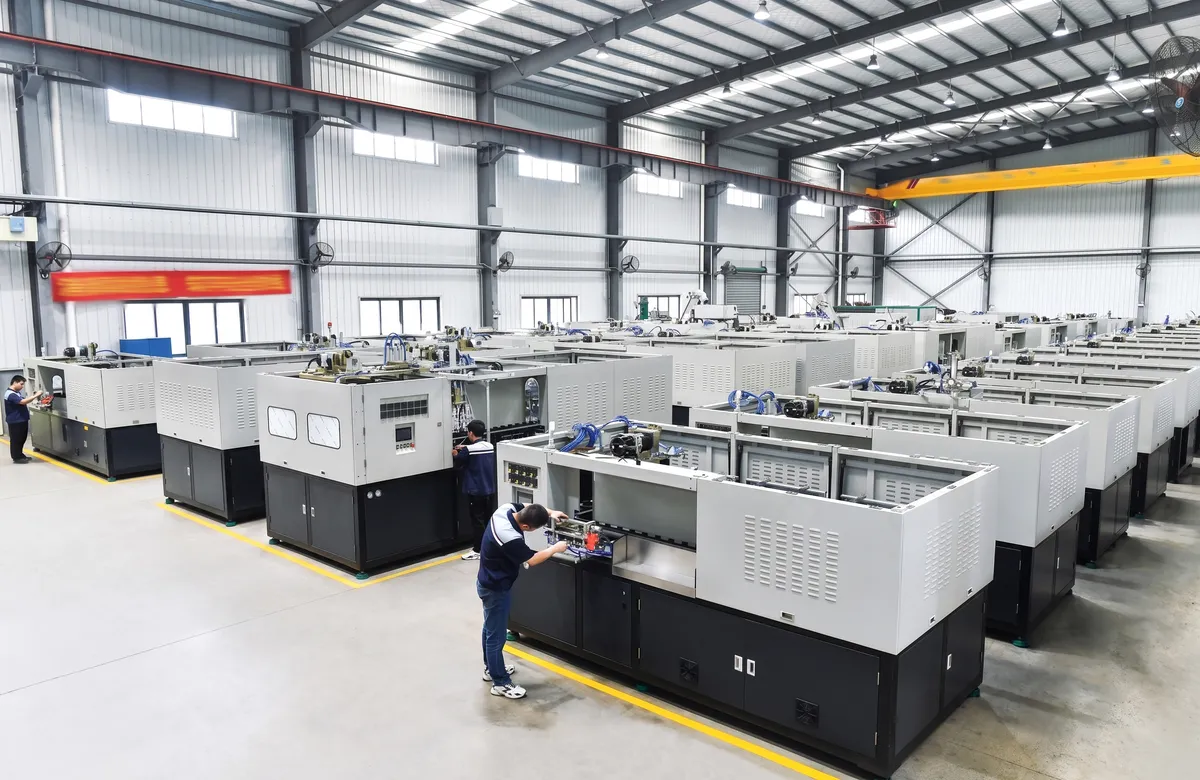
Mexico Ever-Power ISBM Machinery Co., Ltd is a specialist blow molding machine manufacturer primarily engaged in the research, development, production, sales, and international trade of automatic injection blow molding machines and injection stretch blow molding machines. Our product portfolio encompasses injection blow molding machines, extrusion blow molding machines, injection stretch blow molding machines, and a complete range of auxiliary machinery including air compressors, chillers, and preform molds.
Ever-Power maintains an excellent R&D team composed of engineers and technical personnel with deep expertise in injection-blowing machinery and injection-blowing molds, bringing together rich theoretical knowledge and extensive practical production experience. This capability allows us to provide customers with detailed, thoughtful support throughout the entire purchase journey from pre-sale consultation and machine selection through installation, commissioning, operator training, and long-term after-sales technical service.
Our machine applications cover pharmaceutical packaging, food packaging, healthcare and wellness packaging, cosmetic packaging, and general plastic packaging across multiple material types including HDPE, LDPE, PET, PETG, PP, PS, PPSU, PC, Tritan, ABS, PLA, EVA, PCTG, and environmentally certified bio-based corn materials. We produce plastic blow molding machine solutions for containers ranging from 1 ml to 1,000 ml, serving customers across pharmaceutical, cosmetic, food, chemical, and consumer goods sectors worldwide.
Ever-Power adheres to the enterprise development philosophy of self-reliance, integrity, pragmatism, innovation, and responsibility. We build one-stop turnkey project capability to deliver high-end injection-blowing products that satisfy our customers on quality, performance, and total cost of ownership. With an international customer base spanning Mexico, Latin America, Southeast Asia, the Middle East, Europe, and beyond, Ever-Power continues to grow as a globally recognized name among blow molding machine suppliers trusted for engineering quality and service excellence.
 |
 |
 |
 |
 |
 |
Câu hỏi thường gặp
Q: What is the maximum bottle size the EPA.ES-4C76 can produce?
A: The EPA.ES-4C76 can produce bottles with a maximum container volume of 700 ml, a maximum body diameter of 68 mm, and a maximum height of 240 mm. These specifications make it well-suited for the majority of cosmetic and daily chemical bottle formats in the 50 to 700 ml range, including serum bottles, lotion dispensers, shampoo bottles, and specialty shaped packaging. For larger container volumes, Ever-Power offers other models in the ES and AS series with greater capacity.
Q: What materials can this automatic blow molding machine process?
A: The EPA.ES-4C76 is optimized for processing PET and PETG resins, which cover the vast majority of cosmetic and daily chemical bottle requirements. PET offers excellent clarity, food safety, and CO2 barrier performance, while PETG provides enhanced impact toughness and flexibility for complex-shaped containers. The machine can also be configured for PP, PC, and certain specialty resins such as PCTG and Tritan. Material compatibility should be confirmed with our technical team based on your specific bottle design and application requirements.
Q: How does the EPA.ES-4C76 differ from an extrusion blow molding machine?
A: The EPA.ES-4C76 operates on the injection stretch blow molding (ISBM) principle, which produces bottles from injection-molded preforms through biaxial stretching and blowing. This generates significantly higher bottle strength, superior optical clarity, and precise neck finish accuracy compared to extrusion blow molding, which produces bottles from extruded parisons with variable wall thickness and requires flash trimming. ISBM is the preferred process for cosmetic and pharmaceutical packaging where dimensional consistency, aesthetics, and material efficiency are all critical, while extrusion blow molding is typically chosen for large industrial containers and handle-ware.
Q: What is the actual production output of the EPA.ES-4C76?
A: The theoretical output is rated at 4,800 bottles per hour with 4 cavities. In real-world production environments, effective output typically ranges between 90 and 95 percent of theoretical capacity when accounting for cycle-to-cycle variation, mold changeover time, and scheduled maintenance pauses. Actual output also depends on bottle volume, wall thickness, PET grade, and cooling efficiency. Our technical team can help you calculate realistic production capacity planning figures based on your specific bottle specifications and planned operating hours.
Q: Can I use custom bottle molds with this fully automatic blow molding machine?
A: Yes. The EPA.ES-4C76 is designed to accept custom blow molds for proprietary bottle shapes, provided the mold dimensions fall within the machine specifications, specifically a maximum container diameter of 68 mm, maximum height of 240 mm, and a bottle mold-close distance of 76 mm. Ever-Power offers a full mold design and manufacturing service, including 3D CAD design, blowing simulation, CNC machining, and trial testing. We can also work with customer-supplied molds after verifying compatibility with the machine platform.
Hỏi: Sự khác biệt giữa máy ép thổi hai giai đoạn và máy ép thổi một giai đoạn là gì?
A: A two-stage blow molding machine separates the preform injection molding stage from the stretch blow molding stage into two independent processes and machines, allowing preforms to be produced, inspected, and stored before blowing. This offers flexibility for high-volume production and allows quality control at the preform stage. A one-step machine integrates injection and blowing in a single platform where preforms are blown immediately after injection without cooling to room temperature, offering advantages in bottle clarity and hygiene for sensitive applications. The EPA.ES-4C76 offers configuration flexibility to match your production scale and logistics requirements.
Q: What utilities and infrastructure does the EPA.ES-4C76 require?
A: The EPA.ES-4C76 requires a three-phase power supply at standard industrial voltage (confirmed at time of order based on destination country), compressed air at 7 kg/cm2 for low-pressure operations and at 35 kg/cm2 for the blowing circuit, and a chilled water supply at 8-12 degrees Celsius flowing at 30 ltr/min at 5-6 kg/cm2 for mold cooling. The machine footprint is 3,290 x 1,850 mm with a height of 2,260 mm and a weight of 3,500 kg. Adequate floor loading capacity and ventilation in the installation area should be verified by your civil and facilities team prior to equipment delivery.
Q: Does Ever-Power provide after-sales technical support for this PET blow molding machine?
A: Yes. Ever-Power provides comprehensive after-sales technical support including remote troubleshooting via video call and TeamViewer access to the PLC, telephone and email support from our engineering team, on-site installation and commissioning assistance, operator training programs, and a spare parts supply service with standard blow molding machine parts available for rapid dispatch. Our service team covers customers across Mexico, Latin America, and other international markets. Warranty terms and extended service contracts are discussed during the sales process based on your location and production requirements.
Q: How long does it take to change molds on this high speed blow molding machine?
A: Mold changeover time on the EPA.ES-4C76 depends on the experience of the maintenance team and the similarity between the outgoing and incoming mold sets. For experienced operators who have completed multiple changeovers on this model, a full mold set change, including both preform mold and blow mold replacement, heating profile adjustment, and production stabilization, typically requires between two and four hours. Standardizing mold bases and preform holder sizes across your mold portfolio significantly reduces changeover duration and supports the efficient multi-SKU production strategies common in cosmetic contract manufacturing environments.
Q: What certifications does this industrial blow molding machine hold?
A: The EPA.ES-4C76 is manufactured to international quality standards and is CE compliant for export to European and applicable markets. Ever-Power holds multiple national utility model patents for its blow molding machine technology and has received ECM Verification of Compliance certification for applicable machine series. All electrical components are sourced from internationally recognized brands meeting IEC standards. Documentation packages including CE declaration, operation manuals, wiring diagrams, and parts lists are provided with each machine to support installation, compliance verification, and ongoing maintenance requirements at your facility.
Đánh giá của khách hàng
Carlos Mendoza, Cosmetics Industry, Mexico
"We have been operating the EPA.ES-4C76 at our cosmetic bottling facility in Guadalajara for around eight months now, mainly producing 200 ml and 350 ml PET serum bottles with a 48 mm neck. Output has been extremely consistent at around 4,600 bottles per hour in steady state. The servo drive system is noticeably quieter than our previous hydraulic machine and energy bills have dropped considerably. The Ever-Power team was responsive during commissioning and the PLC interface is straightforward for our operators. Very solid machine for the price point."
Priya Ramachandran, Personal Care Packaging, India
"Honestly was a bit uncertain at first about ordering from an overseas blow molding machine manufacturer but the process was professional from quote through to delivery. Machine arrived well packaged, installation was supported remotely and on-site for three days. We are producing special-shaped 450 ml shampoo bottles in PETG and the machine handles the asymmetric mold geometry without issues. Bottle clarity is excellent and our rejection rate is under 1%. Would definitely order again."
Ahmed Al-Rashidi, Pharmaceutical Packaging, Saudi Arabia
"We needed a fully automatic blow molding machine for 100 ml pharmaceutical liquid bottles with very tight neck tolerances for our child-resistant cap system. The EPA.ES-4C76 has delivered dimensional accuracy that meets our QC specification consistently across all 4 cavities. We have been running for about five months with zero unplanned stoppages so far. The cooling system is well designed and our cycle times are better than what the spec sheet promised. Support team replies quickly to technical questions."
Murat Yildirim, Daily Chemical Packaging, Turkey
"The logistics coordination from Ever-Power was really well handled. We are a mid-size daily chemical company in Turkey and importing machinery can be stressful with customs paperwork but their export team prepared complete documentation and even assisted with the technical import certification. Machine setup took two days and we were producing saleable bottles on day three. Output quality for our 300 ml dish soap bottles is exactly what we needed. Happy with the investment."
Nguyễn Thị Lan, Bao bì Mỹ phẩm, Việt Nam
"Running the EPA.ES-4C76 for PET cosmetic jar production. The mold we had was a custom design for a 250 ml wide-mouth cream jar and the machine handled it well. Wall thickness across the jar body is uniform and gloss is high. Only reason for 4 stars rather than 5 is we had a small delay getting a replacement sensor during month two, but the issue was resolved within a week and Ever-Power covered the part cost. Overall the machine quality is good and it does what it says on the spec sheet."
Roberto Lima, Personal Care Industry, Brazil
"Chúng tôi vận hành hai ca sản xuất chai sữa dưỡng thể PET 500 ml. Máy EPA.ES-4C76 đã hoạt động hơn một năm nay và hiệu suất rất ổn định. Mức tiêu thụ năng lượng thấp hơn khoảng 30% so với máy cũ của chúng tôi, vốn là loại thủy lực thông thường. Hệ thống servo mang lại chuyển động rất mượt mà và giảm đáng kể độ rung ở khung máy. Yêu cầu bảo trì rất tối thiểu, chỉ cần bôi trơn thường xuyên và kiểm tra đèn. Hệ thống điều khiển vùng lò nung sơ bộ rất tốt trong việc quản lý sự phân bố nhiệt trên khuôn hình bầu dục của chúng tôi."
Ji-hyun Park, Công ty Gia công Đóng gói, Hàn Quốc
"Chúng tôi là nhà cung cấp máy thổi khuôn theo hợp đồng cho nhiều thương hiệu mỹ phẩm và máy EPA.ES-4C76 là máy đa năng nhất của chúng tôi cho các đơn hàng sản xuất số lượng nhỏ đến trung bình. Chúng tôi luân chuyển giữa bốn khuôn khác nhau cho các khách hàng khác nhau và quá trình thay đổi khuôn có thể được thực hiện dễ dàng với hai người vận hành trong khoảng ba giờ. Chất lượng chai trên tất cả các khuôn đều nhất quán và khách hàng của chúng tôi hài lòng với kích thước và độ trong suốt của sản phẩm. Dịch vụ hậu mãi của Ever-Power đã hỗ trợ chúng tôi tối ưu hóa công thức cho các sản phẩm PETG của chúng tôi."
Andrei Popescu, Bao bì hóa chất gia dụng, Romania
"Máy tốt, giá cả hợp lý. Chúng tôi sản xuất chai đựng dung dịch tẩy rửa gia dụng 700 ml bằng nhựa PET và máy EPA.ES-4C76 đáp ứng được sản lượng cần thiết cho các hợp đồng phân phối bán lẻ của chúng tôi. Hệ thống điều khiển PLC dễ hiểu và dễ thiết lập thông số cho khuôn mới. Tài liệu kỹ thuật đi kèm máy rất đầy đủ. Quá trình ép thổi khuôn cho loại chai cụ thể của chúng tôi mất khoảng hai giờ để điều chỉnh thông số trong ngày đầu tiên và đã hoạt động ổn định kể từ đó. Tôi sẽ giới thiệu máy này cho các nhà sản xuất khác trong lĩnh vực hóa chất gia dụng."
Oluwaseun Adeyemi, Bao bì mỹ phẩm, Nigeria
"Chúng tôi đã đánh giá ba lựa chọn máy ép thổi nhựa trước khi chọn EPA.ES-4C76. Quyết định dựa trên sự kết hợp giữa năng suất, hiệu suất truyền động servo và tổng chi phí sở hữu trong vòng năm năm. Máy Ever-Power đã đáp ứng được cả ba tiêu chí. Sau tám tháng vận hành, chúng tôi liên tục đạt được năng suất gần 4.800 chai/giờ theo thông số kỹ thuật đối với chai mỹ phẩm PET 200 ml. Chất lượng chai đã vượt qua tất cả các cuộc kiểm định của khách hàng thương hiệu. Đội ngũ bán hàng đã hỗ trợ kỹ thuật trước bán hàng rất chu đáo và giúp chúng tôi lựa chọn kích thước máy phù hợp với kế hoạch sản xuất của mình."
Thông tin bổ sung
| Được chỉnh sửa bởi | Yjx |
|---|
Sản phẩm liên quan
-
Máy thổi khuôn tự động hoàn toàn EPA.ES-2C200 dùng cho đồ thủ công và chai lọ hình dạng đặc biệt.
-
EPA.AS-2C114.3 Máy thổi khuôn tự động hoàn toàn dùng cho chai thuốc
-
Máy thổi khuôn tự động hoàn toàn EPA.ES-2C130 dùng để sản xuất chai đựng thuốc trừ sâu và hóa chất.
-
Máy thổi khuôn tự động hoàn toàn EPA.ES-3C114 dùng để sản xuất chai đựng hóa chất tiêu dùng hàng ngày và mỹ phẩm.