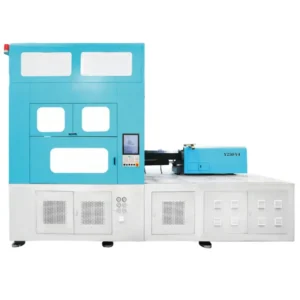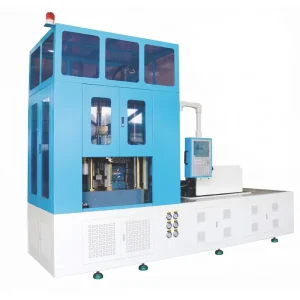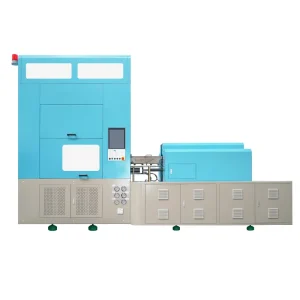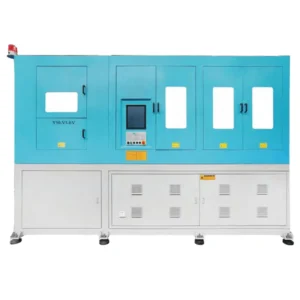
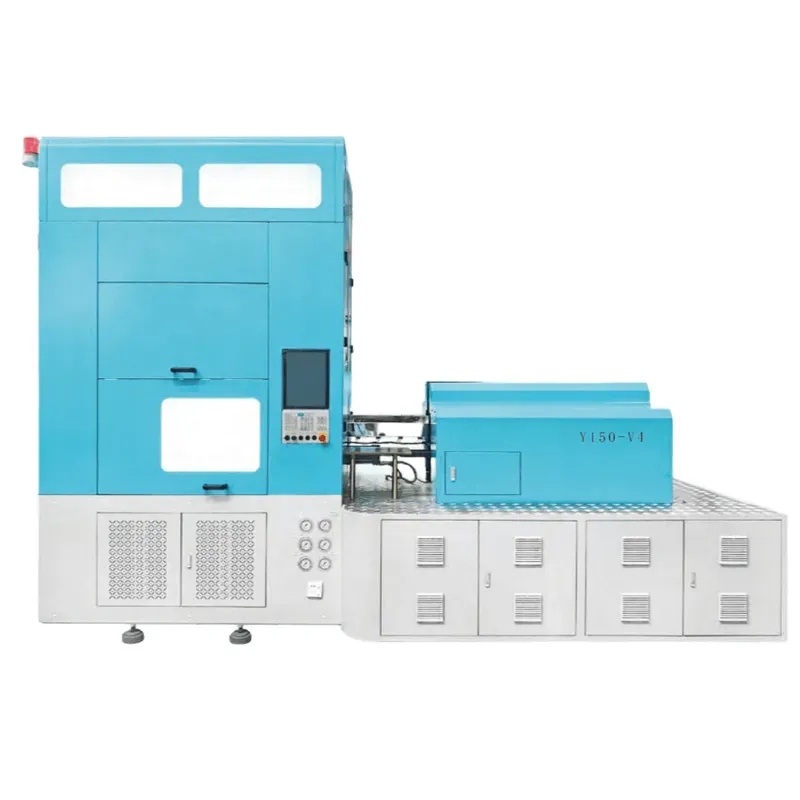
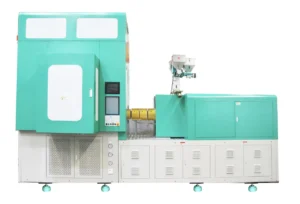
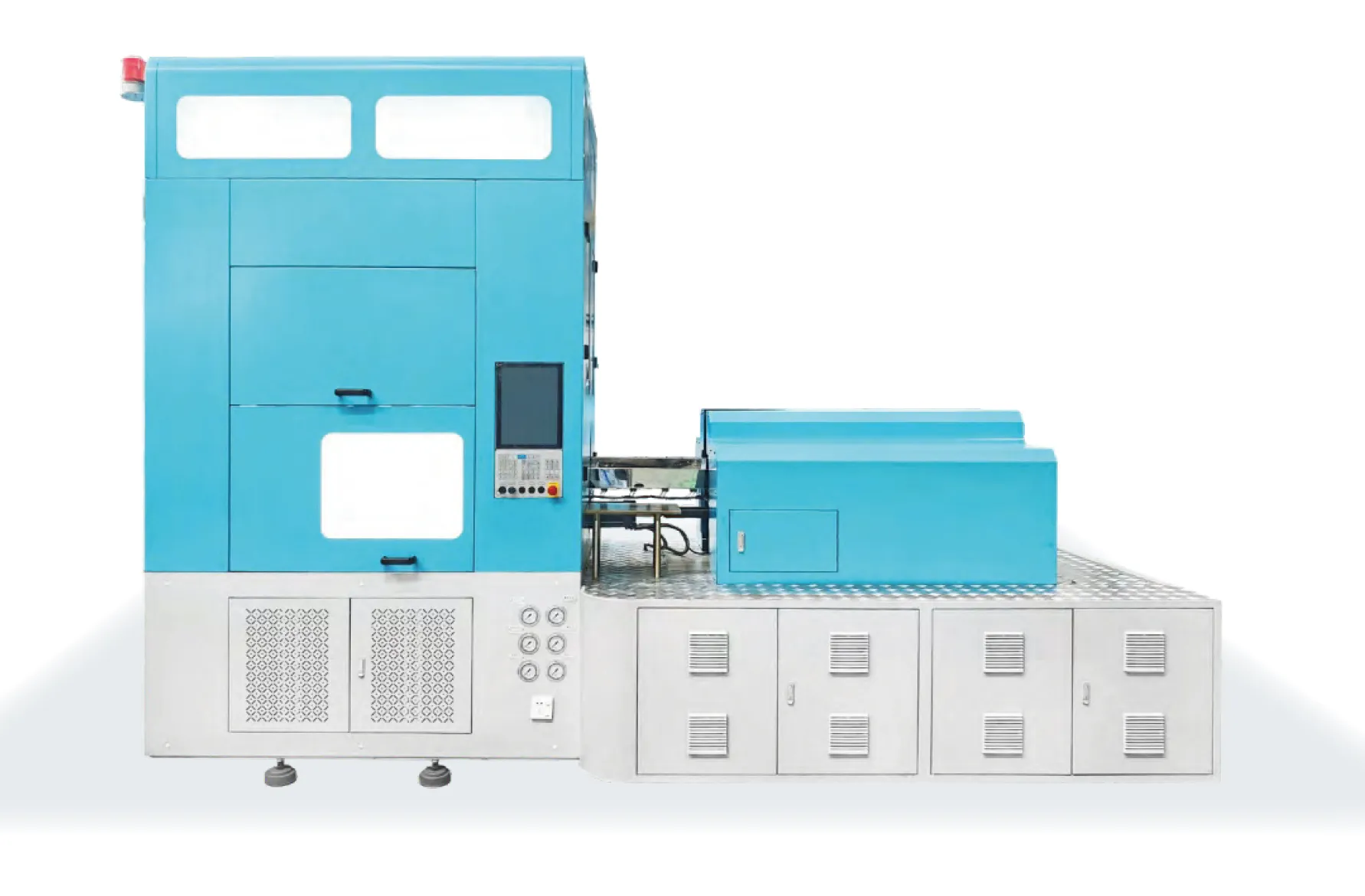
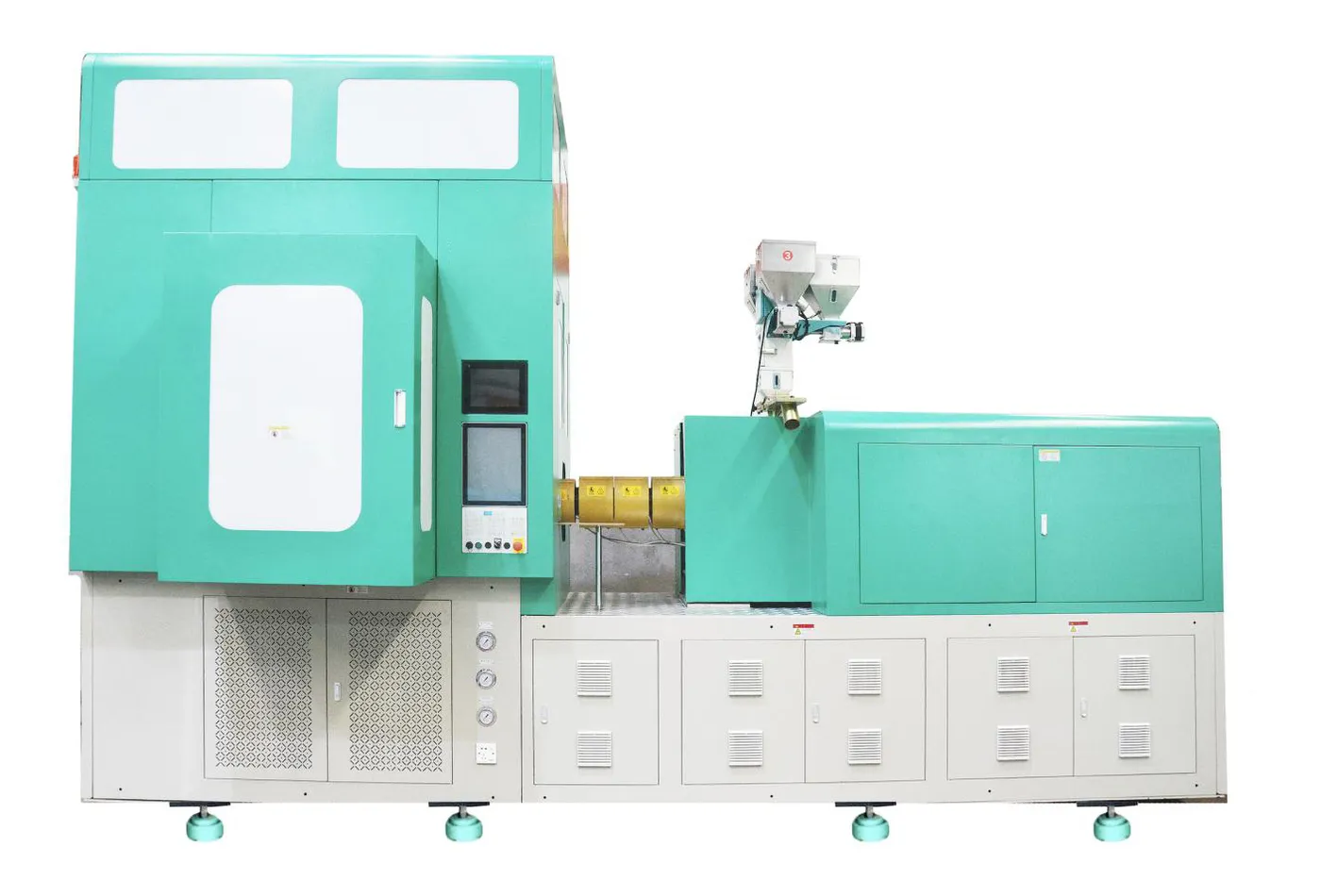
Máy ép phun kéo giãn thổi Y150-V4-B thay thế cho máy AOKI SBIII-100L-20 của Nhật Bản.
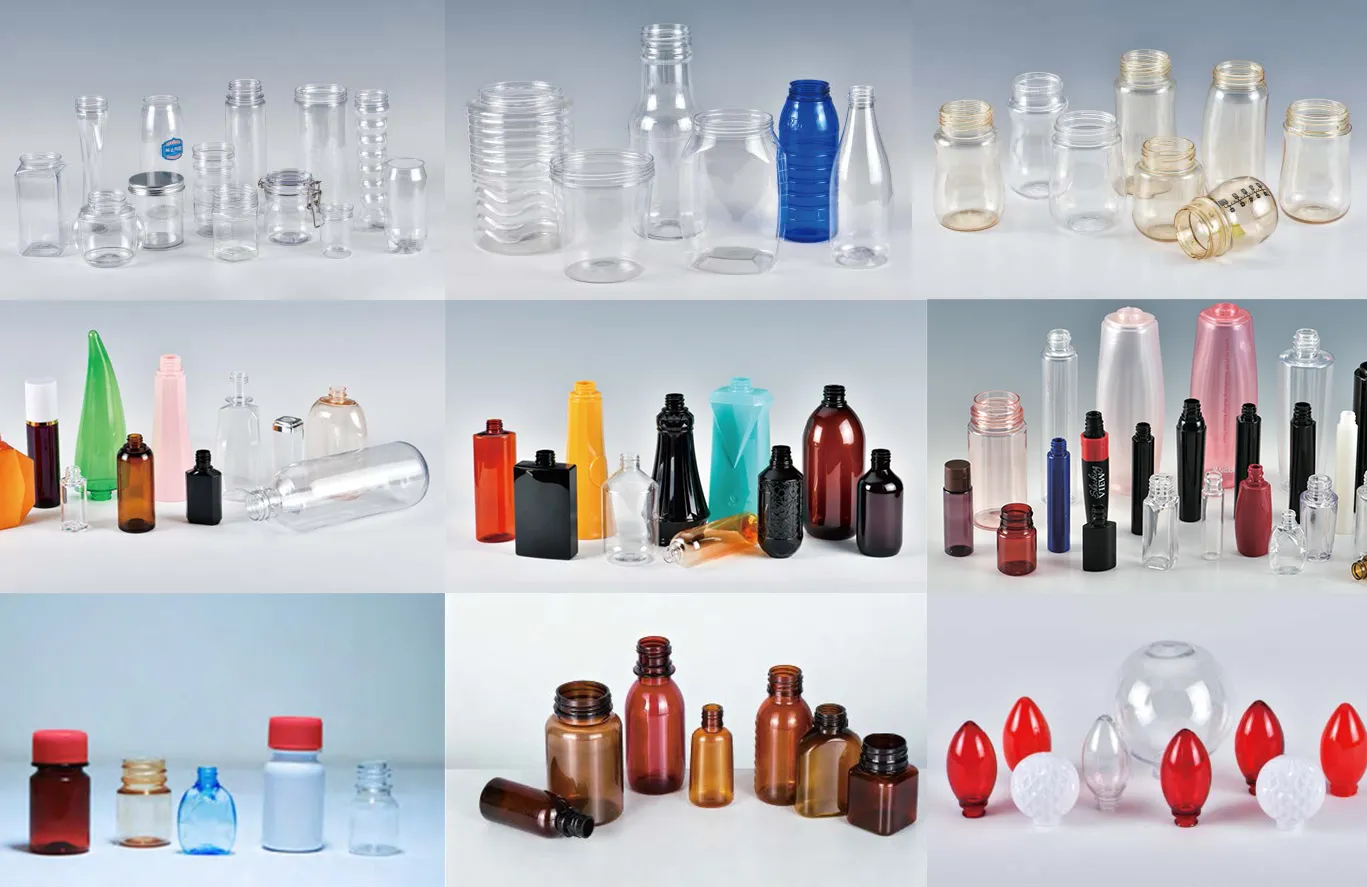
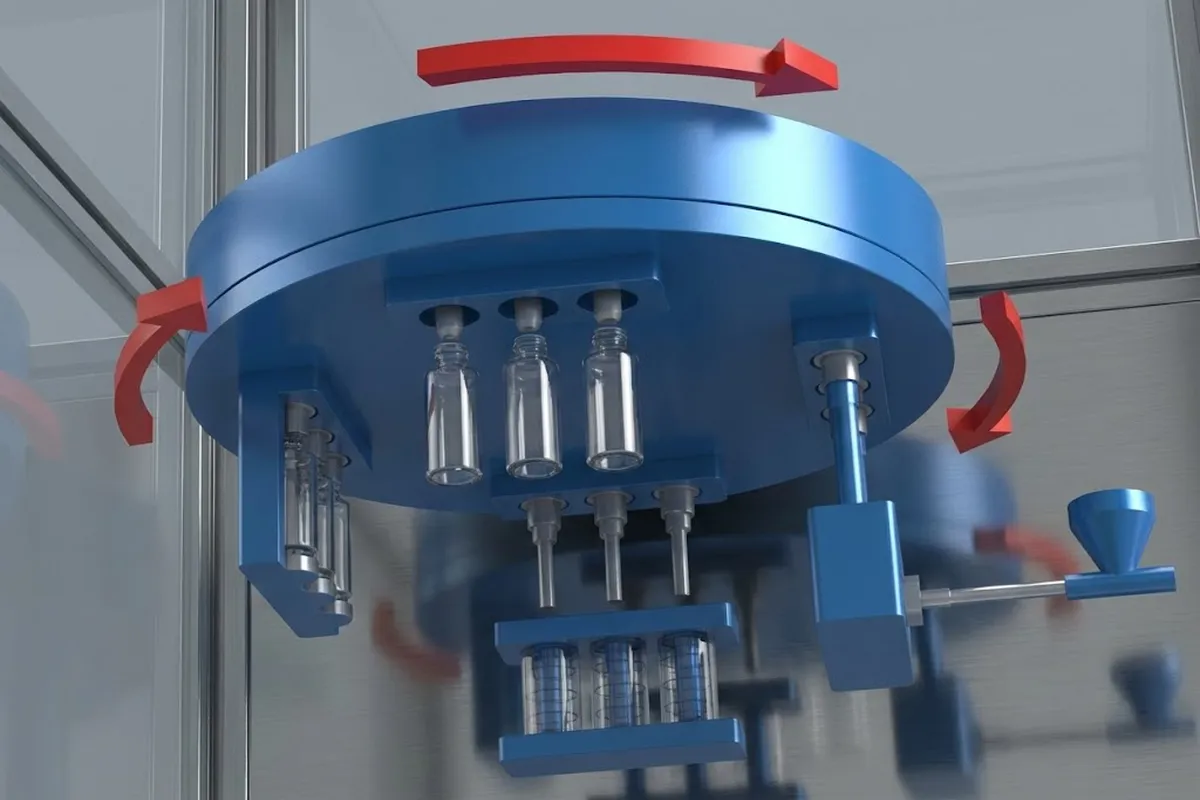
Máy ép thổi kéo giãn một bước hiệu suất cao Y150-V4-B được thiết kế bởi công ty Mexico Ever-Power ISBM Machinery nhằm thay thế trực tiếp và tiết kiệm chi phí cho máy AOKI SBIII-100L-20 của Nhật Bản. Được xây dựng dựa trên thiết kế quay 4 trạm, máy ép thổi kéo giãn một giai đoạn này tích hợp các công đoạn phun, điều chỉnh nhiệt độ, ép thổi kéo giãn và lấy chai ra vào một chu trình tự động liền mạch. Máy được thiết kế dành cho các nhà sản xuất yêu cầu sự đa dạng sản phẩm mà không làm giảm độ chính xác, có khả năng sản xuất chai thuốc, chai mỹ phẩm, bình sữa trẻ em, chai thủy tinh đựng nước, chai hình dạng đặc biệt và nhiều sản phẩm khác từ vật liệu PET và PETG.
The Y150-V4-B is a high-performance one-step injection stretch blow molding machine engineered by Mexico Ever-Power ISBM Machinery as a direct, cost-effective replacement for the Japanese AOKI SBIII-100L-20. Built around a 4-station rotary design, this single stage injection stretch blow molding machine consolidates injection, temperature regulation, stretch blow molding, and bottle take-out into one seamless automated cycle. It is designed for manufacturers who demand product diversity without sacrificing precision, capable of producing medicine bottles, cosmetics bottles, baby bottles, water glass bottles, special-shaped bottles, and more from PET and PETG materials. Because the entire production process occurs within a single enclosed machine, there is zero human contact with the preform between stations, meeting the GMP pharmaceutical packaging production standards required by regulated industries worldwide.
Mexico Ever-Power's ISBM machine adopts a standardized mechanical architecture with imported-brand components throughout: American Parker high-pressure valves, Airtak air cylinders, Japan Yaskawa or WEICHI servo motors paired with Taiwan TSUNTIEN reducers, Italy-sourced hydraulic tubing, NSK lead screws from Japan, YUKEN hydraulic control valves from Taiwan, and an Inovance or MiRLE PLC control system. The screw is heated by a nano far-infrared energy-saving heating ring delivering 10 kW, while three sets of servo pump systems drive the machine at 43.2 kW total motor power. The result is a customized injection stretch blow molding machine platform that exceeds Japanese OEM output rates, reduces energy consumption by 15-25%, and delivers seamless mold-line quality that conventional 2-step systems simply cannot match. Application sectors include pharmaceutical packaging, cosmetic packaging, food and beverage packaging, daily-use chemical packaging, and specialty industrial bottle production.
Bảng so sánh các mẫu sản phẩm
1. Sản phẩm thay thế cho mẫu ASB của Nhật Bản
| Mô hình máy Y/YS | Cấu hình / Ghi chú | Mẫu xe tương thích của Nhật Bản |
| Y150-V4-2 | Cấu hình tiêu chuẩn | ASB-12M |
| YS150-V4-EV | Servo hoàn chỉnh | ASB-12M |
| Y250-V4 | Cấu hình tiêu chuẩn | ASB-70DPH |
| Y250-V4-B | Dòng B | ASB-70DPW |
| Y650-V4 | Mô hình dung lượng lớn | ASB-650 |
2. Sản phẩm thay thế cho dòng AOKI của Nhật Bản.
| Mô hình máy Y/YS | Cấu hình / Ghi chú | Mẫu xe tương thích của Nhật Bản |
| Y150-V4-B | Dòng B | SBIII-100L-20 |
| Y150-V3-B | Mô hình 3 trạm | SBIII-100L-20 |
| Y200-V4-B | Dòng B | SBIII-250LL-50S |
| Y200-V3 | Mô hình 3 trạm | SBIII-250LL-50S |
| YS350-V4-EV | Servo hoàn chỉnh | AL-350LL-40 |
| Mô hình tiêu chuẩn | Mô hình Servo | Mô hình hoàn toàn bằng điện |
 |
 |
 |
Our Advanatges
1. Chất lượng tốt hơn. Các chai nhựa được sản xuất bằng máy thổi khuôn từ Nhật Bản đều có đường phân khuôn. Có một phần nhựa nhô ra ở giữa hai khuôn ở hai bên, tạo thành một vết. Tuy nhiên, khuôn của chúng tôi có độ chính xác cực cao, và vết này hoàn toàn không nhìn thấy được.
2. Quy trình sản xuất của chúng tôi nhanh chóng, với số lượng lớn các giải pháp vít xoắn và tốc độ cao. Trong khi Nhật Bản chỉ có thể sản xuất bốn chai nhựa cùng một lúc, chúng tôi có thể sản xuất sáu chai.
3. Tiết kiệm năng lượng. Máy móc của chúng tôi tiêu thụ ít năng lượng hơn từ 15% đến 25% so với các máy ở Nhật Bản, Châu Âu và Hoa Kỳ.
4. Nhiều công nghệ điều khiển điện đã được áp dụng để thay thế các bộ phận thủy lực và khí nén. Ví dụ, các bộ phận khí nén được sử dụng trong cơ cấu cắt đáy ở Nhật Bản được thay thế bằng động cơ servo ở đây, và tốc độ của động cơ servo được tăng gấp đôi. Trong ngành dược phẩm và các lĩnh vực khác, động cơ servo hoàn toàn có thể được sử dụng mà không cần bất kỳ hệ thống thủy lực nào, đảm bảo tuân thủ các tiêu chuẩn GMP và hoạt động trong môi trường không dầu và không ô nhiễm.
Thông số kỹ thuật sản phẩm
| Mục | Đơn vị | Thông số kỹ thuật | |||||||
| Tên | Ép phun kéo giãn thổi khuôn một bước Máy (4 trạm) |
||||||||
| Người mẫu | Y150-V4-B (Compatible with Japanese AOKI SBIII-100L-20 model) | ||||||||
| Nhà sản xuất | Mexico Ever-Power | ||||||||
| Vật liệu | PET/PETG | ||||||||
| Đường kính vít | MM | 40 | 50 | 55 | 60 | ||||
| Thể tích tiêm lý thuyết | CM³ | 188 | 310 | 380 | 480 | ||||
| Tốc độ quay của vít (RPM) | r/phút | 270 | 180 | 150 | 150~220 | ||||
| Lực kẹp phun | KN | 150 | |||||||
| Lực kẹp thổi | KN | 200 | |||||||
| Công suất động cơ | KW | 43.2 | |||||||
| Công suất sưởi ấm | KW | 10 | |||||||
| Thổi áp suất không khí | Mpa | 2.0-3.5 | |||||||
| Áp suất nước làm mát | Mpa | 0.4-0.6 | |||||||
| Áp suất nước làm mát dầu máy | Mpa | 0.3-0.4 | |||||||
| Nhiệt độ nước làm mát dầu máy | ℃ | 20-25 | |||||||
| Điện áp | V | 370-400 | |||||||
| (Dài*Rộng*Cao) Kích thước(Dài*Rộng*Cao) | MM | 4200x1400x2900 | |||||||
| Cân nặng | T | 6 | |||||||
| Kích thước sản phẩm | |||||||||
| Số lượng sản phẩm | PCS | 1 | 2 | 3 | 4 | 5 | 6 | 7 | 8 |
| Đường kính chai | MM | 118 | 80 | 66 | 56 | 54 | 45 | 28 | 26 |
| Chiều cao chai | MM | 210 | 150 | 100 | |||||
| Đường kính cổ | MM | 83 | 62 | 48 | 38 | 32 | 25 | 17 | 15 |
| Thể tích tối đa của chai | ML | 2500 | 1500 | 900 | 400 | 250 | 100 | 30 | 20 |
| Trọng lượng tối đa của chai | G | 130 | 65 | 43 | 32 | 26 | 22 | 18 | 16 |
Thông số máy
| Mẫu tương thích: | Compatible with Japanese AOKI SBIII-100L-20 model |
| Đường kính vít: | 50mm (tùy chọn) |
| Dung tích tiêm lý thuyết: | 310g |
| Lực kẹp khi phun: | 150KN |
| Hành trình khuôn trên: | 250mm |
| Hành trình khuôn dưới: | 205mm |
| Nhiệt độ. Điều chỉnh nhịp tim cốt lõi: | 250mm |
| Điều chỉnh nhiệt độ hành trình thùng: | 230mm |
| Động tác kết thúc: | 170mm |
| Lực kẹp thổi: | 200KN (một phía) |
| Đòn đánh cốt lõi: | 250mm |
| Hành trình thổi khuôn: | 75+75mm |
| Thể tích bình chứa dầu: | 300 lít |
| Kích thước (Dài × Rộng × Cao): | 4,2*1,4*2,9m |
| Cân nặng: | 6T |
Tiêu chuẩn kỹ thuật
| Hệ thống điều khiển servo: | Sử dụng 3 bộ hệ thống bơm servo. |
| Công suất động cơ servo: | Công suất động cơ servo Inovance/ WEICHI: 43,2KW. |
| Hệ thống điều khiển bằng máy tính: | Sử dụng PLC Inovance/MiRLE. |
| Hệ thống truyền động bàn xoay: | Mâm xoay được trang bị động cơ servo Yaskawa của Nhật Bản hoặc động cơ servo WEICHI kết hợp với bộ giảm tốc TSUNTIEN của Đài Loan. |
| Van áp suất cao: | Sử dụng van cao áp Parker của Mỹ. |
| Bình khí nén: | Sử dụng bình khí nén Aitak. |
| Kiểm soát nhiệt độ: | Sử dụng hộp điều khiển tích hợp để kiểm soát nhiệt độ, có độ chính xác cao, ổn định và dễ vận hành; hoặc bạn có thể chọn hệ thống điều khiển nhiệt độ tích hợp sẵn của hệ thống. |
| Van điều khiển áp suất thủy lực: | Sử dụng van điều khiển áp suất thủy lực của hãng YUKEN đến từ Đài Loan, Trung Quốc; |
| Ống dầu: | Ống dẫn dầu được làm từ vật liệu nhập khẩu từ Ý. |
| Ốc vít: | Ốc vít được làm nóng bằng vòng gia nhiệt tiết kiệm năng lượng hồng ngoại xa nano (10KW). |
| Cấu trúc ép thổi: | Cấu trúc ép thổi sử dụng hệ thống kẹp khuôn bằng xi lanh thủy lực hoặc động cơ servo kép với chức năng bù áp suất cao. |
| Bộ phận tiêm: | Bộ phận phun được điều khiển bởi một xi lanh duy nhất. Động cơ làm nóng chảy có thể được điều khiển bằng thủy lực hoặc bằng động cơ servo. |
| Tổng công suất của máy: | Tổng công suất của máy: 53,2KW. |
Key Features of the Y150-V4-B ISBM Machine
1. Chu kỳ sản xuất được rút ngắn
The Y150-V4-B completes the entire journey from raw PET resin to finished bottle inside a single 4-station machine with no intermediate transfers or reheating stages. Injection, temperature conditioning, stretch blow molding, and bottle take-out all happen within one continuous rotary cycle. This integrated one-step approach eliminates handling delays, reduces changeover time between runs, and allows operators to achieve higher output rates per shift compared with equivalent two-step or three-step systems. Manufacturers in pharmaceutical and cosmetic sectors particularly benefit from the dramatically reduced batch turnaround time.
2. Superior Production Efficiency
Where the Japanese AOKI SBIII-100L-20 is limited to four cavities per cycle, the Y150-V4-B's enlarged screw solution volume and optimized clamping architecture allow six plastic bottles to be produced simultaneously. This 50% capacity advantage translates directly into lower unit costs and faster order fulfillment. The machine's three-set servo pump system delivers rapid, repeatable hydraulic response, maintaining consistent cycle times even during extended production runs at rated capacity, making this single-stage injection stretch blow molding machine ideal for high-volume manufacturing lines.
3. Improved Molding Precision
The Inovance or MiRLE PLC control system precisely regulates injection speed, injection pressure, mold temperature, blow pressure, and stretch rod speed at every station. High-precision mold tooling eliminates the visible parting-line protrusion that is a known limitation of Japanese-origin machines. The integrated temperature-control box manages each zone independently with high accuracy and stability, ensuring that every bottle produced meets tight dimensional tolerances on neck diameter, wall thickness, and bottle height. This level of precision is critical for pharmaceutical clients subject to GMP inspection and for cosmetic brands with strict visual quality standards.
4. Reduced Labor Cost and Automation
Full process automation runs from PET pellet loading through bottle discharge with zero manual intervention at any intermediate stage. Human contact with the preform is entirely eliminated, which is a regulatory requirement for GMP-certified pharmaceutical packaging lines. The servo motor-driven bottom-cutting mechanism replaces the pneumatic components used in Japanese machines and operates at double the speed. In pharmaceutical and other regulated fields, the fully servo configuration removes hydraulic systems entirely, ensuring an oil-free, contamination-free environment. Fewer operators per machine and lower rejection-driven rework together deliver measurable reductions in per-bottle labor cost.
5. Energy Conservation of 15-25%
The one-step process retains the heat of the injection-molded preform directly through to the blow station, eliminating the secondary reheating step that two-step machines require. This architectural advantage reduces total energy consumption by 15% to 25% versus equivalent Japanese, European, and American machines. The nano far-infrared energy-saving heating ring on the screw barrel further optimizes energy delivery. The three servo pump systems operate only under load, avoiding the constant energy draw of fixed-displacement hydraulic circuits. PET material is processed cleanly with minimal sprue waste, reducing raw material cost per bottle and overall environmental impact per unit produced.
6. Compact Footprint and AOKI Mold Compatibility
At 4,200 x 1,400 x 2,900 mm and 6 tonnes, the Y150-V4-B fits within the floor plan of a standard clean room or compact production workshop. Facilities that previously operated the Japanese AOKI SBIII-100L-20 can adopt the Y150-V4-B without retooling their mold inventory, as the machine is fully compatible with existing AOKI SBIII-100L-20 molds. This direct mold compatibility dramatically reduces the total cost of transition and shortens the commissioning timeline, making this replacement of AOKI injection stretch blow molding machines one of the most cost-effective upgrade paths available to existing AOKI users globally.
Nguyên lý hoạt động
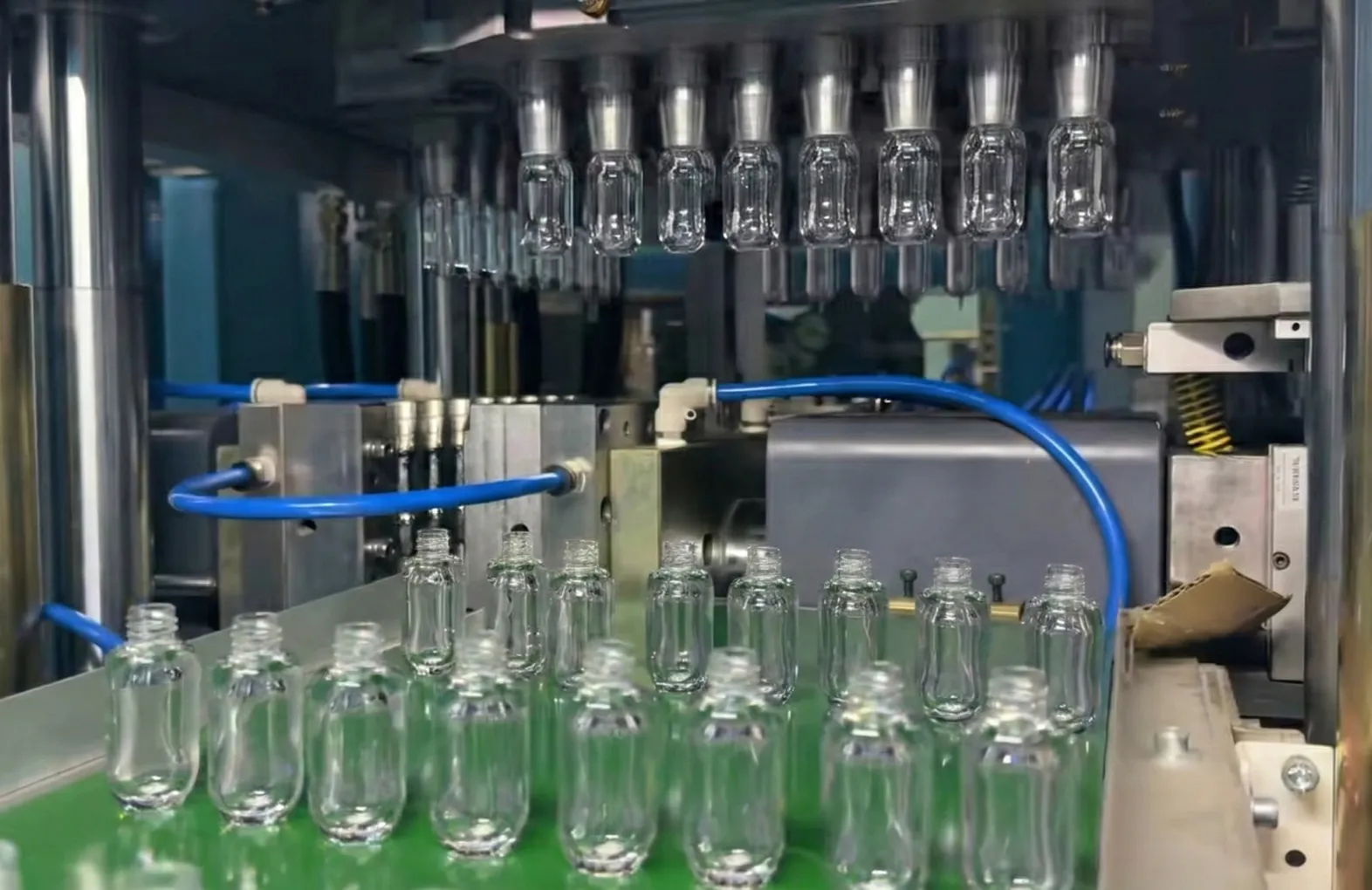
Bước 1: Quy trình tiêm
Molten PET material is injected into the preform mold under controlled high temperature and pressure. The PLC precisely governs injection speed, injection pressure, and mold temperature to ensure the molten plastic fills the cavity uniformly, producing a preform with consistent wall thickness and optimal density. Accurate parameter control at this stage is the foundation for transparency and structural integrity in the final bottle.
Bước 2: Quá trình kéo giãn
The injection-molded preform passes to the temperature-conditioning station, where it is reheated to the precise stretching temperature. The stretch rod then elongates the preform axially, inducing biaxial molecular orientation. This stretching causes PET polymer chains to align, which significantly improves the compression resistance, barrier properties, and optical transparency of the finished bottle. Cooling time and heating temperature are closely monitored throughout to ensure dimensional stability and surface quality.
Bước 3: Quá trình thổi
After stretching, the preform enters the blow mold station. Compressed air at 2.0-3.5 MPa is introduced through the blow pin, expanding the softened preform radially until it conforms precisely to the inner wall of the mold cavity. The American Parker high-pressure valve ensures accurate and repeatable blow pressure delivery at every cycle. The dual servo motor or hydraulic cylinder mold-clamping system with high-pressure compensation function holds the mold firmly shut during this critical stage, defining the final bottle shape and ensuring consistent wall distribution.
Step 4: Molding and Take-Out
Once the blow-formed bottle achieves its shape, the mold cooling system rapidly extracts heat through the mold's internal cooling channels, solidifying the PET and locking in dimensional accuracy, surface finish, and the required wall-thickness distribution. After sufficient cooling, the mold opens and the ejection system conveys finished bottles to the collection point without any manual contact. Uniform cooling temperature, controlled cooling speed, and precise cooling duration are all managed automatically by the control system to maximize bottle quality and production efficiency.
Các ngành ứng dụng
1. Chai đựng mỹ phẩm
High-appearance cosmetics packaging such as serum bottles, lotion containers, toner bottles, and luxury personal care vessels demands seamless surfaces and invisible parting lines. The Y150-V4-B's ultra-precision molds produce cosmetic bottles with crystal-clear walls and flawless finishes that match the visual standards required by premium global beauty brands.
2. Chai đựng hóa chất
Household and industrial chemical packaging including detergent, cleaning agent, and solvent bottles requires excellent barrier properties and chemical resistance. PET and PETG bottles produced on this injection blow molding machine offer outstanding oxygen and moisture barrier performance, protecting product integrity across the supply chain and shelf life.
3. Chai đựng đồ uống
Water bottles, juice containers, sports drink bottles, and other beverage packaging benefit from the machine's high throughput, precise neck-dimension control, and the excellent CO2 and oxygen barrier properties of biaxially oriented PET. The Y150-V4-B handles bottle volumes from 20 ml to 2,500 ml within a single platform, giving beverage producers versatile SKU coverage from a compact machine footprint.
4. Chai đựng thuốc
Oral liquid bottles, tablet containers, and syrup bottles for pharmaceutical use require GMP-compliant zero-contamination production. The Y150-V4-B's no-human-contact architecture and optional fully servo configuration make it the preferred ISBM machine for licensed drug manufacturers in regulated markets including Europe, North America, and Southeast Asia.
5. Food Bottles
Edible oil bottles, sauce containers, condiment bottles, and food-grade wide-mouth jars require food-safe materials and impeccable cleanliness standards. The Y150-V4-B's fully enclosed, automated production environment prevents contamination at every stage. The machine's compatibility with PETG broadens material options for food contact applications that require enhanced clarity and impact resistance.
6. Chai đựng nước rửa tay
Liquid hand soap, sanitizer, and personal hygiene product bottles are produced in high volumes with consistent pump-neck dimensions. The Y150-V4-B accommodates bottles with neck diameters from 15 mm to 83 mm, covering the full range of pump, disc-top, and flip-cap fitments used in personal care packaging. High cavity output per cycle keeps unit costs competitive for fast-moving consumer goods manufacturers.
7. Chai thuốc trừ sâu
Agricultural chemical containers must resist aggressive solvents and maintain tight closure-compatibility tolerances. PET bottles from the Y150-V4-B offer proven chemical resistance and the dimensional precision required for tamper-evident and child-resistant closure systems used in crop protection product packaging. The machine handles special-shaped bottle designs that differentiate pesticide brands on agricultural retail shelves.
8. Eye Drop Bottles
Ophthalmic packaging represents among the most demanding applications for any PET injection stretch blow molding machine. Eye drop bottles require GMP-grade cleanliness, exact volume control, and sterile-compatible materials. The Y150-V4-B's enclosed zero-contact production process, precise PLC control of every parameter, and optional full servo configuration satisfy the stringent requirements of ophthalmic pharmaceutical manufacturers and contract packaging organizations.
Core Components and System Structure
Đơn vị tiêm
The injection unit uses a single-cylinder controlled injection platform with a 50 mm screw diameter as standard configuration, delivering a theoretical injection capacity of 310 g per cycle. The screw is heated by a nano far-infrared energy-saving heating ring rated at 10 kW, providing uniform melt temperature across the full screw length. The melt motor can be configured for hydraulic control or servo motor control, offering flexibility to match GMP requirements. The injection clamping force of 150 KN ensures consistent preform quality across all eight cavity positions.
Bộ kẹp
The blow-side clamping unit generates 200 KN of force per single side through a hydraulic cylinder or optional dual servo motor mold-clamping system equipped with high-pressure compensation function. This high-pressure compensation actively corrects for any mold-flash tendency during the blow stage, ensuring clean parting lines and accurate bottle dimensions on every cycle. The clamping unit's robust construction supports mold weights typical of the AOKI SBIII-100L-20 format, enabling direct mold reuse without modification.
Precision Mold System
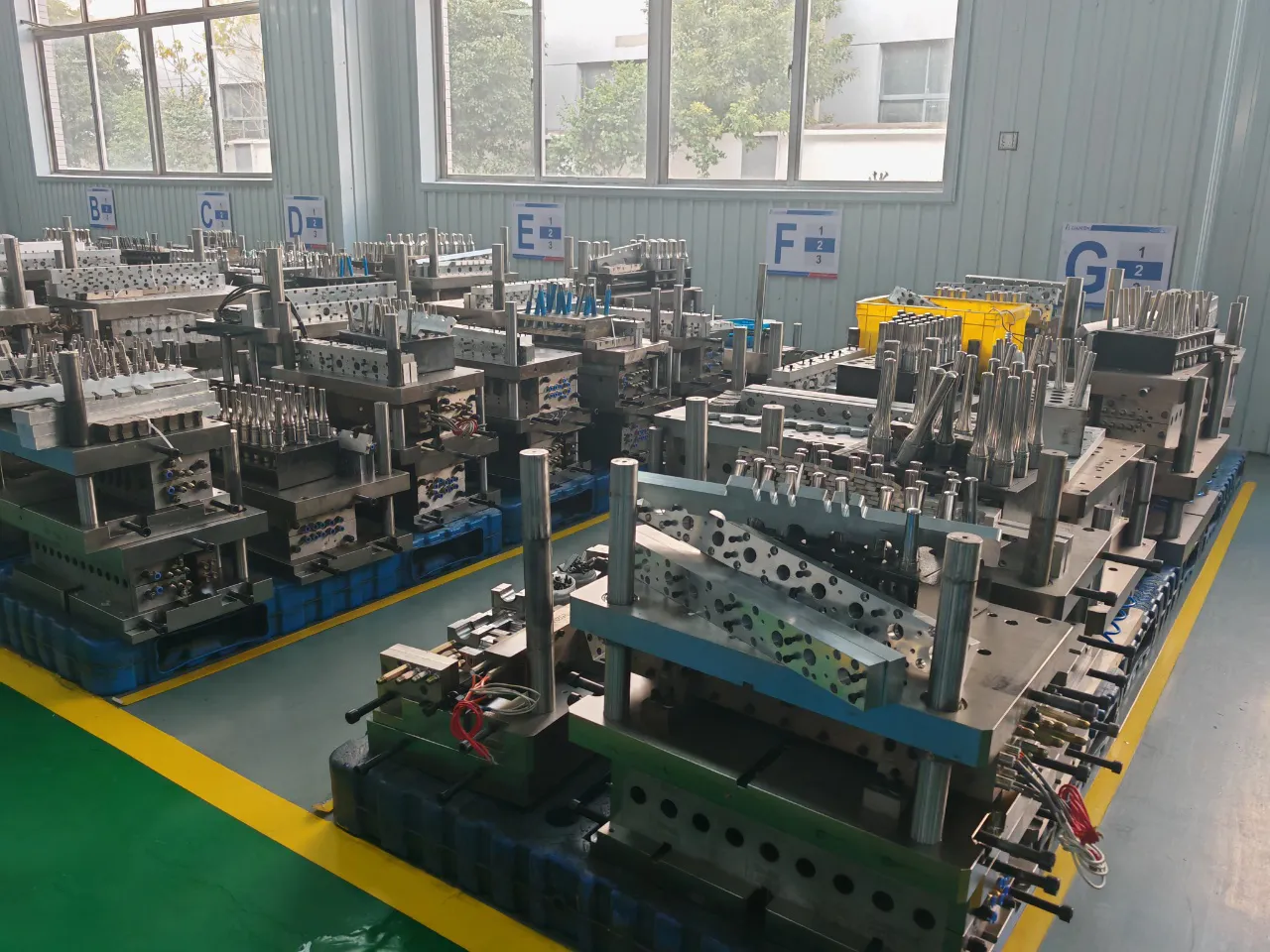
Ever-Power's high-precision molds for the Y150-V4-B are manufactured to tolerances that eliminate visible parting-line protrusions, a recognized quality limitation of legacy Japanese machine molds. The mold system accommodates up to eight cavities and supports bottle volumes from 20 ml to 2,500 ml. The mold is directly compatible with AOKI SBIII-100L-20 tooling, allowing existing AOKI customers to transition to the Y150-V4-B without capital investment in new mold sets, significantly reducing the payback period of the machine upgrade.
Blow Pin and Air Valve System
The blow core travels 250 mm and delivers compressed air at 2.0-3.5 MPa through the American Parker high-pressure valve. Parker valves are specified for their proven reliability and precise flow control, ensuring repeatable blow pressure delivery cycle after cycle. The blow mold stroke of 75+75 mm provides sufficient clearance for the full range of bottle shoulder geometries. Airtak air cylinders manage auxiliary pneumatic functions throughout the machine, combining responsive actuation with low maintenance requirements.
Hệ thống làm mát
The machine cooling system requires water supply at 0.4-0.6 MPa, with the oil cooler loop operating at 0.3-0.4 MPa and maintaining a water temperature of 20-25 degrees Celsius. The integrated cooling channels within the mold rapidly extract heat from each bottle after blow molding, ensuring dimensional stability and consistent surface finish without extending cycle time. The oil tank with 300 L capacity maintains hydraulic fluid temperature within the operating range, protecting the servo pump systems and hydraulic control valves during continuous production.
Control and Drive System
The turntable is powered by a Japan Yaskawa servo motor or WEICHI servo motor combined with a Taiwan TSUNTIEN reducer, providing precise rotational indexing between stations. The Inovance or MiRLE PLC control system governs all motion axes, temperature zones, and pressure parameters from a single integrated interface. The YUKEN hydraulic pressure control valve from Taiwan manages the hydraulic circuit, while Italy-sourced hydraulic tubing and NSK Japan lead screws ensure long-term reliability in continuous industrial operation. Three servo pump systems rated at 43.2 KW total drive the machine efficiently under load.
Temperature Control System
Temperature management uses an integrated control box that delivers high accuracy, stability, and simple operator interface across all heating zones. Operators can alternatively select the system's built-in temperature control configuration depending on process requirements. Precise temperature regulation of the preform at the conditioning station is critical for achieving the optimal PET molecular orientation during stretching, which directly determines bottle transparency, wall uniformity, and barrier performance. The system maintains tight temperature uniformity across all cavities to ensure consistent bottle quality batch after batch.
Hệ thống phóng
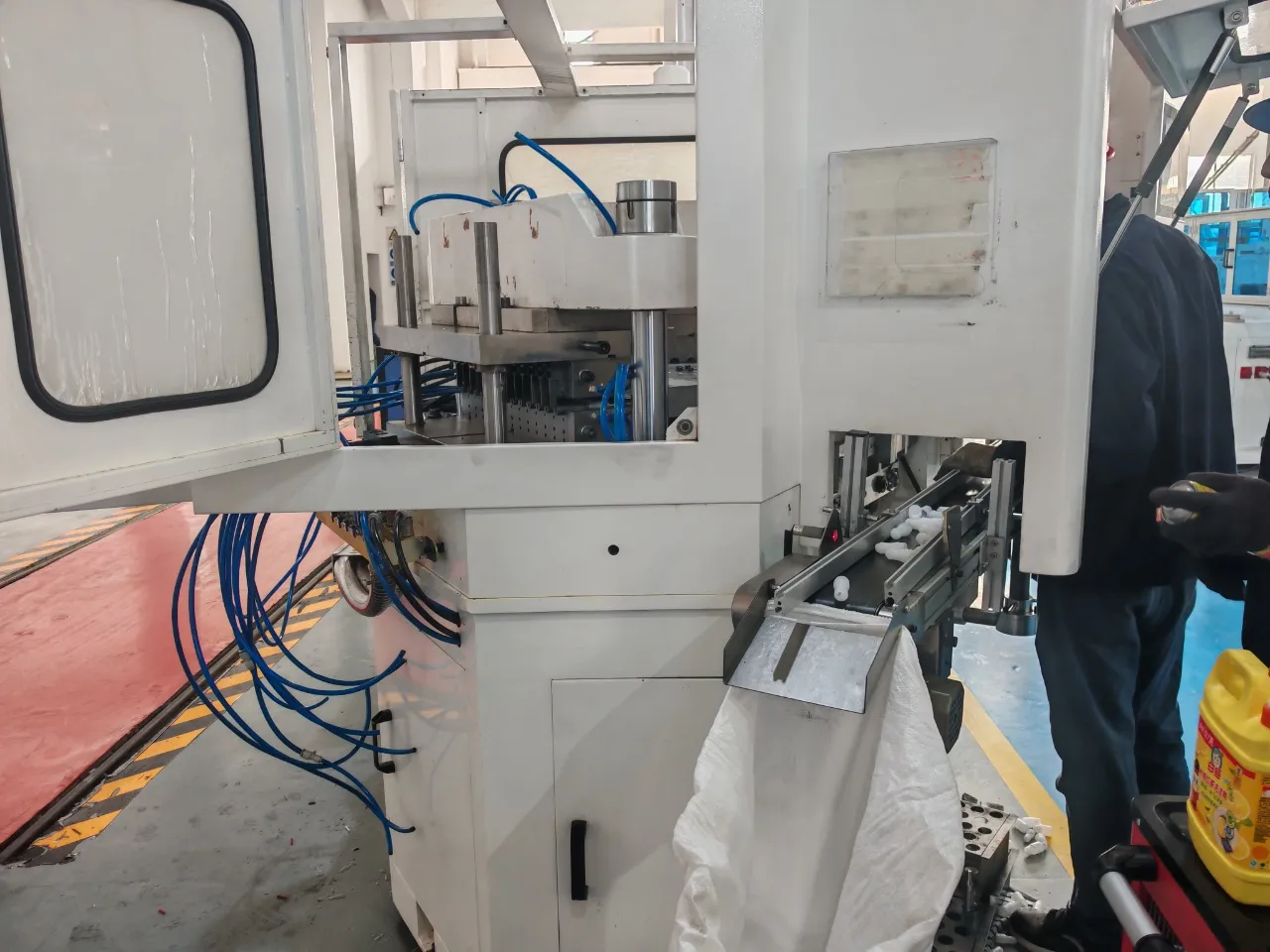
The bottle take-out station operates with a 170 mm take-out stroke, efficiently transferring finished bottles from the mold to the collection conveyor without any manual handling. The servo motor-driven bottom-cutting mechanism replaces the pneumatic components used in the original Japanese machine design and operates at twice the cutting speed, improving cycle efficiency and reducing the risk of tail-flash defects. The smooth, controlled ejection sequence prevents bottle marking or deformation during the take-out phase, preserving the surface quality achieved during blow molding.
Ép đùn so với ép phun
Tổng quan về ép đùn
Ép đùn định hình vật liệu nhựa thành các hình dạng liên tục, đồng nhất. Quá trình này đẩy nhựa nóng chảy qua khuôn, tạo thành các sản phẩm như ống, thanh và tấm. Máy móc hoạt động liên tục, lý tưởng cho sản xuất số lượng lớn các hình dạng tuyến tính đơn giản. Hầu hết các ứng dụng ép đùn sử dụng nhựa nhiệt dẻo như polypropylen, polyetylen và polystyren. Những vật liệu này có tính linh hoạt, khả năng kháng hóa chất và độ bền cao, phù hợp với nhiều ngành công nghiệp.
Nhiều ngành công nghiệp dựa vào ép đùn vì hiệu quả và tính linh hoạt của nó. Ví dụ, ngành công nghiệp năng lượng mặt trời sử dụng nó cho khung tấm pin, trong khi ngành công nghiệp ô tô sản xuất gioăng và vòng đệm chống thời tiết. Các nhà sản xuất thiết bị gia dụng tạo ra gioăng và tay nắm tiết kiệm năng lượng, và ngành xây dựng sử dụng ép đùn cho cửa sổ và cửa ra vào. Các công ty thiết bị y tế sản xuất ống và ống thông, và ngành công nghiệp bao bì sản xuất màng và tấm.
Bảng dưới đây nêu bật các vật liệu thông dụng và đặc tính của chúng trong quá trình ép đùn:
| Vật liệu | Các đặc tính chính | Ứng dụng |
|---|---|---|
| Polypropylene | Độ bền uốn cao, khả năng chống ẩm | Ống, phụ kiện trang trí nội thất, thay thế kim loại |
| Nylon | Tỷ lệ độ bền trên trọng lượng cao, khả năng kháng hóa chất | Các bình chứa, ống dẫn trong động cơ ô tô |
| Acrylic | Độ trong suốt, khả năng truyền ánh sáng, khả năng chống va đập | Ứng dụng quang học |
| Polyethylene | Tính linh hoạt, khả năng phục hồi, khả năng kháng hóa chất | Màng bao bì, ống, thùng chứa |
| Xốp polystyrene | Khả năng cách nhiệt tuyệt vời, trọng lượng nhẹ | vật liệu cách nhiệt xây dựng |
| Polycarbonate | Khả năng chống va đập, độ trong suốt quang học | Linh kiện ô tô, vỏ thiết bị điện tử |
| ABS | Độ bền, khả năng chống mài mòn | Ống dẫn điện, vỏ thiết bị, phụ kiện |
Tổng quan về ép phun
Ép phun tạo ra các chi tiết ba chiều phức tạp bằng cách bơm nhựa nóng chảy vào khoang khuôn. Quá trình này sử dụng máy móc chuyên dụng có thể xử lý nhiều loại nhựa nhiệt dẻo và nhựa nhiệt rắn. Phương pháp này tạo ra các sản phẩm có thiết kế tinh xảo, dung sai chặt chẽ và bề mặt hoàn thiện chất lượng cao. Các nhà sản xuất thường lựa chọn ép phun cho các sản phẩm đòi hỏi độ chính xác và các chi tiết tỉ mỉ.
Việc lựa chọn vật liệu trong ép phun đóng vai trò quan trọng trong việc xác định độ phức tạp và hiệu suất của sản phẩm. Một số loại nhựa cho phép tạo ra các chi tiết tinh xảo và hình dạng phức tạp, trong khi những loại khác lại hạn chế các lựa chọn thiết kế do đặc tính chảy của chúng. Việc lựa chọn vật liệu phù hợp không chỉ ảnh hưởng đến độ bền và chi phí của sản phẩm cuối cùng mà còn ảnh hưởng đến thời gian sản xuất và độ phức tạp có thể đạt được.
Ép phun nhựa phục vụ nhiều ngành công nghiệp. Các nhà sản xuất sản xuất khung cửa sổ và cửa ra vào, thiết bị vệ sinh, hộp điện, các cấu kiện xây dựng mô-đun, bao bì thực phẩm, thiết bị y tế, phụ tùng quốc phòng, dụng cụ nông nghiệp, linh kiện điện tử và phụ tùng nội thất bằng quy trình này. Máy ISBM (Máy ép phun kéo giãn thổi khuôn(Công nghệ này) là một dạng ép phun chuyên biệt. Nó tạo ra các vật chứa bằng nhựa rỗng, chẳng hạn như chai lọ, bằng cách kéo giãn và thổi phôi được ép phun thành hình dạng cuối cùng. Công nghệ này làm nổi bật tính linh hoạt của ép phun trong việc sản xuất cả các vật phẩm đặc và rỗng.
Những điểm khác biệt chính giữa ép đùn và ép phun
Sự khác biệt chính giữa ép đùn và ép phun nằm ở hình dạng sản phẩm, độ phức tạp, chi phí và ứng dụng. Ép đùn tạo ra các sản phẩm có hình dạng liên tục, đồng nhất, lý tưởng cho các mặt hàng như ống và khung. Mặt khác, ép phun lại vượt trội trong việc tạo ra các bộ phận ba chiều phức tạp, chi tiết, chẳng hạn như các bộ phận ô tô và thiết bị y tế.
Bảng dưới đây tóm tắt những điểm khác biệt về mặt kỹ thuật:
| Diện mạo | Ép phun | Ép đùn |
|---|---|---|
| Máy móc | Máy móc chuyên dụng để bơm vật liệu vào khuôn. | Quy trình liên tục sử dụng khuôn để tạo hình vật liệu. |
| Độ bền nóng chảy | Độ bền nóng chảy cao hơn cho các hình dạng phức tạp | Độ bền nóng chảy thấp hơn, phù hợp với các cấu hình đơn giản hơn. |
| Mở rộng cửa hàng | Hiện tượng phồng rộp khuôn đáng kể có thể xảy ra. | Giảm thiểu hiện tượng phồng khuôn, kiểm soát kích thước tốt hơn. |
| Vật liệu được xử lý | Đa dạng các loại nhựa nhiệt dẻo và nhựa nhiệt rắn. | Chủ yếu là nhựa nhiệt dẻo, giới hạn ở một số loại cụ thể. |
| Độ phức tạp của bộ phận | Có khả năng tạo ra những thiết kế phức tạp. | Thích hợp nhất cho các hình dạng đơn giản, đồng nhất. |
| Hoàn thiện bề mặt | Có thể đạt được bề mặt hoàn thiện chất lượng cao. | Bề mặt có thể có độ hoàn thiện khác nhau, thường kém tinh tế hơn. |
| Khối lượng sản xuất | Thích hợp cho sản xuất số lượng lớn | Lý tưởng cho sản xuất liên tục |
| Thời gian chu kỳ | Chu kỳ sản xuất dài hơn do quá trình làm nguội và đông đặc. | Chu kỳ ngắn hơn, dòng chảy liên tục |
| Chi phí dụng cụ | Chi phí dụng cụ ban đầu cao hơn | Chi phí dụng cụ thấp hơn, nhưng có thể thay đổi tùy thuộc vào thiết kế. |
| Chất thải vật liệu | Lượng vật liệu thừa phát sinh nhiều hơn do cuống và đường dẫn nhựa. | Nhìn chung, lượng chất thải vật liệu thấp hơn. |
| Độ chính xác | Độ chính xác cao và dung sai chặt chẽ là điều khả thi | Độ chính xác trung bình, khả năng kiểm soát kích thước hạn chế. |
| Giới hạn kích thước sản phẩm | Bị giới hạn bởi kích thước khuôn | Do giới hạn về kích thước khuôn, có thể tạo ra các hình dạng liên tục dài hơn. |
Sự khác biệt giữa ép đùn và ép phun cũng nằm ở loại sản phẩm:
- Ép đùn là phương pháp lý tưởng cho các cấu kiện liên tục hoặc các bộ phận có thể lặp lại, chẳng hạn như ống và khung PVC.
- Phương pháp ép phun được ưa chuộng để tạo ra các chi tiết phức tạp và chính xác.
So sánh quy trình
Quá trình ép đùn hoạt động như thế nào?
Extrusion molding shapes plastic into continuous profiles using a streamlined process. The method begins when operators feed raw plastic pellets into a hopper. The material moves into a heated barrel, where it melts and becomes more fluid. A rotating screw pushes the molten plastic forward, ensuring even melting and consistent flow. The plastic then passes through a die, which determines the final shape. As the product exits the die, it cools and solidifies. Workers or automated systems pull the product to the desired length and cut it to size. Extrusion molding operates as a continuous process. This feature allows manufacturers to produce long, uniform items efficiently. Cycle times depend on factors such as material type, die design, and cooling speed.
Quy trình ép phun hoạt động như thế nào?
Injection molding creates complex, three-dimensional parts by injecting molten plastic into a mold. The process starts with careful material selection. Operators choose plastics that meet strength and durability requirements. The plastic pellets enter a heated barrel, where they melt. A screw or plunger injects the molten plastic into a closed mold at high pressure. The mold shapes the plastic into the desired form. After injection, the mold cools to solidify the part. Cooling time is critical for maintaining the shape and structural integrity. Once the part cools, the mold opens, and an ejection system pushes the finished product out. Workers or machines then inspect and finish the parts as needed.
ISBM Machine Achieving High Transparency in PET Bottles
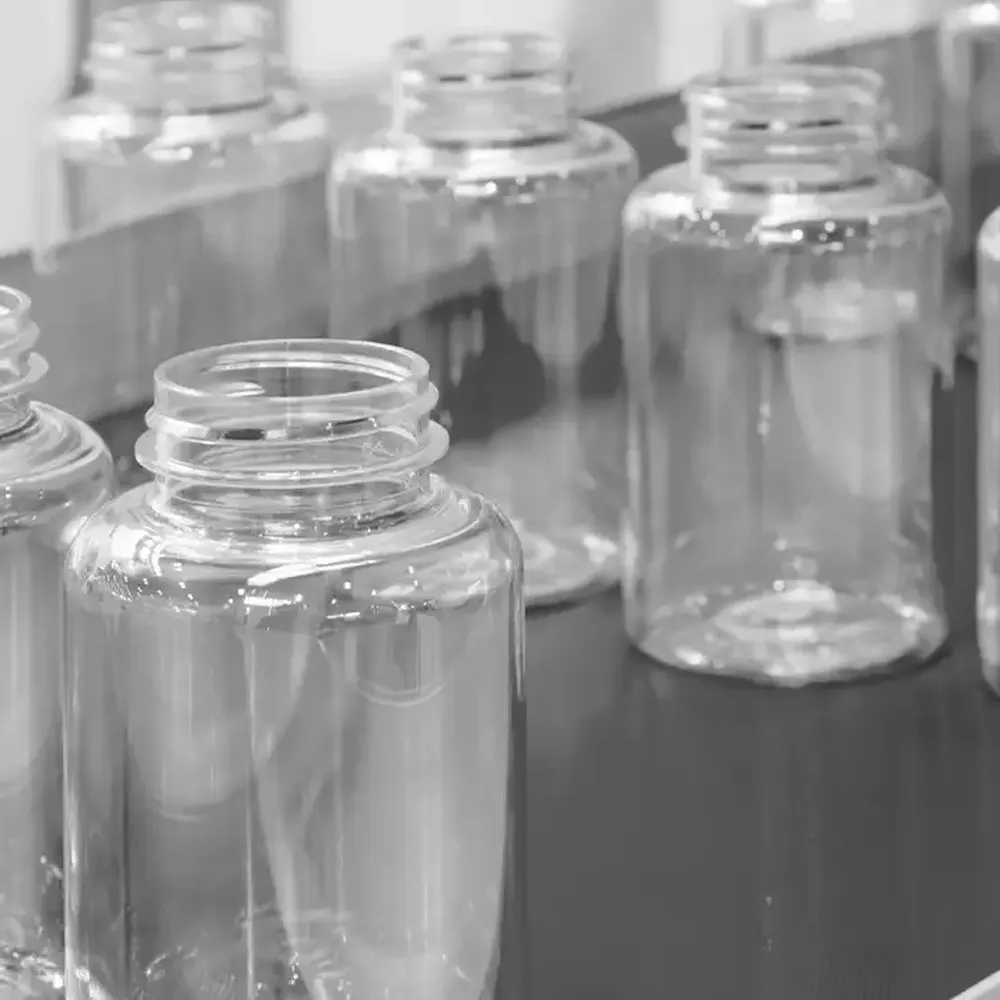
1. Material Selection and Resin Quality
The foundation of PET bottle transparency begins with resin grade selection. High-quality PET resin with consistent intrinsic viscosity and minimal contamination is essential for achieving excellent clarity. The Y150-V4-B's precise screw temperature control and nano far-infrared heating ring ensure the resin is melted uniformly to the correct melt temperature without thermal degradation, which would cause yellowing and haze. Starting with premium-grade PET and processing it correctly is the first step every ISBM machine manufacturer must get right.
2. Crystallinity Control
PET transparency is inversely related to crystallinity. Spherulitic crystallization above approximately 120 degrees Celsius causes haziness as crystallite size approaches the wavelength of visible light. The one-step process retains the preform in its amorphous state by keeping it at elevated temperature continuously from injection through to blow molding, preventing the secondary crystallization that occurs when a two-step machine reheats a cold preform. Evidence shows that PET samples cooled rapidly below 120 degrees Celsius maintain crystallinity under 20% and light transmittance above 90%.
3. Moisture Control and Drying
Excess moisture in PET resin or preforms is a primary cause of transparency loss. Wet PET absorbs more heat during preform conditioning, slows infrared energy transmission, lowers the glass-transition temperature, and acts as a plasticizer that disrupts molecular orientation during stretching. Moisture also degrades PET through hydrolytic chain scission, reducing molecular weight and causing haze. Proper pre-drying of PET resin before processing is mandatory, and the machine's sealed barrel design minimizes moisture absorption between drying and injection.
4. Biaxial Stretching Optimization
Biaxial stretching during the injection stretch blow molding process aligns PET polymer chains in both the axial and radial directions, reducing light scattering and dramatically increasing transparency. The stretch rod of the Y150-V4-B travels 250 mm with servo-controlled speed, enabling precise stretching ratios tailored to each bottle geometry. Higher stretching ratios produce smaller crystallites and greater transparency. Operators optimize the axial stretch ratio in combination with the blow pressure to balance transparency, wall thickness uniformity, and mechanical performance across the full bottle height.
5. Machine Settings and Calibration
Precise control of heating temperature (typically 100-180 degrees Celsius for PET), blow pressure (2.0-3.5 MPa), mold temperature uniformity (maintained within plus or minus 1 degree Celsius), and stretch rod speed are all managed by the Inovance or MiRLE PLC. Regular calibration of sensors and actuators ensures that every production cycle stays within the optimal parameter window for transparency. Insufficient stretch or low blow pressure leaves polymer chains disordered, causing haze. Excessive stretch may introduce microfractures. The Y150-V4-B's advanced control architecture maintains the narrow operating envelope required for consistently high transparency.
6. Cleanliness and Contamination Prevention
Contamination from dust, oil, foreign particles, or reactive polyester end groups degrades both the transparency and the structural integrity of PET bottles. The Y150-V4-B's enclosed machine design and zero-contact preform transfer eliminate exposure to airborne particles between stations. Regular cleaning of the mold cavity surfaces, screw barrel, and temperature-conditioning components prevents resin buildup and degradation byproducts from introducing color or haze into subsequent production runs. Strict cleanliness protocols are especially important when producing pharmaceutical and food-contact packaging where contamination carries regulatory consequences.
How to Choose the Right Injection Stretch Blow Molding Machine
1. Production Volume Requirements
Determine your required daily or monthly output volume in bottles before selecting any machine. The Y150-V4-B with up to six cavities per cycle is designed for medium-to-high volume production runs in pharmaceutical, cosmetic, and food-grade applications. If you need extremely high throughput, consider multi-machine installations or the six-station HGYS280-V6 platform. If your production volumes are smaller, a three-station configuration may deliver better economics. Match machine cycle time and cavity count to your contracted demand, allowing a 20-30% capacity buffer for production peaks and maintenance downtime.
2. Phạm vi kích thước và hình dạng chai
Verify that the machine's product dimension envelope covers all current and foreseeable future bottle sizes. The Y150-V4-B handles bottles from 20 ml to 2,500 ml with diameters from 26 mm to 118 mm and heights up to 210 mm. Special-shaped bottles and bottles with tight neck tolerances are well within its capability. If you need wider bottles, larger volumes above 2.5 litres, or a dual-row production configuration, the Y200-V4-B or Y250-V4-B models may be more appropriate. Always share your bottle drawings and mold details with the Ever-Power engineering team before finalizing machine selection.
3. Material Type and Regulatory Requirements
The Y150-V4-B processes PET and PETG. If your application requires PP, PC, PPSU, Tritan, or other engineering resins, discuss material compatibility with the Ever-Power technical team, as screw geometry and temperature profiles may need adjustment. Pharmaceutical manufacturers should specify GMP compliance requirements upfront, including whether a fully electric servo configuration is mandatory for oil-free operation. Food contact applications may require specific certifications for materials and machine surfaces that need to be confirmed during the inquiry stage with your ISBM machine manufacturer.
4. Automation Level
Standard Y150-V4-B uses three servo pump systems with servo motor turntable drive, offering a high degree of automation suitable for most commercial applications. For pharmaceutical lines subject to GMP audit or for operations targeting zero hydraulic oil in the production environment, the fully servo YS150-V4-EV variant eliminates the hydraulic system entirely and adds ten servo motor control axes. Evaluate your plant's regulatory environment, labor cost structure, and maintenance capability when deciding between standard servo-pump and full-servo configurations.
5. Energy Efficiency
Long-term energy cost is a significant factor in machine total cost of ownership, particularly in markets with high electricity tariffs. The Y150-V4-B consumes 15-25% less energy than comparable Japanese, European, and American machines by eliminating the secondary preform reheating step inherent to two-step systems. The servo pump systems only draw full power under load rather than running continuously at rated power. Calculate your expected annual energy cost at your local kWh rate using the machine's rated power of 53.2 KW and your expected utilization rate to quantify the long-term operating cost advantage versus competing OEM machines.
6. After-Sales Support and Spare Parts
Reliable after-sales support is critical for maintaining machine uptime in a production environment. Mexico Ever-Power maintains a comprehensive service team and spare parts inventory covering all major imported components used in the Y150-V4-B, including Parker valves, Airtak cylinders, Yaskawa servo motors, NSK lead screws, and YUKEN control valves. Request information on commissioning support timeline, remote diagnostic capability, recommended spare parts stocking list, and local service partner availability in your region before placing any order with any injection stretch blow molding machine manufacturer.
Tại sao nên chọn máy ISBM của Mexico Ever-Power?
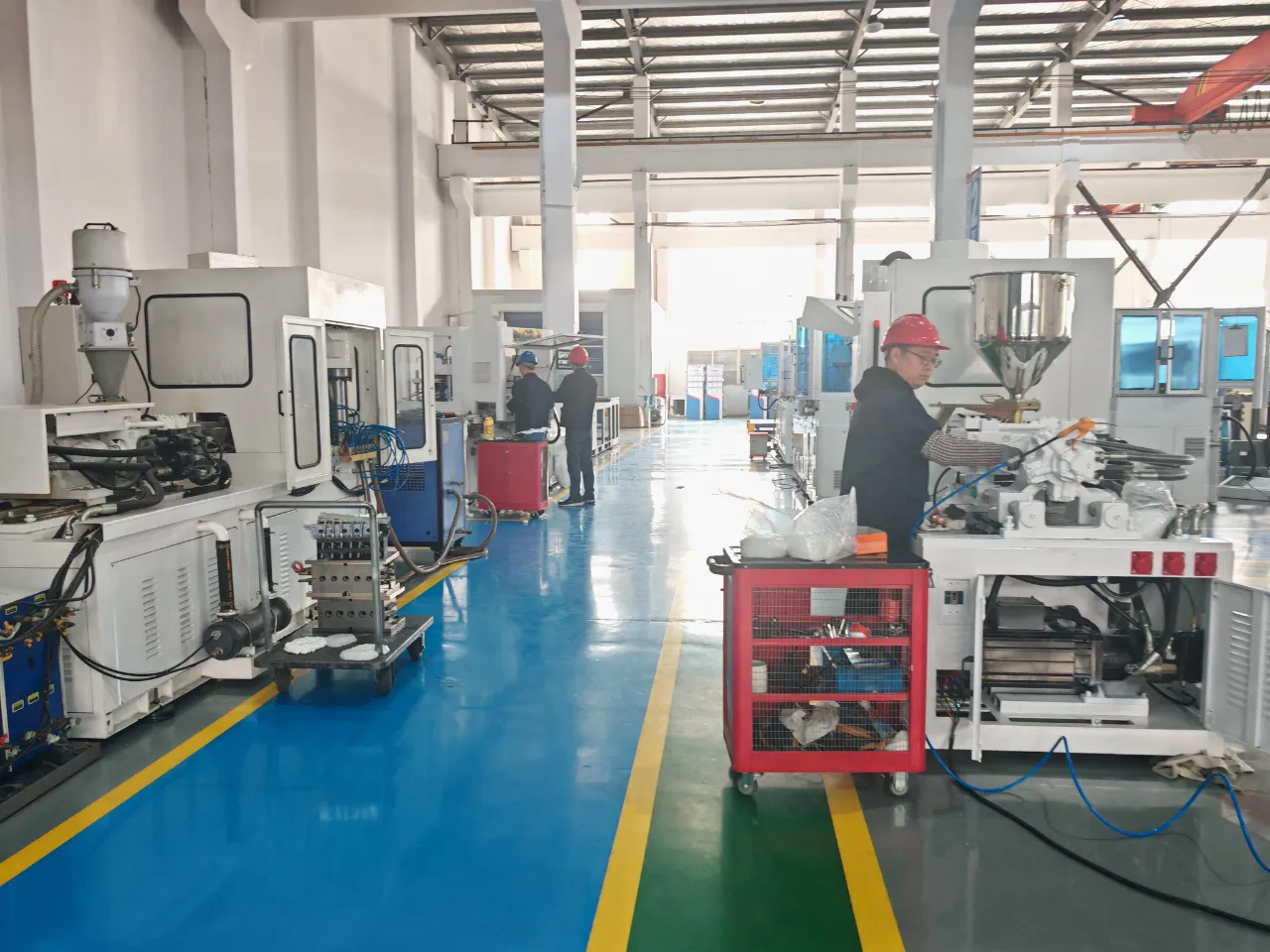
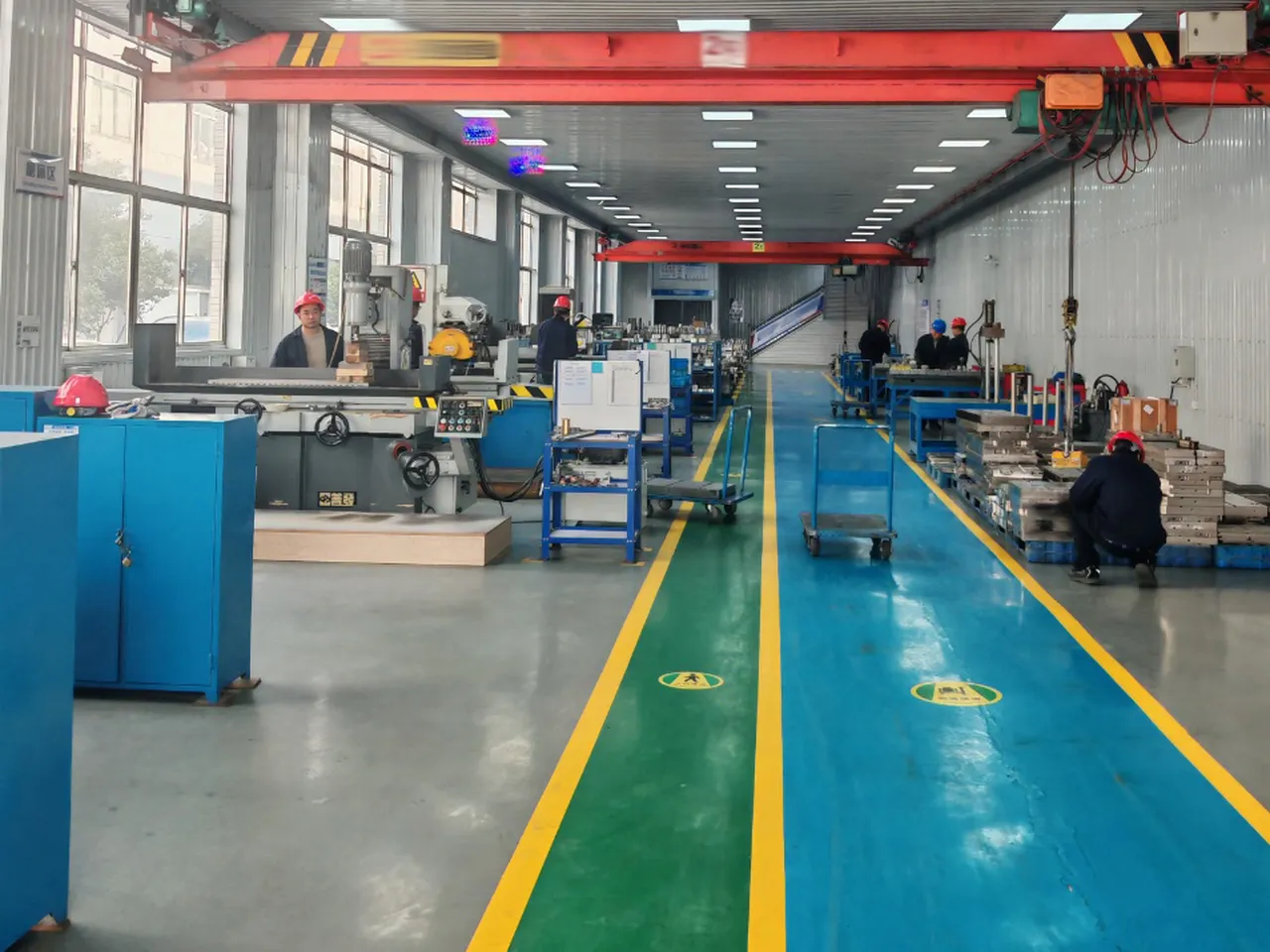
Mexico Ever-Power ISBM Machinery Co., Ltd. is a dedicated manufacturer and global supplier of automatic one-step injection blow molding machines and injection stretch blow molding machines, with product lines encompassing IBM machines, extrusion blow molding machines, ISBM machines, and auxiliary equipment. The company operates from an advantageous geographical location with convenient international shipping access to markets across the Americas, Europe, Southeast Asia, the Middle East, and Africa.
Ever-Power's core strength is its R&D team, which brings together senior engineers and technical personnel with deep specialization in injection-blow machinery design, preform mold engineering, and blow mold tooling. This combined expertise allows Ever-Power to provide customers with genuinely informed and detailed pre-sale consultation, responsive during-sale technical support, and reliable post-sale after-sales service. The company's approach to machine design is one of continuous improvement: new models incorporate lessons learned from field performance feedback, ensuring that each generation of customized injection stretch blow molding machine advances on the last in energy efficiency, control precision, and mechanical reliability.
The company's product applications cover pharmaceutical packaging, food packaging, healthcare packaging, cosmetic packaging, and all major categories of rigid plastic container production. Machine platforms process HDPE, LDPE, PET, PETG, PP, PS, PPSU, PC, Tritan, ABS, PLA, EVA, PCTG, and environmental corn-based materials in bottle volumes from 1 ml to 1,000 ml and beyond. Ever-Power adheres to the enterprise development tenet of self-reliance, integrity, pragmatism, innovation, and responsibility, building a one-stop turnkey project framework for customers who require complete packaging system solutions from machine supply through mold tooling, commissioning, and operator training. The company's goal is to deliver the best price-to-performance ratio of any single-stage injection stretch blow molding machine available to international buyers, backed by a service level that earns long-term customer relationships and repeat orders across every region it serves.
 |
 |
 |
 |
Câu hỏi thường gặp
Q1: What is the difference between a one-step injection stretch blow molding machine and a two-step machine?
A: A one-step ISBM machine like the Y150-V4-B completes preform injection, temperature conditioning, stretch blow molding, and bottle take-out inside a single machine in a continuous cycle. No preform is transported, stored, or reheated between stations. A two-step system uses a separate injection molding machine to produce cold preforms, which are then stored and reheated in a standalone stretch blow molding machine. The one-step process eliminates the reheating energy cost, reduces contamination risk, and generally delivers better transparency and dimensional consistency, but requires a higher initial machine investment per production line.
Q2: Is the Y150-V4-B compatible with existing AOKI SBIII-100L-20 molds?
A: Yes. The Y150-V4-B is specifically engineered as a direct replacement for AOKI injection stretch blow molding machines and accepts AOKI SBIII-100L-20 molds without modification. This means buyers who already own AOKI mold sets can transition to the Y150-V4-B without incurring additional tooling costs, which significantly reduces the total investment required for the machine upgrade. Please confirm your specific mold dimensions with the Ever-Power engineering team before finalizing the order to ensure full dimensional compatibility.
Q3: What materials can the Y150-V4-B process?
A: The standard Y150-V4-B processes PET (polyethylene terephthalate) and PETG (glycol-modified PET). PET is the most widely used material for pharmaceutical, food, beverage, and cosmetic bottles globally. PETG offers enhanced clarity, toughness, and chemical resistance for specialized applications. If your production requirement involves PP, PC, PPSU, Tritan, or other engineering thermoplastics, discuss material compatibility with the Ever-Power technical team, as the machine may require screw geometry or heating profile adjustments to accommodate alternative resins.
Q4: How does the Y150-V4-B achieve GMP compliance for pharmaceutical bottle production?
A: GMP compliance in pharmaceutical packaging requires that the production process eliminates human contact with the product-contacting surfaces of bottles between injection and final packaging. The Y150-V4-B achieves this through its fully enclosed, automated one-step process in which preforms transfer between stations mechanically via the rotary turntable with zero manual handling. For facilities requiring oil-free environments, the optional fully servo YS150-V4-EV configuration removes the hydraulic system entirely, eliminating any risk of hydraulic oil contamination. The machine's integrated temperature control and PLC parameter logging also support the batch record documentation requirements typical of pharmaceutical GMP audits.
Q5: How many bottles can the Y150-V4-B produce compared to the Japanese AOKI SBIII-100L-20?
A: The AOKI SBIII-100L-20 produces four plastic bottles per cycle. The Y150-V4-B's enlarged screw solution volume and optimized clamping system support up to six bottles per cycle, representing a 50% output increase from the same machine footprint and operator allocation. For high-volume pharmaceutical, cosmetic, or beverage applications, this throughput advantage translates directly into lower cost per bottle and the ability to meet larger order volumes from a smaller number of machines, improving factory space utilization and reducing overall capital investment per unit of output.
Q6: What bottle sizes can be produced on the Y150-V4-B?
A: The machine accommodates bottles from 20 ml up to 2,500 ml maximum volume, with bottle diameters from 26 mm to 118 mm and heights up to 210 mm depending on cavity configuration. Neck diameters range from 15 mm to 83 mm, covering the full spectrum of standard pharmaceutical, cosmetic, and food-grade closure fitments from mini eye-drop size to large-format wide-mouth containers. Special-shaped bottles and bottles with non-circular cross-sections are also within the machine's capability subject to mold design confirmation by the Ever-Power engineering team.
Q7: What is the energy consumption of the Y150-V4-B?
A: The Y150-V4-B has a rated total power of 53.2 KW, comprising 43.2 KW motor power from three servo pump systems and 10 KW heating power from the nano far-infrared energy-saving heating ring. In practice, the servo pump systems only draw full rated power under peak load; average energy consumption during normal production cycles is significantly lower than rated. This machine consumes 15-25% less energy than equivalent Japanese, European, and American injection stretch blow molding machines, primarily because the one-step process eliminates the secondary preform reheating energy required by two-step systems.
Q8: What are the key imported components in the Y150-V4-B?
A: The Y150-V4-B uses American Parker high-pressure valves, Airtak air cylinders, Japan Yaskawa servo motors or WEICHI servo motors with Taiwan TSUNTIEN reducers for the turntable drive, NSK Japan lead screws, YUKEN hydraulic control valves from Taiwan, Italy-sourced hydraulic tubing, and an Inovance or MiRLE PLC control system. The screw is heated by a nano far-infrared energy-saving heating ring. This specification of internationally recognized component brands ensures reliable long-term machine operation and means that most key components are globally sourced and serviceable in any major market.
Q9: Can the Y150-V4-B be configured as a fully electric injection stretch blow molding machine?
A: The standard Y150-V4-B uses a servo pump hydraulic system. For customers requiring a full electric injection stretch blow molding machine with no hydraulic components, the YS150-V4-EV variant is available. The fully electric version uses ten sets of servo motor control systems with a total motor power of 102.8 KW, eliminates the hydraulic circuit entirely, and is specifically suited to pharmaceutical facilities under GMP audit where oil-free production is a mandatory regulatory requirement. The fully electric variant occupies a larger footprint of 5,200 x 1,800 x 3,300 mm and weighs 7 tonnes.
Q10: How long does installation and commissioning take?
A: Typical on-site commissioning for the Y150-V4-B takes three to five working days depending on local infrastructure readiness, mold availability, and operator experience. Ever-Power provides experienced commissioning engineers who conduct machine installation, initial parameter setup, mold tryout, and operator training during the commissioning visit. Remote support via video call is available for parameter fine-tuning and troubleshooting after the commissioning engineer departs. Customers should ensure that utilities (power supply at 370-400 V, compressed air, cooling water at the specified pressures) are installed and ready before the commissioning engineer arrives to avoid delays.
Đánh giá của khách hàng
Rajesh Mehta, Bao bì Dược phẩm, Ấn Độ
"We switched from a Japanese AOKI SBIII-100L-20 to the Y150-V4-B about eight months ago at our pharma packaging plant in Mumbai. Honestly the transition was smoother than I expected because the molds we already had fit straight onto the new machine. We are running 30 ml oral suspension bottles with six cavities now, and the neck dimension consistency is noticeably better than what we were getting before. The parting line issue that always bothered our QC team is completely gone. Energy bills are also down which makes our operations manager very happy. The commissioning engineer from Ever-Power stayed on site for four days which was more than enough to get our team fully trained."
Chen Wei, Cosmetics Packaging, China
"I manage production at a mid-size cosmetics manufacturer in Guangzhou and we have been running the Y150-V4-B for about a year now producing 100 ml serum bottles. The surface quality is really at another level compared to what I have seen from other Chinese-made blow molding machines in this price range. No parting line marks at all, the clarity is excellent, and the cycle time is very stable. We had one issue in month three where a temperature sensor gave a fault alarm and the Ever-Power technical team resolved it remotely within two hours by walking our maintenance guy through the diagnostic process over video call. That kind of response time matters a lot when you are running on tight production schedules."
Piotr Kowalski, Food Packaging, Poland
"We are a contract packaging company in Warsaw specializing in food and pharmaceutical bottles and we ordered a Y150-V4-B as a direct replacement for an aging Japanese machine we had been running for eleven years. From inquiry to delivery took about 14 weeks which was acceptable for us. The machine arrived in good condition and was as described in the specification. What surprised me most was the build quality of the imported components inside. Parker valves, Yaskawa motor, NSK lead screw, you can see the machine is built with proper parts not cheap substitutes. We have been producing 250 ml food-grade PET bottles for six months with no major downtime. Very satisfied with this ISBM machine supplier."
Kim Soo-Jin, Pharmaceutical Packaging, South Korea
"I was initially worried about buying a machine of this type from a manufacturer I had not dealt with before, but the pre-sale technical support from Ever-Power was genuinely impressive. They answered every question I had about the servo control system, the mold compatibility, and the GMP compliance status in detail with actual documentation. We are based in Seoul and manufacture eye drop bottles at a licensed pharmaceutical facility. The Y150-V4-B has been running for ten months and our in-process rejection rate on bottle dimension checks is under 0.4%, which is excellent for our quality system requirements. The machine met all the cleanliness standards our facility audit required."
Carlos Ferreira, Hand Wash Packaging, Brazil
"We produce hand sanitizer and hand wash bottles at our plant in Sao Paulo and went through a detailed evaluation of three different injection stretch blow molding machine manufacturers before choosing the Y150-V4-B. The deciding factors were the mold compatibility with our existing tooling, the six-cavity output versus the four on competitive machines, and the pricing which was significantly better than European alternatives. The machine has been in production for seven months and is producing 500 ml PET bottles consistently. Logistics from China to Brazil took about five weeks by sea which was within the timeline quoted. The only minor issue was a slight language barrier during the initial training but the technical manuals in English are detailed and our team figured things out quickly."
Sophie Laurent, Cosmetics Packaging, France
"Running the Y150-V4-B for a high-end cosmetics brand in Paris has been a great decision for us. We produce bespoke 50 ml and 75 ml special-shaped perfume accessory bottles with very strict appearance requirements and the machine handles these shapes without any issue. The surface finish is flawless and we have had zero complaints from the brand owner about visual quality in six months of supply. What I also appreciate is that the energy consumption is genuinely lower than our previous machine. We measured a 19% reduction in electricity cost per 1000 bottles produced compared to our old two-step process. That adds up over a full year of production. Overall this is a very reliable and well-built PET injection stretch blow molding machine."
James Ochieng, Agrichemical Packaging, Kenya
"We are a pesticide and agrichemical bottling company in Nairobi and recently installed the Y150-V4-B to replace an older Japanese machine. The primary reason for choosing Ever-Power was cost. The price for an equivalent performance level from a Japanese OEM was more than twice as much. After nine months of operation I can say the machine has delivered what was promised. The bottles we produce are 1 litre and 500 ml PETG chemical containers and the quality has been consistent. Spare parts availability has been good so far, we ordered two replacement seals at month six and they arrived within three weeks from China which is acceptable. The after-sales support team responds to WhatsApp queries quickly which suits how we communicate."
Apinya Thongchai, Food Packaging, Thailand
"My company in Bangkok produces food bottles and sauce containers for local and export markets. We bought the Y150-V4-B about a year ago and it has been running almost continuously since commissioning. The machine is very stable once you have dialed in the parameters for each bottle program and saving those recipes in the PLC makes changeovers between different bottle types much faster than I expected. I also want to mention that the pre-sale team at Ever-Power helped us redesign one of our bottle neck dimensions slightly to improve compatibility with our capping line, without any additional charge. That kind of collaborative approach to technical support is not something you always get from machine manufacturers. We will definitely order another unit next year."
Diego Ramirez, Beverage Bottling, Mexico
"We have been using the Y150-V4-B at our beverage bottling facility in Mexico City for about eleven months now, producing 330 ml and 500 ml PET water bottles. Throughput is excellent. The six-cavity configuration gives us the volume we need to keep pace with our filling line. We also appreciate that the machine footprint is small enough to fit within our existing clean room layout without any civil work modification. One thing that initially concerned us was ongoing support given the supplier is based in China, but in practice the remote support via video call has been very effective for the two minor calibration questions we had in the first few months. The machine itself is solid, well assembled, and clearly made with quality components throughout."
Thông tin bổ sung
| Được chỉnh sửa bởi | Yjx |
|---|