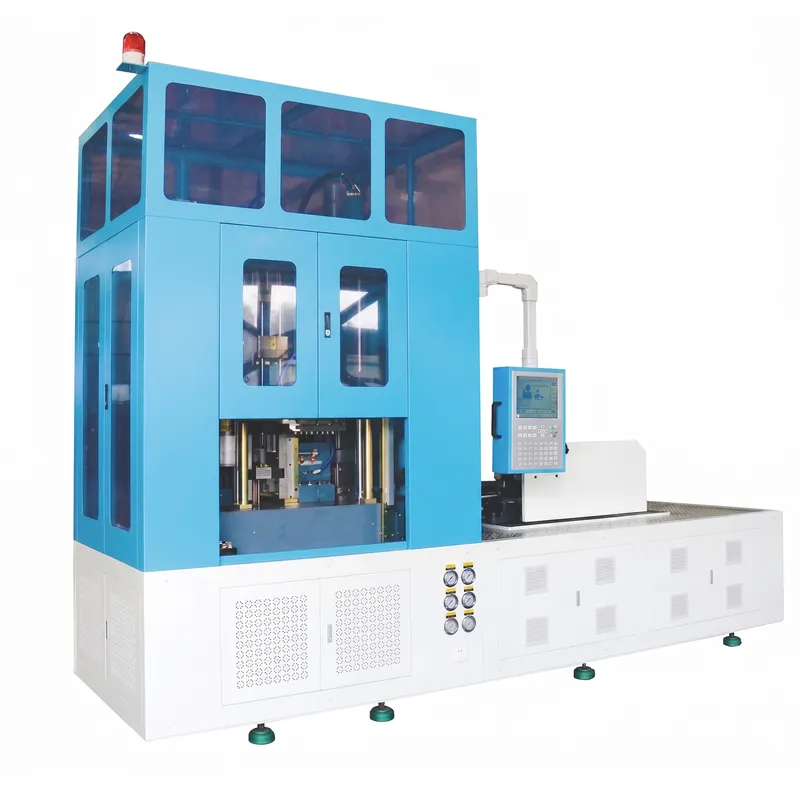
Y150-V3-B Injection Stretch Blow Molding Machine Replacement for Japanese AOKI SBIII-100L-20
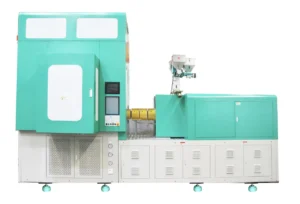
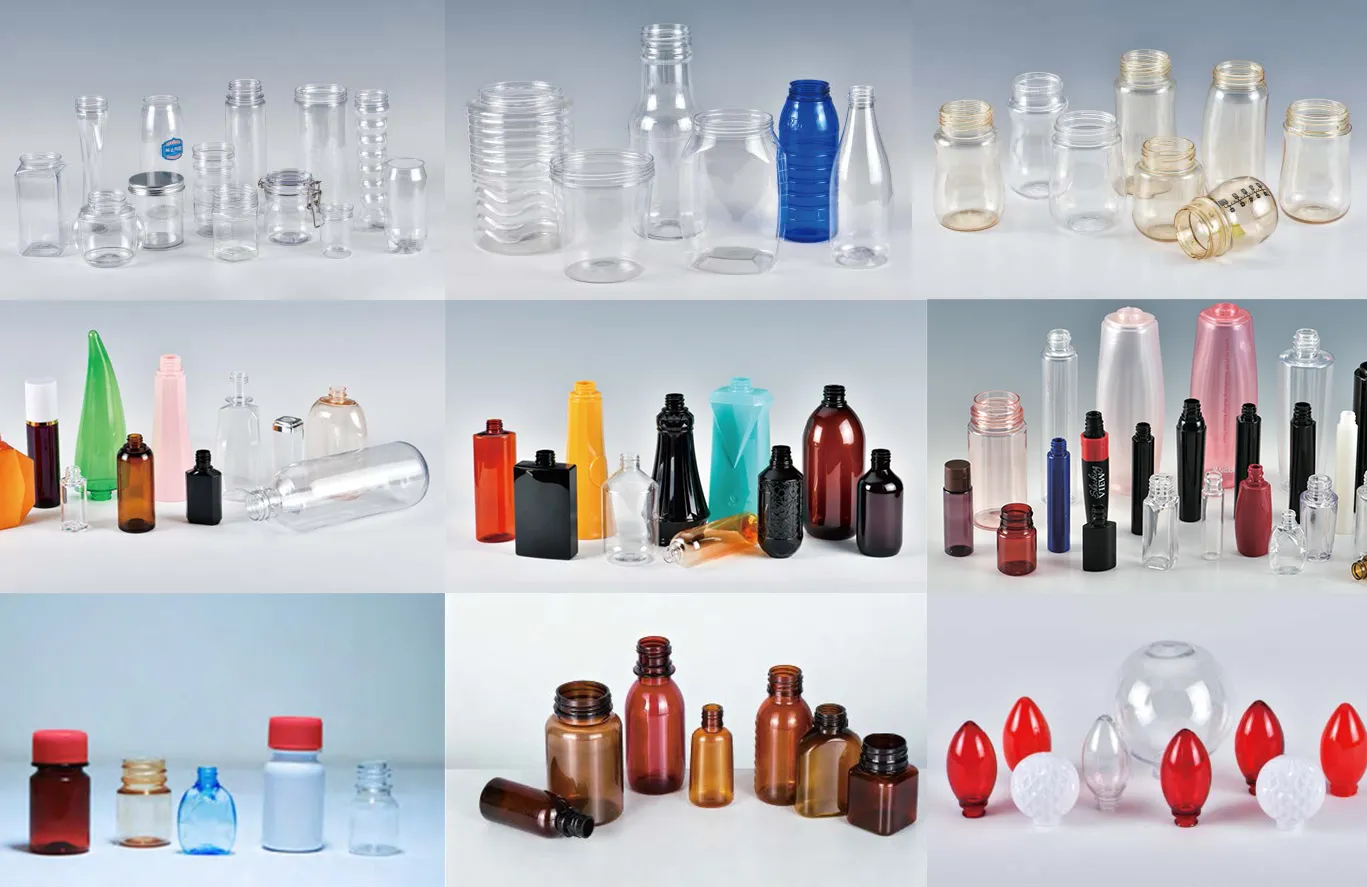
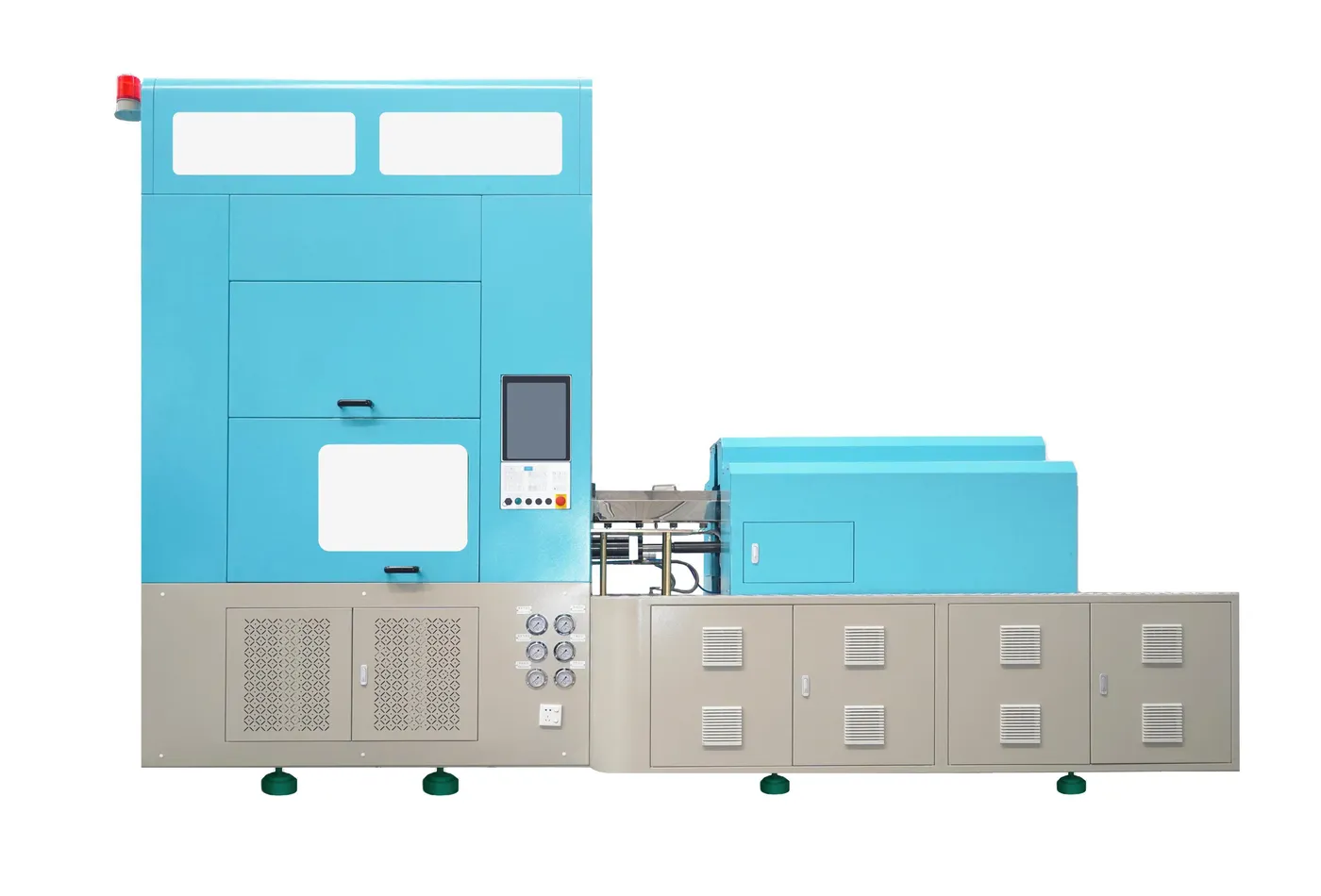
The Y150-V3-B is a precision-engineered injection stretch blow molding machine designed as a fully compatible replacement for the Japanese AOKI SBIII-100L-20. Developed by Mexico Ever-Power ISBM Machinery, this 3-station one step ISBM machine consolidates injection, preform conditioning, and stretch blow molding into a single seamless production line. Its outstanding product versatility allows manufacturers to produce medicine bottles, cosmetics bottles, baby bottles, water glass bottles, special-shaped containers, and a wide range of other PET packaging formats without secondary handling or reheating.
The Y150-V3-B is a precision-engineered injection stretch blow molding machine designed as a fully compatible replacement for the Japanese AOKI SBIII-100L-20. Developed by Mexico Ever-Power ISBM Machinery, this 3-station one step ISBM machine consolidates injection, preform conditioning, and stretch blow molding into a single seamless production line. Its outstanding product versatility allows manufacturers to produce medicine bottles, cosmetics bottles, baby bottles, water glass bottles, special-shaped containers, and a wide range of other PET packaging formats without secondary handling or reheating.
As a trusted injection stretch blow molding machine manufacturer, Ever-Power has engineered the Y150-V3-B to meet the most demanding quality expectations: zero human contact during the molding process for full GMP pharmaceutical packaging compliance, standardized mechanical architecture, and critical components sourced from internationally recognized brands. The result is a single-stage injection stretch blow molding machine that rivals Japanese OEM performance at significantly lower operating cost, with 15% to 25% less energy consumption than comparable AOKI machines, up to six bottles produced per cycle versus four on the Japanese original, and a mold parting-line mark so precise it is virtually invisible on finished bottles.
Product Model Comparison Table
1. Replacement for Japanese ASB Model
| Y/ YS Machine Model | Configuration / Remarks | Compatible Japanese Model |
| Y150-V4-2 | Standard configuration | ASB-12M |
| YS150-V4-EV | Full Servo | ASB-12M |
| Y250-V4 | Standard configuration | ASB-70DPH |
| Y250-V4-B | B Series | ASB-70DPW |
| Y650-V4 | Large-capacity model | ASB-650 |
2. Replacement for Japanese AOKI Model
| Y/YS Machine Model | Configuration / Remarks | Compatible Japanese Model |
| Y150-V4-B | B Series | SBIII-100L-20 |
| Y150-V3-B | 3-Station Model | SBIII-100L-20 |
| Y200-V4-B | B Series | SBIII-250LL-50S |
| Y200-V3 | 3-Station Model | SBIII-250LL-50S |
| YS350-V4-EV | Full Servo | AL-350LL-40 |
| Standard Model | Servo Model | Fully Electric Model |
 |
 |
 |
Our Advanatges
1. The quality is better. The plastic bottles produced by the blow molding machines from Japan all have a parting line. There is a protrusion of plastic in the middle of the two molds on either side, which results in a mark. However, our molds have extremely high precision, and the mark is completely invisible.
2. Our production is fast, with a large amount of screw solutions and high speed. While Japan can produce four plastic bottles at a time, we can produce six.
3. Save energy. Our machines consume 15% to 25% less energy than those in Japan, Europe, and the United States.
4. A wide range of electric control technologies has been adopted to replace hydraulic and pneumatic components. For example, the pneumatic components used in the bottom cutting mechanism in Japan are replaced by servo motors here, and the speed of the servo motors is doubled. In the pharmaceutical industry and other fields, fully servo motors can be used without any hydraulic systems, ensuring compliance with GMP standards and operation in an oil-free and pollution-free environment.
Product Specifications
| Model | Unit | Y150-V3-B (Compatible with Japanese AOKI SBIII-100L-20 model) | ||||||
|---|---|---|---|---|---|---|---|---|
| Container | Cavity | No. | 1 | 2 | 3 | 4 | 5 | 6 |
| Max. Diameter | mm | 105 | 105 | 72 | 46 | 35 | 25 | |
| Max. Height | mm | 250 | 250 | 250 | 250 | 250 | 250 | |
| Max. Neck Diameter | mm | 80 | 60 | 35 | 25 | 20 | 15 | |
| Max. Weight | g | 200 | 140 | 90 | 70 | 55 | 45 | |
| Max. Capacity | L | 2.5 | 1.5 | 0.9 | 0.4 | 0.25 | 0.1 | |
| Injection device | Screw Diameter | mm | 50 | |||||
| Theoretical Injection Capacity | g | 315 | ||||||
| Injection Stroke | mm | 172 | ||||||
| Injection Pressure | MPa | 174 | ||||||
| Screw Speed | RPM | 0-240 | ||||||
| Injection | Injection Clamping Force | KN | 150 | |||||
| Upper Mould Stroke | mm | 460 | ||||||
| Lower Mould Stroke | mm | 250 | ||||||
| Temperature control | Temperature Regulating Core Stroke | mm | ||||||
| Temperature Regulating Barrel Stroke | mm | |||||||
| Stretch-Blowing | Blow Clamping Force | KN | 120 | |||||
| Blow Core Stroke | mm | 250 | ||||||
| Blow Moulding Stroke | mm | 125 | ||||||
| Off-moulding | Take-out Stroke | mm | 170 | |||||
| Oil Tank Capacity | L | 300 | ||||||
| Machine | Size (L*W*H) | mm | 4200*1400*2800 | |||||
| Weight | kg | 6000 | ||||||
Features of Y150-V3-B Injection Stretch Blow Molding Machine
1. Shortened Production Cycle
The Y150-V3-B completes the entire production sequence from resin injection through preform conditioning to final stretch blow molding within a single integrated machine. By eliminating inter-process transfers, conveyor delays, and reheating stages, the overall cycle time is dramatically reduced. This integrated workflow not only speeds up throughput but also reduces the risk of contamination or dimensional drift between stages, making it especially effective for high-volume pharmaceutical and cosmetics packaging lines operating under strict output schedules.
2. Higher Production Efficiency
Where the Japanese AOKI SBIII-100L-20 produces four bottles per cycle, the Y150-V3-B scales up to six cavities simultaneously, delivering a measurable increase in output without expanding floor space. The fully automated control architecture removes reliance on manual intervention, allowing the machine to sustain peak production rates around the clock. This improvement in throughput translates directly into lower per-unit manufacturing costs, making the Y150-V3-B an excellent choice for manufacturers seeking to expand capacity without proportionally increasing headcount or capital expenditure.
3. Superior Molding Precision
The Y150-V3-B employs high-precision mold tooling that eliminates the visible parting-line marks common on bottles produced by Japanese OEM machines. Temperature, injection pressure (174 MPa), and screw speed (0-240 RPM) are all under closed-loop control, ensuring batch-to-batch consistency in bottle diameter, height, neck finish, and wall thickness. This level of dimensional accuracy is critical for applications such as pharmaceutical oral liquid bottles or premium cosmetics packaging, where tolerances on neck finish and sealing surface directly affect filling-line performance and consumer perception.
4. Reduced Labor Cost
Full process automation through the Y150-V3-B means that once production parameters are set, the machine operates continuously without manual loading, transferring, or unloading of preforms. This substantially lowers the skilled-labor requirements on the production floor and reduces the variability introduced by human handling. In GMP-regulated environments such as pharmaceutical packaging facilities, the elimination of human contact during the molding process is not only a cost advantage but a regulatory necessity, ensuring compliance with contamination-control standards throughout the entire container production workflow.
5. Energy Conservation
The Y150-V3-B consumes 15% to 25% less energy than equivalent Japanese, European, or American machines. Because preforms are stretch-blown directly from their injection-molded temperature without secondary reheating, the machine avoids a significant energy penalty that two-step systems must absorb every cycle. Servo-driven hydraulic systems and precision-tuned heating elements further reduce idle energy draw. Over a typical production year, this saving translates into a meaningful reduction in utility costs, making the Y150-V3-B a compelling choice for manufacturers under pressure to reduce their operational carbon footprint alongside their energy bill.
6. Compatible with AOKI SBIII-100L-20 Molds
The Y150-V3-B is engineered for direct mechanical compatibility with existing Japanese AOKI SBIII-100L-20 mold tooling. Manufacturers already running the AOKI platform can migrate to the Y150-V3-B without scrapping their current mold investment, significantly lowering the total cost of the machine transition. This compatibility also shortens the changeover validation period, allowing production to resume faster. Whether you need a replacement of AOKI injection stretch blow molding machines or are sourcing a second machine to expand an existing AOKI-based production line, the Y150-V3-B integrates without tooling rework.
Working Principle
1. Injection Molding
Plastic resin (primarily PET or PC) is heated to a molten state and injected into the preform cavity under 174 MPa pressure. The resulting preform is partially cooled to stabilize its geometry while retaining sufficient residual heat for the stretching stage. During injection, the neck finish is formed in its final, dimensionally accurate shape, ensuring reliable sealing performance and proper thermal response in subsequent processing steps. The 50 mm screw with a theoretical injection capacity of 315 g delivers consistent shot volumes cycle after cycle.
2. Preform Conditioning and Transfer
The rotary transfer system moves freshly molded preforms from the injection station into the conditioning zone. Integrated temperature control elements stabilize the preform's internal temperature profile, ensuring consistent thermal behavior across the cross-section and from the body to the gate. This uniform conditioning is critical: it supports predictable material flow during biaxial stretching, reduces the likelihood of wall-thickness variation, and minimizes the risk of stress whitening or haze in the finished container. No external reheating is required, preserving both energy efficiency and molecular chain integrity.
3. Stretch Blow Molding
At the blow station (120 KN blow clamping force), a stretch rod extends the preform axially to a blow core stroke of 250 mm while compressed air simultaneously inflates it radially to match the blow mold at a blow moulding stroke of 125 mm. This biaxial orientation aligns the PET polymer chains in two directions, substantially improving impact resistance, gas barrier performance, clarity, and wall-thickness uniformity. The dual-direction molecular alignment gives one step injection stretch blow molding machine containers their superior strength-to-weight ratio and optical clarity compared to single-axis processes.
4. Cooling and Ejection
Once the bottle has been fully formed to its final shape, the mold rapidly cools the container to solidify its geometry before opening. The take-out system then automatically ejects the finished bottle along a 170 mm stroke without human handling, maintaining GMP cleanliness standards throughout. After ejection, the mold closes and the next preform advances, completing a continuous production cycle. The fully automated sequence from injection to ejection ensures consistent quality across every bottle in the batch, regardless of shift changes or operator variation.
Application Industries
Chemical Bottles
Chemical packaging requires containers with high barrier performance, robust wall thickness, and reliable seal integrity. Biaxial molecular orientation in the injection stretch blow molding process significantly improves the gas and liquid barrier properties of the bottle, making the Y150-V3-B suitable for agrochemicals, industrial solvents, and household cleaning products.
Beverage Bottles
With maximum cavity capacity up to 2.5 liters across six cavities, the Y150-V3-B is well suited to mineral water, fruit juice, carbonated soft drinks, and specialty beverage packaging. The superior clarity of PET injection stretch blow molding machine output ensures shelf appeal, while barrier properties protect product flavor and shelf life.
Pharmaceutical Bottles
The Y150-V3-B meets GMP standards for oral liquid, tablet, and capsule containers. Zero human contact during production, combined with airtight neck-finish precision, makes it a preferred ISBM machine for regulated pharmaceutical packaging environments requiring ISO and FDA documentation.
Cosmetic Bottles
High-end cosmetics demand both flawless surface finish and dimensional consistency at the neck and shoulder. The Y150-V3-B's invisible parting-line capability and precise wall-thickness control make it ideal for producing serum bottles, lotion pumps, toner flacons, and premium skincare packaging in PET and PETG.
Feeding Bottles (Baby Bottles)
Baby bottle production demands materials that are free from contamination and retain dimensional accuracy at the neck thread for safe nipple attachment. The Y150-V3-B supports PP, PC, and PETG materials for infant feeding containers, with fully automated production ensuring hygiene and consistent quality in compliance with food-contact safety standards.
Shampoo Bottles
Personal care and hair care packaging requires attractive shapes, glossy surfaces, and consistent wall thickness for pump or flip-cap compatibility. The one step injection stretch blow molding machine architecture of the Y150-V3-B integrates design-intent shape fidelity directly from mold to finished container, eliminating the tolerance stack-up that multi-stage processes introduce.
Squeeze Bottles
Squeeze bottle applications for condiments, adhesives, and topical pharmaceuticals demand controlled wall flexibility without compromising seal integrity or structural rigidity. The biaxial orientation achieved in the Y150-V3-B's stretch blow stage optimizes the balance between flexibility and strength, producing containers that function reliably through thousands of dispensing cycles in demanding end-use environments.
Eye Drop Bottles
Eye drop packaging is among the most demanding pharmaceutical container formats, requiring tight neck-dimension tolerances for dropper tip attachment, ultra-clean interior surfaces, and complete absence of contamination particles. The Y150-V3-B's sealed, human-contact-free production environment and high-precision mold tooling make it an exceptional ISBM mold injection machines supplier solution for ophthalmic and sterile liquid packaging lines.
Key Equipment of the Y150-V3-B ISBM Machine
Clamping Unit
The injection clamping unit delivers 150 KN of locking force with an upper mould stroke of 460 mm and lower mould stroke of 250 mm, providing the rigidity needed to maintain precise cavity geometry at production injection pressures. The high clamping force suppresses flash formation and ensures parting-line closure integrity across all six cavities simultaneously, which is fundamental to the invisible parting-line finish that distinguishes Y150-V3-B output from Japanese OEM production.
Injection Unit
A 50 mm diameter screw operating at 0 to 240 RPM drives a theoretical injection capacity of 315 g per shot at a peak pressure of 174 MPa. The injection stroke of 172 mm provides sufficient volumetric range for all supported cavity counts. Servo-driven screw control ensures consistent melt density and fill uniformity across cavities, reducing post-blow dimensional variation between individual bottles in the same mold set.
Mold Tooling
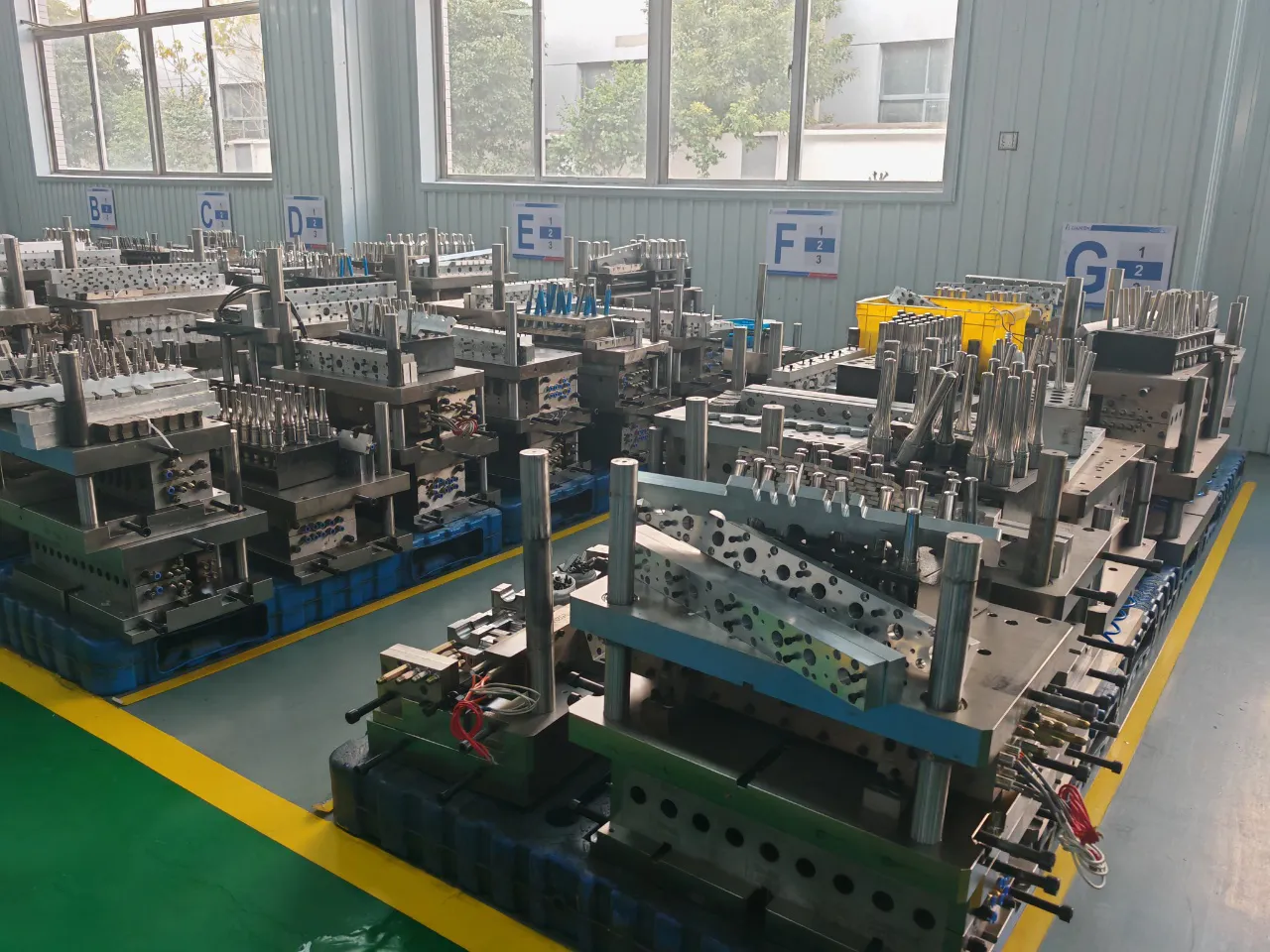
The Y150-V3-B accepts mold tooling fully compatible with the Japanese AOKI SBIII-100L-20, allowing existing mold assets to be redeployed without modification or rework. Ever-Power's own high-precision mold manufacturing achieves parting-line tolerances so tight that the line is effectively invisible on the finished bottle surface, a critical advantage for cosmetics, pharmaceutical, and premium beverage brands that require a flawless exterior presentation.
Blow Pin and Blow Clamping
The blow pin assembly works in conjunction with the blow clamping unit (120 KN force), the blow core stroke (250 mm), and blow moulding stroke (125 mm) to control the biaxial stretching geometry. Precise blow pin positioning ensures that the stretch rod reaches the correct axial extension before radial inflation begins, the key factor governing molecular orientation quality and the resulting clarity, barrier performance, and impact resistance of the finished PET container.
Cooling System
An internal cooling circuit using a 300-liter oil reservoir maintains controlled temperature across both the injection mold and the blow mold stations. Rapid and uniform cooling of the blown container is essential for locking in the biaxially oriented molecular structure, achieving the correct crystallinity level, and producing a dimensionally stable bottle that meets print-registration and filling-line tolerance requirements.
Ejection System
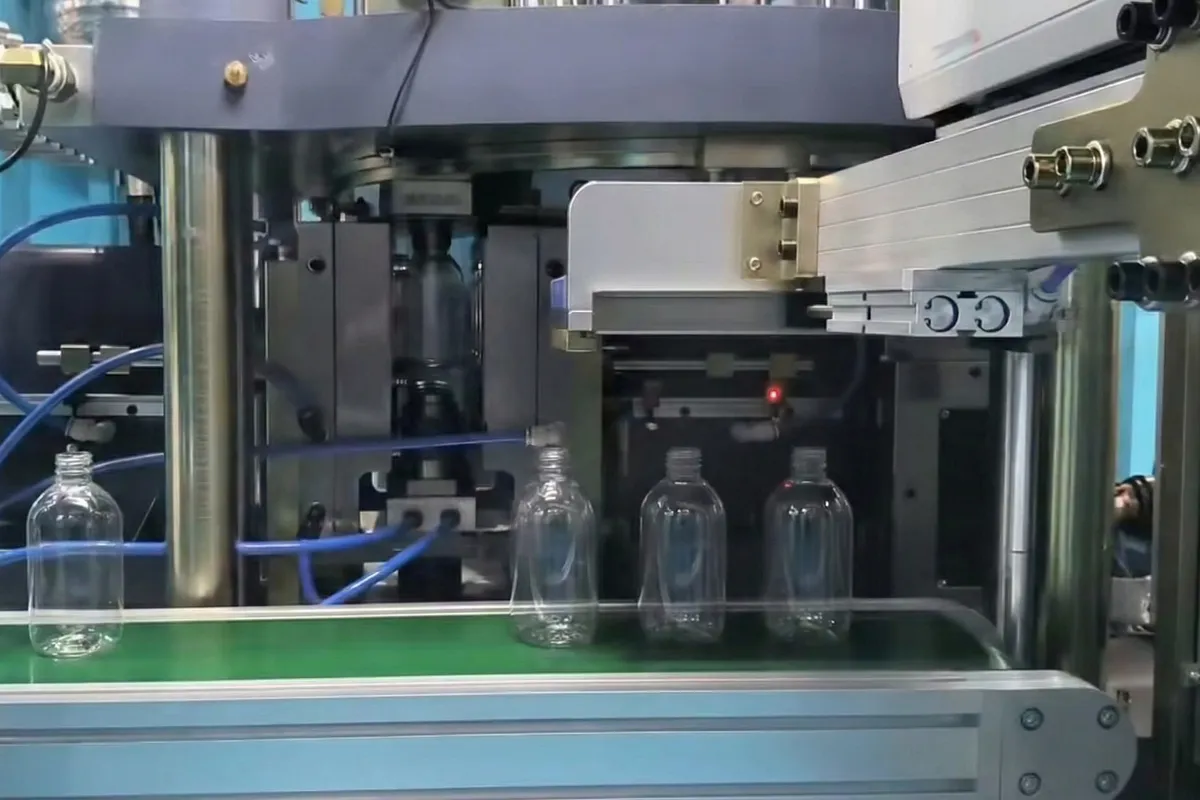
The take-out system operates on a 170 mm stroke to automatically eject finished bottles from the blow mold without human handling, critical for GMP-compliant pharmaceutical packaging production. The automated ejection sequence is synchronized with the rotary transfer and mold open-close cycle to minimize dead time between shots. Clean, consistent ejection also prevents surface scuffing or neck-finish damage that could otherwise occur during manual bottle removal.
Rotary Transfer System
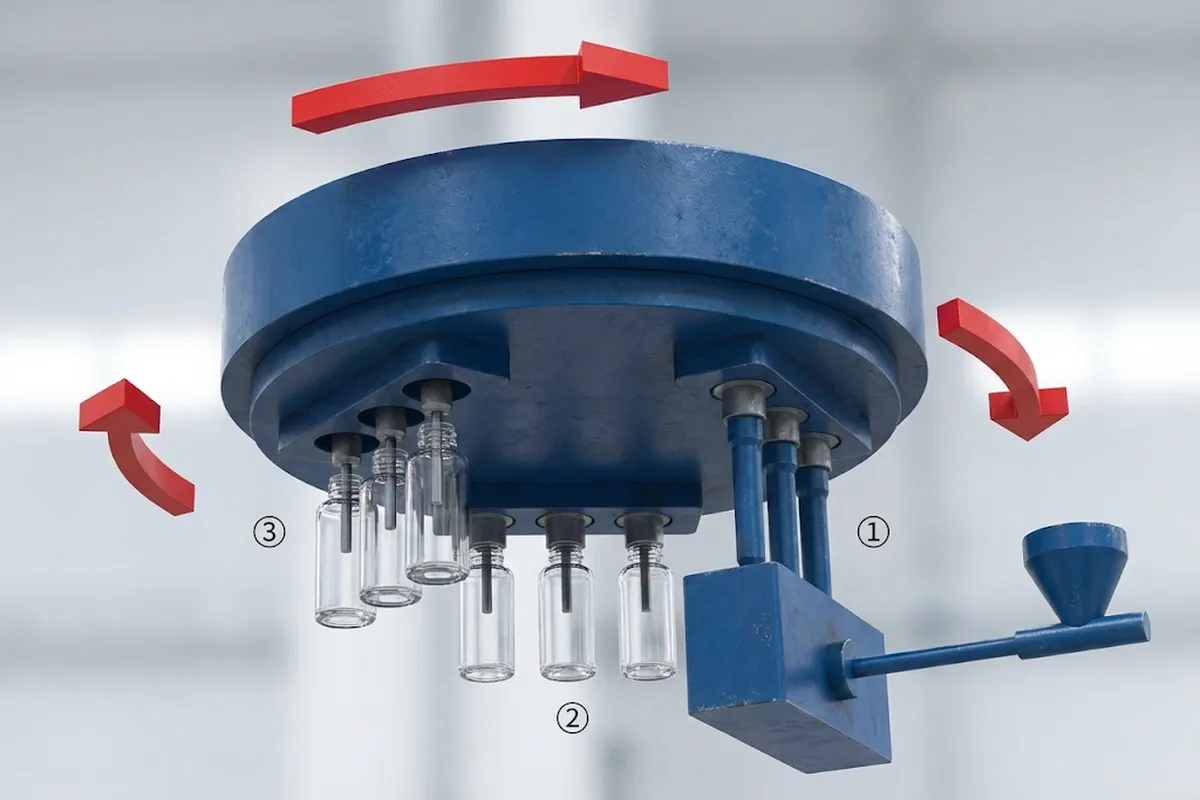
The 3-station rotary indexing platform is the heart of the single-stage injection stretch blow molding machine architecture. It precisely indexes preforms between injection, conditioning, and blow-molding stations in a sealed, controlled environment. Driven by a servo motor paired with a high-precision reducer, it ensures accurate positional repeatability on every cycle, enabling multi-cavity production while maintaining dimensional uniformity across all bottles produced simultaneously.
Control System
An integrated PLC-based control system manages all machine functions including injection pressure, screw speed, temperature profiling, stretch-rod timing, blow pressure, and ejection. Closed-loop feedback on key parameters ensures that deviations are corrected within the same cycle rather than accumulating across a production run. The operator interface provides production data logging and alarm management, supporting the documentation and traceability requirements of ISO-certified and GMP-regulated manufacturing environments.
Compatible Materials
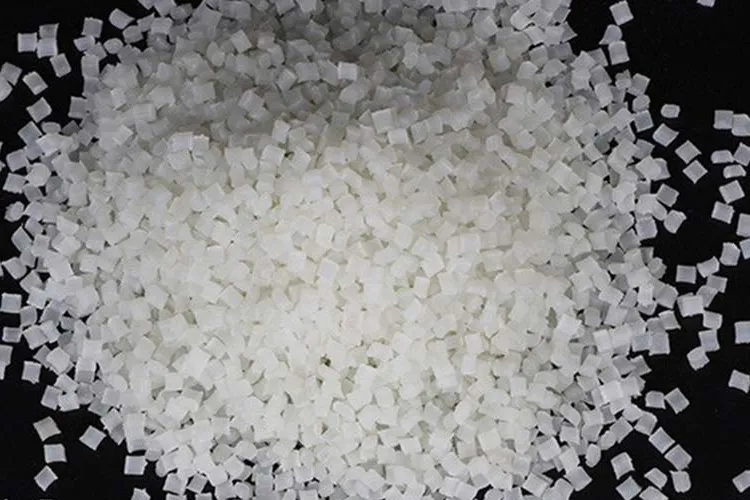
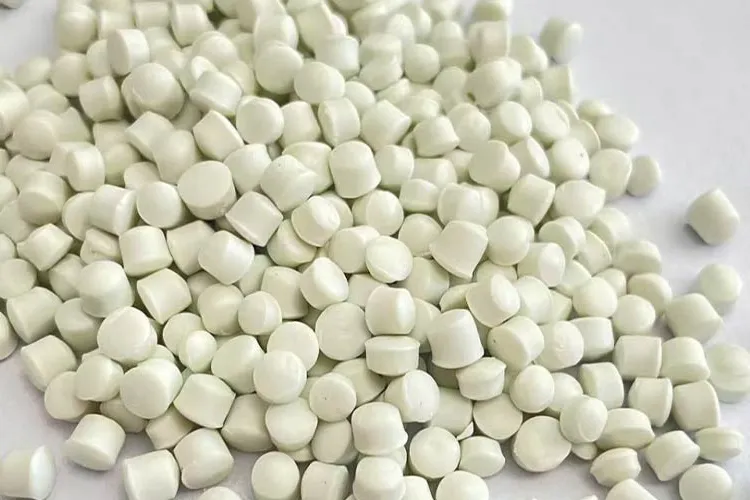
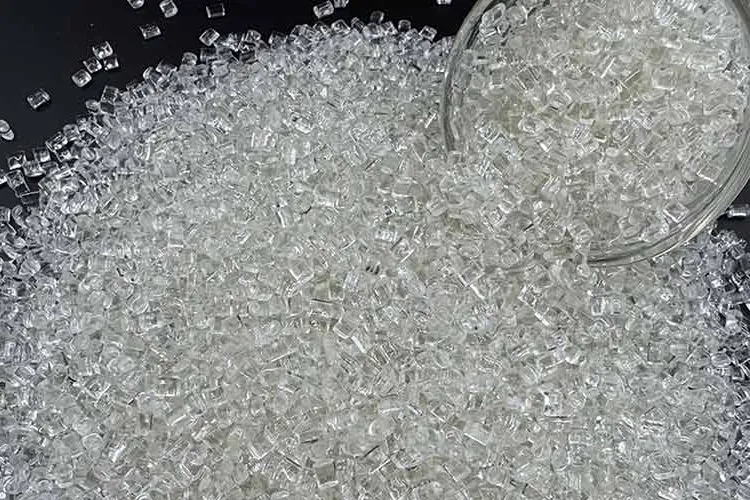
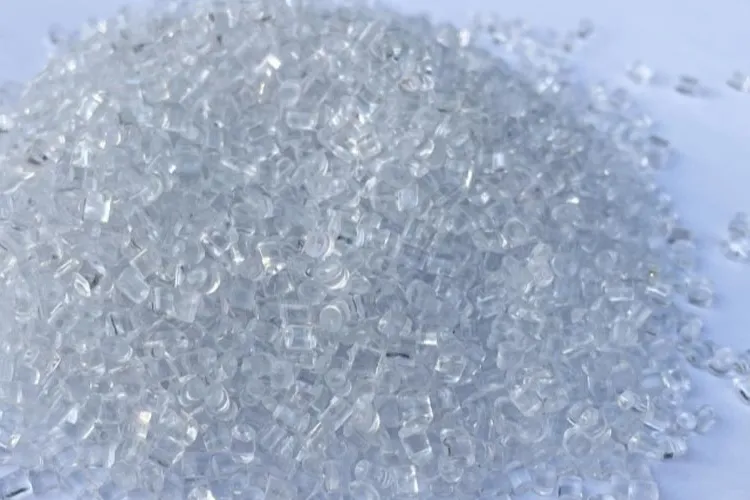
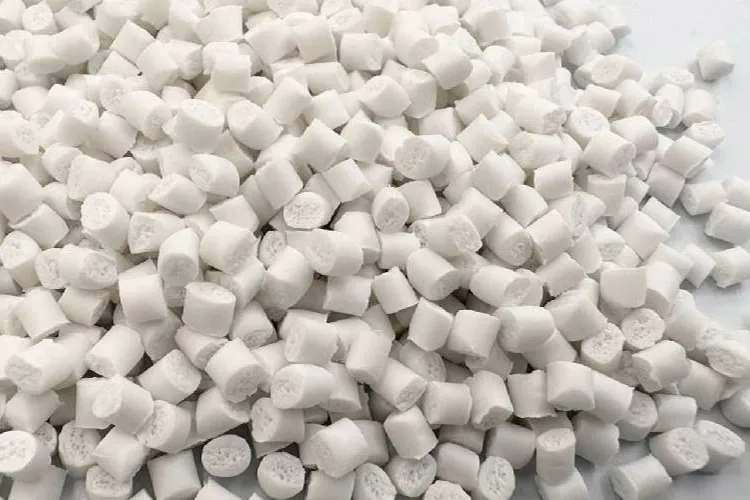
PET (Polyethylene Terephthalate)
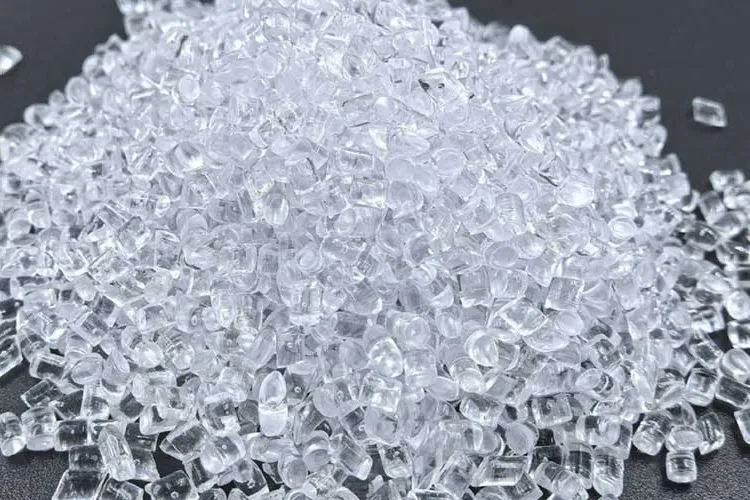
The primary material for the Y150-V3-B, PET benefits most from biaxial orientation during injection stretch blow moulding. Molecular alignment in two directions improves tensile strength, gas barrier properties, and crystal clarity. PET is the standard choice for pharmaceutical, beverage, and cosmetics containers requiring both visual appeal and protective performance. The machine's 174 MPa injection pressure handles PET's melt characteristics with excellent shot-to-shot consistency.
PETG (Glycol-Modified PET)
PETG offers higher impact resistance and better processability than standard PET, while retaining excellent clarity and chemical resistance. It is well-suited to cosmetics and medical device packaging where the container must withstand handling stress and exposure to ethanol-based disinfectants without crazing or stress-cracking. PETG's lower processing temperature also reduces energy consumption relative to standard PET applications.
PP (Polypropylene)
PP is favored for food-contact packaging and pharmaceutical containers requiring autoclave sterilization resistance. Its low density and good chemical resistance make it suitable for squeeze bottles and wide-mouth containers. The Y150-V3-B's temperature-controlled process ensures uniform PP melt behavior and consistent wall distribution across cavities, producing containers that meet both functional and regulatory requirements for food and pharmaceutical contact applications.
PC (Polycarbonate)
Polycarbonate delivers exceptional optical clarity and high impact strength, making it the preferred material for baby bottles and reusable water bottles. The Y150-V3-B's precise injection pressure control and uniform cavity heating ensure that PC is processed without thermal degradation, preserving its mechanical properties and transparency in the finished container across the full production run.
PS (Polystyrene)
PS offers good optical clarity and rigidity at low cost, and is used for food packaging, laboratory ware, and disposable containers. Its brittle nature requires careful processing parameter management, and the Y150-V3-B's closed-loop injection pressure and temperature control accommodates PS's narrower processing window without sacrificing surface quality or dimensional repeatability across cavities.
ABS (Acrylonitrile Butadiene Styrene)
ABS combines good surface finish with mechanical toughness and dimensional stability, making it suitable for specialty containers, craft bottles, and industrial packaging where impact resistance is prioritized. The Y150-V3-B's injection unit handles ABS's higher melt viscosity through optimized screw speed and pressure profiling for consistent shot quality and uniform cavity fill distribution.
 |
 |
 |
 |
 |
 |
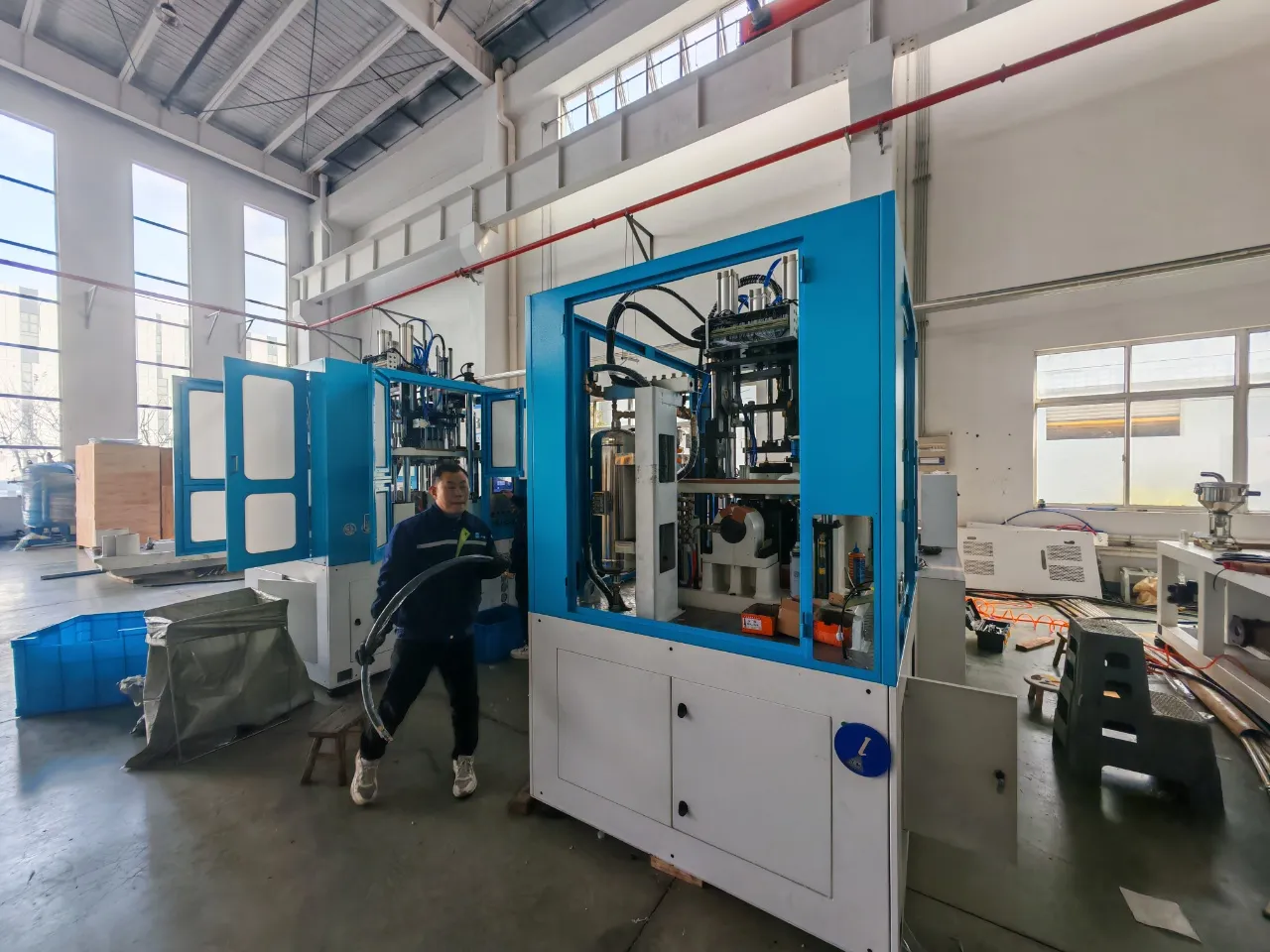
Maintenance Tips
1. Regular Cleaning
Clean the injection mold cavities, runner systems, blow mold parting surfaces, and all mechanical components after each production shift. Dust accumulation and residual plastic deposits on mold surfaces introduce surface defects on finished bottles and can cause mold-open sticking that disrupts cycle timing. Pay particular attention to the blow core vents, which can become blocked with PET residue and impair the inflation uniformity that governs transparency and wall-thickness distribution.
2. Lubrication Maintenance
Apply food-grade or specification-approved lubricating oil to guide rails, rotary platform bearings, mold open-close mechanisms, and the take-out arm at manufacturer-specified intervals. Insufficient lubrication increases mechanical wear on high-load components, leads to indexing accuracy degradation on the rotary platform, and can cause premature failure of guide bushings. A well-lubricated machine maintains the positional repeatability essential for multi-cavity dimensional consistency across every production run.
3. Control System Checking
Inspect all servo motor feedback sensors, thermocouple readings, pressure transducers, and PLC input-output modules on a scheduled basis. Verify that displayed temperature values match actual zone temperatures using a calibrated reference device. Sensor drift that goes undetected leads to systematic process deviation that accumulates batch-by-batch, causing transparency loss, dimensional drift, or inconsistent neck-finish dimensions that are only detected at downstream quality control inspection.
4. Electrical System Maintenance
Inspect the interior of the electrical cabinet, servo drives, and heating element connections for signs of heat damage, loose terminal screws, or moisture ingress at the recommended service intervals. Short circuits in heating elements or drive units can cause sudden production stoppages and damage both the machine and mold tooling. Check cable routing for chafing at motion points and verify that all enclosure seals are intact to prevent airborne polymer dust from entering electronic components.
5. Mold Maintenance
Inspect mold cavity surfaces, parting-line faces, cooling channel condition, and blow-core integrity at the prescribed maintenance intervals. Worn or corroded cavity surfaces introduce surface marks on finished bottles, and damaged parting lines allow flash formation that compromises dimensional accuracy. Replace worn components proactively rather than reactively; mold damage that is allowed to progress typically produces off-specification product across many cycles before being identified during quality inspection.
6. Machine Parameter Adjustment
Periodically review and re-optimize machine parameters, particularly after mold changes, material grade transitions, or extended production runs. Process parameters including injection speed profile, hold pressure, blow timing, and stretch-rod velocity should be re-validated against reference sample quality metrics whenever a new batch of resin, a different mold cavity count, or an ambient temperature change alters the baseline processing behavior. Document all parameter sets for traceability and to facilitate rapid recovery after maintenance interventions.
How to Ensure Quality Control During the Injection Stretch Blow Molding Process
Proper Machine Maintenance
Regular scheduled maintenance of the injection stretch blow molding machine is the foundation of consistent quality output. Worn injection barrel components, degraded mold cooling efficiency, or out-of-calibration sensors introduce systematic process variation that manifests as dimensional drift, surface defects, or transparency loss across successive production batches. A documented preventive maintenance schedule that covers all mechanical, hydraulic, electrical, and thermal subsystems is the most reliable way to sustain the process stability that quality control depends on.
In-Process Quality Checks
Regular sampling and measurement throughout each production run allows operators to detect and correct drift before it affects a large quantity of finished containers. Quality checks should include bottle height, diameter, neck-finish dimensions, wall thickness at defined measurement points, capacity verification by fill-weight testing, drop-test sampling, and visual inspection for surface marks, haze, or flash. High-frequency sampling is especially important at start-up and after any parameter or material change.
Material Testing and Qualification
Incoming PET or other resin batches should be tested for intrinsic viscosity (IV), moisture content, color, and crystallinity before release to production. Resin lot-to-lot variation in IV directly affects melt viscosity at a given processing temperature, which in turn affects preform weight consistency and blow behavior. Conducting incoming material verification and qualifying new resin suppliers before approving them for production use prevents quality failures that occur when an out-of-specification resin batch is discovered only after processing into non-conforming containers.
Process Monitoring
Continuous monitoring of key process parameters including injection pressure, melt temperature at multiple barrel zones, mold cavity temperatures, blow pressure, and cycle time provides real-time visibility into process behavior. Applying statistical process control (SPC) methods to these data streams enables operators to identify trending before the process drifts outside its control limits, allowing corrective action to be taken proactively. The Y150-V3-B's PLC data logging capability supports this approach with time-stamped parameter records.
Documentation and Traceability
Maintaining detailed production records that link each batch of finished containers to the resin lot used, the machine parameters in effect, the operator and shift, and all quality control results performed creates the traceability chain required by pharmaceutical GMP standards, food-contact regulations, and ISO-certified quality management systems. Documented traceability also enables rapid root-cause analysis when a non-conformance is identified, substantially reducing the scope of a potential recall and accelerating the corrective-action process.
Operator Training
The quality of output from a customized injection stretch blow molding machine is directly influenced by the competency of the operators who set up, monitor, and troubleshoot it. Comprehensive training covering machine operation, process parameter logic, quality inspection techniques, and emergency response procedures ensures that operators can recognize and respond to process deviations correctly. Ever-Power provides thorough installation, commissioning, and operator training support for all Y150-V3-B placements, and offers ongoing technical assistance to help production teams sustain process capability.
ISBM Machine vs EBM Machine
What is ISBM Machine?
Injection Stretch Blow Molding begins by injection-molding plastic into a precisely dimensioned preform. That preform is then thermally conditioned and biaxially stretched within a blow mold to form the final container. This method is the dominant process for high-clarity PET packaging in beverage, cosmetics, and pharmaceutical applications. The one step ISBM machine variant, such as the Y150-V3-B, combines all three stages in a single machine, eliminating reheating and inter-process handling. The result is superior clarity, minimal material waste, and lower energy consumption per unit produced.
What is EBM Machine?
Extrusion Blow Molding (EBM) extrudes a continuous molten plastic tube called a parison, which is captured by a mold and inflated to form the container. EBM excels for containers with integral handles, non-round cross-sections, and larger volumes such as detergent bottles, automotive fluid tanks, and industrial drums. The process is generally simpler mechanically but generates more material waste through parison trimming and flash, and produces containers with less optical clarity than ISBM.
Initial Investment
ISBM: Requires high-precision injection and blow molding equipment; complex dual mold tooling drives higher upfront capital cost.
EBM: Lower initial machine purchase price with simpler mold designs, making it more accessible for startups and short-run operations.
Operating Costs
ISBM: Energy-efficient at high volumes due to direct-temperature blow; requires skilled operators for parameter management.
EBM: Higher energy consumption for thick-walled or large-format containers; additional trimming and scrap-handling cost increases operational expenses.
Material Utilization
ISBM: Excellent material efficiency; the preform is precisely dimensioned to produce minimal gate waste and no flash.
EBM: Higher scrap generation from parison trimming and flash removal, increasing per-unit material cost and requiring waste-handling infrastructure.
| Factor | ISBM | EBM |
|---|---|---|
| Initial Machine Cost | High | Moderate |
| Mold Cost | High (precise, dual molds) | Lower |
| Material Waste | Low | Higher |
| Energy Consumption | Lower (per unit) | Higher |
| Clarity and Finish | Excellent | Good |
| Design Flexibility | Limited | High |
| Wall Thickness Control | Excellent | Variable |
| Changeover Speed | Slower | Faster |
If your priority is high-clarity, lightweight PET bottles with superior barrier performance and consistent neck dimensions for pharmaceutical, cosmetics, or beverage filling lines, ISBM is the clear choice. For custom containers with handles, complex geometry, or larger volumes where design flexibility outweighs clarity requirements, EBM offers broader options. As a leading injection stretch blow molding machine manufacturer, Ever-Power supplies both technologies and can advise which platform best suits your specific application, production volume, and budget requirements.
Why Choose Mexico Ever-Power's ISBM Machine?
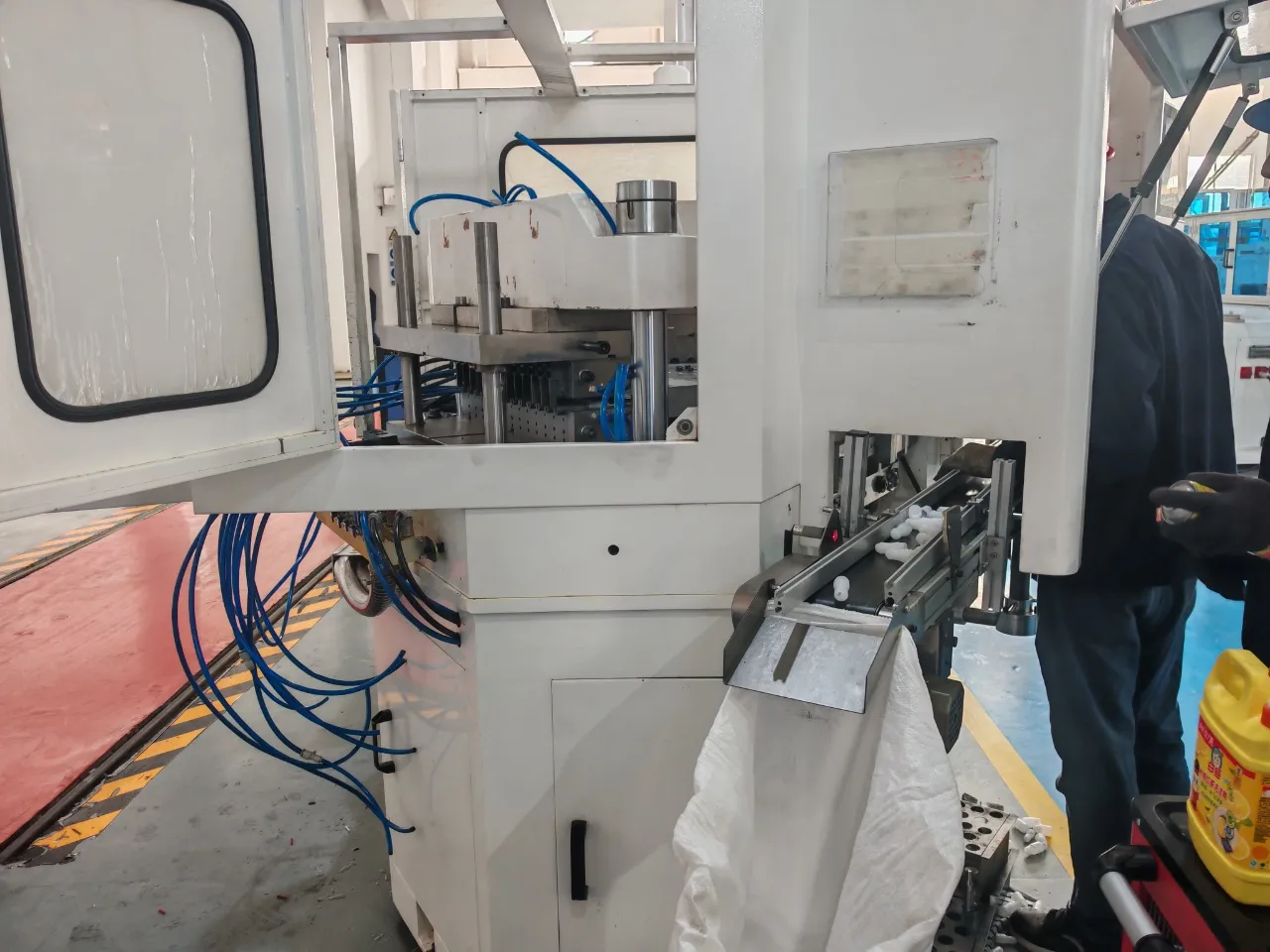
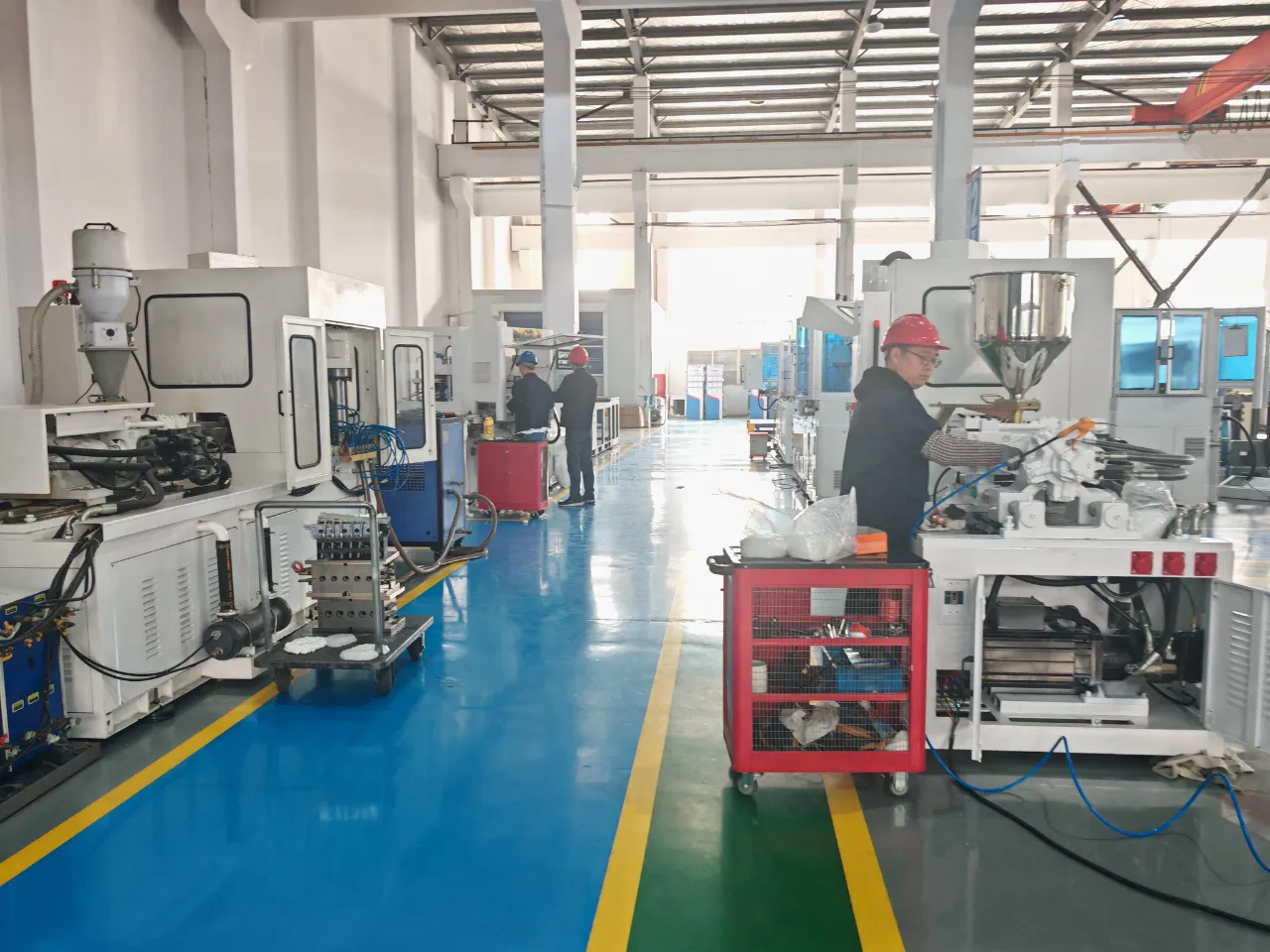
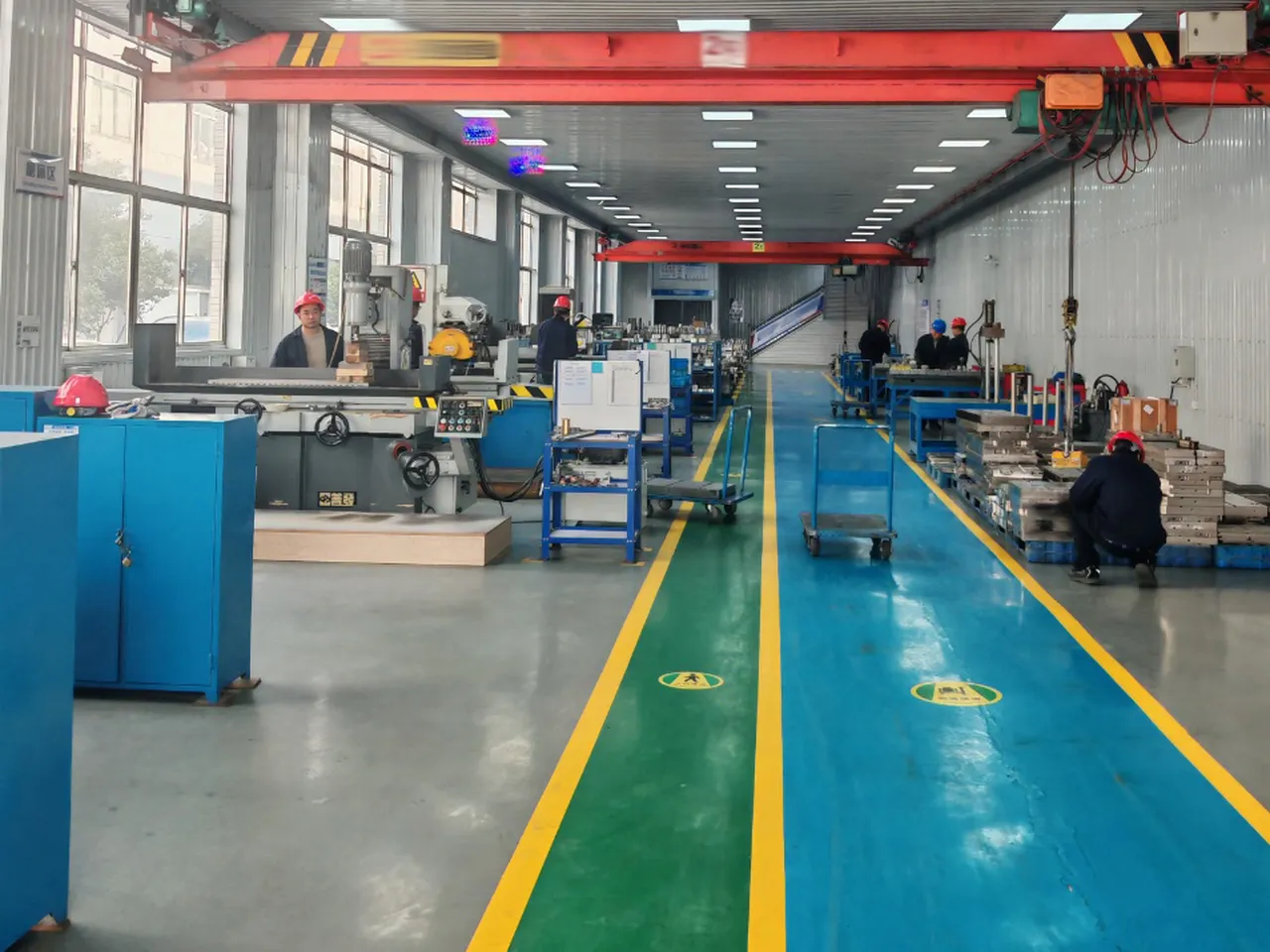
Mexico Ever-Power ISBM Machinery Co., Ltd. is primarily engaged in the research and development, production, sales, and trade of automatic one-step injection blow molding machine and injection stretch blow moulding machine manufacturing. Our product range covers injection blow molding machines, extrusion blow molding machines, IBM machines, and auxiliary equipment, serving plastic packaging manufacturers across pharmaceutical, food, cosmetics, healthcare, and industrial sectors worldwide.
Ever-Power benefits from a convenient geographical location and excellent logistics infrastructure, enabling reliable delivery of machines and spare parts to customers across the Americas, Europe, Asia, and the Middle East. Our R&D team brings together engineers and technical specialists with deep domain expertise in injection-blow machinery and tooling design. With decades of combined theoretical and practical experience, the team delivers thorough pre-sale application consultation, in-process commissioning support, and responsive post-sale technical assistance. Our machines process a comprehensive range of materials including PET, PETG, PP, PC, HDPE, LDPE, PS, PPSU, ABS, PLA, EVA, PCTG, Tritan, and environmental corn-based materials, producing containers from 1 ml to 1,000 ml for virtually any packaging application.
Guided by the enterprise principles of self-reliance, integrity, pragmatism, innovation, and responsibility, Ever-Power delivers a complete turnkey service model for high-end injection-blow production. From initial application assessment and mold design through machine manufacture, installation, operator training, and long-term support, we are committed to building a production-ready solution that meets both your quality requirements and your commercial targets. As a recognized ISBM machine manufacturer with a proven track record of successful replacements of ASB ISBM machines and AOKI machines globally, Ever-Power provides the confidence of working with a partner that understands both the technology and the business demands of modern packaging production.
 |
 |
 |
 |
FAQs
Q: Is the Y150-V3-B a true drop-in replacement for the Japanese AOKI SBIII-100L-20, or does it require mold modifications?
A: The Y150-V3-B is engineered for full mechanical compatibility with existing AOKI SBIII-100L-20 mold tooling. Manufacturers can transfer their existing mold sets to the Y150-V3-B without dimensional modification or re-machining. This mold compatibility is one of the primary advantages for facilities already running AOKI machines that need to expand capacity or replace aging equipment without incurring new mold tooling costs. Ever-Power's technical team can verify compatibility for specific mold configurations before order placement.
Q: What is the difference between a 3-station and a 4-station injection stretch blow molding machine?
A: In a 3-station one step ISBM machine like the Y150-V3-B, the rotary platform indexes through injection, stretch blow molding, and bottle take-out in three positions. A 4-station machine adds a dedicated temperature conditioning station between injection and blow molding, providing additional thermal management capability. The 3-station design is more compact and typically more energy-efficient, making it well-suited to applications where the injection temperature naturally provides adequate conditioning without a dedicated additional station.
Q: Can the Y150-V3-B produce bottles in materials other than PET?
A: Yes. While PET is the primary and most efficient material for the PET injection stretch blow molding machine platform, the Y150-V3-B can also process PETG, PP, PC, PS, and ABS. Each material requires its own validated process parameter set covering screw speed, barrel temperature profile, injection pressure, and blow timing. Ever-Power provides application-specific process guidance for alternative materials as part of the commissioning and training package delivered with each machine installation.
Q: How does the Y150-V3-B achieve GMP compliance for pharmaceutical packaging?
A: The Y150-V3-B achieves GMP compliance through a fully automated production sequence in which the preform is injected, conditioned, and stretch-blown entirely within the machine without human handling at any point. This eliminates the contamination risk associated with manual preform transfer in two-step systems. The sealed operating environment, automated ejection system, and cleanable mold and machine surfaces are all designed to support validation under IQ/OQ/PQ protocols in pharmaceutical packaging facilities. Documentation support is available for customers undergoing GMP validation.
Q: What is the minimum and maximum bottle capacity the Y150-V3-B can produce?
A: The Y150-V3-B produces containers ranging from 100 ml (6-cavity configuration, 25 mm max diameter) to 2.5 liters (1-cavity configuration, 105 mm max diameter). All configurations share the same 250 mm maximum container height. This broad capacity range makes the machine suitable for a wide variety of applications from eye drops and pharmaceutical vials at the small end through water bottles and juice containers at the larger format end, without requiring a different machine model.
Q: How much energy does the Y150-V3-B save compared to Japanese ISBM machines?
A: The Y150-V3-B consumes 15% to 25% less energy than equivalent Japanese, European, and American injection stretch blow molding machines. The primary source of this saving is the direct-temperature blow process, which uses the residual heat from injection to drive the stretch blow stage without secondary reheating. Additional savings come from servo-hydraulic drive systems that match power delivery to instantaneous demand. The exact saving depends on the bottle format, material, and production rate, and can be calculated during the application assessment process.
Q: Can Ever-Power supply customized injection stretch blow molding machines with different cavity counts or special formats?
A: Yes. As an experienced injection stretch blow molding machine manufacturer, Ever-Power offers a broad range of machine configurations including 3-station, 4-station, and 6-station platforms in both standard and full-servo variants. Machine configurations can be customized for specific cavity counts, container formats, material requirements, and production rates. For unusual container geometries, specialized neck finishes, or regulatory requirements such as FDA or EU food-contact compliance, Ever-Power's engineering team works with customers during the specification stage to design the optimal machine and mold solution.
Q: What is the difference between the Y150-V3-B and the Y150-V4-B?
A: The Y150-V3-B is the 3-station model that indexes through injection, blow molding, and ejection. The Y150-V4-B is the 4-station equivalent that adds a dedicated conditioning station, providing more independent control over preform temperature before blow molding. For most standard PET applications, the 3-station Y150-V3-B is sufficient and offers advantages in machine footprint and energy consumption. The 4-station platform is preferred for applications requiring more precise temperature management, such as containers with complex geometry or materials with narrow processing windows. Both models are compatible with AOKI SBIII-100L-20 tooling.
Q: What is the typical lead time for a Y150-V3-B machine order?
A: Standard lead time for the Y150-V3-B is typically 30 to 60 days from order placement and deposit receipt, depending on current production scheduling and any customization requirements. Mold tooling, if ordered separately, has its own lead time in a similar range. For customers with urgent requirements, Ever-Power maintains a limited inventory of standard configurations that may be available for faster delivery. Specific lead time commitments are confirmed at the quotation stage based on current factory workload and the customer's specification requirements.
Q: How does the single-stage ISBM process compare to a two-stage IBM process for pharmaceutical bottle production?
In a two-stage process, preforms are manufactured separately, stored, and then reheated before blow molding. This introduces contamination risk during storage and handling, requires additional energy for reheating, and adds processing steps that can introduce dimensional variation. The single-stage injection stretch blow molding machine approach of the Y150-V3-B eliminates all intermediate steps, producing finished containers in a single continuous and sealed process. For pharmaceutical packaging that must meet GMP contamination-control standards, the single-stage approach is inherently more compliant and typically easier to validate than a two-stage process.
Customer Reviews
Kim Jae-won, Pharmaceutical Packaging, South Korea
"We have been running the Y150-V3-B for about ten months now at our pharmaceutical packaging facility in Incheon, and honestly it has exceeded what we expected. We are producing 50ml oral liquid PET bottles with 4 cavities per cycle and the bottle dimension consistency has been really impressive. Our quality control rejection rate on neck dimensions is under 0.3%, which is way better than what we were getting with our old two-step system. The Ever-Power engineers were incredibly thorough during installation and commissioning, spending three full days with our team to make sure everyone understood the machine properly. Very satisfied."
Fatima Al-Rashidi, Cosmetics Packaging, UAE
"I was skeptical about switching from our Japanese machine to a Chinese ISBM machine, but our production manager insisted we trial the Y150-V3-B for 60 days. I am so glad we did. The parting line on the finished cosmetic bottles is genuinely invisible, which was our single biggest concern going in. We produce PETG serum bottles in 30ml and 50ml sizes and the surface clarity is exceptional. Our clients have not noticed any difference in bottle quality since the switch, and we are saving around 20% on energy each month. The lead time on spare parts is also much better than we experienced with the Japanese supplier."
Rafael Dominguez, Beverage Packaging, Mexico
"We ordered two Y150-V3-B units for our 500ml mineral water line here in Monterrey. The delivery was right on schedule and the installation team did a clean, professional job. We have been running at full speed for five months now with zero unplanned stoppages. The output quality is good and consistent. Output per cycle is noticeably higher than what we were getting from the AOKI machine we retired, which is helping us hit our monthly volume targets without running overtime shifts. Would recommend Ever-Power without hesitation."
Priya Nambiar, Baby Products, India
"We manufacture PC baby bottles and needed a machine that could handle the tighter neck tolerances our feeding bottle designs require. We had a few initial teething issues with the temperature profile setup for polycarbonate, which is expected, and the Ever-Power technical team resolved it via video call within two days. Since then the machine has been very stable. The sealed production environment is important to us for hygiene compliance and that aspect has worked well from day one. Our quality reject rate is around 0.2% which is excellent for PC bottle production. Delivery took about 45 days from order."
Thiago Barbosa, Personal Care Packaging, Brazil
"Our factory in Sao Paulo produces shampoo and body wash bottles for the retail market. We were running an older two-step blowing process and the energy costs were hurting our margins. The Y150-V3-B has cut our electricity consumption significantly and the production cycle is faster. The bottles come out with a really nice glossy finish that our brand clients appreciate. Service from the Ever-Power team was good. They sent us a detailed commissioning checklist before the machine arrived and the startup went smoothly. We have now ordered a second unit to expand capacity for the high season."
Ahmed Elbanna, Chemical Packaging, Egypt
"We use the machine to produce PETG bottles for agricultural chemical products, so barrier performance and wall uniformity are critical for us. The Y150-V3-B handles our 1-liter format with 3 cavities very reliably. Wall thickness variation across the batch is within our tolerance and we have had no failures at the neck finish during filling. Communication with the sales and technical teams before purchase was thorough and they answered all our specification questions honestly without overselling. Shipping to Alexandria port was well organized and the machine arrived without damage. We have been running it for around 7 months with only one minor maintenance call."
Nguyen Thi Lan, Food and Beverage Packaging, Vietnam
"We produce 250ml and 500ml PET juice bottles for the domestic market. The Y150-V3-B fits well in our production building because it is more compact than the machine we were using before, and the footprint is smaller than I expected for a 6-cavity machine. Bottle clarity is very good and our retail clients have commented positively on the appearance of the containers. The initial parameter setting for the 250ml mold took some time to get exactly right, but the Ever-Power engineer walked us through it remotely and we have been running stable ever since. Overall very happy with this investment."
Stefano Marchetti, Pharmaceutical Packaging, Italy
"Our facility in Bologna produces PET eye drop and oral syrup bottles for hospital supply chains. We evaluated three ISBM machine suppliers before selecting Ever-Power, and the decision came down to the GMP documentation package they were able to provide and the quality of the technical support during the evaluation process. We have been running the Y150-V3-B for 14 months now under GMP validation conditions and the machine has passed all our IQ and OQ protocols. The 100% no-human-contact production environment genuinely works as described and has significantly simplified our contamination control validation documentation."
Mark Osei-Bonsu, FMCG Packaging, Ghana
"We are a smaller operation and were worried about the after-sales support situation given the distance from the factory. When we had a minor servo alarm after six months, the technician walked our operator through the diagnosis and fix in under two hours via video call. The machine itself has been solid. We produce 100ml and 200ml shampoo bottles and the output quality is consistent. The price-to-performance comparison with the Japanese machines we looked at was not even close; Ever-Power was significantly better value and the service has genuinely matched what they promised during the sales process."
Additional information
| Edited by | Yjx |
|---|
Related products
-
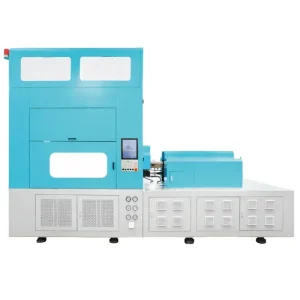
Y200-V3 Injection Stretch Blow Molding Machine Replacement for Japanese AOKI SBIII-250LL-50S
-
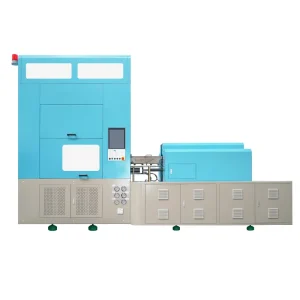
YS350-V4-EV Injection Stretch Blow Molding Machine Replacement for Japanese AOKI AL-350LL-40
-
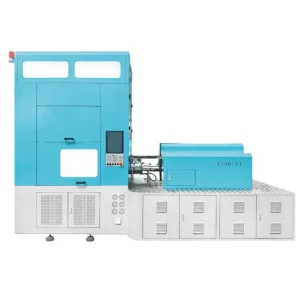
Y150-V4-B Injection Stretch Blow Molding Machine Replacement for Japanese AOKI SBIII-100L-20
-
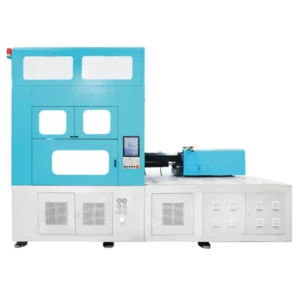
Y650-V4 One Step Injection Stretch Blow Molding Machine (4-Station)