
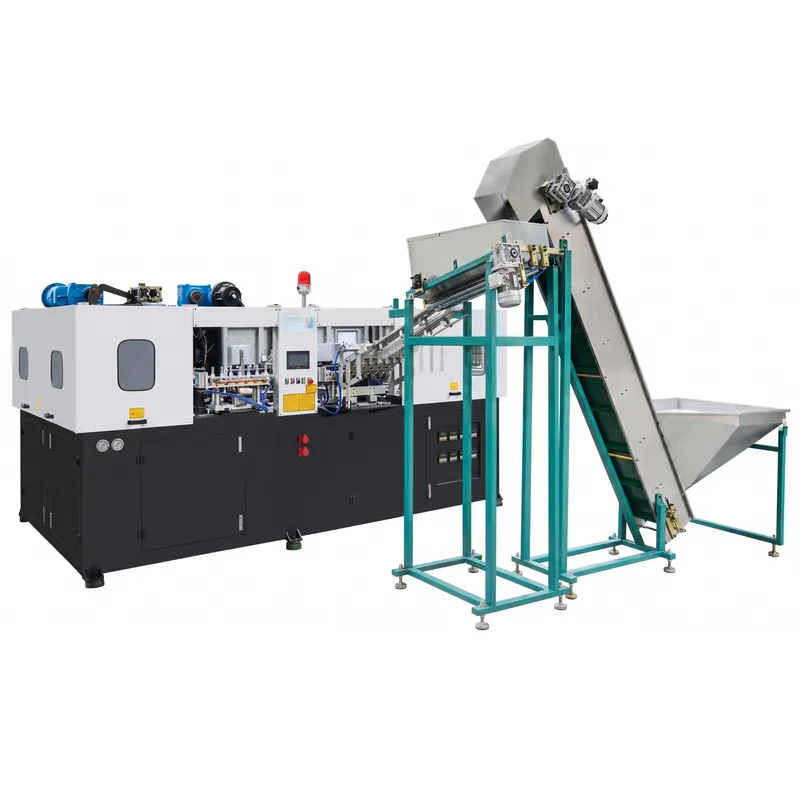
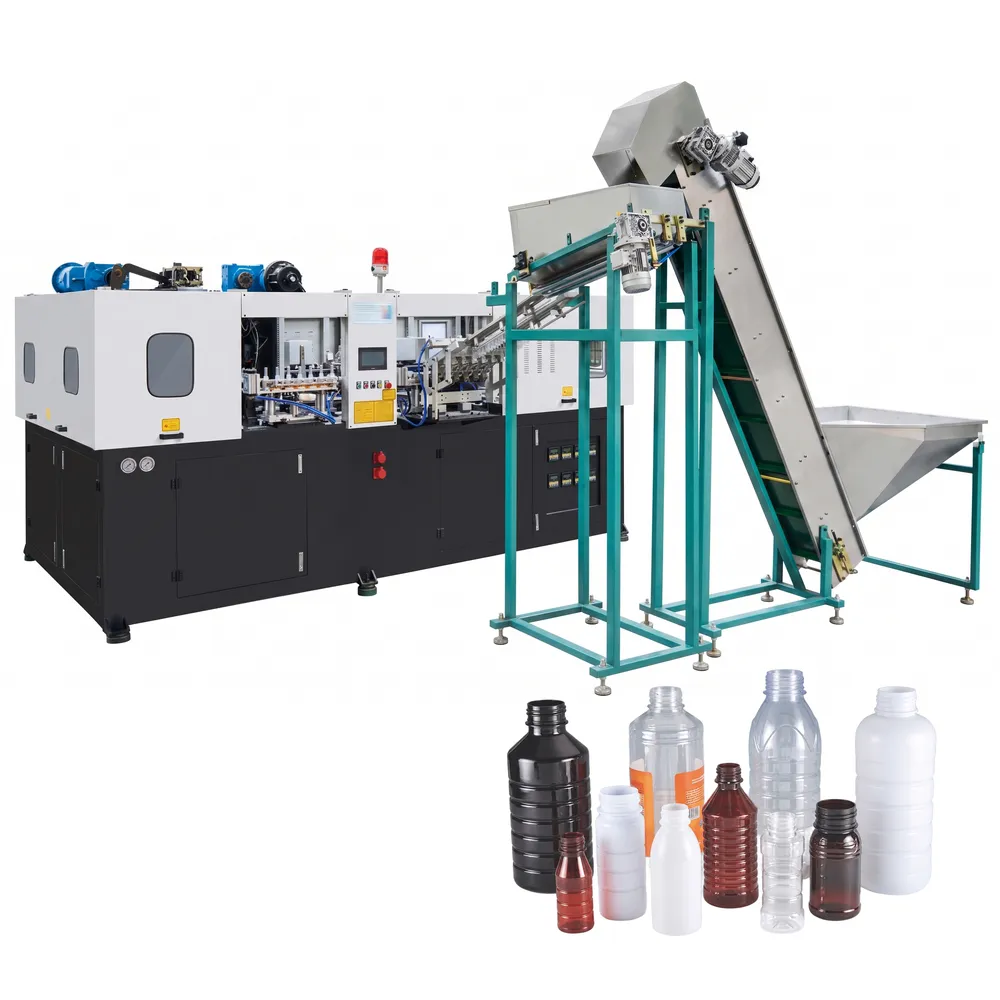
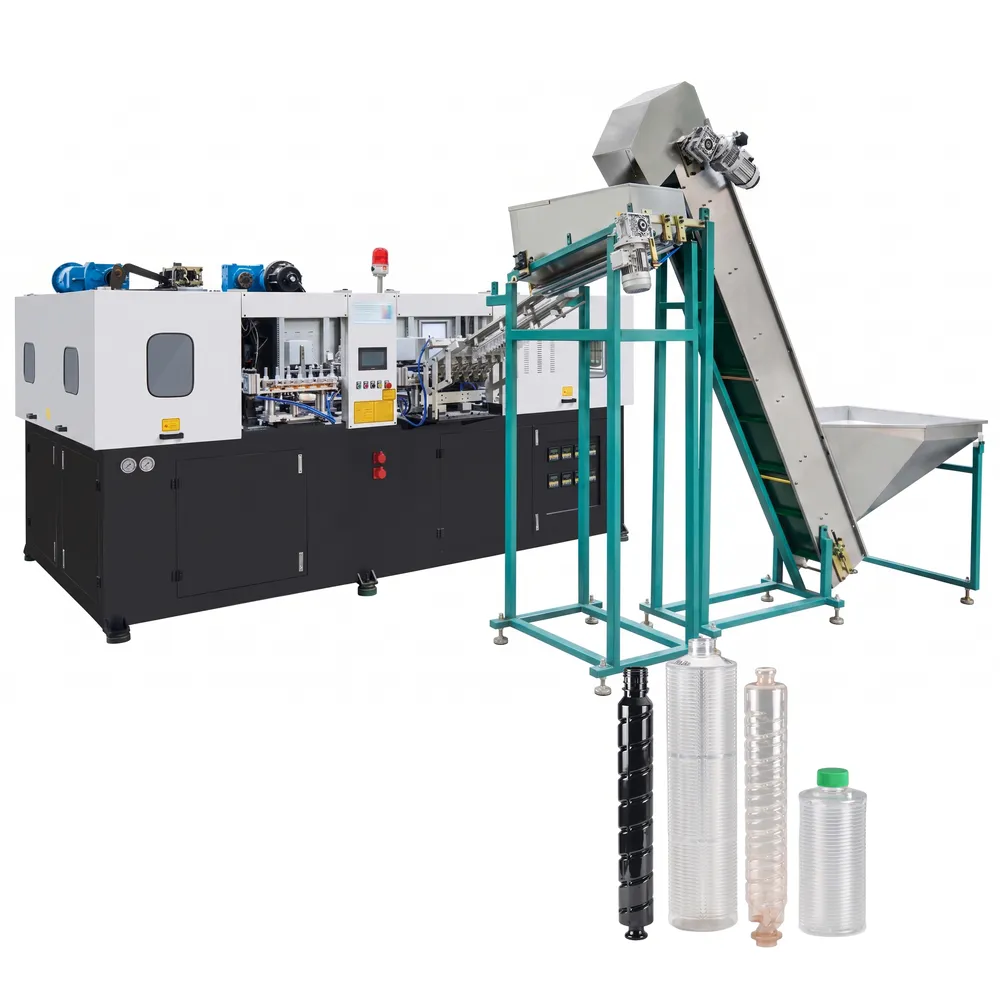
EPA.ES-2C130 Fully Automatic Blow Molding Machine for Pesticide and Chemical Bottles
A high-efficiency, multi-cavity fully automatic blow molding machine engineered for demanding pesticide and chemical bottle production. The EPA.ES-2C130 delivers a theoretical output of 1,800 bph with a 2-cavity configuration, blowing pressure up to 35 kg/cm², and container capacity up to 1,500 ml. This plastic blow molding machine is part of the EPA series, which scales from the EPA.ES-2C100 to the EPA.ES-8C76, handling volumes from 500 ml to 22,000 ml with a maximum body diameter of 300 mm and a peak output of 9,200 bph across the range.
A high-efficiency, multi-cavity fully automatic blow molding machine engineered for demanding pesticide and chemical bottle production. The EPA.ES-2C130 delivers a theoretical output of 1,800 bph with a 2-cavity configuration, blowing pressure up to 35 kg/cm², and container capacity up to 1,500 ml. This plastic blow molding machine is part of the EPA series, which scales from the EPA.ES-2C100 to the EPA.ES-8C76, handling volumes from 500 ml to 22,000 ml with a maximum body diameter of 300 mm and a peak output of 9,200 bph across the range. Stable cooling water at 8–12°C ensures uniform wall thickness and consistent molding quality batch after batch.
As one of the leading blow molding machine manufacturers, Mexico Ever-Power supplies robust automatic blow molding machines that meet the strict quality and output requirements of the global agrochemical and industrial chemical packaging industries.
Technical Parameter
| Pesticide, Chemical Bottle Blow Molding Machine | |||
|---|---|---|---|
| Model | Unit | EPA.ES-2C130 | |
| Molding | Clamping stroke | mm | 160 |
| Mold-open distance | mm | 360 | |
| Mold-close distance | mm | 200 | |
| Stretching stroke | mm | 350 | |
| Mold-open distance | mm | 50 | |
| Mold-close distance | mm | 130 | |
| Preform Holder | 60 | ||
| Cavities | 2 | ||
| Container | Max.Container Volume | ml | 1500 |
| Neck Diameter Range | mm | 98 | |
| Max.Container Diameter | mm | 110 | |
| Max.Container Height | mm | 250 | |
| Theoretical Output | bph | 1800 | |
| Electrical System | Max.Heating Power | kw | 42.5 |
| Heating Power | kw | 8-13 | |
| Air System | Operating Pressure | kg/cm² | 7 |
| Low Pressure Air Consumption | ltr/min | 600 | |
| Blowing Pressure | kg/cm² | 26-35 | |
| High Pressure Air Consumption | ltr/min | 1000-1500 | |
| Cooling Water | Operating Pressure | kg/cm² | 5-6 |
| Temperature | °C | 8-10 | |
| Flow rate | ltr/min | 30 | |
| Machine | Size (L*W*H) | mm | 3600*1800*1980 |
| Weight | kg | 3000 | |
Features of EPA.ES-2C130 Fully Automatic Blow Molding Machine
1. High-Efficiency Multi-Cavity Production
The series offers mold configurations ranging from 2 to 8 cavities. The EPA.ES-8C76 reaches 9,200 bph while the EPA.ES-6C76 achieves 7,200 bph, making this a truly high speed blow molding machine. The multi-pitch mold design accommodates containers from 500 ml to 22,000 ml with a maximum body diameter of 300 mm, enabling large-scale production of water bottles, pesticide containers, and chemical packaging in one platform.
2. Energy Efficiency and Precision Control
Common heating power runs at 8–35 kW. Blowing pressure is maintained at up to 35 kg/cm², with independently adjustable low- and high-pressure air consumption that reduces waste energy. Operating pressure is a consistent 7 kg/cm². The integrated cooling water circuit (8–12°C, 30–120 L/min) ensures uniform preform conditioning during continuous production, drastically cutting the reject rate and demonstrating the efficiency of this automatic PET blow molding machine.
3. Wide Adaptability and High Reliability
The EPA series spans EPA.ES, EPA.AS, and EPA.JS sub-types, covering models from EPA.ES-2C100 through EPA.JS-2C366. Maximum mold-opening distance reaches 772 mm (EPA.JS-2C366). Balanced clamping force enables rapid mold changeover between different container configurations. Critical components are sourced from internationally recognized brands, keeping failure rates low and maintenance simple for uninterrupted industrial-scale operation.
4. Excellent Output Quality Across Applications
The EPA.ES-2C130 stably processes PET and PETG resins, producing bottles with precise neck dimensions, high optical clarity, and uniform wall thickness. All finished containers comply with food and chemical packaging safety standards. The machine is particularly suited for chemically resistant pesticide and agrochemical bottles while maintaining high throughput and dimensional consistency for mineral water and beverage bottle runs on the same platform.
5. Fully Automatic Operation Reduces Labor
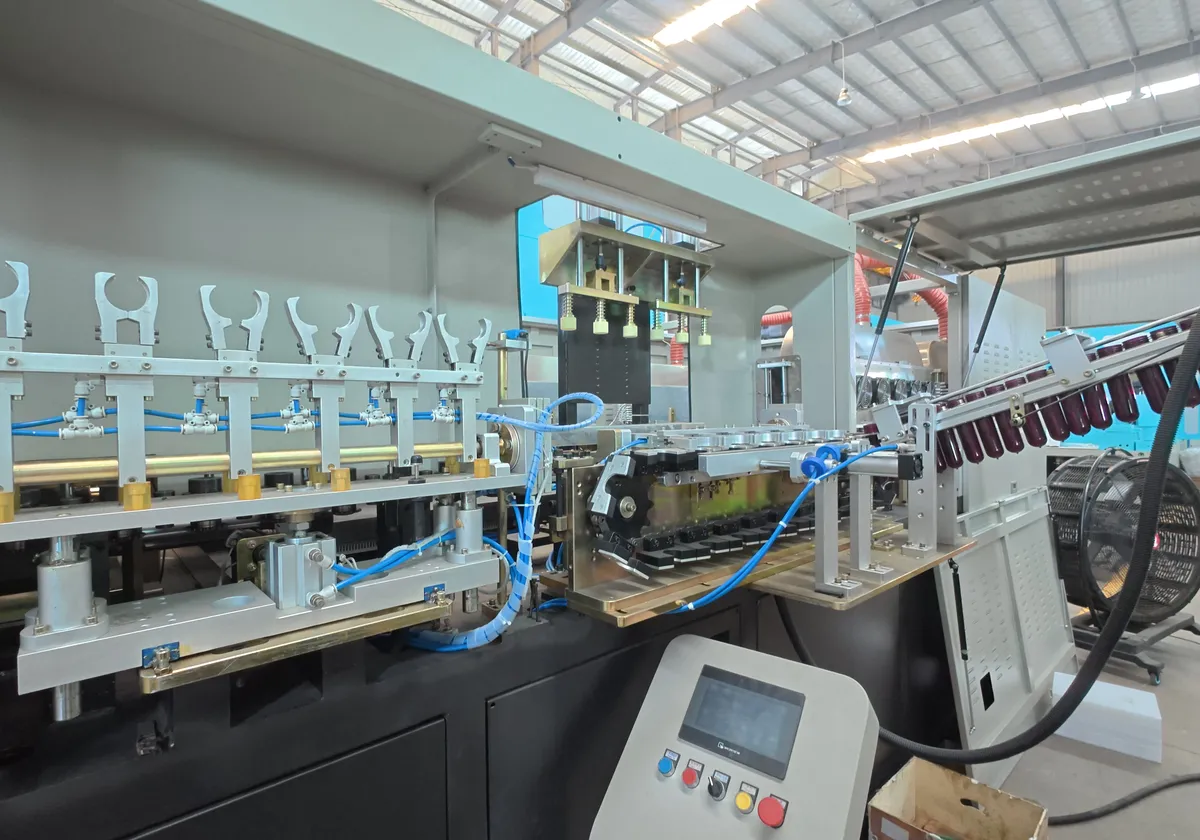
This fully automatic blow molding machine integrates preform feeding, heating, stretching, blowing, and bottle ejection into a single continuous automated cycle. Minimal manual intervention is required, which significantly reduces per-unit labor costs and eliminates human error at critical molding stages. Operators benefit from an intuitive PLC-driven control panel that allows quick recipe recall, parameter monitoring, and real-time alarm management for maximum uptime.
6. Robust Industrial Construction and Safety
Designed as a true industrial blow molding machine, the EPA.ES-2C130 features a reinforced steel frame, enclosed safety guarding on all moving parts, and an independent emergency-stop circuit. The machine weighs 3,000 kg and occupies a compact 3,600 x 1,800 x 1,980 mm footprint, balancing rigidity and shop-floor efficiency. Safety interlocks prevent mold closure when the work zone is accessed, ensuring operator protection during mold changes and routine maintenance.
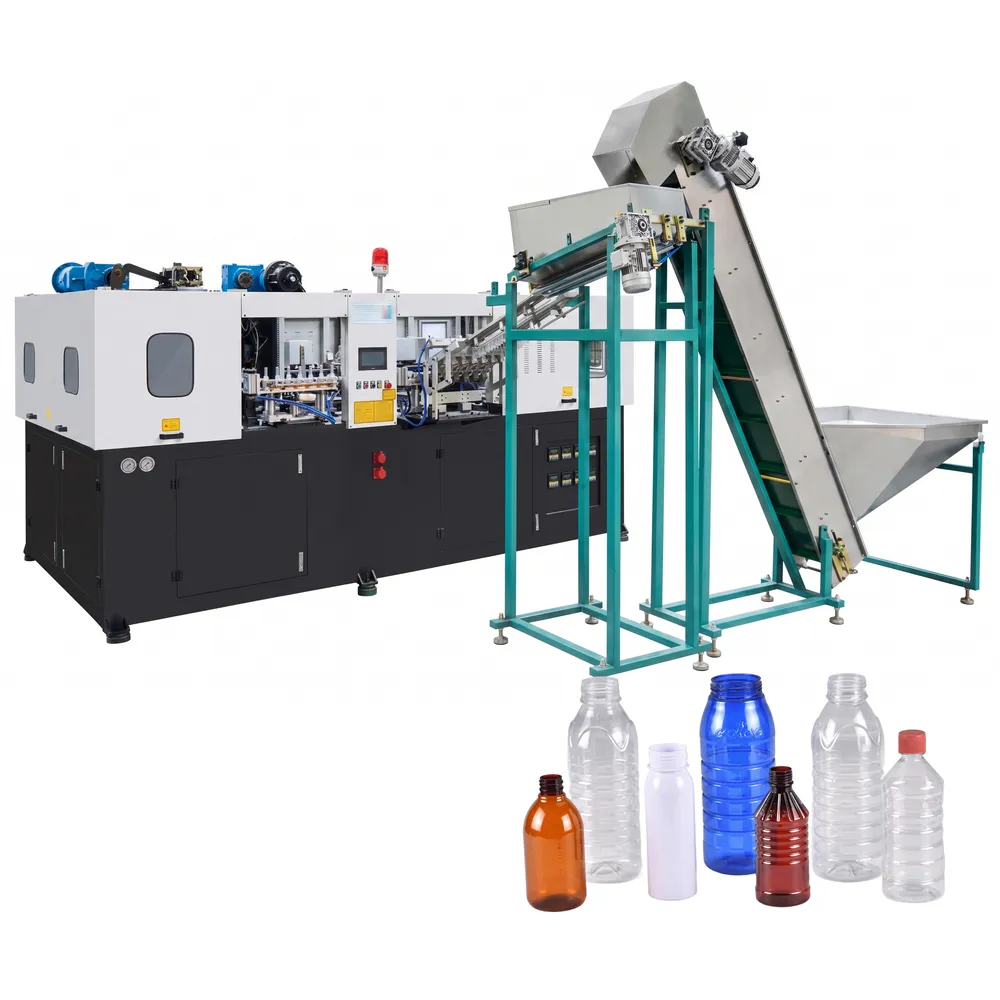
Working Principle of the Two-Stage Blow Molding Machine
1. Raw Material Preparation
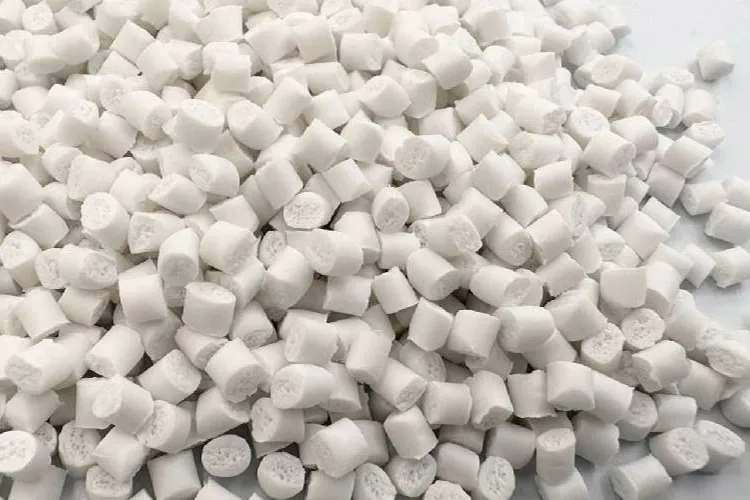
PET, PP, or PE pellets are screened, blended, and precisely fed into a drying hopper. Moisture content is reduced to below 50 ppm before processing to prevent hydrolytic degradation during melting, protecting bottle clarity and tensile strength.
2. Injection Molding
Dried resin enters a reciprocating screw injection unit where it is melted and plasticized under controlled temperature and back-pressure profiles. The melt is injected into a precision preform cavity at defined injection speed and holding pressure, forming a thick-walled test-tube-shaped preform of exact dimensions.
3. Preheating
Preforms are loaded onto a conveyor and pass through a bank of infrared heating lamps. Temperature is ramped uniformly through the preform wall, particularly at the body and base sections that will be biaxially stretched. Consistent preheating at the correct temperature window is critical for achieving uniform wall thickness in the final bottle.
4. Blow Molding
The heated preform is transferred into the blow mold, where a stretch rod simultaneously elongates it vertically while high-pressure air at 26–35 kg/cm² expands it radially against the mold cavity wall. The biaxial orientation improves impact resistance, barrier properties, and optical clarity of the finished bottle. The mold is held closed under precise clamping force throughout this stage.
5. Cooling and Ejection
Chilled water circulating through the mold channels at 8–10°C rapidly solidifies the bottle shape in the cavity. Once the minimum cooling time has elapsed, the mold opens and the bottle is pneumatically ejected onto a take-out conveyor. The complete stretch-blow cycle is then ready to repeat for the next preform.
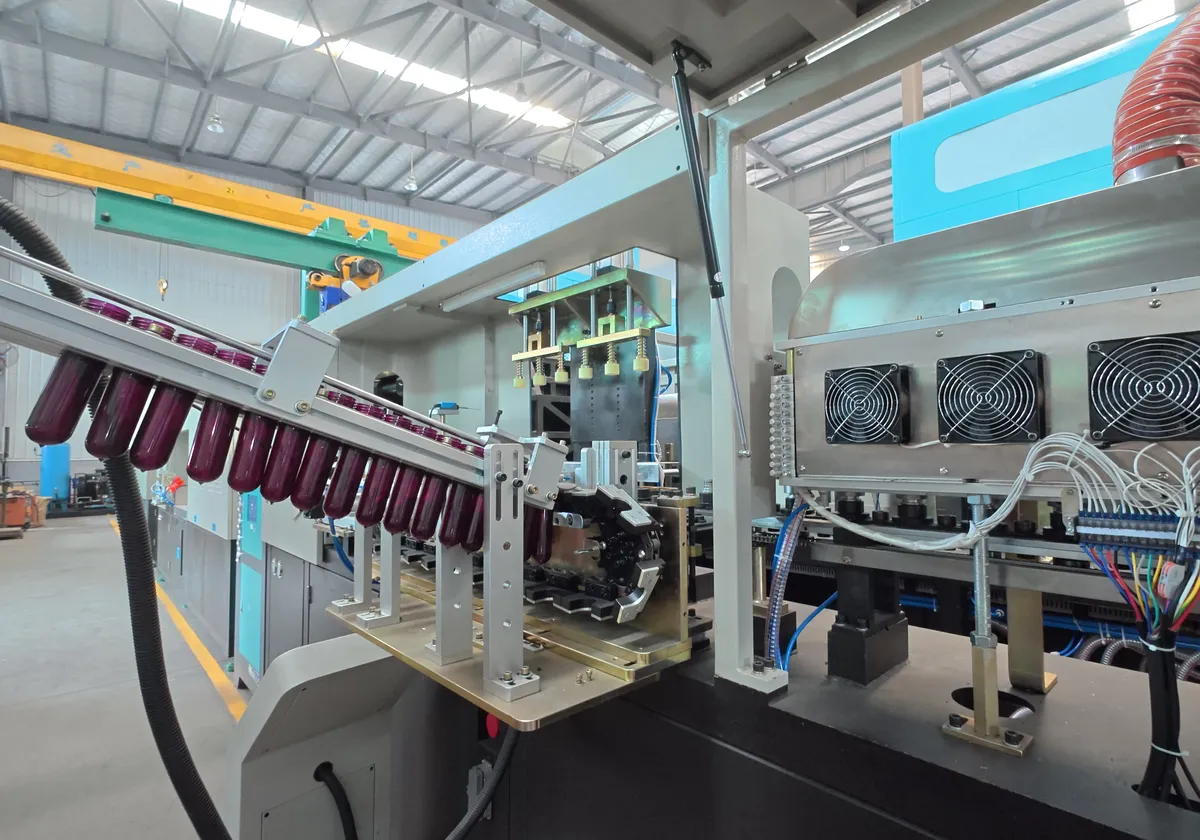
Applications of Chemical Bottle Blow Molding Machine
The EPA.ES-2C130 bottle blow molding machine serves a broad range of markets with demanding container performance requirements.
1. Pesticide and Agrochemical Bottles
Produces chemical-resistant PET and PETG containers for herbicides, insecticides, fungicides, and liquid fertilizers. Tight neck-dimension tolerances ensure secure tamper-evident closure fitment. Bottle wall thickness uniformity meets UN-certified agrochemical packaging regulations, enabling safe global distribution of hazardous liquid formulations.
2. Industrial Chemical Packaging
Suitable for producing solvent containers, cleaning agent bottles, adhesive packaging, and laboratory reagent bottles in volumes from 500 ml to 1,500 ml. The machine delivers consistent sidewall thickness that withstands transportation stress and pressure from reactive chemical contents, making it a preferred plastic bottle blow molding machine for industrial chemical suppliers.
3. Mineral Water and Beverage Bottles
High-clarity PET bottles with excellent gas barrier properties are produced for still and sparkling water, carbonated soft drinks, and juice packaging. The biaxial orientation achieved during stretch blowing maximizes carbon-dioxide retention, extending shelf life for carbonated products while maintaining the lightweight profile consumers expect.
4. Edible Oil and Condiment Containers
With container volumes reaching up to 1,500 ml and a neck diameter of 98 mm, the EPA.ES-2C130 is well suited for food-grade oil bottles, sauce containers, and vinegar packaging. The high blowing pressure ensures crisp shoulder and base geometry for premium shelf presentation, and all molding surfaces comply with food-contact safety requirements.
5. Pharmaceutical and Healthcare Packaging
Produces small-volume medicine bottles, oral-liquid containers, and healthcare supplement packaging in PET or PETG materials with GMP-compliant cleanliness standards. The fully enclosed blowing zone minimizes airborne contamination risk. The automated operation reduces manual handling of the bottle, supporting aseptic packaging environments and regulatory compliance.
6. Personal Care and Cosmetic Bottles
High-gloss, dimensionally accurate bottles for shampoos, conditioners, body wash, and lotion products are easily produced on the EPA.ES-2C130. Custom mold options allow complex ergonomic shapes and embossed branding details. The controlled cooling system delivers the surface finish quality demanded by premium personal care brand owners and contract packagers.
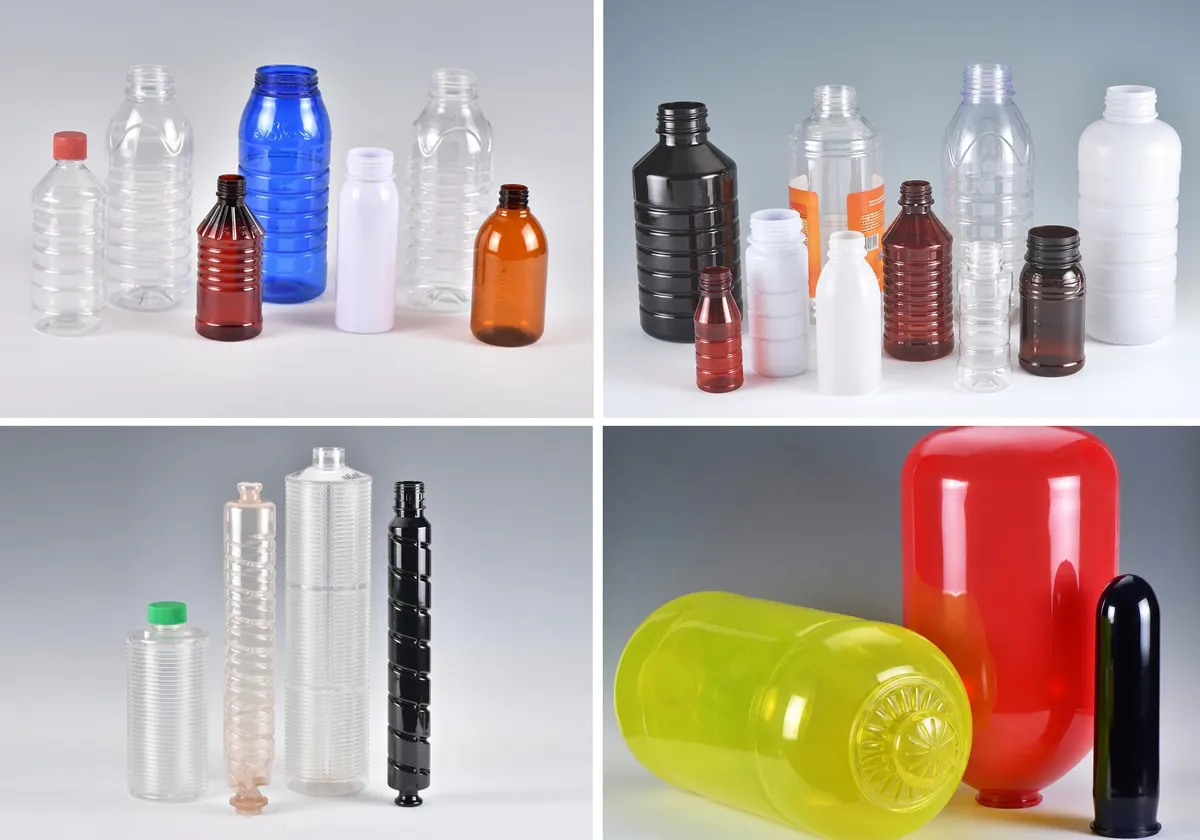
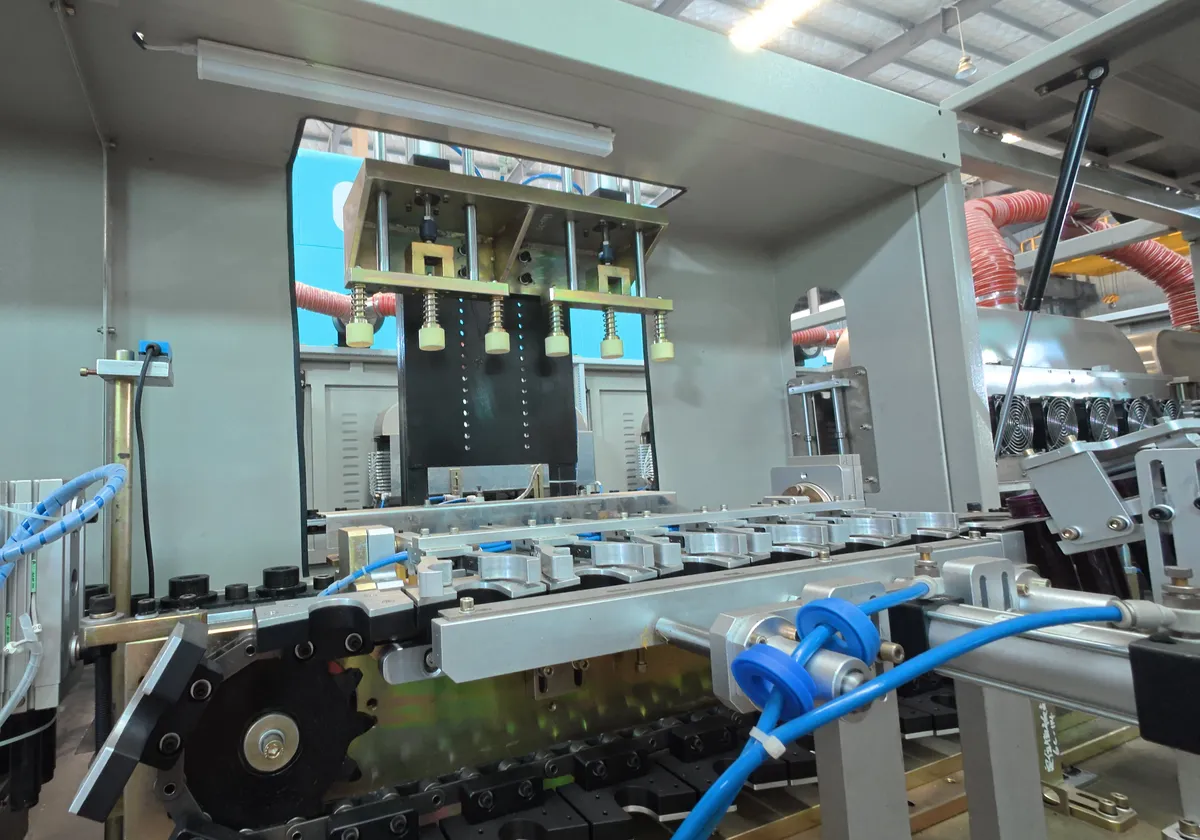
EPA.ES-2C130 Plastic Blow Molding Machine Parts
Core blow molding machine parts that drive performance, precision, and long-term reliability.
Preform Infeed and Sorting Unit
An automated vibratory bowl feeder and orientation sorter deliver preforms to the heating conveyor neck-up at rates matching the machine's full output speed. The unit eliminates manual loading, reducing contamination risk and ensuring a continuous preform supply with zero gap between production cycles.
Infrared Heating Oven
Multiple independently controlled infrared lamp banks heat preforms in precisely zoned temperature profiles across the body, shoulder, and base sections. The oven design ensures uniform axial and radial temperature distribution, which is the foundation of consistent wall thickness in the finished bottle. Power runs at a common 8–13 kW with a maximum of 42.5 kW.
Mold Clamping Unit
The clamping unit provides a 160 mm clamping stroke with a mold-open distance of 360 mm and a mold-close distance of 200 mm. Balanced toggle linkages distribute clamping force evenly across both mold halves, preventing flash formation at the parting line and protecting mold life. Rapid mold-open and close cycles reduce non-productive time between each bottle shot.
Stretch-Blow Station
The stretch rod delivers axial preform elongation synchronized with the radial high-pressure air blast at 26–35 kg/cm². Precise servo-driven stretch-rod positioning controls the degree of biaxial orientation, enabling fine-tuning of bottle mechanical properties and clarity for each product recipe. Low-pressure pre-blow at 7 kg/cm² stabilizes the preform before full blowing pressure is applied.
Mold Temperature Control System
Dedicated water channels machined into both mold halves circulate chilled water at 8–10°C with a flow rate of 30 L/min and 5–6 kg/cm² supply pressure. Rapid and uniform cooling solidifies the bottle against the cavity wall within minimal cycle time, ensuring dimensional accuracy from the first shot of the day through extended high-volume production runs.
PLC Control System and HMI Panel
A Siemens or Mitsubishi PLC governs all machine functions, including preform feed timing, oven temperature zones, stretch-rod position, blowing pressure curves, and bottle ejection. The color touchscreen HMI displays real-time process data, stores production recipes, and generates alarm logs. Remote diagnostics capability allows Ever-Power engineers to support troubleshooting without on-site visits.
High-Pressure Air Circuit
The dedicated high-pressure circuit delivers blowing air at 26–35 kg/cm² with a consumption of 1,000–1,500 L/min for the EPA.ES-2C130. Pressure regulators and precision solenoid valves ensure repeatable blowing profiles for each cycle. An integrated air recovery valve recaptures residual blowing pressure from the bottle before mold opening, reducing compressor load and energy consumption.
Safety Guarding and Interlock System
Full perimeter Lexan safety panels enclose all moving mechanisms. Magnetic safety-door interlocks cut power to the clamping and stretching actuators when any panel is opened during operation. An independent emergency-stop circuit with dual-channel monitoring meets ISO 13849 PLd safety requirements, protecting operators throughout mold changes, maintenance tasks, and jam-clearance procedures.
Single-Stage vs. Two-Stage Blow Molding Machine
Single-Stage Blow Molding Machines
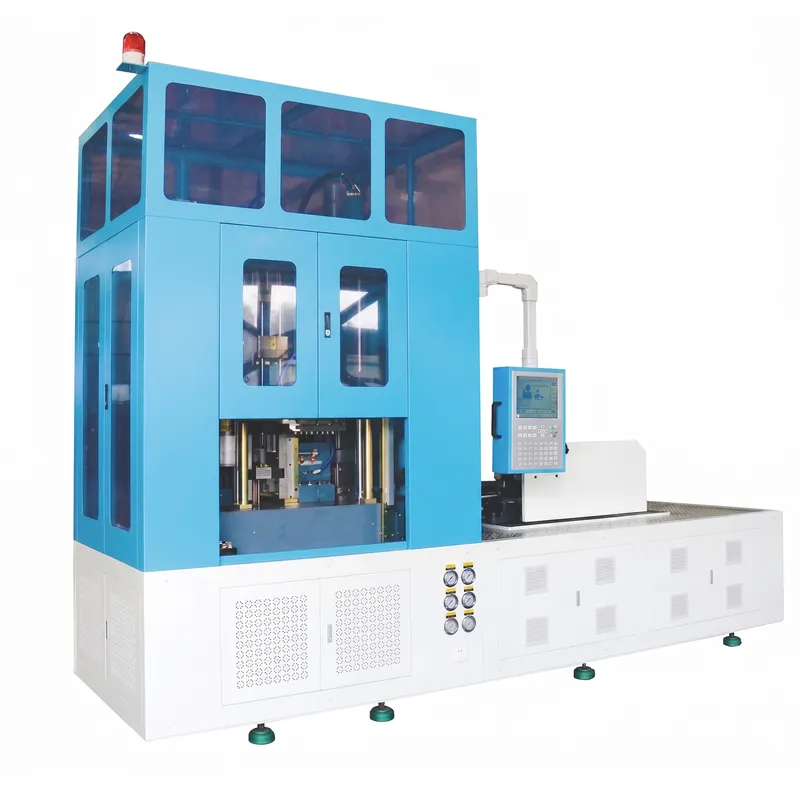
A single-stage machine integrates preform production and bottle blowing into one continuous unit. Pellets enter one end and finished bottles exit the other, with injection molding, conditioning, and stretch-blowing occurring in sequence without intermediate storage of preforms.
Advantages: compact footprint, lower initial capital, shorter lead-time for small batches, suitable for complex shapes such as wide-mouth jars and asymmetric containers where preform-to-bottle transfer is eliminated. An injection stretch blow molding machine of this type is well suited to cosmetics, pharma, and specialty packaging.
Limitations: lower output per hour, injection and blowing cycles must be synchronized (creating interdependencies), higher energy consumption per bottle at moderate volumes, and less flexibility for large-scale commodity production.
Two-Stage Blow Molding Machines
A two-stage blow molding machine separates preform injection molding from the reheat-and-blow stage. Preforms are made or procured externally, stored, then reheated in an oven and blown at high speed. This separation allows each stage to be independently optimized for throughput and quality.
Advantages: very high output (EPA.ES-8C76 reaches 9,200 bph), energy-efficient bulk preform reheating, superior bottle uniformity through controlled preform conditioning, compatible with third-party preform supply chains, and highly scalable for industrial filling lines.
Limitations: larger total footprint including oven and conveyors, higher capital investment, and slightly longer changeover time when switching between very different bottle sizes. Best suited to high-volume commodity packaging where consistency and throughput are the primary drivers.
Key Differences
| Feature | Single-Stage Blow Molding Machine | Two-Stage Blow Molding Machine |
|---|---|---|
| Process Integration | Injection and blowing in one unit | Separate preform conditioning and blowing stages |
| Production Capacity | Moderate (small to medium runs) | High (industrial-scale, up to 9,200 bph in EPA series) |
| Initial Investment | Lower | Higher, offset by long-run cost savings |
| Energy Efficiency | Less efficient per bottle at high volume | More efficient due to optimized bulk preform reheating |
| Automation Level | Semi-automatic to automatic | Fully automatic with minimal labor |
| Flexibility | High; rapid size changeover | Lower; best for long production runs |
| Bottle Uniformity | Moderate | High; controlled conditioning ensures consistency |
| Footprint | Compact | Larger; includes oven, conveyors, and take-out |
| Labor Requirements | Higher; more monitoring needed | Lower; highly automated workflow |
| Best For | Specialty shapes, pharma, cosmetics, small batches | Water, beverage, pesticide, chemical, large-volume packaging |
Factors to Consider When Choosing
- Production Volume: High-volume operations benefit from two-stage speed and efficiency. Low-to-medium producers may find single-stage more economical and flexible.
- Capital Investment: Single-stage machines require lower upfront investment. Two-stage machines recover cost through reduced labor and energy expenses over time.
- Bottle Design Variability: Frequent shape or size changes favor single-stage. Stable long-run production of standard bottles favors two-stage.
- Energy Costs: Two-stage systems are more energy-efficient per bottle at high throughput, delivering lower operating costs over multi-year production horizons.
- Quality Standards: Where consistent wall thickness, clarity, and mechanical strength are critical, two-stage machines provide superior process control and repeatability.
 |
|
| Single-Stage Blow Molding Machine | Two-Stage Blow Molding Machine |
|---|
Compatible Raw Materials for PET Blow Molding Machine
The EPA.ES-2C130 plastic blow molding machine processes a wide range of thermoplastic resins to meet diverse chemical resistance and transparency requirements.
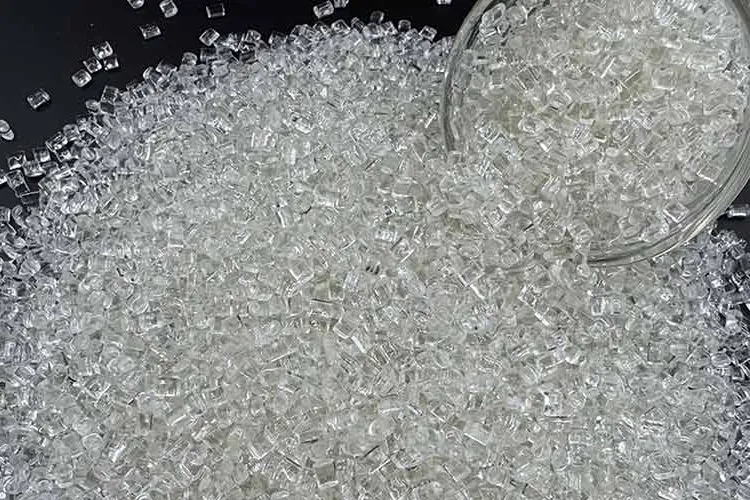
PET (Polyethylene Terephthalate)
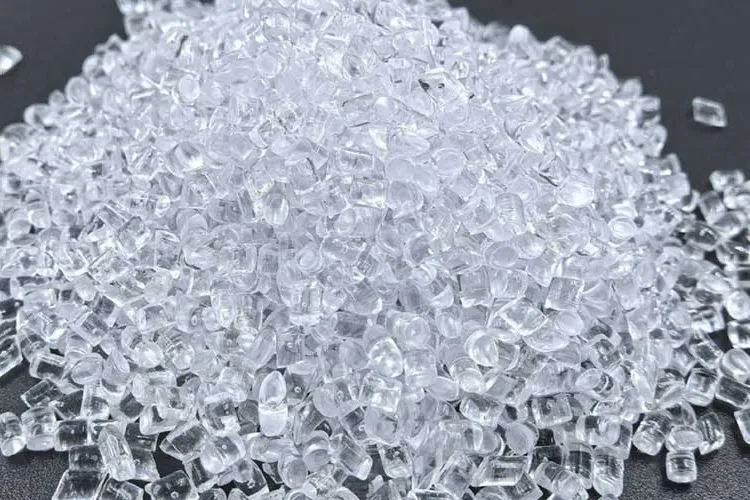
The primary resin for this PET bottle blow molding machine. PET delivers outstanding clarity, excellent gas and moisture barrier properties, and high tensile strength at low wall thickness. It is widely used for beverage, chemical, and pharmaceutical bottles and is fully recyclable under PET stream recycling programs worldwide.
PETG (PET Glycol-Modified)
PETG offers superior chemical resistance compared to standard PET, making it particularly valuable for cosmetic serums, lab reagent bottles, and specialty chemical containers. Its lower processing temperature reduces energy demand, and its exceptional impact strength minimizes breakage during transport, reducing total packaging cost.
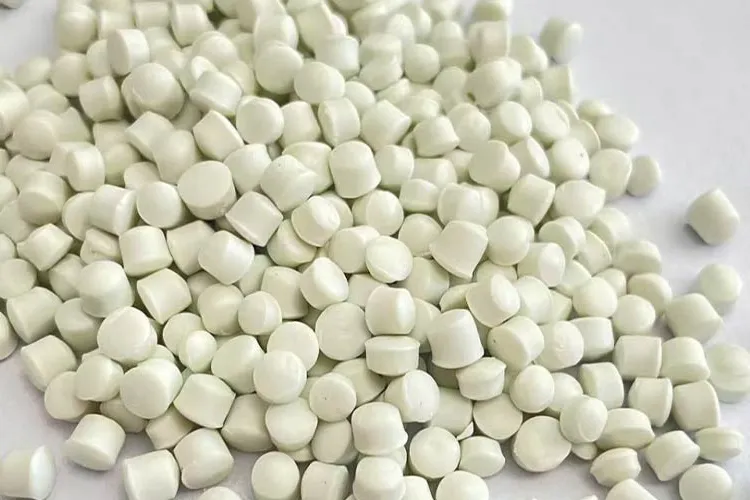
HDPE (High-Density Polyethylene)
HDPE is the preferred material for opaque agrochemical and industrial chemical bottles. Its resistance to a broad spectrum of solvents, acids, and bases makes it ideal for pesticide, lubricant, and cleaning-agent packaging. HDPE bottles provide excellent drop resistance and are compatible with UN-certified dangerous-goods packaging requirements.
LDPE (Low-Density Polyethylene)
LDPE is used where flexible, squeezable bottles are required, such as for personal care products, lotions, and agricultural adjuvants. Its translucency allows consumers to see product levels, and its excellent moisture barrier properties protect moisture-sensitive formulations throughout their shelf life.
PP (Polypropylene)
PP is the material of choice for pharmaceutical, food-grade, and hot-fill applications. It maintains structural integrity at elevated fill temperatures and provides excellent chemical resistance to acids, bases, and organic solvents. PP bottles meet stringent FDA and EU food-contact regulations, making this a preferred resin for nutraceutical and pharmaceutical packaging lines.
PC (Polycarbonate)
PC delivers extraordinary impact resistance and optical clarity, suited for reusable water bottles, laboratory sample containers, and industrial fluid reservoirs. Its high heat-deflection temperature allows steam sterilization, which is critical for medical device and laboratory packaging applications requiring repeated cleaning and reuse cycles.
PEN (Polyethylene Naphthalate)
PEN provides superior gas and moisture barrier performance compared to PET, retaining carbonation in pressurized beverage containers far longer. Its UV-blocking properties protect light-sensitive products such as pharmaceutical solutions and specialty beverages from photodegradation during extended ambient storage and display.
PVC (Polyvinyl Chloride)
PVC offers excellent chemical resistance and can be formulated to a wide range of rigidity levels. It is used for cosmetic and cleaning-product bottles where barrier performance, cost efficiency, and molding flexibility are key considerations. PVC is easily decorated with labels and sleeves and accepts a broad palette of colorants for brand differentiation.
PLA (Polylactic Acid)
PLA is a bio-based, compostable resin derived from corn starch or sugar cane. It serves brands committed to reducing fossil-fuel dependency and offering end-of-life composting for short-shelf-life products. PLA bottles deliver similar clarity and stiffness to PET and are fully compatible with industrial composting infrastructure in major global markets.
 |
 |
 |
 |
Benefits of the Two-Stage Blow Molding Machine
1. Flexible Process Control
The two-stage design allows injection molding and blow molding parameters to be tuned completely independently. Operators can optimize preform weight, neck geometry, and crystallinity without any constraint from the blowing schedule. This separation means that a preform formulation change does not interrupt ongoing bottle production, providing operational agility that single-stage systems cannot match.
2. Superior Product Quality
Because both stages are decoupled, each can be pushed to its individual quality optimum. Preform injection can focus on dimensional accuracy and resin homogeneity, while the blow stage can focus on temperature uniformity and stretch ratio. The result is higher bottle-to-bottle consistency in wall thickness, top-load strength, and optical clarity than integrated systems routinely achieve.
3. High Production Efficiency
The injection molding machine and blow molding machine operate concurrently without dependency on each other's cycle times. When one stage requires maintenance, the other can continue with preform buffer stock. This independence eliminates the cascade downtime that single-stage machines suffer, boosting overall equipment effectiveness (OEE) and supporting 24/7 production schedules in high-volume facilities.
4. Lower Total Equipment Investment Cost
For operations that source preforms from external suppliers, the reheat blow molder alone represents a significantly lower capital outlay than a full integrated system. The ability to purchase preforms competitively on the open market also provides supply-chain flexibility and cost leverage that vertically integrated preform systems do not allow, benefiting small and medium-sized packaging businesses in particular.
5. Scalable to Any Production Demand
Two-stage systems integrate seamlessly with downstream filling, capping, labeling, and palletizing lines, forming a fully automated end-to-end packaging operation. As demand grows, additional blow molding cavities or entirely new machines can be added without redesigning the preform supply chain. The EPA series demonstrates this with models scaling from 2 cavities at 1,800 bph to 8 cavities at 9,200 bph.
6. Reduced Energy Consumption Per Bottle
Bulk preform reheating in a dedicated oven with zoned infrared lamps is significantly more energy-efficient than individually heating material inside a combined injection-blow unit. At high production volumes, the energy saving per thousand bottles is meaningful, reducing the operating cost structure and improving the environmental footprint of the packaging operation across its lifetime.
7. Broad Material and Format Compatibility
Two-stage reheat-blow systems process preforms made from PET, PETG, PEN, and other transparent resins sourced from any supplier. This resin-agnostic approach allows packaging engineers to select the optimal material for each product without being constrained by the machine's integrated injection unit. Format flexibility across container sizes is achieved through straightforward mold and recipe changes on the blow station.
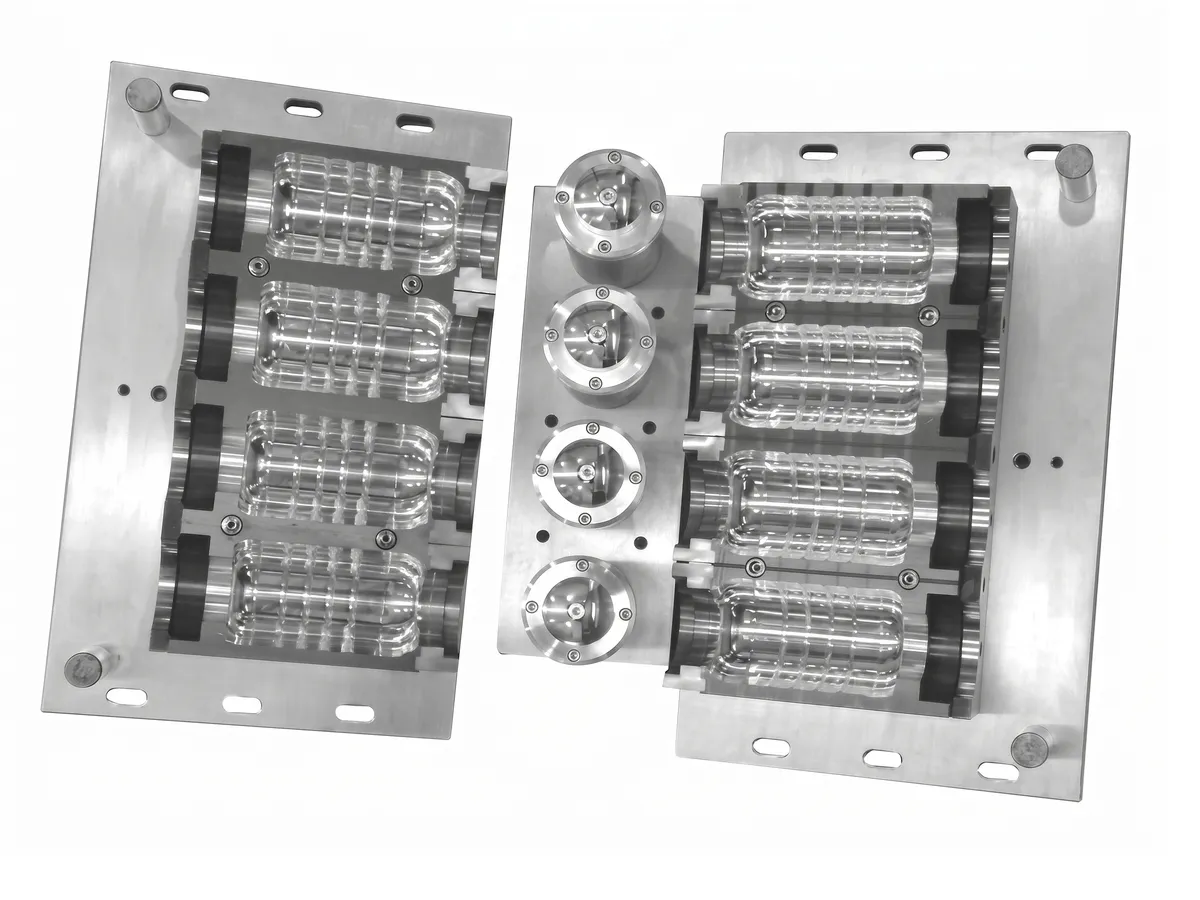
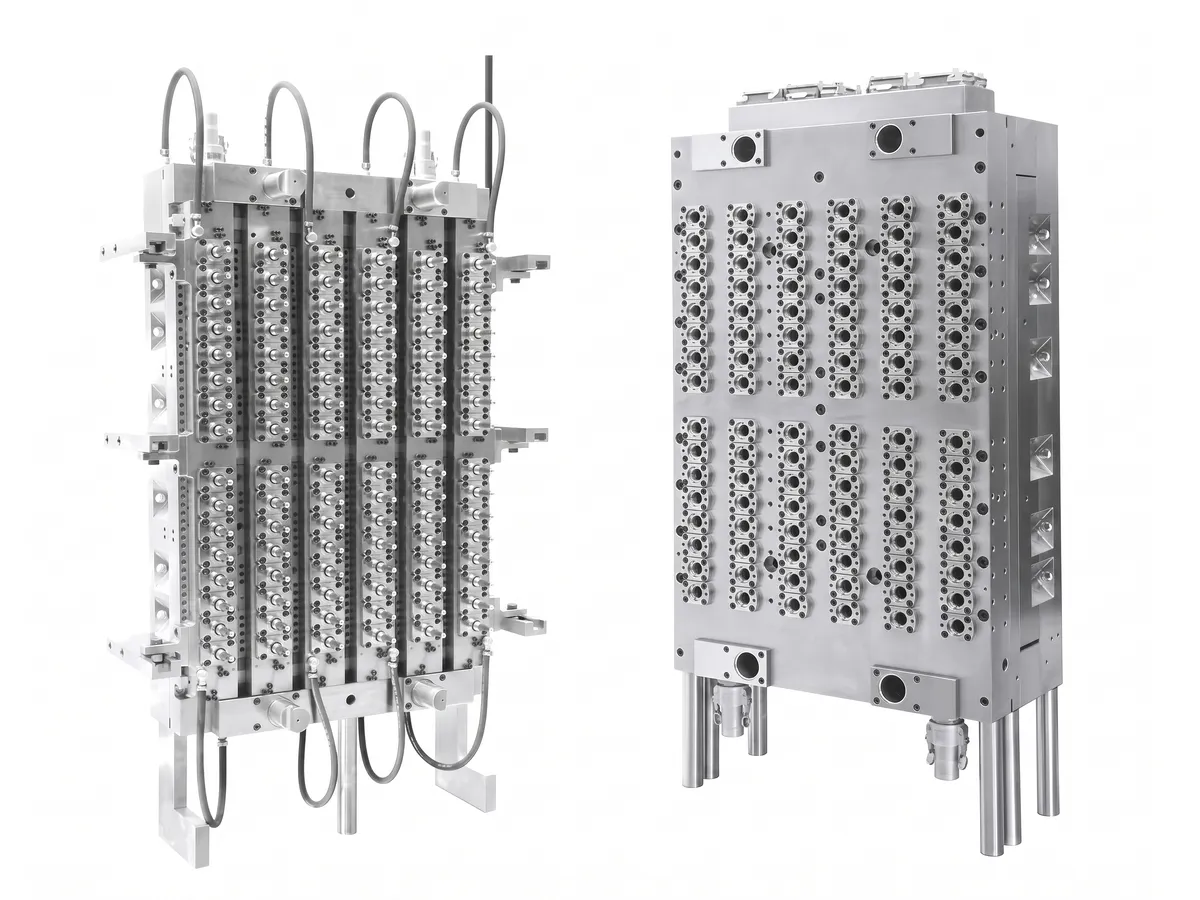
Pesticide and Chemical Bottle Blow Molding Machine Mould
Preform Injection Mold
- Die lip composed of two precisely aligned parts, guaranteeing axial concentricity during preform formation and eliminating off-center wall thickness that causes downstream blowing defects.
- Optimized cooling water channel geometry maximizes heat extraction from the preform, shortening cycle time and ensuring a fast, consistent producing cycle even during extended continuous runs.
- Formation components manufactured from imported 2316 die steel, which is fully rust-resistant and has undergone hardening heat treatment for excellent wear and corrosion resistance.
- Core plate, cavity plate, and other structural components use 420 stainless steel, providing high corrosion resistance in humid and chemically aggressive production environments.
- Straightforward, accessible internal architecture makes routine mold maintenance simple, reducing the skill level and time required for cleaning and component inspection between production campaigns.
- Standard interchangeable die fittings allow rapid tooling swaps between product families without custom modification, minimizing changeover downtime and maximizing production uptime.
- Advanced mold design enables a single mold to produce more than one type of preform, offering product flexibility without additional tooling investment for customers with multiple container formats.
Blowing Mold
- Mold base material is high-quality alloy tool steel, selected for its combination of machinability, hardness, and toughness. This ensures the cavity retains its precise dimensions across millions of production cycles without distortion or wear-induced dimensional drift.
- Bottle geometry is developed and validated using advanced 3D CAD and mold-flow simulation software before steel is cut, eliminating costly iterative physical sampling and reducing time-to-market for new container designs.
- Versatile bottle design options are available for customer selection, including standard round, square, oval, and ergonomic grip shapes, with embossed brand logos, surface textures, and label panels as required.
- Water cooling channels are designed with optimal flow balance across the mold face, ensuring uniform temperature extraction and consistent bottle wall crystallinity from cavity to cavity within multi-cavity mold sets.
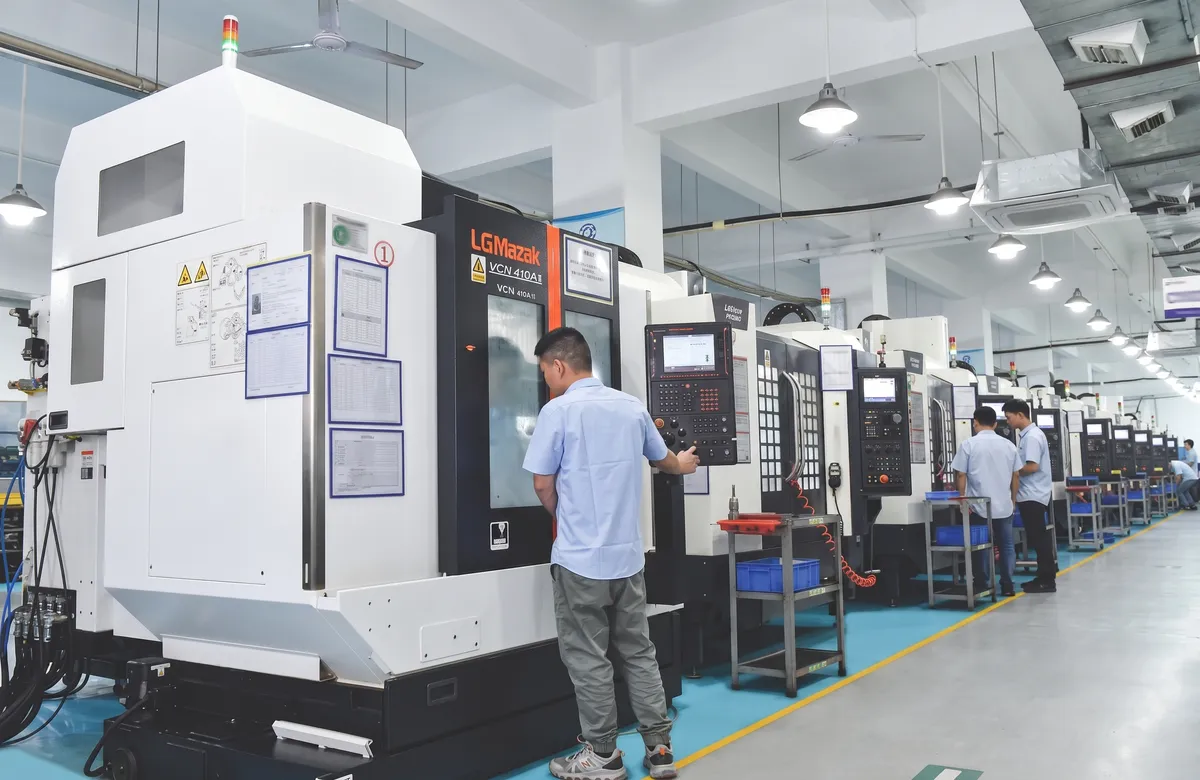
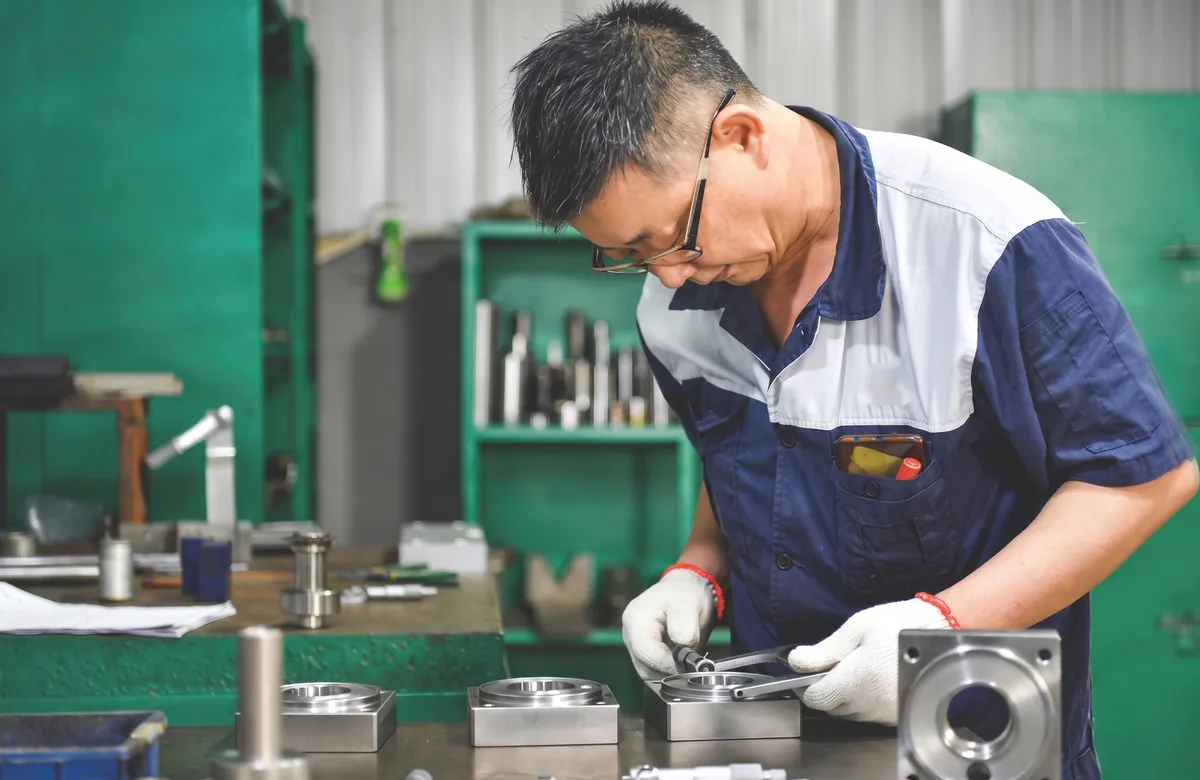
- All metal components, including cavity inserts, neck rings, and base plugs, are finish-machined on CNC milling and turning centers to tolerances tighter than 0.02 mm, guaranteeing interchangeability and precise bottle dimensions.
 |
 |
Maintenance Tips
Proactive maintenance keeps your automatic blow molding machine running at peak efficiency and extends its operational service life.
1. Daily Lubrication Check
Inspect and lubricate all guide rails, toggle-linkage pins, and chain drives at the start of every shift. Use the grades specified in the original equipment manufacturer manual. Insufficient lubrication on high-cycle components is the leading cause of premature mechanical wear in blow molding machines operating at continuous high output speeds.
2. Cooling Water System Inspection
Verify cooling water inlet temperature (target 8–10°C), flow rate (30 L/min), and operating pressure (5–6 kg/cm²) at the beginning of each production day. Flush the cooling circuit with approved inhibitor solution monthly to prevent scale buildup in mold channels, which reduces heat transfer efficiency and causes wall-thickness inconsistency.
3. Infrared Lamp Inspection and Replacement
Inspect all heating lamps in the oven section weekly for discoloration, cracks, and output degradation. A single failed lamp creates a cold spot in the preform, resulting in thin walls and potential blow-out at the deficient area. Replace lamps in matched sets per oven zone to maintain uniform heating profiles and protect product quality throughout the production run.
4. Air Circuit and Valve Maintenance
Drain the high-pressure air receiver and moisture separator daily to remove accumulated condensate. Inspect blowing solenoid valves and check valves monthly for seat wear and leakage, which can cause inconsistent blowing pressure and bottle defects. Confirm that blowing pressure at the mold is within the specified 26–35 kg/cm² range at the start of each campaign using a calibrated gauge.
5. Mold Cavity Cleaning and Inspection
After every production campaign, remove both mold halves and clean cavity surfaces with approved mold-cleaning solvent to remove PET oligomer deposits and release agent residue. Inspect cavity surfaces for micro-cracks, scratches, or corrosion that could transfer surface defects to bottles. Polish affected areas and apply corrosion inhibitor before storage or reuse to preserve mold precision.
6. PLC and Safety System Audit
Conduct a monthly verification of all PLC input and output signals, including preform sensor confirmations, mold-close confirmation switches, and safety-door interlock relay status. Test all emergency-stop channels for correct response time. Back up the current production recipe database to external storage after every new product commissioning to prevent data loss from controller hardware failure.
Why Choose Ever-Power's PET Blow Molding Machine?
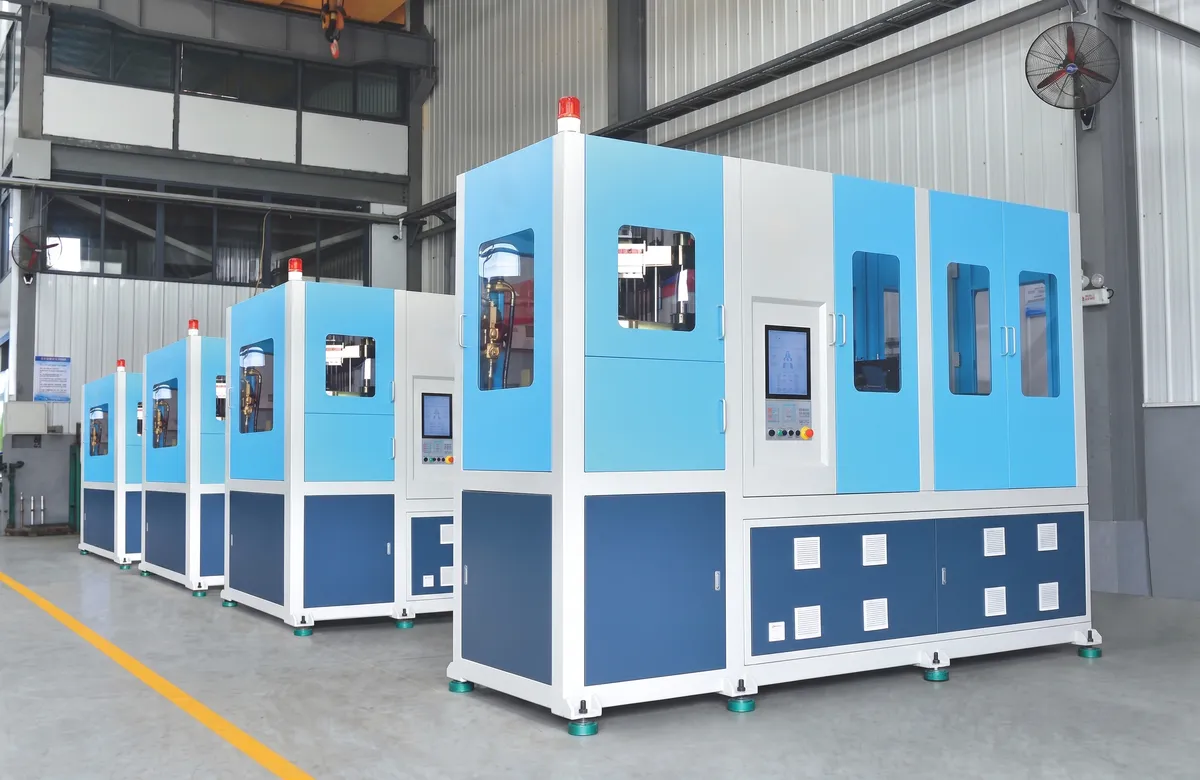
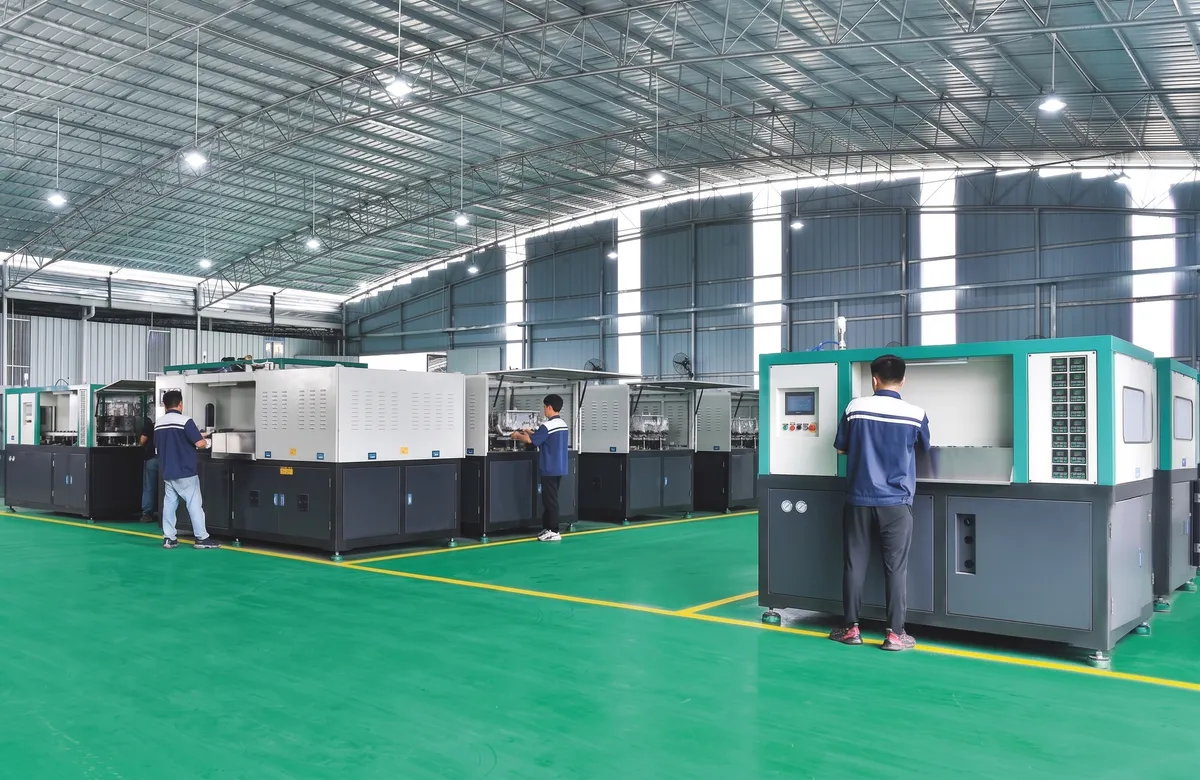
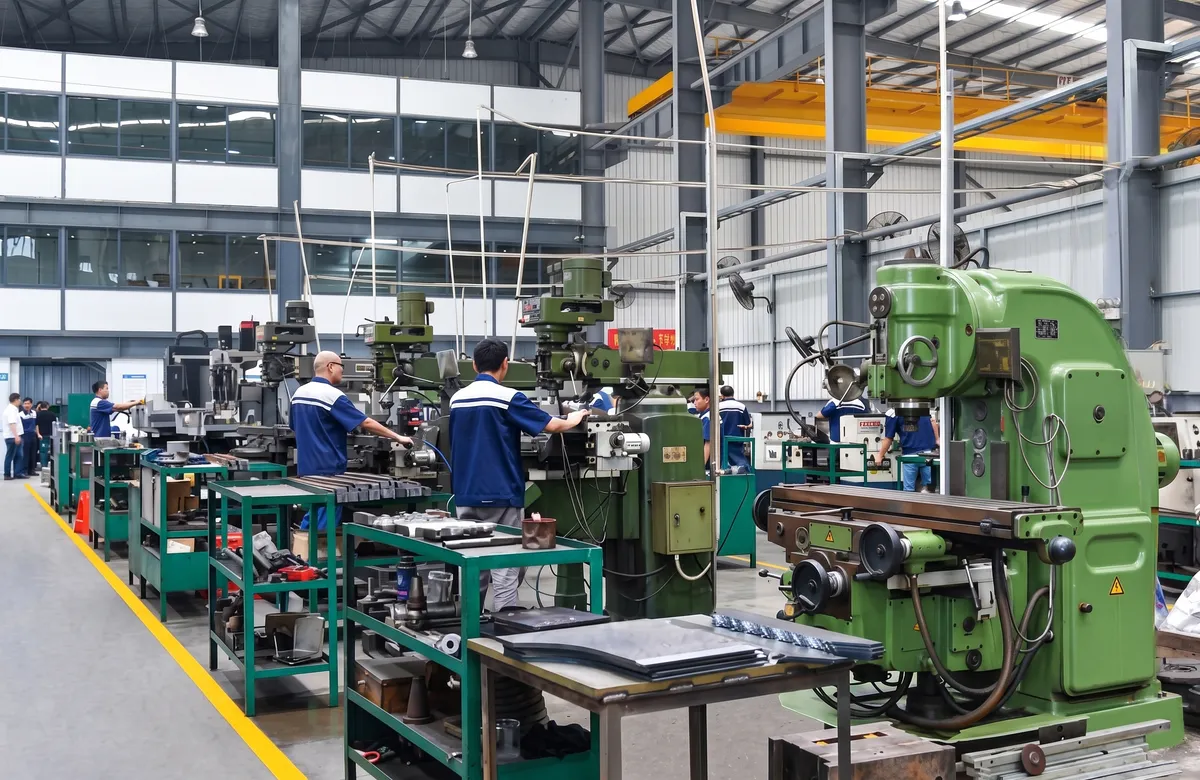
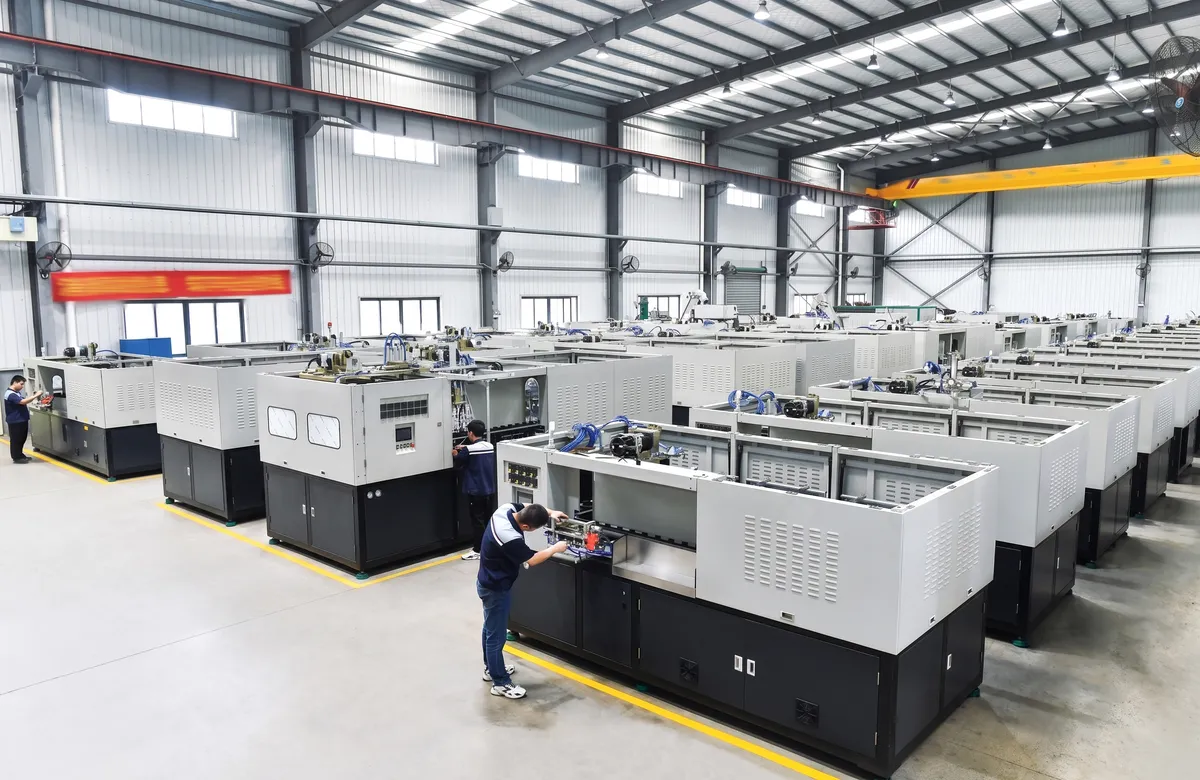
Mexico Ever-Power ISBM Machinery Co., Ltd. is a specialist manufacturer of automatic one-step injection blow molding machines and injection stretch blow molding machines, with deep expertise spanning the full spectrum of blow molding machine technologies. Our product portfolio covers injection blow molding machines, extrusion blow molding machines, injection stretch blow molding machines, and comprehensive auxiliary equipment. With an excellent R&D engineering team that brings together decades of practical experience in injection-blowing machinery and mold design, we deliver detailed and thoughtful pre-sale, in-sale, and after-sale support for every customer engagement.
Our machines are capable of producing 1 ml to 1,000 ml plastic containers in HDPE, LDPE, PET, PETG, PP, PS, PPSU, PC, Tritan, ABS, PLA, corn-based bio materials, EVA, and PCTG. Application markets served include pharmaceutical packaging, food packaging, healthcare packaging, cosmetic packaging, agrochemical packaging, and general industrial chemical packaging. Ever-Power adheres to its enterprise tenet of self-reliance, integrity, pragmatism, innovation, and responsibility, building one-stop turnkey project solutions for high-end injection-blowing products that deliver first-class quality and user satisfaction globally.
- 20+ Years of Engineering Excellence
Over two decades of focused research, development, manufacturing, and sales of blow molding machines have produced a deep institutional knowledge base. This experience is embedded in every machine design, process recommendation, and after-sales protocol we deliver. - Global Delivery and Installation
We export blow molding machines to Malaysia, Indonesia, Peru, Chile, Russia, Egypt, Pakistan, Vietnam, South Africa, Mexico, and beyond. Factory-trained installation engineers travel to your site for commissioning and operator training, ensuring a smooth production start. - Full Turnkey Project Support
From preform mold design and machine selection through factory layout planning, utility connection specification, and downstream automation integration, Ever-Power provides a complete turnkey project service that simplifies the investment process for new and expanding packaging operations. - Custom Blow Molding Machine Solutions
We offer custom blow molding machine configurations for non-standard container formats, unusual neck geometries, high-barrier material requirements, and specialized application environments. Our engineering team works with customer product samples to validate mold and machine specifications before production commitment. - Comprehensive Spare Parts Program
A stocked spare parts program covering all critical wear items ensures that replacement components are available with short lead times. Recommended initial spare parts kits are supplied with every machine to protect production continuity during the warranty period and beyond. - Responsive After-Sales Technical Support
Our after-sales team provides remote diagnostics, telephone, email, and instant-messaging technical guidance targeted at under four-hour response times. Where remote support cannot resolve an issue, on-site service engineers are dispatched promptly to protect your production schedule.
 |
 |
 |
 |
 |
 |
Frequently Asked Questions
Q: What bottle volumes can the EPA.ES-2C130 fully automatic blow molding machine produce?
A: The EPA.ES-2C130 handles containers with a maximum volume of 1,500 ml per cavity. The broader EPA series, which includes models such as the EPA.ES-4C114 and EPA.JS-2C366, extends the range from 500 ml to 22,000 ml, enabling large-volume chemical drums and small personal care bottles to be produced on the same product family of machines with appropriate mold changes.
Q: What is the theoretical output of the EPA.ES-2C130 automatic PET blow molding machine?
A: The EPA.ES-2C130 has a theoretical output of 1,800 bottles per hour with its 2-cavity mold configuration. For higher throughput, customers can step up within the EPA series to models such as the EPA.ES-6C76 at 7,200 bph or the EPA.ES-8C76 at 9,200 bph. Actual output depends on bottle volume, material, and preform conditioning conditions.
Q: What plastic materials does this plastic blow molding machine process?
A: The EPA.ES-2C130 primarily processes PET and PETG resins for transparent containers with high clarity and chemical resistance. The broader EPA series accommodates PP, HDPE, and LDPE for opaque or semi-transparent containers. Material selection should match the chemical compatibility requirements of the product being packaged, particularly for agrochemical and industrial chemical applications.
Q: What blowing pressure does the EPA.ES-2C130 PET bottle blow molding machine operate at?
A: The machine operates at a blowing pressure of 26 to 35 kg/cm², adjustable based on the bottle design and wall thickness requirements. Low-pressure pre-blow uses 7 kg/cm² operating pressure with an air consumption of 600 L/min, while high-pressure blowing consumes 1,000 to 1,500 L/min. These parameters should be matched against your existing compressed air supply capacity before installation.
Q: What cooling water specifications does the blow molding machine require?
A: The EPA.ES-2C130 requires cooling water at a supply temperature of 8 to 10°C, supply pressure of 5 to 6 kg/cm², and a flow rate of 30 L/min. A chiller is typically required to maintain the target supply temperature, and the chiller capacity should be calculated based on the thermal load at the mold and oven sections. Water quality with appropriate corrosion inhibitor is recommended to protect mold cooling channels.
Q: How does a two-stage blow molding machine differ from an injection stretch blow molding machine?
A: A two-stage machine separates preform production and bottle blowing into distinct, independent operations, allowing preforms to be sourced externally or produced in a dedicated injection molding cell at a different time. An injection stretch blow molding machine integrates injection, conditioning, and blowing in one continuous unit, making it more compact and suitable for specialty shapes and smaller volumes but limiting the ability to achieve very high throughput independently at each stage.
Q: What are the electrical power requirements for the EPA.ES-2C130 blow molding machine?
A: The machine has a maximum installed heating power of 42.5 kW. During normal production, common heating power runs at 8 to 13 kW depending on bottle size and preform wall thickness. Total connected load including drive motors, control systems, and auxiliaries should be confirmed with the Ever-Power technical team for your specific production scenario to allow correct electrical infrastructure sizing.
Q: What are the machine dimensions and weight of the EPA.ES-2C130 plastic bottle blow molding machine?
A: The EPA.ES-2C130 measures 3,600 mm in length, 1,800 mm in width, and 1,980 mm in height, with a total machine weight of 3,000 kg. Factory floor loading capacity and forklift access should be verified before delivery. Ever-Power can provide a dimensioned layout drawing to support factory preparation, including utilities connection points and service access clearance zones around the machine.
Q: Can the EPA.ES-2C130 fully automatic blow molding machine be used to produce food-grade bottles?
A: Yes. When processing food-approved PET or PETG resins and using molds with food-safe surface finishes, the EPA.ES-2C130 can produce bottles that meet FDA 21 CFR and EU 10/2011 food-contact material regulations. Customers should specify food-grade applications at the time of order so that appropriate mold material grades and surface treatments are applied. Compliance documentation is the responsibility of the resin supplier and the bottle manufacturer.
Q: How long does mold changeover take on the EPA.ES-2C130 bottle blow molding machine?
A: Mold changeover time depends on operator experience and the degree of difference between the two molds. For similar-size bottles requiring only a mold cavity swap, experienced operators typically complete changeover in 60 to 90 minutes. Changing to a significantly different bottle format requiring adjustment of the stretch rod, preform holder, and oven lamp profile may take two to three hours. Ever-Power recommends standardizing mold flange dimensions across your product range to minimize changeover complexity.
Customer Reviews
Carlos Mendes, Agrochemical Packaging, Brazil
"We have been running the EPA.ES-2C130 at our agrochemical packaging plant in Sao Paulo for eight months now. We produce 1,000 ml pesticide bottles in PET and the output consistency is really impressive. Neck dimensions are within tolerance on over 99% of bottles, which is far better than the machine we replaced. The Ever-Power team spent four days here for installation and commissioning and trained my operators thoroughly before leaving. We are very satisfied and already inquiring about an EPA.ES-4C130 for our second line."
Jorge Ramirez, Chemical Packaging, Mexico
"We ordered two EPA.ES-2C130 units for our chemical bottle production line in Monterrey. Shipment arrived on schedule and the documentation was complete. Setup took less time than we anticipated. The blowing pressure range of 26 to 35 kg/cm2 gives us great flexibility when we switch between different bottle wall thicknesses. We produce both 500 ml and 1,500 ml containers on the same machine by changing molds, which saves us a lot of capital compared to buying dedicated machines for each size. Cooling performance at 8 to 10 degrees is stable even in our hot factory environment."
Budi Santoso, Beverage Packaging, Indonesia
"Good machine overall, we have been using it for about five months in our plant outside Jakarta producing water and juice bottles. Output at 1,800 bph matches the specification exactly. The HMI is straightforward enough that my operators picked it up quickly without needing extensive retraining. Only feedback is that the spare parts list in the manual could be more detailed, but the Ever-Power after-sales team responded to our questions within hours. We will definitely consider this supplier again for our next expansion."
Imran Khan, Contract Packaging, Pakistan
"We are a contract packager in Lahore and the EPA.ES-2C130 has been running three shifts a day since we commissioned it six months ago. We run both pesticide and personal care bottles on it across the week, switching molds on Saturdays. Mold changeover takes our team about ninety minutes which is acceptable. The machine weight of 3,000 kg is solid and there is no vibration even at full speed. Reject rate is under 1%. We had one solenoid valve issue in month three and Ever-Power shipped the replacement part to us within one week at no extra charge because we were still under warranty."
Ahmed Hassan, Home Care Packaging, Egypt
"This is our third blow molding machine from Ever-Power. We run it at our Cairo facility for producing 750 ml and 1,000 ml PET bottles for household cleaning products. The build quality is consistently good across all three units we have purchased. The heating power at 42.5 kW maximum is sufficient even in summer when ambient temperatures here are very high. Energy consumption in normal production at 8 to 13 kW is lower than we expected, which is reducing our electricity bill. The ever-power technical team is responsive on WhatsApp for small troubleshooting questions which is very practical for us."
Nguyen Thi Lan, Pharmaceutical Packaging, Vietnam
"We purchased the EPA.ES-2C130 for our pharmaceutical bottle line in Hanoi. Production has been running for ten months and quality is consistently good for our 500 ml medicine bottles. The machine footprint of 3,600 by 1,800 by 1,980 mm fits well in our existing factory space. We initially had some issues dialing in the infrared lamp profile for our specific preform wall thickness, but the Ever-Power technical team sent us a detailed setup guide and the problem was resolved within a day. Overall satisfied with the value for the price point compared to European alternatives we also considered."
Thabo Nkosi, Agrochemical Packaging, South Africa
"We supply bottles to the South African agrochemical market and the EPA.ES-2C130 has been a good investment for our operation in Durban. The automatic bottle blow molding machine handles our 1,500 ml herbicide bottles reliably. Lead time from order to delivery was about 65 days, which is what we were quoted. The machine arrived well packed with no damage. What I appreciate most is that the cooling water temperature stays within the 8 to 10 degree range even during our long production shifts, which keeps the bottle dimensions very stable throughout the day. I recommend this supplier."
Miguel Torres, Chemical Bottle Packaging, Peru
"We operate a plastic bottle manufacturing facility in Lima and added the EPA.ES-2C130 to increase our chemical bottle capacity. The sales process was smooth and the pricing was competitive among the blow molding machine suppliers we contacted. I was particularly impressed by the pre-sales technical support which included detailed layout drawings and utility connection specifications that made our site preparation much easier. After ten months of operation the machine has required only routine maintenance and one set of lamp replacements. We would purchase from Mexico Ever-Power again."
Peter Mwangi, FMCG Packaging, Kenya
"Our company runs FMCG bottle production in Nairobi. The EPA.ES-2C130 has been part of our line for seven months producing 1,000 ml cleaning product bottles in PET. Air consumption at 600 liters per minute low pressure and 1,000 to 1,500 at high pressure matched our existing compressor capacity without any upgrade, which was an important factor in our purchase decision. The PLC control system is intuitive and my technicians were comfortable with it after two days. Overall a solid, reliable fully automatic blow molding machine that delivers what it promises."
Additional information
| Edited by | Yjx |
|---|
Related products
-
EPA.ES-2C200 Fully Automatic Blow Molding Machine for Daily Chemicals & Cosmetic Bottles
-
EPA.AS-4C76.2 Fully Automatic Blow Molding Machine for Daily Chemicals & Cosmetic Bottles
-
EPA.FS-1CG150 Fully Automatic Blow Molding Machine for Baby Bottles and PP Bottles
-
EPA.ES-2C150 Fully Automatic Blow Molding Machine for Daily Chemicals & Cosmetic Bottles