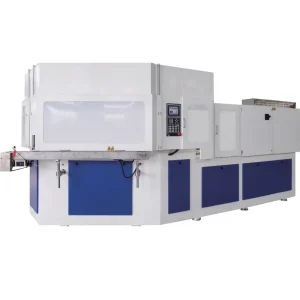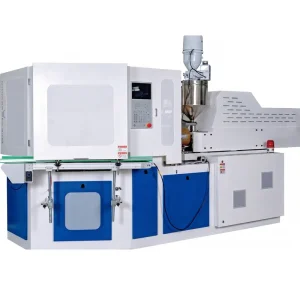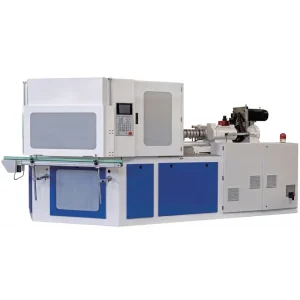
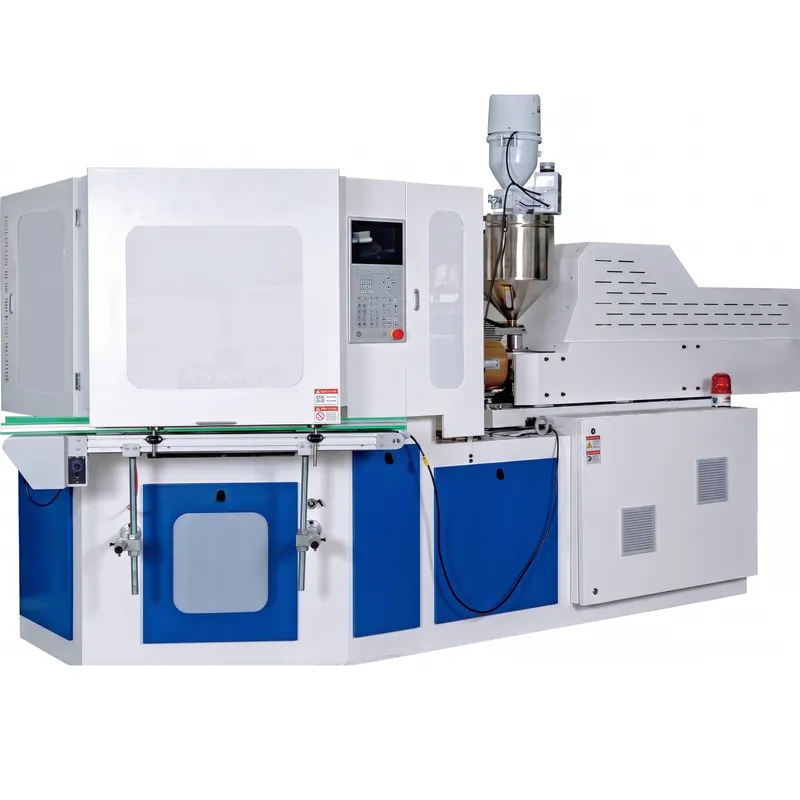
Wtryskarka rozdmuchowa ZQ40 zamienna do modelu SUMA 40iB
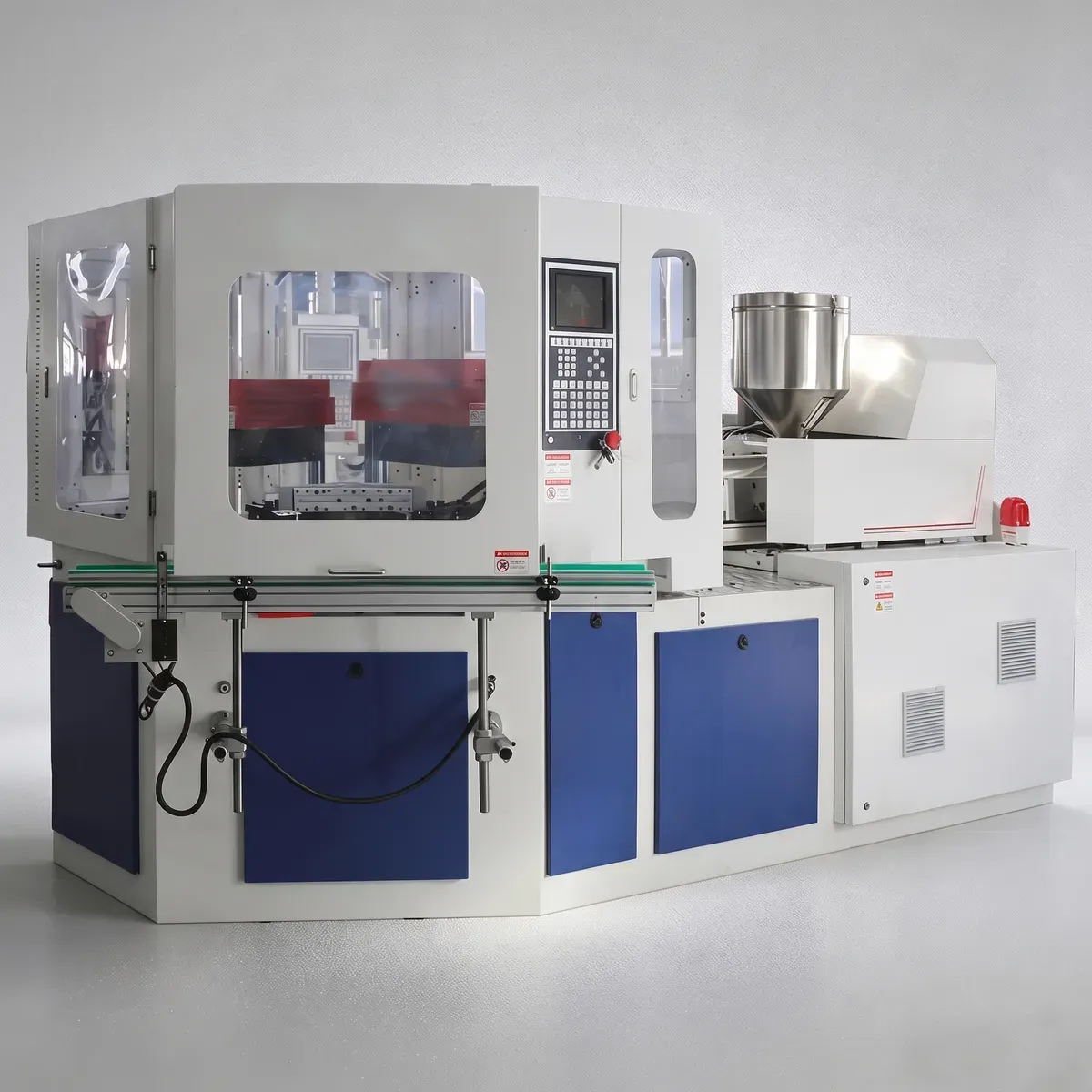
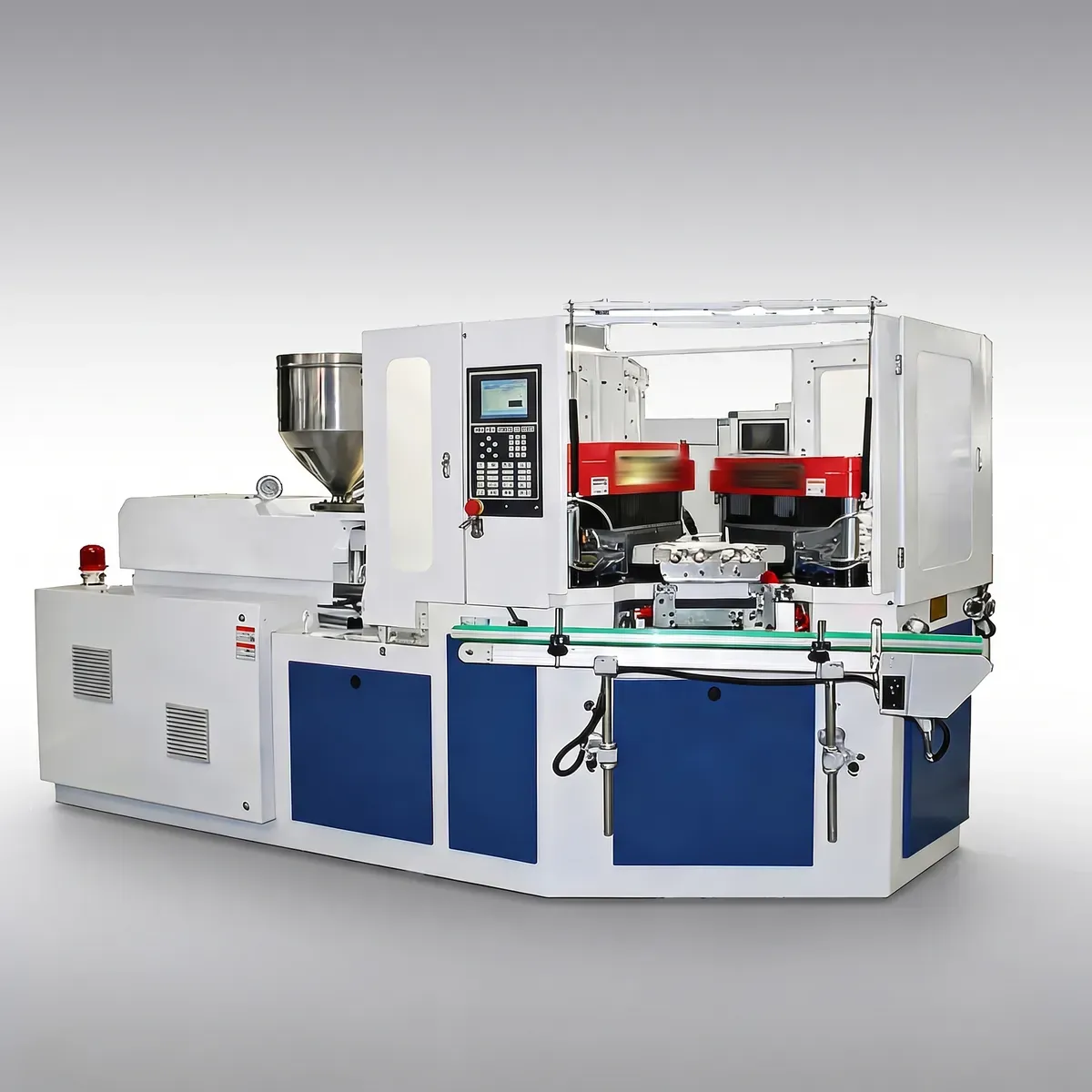
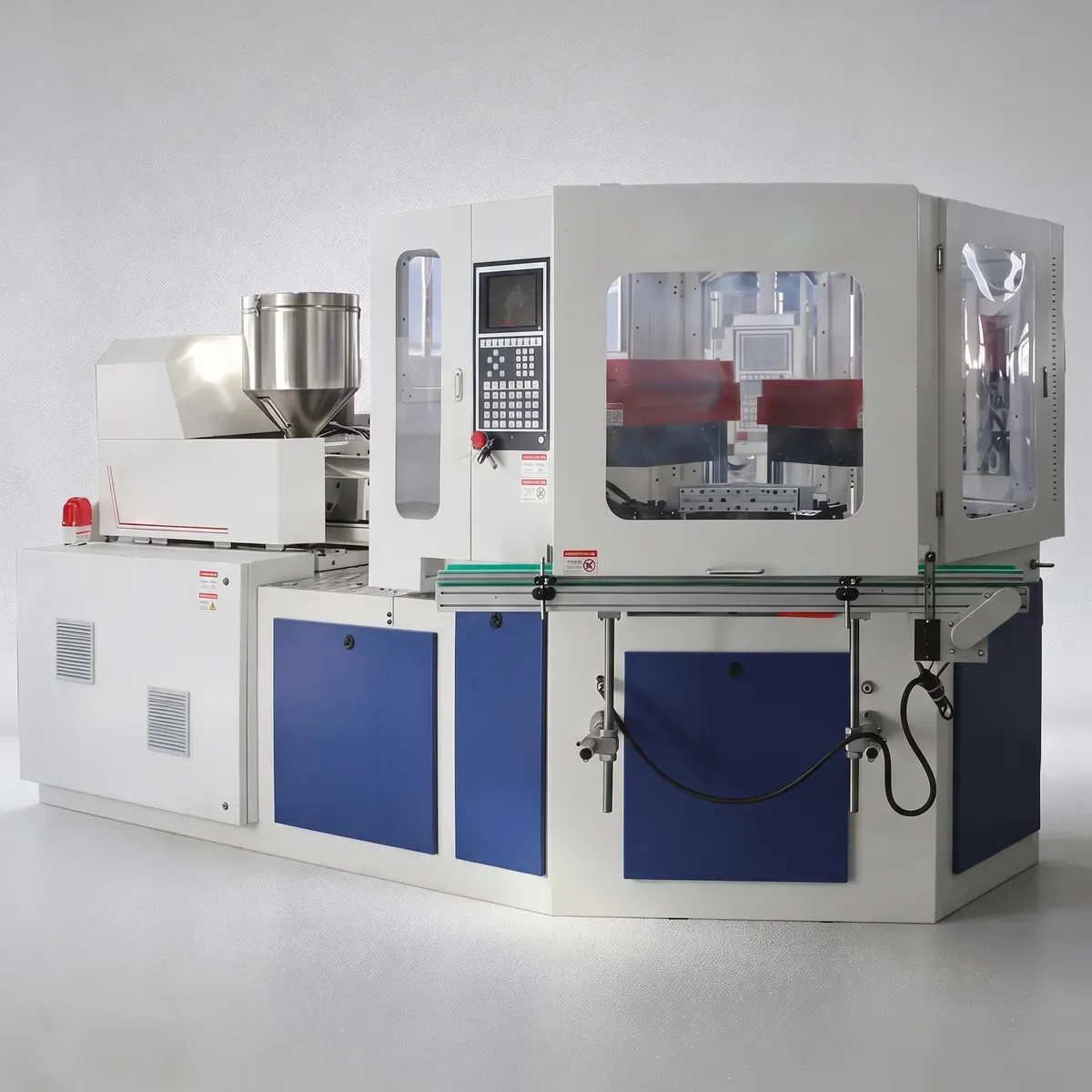
Wtryskarka rozdmuchowa ZQ40 to precyzyjnie zaprojektowana, w pełni serwomotorowa maszyna IBM, zaprojektowana jako bezpośredni zamiennik modelu SUMA 40iB. Całkowicie rezygnując z oleju hydraulicznego we wszystkich osiach ruchu, ta w pełni elektryczna wtryskarka rozdmuchowa osiąga o 20% krótszy czas cyklu w porównaniu z tradycyjnymi modelami hydraulicznymi. W przypadku produkcji butelek o pojemności 30 ml cykl trwa zaledwie 8,2 sekundy, co przekłada się na stałą dzienną wydajność na poziomie 105 000 butelek i maksymalną wydajność 115 000 butelek dziennie. Zużycie energii jest zmniejszone o około 30%, a moc robocza wynosi zaledwie 12 kWh na godzinę podczas produkcji butelek o pojemności 30 ml.
Wtryskarka rozdmuchowa ZQ40 to precyzyjnie zaprojektowana, w pełni serwomotorowa maszyna IBM, zaprojektowana jako bezpośredni zamiennik modelu SUMA 40iB. Całkowicie rezygnując z oleju hydraulicznego we wszystkich osiach ruchu, ta w pełni elektryczna wtryskarka rozdmuchowa osiąga o 20% krótszy czas cyklu w porównaniu z tradycyjnymi modelami hydraulicznymi. W przypadku produkcji butelek o pojemności 30 ml cykl trwa zaledwie 8,2 sekundy, co przekłada się na stałą dzienną wydajność na poziomie 105 000 butelek i maksymalną wydajność 115 000 butelek dziennie. Zużycie energii jest zmniejszone o około 30%, a moc robocza wynosi zaledwie 12 kWh na godzinę podczas produkcji butelek o pojemności 30 ml. Enkodery absolutne zintegrowane w całym systemie serwo zapewniają wyjątkową powtarzalność i dokładność wymiarową w każdej partii produkcyjnej, co czyni ją jedną z najlepszych dostępnych opcji wtryskarek rozdmuchowych do precyzyjnego pakowania wielkoseryjnego.
Wtryskarka do tworzyw sztucznych ZQ40 charakteryzuje się konstrukcją typu bottom-up, która całkowicie usuwa olej smarowy z obszaru formy, spełniając surowe wymogi higieniczne dotyczące opakowań farmaceutycznych, butelek nutraceutycznych, pojemników kosmetycznych i butelek z tworzyw sztucznych do kontaktu z żywnością. Elektrycznie napędzana jednostka wtryskowa zapewnia stabilną i powtarzalną masę wtrysku przy niższych długoterminowych kosztach konserwacji w porównaniu z alternatywnymi rozwiązaniami hydraulicznymi. Tylna część przenośnika jest natywnie kompatybilna z automatyką, w tym systemami kontroli wizualnej, testerami szczelności, etykieciarkami i automatycznymi urządzeniami pakującymi, umożliwiając w pełni bezobsługową produkcję bez nadzoru. Dzięki sile zamykania regulowanej w zakresie od 40 do 80 ton za pomocą opatentowanej konstrukcji zaciskowej oraz zakresowi wnęk formy od 1 dla pojemników 1000 ml do 9 dla butelek 10 ml, ZQ40 to wszechstronna, dostosowana do potrzeb klienta wtryskarka do szerokiego spektrum zastosowań w przemyśle opakowaniowym i konsumenckim.
Kawitacja pleśni (dla porównania)
| Przybliżona objętość | 10 ml | 30 ml | 60 ml | 100 ml | 250 ml | 500 ml | 1000 ml |
|---|---|---|---|---|---|---|---|
| Maksymalna kawitacja | 9 | 8 | 6 | 4 | 3 | 2 | 1 |
Główne parametry techniczne
| Przedmiot | Jednostka | ZQ40 |
|---|---|---|
| Układ wtryskowy | ||
| Średnica śruby | mm | 40/45 |
| Śruba L/D | % | 22:1 |
| Waga wtrysku! | G | 190/260 |
| Moc grzewcza | KW | 7.5 |
| Liczba stref lufowych | 3+N | |
| Skok wtrysku | mm | 120 |
| System zaciskowy | ||
| Siła docisku wtrysku | KN | 400 |
| Skok otwarcia do wstrzyknięcia | mm | 165 |
| Siła docisku dmuchawy | KN | 60 |
| Otwarcie skoku do dmuchania | mm | 140 |
| Wysokość podnoszenia stołu obrotowego | mm | 70 |
| Pleśń | ||
| Maksymalny rozmiar płyty (dł. x szer.) | mm | 480x340 |
| Grubość formy | mm | 180 |
| Średnica butelki | mm | 120 |
| Wysokość butelki | mm | 220 |
| Odpowiednia wysokość butelki | mm | 1-1500 |
| Uderzenie striptizerskie | mm | 220 |
| Układ hydrauliczny | ||
| Ciśnienie hydrauliczne | Mapa | 14 |
| Moc silnika | KW | 11 |
| Cykl suszenia | S | 3.5 |
| Całkowita moc | KW | 20 |
| Moc operacyjna | % | 52-70 |
| Inni | ||
| Min. ciśnienie powietrza sprężonego | MPa | 0.7- 1.2 |
| Wydajność sprężonego powietrza | m³/min | 0.7 |
| Przepływ wody | m³/godz. | 3.5 |
| Ciśnienie wody chłodzącej | MPa | 0.3-0.4 |
| Wymiary (dł. x szer. x wys.) | M | 3,5x1,3x1,7 |
| Waga netto | Tona | 3.8 |
Wymienna marka i model
| Zawsze-Moc | Siła zacisku | Jomar | SUMA | Uniloy | Bloma |
| ZQ40 | 40T | IBM40 | 40iB | UIB70 | IBM45 |
| ZQ60 | 60T | IBM65 | 65iB | UIB90 | IBM50 |
| ZQ80 | 80T | IBM85S | 85iB | UIB120 | IBM85 |
| ZQ110 | 110T | IBM135 | 135iB | UIB150 | IBM135 |
| ZQ135 | 135T | IBM175 | 175iB | UIB180 |
Średnica śruby maszynowej IBM
| Zawsze-Moc | Średnica śruby | Jomar | SUMA | Bloma |
| ZQ40 | 40/45 | 35/40 | 40 | 45 |
| ZQ60 | 45/50 | 45 | 40/50 | 50 |
| ZQ80 | 55 | 55 | 50/60 | 50 |
| ZQ110 | 65 | 65 | 65/76 | 70 |
| ZQ135 | 70 | 70 | 65/76 |
Waga wtrysku IBM Machine
| Zawsze-Moc | Waga wtrysku | Jomar | SUMA | Bloma |
| ZQ40 | 190/260 | 180 | 169 | 180 |
| ZQ60 | 260/383 | 205 | 169/264 | 240 |
| ZQ80 | 466 | 300 | 333/480 | 310/280 |
| ZQ110 | 540 | 450/550 | 580/770 | 560 |
| ZQ135 | 650 | 450/550 | 580/770 |
Siła zacisku wtryskarki IBM Machine
| Zawsze-Moc | Siła zacisku wtrysku | Jomar | SUMA | Bloma |
| ZQ40 | 400 kN | 340 kN | 386 kN | 350 kN |
| ZQ60 | 600 kN | 460 kN | 580 kN | 500 kN |
| ZQ80 | 800 kN | 680 kN | 720 kN | 700 kN |
| ZQ110 | 1100 kN | 1210 kN | 1200 kN | 1250 kN |
| ZQ135 | 1350 kN | 1560 kN | 1600 kN |
Rozmiar formy maszyny IBM
| Zawsze-Moc | Rozmiar formy | Jomar | SUMA | Bloma |
| ZQ40 | 480 × 340 | 394 × 508 | 470 × 350 | 450 × 390 |
| ZQ60 | 600 × 390 | 432 × 660 | 620 × 400 | 620 × 430 |
| ZQ80 | 800 × 400 | 464 × 749 | 700 × 400 | 620 × 430 |
| ZQ110 | 1100 × 460 | 559 × 1118 | 1000 × 500 | 900 × 480 |
| ZQ135 | 1300 × 500 | 635 × 1372 | 1200 × 600 |
Rozmiar maszyny IBM
| Zawsze-Moc | Rozmiar formy (M) | Jomar | SUMA | Bloma |
| ZQ40 | 3,8 × 1,3 × 1,7 | 2,72 × 1,9 × 2,75 | 3,8 × 1,5 × 2,3 | 4,05 × 1,52 × 2,55 |
| ZQ60 | 3,8 × 1,4 × 1,8 | 2,92 × 1,98 × 3,41 | 4 × 1,7 × 2,3 | 620 × 430 × 2,55 |
| ZQ80 | 4,5 × 1,6 × 2 | 3,33 × 1,94 × 3,41 | 4,5 × 2 × 2,6 | 620 × 430 × 2,55 |
| ZQ110 | 5 × 1,8 × 2,2 | 3,79 × 2,4 × 3,41 | 5 × 2,4 × 2,7 | 900 × 480 × 2,55 |
| ZQ135 | 5,5 × 2 × 2,4 | 4,22 × 2,67 × 3,58 | 6 × 2,6 × 2,7 |
Uwaga: marki są wymieniane wyłącznie po to, aby ułatwić klientom wybór produktów, a nie w celu sprzedaży produktów tych marek.
Cechy wtryskarki rozdmuchowej IBM ZQ40
1. Wysoka wydajność produkcyjna
Maszyna do formowania wtryskowego z rozdmuchem ZQ40 zapewnia stałą wydajność 105 000 butelek dziennie, a wydajność szczytowa sięga 115 000 sztuk dziennie dla pojemników o pojemności 30 ml. Dzięki cyklowi produkcyjnemu trwającemu 8,2 sekundy maszyna pracuje w trybie ciągłym bez częstej ingerencji ręcznej, szybko realizując zamówienia wielkoseryjne. Rozwiązanie dla producentów wysokowydajnych maszyn do formowania wtryskowego z rozdmuchem zapewnia Państwa firmie bezpośrednią przewagę konkurencyjną na rynkach opakowań wymagających szybkiej realizacji, w tym w sektorze farmaceutycznym, kosmetycznym i dóbr szybkozbywalnych (FMCG). Wielogniazdowe oprzyrządowanie, nawet do 9 gniazd, dodatkowo zwiększa przepustowość w przypadku mniejszych rozmiarów butelek.
2. Opcje formowania na zamówienie
Jako w pełni spersonalizowana maszyna do formowania wtryskowego z rozdmuchem, ZQ40 obsługuje szeroki zakres kształtów butelek, objętości (od 1 ml do 1500 ml) i geometrii szyjek. Regulowana siła zamykania od 40 do 80 ton i modułowy system formowania umożliwiają szybkie przezbrajanie między liniami produkcyjnymi. Niezależnie od tego, czy produkujesz fiolki farmaceutyczne z wąską szyjką, słoiczki kosmetyczne z szerokim otworem, czy okrągłe butelki konsumenckie, elastyczna płyta formy (480 x 340 mm) i dostępne średnice ślimaka (40 mm lub 45 mm) zapewniają płynne dopasowanie do specyficznych wymagań SKU bez konieczności stosowania dodatkowego wyposażenia bazowego.
3. Wyjątkowa efektywność energetyczna
Ten w pełni elektryczny maszyna do formowania wtryskowego z rozdmuchem zmniejsza zużycie energii o około 30% w porównaniu z odpowiednikami z napędem hydraulicznym. Moc robocza podczas produkcji butelek o pojemności 30 ml wynosi zaledwie 12 kWh na godzinę, przy całkowitej mocy zainstalowanej wynoszącej zaledwie 20 kW i wskaźniku wykorzystania od 52 do 70%. W pełni elektryczna architektura serwomotorowa całkowicie eliminuje straty ciepła oleju hydraulicznego i pobór energii przez pompę na biegu jałowym. Dla dostawców maszyn do formowania wtryskowego, którzy oceniają całkowity koszt posiadania, ten profil energetyczny przekłada się na znaczne oszczędności w zużyciu energii w całym okresie eksploatacji maszyny, bezpośrednio zwiększając marżę zysku na wyprodukowaną butelkę.
4. Łatwa obsługa i niskie koszty utrzymania
Maszyna ZQ40 została zaprojektowana z myślą o łatwej obsłudze dzięki intuicyjnemu interfejsowi HMI, który prowadzi operatorów przez proces konfiguracji, regulacji parametrów i monitorowania w czasie rzeczywistym. Enkodery absolutne w układzie serwomechanizmu zapewniają precyzyjne i powtarzalne pozycjonowanie bez konieczności ręcznej kalibracji między zmianami. Ponieważ maszyna całkowicie eliminuje obwody oleju hydraulicznego, rutynowe czynności konserwacyjne, takie jak wymiana filtra oleju, kontrola uszczelnień i zarządzanie płynem hydraulicznym, są całkowicie wyeliminowane z harmonogramu konserwacji. Układy wtryskowe napędzane siłownikami elektrycznymi dodatkowo upraszczają konserwację, redukując zarówno planowane, jak i nieplanowane przestoje w procesach produkcyjnych.
5. Kontrola jakości i spójność
Pozycjonowanie serwo z enkoderem absolutnym zapewnia powtarzalność wymiarową, nieosiągalną w przypadku konwencjonalnych hydraulicznych wtryskarek do rozdmuchu. Odchyłki gramatury wtrysku, jednorodność grubości ścianek i dokładność gwintu szyjki są utrzymywane w ścisłych granicach tolerancji w każdym cyklu produkcyjnym. Precyzyjny system sterowania maszyny stale monitoruje ciśnienie wtrysku, temperaturę cylindra, siłę zacisku i czas cyklu, automatycznie kompensując wahania temperatury otoczenia. W branżach regulowanych, takich jak opakowania farmaceutyczne i medyczne, ten poziom kontroli wymiarowej i powtarzalności partii nie jest opcjonalny, lecz niezbędny do zapewnienia zgodności z GMP i zgodności z przepisami.
6. Higieniczne projektowanie dla branż regulowanych
Konstrukcja mechaniczna ZQ40 typu „bottom-up” gwarantuje, że obszar formy pozostaje całkowicie wolny od oleju smarowego. Jest to kluczowa cecha higieniczna w przypadku opakowań farmaceutycznych, butelek nutraceutycznych, pojemników do kontaktu z żywnością i wszelkich zastosowań, w których ryzyko zanieczyszczenia musi być zminimalizowane. Architektura spełnia standardy produkcji w pomieszczeniach czystych, wymagane przez głównych producentów farmaceutycznych i kosmetycznych na całym świecie, co czyni ZQ40 doskonałym wyborem dla zakładów poszukujących rozwiązań w zakresie jednoetapowego formowania wtryskowego z rozdmuchem, zgodnych z GMP, bez konieczności ponoszenia kosztów dedykowanego sprzętu do formowania rozdmuchowego w pomieszczeniach czystych.
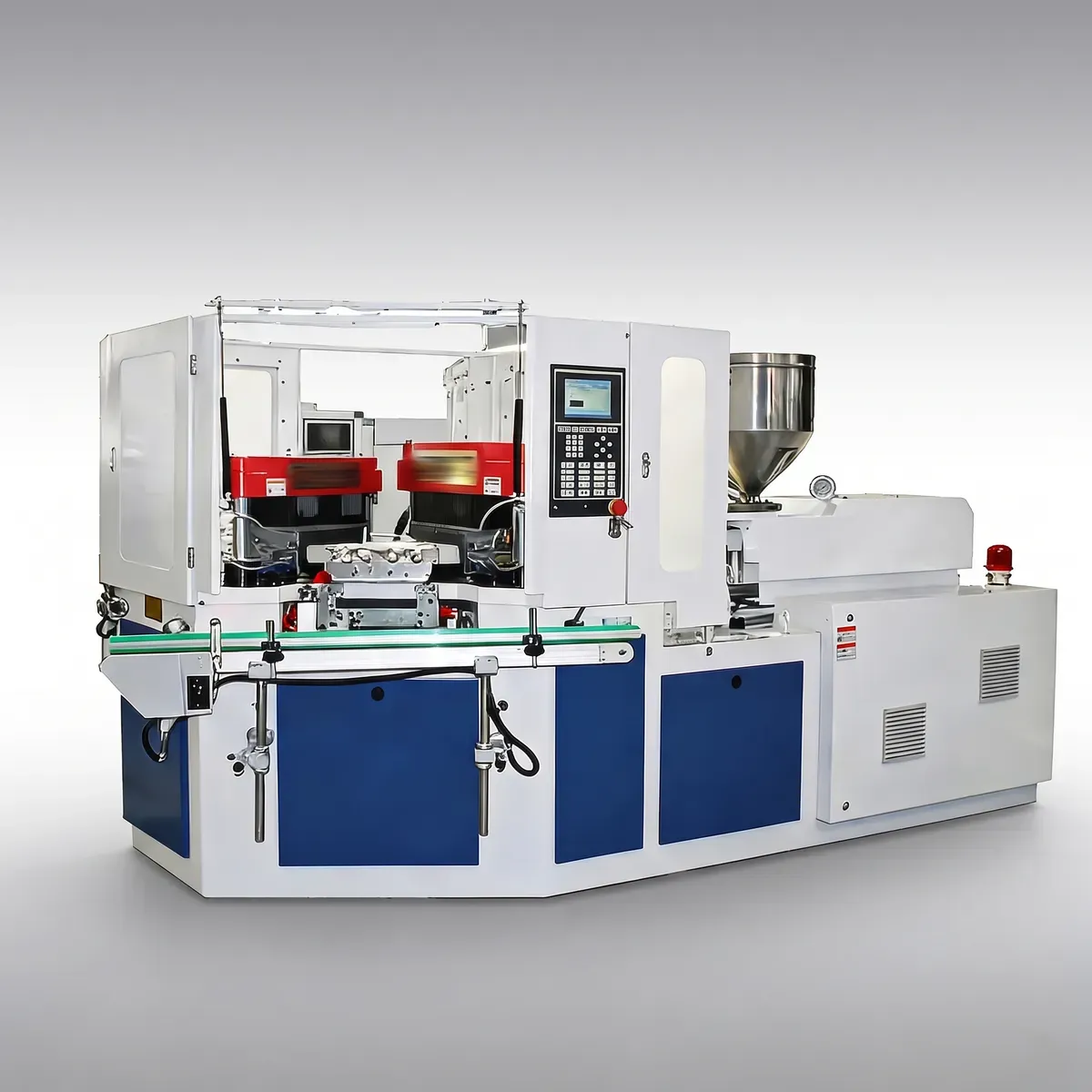
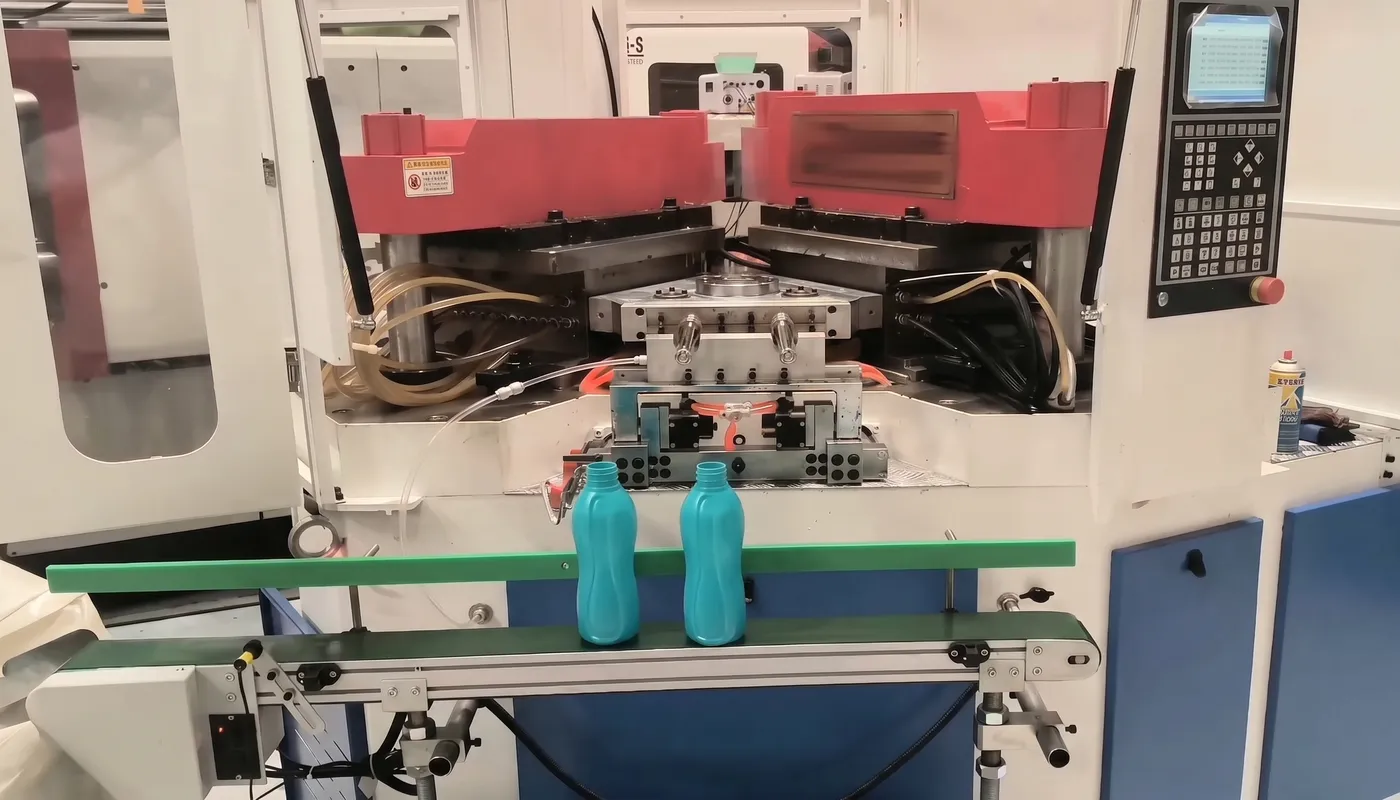
Zasada działania
1. Preform Injection
Stopiona żywica jest precyzyjnie wtryskiwana wokół rdzenia do gniazda wtryskowego. Geometria szyjki butelki, profil gwintu i wymiary wykończenia są formowane z wysoką dokładnością na tym stanowisku, ponieważ szyjka jest formowana wtryskowo, a nie rozdmuchowo. Po odpowiednim schłodzeniu i czasie przebywania pod kontrolowanym ciśnieniem wtrysku, forma otwiera się, a rdzenia, niosąc precyzyjnie uformowany bańkę wstępną, obraca się na stole indeksującym do stanowiska formowania rozdmuchowego. Ten etap wtrysku stanowi podstawę wysokiej dokładności szyjki, która wyróżnia technologię wtryskarek z rozdmuchem IBM od alternatywnych rozwiązań opartych na wytłaczaniu.
2. Blow Molding
Pręt rdzenia wypełniony preformą wsuwa się do formy rozdmuchowej, która zamyka się wokół niego z siłą zacisku 60 kN. Sprężone powietrze o ciśnieniu od 0,7 do 1,2 MPa jest wprowadzane przez trzpień, rozprężając rozgrzany preformę na zewnątrz, aż tworzywo sztuczne dokładnie dopasuje się do wewnętrznej powierzchni formy do butelek. Kanały chłodzące wewnątrz formy rozdmuchowej szybko krzepną korpus butelki, utrwalając ostateczny rozkład grubości ścianek i geometrię butelki. Liczba gniazd na tym stanowisku jest zgodna z konfiguracją stanowiska wtryskowego. Po schłodzeniu forma otwiera się, a pręty rdzenia obracają się w kierunku stanowiska strippingu, transportując gotowe, w pełni uformowane butelki bez nadlewek i odpadów.
3. Stripping and Ejection
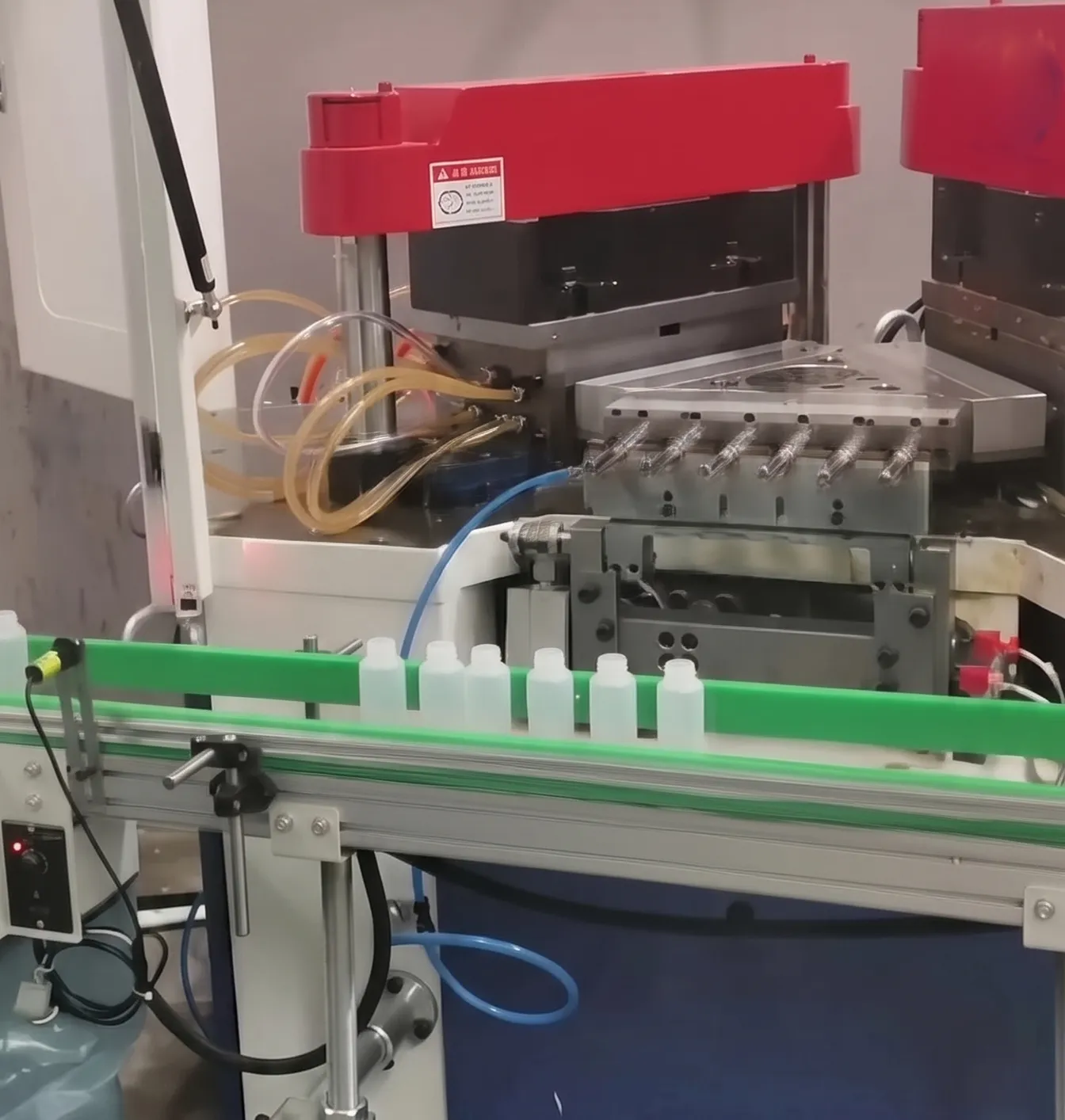
Na stanowisku strippingu, gotowe butelki są automatycznie wyrzucane z chłodzonych prętów rdzeniowych z suwem strippingu wynoszącym 220 mm. Butelki są płynnie wypuszczane na system przenośników odbiorczych, bez konieczności ręcznej pomocy ani wtórnego przycinania, ponieważ proces IBM nie powoduje powstawania wypływek wstępnych. Trzy stanowiska – wtrysku, rozdmuchu i strippingu – działają jednocześnie w każdym cyklu indeksowania, co oznacza, że maszyna produkuje komplet gotowych butelek podczas każdego 8,2-sekundowego obrotu. Ta równoczesna, trzystanowiskowa architektura jest kluczem do wyjątkowej wydajności i efektywności materiałowej maszyny ZQ40, przy niemal zerowej ilości odpadów procesowych w normalnej produkcji.
Obszary zastosowań
Butelki chemiczne
Przemysłowe środki czyszczące, odczynniki laboratoryjne i specjalistyczne produkty chemiczne wymagają butelek z precyzyjnym uszczelnieniem szyjki i doskonałą odpornością chemiczną. ZQ40 produkuje butelki na chemikalia z HDPE i PP o stałej grubości ścianek i precyzyjnym profilu gwintu, co gwarantuje szczelne zamknięcie, zapobiegając zanieczyszczeniom i wyciekom podczas przechowywania i transportu w wymagających warunkach przemysłowych.
Butelki kosmetyczne
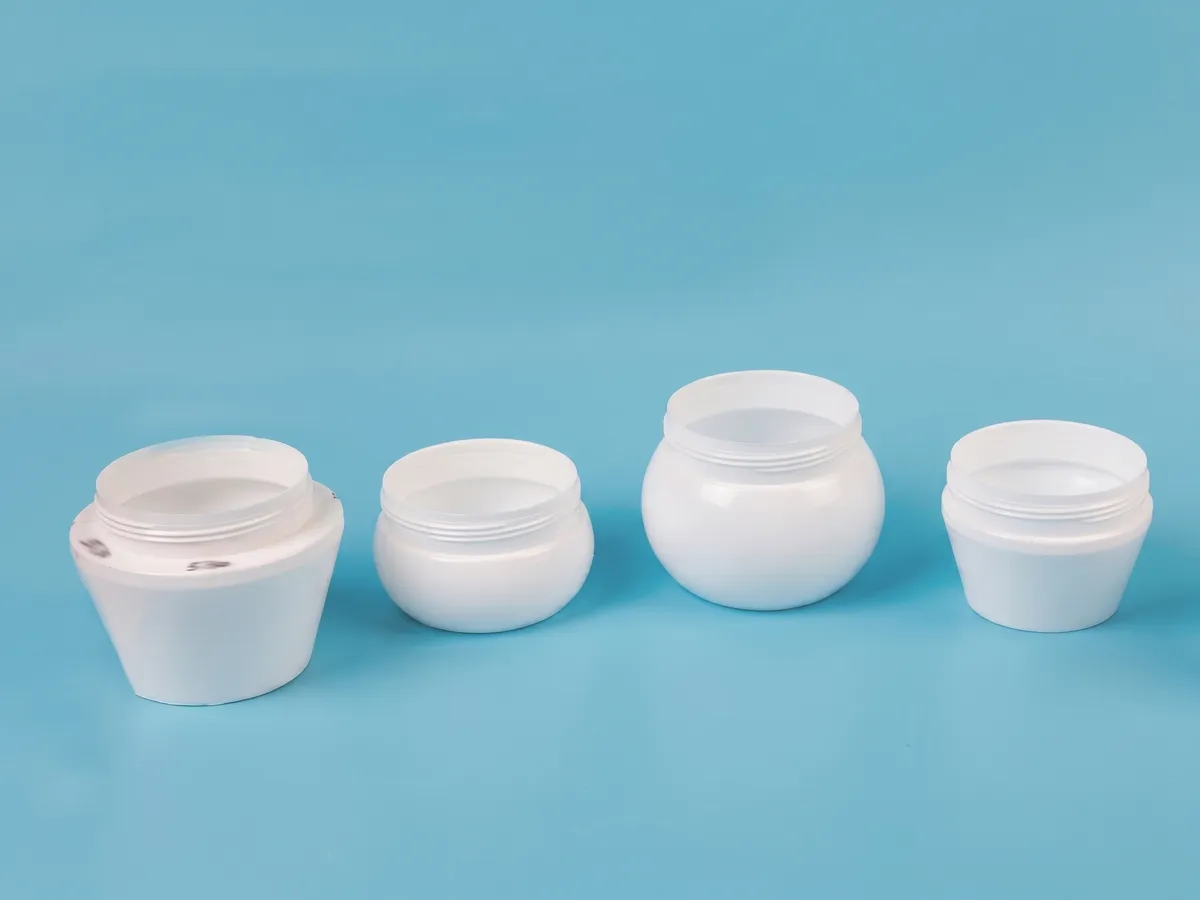
Balsamy, serum, toniki i wysokiej jakości produkty do pielęgnacji skóry wymagają butelek o doskonałym wykończeniu powierzchni, jednorodności wymiarowej i przejrzystości. Precyzyjne formowanie wtryskowe preformy w urządzeniu ZQ40 pozwala uzyskać pojemniki kosmetyczne o gładkich liniach podziału i równomiernym rozmieszczeniu ścianek, czego oczekują właściciele luksusowych marek kosmetycznych. Materiały, takie jak PCTG, PS i ABS, umożliwiają produkcję opakowań o wysokim połysku, przezroczystych lub półprzezroczystych.
Butelki na napoje
Opakowania napojów w małym formacie, takie jak soki, napoje funkcjonalne i jednorazowe produkty mleczne, korzystają z możliwości produkcji w warunkach wysokiej kawitacji, jakie oferuje ZQ40. Do 8 komór dla butelek 30 ml i do 4 komór dla butelek 100 ml pozwala producentom napojów na produkcję wielkoseryjną przy konkurencyjnym koszcie jednostkowym, z bezpiecznymi dla żywności materiałami HDPE, PP i kompatybilnymi materiałami z serii PET, przetwarzanymi w sposób czysty w strefie formy wolnej od oleju.
Butelki farmaceutyczne
To główne zastosowanie konstrukcyjne maszyny ZQ40. Butelki na tabletki, pojemniki na tabletki, butelki na leki w płynie oraz opakowania wielodawkowe dla przemysłu farmaceutycznego wymagają środowisk produkcyjnych zgodnych z GMP, precyzyjnej geometrii gwintu szyjki dla zamknięć zabezpieczających przed dziećmi oraz weryfikowalnej spójności wymiarowej między partiami. Strefa formy bezolejowa i powtarzalność enkodera absolutnego sprawiają, że ZQ40 jest jedną z najodpowiedniejszych maszyn do formowania wtryskowego z rozdmuchem dla zakładów pakujących produkty farmaceutyczne na całym świecie.
Butelki do mycia rąk
Antybakteryjne mydła do rąk, płyny do dezynfekcji rąk i mydła w piance wymagają butelek z szyjką zgodną z pompką i spójną geometrią ramion dla zautomatyzowanych linii napełniających. Maszyna ZQ40 produkuje butelki do mycia rąk z HDPE i PP z precyzyjnymi profilami gwintów, które niezawodnie współpracują ze standardowymi dozownikami z pompką, umożliwiając szybkie, zautomatyzowane napełnianie i zamykanie bez przeróbek i odrzutów, które obniżają rentowność w produkcji artykułów gospodarstwa domowego i opieki zdrowotnej.
Butelki na płyn do mycia naczyń
Butelki na płyn do mycia naczyń i środki czyszczące do kuchni muszą wytrzymywać wielokrotne ściskanie bez pękania zmęczeniowego, zachowując jednocześnie atrakcyjny wygląd na półce. Maszyna ZQ40 umożliwia produkcję pojemników na płyn do mycia naczyń z LDPE i HDPE z kontrolowanym rozkładem grubości ścianek, który równoważy elastyczność ściskania i integralność strukturalną. Stała jednorodność między komorami maszyny gwarantuje, że każda butelka w partii jest napełniana do tego samego poziomu na szybkich liniach napełniających bez konieczności regulacji.
Butelki z kroplomierzem
Roztwory okulistyczne, aerozole do nosa i laboratoryjne butelki z kroplomierzem to jedne z najbardziej wymagających zastosowań w branży opakowań pod względem precyzji wymiarowej. Butelki z kroplomierzem produkowane na maszynie ZQ40 charakteryzują się formowaną wtryskowo geometrią szyjki, która zapewnia dokładność dopasowania końcówki i nasadki z tolerancją rzędu mikronów. Czyste, bezolejowe środowisko formy maszyny spełnia również wymagania kontroli zanieczyszczeń w zakresie pakowania leków okulistycznych i sterylnych produktów farmaceutycznych z kroplomierzem na całym świecie.
Butelki do karmienia
Butelki do karmienia niemowląt i pojemniki na mleko modyfikowane dla niemowląt wymagają materiałów bezpiecznych dla żywności, wolnych od BPA, przetwarzanych w środowisku wolnym od zanieczyszczeń. Strefa formy bezolejowej w ZQ40 jest zgodna z wymogami higienicznymi dla opakowań produktów dla niemowląt. Butelki do karmienia z polipropylenu (PP) i HDPE dopuszczonego do kontaktu z żywnością, produkowane na tej maszynie, charakteryzują się jednolitą grubością ścianek, precyzyjnymi strefami wyrównania oznaczeń pomiarowych oraz niezawodnymi wymiarami gwintu pierścienia smoczka, co zapewnia bezpieczeństwo dzieciom i zabezpiecza je przed otwarciem, zgodnie z wymaganiami światowych przepisów dotyczących produktów dla niemowląt.
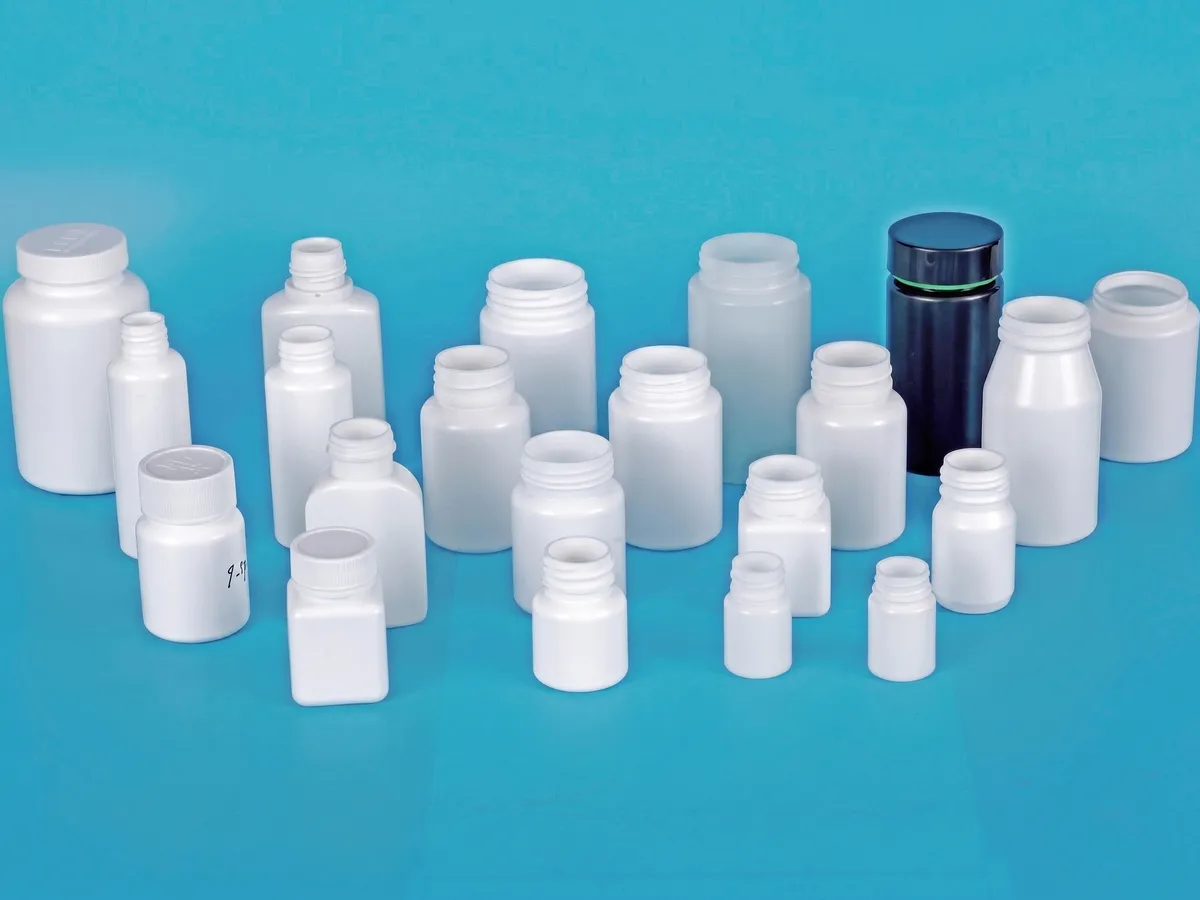 |
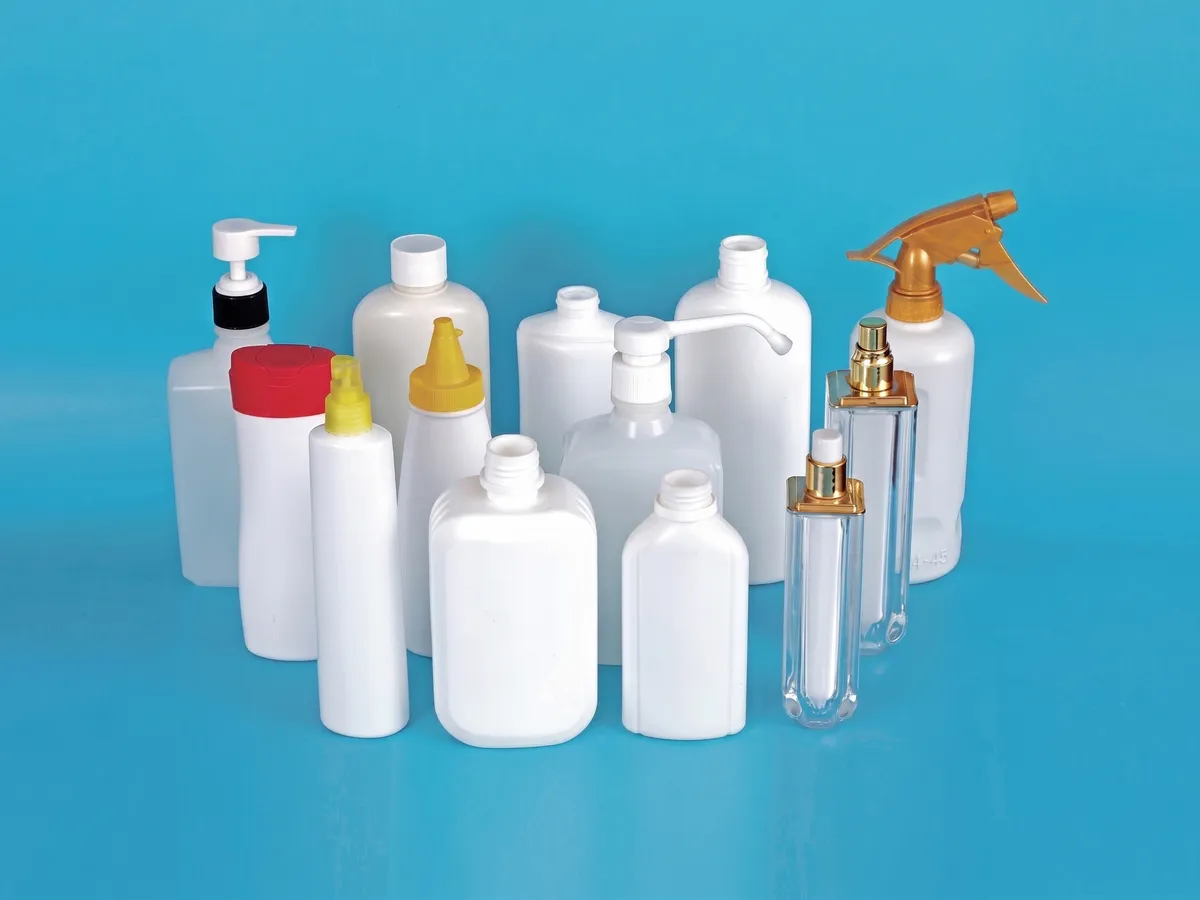 |
| Butelki farmaceutyczne | Butelki chemiczne |
 |
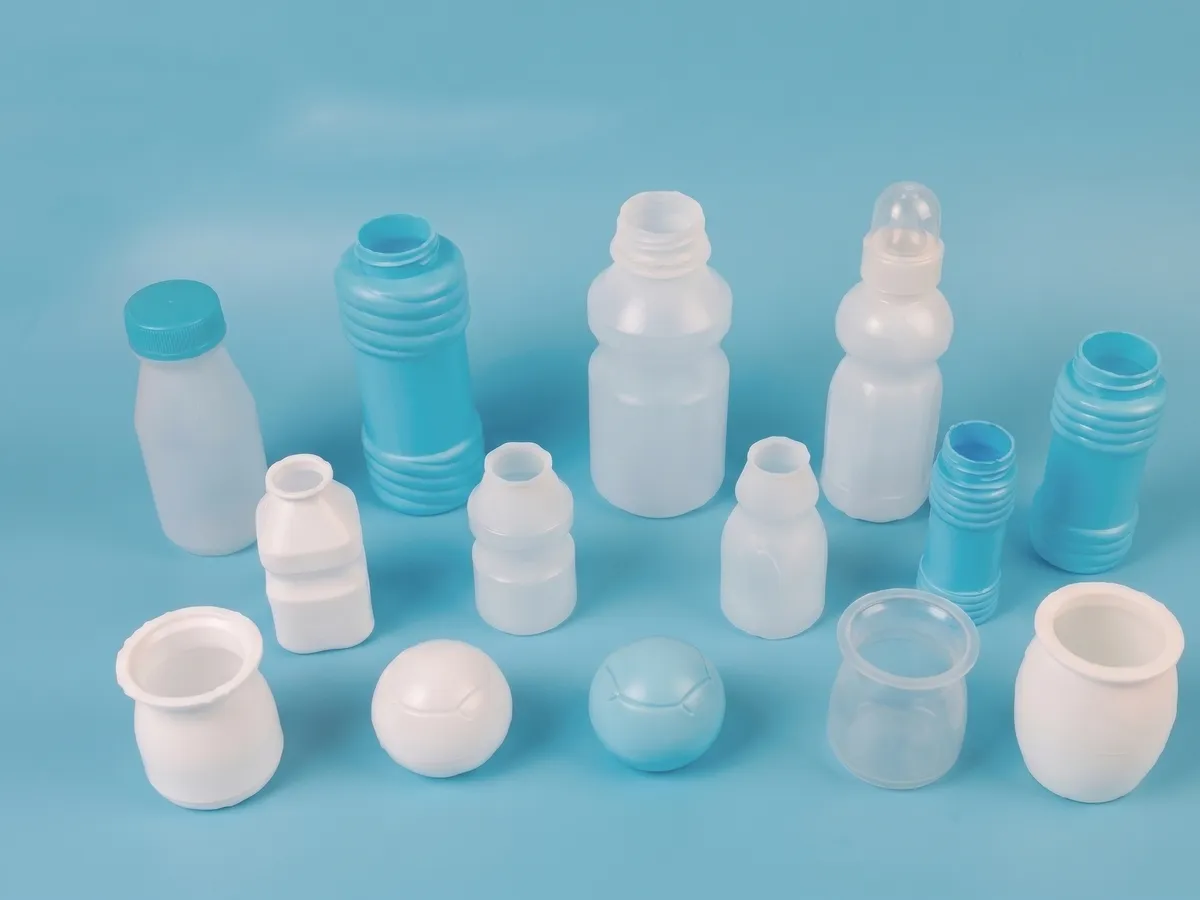 |
| Butelki kosmetyczne | Butelki do karmienia |
Komponenty maszyny IBM ZQ40
1. Urządzenie wtryskowe
Urządzenie wtryskowe składa się ze ślimaka o średnicy 40 mm lub 45 mm ze stosunkiem L/D 22:1, trzech podgrzewanych stref lufy plus dodatkowej strefy (3+N) oraz elektrycznego napędu cylindra, który zapewnia precyzyjne, powtarzalne dawki wtrysku o masie 190 g lub 260 g. Ten element odpowiada za topienie i homogenizację surowej żywicy polimerowej przed wtryskiem do gniazda formy, a moc grzewcza lufy o mocy 7,5 kW utrzymuje optymalną temperaturę stopu, zapewniając równomierny przepływ materiału.
2. System gorącokanałowy
Zoptymalizowany system gorących kanałów rozprowadza stopione tworzywo sztuczne z cylindra wtryskowego do każdej komory poprzez kolektory z regulacją temperatury i podgrzewane dysze wlewowe. Ten element eliminuje straty w zimnych kanałach i zapewnia równomierne, jednoczesne napełnianie wszystkich komór w konfiguracjach wielokomorowych. Precyzyjna kontrola temperatury w kolektorze gorących kanałów minimalizuje różnice w gramaturze między komorami, utrzymując stałą jakość preform, co bezpośrednio wpływa na jednorodność grubości ścianek butelek w kolejnym etapie rozdmuchu.
3. Stacja wtryskowa
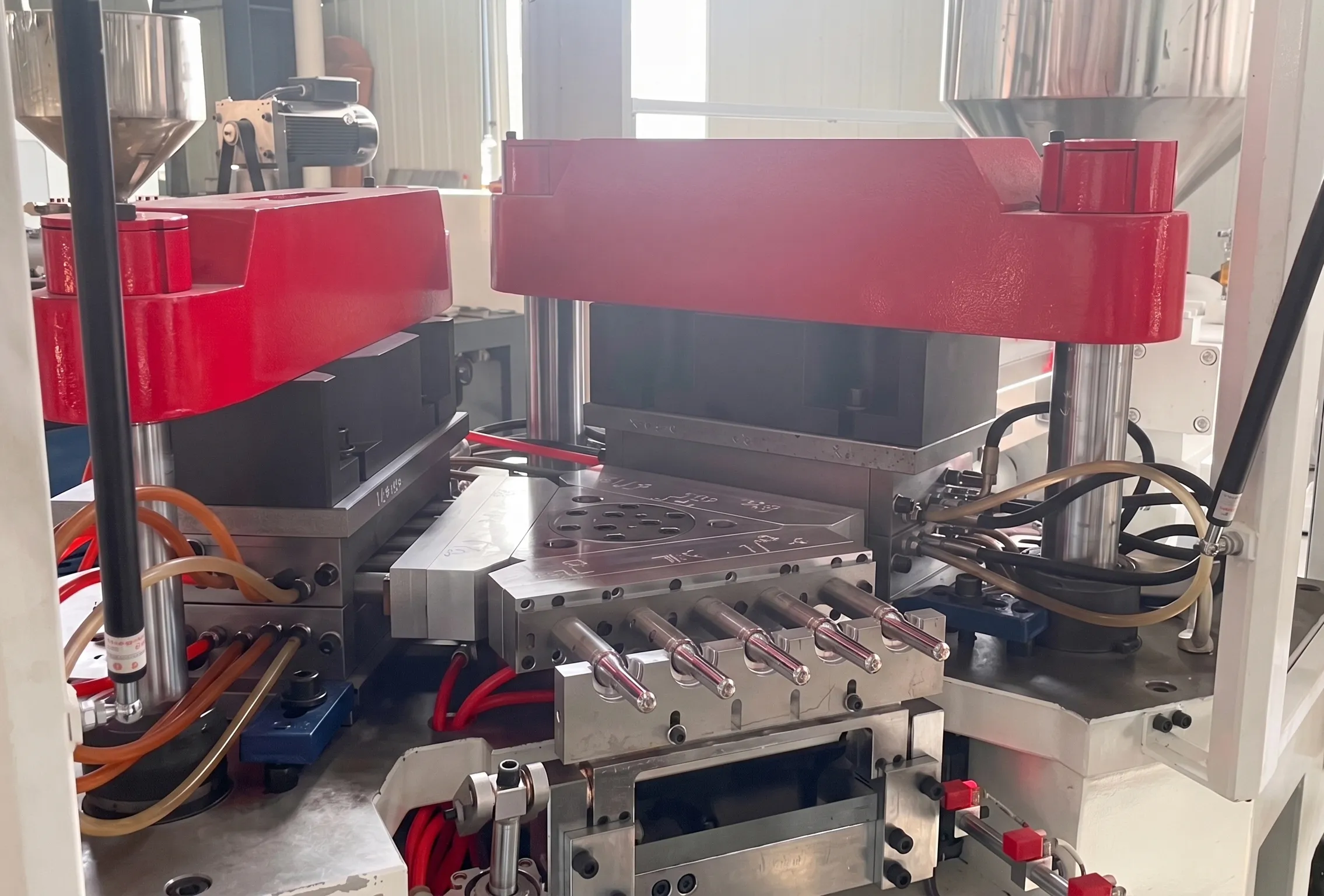
Stanowisko wtryskowe to pierwsze z trzech stanowisk roboczych na obrotowym stole wtryskarki ZQ40, gdzie siła zwarcia wtrysku wynosząca 400 kN zamyka formę wtryskową wokół prętów rdzeniowych, otwierając ją na odległość 165 mm. Stanowisko to kontroluje parametry cyklu wtrysku, takie jak temperatura stopu, prędkość wtrysku, ciśnienie wypełnienia i czas chłodzenia. Stół obrotowy unosi się o 70 mm, aby usunąć formy podczas indeksowania, a następnie precyzyjnie opuszcza i ustawia się przed kolejnym cyklem wtrysku. System serwo z enkoderem absolutnym zapewnia powtarzalne pozycjonowanie przy każdym obrocie.
4. Stacja przedmuchowa
Stanowisko rozdmuchowe mieści formę rozdmuchową oraz powiązane z nią systemy zaciskania, zasilania powietrzem i chłodzenia. Siła zacisku 60 kN utrzymuje formę rozdmuchową zamkniętą, przeciwdziałając ciśnieniu rozprężającego się powietrza podczas napełniania, a skok otwarcia 140 mm zapewnia wystarczający prześwit dla indeksowanych prętów rdzeniowych i preform. Sprężone powietrze o ciśnieniu od 0,7 do 1,2 MPa wpływa do preformy przez kanał powietrzny trzpienia, napełniając ją, aby dopasować ją do wnęki formy rozdmuchowej, podczas gdy kanały chłodzące w formie szybko krzepną gotowy korpus butelki przed otwarciem formy.
5. Forma rozdmuchowa
Forma rozdmuchowa definiuje zewnętrzną geometrię gotowej butelki, w tym kształt korpusu, konfigurację podstawy, fakturę powierzchni oraz wszelkie wytłoczone elementy brandingowe. Forma rozdmuchowa, wyposażona w zintegrowane kanały chłodzące, zapewniające szybkie i równomierne odprowadzanie ciepła, została zaprojektowana tak, aby zminimalizować czas cyklu, zapewniając jednocześnie pełny kontakt powierzchniowy między spienionym tworzywem sztucznym a ściankami gniazda formy. Ponieważ w procesie IBM nie występuje odrywanie się kształtek wstępnych, formy rozdmuchowe do wtryskarek z rozdmuchem nie posiadają linii podziału na dnie butelki, co przekłada się na czystszą estetykę podstawy i brak odpadów poprodukcyjnych.
6. Stacja demontażu
Na stanowisku strippingu, gotowe butelki są automatycznie wyrzucane z chłodzonych prętów rdzeniowych z suwem strippingu 220 mm. Mechanizm strippingu zdejmuje butelki z trzpienia bez konieczności ręcznej interwencji ani wtórnego przycinania, ponieważ proces IBM nie powoduje powstawania nadlewów. Wyrzucone butelki spadają bezpośrednio na system przenośników odbiorczych, skąd są transportowane do urządzeń końcowych, takich jak systemy kontroli wizualnej, testery szczelności, etykieciarki lub automatyczne urządzenia pakujące, co zapewnia w pełni zautomatyzowaną, bezobsługową produkcję.
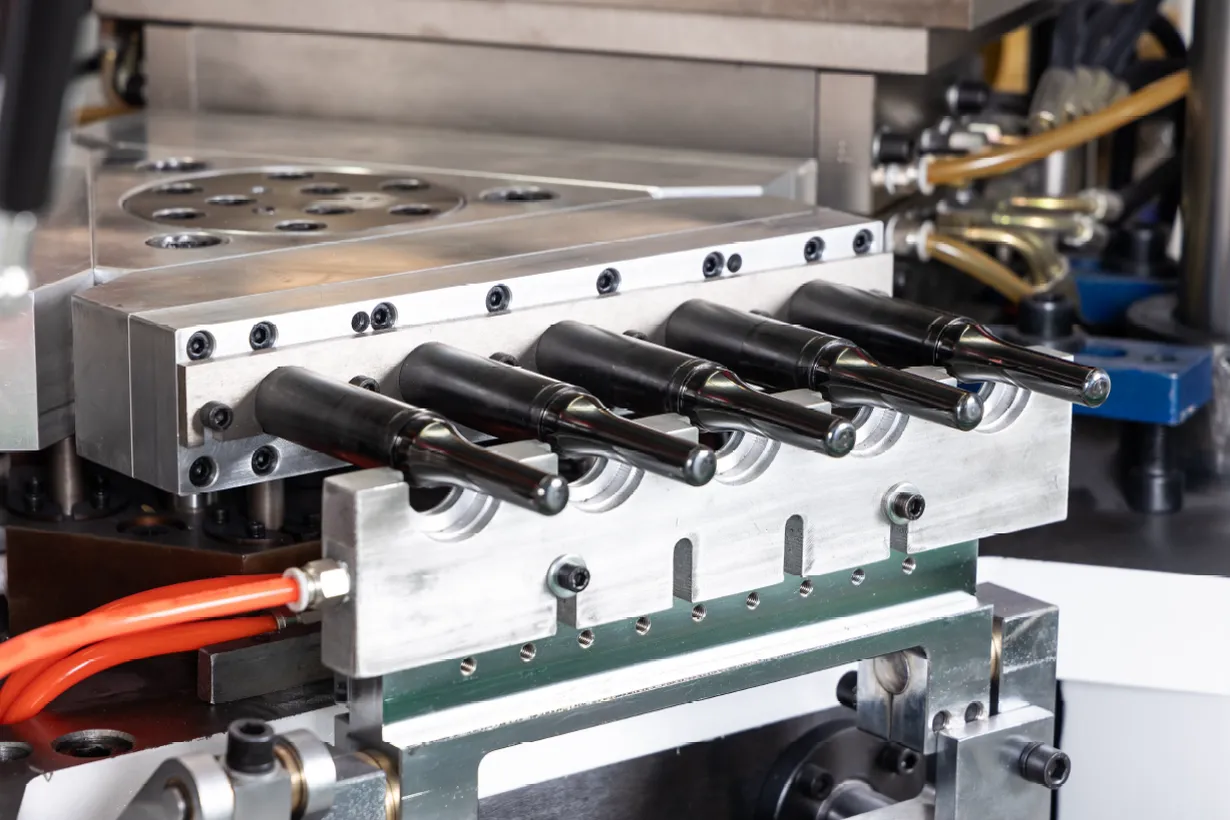
7. Pręt rdzeniowy (trzpień)
Pręt rdzeniowy, zwany również trzpieniem, służy jako wewnętrzna podpora, wokół której formowany jest preforma z tworzywa sztucznego podczas wtrysku, a następnie rozdmuchiwany podczas rozdmuchiwania. Zaprojektowany z wewnętrznymi kanałami chłodzącymi, trzpień umożliwia szybkie odprowadzanie ciepła z wewnętrznej powierzchni preformy, utrzymując precyzyjne warunki temperaturowe dla stałej wydajności rozdmuchiwania. Specjalna konstrukcja pręta rdzeniowego w ZQ40 zapewnia krótkie czasy cykli, a jednocześnie doskonałe chłodzenie rdzenia, bezpośrednio wspomagając 8,2-sekundowy cykl produkcyjny w przypadku butelek o pojemności 30 ml.
8. Preforma butelki
Preforma to produkt pośredni formowany na stanowisku wtryskowym, składający się z w pełni uformowanej szyjki butelki i profilu gwintu z grubościennym, cylindrycznym korpusem. W przeciwieństwie do formowania z rozdmuchem metodą wytłaczania, gdzie szyjka wstępna jest formowana przez zamykanie formy, szyjka preformy IBM jest formowana wtryskowo do ostatecznych wymiarów, co zapewnia precyzyjną geometrię gwintu i szczelną powierzchnię uszczelniającą przed rozdmuchem korpusu. Jest to fundamentalna zaleta wtryskarek z rozdmuchem w porównaniu z innymi procesami formowania z rozdmuchem w zakresie precyzyjnego pakowania.
9. Forma wtryskowa
Gniazdo formy wtryskowej i sekcje szyjki są wykonane z importowanego stopu stali S136 lub stali nierdzewnej 4Cr13, co zapewnia wysoką twardość, odporność na korozję i wydłużoną żywotność. Forma zawiera strefy aktywnej kontroli temperatury ze specjalną konstrukcją obiegu oleju, która umożliwia precyzyjną równomierność temperatury gniazda, gwarantując stabilne wymiary preform i powtarzalną jakość wykrojów rur we wszystkich cyklach produkcyjnych. Architektura formy obsługuje maksymalny rozmiar płyty roboczej ZQ40 wynoszący 480 x 340 mm i grubość formy 180 mm.
ZQ40 kontra SUMA 40iB: Dlaczego warto wybrać maszynę IBM Ever-Power
1. Wyższy zakres siły zacisku
ZQ40 oferuje siłę zwarcia wtryskowego 400 kN w porównaniu z 386 kN w modelu SUMA 40iB, co oznacza wzrost wydajności zwarcia wtryskowego o około 41 ton. Co ważniejsze, specjalna konstrukcja ciśnieniowa ZQ40 zapewnia regulowany zakres zwarcia od 40 do 80 ton, dając operatorom większą elastyczność w dopasowywaniu warunków zwarcia do różnych konstrukcji form i kombinacji materiałów bez konieczności wymiany komponentów maszyny, co bezpośrednio redukuje inwestycje w oprzyrządowanie w przypadku produkcji wieloskładowej.
2. Architektura napędu całkowicie elektrycznego
SUMA 40iB zachowuje hybrydowy lub hydrauliczny napęd dla niektórych osi ruchu. ZQ40 całkowicie eliminuje olej hydrauliczny ze wszystkich ruchów maszyny, zapewniając architekturę prawdziwie w pełni elektrycznej wtryskarki z rozdmuchem. Eliminuje to konieczność konserwacji oleju hydraulicznego, zużycia uszczelnień, zarządzania olejem termicznym i związanego z tym ryzyka zanieczyszczenia w środowisku produkcyjnym, co znacznie zmniejsza całkowity nakład pracy konserwacyjnej w pięcioletnim okresie eksploatacji w porównaniu z modelem SUMA.
3. Krótszy czas cyklu
Maszyna ZQ40 osiąga o 20% krótszy cykl pracy w porównaniu z tradycyjnymi modelami hydraulicznymi, w tym SUMA 40iB, przeznaczonymi do produkcji butelek o pojemności 30 ml. 8,2 sekundy na cykl w porównaniu z około 10 sekundami w porównywalnych maszynach hydraulicznych przekłada się na produkcję od około 105 000 do 115 000 butelek dziennie. W ciągu 300 dni produkcji, ten krótszy cykl pracy generuje miliony dodatkowych jednostek rocznie przy tej samej powierzchni maszyny, co bezpośrednio przekłada się na wyższy zwrot z inwestycji w porównaniu z modelem SUMA o równoważnej sile zacisku.
4. 30% Niższy koszt energii
Zużycie energii podczas produkcji butelek o pojemności 30 ml na maszynie ZQ40 wynosi zaledwie 12 kWh na godzinę, czyli około 301 TP3T mniej niż pobór energii przez równoważne hydrauliczne maszyny IBM. W przypadku zakładu pracującego na dwie zmiany dziennie przez 300 dni w roku, różnica ta wynosi tysiące kilowatogodzin oszczędności rocznie na maszynę. W przypadku całej floty wtryskarek z rozdmuchem, skumulowane oszczędności energii przekładają się na znaczną redukcję kosztów operacyjnych, co sprawia, że ZQ40 jest bardziej ekonomicznym wyborem w dłuższej perspektywie niż kontynuacja eksploatacji lub wymiana starzejących się modeli SUMA.
5. Większa płyta formy
ZQ40 oferuje maksymalny rozmiar płyty roboczej 480 x 340 mm, w porównaniu z 470 x 350 mm w modelu SUMA 40iB. Ta różnica wymiarów, w połączeniu z grubością formy 180 mm i maksymalną średnicą butelki 120 mm, zapewnia nieco większą elastyczność w projektowaniu form i rozmieszczeniu gniazd. Istniejące formy SUMA 40iB można sprawdzić pod kątem kompatybilności lub dostosować do użycia z platformą ZQ40 za pomocą odpowiednich płyt podporowych, co potencjalnie zmniejsza nakłady inwestycyjne w oprzyrządowanie wymagane w przypadku klientów migrujących z platformy SUMA do ZQ40.
6. Gotowość do integracji automatyzacji
Tylny przenośnik ZQ40 został zaprojektowany do współpracy z urządzeniami automatyki niższego szczebla, takimi jak systemy kontroli wizualnej, testery szczelności, etykieciarki i automatyczne linie pakujące. Instalacje SUMA 40iB często wymagają integracji z zewnętrznymi inżynierami, aby zapewnić równoważną łączność z systemami automatyki niższego szczebla. Gotowa do użycia automatyzacja ZQ40 redukuje całkowity nakład inwestycyjny i czas integracji wymagany do osiągnięcia w pełni bezobsługowej, ciągłej produkcji w zakładach produkujących produkty farmaceutyczne, kosmetyczne i konsumenckie.
Surowce kompatybilne z maszyną IBM ZQ40
Maszyna do formowania wtryskowego ZQ40 przetwarza szeroką gamę żywic termoplastycznych do różnorodnych zastosowań opakowaniowych.
HDPE (polietylen o wysokiej gęstości)
HDPE to najczęściej stosowana żywica w maszynach do formowania wtryskowego z rozdmuchem do butelek na produkty farmaceutyczne, chemiczne i gospodarstwa domowego. Oferuje doskonałą odporność chemiczną, właściwości barierowe dla wilgoci, zgodność z wymogami FDA dotyczącymi kontaktu z żywnością oraz stabilność przetwarzania w całym zakresie temperatur cylindra maszyny ZQ40. Butelki HDPE produkowane na maszynie ZQ40 są szeroko stosowane do produkcji pojemników na tabletki farmaceutyczne, butelek na środki czyszczące oraz opakowań do żywności, wymagających niezawodnego uszczelnienia i odporności na uderzenia podczas dystrybucji.
PP (polipropylen)
Polipropylen jest preferowanym materiałem do opakowań produktów farmaceutycznych, kosmetycznych i dla niemowląt ze względu na doskonałą odporność termiczną, obojętność chemiczną i kompatybilność z procesami sterylizacji parowej. ZQ40 efektywnie przetwarza PP w podgrzewanych strefach cylindra, dostarczając butelki PP o stabilnych wymiarach i doskonałej elastyczności zawiasów, idealne do zastosowań z zamknięciami. Wysoka przejrzystość PP w postaci kopolimeru umożliwia również tworzenie niemal przezroczystych opakowań dla produktów, w których widoczność zawartości jest kluczowym czynnikiem decydującym o wyborze produktu.
LDPE (polietylen o niskiej gęstości)
Naturalna elastyczność i miękkość LDPE sprawiają, że jest to materiał preferowany do produkcji butelek z dozownikiem, pojemników z kroplomierzem i opakowań dozujących, gdzie dozowanie produktu wymaga kontrolowanego, delikatnego nacisku. ZQ40 przetwarza LDPE w zakresie temperatur cylindra, wytwarzając butelki o elastycznych ściankach i precyzyjnej geometrii szyjki, co zapewnia kompatybilność z końcówką kroplomierza i zamknięciem dozującym. Niska temperatura topnienia i wąskie okno przetwarzania LDPE są skutecznie kontrolowane przez wielostrefowe ogrzewanie cylindra i precyzyjną regulację prędkości ślimaka w ZQ40.
PS (polistyren) i PS o wysokiej przezroczystości
Na urządzeniu ZQ40 przetwarzane są standardowe i wysokoprzezroczyste gatunki polistyrenu do produkcji opakowań kosmetycznych, jednorazowych opakowań na produkty mleczarskie, takich jak butelki na napoje z bakteriami kwasu mlekowego, oraz przezroczystych opakowań ekspozycyjnych, w których pożądana jest przejrzystość dorównująca szkłu, bez ciężaru i kruchości prawdziwego szkła. Wysokoprzezroczysty polistyren (PS) umożliwia uzyskanie bardzo niskiego poziomu zmętnienia w cienkościennych butelkach dmuchanych, co wspiera pozycjonowanie premium opakowań kosmetyków i suplementów diety na rynkach, gdzie estetyka opakowania bezpośrednio wpływa na decyzje zakupowe.
ABS (akrylonitryl-butadien-styren)
ABS jest wybierany do zastosowań opakowaniowych wymagających podwyższonej odporności na uderzenia, stabilności wymiarowej w zmiennych temperaturach oraz podatności na techniki zdobienia powierzchni, takie jak metalizacja i lakierowanie. Maszyna ZQ40 przetwarza ABS do produkcji opakowań kosmetycznych, specjalistycznych pojemników do pielęgnacji ciała oraz butelek na wysokiej jakości dobra konsumpcyjne, gdzie wysoki połysk powierzchni i solidna konstrukcja ścianek są niezbędne do zapewnienia wysokiej jakości produktu. Dobre właściwości płynięcia stopu ABS umożliwiają produkcję wielogniazdową z równomiernym wypełnieniem w całym systemie gorących kanałów.
Materiały specjalistyczne PCTG i EVA
PCTG (glikol policykloheksylenodimetylenowego tereftalanu) zapewnia wyjątkową przejrzystość optyczną, doskonałą odporność chemiczną i bezpieczeństwo żywności bez BPA w przypadku opakowań kosmetyków i produktów farmaceutycznych klasy premium. W urządzeniu ZQ40 można również przetwarzać materiały EVA (etylen-octan winylu) oraz ekologiczne bioplastiki kukurydziane, co jest korzystne dla producentów poszukujących zrównoważonych rozwiązań opakowaniowych i etykiet o zmniejszonym śladzie węglowym. Konfigurowalne temperatury cylindra i opcje geometrii ślimaka w urządzeniu ZQ40 zapewniają optymalne warunki przetwarzania dla szerokiego spektrum inżynieryjnych i specjalistycznych materiałów termoplastycznych.

Characteristics of ZQ Series Automatic Mould
1. Aktywna kontrola temperatury z wymiennymi komorami
Forma wtryskowa charakteryzuje się zaprojektowaną specjalnie konfiguracją gniazda i szyjki, a także specjalnie zaprojektowanym układem obiegu oleju, który umożliwia wygodną wymianę gniazda bez konieczności całkowitego demontażu formy. Taka konstrukcja zapewnia stabilne i jednolite wymiary wykrojów rurowych przez cały okres eksploatacji formy, utrzymując precyzyjny i spójny rozkład temperatury w gnieździe. Wymienna architektura gniazda skraca czas zmiany rozmiarów produktu i wydłuża ogólną żywotność formy, umożliwiając niezależną wymianę zużytych wkładek gniazda, bez konieczności złomowania całego zespołu formy.
2. Konstrukcja ze stali stopowej premium
Gniazda i rdzenie form wtryskowych są produkowane z importowanego stopu stali S136 lub stali nierdzewnej 4Cr13. S136 to wysokiej jakości stal narzędziowa oferująca doskonałą polerowalność, pozwalającą uzyskać powierzchnie butelek kosmetycznych i farmaceutycznych o wysokiej czystości, a także doskonałą odporność na korozję i twardość po obróbce cieplnej. Stal nierdzewna 4Cr13 zapewnia wyjątkową odporność na degradację materiału pod wpływem kwasów i zasad, znacząco wydłużając żywotność formy w porównaniu ze standardową stalą P20 lub H13, stosowaną w wielu tańszych, konkurencyjnych projektach form. Oba materiały są hartowane i poddawane obróbce powierzchniowej w celu wydłużenia cykli produkcyjnych.
3. Zoptymalizowana konstrukcja kanałów gorących i trzpienia
System gorących kanałów i geometria preformy butelki zostały zaprojektowane tak, aby zminimalizować różnice w gramaturze między gniazdami i zmniejszyć wahania grubości ścianek gotowej butelki. Spójność gramatury we wszystkich gniazdach formy wielogniazdowej ma kluczowe znaczenie dla uzyskania jednolitej jakości butelki i dokładnych objętości napełniania w dalszej części procesu. Specjalna konstrukcja trzpienia została zaprojektowana tak, aby zapewnić szybkie cykle formowania, a jednocześnie doskonałą wydajność chłodzenia rdzenia, gwarantując optymalną temperaturę preformy do rozprężania w momencie dotarcia do stanowiska rozdmuchowego, bez konieczności wydłużenia czasu chłodzenia.
4. Precyzyjne wymiary gwintu i uszczelnione otwory 100%
Formowany wtryskowo profil wlotu i gwintu butelki są wymiarowo dokładne, zgodnie ze specyfikacjami projektowymi każdej wyprodukowanej butelki, ponieważ geometria szyjki jest formowana w całości przez formę wtryskową, a nie przez rozdmuchiwanie. Ta precyzja formowania wtryskowego szyjki przekłada się bezpośrednio na szczelność zamknięcia 100% po zamontowaniu systemu zamykającego, eliminując awarie spowodowane nieszczelnością w produktach farmaceutycznych i spożywczych, wynikające z nierównomiernego wymiarowania gwintu szyjki. Skok gwintu, średnica rdzenia i skok gwintu są kontrolowane przez geometrię wnęki wtryskowej i nie wymagają dodatkowego przycinania ani kalibracji.
5. Brak błysku na ustach i podstawie
Ponieważ w procesie IBM korpus butelki formowany jest poprzez nadmuchiwanie, a nie poprzez ściskanie kształtki wstępnej między połówkami formy, podczas normalnej produkcji nie powstają żadne wypływki na dnie ani w otworze butelki. Butelki produkowane na ZQ40 nie wymagają wtórnego przycinania, usuwania wypływek ani obróbki wykończeniowej przed przejściem na linie napełniania i zamykania. Ta eliminacja pracy związanej z przycinaniem i odpadów stanowi istotną przewagę ekonomiczną wtryskarek z rozdmuchem w porównaniu z alternatywnymi metodami wytłaczania z rozdmuchem, szczególnie w przypadku masowej produkcji butelek farmaceutycznych i kosmetycznych, gdzie każda jednostka odpadów z przycinania generuje bezpośredni koszt materiałowy.
6. Spójne wymiary, waga i grubość ścianki
Wymiary produktu, masa napełnienia, położenie linii podziału i grubość ścianki butelki są spójne w każdej butelce i w każdej komorze przez cały cykl produkcyjny. Ta spójność wymiarowa jest warunkiem wstępnym dla zautomatyzowanych procesów napełniania, zamykania, etykietowania i pakowania, które wymagają precyzyjnej geometrii butelki, aby zapewnić kompatybilność z maszynami o dużej prędkości. System serwo enkodera absolutnego ZQ40 i precyzyjne wyważanie gorących kanałów formy zapewniają powtarzalność wymiarową, która spełnia zarówno wewnętrzne standardy zapewnienia jakości, jak i zewnętrzne audyty jakości wymagane przez programy kwalifikacyjne klientów z branży farmaceutycznej i spożywczej.
Formowanie wtryskowe z rozdmuchem a formowanie ekstruzyjne z rozdmuchem
Zarówno formowanie wtryskowe z rozdmuchem (IBM), jak i wytłaczanie z rozdmuchem (EBM) wytwarzają puste pojemniki z tworzywa sztucznego, ale kształt wyjściowy powstaje w wyniku zupełnie innych mechanizmów. Maszyna do formowania wtryskowego z rozdmuchem rozpoczyna proces od preformy formowanej wtryskowo z w pełni uformowaną szyjką. Maszyna do formowania wytłaczanego z rozdmuchem rozpoczyna proces od wytłoczonej kształtki wstępnej, ściskanej przez formę na obu końcach, co powoduje powstanie nadlewki wymagającej przycięcia. W brytyjskiej odmianie języka angielskiego klienci często porównują te same procesy formowania wtryskowego z rozdmuchem, a kryteria wyboru procesu pozostają identyczne, niezależnie od terminologii.
Jak działa każdy proces
Formowanie wtryskowe z rozdmuchem (IBM)
- Zastrzyk: Stopiony plastik jest wtryskiwany wokół pręta rdzeniowego w celu utworzenia precyzyjnej formy wstępnej i wykończenia szyjki.
- Dmuchanie: Preforma jest przemieszczana do stanowiska rozdmuchowego i napełniana powietrzem wewnątrz formy na butelkę, aż do nadania jej ostatecznego kształtu.
- Rozbieranie: Gotową butelkę wyjmuje się bez konieczności przycinania lampy błyskowej.
Wytłaczanie z rozdmuchem (EBM)
- Wyrzucenie: Stopiony plastik jest wytłaczany w dół w postaci pustej rurki zwanej parisonem.
- Zaciskanie: Forma zamyka się wokół parisonu, ściskając i uszczelniając nadmiar materiału w strefach odcięcia.
- Dmuchanie i przycinanie: Butelkę nadmuchuje powietrze, a następnie po ostygnięciu należy ją przyciąć i poddać recyklingowi.
IBM kontra EBM: szybkie porównanie
| Funkcja | Formowanie wtryskowe z rozdmuchem (IBM) | Wytłaczanie z rozdmuchem (EBM) |
|---|---|---|
| Formularz początkowy | Formowany wtryskowo preform | Wytłaczany parison |
| Precyzja gryfu | Bardzo wysoka; szyjka formowana wtryskowo | Standardowy; zależy od zamknięcia i przycięcia formy |
| Złom / Błysk | Zero błysku, bardzo mało odpadów | Wygenerowano Flash; wymagane przycięcie |
| Najlepszy rozmiar pojemnika | Butelki precyzyjne małej i średniej wielkości | Średnie i duże pojemniki puste |
| Najlepsze aplikacje | Farmacja, kosmetyki, żywność, kroplomierze | Kanistry, beczki, duże pojemniki |
| Priorytet jakości | Spójność wymiarowa i uszczelnienie | Elastyczność rozmiaru i objętość pojemnika |
Kiedy wybrać formowanie wtryskowe z rozdmuchem
Wybierz jednostopniową wtryskarkę z rozdmuchem, taką jak ZQ40, jeśli Twoje zastosowanie wymaga małych lub średnich butelek o precyzyjnych szyjkach z dokładnym gwintem; opakowań farmaceutycznych, medycznych, kosmetycznych, laboratoryjnych lub opakowań o dużej wartości, w których priorytetem jest dokładność szyjki i czysta produkcja; niskie straty płynów i czysta produkcja bez wtórnych operacji przycinania; a także stabilnych wymiarów, powtarzalnej grubości ścianek i niezawodnego uszczelnienia w przypadku opakowań przemysłowych regulowanych przepisami.
W przypadku dużych butelek, kanistrów, beczek, zbiorników lub nieregularnych pustych elementów, gdzie głównym czynnikiem jest niższy początkowy koszt oprzyrządowania, a przycinanie nadlewek jest akceptowalne, wytłaczanie z rozdmuchem może być lepszym rozwiązaniem. W przypadku większości precyzyjnych opakowań małych i średnich butelek, wtryskarka z rozdmuchem zapewnia lepszą ekonomikę, gdy kompleksowo oceni się całkowity koszt produkcji, w tym straty materiału, wskaźnik odrzutów, niezawodność uszczelnienia i obsługę wtórną.
Wskazówki dotyczące konserwacji wtryskarki rozdmuchowej ZQ40
1. Codzienna kontrola układu serwo
Na początku każdej zmiany produkcyjnej należy wizualnie sprawdzić wszystkie połączenia serwosilników, przebieg kabli enkodera oraz wskaźniki stanu jednostki napędowej. Należy sprawdzić, czy obudowy serwonapędów nie emitują nietypowych dźwięków, wibracji lub ciepła, które mogą wskazywać na rozwijającą się usterkę. Przed rozpoczęciem produkcji należy sprawdzić, czy interfejs HMI wskazuje prawidłowy stan osi serwo dla wszystkich osi maszyny. Całkowicie elektryczna architektura eliminuje konieczność kontroli hydraulicznych, ale integralność systemu serwo powinna być sprawdzana codziennie, aby wykryć problemy z napędem lub enkoderem na wczesnym etapie, zanim spowodują one przerwy w produkcji lub problemy z jakością wymiarową.
2. Harmonogram czyszczenia lufy i ślimaka
Przeprowadź płukanie ślimaka odpowiednim środkiem czyszczącym podczas zmiany rodzaju lub koloru materiału, a także przeprowadź pełne czyszczenie cylindra i ślimaka co 500 do 1000 godzin produkcyjnych, w zależności od rodzaju przetwarzanego materiału. Pozostałości zdegradowanego materiału w cylindrze lub na ślimakach powodują powstawanie czarnych plamek, nierównomierną masę wtrysku i różnice w grubości ścianek w wyprodukowanych butelkach. Utrzymanie czystości cylindra wtryskowego jest szczególnie ważne w produkcji opakowań farmaceutycznych, gdzie zgodność ze specyfikacją dotyczącą zanieczyszczeń jest obowiązkowa dla audytów systemu jakości klienta.
3. Konserwacja obiegu wody chłodzącej
Co miesiąc sprawdzaj wszystkie przyłącza wody chłodzącej, węże i złączki pod kątem wycieków, osadów kamienia lub zagięć, które ograniczają przepływ wody. Utrzymuj jakość wody chłodzącej w zakresie ciśnienia od 0,3 do 0,4 MPa i przepływu 3,5 m³/h, aby zapewnić odpowiednią wydajność chłodzenia formy w nominalnym czasie cyklu. Osadzanie się kamienia w kanałach chłodzących formy stopniowo obniża wydajność chłodzenia i wydłuża czas cyklu. Przepłukuj obwody chłodzenia roztworem do usuwania kamienia raz w roku lub częściej w obszarach o wysokiej twardości wody zasilającej i niezwłocznie wymieniaj zużyte uszczelki, aby zapobiec przedostawaniu się wody do gniazda formy.
4. Pielęgnacja formy i smarowanie pręta rdzeniowego
Na początku każdego cyklu produkcyjnego należy sprawdzić powierzchnie wnęki formy, wkładki szyjki i pręty rdzenia pod kątem zarysowań, korozji lub zużycia, które mogłyby wpłynąć na wykończenie powierzchni butelki lub dokładność wymiarową. Nałożyć smar antyadhezyjny dopuszczony do kontaktu z żywnością i kompatybilny z produktami farmaceutycznymi na powierzchnie łożysk pręta rdzenia zgodnie z harmonogramem konserwacji. Konstrukcja maszyny typu „od dołu do góry” zapobiega kontaktowi smarów z powierzchniami wnęki formy, ale zewnętrzne powierzchnie łożyskowe stołu indeksującego i tuleje prowadzące pręta rdzenia wymagają okresowego smarowania zgodnie z harmonogramem konserwacji, aby zapobiec przedwczesnemu zużyciu i pogorszeniu dokładności indeksowania.
5. Kontrola układu sprężonego powietrza
Przed rozpoczęciem każdej zmiany należy upewnić się, że ciśnienie sprężonego powietrza utrzymuje się w zakresie od 0,7 do 1,2 MPa. Co miesiąc należy sprawdzać wkłady filtra powietrza, regulatory ciśnienia i przyłącza kolektora powietrza przedmuchowego oraz wymieniać wkłady filtrów zgodnie z harmonogramem, aby zapobiec przedostawaniu się wilgoci i zanieczyszczeń cząsteczkowych do kanału powietrza przedmuchowego trzpienia. Zanieczyszczone powietrze przedmuchowe stanowi bezpośrednie zagrożenie jakościowe w produkcji butelek farmaceutycznych i spożywczych. Należy sprawdzić szczelność wszystkich połączeń przewodów sprężonego powietrza i upewnić się, że wydajność sprężonego powietrza wynosząca 0,7 m³/min jest utrzymywana w warunkach pełnego obciążenia produkcyjnego w warunkach produkcji wielogniazdowej.
6. Kontrola stołu indeksującego i napędu mechanicznego
Co 500 godzin pracy należy sprawdzać mechanizm stołu obrotowego, koła zębate napędowe i sworznie prowadzące pod kątem oznak zużycia, nieprawidłowego luzu lub luzów, które mogłyby wpłynąć na powtarzalność pozycjonowania między stanowiskami. Stół obrotowy podnosi się o 70 mm podczas indeksowania, dlatego należy sprawdzić łożyska popychaczy krzywek podnoszących i szyny prowadzące pod kątem zużycia i wymienić je zgodnie z harmonogramem konserwacji. Co miesiąc dokręcać wszystkie mechaniczne elementy mocujące stołu i mechanizmu zaciskowego. Należy niezwłocznie korygować wszelkie zmierzone odchylenia pozycjonowania, ponieważ niedokładność indeksowania bezpośrednio wpływa na ustawienie gniazd na stanowiskach wtryskowych i rozdmuchowych oraz powoduje wady wymiarowe w produkowanych butelkach.
Dlaczego warto wybrać wtryskarki Ever-Power?
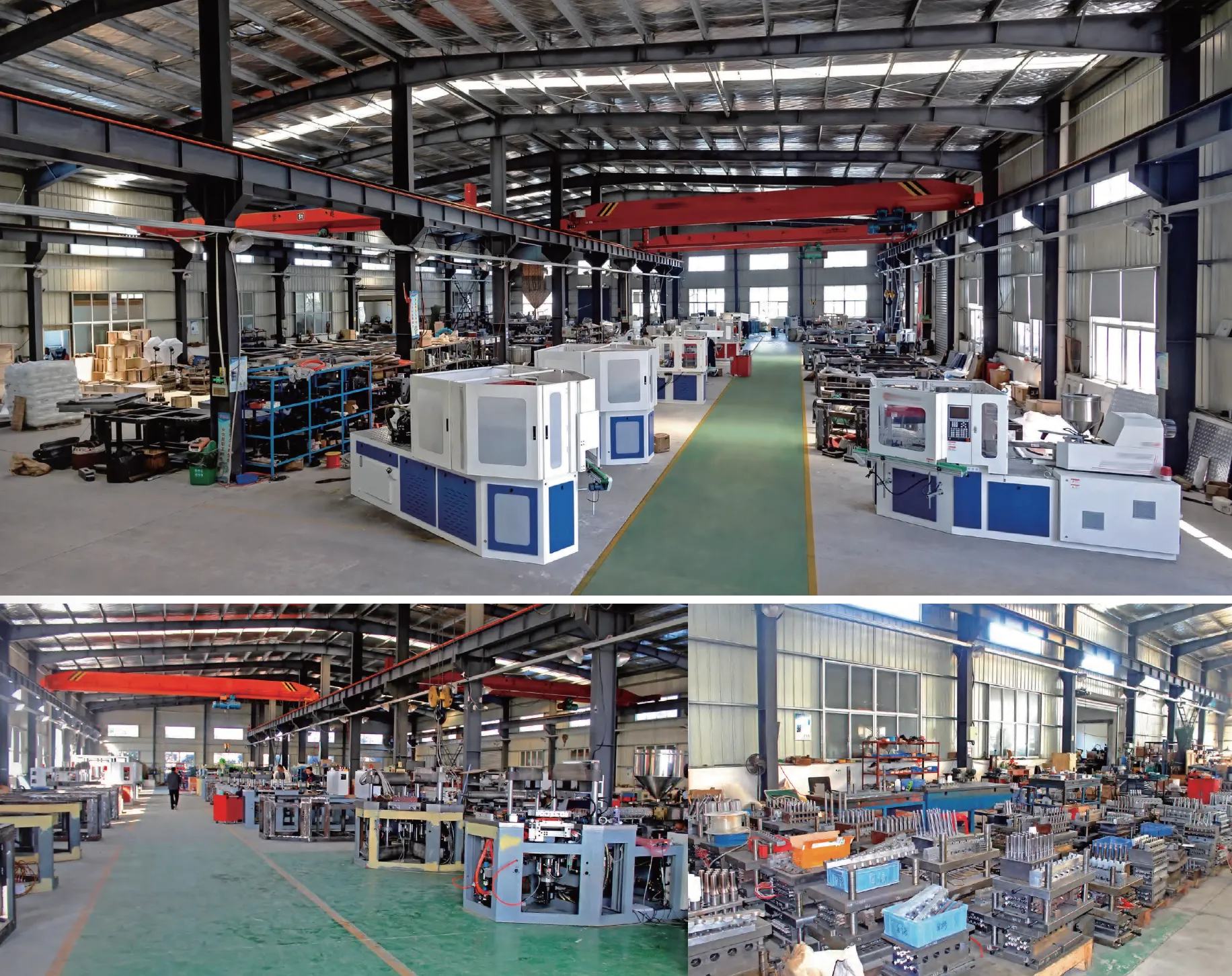
Mexico Ever-Power ISBM Machinery Co., Ltd. is a specialist injection blow molding machine manufacturer primarily engaged in the research, development, production, sales, and global trade of automatic one-step injection-blowing blow molding machines and precision injection-blowing molds. Our product portfolio covers injection blow molding machines, extrusion blow molding machines, injection stretch blow molding machines, and a comprehensive range of auxiliary machines including auto loaders, mold temperature controllers, chillers, screw air compressors, packing machines, and bottle visual inspection systems. The company is located in a nationally recognized manufacturing hub with excellent logistics and transportation infrastructure that supports reliable global delivery timelines for customers worldwide.
Ever-Power maintains an excellent R&D team comprising many senior engineers and technical specialists with deep expertise specifically in injection-blowing machinery and injection-blowing mold technology. With decades of combined theoretical knowledge and hands-on production engineering experience, our team provides detailed and comprehensive pre-sale consultation, in-sale technical support, and post-sale service to every customer who invests in our injection blow molding machines. Our application coverage spans pharmaceutical packaging, food packaging, healthcare product packaging, cosmetic packaging, and all major categories of plastic packaging from 1ml to 1000ml across HDPE, LDPE, PP, PS (including high-transparency lactic acid bacteria grades), ABS, EVA, PCTG, and environmental corn-based biodegradable materials.
Ever-Power adheres firmly to the enterprise development philosophy of self-reliance, integrity, pragmatism, innovation, and responsibility in every aspect of our business. We build complete one-stop turnkey project solutions for injection-blowing production lines, providing everything from initial needs analysis and machine selection guidance through mold design, machine manufacturing, international logistics, on-site installation and commissioning by our experienced senior engineers, operator training, and 24x7 after-sales technical support. Our commitment is to produce IBM machines that deliver user satisfaction through first-class quality, measurable production efficiency advantages, and reliable long-term operational performance for every injection blow molding machine manufacturer customer we serve globally.
Często zadawane pytania
P1: Jaka jest cena wtryskarki ZQ40 i jakie czynniki wpływają na ostateczny koszt?
A: Cena wtryskarki z rozdmuchem ZQ40 różni się w zależności od konfiguracji, wybranej średnicy ślimaka (40 mm lub 45 mm), wanny formy oraz wszelkich żądanych dostosowań do konkretnych kształtów butelek lub integracji automatyki. Jako wtryskarka z rozdmuchem dostępna na zamówienie, ZQ40 oferuje konkurencyjną cenę w porównaniu z równoważnymi modelami SUMA, Jomar i Bloma o tej samej sile zwarcia. Skontaktuj się bezpośrednio z Ever-Power, aby uzyskać formalną wycenę obejmującą specyfikację maszyny, koszt formy, wysyłkę, instalację i uruchomienie dla konkretnego zastosowania i kraju docelowego.
P2: Czy urządzenie ZQ40 może bezpośrednio zastąpić wtryskarkę SUMA 40iB w mojej obecnej linii produkcyjnej?
O: Tak. ZQ40 został specjalnie zaprojektowany jako bezpośredni zamiennik SUMA 40iB, z porównywalnymi wymiarami płyt formy (480 x 340 mm w porównaniu z SUMA 470 x 350 mm), odpowiednią klasą siły zwarcia przy zacisku wtryskowym 400 kN oraz kompatybilnym zakresem wysokości i średnicy butelki. Istniejące formy SUMA 40iB można ocenić pod kątem bezpośredniego dopasowania lub adaptacji za pomocą płyt podporowych. Zespół techniczny Ever-Power może przeanalizować istniejące rysunki form SUMA przed zakupem, aby potwierdzić kompatybilność lub określić wszelkie wymagania adaptacyjne, co zmniejsza koszty reinwestycji w oprzyrządowanie podczas przejścia na ZQ40.
P3: Jakie materiały może przetwarzać wtryskarka do PET ZQ40?
A: Maszyna ZQ40 przetwarza HDPE, LDPE, PP, PS, PS o wysokiej przezroczystości, ABS, EVA, PCTG oraz ekologiczne bioplastiki kukurydziane w zakresie objętości butelek od 1 ml do 1500 ml. W przypadku zastosowań wtryskarek PET z rozdmuchem należy pamiętać, że przetwarzanie PET i rPET wymaga technologii wtryskarek z rozciąganiem i rozdmuchem (ISBM) z mechanizmem pręta rozciągającego, a nie standardowego sprzętu IBM. Maszyna ZQ40 nie jest przeznaczona do formowania z rozciąganiem i rozdmuchem PET, ale obejmuje najszerszy zakres materiałów opakowaniowych z poliolefin i styrenu do zastosowań farmaceutycznych, kosmetycznych i konsumenckich.
P4: Jaka jest różnica pomiędzy maszyną do formowania wtryskowego i maszyną do formowania wtryskowego z rozciąganiem i rozdmuchiwaniem?
A: Wtryskarka z rozdmuchem (maszyna IBM) formuje butelki poprzez wtrysk preformy i rozdmuchanie jej do pożądanego kształtu bez rozciągania osiowego, co czyni ją idealną do butelek z HDPE, PP, LDPE i PS o umiarkowanym współczynniku kształtu. Wtryskarka z rozdmuchem i rozciąganiem (maszyna ISBM) dodaje mechaniczny pręt rozciągający, który osiowo rozciąga preformę przed rozdmuchem promieniowym, co jest wymagane w przypadku materiałów PET i rPET, gdzie dwuosiowa orientacja jest wymagana do uzyskania właściwości barierowych i przejrzystości gotowej butelki. W przypadku butelek z HDPE i PP do zastosowań farmaceutycznych, kosmetycznych i gospodarstwa domowego, maszyna IBM ZQ40 jest odpowiednim wyborem technologicznym.
P5: W jaki sposób ZQ40 osiąga tak niskie zużycie energii w porównaniu do konwencjonalnych wtryskarek?
A: Redukcja zużycia energii w modelu ZQ40 30% w porównaniu z konwencjonalnymi hydraulicznymi maszynami IBM wynika z całkowitego wyeliminowania hydraulicznego agregatu napędowego. Silniki pomp hydraulicznych pracują nieprzerwanie z pełnym obciążeniem, zużywając energię nawet w fazach spoczynku cyklu. Serwosilniki ZQ40 pobierają moc tylko podczas generowania momentu obrotowego dla rzeczywistego ruchu, a następnie powracają do niemal zerowego zużycia w fazach postoju i chłodzenia. Ten profil zużycia energii na żądanie, w połączeniu z odzyskiem energii poprzez hamowanie regeneracyjne serwo podczas zwalniania, daje wynik operacyjny 12 kWh/godzinę dla produkcji butelek o pojemności 30 ml przy całkowitej zainstalowanej mocy znamionowej 20 kW.
P6: Czy urządzenie ZQ40 nadaje się do pakowania produktów farmaceutycznych wymagających zgodności z GMP?
A: Konstrukcja ZQ40 bezpośrednio wspiera produkcję butelek farmaceutycznych zgodną z GMP. Konstrukcja formy od dołu eliminuje olej smarujący z wnęki formy, eliminując kluczowe ryzyko zanieczyszczenia w produkcji opakowań farmaceutycznych. Pozycjonowanie serwo z enkoderem absolutnym zapewnia powtarzalność wymiarową i spójność między partiami, niezbędne do kwalifikacji pojemników farmaceutycznych. Czyste, wolne od oleju środowisko formy zostało zaakceptowane przez audytorów GMP zakładów farmaceutycznych w wielu lokalizacjach klientów na całym świecie. W celu formalnej oceny zgodności z GMP, klienci powinni zaangażować własne zespoły ds. jakości i regulacji, aby zweryfikować ZQ40 pod kątem wymagań specyficznych dla danej lokalizacji i standardów składania dokumentacji.
P7: Jaki sprzęt automatyki końcowej można zintegrować z ZQ40?
A: Tylny przenośnik ZQ40 został zaprojektowany do bezpośredniej integracji z systemami kontroli wizualnej do wykrywania defektów, urządzeniami do testowania szczelności w celu weryfikacji szczelności, etykieciarkami do etykietowania wstępnego oraz automatycznymi urządzeniami pakującymi do kartonowania, łączenia w pakiety lub pakowania zbiorczego. Kompatybilność ta umożliwia całkowicie bezobsługową produkcję bez ingerencji operatora pomiędzy wyrzutem butelek a pakowaniem gotowych produktów. Ever-Power oferuje doradztwo w zakresie dostawców kompatybilnych urządzeń i pomoc w planowaniu integracji na etapie rozruchu maszyny, aby zapewnić bezproblemową łączność linii produkcyjnej.
P8: Jakie rozmiary butelek i kawitacje są dostępne w przypadku wtryskarki ZQ40?
A: ZQ40 obsługuje butelki o pojemności od 1 ml do 1000 ml, o maksymalnej wysokości 220 mm i maksymalnej średnicy 120 mm. Dostępne opcje kawitacji formy to: 9 gniazd dla butelek o pojemności 10 ml, 8 gniazd dla butelek o pojemności 30 ml, 6 gniazd dla butelek o pojemności 60 ml, 4 gniazda dla butelek o pojemności 100 ml, 3 gniazda dla butelek o pojemności 250 ml, 2 gniazda dla butelek o pojemności 500 ml i 1 gniazdo dla butelek o pojemności 1000 ml. Niestandardowe kształty butelek w obrębie przestrzeni roboczej o wymiarach 480 x 340 mm i grubości formy 180 mm można uzyskać dzięki narzędziom formującym dostosowanym do potrzeb klienta, zaprojektowanym i wyprodukowanym przez zespół inżynierów form Ever-Power.
P9: Jak długo trwa instalacja i uruchomienie urządzenia ZQ40?
A: W przypadku większości standardowych instalacji ZQ40, montaż mechaniczny, podłączenie elektryczne i wstępne uruchomienie są wykonywane przez inżyniera uruchomieniowego Ever-Power w ciągu trzech do pięciu dni roboczych. Harmonogram zależy od przygotowania obiektu, w tym dostępności sprężonego powietrza o wydajności 0,7–1,2 MPa i 0,7 m³/min, zasilania wodą chłodzącą o wydajności 3,5 m³/h i 0,3–0,4 MPa oraz zasilania elektrycznego o łącznej mocy 20 kW. Wymagania dotyczące przygotowania obiektu są szczegółowo przedstawiane klientowi przed datą wysyłki, aby zapewnić gotowość obiektu na przybycie inżyniera uruchomieniowego i zminimalizować całkowity czas instalacji.
P10: Czy maszyna ZQ40 może wytwarzać osłony żarówek LED w innych kształtach niż standardowe butelki cylindryczne?
Odp.: Tak. ZQ40 można skonfigurować jako wtryskarkę do osłon żarówek LED metodą rozdmuchu, która umożliwia produkcję okrągłych, w kształcie żarówki i innych niecylindrycznych osłon z przezroczystego lub półprzezroczystego tworzywa sztucznego z PCTG, polistyrenu o wysokiej przezroczystości (PS) lub ABS. Proces formowania wtryskowego z rozdmuchem jest szczególnie odpowiedni do produkcji przezroczystych dyfuzorów i osłon żarówek LED, ponieważ zapewnia przejrzystość optyczną i jednolitą grubość ścianek, niezbędne do równomiernego rozproszenia światła. Zespół inżynierów form Ever-Power może zaprojektować i wyprodukować niestandardowe narzędzia do produkcji osłon żarówek LED, dostosowane do geometrii i wymagań materiałowych Państwa żarówki.
Opinie klientów
Park Sung-jin, Opakowania farmaceutyczne, Korea Południowa
Osiem miesięcy temu wymieniliśmy naszą starą SUMA 40iB na ZQ40 i szczerze mówiąc, różnica jest kolosalna. Używamy butelek farmaceutycznych o pojemności 30 ml i skróciliśmy cykl z około 10 sekund do konsekwentnie 8,2 sekundy. To samo w sobie oznaczało dodanie około 20 000 dodatkowych butelek dziennie. Strefa formowania bezolejowego była wymogiem naszego zespołu audytorów GMP i przeszła kontrolę bez problemów. Zespół instalacyjny Ever-Power był profesjonalny i uruchomił nas w ciągu trzech dni.
Rajesh Mehta, Opakowania Farmaceutyczne, Indie
„Dobra maszyna, dobra cena. Produkowaliśmy butelki HDPE o pojemności 50 ml dla klienta z branży farmaceutycznej w Bombaju, a wymagania jakościowe były surowe. Przed ZQ40 nie przechodziliśmy kontroli wymiarów, może 3-4% butelek. Teraz jest poniżej 0,5%. Dokładność gwintu szyjki jest doskonała. Nasz dostawca zamknięć skomentował nawet, że dopasowanie było bardziej spójne niż w przypadku innych maszyn u podobnych klientów. Działamy już od około sześciu miesięcy bez żadnych poważnych problemów.”
Ahmet Yilmaz, Opakowania Kosmetyczne, Turcja
„Produkujemy butelki kosmetyczne z PP o pojemności 100 ml dla marki kosmetyków do pielęgnacji skóry. Mieliśmy pewne obawy przed zakupem w Chinach ze względu na wcześniejsze doświadczenia z innymi urządzeniami, ale zespół techniczny Ever-Power był bardzo responsywny przez cały proces. Wysłali inżyniera ds. uruchomienia, który został cztery dni, aż wszystko zostało poprawnie skonfigurowane. Maszyna jest cicha w porównaniu z maszynami hydraulicznymi, których używaliśmy wcześniej. Rachunek za energię elektryczną znacznie spadł w pierwszym miesiącu. Z przyjemnością polecamy ją innym w branży.”
Mikhail Sorokin, Opakowania artykułów gospodarstwa domowego, Rosja
„Kupiliśmy maszynę ZQ40 do produkcji butelek HDPE o pojemności 350 ml na produkty gospodarstwa domowego. Maszyna dotarła w dobrym stanie, a termin dostawy był zgodny z obietnicą, co nie zawsze ma miejsce w przypadku sprzętu z zagranicy. Konfiguracja była prosta. Zaskoczyła nas stabilność wydajności; możemy pracować przez całą zmianę z minimalnymi wahaniami wagi butelek. Zintegrowaliśmy również tester szczelności i etykieciarkę, a kompatybilność była bezproblemowa. Kupiłbym ponownie.”
Thabo Nkosi, Opakowania żywności, Republika Południowej Afryki
„Formosa używa dwóch maszyn ZQ60 od około roku, produkujących butelki o pojemności 300 ml i 1 litra. Kiedy zdecydowaliśmy się na dodanie maszyny do mniejszej linii produkcyjnej, od razu zwróciliśmy się do Ever-Power w sprawie ZQ40. Wsparcie posprzedażowe było bardzo dobre – na każde pytanie podczas rozruchu odpowiadali na WhatsAppie w ciągu kilku godzin. Oszczędności energii w porównaniu z naszą starą maszyną hydrauliczną są realne – sami je zmierzyliśmy i wyniki pokrywają się z podanymi wycenami”.
Luciana Andrade, Opakowania Kosmetyczne, Brazylia
„Kupiliśmy maszynę ZQ40 do produkcji butelek kosmetycznych o pojemności 120 ml dla klienta z Sao Paulo. Przetwarzamy PCTG w celu uzyskania opakowań o wysokiej przejrzystości. Forma, którą wykonaliśmy w Ever-Power, jest doskonałej jakości. Wykończenie powierzchni butelek jest bardzo dobre, porównywalne z tym, co otrzymywaliśmy z maszyn europejskich marek, ale przy znacznie niższym całkowitym koszcie inwestycji. Cena maszyny do formowania wtryskowego z rozdmuchem, biorąc pod uwagę ten poziom jakości, była jednym z głównych powodów, dla których wybraliśmy Ever-Power. Dostawa była nieco opóźniona z powodu transportu, ale sama maszyna działała bez zarzutu.”
James Whitfield, Nutraceutical Packaging, USA
„Przed wyborem Ever-Power do naszej linii do produkcji butelek z polistyrenu (PS) przeanalizowaliśmy oferty kilku producentów maszyn do formowania wtryskowego z rozdmuchem. Produkujemy butelki z polistyrenu (PS) o pojemności 100 ml dla marki nutraceutyków, co wymaga bardzo czystej produkcji, ponieważ produkt jest spożywany. Strefa formy bezolejowej była wymogiem nie podlegającym negocjacjom. Maszyna ZQ40 spełniła ten warunek, a jakość produkcji przeszła standardy kontroli jakości klienta już przy pierwszej partii produkcyjnej. Komunikacja techniczna przed zakupem była szczegółowa, a firma odpowiedziała na wszystkie nasze pytania techniczne bez pośpiechu.”
Carlos Reyes, Opakowania Produktów Konsumenckich, Meksyk
„Produkujemy butelki HDPE na mydło w płynie i płyn do mycia rąk o pojemności 400 ml, które dystrybuujemy w całym Meksyku. Od dwóch lat korzystamy z maszyny ZQ80 firmy Ever-Power, a niedawno dodaliśmy ZQ40 do naszej linii produktów do dezynfekcji rąk o pojemności 150 ml. Doceniam to, że obie maszyny działają spójnie, dzięki czemu nasi technicy szybko się dostosowali. Wydajność jest dobra, a integracja z testerem szczelności działała bez konieczności dostosowywania. Cena wtryskarki z rozdmuchem na tym poziomie jest konkurencyjna w porównaniu z cenami innych dostawców wtryskarek z rozdmuchem.”
Elena Vasquez, Opakowania dla branży opieki zdrowotnej, Meksyk
„Początkowo byłem sceptycznie nastawiony do wymiany naszej SUMA 40iB, która działała niezawodnie przez lata. Jednak nasze koszty energii rosły, a SUMA wymagała gruntownego remontu układu hydraulicznego. ZQ40 okazał się właściwym wyborem. Oszczędzamy energię elektryczną każdego miesiąca, a zespół konserwacyjny poświęca maszynie zauważalnie mniej czasu w porównaniu ze starym układem hydraulicznym. Jakość butelek w naszych 60-mililitrowych pojemnikach PP jest co najmniej równie dobra, a powtarzalność między partiami jest wręcz lepsza. Tabele porównawcze Ever-Power dotyczące wymiany SUMA ułatwiły nam uzasadnienie decyzji.”
Informacje dodatkowe
| Edytowane przez | Yjx |
|---|