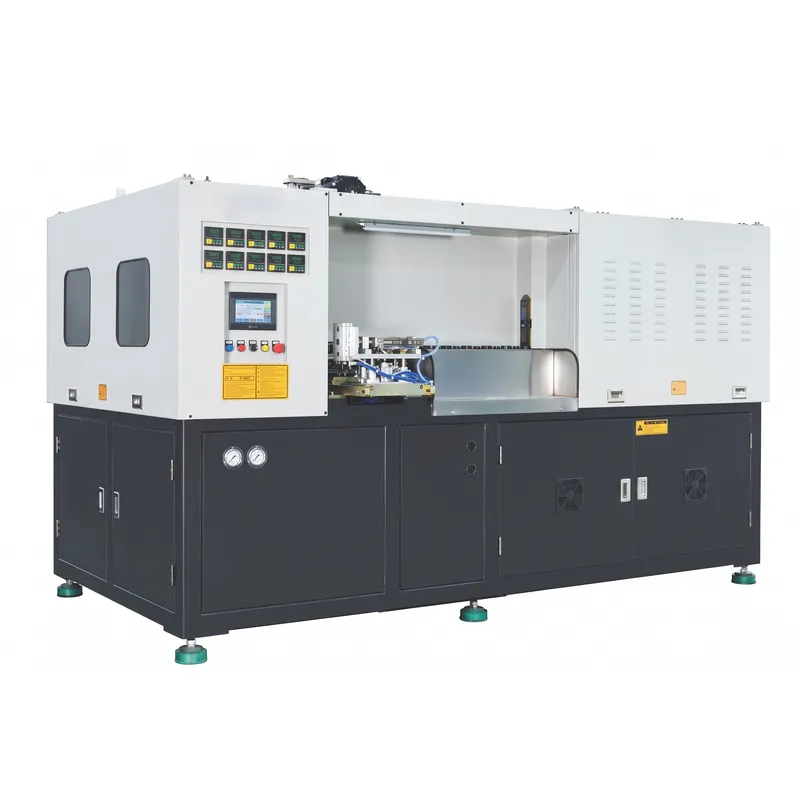
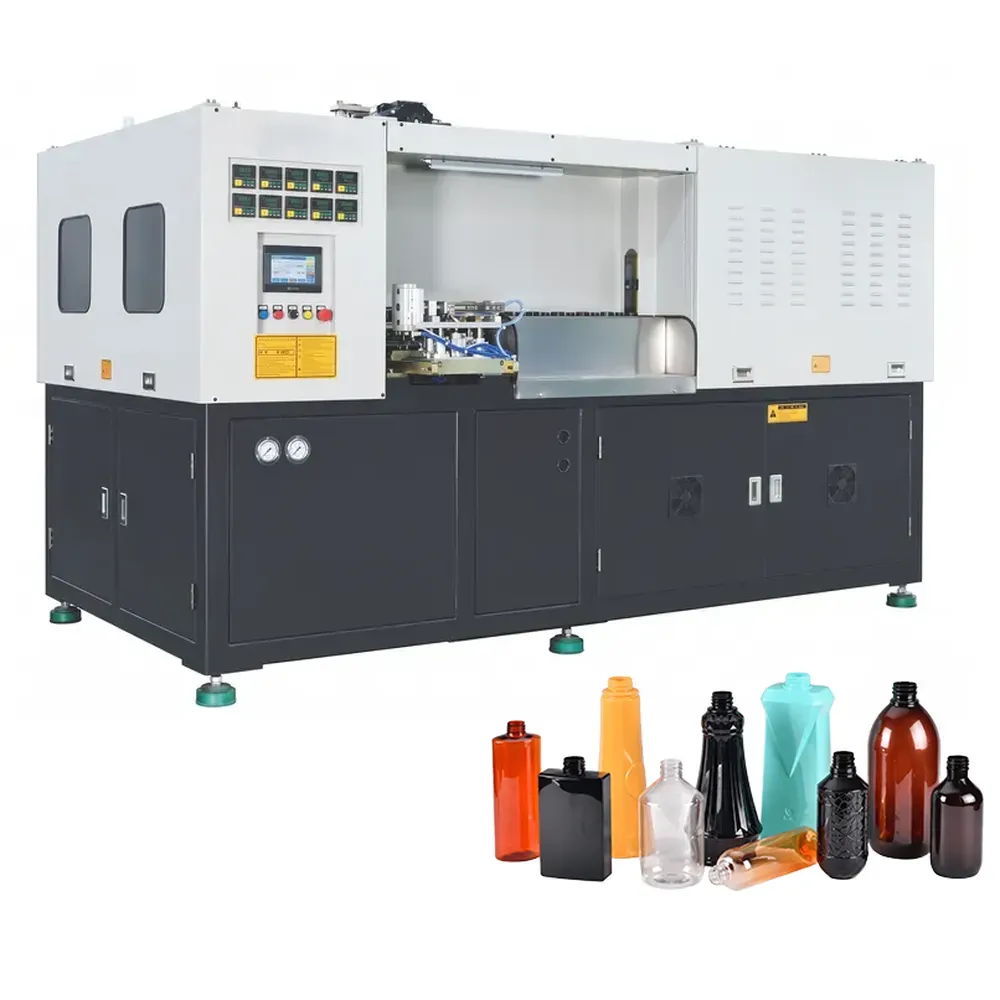
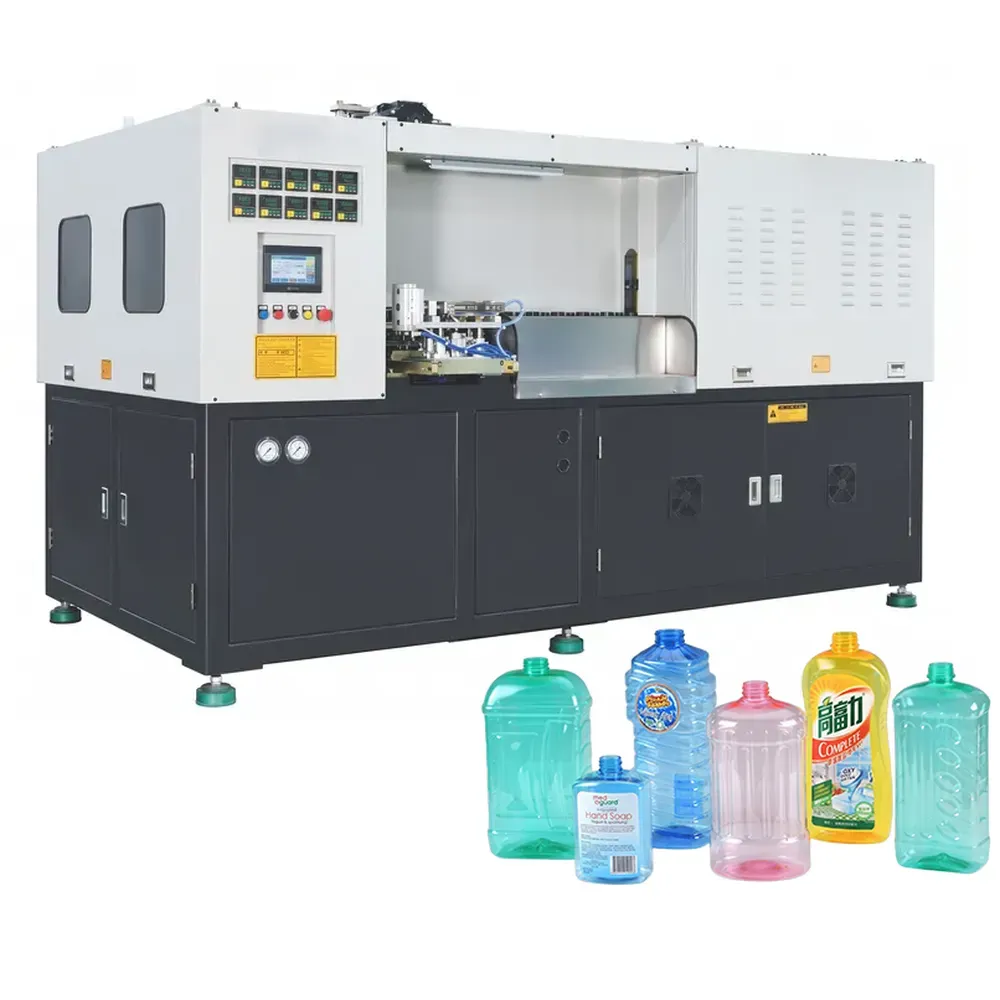
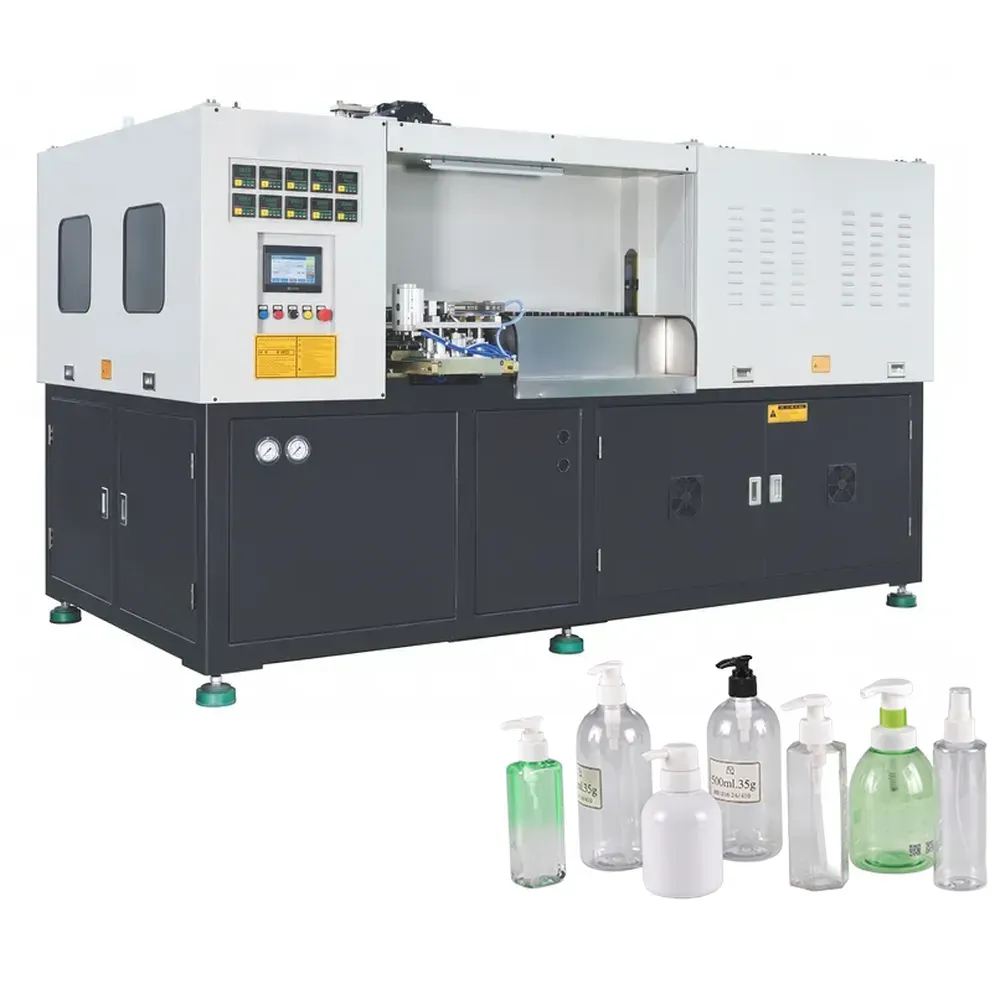
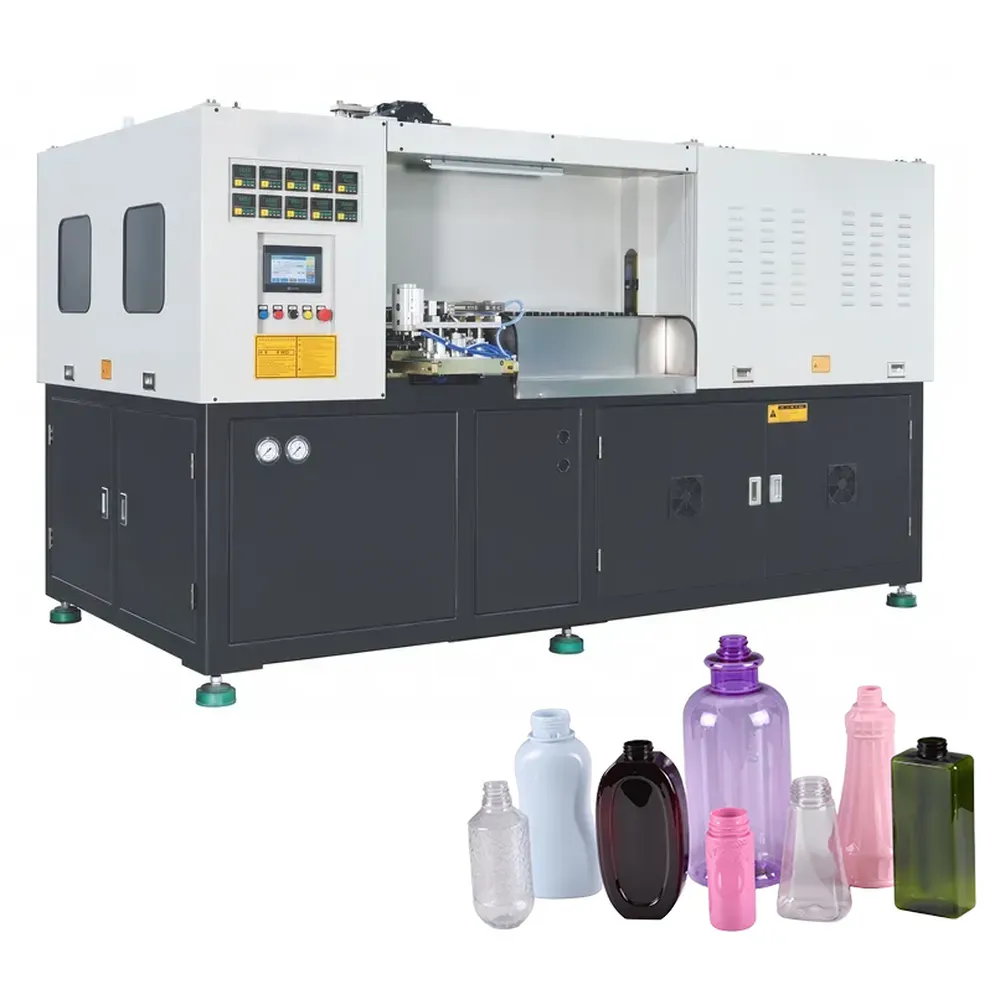
Máy thổi khuôn tự động hoàn toàn EPA.ES-3C114 dùng để sản xuất chai đựng hóa chất tiêu dùng hàng ngày và mỹ phẩm.
Máy thổi khuôn tự động hoàn toàn hiệu suất cao EPA.ES-3C114 được thiết kế đặc biệt cho sản xuất chai đựng hóa chất và mỹ phẩm hàng ngày. Được chế tạo dựa trên các động cơ servo nổi tiếng quốc tế, bộ giảm tốc chính xác và hệ thống điều khiển điện tiên tiến, máy thổi khuôn PET tự động này mang lại hoạt động ổn định, đáng tin cậy và tiết kiệm năng lượng mà các dây chuyền đóng gói hiện đại yêu cầu. Là một máy thổi khuôn chai mỹ phẩm chuyên dụng, EPA.ES-3C114 hoạt động xuất sắc với vật liệu PET và PETG, sản xuất nhiều hình dạng chai và kiểu cổ chai khác nhau trên 3 khoang cùng một lúc.
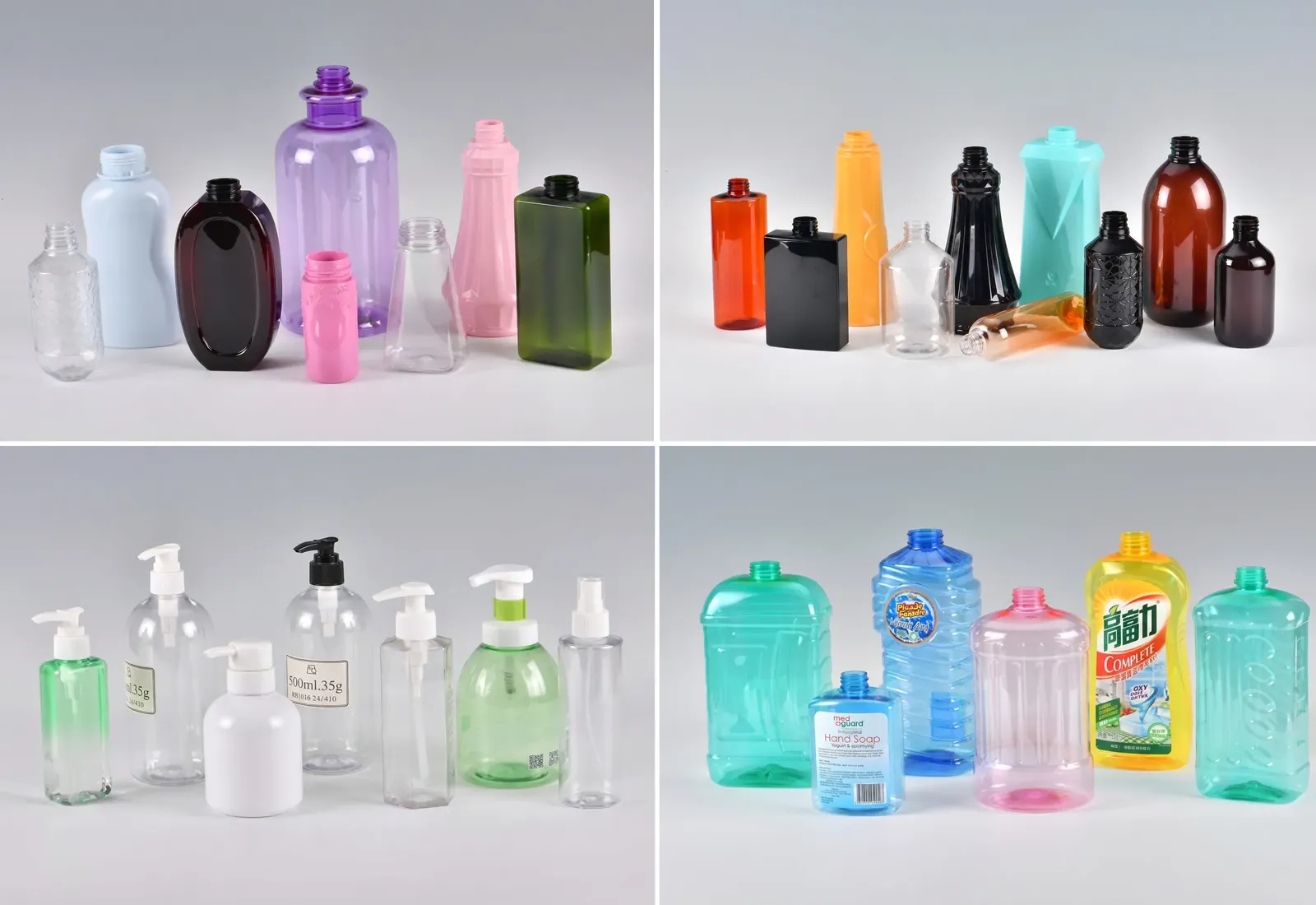
The EPA.ES-3C114 is a high-performance fully automatic blow molding machine engineered specifically for daily chemical and cosmetic bottle production. Built around internationally renowned servo motors, precision reducers, and advanced electrical control systems, this automatic PET blow molding machine delivers the stable, reliable, and energy-efficient operation that modern packaging lines demand. As a purpose-built cosmetic bottle blow molding machine, the EPA.ES-3C114 excels with PET and PETG materials, producing a wide range of bottle shapes and neck finishes across 3 cavities simultaneously. Its particular strength lies in manufacturing complex, irregularly shaped bottles that challenge standard equipment, making it a preferred plastic blow molding machine for premium cosmetic and personal care brands. With a theoretical output of 2,400 bottles per hour and a compact footprint of 3,240 x 1,800 x 2,000mm, it suits both greenfield installations and factory-floor upgrades where space efficiency matters.
As a versatile daily chemical bottle blow molding machine, the EPA.ES-3C114 handles container volumes from 30ml to 1,500ml, covering toner bottles, lotion containers, serum dispensers, shampoo bottles, and body wash packaging in a single machine platform. The servo-driven injection stretch blow molding machine architecture guarantees repeatable wall thickness, accurate neck finishes, and high transparency in the finished container. Its user-friendly interface reduces operator learning time, while optimized energy management makes this industrial blow molding machine an economical long-term investment. By combining high molding precision with broad material applicability, the EPA.ES-3C114 helps manufacturers scale output, control production costs, and raise product quality to meet the increasingly demanding standards of global cosmetic and daily chemical markets. For buyers evaluating types of blow molding machine technology for cosmetic packaging, this model represents the current benchmark in its class.
Thông số kỹ thuật
| Người mẫu | Đơn vị | EPA.ES-3C114 | |
|---|---|---|---|
| Khuôn đúc | Hành trình kẹp | mm | 133 |
| Khoảng cách mở khuôn | mm | 363 | |
| Khoảng cách gần với khuôn | mm | 230 | |
| Động tác kéo giãn | mm | 350/450 | |
| Khoảng cách mở khuôn | mm | 50 | |
| Khoảng cách gần với khuôn | mm | 114 | |
| Giá đỡ phôi | 74 | ||
| Sâu răng | 3 | ||
| Thùng chứa | Thể tích tối đa của thùng chứa | ml | 1500 |
| Phạm vi đường kính cổ | mm | 40 | |
| Đường kính tối đa của thùng chứa | mm | 95 | |
| Chiều cao tối đa của thùng chứa | mm | 250/330 | |
| Sản lượng lý thuyết | bph | 2400 | |
| Hệ thống điện | Công suất sưởi tối đa | kw | 40 |
| Công suất sưởi ấm | kw | 18 | |
| Hệ thống không khí | Áp suất hoạt động | kg/cm² | 7 |
| Tiêu thụ không khí áp suất thấp | lít/phút | 1500 | |
| Áp suất thổi | kg/cm² | 35 | |
| Tiêu thụ khí nén cao | lít/phút | 3200 | |
| Nước làm mát | Áp suất hoạt động | kg/cm² | 5-6 |
| Nhiệt độ | ℃ | 8-12 | |
| Tốc độ dòng chảy | lít/phút | 30 | |
| Máy móc | Kích thước (Dài*Rộng*Cao) | mm | 3240*1800*2000 |
| Cân nặng | kg | 4000 | |
Features of the EPA.ES-3C114 Cosmetic Bottle Blow Molding Machine
1. High-Quality and Reliable Core Components
Every critical component in the EPA.ES-3C114 is sourced from internationally renowned suppliers, including servo motors, precision reducers, and electrical and control elements. This ensures stable and durable operation from the very first production cycle. The servo control system responds with exceptional sensitivity and high control accuracy, which directly reduces the machine failure rate and extends equipment service life well beyond industry averages. Manufacturers investing in a quality blow molding machine will find this component strategy delivers lower total cost of ownership across multi-year production runs.
2. Strong Adaptability and Diverse Bottle Styles
The ES-3C114 series covers a broad range of model configurations, capable of producing bottles from 30ml to 1,500ml. Body diameter, container height, and neck dimensions are all flexibly adjustable. Processing PET and PETG materials with equal precision, this PET bottle blow molding machine handles standard cylindrical bottles and highly complex irregular shapes with consistent quality. It serves as a professional plastic bottle blow molding machine for lotion, toner, serum, shampoo, conditioner, hand sanitizer, and specialty cosmetic packaging, providing a single versatile platform for diverse SKU portfolios across cosmetic and daily chemical product lines.
3. High Efficiency and Energy Savings
The electrical system operates with a max heating power of 40kW and a working heating power of 18kW, combining servo drive technology to significantly reduce energy consumption compared to conventional hydraulic systems. The blowing system achieves a maximum pressure of 35 kg/cm², delivering high blow molding efficiency with a theoretical output of 2,400 bottles per hour across 3 cavities. This makes the EPA.ES-3C114 a genuine high speed blow molding machine for cosmetic and daily chemical production. Manufacturers switching from older equipment will experience measurable reductions in electricity costs alongside increased throughput, which directly improves per-unit production economics at scale.
4. High Stability and Easy Maintenance
The EPA.ES-3C114 features a scientifically optimized structural design with a cooling water system maintaining temperatures between 8 and 12 degrees Celsius, ensuring consistent bottle molding quality across long production runs. Air pressure parameters and electrical systems are pre-configured to optimal ranges, resulting in a low failure rate under continuous operation. Daily maintenance routines are straightforward, with accessible service points reducing downtime and labor costs. For production managers running multiple shifts, the machine's operational stability translates directly into predictable output schedules and reduced unplanned maintenance events throughout the equipment's service life.
5. Compact Structure and Small Footprint
At 3,240 x 1,800 x 2,000mm and 4,000kg, the EPA.ES-3C114 is engineered with a compact, factory-floor-friendly footprint that makes layout planning straightforward even in constrained workshop spaces. This size profile is particularly valuable for cosmetic manufacturers operating in urban manufacturing parks or facilities where floor space is at a premium. Despite its compact dimensions, the machine delivers full medium-to-large scale production capability. When comparing types of blow molding machine configurations on a floor-space-per-output basis, the EPA.ES-3C114 consistently demonstrates a strong advantage for cosmetic and daily chemical packaging producers worldwide.
6. Fully Automatic Operational Efficiency
As a fully automatic blow molding machine, the EPA.ES-3C114 eliminates the need for manual intervention at each production stage. From preform loading through bottle ejection, every step is automated and program-controlled. This full automation reduces reliance on skilled manual labor, minimizes human error in the production process, and enables consistent 24-hour operation with minimal operator supervision. For factories transitioning from semi-automatic or manual systems, the productivity gains are immediate and substantial. The automated blow molding machine process also enhances product consistency across large batch runs, a key quality requirement for cosmetic and daily chemical brands with strict packaging specifications and retailer quality audits.
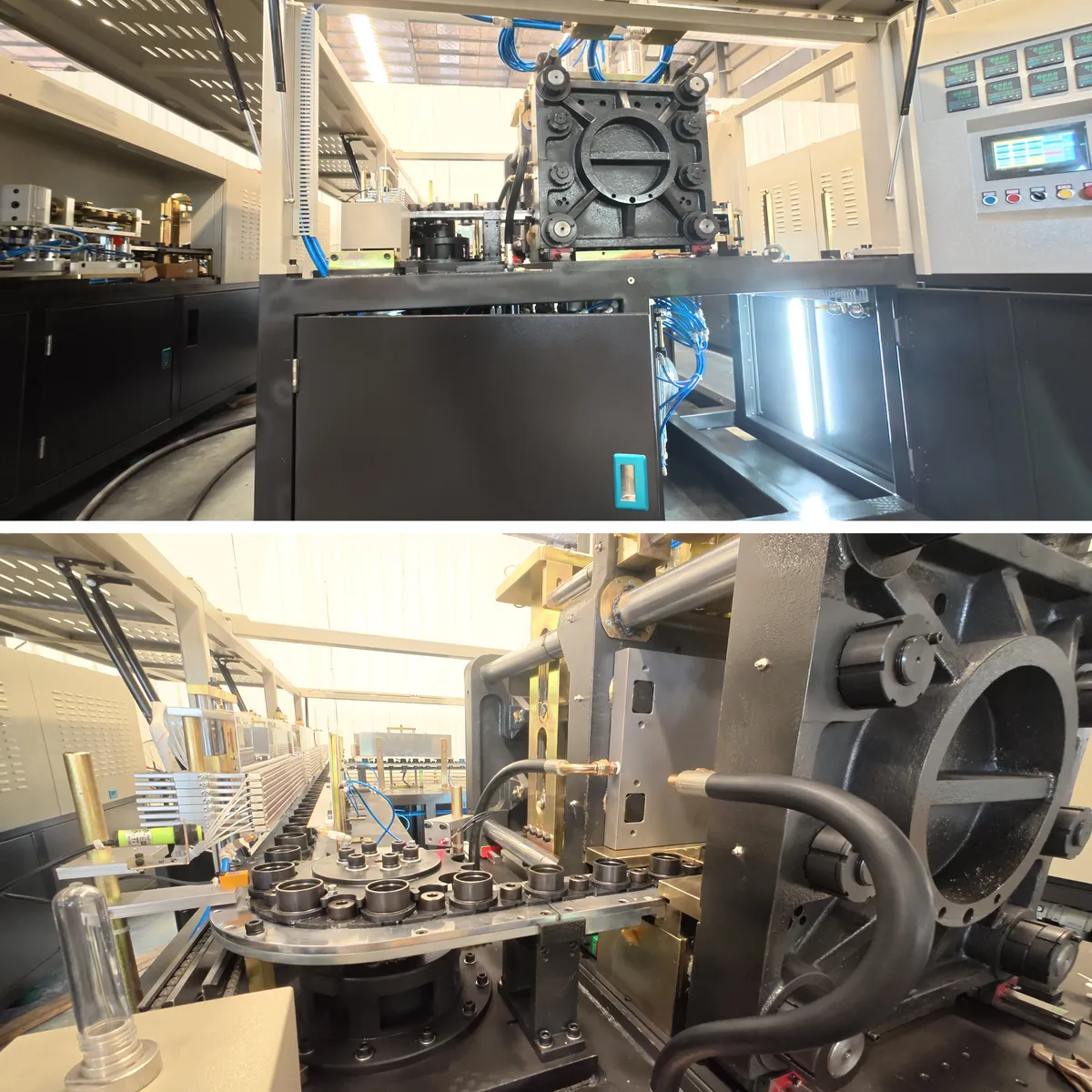
How Does the EPA.ES-3C114 Fully Automatic Blow Molding Machine Work
Bước 1: Chuẩn bị nguyên liệu thô
The blow molding machine process begins with thorough raw material preparation. PET, PETG, and compatible polymers undergo rigorous screening, blending, and moisture control before entering the production feed. For PET materials, pre-drying is critical to prevent hydrolytic degradation during processing. Strict incoming material quality control ensures that resin grade, viscosity, and contamination levels meet specification, setting the quality baseline for every bottle produced in the batch.
Step 2: Preform Injection Molding
In the injection phase of the automatic PET blow molding machine process, selected and blended raw materials are fed into the injection system. After heating, melting, and plasticizing under precise temperature and pressure control, molten polymer is injected into the preform mold cavity. Parameters including melt temperature, injection pressure, hold time, and cooling duration are all servo-controlled to produce preforms with consistent wall thickness and accurate neck geometry for downstream blowing.
Bước 3: Thực hiện làm nóng sơ bộ
Following injection molding, preforms pass through a carefully calibrated infrared preheating tunnel. During this stage, the temperature of each preform is raised uniformly, with particular attention to the body wall thickness zone. The target is to achieve consistent plasticity and flexibility across all 74 preform positions simultaneously. Controlled preheating is critical for the two-stage blow molding machine process because uneven temperature distribution directly causes wall thickness variation and dimensional inconsistency in the finished bottles.
Bước 4: Ép thổi kéo giãn
At the core of the injection stretch blow molding machine process, preheated preforms enter the 3-cavity blow mold. The stretch rod extends to biaxially orient the material longitudinally while high-pressure air at up to 35 kg/cm2 expands the preform radially against the mold cavity walls. This biaxial orientation significantly improves the mechanical strength, clarity, and barrier properties of the finished PET bottle. Precise servo control of stretch timing and air pressure profiles ensures consistent cavity-to-cavity quality across all three positions in every production cycle.
Applications of the EPA.ES-3C114 Daily Chemical Blow Molding Machine
Skincare and Serum Packaging
The EPA.ES-3C114 PET blow molding machine excels at producing premium skincare bottles including essences, serums, and facial toners. With neck diameter precision at 40mm and container heights reaching 330mm, it accommodates the slender, sophisticated bottle profiles that high-end cosmetic brands require. Superior wall thickness uniformity and crystal clarity in PET output meet the optical standards that retail shelf presence and brand premium positioning demand from modern cosmetic packaging lines worldwide.
Lotion and Cream Bottle Production
For moisturizer, body lotion, and facial cream containers, the machine's 95mm maximum body diameter and flexible cavity spacing accommodate the wide, round bottle formats popular in mass-market and professional cosmetic categories. The automatic blow molding machine process delivers smooth, blemish-free exterior surfaces that accept labeling, sleeve-shrink decoration, and direct screen printing without secondary surface treatment, reducing downstream finishing costs for high-volume daily chemical packaging manufacturers.
Shampoo and Hair Care Containers
Handling containers from 300ml to 1,500ml, the EPA.ES-3C114 daily chemical blow molding machine is ideally sized for shampoo, conditioner, hair mask, and scalp treatment bottles. Consistent neck finish at 40mm supports standard flip-top, disc-top, and pump closures used across the personal care sector. High production output at 2,400 bottles per hour enables cosmetic manufacturers to meet large retailer purchase orders and seasonal demand peaks without additional machine investment or extended production lead times.
Shower Gel and Body Wash Bottles
The machine's exceptional capability in producing irregularly shaped bottles makes it a strong fit for differentiating shower gel packaging. Brands increasingly use unique container geometry as a point-of-sale differentiation tool, and the EPA.ES-3C114 handles complex contoured shapes that challenge standard máy thổi khuôn nhựa platforms. PETG material compatibility further expands design flexibility, allowing enhanced gloss, tinted transparency, and distinctive tactile surface textures that premium bath and body care brands increasingly specify in their packaging briefs.
Perfume and Fragrance Packaging
For fragrance secondary packaging and ancillary containers, the EPA.ES-3C114 delivers the dimensional accuracy and optical clarity that luxury fragrance presentation requires. The bottle blow molding machine produces containers with consistent clarity and precise neck finishes that interface reliably with crimped and threaded fine-mist spray closures. Its servo-controlled process minimizes batch-to-batch variation, an important capability for fragrance brands that maintain strict quality verification protocols for export shipments to European, North American, and Gulf market retailers.
Hand Care and Sanitizer Bottles
The EPA.ES-3C114 produces hand wash, hand cream, and hand sanitizer containers across the full 30ml to 1,500ml volume range. PET material compatibility provides the chemical resistance required for alcohol-based and surfactant-rich formulations used in hand hygiene products. The custom blow molding machine configuration options allow producers to customize bottle shape, shoulder geometry, and base design to match specific brand architecture or to produce private-label containers for multiple retail customers from a single mold set on the same machine platform.
Baby Care and Sensitive Skin Products
Baby shampoo, gentle body wash, and infant care product containers demand zero flash contamination and strict dimensional consistency. The EPA.ES-3C114, operating as a true fully automatic blow molding machine, eliminates manual handling at critical production stages and reduces particulate contamination risk. PETG options provide BPA-free clarity with superior impact resistance for the baby care segment. Clean production and high bottle-to-bottle consistency support quality certification requirements that major retailers and international baby care brands mandate for their approved supplier packaging programs.
Household Cleaning Product Containers
Household surface cleaners, fabric softeners, and dishwashing liquid bottles in the 500ml to 1,500ml segment are efficiently produced on this industrial blow molding machine platform. PET's excellent chemical resistance to common cleaning agents makes it the preferred material choice. The 2,400 bph output rate at 3 cavities ensures that household cleaning product manufacturers, who typically operate on thin margin economics requiring maximum production volume, can achieve the per-unit cost targets necessary to compete in mass retail and private-label cleaning product categories across both domestic and export markets.
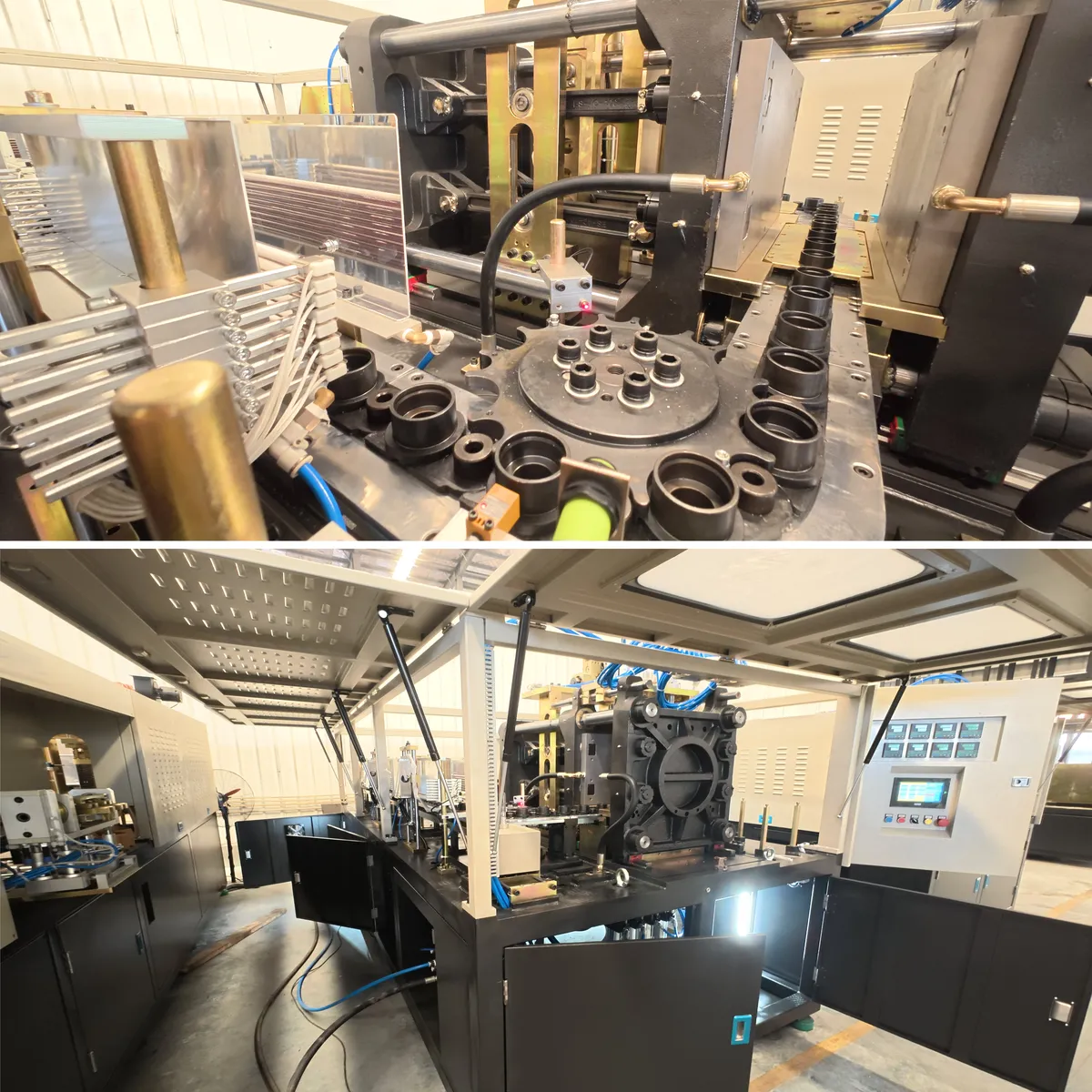
EPA.ES-3C114 PET Blow Molding Machine Parts
Hệ thống cho ăn
The feeding system comprises the hopper, preform conveyor, orientator, gravity rail, and associated steering and electric drive components. Raw PET preforms are fed into the blow molding machine through this fully automated loading path. The orientator aligns preforms correctly before they enter the conveying rail, ensuring consistent neck-up orientation for every preform entering the heating section. A reliable feeding system is fundamental to achieving the rated output of 2,400 bottles per hour without manual re-alignment or feeding interruptions during production shifts.
Máy nghiêng phôi
Because the EPA.ES-3C114 processes PET preforms, the preform tilter is a key blow molding machine part that automatically supplies pre-oriented preforms to the system hopper from bulk storage. The tilter handles the transition from randomly stacked bulk preforms to the single-file neck-up orientation required for the heating carousel. Its automated operation removes a manual labor step that can introduce inconsistency and injury risk in high-throughput production environments, contributing to the machine's suitability for continuous multi-shift operation.
Infrared Heating Section
The infrared heating section uses zoned quartz lamp arrays to raise preform temperatures uniformly to the blow-ready range. With a maximum heating power of 40kW and a working heating power of 18kW, the system delivers precise thermal profiles adjustable by zone and lamp intensity. The 74-position preform holder carousel ensures that all preforms reach identical temperature before entering the blow station. Independent zone adjustment allows operators to fine-tune temperature gradients for different bottle shapes, neck designs, and wall thickness profiles across the wide container range the machine supports.
Blow Mold Clamping Unit
The 3-cavity blow mold clamping unit secures the blow molds with a clamping stroke of 133mm and a mold-close distance of 114mm, providing the rigidity required to withstand 35 kg/cm2 blowing pressure without mold deflection. The precision mold alignment system ensures consistent parting-line quality and prevents flashing on finished bottles. Servo-driven mold closing delivers smooth, repeatable clamping force across every production cycle, which is critical for maintaining dimensional accuracy in complex-shaped cosmetic bottles where minor mold movement would cause unacceptable visual defects and functional failure at closure interfaces.
High-Pressure Air Compressor Station
The compressor station supplies both low-pressure operating air at 7 kg/cm2 and high-pressure blowing air at up to 35 kg/cm2. Low-pressure air consumption stands at 1,500 ltr/min while high-pressure consumption reaches 3,200 ltr/min at full production speed. The station integrates boosters, connectors, air tank, and pressure management controls. Stable air pressure supply directly determines bottle wall uniformity and dimensional accuracy in the bottle blow molding machine process, making compressor station sizing and reliability a critical specification factor for production engineers evaluating this equipment category.
Hệ thống làm mát bằng nước
The integrated water cooling system maintains mold temperature between 8 and 12 degrees Celsius at an operating pressure of 5 to 6 kg/cm2 with a flow rate of 30 ltr/min. Precise temperature control in the blow mold is fundamental to achieving rapid cycle times while producing dimensionally stable bottles. Inadequate cooling causes extended cycle times, bottle deformation, and inconsistent wall crystallinity. The EPA.ES-3C114's optimized cooling channel design ensures uniform mold temperature distribution across all three cavities, supporting both high output rates and consistent bottle quality across extended production runs.
Bộ thanh kéo giãn
The stretch rod assembly performs the biaxial orientation that gives PET bottles their characteristic strength, clarity, and barrier properties. With a stretching stroke of 350 to 450mm, the servo-controlled rods extend into each preform cavity simultaneously, orienting the polymer chains longitudinally before high-pressure air completes the radial blow. Precise stretch ratio control is essential for producing lightweight bottles with optimal wall thickness distribution. The EPA.ES-3C114's servo stretch system allows recipe-based parameter storage, enabling rapid mold changeovers between different bottle formats without manual adjustment calibration for each production run.
Băng chuyền xuất chai
The bottle exit conveyor transfers finished blown containers from the mold station to downstream filling or unscrambling systems. Designed to handle the full range of bottle shapes and sizes the machine produces, from small 30ml cosmetic bottles to 1,500ml daily chemical containers, the conveyor maintains bottle orientation and avoids scratching or marking the finished container surface. Its integration with downstream packaging lines supports seamless high-speed production at 2,400 bph, eliminating bottlenecks at the transition from blowing to filling that would otherwise limit the automatic blow molding machine's effective output in a complete packaging line configuration.
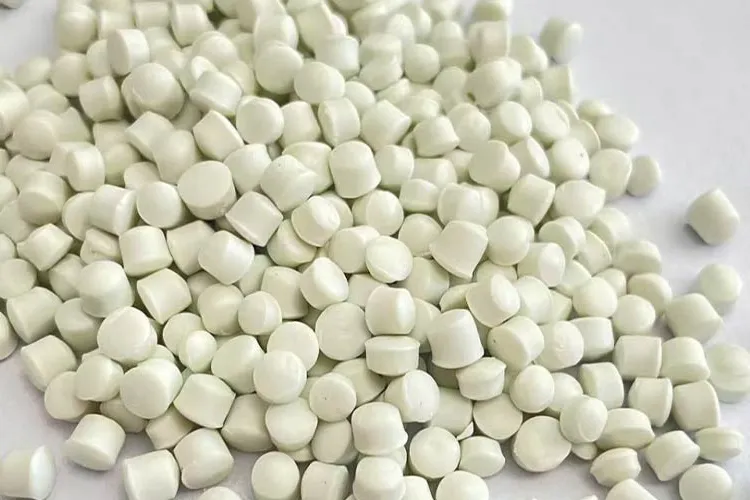
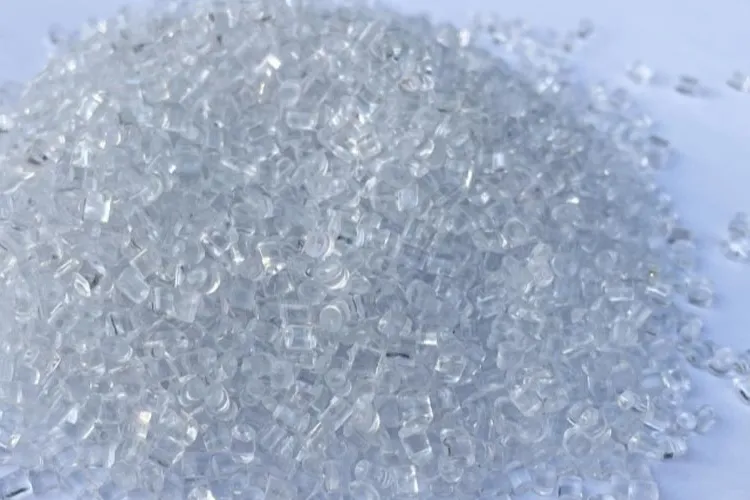
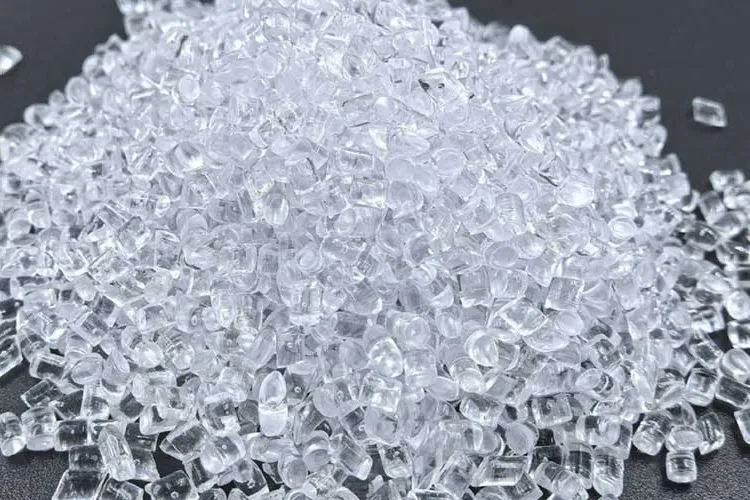
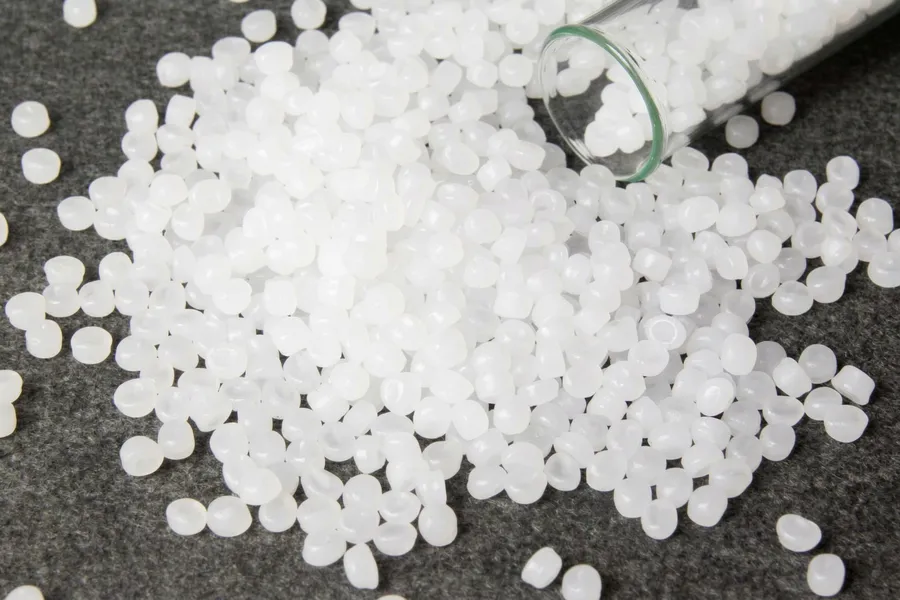
Nguyên liệu thô tương thích
PP (Polypropylene)
Polypropylene offers an excellent strength-to-weight ratio combined with good chemical resistance and a moderate processing temperature profile. It is particularly suited for daily chemical and cosmetic containers that require both flexibility and structural rigidity. PP's natural translucency and ability to accept colorants across the full spectrum makes it versatile for brand color programs. As a material option for the daily chemical blow molding machine, PP supports the production of refillable containers, dispensing bottles, and application-specific packaging with integrated functional elements like handles and grips.
PE (Polyethylene)
Polyethylene, encompassing both LDPE and LLDPE grades, provides exceptional flexibility, moisture barrier properties, and ease of processing on this plastic blow molding machine. LDPE is widely used for squeeze bottles, travel-size containers, and flexible packaging formats in the cosmetic and personal care sectors. Its softness allows products to be dispensed by squeezing the container directly. LDPE bottles maintain flexibility even at low temperatures, making them suitable for cosmetic products sold in colder climate markets across Europe, North America, and East Asia.
PC (Polycarbonate)
Polycarbonate delivers exceptional impact resistance and high-temperature tolerance that makes it suitable for reusable cosmetic containers, professional hair care packaging, and salon-grade product bottles that must withstand repeated use and sterilization cycles. PC's exceptional optical clarity rivals glass in finished container appearance, supporting premium brand positioning for luxury cosmetic lines. Where product formulations are compatible with PC chemistry, this material raises the perceived value of the packaging significantly, allowing cosmetic manufacturers to target higher retail price points with their finished product ranges.
PS (Polystyrene)
Polystyrene, particularly in its oriented form, provides good clarity and a smooth surface finish suitable for cosmetic and personal care containers in the value and mass-market segments. Its ease of processing and low material cost make PS an economical option for high-volume daily chemical packaging where transparency and reasonable surface quality are required but premium optical performance is not the primary specification. PS accepts printing and labeling readily, supporting the decoration requirements of mass-market cosmetic packaging produced in large volumes for retail chains and private-label programs.
PET (Polyethylene Terephthalate)
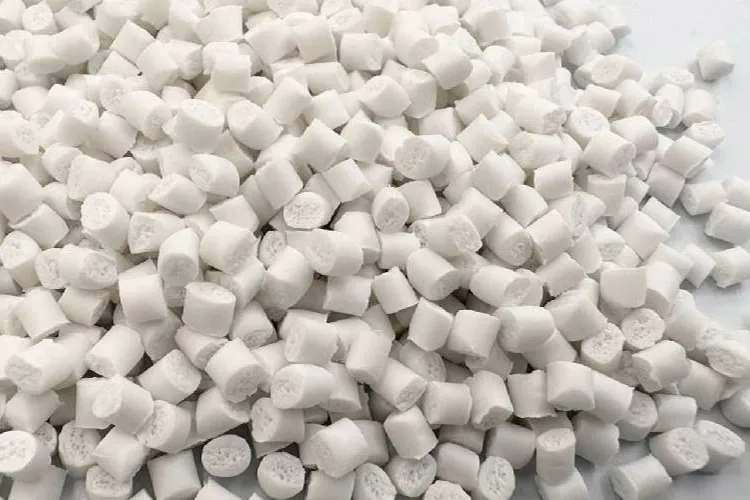
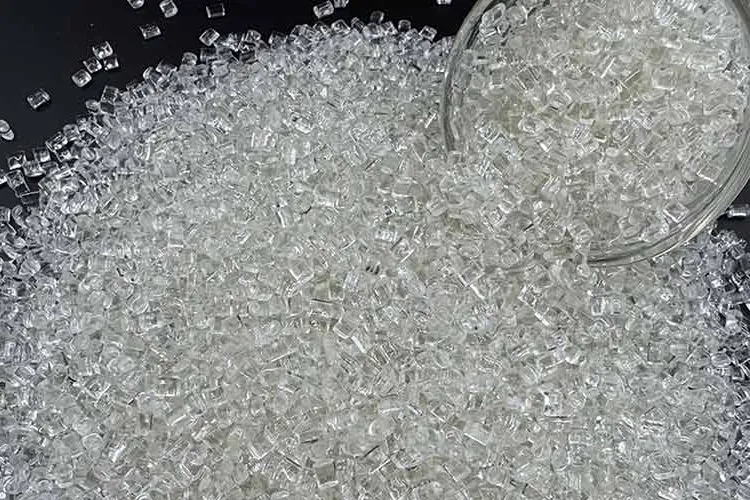
PET is the primary material for the EPA.ES-3C114 PET blow molding machine. Its combination of exceptional clarity, high strength, lightweight structure, and excellent gas barrier properties makes it the material of choice for premium cosmetic, personal care, and beverage bottles. PET produces bottles with a glass-like appearance that enhances product presentation on retail shelves. Its recyclability also supports sustainability objectives that cosmetic brands increasingly communicate to consumers as part of their product positioning and environmental responsibility programs.
PETG (Polyethylene Terephthalate Glycol)
PETG is the preferred material for high-end cosmetic packaging requiring enhanced clarity, superior toughness, and greater design flexibility compared to standard PET. It processes at lower temperatures than PET, reducing thermal stress on the blow mold. PETG accepts metallic and tinted coloration more readily, supports deep embossing and unique tactile surface textures, and offers strong chemical resistance to alcohol-based cosmetic formulations. As a custom blow molding machine material option, PETG expands the range of premium packaging designs achievable on the EPA.ES-3C114 platform.
HDPE (Polyethylene mật độ cao)
HDPE is widely used for opaque daily chemical bottles including laundry detergents, household cleaners, and personal care products where chemical resistance and container rigidity are the primary requirements. Its excellent resistance to temperature changes, acids, and bases makes it suitable for a broad range of cleaning product formulations. HDPE is also among the most widely recycled plastics globally, supporting regulatory compliance and brand sustainability programs in markets where extended producer responsibility legislation governs packaging material choices for daily chemical manufacturers.
PVC (Polyvinyl clorua)
PVC is less commonly specified for new cosmetic packaging programs today due to evolving environmental regulations in major markets, but it remains in use for certain cleaning product containers where specific chemical resistance properties are required and where alternative materials do not meet formulation compatibility requirements. For buyers evaluating raw material options on their blow molding machine suppliers shortlist, PVC compatibility should be confirmed against local packaging regulations and retailer material restrictions before inclusion in a new product packaging specification program in key export markets.
 |
 |
 |
 |
 |
 |
Ép phun thổi so với ép đùn thổi
Buyers evaluating blow molding machine manufacturers often face a foundational process selection decision: injection blow molding (IBM) or extrusion blow molding (EBM). Both processes create hollow plastic containers, but they form the starting shape in entirely different ways. Understanding this distinction is essential before specifying any automatic blow molding machine for a new production line.
Injection blow molding starts from an injection-molded preform. Molten plastic is injected around a core rod to form a precise preform and neck finish. The preform then moves to the blow station and is inflated inside the bottle mold. The finished bottle is removed without trimming flash. In British English the same process is often referenced as injection blow moulding.
Extrusion blow molding starts from a continuously extruded parison. The mold closes around the hollow tube and pinches off excess material. High-pressure air forms the bottle inside the mold, and flash must be trimmed after cooling. This process difference fundamentally affects neck precision, wall thickness control, trimming waste, and the type of container each process can produce economically.
| Tính năng | Ép phun thổi (IBM) | Ép đùn thổi (EBM) |
|---|---|---|
| Biểu mẫu ban đầu | phôi đúc phun | Phôi ép đùn |
| Độ chính xác của cần đàn | Extremely high; neck is pre-molded by injection | Standard; depends on mold closing and neck calibration |
| Phế liệu / Chất thải | Zero flash and very low process waste | Tạo ra ánh sáng nhấp nháy cần phải cắt tỉa và tái chế. |
| Kích thước hộp đựng tốt nhất | Small to medium precision bottles (30ml to 1,500ml) | Medium to large hollow containers and industrial parts |
| Chi phí khuôn mẫu | Higher upfront investment for precision tooling | Lower initial mold costs for large hollow containers |
| Ứng dụng tốt nhất | Pharmaceutical, cosmetic, lab, medical packaging | Jerry cans, drums, tanks, large industrial containers |
| Ưu tiên chất lượng | Độ đồng nhất về kích thước và độ tin cậy khi niêm phong | Tính linh hoạt về kích thước và hiệu quả kinh tế của thể tích container |
Khi nào nên chọn phương pháp ép phun thổi?
- Small and medium precision bottles with accurate threaded necks
- Pharmaceutical, medical, cosmetic, laboratory, or high-value packaging applications
- Production environments requiring zero flash waste and clean operation without secondary trimming
- Applications demanding stable bottle dimensions, repeatable wall thickness, and reliable closure sealing
- PET and PETG bottle production for cosmetic and daily chemical packaging
When to Choose Extrusion Blow Molding
- Large bottles, jerry cans, drums, tanks, and complex hollow industrial parts
- Applications where lower tooling cost is a priority over highest neck precision
- Wide product geometry variety including handled containers and asymmetric shapes
- Applications where trimming flash is an acceptable part of the production process
Cost Perspective: EBM equipment can carry a lower initial purchase price for large containers, but the total production cost calculation must also include resin loss from flash trimming, secondary labor, reject rates, and downstream handling. For precision cosmetic bottles where IBM reduces waste and quality risk, the total cost of ownership over a multi-year production period often favors the IBM process even when initial machine and mold investment is higher. For large industrial containers, EBM typically remains the more economical process choice. Materials used across both processes include HDPE, PP, LDPE, PET, PETG, and PVC, with material choice always validated against bottle geometry, regulatory requirements, and sealing specifications.
Đặc điểm của khuôn máy thổi chai mỹ phẩm
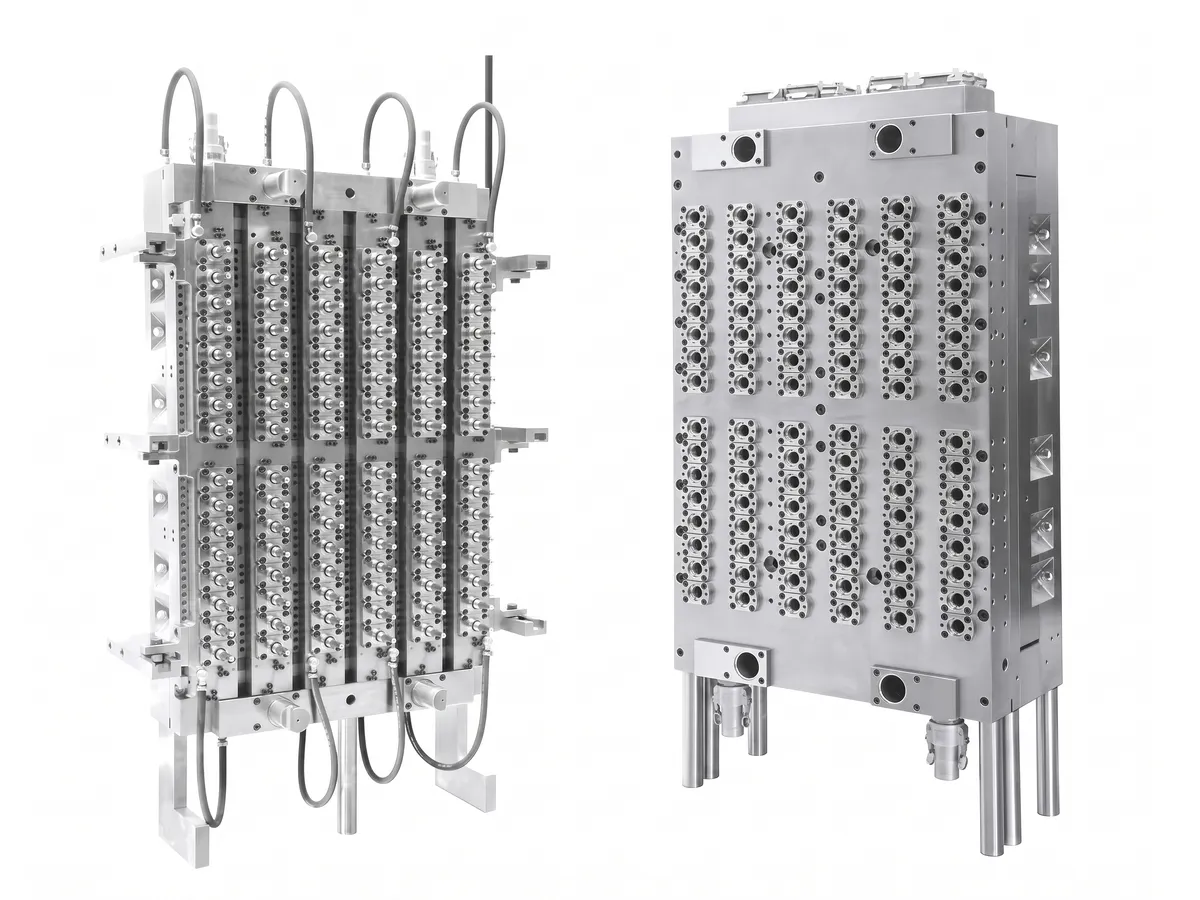
Khuôn ép phun phôi
- The two-part die lip design guarantees coaxial alignment between the preform and the neck finish during every injection cycle, eliminating the neck eccentricity that causes closure sealing failures in finished bottles.
- Optimized cooling water channel geometry improves preform cooling efficiency and ensures rapid cycle times without compromising dimensional stability in the cooled preform wall.
- Preform-forming components use imported 2316 die steel, which is inherently rust-resistant and has undergone heat treatment to achieve the hardness and dimensional stability required for precision cosmetic bottle neck production.
- Core plate, cavity plate, and other structural components use 420 stainless steel, providing excellent corrosion resistance in the humid, temperature-cycled environment of continuous injection mold operation.
- The maintenance-accessible design reduces mold servicing time during scheduled maintenance intervals, minimizing production downtime on this blow molding machine platform.
- Standard interchangeable die fittings across the mold range reduce spare parts inventory requirements and allow cross-utilization of components between compatible mold sets.
- Advanced modular mold design allows a single mold set to produce more than one preform variant, increasing tooling investment efficiency for manufacturers with multiple bottle SKUs.
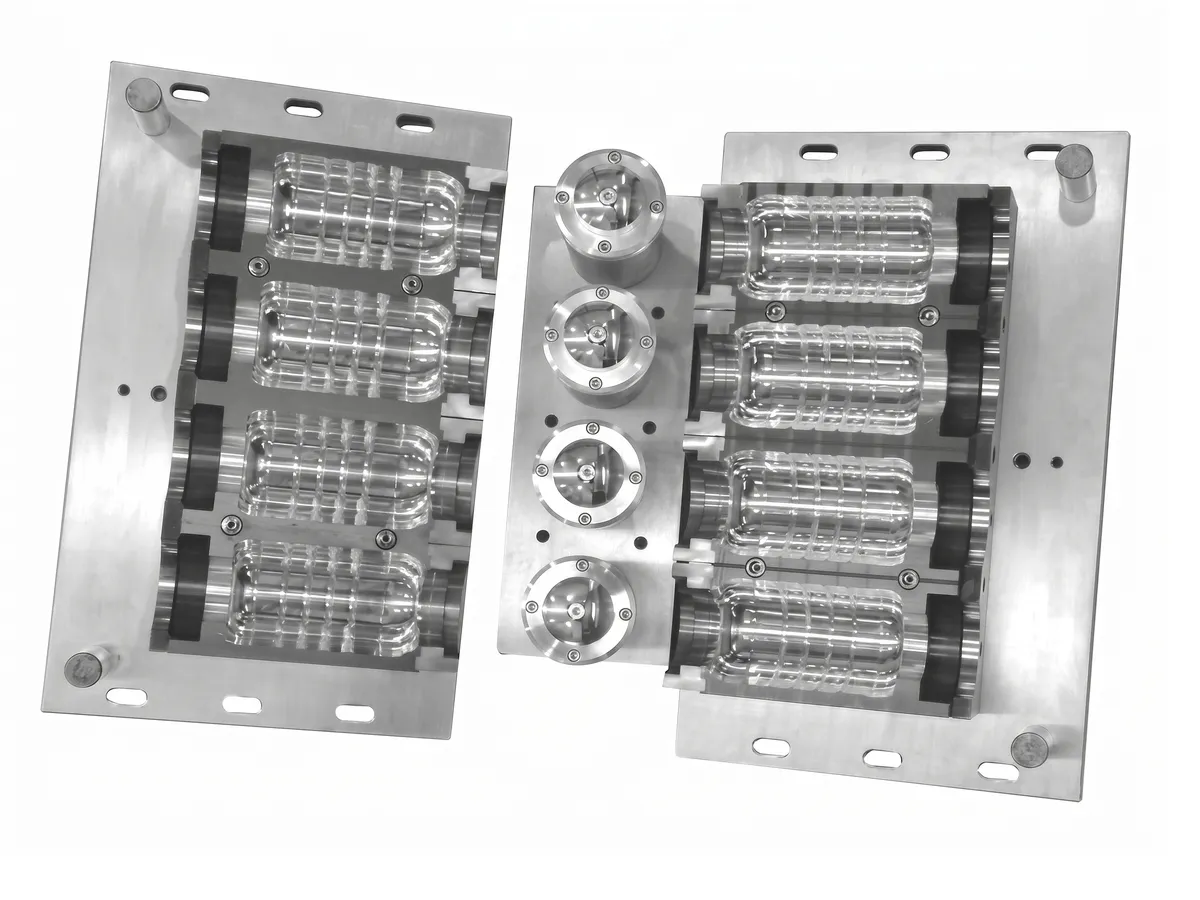
Khuôn thổi
- Blow mold bodies are manufactured from high-quality steel selected for its thermal conductivity, machinability, and resistance to the fatigue stresses generated by repeated high-pressure blowing cycles at 35 kg/cm2.
- All plastic bottle cavity geometries are designed using advanced 3D CAD and simulation software, ensuring that cavity shapes achieve the target wall thickness distribution before the first physical mold is cut.
- A broad range of standard and custom bottle designs is available for selection, allowing buyers to start production with proven cavity geometries while specifying custom cavities for proprietary bottle shapes.
- Cooling water channels within the blow mold body are designed to deliver uniform temperature distribution across the entire cavity surface, preventing hot spots that cause uneven crystallinity and dimensional variation in finished bottles.
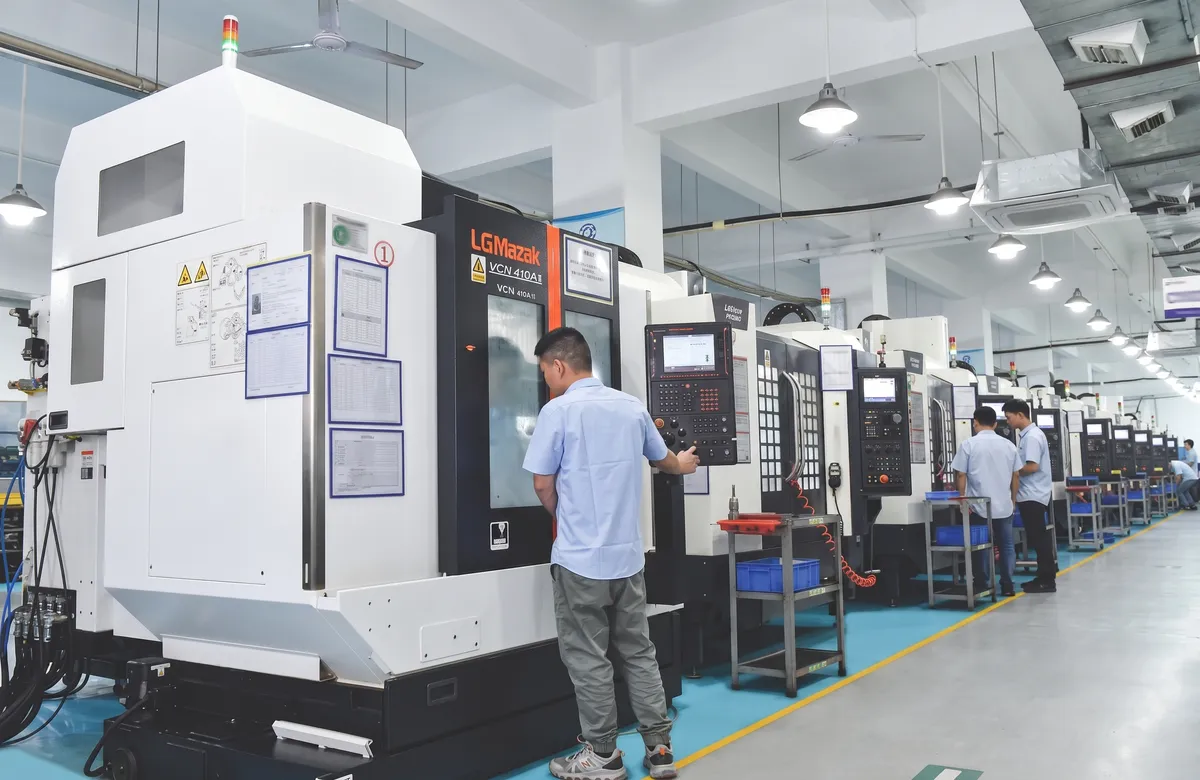
- All structural metal components in the blow mold assembly are machined on CNC machining centers, ensuring dimensional accuracy and surface finish consistency that would not be achievable with conventional machining methods for precision cosmetic bottle blow molding machine tooling.
- Mold parting surface precision and surface texture are optimized to minimize parting line marks on finished bottle exterior surfaces, reducing secondary cosmetic rejection rates for premium cosmetic packaging production runs.
 |
 |
EPA.ES-3C114 Plastic Blow Molding Machine Operating Precautions
1. Pre-Startup Inspection Protocol
Before every production startup, operators must conduct a systematic inspection of all mechanical connections, lubrication points, and fastener torque levels. Verify that cooling water supply is active and within the specified 5 to 6 kg/cm2 pressure range and 8 to 12 degree Celsius temperature range. Confirm that air supply lines are secure and that both low-pressure and high-pressure systems are functioning correctly. Check electrical panel indicators for any fault codes from the previous production session before initiating the startup sequence. This pre-startup routine prevents equipment damage and ensures operator safety on the fully automatic blow molding machine.
2. Preform Quality and Material Verification
Only use PET or PETG preforms that meet the specifications confirmed during mold qualification testing. Verify preform weight, IV (intrinsic viscosity), moisture content (maximum 50 ppm for PET), and dimensional consistency before loading each new batch. Using out-of-specification preforms is the single most common cause of bottle defects, burst failures in the blow station, and mold damage in a PET bottle blow molding machine. Pre-dry all PET preforms at 160 to 180 degrees Celsius for a minimum of 4 hours to prevent hydrolytic degradation during processing, which permanently reduces polymer molecular weight and compromises finished bottle mechanical properties.
3. Temperature Parameter Management
Heating zone temperatures must be set and verified against the approved process parameter sheet for each bottle format and preform design. Never override automatic temperature safeguards or run the blow molding machine with heating zones that have not reached setpoint temperature. Overheated preforms cause premature crystallization and whitening; underheated preforms cause burst failures in the blow station or produce bottles with unacceptable wall thickness distribution. Record heating zone setpoints and actual temperatures at the start of each production run as part of the batch quality documentation required for cosmetic manufacturing compliance programs.
4. Air Pressure System Safety
The EPA.ES-3C114 operates with blowing pressures up to 35 kg/cm2, which represents a significant stored energy hazard. All personnel must maintain safe distances from the blow station during active production. Never attempt to open the blow mold manually during a cycle or insert tools into the mold area while the machine is running. Verify pressure relief valves are functional and set to the correct relief pressure before startup. Inspect all high-pressure air hoses, fittings, and connections for wear, cracking, or leakage on a daily basis, and replace any components showing deterioration immediately to prevent pressure release incidents on the production floor.
5. Mold Changeover Procedures
Mold changeovers on the EPA.ES-3C114 must be performed following the documented lockout-tagout energy isolation procedure. Allow the blow mold to cool to below 40 degrees Celsius before handling. Use the correct lifting tools and personnel team size specified in the maintenance manual for mold weights. After installing a new mold, verify that all cooling water connections are secure and leak-free before initiating a trial cycle. Run a slow-speed trial sequence and inspect the first 20 bottles from each cavity before releasing to full production speed. Document changeover completion time and first-article inspection results in the production log as part of the blow molding machine process quality record.
6. Routine Maintenance and Lubrication Schedule
Follow the manufacturer-prescribed lubrication schedule for all guide rails, cam tracks, stretch rod linear bearings, and preform transfer mechanisms. Use only the specified lubricant grades to avoid contaminating product contact surfaces or causing accelerated component wear. Clean heating lamps and reflector surfaces at the scheduled interval to maintain heating efficiency and prevent uneven preform temperature profiles. Replace worn seals, O-rings, and blow valve components at the intervals specified in the maintenance schedule rather than waiting for visible failure. Proactive maintenance on this industrial blow molding machine significantly extends component life and prevents unplanned production stoppages that generate disproportionate costs in high-output packaging operations.
How to Select the Right Blow Molding Machine
1. Define Your Container Volume Range
The first specification parameter for any blow molding machine selection is the target container volume range. The EPA.ES-3C114 covers 30ml to 1,500ml, making it ideal for cosmetic and personal care bottles. If your product range extends to 5,000ml or beyond, consider models in the 4-cavity series or food jar category from the Ever-Power range. Matching machine container capacity to your product portfolio ensures that you are not running an oversized machine at reduced efficiency or attempting to produce containers outside the equipment's design parameters, both of which increase per-unit production costs and quality risk.
2. Match Cavity Count to Output Requirements
Cavity count directly determines the output rate of any automatic blow molding machine. The EPA.ES-3C114's 3-cavity configuration delivers 2,400 bph at rated speed. Calculate your required annual output, account for planned downtime and changeover hours, and work backward to determine the minimum cavity count and machine speed that meets your production plan. If output requirements significantly exceed this model's rated capacity, evaluate the 4-cavity and 6-cavity models from the same product series. Over-specifying cavity count increases capital cost without proportional operational benefit for smaller production volumes.
3. Confirm Material and Process Compatibility
Verify that the blow molding machine suppliers you are evaluating can confirm compatibility between the machine and your specific resin grades. The EPA.ES-3C114 is designed and validated for PET and PETG, which cover the vast majority of cosmetic and daily chemical packaging applications. If your product requires PP, HDPE, or specialty engineering resins, evaluate whether the machine's heating system and process parameters support those materials. Material incompatibility discovered after purchase is an expensive problem that requires either accepting suboptimal bottle quality or investing in machine modifications that may not be technically feasible.
4. Evaluate Bottle Shape Complexity
Evaluate whether your target bottle shapes require standard cylindrical geometry or complex irregular profiles. Not all plastic blow molding machine platforms handle high-complexity shapes equally. The EPA.ES-3C114 is specifically engineered for complex, irregularly shaped cosmetic bottles that challenge standard equipment. If your product portfolio includes unique contoured bottles, oval cross-sections, deep grip recesses, or complex shoulder geometries, confirm that the supplier has produced similar shapes on the specific machine model you are evaluating, and request sample bottles and technical validation data before committing to a purchase decision.
5. Assess Energy Consumption and Operating Cost
The total cost of machine ownership over a five to ten year production life includes purchase price, installation, tooling, maintenance, and electricity consumption. Servo-driven fully automatic blow molding machine platforms like the EPA.ES-3C114, with 18kW working heating power versus the 40kW maximum, offer significant energy efficiency advantages over older hydraulic systems. Request energy consumption data at rated output for each machine you evaluate and model the 5-year electricity cost at your facility's local energy tariff. Energy cost difference between machine generations often exceeds the initial purchase price premium of newer servo-driven equipment in high-utilization production environments.
6. Đánh giá dịch vụ hỗ trợ sau bán hàng và khả năng cung cấp phụ tùng thay thế
For any industrial blow molding machine investment, after-sales support capability is as important as machine performance specifications. Verify that the supplier maintains spare parts inventory for critical wear components including blow valves, stretch rods, preform holders, heating lamps, and drive belts. Confirm maximum committed response time for technical support and on-site service for your region. Evaluate the completeness and language quality of the machine manual and process setup documentation. A machine that produces well but loses two weeks of production awaiting spare parts delivers a much lower return on investment than the initial purchase cost calculation suggested.
Tại sao nên chọn máy ép thổi PET của Ever-Power?
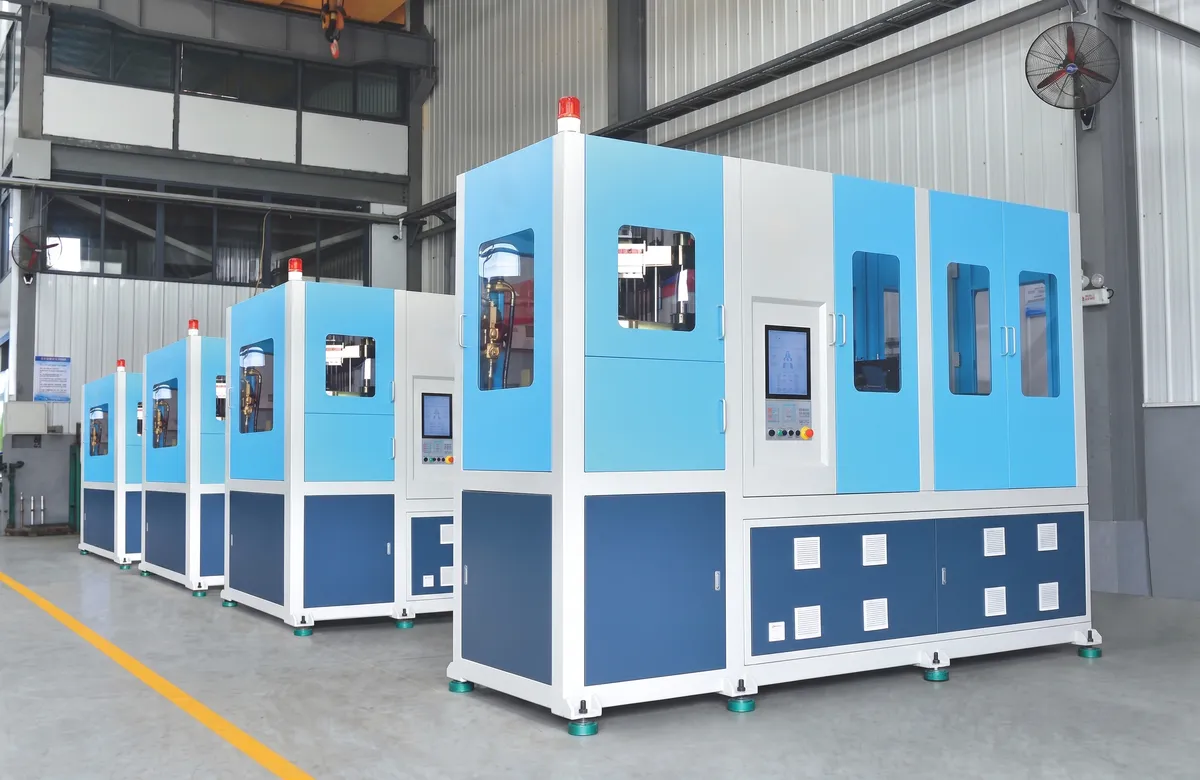
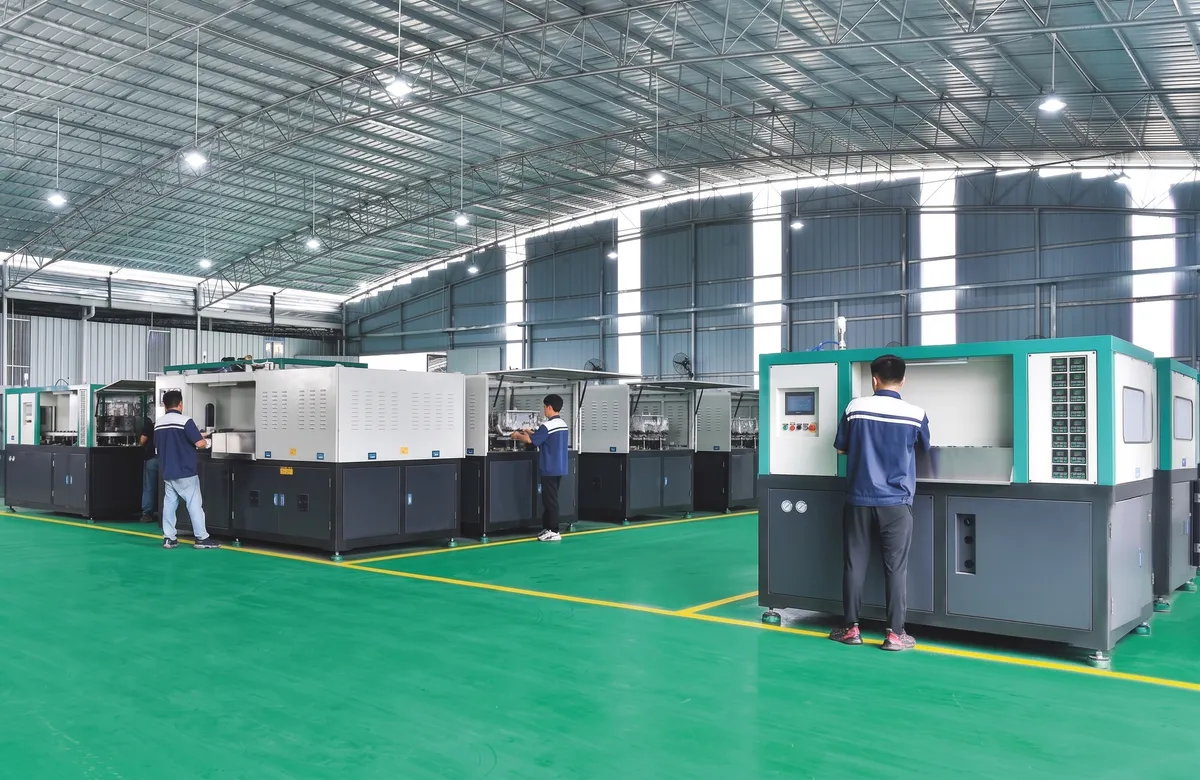
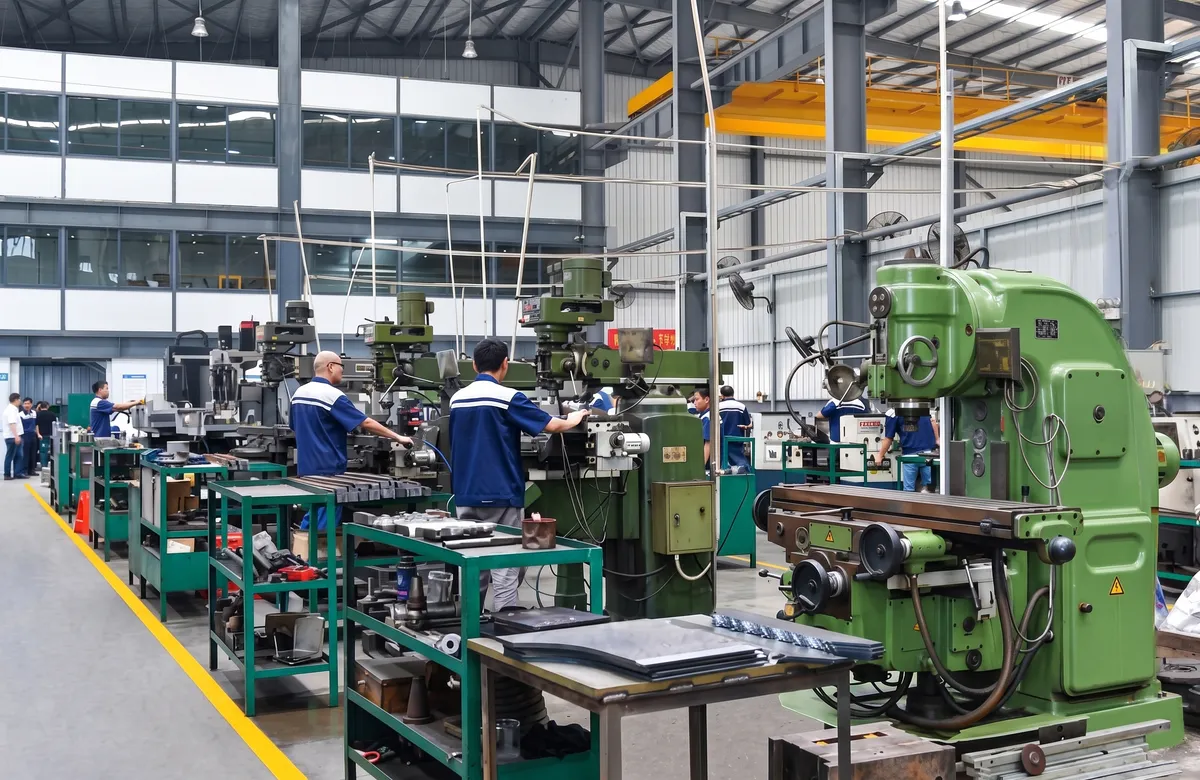
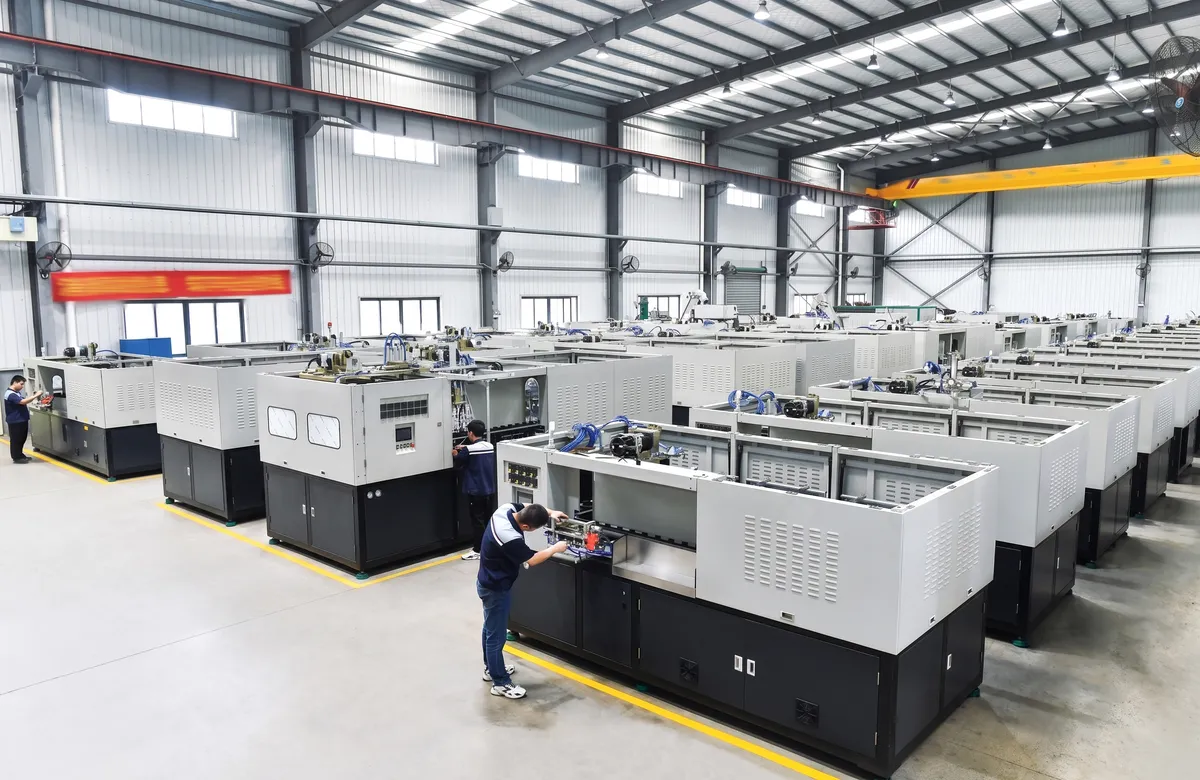
Mexico Ever-Power ISBM Machinery Co., Ltd is a specialist company dedicated to the research and development, production, sales, and international trade of fully automatic blow molding machines. Our product range encompasses injection blow molding machines, extrusion blow molding machines, injection stretch blow molding machines, and auxiliary machinery, giving buyers a complete solution source for any hollow plastic container manufacturing requirement.
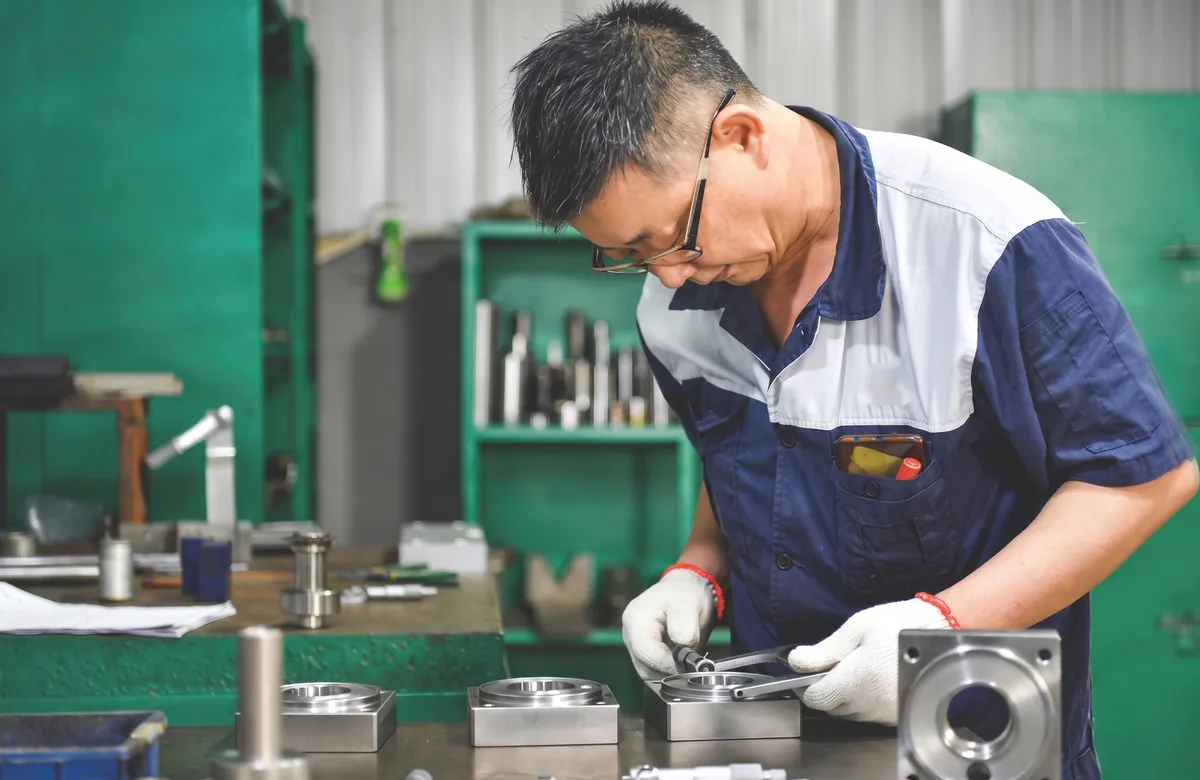
Ever-Power maintains an excellent R&D team that brings together experienced engineers and technical personnel who have spent their careers specializing in injection-blowing machinery and injection-blowing mold development. With deep theoretical knowledge and extensive practical experience across hundreds of production deployments, our technical team provides the detailed, application-specific guidance that generic blow molding machine manufacturers cannot match. We deliver thorough pre-sale technical consultation, responsive in-sale support, and committed after-sale service to every customer globally.
Our product applications cover pharmaceutical packaging, food packaging, health care packaging, and cosmetic packaging, encompassing all major plastic packaging categories. We produce and support equipment capable of handling HDPE, LDPE, PET, PETG, PP, PS, PPSU, PC, Tritan, ABS, PLA, environmental corn materials, EVA, PCTG, and other specialty resins across container volumes from 1ml to 1,000ml and beyond. This breadth of material and application expertise means that regardless of your product category or packaging specification, Ever-Power has the technical knowledge to advise you on the optimal machine configuration for your requirements.
Ever-Power adheres to the enterprise development principles of self-reliance, integrity, pragmatism, innovation, and responsibility. We build one-stop turnkey projects to produce high-end injection-blowing products that meet the quality standards our customers require, with manufacturing quality and consistency that earns lasting partnerships with cosmetic, pharmaceutical, food, and daily chemical packaging manufacturers worldwide. Cooperating with globally recognized brands including C'ESTBON, Haitian, Luhua, Walch, Blue Moon, PROYA, Liby, Estee Lauder, Walmart, Dasenlin, and Shanliang Eye Drops confirms the quality level that Ever-Power delivers as a committed long-term blow molding machine supplier partner.
 |
 |
 |
 |
 |
 |
Câu hỏi thường gặp
Q: What is the maximum bottle size the EPA.ES-3C114 blow molding machine can produce?
A: Máy EPA.ES-3C114 sản xuất các hộp đựng có thể tích lên đến 1.500ml, với đường kính hộp tối đa 95mm và chiều cao tối đa 250mm ở cấu hình tiêu chuẩn hoặc 330mm với tùy chọn hành trình kéo giãn mở rộng. Đường kính cổ hộp có thể lên đến 40mm, phù hợp với các loại nắp tiêu chuẩn được sử dụng trong bao bì mỹ phẩm và hóa chất tiêu dùng hàng ngày. Đối với các hộp đựng lớn hơn 1.500ml, các mẫu 4 khoang hoặc nhiều khoang trong cùng dòng sản phẩm Ever-Power có thể sản xuất các hộp có thể tích lên đến 15.000ml trở lên, tùy thuộc vào lựa chọn mẫu và cấu hình.
Hỏi: Máy thổi khuôn tự động EPA.ES-3C114 có thể xử lý những loại vật liệu nào?
A: Máy EPA.ES-3C114 được thiết kế và tối ưu hóa đặc biệt cho vật liệu PET và PETG, là những loại nhựa chủ đạo trong sản xuất chai đựng mỹ phẩm và hóa chất tiêu dùng hàng ngày. PET mang lại độ trong suốt, độ bền và khả năng chắn khí vượt trội cho bao bì mỹ phẩm cao cấp. PETG cung cấp tính linh hoạt trong thiết kế, độ dẻo dai cao hơn và khả năng tương thích tuyệt vời với các chất tạo màu và màu kim loại cho các thương hiệu mỹ phẩm xa xỉ. Nếu ứng dụng của bạn yêu cầu PP, HDPE hoặc các loại nhựa khác không có trong danh sách này, vui lòng liên hệ với đội ngũ kỹ thuật của chúng tôi để thảo luận về các mẫu máy khác trong dòng sản phẩm Ever-Power có thể phù hợp hơn với yêu cầu vật liệu và thiết kế chai cụ thể của bạn.
Hỏi: Sản lượng thực tế của máy ép thổi chai PET EPA.ES-3C114 trong điều kiện sản xuất thực tế là bao nhiêu?
A: Năng suất lý thuyết định mức là 2.400 chai/giờ trên 3 khoang. Trong điều kiện sản xuất thực tế, năng suất thực tế thường dao động từ 90% đến 97% so với công suất định mức, tùy thuộc vào chất lượng phôi chai, độ phức tạp của hình dạng chai, loại nhựa và điều kiện môi trường. Phản hồi từ khách hàng cho thấy năng suất ổn định ở mức từ 2.250 đến 2.380 chai/giờ tại các cơ sở được bảo trì tốt với nguồn cung phôi chai được kiểm soát chất lượng. Nên tính toán thêm mức dự phòng hiệu suất từ 5% đến 10% khi lập kế hoạch sản xuất hàng năm để đảm bảo tính toán chi phí đầu tư máy móc một cách thận trọng.
Hỏi: Máy ép thổi tự động EPA.ES-3C114 cần có công suất máy nén khí bao nhiêu?
A: Tiêu chuẩn EPA.ES-3C114 yêu cầu nguồn cung cấp khí nén áp suất thấp ở mức 7 kg/cm2 với lưu lượng tiêu thụ 1.500 lít/phút, và nguồn cung cấp khí thổi áp suất cao ở mức 35 kg/cm2 với lưu lượng tiêu thụ 3.200 lít/phút. Việc lựa chọn máy nén khí cần có công suất dự phòng ít nhất 20% so với các con số tiêu thụ định mức này để tính đến sự sụt giảm áp suất trong đường ống phân phối và để xử lý các đỉnh nhu cầu khởi động mà không làm thiếu hụt nguồn cung cấp cho trạm thổi. Đối với hầu hết các công trình lắp đặt, nên sử dụng hệ thống máy nén tăng áp cao áp chuyên dụng song song với nguồn cung cấp khí nén áp suất thấp của nhà máy. Đội ngũ kỹ thuật của chúng tôi có thể cung cấp hướng dẫn cụ thể về việc lựa chọn máy nén khí dựa trên cấu hình đường ống và cơ sở hạ tầng khí nén hiện có của nhà máy.
Hỏi: Việc lắp đặt và vận hành thử máy ép thổi EPA.ES-3C114 mất bao lâu?
A: Thời gian lắp đặt và vận hành thử điển hình cho máy EPA.ES-3C114 dao động từ 5 đến 10 ngày làm việc, tùy thuộc vào sự sẵn sàng của cơ sở, khả năng cung cấp tiện ích và việc khuôn mẫu đã được kiểm định trước hay cần điều chỉnh tại chỗ. Các cơ sở đã chuẩn bị đầy đủ các tiện ích bao gồm khí nén, nước làm mát và nguồn điện trước khi máy đến, và có người vận hành túc trực toàn thời gian trong quá trình vận hành thử, thường đạt được thời gian ngắn hơn trong khoảng thời gian này. Ever-Power cung cấp hỗ trợ vận hành thử và tài liệu đào tạo người vận hành để tạo điều kiện thuận lợi cho quá trình khởi động kỹ lưỡng, và hỗ trợ kỹ thuật từ xa luôn sẵn sàng trong suốt thời gian vận hành thử đối với các công trình lắp đặt không bao gồm hỗ trợ tại chỗ trong gói mua hàng.
Hỏi: Máy thổi khuôn chai mỹ phẩm EPA.ES-3C114 có thể sản xuất chai có hình dạng bất thường không?
A: Vâng, sản xuất các chai có hình dạng phức tạp và bất thường là một trong những thế mạnh thiết kế đặc biệt của nền tảng EPA.ES-3C114 và được nêu rõ trong thông số kỹ thuật sản phẩm. Hệ thống thanh kéo giãn điều khiển bằng servo, quản lý áp suất thổi chính xác và kiểm soát nhiệt độ nước làm mát ổn định của máy kết hợp lại cho phép sản xuất nhất quán các hình dạng chai không hình trụ, bao gồm mặt cắt ngang hình bầu dục, hình dạng bất đối xứng, rãnh cầm sâu và thân chai có đường cong phức tạp mà các thiết bị kém khả năng hơn không thể làm được. Nhiều khách hàng đã xác nhận khả năng này với các hình dạng chai mà các máy cạnh tranh không thể sản xuất thành công. Để xác thực thiết kế chai phức tạp cụ thể, chúng tôi khuyên bạn nên gửi bản vẽ chai của mình để được xem xét kỹ thuật trước khi xác nhận mua hàng.
Hỏi: Thời gian thay khuôn điển hình trên máy ép thổi EPA.ES-3C114 là bao lâu?
A: Các kỹ thuật viên giàu kinh nghiệm thường hoàn thành toàn bộ quy trình thay khuôn trên máy EPA.ES-3C114, bao gồm tháo khuôn thổi, lắp đặt khuôn mới, kết nối lại hệ thống nước làm mát, nạp thông số và kiểm tra sản phẩm đầu tiên, trong vòng 2 đến 4 giờ. Lần thay khuôn đầu tiên trên thiết kế khuôn mới có thể cần thêm thời gian để tối ưu hóa thông số ban đầu. Các cơ sở duy trì kho lưu trữ khuôn được tổ chức khoa học với các công thức thông số được ghi chép sẵn cho từng loại chai, và sử dụng chức năng lưu trữ công thức của máy, luôn đạt được thời gian thay khuôn ngắn hơn trong khoảng thời gian này. Khuyến nghị nên có chương trình đào tạo thay khuôn chuyên sâu và tài liệu quy trình thay khuôn tiêu chuẩn hóa cho các cơ sở thường xuyên thay đổi định dạng chai trên dây chuyền đóng gói mỹ phẩm và hóa chất tiêu dùng hàng ngày.
Hỏi: Máy ép thổi EPA.ES-3C114 đáp ứng những chứng nhận và tiêu chuẩn chất lượng nào?
A: Máy EPA.ES-3C114, được chế tạo trên nền tảng của Ever-Power Machinery, được sản xuất theo tiêu chuẩn chất lượng quốc tế. Ever-Power Machinery sở hữu nhiều bằng sáng chế kiểu dáng công nghiệp quốc gia và đã nhận được chứng nhận CE cho các mẫu sản phẩm liên quan trong dòng sản phẩm của mình, như được thể hiện trong tài liệu chứng nhận năng lực của công ty. Đối với người mua tại các thị trường được quản lý chặt chẽ yêu cầu các chứng nhận hoặc tài liệu an toàn cụ thể cho mục đích nhập khẩu, vui lòng liên hệ với đội ngũ bán hàng của chúng tôi để yêu cầu gói tài liệu chứng nhận hiện hành áp dụng cho EPA.ES-3C114 và xác nhận những chứng nhận nào phù hợp với các yêu cầu quy định của thị trường đích đến của bạn đối với việc nhập khẩu máy ép thổi công nghiệp.
Hỏi: Máy thổi khuôn EPA.ES-3C114 có những ưu điểm gì so với các loại máy thổi khuôn khác dùng trong sản xuất bao bì mỹ phẩm?
A: Trong số các loại máy thổi khuôn chính được sử dụng cho bao bì mỹ phẩm, EPA.ES-3C114 là máy thổi khuôn kéo giãn phun hai giai đoạn (ISBM), tạo ra độ trong suốt, độ chính xác cổ chai và độ đồng nhất độ dày thành chai cao nhất có thể đạt được trong sản xuất chai tự động. So với máy thổi khuôn đùn (EBM), nó không tạo ra chất thải bavia và có độ chính xác hoàn thiện cổ chai vượt trội. So với máy thổi khuôn phun một bước (IBM), cấu trúc hai giai đoạn cho phép tối ưu hóa nhiệt độ phôi tốt hơn và hỗ trợ tốc độ sản xuất cao hơn cho khối lượng sản xuất trong lĩnh vực mỹ phẩm và hóa chất tiêu dùng hàng ngày. Đối với các thương hiệu yêu cầu chai mỹ phẩm PET hoặc PETG trong suốt cao cấp với hiệu suất đóng nắp chính xác, nền tảng thổi kéo giãn hai giai đoạn luôn vượt trội hơn các lựa chọn thay thế về chất lượng bao bì tổng thể và hiệu quả sản xuất.
Hỏi: Tôi cần dự trữ những phụ tùng thay thế nào tại chỗ cho máy ép thổi EPA.ES-3C114?
A: Danh mục phụ tùng thay thế tại chỗ được khuyến nghị cho máy EPA.ES-3C114 bao gồm đèn sưởi hồng ngoại cho tất cả các vùng gia nhiệt, gioăng và vòng chữ O của van thổi, đầu bịt cần kéo giãn, trục giữ phôi, bộ lọc khí cho cả hệ thống áp suất thấp và cao, van điện từ nước làm mát, và các loại cầu chì PLC và bộ truyền động servo thông dụng nhất. Việc có sẵn các bộ phận hao mòn nhanh và có tầm quan trọng cao này cho phép đội bảo trì của bạn giải quyết các sự cố gián đoạn sản xuất phổ biến nhất mà không cần chờ đợi giao hàng phụ tùng thay thế từ nước ngoài. Nhóm kỹ thuật của chúng tôi có thể cung cấp danh sách phụ tùng thay thế được khuyến nghị cụ thể cho máy EPA.ES-3C114 dựa trên khối lượng sản xuất hàng năm dự kiến và ca làm việc của bạn khi bạn mua máy.
Đánh giá của khách hàng
Rajesh Patel, Ngành Công nghiệp Hóa chất Hàng ngày, Ấn Độ
"Nhìn chung, đây là một chiếc máy tốt. Chúng tôi đã mua model ES-3C114 cho dây chuyền đóng chai dầu gội của mình tại Mumbai năm ngoái. Sản lượng luôn ổn định ở mức khoảng 2.300 đến 2.350 chai/giờ trong điều kiện hoạt động của chúng tôi, rất gần với công suất định mức 2.400 chai/giờ. Chi phí điện năng thấp hơn đáng kể so với máy cũ, điều này rất quan trọng vì giá điện ở đây khá cao. Điều duy nhất tôi muốn góp ý là việc liên lạc trước bán hàng đôi khi có thể nhanh hơn, nhưng đội ngũ kỹ thuật sau khi mua hàng luôn phản hồi nhanh chóng mỗi khi chúng tôi có thắc mắc. Phụ tùng thay thế chúng tôi đặt hàng đã được giao trong vòng hai tuần, điều này là chấp nhận được đối với kế hoạch của chúng tôi. Chúng tôi chắc chắn sẽ cân nhắc Ever-Power cho chiếc máy tiếp theo khi mở rộng dây chuyền sản xuất."
Ana Carvalho, Ngành công nghiệp bao bì mỹ phẩm, Brazil
"Chúng tôi vận hành ba máy này tại nhà máy của mình ở ngoại ô São Paulo để sản xuất chai mỹ phẩm cho một số thương hiệu làm đẹp của Brazil. Lý do chúng tôi chọn Ever-Power là vì danh tiếng về khả năng xử lý các hình dạng chai không đều, và họ đã hoàn toàn đáp ứng được điều đó. Chúng tôi sản xuất một loại chai serum có mặt cắt ngang hình bầu dục đặc biệt mà hai thương hiệu máy khác chúng tôi đã thử nghiệm đều không thể xử lý được, nhưng máy ES-3C114 vẫn sản xuất được một cách nhất quán mà không cần điều chỉnh đáng kể sau khi thiết lập ban đầu. Việc kiểm soát nhiệt độ nước làm mát rất ổn định, điều này giúp ích rất nhiều trong việc xử lý các hình dạng không đều. Chúng tôi rất hài lòng sau 14 tháng vận hành. Tỷ lệ sản phẩm lỗi của chúng tôi dưới 1,2%, đây là tỷ lệ tốt nhất mà chúng tôi đạt được với bất kỳ thiết bị nào đối với thiết kế chai này."
Budi Santoso, Bao bì chăm sóc cá nhân, Indonesia
"Việc điều phối hậu cần vận chuyển diễn ra rất suôn sẻ. Chúng tôi lo lắng về thời gian giao hàng đến nhà máy ở Jakarta do trọng lượng máy lên tới 4.000kg, nhưng chứng từ xuất khẩu đầy đủ và chính xác, máy đã đến đúng thời hạn đã cam kết. Việc lắp đặt diễn ra tốt đẹp với sự hỗ trợ kỹ thuật từ xa được cung cấp trong quá trình vận hành thử. Chúng tôi đã sản xuất chai sữa tắm 300ml bằng PETG được khoảng sáu tháng nay và độ trong suốt đạt được rất tuyệt vời. Khách hàng bán lẻ của chúng tôi đã nhận xét tích cực về sự cải thiện về hình thức chai so với nhà cung cấp trước đây. Khuyến nghị về nhiệt độ nước làm mát từ 8 đến 12 độ C hoàn toàn phù hợp với điều kiện sản xuất PETG của chúng tôi."
Miguel Torres, Ngành công nghiệp bao bì mỹ phẩm, Mexico
"Chúng tôi đã đánh giá bốn nhà cung cấp máy ép thổi trước khi chọn Ever-Power cho dây chuyền đóng gói mỹ phẩm mới của chúng tôi tại nhà máy gần Thành phố Mexico. Máy EPA.ES-3C114 có giá cả cạnh tranh nhưng điều thực sự tạo nên sự khác biệt của Ever-Power là phản hồi hỗ trợ kỹ thuật trong suốt quá trình đánh giá của chúng tôi. Họ đã cung cấp các khuyến nghị chi tiết về thông số quy trình cho loại PET cụ thể của chúng tôi trước khi mua, điều này giúp chúng tôi tin tưởng rằng họ thực sự hiểu ứng dụng của chúng tôi. Chúng tôi đã vận hành máy được năm tháng để sản xuất các chai kem dưỡng da từ 150ml đến 800ml và việc chuyển đổi giữa các định dạng chai rất đơn giản sau khi bạn đã lưu các công thức thông số. Nhóm bảo trì nhận thấy máy rất dễ bảo dưỡng, điều này rất quan trọng đối với quy trình làm việc của nhóm dịch vụ trong các lần dừng máy theo lịch trình."
Nguyễn Thị Lan, Ngành Công nghiệp Bao bì Hợp đồng, Việt Nam
"Chúng tôi điều hành một xưởng sản xuất bao bì mỹ phẩm chăm sóc cá nhân quy mô vừa gần Hà Nội và đã bổ sung máy EPA.ES-3C114 làm máy thứ ba cho dây chuyền sản xuất chai mỹ phẩm của mình khoảng mười tháng trước. Thành thật mà nói, chất lượng máy móc luôn ổn định so với hai máy Ever-Power đầu tiên mà chúng tôi đã vận hành trong ba năm mà không gặp sự cố lớn nào. Hệ thống truyền động servo hoạt động êm hơn đáng kể so với các máy thủy lực cũ mà chúng tôi từng vận hành, giúp cải thiện điều kiện làm việc cho người vận hành. Một điều khiến chúng tôi ấn tượng là sự ổn định của vùng gia nhiệt. Chúng tôi làm việc theo ca 16 tiếng và nhiệt độ luôn ổn định trong suốt ca làm việc, điều này giúp giảm tần suất lấy mẫu kiểm tra chất lượng và tiết kiệm thời gian cho bộ phận kiểm soát chất lượng. Giá trị đầu tư rất xứng đáng."
Chen Wei, Ngành công nghiệp bao bì mỹ phẩm, Trung Quốc
"Chúng tôi đã vận hành máy EPA.ES-3C114 được khoảng tám tháng nay tại nhà máy sản xuất bao bì mỹ phẩm ở Quảng Châu và thành thật mà nói, đây là một trong những quyết định đầu tư thiết bị tốt nhất mà chúng tôi đã thực hiện gần đây. Chúng tôi chủ yếu sản xuất chai đựng toner và lotion dung tích từ 200ml đến 500ml bằng nhựa PET, và độ đồng nhất giữa các chai rất tốt. Độ chính xác của phần cổ chai đặc biệt quan trọng đối với chúng tôi vì chúng tôi sử dụng nắp bơm có yêu cầu dung sai rất chặt chẽ, và chúng tôi hầu như không thấy chai nào bị lỗi do rò rỉ kể từ khi lắp đặt. Việc thiết lập máy được hoàn tất trong khoảng năm ngày, bao gồm cả đào tạo người vận hành, và tài liệu hướng dẫn được cung cấp đủ toàn diện để các kỹ sư của chúng tôi có thể tự điều chỉnh hầu hết các thông số."
Mehmet Yilmaz, Bao bì mỹ phẩm cao cấp, Thổ Nhĩ Kỳ
"Chúng tôi sản xuất bao bì mỹ phẩm cao cấp cho một số thương hiệu mỹ phẩm trong và ngoài nước tại nhà máy ở Istanbul. Quyết định mua máy EPA.ES-3C114 chủ yếu dựa trên khả năng xử lý các chai có hình dạng bất thường, điều mà khách hàng châu Âu của chúng tôi ngày càng yêu cầu để tạo sự khác biệt cho sản phẩm cao cấp. Máy đã xử lý mọi hình dạng phức tạp mà chúng tôi đưa ra với 12 thiết kế chai khác nhau trong suốt chín tháng sản xuất. Dịch vụ khách hàng đã phản hồi nhanh chóng khi chúng tôi gặp sự cố ban đầu với cảm biến vùng gia nhiệt và linh kiện thay thế đã được giao trong vòng chín ngày làm việc, bao gồm cả thủ tục hải quan, điều mà chúng tôi thấy là chấp nhận được vì đây là hàng vận chuyển quốc tế từ Mexico. Nhìn chung, đây là một máy móc đáng tin cậy cho ứng dụng của chúng tôi."
Sipho Dlamini, Bao bì hóa chất hàng ngày, Nam Phi
"Chúng tôi đã vận hành máy này tại nhà máy ở tỉnh Gauteng gần một năm nay để sản xuất các chai hóa chất hàng ngày. Kích thước 3.240 x 1.800mm hoàn toàn phù hợp với diện tích sàn hiện có của chúng tôi, đây là một yếu tố quan trọng trong bố trí nhà máy. Sản lượng ổn định ở mức khoảng 2.380 chai/giờ đối với loại chai nước rửa tay 200ml. Ban đầu chúng tôi có một số thắc mắc về kích thước máy nén khí cho công suất tiêu thụ áp suất cao 3.200 lít/phút, và đội ngũ kỹ thuật đã cung cấp hướng dẫn rõ ràng giúp chúng tôi lựa chọn đúng loại máy nén khí. Hệ thống làm mát hoạt động trơn tru, điều này rất quan trọng vì nhiệt độ môi trường ở đây có thể gây khó khăn cho các hệ thống làm mát bằng nước trong những tháng hè. Máy hoạt động ổn định đáp ứng tốt các yêu cầu sản xuất của chúng tôi."
Maria Santos, Bao bì sản phẩm chăm sóc cá nhân, Philippines
"Chúng tôi sản xuất chai đựng sản phẩm chăm sóc cá nhân mang nhãn hiệu riêng cho một số chuỗi siêu thị trên khắp Đông Nam Á tại nhà máy của chúng tôi ở Manila. Chúng tôi đã mua máy EPA.ES-3C114 cách đây bảy tháng để thay thế thiết bị cũ và năng suất đã được cải thiện đáng kể. Máy trước đây của chúng tôi hoạt động với năng suất khoảng 1.600 chai/giờ với số khoang tương tự, vì vậy việc nâng cấp lên 2.400 chai/giờ đã cải thiện đáng kể khả năng sử dụng công suất của chúng tôi. Mức tiêu thụ năng lượng cũng thấp hơn mặc dù sản lượng cao hơn, điều này khiến đội ngũ vận hành của chúng tôi đặc biệt hài lòng. Khả năng tương thích của máy với nhiều loại PET khác nhau rất hữu ích vì khách hàng của chúng tôi sử dụng các thông số kỹ thuật nhựa khác nhau. Dựa trên kinh nghiệm này, chúng tôi đang lên kế hoạch mua thêm một máy nữa cho năm tài chính tiếp theo."
Thông tin bổ sung
| Được chỉnh sửa bởi | Yjx |
|---|
Sản phẩm liên quan
-
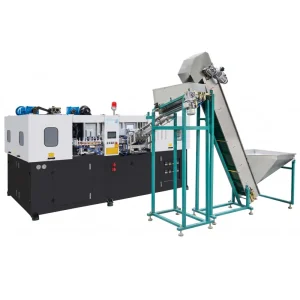
Máy thổi khuôn tự động hoàn toàn EPA.ES-2C130 dùng để sản xuất chai đựng thuốc trừ sâu và hóa chất.
-
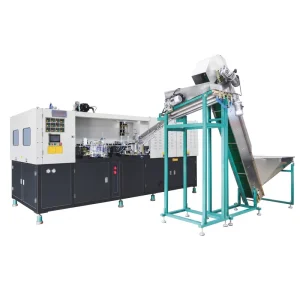
Máy thổi khuôn hoàn toàn tự động EPA.ES-2C130 dùng để sản xuất dầu ăn và chai có quai xách
-
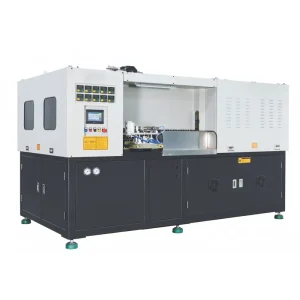
Máy thổi khuôn tự động hoàn toàn EPA.ES-4C100 dùng để sản xuất chai đựng hóa chất tiêu dùng hàng ngày và mỹ phẩm.
-
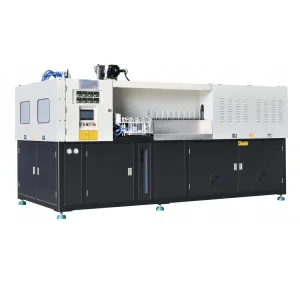
EPA.AS-4C76.2 Máy thổi khuôn hoàn toàn tự động dùng cho chai thuốc