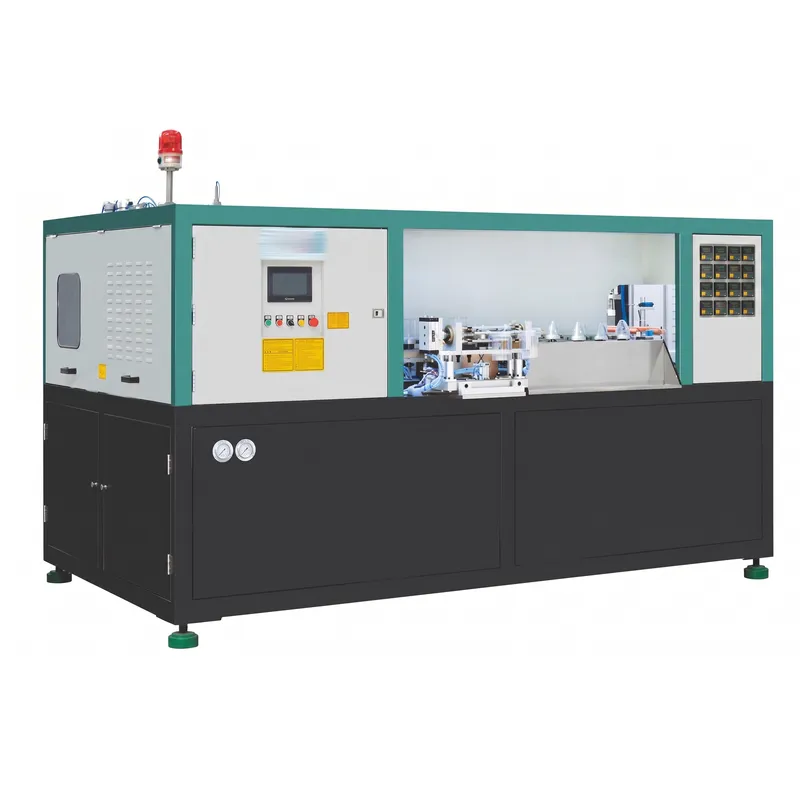
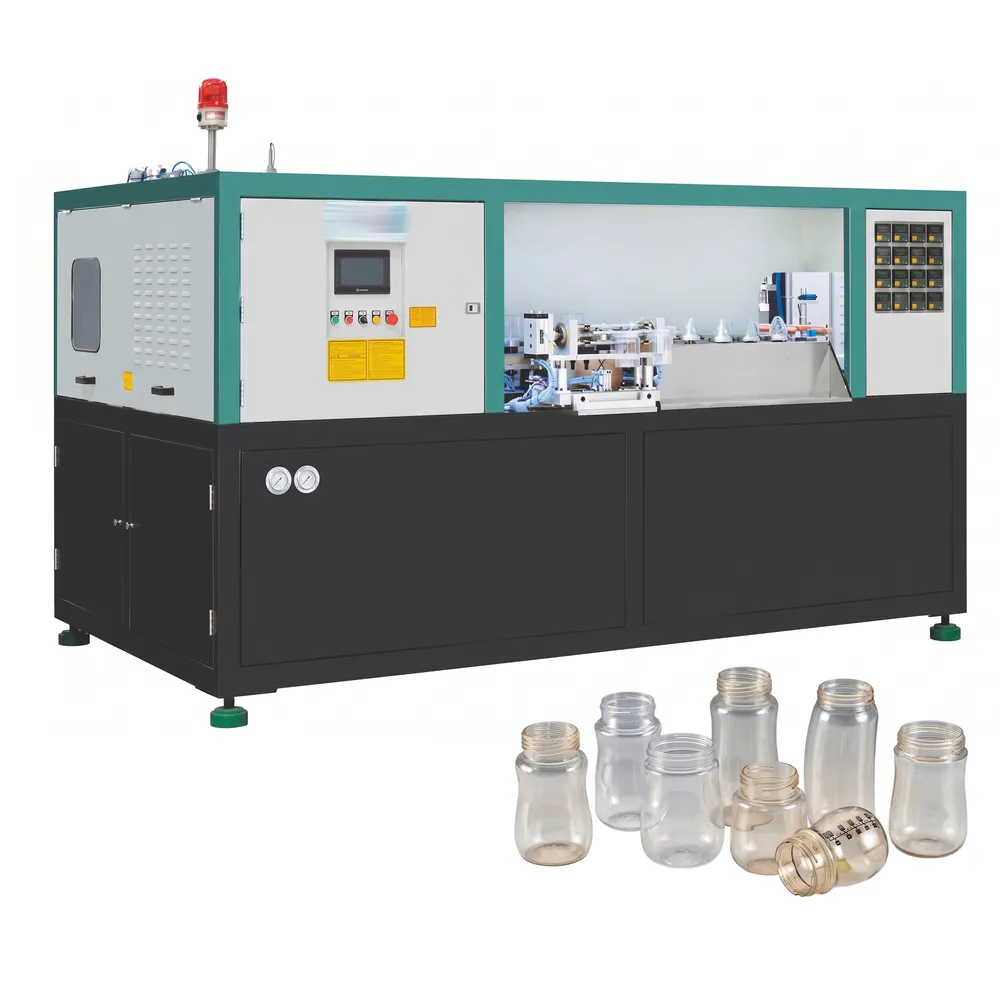
EPA.FS-1CG130 W pełni automatyczna maszyna do formowania rozdmuchowego butelek dla niemowląt i butelek PP
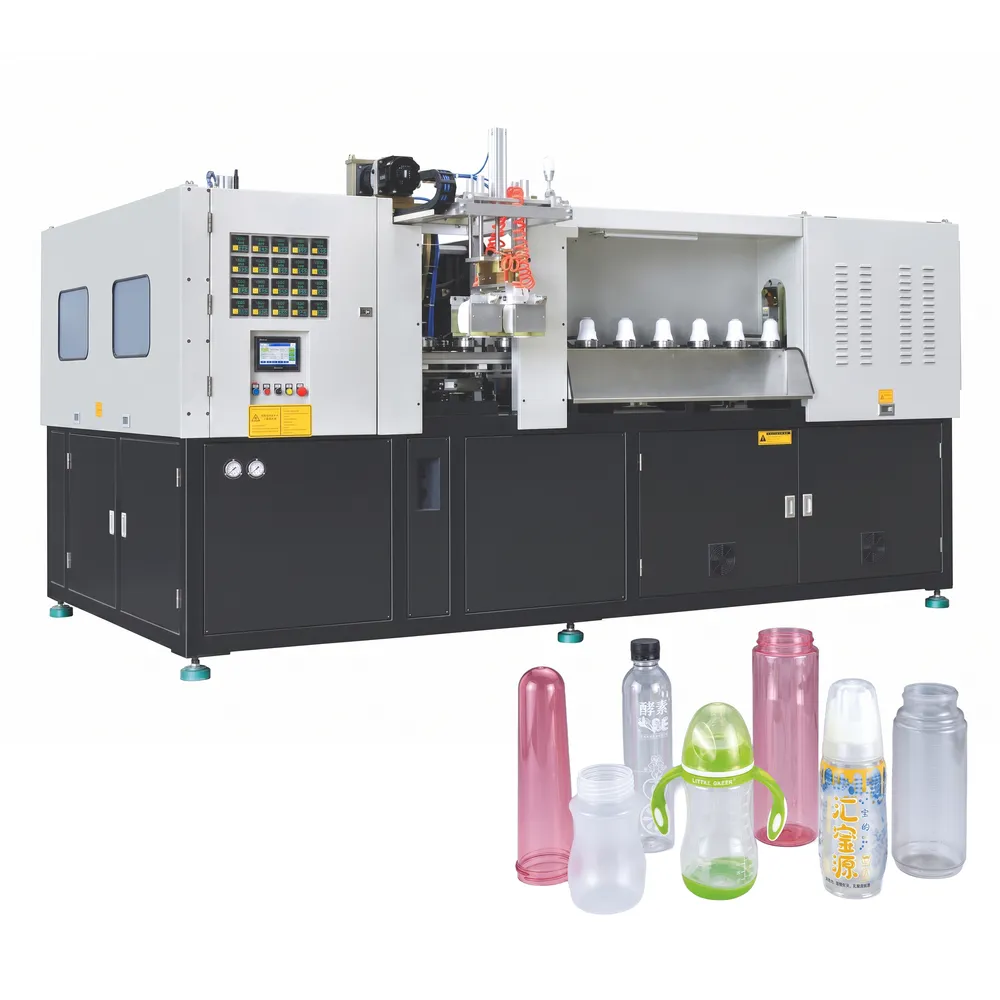
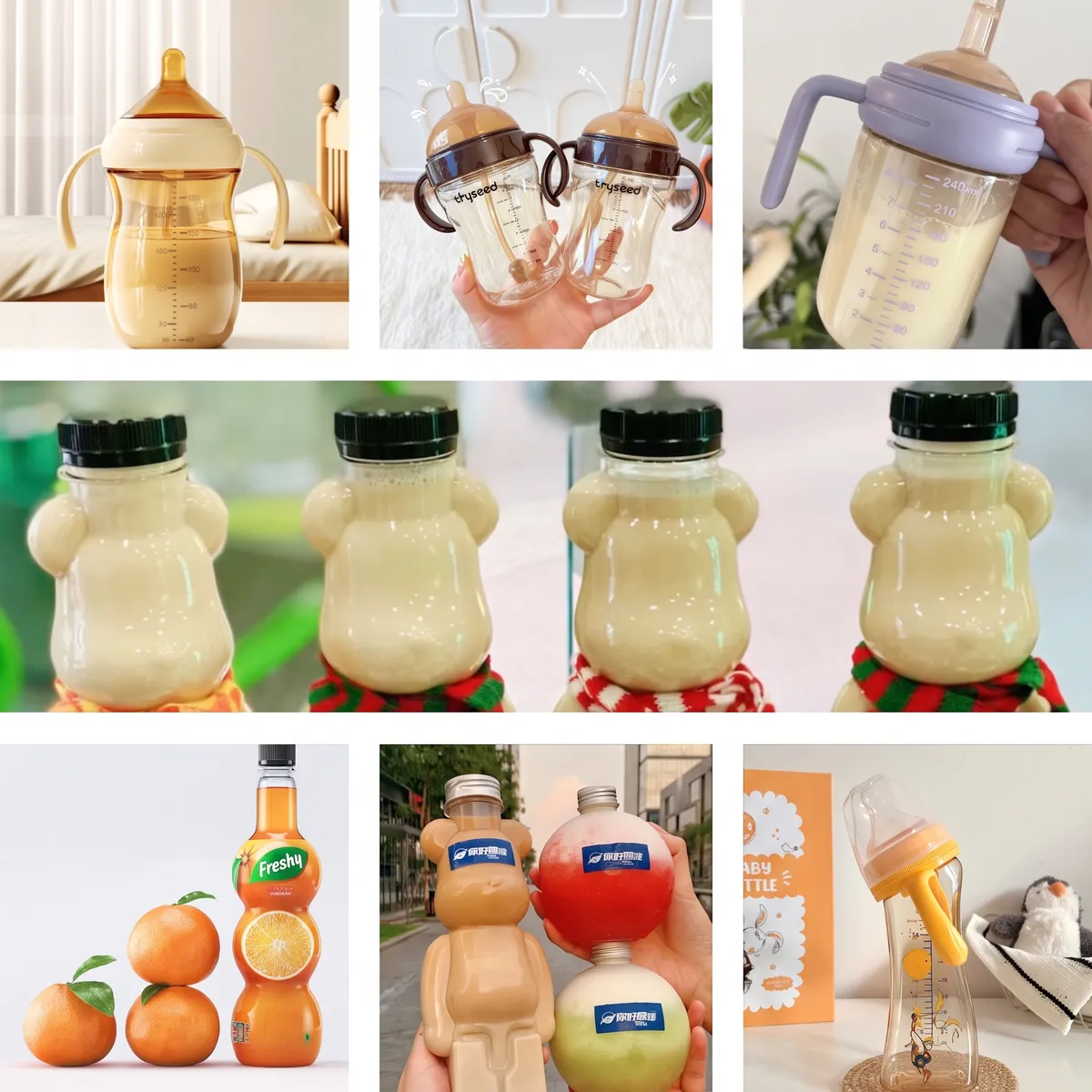
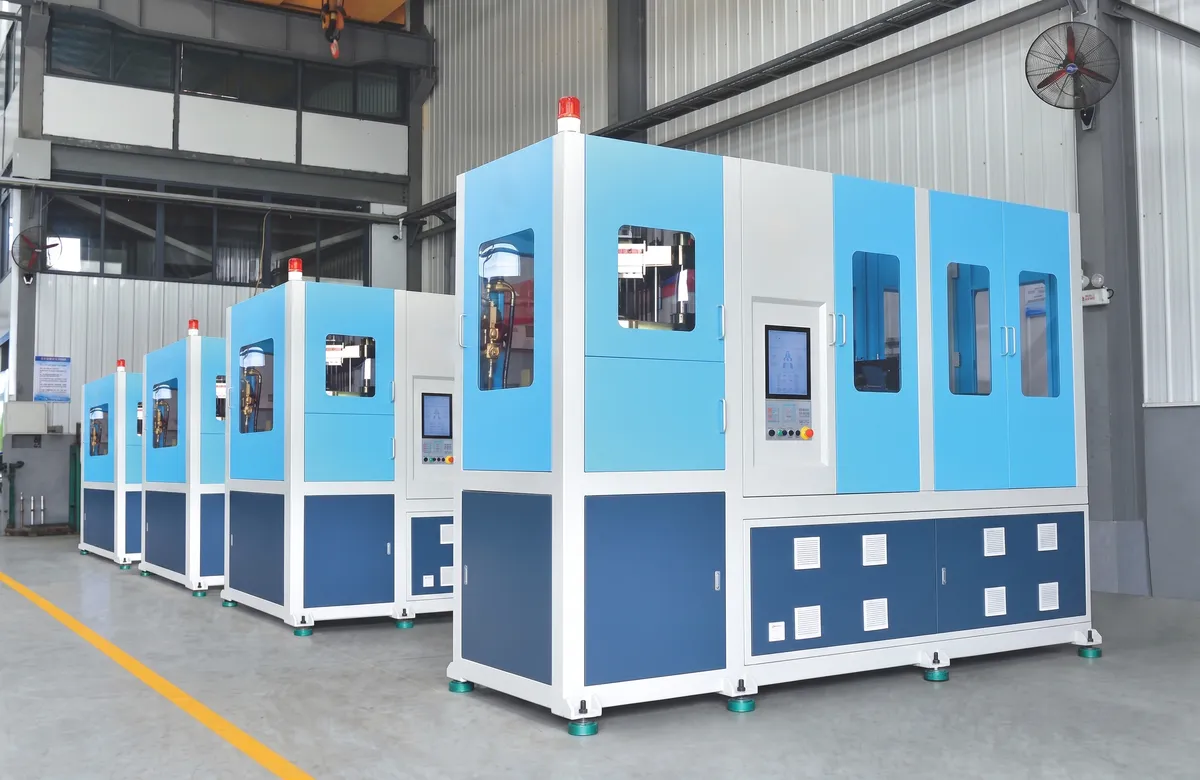
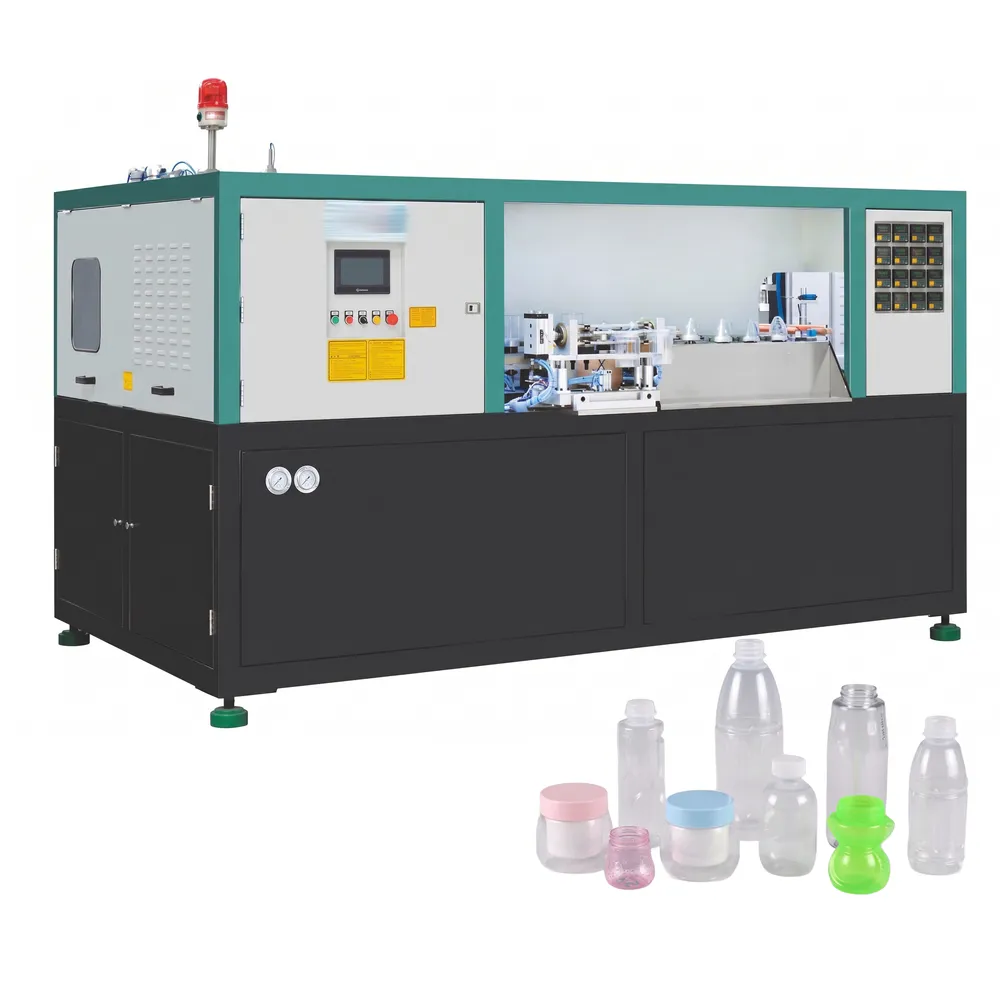
W pełni automatyczna maszyna do formowania rozdmuchowego butelek dla niemowląt i butelek PP EPA.FS-1CG130 to profesjonalna automatyczna maszyna do formowania rozdmuchowego, zaprojektowana do produkcji pojemników o różnych kształtach i z wielu materiałów. Zaprojektowana z myślą o wydajnej produkcji butelek do karmienia, butelek PP oraz butelek rzemieślniczych o specjalnych kształtach i różnych specyfikacjach, maszyna ta stanowi punkt odniesienia w technologii precyzyjnego formowania rozdmuchowego tworzyw sztucznych.
The EPA.FS-1CG130 Fully Automatic Blow Molding Machine for Baby Bottles and PP Bottles is a professional-grade automatic blow molding machine engineered for the production of multi-shape and multi-material containers. Designed to efficiently produce feeding bottles, PP bottles, and special-shaped craft bottles across various specifications, this machine represents the benchmark in precision plastic blow molding machine technology. The series spans multiple models - including EPA.FS-1CG150, EPA.FS-1CG196, EPA.FS-1CG220, and advanced multi-station configurations with container capacities ranging from 1,000 ml to 15,000 ml, and a maximum theoretical output of up to 2,800 bottles per hour on high-speed models such as the EPA.JS-4C114. The blowing pressure remains stable at 30-35 kg/cm2, and the precision cooling system maintains temperatures between 8-12 degrees C, ensuring uniform wall thickness and a flawless, smooth surface finish across every production cycle.
As a fully automatic blow molding machine built for demanding industrial environments, the EPA.FS-1CG130 serves a broad range of application scenarios. Its stable performance and exceptional product consistency make it the preferred PET bottle blow molding machine for manufacturers in the infant care sector, where safety and dimensional accuracy are non-negotiable. The machine is equally at home in daily-use packaging lines, craft bottle production facilities, pharmaceutical container plants, and premium cosmetics packaging operations. With one-cavity construction and a preform holder capacity of 50 units, this injection stretch blow molding machine is optimized for high-consistency, low-defect runs. Whether you are scaling up infant formula bottle production or launching a specialty craft container line, the EPA.FS-1CG130 delivers the reliability, adaptability, and output quality that modern blow molding machine suppliers and end-users demand.
Parametry techniczne
| Maszyna do formowania rozdmuchowego butelek dla niemowląt i butelek PP | |||
|---|---|---|---|
| Model | Jednostka | EPA.FS-1CG130 | |
| Odlewanie | Skok zacisku | mm | 150 |
| Odległość otwarcia formy | mm | 330 | |
| Odległość zamknięcia formy | mm | 180 | |
| Rozciągający się ruch | mm | 350 | |
| Odległość otwarcia formy | mm | 50 | |
| Odległość zamknięcia formy | mm | 130 | |
| Uchwyt na preformy | 50 | ||
| Ubytki | 1 | ||
| Pojemnik | Maksymalna objętość pojemnika | ml | 1500 |
| Zakres średnicy szyjki | mm | 98 | |
| Maksymalna średnica pojemnika | mm | 110 | |
| Maksymalna wysokość kontenera | mm | 250 | |
| Wynik teoretyczny | bph | 700 | |
| Instalacja elektryczna | Maksymalna moc grzewcza | kw | 16 |
| Moc grzewcza | kw | 10 | |
| System powietrzny | Ciśnienie robocze | kg/cm² | 7 |
| Zużycie powietrza przy niskim ciśnieniu | l/min | 800 | |
| Ciśnienie dmuchania | kg/cm² | 35 | |
| Zużycie powietrza pod wysokim ciśnieniem | l/min | 1200 | |
| Woda chłodząca | Ciśnienie robocze | kg/cm² | 5-6 |
| Temperatura | °C | 8-10 | |
| Przepływ | l/min | 30 | |
| Maszyna | Rozmiar (dł.*szer.*wys.) | mm | 3160*1500*1800 |
| Waga | kg | 2000 | |
Features of the EPA.FS-1CG130 Fully Automatic Blow Molding Machine
1. Szeroka adaptowalność do produkcji preform różnego typu
The EPA.FS-1CG130 series supports the production of a wide variety of containers, including baby bottles, PP bottles, craft bottles, and special-shaped bottles, with capacities spanning from 1,000 ml to 15,000 ml. Models such as the EPA.FS-1CG196 and EPA.P.FS-2C150(L) accommodate bottle heights up to 330 mm and diverse neck finish requirements. This baby bottle blow molding machine excels in high-consistency manufacturing of complex special-shaped and feeding bottles, demonstrating the exceptional adaptability that sets this preform bottle machine series apart from conventional plastic blow molding machine alternatives on the global market.
2. Wysoka wydajność i oszczędność energii
The equipment covers a heating power range from 10 kW to 42 kW across the series, with blowing pressure stabilized at 30-35 kg/cm2 for consistent blow quality on every cycle. High and low-pressure air consumption can be accurately adjusted to match production demands, achieving significant energy savings versus older generation machines. The cooling water system maintains a precise temperature of 8-12 degrees C at a flow rate of 30 L/min, ensuring uniform preform cooling, reducing deformation risk, and improving product yield. This automatic blow moulding machine delivers fully automated precision control for demanding industrial blow molding machine applications.
3. Stabilna praca i elastyczna adaptacja produkcji
Built with international-brand components throughout, the EPA.FS-1CG130 ensures low failure rates and easy day-to-day maintenance. A maximum mold opening distance of 635 mm on select series models, combined with balanced clamping force, supports quick mold changeovers and flexible multi-type bottle production schedules. Machine weights across the series range from 2,000 kg to 7,500 kg, with compact footprints designed to suit a variety of workshop layouts. The result is an industrial blow molding machine that operators can confidently run around the clock with minimal downtime.
4. Doskonała jakość wydruku
Capable of steadily processing materials including PP and PET, the machine consistently produces bottles with precise neck dimensions, uniform wall thickness, and high optical transparency. Every unit meets the stringent quality standards required for infant products and premium craft packaging. The EPA.FS-1CG130 PP bottle blow molding machine is particularly suited to manufacturing feeding bottles, decorative craft bottles, and special-shaped containers. The finished products feature smooth surfaces and consistent geometry, satisfying the dual requirements of appearance and functionality demanded by high-end global markets and discerning OEM customers.
5. Fully Automatic Design Reduces Labor and Boosts Efficiency
As a fully automatic blow molding machine, the EPA.FS-1CG130 drastically reduces dependence on manual labor throughout the production cycle. Automated preform loading, heating, stretching, blowing, and bottle ejection are seamlessly integrated into a single continuous process. This eliminates operator error at critical production stages, improves output consistency, and significantly raises throughput per labor hour. For factory managers seeking to scale operations or tighten quality control, this high-speed blow molding machine architecture represents a compelling upgrade over older semi-automatic or manual systems in any modern plastic bottle manufacturing environment.
6. Broad Application Range Across Industries
The EPA.FS-1CG130 serves an exceptionally wide range of industries and bottle types. From infant feeding bottles and pharmaceutical PP containers to premium cosmetic packaging and decorative craft bottles, this custom blow molding machine is configured to address the most exacting application requirements. Its compatibility with multiple resin types, including PET, PP, and multi-material preforms, means buyers from the beverage, healthcare, food, personal care, and specialty packaging sectors can all leverage this machine within a single production platform. It is among the most versatile types of blow molding machine available at this output class.
Working Principle of EPA.FS-1CG130 Plastic Blow Molding Machine
1. Przygotowanie surowca
The raw materials for this two-stage blow molding machine, primarily PP, PE, and PET resins, undergo rigorous screening, blending, feeding, melting, and plasticizing before entering the production process. Strict quality control at the material intake stage ensures that every batch meets the resin grade and purity requirements specified for infant-grade and pharmaceutical-grade packaging applications, establishing a consistent quality baseline for every production run of this plastic blow molding machine.
2. Formowanie wtryskowe
During the injection molding stage, the thoroughly prepared raw materials are fed into the injection molding unit, where they are heated, melted, and plasticized before being injected under controlled pressure into precision molds. Temperature, pressure, and injection speed parameters are monitored and regulated in real time throughout this phase. The result is a dimensionally accurate preform that forms the structural foundation for the final bottle produced by this injection blow molding machine platform.
3. Podgrzewanie wstępne
After injection molding, the formed preforms are transferred to the preheating zone, where an infrared heating system raises their temperature uniformly, with particular attention to the wall thickness regions. This preheating step is critical in the blow molding machine process because it significantly enhances the plasticity and flexibility of the preform material. Precise temperature uniformity at this stage directly influences the final wall thickness distribution and optical clarity of the finished container output by this automatic PET blow molding machine.
4. Formowanie rozdmuchowe
In the blow molding stage, the properly preheated preforms are placed into the blowing mold station. The machine first extends a stretch rod to axially orient the preform, then introduces high-pressure air at 35 kg/cm2 to radially inflate it to the precise shape of the mold cavity. Precise control of stretch timing, blow pressure, and mold clamping force at this stage of the injection stretch blow molding machine process is what ultimately determines the dimensional accuracy, surface quality, and structural integrity of every bottle produced.
Applications of EPA.FS-1CG130 Baby Bottle Blow Molding Machine
1. Produkty do pielęgnacji niemowląt i małych dzieci
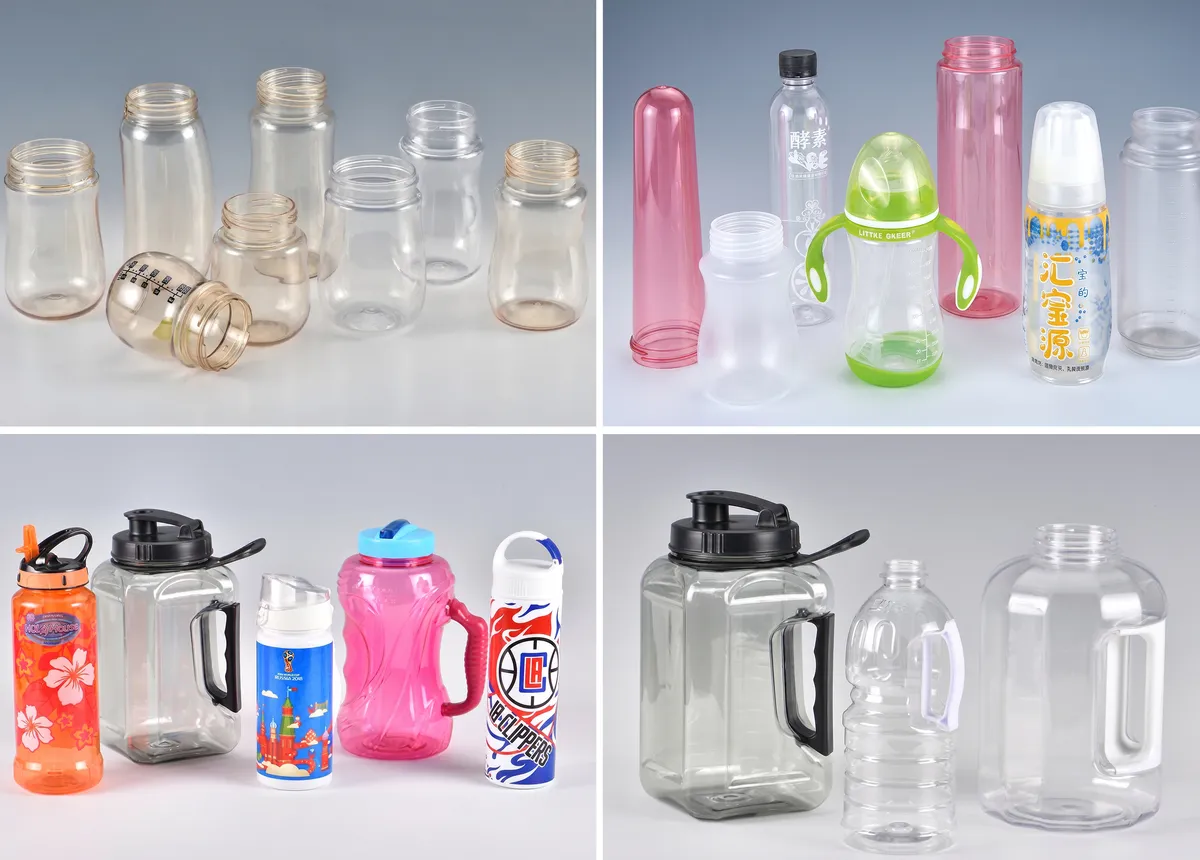
This baby bottle blow molding machine is purpose-built for the stringent demands of infant product manufacturing. Using food-grade PP and PPSU materials, it produces feeding bottles, sippy cups, and nursing accessories with smooth, burr-free edges, high clarity, and consistent neck dimensions. Every bottle meets the elevated safety and dimensional accuracy standards required for mother and child product lines sold in regulated markets across North America, Europe, and Asia.
2. Opakowania farmaceutyczne i medyczne
The EPA.FS-1CG130 PET bottle blow molding machine is well suited for manufacturing medical-grade PP bottles, oral medication containers, eye drop bottles, and laboratory sample vials. Its precise neck dimension control and consistent wall thickness ensure tight sealing compatibility with pharmaceutical caps and dispensing systems. The machine's hygienic, no-hand-contact production process supports GMP compliance requirements for pharmaceutical and healthcare packaging facilities worldwide.
3. Cosmetics and Personal Care Packaging
High-end cosmetics brands require plastic bottle blow molding machine output that delivers both visual brilliance and dimensional precision. The EPA.FS-1CG130 produces lotion bottles, serum flacons, shampoo containers, and perfume-style vessels with exceptional surface clarity, uniform wall thickness, and exquisite aesthetic finishes. Its special-shaped bottle capability allows brands to develop custom, brand-differentiated packaging forms that stand out on retail shelves in competitive personal care and beauty markets.
4. Opakowania do żywności i napojów
The bottle blow molding machine excels in producing food-contact PET and PP containers for condiments, sauces, fruit juices, flavored water, and edible oil products. Its stable blowing pressure and precision temperature management ensure that container walls meet food safety standards for both appearance and structural integrity. The machine's multi-model series capability means that producers can transition between bottle volumes and shapes quickly, supporting fast-moving SKU portfolios in competitive food and beverage retail environments.
5. Craft, Gift, and Decorative Bottle Production
One of the standout strengths of this custom blow molding machine is its proven capability for producing artisan-quality craft bottles and special-shaped decorative vessels. Whether for spirit bottles, artisanal food gift packaging, seasonal collector containers, or premium souvenir products, the EPA.FS-1CG130 handles complex geometries and demanding surface finish requirements that would challenge less capable machines. Its high transparency output and exquisite design reproduction make it a preferred tool for creative packaging studios globally.
6. Health and Wellness Supplement Containers
The growing nutraceutical and wellness sector demands packaging that communicates purity, safety, and premium quality. This PP bottle blow molding machine handles the full range of health supplement container formats, from wide-mouth protein powder tubs to narrow-neck vitamin capsule bottles. Its precision neck tooling ensures leak-proof compatibility with child-resistant caps and induction sealing systems, while its high-clarity output supports on-shelf product visibility and brand presentation that drives consumer purchase decisions in health retail channels.
7. Agricultural and Industrial Chemical Bottles
The blow molding machine's capacity to work with chemical-resistant resins such as HDPE and PP makes it equally effective for producing agricultural pesticide containers, industrial lubricant bottles, and specialty chemical packaging. These applications demand high structural rigidity, chemical compatibility, and consistent wall thickness to prevent leakage during storage and transportation. The EPA.FS-1CG130's precise process control and robust construction make it a reliable choice for industrial blow molding machine applications in agricultural input and chemical distribution industries.
8. Household and Cleaning Product Containers
Major household brand manufacturers, including clients of our blow molding machine suppliers network, deploy the EPA.FS-1CG130 for high-volume production of detergent bottles, fabric softener containers, cleaning spray bottles, and personal hygiene product packaging. The machine's consistent output quality and rapid cycle times keep pace with the demanding production schedules of large-format consumer goods manufacturers, while its energy-saving design helps reduce the per-unit energy cost in high-volume production environments across the daily chemicals packaging industry.
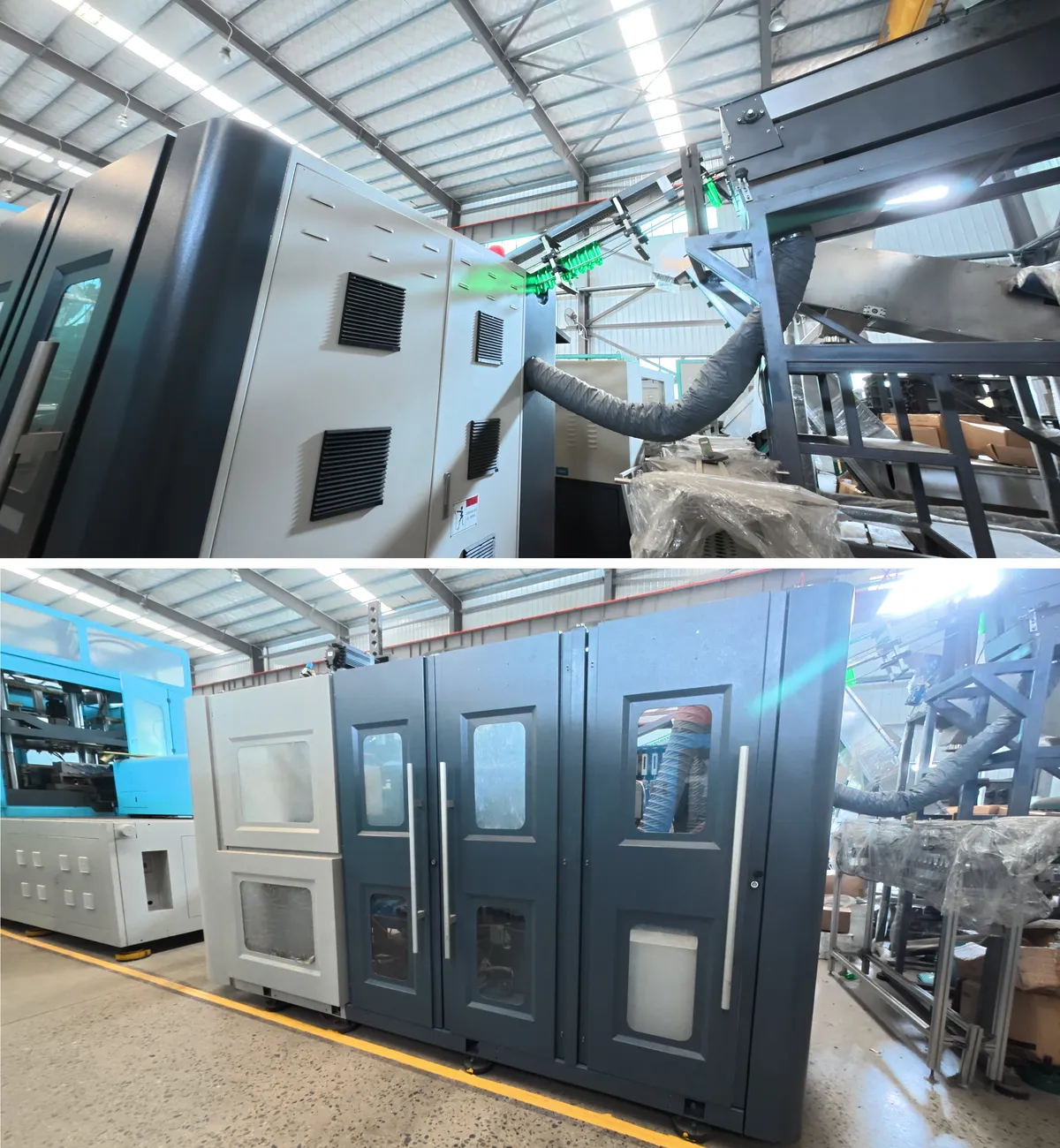
EPA.FS-1CG130 PP Bottle Blow Molding Machine Parts
System karmienia
The feeding system is composed of both steering and electric drive components, including the hopper, preform conveyor, orientator, and gravity rails. This system automatically sorts, aligns, and feeds hollow preform blanks into the blow molding machine in the correct orientation. Reliable feeding at high speeds is essential for sustained output rates, and the EPA.FS-1CG130 feeding system is engineered to handle PP and PET preforms of the specified dimensions without jamming or misfeeds during extended production runs.
Przechylacz preform
For PET bottle production applications, the machine incorporates a preform tilter mechanism that automatically supplies preforms in the correct orientation to the hopper intake. This component eliminates the need for manual preform positioning, reducing labor requirements and the risk of contamination or damage to the preform neck finish area. Precise tilter operation at the specified preform holder capacity of 50 units ensures uninterrupted flow into the heating and blowing stations of this automatic PET blow molding machine.
Infrared Heating System
The infrared heating module is a critical precision component of the blow molding machine process in this model. Operating at a maximum heating power of 16 kW and a standard heating power of 10 kW, it uniformly raises the preform temperature profile along the body while protecting the neck finish area from thermal deformation. Multiple individually controlled heating lamps allow zone-by-zone temperature profiling, which is especially important when producing complex special-shaped bottles or processing materials with narrow thermal processing windows such as PP and PPSU.
Stacja sprężarkowa
The compressor station is the pressure heart of the EPA.FS-1CG130 blow molding machine system. It houses screw compressors, booster pumps, steering valves, connecting hardware, and an air tank sized to maintain steady pressure delivery. The station provides low-pressure air at 7 kg/cm2 for preform transport and machine actuation, plus high-pressure blowing air at 35 kg/cm2 for the bottle forming stage. Stable pressure output throughout the blow molding machine process is essential for achieving consistent bottle wall thickness and neck finish accuracy across full production shifts.
System chłodzenia wodnego
The water cooling system dissipates the heat generated during each blow molding cycle by circulating chilled water through mold cooling channels at a controlled operating pressure of 5-6 kg/cm2, a temperature of 8-10 degrees C, and a flow rate of 30 liters per minute. Rapid and uniform mold cooling is what enables the machine to release fully solidified bottles quickly, supporting higher throughput rates while preventing deformation, warping, and surface defects that would result from insufficient cooling during production.
Taśmociąg wyjściowy butelek
Once the blow molding cycle is complete and the mold opens, the finished bottles are transferred by the exit conveyor system to the downstream process, whether that is filling, labeling, inspection, or accumulation for packing. The conveyor design can be adapted to match the bottle geometry and production layout requirements of each installation. Smooth, reliable bottle transfer at this stage prevents surface scratching, tip-over, or jamming that could cause production stoppages or cosmetic defects in the finished packaging units from this plastic bottle blow molding machine.
System sterowania PLC
The EPA.FS-1CG130 is controlled by a modern PLC-based automation platform with a touchscreen HMI interface that provides centralized, intuitive command over all machine parameters: preform feeding speed, heating zone temperatures, stretch rod timing, blow pressure, mold clamping force, and cooling duration. Operators can store, recall, and replicate production recipes for different bottle SKUs with minimal retooling effort. This control architecture is central to the fully automatic blow molding machine's ability to deliver reproducible quality at scale across multi-shift production environments.
Stacja rozciągania-dmuchania
The stretch-blow station is where the actual transformation of preform into finished bottle occurs in this injection stretch blow molding machine. A servo-driven stretch rod descends through the preform during the blow phase, axially orienting the material at the same moment that radial air pressure inflates it into the mold cavity. This biaxial orientation process is what gives PET and PP bottles produced on the EPA.FS-1CG130 their superior clarity, barrier properties, and impact resistance compared to non-stretched blow molding machine output of comparable wall thickness.
Zgodne surowce
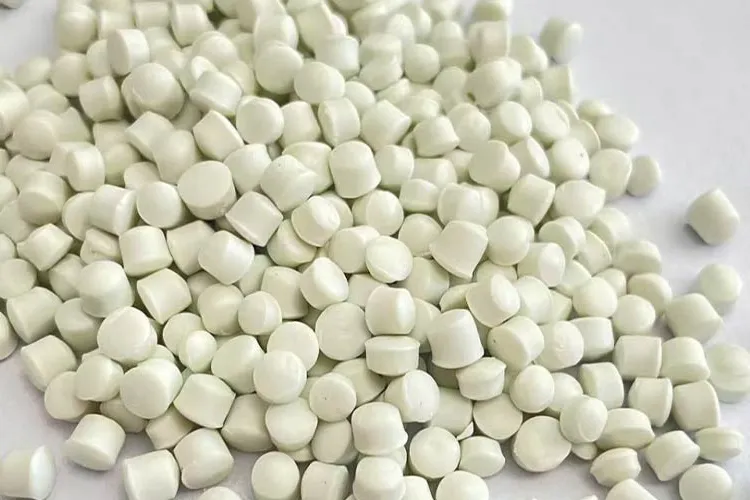
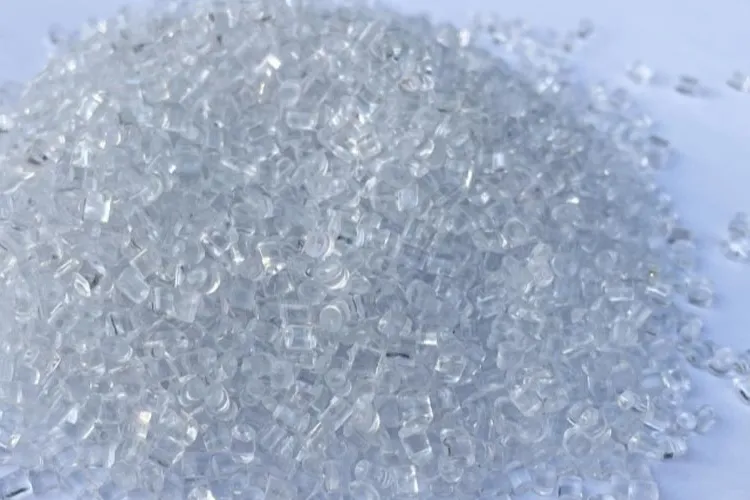
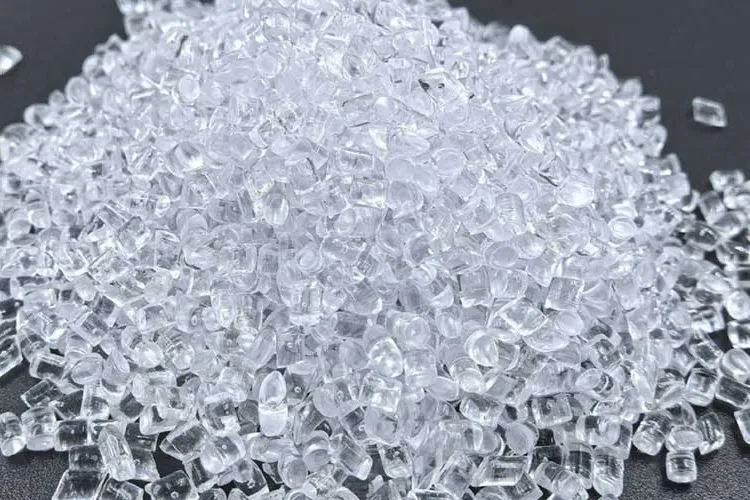
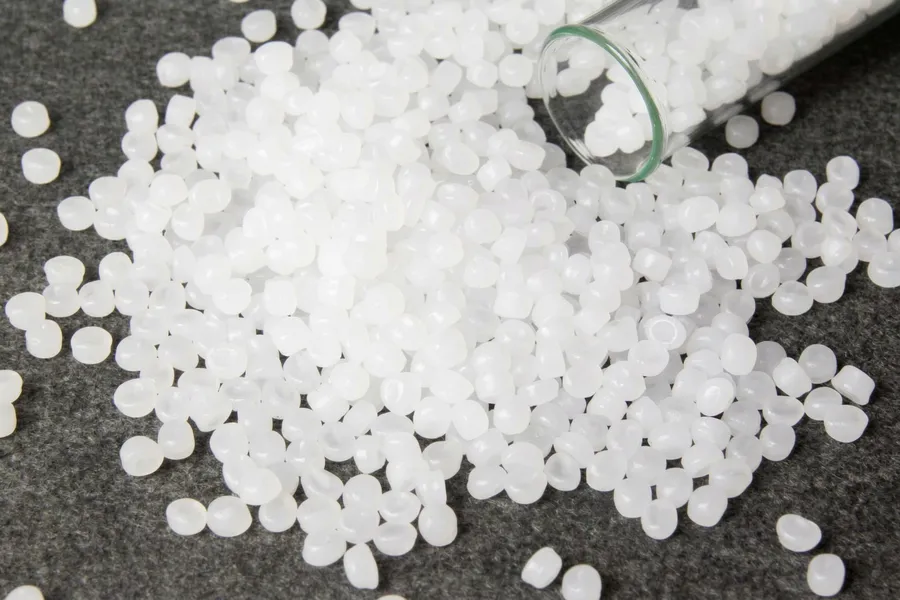
PET (politereftalan etylenu)
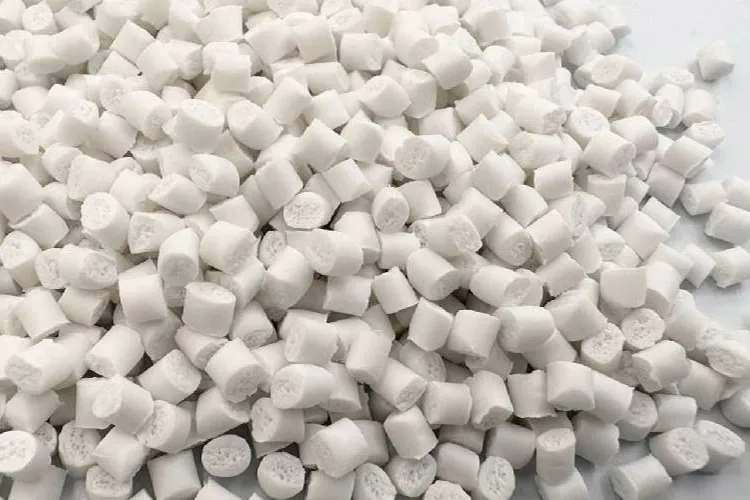
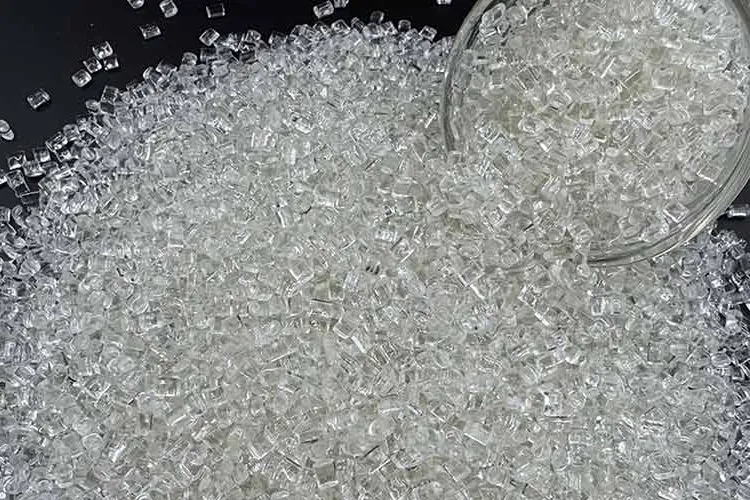
PET is the most widely used material in automatic Maszyna do formowania rozdmuchowego PET production globally. It offers excellent optical clarity, high barrier properties against moisture and oxygen, and outstanding impact resistance at low wall thicknesses. PET is the material of choice for beverage bottles, food-grade containers, and pharmaceutical packaging where product visibility and content protection are paramount. The EPA.FS-1CG130 is optimized for PET processing, delivering exceptional surface finish and dimensional accuracy in every cycle.
PP (polipropylen)
Polypropylene is the primary material for baby bottle production in this PP bottle blow molding machine. PP is FDA-approved for food contact, BPA-free, and resistant to high temperatures, making it compatible with sterilization processes required for infant feeding products. Its combination of toughness, chemical resistance, and processability make PP the go-to resin for baby care, pharmaceutical, and food packaging applications where safety regulations are strictest and consumer trust is non-negotiable.
PC (poliwęglan)
Polycarbonate offers exceptional impact strength, heat resistance, and optical clarity, making it suitable for premium water bottles, laboratory containers, and durable specialty packaging. The EPA.FS-1CG130 can process PC preforms where product design calls for the exceptional mechanical performance and glass-like transparency that PC delivers. PC processing requires precise temperature management, and the machine's accurate infrared heating system is well suited to handling this demanding engineering-grade thermoplastic resin.
PE (Polyethylene)
Polyethylene, encompassing both HDPE and LDPE grades, is a versatile packaging material known for its chemical resistance, flexibility, and low moisture vapor transmission rate. It is commonly processed on extrusion blow molding machine platforms, though injection blow molding machine configurations can also handle PE materials effectively for smaller, more precise container formats. Applications include household chemical containers, agricultural product bottles, and personal care packaging requiring good squeeze characteristics and chemical barrier performance.
Tritan (kopoliester)
Tritan is an advanced copolyester resin developed specifically for food-contact applications requiring absolute BPA-free certification, high clarity, and exceptional durability. It is increasingly preferred for premium reusable water bottles, baby feeding products, and high-end drinkware where consumers demand both safety assurance and visual appeal. Processing Tritan on the EPA.FS-1CG130 fully automatic blow molding machine yields containers with outstanding scratch resistance, dishwasher durability, and crystal-clear aesthetics that command premium retail positioning.
HDPE i LDPE
High-Density Polyethylene provides a superior strength-to-density ratio and excellent resistance to solvents, acids, and bases, making it the dominant resin in industrial containers, cleaning product bottles, and agricultural packaging. Low-Density Polyethylene offers greater flexibility and transparency, suited to squeeze bottles and cosmetic tubes. The EPA.FS-1CG130 blow molding machine series supports both HDPE and LDPE processing, giving operators the flexibility to diversify their container portfolio across industrial, consumer, and specialty packaging market segments.
PPSU (polifenylosulfon)
PPSU is the gold standard material for premium baby bottles and medical devices requiring repeated high-temperature sterilization. It withstands repeated autoclave cycles, boiling, and microwave sterilization without degradation, yellowing, or material migration. PPSU also offers excellent impact resistance and a natural amber transparency that many consumers associate with premium quality. When processed on this baby bottle blow molding machine, PPSU yields feeding bottles that satisfy the most demanding pediatric safety and durability standards in global markets.
 |
 |
 |
 |
 |
 |
Formowanie metodą rozdmuchu metodą wytłaczania a formowanie metodą rozdmuchu metodą wtrysku z rozciąganiem
Blow molding is a foundational process in plastic manufacturing, widely employed for producing bottles, containers, and industrial components across dozens of industries. Among the different types of blow molding machine processes available today, Extrusion Blow Molding (EBM) and Injection Stretch Blow Molding (ISBM) represent the two most significant production technologies. Selecting the right method for your business depends on a careful evaluation of product requirements, material compatibility, tooling investment, output clarity, and production scalability. Understanding the core differences between these two blow molding machine process types will help you make the best capital investment decision for your operation.
Czym jest formowanie metodą wytłaczania z rozdmuchem (EBM)
Extrusion Blow Molding is a process in which plastic resin is melted and continuously extruded through a die head to form a hollow tube of molten material called a parison. This parison is then clamped between two mold halves and inflated with compressed air to take on the shape of the surrounding mold cavity. Once the material has cooled and solidified, the mold opens and the finished product is ejected. Extrusion blow molding machines are among the most widely deployed plastic blow molding machine types in global manufacturing.
Key Features of EBM:
- Well-suited for producing hollow plastic objects such as industrial containers, automotive fluid reservoirs, and packaging bottles in HDPE, LDPE, PP, and PVC materials.
- Capable of producing large, complex shapes with relatively uniform wall thickness at high production speeds and with lower tooling investment.
- The shorter cycle time and lower mold cost make extrusion blow molding machine systems attractive for large-volume, lower-precision packaging applications.
Primary Industries Using EBM:
- Opakowanie: Shampoo bottles, household detergent containers, dairy bottles, and edible oil jugs.
- Automobilowy: Fuel tanks, windshield washer fluid reservoirs, and coolant overflow bottles.
- Medical and Industrial: Large-volume pharmaceutical containers and chemical storage vessels.
What is Injection Stretch Blow Molding (ISBM)
Injection Stretch Blow Molding is a two-stage process in which PET or PP preforms are first precision-injection-molded to exact dimensions, and then reheated and biaxially stretched and blown into the final bottle shape within a precision blow mold. The EPA.FS-1CG130 operates on ISBM principles as a two-stage automatic blow molding machine, first processing preforms and then executing the stretch-blow cycle. This biaxial orientation of the plastic material during the blow stage is what delivers the superior material properties and optical qualities that distinguish ISBM output from all other blow molding machine types.
Key Advantages of ISBM:
- Superior Clarity and Strength: Biaxial orientation aligns the polymer chains in both the axial and radial directions, producing bottles with outstanding optical transparency, barrier properties, and drop impact resistance that are simply not achievable with an extrusion blow molding machine process.
- Precise Wall Thickness Control: The injection-molded preform provides an extremely consistent and dimensionally accurate starting point, resulting in highly uniform wall thickness distribution across every bottle produced by this automatic PET blow molding machine.
- Better Material Efficiency: The precise preform design and biaxial orientation allow thinner walls to achieve the same performance as thicker EBM walls, reducing material cost per bottle in high-volume runs.
- Excellent Neck Finish Accuracy: The injection-molded neck finish area of ISBM preforms is dimensionally superior to the pinch-trimmed necks common in EBM output, ensuring reliable cap thread engagement and leak-proof sealing in pharmaceutical and baby bottle applications.
Primary Industries Using ISBM:
- Napój: PET water bottles, carbonated soft drink containers, and juice packaging.
- Farmaceutyczny: Medicine bottles, oral liquid containers, and eye drop vials.
- Cosmetics and Baby Care: Lotion bottles, baby feeding bottles, and premium personal care packaging.
EBM kontra ISBM: porównanie bezpośrednie
| Funkcja | Wytłaczanie z rozdmuchem (EBM) | Formowanie wtryskowe z rozciąganiem i rozdmuchiwaniem (ISBM) |
|---|---|---|
| Użyty materiał | HDPE, LDPE, PP, PVC | PET, PP, PPSU, Tritan |
| Typ produktu | Duże, puste, złożone kształty | Clear, lightweight, high-precision bottles |
| Koszt produkcji | Lower initial tooling investment | Higher investment, highly efficient at scale |
| Grubość ścianki | Jednolity, ale mniej precyzyjny | Wysoce precyzyjny i spójny |
| Przejrzystość i siła | Umiarkowana klarowność, dobra moc | High clarity, excellent barrier and strength |
| Aplikacje | Industrial, automotive, packaging | Food, beverage, pharmaceutical, cosmetics, baby care |
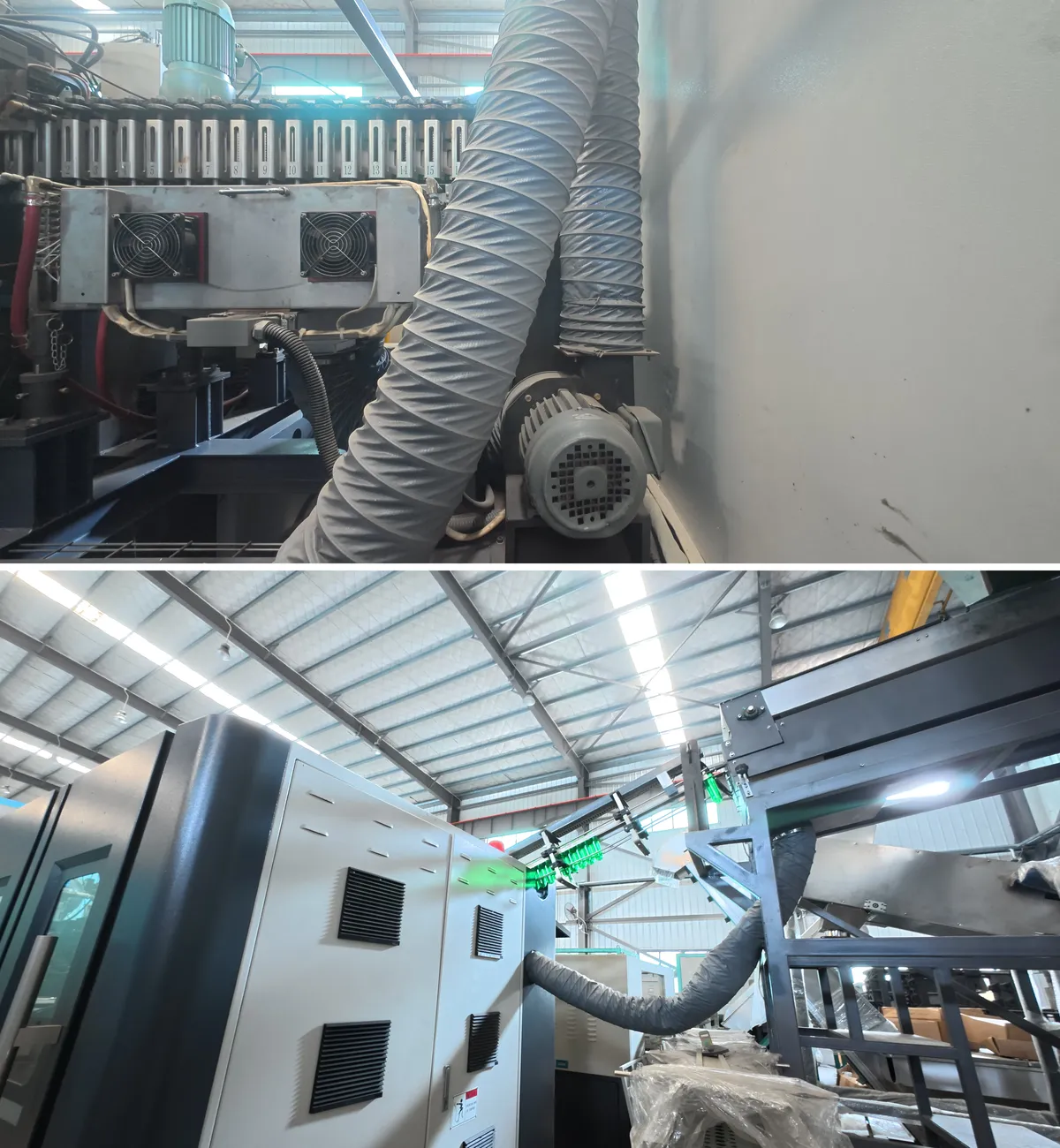
EPA.FS-1CG130 PET Blow Molding Machine Maintenance
1. Daily Inspection of Air and Water Systems
Before starting each production shift, inspect all pneumatic connections, air filters, and water cooling circuits for leaks, blockages, and pressure deviations. Verify that the cooling water temperature is maintaining the specified 8-10 degrees C range and that the operating pressure remains within the 5-6 kg/cm2 specification. Catching pressure drops or temperature drift early prevents costly defect batches and protects downstream blow molding machine parts from stress overload during production cycles.
2. Regular Cleaning of Heating Lamps and Reflectors
Infrared heating lamp surfaces and their reflector panels accumulate dust, resin vapor deposits, and oxidation over time, reducing heating efficiency and causing uneven temperature distribution across the preform. Clean the heating zone components with a dry, lint-free cloth at least weekly, and replace any lamps showing visible darkening or reduced output intensity. Consistent heating uniformity is critical for producing baby bottles with even wall thickness and without surface blemishes on this automatic blow molding machine.
3. Periodic Mold Maintenance and Cavity Inspection
Inspect blow mold cavities for surface scratches, corrosion, mold release buildup, and vent blockages on a regular maintenance schedule. Blocked vents trap air during the blow molding process and cause surface defects or incomplete bottle formation. Apply appropriate mold release agents as specified, and polish cavity surfaces when surface roughness begins to affect bottle finish quality. Proper mold care directly determines the aesthetic consistency and dimensional accuracy of every bottle produced by this PET bottle blow molding machine.
4. Smarowanie elementów napędu mechanicznego
The EPA.FS-1CG130 incorporates multiple mechanical drive systems for mold clamping, stretch rod actuation, and preform transfer. These components require proper lubrication at the intervals specified in the machine's maintenance schedule. Use only the lubricant grades recommended by the manufacturer for each component. Under-lubricated moving parts generate excessive wear, increased vibration, and eventual component failure that can cause unplanned downtime on this fully automatic blow molding machine production line.
5. Calibration of Control System and Sensors
Schedule periodic calibration checks of all temperature sensors, pressure transducers, and position sensors integrated into the PLC control system of this automatic blow molding machine. Sensor drift, especially in temperature measurement, can cause systematic product defects that are difficult to diagnose without comparative calibration data. Verify that alarm thresholds are correctly configured and that the control system accurately reflects the actual physical process conditions during a live production verification run at least once per month.
6. Preform Storage and Quality Control Incoming Inspection
Machine performance is only as good as the preform quality fed into it. Establish a structured incoming quality control process for all preform deliveries, checking dimensions, resin grade, moisture content, and visual defects before use. Store preforms in a cool, dry, clean environment away from UV exposure to prevent resin degradation prior to processing. Feeding moisture-absorbed or dimensionally inconsistent preforms into this plastic blow molding machine will produce rejects regardless of how well the machine itself is calibrated and maintained.
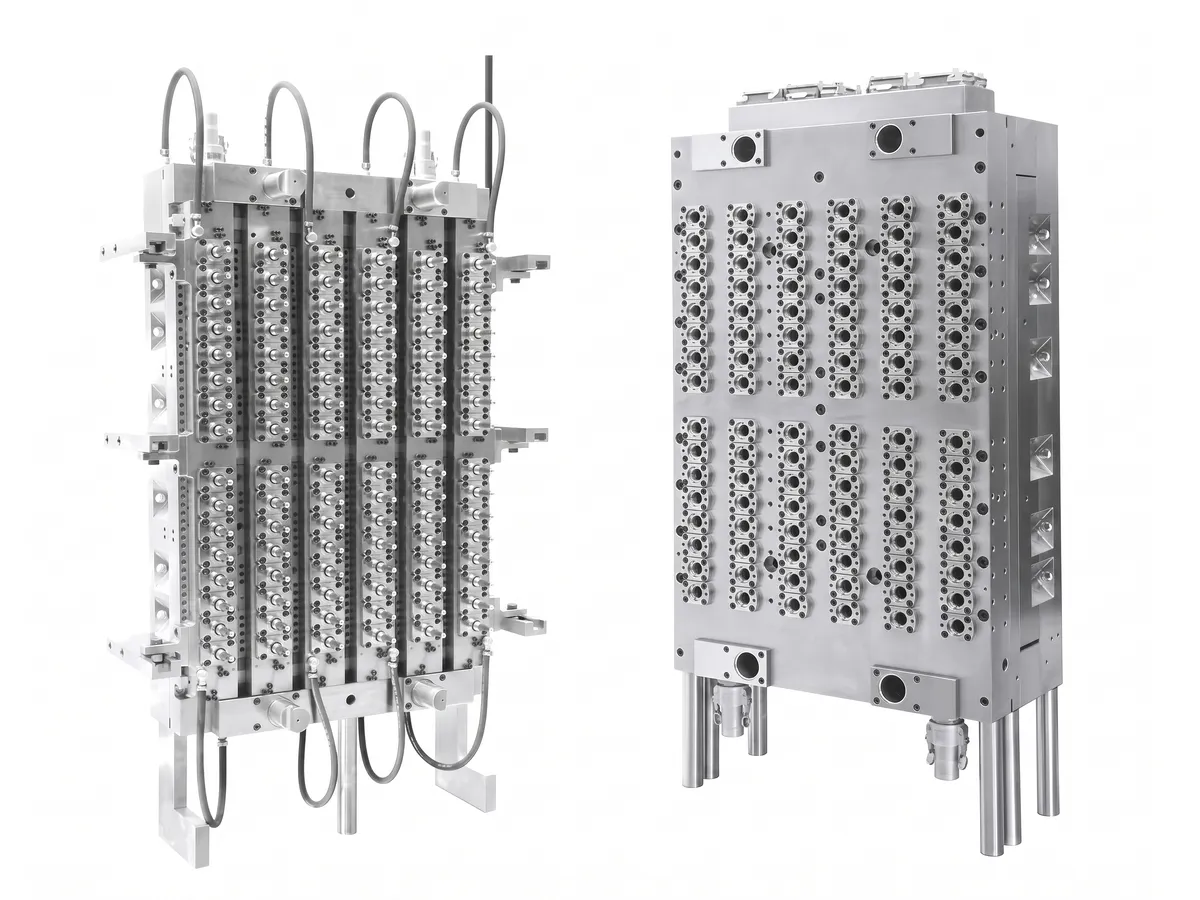
Cechy formy maszyny do formowania rozdmuchowego butelek dla niemowląt
Forma wtryskowa preform
Konstrukcja wargi matrycy dwuczęściowej
The die lip of the preform injection mold is engineered as a two-component assembly that guarantees co-axiality of the preform finish and gate area during the injection molding cycle. This precise axial alignment is the foundation of neck finish dimensional accuracy in the final blow-molded bottle, directly affecting closure compatibility and leak-proof performance in the infant care and pharmaceutical packaging applications served by this blow molding machine.
Optimized Cooling Channel Layout
The internal cooling water channels are designed to deliver uniform heat removal across the entire preform cavity, maximizing the cooling rate and shortening the injection cycle time. A faster and more uniform cooling cycle directly translates to higher throughput capacity and reduced crystallinity variation in the preform, both of which positively impact the final bottle quality when processed through this automatic blow molding machine's stretch-blow station.
Imported Die Steel 2316 for Cavity Components
All cavity-forming components of the preform mold use imported 2316 die steel, which offers superior corrosion resistance, exceptional machinability, and excellent polishability. The 2316 grade is industry-standard for PET and PP preform molds due to its resistance to the condensate moisture and acidic resin gases generated during high-volume injection molding operations in this baby bottle blow molding machine environment.
420 Stainless Steel Structural Components
Core plates, cavity plates, and all load-bearing structural elements are manufactured from 420 stainless steel, chosen for its high hardness after heat treatment and outstanding corrosion resistance. This material selection ensures the mold structure maintains its dimensional integrity through millions of injection cycles, minimizing mold flexure-induced preform defects and extending the overall service life of the tooling investment supporting this blow molding machine operation.
Standard Interchangeable Die Fittings
The preform injection mold uses standardized, interchangeable die components, which simplifies both routine maintenance and cavity replacement when wear occurs in high-production environments. Standardized fittings mean that spare components can be stocked at lower cost and replaced without specialized tooling or long machine downtime. This design philosophy supports the ease-of-maintenance objective that distinguishes Ever-Power blow molding machine manufacturers from competitors using proprietary, non-standard tooling designs.
Multi-Preform Type Single Mold Capability
The advanced mold design allows a single injection mold to produce multiple preform types through hot runner insert changes, enabling manufacturers to consolidate their tooling inventory and produce a broader range of preform specifications without investing in completely separate mold sets. This flexibility is especially valuable for custom blow molding machine buyers who serve multiple bottle formats across different market segments using one production platform.
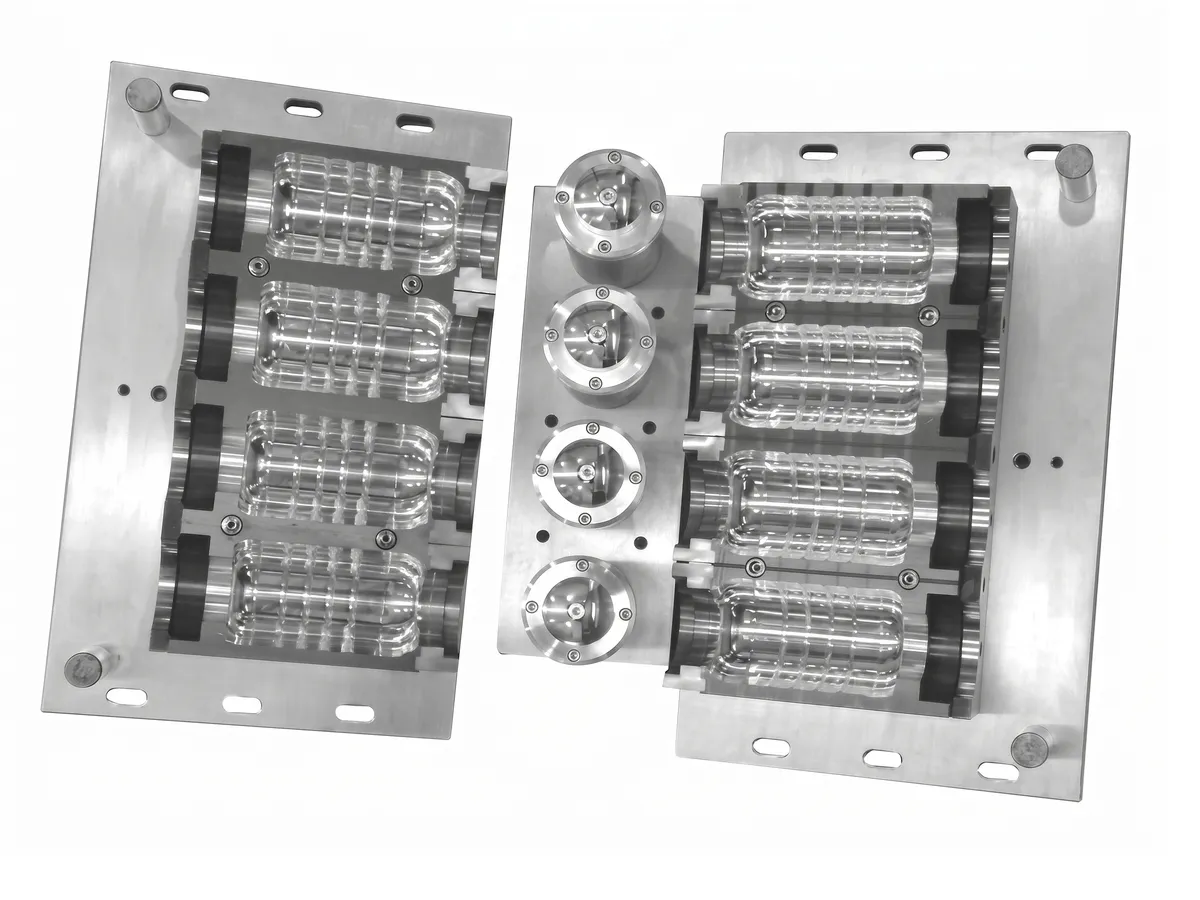
Forma do rozdmuchiwania
Wysokiej jakości konstrukcja stalowa
Blow mold bodies are machined from high-quality tool steel that provides the hardness and surface finish quality necessary for producing baby bottles and craft containers with smooth, defect-free external surfaces. The steel grade selected balances machinability for complex 3D cavity geometries, thermal conductivity for efficient cooling, and surface durability to resist wear from repeated high-pressure bottle forming cycles throughout the service life of this industrial blow molding machine's tooling.
Advanced 3D Software Bottle Design
Every blow mold cavity is designed using state-of-the-art 3D CAD/CAM software that allows precise simulation of the blow-forming process before any cutting steel occurs. This computational design process ensures accurate preform-to-bottle stretch ratios, optimized wall thickness distribution, and correct vent placement, reducing trial-and-error tooling cost during new product introduction. We offer a broad selection of standard bottle designs and full custom design services for bespoke bottle shapes.
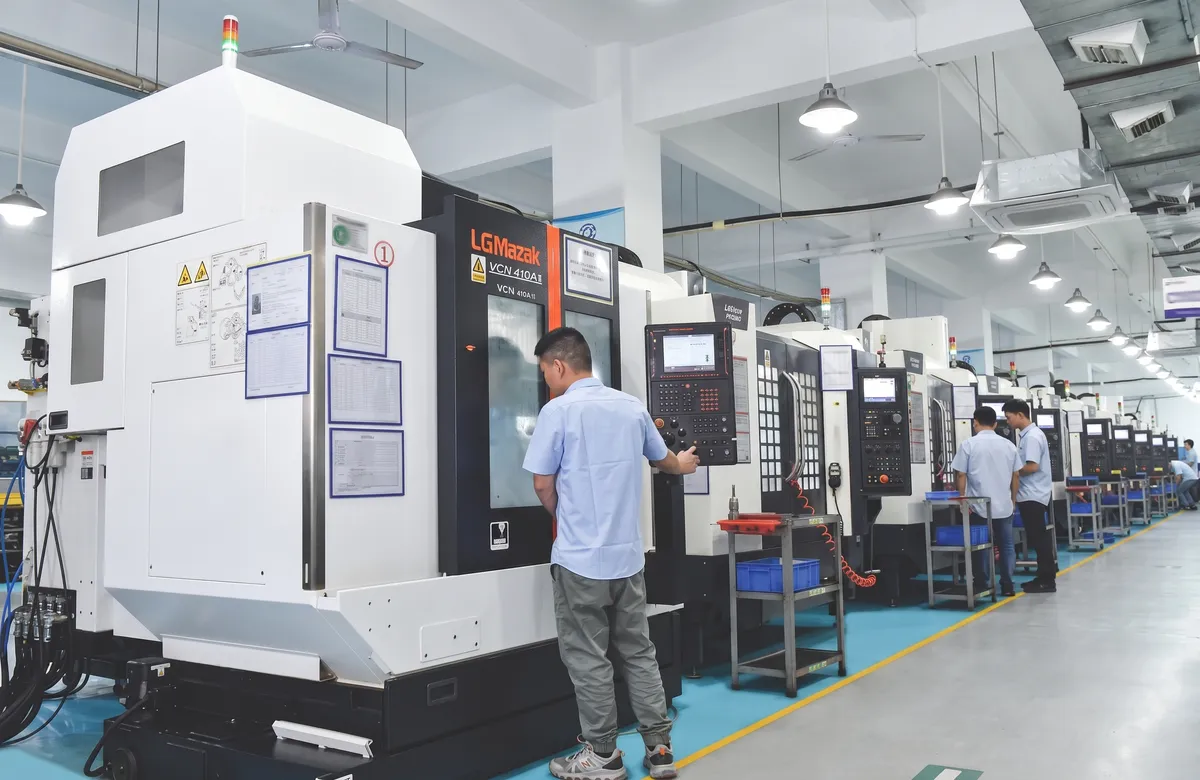
Precision CNC Machined Metal Parts
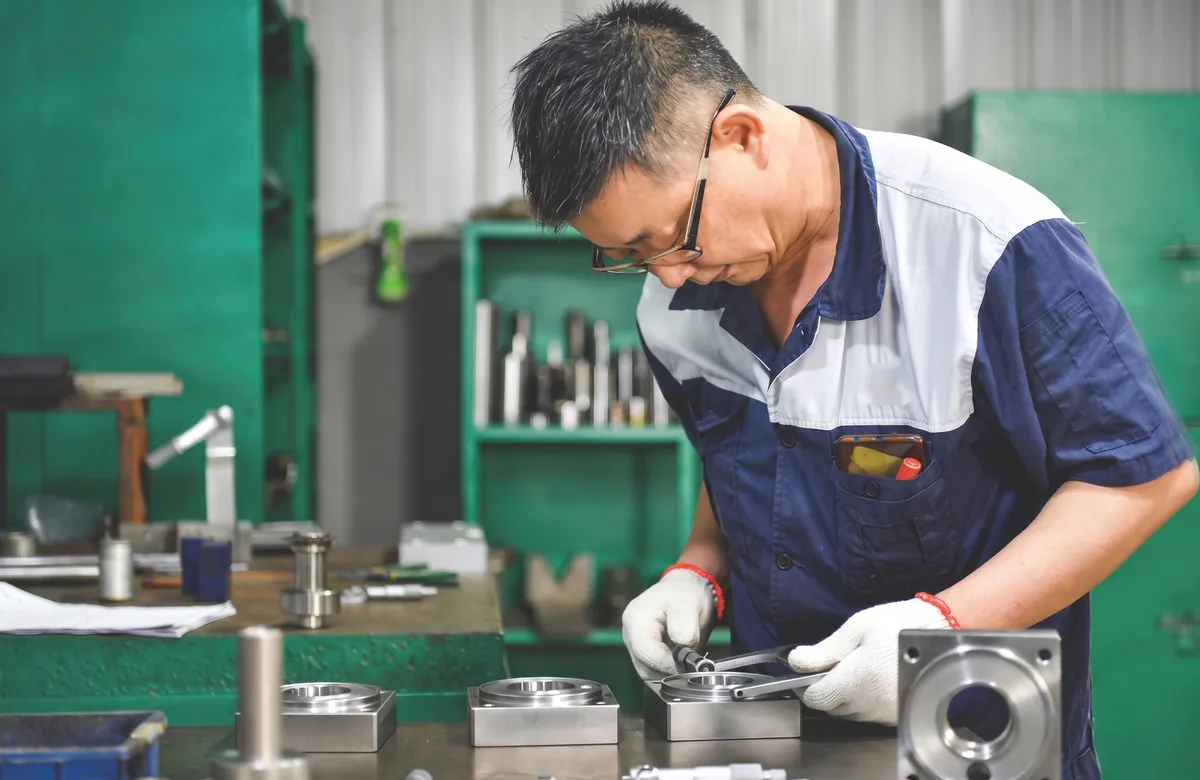
All metal components of the blow mold, including cavity inserts, neck tooling, bottom plugs, and clamping plates, are machined on precision CNC machining centers to tight dimensional tolerances. CNC-machined blow mold components ensure that the mold halves align correctly on every clamping cycle, preventing flash defects at parting lines and ensuring repeatable, high-precision bottle dimensions that meet the strictest quality standards for infant product and pharmaceutical packaging applications on this bottle blow molding machine.
Typowe rozwiązywanie problemów
Issue: Uneven Wall Thickness in Finished Bottles
Cause and Solution: Uneven wall thickness most commonly results from non-uniform preform heating in the infrared zone, a drifting stretch rod position, or inconsistent blow pressure delivery. Begin diagnosis by checking each heating lamp zone's output and reflector cleanliness. Verify that the stretch rod is centered and descending at the programmed speed. Confirm that blowing pressure is holding steady at 35 kg/cm2 throughout the blow phase without pressure fluctuation from the compressor station of this automatic blow molding machine.
Issue: Whitening or Haziness in Bottle Walls
Cause and Solution: Stress whitening or haziness in blow-molded PET or PP bottles is typically caused by over-stretching the material beyond its optimal orientation window or processing preforms that have been inadequately heated. Adjust the heating zone temperature profile to ensure the preform wall reaches the correct processing temperature range before entering the blow station. Also check that the stretch rod descent speed and blow timing are within specification for the material being processed on this plastic bottle blow molding machine.
Issue: Bottle Neck Deformation or Distortion
Cause and Solution: Neck deformation occurs when the preform neck finish area overheats during the infrared heating phase, causing the crystallized neck zone to soften and distort before the blow cycle. Verify that neck protection shields are correctly positioned and functioning in the heating zone. Reduce the heating intensity in the zones closest to the neck finish area of the preform. Also ensure preform holders are correctly sized for the preform neck diameter specifications on this baby bottle blow molding machine configuration.
Issue: Flash or Fins on Bottle Body
Cause and Solution: Flash lines or fins along the blow mold parting line indicate that the mold clamping force is insufficient, the mold halves are misaligned, or the mold parting surfaces are worn or contaminated. Inspect the mold clamping system for adequate force delivery at the specified clamping stroke setting. Check mold alignment pins and bushings for wear. Clean the mold parting surfaces and reseat the mold in the machine to ensure correct alignment of both mold halves during the clamping cycle of this automatic blow molding machine.
Issue: Preform Feeding Jams or Misfeeds
Cause and Solution: Preform feeding disruptions cause production stops and affect throughput on this fully automatic blow molding machine. Common causes include preform size inconsistency from the supplier, an incorrectly adjusted orientator, bent or worn gravity rails, or foreign material in the hopper. Begin troubleshooting by inspecting incoming preform dimensional consistency against specification. Clean the entire preform conveying path and check the orientator adjustment settings for the specific preform body and neck dimensions being run.
Issue: Incomplete Bottle Formation or Short Shots
Cause and Solution: When the blow-molded bottle fails to fully fill the mold cavity, the most likely causes are insufficient blow pressure, blocked mold vents, a defective blow nozzle seal, or a preform that is too cold at the moment of blowing. Verify that the blowing pressure is at the specified 35 kg/cm2 with no pressure drop during the blow hold phase. Clean all mold cavity vent slots. Inspect and replace the blow nozzle seal if leakage is detected during the high-pressure blow phase of this PET bottle blow molding machine's production cycle.
Dlaczego warto wybrać maszynę do formowania rozdmuchowego PET marki Ever-Power?
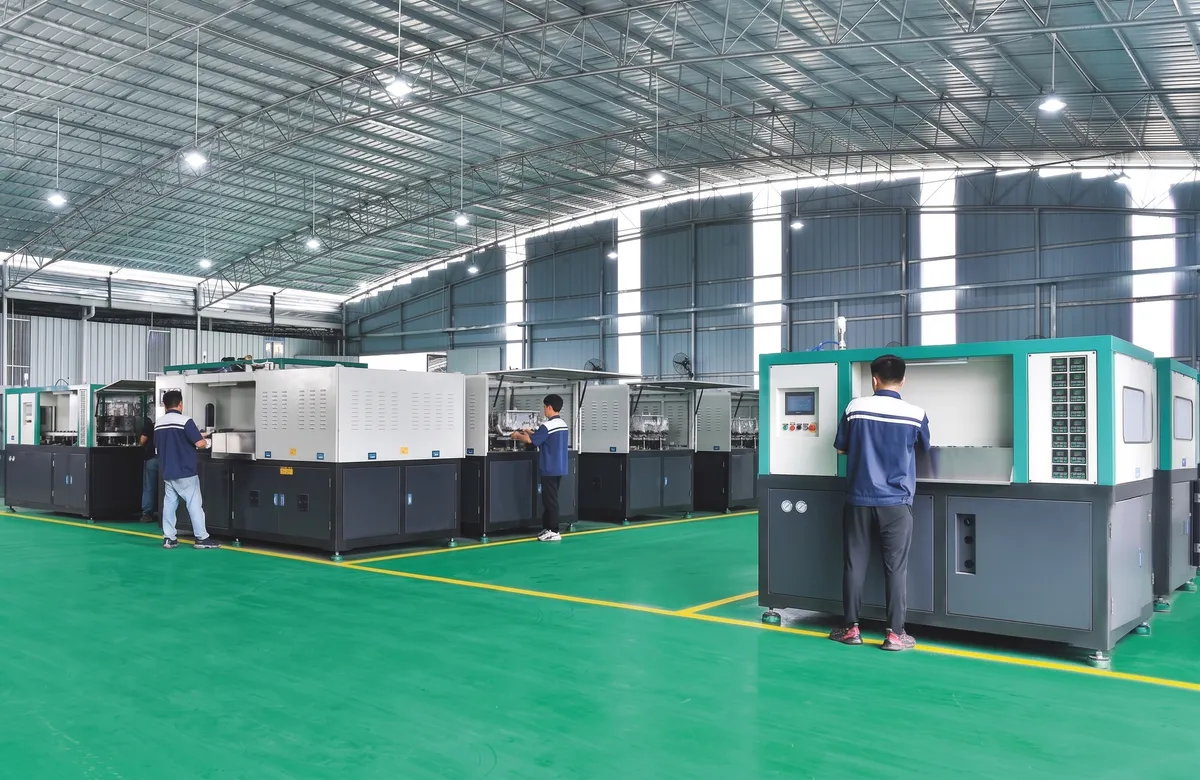
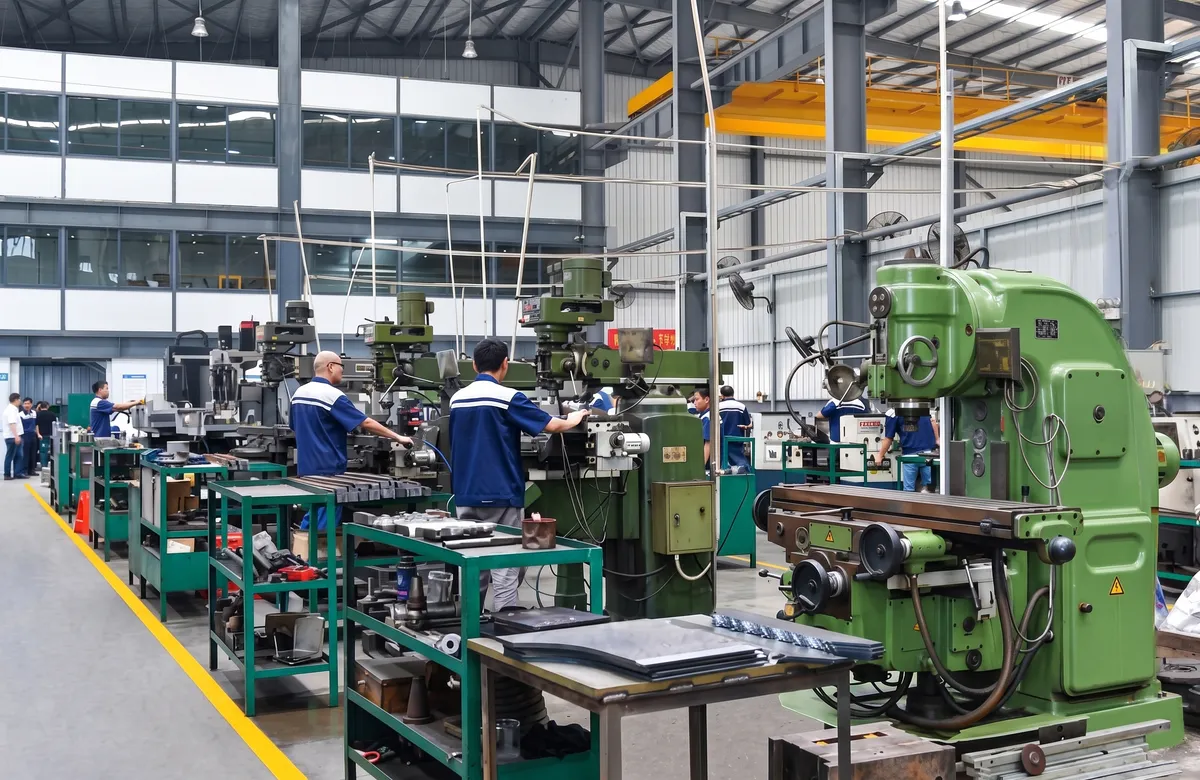
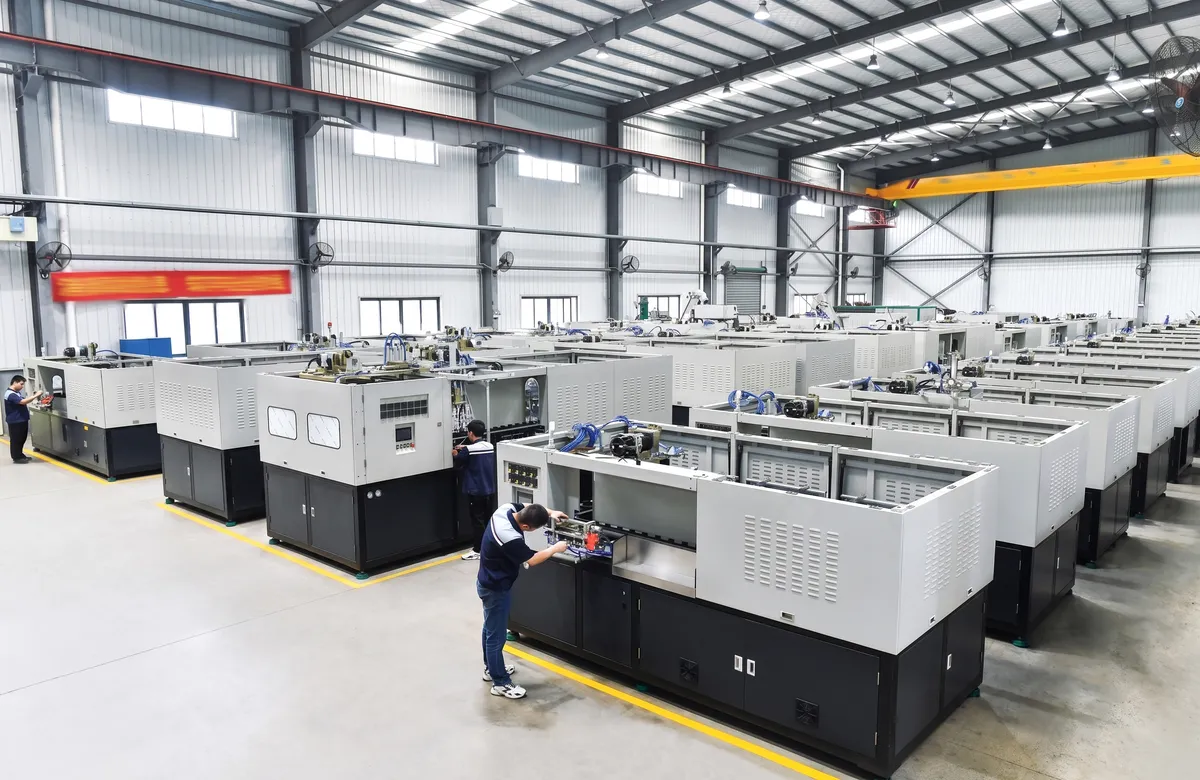
Mexico Ever-Power ISBM Machinery Co., Ltd is a professional enterprise primarily engaged in the research and development, manufacturing, sales, and international trade of automatic blow molding machines, including Injection Blow Molding Machines, Injection Stretch Blow Molding Machines, and Extrusion Blow Molding Machines. Our product portfolio covers the full range of blow molding machine types, from single-cavity laboratory-scale machines to high-speed multi-station configurations producing thousands of bottles per hour. With convenient logistics infrastructure and extensive international trade experience, Ever-Power delivers complete blow molding machine solutions to customers across more than 30 countries worldwide.
Ever-Power maintains a strong in-house R&D team composed of engineers and technical specialists with deep expertise in injection-blowing machinery and mold engineering. This team brings together theoretical mastery and decades of hands-on production experience to deliver blow molding machine solutions that consistently outperform customer expectations. Our product development process is driven by real-world application feedback from our global customer base, ensuring that every new machine model addresses genuine production challenges faced by packaging manufacturers in competitive markets.
The company's application scope covers pharmaceutical packaging, food and beverage packaging, healthcare product packaging, cosmetics packaging, and specialty consumer packaging. We produce plastic products in volume ranges from 1 ml to 1,000 ml across materials including HDPE, LDPE, PET, PETG, PP, PS, PPSU, PC, Tritan, ABS, PLA, biodegradable corn-based materials, EVA, and PCTG. Ever-Power adheres to the enterprise development principles of self-reliance, integrity, pragmatism, innovation, and responsibility, and is committed to delivering one-stop turnkey blow molding machine project solutions that give our customers a competitive manufacturing advantage in their markets.
Two decades of dedicated blow molding machine development and process engineering expertise delivered into every machine we build. Patented innovations in automatic blow molding machine design, heating systems, and stretch-blow mechanisms protect our technology leadership. Our blow molding machine suppliers network has successfully delivered and commissioned machines in over 30 countries across Asia, Europe, and the Americas. We provide complete one-stop turnkey solutions covering machine supply, mold engineering, installation, commissioning, training, and ongoing technical support.
 |
 |
 |
 |
 |
 |
Często zadawane pytania
P1: Jakie rodzaje butelek może produkować w pełni automatyczna maszyna do formowania rozdmuchowego EPA.FS-1CG130?
A: Maszyna EPA.FS-1CG130 została zaprojektowana do produkcji szerokiej gamy typów pojemników, w tym butelek do karmienia niemowląt, butelek PP, butelek PET na napoje, pojemników farmaceutycznych, opakowań kosmetycznych oraz butelek rzemieślniczych o niestandardowym kształcie. Obsługuje pojemniki o maksymalnej pojemności 1500 ml, maksymalnej średnicy korpusu 110 mm i maksymalnej wysokości 250 mm. Maszyna może przetwarzać wiele materiałów, w tym PP, PET, PPSU, Tritan i PC, co czyni ją jedną z najbardziej wszechstronnych, w pełni automatycznych maszyn do formowania rozdmuchowego w swojej klasie wydajności.
P2: Jaka jest teoretyczna wydajność maszyny do formowania rozdmuchowego butelek dla niemowląt EPA.FS-1CG130?
A: Maszyna EPA.FS-1CG130 osiąga teoretyczną wydajność 700 butelek na godzinę w standardowej konfiguracji jednogniazdowej. W szerszej serii maszyn do formowania rozdmuchowego EPA, wydajność znacznie wzrasta w modelach wielogniazdowych i wielostanowiskowych, a EPA.JS-4C114 osiąga teoretyczną wydajność maksymalną 2800 butelek na godzinę. Rzeczywista wydajność produkcji zależy od specyfikacji butelek, rodzaju materiału, jakości preform oraz warunków panujących w zakładzie. Nasz zespół inżynierów pomoże Państwu wybrać odpowiedni model z serii, odpowiadający Państwa docelowym potrzebom w zakresie wielkości produkcji.
P3: Czy maszyna EPA.FS-1CG130 nadaje się do produkcji plastikowych butelek przeznaczonych do kontaktu z żywnością i bezpiecznych dla dzieci?
Odp.: Tak, maszyna EPA.FS-1CG130 została zaprojektowana specjalnie do produkcji butelek dopuszczonych do kontaktu z żywnością i bezpiecznych dla niemowląt. Przetwarza ona zatwierdzone żywice, w tym PP dopuszczony do kontaktu z żywnością, PPSU, Tritan i PET bez BPA. Zautomatyzowany proces produkcji, bezkontaktowy z obsługą urządzenia, minimalizuje ryzyko zanieczyszczenia, a precyzyjne systemy kontroli temperatury i ciśnienia zapewniają, że parametry przetwarzania materiału zawsze pozostają w bezpiecznych granicach. Nasi klienci, produkujący maszyny do formowania rozdmuchowego butelek dla niemowląt na rynkach regulowanych, w tym w UE, USA i Japonii, pomyślnie zakwalifikowali linie produkcyjne do certyfikacji produktów dla niemowląt, wykorzystując to urządzenie.
P4: Jakie jest ciśnienie tłoczenia urządzenia EPA.FS-1CG130 i jak wpływa ono na jakość butelek?
A: Maszyna EPA.FS-1CG130 pracuje pod ciśnieniem rozdmuchu 35 kg/cm², utrzymywanym na stałym poziomie w każdym cyklu rozdmuchu przez regulowaną stację sprężarek. Stabilne, wysokie ciśnienie rozdmuchu ma kluczowe znaczenie dla uzyskania całkowitego wypełnienia gniazda formy, równomiernej grubości ścianek i precyzyjnego odwzorowania detali powierzchni gotowej butelki. Wahania ciśnienia podczas fazy rozdmuchu są jedną z najczęstszych przyczyn wad butelek w produkcji butelek z tworzyw sztucznych metodą rozdmuchu, a regulowany system dostarczania ciśnienia w maszynie EPA.FS-1CG130 został specjalnie zaprojektowany, aby wyeliminować tę zmienną z procesu produkcyjnego.
P5: Jaka jest różnica pomiędzy dwuetapową maszyną do formowania rozdmuchowego a jednoetapową maszyną ISBM?
A: EPA.FS-1CG130 to dwustopniowa maszyna do formowania rozdmuchowego, co oznacza, że preformy są wytwarzane oddzielnie w procesie formowania wtryskowego, a następnie podawane do jednostki formowania rozdmuchowego. Takie podejście zapewnia większą elastyczność w pozyskiwaniu preform, umożliwia niezależną optymalizację procesów wtrysku i rozdmuchu oraz jest preferowane w przypadku produkcji wielkoseryjnej, gdzie zarządzanie zapasami preform poprawia wydajność. Jednostopniowa maszyna do formowania wtryskowego z rozciąganiem i rozdmuchem integruje formowanie wtryskowe i rozdmuchowe w jednym, ciągłym procesie, co eliminuje konieczność manipulowania preformami, ale lepiej sprawdza się w przypadku mniejszych wolumenów i zastosowań wymagających zerowego kontaktu z zanieczyszczeniami podczas produkcji.
P6: Jak długo trwa wymiana form w urządzeniu EPA.FS-1CG130?
A: Czas przezbrojenia formy w modelu EPA.FS-1CG130 zależy od poziomu doświadczenia operatora oraz stopnia różnicy między specyfikacją butelek wychodzących i przychodzących. Doświadczeni operatorzy zazwyczaj wykonują pełną wymianę formy w ciągu jednej do dwóch godzin w tej w pełni automatycznej maszynie do formowania rozdmuchowego. Standaryzowane systemy mocowania form, łatwo dostępne miejsca montażu form oraz dobrze zorganizowane procedury przechowywania form przyczyniają się do minimalizacji czasu przezbrojenia. Zalecamy, aby nowi nabywcy zainwestowali w szkolenie z wymiany form podczas rozruchu instalacji, aby wdrożyć efektywne procedury przezbrojenia od samego początku produkcji.
P7: Jakie materiały są kompatybilne z maszyną do formowania rozdmuchowego EPA.FS-1CG130?
A: Maszyna EPA.FS-1CG130 jest kompatybilna z szeroką gamą materiałów termoplastycznych, w tym PET, PP, PPSU, PC, Tritan, HDPE i LDPE. Każdy materiał wymaga określonych profili grzania, współczynników rozciągania i ustawień ciśnienia rozdmuchu skonfigurowanych w systemie sterowania PLC maszyny. Nasz zespół inżynierów dostarcza parametry procesu specyficzne dla danego materiału dla każdego rodzaju żywicy po uruchomieniu maszyny. Kupujący z niestandardowymi wymaganiami aplikacyjnymi mogą skonsultować się z naszym zespołem technicznym w trakcie procesu przedsprzedażowego, aby potwierdzić kompatybilność materiałów z konkretnymi gatunkami i formulacjami, które planują wykorzystywać na tej niestandardowej platformie maszyny do formowania rozdmuchowego.
P8: Czy Ever-Power oferuje projektowanie i dostarczanie niestandardowych form dla EPA.FS-1CG130?
Odp.: Tak. Firma Mexico Ever-Power ISBM Machinery Co., Ltd oferuje kompleksowe usługi projektowania form, symulacji inżynieryjnych i produkcji form dla maszyny EPA.FS-1CG130 i wszystkich modeli z serii maszyn do formowania rozdmuchowego. Nasz zespół projektantów form wykorzystuje zaawansowane narzędzia do symulacji 3D CAD i MES do tworzenia gniazd form rozdmuchowych, które precyzyjnie odtwarzają złożone geometrie butelek, w tym butelki o niestandardowych kształtach i asymetryczne formy opakowań. Dostępne są również formy wtryskowe preform. Do każdej dostawy formy dołączane są szczegółowe specyfikacje form, certyfikaty materiałów i rysunki konstrukcyjne, aby spełnić wymagania naszych klientów w zakresie dokumentacji jakościowej.
P9: Jaką obsługę posprzedażową i wsparcie techniczne zapewnia Ever-Power dla EPA.FS-1CG130?
A: Ever-Power zapewnia kompleksowe wsparcie posprzedażowe, w tym uruchomienie w fabryce i szkolenie operatorów w miejscu instalacji, pełny program magazynowania części zamiennych, wielojęzyczne wsparcie techniczne za pośrednictwem poczty elektronicznej i połączeń wideo oraz zdalną pomoc diagnostyczną w rozwiązywaniu problemów z oprogramowaniem i procesami. Nasz zespół inżynierów służy pomocą w optymalizacji procesów w miarę rozwoju wymagań produkcyjnych. Oferujemy również programy planowej konserwacji zapobiegawczej dla klientów, którzy chcą zmaksymalizować czas sprawności i żywotność inwestycji w naszą technologię produkcji maszyn do formowania rozdmuchowego.
P10: Czy serię EPA.FS-1CG130 można zmodernizować, dodając dodatkowe komory lub stacje?
A: Model EPA.FS-1CG130 to maszyna jednokomorowa zoptymalizowana do precyzyjnej produkcji butelek dla niemowląt i pojemników specjalistycznych z wydajnością 700 bph. W przypadku wyższych wymagań wydajnościowych seria EPA obejmuje modele wielokomorowe i wielostanowiskowe, takie jak EPA.P.FS-2CB130 z dwiema komorami, EPA.ES-2C150 z pojemnością 60 pojemników na preformy oraz EPA.JS-4C114 z czterema komorami, osiągająca wydajność 2800 bph. Współpracujemy z klientami, aby wybrać najbardziej odpowiednią konfigurację maszyny do formowania rozdmuchowego z serii w momencie zakupu, aby dopasować ją do ich obecnych i prognozowanych przyszłych potrzeb produkcyjnych, bez nadmiernych inwestycji w niewykorzystane moce produkcyjne.
Opinie klientów
Wei Jianming | Produkcja artykułów dla niemowląt | Chiny
„Używamy maszyny EPA.FS-1CG130 od prawie ośmiu miesięcy w naszym zakładzie produkcji butelek dla niemowląt w Shenzhen i muszę przyznać, że jej powtarzalność jest naprawdę wyjątkowa. Produkujemy butelki do karmienia PP o pojemności 250 ml na eksport na rynek UE, a wymiary szyjki są za każdym razem idealne. Wskaźnik odrzutów na naszej linii zakręcania wynosił około 2,11 TP3T, a od czasu zainstalowania tej maszyny spadł poniżej 0,41 TP3T. Zespół instalacyjny Ever-Power spędził dwa pełne dni na uruchomieniu i szkoleniu naszych operatorów. Doskonałe wsparcie.”
Rajesh Mehta | Opakowania farmaceutyczne | Indie
„Przed wyborem Ever-Power oceniliśmy oferty trzech producentów maszyn do formowania rozdmuchowego i cieszę się, że to zrobiliśmy. Nasze zastosowanie obejmuje butelki farmaceutyczne z PP o pojemności od 100 ml do 500 ml. Przekonała nas precyzja systemu chłodzenia i jakość komponentów formy. Jakość gniazda formy ze stali 2316 jest zauważalnie lepsza niż w testowanej przez nas konkurencyjnej maszynie. Stalowa matryca produkuje około 680 butelek na godzinę, co jest zgodne ze specyfikacją. Logistyka z fabryki do naszego zakładu w Bombaju była dobrze skoordynowana i przebiegała zgodnie z harmonogramem.”
Carlos Augusto Ferreira | Opakowania specjalistyczne | Brazylia
„Ogólnie rzecz biorąc, dobra maszyna. Używamy jej do butelek PP i opakowań prezentowych o niestandardowym kształcie tutaj w Sao Paulo. Jakość powierzchni butelek jest imponująca – bardzo gładka i o doskonałej przejrzystości, nawet w przypadku skomplikowanych kształtów. Instalacja zajęła trochę więcej czasu niż oczekiwano, ponieważ nasz warsztat wymagał pewnych modyfikacji instalacji elektrycznej, aby dostosować maszynę do jej zapotrzebowania na moc. Jednak po uruchomieniu jakość wydruku uzasadniała oczekiwanie. Docenilibyśmy bardziej szczegółową dokumentację konfiguracji w języku portugalskim, ale zespół obsługi klienta był responsywny i odpowiadał na maile. Cztery gwiazdki.”
Roberto Espinoza | Opakowania na napoje | Meksyk
„Zużycie energii przez tę maszynę naprawdę pozytywnie mnie zaskoczyło. Pracujemy na niej na dwie 10-godzinne zmiany dziennie w naszym zakładzie w Guadalajarze, produkując butelki PET o pojemności 800 ml, a miesięczne zużycie energii elektrycznej jest znacznie niższe niż w przypadku naszego starego sprzętu. System chłodzenia jest bardzo wydajny. Ciśnienie tłoczenia utrzymuje się na stałym poziomie 35 kg/cm² przez cały dzień. Produkujemy z jej użyciem od około pięciu miesięcy i nie mieliśmy ani jednego nieplanowanego przestoju. Wsparcie posprzedażowe ze strony Mexico Ever-Power było natychmiastowe za każdym razem, gdy mieliśmy jakieś pytanie.”
Siti Rahayu | Opakowania na kosmetyki | Indonezja
Jesteśmy dostawcą opakowań kosmetycznych z siedzibą w Dżakarcie i używamy maszyny EPA.FS-1CG130 od dziewięciu miesięcy. Różnorodność kształtów butelek, które możemy wyprodukować za pomocą tej maszyny, jest doskonała. Produkujemy butelki PET na balsamy, flakony serum oraz ozdobne pojemniki o specjalnych kształtach dla marek premium, a jakość wykończenia powierzchni wszystkich z nich jest naprawdę imponująca. Maszyna dotarła przed pierwotnym terminem dostawy, a uruchomienie przebiegło bezproblemowo. Proces wymiany formy nie jest skomplikowany po przeszkoleniu operatorów. Jesteśmy bardzo zadowoleni z naszej inwestycji.
Klaus Hoffmann | Pakowanie kontraktowe | Niemcy
„Zarządzam zaopatrzeniem w średniej wielkości firmie zajmującej się pakowaniem w Niemczech i pozyskaliśmy maszynę EPA.FS-1CG130 jako dedykowaną maszynę do formowania rozdmuchowego butelek dla niemowląt dla jednego z naszych klientów z branży produkcji kontraktowej. Dokumentacja i certyfikat zgodności z normami CE dostarczone przez Ever-Power były szczegółowe i ułatwiły nam wewnętrzny proces zatwierdzania jakości. Maszyna przetwarza butelki dla niemowląt z PP ze średnią prędkością 670 bph przez okres czterech miesięcy bez żadnych istotnych problemów z jakością. Odchylenia grubości ścianek naszych próbek są konsekwentnie zmierzone w granicach 0,05 mm od wartości docelowej. Naprawdę imponująca precyzja w tej cenie.”
Park Sung-ho | Produkty dla niemowląt | Korea Południowa
„Produkujemy butelki do karmienia niemowląt z PPSU na koreański rynek krajowy i eksport. Przetwarzanie materiału PPSU na tej maszynie jest stabilne, a my otrzymujemy bardzo czyste, przejrzyste wydruki, które spełniają nasze najwyższe standardy jakości dla klientów detalicznych. Chciałbym podkreślić potencjalnym nabywcom, że konfiguracja profilu grzania dla PPSU wymaga cierpliwości i metodycznego przejścia przez ustawienia stref. Zespół wsparcia technicznego Ever-Power przeprowadził nas przez ten proces za pomocą wideorozmowy bez żadnych problemów. Ogólnie rzecz biorąc, jest to niezawodna maszyna i dobra relacja z dostawcą.”
James Thornton | Sprzęt pakujący | Wielka Brytania
Jesteśmy nabywcą maszyn do formowania rozdmuchowego butelek z tworzyw sztucznych z siedzibą w Wielkiej Brytanii, który zaopatruje klienta z rynku suplementów diety w sprzęt. Najbardziej zaimponowało mi wsparcie techniczne przedsprzedażowe maszyny EPA.FS-1CG130. Zespół Ever-Power przeprowadził bardzo szczegółową analizę aplikacji i dostarczył próbki butelek ze swojego laboratorium testowego, zanim złożyliśmy zamówienie. Maszyna została dostarczona w dobrym opakowaniu, instalacja przebiegła bez zakłóceń, a klient od pierwszego miesiąca produkuje pojemniki PET na suplementy diety z stabilną wydajnością. Zdecydowanie rozważymy tego dostawcę w przyszłych projektach.
Michael Tanner | Opakowania spożywcze | Stany Zjednoczone
„Wysyłka przebiegła szybciej niż się spodziewałem, co ma ogromne znaczenie, gdy czeka się na sprzęt inwestycyjny. Jesteśmy firmą zajmującą się pakowaniem żywności w USA i zamówiliśmy maszynę EPA.FS-1CG130 do produkcji butelek PET na sosy i przyprawy. Maszyna została dostarczona i odprawiona celnie w terminie podanym podczas sprzedaży. Dokumentacja konfiguracji jest przejrzysta. Produkujemy od sześciu miesięcy, a jakość butelek jest stale wysoka. Opinie operatorów są pozytywne, interfejs PLC jest intuicyjny. Poleciłbym ją innym klientom z branży pakowania żywności.”
Informacje dodatkowe
| Edytowane przez | Yjx |
|---|
Powiązane produkty
-
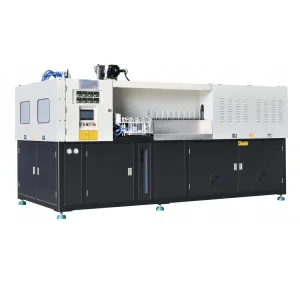
EPA.AS-2C114.3 W pełni automatyczna maszyna do formowania rozdmuchowego butelek na leki
-
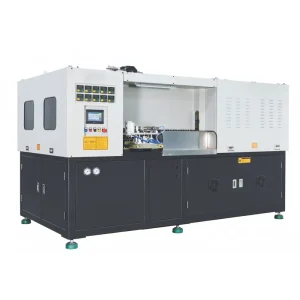
EPA.ES-2C150 W pełni automatyczna maszyna do formowania rozdmuchowego butelek na codzienne chemikalia i kosmetyki
-
EPA.ES-3C114 W pełni automatyczna maszyna do formowania rozdmuchowego butelek na codzienne chemikalia i kosmetyki
-
EPA.ES-3C76 W pełni automatyczna maszyna do formowania rozdmuchowego butelek na codzienne chemikalia i kosmetyki