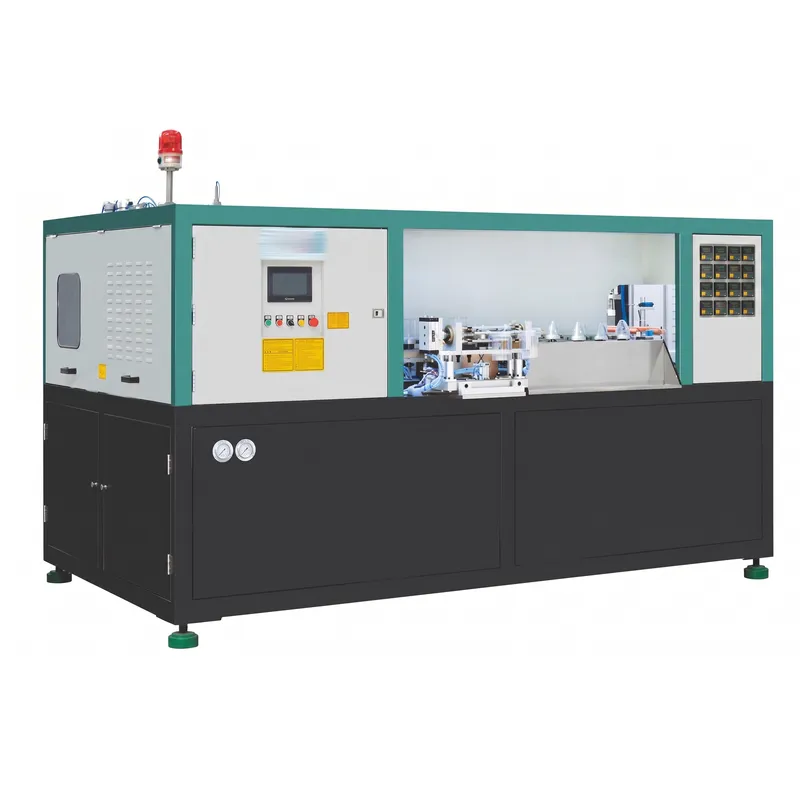
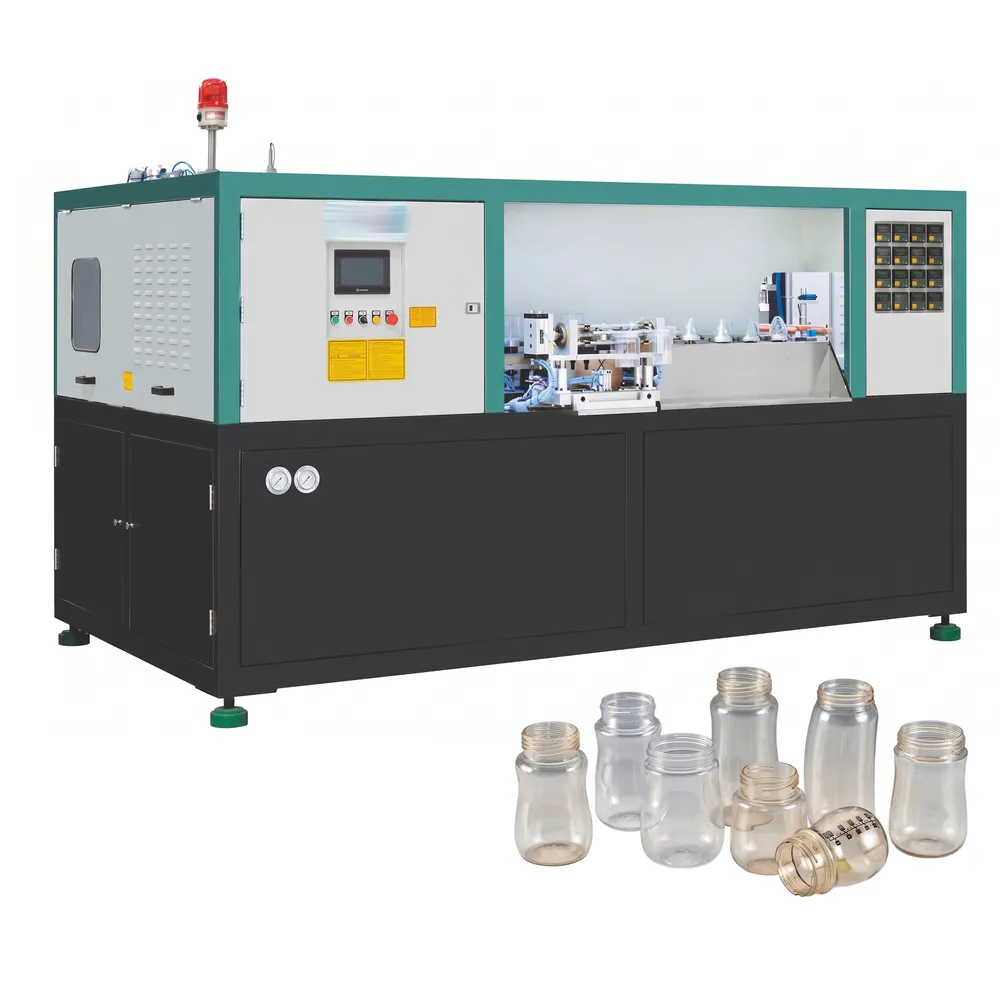
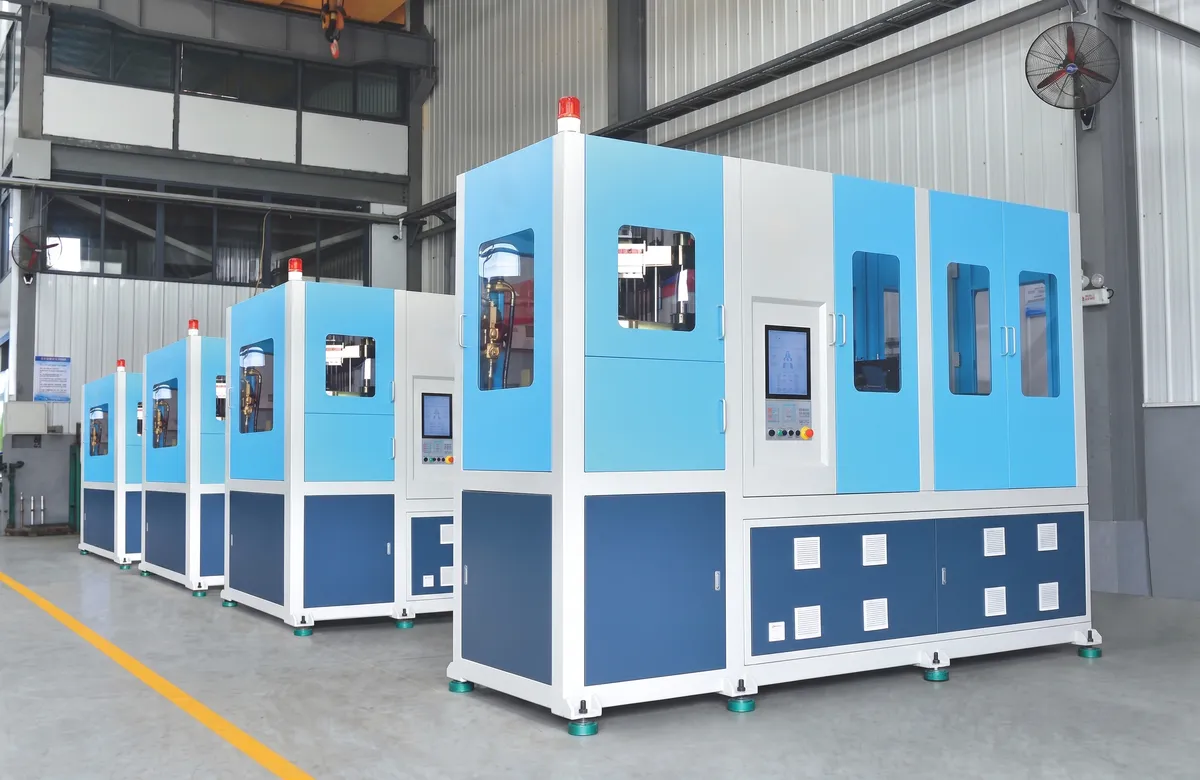
Máquina de moldagem por sopro totalmente automática EPA.FS-1CG130 para mamadeiras e garrafas de PP
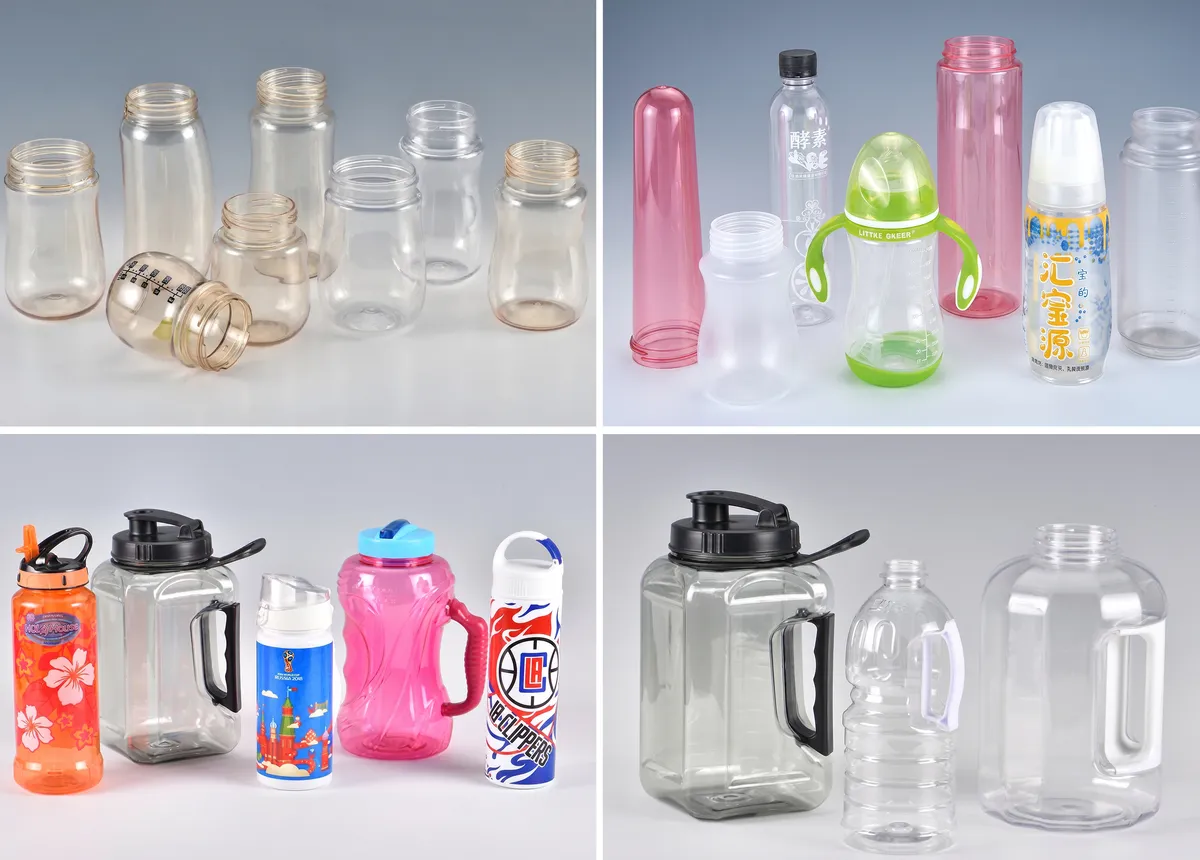
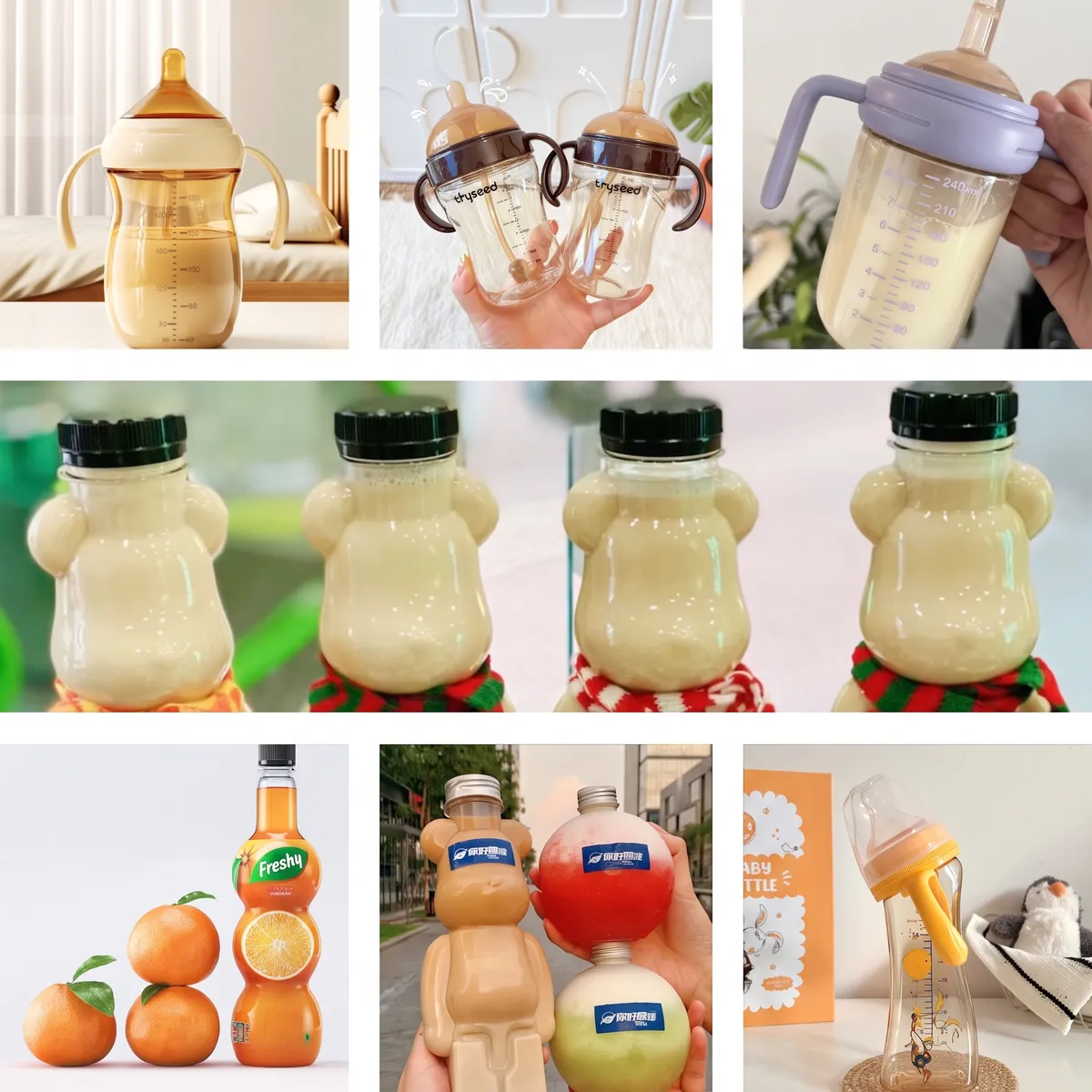
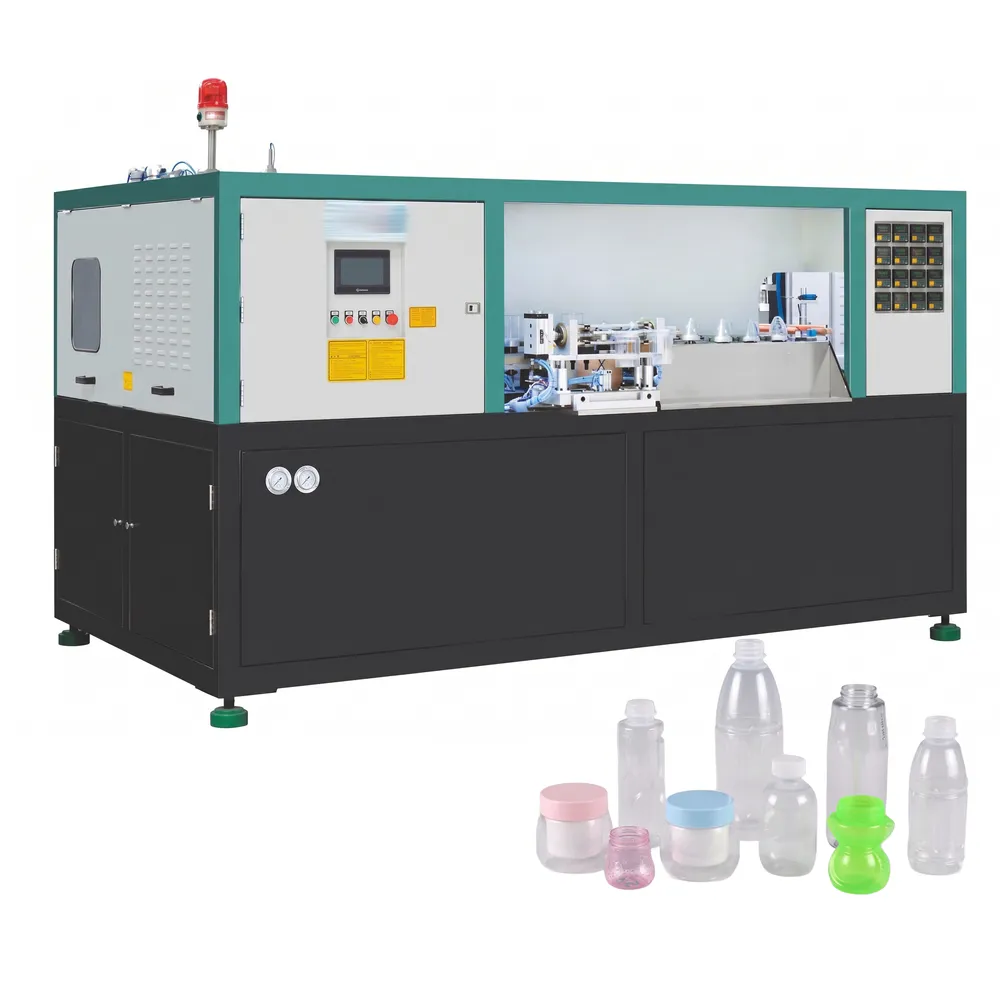
A máquina de moldagem por sopro totalmente automática EPA.FS-1CG130 para mamadeiras e garrafas de PP é um equipamento profissional projetado para a produção de recipientes de diversos formatos e materiais. Criada para produzir com eficiência mamadeiras, garrafas de PP e garrafas artesanais com formatos especiais em diversas especificações, esta máquina representa a referência em tecnologia de moldagem por sopro de plástico de precisão.
The EPA.FS-1CG130 Fully Automatic Blow Molding Machine for Baby Bottles and PP Bottles is a professional-grade automatic blow molding machine engineered for the production of multi-shape and multi-material containers. Designed to efficiently produce feeding bottles, PP bottles, and special-shaped craft bottles across various specifications, this machine represents the benchmark in precision plastic blow molding machine technology. The series spans multiple models - including EPA.FS-1CG150, EPA.FS-1CG196, EPA.FS-1CG220, and advanced multi-station configurations with container capacities ranging from 1,000 ml to 15,000 ml, and a maximum theoretical output of up to 2,800 bottles per hour on high-speed models such as the EPA.JS-4C114. The blowing pressure remains stable at 30-35 kg/cm2, and the precision cooling system maintains temperatures between 8-12 degrees C, ensuring uniform wall thickness and a flawless, smooth surface finish across every production cycle.
As a fully automatic blow molding machine built for demanding industrial environments, the EPA.FS-1CG130 serves a broad range of application scenarios. Its stable performance and exceptional product consistency make it the preferred PET bottle blow molding machine for manufacturers in the infant care sector, where safety and dimensional accuracy are non-negotiable. The machine is equally at home in daily-use packaging lines, craft bottle production facilities, pharmaceutical container plants, and premium cosmetics packaging operations. With one-cavity construction and a preform holder capacity of 50 units, this injection stretch blow molding machine is optimized for high-consistency, low-defect runs. Whether you are scaling up infant formula bottle production or launching a specialty craft container line, the EPA.FS-1CG130 delivers the reliability, adaptability, and output quality that modern blow molding machine suppliers and end-users demand.
Parâmetro técnico
| Baby Bottle and PP Bottle Blow Molding Machine | |||
|---|---|---|---|
| Modelo | Unidade | EPA.FS-1CG130 | |
| Moldagem | Curso de fixação | mm | 150 |
| Distância de abertura do molde | mm | 330 | |
| distância de proximidade do mofo | mm | 180 | |
| movimento de alongamento | mm | 350 | |
| Distância de abertura do molde | mm | 50 | |
| distância de proximidade do mofo | mm | 130 | |
| Suporte para pré-formas | 50 | ||
| Cáries | 1 | ||
| Recipiente | Volume máximo do recipiente | ml | 1500 |
| Faixa de diâmetro do pescoço | mm | 98 | |
| Diâmetro máximo do recipiente | mm | 110 | |
| Altura máxima do contêiner | mm | 250 | |
| Saída teórica | hiperplasia prostática benigna | 700 | |
| Sistema Elétrico | Potência máxima de aquecimento | kW | 16 |
| Potência de aquecimento | kW | 10 | |
| Sistema de ar | Pressão de operação | kg/cm² | 7 |
| Consumo de ar de baixa pressão | l/min | 800 | |
| Pressão de sopro | kg/cm² | 35 | |
| Consumo de ar de alta pressão | l/min | 1200 | |
| Água de resfriamento | Pressão de operação | kg/cm² | 5-6 |
| Temperatura | °C | 8-10 | |
| Taxa de fluxo | l/min | 30 | |
| Máquina | Dimensões (C*L*A) | mm | 3160*1500*1800 |
| Peso | kg | 2000 | |
Features of the EPA.FS-1CG130 Fully Automatic Blow Molding Machine
1. Ampla adaptabilidade para produção de pré-formas de múltiplos tipos
The EPA.FS-1CG130 series supports the production of a wide variety of containers, including baby bottles, PP bottles, craft bottles, and special-shaped bottles, with capacities spanning from 1,000 ml to 15,000 ml. Models such as the EPA.FS-1CG196 and EPA.P.FS-2C150(L) accommodate bottle heights up to 330 mm and diverse neck finish requirements. This baby bottle blow molding machine excels in high-consistency manufacturing of complex special-shaped and feeding bottles, demonstrating the exceptional adaptability that sets this preform bottle machine series apart from conventional plastic blow molding machine alternatives on the global market.
2. Alta eficiência e economia de energia
The equipment covers a heating power range from 10 kW to 42 kW across the series, with blowing pressure stabilized at 30-35 kg/cm2 for consistent blow quality on every cycle. High and low-pressure air consumption can be accurately adjusted to match production demands, achieving significant energy savings versus older generation machines. The cooling water system maintains a precise temperature of 8-12 degrees C at a flow rate of 30 L/min, ensuring uniform preform cooling, reducing deformation risk, and improving product yield. This automatic blow moulding machine delivers fully automated precision control for demanding industrial blow molding machine applications.
3. Operação estável e adaptabilidade flexível da produção
Built with international-brand components throughout, the EPA.FS-1CG130 ensures low failure rates and easy day-to-day maintenance. A maximum mold opening distance of 635 mm on select series models, combined with balanced clamping force, supports quick mold changeovers and flexible multi-type bottle production schedules. Machine weights across the series range from 2,000 kg to 7,500 kg, with compact footprints designed to suit a variety of workshop layouts. The result is an industrial blow molding machine that operators can confidently run around the clock with minimal downtime.
4. Excelente qualidade de saída
Capable of steadily processing materials including PP and PET, the machine consistently produces bottles with precise neck dimensions, uniform wall thickness, and high optical transparency. Every unit meets the stringent quality standards required for infant products and premium craft packaging. The EPA.FS-1CG130 PP bottle blow molding machine is particularly suited to manufacturing feeding bottles, decorative craft bottles, and special-shaped containers. The finished products feature smooth surfaces and consistent geometry, satisfying the dual requirements of appearance and functionality demanded by high-end global markets and discerning OEM customers.
5. Fully Automatic Design Reduces Labor and Boosts Efficiency
As a fully automatic blow molding machine, the EPA.FS-1CG130 drastically reduces dependence on manual labor throughout the production cycle. Automated preform loading, heating, stretching, blowing, and bottle ejection are seamlessly integrated into a single continuous process. This eliminates operator error at critical production stages, improves output consistency, and significantly raises throughput per labor hour. For factory managers seeking to scale operations or tighten quality control, this high-speed blow molding machine architecture represents a compelling upgrade over older semi-automatic or manual systems in any modern plastic bottle manufacturing environment.
6. Broad Application Range Across Industries
The EPA.FS-1CG130 serves an exceptionally wide range of industries and bottle types. From infant feeding bottles and pharmaceutical PP containers to premium cosmetic packaging and decorative craft bottles, this custom blow molding machine is configured to address the most exacting application requirements. Its compatibility with multiple resin types, including PET, PP, and multi-material preforms, means buyers from the beverage, healthcare, food, personal care, and specialty packaging sectors can all leverage this machine within a single production platform. It is among the most versatile types of blow molding machine available at this output class.
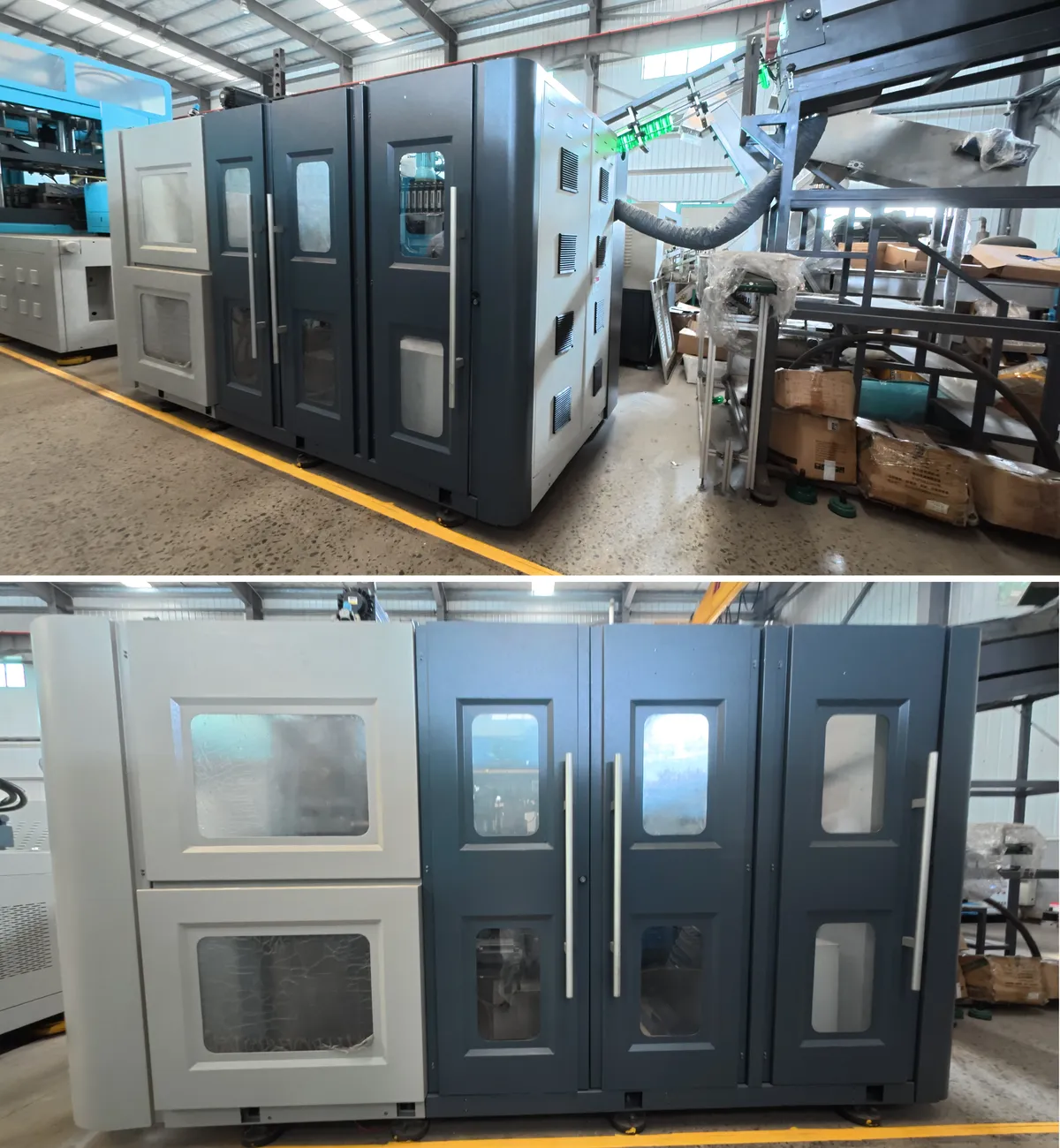
Working Principle of EPA.FS-1CG130 Plastic Blow Molding Machine
1. Preparação da matéria-prima
The raw materials for this two-stage blow molding machine, primarily PP, PE, and PET resins, undergo rigorous screening, blending, feeding, melting, and plasticizing before entering the production process. Strict quality control at the material intake stage ensures that every batch meets the resin grade and purity requirements specified for infant-grade and pharmaceutical-grade packaging applications, establishing a consistent quality baseline for every production run of this plastic blow molding machine.
2. Moldagem por Injeção
During the injection molding stage, the thoroughly prepared raw materials are fed into the injection molding unit, where they are heated, melted, and plasticized before being injected under controlled pressure into precision molds. Temperature, pressure, and injection speed parameters are monitored and regulated in real time throughout this phase. The result is a dimensionally accurate preform that forms the structural foundation for the final bottle produced by this injection blow molding machine platform.
3. Pré-aquecimento
After injection molding, the formed preforms are transferred to the preheating zone, where an infrared heating system raises their temperature uniformly, with particular attention to the wall thickness regions. This preheating step is critical in the blow molding machine process because it significantly enhances the plasticity and flexibility of the preform material. Precise temperature uniformity at this stage directly influences the final wall thickness distribution and optical clarity of the finished container output by this automatic PET blow molding machine.
4. Moldagem por sopro
In the blow molding stage, the properly preheated preforms are placed into the blowing mold station. The machine first extends a stretch rod to axially orient the preform, then introduces high-pressure air at 35 kg/cm2 to radially inflate it to the precise shape of the mold cavity. Precise control of stretch timing, blow pressure, and mold clamping force at this stage of the injection stretch blow molding machine process is what ultimately determines the dimensional accuracy, surface quality, and structural integrity of every bottle produced.
Applications of EPA.FS-1CG130 Baby Bottle Blow Molding Machine
1. Produtos para bebês e crianças
This baby bottle blow molding machine is purpose-built for the stringent demands of infant product manufacturing. Using food-grade PP and PPSU materials, it produces feeding bottles, sippy cups, and nursing accessories with smooth, burr-free edges, high clarity, and consistent neck dimensions. Every bottle meets the elevated safety and dimensional accuracy standards required for mother and child product lines sold in regulated markets across North America, Europe, and Asia.
2. Embalagens Farmacêuticas e Médicas
The EPA.FS-1CG130 PET bottle blow molding machine is well suited for manufacturing medical-grade PP bottles, oral medication containers, eye drop bottles, and laboratory sample vials. Its precise neck dimension control and consistent wall thickness ensure tight sealing compatibility with pharmaceutical caps and dispensing systems. The machine's hygienic, no-hand-contact production process supports GMP compliance requirements for pharmaceutical and healthcare packaging facilities worldwide.
3. Cosmetics and Personal Care Packaging
High-end cosmetics brands require plastic bottle blow molding machine output that delivers both visual brilliance and dimensional precision. The EPA.FS-1CG130 produces lotion bottles, serum flacons, shampoo containers, and perfume-style vessels with exceptional surface clarity, uniform wall thickness, and exquisite aesthetic finishes. Its special-shaped bottle capability allows brands to develop custom, brand-differentiated packaging forms that stand out on retail shelves in competitive personal care and beauty markets.
4. Embalagens de Alimentos e Bebidas
The bottle blow molding machine excels in producing food-contact PET and PP containers for condiments, sauces, fruit juices, flavored water, and edible oil products. Its stable blowing pressure and precision temperature management ensure that container walls meet food safety standards for both appearance and structural integrity. The machine's multi-model series capability means that producers can transition between bottle volumes and shapes quickly, supporting fast-moving SKU portfolios in competitive food and beverage retail environments.
5. Craft, Gift, and Decorative Bottle Production
One of the standout strengths of this custom blow molding machine is its proven capability for producing artisan-quality craft bottles and special-shaped decorative vessels. Whether for spirit bottles, artisanal food gift packaging, seasonal collector containers, or premium souvenir products, the EPA.FS-1CG130 handles complex geometries and demanding surface finish requirements that would challenge less capable machines. Its high transparency output and exquisite design reproduction make it a preferred tool for creative packaging studios globally.
6. Health and Wellness Supplement Containers
The growing nutraceutical and wellness sector demands packaging that communicates purity, safety, and premium quality. This PP bottle blow molding machine handles the full range of health supplement container formats, from wide-mouth protein powder tubs to narrow-neck vitamin capsule bottles. Its precision neck tooling ensures leak-proof compatibility with child-resistant caps and induction sealing systems, while its high-clarity output supports on-shelf product visibility and brand presentation that drives consumer purchase decisions in health retail channels.
7. Agricultural and Industrial Chemical Bottles
The blow molding machine's capacity to work with chemical-resistant resins such as HDPE and PP makes it equally effective for producing agricultural pesticide containers, industrial lubricant bottles, and specialty chemical packaging. These applications demand high structural rigidity, chemical compatibility, and consistent wall thickness to prevent leakage during storage and transportation. The EPA.FS-1CG130's precise process control and robust construction make it a reliable choice for industrial blow molding machine applications in agricultural input and chemical distribution industries.
8. Household and Cleaning Product Containers
Major household brand manufacturers, including clients of our blow molding machine suppliers network, deploy the EPA.FS-1CG130 for high-volume production of detergent bottles, fabric softener containers, cleaning spray bottles, and personal hygiene product packaging. The machine's consistent output quality and rapid cycle times keep pace with the demanding production schedules of large-format consumer goods manufacturers, while its energy-saving design helps reduce the per-unit energy cost in high-volume production environments across the daily chemicals packaging industry.
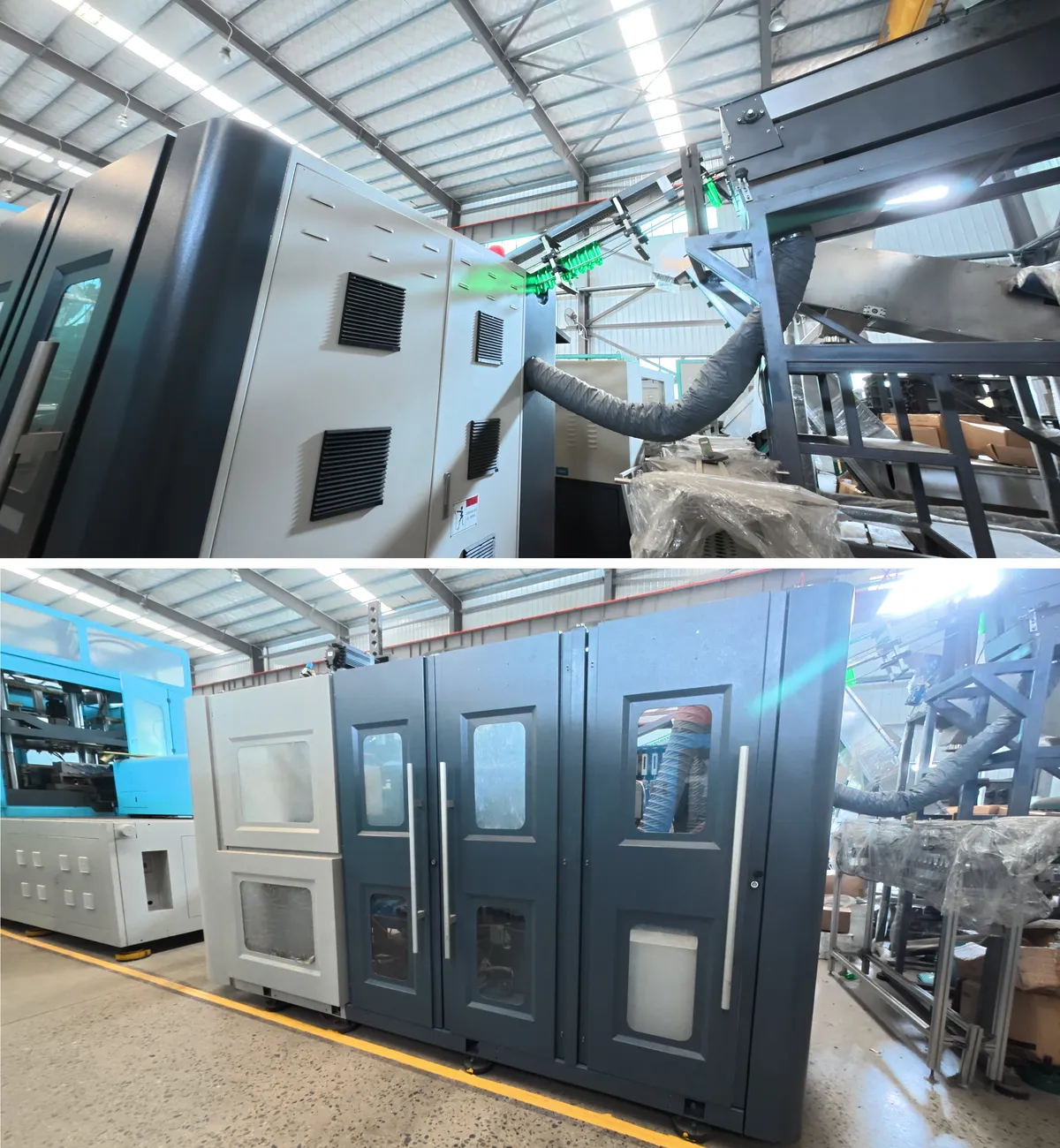
EPA.FS-1CG130 PP Bottle Blow Molding Machine Parts
Sistema de alimentação
The feeding system is composed of both steering and electric drive components, including the hopper, preform conveyor, orientator, and gravity rails. This system automatically sorts, aligns, and feeds hollow preform blanks into the blow molding machine in the correct orientation. Reliable feeding at high speeds is essential for sustained output rates, and the EPA.FS-1CG130 feeding system is engineered to handle PP and PET preforms of the specified dimensions without jamming or misfeeds during extended production runs.
Basculante de pré-formas
For PET bottle production applications, the machine incorporates a preform tilter mechanism that automatically supplies preforms in the correct orientation to the hopper intake. This component eliminates the need for manual preform positioning, reducing labor requirements and the risk of contamination or damage to the preform neck finish area. Precise tilter operation at the specified preform holder capacity of 50 units ensures uninterrupted flow into the heating and blowing stations of this automatic PET blow molding machine.
Infrared Heating System
The infrared heating module is a critical precision component of the blow molding machine process in this model. Operating at a maximum heating power of 16 kW and a standard heating power of 10 kW, it uniformly raises the preform temperature profile along the body while protecting the neck finish area from thermal deformation. Multiple individually controlled heating lamps allow zone-by-zone temperature profiling, which is especially important when producing complex special-shaped bottles or processing materials with narrow thermal processing windows such as PP and PPSU.
Estação de Compressores
The compressor station is the pressure heart of the EPA.FS-1CG130 blow molding machine system. It houses screw compressors, booster pumps, steering valves, connecting hardware, and an air tank sized to maintain steady pressure delivery. The station provides low-pressure air at 7 kg/cm2 for preform transport and machine actuation, plus high-pressure blowing air at 35 kg/cm2 for the bottle forming stage. Stable pressure output throughout the blow molding machine process is essential for achieving consistent bottle wall thickness and neck finish accuracy across full production shifts.
Sistema de refrigeração a água
The water cooling system dissipates the heat generated during each blow molding cycle by circulating chilled water through mold cooling channels at a controlled operating pressure of 5-6 kg/cm2, a temperature of 8-10 degrees C, and a flow rate of 30 liters per minute. Rapid and uniform mold cooling is what enables the machine to release fully solidified bottles quickly, supporting higher throughput rates while preventing deformation, warping, and surface defects that would result from insufficient cooling during production.
Esteira de saída de garrafas
Once the blow molding cycle is complete and the mold opens, the finished bottles are transferred by the exit conveyor system to the downstream process, whether that is filling, labeling, inspection, or accumulation for packing. The conveyor design can be adapted to match the bottle geometry and production layout requirements of each installation. Smooth, reliable bottle transfer at this stage prevents surface scratching, tip-over, or jamming that could cause production stoppages or cosmetic defects in the finished packaging units from this plastic bottle blow molding machine.
Sistema de controle PLC
The EPA.FS-1CG130 is controlled by a modern PLC-based automation platform with a touchscreen HMI interface that provides centralized, intuitive command over all machine parameters: preform feeding speed, heating zone temperatures, stretch rod timing, blow pressure, mold clamping force, and cooling duration. Operators can store, recall, and replicate production recipes for different bottle SKUs with minimal retooling effort. This control architecture is central to the fully automatic blow molding machine's ability to deliver reproducible quality at scale across multi-shift production environments.
Estação de alongamento e sopro
The stretch-blow station is where the actual transformation of preform into finished bottle occurs in this injection stretch blow molding machine. A servo-driven stretch rod descends through the preform during the blow phase, axially orienting the material at the same moment that radial air pressure inflates it into the mold cavity. This biaxial orientation process is what gives PET and PP bottles produced on the EPA.FS-1CG130 their superior clarity, barrier properties, and impact resistance compared to non-stretched blow molding machine output of comparable wall thickness.
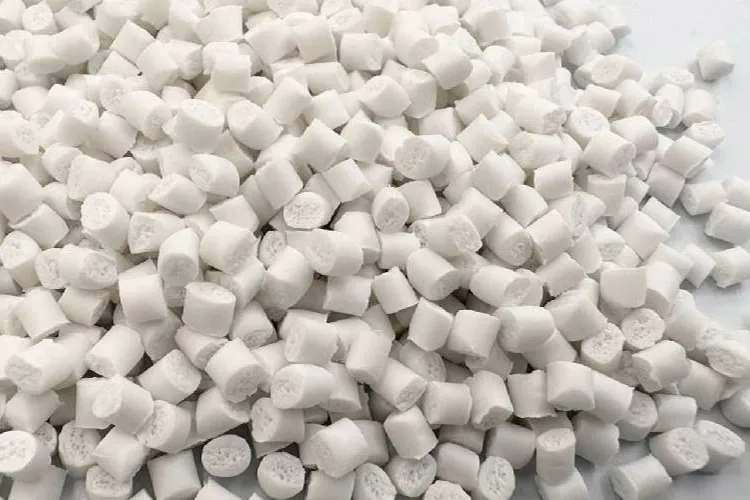
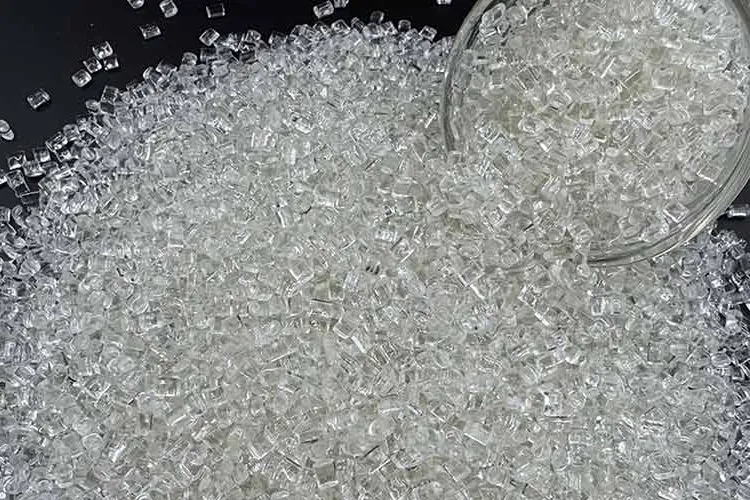
Matérias-primas compatíveis
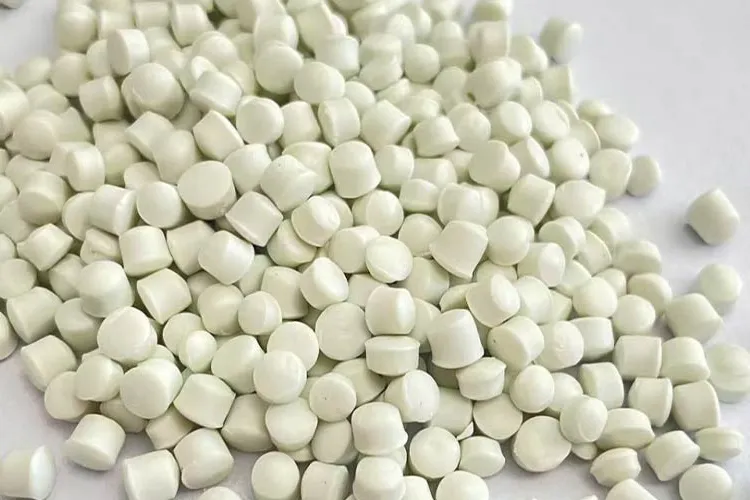
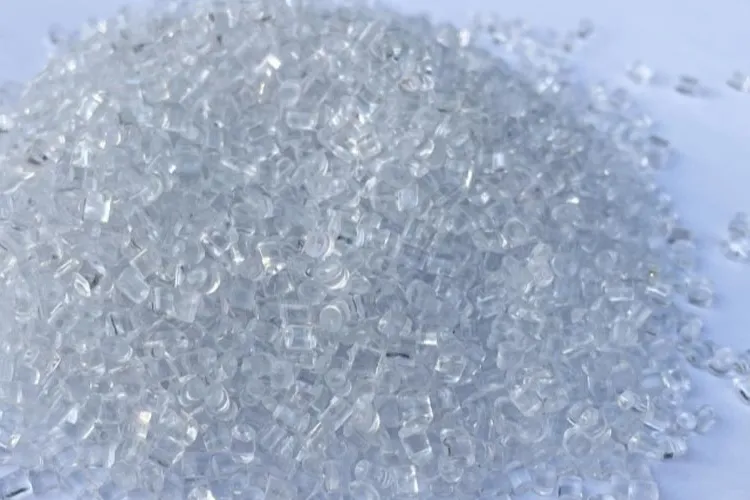
PET (Polietileno Tereftalato)
PET is the most widely used material in automatic Máquina de moldagem por sopro de PET production globally. It offers excellent optical clarity, high barrier properties against moisture and oxygen, and outstanding impact resistance at low wall thicknesses. PET is the material of choice for beverage bottles, food-grade containers, and pharmaceutical packaging where product visibility and content protection are paramount. The EPA.FS-1CG130 is optimized for PET processing, delivering exceptional surface finish and dimensional accuracy in every cycle.
PP (Polipropileno)
Polypropylene is the primary material for baby bottle production in this PP bottle blow molding machine. PP is FDA-approved for food contact, BPA-free, and resistant to high temperatures, making it compatible with sterilization processes required for infant feeding products. Its combination of toughness, chemical resistance, and processability make PP the go-to resin for baby care, pharmaceutical, and food packaging applications where safety regulations are strictest and consumer trust is non-negotiable.
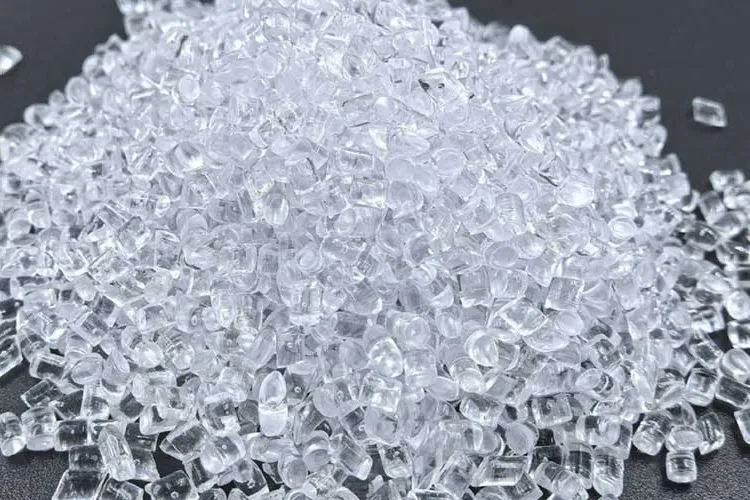
PC (Policarbonato)
Polycarbonate offers exceptional impact strength, heat resistance, and optical clarity, making it suitable for premium water bottles, laboratory containers, and durable specialty packaging. The EPA.FS-1CG130 can process PC preforms where product design calls for the exceptional mechanical performance and glass-like transparency that PC delivers. PC processing requires precise temperature management, and the machine's accurate infrared heating system is well suited to handling this demanding engineering-grade thermoplastic resin.
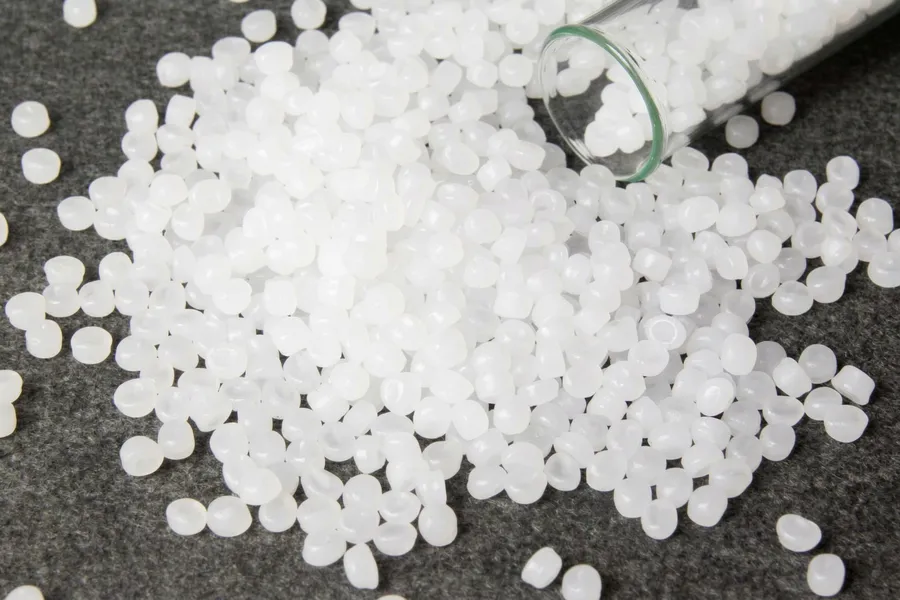
PE (Polietileno)
Polyethylene, encompassing both HDPE and LDPE grades, is a versatile packaging material known for its chemical resistance, flexibility, and low moisture vapor transmission rate. It is commonly processed on extrusion blow molding machine platforms, though injection blow molding machine configurations can also handle PE materials effectively for smaller, more precise container formats. Applications include household chemical containers, agricultural product bottles, and personal care packaging requiring good squeeze characteristics and chemical barrier performance.
Tritan (Copolímero)
Tritan is an advanced copolyester resin developed specifically for food-contact applications requiring absolute BPA-free certification, high clarity, and exceptional durability. It is increasingly preferred for premium reusable water bottles, baby feeding products, and high-end drinkware where consumers demand both safety assurance and visual appeal. Processing Tritan on the EPA.FS-1CG130 fully automatic blow molding machine yields containers with outstanding scratch resistance, dishwasher durability, and crystal-clear aesthetics that command premium retail positioning.
HDPE e LDPE
High-Density Polyethylene provides a superior strength-to-density ratio and excellent resistance to solvents, acids, and bases, making it the dominant resin in industrial containers, cleaning product bottles, and agricultural packaging. Low-Density Polyethylene offers greater flexibility and transparency, suited to squeeze bottles and cosmetic tubes. The EPA.FS-1CG130 blow molding machine series supports both HDPE and LDPE processing, giving operators the flexibility to diversify their container portfolio across industrial, consumer, and specialty packaging market segments.
PPSU (polifenilsulfona)
PPSU is the gold standard material for premium baby bottles and medical devices requiring repeated high-temperature sterilization. It withstands repeated autoclave cycles, boiling, and microwave sterilization without degradation, yellowing, or material migration. PPSU also offers excellent impact resistance and a natural amber transparency that many consumers associate with premium quality. When processed on this baby bottle blow molding machine, PPSU yields feeding bottles that satisfy the most demanding pediatric safety and durability standards in global markets.
 |
 |
 |
 |
 |
 |
Moldagem por sopro por extrusão versus moldagem por sopro por estiramento por injeção
Blow molding is a foundational process in plastic manufacturing, widely employed for producing bottles, containers, and industrial components across dozens of industries. Among the different types of blow molding machine processes available today, Extrusion Blow Molding (EBM) and Injection Stretch Blow Molding (ISBM) represent the two most significant production technologies. Selecting the right method for your business depends on a careful evaluation of product requirements, material compatibility, tooling investment, output clarity, and production scalability. Understanding the core differences between these two blow molding machine process types will help you make the best capital investment decision for your operation.
O que é Moldagem por Extrusão e Sopro (EBM)?
Extrusion Blow Molding is a process in which plastic resin is melted and continuously extruded through a die head to form a hollow tube of molten material called a parison. This parison is then clamped between two mold halves and inflated with compressed air to take on the shape of the surrounding mold cavity. Once the material has cooled and solidified, the mold opens and the finished product is ejected. Extrusion blow molding machines are among the most widely deployed plastic blow molding machine types in global manufacturing.
Principais características da Medicina Baseada em Evidências (MBE):
- Well-suited for producing hollow plastic objects such as industrial containers, automotive fluid reservoirs, and packaging bottles in HDPE, LDPE, PP, and PVC materials.
- Capable of producing large, complex shapes with relatively uniform wall thickness at high production speeds and with lower tooling investment.
- The shorter cycle time and lower mold cost make extrusion blow molding machine systems attractive for large-volume, lower-precision packaging applications.
Primary Industries Using EBM:
- Embalagem: Shampoo bottles, household detergent containers, dairy bottles, and edible oil jugs.
- Automotivo: Fuel tanks, windshield washer fluid reservoirs, and coolant overflow bottles.
- Medical and Industrial: Large-volume pharmaceutical containers and chemical storage vessels.
What is Injection Stretch Blow Molding (ISBM)
Injection Stretch Blow Molding is a two-stage process in which PET or PP preforms are first precision-injection-molded to exact dimensions, and then reheated and biaxially stretched and blown into the final bottle shape within a precision blow mold. The EPA.FS-1CG130 operates on ISBM principles as a two-stage automatic blow molding machine, first processing preforms and then executing the stretch-blow cycle. This biaxial orientation of the plastic material during the blow stage is what delivers the superior material properties and optical qualities that distinguish ISBM output from all other blow molding machine types.
Key Advantages of ISBM:
- Superior Clarity and Strength: Biaxial orientation aligns the polymer chains in both the axial and radial directions, producing bottles with outstanding optical transparency, barrier properties, and drop impact resistance that are simply not achievable with an extrusion blow molding machine process.
- Precise Wall Thickness Control: The injection-molded preform provides an extremely consistent and dimensionally accurate starting point, resulting in highly uniform wall thickness distribution across every bottle produced by this automatic PET blow molding machine.
- Better Material Efficiency: The precise preform design and biaxial orientation allow thinner walls to achieve the same performance as thicker EBM walls, reducing material cost per bottle in high-volume runs.
- Excellent Neck Finish Accuracy: The injection-molded neck finish area of ISBM preforms is dimensionally superior to the pinch-trimmed necks common in EBM output, ensuring reliable cap thread engagement and leak-proof sealing in pharmaceutical and baby bottle applications.
Primary Industries Using ISBM:
- Bebida: PET water bottles, carbonated soft drink containers, and juice packaging.
- Farmacêutica: Medicine bottles, oral liquid containers, and eye drop vials.
- Cosmetics and Baby Care: Lotion bottles, baby feeding bottles, and premium personal care packaging.
EBM vs. ISBM: Comparação lado a lado
| Recurso | Moldagem por extrusão e sopro (EBM) | Moldagem por Injeção e Estiramento por Sopro (ISBM) |
|---|---|---|
| Material utilizado | HDPE, LDPE, PP, PVC | PET, PP, PPSU, Tritan |
| Tipo de produto | Formas grandes, ocas e complexas | Clear, lightweight, high-precision bottles |
| Custo de produção | Menor investimento inicial em ferramentas | Higher investment, highly efficient at scale |
| Espessura da parede | Uniforme, porém menos preciso. | Altamente preciso e consistente |
| Clareza e Força | Clareza moderada, boa resistência | High clarity, excellent barrier and strength |
| Aplicações | Industrial, automotivo, embalagens | Food, beverage, pharmaceutical, cosmetics, baby care |
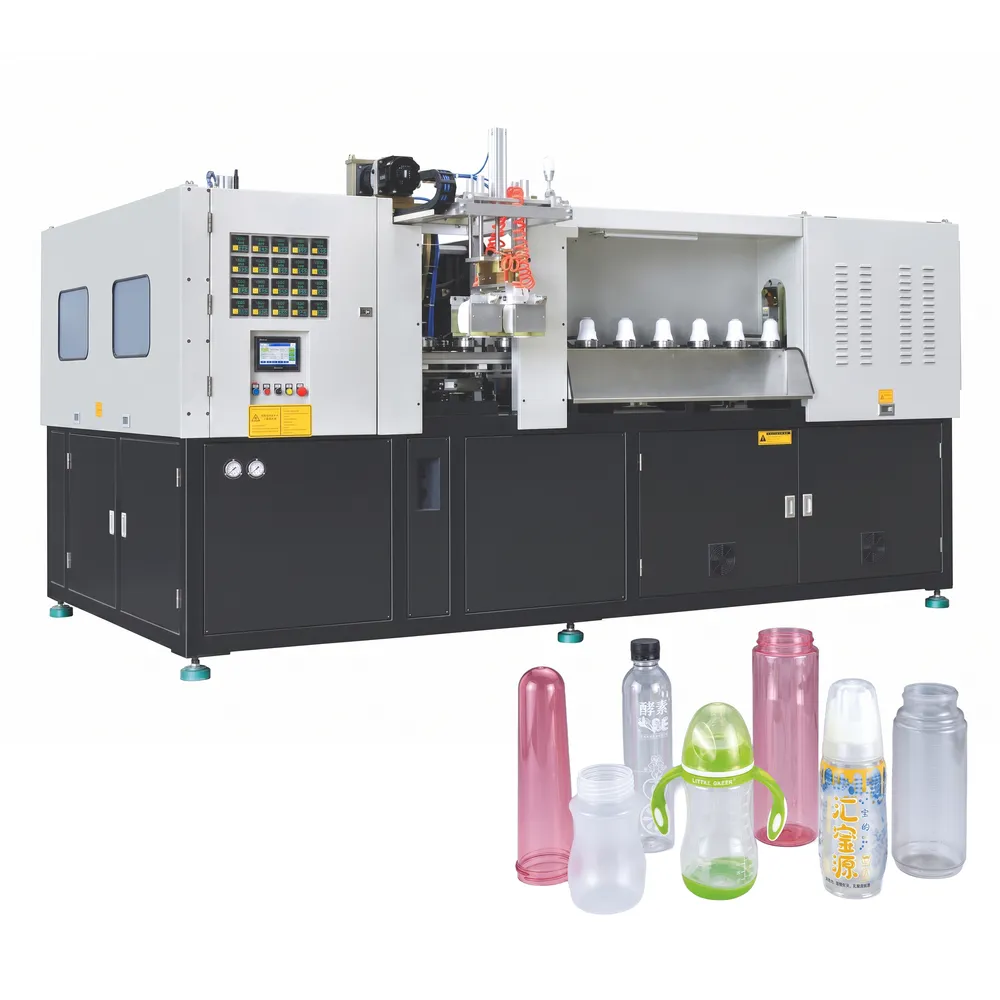
EPA.FS-1CG130 PET Blow Molding Machine Maintenance
1. Daily Inspection of Air and Water Systems
Before starting each production shift, inspect all pneumatic connections, air filters, and water cooling circuits for leaks, blockages, and pressure deviations. Verify that the cooling water temperature is maintaining the specified 8-10 degrees C range and that the operating pressure remains within the 5-6 kg/cm2 specification. Catching pressure drops or temperature drift early prevents costly defect batches and protects downstream blow molding machine parts from stress overload during production cycles.
2. Regular Cleaning of Heating Lamps and Reflectors
Infrared heating lamp surfaces and their reflector panels accumulate dust, resin vapor deposits, and oxidation over time, reducing heating efficiency and causing uneven temperature distribution across the preform. Clean the heating zone components with a dry, lint-free cloth at least weekly, and replace any lamps showing visible darkening or reduced output intensity. Consistent heating uniformity is critical for producing baby bottles with even wall thickness and without surface blemishes on this automatic blow molding machine.
3. Periodic Mold Maintenance and Cavity Inspection
Inspect blow mold cavities for surface scratches, corrosion, mold release buildup, and vent blockages on a regular maintenance schedule. Blocked vents trap air during the blow molding process and cause surface defects or incomplete bottle formation. Apply appropriate mold release agents as specified, and polish cavity surfaces when surface roughness begins to affect bottle finish quality. Proper mold care directly determines the aesthetic consistency and dimensional accuracy of every bottle produced by this PET bottle blow molding machine.
4. Lubrificação de componentes de acionamento mecânico
The EPA.FS-1CG130 incorporates multiple mechanical drive systems for mold clamping, stretch rod actuation, and preform transfer. These components require proper lubrication at the intervals specified in the machine's maintenance schedule. Use only the lubricant grades recommended by the manufacturer for each component. Under-lubricated moving parts generate excessive wear, increased vibration, and eventual component failure that can cause unplanned downtime on this fully automatic blow molding machine production line.
5. Calibration of Control System and Sensors
Schedule periodic calibration checks of all temperature sensors, pressure transducers, and position sensors integrated into the PLC control system of this automatic blow molding machine. Sensor drift, especially in temperature measurement, can cause systematic product defects that are difficult to diagnose without comparative calibration data. Verify that alarm thresholds are correctly configured and that the control system accurately reflects the actual physical process conditions during a live production verification run at least once per month.
6. Preform Storage and Quality Control Incoming Inspection
Machine performance is only as good as the preform quality fed into it. Establish a structured incoming quality control process for all preform deliveries, checking dimensions, resin grade, moisture content, and visual defects before use. Store preforms in a cool, dry, clean environment away from UV exposure to prevent resin degradation prior to processing. Feeding moisture-absorbed or dimensionally inconsistent preforms into this plastic blow molding machine will produce rejects regardless of how well the machine itself is calibrated and maintained.
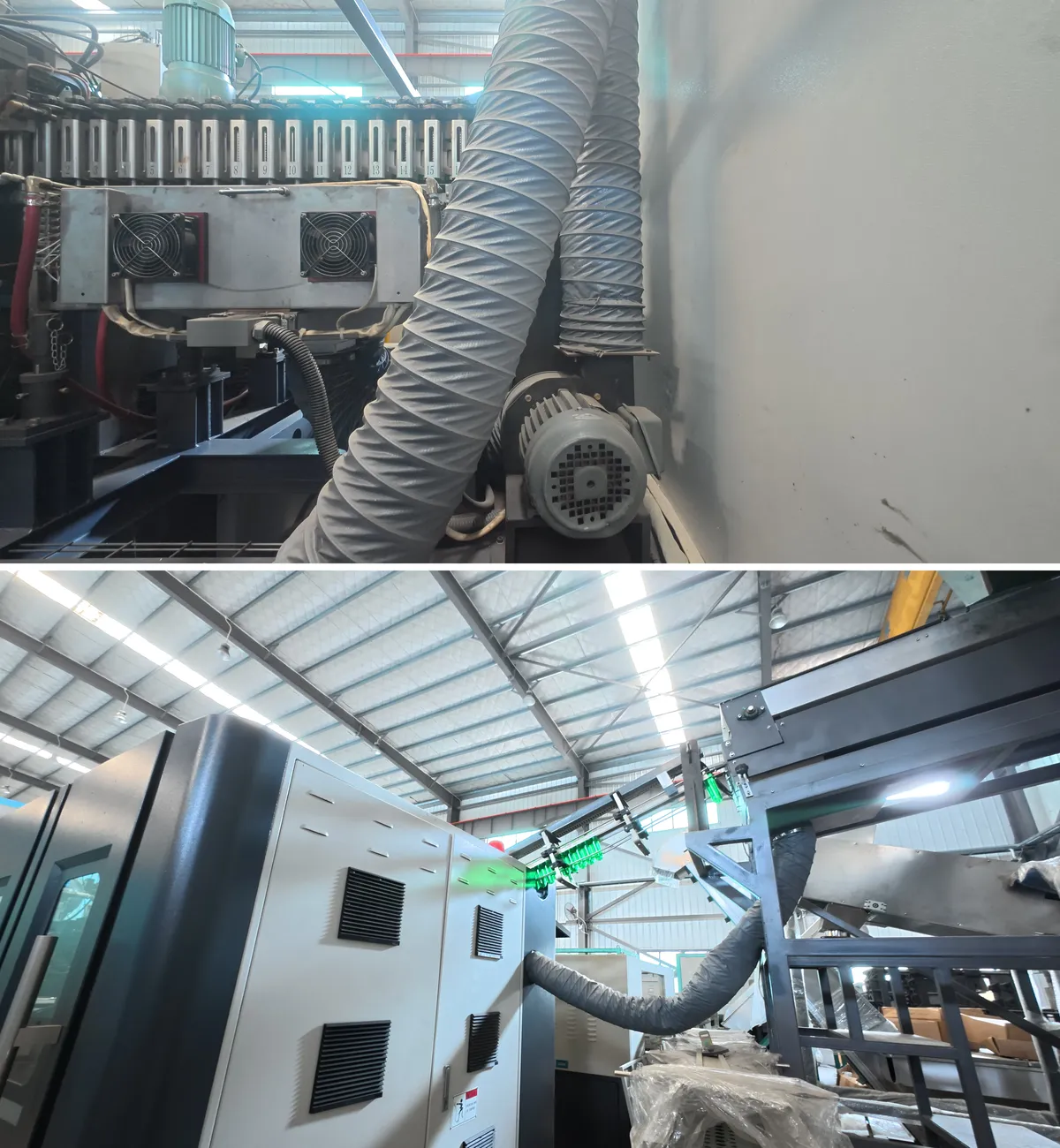
Baby Bottle Blow Molding Machine Mould Features
Molde de injeção de pré-forma
Design de lábio de matriz dupla
The die lip of the preform injection mold is engineered as a two-component assembly that guarantees co-axiality of the preform finish and gate area during the injection molding cycle. This precise axial alignment is the foundation of neck finish dimensional accuracy in the final blow-molded bottle, directly affecting closure compatibility and leak-proof performance in the infant care and pharmaceutical packaging applications served by this blow molding machine.
Optimized Cooling Channel Layout
The internal cooling water channels are designed to deliver uniform heat removal across the entire preform cavity, maximizing the cooling rate and shortening the injection cycle time. A faster and more uniform cooling cycle directly translates to higher throughput capacity and reduced crystallinity variation in the preform, both of which positively impact the final bottle quality when processed through this automatic blow molding machine's stretch-blow station.
Imported Die Steel 2316 for Cavity Components
All cavity-forming components of the preform mold use imported 2316 die steel, which offers superior corrosion resistance, exceptional machinability, and excellent polishability. The 2316 grade is industry-standard for PET and PP preform molds due to its resistance to the condensate moisture and acidic resin gases generated during high-volume injection molding operations in this baby bottle blow molding machine environment.
420 Stainless Steel Structural Components
Core plates, cavity plates, and all load-bearing structural elements are manufactured from 420 stainless steel, chosen for its high hardness after heat treatment and outstanding corrosion resistance. This material selection ensures the mold structure maintains its dimensional integrity through millions of injection cycles, minimizing mold flexure-induced preform defects and extending the overall service life of the tooling investment supporting this blow molding machine operation.
Standard Interchangeable Die Fittings
The preform injection mold uses standardized, interchangeable die components, which simplifies both routine maintenance and cavity replacement when wear occurs in high-production environments. Standardized fittings mean that spare components can be stocked at lower cost and replaced without specialized tooling or long machine downtime. This design philosophy supports the ease-of-maintenance objective that distinguishes Ever-Power blow molding machine manufacturers from competitors using proprietary, non-standard tooling designs.
Multi-Preform Type Single Mold Capability
The advanced mold design allows a single injection mold to produce multiple preform types through hot runner insert changes, enabling manufacturers to consolidate their tooling inventory and produce a broader range of preform specifications without investing in completely separate mold sets. This flexibility is especially valuable for custom blow molding machine buyers who serve multiple bottle formats across different market segments using one production platform.
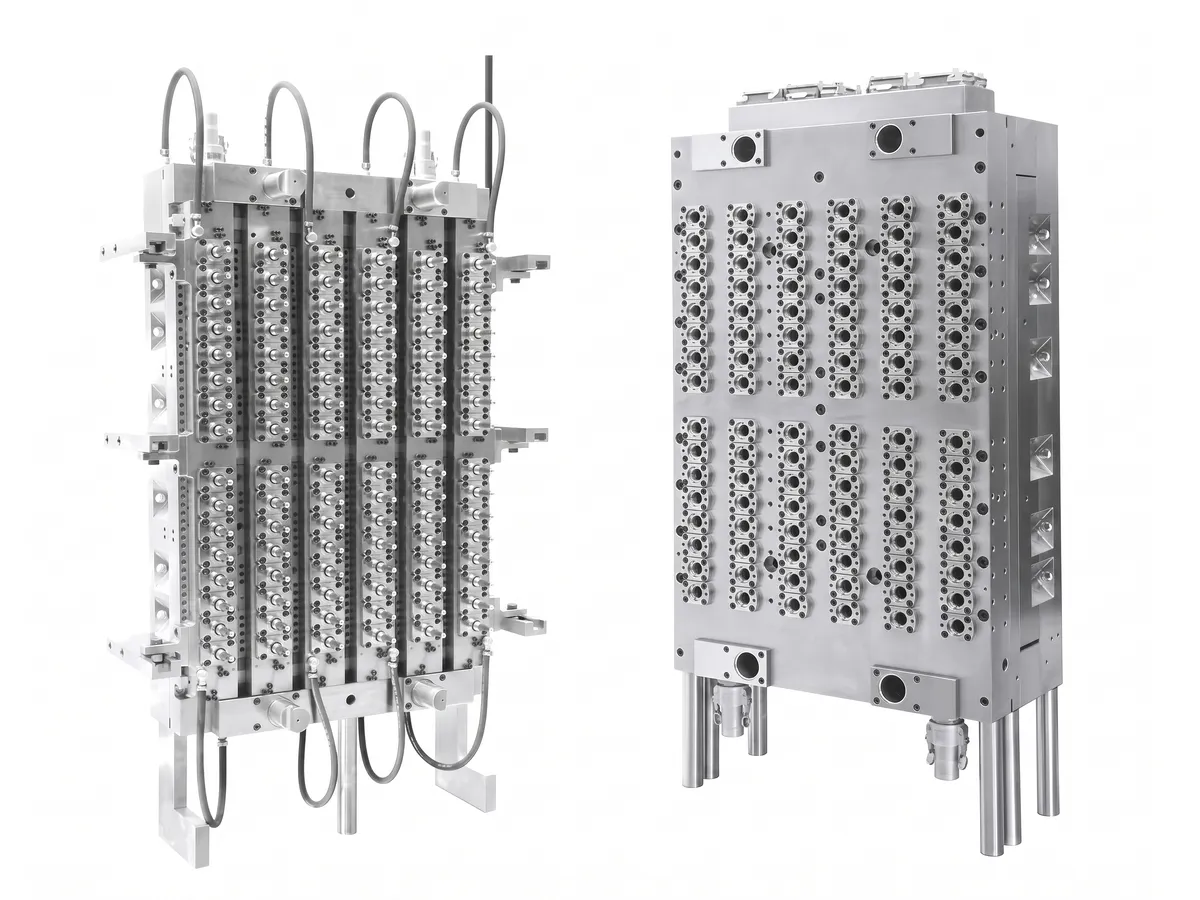
Moldagem por sopro
Construção em aço de alta qualidade
Blow mold bodies are machined from high-quality tool steel that provides the hardness and surface finish quality necessary for producing baby bottles and craft containers with smooth, defect-free external surfaces. The steel grade selected balances machinability for complex 3D cavity geometries, thermal conductivity for efficient cooling, and surface durability to resist wear from repeated high-pressure bottle forming cycles throughout the service life of this industrial blow molding machine's tooling.
Advanced 3D Software Bottle Design
Every blow mold cavity is designed using state-of-the-art 3D CAD/CAM software that allows precise simulation of the blow-forming process before any cutting steel occurs. This computational design process ensures accurate preform-to-bottle stretch ratios, optimized wall thickness distribution, and correct vent placement, reducing trial-and-error tooling cost during new product introduction. We offer a broad selection of standard bottle designs and full custom design services for bespoke bottle shapes.
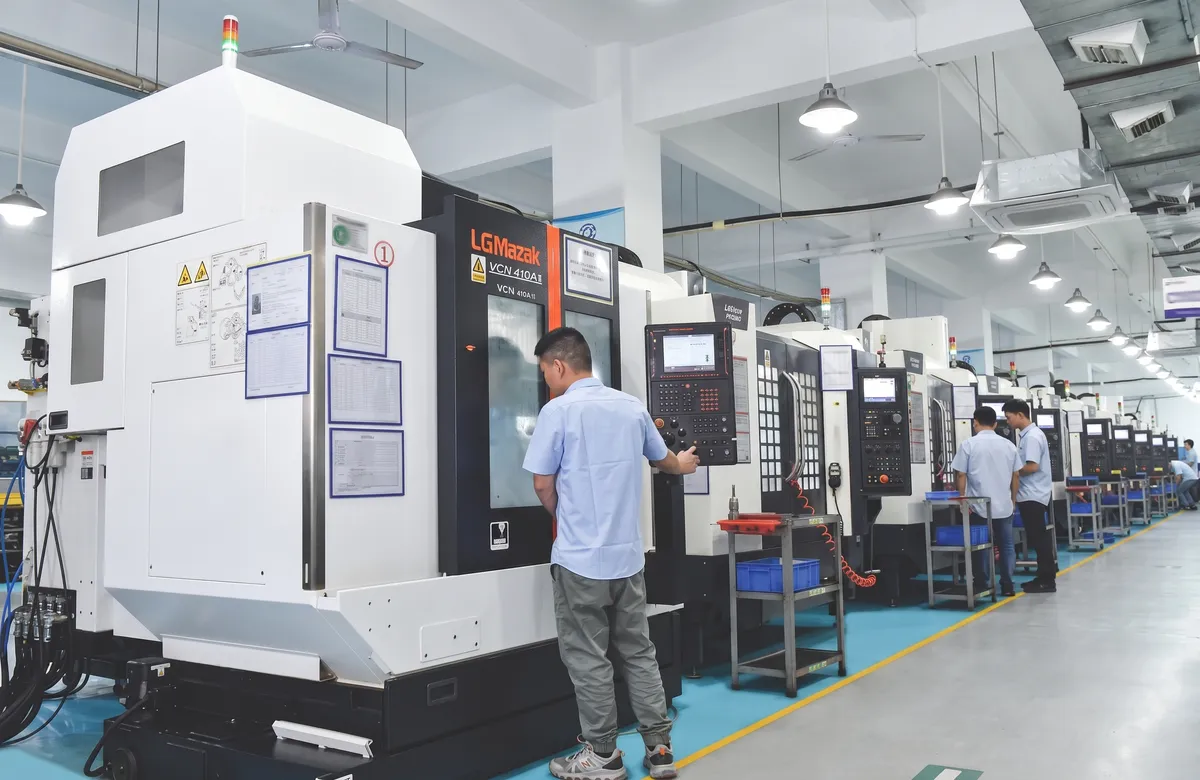
Precision CNC Machined Metal Parts
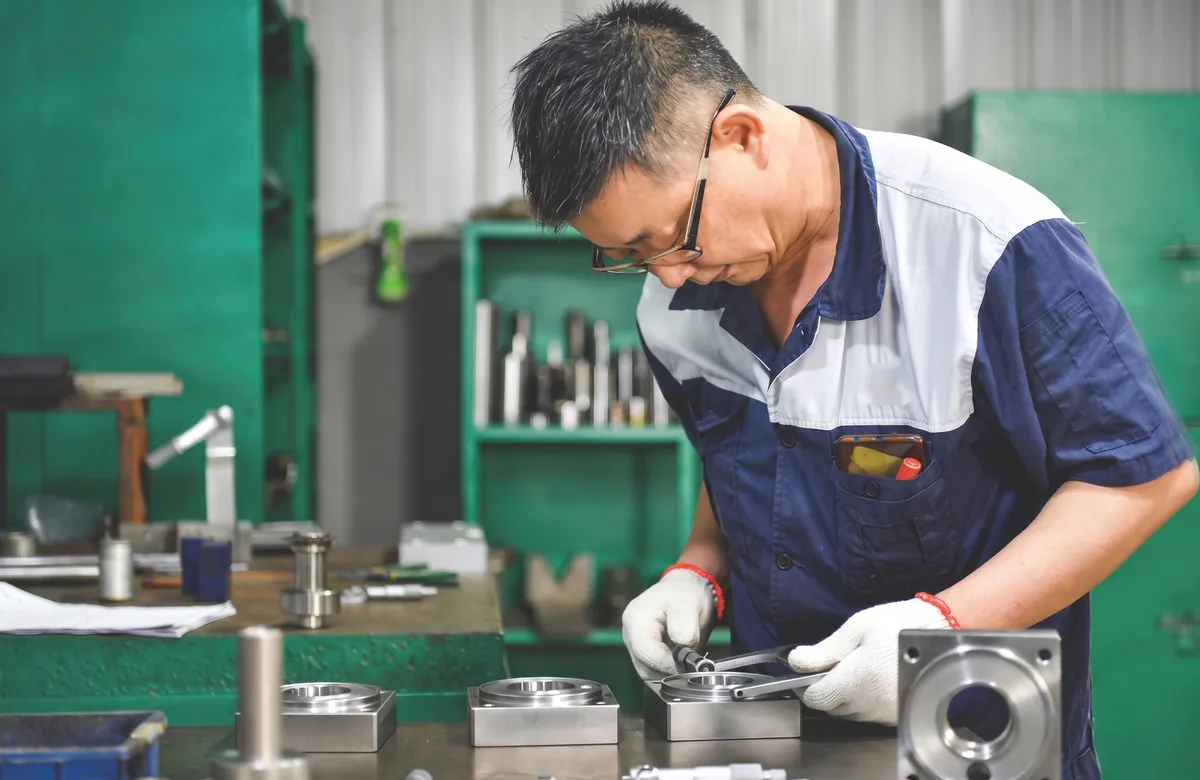
All metal components of the blow mold, including cavity inserts, neck tooling, bottom plugs, and clamping plates, are machined on precision CNC machining centers to tight dimensional tolerances. CNC-machined blow mold components ensure that the mold halves align correctly on every clamping cycle, preventing flash defects at parting lines and ensuring repeatable, high-precision bottle dimensions that meet the strictest quality standards for infant product and pharmaceutical packaging applications on this bottle blow molding machine.
Solução de problemas comuns
Issue: Uneven Wall Thickness in Finished Bottles
Cause and Solution: Uneven wall thickness most commonly results from non-uniform preform heating in the infrared zone, a drifting stretch rod position, or inconsistent blow pressure delivery. Begin diagnosis by checking each heating lamp zone's output and reflector cleanliness. Verify that the stretch rod is centered and descending at the programmed speed. Confirm that blowing pressure is holding steady at 35 kg/cm2 throughout the blow phase without pressure fluctuation from the compressor station of this automatic blow molding machine.
Issue: Whitening or Haziness in Bottle Walls
Cause and Solution: Stress whitening or haziness in blow-molded PET or PP bottles is typically caused by over-stretching the material beyond its optimal orientation window or processing preforms that have been inadequately heated. Adjust the heating zone temperature profile to ensure the preform wall reaches the correct processing temperature range before entering the blow station. Also check that the stretch rod descent speed and blow timing are within specification for the material being processed on this plastic bottle blow molding machine.
Issue: Bottle Neck Deformation or Distortion
Cause and Solution: Neck deformation occurs when the preform neck finish area overheats during the infrared heating phase, causing the crystallized neck zone to soften and distort before the blow cycle. Verify that neck protection shields are correctly positioned and functioning in the heating zone. Reduce the heating intensity in the zones closest to the neck finish area of the preform. Also ensure preform holders are correctly sized for the preform neck diameter specifications on this baby bottle blow molding machine configuration.
Issue: Flash or Fins on Bottle Body
Cause and Solution: Flash lines or fins along the blow mold parting line indicate that the mold clamping force is insufficient, the mold halves are misaligned, or the mold parting surfaces are worn or contaminated. Inspect the mold clamping system for adequate force delivery at the specified clamping stroke setting. Check mold alignment pins and bushings for wear. Clean the mold parting surfaces and reseat the mold in the machine to ensure correct alignment of both mold halves during the clamping cycle of this automatic blow molding machine.
Issue: Preform Feeding Jams or Misfeeds
Cause and Solution: Preform feeding disruptions cause production stops and affect throughput on this fully automatic blow molding machine. Common causes include preform size inconsistency from the supplier, an incorrectly adjusted orientator, bent or worn gravity rails, or foreign material in the hopper. Begin troubleshooting by inspecting incoming preform dimensional consistency against specification. Clean the entire preform conveying path and check the orientator adjustment settings for the specific preform body and neck dimensions being run.
Issue: Incomplete Bottle Formation or Short Shots
Cause and Solution: When the blow-molded bottle fails to fully fill the mold cavity, the most likely causes are insufficient blow pressure, blocked mold vents, a defective blow nozzle seal, or a preform that is too cold at the moment of blowing. Verify that the blowing pressure is at the specified 35 kg/cm2 with no pressure drop during the blow hold phase. Clean all mold cavity vent slots. Inspect and replace the blow nozzle seal if leakage is detected during the high-pressure blow phase of this PET bottle blow molding machine's production cycle.
Por que escolher a máquina de moldagem por sopro de PET da Ever-Power?
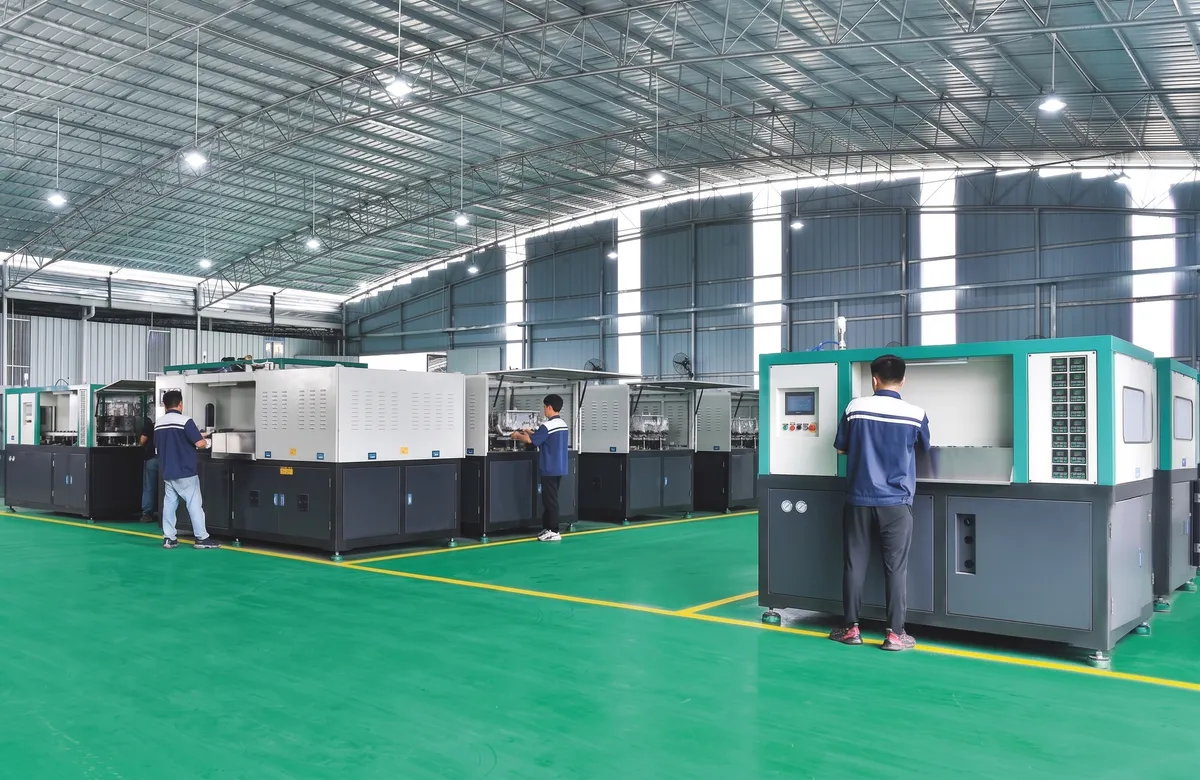
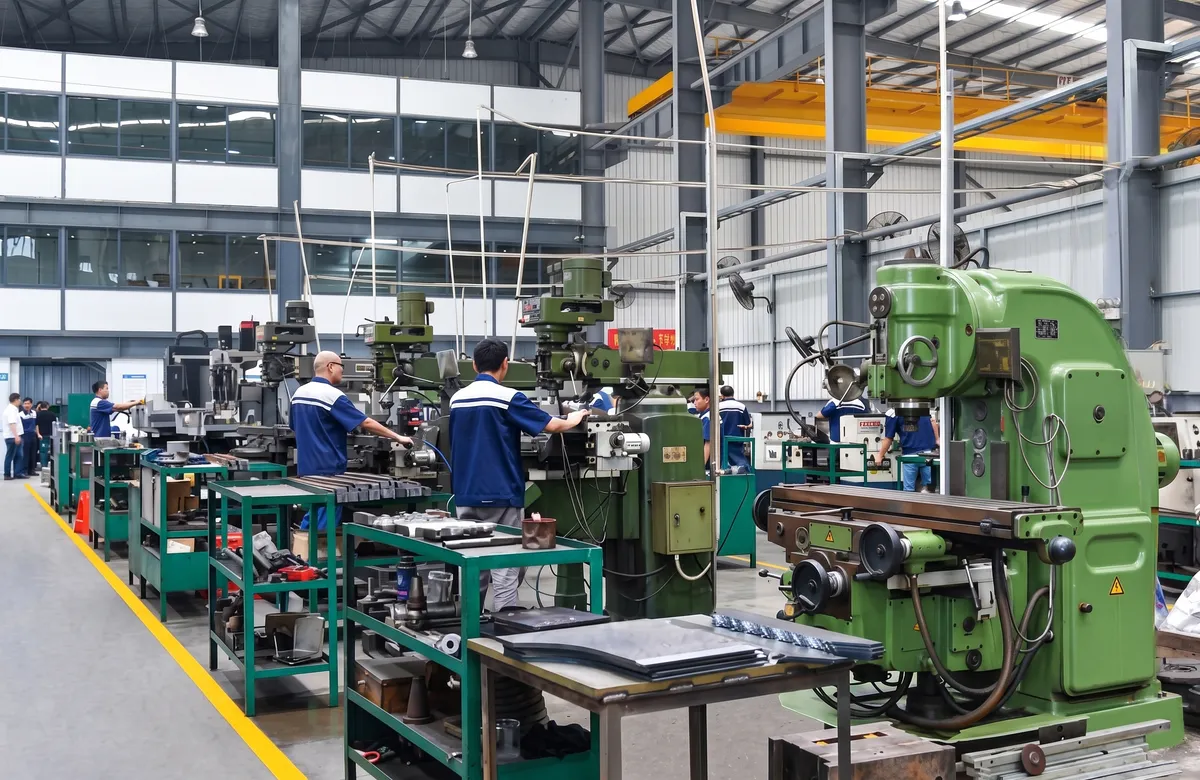
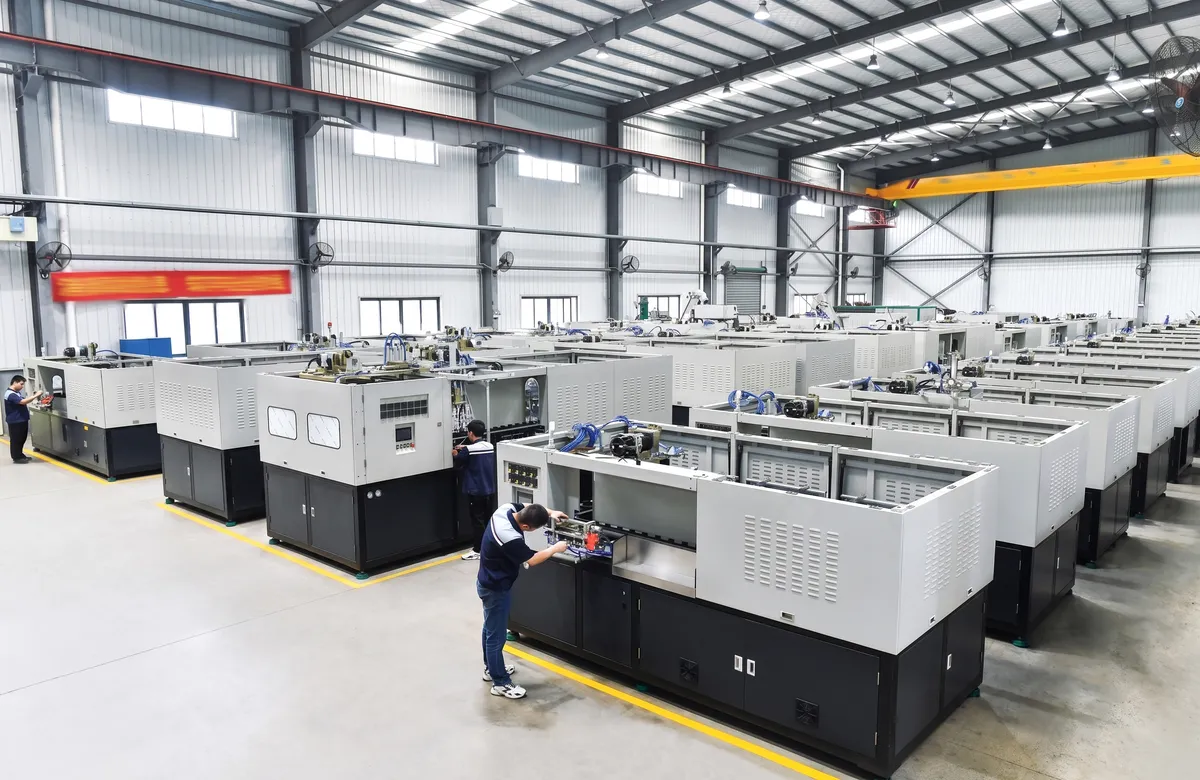
Mexico Ever-Power ISBM Machinery Co., Ltd is a professional enterprise primarily engaged in the research and development, manufacturing, sales, and international trade of automatic blow molding machines, including Injection Blow Molding Machines, Injection Stretch Blow Molding Machines, and Extrusion Blow Molding Machines. Our product portfolio covers the full range of blow molding machine types, from single-cavity laboratory-scale machines to high-speed multi-station configurations producing thousands of bottles per hour. With convenient logistics infrastructure and extensive international trade experience, Ever-Power delivers complete blow molding machine solutions to customers across more than 30 countries worldwide.
Ever-Power maintains a strong in-house R&D team composed of engineers and technical specialists with deep expertise in injection-blowing machinery and mold engineering. This team brings together theoretical mastery and decades of hands-on production experience to deliver blow molding machine solutions that consistently outperform customer expectations. Our product development process is driven by real-world application feedback from our global customer base, ensuring that every new machine model addresses genuine production challenges faced by packaging manufacturers in competitive markets.
The company's application scope covers pharmaceutical packaging, food and beverage packaging, healthcare product packaging, cosmetics packaging, and specialty consumer packaging. We produce plastic products in volume ranges from 1 ml to 1,000 ml across materials including HDPE, LDPE, PET, PETG, PP, PS, PPSU, PC, Tritan, ABS, PLA, biodegradable corn-based materials, EVA, and PCTG. Ever-Power adheres to the enterprise development principles of self-reliance, integrity, pragmatism, innovation, and responsibility, and is committed to delivering one-stop turnkey blow molding machine project solutions that give our customers a competitive manufacturing advantage in their markets.
Two decades of dedicated blow molding machine development and process engineering expertise delivered into every machine we build. Patented innovations in automatic blow molding machine design, heating systems, and stretch-blow mechanisms protect our technology leadership. Our blow molding machine suppliers network has successfully delivered and commissioned machines in over 30 countries across Asia, Europe, and the Americas. We provide complete one-stop turnkey solutions covering machine supply, mold engineering, installation, commissioning, training, and ongoing technical support.
 |
 |
 |
 |
 |
 |
Perguntas frequentes
Q1: What types of bottles can the EPA.FS-1CG130 fully automatic blow molding machine produce?
A: A EPA.FS-1CG130 foi projetada para a produção de uma ampla variedade de recipientes, incluindo mamadeiras, garrafas de PP, garrafas de PET para bebidas, embalagens farmacêuticas, embalagens cosméticas e garrafas artesanais com formatos especiais. Ela processa recipientes com volume máximo de 1.500 ml, diâmetro máximo de 110 mm e altura máxima de 250 mm. A máquina pode processar diversos materiais, incluindo PP, PET, PPSU, Tritan e PC, tornando-a uma das máquinas de moldagem por sopro totalmente automáticas mais versáteis de sua classe de produção.
Q2: Qual é a capacidade de produção teórica da máquina de moldagem por sopro de mamadeiras EPA.FS-1CG130?
A: A EPA.FS-1CG130 atinge uma produção teórica de 700 garrafas por hora em uma configuração padrão de cavidade única. Dentro da linha mais ampla de máquinas de moldagem por sopro da EPA, a produção aumenta significativamente nos modelos com múltiplas cavidades e estações, com a EPA.JS-4C114 atingindo um máximo teórico de 2.800 garrafas por hora. A produção real dependerá das especificações da garrafa, do tipo de material, da qualidade da pré-forma e das condições da instalação. Nossa equipe de engenharia pode ajudá-lo a selecionar o modelo correto da série para atender às suas necessidades de volume de produção.
P3: O modelo EPA.FS-1CG130 é adequado para a produção de garrafas plásticas próprias para alimentos e seguras para bebês?
R: Sim, a EPA.FS-1CG130 foi projetada especificamente para a produção de mamadeiras seguras para contato com alimentos e produtos infantis. Ela processa resinas aprovadas, incluindo PP, PPSU, Tritan e PET livre de BPA, todos de grau alimentício. O processo de produção automatizado e sem contato manual minimiza o risco de contaminação, e os sistemas de controle preciso de temperatura e gerenciamento de pressão garantem que o processamento do material permaneça dentro dos parâmetros de segurança em todos os momentos. Nossos clientes de máquinas de moldagem por sopro de mamadeiras em mercados regulamentados, incluindo a UE, os EUA e o Japão, obtiveram com sucesso a certificação de produtos infantis para suas linhas de produção utilizando este equipamento.
Q4: Qual é a pressão de sopro do EPA.FS-1CG130 e como ela afeta a qualidade da garrafa?
A: A EPA.FS-1CG130 opera com uma pressão de sopro de 35 kg/cm², mantida constante durante todo o ciclo de sopro pela estação de compressores regulada da máquina. Uma pressão de sopro alta e estável é fundamental para obter o preenchimento completo da cavidade do molde, espessura uniforme da parede e reprodução precisa dos detalhes da superfície na garrafa finalizada. A flutuação de pressão durante a fase de sopro é uma das causas mais comuns de defeitos em garrafas na produção de máquinas de moldagem por sopro de garrafas plásticas, e o sistema de fornecimento de pressão regulada da EPA.FS-1CG130 foi projetado especificamente para eliminar essa variável do processo de produção.
Q5: Qual é a diferença entre uma máquina de moldagem por sopro de dois estágios e uma máquina ISBM de um estágio?
A: A EPA.FS-1CG130 é uma máquina de moldagem por sopro de dois estágios, o que significa que as pré-formas são produzidas separadamente por meio de moldagem por injeção e, em seguida, alimentadas à unidade de moldagem por sopro. Essa abordagem oferece maior flexibilidade no fornecimento de pré-formas, permite a otimização independente dos processos de injeção e sopro e é preferida para produção em alto volume, onde o gerenciamento do estoque de pré-formas melhora a eficiência. Uma máquina de moldagem por sopro com injeção e estiramento em um único estágio integra a moldagem por injeção e a moldagem por sopro em um único processo contínuo, o que elimina o manuseio de pré-formas, mas é mais adequado para volumes menores e aplicações que exigem contato zero com contaminação durante a produção.
Q6: Quanto tempo leva para trocar os moldes no EPA.FS-1CG130?
A: O tempo de troca de molde na EPA.FS-1CG130 depende do nível de experiência do operador e do grau de diferença entre as especificações das garrafas de entrada e de saída. Operadores experientes geralmente concluem uma troca completa de molde em uma a duas horas nesta máquina de moldagem por sopro totalmente automática. Sistemas padronizados de fixação de moldes, locais de montagem de moldes acessíveis e práticas de armazenamento de moldes bem organizadas contribuem para minimizar o tempo de troca. Recomendamos que novos compradores invistam em um treinamento sobre troca de moldes durante o comissionamento da instalação para estabelecer procedimentos de troca eficientes desde o início das operações de produção.
Q7: Quais materiais são compatíveis com a máquina de moldagem por sopro EPA.FS-1CG130?
A: A EPA.FS-1CG130 é compatível com uma variedade de materiais termoplásticos, incluindo PET, PP, PPSU, PC, Tritan, HDPE e LDPE. Cada material requer perfis de aquecimento, taxas de estiramento e configurações de pressão de sopro específicos, configurados no sistema de controle PLC da máquina. Nossa equipe de engenharia fornece os parâmetros de processo específicos para cada tipo de resina após o comissionamento da máquina. Compradores com requisitos de aplicação personalizados podem consultar nossa equipe técnica durante o processo de pré-venda para confirmar a compatibilidade de materiais para as classes e formulações específicas que planejam utilizar nesta plataforma de moldagem por sopro personalizada.
P8: A Ever-Power oferece projeto e fornecimento de moldes personalizados para o EPA.FS-1CG130?
R: Sim. A Mexico Ever-Power ISBM Machinery Co., Ltd. oferece serviços completos de projeto personalizado de moldes, simulação de engenharia e fabricação de moldes para a EPA.FS-1CG130 e todos os modelos da série de máquinas de moldagem por sopro. Nossa equipe de projeto de moldes utiliza ferramentas avançadas de CAD 3D e simulação FEM para desenvolver cavidades de moldes de sopro que reproduzem com precisão geometrias complexas de garrafas, incluindo garrafas artesanais com formatos especiais e embalagens assimétricas. Moldes de injeção para pré-formas também estão disponíveis. Especificações completas do molde, certificações de materiais e desenhos de projeto são fornecidos com cada entrega de molde para atender aos requisitos de documentação de qualidade de nossos clientes.
P9: Que serviço pós-venda e suporte técnico a Ever-Power oferece para o EPA.FS-1CG130?
A: A Ever-Power oferece suporte pós-venda completo, incluindo comissionamento de fábrica e treinamento de operadores no local da instalação, um programa completo de estoque de peças de reposição, suporte técnico multilíngue por e-mail e videochamada, e assistência remota para diagnóstico de software e solução de problemas de processo. Nossa equipe de engenharia está disponível para auxiliar na otimização de processos à medida que suas necessidades de produção evoluem ao longo do tempo. Também oferecemos programas de manutenção preventiva programada para clientes que buscam maximizar o tempo de atividade e a vida útil de seu investimento em nossa tecnologia de fabricação de máquinas de moldagem por sopro.
Q10: A série EPA.FS-1CG130 pode ser atualizada com cavidades ou estações adicionais?
A: A EPA.FS-1CG130 é uma máquina de cavidade única otimizada para a produção de mamadeiras e embalagens especiais de alta precisão, com capacidade de 700 unidades por hora. Para necessidades de produção mais elevadas, a série EPA inclui modelos com múltiplas cavidades e estações, como a EPA.P.FS-2CB130 com duas cavidades, a EPA.ES-2C150 com capacidade para 60 pré-formas e a EPA.JS-4C114 com quatro cavidades, atingindo 2.800 unidades por hora. Trabalhamos com os compradores para selecionar a configuração de máquina de moldagem por sopro mais adequada da série no momento da compra, para atender às suas necessidades de volume de produção atuais e futuras, sem investimentos excessivos em capacidade ociosa.
Avaliações de clientes
Wei Jianming | Fabricação de Produtos Infantis | China
"Estamos utilizando a EPA.FS-1CG130 há quase oito meses em nossa fábrica de mamadeiras em Shenzhen e devo dizer que a consistência é realmente impressionante. Fabricamos mamadeiras de 250 ml em polipropileno para exportação ao mercado da UE e as dimensões do gargalo ficam perfeitas todas as vezes. Nossa taxa de rejeição na linha de fechamento, que era de cerca de 2,1%, caiu para menos de 0,4% desde que instalamos esta máquina. A equipe de instalação da Ever-Power passou dois dias inteiros comissionando e treinando nossos operadores. Excelente suporte."
Rajesh Mehta | Embalagens Farmacêuticas | Índia
"Analisamos três fabricantes de máquinas de moldagem por sopro antes de escolher a Ever-Power e estou muito satisfeito com a nossa escolha. Nossa aplicação é a fabricação de frascos farmacêuticos de PP entre 100 ml e 500 ml. O que nos convenceu foi a precisão do sistema de resfriamento e a qualidade dos componentes do molde. A qualidade da cavidade em aço 2316 é visivelmente superior à da máquina concorrente que testamos. Temos produzido aproximadamente 680 frascos por hora de forma consistente, o que corresponde à especificação. A logística da fábrica até nossa unidade em Mumbai foi bem coordenada e realizada dentro do prazo."
Carlos Augusto Ferreira | Embalagens Especiais | Brasil
"No geral, uma ótima máquina. Usamos para produzir garrafas de PP artesanais e embalagens de presente com formatos especiais aqui em São Paulo. A qualidade da superfície das garrafas é impressionante, muito lisa e com excelente transparência, mesmo em formatos complexos. A instalação demorou um pouco mais do que o esperado porque nossa oficina precisou de algumas adaptações elétricas para atender aos requisitos de energia da máquina, mas, uma vez em funcionamento, a qualidade da produção justificou a espera. Teríamos apreciado uma documentação de configuração mais detalhada em português, mas a equipe de atendimento ao cliente foi prestativa por e-mail. Quatro estrelas."
Roberto Espinoza | Embalagens para Bebidas | México
"O consumo de energia desta máquina me surpreendeu positivamente. Operamos em dois turnos de 10 horas por dia em nossa fábrica em Guadalajara, produzindo garrafas PET de 800 ml, e o consumo mensal de eletricidade é significativamente menor do que o de nossos equipamentos antigos. O sistema de refrigeração é muito eficiente. A pressão de sopro permanece constante em 35 kg por cm² durante todo o dia. Estamos produzindo com ela há cerca de cinco meses e não tivemos nenhuma parada não planejada. O suporte pós-venda da Mexico Ever-Power tem sido rápido sempre que tivemos alguma dúvida."
Siti Rahayu | Embalagens para Cosméticos | Indonésia
"Somos uma empresa fornecedora de embalagens para cosméticos com sede em Jacarta e utilizamos a EPA.FS-1CG130 há nove meses. A variedade de formatos de frascos que podemos produzir com esta máquina é excelente. Produzimos frascos de PET para loção, frascos para soro e alguns recipientes decorativos com formatos especiais para marcas premium, e a qualidade do acabamento superficial em todos eles é realmente impressionante. A máquina chegou antes do prazo de entrega estimado e o comissionamento ocorreu sem problemas. O processo de troca de moldes não é complicado, uma vez que os operadores estejam treinados. Estamos muito satisfeitos com o nosso investimento."
Klaus Hoffmann | Embalagens por Contrato | Alemanha
"Sou responsável pelo setor de compras de um grupo de embalagens de médio porte na Alemanha e adquirimos a EPA.FS-1CG130 como uma máquina dedicada à moldagem por sopro de mamadeiras para um de nossos clientes de fabricação terceirizada. A documentação e os certificados de conformidade CE fornecidos pela Ever-Power foram completos e facilitaram nosso processo interno de aprovação de qualidade. A máquina está produzindo mamadeiras de PP a uma média de 670 unidades por hora durante um período de quatro meses, sem problemas significativos de qualidade. A variação na espessura da parede em nossas amostras está consistentemente dentro de 0,05 mm do valor alvo. Uma precisão realmente impressionante para essa faixa de preço."
Park Sung-ho | Produtos para Bebês | Coreia do Sul
"Produzimos mamadeiras de PPSU para o mercado interno coreano e para exportação. O processamento do material PPSU nesta máquina é estável e temos obtido um produto final muito limpo e transparente, que atende aos padrões de qualidade de nossos clientes varejistas de alto nível. O único ponto que eu gostaria de destacar para potenciais compradores é que a configuração do perfil de aquecimento para PPSU exige paciência e é necessário trabalhar metodicamente com as configurações de zona. Mas a equipe de suporte técnico da Ever-Power nos orientou durante todo o processo por videochamada, sem qualquer problema. No geral, uma máquina confiável e um bom relacionamento com o fornecedor."
James Thornton | Equipamentos de Embalagem | Reino Unido
"Somos uma empresa do Reino Unido, compradora de máquinas de moldagem por sopro de garrafas plásticas, e estamos buscando equipamentos para um cliente no mercado de suplementos nutricionais. O que mais me impressionou na EPA.FS-1CG130 foi o suporte técnico pré-venda. A equipe da Ever-Power realizou uma análise de aplicação muito detalhada e forneceu amostras de garrafas de suas instalações de teste antes de fecharmos o pedido. A máquina chegou bem embalada, a instalação foi limpa e o cliente está produzindo embalagens PET para suplementos com produção consistente desde o primeiro mês. Com certeza, consideraremos este fornecedor para projetos futuros."
Michael Tanner | Embalagens de Alimentos | Estados Unidos
"O envio foi mais rápido do que eu esperava, o que é muito importante quando se está aguardando equipamentos de grande porte. Somos uma empresa de embalagens de alimentos nos EUA e encomendamos a EPA.FS-1CG130 para produzir garrafas PET para molhos e condimentos. A máquina foi entregue e liberada pela alfândega dentro do prazo estipulado durante o processo de compra. A documentação de instalação é clara. Estamos em produção há seis meses e a qualidade das garrafas produzidas tem sido consistentemente boa. O feedback dos operadores é positivo, eles consideram a interface do CLP intuitiva. Recomendo a outros compradores do setor de embalagens de alimentos."
Informação adicional
| Editado por | Yjx |
|---|
Produtos relacionados
-
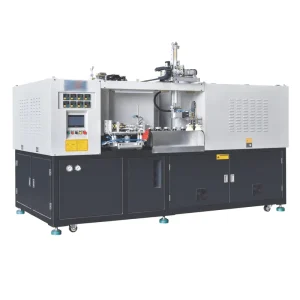
Máquina de moldagem por sopro totalmente automática EPA.ES-1C130 para potes e latas de boca larga para alimentos.
-
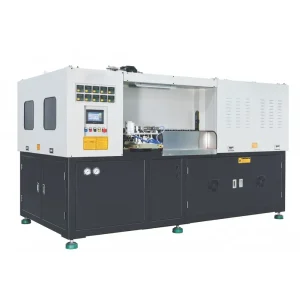
Máquina de moldagem por sopro totalmente automática EPA.ES-2C200 para frascos de produtos químicos de uso diário e cosméticos.
-
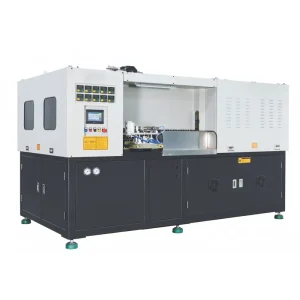
Máquina de moldagem por sopro totalmente automática EPA.ES-3C114 para frascos de produtos químicos de uso diário e cosméticos.
-
Máquina de moldagem por sopro totalmente automática EPA.ES-4C76 para frascos de produtos químicos de uso diário e cosméticos.